Across the OECD, students from more advantaged social backgrounds can expect to engage more in career development activities than their disadvantaged classmates.
The State of Global Teenage Career Preparation

Abstract
Both the educational and occupational plans of students and the family-based resources available to them to support their career exploration are strongly shaped by social background, presenting additional barriers to successful transitions for many young people. As discussed in the OECD paper, Challenging Social Inequality through Career Guidance (2024), effective guidance systems will respond to additional needs, but on average disadvantaged students engage less in important career development activities than their more privileged peers.
PISA places students on a spectrum of economic, social and cultural status (ESCS) based on parental occupation, education level and household possessions. Compared to students from the most advantaged quartile, the most disadvantaged students are more likely to be uncertain about their career plans and more likely to be misaligned in their education and job goals when they express them. Disadvantaged students are much less likely to plan on completing tertiary education even when they perform highly on the PISA academic assessments. Analysis of PISA data shows that students who engage in career development activities are significantly more likely to have clear job expectations, to be aligned in their future plans and to anticipate completing some form of tertiary education. However, PISA also shows that students from the most disadvantaged backgrounds are less likely on average to engage in career development activities than their more socially advantaged classmates.
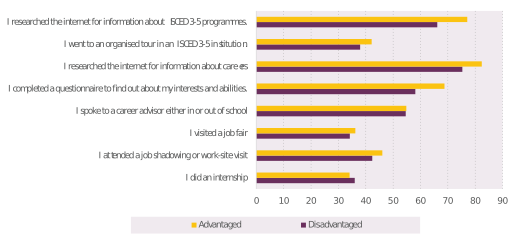
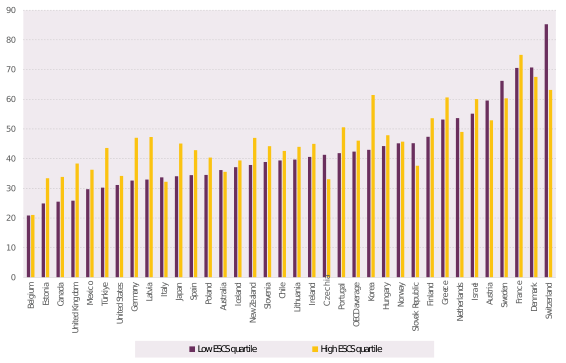
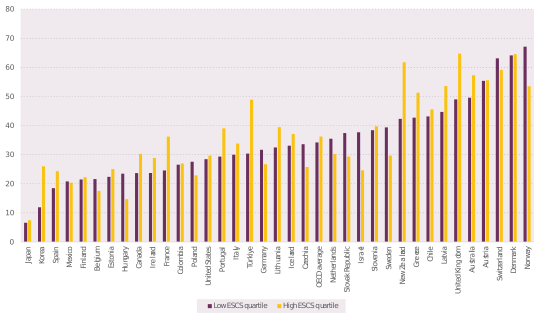
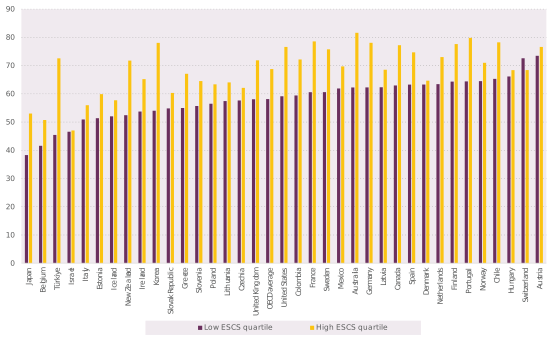
Figure 6.1 presents data from all OECD countries participating in PISA 2022. It shows that on average in seven of eight guidance activities, the most advantaged quartile of students engaged more frequently – and often considerably more so – than their most disadvantaged peers. The only field where socially disadvantaged students can anticipate engaging more commonly is in internships. While variations between the two groups may be modest, more equitable (and so more effective) guidance systems would be expected to target greater resource on students from more disadvantaged backgrounds. Figure 6.2 and Figure 6.3 break down data on participation in job shadowing/ workplace visits and job fairs respectively by country.
The most common forms of career development for students relate to resources available outside of the classroom such the use of the internet to explore future careers and educational programmes and in career conversations. Whereas 76% of high ESCS students went online to research post-secondary programmes and 82% to research careers, only 66% and 75% respectively of low ESCS students did the same. PISA 2018 shows that while 79% of the most socially disadvantaged students had spoken to someone about a job they would like to do after they finish education, this applied to 87% of their most advantaged peers.
Source. OECD PISA database 2022.
Source. OECD PISA database 2022.
Source. OECD PISA database 2022.
Source. OECD PISA database 2022.
The most important things that I learned from career guidance in school is that it is never too late to change the career you want to pursue and that you never know what you really want to do until you try multiple things out.
- Huda,17