There are some methodological limitations of the SWACHE project that highlight areas for future research. This chapter discusses some limitations of the approach in the SWACHE project and of the recommended benefit transfer methodologies, as well as potential areas for additional future work.
Economic Valuation of Chemicals‑Related Health Effects
A Practical Guide to Quantifying Morbidity Effects in Environmental Cost-Benefit Analysis

Abstract
As discussed in previous chapters, the Surveys on Willingness-to-pay to Avoid negative Chemicals-related Health Effects (SWACHE) project aims to establish internationally comparable willingness-to-pay (WTP) estimates by conducting stated preference (SP) studies. While SP studies remain the best available tool for capturing respondents’ full WTP, some critique remains. The SWACHE project seeks to address methodological concerns where possible. This section presents the safeguards put in place to ensure the quality and robustness of the valuation studies.
Hypothetical bias is often highlighted as a concern for SP studies (OECD, 2018[1]). The SWACHE surveys implemented several measures and corrective adjustments to help minimise this bias, both during the survey design and administration phases and in the ex-post screening of responses. First, the valuation scenario was designed to be credible, neutral and realistic, ensuring that respondents perceived their answers as consequential and likely to influence risk reduction outcomes. Second, throughout the survey, respondents were reminded to consider their choices as they would in real-life situations and to account for the fact that the stated payment would effectively be deducted from their household budget. In debriefing questions, between 87% and 97% of respondents stated that their answers reflected the choices they would make in real life.
The risk of overestimation was also addressed in a series of additional debriefing questions aimed at assessing whether respondents’ stated-preference responses should be taken to represent their true preferences. These debriefing questions, based on common issues in all stated preferences surveys, were designed to identify survey rejection (Johnston et al., 2017[2]). Examples of survey rejection include: respondents who considered the proposed products irrelevant; believed the products were “not effective at all”; judged the description inaccurate; reported their knowledge after the survey as “very poor”; expressed doubt about the information provided; consistently refused risk reduction because they felt they should not bear the cost; rejected risk reduction because they did not trust the mechanism; and admitted they did not take their household budget into account when answering. The empirical analysis systematically excluded respondents identified through these debriefing questions, as well as speeders and those who did not demonstrate an understanding of the probability concepts used in the surveys.1
Furthermore, the possibility of anchoring bias, i.e. the risk of imposing a bid reference value, was accounted for by carefully calibrating the bid amounts presented to respondents and through the use of double-bounded dichotomous choice and discrete choice experiments. Notably, the survey instruments were peer‑reviewed and tested through cognitive interviews, as well as through pre‑survey pilots conducted in every country prior to the main field survey. For example, in the miscarriage study, the starting bids for the cost of the risk reduction were informed by responses collected through one-on-one interviews, including open-ended questions about WTP. These findings were used to design the initial pilot studies, which further allowed for readjustment of bid levels prior to the main survey. In the case of the miscarriage study, the pilot bids were adjusted upward due to a predominance of respondents accepting the risk reduction for both dichotomous choice questions. Moreover, bids for the same level of risk reduction were randomly assigned to respondents to reduce anchoring effects and minimise systematic bias.
To mitigate the potential cognitive burden associated with multi-attribute stated-preference methods such as discrete choice experiments, SWACHE surveys were limited to an average duration of 30 minutes, and attribute variation was kept minimal (OECD, 2018[1]). For instance, in the non-fatal cancer survey, the severity and duration of the disease were fixed to not distract respondents from the risk reduction attributes.
The SWACHE project, with its harmonised approach and coverage of numerous countries and health endpoints, provides a unique basis for testing international benefit transfer methods. Nevertheless, some limitations should be considered when interpreting benefit function transfer-based estimates.
Some health endpoint samples (e.g. asthmatic adults, infertility, very low birth weight, miscarriage) were not designed to represent the general population but only a targeted sub-sample, which affects the applicability of BT. Because BT requires combining national statistics with survey data, an adjustment strategy was used to reduce mismatches between samples and official statistics in study sites. Two main issues drive non‑representativeness: income was not a quota variable – leading to gaps between sample and official income averages2 – and some endpoints show unintended over‑ or under‑sampling of people with the relevant condition. For several conditions, prevalence cannot be validated due to missing official statistics. While quotas for gender, region, education, and age improve representativeness, the absence of reliable prevalence data limits full validation of sample representativeness.
For samples representative of the general population, weighted averages and official statistics align closely. For non-representative samples, a readjustment factor – based on the ratio of sample to official values for age, gender, education, and income – was applied to national statistics across study and policy sites. This relies on the assumption that surveyed samples reflect the target population, which cannot be verified. Ideally, external socio-demographic data specific to the target group would be available, which would allow for more precise WTP transfer estimates. However, SWACHE surveys cannot fully control for factors such as health system structure, disease prevalence, or treatment costs, and survey items are not always comparable to official data, especially when the disease prevalence within the sample deviates from that in the general population.
In contexts where a policy affects multiple health endpoints, the aggregation of morbidity values presents methodological challenges. There is a methodological complexity in valuing multiple endpoints that are obtained through separate valuation surveys and that may occur within the same individual. In addition, the valuation and applicability of estimates in cases where the health effect is already pre‑existing in the individual is also challenging. This section explores the limitations arising from these issues and highlights potential avenues for future research.
6.3.1. Valuation of multiple health endpoints
A chemical substance or group of chemicals targeted by a chemicals management programme or a policy is often associated with multiple negative health endpoints rather than just one. For example, in the impact assessment from the United Kingdom discussed in Section 4.4 of Chapter 4, it is highlighted that Persistent Organic Pollutants (POPs) are linked to several human health impacts including cancers, birth defects, neurological damage, endocrine disruption and immune system suppression (DEFRA UK, 2025[3]).
The European Union’s Classification, Labelling and Packaging of chemicals (CLP) regulation classifies substances that pose risk to human health and many of them fall into multiple hazard categories (European Union, 2025[4]). In a broad classification, hazards are grouped into four classes: (1) Carcinogens, Mutagens, and Reproductive toxins (CMRs), (2) Irritants (eyes, skin, respiratory), (3) Specific Target Organ Toxicity (STOTs), and (4) Acute toxicity. Figure 6.1 illustrates the intersections among these categories. For example, the red area marked “5 118” counts substances classified as irritants only, while the orange area marked “3 848” counts the substances associated with both irritant effects and acute toxicity (adverse effects that occur after a short exposure to a chemical). The light blue area in the centre of the Venn diagram, marked “545”, represents substances linked to all four hazard categories confirming that a significant proportion of classified substances have multiple hazards.
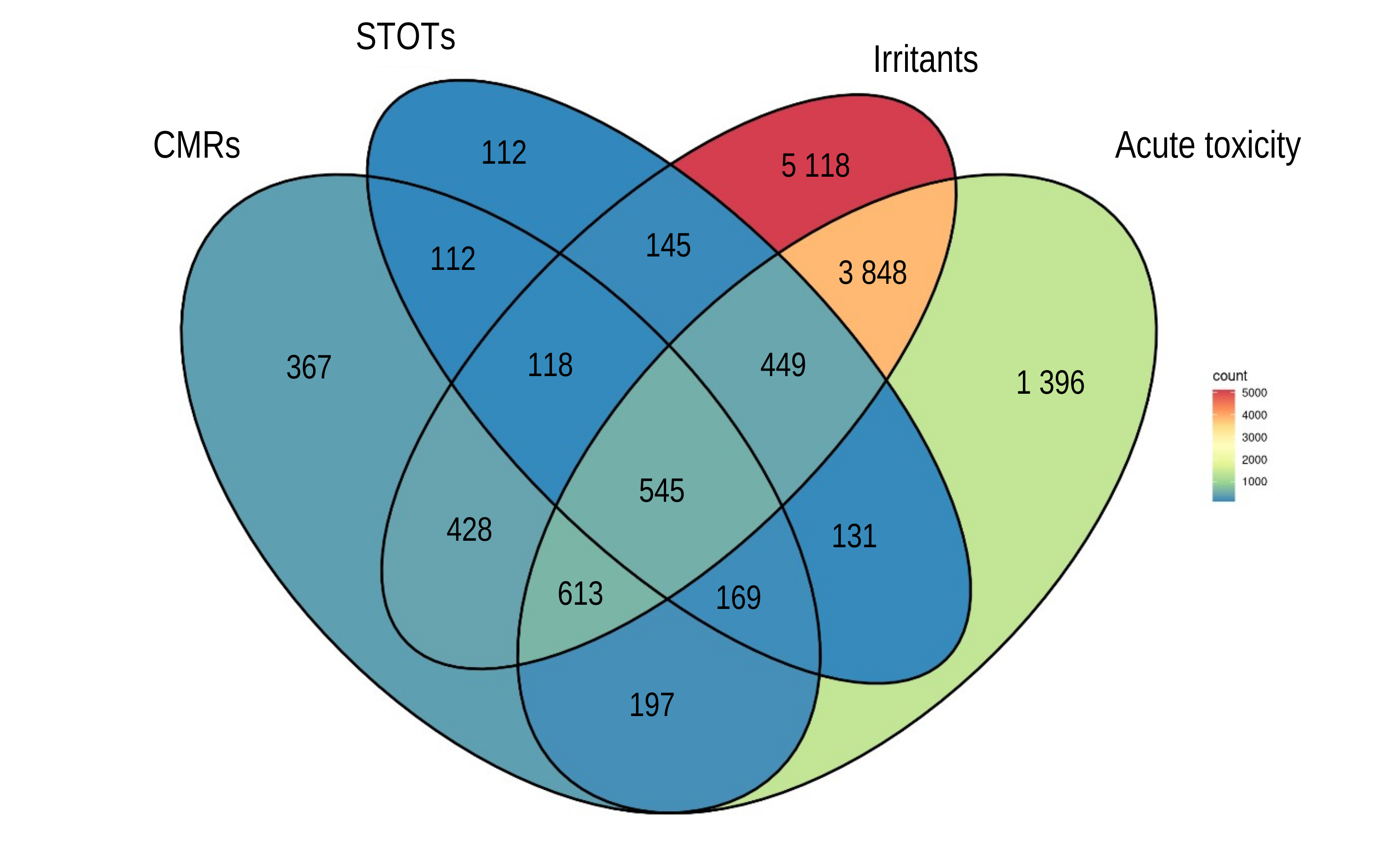
Note: Classification as of June 2025. In a coarse classification, hazards are grouped into four classes: (1) Carcinogens, Mutagens, and Reproductive toxins (CMRs), (2) Irritants (eyes, skin, respiratory), (3) Specific Target Organ Toxicity (STOTs), and (4) Acute toxicity.
Source: Authors’ own elaboration.
In view of the numerous ways in which health impacts from chemicals overlap, it is not surprising that providing an accurate economic valuation reflecting this complexity is challenging. The complexity of valuing multiple health endpoints stems from the methodological question of whether the sum of individually attributed values differs statistically from the value placed on the bundle (Garrod and Willis, 1999[5]). The SWACHE surveys are independent valuations that focus on a single endpoint and they do not address the issue of how to consider valuations of chemicals that affect several health endpoints. If the health effects of a policy are independent and affect different individuals, the calculation of total health benefits is straightforward and should reflect the sum of individual health effects attributable to the policy (Robinson, 2019[6]; US EPA, 2024[7]). For instance, in the case of a policy addressing formaldehyde exposure that leads to both childhood asthma and adult cancer cases in Canada, total benefits would reflect the avoided asthma cases in children and the avoided cancer cases in adults.
Complexity arises when multiple health effects may affect the same individual. While it may be possible to combine the SWACHE values for individual health effects, the total value will likely depend on both the probability that the two health effects affect the same individual and the individual’s valuation if faced with the prospect of two health impacts. However, information on the probability that the two health effects affect the same individual is often not available. Moreover, as the SWACHE surveys were designed and fielded separately for each endpoint, the project does not directly address these questions.
The total value of an individual’s willingness-to-pay, as expressed through a VSC, to avoid two potentially simultaneous health effects is highly likely to fall within a range bounded by the higher of the two VSCs as the lower bound, and the sum of the two VSCs as the upper bound. Empirical evidence indicates that the sum of separately valued endpoints is often higher than the value respondents place on the corresponding overall bundle, which suggests that summing individual health effects is likely to lead to an overestimation (Travers et al., 2026[8]; Hammerschmidt, Zeitler and Leidl, 2003[9]). For example, VSC estimates for very low birth weight that include respondents who considered co‑benefits, such as reduced risk of miscarriage or stillbirth, are approximately 15 % higher than estimates for respondents without these considerations (Ščasný, Zvěřinová and Dussaux, 2023[10]). However, the mean VSC for miscarriage alone is USD 448 000, significantly exceeding the 15% premium suggested from the study on very low birth weight. This indicative comparison suggests that a simple summation of these VSCs may overstate the value respondents place on the combined health outcomes. One explanation is that respondents typically face a maximum budget constraint for health, and the summation of multiple endpoints might exceed this.
Further research could focus on the simultaneous valuation of several health effects assessed in the first two rounds of the SWACHE project, in order to empirically test whether there are differences between the WTP/VSC estimates obtained from isolated valuation and from simultaneous valuation, and, if so, to quantify their magnitude. This could help bring new evidence to the important question of how budget constraints affect stated preferences.
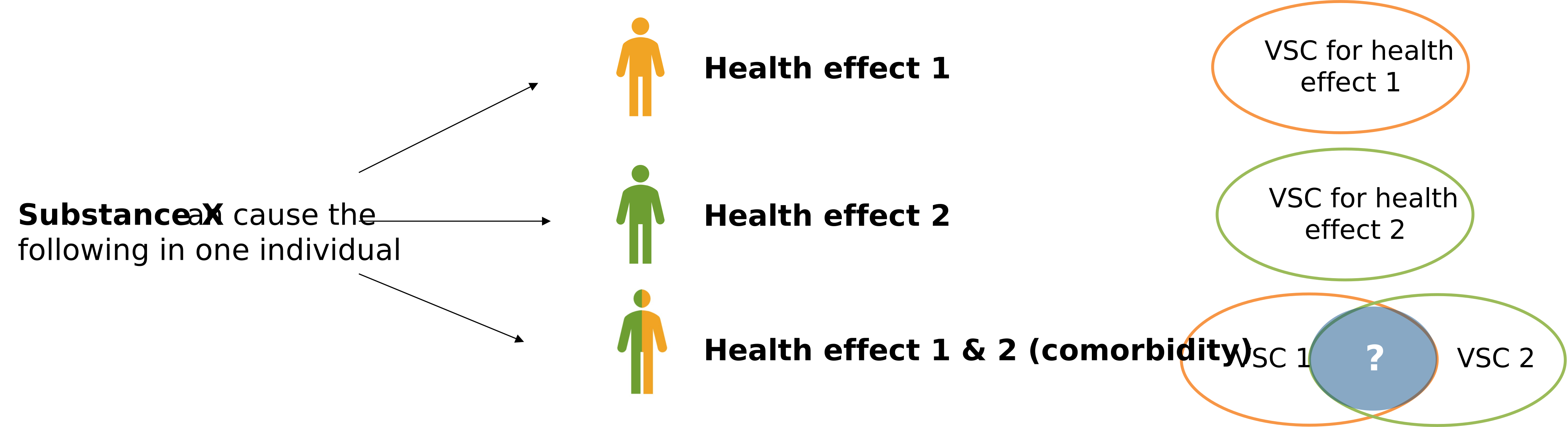
An additional layer of complexity arises from comorbidities associated with certain health conditions. A comorbidity is defined as a distinct medical condition that occurs in addition to a primary diagnosis. SWACHE health endpoint descriptions acknowledge this issue: for example, in the hypertension study, respondents are informed that high blood pressure increases the probability of developing stroke, kidney disease, dementia, and diabetes. A key methodological challenge is therefore to determine which value should be applied when a chemical exposure contributes to both hypertension and associated conditions such as chronic kidney disease, in order to avoid double counting. Careful definition of the scope of the risk assessments is required, with valuation aligned to the selected health endpoint and the underlying causal pathway, so as to prevent double counting across correlated health outcomes (OECD, 2018[11]). The VSC involving two health effects occurring simultaneously is also likely to lie between the higher VSC of the two health effects and the sum of the two VSCs, with the associated uncertainty represented by the question mark in Figure 6.2.
Source: Authors’ own elaboration.
6.3.2. Valuation of pre-existing conditions
In contexts where the health conditions valued in the SWACHE project are already present in individuals, the direct applicability of the SWACHE values is uncertain, given that the first two rounds of the project primarily assessed values for avoiding the development of health effects, with the exception of the asthma and skin sensitisation studies, which also elicited values for reductions in condition worsening. In the surveys, the valuation scenario typically asked respondents their WTP to reduce their risk of developing the disease, irrespective of whether they already had the condition. Additionally, in the chronic kidney disease, underactive thyroid and non-fatal cancer surveys, respondents diagnosed with the endpoint were excluded from the final sample.
To improve the applicability and accuracy of the survey results, one potential area of future work could include developing approaches for adapting valuation results to account for pre-existing conditions. The key methodological challenge is to derive, from the mean VSC to avoid a disease, an appropriate mean VSC to avoid the worsening of, or to reduce, an existing disease. For each endpoint covered in the SWACHE project, it may be useful to examine in further detail the survey responses concerning disease experience. This analysis could potentially help improve the understanding of how values change depending on an individual’s experience of the disease.
6.3.3. Guidance
When facing the possibility of occurrence of multiple health effects within the same individual, it is recommended to consider the two approaches described earlier – the straight‑addition approach and the highest‑value approach. Recent empirical research on the valuation of multiple health effects, together with recommendations by the US Environmental Protection Agency, suggest that the risk of overestimation from aggregating values is lower when baseline risks for the health effects considered are small, and that WTP is approximately additive across endpoints for small risk changes (Travers et al., 2026[8]; US EPA, 2024[7]). In line with these findings and recommendations, summing values may be appropriate when baseline risks and risk reductions for the health effects considered are relatively low and when the health effects are uncorrelated. However, careful consideration is still required to avoid potential double counting and overlap.
Finally, this section addresses the methodological challenges related to distributional outcomes in cost-benefit analyses (CBAs). In the SWACHE project, WTP estimates are derived from samples that are representative of the general population in terms of age, gender, education and geographical areas.3 However, exposure to harmful chemicals and environmental degradation disproportionately affects low-income communities, which are also more likely to suffer from existing comorbidities (OECD, 2024[12]; Navas, D’Alisa and Martínez-Alier, 2022[13]; Drupp et al., 2025[14]). Consequently, the health improvements resulting from policy interventions may be greater for socio-economically disadvantaged groups. Similarly, the value of health improvements occurring to disadvantaged groups may be larger than suggested by standard CBA (Adler, 2016[15]).
As discussed in Chapter 3, WTP values for reduced risk of developing health effects increase with income. This can create a mismatch between WTP values estimated for the general population and the economic benefits that primarily accrue to a specific subgroup. If ignored, this mismatch could lead to a mis-estimation of the economic benefits of a policy intervention. Importantly, it should be noted that adjusting WTP values according to income requires careful consideration as it may raise ethical questions.
An area for future research is a comparative analysis of how differences in policy effects and WTP influence total estimated benefits. For example, this could include a comparison of the estimated benefits of reducing chemicals exposure in a country, region, city, sector with and without taking these differences into account. Weighted cost‑benefit analysis is a possible approach for addressing distributional concerns and represents an important avenue for further research (Herrera-Araujo and Kostoupoulou, 2025[16]).
This report has presented a summary of OECD’s valuation work for ten health effects related to exposure to chemicals. The report also highlights how these values can be used in practice for assessing the economic benefits of policies, how the values can be used in non-surveyed countries and their applicability to non-chemicals related health outcomes that are also present in the SWACHE valuations. Finally, this chapter highlighted areas of methodological limitations and areas of future research. Despite the opportunities for further improvements discussed in this chapter, it should be noted that the SWACHE work represents the only known series of studies that conduct valuations for comparable health effects using consistent valuation methodologies across a large number of countries. As such, they represent the most comprehensive valuation work on chemicals-related health effects conducted to date.
References
[15] Adler, M. (2016), “Benefit–Cost Analysis and Distributional Weights: An Overview”, Review of Environmental Economics and Policy, Vol. 10/2, pp. 264-285, https://doi.org/10.1093/reep/rew005.
[3] DEFRA UK (2025), Title: 2025 Amendments to the Persistent Organic Pollutants Regulations, Annexes I, IV and V, covering two Statutory Instruments.
[14] Drupp, M. et al. (2025), “The Economics of Inequality and the Environment”, Journal of Economic Literature, Vol. 63/3, pp. 840-874, https://doi.org/10.1257/jel.20241696.
[4] European Union (2025), Registration, Evaluation, Authorisation and Restriction of Chemicals (REACH), https://eur-lex.europa.eu/legal-content/EN/TXT/?uri=CELEX:32006R1907.
[5] Garrod, G. and K. Willis (1999), Economic Valuation of the Environment: Methods and Case Studies.
[9] Hammerschmidt, T., H. Zeitler and R. Leidl (2003), “A utility‐theoretic approach to the aggregation of willingness to pay measured in decomposed scenarios: development and empirical test”, Health Economics, Vol. 13/4, pp. 345-361, https://doi.org/10.1002/hec.835.
[16] Herrera-Araujo, D. and M. Kostoupoulou (2025), Distributional Considerations in Policy Evaluation, https://valesor.eu/download/18.9ea4e0e19c47c9d0a82b0ce/1771840197955/Distributional-Considerations-in-Policy-Evaluation.pdf.
[2] Johnston, R. et al. (2017), “Contemporary guidance for stated preference studies”, Journal of the Association of Environmental and Resource Economists, Vol. 4/2, pp. 319-405.
[13] Navas, G., G. D’Alisa and J. Martínez-Alier (2022), “The role of working-class communities and the slow violence of toxic pollution in environmental health conflicts: A global perspective”, Global Environmental Change, Vol. 73, p. 102474, https://doi.org/10.1016/j.gloenvcha.2022.102474.
[12] OECD (2024), Environmental Justice: Context, Challenges and National Approaches, OECD Publishing, Paris, https://doi.org/10.1787/57616eb4-en.
[11] OECD (2018), Considerations for Assessing the Risks of Combined Exposure to Multiple Chemicals, OECD Series on Testing and Assessment, No. 296, OECD Publishing, Paris, https://doi.org/10.1787/ceca15a9-en.
[1] OECD (2018), Cost-Benefit Analysis and the Environment: Further Developments and Policy Use, OECD Publishing, Paris, https://doi.org/10.1787/9789264085169-en.
[6] Robinson, L. (2019), Reference Case Guidelines for Benefit-Cost Analysis in Global Health and Development.
[10] Ščasný, M., I. Zvěřinová and D. Dussaux (2023), “Valuing a reduction in the risk of very low birth weight: A large scale multi-country stated preference approach”, OECD Environment Working Papers, No. 217, OECD Publishing, Paris, https://doi.org/10.1787/dfd159a1-en.
[8] Travers, M. et al. (2026), Policy brief on the WTP to reduce risks arising from a multi-exposure on key VALESOR health endpoints, https://valesor.eu/download/18.9ea4e0e19c47c9d0a82b0d0/1771840198643/WTP-to-reduce-risks-arising-from-a-multi-exposure-on-key-VALESOR-health-endpoints.pdf.
[7] US EPA (2024), Guidelines for Preparing Economic Analyses (3rd edition), United States Environmental Protection Agency, https://www.epa.gov/environmental-economics/guidelines-preparing-economic-analyses-3rd-edition.
← 1. The survey instruments included a probability quiz.
← 2. An overrepresentation of higher income respondents could lead to an overestimation of the WTP, conversely, an underrepresentation could potentially lead to an underestimation of the WTP. In several countries covered by the chronic kidney disease, IQ loss, miscarriage and underactive thyroid surveys, higher‑income respondents were overrepresented, whereas in certain countries in the miscarriage survey they were underrepresented. Please refer to the respective working papers for more details.
← 3. Refer to Table 5.1 of Chapter 5 for details on the targeted sample of the study site for each survey.