This chapter introduces the OECD’s work on valuing non-fatal health effects associated with chemicals exposure. It explains the project background, the selection of the health effects covered and its geographic extent as well as key concepts in economic valuation of Willingness-To-Pay (WTP) and Value of a Statistical Case (VSC). Finally, the chapter sets out the objectives and contributions of this report, which notably include providing ready-to-use values for policy analysis and practical guidance for their application in cost-benefit analysis.
Economic Valuation of Chemicals‑Related Health Effects
A Practical Guide to Quantifying Morbidity Effects in Environmental Cost-Benefit Analysis

Abstract
Chemicals are the building blocks of countless processes and products. They are used or released across all industrial, commercial and consumer sectors – from production processes and emissions at industrial sites, to commercial products used in construction and manufacturing, and to consumer products such as clothing, paints and cleaning supplies. Chemicals enable the functioning of our society – they form the components in our transportation and heating, they protect our food, they enable touch screens on our mobile phones and computers. Humans are constantly exposed to chemicals in workplaces, outdoor environments and homes. While chemicals are necessary, some can also cause negative health impacts, if not properly managed. At one extreme, exposure to highly acutely toxic chemicals can lead to sudden death but exposures can also result in cancer, reproductive toxicity, or impacts on organs and organ systems. This report is focused on the valuation of such morbidity effects.
Governments in many countries have introduced national or regional chemicals management frameworks that industry must comply with to commercialise their chemicals or safely operate their facilities. This involves implementing regulatory frameworks and specific regulations to reduce and prevent the risk posed by hazardous chemicals to human health and the environment. Such policies may take the form of bans, restrictions on uses and emissions, requirements for end-of-life treatment, use of protective equipment as well as information and reporting requirements. While consumers weigh the costs of safer products when choosing between various purchase options, policymakers face not only human health considerations but also large-scale economic trade-offs between costs and benefits when assessing chemicals management options and environmental policies.
As part of introducing new policies, most governments are required to carry out a regulatory impact assessment weighing the costs and benefits of the action. In countries where chemicals management frameworks are lacking or perhaps do not exist, it is often argued that there are not enough resources to develop and implement such schemes and protections. Often the costs of administration and implementation are considered for the industry and for administrators, while the benefits in terms of improved human health are not.
This report is intended to help provide updated, state-of-the-art valuations for assessing the benefits of reduced or avoided chemicals-related health effects. The values presented here are unique not only because they represent the latest science in the field but also because they offer the first set of consistent, comparable valuation estimates that can be used for supporting national chemicals policies as well as for comparing the benefits of chemicals policies across countries. Moreover, since the health effects covered in this report can also be triggered by other health hazards, these values can also be applied outside of the chemicals context.
The OECD Surveys on Willingness-to-pay to Avoid negative Chemicals-related Health Effects (SWACHE) project aims to establish internationally comparable values of willingness-to-pay (WTP) to avoid negative health effects due to chemicals exposure. WTP is a measure used by economists to quantify economic benefits that arise from enacting a specific policy. WTP estimates can be derived from survey responses collected from a representative sample of a population. In chemicals policy, such values are then used to assess the economic benefits of a policy that addresses the impacts of chemicals on human health.
The SWACHE project is a collaborative project anchored in a long-standing effort to improve protection of human health and the environment. For more than 50 years, the OECD has assisted countries by developing and supporting the implementation of international standards and best practices that make their systems for managing chemicals as efficient and robust as possible, while protecting human health and the environment (OECD, 2025[1]; OECD, 2019[2]). The SWACHE project aligns with this objective by providing values needed for the benefits assessment of chemicals management programmes and policies.
The path towards the SWACHE project began with discussions in 2015 at both the Chemicals and Biotechnology Committee (CBC) and the Environment Policy Committee (EPOC), which led to a collaboration between chemicals regulators and economists. In 2016, the European Chemicals Agency (ECHA) hosted an OECD workshop to identify the practices used for cost-benefit analysis of chemicals management related policies in OECD countries (Alberini, 2017[3]; Chiu, 2017[4]). One of the gaps identified during this workshop was the lack of WTP values to support socio-economic benefit assessments and an associated recommendation to conduct coordinated valuation studies in relation to morbidity and environmental impacts of chemicals.
An expert group was established in 2017 to plan the design and implementation of a cross-country collaborative initiative, and to agree on the methodological approaches to be used. This was informed by the workshop on Supporting the socio-economic analysis of chemicals by allowing a better quantification and monetisation of morbidity and environmental impacts (SACAME), hosted by Canada in 2018, which examined case studies assessing the economic benefits of managing several chemicals and recommended the development of multi-country stated preference surveys (Dubourg, 2018[5]; Gabbert, 2018[6]; Holland, 2018[7]; Hunt and Dale, 2018[8]; Hunt and Dale, 2018[9]; Navrud, 2018[10]). This marked the beginning of the SWACHE project and the initial steps towards endpoint selection and WTP survey design.
After acknowledging the need to establish morbidity values related to chemicals exposure, the first step in carrying out the SWACHE project was to select the health effects to address. Policymakers in the countries participating in the SWACHE project, informed by input from stakeholders and experts, identified priority health endpoints for the development of WTP values within the SWACHE project, considering both regulatory relevance and gaps in the valuation literature. Priority health endpoints typically align with the Globally Harmonised System of Classification and Labelling of Chemicals (UN, 2025[11]). These include cancer, mutagenicity, reproductive toxicity, specific target organ toxicity, acute toxicity and impacts on the skin, eyes and respiratory systems. Regulators also expressed interest in health effects associated with endocrine disruption and neurotoxicity.
There are several endpoints that lead to regulatory scrutiny and might necessitate a benefits assessment in the context of a regulatory impact assessment and where an associated WTP value would be useful. For example, as of June 2025, 13 748 of the 21 719 substances (63.3%) registered under the European Union’s Regulation for Registration, Evaluation, Authorisation and Restriction of Chemicals (REACH) and the EU Regulation on Classification, Labelling and Packaging of substances and mixtures (CLP) have a classification for one or multiple hazards (European Union, 2025[12]; European Union, 2008[13]). Figure 1.1 presents an overview of the types of hazard classifications available for these substances. The most common classifications are for skin sensitisation and eye irritation, and acute toxicity, which refers to adverse effects that occur after a short (usually less than 24 hours) exposure to a chemical. Between one and two thousand substances are classified for each of cancer/mutagenicity, reproductive toxicity, and specific organ toxicity.
The health effects selected for the first two rounds of the SWACHE project are asthma severity and risk, infertility, very low birth weight, chronic kidney disease, IQ loss in children, underactive thyroid, miscarriage, hypertension, non‑fatal cancer, and skin sensitisation. All these health effects fall within at least one hazard classification category. Asthma falls under the “respiratory toxicity” hazard class. Chronic kidney disease and hypertension fall under “specific target organ toxicity”. Infertility, very low birth weight and miscarriage fall under “reproductive toxicity”, while skin sensitisation falls under “skin sensitisers”. Non-fatal cancer falls under “carcinogenicity/mutagenicity”. Some health effects may fall under more than one hazard class. For example, underactive thyroid may fall under “specific target organ toxicity” and “reproductive toxicity”. IQ loss may fall under “specific target organ toxicity” as well as “reproductive toxicity”, depending on the cause of the IQ loss. The categories shown in blue indicate hazard classes that include at least one health effect covered in the SWACHE project. The categories in green, i.e. eye irritants and acute toxicity do not include endpoints covered in the first two rounds of the SWACHE project.
Number of substances classified by denoted hazard class as of June 2025
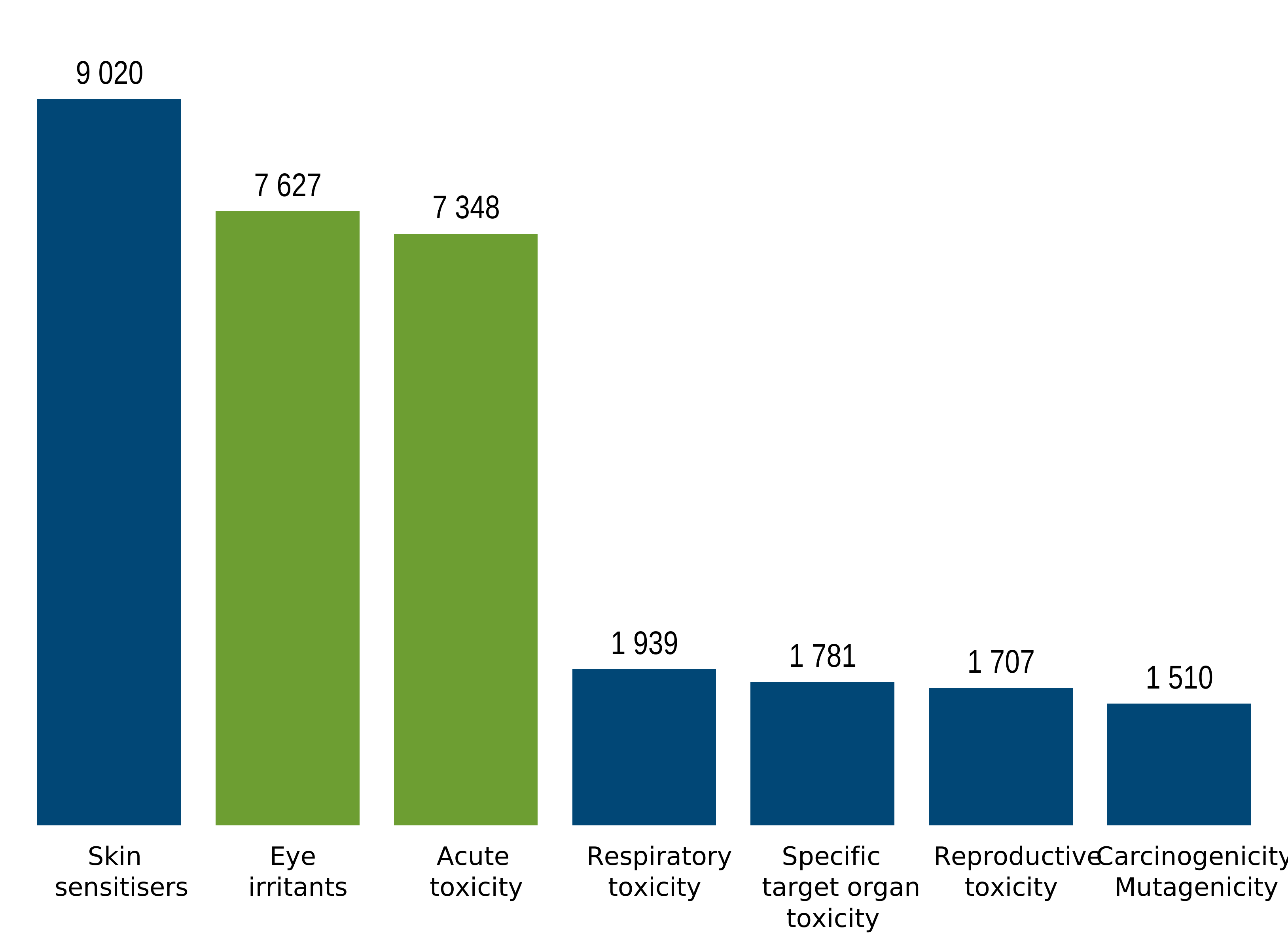
Note: All health effects selected for the SWACHE project fall within at least one hazard classification category. The categories shown in blue indicate hazard classes that include at least one health effect covered in the SWACHE project. The categories in green, i.e. eye irritants and acute toxicity do not include endpoints of the SWACHE project. Asthma falls under the “respiratory toxicity” hazard class. Chronic kidney disease and hypertension fall under “specific target organ toxicity”. Infertility, very low birth weight and miscarriage fall under “reproductive toxicity”, while skin sensitisation falls under “skin sensitisers”. Non-fatal cancer falls under “carcinogenicity/mutagenicity”. Some health effects may fall under more than one hazard class. For example, underactive thyroid may fall under “specific target organ toxicity” and “reproductive toxicity”. IQ loss may fall under “specific target organ toxicity” as well as “reproductive toxicity”, depending on the cause of the IQ loss.
Source: Christoph Rheinberger’s elaboration based on (European Union, 2025[12]).
Figure 1.2 summarises the health effects selected and covered in the SWACHE project. So far, two rounds of surveys have been completed. A third round of surveys is planned for 2027-2028 and will include immunotoxicity, dementia, attention deficit hyperactivity disorder (ADHD), respiratory allergy and liver disease.

Note: IQ stands for intelligence quotient, and ADHD stands for attention deficit hyperactivity disorder.
Once the health effects were selected, the SWACHE project implemented surveys in 28 countries. In these surveys, individuals were asked to report their WTP to reduce their risk of developing or worsening a specific health outcome. To date, two rounds of surveys were fielded as part of this project.
The first round was implemented in 2022 and covered 5 health endpoints. Each survey focusing on a specific health effect was conducted in at least 7 countries. In each country a representative sample of at least 1 200 respondents was collected. Overall, 1 to 5 surveys were implemented in 22 countries, totalling 46 surveys conducted. The second round covered 5 additional health effects and was carried out between 2023 and 2025 in 19 countries, for a total of 50 surveys conducted. Each survey was implemented in at least 9 countries. Across both rounds of surveys, 1 to 10 surveys were implemented in 28 countries, amounting to 96 surveys implemented and more than 116 000 respondents surveyed.
Table 1.1 displays, for each health endpoint, the countries in which the surveys were implemented and the type of values recommended for policy analysis. These recommended values are either WTP estimates or Value of a Statistical Case (VSC) estimates. VSC estimates are derived from WTP estimates and are often more convenient for use in policy analysis as they represent the value that a population assigns to avoiding one statistical case of a specific health effect. The definition of WTP and VSC values, along with the methodology used to derive them, is described just below in the section Valuation of morbidity in a consistent manner and summarised in Box 1.1.
Note: WTP stands for Willingness-To-Pay, VSC for Value of a Statistical Case. The study on cancer distinguishes between fatal and non-fatal cases. It estimates respondents’ WTP to avoid both types of outcomes, leading to a Value of Statistical Life (VSL) estimate for fatal outcomes and a value for non-fatal case - referred to in this report as the Value of a Statistical Case (VSC). In the working paper, this value is termed the Value of a Non-Fatal cancer case (VNF). For further details please refer to the working paper (Herrera-Araujo et al., 2026[14]).
The main challenge of the SWACHE project has been in valuing morbidity effects. Traditionally, the valuation of health impacts of chemicals has been driven by estimates related to mortality and the use of Value of Statistical Life (VSL) estimates. However, exposure to chemicals can also cause morbidity effects, i.e. illness and disease. Valuing morbidity is challenging given the heterogeneous nature of different disease and illness states, and the need to capture both the physical and psychological experience of suffering. Yet, it is vital for a complete assessment of policies and regulations that shape individuals’ health and well-being.
This section details the harmonised approach of the SWACHE project, which provides WTP and VSC estimates in a standardised manner. A steering group of experts including internationally renowned researchers, practitioners, regulators and health professionals provided regular feedback throughout the standardised process from the elaboration of the survey questionnaire to the data analysis. By using similar methodologies, survey design, approach to analyse survey data across many health impacts – and by implementing the surveys in parallel in a large number of countries – the SWACHE project offers a unique perspective that allows for the comparison of value estimates for non-fatal health impacts across health endpoints and countries.
1.5.1. What does willingness-to-pay capture?
Several approaches exist to place a monetary value on morbidity impacts, with the most comprehensive being estimates of WTP or Willingness-To-Accept (WTA). The value individuals place on the burden of morbidity can be inferred by measuring their WTP to reduce their risk of developing a disease, or by their WTA of bearing a higher-than-normal risk. The WTA compensation is less frequently used and WTP is generally considered best practice for non-market survey-based valuation studies (Freeman III, Herriges and Kling, 2014[15]).
In the context of the SWACHE project, WTP represents the maximum amount that individuals are willing to spend from their own income in order to reduce their personal risk of developing or worsening a specific disease. In the absence of WTP estimates, policymakers typically rely on cost-of-illness (COI) estimates, which reflect medical treatment costs, or on valuations of productivity losses, which are sometimes combined with COI. However, economic theory and empirical studies show that COI is generally an underestimate of WTP or a lower bound for the WTP measure (Alberini and Krupnick, 2000[16]; Harrington and Portney, 1987[17]; Berger et al., 1987[18]; Cropper et al., 2004[19]). These existing metrics only cover the impact of morbidity on lost productivity, lost earnings or the cost of treatment, whereas WTP extends beyond these components by also capturing the disutility of illness. WTP therefore reflects a broader physical, emotional, social, and economic burden of disease as perceived by individuals.
The elaboration of the survey questionnaires for SWACHE followed several steps and resulted in a harmonised introduction and series of debriefing questions specific to the health effect being valued. First, a description of the health effect was drafted including information about the related quality-of-life impact, a review of any prior stated preference studies on the same health effect and suggestions for how to characterise the endpoint in a new study. Second, various valuation scenarios were developed describing the target population, the risk reduction mechanism, the payment vehicle and the elicitation method. Third, a complete draft survey questionnaire was developed including the most appropriate valuation scenario. Each questionnaire was drafted by a team of authors that included recognised experts in the field of stated preference surveys related to health impacts as well as practitioners in the analysis of chemicals management options.
As a result, each SWACHE survey begins with a detailed and easily understandable description of the health endpoint to inform respondents of the potential symptoms, health impacts and treatments associated with the disease. For example, in the infertility survey, respondents are informed of the potential impacts of infertility on their lives and relationships. They are also informed that assisted reproductive technologies can help them to conceive, but that such treatments are costly and not always successful. In the underactive thyroid endpoint description, lifelong daily hormone treatment is mentioned. By detailing all these aspects of the respective disease, the survey aims to inform respondents about the context in which their WTP should be considered, thereby capturing their total WTP, including the potential cost and effort of treatment as perceived by respondents, potential loss of productivity, and the disutility associated with the disease.1
The disutility of disease includes the loss of value of non-market activities, such as maintaining a home or enjoying leisure time, as well as individual pain, suffering, discomfort and anxiety that the disease may cause. As illustrated in Figure 1.3, surveys may often be the only way to capture an individual’s WTP to reduce the risk of developing a disease and thus monetise the part of disutility of the health outcome that is not otherwise captured in monetary terms such as the value of lost income or the cost of treatment.

Source: Authors’ own elaboration based on (Navrud, 2018[10]; US EPA, 2000[20]; Drummond et al., 2015[21]).
1.5.2. Measuring willingness-to-pay through stated-preference surveys
Survey-based stated preference (SP) studies are often used to estimate the WTP for reducing the risk of developing or worsening a disease. Alternatively, WTP can sometimes be inferred from observed market behaviour. These approaches are referred to as Revealed Preference (RP) methods. The SWACHE project opted for SP studies for estimating the full WTP to reduce the risk for a specific health effect because relevant market transactions are typically unavailable for the health endpoints of interest. Thus, in the SP context, WTP is not based on observed market behaviour or actual expenditures. Instead, it is elicited through surveys that ask respondents how much they would be willing to pay for a hypothetical reduction in a specific morbidity risk. In order to minimise hypothetical bias, respondents are reminded about their budget constraint and instructed to behave as if the valuation scenarios were real and as if the WTP would actually be deducted from their budget. Box 1.1 summarises the key valuation concepts and methods used in this report.
Willingness-to-pay (WTP): the maximum money amount an individual is willing to pay to obtain a good or service or to avoid an undesirable outcome. In the context of the SWACHE project, it represents the maximum money amount individuals are willing to spend from their own income to reduce their risk of developing or worsening a specific health effect due to chemical exposure over a given period.
Value of a Statistical Case (VSC): the aggregate measure of individuals’ WTP for a marginal reduction in the probability of developing a specific adverse health endpoint. It is termed “statistical” because it does not refer to the illness of any identified individual, but to the aggregation of values placed on small changes in morbidity risk across a reference population. Indeed, the VSC corresponds to the WTP for a small decrease in the probability of developing a particular illness, normalised by the size of the risk change so that it reflects the value of preventing one case of disease. This normalisation also allows the VSC to be independent of a specific time horizon, as WTP is divided by the corresponding risk reduction defined over the same period. In other words, the VSC represents the monetary value that a population assigns to avoiding one case of a given health effect. For example, the VSC of miscarriage is the value that a population attributes to avoiding one case of miscarriage. VSC estimates are particularly convenient for policy evaluation as benefits of policies or programmes affecting human health are often expressed in terms of cases avoided. The corresponding monetary benefits can then be calculated by multiplying the number of cases avoided by the respective VSC.
Stated preference (SP) and Revealed Preference (RP): two primary approaches for eliciting an individual’s WTP for risk reduction. SP methods rely on surveys, asking respondents to state their preferences for specific changes in morbidity or severity risks in a hypothetical scenario. Such surveys may ask respondents directly for their WTP for a given (hypothetical) risk reduction or ask them to choose between scenarios with different risk and cost combinations. In contrast, RP methods observe actual behaviour in labour and consumer markets, focusing on trade-offs between morbidity risk and income, and between the cost of a product and its expected impact on the risk of developing an illness.
Contingent valuation (CV): a survey-based stated-preference valuation method where respondents are asked about their WTP for a hypothetical good or service, such as to reduce their risk of developing or worsening negative health effects
Double-bounded dichotomous choice (DBDC): a WTP elicitation format in which respondents answer two sequential yes/no questions about paying a specific amount for reducing their morbidity risk. If the first response is positive, the follow-up question typically proposes a higher bid; conversely, if the first response is negative, a lower follow-up bid is proposed.
Discrete Choice Experiments (DCE): a survey-based stated-preference valuation method where respondents are asked to make a series of choices between alternatives with different characteristics (attribute levels) and monetary costs. DCEs are preferred to CV when multiple dimensions of a health endpoint are assessed, as they allow capturing trade-offs between these dimensions.
The two SP methods used in the SWACHE project are Contingent Valuation (CV) method and Discrete Choice Experiments (DCE). When the study focused on a single dimension of the health effect – reducing the risk of developing or worsening the condition – a CV method using a Double-Bounded Dichotomous Choice (DBDC) was adopted. When the study addressed multiple attributes of a health effect, for example in the skin sensitisation survey where the location, duration, and severity of flare‑ups were considered, a DCE was used to capture these different components. The choice of method was tailored to each health endpoint, and careful harmonisation of the surveys enabled the derivation of comparable estimates across studies, as described above. Box 1.2 and Box 1.3 provide examples of a CV method using a DBDC format and a DCE, respectively.
The underactive thyroid survey relied on a double-bounded dichotomous choice (DBDC) format to assess respondents’ willingness-to-pay (WTP). Respondents were asked whether they would be willing to pay a specific monetary amount to buy safer products and reduce their own risk of developing an underactive thyroid. If they answered yes, a follow-up question asked whether they would pay an amount twice as large. If they answered no, a follow-up question asked whether they would pay an amount half as large. The payment was specified as an annual payment to be made for the next 20 years, coinciding with the time horizon of the risk reduction. Standard income and budget reminders were included before and during the WTP questions to ensure realistic responses.

Source: (Ahtiainen et al., 2026[22])
The skin sensitisation survey relied on a discrete choice experiment (DCE) to assess respondents’ willingness-to-pay (WTP). Respondents were presented with six consecutive choice cards. Each card presents a choice between three different options. The first option represented the current situation, and the other two represented alternative options that could be achieved by purchasing products free of skin sensitising chemicals. Each option was described by a series of attributes including the frequency of flare-ups, their location, their severity and the extra monthly household expenditure for products free of skin-sensitising chemicals. The payment was specified as a monthly payment to be made over the next 5 years, coinciding with the time horizon of the risk reduction.

Source: (Contu et al., 2026[23])
Most of the surveys used an explicit payment vehicle in the form of safer household products that would lower respondents’ risk of developing or worsening health effects related to chemicals exposure. These safer alternatives, such as safely packaged foods and beverages, safer cosmetics, cleaning products and pesticides, were presented as having a higher cost and described as identical in all other respects, without having any other health or environmental effects.
This report summarises and compares the economic valuation results of ten health endpoints that were derived through the SWACHE surveys in the 2022-2025 period and provides guidance on their direct application in policy analysis. The report also provides guidance on how the estimated values can be transferred and used in countries that have not benefitted yet from the SWACHE surveys and valuation of health effects.
The remainder of the report is structured as follows. Chapter 2 presents and compares the WTP and VSC estimates recommended for policy analysis of ten health effects for the surveyed countries. Chapter 3 discusses the drivers of preferences in WTP responses among individuals and among countries. Chapter 4 provides guidance on the use of SWACHE values in policy impact assessment, including cost-benefit analysis and break-even analysis. Chapter 5 offers additional guidance on applying SWACHE values in other countries and contexts, including results from a benefit transfer analysis that provide WTP and VSC estimates of ten health endpoints for all OECD Member countries and countries that have been surveyed at least once. Chapter 6 discusses the methodological limitations of the project and the need for additional research.
References
[22] Ahtiainen, H. et al. (2026), “Valuing a reduction in the risk of an underactive thyroid: A large-scale multi-country stated preference approach”, OECD Environment Working Papers, No. 272, OECD Publishing, Paris, https://doi.org/10.1787/4af8f3aa-en.
[3] Alberini, A. (2017), “Measuring the economic value of the effects of chemicals on ecological systems and human health”, OECD Environment Working Papers, No. 116, OECD Publishing, Paris, https://doi.org/10.1787/9dc90f8d-en.
[16] Alberini, A. and A. Krupnick (2000), “Cost-of-Illness and Willingness-to-Pay Estimates of the Benefits of Improved Air Quality: Evidence from Taiwan”, Land Economics, Vol. 76/1, p. 37, https://doi.org/10.2307/3147256.
[18] Berger, M. et al. (1987), “Valuing Changes in Health Risks: A Comparison of Alternative Measures”, Southern Economic Journal, Vol. 53/4, p. 967, https://doi.org/10.2307/1059689.
[4] Chiu, W. (2017), “Chemical risk assessment and translation to socio-economic assessments”, OECD Environment Working Papers, No. 117, OECD Publishing, Paris, https://doi.org/10.1787/a930054b-en.
[23] Contu, D. et al. (2026), “Valuing a reduction in the risk of skin sensitisation: A large-scale multi-country stated preference approach”, OECD Environment Working Papers, No. 277, OECD Publishing, Paris, https://doi.org/10.1787/fc305de9-en.
[19] Cropper, M. et al. (2004), “The demand for a malaria vaccine: evidence from Ethiopia”, Journal of Development Economics, Vol. 75/1, pp. 303-318, https://doi.org/10.1016/j.jdeveco.2003.02.006.
[21] Drummond, M. et al. (2015), Methods for the Economic Evaluation of Health Care Programmes, Press, Oxford University, https://nibmehub.com/opac-service/pdf/read/Methods%20for%20the%20Economic%20Evaluation%20of%20Health%20Care%20Programmes.pdf.
[5] Dubourg, R. (2018), “Economic assessments of the benefits of regulating mercury: A review”, OECD Environment Working Papers, No. 132, OECD Publishing, Paris, https://doi.org/10.1787/77045f1a-en.
[12] European Union (2025), Registration, Evaluation, Authorisation and Restriction of Chemicals (REACH), https://eur-lex.europa.eu/legal-content/EN/TXT/?uri=CELEX:32006R1907.
[13] European Union (2008), Regulation on classification, labelling and packaging of substances and mixtures, http://data.europa.eu/eli/reg/2008/1272/oj.
[15] Freeman III, A., J. Herriges and C. Kling (2014), The Measurement of Environmental and Resource Values, Routledge, https://doi.org/10.4324/9781315780917.
[6] Gabbert, S. (2018), “Economic assessment and valuations of environmental and health impacts caused by Perfluorooctanoic acid (PFOA) and its salts”, OECD Environment Working Papers, No. 128, OECD Publishing, Paris, https://doi.org/10.1787/f5250745-en.
[17] Harrington, W. and P. Portney (1987), “Valuing the benefits of health and safety regulation”, Journal of Urban Economics, Vol. 22/1, pp. 101-112.
[14] Herrera-Araujo, D. et al. (2026), “Valuing a reduction in the risk of non-fatal cancer: A large-scale multi-country stated preference approach”, OECD Environment Working Papers, No. 274, OECD Publishing, Paris, https://doi.org/10.1787/0345660e-en.
[7] Holland, M. (2018), “Socio-economic assessment of phthalates”, OECD Environment Working Papers, No. 133, OECD Publishing, Paris, https://doi.org/10.1787/a38a0e34-en.
[8] Hunt, A. and N. Dale (2018), “Economic valuation in 1-Methyl-2-pyrrolidone (NMP) regulation”, OECD Environment Working Papers, No. 131, OECD Publishing, Paris, https://doi.org/10.1787/ef67fa08-en.
[9] Hunt, A. and N. Dale (2018), “Economic valuation in formaldehyde regulation”, OECD Environment Working Papers, No. 134, OECD Publishing, Paris, https://doi.org/10.1787/c0f8b8e5-en.
[10] Navrud, S. (2018), “Assessing the economic valuation of the benefits of regulating chemicals: Lessons learned from five case studies”, OECD Environment Working Papers, No. 136, OECD Publishing, Paris, https://doi.org/10.1787/9a061350-en.
[1] OECD (2025), Chemical Safety and Biosafety Progress Report, No. 47, OECD, Paris, https://www.oecd.org/content/dam/oecd/en/topics/policy-issues/chemical-safety-and-biosafety/progress-report-june-2025.pdf.
[2] OECD (2019), Saving Costs in Chemicals Management: How the OECD Ensures Benefits to Society, OECD Publishing, Paris, https://doi.org/10.1787/9789264311718-en.
[11] UN (2025), Globally Harmonised System of Classification and Labelling of Chemicals (GHS), United Nations, https://unece.org/transport/documents/2025/09/standards/globally-harmonized-system-classification-and-labelling.
[20] US EPA (2000), Handbook for Non-Cancer Health Effects Valuation, United States Environmental Protection Agency, https://nepis.epa.gov/Exe/ZyNET.exe/P1009Y5G.TXT?ZyActionD=ZyDocument&Client=EPA&Index=2000+Thru+2005&Docs=&Query=&Time=&EndTime=&SearchMethod=1&TocRestrict=n&Toc=&TocEntry=&QField=&QFieldYear=&QFieldMonth=&QFieldDay=&IntQFieldOp=0&ExtQFieldOp=0&XmlQuery=.
← 1. The asthma endpoint survey is an exception because it explicitly asks respondents to focus only on the non-monetary benefits of avoiding or reducing asthma. This WTP therefore captures only the disutility associated with the disease. In these circumstances, the WTP for asthma can be added to the COI to provide a full morbidity valuation.