This chapter presents findings from modelling the health and economic impacts of scaling up eight non-pharmaceutical interventions to control the spread of infectious agents under five outbreak scenarios. It also examines key factors influencing population compliance with these interventions. The results are provided for 51 OECD, European Union/European Economic Area and Group of 20 countries. The chapter concludes with a discussion on the implications of these findings.
The Economic Case for Pandemic Preparedness and Response
Beyond Lockdowns

Abstract
Key messages
Non-pharmaceutical interventions (NPIs) are core public health measures used during outbreaks when pharmaceutical interventions are not yet available. By reducing the frequency of person-to-person interactions or making those interactions safer, NPIs help slow disease transmission, protect population health and prevent healthcare systems from reaching a breaking point. They also buy critical time for the development, production and deployment of pharmaceutical countermeasures.
During the COVID‑19 pandemic, OECD, European Union(EU)/European Economic Area (EEA) and Group of Twenty (G20) countries adopted different combinations of NPIs, adjusting the mix and stringency of measures as the pandemic evolved. In the early months of COVID‑19, almost all EU/EEA and G20 countries implemented sweeping measures, including school and workplace closures, travel restrictions and lockdowns. By the second half of 2021, most countries shifted towards more targeted approaches and by the end of 2022, highly stringent NPIs were largely lifted.
The majority of available evidence suggests that NPIs can help mitigate the spread of outbreaks. However, the magnitude of their precise effectiveness remains difficult to measure due to the high level of variation in their design and implementation across settings. Despite their protective effects on population health and the economy, they also come with a broad range of unintended consequences (e.g. on the labour market, mental health, educational outcomes). Policymakers who consider applying NPIs should carefully weigh options that would help maximise both the health and economic outcomes.
Applied to five scenarios based on pathogens similar to those with pandemic potential (i.e. Ebola-like, avian influenza-like, influenza A-like, coronavirus-like and measles-like outbreaks), the OECD Strategic Public Health Planning Model (SPHeP) for pandemic preparedness and response (PPR) shows:
The timing of scaling up NPIs is critical. When NPIs are implemented early and effectively, reliance on lockdowns can be reduced substantially. Using lockdowns as a last resort in the absence of other NPIs in place is both less effective in saving lives and more damaging to economies in 50 OECD, EU/EEA and G20 countries (11.7%‑28.9% decline in gross domestic product [GDP] in the first nine months of the outbreak). Across most outbreak scenarios, timely and robust deployment of NPIs is sufficient to avoid lockdowns altogether.
Across all outbreak scenarios, the modelled NPI packages could considerably reduce the health impacts of pandemics. Even the least stringent option, combining community-based infection prevention and control (IPC) and voluntary quarantines (i.e. the “Safer contact” package) is estimated to avert at least 40% of deaths in the first nine months of the outbreak compared to an unmitigated outbreak, while resulting in moderate economic impacts (2.5%‑8.6% decline in GDP).
A layered implementation of NPIs, which would entail adding more stringent measures as needed, can protect population health while limiting economic disruption. Escalating to the “Reduced contact” package (i.e. the “Safer contact” package plus expanded teleworking, domestic travel restrictions and mandatory quarantines) is sufficient to avert the vast majority of deaths across most scenarios. This approach helps cushion economic losses in all outbreak scenarios.
When implemented early and effectively, escalating to the “Reduced contact” package can avoid the need for more disruptive interventions such as school closures and international travel restrictions.
However, the overall effectiveness of NPIs depends strongly on the level of public compliance with the recommended public health actions. When compliance is low, lockdowns may be necessary to control disease transmission.
Wastewater surveillance can enhance the protective impacts of NPIs by supporting earlier and more targeted action. In a coronavirus-like outbreak, guiding the “Safer contact” package with wastewater data could prevent an additional 41% of deaths across the 51 OECD, EU/EEA and G20 countries included in the analysis that would have otherwise occurred when relying solely on data gathered from clinical surveillance. Wastewater surveillance can remove the need for lockdowns in many cases and support more targeted lockdowns, reducing their duration by up to 90% in certain scenarios.
Non-pharmaceutical interventions (NPIs) are core public health measures used during outbreaks. These measures, ranging from physical distancing to hand hygiene and mask wearing, aim to slow transmission without relying on pharmaceutical tools such as therapeutics, diagnostics or vaccines. By reducing the frequency of person-to-person interactions or by making such interactions safer, NPIs help protect vulnerable populations, prevent health systems from reaching a breaking point and preserve essential healthcare services. They also create the necessary time and space for the development, production and deployment of pharmaceutical countermeasures once they become available. Even after vaccines or therapeutics are deployed, NPIs continue to reduce transmission, extend protection to those who are not vaccinated or only partially protected and help contain new variants.
NPIs have long been part of the public health response to outbreaks. They formed the foundation of response efforts during the 2003 SARS outbreak, the 2009 H1N1 influenza pandemic and the 2012 MERS-CoV epidemic (Björk et al., 2025[1]). However, it was the COVID‑19 pandemic that tested these interventions on a global scale. Countries adopted different combinations of NPIs, often adjusting the mix and stringency of measures as epidemiological conditions evolved. While some governments relied on compulsory restrictions, others placed greater emphasis on guidance and voluntary adherence. Across all settings, effective implementation required sustained co‑ordination between national and subnational authorities, close engagement with communities and timely communication to maintain public trust and compliance.
This chapter examines the effectiveness of NPIs in safeguarding population health and mitigating wider economic disruption during the initial phases of large‑scale outbreaks caused by pathogens with epidemiological traits similar to those with pandemic potential. The analysis focusses on eight NPIs that were widely applied across OECD countries during COVID‑19 (OECD, 2023[2]); consistent with international guidance on pandemic preparedness and response (PPR) (Independent Panel, 2021[3]) and they are supported by evidence that enables robust modelling of their impacts. The chapter also considers how these interventions interact with broader PPR capacities, including surveillance systems such as wastewater monitoring, which can enhance the timely detection of viral activity and support more targeted application of NPIs. The analysis concentrates on how these interventions mitigate transmission within communities rather than their potential role in preventing cross-border spread. Preparing a broader clinical response, for example through the stockpiling of antivirals and other therapeutics or the procurement and deployment of vaccines, lies outside the scope of this chapter. While these pharmaceutical countermeasures are essential components of PPR, the analysis focusses specifically on NPIs that can be deployed in the early phases of an outbreak, before such tools become available at scale.
A distinction can be drawn between two categories of investment in pandemic risk management. Primary prevention seeks to reduce the risk of pathogen spillover from animals to humans at its source, for example, through curbing deforestation, regulating the wildlife trade and strengthening biosecurity at the human-animal interface. These activities aim to help reduce the risk of an outbreak occurring in the first place. Post-emergence preparedness and response, by contrast, comprises the measures deployed once a pathogen is already circulating in human populations, including NPIs and medical countermeasures. The analysis presented in this chapter concerns the latter. This focus does not imply that prevention is a lower priority. A growing body of evidence indicates that primary prevention promises a favourable return on investment (Dobson et al., 2020[4]), with one assessment estimating its annual cost at less than one‑twentieth of the value of lives lost each year to emerging zoonoses (Bernstein et al., 2022[5]).
The chapter is structured as follows. It starts by reviewing the evidence on the implementation of the selected NPIs across 51 OECD, EU/EEA and G20 countries during the COVID‑19 pandemic, as well as the evidence on the effectiveness of each intervention. Next, the chapter explores the latest evidence on the factors that determine the level of public compliance with the NPIs. The chapter then reports the results on the health and economic impacts of implementing the selected NPIs under five pandemic scenarios discussed in Chapter 3, with particular attention to the added value of wastewater surveillance. The chapter concludes by discussing key policy considerations and implications of findings.
From late January to March 2020, almost all OECD, EU/EEA and G20 countries introduced sweeping measures, from school and workplace closures and stay-at-home orders to domestic and international travel restrictions (Figure 7.1). For example, some countries implemented highly restrictive stay-at-home orders that required people to remain in their homes with only certain exceptions (e.g. daily exercise or essential trips). These measures came with deep short-term economic consequences, from lost economic output to supply chain disruption, but countries accepted them as the price of preventing uncontrolled transmission and health system collapse (OECD, 2020[6]). Countries started to shift their approaches by the second half of 2021, with many countries replacing highly stringent NPIs with more targeted measures (e.g. adapted schooling approaches instead of long-term nationwide school shutdowns). By the end of 2022, NPIs that caused substantial disruption in daily life were largely lifted across all 51 countries included in the analysis.
Number of countries that implemented the selected non-pharmaceutical interventions, OECD, EU/EEA and G20 countries, 1 January 2020 to 31 December 2022

Note: The figure represents the number of countries that implemented the selected NPIs on each day between 1 January 2020 and 31 December 2022. School closures refer to restrictions that require closing all levels of schooling; Workplace closures refer to restrictions that require closing (or work from home) for all-but-essential workplaces (e.g. grocery stores, doctors); Stay-at-home restrictions refer to requirements for not leaving the house with exceptions for daily exercise, grocery shopping and essential trips or minimal exceptions (e.g. allowed to leave once a week or only one person can leave at a time); domestic travel restrictions refer to restrictions on internal travel between regions/cities and international travel restrictions refer to ban on international travel from/to for all regions or total border closure.
Source: Data retrieved from Hale et al. (2021[7]), the Oxford COVID‑19 Government Response Tracker (OxCGRT).
7.2.1. Physical distancing measures
Physical distancing measures are, at their core, a set of interventions that aim to keep people apart often enough to slow the spread of disease. By limiting close contact, physical distancing can minimise the risk that an infected individual will pass a disease to a susceptible individual, as was documented in previous outbreaks such as MERS-CoV, SARS-CoV‑1 and SARS‑CoV‑2 (Chu et al., 2020[8]). During the COVID‑19 pandemic, countries rolled out a wide range of physical distancing measures. Some banned small gatherings, while others limited the mobility of certain vulnerable groups (e.g. older people), shut down businesses and/or imposed full lockdowns (OECD, 2023[2]). The timing and strictness of physical distancing measures also varied not only across countries but also between regions within the same country.
The COVID‑19 pandemic led to a stark shift in mobility patterns across OECD, EU/EEA and G20 countries in the early days of the outbreak (Figure 7.2). In the OECD, for example, retail, transit and workplace mobility fell dramatically by the second quarter of 2020, by around 35‑40% compared to pre‑COVID‑19, while time spent at home rose by 14%. Mobility recovered through 2021 but remained below pre‑pandemic levels. By the end of 2022, retail and recreational activities and transit mobility returned to pre‑pandemic levels across OECD, EU/EEA and G20 countries, yet workplace mobility remained slightly below the pre‑pandemic levels in OECD and EU/EEA countries.
Percentage change in mobility patterns compared to a 5‑week baseline period from 3 January to 6 February 2020, OECD, EU/EEA and G20 countries, 2020‑2022

Note: The figure above shows the changes in mobility patterns by place from 15 February 2020 to 15 October 2022. The Google Community Mobility Reports define the baseline date as the median value, for the corresponding day of the week, during the 5‑week period Jan 3–Feb 6, 2020. Retail and recreation refers to places such as restaurants, cafes, shopping centres, theme parks, museums, libraries and movie theatres; transit stations refer to public transport hubs such as subways, bus and train stations; residential refers to places of residence and workplaces refer to places of work. Quarterly mobility patterns were calculated by aggregating daily data on the percentage change in the mobility patterns by each place category.
Source: Google Community Mobility Reports (Google LLC, 2022[9]).
The large variation in the rollout of physical distancing measures makes it difficult to measure their precise impact. Still, there is an agreement that physical distancing helped blunt the spread of the COVID‑19 outbreak, delayed the peak of the pandemic and eased the pressure on health systems. For example, one Cochrane review quantified that physical distancing measures were associated with 37‑88% reduction in the basic reproduction number of the outbreak (i.e. the average number of people that an infected individual would infect in a susceptible population), 44‑96% reduction in the incidence of SARS‑CoV‑2 and 31‑76% reduction in attributable mortality (Nussbaumer-Streit et al., 2020[10]). Subsequent studies broadly confirmed these findings (Murphy et al., 2023[11]; Sun et al., 2022[12]).
While physical distancing measures seemed to have helped protect public health during the COVID‑19 pandemic, they also carried steep social and economic costs. Prior OECD analysis shows that the gross domestic product (GDP) contracted sharply in 2020, by 5.5% in OECD economies and 7.5% in the Euro area, considerably higher than the average decline of 3.8% in G20 countries and the global average of around 4.2% (OECD, 2020[6]). Physical distancing measures have been suggested to play a major role in the observed shrinkage of economies (OECD, 2021[13]). Many households confronted declines in their disposable income, despite efforts in many OECD countries to shield them from the direct economic impacts of the outbreak (Ibid). Unemployment rose across the OECD, with the average unemployment rate rising from 5.4% in the first quarter of 2020 to 8.6% in the second quarter (Ibid). Mental health also deteriorated markedly, with symptoms of distress peaking during periods when physical distancing requirements were most stringent (OECD, 2021[14]; OECD, 2021[15]).
7.2.2. Temporary school closures
Classrooms bring together large groups of children who often gather closely, interact frequently and do not always follow hygiene guidelines, making schools efficient hubs for spreading infections. While closing schools, even temporarily, can interrupt the chain of transmission, this intervention is one of the most disruptive measures governments can use to curb the spread of an outbreak.
During COVID‑19, temporary school closure and school-based measures were used widely across countries (Figure 7.3). Overall, OECD, EU/EEA and G20 countries followed nearly identical trajectories. In most countries included in the analysis, temporary school closures were at their strictest during the second quarter of 2020, reflecting nationwide school and university closures. Restrictions gradually eased over 2021, though intermittent tightening occurred in early 2021 as new infection waves emerged. By the last quarter of 2021, most countries shifted to partial or localised school closures and by the second quarter of 2022, schools and universities were largely open across most countries included in the analysis.
Percentage of countries that implemented school and university closures at different levels of stringency

Note: Data captures closings of schools and universities. No measure = no recommendations/requirements for schools and university closures (grey shading); Low stringency = recommend closing or all schools open with alterations resulting in significant differences compared to non-COVID‑19 operations (light blue shading); Medium stringency = require closing only some levels or categories (e.g. high schools or only public schools) (medium blue shading); High stringency = require closing all levels (dark blue shading).
Source: Data retrieved from Hale et al. (2021[7]), Oxford COVID‑19 Government Response Tracker (OxCGRT).
Studies suggest that temporary school closures can help slow the spread of infections during outbreaks. Most studies link school closures to fewer new cases and sizable drops in the basic reproduction number of the studied pathogen, with estimates showing declines from 39% to 73% (Mendez-Brito, El Bcheraoui and Pozo-Martin, 2021[16]). However, the effectiveness of these interventions depends heavily on how widespread the pathogen is already in the community and whether there are other NPIs in place. Other school-related policies such as phased re‑openings, smaller classroom sizes, staggered schedules and alternating attendance days (e.g. in-person school for certain grades) have also been shown to be effective during COVID‑19 in reducing the number of new cases and hospitalisations (Krishnaratne et al., 2022[17]).
Evidence on re‑opening schools is more mixed. In one study from the United States, the re‑opening of schools was associated with a 12.3% increase in the basic reproduction number of SARS‑CoV‑2 between April and May 2020 (Davies et al., 2022[18]), whereas in Finland studies found no clear link between school re‑openings and the incidence of SARS‑CoV‑2 (Haapanen et al., 2021[19]). Studies from Germany and Japan reported similar findings. When schools re‑opened alongside other NPIs such as mask-wearing and hand washing, they did not appear to drive a wider spread (Isphording, Lipfert and Pestel, 2021[20]; Fukumoto, McClean and Nakagawa, 2021[21]).
School closures may slow the spread of outbreaks, but they disrupt education and learning. Data from the World Bank suggested that during the first phase of the crisis, on average, students lost between one‑third up to a half years’ worth of learning (Patrinos, Vegas and Rohan, 2022[22]). Another study estimated that the percentage of 10‑year‑olds who cannot read increased from 57% to 70% in low-income countries (Munoz-Najar et al., 2022[23]). OECD countries introduced several measures to limit the adverse impacts of school closures during the COVID‑19 pandemic (Box 7.1).
Korea entered the COVID‑19 pandemic with a well-established foundation for digital learning. The first set of Master Plans (1996‑2010) focussed on building a nationwide information and communications technology (ICT) infrastructure, developing digital learning platforms and strengthening teacher capacity through formal ICT skills standards and accreditation systems (World Bank, 2022[24]). These plans were fully financed and systematically implemented, resulting in universal school connectivity. Subsequent Master Plans (2011‑2018) shifted the focus toward improving equity and quality in EdTech provision and enabling more flexible and personalised learning (Ibid).
When COVID‑19 struck, this long-term investment enabled Korea to pivot to online learning rapidly. Following three postponements of the 2020 school year, Korea transitioned to online learning in April 2020 and rolled out remote classes progressively by grade level (World Bank, 2022[24]). By the end of April 2020, 99% of Korea’s 5.34 million students were participating in online schooling. Even after schools partially opened in May 2020, attendance remained capped at two‑thirds capacity depending on local distancing requirements (Ibid). Overall, Korean students had online learning for more than half of their school days in 2020. This is far below the legally required 190 days of face‑to-face instruction.
A COVID‑19 Prevention Task Force, convened by the Ministry of Education in February 2020, co‑ordinated a comprehensive response built around three pillars: disease control, continuity of learning and childcare. Korea’s strategy included the following measures:
Schools received clear guidance on when to close and on online teaching, along with funding to build digital infrastructure. Teachers were given time before each online semester to prepare for online teaching.
Educators had access to extensive online teaching materials and regular emergency communication to facilitate their adjustment to online teaching.
Students received broad support for shifting to distance learning (e.g. digital device rentals, access to an online, public learning system that aimed to resolve any technical difficulties)
Despite the shift to hybrid learning, overall student performance in Korea has been shown to remain broadly stable during the pandemic. Evidence from primary schools points to continued learning gains, whereas students in middle and upper secondary levels experienced modest learning losses alongside widening disparities in achievement (World Bank, 2022[24]).
Source: World Bank (2022[24]), EdTech in COVID‑19 Korea: Learning with Inequality, https://thedocs.worldbank.org/en/doc/286e9d2e22dd4122f15249083ca84772-0200022022/original/EdTech-paper-4-29.pdf.
A recent systematic review of COVID‑19 impact on students, teachers, parents and administrators found that in-person classes remained the most effective way to teach and learn during the pandemic (Tri Sakti et al., 2022[25]). This study highlighted that distance learning offered flexibility and innovative learning solutions but it warned that distance learning can reduce student engagement, weaken student performance, create heavier workloads for teachers and limit the opportunities for communication and socialisation (OECD, 2021[15]).
The cost of school closures extends well beyond education and learning. A growing body of evidence shows that school closures took a toll on children’s and adolescents’ mental health and well-being during the COVID‑19 pandemic (Tri Sakti et al., 2022[25]; Ludwig-Walz et al., 2023[26]; Viner et al., 2022[27]). Families felt the strain, too, with many parents losing workdays, income or paying extra for childcare (Skarp et al., 2021[28]). These ripple effects raised questions about the broader societal cost of school closures in the long term (Vardavas et al., 2021[29]; Pasquini-Descomps, Brender and Maradan, 2017[30]).
7.2.3. Teleworking arrangements
Teleworking refers to the practice of working from a location other than the traditional office setting by using information and communications technologies (ILO, 2020[31]). Teleworking can help curb the spread of an outbreak by limiting the need for employees to commute to and from the office, which in turn reduces the risk of exposure to pathogens in public transportation or through shared spaces such as elevators and offices. Teleworking can also minimise the number of people present at the office at any given time (e.g. staggered shift schedules, flexible work arrangements), limiting the opportunities for the spread of an outbreak.
The COVID‑19 pandemic brought a large‑scale experiment in teleworking. The share of work that shifted to teleworking varied substantially across countries, industries and types of jobs (OECD, 2021[32]). Some sectors, such as knowledge‑intensive services, shifted to remote working arrangements with relative ease and have been shown to benefit from increased productivity and higher worker satisfaction (ibid). Other occupations, especially those with high levels of physical and manual proximity, had a low potential for telework.
Workplace policies were widely used across OECD, EU/EEA and G20 countries as a core measure to contain the spread of the COVID‑19 pandemic (Figure 7.4). At the outset, most governments adopted moderately stringent policies which required telework or closures for selected sectors or categories of workers. As COVID‑19 cases and deaths surged in early 2021, many countries escalated to the most stringent levels of workplace restrictions, mandating remote work for all but essential services (e.g. food retail and healthcare). Although restrictions gradually eased thereafter, some form of workplace policies (i.e. either recommendations or requirements for teleworking) remained in place in many countries throughout the rest of 2021. By the second quarter of 2022, most countries returned to having no teleworking requirements.
Percentage of countries that implemented workplace policies at different levels of stringency

Note: Data captures closure of workplaces. No measure = no recommendations/requirements for workplace closures (grey shading); Low stringency = recommend closing (or recommend work from home) or all businesses open with alterations resulting in significant differences compared to non-COVID‑19 operations (light blue shading); Medium stringency = require closing (or work from home) for some sectors or categories of workers (medium blue shading); High stringency = require closing (or work from home) for all-but-essential workplaces (e.g. grocery stores, doctors) (dark blue shading).
Source: Data retrieved from the Oxford COVID‑19 Government Response Tracker (OxCGRT) (Hale et al., 2021[7]).
The precise effectiveness of teleworking policies remains uncertain. A systematic review examining measures such as extended weekends and teleworking during past influenza outbreaks in OECD countries such as Australia, Canada, Sweden and the United States found that when community transmission was low, teleworking was associated with a median reduction of about 23% in the cumulative influenza attack rate (i.e. the proportion of the population that became infected over the course of the outbreak) (Ahmed, Zviedrite and Uzicanin, 2018[33]). However, the review could not isolate the specific contribution of teleworking from other interventions rolled out at the same time. More recent evidence from COVID‑19 suggests that teleworking was effective in reducing SARS‑CoV‑2 transmission and supported the easing of physical distancing measures without triggering a rise in new cases (Burzyński et al., 2021[34]).
Teleworking policies can have broader social and economic consequences beyond their role in reducing transmission. Recent OECD analysis shows that the capacity to work remotely varies widely across labour markets (Box 7.2), depending on job type, firm characteristics and regional factors (OECD, 2021[35]). For companies, mandatory teleworking can generate additional costs related to technology adoption and organisational restructuring, while for workers it may hinder career progression and networking opportunities (OECD, 2021[35]). Evidence from France indicates that teleworking can also disrupt workload patterns and make it more difficult for employees to set boundaries between work and personal life (Vayre et al., 2022[36]). A complementary systematic review reported that extensive teleworking was associated with reduced self-rated performance and higher employee turnover (Mutiganda et al., 2022[37]), as well as greater psychosocial strain (Antunes et al., 2023[38]).
Estonia is among the best performers in terms of providing key public services digitally in Europe (European Commission, 2024[39]). The country entered the COVID‑19 pandemic with one of the strongest digital foundations in the OECD, which enabled a relatively smooth and rapid transition to teleworking when lockdowns and physical distancing measures were introduced.
Sustained investment in nationwide digital infrastructure, dating back to the early 1990s, had created near-universal internet access, high digital literacy and a mature ecosystem of digital public services. At the outset of the pandemic, teleworking was already widespread in digital-intensive sectors such as information and communication services, finance and professional and technical fields (Piirsalu-Kivihall et al., 2023[40]).
When COVID‑19 triggered a sudden shift to telework by March 2020, more than 41% of Estonian employees were able to transition immediately (Ibid). Public sector organisations supported this shift by offering secure, well-equipped workspaces outside major urban centres and by modernising recruitment practices to remove geographic constraints. For example, the state‑owned real estate company Riigi Kinnisvara AS opened decentralised, fully equipped workstations in smaller towns, reducing commuting needs (Piirsalu-Kivihall et al., 2023[40]).
Source: European Commission (2024[39]), Estonia 2024 Digital Decade Country Report, https://digital-strategy.ec.europa.eu/en/factpages/estonia-2024-digital-decade-country-report; Piirsalu-Kivihall et al. (2023[40]), Acceleration of Remote Work and Coworking Practices in Estonia During the COVID‑19 Pandemic, https://doi.org/10.1007/978‑3‑031‑26018‑6_3.
7.2.4. Community-based infection prevention and control (IPC) measures
As discussed in more detail in Chapter 5, community-based IPC measures (e.g. hand hygiene, respiratory etiquette) broadly refer to the public health interventions that aim to prevent and control the spread of community-acquired infections. Most previous studies agree that community-based IPC measures are an effective tool to mitigate the spread of outbreaks, though much like other NPIs, the size of the protective effects varies depending on the study settings, the type of infection and whether people follow the recommended guidelines. High compliance by the public can make community-based IPC measures powerful enough to safeguard not only population health and the economy as a whole but also limit the need for resorting to more restrictive measures such as business closures or lockdowns.
7.2.5. Domestic and international travel restrictions
Travel restrictions aim to slow the spread of a pathogen by limiting or controlling people’s movements. By reducing mobility, these measures can delay the arrival of infections in areas with little or no transmission, lower the risk of spread in crowded transport hubs such as airports and simplify contact tracing by reducing the number of potential exposures that must be identified and monitored.
The 2005 WHO International Health Regulations recognised that travel restrictions can buy valuable time for countries to prepare for outbreaks, but they also warned that unnecessary restrictions may impede the delivery of aid and technical support while imposing heavy economic and social burdens (Vaidya et al., 2020[41]). Yet, countries have increasingly relied on travel restrictions to manage their response to outbreaks. During the 2009 H1N1 influenza pandemic, some countries imposed travel advisories and entry limits (Vaidya et al., 2020[41]). The number of countries that adopted travel restrictions increased during the 2014‑2016 Ebola epidemic, with nearly one‑quarter of countries introducing bans on travellers from affected regions (Rhymer and Speare, 2016[42]).
This trend intensified during COVID‑19. Although the International Health Regulations Emergency Committee initially discouraged travel restrictions in January 2020 (WHO, 2020[43]), mobility restrictions became widespread in the early months of the pandemic. Many countries introduced systematic approaches to inform the implementation of these policies (Box 7.3).
In November 2020, during the second wave of COVID‑19, Italy introduced a colour-coded system to mitigate the spread of the outbreak and avoid overwhelming regional health systems. Using 21 epidemiological and health system indicators developed by the Ministry of Health, the framework classified each of the country’s 20 administrative regions into white, yellow, orange or red zones, with each colour delineating a level of risk for infections. These indicators were selected because they captured each region’s disease surveillance capacity, the testing, tracking and tracing (TTT) capabilities, transmission dynamics of the outbreak and the resilience of the regional health services (Paroni et al., 2021[44]).
Each colour code was tied to specific travel rules and restrictions (Italian Ministry of Health, 2020[45]). White zones were deemed the safest regions and these zones allowed free movement across regions. Yellow zones introduced moderate restrictions while orange zones limited interregional travel only to essential reasons. Red zones imposed the strictest travel restrictions, barring entry to and exit from the region altogether (Presidency of the Council of Ministers, 2020[46]). In all zones, additional restrictions were imposed, for example, on shopping and social gatherings. Holders of a “Green Pass” (i.e. an exemption given to people with a proof of vaccination, negative test or recent recovery from a COVID‑19 infection) were exempt from some restrictions (ItaliaPass, 2022[47]).
Emerging evidence suggests that stricter travel rules helped curb the transmission of disease within the community but they may have also come at a significant cost. One study estimated that red-zone restrictions, which halted most movement, were associated with a halving of new infections every 13 days, as well as reducing hospitalisations and ICU occupancy by half within 30 to 40 days (Pelagatti and Maranzano, 2021[48]). Yet, another study estimating the mental health outcomes of the general population three to four weeks into the lockdowns during the first wave of COVID‑19 found high rates of symptoms related to post-traumatic stress disorder, depression, anxiety and insomnia (Rossi et al., 2020[49]).
Source: Paroni et al. (2021[44]), “The Traffic Light Approach: Indicators and Algorithms to Identify Covid-19 Epidemic Risk Across Italian Regions”, http://doi.org/10.3389/fpubh.2021.650243; Italian Ministry of Health, (2020[45]), “Nuovo Coronavirus”, www.salute.gov.it/portale/nuovocoronavirus/archivioNormativaNuovoCoronavirus.jsp; Presidency of the Council of Ministers (2020[46]), Decreto del presidente del consiglio dei ministri 24 ottobre 2020, https://www.gazzettaufficiale.it/eli/id/2020/10/25/20A05861/sg; ItaliaPass (2022[47]), “Italy Green Pass”, https://italygreenpass.com/travel-to-italy/; Pelagatti and Maranzano (2021[48]), “Assessing the effectiveness of the Italian risk-zones policy during the second wave of COVID-19”, https://doi.org/10.1016/j.healthpol.2021.07.011. Rossi et al. (2020[49]), “COVID-19 Pandemic and Lockdown Measures Impact on Mental Health Among the General Population in Italy”, http://doi.org/10.3389/fpsyt.2020.00790.
Most countries shifted from no restrictions in the first quarter of 2020 to strict limitations on movement between regions and cities by the second quarter (Figure 7.5). While many of these measures eased toward the end of 2020, renewed waves in early 2021, particularly within EU/EEA countries, triggered another round of tightening. From mid‑2021, domestic movement restrictions declined steadily and by 2022, nearly all countries had fully restored internal mobility.
Percentage of countries that implemented domestic travel restrictions at different levels of stringency

Note: Data captures domestic travel restrictions. No measures = no recommendations/requirements for domestic travel restrictions (grey shading); Low stringency = recommend not to travel between regions/cities (light blue shading); High stringency = internal movement restrictions in place (medium blue shading).
Source: Data retrieved from the Oxford COVID‑19 Government Response Tracker (OxCGRT) (Hale et al., 2021[7]).
Countries also relied on restrictions on international travel as a means to mitigate the spread of SARS‑CoV‑2 in their communities. They deployed a range of restrictions spanning from mild interventions such as screening arrivals to complete travel bans on all regions and total border closures (Figure 7.6). The harshest international travel restrictions (e.g. border closures) were implemented in most countries primarily in the second quarter of 2020. The second half of 2020 saw an easing of international travel restrictions, as most countries moved to restricting arrivals only from certain regions. Interventions that severely restricted international travel remained prevalent in most countries throughout the second half of 2021. Starting from the first quarter of 2022, OECD, EU/EEA and G20 countries transitioned to implementing less stringent interventions that favoured the screening and quarantine of arrivals over total border closures and by the end of 2022, most countries did not impose any restrictions on international travel.
Percentage of countries that implemented international travel restrictions at different levels of stringency

Note: Data captures restrictions on international travel for foreign travellers, not citizens. No measures = no restrictions (grey shading); Low stringency = screening arrivals (light blue shading); Low-medium stringency = quarantine arrivals from some or all regions (medium blue shading); High-medium stringency = ban arrivals from some regions (dark blue shading); High stringency = ban on all regions or total border closure (purple shading).
Source: Data retrieved from the Oxford COVID‑19 Government Response Tracker (OxCGRT) (Hale et al., 2021[7]).
Travel restrictions can help slow the spread of infectious diseases. Evidence from one systematic review of past influenza outbreaks suggests that domestic travel controls delay transmission by about one week, while international restrictions can buy up to two months of additional time (Mateus et al., 2014[50]). Experiences from the COVID‑19 pandemic largely reinforce this pattern. One Cochrane review estimated that international travel restrictions delayed the global spread of SARS‑CoV‑2 by as much as 85 days (Burns et al., 2021[51]).
However, there is no consensus on how effective travel restrictions are overall. During influenza outbreaks, their impact on new cases was small at around a 3% reduction (Mateus et al., 2014[50]), whereas for COVID‑19, early international travel controls were associated with reductions ranging from 26% to 90% (Burns et al., 2020[52]). Despite this wide variation, evidence consistently shows that travel restrictions alone cannot stop an outbreak once community transmission becomes widespread (Mateus et al., 2014[50]; Bou-Karroum et al., 2021[53]; Grépin et al., 2021[54]). Important exceptions are seen in settings such as New Zealand and Australia, where island geography enabled the implementation of stringent international travel controls far more effectively than most countries, contributing to markedly delayed community transmission.
The economic toll of international travel restrictions during COVID‑19 was considerable. Tourism was among the hardest-hit sectors. In OECD countries with available data, the share of GDP from tourism fell by almost half from 4.4% in 2019 to 2.5% in 2020 (OECD, 2024[55]). OECD countries with the largest tourism sectors (e.g. Greece, Iceland, Portugal, Mexico and Spain) saw some of the sharpest drops in tourism-related GDP (Rusticelli and Turner, 2021[56]). The negative impact of the outbreak went beyond the tourism sector, affecting, for example, stock markets, supply chains, businesses and commercial activities (Klinger et al., 2021[57]; OECD, 2022[58]).
Why people follow public health guidance during pandemics reflects a wide range of factors. These determinants do not operate in isolation; they interact in ways that can strengthen or weaken the likelihood that people will follow the public health advice. Understanding these interactions is key to designing effective public health strategies that can enhance NPI compliance and, ultimately, mitigate the spread of outbreaks. This section provides an overview of the determinants of compliance with public health guidance during pandemics (Figure 7.7), though an exhaustive review of all possible determinants is outside the scope of analysis.

Note: This figure presents the key factors that influence public compliance with health guidance during pandemic outbreaks, while acknowledging that it does not capture all possible determinants.
Source: Based on OECD review.
Several key factors have been shown to influence the patterns of compliance with public health guidance during outbreaks as follows:
Demographic factors matter. Two recent studies that summarised evidence generated primarily in OECD countries highlighted that across many countries and settings, older adults and women generally showed higher levels of adherence to public health guidelines rolled out during the COVID‑19 pandemic, which has been linked to more elevated levels of perceived risk (Moran et al., 2021[59]) and greater willingness to engage in health-protective behaviours (Cipolletta, Andreghetti and Mioni, 2022[60]).
Educational attainment has also been an important determinant. People with higher educational attainment have been shown to follow public health guidelines compared to their peers with lower levels of education (Cipolletta, Andreghetti and Mioni, 2022[60]). This finding has been suggested to be partly due to better access to information and higher levels of health literacy among people with higher educational attainment, which in turn, is associated with greater involvement in health-protective behaviours (Ibid).
Financial constraints affect people’s ability to comply with public health guidelines. Concerns about job insecurity or inability to work from home can make compliance with social distancing challenging. For example, in Slovenia, a national survey conducted by the National Institute of Public Health showed that a substantial proportion of the respondents perceived the COVID‑19 pandemic to have a negative impact on their financial security, with this proportion reaching 36.2% by October 2021 (National Institute of Public Health Slovenia, 2021[61]). One assessment from the United Kingdom further concluded that individuals with incomes below GBP 20 000 (equivalent to around USD 26 348) or savings under GBP 100 (equivalent to around USD 132) were three times less likely to report that they could self-isolate (GOV.UK, 2020[62]). Another study from the United States showed that a gradient existed in the level of compliance with social distancing guidelines by the level of neighbourhood income (Jay et al., 2020[63]). This study showed that individuals residing in low-income neighbourhoods were more likely to have jobs that required them to work outside of home than individuals from high-income neighbourhoods. The study further highlighted that residents of low-income neighbourhoods were less likely to increase the number of days that they worked from home compared to individuals from high-income neighbourhoods.
Risk perception is closely tied to compliance. Emerging evidence demonstrates that compliance with public health guidance increases with higher perceived personal or family risk (Cipolletta, Andreghetti and Mioni, 2022[60]). One recent study that collected data from 10 OECD countries between March and mid-April 2020 showed that in the early phases of the COVID‑19 pandemic, risk perception was high in all countries included in the analysis (Dryhurst et al., 2020[64]). Risk perception does not remain static during outbreaks. One recent study that evaluated the global patterns in the level of compliance with pandemic guidelines concluded that pandemic fatigue was associated with reductions in compliance over time as the risks perceived by people reduced over time, even in settings where the number of cases remained high (Dryhurst et al., 2020[64]; WHO, 2020[65]).
Access to accurate information also shapes compliance. While accurate knowledge and awareness can enhance adherence, exposure to disinformation, which is false information shared with the intention of causing harm, can propel non-compliance (Sontag, Rogers and Yates, 2022[66]). The COVID‑19 pandemic saw an unprecedented surge in disinformation (Pool, Fatehi and Akhlaghpour, 2021[67]), including harmful messages about the effectiveness of community-based IPC measures. Emerging evidence shows that across many OECD countries, the spread of misinformation dampened people’s willingness to follow the public health guidance, in part by diminishing trust in public institutions (Pavela Banai, Banai and Mikloušić, 2021[68]) and generating confusion over measures such as mask wearing (Kim et al., 2020[69]; Allington et al., 2020[70]). The effects of disinformation can be persistent. One study from the United States found that exposure to misinformation negatively influenced attitudes and intentions around mask wearing and although debunking false claims partially improved these, the gains disappeared under prolonged exposure (Mourali and Drake, 2022[71]).
Social and cultural norms also come into play. Individuals often look to one another and their communities for cues on whether to follow public health guidance. One recent survey spanning 115 countries reinforced this point, demonstrating that individuals were more likely to comply with pandemic guidelines when they thought that people in their close social circle also did (Tunçgenç et al., 2021[72]). Cultural context also matters. For example, Japan entered the COVID‑19 pandemic with a long-standing cultural acceptance of mask-wearing, rooted in decades of routine use during seasonal illnesses. Japan was one of the last countries to ease mask-wearing guidelines during the COVID‑19 pandemic, but even after the mask-wearing requirements were lifted in mid-March 2023, many people continued to wear them voluntarily (Suzuki et al., 2024[73]).
Trust in institutions and health authorities emerged as a critical determinant of people’s propensity to follow public health guidance during outbreaks. Several recent studies showed that higher levels of trust during the COVID‑19 pandemic were positively correlated with the propensity to adhere to public health guidance. For example, one study showed that European countries where citizens expressed higher levels of trust in political authorities prior to the pandemic achieved higher rates of compliance with physical distancing measures (Bargain and Aminjonov, 2020[74]). Another review showed that individuals who trusted government authorities were shown to be more likely to follow COVID‑19 guidelines (Moran et al., 2021[59]). By contrast, mistrust or low confidence in institutions is associated with reduced compliance (Kisa and Kisa, 2025[75]).
7.4.1. The OECD model aims to replicate how decision makers manage disease outbreaks in real time
The analysis in Chapter 3 suggested that, in five unmitigated potential pandemic outbreak scenarios, the 51 OECD, EU/EEA and G20 countries included in the analysis would face considerable impact on population health, as well as tremendous pressure on health systems and contraction of their GDP. Building on this analysis, this chapter examines the extent to which these deleterious impacts can be curbed by scaling up selected NPIs, using the OECD Strategic Public Health Planning (SPHeP) model for PPR (Box 7.4).
The OECD analysis examines the effectiveness of eight NPIs that can help limit the negative health and economic of outbreaks
Table 7.1 outlines the main characteristics of the NPIs included in the analysis. Each intervention is incorporated into the model through a mechanism that reflects how it acts on disease transmission and these mechanisms differ across measures:
Community-based IPC measures (e.g. hand hygiene, mask use, indoor ventilation) reduce the probability that a given physical contact results in transmission and their effectiveness estimates were extracted from literature
Quarantine measures reduce the community contacts of symptomatic individuals, which in turn, lowers the number of secondary infections.
Measures that reduce interactions in specific settings (e.g. teleworking policies, domestic and international travel restrictions, temporary school closure) were modelled by adjusting the social contact matrix within the OECD model (Chapter 3). For example, scaling up teleworking policies would trigger a reduction in physical interactions in the OECD model in workplace settings, whereas school closures would limit physical interactions in school settings, as well as physical interactions among parents whose occupations do not allow teleworking (Dauvin and Sampognaro, 2021[76]). For parents who can telework, productivity is assumed to decline by half.
The main advantage of this approach is that it provides a systematic and transparent way to capture how different interventions alter patterns of physical interactions (i.e. workplaces, schools, households, community spaces). In doing so, it improves comparability across interventions, ensures internal consistency in how behavioural changes are represented and enables assessments of how targeted reductions in physical contacts can influence the overall trajectory of an outbreak.
The model reflects a scenario of implementation such that the modelled NPIs maintain constant effectiveness over the simulation period. Real-life adherence to such NPIs (e.g. hand hygiene) ebbs and flows in the course of an outbreak due a number of factors Chapter 5). These fluctuations in adherence could influence the actual effectiveness of NPIs on the ground and are not captured in the current modelling framework. Although this aspect is not explicitly modelled, the intervention simulations are based on data from real-world settings, where estimates typically reflect suboptimal adherence among the general population.
The OECD model adopts a layered approach to mitigating the spread of outbreaks
In line with country experiences during the COVID‑19 pandemic and available evidence, the OECD analysis organised NPIs into four levels that represent an escalation ladder that reflects the sequence in which a policymaker would progressively introduce more restrictive measures as an outbreak intensifies as follows:
The “Safer contact” package (level 1) comprises community-based IPC measures (e.g. hand hygiene, mask use, improved indoor ventilation, good respiratory etiquette) and voluntary self-quarantine
The “Reduced contact” package (level 2) includes all “Safer contact” measures and introduces tighter constraints on interpersonal contact, including expanded teleworking requirements and limits on domestic travel, with quarantines now mandatory.
The “Targeted closures and restrictions” package (level 3) includes all previous measures and adds NPIs with a higher level of strictness, notably school closures and international border controls.
The “Lockdown alone” package (level 4) represents the highest degree of stringency and involves strict lockdowns that sharply curtail population movement except for essential workers.
This ordering reflects the degree of disruption each measure imposes, understood not only as the effect on the daily life of the average individual but as the combination of how far a measure restricts daily activities and mobility and its associated economic cost. It mirrors the sequence in which countries typically escalated NPIs during the COVID‑19 pandemic (Hale et al., 2021[7]). A higher level denotes a more restrictive measure, not necessarily one with a greater impact on transmission.
The OECD model applies these interventions cumulatively such that the activation of a higher-level measure assumes that all lower-level measures are already in place. Because the measures are applied cumulatively across four levels, the effectiveness of a given level is not a single pre‑specified value but the combined effect of all measures active at that level. For comparison, the analysis also estimates the additional impact of introducing lockdown measures on top of these less stringent layers.
The OECD modelling approach is designed to simulate how real-world decision makers might make decisions dynamically during an outbreak
Across OECD and partner countries, the COVID‑19 crisis prompted the rapid development of alert systems that were designed to track the trajectory of the outbreak and guide decisions on when to tighten or ease NPIs. These systems varied widely in the indicators they monitored and the thresholds that triggered policy action, but most combined data on infection rates, pressure on hospital and intensive care units and COVID‑19‑related mortality (Yang et al., 2021[80]). Several countries such as New Zealand, South Africa and the United Kingdom established national frameworks with three to five alert levels, each with specific combinations of epidemiological and health system metrics (UK Health Security Agency, 2022[81]; Resolve to Save Lives, 2020[82]). For example, South Africa incorporated both economic and health considerations into its framework, New Zealand’s model centred primarily on public health protection.
The OECD model aims to replicate the approach that real-world policymakers would use when implementing NPIs. At the beginning of each simulated day, data from the previous three days is used to forecast the expected future trajectory of the outbreak. The forecasts are assumed to be gathered based on wastewater surveillance and include several indicators including population infection rate, hospital occupancy rate and mortality rates for the next two weeks. Based on these projections, “virtual policymakers” may decide to implement specific NPIs ranging from milder measures like community-based IPC (the “Safer contact” package) to more stringent actions such as lockdowns (the “Lockdown alone” package). Similar to real-world experiences, the OECD model used criteria for triggering the level of intervention, as follows:
“Safer contact” interventions (level 1) are implemented when at least one among the following thresholds are reached: 0.5% infection rate, 10% of hospital beds that were unused at the beginning of the simulation become occupied by patients or 1 death per 100 000 population.
“Reduced contact” interventions (level 2) are implemented when at least one among the following thresholds are reached: 1% infection rate, 30% of hospital beds that were unused at the beginning of the simulation become occupied by patients or 2.5 deaths per 100 000 population.
“Targeted closures and restrictions” interventions (level 3) are implemented when at least one among the following thresholds are reached: 2% infection rate, 60% of hospital beds that were unused at the beginning of the simulation become occupied by patients or 5 deaths per 100 000 population.
The “Lockdown alone” package (level 4) is implemented when at least one among the following thresholds are reached: 5% infection rate, 90% of hospital beds that were unused at the beginning of the simulation become occupied by patients or 10 deaths per 100 000 population.
The thresholds used to trigger each level of intervention are illustrative modelling parameters, chosen to operationalise a consistent and escalating decision rule within the analysis. Their values draw on the indicators and alert-level frameworks used by countries during the COVID‑19 pandemic (Yang et al., 2021[80]; UK Health Security Agency, 2022[81]; Resolve to Save Lives, 2020[82]; OECD, 2021[83]). The selected thresholds are applied uniformly across the modelled scenarios such that differences in outcomes reflect the characteristics of each pathogen and of the NPIs, rather than differences in the decision rule. As such, the thresholds are informed by empirical experience and policy practice but are not intended as empirically validated operational triggers. Deploying such triggers in a specific national setting would require validation against the characteristics of the pathogen, the capacity of the health system and the relevant policy objectives.
When interventions are implemented in the community, they are assumed to directly influence the spread of the infection by reducing the average number of new cases generated by each infected person. To prevent interventions from toggling on and off, once a prediction triggers an intervention, that intervention is assumed to take effect without delay and to remain in place for a minimum period, even if the underlying indicators show a slight improvement. Similarly, for the same purpose, a minimum cooldown period is maintained after an intervention is lifted. It is also important to note that, as experienced during the COVID‑19 pandemic, predictions about the outbreak’s progression and the implementation of related policies may not always perfectly match the actual evolution of the outbreak. All this can result in policies being either slightly more or less stringent than necessary. For instance, lockdowns might be enforced earlier than required or extended longer than needed.
The OECD modelling considers the impacts of the NPIs across different sectors of the economy
The economic impact of NPIs depends not only on the stringency of the measures but also on the sectoral structure of the economy in which they are implemented. Because most of the modelled NPIs operate by reducing physical proximity, their costs are likely to fall most heavily on contact-intensive sectors (e.g. tourism, hospitality, retail and transport), while sectors that can continue to function through teleworking are comparatively insulated. This means the same NPI would affect GDP differently across countries, depending on the relative weight of these sectors. Accounting for these sector-specific effects is an important consideration in planning the implementation of NPIs in order to allow policymakers to anticipate where the economic burden will concentrate and to design and sequence measures in ways that limit disruption. As discussed in detail in Chapter 3, the OECD model is built on a sector-level input-output structure, therefore, it takes into account the sector-specific impacts of a given NPI in each country considering that country’s economic composition.
Source: Dauvin and Sampognaro (2021[76]), “Dans les coulisses du confinement : modelisation de chocs simultanes d'offre et de demande”, http://www.ofce.sciences-po.fr/pdf/dtravail/WP2021-05.pdf; Hale et al. (2021[7]), “A global panel database of pandemic policies (Oxford COVID-19 Government Response Tracker)”, http://doi.org/10.1038/s41562-021-01079-8; Yang et al. (2021[80]), “Design of COVID-19 staged alert systems to ensure healthcare capacity with minimal closures”, http://doi.org/10.1038/s41467-021-23989-x; UK Health Security Agency (2022[81]); “Living safely with respiratory infections, including COVID-19”, https://www.gov.uk/guidance/living-safely-with-respiratory-infections-including-covid-19; Resolve to Save Lives (2020[82]), “Staying Alert: Navigating COVID-19 Risk Toward a New Normal”, https://resolvetosavelives.org/wp-content/uploads/2025/01/Staying-Alert-Navigating-COVID-19-Risk-Toward-a-New-Normal.pdf.
7.4.2. Disease surveillance and early warning systems are the cornerstone of PPR efforts
Robust disease surveillance and early warning systems are a foundational pillar of PPR. Disease surveillance systems can detect anomalous morbidity, mortality and transmission patterns (e.g. by continuous monitoring of clinical, laboratory, genomic data) before they escalate into global crises. Early detection systems can shorten the time it takes to deploy NPIs while transmission is still geographically confined. In the course of outbreaks, surveillance data can further inform decision makers on threat severity, allocation of resources and the calibration of the implementation of NPIs by signalling whether the implementation of NPIs is effective or whether they warrant escalation or relaxation.
Disease surveillance and early warning systems have advanced significantly in recent years. Even before the COVID‑19 pandemic, countries were increasingly transitioning from paper-based to digital platforms for disease surveillance. Yet, the pandemic accelerated the adoption of big data and AI to forecast outbreaks and monitor population mobility (WHO, 2023[84]). A pivotal advancement is real-time genomic surveillance,1 allowing for the tracking of virus evolution; improved sequencer accessibility and cost-performance have enabled large‑scale sequencing globally (Ibid). Genomic epidemiology is increasingly used for the surveillance of influenza, antimicrobial resistance and multidrug-resistant tuberculosis (Ibid). Other advancements such as metagenomic sequencing2 also hold great promise for strengthening PPR capacity, as they allow for more rapid detection of known and previously unidentified pathogens compared to the traditional approaches (Roca-Umbert et al., 2025[85]).
There have been efforts at the international level to support disease surveillance capacity. For example, the WHO Hub for Pandemic and Epidemic Intelligence, established in 2021, launched the International Pathogen Surveillance Network in 2023, with the aim of accelerating progress in pathogen genomics and improving public health decision making (WHO, 2026[86]). Today, this network engages 268 formal member organisations across 93 countries.
7.4.3. Wastewater surveillance has emerged during COVID‑19 as a useful tool to bolster disease surveillance capacity
Many pathogens are excreted in bodily fluids before and during active infection (Larsen et al., 2021[87]), meaning that traces of viral or bacterial material can be detected in wastewater even when individuals do not seek clinical care. By analysing wastewater samples for biological and chemical markers, public authorities can monitor community-level transmission trends in a way that is independent of testing behaviour or healthcare utilisation. During the COVID‑19 pandemic, these advantages prompted many countries to expand their wastewater monitoring capacity as a means of supporting efforts to mitigate the outbreak (Naughton et al., 2021[88]; Loenenbach et al., 2024[89]).
Evidence from past outbreaks illustrates several pathways through which wastewater surveillance can enhance situational awareness:
It can detect “silent” transmission of known diseases, including infections that may not yet be captured by clinical surveillance. For instance, polio transmission in Israel was identified through sewage monitoring in 2013, which was the first evidence of re‑emergence since 1988 (Bonanno Ferraro et al., 2021[90]). Similarly, in Sweden, routine sampling in the Gothenburg region revealed norovirus genetic material two to three weeks before the first clinical cases were reported (Hellmér et al., 2014[91]).
Wastewater surveillance can also serve as an early signal for novel threats and track transmission trends across communities, though its effectiveness depends on the pathogen and the outbreak context. Retrospective analyses of wastewater samples in Italy detected SARS‑CoV‑2 as early as December 2019, preceding confirmed local cases by roughly two months (La Rosa et al., 2021[92]). Studies from other settings have likewise found wastewater signals 6‑41 days before clinical confirmation (Bonanno Ferraro et al., 2021[90]). Another study from Germany concluded that data gathered through wastewater surveillance during COVID‑19 were also useful for indicating the trends in infection waves (Loenenbach et al., 2024[89]). Prior to COVID‑19, wastewater surveillance has been used to detect trends in a number of pathogens such as poliovirus and norovirus (Hellmér et al., 2014[91]; Fattal and Nishmi, 1977[93]; Hovi et al., 2001[94]).
Another advantage is that wastewater surveillance captures contributions from both symptomatic and asymptomatic infections, thereby providing a more comprehensive picture of disease circulation. This characteristic can support more accurate technical assessments, including the identification of potential hotspots, evaluation of the effectiveness of NPIs and refinement of targeted interventions (Bonanno Ferraro et al., 2021[90]), as was seen in many OECD countries during the COVID‑19 pandemic (Box 7.5). In parallel, wastewater analysis can inform genomic monitoring. For example, a study from Michigan in the United States used wastewater samples collected from late 2020 onwards to track changes in the prevalence of SARS‑CoV‑2 variant genes, including Alpha, Delta and Omicron (Flood et al., 2023[95]).
During the early stages of the COVID‑19 pandemic, France established Obépine, a research consortium dedicated to wastewater analysis. Drawing on advanced analytical technologies, the consortium collected samples from roughly 200 wastewater treatment plants across France between the summer of 2020 and the spring of 2022. These samples underwent systematic laboratory analysis, enabling researchers to monitor viral circulation in real time and, by January 2021, generate insights covering more than 40% of the French population (Maréchal et al., 2021[96]).
Supported by the Ministry of Higher Education, Research and Innovation, Obépine provided valuable information on both the incidence of COVID‑19 and the dominant variants circulating in the population. The system provided to offer important economic benefits, with estimates suggesting savings of around EUR 1 billion per month compared with relying solely on individual diagnostic testing. It is estimated that data and analysis obtained through Obépine facilitated anticipating changes in the epidemic curve one to two weeks earlier than traditional indicators (Maréchal et al., 2021[96]). The Obépine is developing tools to detect other priority pathogens (e.g. varying forms of influenza, respiratory syncytial virus, avian influenza, monkeypox virus etc.) (Sorbonne Universite, 2024[97]).
Source: Maréchal et al. (2021[96]), “OBEPINE : une expérience française de suivi de l’épidémie de Covid-19 à travers les eaux usées”, http://doi.org/10.3406/bavf.2021.70970; Sorbonne Universite (2024[97]),“ Anticipating future epidemics with OBEPINE+”, https://www.sorbonne-universite.fr/dossiers/sante-globale/anticiper-les-futures-epidemies-grace-obepine.
Despite these advantages, wastewater surveillance also has important limitations:
While data gathered through wastewater surveillance can shed light on the trends of disease transmission, it is difficult to translate these trends into case numbers. The linkages between the viral signal and the true number of infections could be confounded by a number of factors (Wang et al., 2026[98]), including uncertainty around how much and when individuals shed pathogens; decay and dilution within sewer networks, for example, due to rainfall; travel time and methodological variation in sampling, extraction and qualification practices (Li et al., 2021[99]).
Wastewater surveillance could become less reliable when a disease is rare or when the sewer network serves a large population. In these cases, the amount of pathogen that could be detected in the wastewater samples could be too small, resulting in false negatives even while the disease is still spreading (Ahmed et al., 2022[100]). More frequent sampling and more sensitive tests reduce this risk but cannot remove it.
Comparability of data across sites and laboratories could be hindered in the absence of standardised protocols and methods, which in turn, could complicate the conversion of measures into prevalence estimates and the comparison of results between catchment areas (Davis et al., 2023[101]; Wilhelm et al., 2023[102]; Aßmann et al., 2025[103]).
Since wastewater surveillance aggregates data across a catchment area, it cannot identify which individuals are infected nor readily disaggregate signals by age, risk group or setting (National Academies of Sciences, Engineering, and Medicine, 2023[104]). Considering this limitation, it can complement, but cannot replace, clinical-based surveillance.
Wastewater surveillance presupposes connection to centralised sewer infrastructure. Many low- and middle‑income countries rely on non-sewered sanitation (e.g. latrines, septic tanks and open drains), which in turn limits the feasibility of conventional sampling-based approaches and risks widening the global surveillance gap (Li et al., 2021[99]; Shrestha et al., 2021[105]). In high-income settings, unconnected populations may fall outside monitored catchment areas.
Considering the real-world experiences from OECD countries and the emerging evidence base, the OECD assessment integrated wastewater surveillance in its modelling framework such that it is assumed that decisions on implementing the selected NPIs are guided by wastewater-based surveillance (Box 7.6).
The OECD analysed how integrating wastewater surveillance could enhance efforts to control outbreaks across 51 OECD, EU/EEA and G20 countries. The assessment compared the effectiveness of each NPI level described in Box 7.4 under two surveillance approaches:
Clinical surveillance‑based approach: The model relied solely on clinical data, using the previous three days of reported hospitalisation and mortality to forecast transmission and health outcomes over the subsequent two weeks. This mirrors approaches commonly used in OECD countries during the COVID‑19 pandemic (Yang et al., 2021[80]).
Clinical surveillance coupled with wastewater-based approach: The same forecasting framework was applied but projections were additionally informed by wastewater surveillance, providing insights into the underlying number of infections circulating in the community.
The OECD analysis indicates that integrating wastewater surveillance can enhance the effectiveness of both NPIs and lockdown policies within the first nine months of the outbreak (Figure 7.8). In a coronavirus-like outbreak, guiding the “Safer contact” package with wastewater data could prevent approximately 41% of deaths compared with relying solely on clinical surveillance. The gains increase under the “Reduced contact” package, with deaths averted rising to about 51%. Even the “Lockdown alone” package becomes more effective when supported by wastewater surveillance, reducing mortality by around 73% relative to lockdowns implemented based on clinical data alone. These improvements likely reflect several underlying mechanisms, most notably the greater ability to anticipate the course of the epidemic and deploy measures earlier. Acting before transmission accelerates enhances the impact of interventions, while more timely information also supports earlier easing of restrictions, thereby shortening the period in which populations and economies face stringent controls.
Share (%) of deaths averted by clinical surveillance coupled with wastewater surveillance that would have otherwise occurred using clinical-surveillance based alone, by levels of NPI package, during a coronavirus-like outbreak

Note: “Safer contact” package = community-based IPC and limited quarantine measures; “Safer contact” package &LD (“Safer contact” package with lockdown) = community-based IPC, voluntary quarantine measures and lockdowns. “Reduced contact” package = community-based IPC, mandatory quarantine measures, promoting teleworking and introducing restrictions on domestic travel; “Targeted closures and restrictions” package = community-based IPC, mandatory quarantine measures, promoting teleworking, introducing restrictions on domestic travel, school closures and international travel restrictions. “Lockdown alone” package severely limits mobility, permitting movement only for essential workers. In the coronavirus outbreak, lockdowns are not triggered once the “Reduced contact” package is in place. This is because once these interventions are activated, the simulated outbreaks never reach the threshold values listed earlier to trigger lockdowns.
Source: Analysis is based on the OECD SPHeP-PPR model.
As NPIs become more effective when their implementation is guided by wastewater surveillance, the need for prolonged lockdowns declines sharply
Across the three respiratory outbreak scenarios, incorporating wastewater surveillance as a complimentary monitoring tool into the “Targeted closures and restrictions” packages significantly reduces pressure on both the population and healthcare systems. Under these conditions, the additional use of lockdowns becomes largely unnecessary for maintaining control of transmission. In contrast, for Ebola-like and measles-like outbreaks, both characterised by higher severity or transmissibility, policymakers may still need to consider deploying lockdowns alongside other NPIs, depending on the specific health objectives and healthcare system capacity. Even in these situations, however, reliance on wastewater surveillance greatly reduces the duration of lockdowns, with the number of days required falling by more than 90% compared with strategies informed solely by clinical surveillance.
Source: Yang et al. (2021[80]), “Design of COVID-19 staged alert systems to ensure healthcare capacity with minimal closures”, http://doi.org/10.1038/s41467-021-23989-x.
7.5.1. Impact on population health
Early and well-implemented community-based IPC measures form the foundation of an effective PPR response
The OECD analysis suggests that across all outbreak scenarios, early and well-implemented NPIs would markedly reduce the mortality burden of the pandemic (Figure 7.9). The least stringent package, “Safer contact”, which involves community-based IPC measures and voluntary quarantines, could reduce deaths substantially, with the proportion of the population losing their lives falling to 0.4% of the population on average in an Ebola-like outbreak across the 51 countries included in the analysis. This corresponds to preventing around 80% of deaths that would have occurred in an unchecked Ebola-like pandemic (see Annex Figure 7.A.1). In outbreaks caused by agents similar to avian influenza, influenza A and coronavirus, the “Safer contact” package on its own would considerably ease the pressure on healthcare systems and in many cases, the potential health gains from escalating to stricter NPIs would be minimal. In contrast, the “Safer contact” package alone would have limited impact on preventing mortality in the case of a highly infectious agent such as measles, where they would avert only around 40% of deaths that would have occurred in an unmitigated outbreak.
Percentage of the population that lost their lives in 51 countries included in the analysis, by scenario
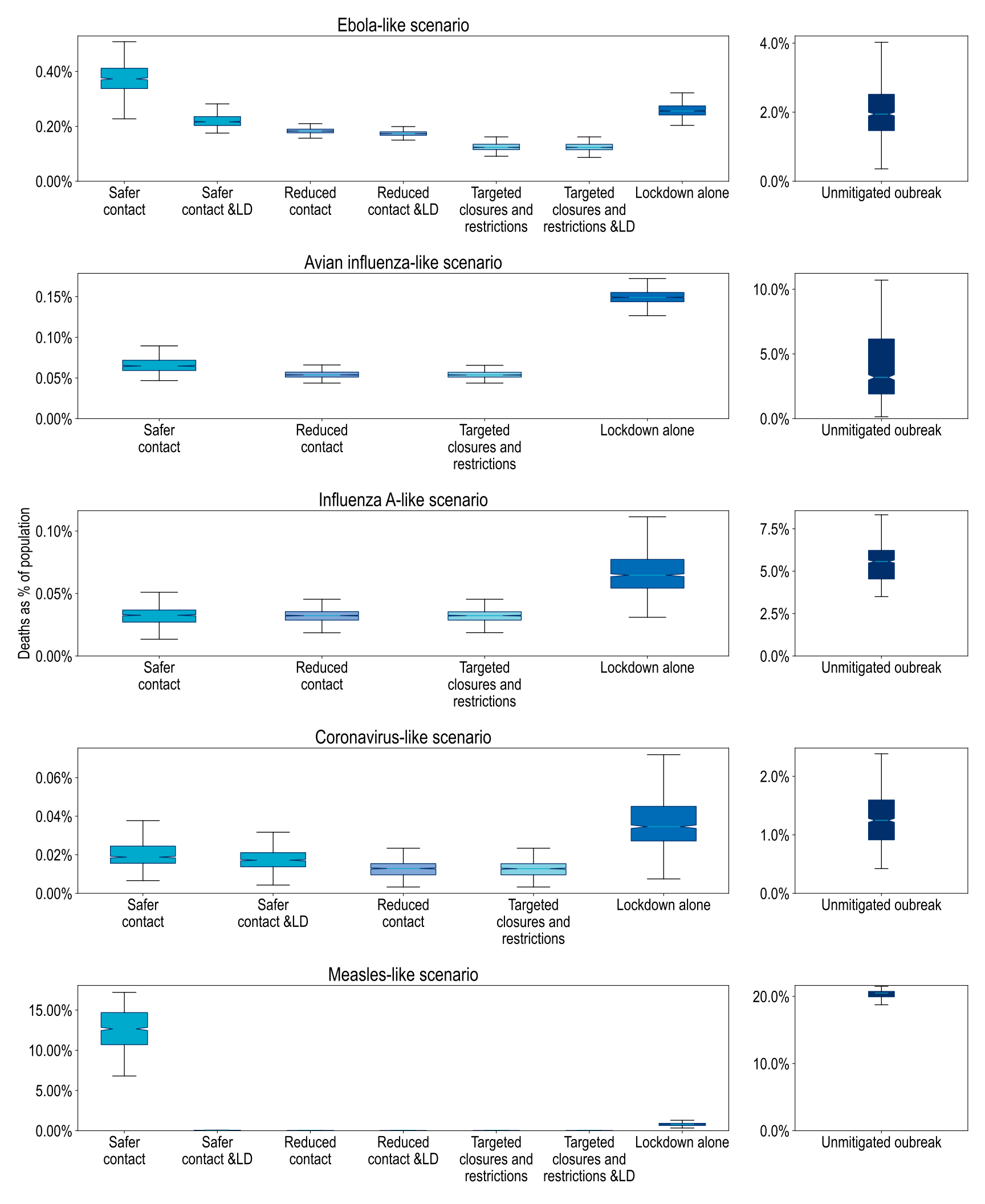
Note: “Safer contact” package = community-based IPC and limited quarantine measures; “Safer contact” package &LD (“Safer contact” package with lockdown) = community-based IPC, voluntary quarantine measures and lockdowns. “Reduced contact” package = community-based IPC, mandatory quarantine measures, promoting teleworking and introducing restrictions on domestic travel; “Reduced contact” package &LD (“Reduced contact” package with lockdown) = community-based IPC, mandatory quarantine measures, promoting teleworking and introducing restrictions on domestic travel and lockdowns; “Targeted closures and restrictions” package = community-based IPC, mandatory quarantine measures, promoting teleworking, introducing restrictions on domestic travel, school closures and international travel restrictions. “Targeted closures and restrictions” package &LD (“Targeted closures and restrictions” package with lockdown) = community-based IPC, mandatory quarantine measures, promoting teleworking, introducing restrictions on domestic travel, school closures and international travel restrictions and lockdowns. “Lockdown alone” package severely limits mobility, permitting movement only for essential workers. In the OECD analysis, the lockdowns were not triggered in avian influenza-like and influenza A-like outbreak scenarios once the “Safer contact” package is implemented and in the coronavirus outbreak once the “Reduced contact” package is in place. This is because once these interventions are activated, the simulated outbreaks never reach the threshold values listed earlier to trigger lockdowns.
Source: Analysis is based on the OECD SPHeP-PPR model.
As discussed earlier, the estimated effectiveness of the “Safer contact” package, which consists primarily of behavioural actions such as community-based IPC interventions (e.g. hand washing) and voluntary quarantine, depends heavily on the level of buy-in from the community. Although the OECD model does not explicitly simulate variations in compliance, the OECD analysis incorporates evidence from real-world settings, where adherence to these measures is shown to be often suboptimal. A more detailed examination of the determinants of compliance with community-based IPC interventions, along with policy options to strengthen community engagement, is presented in Chapter 5.
The results from the OECD model suggest that in avian influenza-like and influenza A-like outbreaks, lockdowns would not be triggered in most countries if the “Safer contact” package is already being implemented (Figure 7.9). This reflects the finding that adding lockdowns on top of the “Safer contact” package offers limited additional measurable benefit to population health and to healthcare systems, indicating that once transmission is substantially reduced through the “Safer contact” package, lockdowns yield minimal returns. Lockdowns would be triggered in Ebola-like and coronavirus-like outbreaks, and the additional health gains they bring on top of those delivered by the “Safer contact” package would be around 7 percentage points (p.p.) gain in deaths averted in the Ebola-like outbreak and less than 1 p.p. gain in the coronavirus-like outbreak. This pattern would differ sharply in the measles-like outbreak where the extremely high transmission of the pathogen means that lockdowns could produce large additional health gains when they are combined with the “Safer contact” package. Still, even in these settings, greater reductions in mortality could be achieved by escalating to the “Reduced contact” package, rather than by adding lockdowns to the “Safer contact” package.
Layering community-based IPC measures with teleworking, ensuring essential travel and stricter quarantine requirements delivers notable health gains in many cases
Supplementing community-based IPC measures with teleworking promotion, domestic travel restrictions and mandatory quarantine requirements could bring notable gains in specific outbreak contexts, particularly in Ebola-like and measles-like pandemics. In the Ebola-like scenario, escalating to the “Reduced contact” package would help curb the remaining chain of transmission that the “Safer contact” package alone could not mitigate (Figure 7.9). Under the “Reduced contact” package, an average of 90% of deaths that would have occurred in an unchecked pandemic could be avoided, compared to around 80% of deaths that would be averted under the “Safer contact” package alone. In the measles-like scenario, escalating to the “Reduced contact” package would substantially strengthen pandemic response efforts and would help avoid nearly all deaths that would have occurred in an unmitigated outbreak.
The OECD analysis suggests that adding lockdowns once the “Reduced contact” package is activated would provide little additional measurable benefit to population health and the healthcare systems in outbreaks resembling avian-influenza, influenza-A and coronavirus. As a result, lockdowns would not be triggered in most countries included in the OECD analysis in these scenarios. Even in scenarios where lockdowns are triggered such as the Ebola-like and measles-like outbreaks, their added value would remain marginal. In these two scenarios, adding lockdowns to the “Reduced contact” package would generate less than 1% additional reduction in the number of deaths averted.
As an additional analysis, the OECD model evaluated the potential impact of using TTT strategies as part of the “Reduced contact” package (Box 7.7).
Testing, tracing and tracking form a core pillar of public health strategies to mitigate the spread of outbreaks. The objective of TTT systems is to detect infections as early as possible, break chains of transmission and target public health interventions where they can have the greatest impact. Variations of the TTT approach have been deployed in nearly every recent major outbreak, including the 2002‑2003 SARS-CoV outbreak, the 2009 H1N1 influenza pandemic, the 2012 MERS-CoV outbreak, the 2014‑2016 Ebola epidemic, the 2015‑2016 Zika outbreak and, most recently, COVID‑19 (Nussbaumer-Streit et al., 2020[10]). While the design of TTT systems differs across countries and pathogens, the overall strategy typically consists of three components as follows:
Testing serves as the foundation for all TTT activities, because it enables public health authorities to identify infections early, including among individuals with mild or no symptoms. During COVID‑19, for example, widespread PCR and antigen testing supported county efforts to isolate and treat infected individuals (WHO, 2020[106]). Data gathered through testing provide essential information on transmission intensity, which can help determine the level and timing of NPIs (OECD, 2020[107]). Diagnostic results typically feed into laboratory-based genomic sequencing which helps track the circulation of variants of the pathogen in the community.
Tracing refers to identifying and contacting individuals who have been exposed to confirmed cases so they can be rapidly isolated, tested or monitored. When implemented promptly and systematically, contact tracing can substantially reduce onward transmission. During the early phases of COVID‑19, Korea, for instance, developed a crowd-source contact tracing technology which entailed the use of mobile phone data, security camera records and credit and debit card (OECD, 2020[107]). Free smartphone apps indicated the location of cases and text message updates were sent to provide updates on the new local cases.
Tracking and surveillance systems, whether clinical, laboratory-based, syndromic or environmental, provide essential information on how disease activity evolves over time. During COVID‑19, many countries expanded their tracking and surveillance systems (e.g. combining clinical and wastewater monitoring) to gather data from complementary data systems in order to get a more complete picture of transmission dynamics.
Despite their important benefits, TTT strategies have limitations. Previous studies suggest that the TTT strategies are most effective in the early phases of an outbreak when case numbers remain manageable and transmission chains can still be identified and followed (Kwok et al., 2019[108]; Juneau et al., 2023[109]; Nussbaumer-Streit et al., 2020[10]). Their effectiveness diminishes when a large proportion of transmission occurs asymptomatically (Pozo-Martin et al., 2023[110]) or when testing capacity is constrained (Guy et al., 2025[111]). Diagnostic testing is also less informative for pathogens with very short incubation periods or those requiring specialised laboratory procedures such as Ebola or Nipah virus (Nussbaumer-Streit et al., 2020[10]). Delays in obtaining test results further undermine the ability to act quickly and unequal access to testing can lead to systematic under-detection in certain population groups (Guy et al., 2025[111]). Evidence from modelling studies shows that once an outbreak grows unchecked for more than two to three days, it becomes extremely difficult to stop it through contact tracing alone (Juneau et al., 2023[109]).
The OECD assessed the effectiveness of TTT strategies in supporting efforts to mitigate the spread of outbreaks
To assess the potential of TTT in the context of future pandemics, a nationwide TTT programme was modelled in which 10% of the population is tested each week, including those that do not show any symptoms and all positive cases are immediately isolated without exception. This represents a strong assumption given the real-world experiences and should be regarded as an upper-bound estimate of the potential of TTT strategies when fully scaled and unconstrained. For example, during the COVID‑19 pandemic, Singapore, one of the countries that relied most heavily on a large‑scale TTT strategy in the early days of the outbreak, conducted approximately 2 200 molecular diagnostic tests each day, equivalent to testing approximately 0.27% of the population per week (OECD, 2020[107]). The modelled TTT programme is also assumed to include integrated tracing and tracking functions whereby trained contact tracers were available at the outset of the pandemic and surveillance systems were in place to inform public health action in a timely manner. The TTT strategy is assumed to be triggered concurrently with the “Safer contact” package. The thresholds for activating the NPI packages remained the same as those highlighted in Box 7.4.
Figure 7.10 quantifies the incremental impact of TTT by showing the percentage difference in daily infections with and without TTT integrated into the “Safer contact” package. It shows that the reductions in daily infections attributable to TTT would range, on average, from 0.08% in the avian influenza-like scenario to 3.3% for the coronavirus-like outbreak. This result suggests that while TTT can enhance mitigation efforts, it should be viewed as a complementary rather than primary mitigation strategy once community transmission has become widespread. The relatively modest protective estimated impact of TTT is in part because “Safer contact” measures (e.g. community-based IPC and voluntary quarantines) already act on many of the transmission pathways that TTT is designed to interrupt. For instance, when some of the symptomatic individuals voluntarily limit their physical contacts, as was modelled in the OECD analysis as one of the “Safer contact” measures, the number of secondary infections that TTT would otherwise need to identify and manage would already be reduced. Similarly, greater adherence to community-based IPC measures would lower the probability of onward transmission, which in turn would leave fewer infections for TTT to identify. At the same time, once widespread community transmission is established, many physical contacts with infected individuals are likely to occur before individuals would be detected through testing or identified through tracing. The time lag between infection, the onset of symptoms, testing, tracing and tracking would limit the marginal effect of TTT when the “Safer contact” package is already in place and actively reducing contact opportunities.
Percentage difference in daily infections with and without TTT integrated into the “Safer contact” package

Note: “Safer contact” package = community-based IPC and voluntary quarantine measures; TTT = testing, tracing and tracking; Whiskers represent the 5th and 95th quantiles in all simulations across countries.
Source: Analysis is based on the OECD SPHeP-PPR model.
While the TTT strategy may offer limited population-wide protective effects once community transmission becomes widespread, it can still generate important benefits as a targeted risk mitigation tool by focussing on infections among vulnerable populations (e.g. the older adults, immunocompromised individuals) and in high-risk settings. For example, one recent literature review concluded that during the COVID‑19 pandemic, universal testing of residents and staff in long-term care facilities at regular intervals proved critical for early detection of presymptomatic and asymptomatic cases, especially when community prevalence was high (Dykgraaf et al., 2021[112]). Similar evidence from hospitals shows that maintaining TTT strategies during periods of high community transmission can help prevent nosocomial transmission (Velen et al., 2021[113]; Pozo-Martin et al., 2023[110]).
Source: Nussbaumer-Streit et al. (2020[10]), “Quarantine alone or in combination with other public health measures to control COVID-19: a rapid review”, http://doi.org/10.1002/14651858.cd013574.pub2; WHO (2020[106]), “Laboratory testing for 2019 novel coronavirus (2019-nVOC) in suspected human cases. Interim guidance”, https://iris.who.int/server/api/core/bitstreams/223676aa-d552-4a61-9a69-ba84f48babd6/content; OECD (2020[107]), “Testing for COVID-19: A way to lift confinement restrictions”, http://doi.org/10.1787/89756248-en; Kwok et al. (2019[108]); “Epidemic Models of Contact Tracing: Systematic Review of Transmission Studies of Severe Acute Respiratory Syndrome and Middle East Respiratory Syndrome”, http://doi.org/10.1016/j.csbj.2019.01.003; Juneau et al. (2023[109]), “Effective contact tracing for COVID-19: A systematic review”, http://doi.org/10.1016/j.gloepi.2023.100103; Guy et al. (2025[111]), “Contact tracing strategies for infectious diseases: A systematic literature review”, http://doi.org/10.1371/journal.pgph.0004579; Juneau et al. (2023[109]), “Effective contact tracing for COVID-19: A systematic review”, http://doi.org/10.1016/j.gloepi.2023.100103; Velen et al. (2021[113]), “The effectiveness of contact investigation among contacts of tuberculosis patients: a systematic review and meta-analysis”, http://doi.org/10.1183/13993003.00266-2021; Pozo-Martin (2023[110]), “Comparative effectiveness of contact tracing interventions in the context of the COVID-19 pandemic: a systematic review”, http://doi.org/10.1007/s10654-023-00963-z.
Closing schools and restricting international travel provides marginal health benefits if less stringent NPIs are already well-implemented
Adding even stricter controls such as school closures and international travel restrictions (i.e. the “Targeted closures and restrictions” package) while the “Reduced contact” package is already implemented would bring incremental health gains in all pandemic scenarios except the Ebola-like outbreak, with the additional reduction in deaths averted remaining well below 1% in most cases (Figure 7.9). In the Ebola-like outbreak, the estimated gains would be modest, with the proportion of the population dying declining, on average, from 0.2% to 0.1% of the population.
Much like with less stringent interventions, in most cases, adding lockdowns on top of the “Targeted closures and restrictions” package would offer modest health gains only in the Ebola-like and measles-like outbreaks and little measurable health gains in the other outbreak scenarios. This finding suggests that while progressively layering interventions strengthens outbreak response, the additional health benefits would start tapering off once local transmission has already been curbed through the “Reduced contact” package. This means that more stringent measures continue to save lives, but with declining returns.
Lockdowns alone produce the least protection for population health
The OECD model suggests that in most scenarios, the “Lockdown alone” package would produce the smallest reduction in mortality. In all scenarios, escalating to the “Reduced contact” package could reduce more deaths compared with the “Lockdown alone” package. In an Ebola-like outbreak, the share of the population dying would fall from 0.3% on average under lockdowns to 0.18% under the “Reduced contact” package. The difference would be modest in a coronavirus-like (0.04% vs. 0.01%) scenario and more pronounced in avian influenza-like (0.15% vs. 0.07%) and influenza A-like (0.07% vs. 0.03%) outbreaks and measles-like (0.8% vs. 0.03%) scenarios. These findings suggest that lockdowns should be considered in certain situations, for example when compliance with community-based IPC interventions is low, to achieve the health-related goals.
7.5.2. Impact on the economy
Community-based IPC measures and limited quarantines result in moderate losses in economic output
The OECD analysis suggests that implementing the “Safer contact” package alone would result in modest contractions in GDP in most cases (Figure 7.11). In outbreaks caused by agents similar to avian influenza, influenza A and coronavirus, GDP losses would average around 2.5%. In more severe scenarios such as the Ebola-like and measles-like outbreaks, the economic contraction could average 2.6% and 8.6% of GDP respectively, smaller than the economic losses associated with unmitigated outbreaks (i.e. 3.4% and 16.2% loss in GDP respectively).
Percentage drop in GDP, by scenario for 50 countries included in the analysis
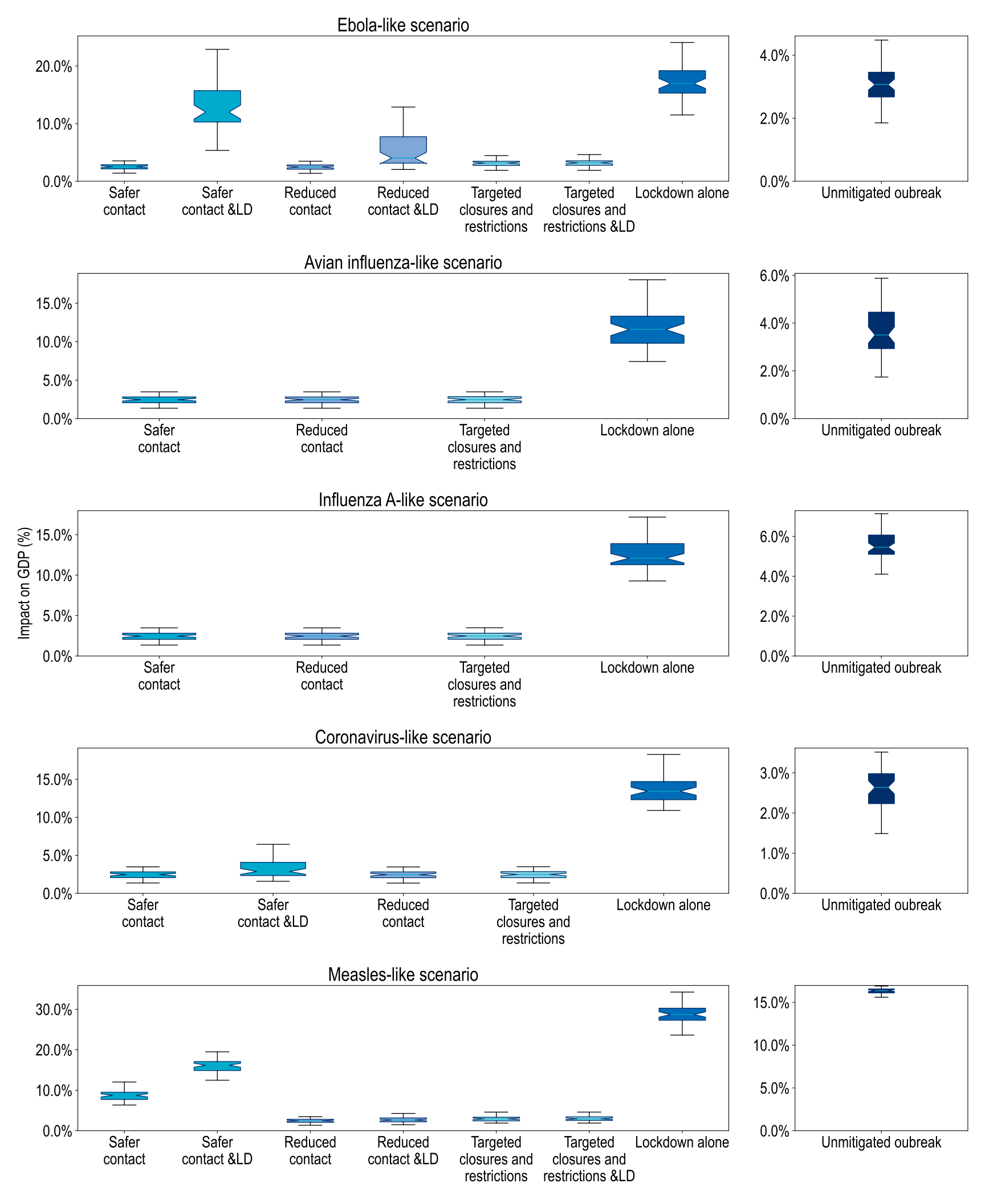
Note: “Safer contact” package = community-based IPC and limited quarantine measures; “Safer contact” package &LD (“Safer contact” package with lockdown) = community-based IPC, voluntary quarantine measures and lockdowns. “Reduced contact” package = community-based IPC, mandatory quarantine measures, promoting teleworking and introducing restrictions on domestic travel; “Reduced contact” package &LD (“Reduced contact” package with lockdown) = community-based IPC, mandatory quarantine measures, promoting teleworking and introducing restrictions on domestic travel and lockdowns; “Targeted closures and restrictions” package = community-based IPC, mandatory quarantine measures, promoting teleworking, introducing restrictions on domestic travel, school closures and international travel restrictions. “Targeted closures and restrictions” package &LD (“Targeted closures and restrictions” package with lockdown) = community-based IPC, mandatory quarantine measures, promoting teleworking, introducing restrictions on domestic travel, school closures and international travel restrictions and lockdowns. “Lockdown alone” package severely limits mobility, permitting movement only for essential workers. In the OECD analysis, the lockdowns were not triggered in avian influenza-like and influenza A-like outbreak scenarios once the “Safer contact” package is implemented and in the coronavirus outbreak once the “Reduced contact” package is in place. This is because once these interventions are activated, the simulated outbreaks never reach the threshold values listed earlier to trigger lockdowns.
Source: Analysis is based on the OECD SPHeP-PPR model.
Layering teleworking policies, essential travel and stronger quarantines on top of community-based IPC measures helps cushion the economic shock in many cases
In most cases, adding teleworking, domestic travel restrictions and stricter quarantine measures (the “Reduced contact” package) would lead to minor reductions in the overall average contraction in GDP compared with the “Safer contact” package alone. In Ebola-like and coronavirus-like outbreaks, the average GDP losses would fall slightly from 2.6% to 2.5% and from just over 2.5% to just below 2.5% respectively, once the “Reduced contact” package is introduced. In the measles-like outbreak, the reduction in the GDP loss would be higher, from 8.6% to 2.5%. In comparison, in the avian-influenza and influenza A-like outbreaks, the change in the average GDP loss would remain well below 1%.
This finding reflects the crucial role of promoting teleworking policies and maintaining domestic travel for essential workers while quarantining the sick during outbreaks. By enabling businesses that rely less on physical contact to continue operations through teleworking arrangements and maintaining controlled domestic travel for essential sectors, introducing the “Reduced contact” package could potentially prevent the abrupt halts in production and promote continuity of work, especially in service‑oriented economies where digital connectivity allows activity to shift online. This finding aligns with lessons from the COVID‑19 pandemic when in European economies, sectors in which teleworking was easier to scale up (e.g. finance and insurance) were hit less severely than those relying more heavily on personal contact (e.g. construction) (European Commission, 2021[114]).
Temporarily closing schools and limiting international travel deepens the economic impact of outbreaks if less stringent NPIs are already in place
Introducing school closures and limitations on international travel (i.e. the “Targeted closures and restrictions” package) would deepen the economic contraction compared to implementing the less stringent interventions (i.e. the “Reduced contact” package). This pattern is consistent across all outbreak types, including those resembling Ebola and measles where the average decline in GDP is estimated to rise from 2.5% to 3.1% and from 2.5% to 2.9% respectively. Introducing the “Targeted closures and restrictions” package could also deepen economic contraction in other outbreak scenarios though the adverse impact would be relatively smaller.
The OECD analysis suggests that the widening economic cost associated with the “Targeted closures and restrictions” package reflects the broader disruption caused by closing schools and limiting cross-border travel. As discussed in Box 7.4, closing schools, even temporarily, cuts the available labour supply and reduce the productivity of those who telework by shifting the childcare burden to parents, disrupting in-person education and related services. School closures would also have long-term negative consequences for human capital formation but these additional effects are not considered in this chapter given the time frame of the analysis focussing on the first nine months of outbreaks. In other words, any potential effects in this area are expected to be minimal, if present at all. On the other hand, international travel limitations suppress high-value activities such as tourism, business travel, higher education inflows, affecting internationally exposed sectors of the economy.
Using lockdowns as a last resort comes with steep economic costs
Using lockdowns alone as a last resort could impose a significant economic penalty. The results from the OECD analysis suggest that when added to the “Safer contact” package, GDP contractions could deepen sharply from 2.6% to 12.5% in an Ebola-like outbreak and from 8.6% to 16.0% in a measles-like outbreak. Implemented alone, the economic fallout could be even more severe, with losses reaching 17.4% in Ebola-like and 12.7% in influenza A-like outbreaks. In the measles-like scenario, the average contraction in GDP would be 28.9%, though it should be noted that introducing lockdowns on top of the “Safer contact” package could considerably reduce the mortality impact of the outbreak in most cases as discussed earlier.
If lockdowns are implemented alone as a last resort measure and without implementing NPIs, the economic fallout would be more severe, with the contraction in GDP reaching 17.4% in Ebola-like, 11.7% in avian influenza-like, 12.7% in influenza A-like, 13.7% in coronavirus-like and 28.9% in measles-like outbreaks. In all outbreak scenarios, the average contraction of GDP under the “Lockdown alone” package is estimated to exceed that of unmitigated outbreaks, sometimes by a wide margin.
7.5.3. Health and economic co-benefits
In most cases, a layered approach involving community-based IPC, quarantines, promotion of teleworking and domestic travel restrictions offers a practical strategy to balance health and economic gains
Figure 7.12 shows the health and economic impact for the modelled NPI packages and across the five outbreak scenarios. Impact on population health (deaths per 100 000 population) is shown on the horizontal axis, while impact on GDP (% of GDP contracted) is reported on the vertical axis. The findings presented on the graph can be used to help prioritise interventions under the various scenarios, considering that interventions in the bottom left corner of each panel are those that, according to the simulation, would allow the lowest negative impact on population health and GDP. For example, if two NPI packages show a similar level of mortality, the one with lower impact on GDP would be the preferable option. Extending this concept further, the graph allows efficient frontiers to be designed for packages of interventions.
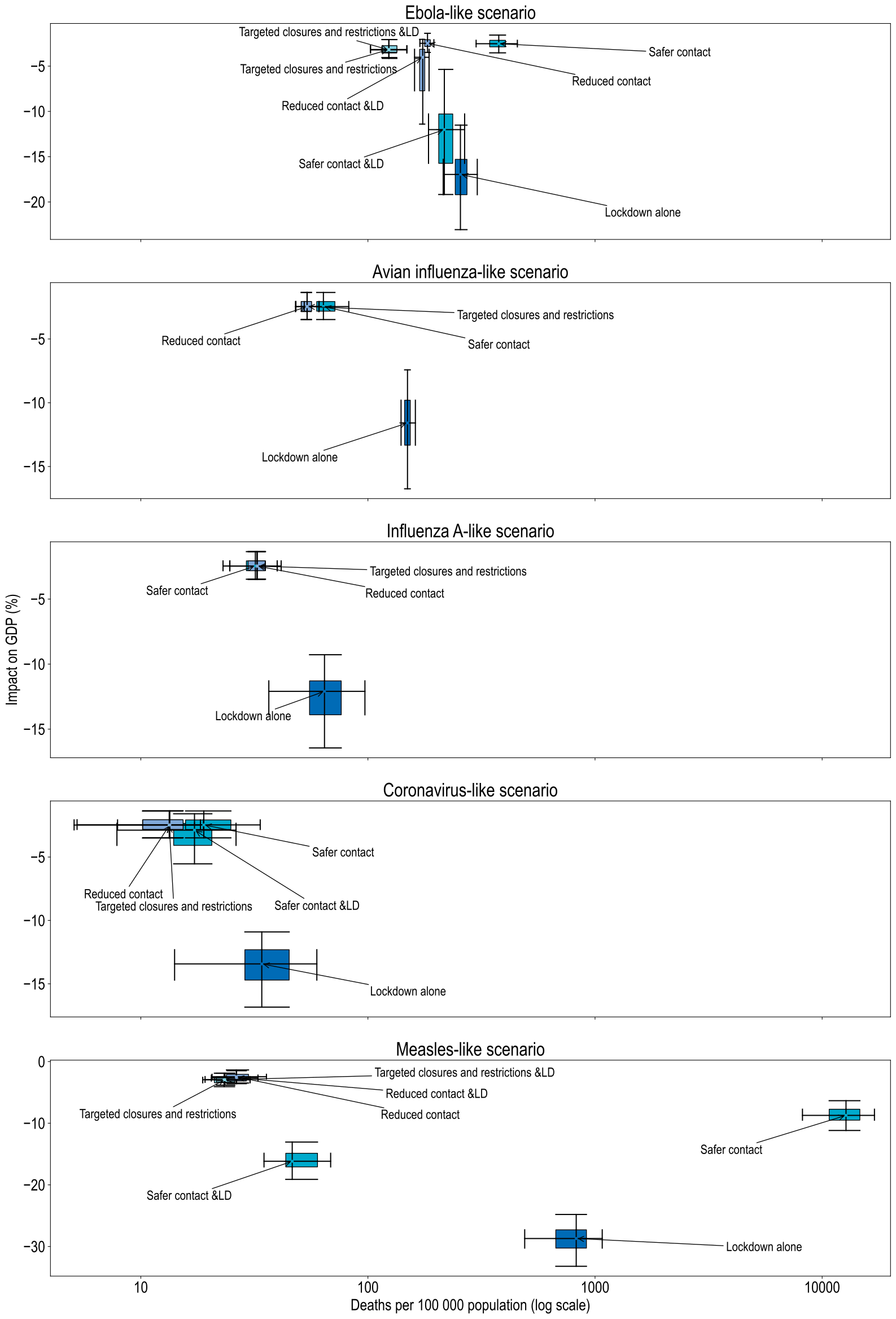
Note: “Safer contact” package = community-based IPC and limited quarantine measures; “Safer contact” package &LD (“Safer contact” package with lockdown) = community-based IPC, voluntary quarantine measures and lockdowns. “Reduced contact” package = community-based IPC, mandatory quarantine measures, promoting teleworking and introducing restrictions on domestic travel; “Reduced contact” package &LD (“Reduced contact” package with lockdown) = community-based IPC, mandatory quarantine measures, promoting teleworking and introducing restrictions on domestic travel and lockdowns; “Targeted closures and restrictions” package = community-based IPC, mandatory quarantine measures, promoting teleworking, introducing restrictions on domestic travel, school closures and international travel restrictions. “Targeted closures and restrictions” package &LD (“Targeted closures and restrictions” package with lockdown) = community-based IPC, mandatory quarantine measures, promoting teleworking, introducing restrictions on domestic travel, school closures and international travel restrictions and lockdowns. “Lockdown alone” package severely limits mobility, permitting movement only for essential workers. In the OECD analysis, the lockdowns were not triggered in avian influenza-like and influenza A-like outbreak scenarios once the “Safer contact” package is implemented and in the coronavirus outbreak once the “Reduced contact” package is in place. This is because once these interventions are activated, the simulated outbreaks never reach the threshold values listed earlier to trigger lockdowns.
Source: Analysis is based on the OECD SPHeP-PPR model.
Some of the main take‑aways from this analysis include:
In all outbreak scenarios, introducing lockdowns alone would fall short of the health gains that could be achieved through the timely implementation of the “Reduced contact” package, while causing the highest levels of damage to the economy. Considering the detrimental impact that lockdowns have on society, the OECD analysis suggests that lockdowns can be avoided if other, less stringent but effective NPIs are implemented early and with high levels of buy-in from the general public.
In most outbreak scenarios, adding lockdowns on top of the NPI packages offers limited health gains with considerably higher strain on economic performance. However, it is recognised that, in some cases, this may be the only viable solution to limit the health burden caused by an outbreak. For example, implementing the “Safer contact” package alone would lead to the highest level of average mortality in the case of an outbreak caused by a highly infectious measles-like pathogen. In an Ebola-like outbreak, adding lockdowns to the “Safer contact” package could also avert a considerable portion of deaths but at a substantially higher economic cost.
In most scenarios, the model suggests that escalating to the “Targeted closures and restrictions” package would show limited gains for population health but higher economic costs compared with the “Reduced contact” package alone. Therefore, the introduction of the “Targeted closures and restrictions” package would become particularly appropriate in those circumstances where the primary focus is on minimising the health burden.
NPIs remain essential tools for protecting population health and the economy during outbreaks, when pharmaceutical interventions are not available. They were widely used during the COVID‑19 pandemic across OECD, EU/EEA and G20 countries, though countries differed in how they designed and applied them. While NPIs offer clear health benefits, they can also generate unintended social and economic consequences, underscoring the need for policymakers to select measures that best balance health and economic objectives.
The OECD analysis shows that early and well-implemented NPIs can safeguard population health while also protecting the economy, with their effectiveness varying by outbreak scenario. In most cases, the least stringent NPIs (i.e. community-based IPC measures), layered with domestic travel restrictions and quarantines are sufficient to prevent the majority of deaths without imposing major economic costs. By contrast, relying on lockdowns alone, without the support of NPIs, is generally less effective and more damaging to the economy. The analysis also highlights the value of strengthening surveillance systems by integrating wastewater data with clinical indicators, which enhances the effectiveness of NPIs and reduces the likelihood and duration of lockdowns.
References
[33] Ahmed, F., N. Zviedrite and A. Uzicanin (2018), “Effectiveness of workplace social distancing measures in reducing influenza transmission: a systematic review”, BMC Public Health, Vol. 18/1, https://doi.org/10.1186/s12889-018-5446-1.
[100] Ahmed, W. et al. (2022), “Evaluation of process limit of detection and quantification variation of SARS-CoV-2 RT-qPCR and RT-dPCR assays for wastewater surveillance”, Water Research, Vol. 213, p. 118132, https://doi.org/10.1016/j.watres.2022.118132.
[70] Allington, D. et al. (2020), “Health-protective behaviour, social media usage and conspiracy belief during the COVID-19 public health emergency”, Psychological Medicine, Vol. 51/10, pp. 1763-1769, https://doi.org/10.1017/s003329172000224x.
[38] Antunes, E. et al. (2023), “Part-time or full-time teleworking? A systematic review of the psychosocial risk factors of telework from home”, Frontiers in Psychology, Vol. 14, https://doi.org/10.3389/fpsyg.2023.1065593.
[103] Aßmann, E. et al. (2025), “Augmentation of wastewater-based epidemiology with machine learning to support global health surveillance”, Nature Water, Vol. 3/7, pp. 753-763, https://doi.org/10.1038/s44221-025-00444-5.
[74] Bargain, O. and U. Aminjonov (2020), “Trust and compliance to public health policies in times of COVID-19”, Journal of Public Economics, Vol. 192, p. 104316, https://doi.org/10.1016/j.jpubeco.2020.104316.
[5] Bernstein, A. et al. (2022), “The costs and benefits of primary prevention of zoonotic pandemics”, Science Advances, Vol. 8/5, https://doi.org/10.1126/sciadv.abl4183.
[1] Björk, J. et al. (2025), “Non-pharmaceutical interventions to prevent community transmission of infectious diseases with pandemic potential—an umbrella review and evidence map”, European Journal of Public Health, https://doi.org/10.1093/eurpub/ckaf170.
[90] Bonanno Ferraro, G. et al. (2021), “A State-of-the-Art Scoping Review on SARS-CoV-2 in Sewage Focusing on the Potential of Wastewater Surveillance for the Monitoring of the COVID-19 Pandemic”, Food and Environmental Virology, Vol. 14/4, pp. 315-354, https://doi.org/10.1007/s12560-021-09498-6.
[53] Bou-Karroum, L. et al. (2021), “Public health effects of travel-related policies on the COVID-19 pandemic: A mixed-methods systematic review”, Journal of Infection, Vol. 83/4, pp. 413-423, https://doi.org/10.1016/j.jinf.2021.07.017.
[78] Buonanno, G. et al. (2022), “Increasing ventilation reduces SARS-CoV-2 airborne transmission in schools: A retrospective cohort study in Italy’s Marche region”, Frontiers in Public Health, Vol. 10, https://doi.org/10.3389/fpubh.2022.1087087.
[51] Burns, J. et al. (2021), “International travel-related control measures to contain the COVID-19 pandemic: a rapid review”, Cochrane Database of Systematic Reviews, Vol. 2021/3, https://doi.org/10.1002/14651858.cd013717.pub2.
[52] Burns, J. et al. (2020), “Travel-related control measures to contain the COVID-19 pandemic: a rapid review”, Cochrane Database of Systematic Reviews, https://doi.org/10.1002/14651858.cd013717.
[34] Burzyński, M. et al. (2021), “COVID-19 crisis management in Luxembourg: Insights from an epidemionomic approach”, Economics and Human Biology, Vol. 43, p. 101051, https://doi.org/10.1016/j.ehb.2021.101051.
[79] CDC (2021), Mask Use and Ventilation Improvements to Reduce COVID-19 Incidence in Elementary Schools - Georgia, November 16-December 11, 2020, https://www.cdc.gov/mmwr/volumes/70/wr/mm7021e1.htm (accessed on 22 November 2025).
[8] Chu, D. et al. (2020), “Physical distancing, face masks, and eye protection to prevent person-to-person transmission of SARS-CoV-2 and COVID-19: a systematic review and meta-analysis”, The Lancet, Vol. 395/10242, pp. 1973-1987, https://doi.org/10.1016/s0140-6736(20)31142-9.
[60] Cipolletta, S., G. Andreghetti and G. Mioni (2022), “Risk Perception towards COVID-19: A Systematic Review and Qualitative Synthesis”, International Journal of Environmental Research and Public Health, Vol. 19/8, p. 4649, https://doi.org/10.3390/ijerph19084649.
[76] Dauvin, M. and R. Sampognaro (2021), “Dans les coulisses du confinement : modelisation de chocs simultanes d’offre et de demande”, Sciences Po OFCE Working Paper, http://www.ofce.sciences-po.fr/pdf/dtravail/WP2021-05.pdf (accessed on 4 November 2025).
[18] Davies, M. et al. (2022), “SARS-CoV-2 Transmission Potential and Policy Changes in South Carolina, February 2020 – January 2021”, Disaster Medicine and Public Health Preparedness, Vol. 17, https://doi.org/10.1017/dmp.2022.212.
[101] Davis, A. et al. (2023), “Evaluation of intra- and inter-lab variability in quantifying SARS-CoV-2 in a state-wide wastewater monitoring network”, Environmental Science: Water Research & Technology, https://doi.org/10.1039/d2ew00737a.
[4] Dobson, A. et al. (2020), “Ecology and economics for pandemic prevention”, Science, Vol. 369/6502, pp. 379-381, https://doi.org/10.1126/science.abc3189.
[64] Dryhurst, S. et al. (2020), “Risk perceptions of COVID-19 around the world”, Journal of Risk Research, Vol. 23/7-8, pp. 994-1006, https://doi.org/10.1080/13669877.2020.1758193.
[112] Dykgraaf, S. et al. (2021), “Protecting Nursing Homes and Long-Term Care Facilities From COVID-19: A Rapid Review of International Evidence”, Journal of the American Medical Directors Association, Vol. 22/10, pp. 1969-1988, https://doi.org/10.1016/j.jamda.2021.07.027.
[39] European Commission (2024), Estonia 2024 Digital Decade Country Report, https://digital-strategy.ec.europa.eu/en/factpages/estonia-2024-digital-decade-country-report (accessed on 24 October 2025).
[114] European Commission (2021), The Sectoral Impact of the COVID-19 Crisis: An Unprecedented & Atypical Crisis, https://commission.europa.eu/system/files/2021-12/eb069_en.pdf (accessed on 20 November 2025).
[93] Fattal, B. and M. Nishmi (1977), “Enterovirus types in Israel sewage☆”, Water Research, Vol. 11/4, pp. 393-396, https://doi.org/10.1016/0043-1354(77)90028-8.
[21] Fukumoto, K., C. McClean and K. Nakagawa (2021), “No causal effect of school closures in Japan on the spread of COVID-19 in spring 2020”, Nature Medicine, Vol. 27/12, pp. 2111-2119, https://doi.org/10.1038/s41591-021-01571-8.
[9] Google LLC (2022), Google Community Mobility Reports, https://www.google.com/covid19/mobility/data_documentation.html?hl=en (accessed on 10 November 2025).
[62] GOV.UK (2020), SPI-B: Impact of financial and other targeted support on rates of self-isolation or quarantine, 16 September 2020, https://assets.publishing.service.gov.uk/media/5f7eeec8d3bf7f01973929d8/S0759_SPI-B__The_impact_of_financial_and_other_targeted_support_on_rates_of_self-isolation_or_quarantine_.pdf (accessed on 24 September 2025).
[54] Grépin, K. et al. (2021), “Evidence of the effectiveness of travel-related measures during the early phase of the COVID-19 pandemic: a rapid systematic review”, BMJ Global Health, Vol. 6/3, p. e004537, https://doi.org/10.1136/bmjgh-2020-004537.
[111] Gulumbe, B. (ed.) (2025), “Contact tracing strategies for infectious diseases: A systematic literature review”, PLOS Global Public Health, Vol. 5/5, p. e0004579, https://doi.org/10.1371/journal.pgph.0004579.
[19] Haapanen, M. et al. (2021), “The impact of the lockdown and the re-opening of schools and day cares on the epidemiology of SARS-CoV-2 and other respiratory infections in children – A nationwide register study in Finland”, EClinicalMedicine, Vol. 34, p. 100807, https://doi.org/10.1016/j.eclinm.2021.100807.
[7] Hale, T. et al. (2021), “A global panel database of pandemic policies (Oxford COVID-19 Government Response Tracker)”, Nature Human Behaviour, Vol. 5/4, pp. 529-538, https://doi.org/10.1038/s41562-021-01079-8.
[94] Hovi, T. et al. (2001), “Poliovirus surveillance by examining sewage specimens. Quantitative recovery of virus after introduction into sewerage at remote upstream location”, Epidemiology and Infection, Vol. 127/01, https://doi.org/10.1017/s0950268801005787.
[31] ILO (2020), Teleworking during the COVID-19 pandemic and beyond: A practical guide, https://webapps.ilo.org/wcmsp5/groups/public/---ed_protect/---protrav/---travail/documents/instructionalmaterial/wcms_751232.pdf (accessed on 25 April 2024).
[3] Independent Panel (2021), COVID-19: Make it the Last Pandemic, https://theindependentpanel.org/wp-content/uploads/2021/05/COVID-19-Make-it-the-Last-Pandemic_final.pdf (accessed on 30 May 2021).
[20] Isphording, I., M. Lipfert and N. Pestel (2021), “Does re-opening schools contribute to the spread of SARS-CoV-2? Evidence from staggered summer breaks in Germany”, Journal of Public Economics, Vol. 198, p. 104426, https://doi.org/10.1016/j.jpubeco.2021.104426.
[45] Italian Ministry of Health (2020), Nuovo Coronavirus [New Coronavirus], https://www.salute.gov.it/portale/nuovocoronavirus/archivioNormativaNuovoCoronavirus.jsp.
[47] ItaliaPass (2022), Italy Green Pass, https://italygreenpass.com/travel-to-italy/.
[63] Jay, J. et al. (2020), “Neighbourhood income and physical distancing during the COVID-19 pandemic in the United States”, Nature Human Behaviour, Vol. 4/12, pp. 1294-1302, https://doi.org/10.1038/s41562-020-00998-2.
[77] Jefferson, T. et al. (2023), “Physical interventions to interrupt or reduce the spread of respiratory viruses”, Cochrane Database of Systematic Reviews, Vol. 2023/4, https://doi.org/10.1002/14651858.cd006207.pub6.
[109] Juneau, C. et al. (2023), “Effective contact tracing for COVID-19: A systematic review”, Global Epidemiology, Vol. 5, p. 100103, https://doi.org/10.1016/j.gloepi.2023.100103.
[95] Kalendar, R. (ed.) (2023), “Understanding the efficacy of wastewater surveillance for SARS-CoV-2 in two diverse communities”, PLOS ONE, Vol. 18/8, p. e0289343, https://doi.org/10.1371/journal.pone.0289343.
[69] Kim, H. et al. (2020), “Effects of COVID-19 Misinformation on Information Seeking, Avoidance, and Processing: A Multicountry Comparative Study”, Science Communication, Vol. 42/5, pp. 586-615, https://doi.org/10.1177/1075547020959670.
[75] Kisa, A. and S. Kisa (2025), “Health conspiracy theories: a scoping review of drivers, impacts, and countermeasures”, International Journal for Equity in Health, Vol. 24/1, https://doi.org/10.1186/s12939-025-02451-0.
[57] Klinger, C. et al. (2021), “Unintended health and societal consequences of international travel measures during the COVID-19 pandemic: a scoping review”, Journal of Travel Medicine, Vol. 28/7, https://doi.org/10.1093/jtm/taab123.
[17] Krishnaratne, S. et al. (2022), “Measures implemented in the school setting to contain the COVID-19 pandemic”, Cochrane Database of Systematic Reviews, Vol. 2022/2, https://doi.org/10.1002/14651858.cd015029.
[108] Kwok, K. et al. (2019), “Epidemic Models of Contact Tracing: Systematic Review of Transmission Studies of Severe Acute Respiratory Syndrome and Middle East Respiratory Syndrome”, Computational and Structural Biotechnology Journal, Vol. 17, pp. 186-194, https://doi.org/10.1016/j.csbj.2019.01.003.
[92] La Rosa, G. et al. (2021), “SARS-CoV-2 has been circulating in northern Italy since December 2019: Evidence from environmental monitoring”, Science of The Total Environment, Vol. 750, p. 141711, https://doi.org/10.1016/j.scitotenv.2020.141711.
[87] Larsen, D. et al. (2021), “Wastewater monitoring, surveillance and epidemiology: a review of terminology for a common understanding”, FEMS Microbes, Vol. 2, https://doi.org/10.1093/femsmc/xtab011.
[99] Li, X. et al. (2021), “Uncertainties in estimating SARS-CoV-2 prevalence by wastewater-based epidemiology”, Chemical Engineering Journal, Vol. 415, p. 129039, https://doi.org/10.1016/j.cej.2021.129039.
[89] Loenenbach, A. et al. (2024), “Participatory, Virologic, and Wastewater Surveillance Data to Assess Underestimation of COVID-19 Incidence, Germany, 2020–2024”, Emerging Infectious Diseases, Vol. 30/9, https://doi.org/10.3201/eid3009.240640.
[26] Ludwig-Walz, H. et al. (2023), “Anxiety increased among children and adolescents during pandemic-related school closures in Europe: a systematic review and meta-analysis”, Child and Adolescent Psychiatry and Mental Health, Vol. 17/1, https://doi.org/10.1186/s13034-023-00612-z.
[96] Maréchal, V. et al. (2021), “OBEPINE : une expérience française de suivi de l’épidémie de Covid-19 à travers les eaux usées”, Bulletin de l’Académie vétérinaire de France, Vol. 174, https://doi.org/10.3406/bavf.2021.70970.
[50] Mateus, A. et al. (2014), “Effectiveness of travel restrictions in the rapid containment of human influenza: a systematic review”, Bulletin of the World Health Organization, Vol. 92/12, pp. 868-880D, https://doi.org/10.2471/blt.14.135590.
[16] Mendez-Brito, A., C. El Bcheraoui and F. Pozo-Martin (2021), “Systematic review of empirical studies comparing the effectiveness of non-pharmaceutical interventions against COVID-19”, Journal of Infection, Vol. 83/3, pp. 281-293, https://doi.org/10.1016/j.jinf.2021.06.018.
[59] Moran, C. et al. (2021), “Predictors of attitudes and adherence to COVID-19 public health guidelines in Western countries: a rapid review of the emerging literature”, Journal of Public Health, Vol. 43/4, pp. 739-753, https://doi.org/10.1093/pubmed/fdab070.
[71] Mourali, M. and C. Drake (2022), “The Challenge of Debunking Health Misinformation in Dynamic Social Media Conversations: Online Randomized Study of Public Masking During COVID-19”, Journal of Medical Internet Research, Vol. 24/3, p. e34831, https://doi.org/10.2196/34831.
[23] Munoz-Najar, A. et al. (2022), Remote Learning During COVID-19: Lessons from Today, Principles for Tomorrow, World Bank Group , Washington, D.C, https://documents.worldbank.org/en/publication/documents-reports/documentdetail/668741627975171644/remote-learning-during-the-global-school-lockdown-multi-country-lessons (accessed on 19 November 2025).
[11] Murphy, C. et al. (2023), “Effectiveness of social distancing measures and lockdowns for reducing transmission of COVID-19 in non-healthcare, community-based settings”, Philosophical Transactions of the Royal Society A: Mathematical, Physical and Engineering Sciences, Vol. 381/2257, https://doi.org/10.1098/rsta.2023.0132.
[37] Mutiganda, J. et al. (2022), “A systematic review of the research on telework and organizational economic performance indicators”, Frontiers in Psychology, Vol. 13, https://doi.org/10.3389/fpsyg.2022.1035310.
[104] National Academies of Sciences, Engineering, and Medicine (2023), Wastewater-based Disease Surveillance for Public Health Action, https://www.nationalacademies.org/projects/DELS-WSTB-21-02/publication/26767 (accessed on 7 May 2026).
[61] National Institute of Public Health Slovenia (2021), COVID-19 Pandemic in Slovenia: Results of a Panel Online Survey on the Impact of the Pandemic on Life (SI_PANDA) 17th Wave, https://nijz.si/wp-content/uploads/2023/05/17.-IZVEDBA-SI-PANDA_ang.pdf (accessed on 7 May 2026).
[88] Naughton, C. et al. (2021), Show us the Data: Global COVID-19 Wastewater Monitoring Efforts, Equity, and Gaps, Cold Spring Harbor Laboratory, https://doi.org/10.1101/2021.03.14.21253564.
[10] Nussbaumer-Streit, B. et al. (2020), “Quarantine alone or in combination with other public health measures to control COVID-19: a rapid review”, Cochrane Database of Systematic Reviews, Vol. 2020/9, https://doi.org/10.1002/14651858.cd013574.pub2.
[55] OECD (2024), OECD Tourism Trends and Policies 2024, OECD Publishing, Paris, https://doi.org/10.1787/80885d8b-en.
[2] OECD (2023), Tackling Coronavirus (COVID-19): Contributing to a Global Effort, https://oecd.github.io/OECD-covid-action-map/ (accessed on 14 April 2023).
[58] OECD (2022), OECD Tourism Trends and Policies 2022, OECD Publishing, Paris, https://doi.org/10.1787/a8dd3019-en.
[15] OECD (2021), COVID-19 and Well-being: Life in the Pandemic, OECD Publishing, Paris, https://doi.org/10.1787/1e1ecb53-en.
[35] OECD (2021), Implications of Remote Working Adoption on Place Based Policies: A Focus on G7 Countries, OECD Regional Development Studies, OECD Publishing, Paris, https://doi.org/10.1787/b12f6b85-en.
[83] OECD (2021), OECD Country Policy Tracker, https://oecd.github.io/OECD-covid-action-map/ (accessed on 3 November 2025).
[13] OECD (2021), OECD Economic Surveys: European Union 2021, OECD Publishing, Paris, https://doi.org/10.1787/a77ab220-en.
[14] OECD (2021), “Tackling the mental health impact of the COVID-19 crisis: An integrated, whole-of-society response”, OECD Policy Responses to Coronavirus (COVID-19), OECD Publishing, Paris, https://doi.org/10.1787/0ccafa0b-en.
[32] OECD (2021), “Teleworking in the COVID-19 pandemic: Trends and prospects”, OECD Policy Responses to Coronavirus (COVID-19), OECD Publishing, Paris, https://doi.org/10.1787/72a416b6-en.
[6] OECD (2020), OECD Economic Outlook, Volume 2020 Issue 2, OECD Publishing, Paris, https://doi.org/10.1787/39a88ab1-en.
[107] OECD (2020), “Testing for COVID-19: A way to lift confinement restrictions”, OECD Policy Responses to Coronavirus (COVID-19), OECD Publishing, Paris, https://doi.org/10.1787/89756248-en.
[44] Paroni, L. et al. (2021), “The Traffic Light Approach: Indicators and Algorithms to Identify Covid-19 Epidemic Risk Across Italian Regions”, Frontiers in Public Health, Vol. 9, https://doi.org/10.3389/fpubh.2021.650243.
[30] Pasquini-Descomps, H., N. Brender and D. Maradan (2017), “Value for Money in H1N1 Influenza: A Systematic Review of the Cost-Effectiveness of Pandemic Interventions”, Value in Health, Vol. 20/6, pp. 819-827, https://doi.org/10.1016/j.jval.2016.05.005.
[22] Patrinos, H., E. Vegas and C. Rohan (2022), COVID-19 school closures fueled big learning losses, especially for the disadvantaged, https://blogs.worldbank.org/en/developmenttalk/covid-19-school-closures-fueled-big-learning-losses-especially-disadvantaged (accessed on 20 November 2025).
[68] Pavela Banai, I., B. Banai and I. Mikloušić (2021), “Beliefs in COVID-19 conspiracy theories, compliance with the preventive measures, and trust in government medical officials”, Current Psychology, Vol. 41/10, pp. 7448-7458, https://doi.org/10.1007/s12144-021-01898-y.
[48] Pelagatti, M. and P. Maranzano (2021), “Assessing the effectiveness of the Italian risk-zones policy during the second wave of COVID-19”, Health Policy, Vol. 125/9, pp. 1188-1199, https://doi.org/10.1016/j.healthpol.2021.07.011.
[40] Piirsalu-Kivihall, K. et al. (2023), “Acceleration of Remote Work and Coworking Practices in Estonia During the COVID-19 Pandemic”, https://doi.org/10.1007/978-3-031-26018-6_3.
[67] Pool, J., F. Fatehi and S. Akhlaghpour (2021), “Infodemic, Misinformation and Disinformation in Pandemics: Scientific Landscape and the Road Ahead for Public Health Informatics Research”, in Studies in Health Technology and Informatics, Public Health and Informatics, IOS Press, https://doi.org/10.3233/shti210278.
[110] Pozo-Martin, F. et al. (2023), “Comparative effectiveness of contact tracing interventions in the context of the COVID-19 pandemic: a systematic review”, European Journal of Epidemiology, Vol. 38/3, pp. 243-266, https://doi.org/10.1007/s10654-023-00963-z.
[46] Presidency of the Council of Ministers (2020), Decreto del presidente del consiglio dei ministri 24 ottobre 2020 [Decree of the President of the Council of Ministers of 24 October 2020], https://www.gazzettaufficiale.it/eli/id/2020/10/25/20A05861/sg.
[82] Resolve to Save Lives (2020), Staying Alert: Navigating COVID-19 Risk Toward a New Normal, https://resolvetosavelives.org/wp-content/uploads/2025/01/Staying-Alert-Navigating-COVID-19-Risk-Toward-a-New-Normal.pdf (accessed on 10 November 2025).
[42] Rhymer, W. and R. Speare (2016), “Countries’ response to WHO’s travel recommendations during the 2013–2016 Ebola outbreak”, Bulletin of the World Health Organization, Vol. 95/1, pp. 10-17, https://doi.org/10.2471/blt.16.171579.
[85] Roca-Umbert, A. et al. (2025), Studies and Meetings on Health Emergency Preparedness and Response for HERA. Scientific Background Document: AI Applications in Bioinformatics for Pathogen Detection via Metagenomic Sequencing, https://op.europa.eu/o/opportal-service/download-handler?identifier=5b92a43a-9a85-11f0-97c8-01aa75ed71a1&format=PDF&language=en&productionSystem=cellar (accessed on 7 May 2026).
[49] Rossi, R. et al. (2020), “COVID-19 Pandemic and Lockdown Measures Impact on Mental Health Among the General Population in Italy”, Frontiers in Psychiatry, Vol. 11, https://doi.org/10.3389/fpsyt.2020.00790.
[56] Rusticelli, E. and D. Turner (2021), “The economic costs of restricting international mobility”, OECD Economics Department Working Papers, No. 1678, OECD Publishing, Paris, https://doi.org/10.1787/dcad4c73-en.
[91] Schaffner, D. (ed.) (2014), “Detection of Pathogenic Viruses in Sewage Provided Early Warnings of Hepatitis A Virus and Norovirus Outbreaks”, Applied and Environmental Microbiology, Vol. 80/21, pp. 6771-6781, https://doi.org/10.1128/aem.01981-14.
[105] Shrestha, S. et al. (2021), “Wastewater-Based Epidemiology for Cost-Effective Mass Surveillance of COVID-19 in Low- and Middle-Income Countries: Challenges and Opportunities”, Water, Vol. 13/20, p. 2897, https://doi.org/10.3390/w13202897.
[28] Skarp, J. et al. (2021), “A Systematic Review of the Costs Relating to Non-pharmaceutical Interventions Against Infectious Disease Outbreaks”, Applied Health Economics and Health Policy, Vol. 19/5, pp. 673-697, https://doi.org/10.1007/s40258-021-00659-z.
[66] Sontag, A., T. Rogers and C. Yates (2022), “Misinformation can prevent the suppression of epidemics”, Journal of The Royal Society Interface, Vol. 19/188, https://doi.org/10.1098/rsif.2021.0668.
[97] Sorbonne Universite (2024), Anticipating future epidemics with OBEPINE+, https://www.sorbonne-universite.fr/dossiers/sante-globale/anticiper-les-futures-epidemies-grace-obepine (accessed on 21 October 2025).
[12] Sun, K. et al. (2022), “Effectiveness of different types and levels of social distancing measures: a scoping review of global evidence from earlier stage of COVID-19 pandemic”, BMJ Open, Vol. 12/4, p. e053938, https://doi.org/10.1136/bmjopen-2021-053938.
[73] Suzuki, R. et al. (2024), “Wearing masks is easy but taking them off is difficult – A situation in Japan during COVID-19 pandemic and after”, Dialogues in Health, Vol. 4, p. 100172, https://doi.org/10.1016/j.dialog.2024.100172.
[25] Tri Sakti, A. et al. (2022), “Impact of COVID-19 on School Populations and Associated Factors: A Systematic Review”, International Journal of Environmental Research and Public Health, Vol. 19/7, p. 4024, https://doi.org/10.3390/ijerph19074024.
[72] Tunçgenç, B. et al. (2021), “Social influence matters: We follow pandemic guidelines most when our close circle does”, British Journal of Psychology, Vol. 112/3, pp. 763-780, https://doi.org/10.1111/bjop.12491.
[81] UK Health Security Agency (2022), Living safely with respiratory infections, including COVID-19, https://www.gov.uk/guidance/living-safely-with-respiratory-infections-including-covid-19 (accessed on 10 November 2025).
[41] Vaidya, R. et al. (2020), “Travel restrictions and infectious disease outbreaks”, Journal of Travel Medicine, Vol. 27/3, https://doi.org/10.1093/jtm/taaa050.
[29] Vardavas, C. et al. (2021), “Cost-effectiveness of emergency preparedness measures in response to infectious respiratory disease outbreaks: a systematic review and econometric analysis”, BMJ Open, Vol. 11/4, p. e045113, https://doi.org/10.1136/bmjopen-2020-045113.
[36] Vayre, É. et al. (2022), “Benefits and Risks of Teleworking from Home: The Teleworkers’ Point of View”, Information, Vol. 13/11, p. 545, https://doi.org/10.3390/info13110545.
[113] Velen, K. et al. (2021), “The effectiveness of contact investigation among contacts of tuberculosis patients: a systematic review and meta-analysis”, European Respiratory Journal, Vol. 58/6, p. 2100266, https://doi.org/10.1183/13993003.00266-2021.
[27] Viner, R. et al. (2022), “School Closures During Social Lockdown and Mental Health, Health Behaviors, and Well-being Among Children and Adolescents During the First COVID-19 Wave”, JAMA Pediatrics, Vol. 176/4, p. 400, https://doi.org/10.1001/jamapediatrics.2021.5840.
[98] Wang, L. et al. (2026), “From wastewater to epidemiological insights: A systematic review of modeling strategies for infectious disease surveillance”, Water Research, Vol. 289, p. 124977, https://doi.org/10.1016/j.watres.2025.124977.
[86] WHO (2026), International Pathogen Surveillance Network (IPSN), https://www.who.int/initiatives/international-pathogen-surveillance-network (accessed on 7 May 2026).
[84] WHO (2023), Future surveillance for epidemic and pandemic diseases: a 2023 perspective, https://www.who.int/publications/i/item/9789240080959 (accessed on 8 May 2026).
[106] WHO (2020), Laboratory testing for 2019 novel coronavirus (2019-nVOC) in suspected human cases. Interim guidance, https://iris.who.int/server/api/core/bitstreams/223676aa-d552-4a61-9a69-ba84f48babd6/content (accessed on 22 November 2025).
[65] WHO (2020), Pandemic fatigue – reinvigorating the public to prevent COVID-19. Policy framework for supporting pandemic prevention and management., https://iris.who.int/server/api/core/bitstreams/fa414f77-3cbc-45c3-bc8c-b8d997954e3d/content (accessed on 25 September 2025).
[43] WHO (2020), Statement on the second meeting of the International Health Regulations (2005) Emergency Committee regarding the outbreak of novel coronavirus (2019-nCoV), https://www.who.int/news/item/30-01-2020-statement-on-the-second-meeting-of-the-international-health-regulations-(2005)-emergency-committee-regarding-the-outbreak-of-novel-coronavirus-(2019-ncov) (accessed on 24 April 2024).
[102] Wilhelm, A. et al. (2023), “Interlaboratory comparison using inactivated SARS-CoV-2 variants as a feasible tool for quality control in COVID-19 wastewater monitoring”, Science of The Total Environment, Vol. 903, p. 166540, https://doi.org/10.1016/j.scitotenv.2023.166540.
[24] World Bank (2022), EdTech in COVID Korea: Learning with Inequality, https://thedocs.worldbank.org/en/doc/286e9d2e22dd4122f15249083ca84772-0200022022/original/EdTech-paper-4-29.pdf (accessed on 25 September 2025).
[80] Yang, H. et al. (2021), “Design of COVID-19 staged alert systems to ensure healthcare capacity with minimal closures”, Nature Communications, Vol. 12/1, https://doi.org/10.1038/s41467-021-23989-x.
Share of deaths (%) that would have otherwise occurred in unmitigated outbreaks, 51 OECD, EU/EEA and G20 countries

Note: “Safer contact” package = community-based IPC and limited quarantine measures; “Safer contact” package &LD (“Safer contact” package with lockdown) = community-based IPC, voluntary quarantine measures and lockdowns. “Reduced contact” package = community-based IPC, mandatory quarantine measures, promoting teleworking and introducing restrictions on domestic travel; “Reduced contact” package &LD (“Reduced contact” package with lockdown) = community-based IPC, mandatory quarantine measures, promoting teleworking and introducing restrictions on domestic travel and lockdowns; “Targeted closures and restrictions” package = community-based IPC, mandatory quarantine measures, promoting teleworking, introducing restrictions on domestic travel, school closures and international travel restrictions. “Targeted closures and restrictions” package &LD (“Targeted closures and restrictions” package with lockdown) = community-based IPC, mandatory quarantine measures, promoting teleworking, introducing restrictions on domestic travel, school closures and international travel restrictions and lockdowns. “Lockdown alone” package severely limits mobility, permitting movement only for essential workers. In the OECD analysis, the lockdowns were not triggered in avian influenza-like and influenza A-like outbreak scenarios once the “Safer contact” package is implemented and in the coronavirus outbreak once the “Reduced contact” package is in place. This is because once these interventions are activated, the simulated outbreaks never reach the threshold values listed earlier to trigger lockdowns.
Source: Analysis is based on the OECD SPHeP-PPR model.
← 1. Genomic surveillance refers to the systematic sequencing and analysis of pathogen genomes to track how they spread, evolve and diversify over time.
← 2. Metagenomic sequencing is the untargeted sequencing of all genetic material in a sample (e.g. host, bacterial, viral and fungal etc.) allowing the organisms present to be identified and characterised without prior isolation or assumption about what the sample contains, which makes it particularly valuable for detecting novel or unexpected pathogens.