This chapter synthesises the report’s key findings and sets out its policy recommendations. It provides an overview of the health and economic impact of the COVID‑19 pandemic, including its indirect effect on non-communicable diseases, before reporting the potential toll of five potential pandemic scenarios including Ebola-like, avian influenza-like, influenza A-like, coronavirus-like and measles-like, using the OECD Strategic Public Health Planning for Pandemic Preparedness and Response model across 51 OECD, European Union/European Economic Area and Group of 20 countries. The chapter discusses the findings on the health and economic effects of scaling up eight non-pharmaceutical interventions and the foundations on which their effectiveness depends. The chapter concludes by reporting the investment needed to strengthen pandemic preparedness and response capacities and the returns it delivers.
The Economic Case for Pandemic Preparedness and Response

Abstract
Key messages
Pandemics and public health emergencies of international concern are low-probability but high-impact events: Rare in occurrence, yet capable of disrupting every facet of society when they strike
The 1918 influenza pandemic caused an estimated 40‑50 million deaths worldwide, crippling labour markets and economic production. More recent outbreaks showed the heavy economic toll of even smaller-scale outbreaks: the 2002‑2003 severe acute respiratory syndrome (SARS) outbreak cost around USD 50 billion, the 2005 highly pathogenic avian influenza A(H5N1) outbreak around USD 40 billion and the 2009 H1N1 influenza outbreak around USD 50 billion. These risks are not confined to the past. An ongoing Ebola outbreak in the Democratic Republic of the Congo shows that the threat remains current. At the same time, reports of rising human infections with another highly pathogenic avian influenza virus raise concerns about the risk of another large‑scale outbreak.
The COVID‑19 pandemic was the latest reminder of the disruptive capacity of pandemics
It claimed nearly 7 million officially reported lives worldwide from 2020 to May 2023. Health systems across the globe were stretched far beyond capacity, facing acute shortages of healthcare personnel, hospital beds and essential medical supplies, while routine services for non-COVID‑19 patients were severely disrupted. The global gross domestic product (GDP) per capita contracted by nearly 4% in 2020 compared with 2019 levels, a decline comparable to that experienced during the 2008 global financial crisis.
The true burden of the COVID‑19 pandemic is higher and may last for decades. The COVID‑19 pandemic altered the trajectory of life‑style‑related risk factors (e.g. patterns in tobacco use, alcohol use and obesity) for non-communicable diseases (NCDs) and disrupted nearly every step of the care pathway for patients with chronic conditions. The OECD analysis suggests that if the changes in NCD-related risk factors observed during COVID‑19 persisted, life expectancy could be 1.9 months lower than without COVID‑19, on average, across 28 OECD countries by 2050. This translates into additional costs equal to 0.6% of total health expenditure each year and annual GDP losses of 0.2%.
Another pandemic is not a question of if, but when
Since the 1940s, the frequency and intensity of smaller outbreaks have been on the rise. Today, the risk of local outbreaks escalating into global pandemics is high. Rapid urbanisation, deforestation, intensive farming, extensive and often unregulated wildlife trade and rising demand for air travel are all factors that exacerbate the risk of pandemics.
Changing weather patterns are also contributing to a heightened risk of outbreaks. Extreme weather events such as rising temperatures and prolonged droughts are creating a more favourable environment for many diseases to flourish and expand their reach. Vector- and tick-borne illnesses are becoming more prominent threats in OECD countries.
Without efforts to mitigate pandemic outbreaks, health systems would be quickly overburdened, and the human and economic losses would be dire
Applied to five outbreak scenarios based on pathogens similar to those with pandemic potential (i.e. Ebola-like, avian influenza-like, influenza A-like, coronavirus-like and measles-like outbreaks), the OECD Strategic Public Health Planning Model (SPHeP) for pandemic preparedness and response (PPR) shows that if not mitigated early and effectively, pandemic outbreaks can overwhelm health systems once again. All five unmitigated pandemic scenarios can potentially cause large outbreaks. While some scenarios would result in rapid and severe outbreaks, others could drag on over time.
Without mitigation efforts, their consequences for population health could be dire, with the share of the population losing their lives ranging from 1.2% of the population in a coronavirus-like outbreak to 5.4% in an avian influenza-like outbreak, rising up to 20% in a measles-like outbreak. Even the most advanced healthcare systems would struggle to meet demand for critical care in as little as 1‑2 months. Surge capacity can provide temporary relief but cannot compensate for the rapid spread of a fast-moving pathogen, rendering mitigation of the spread the only viable strategy to avoid the collapse of healthcare systems.
When health systems are overwhelmed, economies will stumble. Without robust efforts to mitigate each outbreak, the economic fallout would be substantial, with a sharp contraction in GDP averaging between 2.7% and 16.2% over the 9‑month simulation period, depending on the scenario. Impacts would be uneven across sectors. In nearly all countries and scenarios, transport and storage would be hit the hardest.
Targeted non-pharmaceutical interventions (NPIs) protect population health and economies in the early phases of pandemics
The timing of scaling up NPIs is critical. Early and well-implemented NPIs reduce the need to rely on lockdowns. Using lockdowns as a last resort without promoting other NPIs is both the least effective at saving lives and the most damaging option for the economy (11.7%‑28.9% decline in GDP), often leading to GDP contractions larger than those caused by unmitigated outbreaks. In most outbreak scenarios, lockdowns can be avoided with robust and timely implementation of less restrictive measures.
All modelled NPI packages substantially reduce the health toll of pandemics. Even the least stringent option, involving community-based infection prevention and control and voluntary quarantines (the “Safer contact” package), could avert at least 40% of deaths that would have occurred in an unchecked outbreak with moderate impacts on the economy (2.5%‑8.6% decline in GDP). However, the effectiveness of NPIs relies heavily on the extent to which the public complies with the recommended public health actions. In cases where compliance is low, lockdowns may be necessary.
A layered approach to implementing NPIs at increasing levels of stringency as needed can protect population health without substantially straining the economy. Layering teleworking arrangements, domestic travel limitations and mandatory quarantines (the “Reduced contact” package) would be sufficient to avert the vast majority of deaths. This approach would also cushion economic losses in all outbreak scenarios.
When implemented early and effectively, escalating from the “Safer contact” package to the “Reduced contact” package can avoid the need for school closures and international travel restrictions that deliver only marginal health gains but carry higher economic costs.
The effectiveness of NPIs both in terms of safeguarding population health and the economy depends heavily on the buy-in from the general public.
PPR capacity can be greatly strengthened when NPIs are backed by solid foundations
Wastewater surveillance can greatly enhance the protective impacts of NPIs by enabling earlier and more targeted action. For example, in a coronavirus-like outbreak, using wastewater surveillance to guide the implementation of the “Safer contact” package could prevent an additional 41% of deaths that would have otherwise occurred compared to a scenario where data gathered only through clinical surveillance are used. Wastewater surveillance can eliminate the need for lockdowns altogether in many cases and support more targeted lockdowns, when they are needed, reducing their duration by up to 90% in certain scenarios and thereby minimising social and economic disruption.
Stockpiling is a key component of timely and effective pandemic preparedness and response capacity. National and regional stockpiling of critical medical goods serves as a first line of defence in health emergencies, providing a buffer when demand surges and supply chains falter. Beyond pandemics, stockpiling supports responses to natural disasters, chemical, biological, radiological and nuclear threats, as well as the threat of antimicrobial resistance. Effective stockpiling policies require clear governance structures, sustainable funding, effective management of risks and inventory.
Improving PPR capacity is affordable
Investments in PPR yield “dual-use” benefits. When PPR systems are in place, countries can respond to outbreaks more efficiently by relying on established structures rather than building new ones. The same infrastructure, surveillance systems and co‑ordination mechanisms that protect populations and the economy during outbreaks also enhance routine care, accelerate detection of other health threats and help improve public trust in institutions in “normal times”.
OECD analyses show that across OECD countries alone, an average investment of USD PPP 7.1 billion (USD PPP 5.9 per capita) per year is estimated to be necessary to improve country-level preparedness for the next outbreak. This is aligned with the range of estimates generated by previous global PPR costing exercises from USD 1.4 to 5.4 per capita annually. The largest share of annual PPR investment would go toward building and maintaining national stockpiles of personal protective equipment and hygiene supplies (USD PPP 3.2 per capita in the OECD), followed by activities to strengthen the implementation of physical contact-reducing NPIs such as physical distancing measures (USD PPP 2.5 per capita in the OECD). Enhancing wastewater surveillance comes at a much lower cost, with most countries spending less than USD PPP 1 per person annually on these efforts.
Pandemics and public health emergencies of international concern are classic examples of low-probability but high-impact events: rare in occurrence, yet capable of disrupting every facet of society, a risk also underscored by the ongoing Ebola outbreak in the Democratic Republic of the Congo. Prior to COVID‑19, several pandemics exposed how disease outbreaks can severely disrupt both health systems and economies. The 1918 influenza pandemic led to about 40‑50 million deaths worldwide, crippling labour markets and disrupting economic production (Beach, Clay and Saavedra, 2022[1]). The 1957 and 1968 influenza pandemics were less deadly but still caused losses in investment and productivity. The 2003 SARS outbreak, though limited in scale, had outsized economic effects with the global losses reaching USD 50 billion (Lee and McKibbin, 2004[2]).
The COVID‑19 pandemic was the latest reminder of the disruptive capacity of pandemics. It claimed around 7 million officially reported lives worldwide from 2020 to May 2023 when the World Health Organization (WHO) declared that it was no longer a public health emergency of international concern (WHO, 2026[3]). Health systems across the globe were stretched far beyond capacity, facing acute shortages of healthcare personnel, hospital beds, essential medical supplies, while routine services for non-COVID‑19 patients were severely disrupted. Global gross domestic product (GDP) per capita contracted by nearly 4% in 2020 relative to 2019, a decline comparable to that experienced during the 2008 global financial crisis (World Bank Group, 2025[4]).
The risk of another pandemic is rising. A widely cited study suggests that the cumulative probability of experiencing another COVID‑19‑scale pandemic over the next 25 years is roughly 50% (Madhav et al., 2023[5]). Findings from the same study suggested that the cumulative 25‑year risk of a pandemic that could be caused by a respiratory virus lies between 14% and 80% depending on its severity, with higher-fatality pandemics being less likely. Rapid urbanisation, deforestation, intensive farming, extensive and often unregulated wildlife trade and rising demand for air travel all exacerbate the risk of pandemic outbreaks (Global Preparedness Monitoring Board, 2024[6]). The increasing occurrence of extreme weather events adds another layer of risk (Box 1.1). Recent evidence also shows that the number of human infections with highly pathogenic avian influenza viruses has been on the rise, raising concerns about the risk of another large‑scale outbreak (Rolfes et al., 2025[7]).
Extreme weather events create new pathways for diseases to emerge, spread and thrive
Extreme weather events such as heatwaves, heavy precipitation, prolonged droughts, wildfires and coastal flooding are becoming more frequent and intense worldwide, creating a more favourable environment for many diseases to flourish and expand their reach. One recent review showed that weather-related factors have aggravated 58% of all known communicable diseases that impact human health (218 out of 375 diseases) (Mora et al., 2022[8]). In Europe, nearly two‑thirds of the pathogens affecting humans and domestic animals are shaped by climate conditions (McIntyre et al., 2017[9]). To name a few examples:
Warmer temperatures led to an expansion in the distribution of many vectors in new geographic areas such as Lyme disease in Northern European (Estrada-Peña and Fernández-Ruiz, 2020[10]) and the West Nile virus in Europe (Semenza and Paz, 2021[11]) and increase the contamination of food with dangerous bacteria, such as salmonellosis across Europe, Australia and the United States (Morgado et al., 2021[12]; D’Souza et al., 2004[13]; Kovats et al., 2004[14]).
Extreme rainfall and flooding can create new breeding sites for mosquitoes which can serve as habitats for vectors such as Aedes aegypti. Heavy precipitation and floods can overwhelm sanitation and sewage systems, washing pathogens from contaminated land and sewers into drinking water resources, rivers and recreational waters.
Warmer water temperatures promote the growth and proliferation of many water-borne pathogens. Over the last 40 years, the portion of the Baltic and the United States Northeast coastlines suitable for Vibrio bacteria, increased from 47.5% to 86.3% (Romanello et al., 2022[15]).
Prolonged droughts can also increase the risk by concentrating pathogens in smaller bodies of water and leading to unsafe water storage practices.
Vector and tick-borne diseases are becoming a more prominent source of infections in OECD and European countries
After decades of near absence, many vector and tick-borne diseases are gaining ground in Europe. France, Spain and Croatia have all reported locally acquired dengue or chikungunya infections since 2010. A central driver of these trends has been suggested to be warmer and wetter conditions that allow mosquito vectors to survive and breed in new geographic regions.
Source: More et al. (2022[8]), “Over half of known human pathogenic diseases can be aggravated by climate change”, http://doi.org/10.1038/s41558-022-01426-1; McIntyre et al. (2017[9]), “Systematic Assessment of the Climate Sensitivity of Important Human and Domestic Animals Pathogens in Europe”, http://doi.org/10.1038/s41598-017-06948-9; Estrada-Peña and Fernández-Ruiz (2020[10]), “A Retrospective Assessment of Temperature Trends in Northern Europe Reveals a Deep Impact on the Life Cycle of Ixodes ricinus (Acari: Ixodidae)”, http://doi.org/10.3390/pathogens9050345; Semenza and Paz (2021[11]),“Climate change and infectious disease in Europe: Impact, projection and adaptation”, http://doi.org/10.1016/j.lanepe.2021.100230; Morgado et al. (2021[12]), “Climate change, extreme events, and increased risk of salmonellosis: foodborne diseases active surveillance network (FoodNet)”, http://doi.org/10.1186/s12940-021-00787-y; D’Souza et al. (2004[13]), “Does Ambient Temperature Affect Foodborne Disease?”, http://doi.org/10.1097/01.ede.0000101021.03453.3e; Kovats et al., (2004[14]), “The effect of temperature on food poisoning: a time-series analysis of salmonellosis in ten European countries”, http://doi.org/10.1017/s0950268804001992; Romanello et al. (2022[15]), “The 2022 report of the Lancet Countdown on health and climate change: health at the mercy of fossil fuels”, http://doi.org/10.1016/s0140-6736(22)01540-9.
Despite the lessons of COVID‑19, more needs to be done to strengthen pandemic preparedness and response (PPR) capacities around the globe (Box 1.2). Many countries have scaled back the funding available for strengthening their PPR capacity, with the global PPR spending standing at USD 230 billion in 2022 following its peak at USD 267 billion in 2021 (Penn et al., 2025[16]). Health systems around the globe continue to face chronic workforce shortages and underinvestment in surveillance of emerging health threats (OECD/European Commission, 2024[17]). Global supply chains for essential medical goods remain fragile (OECD, 2024[18]). The global architecture for health emergency prevention, preparedness and response remains underfunded and fragmented (WHO, OECD, WB, 2025[19]) and investments in research and development (R&D) for novel vaccines, diagnostics and treatments remain suboptimal, with the spending on global health R&D declining from USD 13 billion in 2021 to USD 10 billion in 2022 (Penn et al., 2025[16]).
In the wake of the COVID‑19 pandemic, a range of reflection processes provided important lessons to learn from the failures of the international response to the crisis and to increase resilience to future health shocks. Foremost among these has been the Independent Panel for Pandemic Preparedness and Response, which called for systemic reforms across the global health system and the G20 High Level Independent Panel on Financing the Global Commons for Pandemic Preparedness and Response, which focussed on filling an estimated USD 15 billion per year financing gap to strengthen surveillance, health systems, vaccine supply, and governance for health security, with the most significant gaps identified in the developing countries (G20 High Level Independent Panel, 2021[20]). In 2025, the COVID‑19 Global Evaluation Coalition brought together evaluation units from countries, multilateral institutions, and United Nations organisations to generate evidence‑based lessons and good practices for future global crises (OECD, 2025[21]).
These initiatives all underscored the need for improved international co‑operation and co‑ordination to deal with global health threats. In 2022, at the request of the G20, World Bank’s Board of Directors establish the Pandemic Fund, the first multilateral financing mechanism dedicated exclusively to strengthening critical pandemic prevention, preparedness, and response capacities at the local, regional, and global levels, with a focus on low- and middle‑income countries. In recent years, the G20s Joint Finance‑Health Task Force has requested international organisations to provide annual updates of the Global Report on the Framework for Health, Social and Economic Vulnerabilities and Risks Related to Pandemics, accompanied by an Operational Playbook for Pandemic Response Financing (a non-binding reference tool that aims to enhance the speed, scale, and co‑ordination of financing for future pandemic responses) (FMCBG, 2025[22]). In 2025, under South Africa’s G20 Presidency, the OECD, World Bank and World Health Organization also delivered a new report focussed on the sustainability of health and PPR financing, focussing on the urgent need for new and innovative funding sources in an era of increasing fiscal constraint and rapid decline in ODA financing (Penn et al., 2025[16]).
In May 2025, the World Health Assembly adopted the Pandemic Accord, opening the pathway for signature and ratification by member states. In addition, International Health Regulations amendments have now entered into force, recognising the increasing risks of infectious diseases and other public health risks and the need for improved international co‑ordination (WHO, 2025[23]; WHO, 2025[24]).
Yet as highlighted in a new report by the G20 High Level Independent Panel, reconvened under South Africa’s G20 Presidency, much work remains, including around improving the measurement and management of PPR financing going forward. In this context, the 2026 United Nations High-Level Meeting on Pandemic Prevention, Preparedness and Response will be critical in ensuring a renewed focus on agreeing and operationalising PPR reforms in an era of complex global challenges (G20 High-Level Independent Panel, 2025[25]).
Source: G20 High Level Independent Panel (2021[20]), “A Global Deal for Our Pandemic Age: Financing the Global Commons for Pandemic Preparedness and Response”, https://www.g20.utoronto.ca/2021/G20-HLIP-Report.pdf; OECD (2025[21]), “Strategic Joint Evaluation of the Collective International Development and Humanitarian Assistance Response to the COVID-19 Pandemic”, http://doi.org/10.1787/680e2786-en; FMCBG (2025[22]), “Finance Track Communiqué 3rd Finance Ministers & Central Bank Governors Meeting”, https://g20.org/g20-media/3rd-finance-ministers-central-bank-governors-meeting/; Penn et al. (2025[16]), “Smart spending to combat global health threats: Tracking expenditure on prevention, preparedness, and response, and other global public goods for health”, http://doi.org/10.1787/166d7c57-en; WHO (2025[23]), “Amended International Health Regulations enter into force”, https://www.who.int/news/item/19-09-2025-amended-international-health-regulations-enter-into-force; WHO (2025[24]), “Pandemic prevention, preparedness and response agreement”, https://www.who.int/news-room/questions-and-answers/item/pandemic-prevention--preparedness-and-response-accord; G20 High-Level Independent Panel (2025[25]), “Closing the Deal: Financing Our Security Against Pandemic Threats”, https://nam.edu/pandemic-financing/.
This report aims to make a strong economic case for investing in the PPR capacity in 51 OECD, EU/EEA and G20 countries and beyond. This chapter brings together the key findings and policy recommendations of the report. It estimates the impact of COVID‑19 on population health and healthcare systems, including its indirect influence on non-communicable diseases (NCDs) through lifestyle changes. It explores the risk of future pandemics, analysing potential outbreak scenarios using the OECD’s Strategic Public Health Planning (SPHeP) model for PPR and evaluates the effectiveness of eight non-pharmaceutical interventions (NPIs). The chapter also highlights the role of wastewater surveillance as an early warning tool. It also compares PPR indices and emphasises the importance of national stockpiling. It concludes by estimating the investment needed to strengthen PPR capacities.
1.2.1. The detrimental health impact of COVID‑19 endures in many OECD countries
By the end of the emergency phase in May 2023, the COVID‑19 pandemic had claimed nearly 7 million lives worldwide (WHO, 2026[3]). The human toll has translated into demographic impacts that persist to this day. In 2020, average life expectancy across the OECD fell by seven months, the steepest decline in decades (OECD, 2021[26]). By 2023, 13 OECD countries had yet to recover to pre‑pandemic levels (OECD, 2025[27]). Moreover, the life expectancy loss across OECD countries, measured as the gap between the 2019 life expectancy level and the lowest level reached by each country during the pandemic years, was 0.9 years.
1.2.2. The COVID‑19 pandemic shaped the longer-term trajectory of chronic diseases
The COVID‑19 pandemic acted as both a stress test and a mirror for societies’ health behaviours. For some, it reinforced positive habits, while for others, it deepened risk factors for NCDs. Changes in the risk factors combined with severe disruptions in screening, diagnosis and treatment have created the conditions for a possible rise in NCDs over the coming years (Xu et al., 2024[28]). The OECD analysed the potential indirect impact of COVID‑19 in terms of the health and economic burden of NCDs (Box 1.3).
COVID‑19 had mixed impacts on lifestyle factors that influence the burden of NCDs
The COVID‑19 pandemic led to significant changes in some lifestyle‑related risk factors associated with NCDs. On average across 28 OECD countries, the prevalence of tobacco use was around 10% higher than projections based on pre‑pandemic linear trends, suggesting that COVID‑19 slowed the decline in overall smoking prevalence. By contrast, in the same period and set of countries, overall per capita alcohol consumption was 4% lower than predicted. The impact on obesity is estimated to be marginal, less than 1% higher than expected on average, possibly due to the lag between changes in energy balance and observable weight shifts, compounded by the short assessment period.
COVID‑19 disrupted nearly every step of the care pathway for patients with chronic conditions
Hospital admissions for life‑threatening cardiovascular events plummeted in the early months of 2020, by an average of 26% for several cardiovascular conditions across 17 OECD countries and by an average of 24% for acute stroke in 11 OECD countries. Even when patients reached hospitals, care was often delayed. These interruptions carried heavy consequences. For example, mortality from heart attacks and strokes surged by around 45% in Spain (Rodríguez-Leor et al., 2020[29]), the United States (Mefford et al., 2021[30]) and Lithuania (Čelutkienė et al., 2022[31]).
Cancer care faced a similar collapse. Screening programmes were suspended in many OECD countries (Fujisawa, 2022[32]), cutting procedures by roughly 26% across 6 OECD countries over several months in 2020 compared to the prior year’s levels. Cancer surgeries declined by around 15% across 5 OECD countries and waiting times lengthened as hospitals struggled with backlogs and staff shortages. Previous studies signalled a 26.5% decline in median overall survival among metastatic colorectal cancer patients in France from May to September 2020 (Thierry et al., 2021[33]) and by around three months for esophagogastric cancer patients from March to September 2020 in Scotland (Baxter et al., 2023[34]).
The SPHeP-NCDs model was used to quantify the long-term health and economic impacts of COVID‑19 on NCDs
To capture the long-term consequences of COVID‑19, the OECD modelled two hypothetical pandemic scenarios reflecting the changes in lifestyles and healthcare delivery. Both scenarios assume changes in exposure to key risk factors (i.e. tobacco use, alcohol consumption and obesity) and temporary declines in cancer survival. In the temporary shock scenario, these disruptions are short-lived: risk factors change through 2021, remain stable until 2023 and return to pre‑pandemic levels by 2024. From a practical standpoint, this scenario implies that individuals who had altered their habits during the COVID‑19 pandemic would revert to their previous lifestyles by 2024. The second scenario (i.e. a permanent shock) assumes persistent shifts: risk factors change through 2021 and remain permanently at that level through 2050, assuming that lifestyle changes adopted during the pandemic would persist throughout the duration of the simulation.
COVID‑19 could have lingering impacts on the NCD burden, healthcare spending and the economy (Figure 1.1). In the short term (i.e. between 2020 and 2024), COVID‑19‑related lifestyle changes and temporary reductions in cancer survival are estimated to have reduced life expectancy and healthy life expectancy by 2.4 months and 2.5 months, respectively, across the 28 OECD countries analysed. This health burden translates into an average 0.4% increase in annual health expenditure and annual GDP losses of 0.1%.
Average per year over 2020‑2024 (short-term impact) and 2025‑2050 (long-term impact), 28 OECD countries included in the analysis

Note: The “short-term impact” estimates the NCD-related impact of COVID‑19 over the period 2020‑2024, assuming disruptions to several key risk factors and declines in cancer survival this time. The “long-term impact” estimates the NCD-related impact of COVID‑19 over the period 2025‑2050 under two scenarios, a “temporary shock” in which disruptions to risk factors are short-lived until 2024 and a “permanent shock” which assumes persistent shifts for the duration of the model to 2050. The temporary shock can be interpreted as a lower-bound approximation of the NCD-related impact of COVID‑19, while the permanent shock can be interpreted as an upper-bound approximation.
Source: OECD analyses based on the OECD SPHeP-NCDs model.
In the long term (i.e. between 2025 and 2050), the detrimental impact of COVID‑19 on health and the economy fades over time if risk factors and behaviours gradually return to pre‑pandemic levels (i.e. the temporary shock scenario). However, if changes in risk factor prevalence levels observed during COVID‑19 persist permanently, life expectancy could remain, on average, 1.9 months lower in 28 OECD countries by 2050 compared to a scenario where no COVID‑19 occurred. Annual healthcare expenditure on NCDs could remain 0.6% higher, and GDP could be as much as 0.2% lower, each year, on average, across 28 OECD countries in 2025‑2050.
Source: Rodríguez-Leor et al. (2020[29]), “Impact of COVID-19 on ST-segment elevation myocardial infarction care. The Spanish experience”, http://doi.org/10.1016/j.rec.2020.08.002; Mefford et al. (2021[30]), “Rates of Acute Myocardial Infarction During the COVID-19 Pandemic”, http://doi.org/10.7812/TPP/21.074; Čelutkienė et al. (2022[31]), “Collateral effect of the COVID-19 pandemic on cardiology service provision and cardiovascular mortality in a population-based study: COVID-COR-LT”, http://doi.org/10.1007/s00392-022-02033-y; Fujisawa et al. (2022[32]), “Impact of the COVID-19 pandemic on cancer care in OECD countries”, http://doi.org/10.1787/c74a5899-en;Thierry et al. (2021[33]), “Association of COVID-19 Lockdown With the Tumor Burden in Patients With Newly Diagnosed Metastatic Colorectal Cancer”, http://doi.org/10.1001/jamanetworkopen.2021.24483; Baxter et al. (2023[34]), “Diagnosis, treatment, and outcome of patients with oesophagogastric cancer during the COVID-19 pandemic: national study”, http://doi.org/10.1093/bjs/znad003.
To assess the potential health and economic consequences of future pandemics, the OECD SPHeP-PPR model simulates how diseases could spread across 51 OECD, EU/EEA and G20 countries (Box 1.4). The analysis period covers the first nine months of five simulated outbreaks where it is assumed that no effective pharmaceutical interventions or vaccines are available at scale.
To better understand the health and economic impacts of pandemic outbreaks, the OECD developed the SPHeP-PPR model, a next-generation analytical framework that integrates epidemiological and macroeconomic modelling. The model builds on the classic infectious disease modelling approach, extending it to reflect the complexity of real-world outbreak dynamics.
It is country-specific and age‑stratified and uses contact matrixes and spatial population density expressed in 5x5km grids, allowing detailed analyses of how a pathogen spreads through different population groups, how many individuals may become severely ill and how many lives could be lost. The model integrates each country’s demographic profile and social contact patterns between people in various settings (e.g. school and work) (Centre for the Mathematical Modelling of Infectious Diseases COVID-19 Working Group, 2021[35]), providing a detailed picture of how infections could evolve and affect populations. Beyond tracking infections and deaths, the model incorporates health system capacity constraints including the number of available hospital beds and intensive care unit (ICU) resources. This enables assessment of how surges in healthcare demand evolve over time and whether health systems are likely to face bottlenecks. The model also allows assessing the impact of NPIs on health outcomes.
The OECD SPHeP-PPR model brings epidemiological, demographic, health system and economic information together within a single analytical framework, enabling consistent assessment of the potential consequences of outbreaks and of the containment measures taken in response. As with any model, it remains a simplification of real-world dynamics and the OECD estimates carry a degree of uncertainty. Observed impacts may vary more widely than the analysis suggests. the estimates presented throughout the report should be interpreted as indicative rather than precise. Realised impacts may prove more variable than projected.
To capture the economic dimension of pandemics, the OECD collaborated with the French Observatory of Economic Conjunctures (FOEC) at Sciences Po. The FOEC macroeconomic model translates the epidemiological outputs into economic shocks, tracing how disruptions in labour supply, production capacity and consumer demand propagate across sectors (Dauvin and Sampognaro, 2021[36]). This integrated approach captures both supply-side constraints (e.g. reduced workforce participation due to illness) and demand-side reactions (e.g. lower consumption during containment measures). The economic impacts should be interpreted in the unique circumstances of each country’s economic structure. The headline macroeconomic indicators may be influenced by a number of factors including sectoral concentration, export activity or the presence of multinational enterprises. As a result, estimated economic impacts may not fully capture changes in domestic economic welfare. Nevertheless, they provide a consistent basis for cross-country comparison. The economic estimates captured by the FOEC model should be considered as a conservative measure of the total economic loss, because the model does not capture the long-run loss of future output due to premature mortality.
Together, these linked models can assess the consequences of pandemics under different scenarios. The results offer a clearer picture of the co-benefits of protecting population health and the economy, helping countries plan more resilient and evidence‑based responses for future outbreaks.
Source: Centre for the Mathematical Modelling of Infectious Diseases COVID‑19 Working Group, 2021 (2021[35]), “Projecting contact matrices in 177 geographical regions: An update and comparison with empirical data for the COVID-19 era”, https://doi.org/10.1371/journal.pcbi.1009098; Dauvin and Sampograno (2021[36]), “Dan les coulisses du confinement: modelisation de chocs simultanes d'offre et de demande. Une application au confinement du mois d’avril 2020 en France”, https://www.ofce.sciences-po.fr/pdf/dtravail/OFCEWP2021-05.pdf.
The pandemic scenarios were selected strategically to ensure they represent a spectrum of credible threats, making the findings directly applicable to real-world PPR efforts. A set of criteria guided the selection process. First, the pathogens modelled in each scenario align with pathogens identified by the WHO as having significant pandemic potential. Second, they reflect current and pressing policy concerns for OECD, EU/EEA and G20 countries, focussing on threats that are actively monitored (e.g. avian influenza). Third, each scenario is based on a foundation of high-quality scientific evidence, allowing for robust modelling of their distinct epidemiological characteristics.
The selected outbreak scenarios include:
An Ebola-like outbreak represents a pathogen with lower transmission but extremely high severity, testing healthcare systems’ ability to manage critical cases.
An avian influenza-like outbreak models a new animal-to-human influenza strain with a high hospitalisation and case fatality rate.
An influenza A-like outbreak simulates a highly transmissible but less severe flu virus, representing a classic fast-spreading pandemic.
A coronavirus-like outbreak is a simulation of a novel coronavirus similar to SARS‑CoV‑2, characterised by asymptomatic spread and age‑dependent severity.
A measles-like outbreak is the most extreme scenario, featuring a hyper-infectious pathogen in a non-immune population, causing widespread severe illness.
Each scenario in the OECD model is based on the epidemiological characteristics of a real pathogen but the parameters are not meant to recreate those diseases exactly. Instead, they represent a set of plausible outbreak archetypes, ranging in how easily they spread, how severe they are and how much strain they place on health systems. Simulations were conducted on a naïve population, assuming no prior immunity to the diseases considered. This approach allows the model to explore the breadth of pandemic risks rather than replicating the trajectory of past outbreaks.
1.3.1. Unmitigated pandemics cause high mortality and overwhelm healthcare systems
As the first step, the SPHeP-PPR model was used to model unmitigated outbreak scenarios, assuming no NPIs are implemented in the simulation period. An unmitigated pandemic is unlikely in the real world, as individuals and governments would inevitably react. This expectation is aligned with the evidence showing that people adapted their behaviours beyond legally mandated restrictions during the COVID‑19 pandemic, with observed behaviours correlating with local COVID‑19‑related mortality (Goolsbee and Syverson, 2021[37]). But modelling this “worst-case” approach establishes a baseline for understanding the magnitude of each threat and measuring the potential effectiveness of countermeasures. The unmitigated pandemic scenarios also function as a stress test for healthcare systems, identifying breaking points and vulnerabilities in a simulated environment.
The results of the modelling exercise reveal the severe consequences of unchecked pandemics, showing markedly different trajectories depending on the pathogen’s characteristics and country-specific factors such as demographic composition. Some of the key results for the 51 countries included in the analysis include:
In any unmitigated scenario, a significant portion of the population becomes infected, with the progression of the outbreak depending on the pathogen’s transmissibility and population characteristics (Figure 1.2). A measles-like pathogen represents the worst-case scenario, reaching its peak in just 83 days and infecting 62% of the population. At the other extreme, an Ebola-like outbreak would be a slow-burning crisis, without peaking within nine months of its onset. All other scenarios fall in between these extremes.
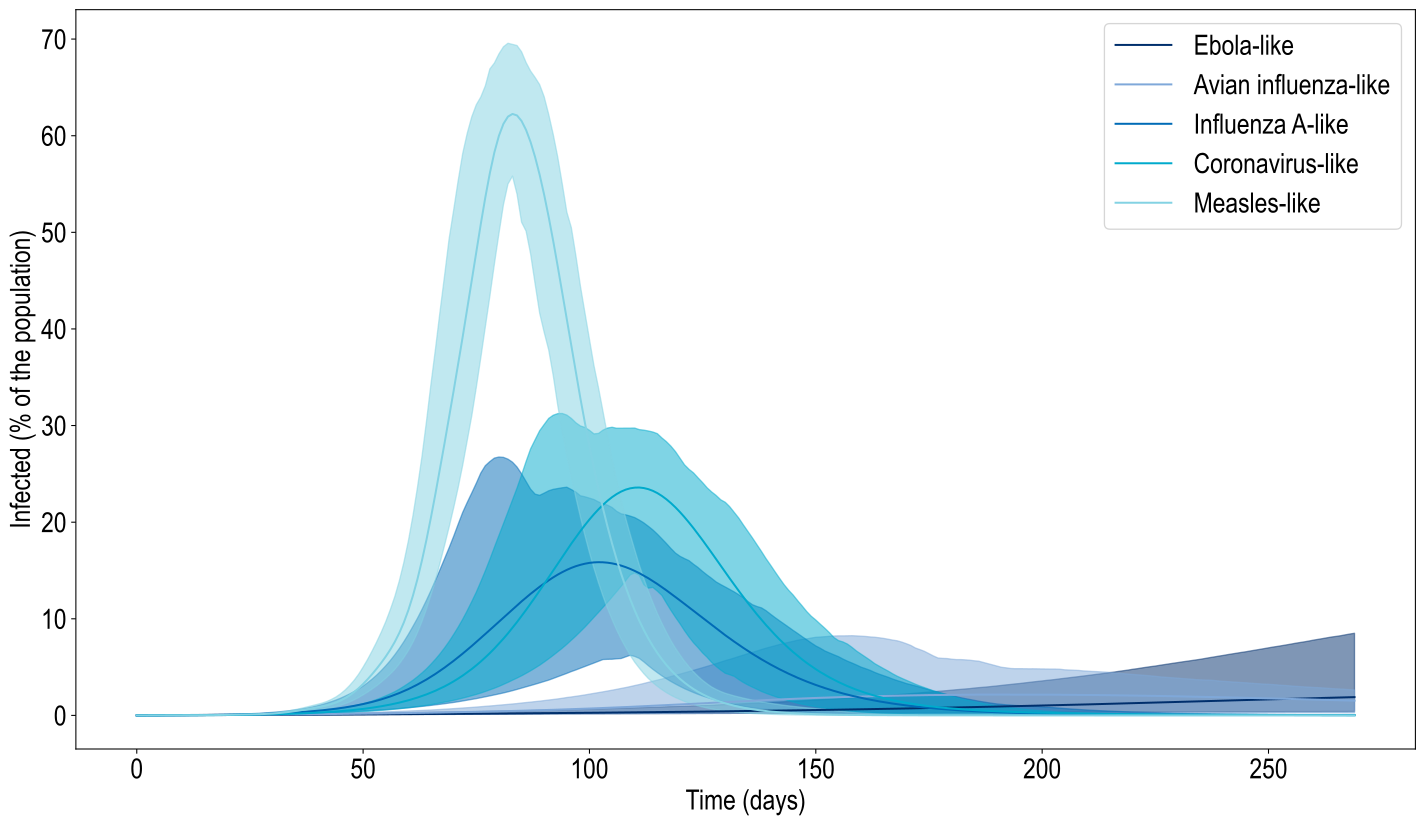
Note: The figure presents the cross-country average across the 51 OECD, EU/EEA and G20 countries included in the analysis, with the shaded areas indicating cross-country variability range. Evolution of the pandemic is expressed in days. Each outbreak is simulated to last for 9 months.
Source: Results from the SPHeP-PPR model.
The different pandemic trajectories translate directly into vastly different mortality rates across countries. The measles-like scenario is by far the most devastating, with a projected mortality rate approaching 20% of the entire population. This finding suggests that a hyper-infectious agent such as the one in the measles-like scenario spreads so fast that it infects a huge portion of the population. As a result, the sheer number of cases drives the high death toll. In comparison, the death toll of an extremely lethal agent, such as the one in the Ebola-like outbreak, could yield a lower number of deaths at around 3.4% of the population dying because it spreads more slowly. A highly transmissible influenza A-like outbreak, while less lethal, would still result in a staggering death toll of 4‑5% of the population. The other scenarios produce more varied but still severe outcomes.
In an unmitigated context, all outbreak scenarios place immense, unsustainable pressure on healthcare systems in the 51 countries included in the analysis, though the speed of collapse differs considerably as follows (Figure 1.3):
In each outbreak scenario, ICU capacity across the OECD countries would be exhausted within as little as 9 to 139 days, depending on the scenario. Outbreaks caused by highly transmissible influenza strains would be among the most dangerous. On average, ICU beds would reach full capacity in a little over a month in an avian influenza scenario and in around 42 days for an influenza A-like outbreak.
In a measles-like scenario, ICUs in the OECD would still face saturation within around six weeks (47 days on average). A coronavirus-like outbreak would place health systems under less immediate strain, but ICU beds would still reach full capacity in roughly 80 days on average.
Even a 130% surge in ICU bed capacity, an extraordinary effort, would only slightly extend the healthcare systems’ ability to manage the simulated outbreaks, by approximately an additional 5.5 to 20.6 days compared to the baseline 100% capacity scenario, depending on the outbreak. Regardless of the timing, once ICUs are full, mortality rises for all patients needing critical care.
Average number of days it takes to reach ICU capacity in the OECD, unmitigated pandemics

Note: The figure above shows the average number of days required to reach full, 120% and 130% hospital capacity across OECD countries included in the analysis under a given outbreak scenario (e.g. a value of 43.3 in the Ebola-like outbreak scenario means it would take on average 43.3 days to reach 100% ICU capacity during an Ebola-like outbreak in OECD countries). Each outbreak is simulated to last for 9 months.
Source: OECD analysis based on the OECD SPHeP-PPR model.
Findings from this analysis confirm that surge capacity can provide temporary relief but cannot compensate for the rapid spread of a fast-moving pathogen. Therefore, mitigation of the spread is the only viable strategy to avoid the collapse of healthcare systems.
1.3.2. When health systems are overwhelmed, economies stumble
The economic fallout of an unmitigated pandemic could be severe. OECD analysis suggests that during the first nine months of an unmitigated outbreak, GDP could fall, on average, between 2.7% and 16.2%, depending on the scenario across the 50 countries included in the analysis (Figure 1.4). The most devastating scenario would be a measles-like outbreak, which would trigger an economic collapse across nearly all sectors, with output contracting by around 16% or more. In comparison, a coronavirus-like outbreak would produce a milder but still significant contraction of around 2.7% on average. Other outbreak scenarios, such as those driven by Ebola-like or influenza A-like pathogens, would fall between these extremes, leading to average GDP declines of 3.4% to 5.5%.
Percentage of GDP contracted by sectors under each pandemic scenario
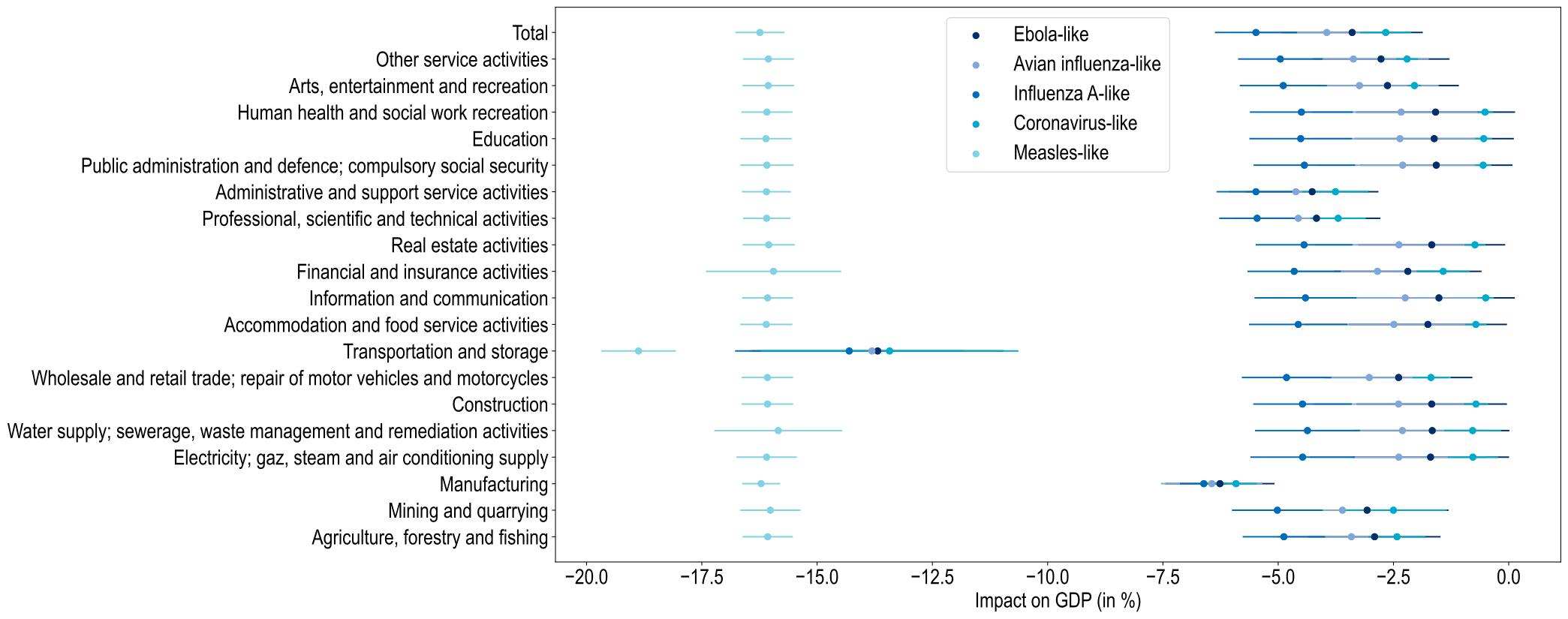
Note: The figure presents the average drop in GDP by sectors across the 50 OECD, EU/EEA and G20 countries included in the analysis.
Source: Analysis based on the SPHeP-PPR and the FOEC models.
Pandemic shocks ripple unevenly across sectors depending on how exposed they are to demand and supply disruptions (Figure 1.4). The economic output of sectors that depend on physical proximity or discretionary spending (e.g. transport) is hit the hardest. Transport and storage would face the steepest losses, with output falling between 13.4% and 18.9%, depending on the outbreak, while manufacturing would contract by between 5.9% and 16.2% as global supply chains stall. Administrative and support services and professional, scientific and technical activities would also experience deep downturns, shrinking by 4% to almost 6% in milder scenarios and up to 16% in the most severe. These losses reflect not only collapsing demand as households cut spending and mobility declines, but also the cascading impacts of supply shortages and bottlenecks in production.
By contrast, sectors that deliver essential services or those that can operate remotely seem to be more insulated from immediate shocks. In most scenarios, service‑based sectors such as education, health and social care, public administration and information and communication would see modest contractions: typically between 0.5% and 4.5% for education and health and 1.5% to 4.4% for public administration and information services. Yet even these sectors are not immune to severe outbreaks. In a measles-like outbreak, these sectors would suffer double‑digit declines, with activity dropping by around 16%, highlighting that when a pandemic grows large enough, its economic reach becomes truly universal.
NPIs refer to a set of public health measures aiming to contain the spread of disease outbreaks. Effective implementation of NPIs is especially important during the early phases of disease outbreaks when pharmaceutical interventions/vaccines may not be readily available at scale or when there is uncertainty about their effectiveness. Broadly, NPIs can curb the spread of infections either by reducing person-to-person contacts (e.g. by promoting teleworking) or by making contacts safer (e.g. by promoting the use of face masks).
NPIs have long been part of the public health responses to outbreaks. Before COVID‑19, NPIs played a key role in containing the 2003 SARS outbreak, the 2009 H1N1 influenza pandemic and the 2012 MERS-CoV epidemic. Yet it was the COVID‑19 pandemic that brought these measures into unprecedented focus, testing their effectiveness, limits and their cost to the broader economy. Countries adopted widely different combinations of NPIs including physical distancing, community-based infection prevention and control (IPC) measures such as hand hygiene, mask wearing and respiratory etiquette. Some governments imposed strict nationwide restrictions, while others relied more heavily on voluntary compliance and community engagement. Regardless of the combination of NPIs implemented, it is generally understood that NPIs are most effective when rolled out as a policy package rather than as single interventions, especially when community transmission is high (Rizvi et al., 2021[38]).
The OECD modelled the effectiveness of eight NPIs that can help limit the health and economic impacts of pandemic outbreaks (Table 1.1). These NPIs were selected based on three main criteria: they align with international guidelines on supporting PPR; they were widely implemented across OECD countries during the COVID‑19 pandemic; and there is robust, high-quality evidence available to inform their modelling and assessment. The analysis concentrates on how these interventions mitigate transmission within communities rather than their potential role in preventing cross-border spread.
Notes: IPC = infection prevention and control; = basic reproduction number; L = level.
 "Safer contact" package
 "Reduced contact" package
 "Targeted closures and restrictions" package
 "Lockdown alone" package
Source: Based on a comprehensive review of the available evidence by the OECD.
During the COVID‑19 pandemic, many OECD countries introduced COVID‑19 alert systems to help monitor outbreak trends and guide the policy decisions around the implementation of NPIs (OECD, 2021[42]). These alert systems differed in the indicators they used and the policy triggers. Many alert systems relied on a mix of indicators such as COVID‑19 incidence, hospital admission rates, ICU capacity and deaths to inform policy decisions related to implementing NPIs (Yang et al., 2021[43]). For example, New Zealand, South Africa and the United Kingdom implemented national frameworks with three to five alert levels that combined data on infections, hospitalisations, deaths and healthcare capacity (UK Health Security Agency, 2022[44]; Resolve to Safe Lives, 2020[45]). South Africa’s system integrated economic and health considerations whereas New Zealand focussed primarily on public health.
Reflecting the scientific evidence and real-world experiences, the OECD analysis grouped the NPIs into four escalating levels, shown in colour patterns, according to the degree of disruption imposed on daily life and mobility (Table 1.1). The “Safer contact” package (level 1, green) includes community-based IPC measures such as hand hygiene, mask wearing and indoor ventilation, as well as voluntary quarantines. The “Reduced contact” package (level 2, orange) entails the implementation of “Safer contact” measures and introduction of restrictions on physical interactions with greater stringency through measures such as promoting teleworking and limiting domestic travel to essential needs. Quarantines are now assumed mandatory. The “Targeted closures and restrictions” package (level 3, blue) includes all “Reduced contact” interventions and extends restrictions to include school closures and the closure of borders. Finally, the “Lockdown alone” package (level 4, red) represents the most stringent level of interventions with strict enforcement of lockdowns that impose severe limitations on mobility. For comparison, the OECD analysis also looks at the marginal impact of adding lockdowns on top of the less stringent interventions.
The ordering of interventions from Level 1 through Level 4 reflects the degree of disruption posed by each NPI, which is understood as the combination of how far a measure restricts daily activities and mobility. It mirrors the sequence in which countries typically escalated NPIs during the COVID‑19 pandemic (Hale et al., 2021[46]). A higher level denotes a more restrictive measure, not necessarily one with a greater impact on transmission. Because the measures are applied cumulatively across levels, the effectiveness of a given level is not a single pre‑specified value but the combined effect of all measures active at that level.
The intervention thresholds are illustrative modelling parameters and they were chosen to implement a consistent escalation rule across the analysis. Applying identical thresholds to every scenario ensures that variation in outcomes is attributable to the epidemiological characteristics of each pathogen and to the properties of the NPIs rather than to the decision rule itself. The thresholds draw on empirical experience and policy practice, but they are not intended to be interpreted as empirically validated operational triggers. Their application in a given national context would require validation against the pathogen’s characteristics, health system capacity and prevailing policy objectives.
The OECD analysis also assumes that the implementation of the selected NPIs is informed by wastewater-based surveillance, which emerged as a powerful tool for monitoring of infections in the community (Box 1.5).
Disease surveillance and early warning systems are a foundational pillar for effective PPR. Countries were already transitioning from paper-based to digital platforms before COVID‑19. The pandemic accelerated this shift, spurring the adoption of big data and artificial intelligence to forecast outbreaks and monitor population mobility (WHO, 2023[47]).
During the COVID‑19 pandemic, wastewater surveillance emerged as effective strategy to support the clinical-based surveillance efforts
As many pathogens are excreted in bodily fluids before or during infection, testing wastewater for biological or chemical markers can reveal the presence of disease in a community long before cases appear in clinical settings. Prior to COVID‑19, wastewater surveillance was used to detect “silent” transmission of polio in Israel (Bonanno Ferraro et al., 2021[48]) and norovirus in Sweden (Hellmér et al., 2014[49]). During COVID‑19, SARS‑CoV‑2 was detected in Italy’s sewage systems weeks before the first confirmed cases were reported (La Rosa et al., 2021[50]).These findings demonstrate that wastewater surveillance can serve as an early warning system for disease transmission within communities, enabling policymakers to take timely and targeted action. This proactive approach supports the implementation of less restrictive interventions, yielding substantial benefits for both public health and the economy.
It is important to note that wastewater surveillance is subject to important limitations. Viral signals indicate the trends in transmission but translate poorly into case numbers (Wang et al., 2026[51]; Li et al., 2021[52]). Because signals are aggregated across a catchment area, they cannot identify infected individuals or be readily disaggregated by age, risk group or setting. This limitation makes wastewater surveillance a complement to, rather than a substitute for, clinical surveillance (National Academies of Sciences, Engineering, and Medicine, 2023[53]). Sensitivity falls when a disease is rare or a sewer network serves a large population (Ahmed et al., 2022[54]). In the absence of standardised protocols, results are difficult to compare across sites and laboratories (Davis et al., 2023[55]; Wilhelm et al., 2023[56]; Aßmann et al., 2025[57]). The wastewater surveillance requires connection to centralised sewer infrastructure such that unconnected populations fall outside monitored catchments (Li et al., 2021[52]; Shrestha et al., 2021[58]).
Considering the real-world experiences with wastewater surveillance, the OECD assessed the potential impact of integrating wastewater surveillance as part of efforts to strengthen PPR capacity across 51 OECD, EU/EEA and G20 countries. The effectiveness of each NPI level was assessed under two surveillance approaches. In the clinical surveillance‑based approach, the model incorporated clinical surveillance data only, using the preceding three days of reported hospitalisations and mortality to project outcomes over the subsequent two weeks. This approach is similar to those used by OECD countries (Yang et al., 2021[43]). In the wastewater-based approach, the same forecasting framework was applied, but projections were also informed by wastewater surveillance which sheds light onto the number of infections in the community.
The OECD analysis suggests that wastewater surveillance can strengthen the protective impacts of NPIs and lockdown policies (Figure 1.5). In a coronavirus-like outbreak, using wastewater surveillance to guide the implementation of the “Safer contact” package could prevent around 41% of deaths that would have otherwise occurred under the clinical surveillance‑based approach. The benefits would further increase under the “Reduced contact” package, with averted deaths reaching 51%. Even the “Lockdown alone” package alone would become markedly more effective when supported by wastewater surveillance, averting around 73% of deaths that would have occurred when lockdowns are guided only by the clinical surveillance‑based approach. Several factors likely contribute to these outcomes, with a central one being the enhanced ability of policymakers to anticipate the epidemic’s trajectory and apply targeted interventions. Early implementation of measures, before the outbreak reaches exponential growth, helps contain its spread more effectively. Likewise, timely data enables earlier relaxation of restrictions, reducing the duration of societal and economic constraints.
Share (%) of deaths averted by clinical surveillance coupled with wastewater surveillance that would have otherwise occurred using clinical-surveillance based alone, by levels of NPI package, during a coronavirus-like outbreak

Notes: “Safer contact” package = community-based IPC and limited quarantine measures; “Safer contact” package & LD (“Safer contact” package with lockdown) = community-based IPC, voluntary quarantine measures and lockdowns. “Reduced contact” package = community-based IPC, mandatory quarantine measures, promoting teleworking and introducing restrictions on domestic travel; “Targeted closures and restrictions” package = community-based IPC, mandatory quarantine measures, promoting teleworking, introducing restrictions on domestic travel, school closures and international travel restrictions. “Lockdown alone” package severely limits mobility, permitting movement only for essential workers. In the coronavirus outbreak, lockdowns are not triggered once the “Reduced contact” package is in place. This is because once these interventions are activated, the simulated outbreaks never reach the threshold values listed earlier to trigger lockdowns.
Source: Analysis is based on the OECD SPHeP-PPR model.
As NPIs become more effective when their implementation is guided by wastewater surveillance, the need for prolonged lockdowns declines sharply. In all three outbreaks caused by respiratory pathogens, integrating wastewater surveillance to the layered implementation of NPIs including up to the “Targeted closures and restrictions” package reduces the strain on population and healthcare systems to such an extent that policymakers might no longer need to rely on lockdowns to control the spread of the disease. Only in Ebola-like and measles-like outbreaks would policymakers still need to consider adding lockdowns to the “Targeted closures and restrictions” package, depending on their health objectives and healthcare system capacity. Even then, the number of days that would need to be spent in lockdowns would be reduced by upwards of 90% compared with implementing these interventions based solely on data gathered through clinical surveillance only.
Source: WHO (2023[47]), “Future surveillance for epidemic and pandemic diseases: a 2023 perspective”, https://www.who.int/publications/i/item/9789240080959; Boanno Ferraro et al. (2021[48]), “A State-of-the-Art Scoping Review on SARS-CoV-2 in Sewage Focusing on the Potential of Wastewater Surveillance for the Monitoring of the COVID-19 Pandemic”, http://doi.org/10.1007/s12560-021-09498-6; Hellmér et al. (2014[49]), “Detection of Pathogenic Viruses in Sewage Provided Early Warnings of Hepatitis A Virus and Norovirus Outbreaks”, http://doi.org/10.1128/aem.01981-14; La Rosa et al. (2021[50]), “SARS-CoV-2 has been circulating in northern Italy since December 2019: Evidence from environmental monitoring”, http://doi.org/10.1016/j.scitotenv.2020.141711; Wang et al. (2026[51]), “From wastewater to epidemiological insights: A systematic review of modelling strategies for infectious disease surveillance”, http://doi.org/10.1016/j.watres.2025.124977; Li et al. (2021[52]), “Uncertainties in estimating SARS-CoV-2 prevalence by wastewater-based epidemiology”, http://doi.org/10.1016/j.cej.2021.129039; National Academies of Sciences, Engineering, and Medicine (2023[53]), “Wastewater-based Disease Surveillance for Public Health Action”, https://www.nationalacademies.org/projects/DELS-WSTB-21-02/publication/26767; Davis et al. (2023[55]), “Evaluation of intra- and inter-lab variability in quantifying SARS-CoV-2 in a state-wide wastewater monitoring network”, http://doi.org/10.1039/d2ew00737a; Wilhelm et al. (2023[56]), “Interlaboratory comparison using inactivated SARS-CoV-2 variants as a feasible tool for quality control in COVID-19 wastewater monitoring”, http://doi.org/10.1016/j.scitotenv.2023.166540; Aßmann et al. (2025[57]), “Augmentation of wastewater-based epidemiology with machine learning to support global health surveillance”, http://doi.org/10.1038/s44221-025-00444-5; Shrestha et al. (2021[58]), “Wastewater-Based Epidemiology for Cost-Effective Mass Surveillance of COVID-19 in Low- and Middle-Income Countries: Challenges and Opportunities”, http://doi.org/10.3390/w13202897; Yang et al. (2021[43]), “Design of COVID-19 staged alert systems to ensure healthcare capacity with minimal closures”, http://doi.org/10.1038/s41467-021-23989-x.
1.4.1. Lockdowns are the last-resort measures for achieving health and economic goals but can be avoided with robust and timely implementation of less restrictive measures
Lockdowns are a last-resort intervention that can be used to mitigate uncontrolled epidemics, but they represent one of the least efficient approaches. When used alone, lockdowns (the “Lockdown alone” package) yield the smallest reductions in mortality in most scenarios except in Ebola-like and measles-like outbreaks where lockdowns could save more lives than introducing community-based IPC measures and voluntary quarantines (the “Safer contact” package) alone. But in all outbreak scenarios, introducing lockdowns alone would fall short of the health gains that could be achieved through the timely implementation of the “Reduced contact” package (Figure 1.6). In most outbreak scenarios, adding lockdowns on top of the NPI packages (i.e. up to the “Targeted closures and restrictions” package) offers only marginal health gains.
Percentage of averted deaths that would have occurred in uncontrolled pandemic scenarios, by level of intervention

Notes: “Safer contact” package = community-based IPC and limited quarantine measures; “Safer contact” package &LD (“Safer contact” package with lockdown) = community-based IPC, voluntary quarantine measures and lockdowns. “Reduced contact” package = community-based IPC, mandatory quarantine measures, promoting teleworking and introducing restrictions on domestic travel; “Reduced contact” package &LD (“Reduced contact” package with lockdown) = community-based IPC, mandatory quarantine measures, promoting teleworking and introducing restrictions on domestic travel and lockdowns; “Targeted closures and restrictions” package = community-based IPC, mandatory quarantine measures, promoting teleworking, introducing restrictions on domestic travel, school closures and international travel restrictions. “Targeted closures and restrictions” package &LD (“Targeted closures and restrictions” package with lockdown) = community-based IPC, mandatory quarantine measures, promoting teleworking, introducing restrictions on domestic travel, school closures and international travel restrictions and lockdowns. “Lockdown alone” package severely limits mobility, permitting movement only for essential workers. In the OECD analysis, the lockdowns were not triggered in avian influenza-like and influenza A-like outbreak scenarios once the “Safer contact” package is implemented and in the coronavirus outbreak once the “Reduced contact” package is in place. This is because once these interventions are activated, the simulated outbreaks never reach the threshold values listed earlier to trigger lockdowns.
Source: Analysis is based on the OECD SPHeP-PPR model.
Using lockdowns as a last resort comes with steep economic costs. When implemented alone, lockdowns are associated with an 11.7% reduction in GDP in an avian influenza-like outbreak and up to 28.9% in a measles-like outbreak over the 9‑month simulation period (Figure 1.7). In most cases, layering lockdowns on top of the modelled interventions further deepens the economic losses. Adding lockdowns to the “Safer contact” package, for example, raises GDP contractions from 2.6% to 12.8% in an Ebola-like outbreak and from 8.6% to 16% in a measles-like outbreak. In every outbreak scenario, lockdown-only policies reduce economic output more than an unmitigated pandemic.
Percentage drop in GDP under each outbreak scenario, by level of intervention

Notes: “Safer contact” package = community-based IPC and limited quarantine measures; “Safer contact” package &LD (“Safer contact” package with lockdown) = community-based IPC, voluntary quarantine measures and lockdowns. “Reduced contact” package = community-based IPC, mandatory quarantine measures, promoting teleworking and introducing restrictions on domestic travel; “Reduced contact” package &LD (“Reduced contact” package with lockdown) = community-based IPC, mandatory quarantine measures, promoting teleworking and introducing restrictions on domestic travel and lockdowns; “Targeted closures and restrictions” package = community-based IPC, mandatory quarantine measures, promoting teleworking, introducing restrictions on domestic travel, school closures and international travel restrictions. “Targeted closures and restrictions” package &LD (“Targeted closures and restrictions” package with lockdown) = community-based IPC, mandatory quarantine measures, promoting teleworking, introducing restrictions on domestic travel, school closures and international travel restrictions and lockdowns. “Lockdown alone” package severely limits mobility, permitting movement only for essential workers. In the OECD analysis, the lockdowns were not triggered in avian influenza-like and influenza A-like outbreak scenarios once the “Safer contact” package is implemented and in the coronavirus outbreak once the “Reduced contact” package is in place. This is because once these interventions are activated, the simulated outbreaks never reach the threshold values listed earlier to trigger lockdowns.
Source: Analysis is based on the OECD SPHeP-PPR model.
1.4.2. Community-based IPC measures are the first line of defence during outbreaks
Early and well-implemented NPIs can markedly reduce the mortality burden of the pandemic. The least stringent NPI package, “Safer contact”, which involves community-based IPC measures and voluntary quarantines alone, could avert on average 80% of deaths that would have occurred in an uncontrolled Ebola-like outbreak assuming they are implemented early and effectively, suggesting that these measures provide the foundation for an effective pandemic response and need to be implemented promptly (Box 1.6). In outbreaks caused by agents similar to avian influenza, influenza A and coronavirus, implementing the “Safer contact” package alone would help avoid the vast majority of deaths. But when the disease transmission is high, solely relying on these measures does not suffice. This would be the case in a measles-like outbreak, where the “Safer contact” package alone would avert only around 40% of deaths that would have occurred in an unchecked outbreak (Figure 1.6).
The importance of community-based IPC measures is widely recognised but there are crucial gaps in their timely implementation
The COVID‑19 pandemic put a spotlight on community-based IPC measures as a crucial strategy to curb the spread of outbreaks. The 2023‑2024 OECD survey on Maintaining IPC Measures in the Community gathered information on 4 community-based IPC measures: i) hand hygiene, ii) respiratory etiquette, iii) mask wearing and iv) indoor ventilation. A total of 24 countries, including 22 OECD Member countries and 2 accession countries participated in the survey.
The 2023‑2024 OECD survey showed that all 24 corresponding countries promoted hand hygiene, mask-wearing, respiratory etiquette and indoor ventilation during the COVID‑19 pandemic. Today, most OECD Members and accession countries that participated in the OECD survey recognise the vital role of community-based IPC measures but there are important gaps in their implementation.
In general, countries report higher activity in educational campaigns and behavioural interventions in public spaces, such as visual cues (Figure 1.8). Many also engage relevant stakeholders including, for example, local communities and experts, to ensure programmes are evidence‑based and effectively implemented. In contrast, fewer countries report action on distributing IPC supplies and conducting mass media campaigns. Overall, interventions promoting hand hygiene appear more common than those encouraging mask use or respiratory etiquette. In fact, across various questions, countries were twice as likely to report hand hygiene initiatives compared to other policy areas. The only exception is expert involvement, which shows similar levels of engagement across all three areas.

Notes: No data reported on the distribution of IPC supplies relevant to respiratory etiquette. No data reported on mass media campaigns, access to accurate information, behavioural interventions for indoor ventilation. IPC = infection prevention and control.
Source: Country self-assessment responding to the 2023‑2024 OECD survey on Maintaining Infection Prevention and Control Measures in the Community OECD.
The “Safer contact” package also helps avoid the deeper contractions in the economy associated with unmitigated outbreaks. On average, the GDP losses associated with the “Safer contact” package alone remain moderate: from around 2.5% in a coronavirus-like outbreak to 8.6% in a measles-like outbreak (Figure 1.7). In all outbreak scenarios, introducing the “Safer contact” package could help reduce the detrimental impact of an unmitigated outbreak on the economy.
1.4.3. In many cases, a layered approach to implementing NPIs protects population health without adding substantial strain on the economy
Adding teleworking, domestic travel limitations and mandatory quarantines (the “Reduced contact” package) delivers substantial health and economic benefits in certain outbreak contexts. In an Ebola-like outbreak, for example, this layered approach could avert up to 90% of deaths compared with about 80% under the “Safer contact” package alone. This approach also helps cushion economic losses. The average decline in GDP would ease slightly from 2.6% to 2.5% in Ebola-like, from just over 2.5% to just below 2.5% in a coronavirus-like and from 8.6% to 2.5% in measles-like outbreaks compared with the “Safer contact” package alone (Figure 1.7). The potential economic gains would be more modest in avian influenza-like and influenza A-like outbreaks.
1.4.4. School closures and international travel restrictions can be avoided
Closing schools and restricting international travel (the “Targeted closures and restrictions” package) add little to the health gains already achieved through less stringent NPIs once the outbreak is already established within the country. In most outbreak scenarios, these stricter policies prevent less than 1% of additional deaths (Figure 1.6). Even in an Ebola-like outbreak, the deaths averted would rise only modestly, by about 3 percentage points (p.p.). The economic costs, however, would increase substantially. Escalating to the “Targeted closures and restrictions” package from the “Reduced contact” package (Level 1‑2) consistently deepens economic losses across all outbreak types, with GDP contractions rising from 2.5% to 3.1% in Ebola-like and from 2.5% to 2.9% in measles-like scenarios (Figure 1.7). It is also worth noting that school closures would have effects on human capital formation that are not captured in this analysis, as it covers only the first nine months of an outbreak. These potential effects would accrue over a longer horizon.
1.5.1. Strategic stockpiling offers an important short-term buffer during outbreaks
In addition to strong disease surveillance and early warning systems (Box 1.5), strategic stockpiling of personal protective equipment (PPE) is another key enabler for the effective and timely implementation of NPIs, particularly in the context of community-based IPC measures. Stockpiles act as a first buffer during public health emergencies to ensure critical supplies are readily available in the early stages of a health emergency when there is a gap between immediate needs and time required to ramp up manufacturing and production capacity. Experiences from OECD and partner countries highlight several core policy dimensions that influence the effectiveness of stockpiling systems (OECD, 2024[18]):
Strategic planning and risk assessments: A central challenge in strategic stockpiling lies in deciding what to stockpile, in what quantities and for which type of health emergencies. National stockpiles typically include a mix of medicines, PPE, medical devices, vaccines and other countermeasures. Many countries now base their stockpile composition on risk assessments conducted by expert groups or national security boards. For example, in Australia, the key decision making committee for health emergencies advises on managing the stockpile (Australian Department of Health and Aged Care, 2023[59]) whereas in Korea, the Ministry of Food and Drug Safety develops a list of essential products which must be stockpiled and other stockpiled products are informed by priority diseases identified by Korea’s Centres for Disease Control and Prevention (Ministry of Food and Drug Safety, 2019[60]).
Governance model and management: Strategic stockpiling requires clear governance and oversight structures. In a previous review, France, Latvia, Lithuania, the Netherlands and Norway all reported having strategic stockpiles mainly held by governments whereby stockpiling practices are guided by national legislation that defines storage responsibilities and renewal procedures (HIQA, 2023[61]). In some countries, hospitals and other healthcare institutions also maintain their own reserves to complement the national systems. Decentralised stockpiling combined with central oversight is also recommended to ensure timely access in case of emergencies (HIQA, 2023[61]). This is already the case in the United States and in Australia where decentralised stockpiles are strategically distributed in various locations to facilitate timely deployment and both countries centrally co‑ordinate their stockpiles.
Funding and reimbursement arrangements: Strategic stockpiling is a long-term investment that demands sustainable funding. Funding models vary across countries. Some countries allocate dedicated budgets within the Department/Ministry of Health while others use funds from the central government or pool resources from across various ministries.
Inventory management and logistics: Sound inventory management and logistics underpin every effective stockpiling system. Typically, national agencies with prior experience in stockpiling and preparedness oversee the procurement process, though hospital procurement groups may also be involved. Further to stock management, operational delivery, such as stockpile distribution, generally takes place through defined mechanisms guided by the ministry of health and in some cases inter-ministerial collaboration, as well as through wholesaler distribution networks and national emergency medical services.
Designing resilient stockpiling strategies requires balancing financial sustainability, adaptability, operational efficiency and co‑ordination. Maintaining strategic reserves demands consistent long-term funding, yet these costs are modest compared with the inflated prices governments face when procuring supplies during a crisis (OECD, 2024[18]). Because health threats are unpredictable, ranging from pandemics to natural disasters and chemical, biological, radiological and nuclear events, stockpiling plans must remain flexible and regularly updated through risk assessments. Effective rotation, waste reduction and timely distribution depend on strong logistics systems and clear operating procedures. Seamless co‑ordination among national and local authorities, healthcare providers and industry partners is also essential, as poor communication can slow delivery and undermine an otherwise well-prepared response.
1.5.2. Successfully managing outbreaks also hinges on effective governance, economic and social factors
Equally important is the ability to assess national vulnerabilities to guide strategic decision making. PPR capacity is typically measured with indices that assess and compare readiness to health shocks. Well-designed and evidence‑based PPR indices provide a practical tool for decision makers to:
detect early threats and allocate resources more effectively, by highlighting gaps in detection, surveillance and response capacities,
benchmark performance against international standards and peers and
contribute to stronger global collaboration and security, by offering a shared language and measurement framework that facilitate the sharing of experiences and resources across countries.
The OECD examined the key features of six key PPR indices developed before the COVID‑19 pandemic: Epidemic Preparedness Index (EPI), Global Health Security Index (GHSI), Infectious Disease Vulnerability Index (IDVI), INFORM Risk Index, Joint External Evaluation (JEE) and the International Health Regulations (IHR) State Party Self-Assessment Annual Report (SPAR). These indices were selected for analysis because each of them examines a country’s general preparedness for pandemics across multiple dimensions, rather than focussing on a single aspect and they all enable international comparisons.
Although the six PPR indices included in the OECD analysis have similar overall objectives, they differ in their scope and structure, and they use different methodologies to evaluate how well countries prevent, detect and respond to future pandemics. They typically rely on secondary and/or self-reported data to capture the broad picture of national readiness.
The PPR indices typically cover a broad set of themes, often overlapping in core areas such as healthcare capacity, infrastructure, surveillance and response capabilities. But each index emphasises certain themes according to its design and purpose. Co‑ordination and governance are key dimensions of most PPR assessments. The GHSI, IDVI, JEE and SPAR pay particular attention to compliance with international norms, especially those set by the IHR. Common indicators include participation in international agreements, IHR reporting and cross-border co‑ordination mechanisms. However, in line with previous works, the OECD analysis also showed that most indices overlook crucial social and cultural dimensions (e.g. level of trust in the government and community behaviours that may influence the level of compliance with NPIs) (Kachali et al., 2022[62]).
The reviewed PPR indices vary considerably when it comes to assessing vulnerable populations and coping capacity. The GHSI, JEE and SPAR are among the most comprehensive tools covering a wide range of dimensions of PPR capacity, but the GHSI and JEE do not include explicit measures of vulnerable populations or their capacity to cope with crises. Key indicators (e.g. literacy rates) which are essential for understanding vulnerabilities are often absent. In comparison, the IDVI, though narrower in scope, excels in capturing health disparities and vulnerabilities within populations.
The OECD analysis suggested that the PPR indices developed prior to COVID‑19 often failed to match the actual performance of countries during the outbreak. The experience of COVID‑19 revealed both the value and limits of existing measures of PPR capacity. The OECD examined how well the six pre‑pandemic indices predicted a country’s performance during the COVID‑19 crisis. Performance was measured by the percentage change in life expectancy between 2019 and 2021, an indicator that captures both direct mortality from the outbreak and the indirect health impacts of overwhelmed health systems.
The OECD analysis revealed that the predictive power of PPR indices was moderate to low (Figure 1.9). Among the six indices reviewed, the SPAR showed the strongest but moderate link to changes in life expectancy during COVID‑19. Its correlation coefficient of ‑0.44 indicates a negative relationship whereby countries with higher SPAR scores, meaning stronger PPR capacity, generally experienced smaller drops or even gains in life expectancy. How well a country scored on SPAR explained roughly 19% of the differences in life expectancy changes across countries. The IDVI also showed a meaningful, though much weaker association (correlation coefficient ‑0.3; R-squared = 0.09). INFORM and EPI captured little of how life expectancy changed during the pandemic. The EPI’s correlation coefficient of ‑0.14 and R-squared value of 0.02 suggests only a minimal link, whereas the same metrics for INFORM indicate almost no association (correlation coefficient 0.06; R-squared = 0.003).

Note: R-squared values ranging from 0 to 1 indicate the extent to which changes in life expectancy are explained by each index. A higher R-squared value reflects a stronger ability of the index to predict changes in life expectancy. The R-squared values indicate the proportion of variance in life expectancy change explained by each index, with higher values reflecting stronger predictive power (e.g. an R-squared value of 0.02 for the GHSI means that this index explains 2% of the variation in life expectancy and around 98% of the variation in this outcome is due to other factors that are not captured in the analysis). Correlation coefficients describe the direction and strength of the relationship. Negative values indicate that countries ranked as better prepared (lower index scores) generally experienced smaller declines in life expectancy, while positive values suggest little or no meaningful relationship. EPI = Epidemic Preparedness Index, GHSI = Global Health Security Index, IDVI = Infectious Disease Vulnerability Index, JEE = Joint External Evaluation, SPAR = State Party Self-Assessment Annual Report.
Source: OECD analysis.
The mixed predictive performance of the pre‑COVID‑19 indices coupled with evidence from the COVID‑19 pandemic suggests the next generation of PPR indices can be strengthened in several ways including:
PPR capacities must be judged in context. The COVID‑19 pandemic showed that many pre‑COVID‑19 PPR indices tended to favour high-income countries, even though certain low-income or smaller countries often outperformed expectations. One reason for this mismatch is that PPR indices often failed to fully account for country characteristics that could influence the response capacity such as geographic connectivity, demographic composition, prior experience managing health crises, local level and community capacity and cohesion, governance variables, ability to co‑ordinate a cross-sectoral response, as well as various dimensions of vulnerability (e.g. health, social, economic, institutional and cognitive). Future indices can make a stronger effort to incorporate these factors into their assessment frameworks to improve their predictive power.
Integrate measures of operational readiness. During health emergencies, speed of action saves lives. Among pre‑COVID indices, SPAR stood out for capturing a country’s ability to act quickly (i.e. operational readiness) in case of a health shock by assessing, for example, whether systems for public health risk communication and reporting and compliance with international regulations are in place. The IDVI complemented this operational lens with structural factors such as governance stability and socio‑economic context. Future indices can go further by evaluating not only whether response mechanisms exist but how quickly they can be activated and scaled in real time.
Reinforce the role of disease surveillance. Surveillance remains the cornerstone of effective response to outbreaks. Early warning systems can facilitate the detection of outbreaks quickly, though the effectiveness of these systems depends heavily on timely access to high-quality, real-time information. Yet, one OECD survey fielded just before COVID‑19 showed that only a handful of countries (i.e. Denmark, Estonia, Korea and Latvia) had the infrastructure to achieve near real-time data reporting across key areas such as hospital in-patients, emergency care, primary care, long-term care and prescription medicines prior to COVID‑19 (Oderkirk, 2021[63]). Luxembourg also reported having similar health data structures in place before the pandemic. Robust laboratory capabilities are another critical component of disease surveillance for accurate diagnostics and monitoring. Health systems should also be able to track both symptomatic and asymptomatic cases effectively, for example, through wastewater surveillance.
SPAR’s inclusion of indicators to capture laboratory capacity and surveillance helped explain its stronger predictive performance. In comparison, INFORM and EPI placed limited emphasis on surveillance. INFORM focussed mainly on general disaster vulnerability, while EPI emphasised the structural aspects of preparedness (e.g. healthcare systems and resources) without assessing disease detection speed or outbreak tracking capacities. None of the PPR indices examined the role of the readiness of health information systems.
Incorporate socio‑economic and governance dimensions. Trust in institutions, social cohesion and leadership quality, including at the local level, proved decisive during COVID‑19 but these dimensions were often absent from PPR assessments. The ability to communicate risks clearly and consistently during health emergencies can influence public compliance and trust. SPAR was one of the few frameworks that explicitly assessed public health risk communication capacity. Expanding this dimension, for example, by evaluating transparency and community engagement would provide a more accurate picture of socio‑economic and governance dimensions that influence PPR capacity.
Strengthen the dimensions of international co‑operation. No country can face a pandemic alone. The early months of COVID‑19 exposed weaknesses in global co‑ordination, ranging from fragmented supply chains to inconsistent travel and data-sharing policies. Future indices should explicitly measure a country’s capacity and readiness to co‑operate internationally, including mechanisms for information exchange, joint procurement and rapid mutual assistance.
Adopt a One Health lens. The rising threat of zoonotic diseases means efforts to capture PPR capacities need to go beyond focussing solely on human health. Many emerging pathogens originate in animals and are amplified by land-use change, food production practices and environmental degradation. Future indices should adopt a One Health lens by incorporating animal health surveillance, environmental monitoring and human-wildlife interactions to identify risks early and prevent outbreaks before they reach human populations.
When pandemics strike, countries with stronger PPR systems are better equipped to respond quickly and avoid the steep health and economic toll of the outbreak. While PPR spending may appear costly upfront, neglecting it only shifts and magnifies the expenses that would be incurred during the response phase. This was the case during COVID‑19 when insufficient stockpiles led to a global scramble for PPE. Similarly, building essential public health systems from scratch during an emergency is vastly more expensive and less efficient than establishing them beforehand.
Beyond crisis management, PPR investments yield “dual-use” benefits. The same infrastructure, surveillance systems and co‑ordination mechanisms that protect populations and the economy during outbreaks also enhance routine care, accelerate detection of other health threats and improve public trust in institutions in “normal times”. Wastewater surveillance, for example, can monitor seasonal influenza and other endemic diseases while stronger stockpiles can be mobilised for other health emergencies. In this sense, preparedness is not merely an insurance policy, but a long-term investment in the stability and efficiency of health systems.
The OECD estimated investments necessary to bolster country-level PPR capacity in 51 OECD, EU/EEA and G20 countries for the next 10 years, using the OECD SPHeP Costing Tool. Table 1.2 describes the key features of the interventions included in the assessment.
Note: LMS = learning management systems; M&E = monitoring and evaluation; PPE = personal protective equipment; RT-qPCR = reverse transcription-quantitative polymerase chain reaction; SOP = standard operating procedures.
Source: Based on OECD review of the available literature.
1.6.1. In the OECD, strengthening PPR capacity would require nearly USD PPP 6 per person per year
The OECD estimates that PPR capacity would require an average annual investment of over USD PPP 20 billion across the 51 countries included in the analysis, equivalent to about USD PPP 5.6 per person (Figure 1.10). Within the OECD, this translates to an average of USD PPP 7.2 billion per year or roughly USD PPP 5.9 per capita, while the corresponding figure for EU/EEA countries is around USD PPP 2.6 billion annually or USD PPP 6.3 per capita. Among the G20 economies, the estimated annual cost averages more than USD PPP 18 billion, which corresponds to around USD PPP 4.7 per capita. Substantial cross-country variation exists in investment needs, with per capita costs per year ranging from USD PPP 3.3 in Indonesia to as high as USD PPP 11 in Luxembourg.

Note: PPP = purchasing power parity; B = billions; M = millions.
Source: OECD analysis based on the OECD SPHeP Costing Tool.
Across OECD countries, strengthening PPR capacity is estimated to require about USD PPP 5.9 per person each year. Around one‑third of these additional resources would go toward start-up investments to strengthen the essential systems (e.g. developing standard operational procedures, data and management systems), institutions and infrastructure that underpin preparedness. A similar amount would be needed each year to cover operational costs that maintain these systems over time. It is important to note that these cost estimates represent an upper bound, based on the assumption that countries begin with limited PPR capacity for the interventions included in the analysis. Countries at a more advanced stage that have some elements of these systems in place would benefit from a reduction in the overall investment requirements. For example, if countries already have 30% of the PPR capacity in place, the average annual PPR cost would fall to USD PPP 6.4 billion (USD PPP 5.3 per capita) for OECD, to USD PPP 2.4 billion (USD PPP 5.7 per capita) for EU/EEA and to USD PPP 17.7 billion (USD PPP 4.2 per capita) for the G20 countries.
In comparison, the response phase, when capacities are expanded to address an active outbreak rather than built from scratch, would average around USD PPP 1.7 per capita per year in the OECD. This lower figure underscores a key point. When preparedness systems are in place, countries can respond more efficiently by relying on established structures rather than building new ones amid crises.
1.6.2. Building a national stockpile is the costliest component of the PPR package
Building and maintaining a national stockpile of PPE and hygiene supplies is by far the most expensive component, with an annual average cost of almost USD PPP 4.4 billion (USD PPP 3.2 per capita) for OECD countries (Figure 1.11). This finding is not surprising considering the complexities around building and maintaining stockpiles. A substantial portion of this cost is driven by the procurement of supplies. This is not a one‑time expense, because it requires continuous investment in replenishment and rotation of supplies, although items nearing expiration can be released to the market and used, reducing overall costs, as is already practised in many countries. Another driver of the cost is the ongoing management of the stockpile (e.g. staff salaries, secure warehouses, logistical systems), which reflects that a stockpile is a complex logistical operation and not simply a warehouse of medical goods.
Annual average cost of PPR by component

Notes: Physical contact-reducing NPIs include 1) promoting higher compliance with physical distancing measures, 2) ensuring innovative workplace solutions, 3) ensuring educational continuity and 4) encouraging safe international and domestic travel. EU/EEA = European Union/European Economic Area, G20 = Group of 20; NPIs = non-pharmaceutical interventions; PPE = personal protective equipment; PPP = purchasing power parity.
Source: OECD analysis based on the OECD SPHeP Costing Tool.
The annual cost of activities aiming to strengthen the implementation of physical contact-reducing NPIs, such as promoting physical distancing measures and ensuring innovative workplace solutions, would on average cost almost USD PPP 2.8 billion (USD PPP 2.5 per capita) in the OECD, around USD PPP 1.1 billion (USD PPP 2.8 per capita) in the EU/EEA and nearly USD PPP 4.2 billion (USD PPP 1.6 per capita) across the G20 countries. Efforts to scale up wastewater surveillance are relatively inexpensive, with the estimated per capita average cost of facilitating enhanced wastewater surveillance remaining below USD PPP 1 per year in nearly all countries included in the analysis.
This report shows that investing in PPR capacity saves lives and shields economies from the consequences of future outbreaks. Set against the potential health and economic toll of uncontrolled outbreaks, the estimated PPR investment is modest. As the chapter highlighted before, the cumulative probability of experiencing another pandemic on the scale of COVID‑19 within the next 25 years is estimated at roughly 50% (Madhav et al., 2023[5]), yet the OECD analysis showed that building the PPR capacity to respond is estimated to average only about USD PPP 5.6 per person per year across the 51 countries included in the analysis. The return on that outlay is large. In the most severe scenarios, an outbreak without well-implemented and timely NPIs could claim the lives of one in five people and reduce GDP by between 11.7% and 28.9% within its first nine months. Against potential losses of this magnitude and an increasing risk of facing them within a generation, the economic case for prioritising PPR is compelling.
References
[54] Ahmed, W. et al. (2022), “Evaluation of process limit of detection and quantification variation of SARS-CoV-2 RT-qPCR and RT-dPCR assays for wastewater surveillance”, Water Research, Vol. 213, p. 118132, https://doi.org/10.1016/j.watres.2022.118132.
[57] Aßmann, E. et al. (2025), “Augmentation of wastewater-based epidemiology with machine learning to support global health surveillance”, Nature Water, Vol. 3/7, pp. 753-763, https://doi.org/10.1038/s44221-025-00444-5.
[59] Australian Department of Health and Aged Care (2023), National Medical Stockpile, https://www.health.gov.au/our-work/national-medical-stockpile (accessed on 24 October 2023).
[34] Baxter, M. et al. (2023), “Diagnosis, treatment, and outcome of patients with oesophagogastric cancer during the COVID-19 pandemic: national study”, British Journal of Surgery, Vol. 110/4, pp. 456-461, https://doi.org/10.1093/bjs/znad003.
[1] Beach, B., K. Clay and M. Saavedra (2022), “The 1918 Influenza Pandemic and Its Lessons for COVID-19”, Journal of Economic Literature, Vol. 60/1, pp. 41-84, https://doi.org/10.1257/jel.20201641.
[48] Bonanno Ferraro, G. et al. (2021), “A State-of-the-Art Scoping Review on SARS-CoV-2 in Sewage Focusing on the Potential of Wastewater Surveillance for the Monitoring of the COVID-19 Pandemic”, Food and Environmental Virology, Vol. 14/4, pp. 315-354, https://doi.org/10.1007/s12560-021-09498-6.
[39] Burzyński, M. et al. (2021), “COVID-19 crisis management in Luxembourg: Insights from an epidemionomic approach”, Economics & Human Biology, Vol. 43, p. 101051, https://doi.org/10.1016/j.ehb.2021.101051.
[31] Čelutkienė, J. et al. (2022), “Collateral effect of the COVID-19 pandemic on cardiology service provision and cardiovascular mortality in a population-based study: COVID-COR-LT”, Clinical Research in Cardiology, Vol. 111/10, pp. 1130-1146, https://doi.org/10.1007/s00392-022-02033-y.
[13] D’Souza, R. et al. (2004), “Does Ambient Temperature Affect Foodborne Disease?”, Epidemiology, Vol. 15/1, pp. 86-92, https://doi.org/10.1097/01.ede.0000101021.03453.3e.
[36] Dauvin, M. and R. Sampognaro (2021), Dan les coulisses du confinement: modelisation de chocs simultanes d’offre et de demande.Une application au confinement du mois d’avril 2020 en France, https://www.ofce.sciences-po.fr/pdf/dtravail/OFCEWP2021-05.pdf (accessed on 4 November 2025).
[55] Davis, A. et al. (2023), “Evaluation of intra- and inter-lab variability in quantifying SARS-CoV-2 in a state-wide wastewater monitoring network”, Environmental Science: Water Research & Technology, https://doi.org/10.1039/d2ew00737a.
[10] Estrada-Peña, A. and N. Fernández-Ruiz (2020), “A Retrospective Assessment of Temperature Trends in Northern Europe Reveals a Deep Impact on the Life Cycle of Ixodes ricinus (Acari: Ixodidae)”, Pathogens, Vol. 9/5, p. 345, https://doi.org/10.3390/pathogens9050345.
[35] Ferrari, M. (ed.) (2021), “Projecting contact matrices in 177 geographical regions: An update and comparison with empirical data for the COVID-19 era”, PLOS Computational Biology, Vol. 17/7, p. e1009098, https://doi.org/10.1371/journal.pcbi.1009098.
[22] FMCBG (2025), Finance Track Communiqué 3rd Finance Ministers & Central Bank Governors Meeting, https://g20.org/g20-media/3rd-finance-ministers-central-bank-governors-meeting/ (accessed on 13 November 2025).
[32] Fujisawa, R. (2022), “Impact of the COVID-19 pandemic on cancer care in OECD countries”, OECD Health Working Papers, No. 141, OECD Publishing, Paris, https://doi.org/10.1787/c74a5899-en.
[20] G20 High Level Independent Panel (2021), A Global Deal for Our Pandemic Age: Financing the Global Commons for Pandemic Preparedness and Response, https://www.g20.utoronto.ca/2021/G20-HLIP-Report.pdf (accessed on 22 December 2024).
[25] G20 High-Level Independent Panel (2025), Closing the Deal: Financing Our Security Against Pandemic Threats, https://nam.edu/pandemic-financing/ (accessed on November 2025).
[6] Global Preparedness Monitoring Board (2024), The Changing Face of Pandemic Risk: 2024 Report, https://www.gpmb.org/reports/m/item/the-changing-face-of-pandemic-risk-2024-report (accessed on 18 October 2025).
[37] Goolsbee, A. and C. Syverson (2021), “Fear, lockdown, and diversion: Comparing drivers of pandemic economic decline 2020”, Journal of Public Economics, Vol. 193, p. 104311, https://doi.org/10.1016/j.jpubeco.2020.104311.
[46] Hale, T. et al. (2021), “A global panel database of pandemic policies (Oxford COVID-19 Government Response Tracker)”, Nature Human Behaviour, Vol. 5/4, pp. 529-538, https://doi.org/10.1038/s41562-021-01079-8.
[61] HIQA (2023), An overview of national approaches to stockpiling of medical countermeasures for public health emergencies, Health Information and Quality Authority, https://www.hiqa.ie/sites/default/files/2023-11/An-overview-of-national-approaches-to-stockpiling-of-medical-countermeasures-for-public-health-emergencies.pdf (accessed on 12 June 2024).
[62] Kachali, H. et al. (2022), “Are preparedness indices reflective of pandemic preparedness? A COVID-19 reality check”, International Journal of Disaster Risk Reduction, Vol. 77, p. 103074, https://doi.org/10.1016/j.ijdrr.2022.103074.
[14] Kovats, R. et al. (2004), “The effect of temperature on food poisoning: a time-series analysis of salmonellosis in ten European countries”, Epidemiology and Infection, Vol. 132/3, pp. 443-453, https://doi.org/10.1017/s0950268804001992.
[50] La Rosa, G. et al. (2021), “SARS-CoV-2 has been circulating in northern Italy since December 2019: Evidence from environmental monitoring”, Science of The Total Environment, Vol. 750, p. 141711, https://doi.org/10.1016/j.scitotenv.2020.141711.
[2] Lee, J. and W. McKibbin (2004), Estimating the Global Economic Costs of SARS, https://www.ncbi.nlm.nih.gov/books/NBK92473/ (accessed on 18 October 2025).
[52] Li, X. et al. (2021), “Uncertainties in estimating SARS-CoV-2 prevalence by wastewater-based epidemiology”, Chemical Engineering Journal, Vol. 415, p. 129039, https://doi.org/10.1016/j.cej.2021.129039.
[5] Madhav, N. et al. (2023), Estimated Future Mortality from Pathogens of Epidemic and Pandemic Potential, https://www.cgdev.org/sites/default/files/estimated-future-mortality-pathogens-epidemic-and-pandemic-potential.pdf (accessed on 18 October 2025).
[9] McIntyre, K. et al. (2017), “Systematic Assessment of the Climate Sensitivity of Important Human and Domestic Animals Pathogens in Europe”, Scientific Reports, Vol. 7/1, https://doi.org/10.1038/s41598-017-06948-9.
[30] Mefford, M. et al. (2021), “Rates of Acute Myocardial Infarction During the COVID-19 Pandemic”, The Permanente Journal, Vol. 25/4, pp. 1-9, https://doi.org/10.7812/tpp/21.074.
[40] Mendez-Brito, A., C. El Bcheraoui and F. Pozo-Martin (2021), “Systematic review of empirical studies comparing the effectiveness of non-pharmaceutical interventions against COVID-19”, Journal of Infection, Vol. 83/3, pp. 281-293, https://doi.org/10.1016/j.jinf.2021.06.018.
[60] Ministry of Food and Drug Safety (2019), Government designates 36 additional national essential medicines, bringing the total to 351, https://www.mfds.go.kr/brd/m_99/view.do?seq=43501 (accessed on 6 February 2024).
[8] Mora, C. et al. (2022), “Over half of known human pathogenic diseases can be aggravated by climate change”, Nature Climate Change, Vol. 12/9, pp. 869-875, https://doi.org/10.1038/s41558-022-01426-1.
[12] Morgado, M. et al. (2021), “Climate change, extreme events, and increased risk of salmonellosis: foodborne diseases active surveillance network (FoodNet), 2004-2014”, Environmental Health, Vol. 20/1, https://doi.org/10.1186/s12940-021-00787-y.
[53] National Academies of Sciences, Engineering, and Medicine (2023), Wastewater-based Disease Surveillance for Public Health Action, https://www.nationalacademies.org/projects/DELS-WSTB-21-02/publication/26767 (accessed on 7 May 2026).
[41] Nussbaumer-Streit, B. et al. (2020), “Quarantine alone or in combination with other public health measures to control COVID-19: a rapid review”, Cochrane Database of Systematic Reviews, Vol. 2020/9, https://doi.org/10.1002/14651858.cd013574.pub2.
[63] Oderkirk, J. (2021), “Survey results: National health data infrastructure and governance”, OECD Health Working Papers, No. 127, OECD Publishing, Paris, https://doi.org/10.1787/55d24b5d-en.
[27] OECD (2025), Health at a Glance 2025: OECD Indicators, OECD Publishing, Paris, https://doi.org/10.1787/8f9e3f98-en.
[21] OECD (2025), Strategic Joint Evaluation of the Collective International Development and Humanitarian Assistance Response to the COVID-19 Pandemic, OECD Publishing, Paris, https://doi.org/10.1787/680e2786-en.
[18] OECD (2024), Securing Medical Supply Chains in a Post-Pandemic World, OECD Health Policy Studies, OECD Publishing, Paris, https://doi.org/10.1787/119c59d9-en.
[26] OECD (2021), COVID-19 and Well-being: Life in the Pandemic, OECD Publishing, Paris, https://doi.org/10.1787/1e1ecb53-en.
[42] OECD (2021), OECD Country Policy Tracker, https://oecd.github.io/OECD-covid-action-map/ (accessed on 3 November 2025).
[17] OECD/European Commission (2024), Health at a Glance: Europe 2024: State of Health in the EU Cycle, OECD Publishing, Paris, https://doi.org/10.1787/b3704e14-en.
[16] Penn, C. et al. (2025), “Smart spending to combat global health threats: Tracking expenditure on prevention, preparedness, and response, and other global public goods for health”, OECD Health Working Papers, No. 175, OECD Publishing, Paris, https://doi.org/10.1787/166d7c57-en.
[45] Resolve to Safe Lives (2020), Staying Alert: Navigating COVID-19 Risk Toward a New Normal, https://resolvetosavelives.org/wp-content/uploads/2025/01/Staying-Alert-Navigating-COVID-19-Risk-Toward-a-New-Normal.pdf (accessed on 10 November 2025).
[38] Rizvi, R. et al. (2021), “Effectiveness of non-pharmaceutical interventions related to social distancing on respiratory viral infectious disease outcomes: A rapid evidence-based review and meta-analysis”, SAGE Open Medicine, Vol. 9, https://doi.org/10.1177/20503121211022973.
[29] Rodríguez-Leor, O. et al. (2020), “Impact of COVID-19 on ST-segment elevation myocardial infarction care. The Spanish experience”, Revista Española de Cardiología (English Edition), Vol. 73/12, pp. 994-1002, https://doi.org/10.1016/j.rec.2020.08.002.
[7] Rolfes, M. et al. (2025), “Human infections with highly pathogenic avian influenza A(H5N1) viruses in the United States from March 2024 to May 2025”, Nature Medicine, https://doi.org/10.1038/s41591-025-03905-2.
[15] Romanello, M. et al. (2022), “The 2022 report of the Lancet Countdown on health and climate change: health at the mercy of fossil fuels”, The Lancet, Vol. 400/10363, pp. 1619-1654, https://doi.org/10.1016/s0140-6736(22)01540-9.
[49] Schaffner, D. (ed.) (2014), “Detection of Pathogenic Viruses in Sewage Provided Early Warnings of Hepatitis A Virus and Norovirus Outbreaks”, Applied and Environmental Microbiology, Vol. 80/21, pp. 6771-6781, https://doi.org/10.1128/aem.01981-14.
[11] Semenza, J. and S. Paz (2021), “Climate change and infectious disease in Europe: Impact, projection and adaptation”, The Lancet Regional Health - Europe, Vol. 9, p. 100230, https://doi.org/10.1016/j.lanepe.2021.100230.
[58] Shrestha, S. et al. (2021), “Wastewater-Based Epidemiology for Cost-Effective Mass Surveillance of COVID-19 in Low- and Middle-Income Countries: Challenges and Opportunities”, Water, Vol. 13/20, p. 2897, https://doi.org/10.3390/w13202897.
[33] Thierry, A. et al. (2021), “Association of COVID-19 Lockdown With the Tumor Burden in Patients With Newly Diagnosed Metastatic Colorectal Cancer”, JAMA Network Open, Vol. 4/9, p. e2124483, https://doi.org/10.1001/jamanetworkopen.2021.24483.
[44] UK Health Security Agency (2022), , https://www.gov.uk/guidance/living-safely-with-respiratory-infections-including-covid-19 (accessed on 10 November 2025).
[51] Wang, L. et al. (2026), “From wastewater to epidemiological insights: A systematic review of modeling strategies for infectious disease surveillance”, Water Research, Vol. 289, p. 124977, https://doi.org/10.1016/j.watres.2025.124977.
[3] WHO (2026), WHO COVID-19 Dashboard, WHO COVID-19 Dashboard, https://data.who.int/dashboards/covid19/deaths (accessed on 7 May 2026).
[23] WHO (2025), Amended International Health Regulations enter into force, https://www.who.int/news/item/19-09-2025-amended-international-health-regulations-enter-into-force (accessed on 13 November 2025).
[24] WHO (2025), Pandemic prevention, preparedness and response agreement, https://www.who.int/news-room/questions-and-answers/item/pandemic-prevention--preparedness-and-response-accord (accessed on 13 November 2025).
[47] WHO (2023), Future surveillance for epidemic and pandemic diseases: a 2023 perspective, https://www.who.int/publications/i/item/9789240080959 (accessed on 8 May 2026).
[64] WHO (2020), Interim Guidance for Mask Use in the Context of COVID-19, https://www.who.int/publications/i/item/advice-on-the-use-of-masks-in-the-community-during-home-care-and-in-healthcare-settings-in-the-context-of-the-novel-coronavirus-(2019-ncov)-outbreak (accessed on 15 December 2025).
[19] WHO, OECD, WB (2025), Report on Financing Pandemic Preparedness: Ensuring Sustainable and Efficient Financing. Report for G20 South Africa Presidency, https://www.g20.utoronto.ca/2025/G20-JFHTF_Report-on-financing-for-pandemic-preparedness-1.pdf (accessed on 6 January 2026).
[56] Wilhelm, A. et al. (2023), “Interlaboratory comparison using inactivated SARS-CoV-2 variants as a feasible tool for quality control in COVID-19 wastewater monitoring”, Science of The Total Environment, Vol. 903, p. 166540, https://doi.org/10.1016/j.scitotenv.2023.166540.
[4] World Bank Group (2025), World Development Indicators: GDP per capita (constant 2015 US$), https://databank.worldbank.org/source/world-development-indicators# (accessed on 18 October 2025).
[28] Xu, X. et al. (2024), “Impact of COVID-19 on risks and deaths of non-communicable diseases in the Western Pacific region”, The Lancet Regional Health - Western Pacific, Vol. 43, p. 100795, https://doi.org/10.1016/j.lanwpc.2023.100795.
[43] Yang, H. et al. (2021), “Design of COVID-19 staged alert systems to ensure healthcare capacity with minimal closures”, Nature Communications, Vol. 12/1, https://doi.org/10.1038/s41467-021-23989-x.