School inspections, school self-evaluations and school compliance reporting are mandatory in most countries and economies where they are regulated. Whereas the periodicity of school inspections ranges from once a year to once every six years, self-evaluations typically take place annually, although their periodicity can extend to every five years. Compliance reporting is most often conducted annually or more often.
School inspections and school self‑evaluation shape a range of decisions concerning schools’ and teachers’ performance, the assistance to improve skills of teachers, the school budget and teachers’ remuneration, with school inspections having the widest influence over a range of decisions. Both inspections and self-evaluations are used to evaluate school performance and school administration, although more so for inspections, and both have a limited impact on teachers’ conditions.
School inspections are frequently used for both improving schools (formative purposes) and determining whether they are performing as required (summative purposes) while school self-evaluations are more commonly used for formative than summative purposes.
Education at a Glance 2026

In general programmes, at primary and secondary levels

1. Primary and lower secondary levels only.
2. Secondary level only.
For data, see Table D6.1. The data for this figure can be accessed via https://stat.link/hwzdp9.
Context
Evaluation in education can encompass a large number of issues and a range of methods are available to assess the quality and effectiveness of education systems. Countries can use a combination of student examinations and assessments, school inspections, school self-evaluations, and reports on schools’ compliance with regional or national rules and regulations. This chapter analyses school inspections, school self-evaluations and school compliance reports at the primary and secondary level, focusing on public institutions. It complements Chapter D7, which covers the appraisal of teachers and school heads, as well as Chapter D6 in Education at a Glance 2023 (OECD, 2023[1]), which covers student assessments and examinations.
The effective monitoring and evaluation of schools is central to the continuous improvement of student learning. It can provide individual schools, which have been recognised as key to improving learning outcomes, with essential feedback on how to improve their practices. School evaluation is also considered to be a potential lever of change that can assist with decision making and resource allocation. This role of school evaluation has become particularly important as individual schools are given greater autonomy, and as market forms of accountability gain in importance (OECD, 2013[2]). With devolved responsibilities, there is also more call for schools to be held accountable for their quality. School evaluation processes, which can be conducted internally (school self-evaluation) or by agents external to school (school inspection) can help meet such accountability needs. The results of school evaluations can have an impact on various aspects of education systems, including the allocation of funds to educational institutions (Part C and Chapter D6 in Education at a Glance 2021 (OECD, 2021[3]), the compensation of teachers and schools heads (Chapter D3), and the professional development of staff (OECD, 2025[4]) and Chapter D7 of Education at a Glance 2022 (OECD, 2022[5])).
Other findings
School inspections tend to be the most standardised process, while school self‑evaluations are less consistently structured. Both are mostly designed and organised at the central or state level, either exclusively or in combination with other levels of government.
Failure to submit compliance reports carries enforceable consequences, ranging from reminders to financial sanctions.
School inspections most frequently address compliance with rules and the quality of leadership and management, whereas school self-evaluations most commonly cover the quality of student learning and provisions for student well-being. Compliance reports typically include data on student populations, teacher qualifications, curriculum, safety, facilities and the closing budget or financial audit from the previous year.
School inspection results are primarily shared with school administrators and higher-level education authorities, but also frequently with classroom teachers and parents. In a smaller number of countries they are also shared with the media, the general public and students. School self‑evaluation results are often shared with all types of audiences. Compliance reports are most frequently shared with the central education authority or government, although there are wide variations across countries.
The results of school inspections and self-evaluations are mostly shared in a paper format (a letter or report) with higher-level education authorities and school administrators. Websites are more frequently used to share inspection results with other audiences, while the results of school self-evaluations are more often shared with these groups on request.
A school which is found to be underperforming by a school inspection will usually face further evaluation, and frequently compulsory training for school personnel, whereas in most countries there is no consequence to school underperformance revealed by self-evaluations.
This chapter analyses the evaluation of primary and secondary schools through school inspections, self-evaluations and compliance reporting across 30 countries and economies that participated in a survey on the evaluation of teachers, school heads and schools. The results of the survey covering the evaluation of teachers and school heads are included in Chapter D7, and an overview of the different forms of evaluation of schools, teachers and school heads used by countries is available in Box D6.1.
The analysis here relates to primary and secondary education as a whole and in most countries, schools are evaluated in the same way across primary, lower secondary and upper secondary levels. However, in a few countries (Denmark, Lithuania, Luxembourg, Norway and Slovenia), there are some differences between levels of education. In these cases the analysis specifies the level of education where they differ, but focuses on lower secondary level in general.
Existence of evaluations
The existence of government policies or regulations for the evaluation of teachers and school heads (through appraisals) and schools (through inspections, self-evaluation or school reporting) varies widely across countries and economies. Broadly, two groups emerge among countries and economies with available data.
In about three-quarters of these countries and economies, a policy framework covers the appraisal of teachers and school heads. In half of these, a policy framework also covers school inspections, self-evaluations and compliance reporting (Chile, Czechia, France, the French Community of Belgium, Germany, Hungary, Korea, Lithuania, Romania, Slovenia and Spain). In the other half (Austria, Brazil, Bulgaria, England [United Kingdom], the Flemish Community of Belgium, Japan, Luxembourg, Poland, the Slovak Republic, Sweden and the Republic of Türkiye), the regulations cover either only some forms of school evaluation or some forms of teacher and school head appraisals (Table D6.1 and Table D6.4, and Table D7.1 in Chapter D7).
In one-quarter of the countries and economies, the framework only covers school evaluations. In Denmark, the Netherlands and Portugal, all three types of school evaluation are formally regulated, whereas in Finland, Norway and Scotland (United Kingdom), the regulation covers only some types of evaluation. This does not mean that teachers and schools heads are not appraised in these countries, as some similar practices may exist (for example in the Netherlands) (Table D6.1and Table D6.4, and Table D7.1 in Chapter D7).
Use of evaluations for formative and summative purposes
In general, the wider the policy coverage of the regulations on evaluation arrangements, the more intensively evaluations are used for both formative and summative purposes (Box D6.3 and Box D7.4 in Chapter D7). The countries and economies where the regulations cover the full range of evaluations (teacher and school head appraisals, school inspections, self-evaluation, and compliance reporting) tend to report more intensive use of these evaluation activities for both formative and summative purposes than those countries where only some of these evaluation activities are covered. For example, France reports a high or moderate level of use of all evaluation activities for both purposes, with the exception of school head appraisal, which is used only to a limited extent for summative purposes. The French Community of Belgium and Spain also report a relatively high level of use of the different types of evaluation for both purposes.
Countries and economies where the regulations cover either some types of school evaluation, or some forms of teacher and school head appraisals, also use these evaluations for both formative and summative purposes, although to a lesser extent. Most of these countries and economies report making little or no use at all of some evaluation activities for summative or formative purposes. Nevertheless, the balance between formative and summative purposes tends to be relatively even across the evaluation activities used within this group. For example, the Slovak Republic reports a high level of use of each type of evaluation activity for both formative and summative purposes. Similarly, Bulgaria reports a moderate level of use of school head appraisals and a high level of use of school inspections for both formative and summative purposes.
Countries where the framework covers all types of school evaluation, but not teacher and school head appraisals (Denmark, the Netherlands and Portugal) tend to report a high or moderate level of use of school inspection and school self-evaluation for formative purposes, and to a lesser extent for summative purposes. Countries and economies where the regulations cover only some types of school evaluation (Finland, Norway and Scotland [United Kingdom]) tend to report a more limited use of evaluation activities for both formative and summative purposes.
Source: Table D6.1 and Table D6.4; Tables D6.5 and D6.6, available online; and Tables D7.1 and D7.4 in Chapter D7.
School inspections
A school inspection is a mandated, formal process of external evaluation that aims to hold schools accountable. School inspections at primary and secondary level are covered by government policies or regulations in 24 of the 30 countries and economies with available information. The existence and process for school inspection varies widely between countries (Table D6.1) and may depend on the purposes of these exercises, such as whether they are used for summative and formative purposes (Box D6.3).
Requirements and periodicity
School inspections are mandatory exercises in all of the 24 countries and economies with an official framework for them except Chile. In Brazil and the Flemish and French Communities of Belgium, school inspection is part of the accreditation process for schools, to grant recognition or credentials that a school meets or exceeds established minimum standards, which may explain why it is a mandatory process. In 10 countries and economies, inspections specifically target low-performing schools (based on previous evaluation for example). School inspections are both part of an accreditation process and also target low-performing schools only in the Flemish and French Communities of Belgium (Table D6.1).
The periodicity of school inspections varies largely across countries – from once a year in Denmark (at primary and lower secondary level) and Luxembourg (at secondary level), to once every six years in the Flemish Community of Belgium. The most common frequencies are every three years (in Austria, the French Community of Belgium, Korea and Türkiye), or every five years (in Bulgaria, France, Hungary, the Slovak Republic and Slovenia). However, in eight other countries, different types of periodicity are used, which may not mean the same frequency of inspections for all schools. For example, in Sweden, the frequency of school inspection is based on a risk assessment, with higher-risk schools inspected more often. In Czechia, the cycle for school inspections can vary from three years to five, seven or nine years, depending on the results of the latest inspection, among other criteria (including suggestions, complaints, or requests) and the assignment of a school to a particular cycle is not fixed. In Scotland (United Kingdom), schools are selected for an inspection based on a sampling approach (Figure D6.1 and Table D6.1).
Organisation
In all countries with available information, school inspections are standardised in their organisation. They are designed and organised at the central or state level exclusively in two-thirds of the countries and economies. In the remaining countries, they are devised and organised at the central or state level in combination with educational authorities at the provincial/regional level (in Austria, France and Türkiye) or at the local level (in Brazil) or both these levels (in Korea). In Chile, France, Luxembourg (at the secondary level) and Portugal, school boards or committees are also involved in the organisation of inspections (Table D6.1).
School inspections are highly structured in most countries and economies where they take place (20 out of 24 countries and economies), with similar activities completed at each school based on a specific set of data collection tools. In Bulgaria, France and Sweden, inspections are only partially structured, implying some differences in activities completed at each school. As inspections in these countries target low-performing schools, their activities can be adjusted according to the individual school’s performance (Table D6.1).
School inspections are conducted by teams of inspectors in most systems (in 15 countries and economies). Slovenia is the only country where school inspections are conducted exclusively by a single inspector. In six other countries, inspections are conducted by either a single person or a team. Despite this variation in the way inspection is conducted, inspections are highly structured in four of these countries and partially structured in the other two (Table D6.1).
Subjects covered and sharing of results
School inspections can investigate a large number of aspects of a school’s activities. The most common areas systematically covered by inspections are compliance with rules and regulations (always covered in 20 countries and economies) and quality of leadership and management (always covered in 19). These are followed by the quality of instruction, the quality of students’ learning, the quality of provisions for students' well-being, the quality of curriculum and instructional materials, and alignment with school development plans or school projects, systematically covered in 16 or 17 countries and economies each. Schools’ financial management is a less common area, which is always covered by inspections in only nine countries and economies. Some countries always cover some other topics in school inspections. For example, school inspections can also cover best practices to enhance public officials’ morale and to foster a proactive culture in public service in Korea, human resources policy and professional development in the Flemish Community of Belgium, and institutional capacity in Romania (Figure D6.2 and Table D6.2).
The reports prepared after school inspections cover the subjects always included in those inspections, but they can also include topics that are not systematically addressed in all inspections. For example, in Luxembourg, secondary school inspections sometimes cover the quality of the curriculum and instructional materials, the quality of leadership and management, and alignment with school development plan or school projects, in which case they will then be included in the report (Table D6.2 and Education at a Glance 2026 Sources, Methodologies and Technical Notes (https://doi.org/10.1787/dcf64a14-en)).
As expected, the results of school inspections are mainly directly shared with school administrators (in 21 countries and economies) and also higher-level education authorities (in 18). However, in most countries they are also shared with classroom teachers (in 17) and parents (in 16). Results are less frequently made available to the media and the general public (in 13 countries and economies), and to students (in 10). The way results are most commonly shared varies depending on the audience. Whereas results are mostly shared with higher-level education authorities and school administrators in paper form (such as a letter or report), a government or education authority website is more often used to share results with other audiences. Less frequently, classroom teachers, parents, students and the media or the general public only receive results on request, which is the case in between two and six countries, depending on the audience considered (Table D6.5, available online).
Some countries use different approaches for sharing results with different audiences. For example, in Bulgaria higher-level education authorities and school administrators receive school inspection results in a report, while parents, students and the media and the general public can access them through a website. The results are also shared with teachers, but only on request. However, in other countries, the results are always shared using the same method to all stakeholders. For example, in the Netherlands the results are directly shared to all audiences though a website. In Czechia, the results are also available through a website to all audiences, even though they are also directly shared with higher-level education authorities and school administrators in paper form (Table D6.5, available online).
In general programmes, at primary and secondary levels
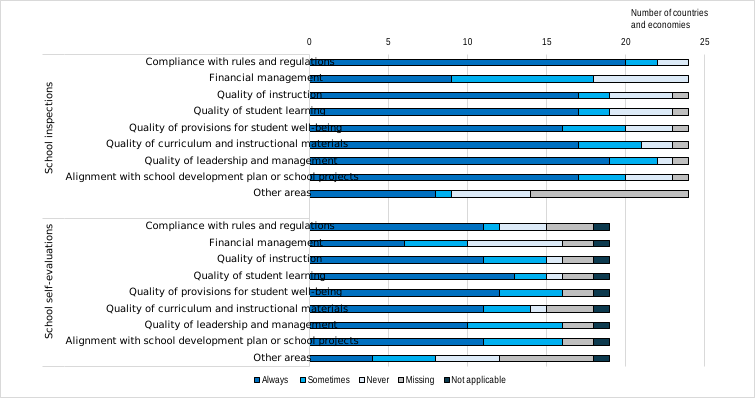
For data, see Table D6.2. The data for this figure can be accessed via https://stat.link/hwzdp9.
Level of influence
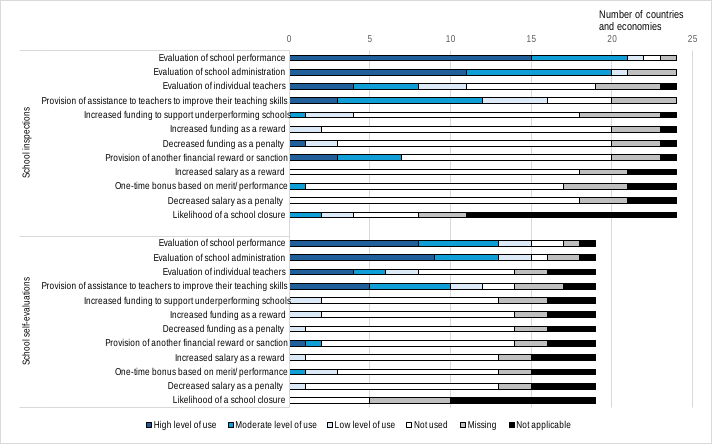
The results of school inspections are most commonly used to evaluate schools’ performance and their administration. In nearly all countries with available information, school inspection results can have a moderate to high level of influence on the overall evaluation of both school performance and school administration. They have a low level of influence on these two areas only in Luxembourg (at secondary level), while Slovenia is the only country which does not use the results of school inspections in evaluations of school performance at all (Figure D6.3 and Table D6.3).
The results of school inspections can also have an influence on other decisions. Their impact on teachers is usually limited. They are used to a moderate or high level in the evaluation of individual teachers in one-third of the countries and economies, and to help teachers to improve their teaching skills in half. However, they rarely affect decisions about teachers’ remuneration or bonuses, with only Korea using them to influence decisions about one-off performance-based bonuses (Figure D6.3 and Table D6.3).
In general programmes, at primary and secondary levels
Note: The level of influence on school and teacher evaluations reflects the extent to which school inspections and self-evaluations affect overall evaluations.
For data, see Table D6.3. The data for this figure can be accessed via https://stat.link/hwzdp9.
School inspection results also generally have only a limited influence on the size of the school budget. However, they have a high level of influence over decisions to reduce schools’ funding as a penalty in the Netherlands, after successive school inspections have not led to the necessary improvements and when other instruments to increase performance (like extending the recovery period) have proved unsuccessful. Results also have a moderate level of influence on decisions to increase funding to support underperforming schools in Austria (Table D6.3).
In a few countries, the results of inspections are used to a limited extent (in the Flemish Community of Belgium and the Netherlands) or a moderate extent (in Czechia and Sweden) in decisions about school closures. For example, in the Flemish Community of Belgium, closure decisions can result from the systematic underperformance of a school, implying that a single inspection is not enough for this decision (Table D6.3). More details about the wider consequences for schools of underperformance demonstrated by an inspection or self-evaluation are discussed in Box D6.2.
When the results of a school inspection or self-evaluation demonstrate a school is underperforming, there can be a number of consequences for the school.
Underperformance in school inspection
Underperformance in an inspection usually leads to further evaluation for the school. This is the case in 19 of the 24 countries and economies with a legal framework for school inspection. Compulsory training for the personnel of an underperforming school is also used in over one-third of countries and economies (Table D6.5, available online).
Underperformance has financial consequences for the school in a few cases, whether this means increased funding as a support measure or a decreased funding as a punitive one. Chile is the only country where underperformance can lead to either an increase or a decrease in funding. Otherwise, underperformance can result in increased funding in Austria, England (United Kingdom) and the French Community of Belgium, and in decreased funding in the Flemish Community of Belgium and the Netherlands. For example, in the Flemish Community of Belgium, two negative evaluations of a school's use of resources intended to support equal educational opportunities result in a reduction of the corresponding resources (i.e. part of the additional staffing allocated on the basis of the number of disadvantaged pupils at a school).
School underperformance also has other consequences in one-third of the countries and economies. Some include measures to improve results of the school, either through proposals for training (France), the identification of development goals (Germany and Scotland [United Kingdom]), or recommendations and guidelines for improving performance (Lithuania). It can mean exemption from or mitigation of responsibility for public officials who acted without intentional misconduct or gross negligence (Korea), or a proposal to dismiss the school head (Czechia). Consequences also include fines for the school (Sweden), or even school closure, when underperformance is systematic (the Flemish Community of Belgium) (Table D6.5, available online).
Underperformance in self-evaluation
Unlike with school inspections, in most countries there are no consequences for school underperformance demonstrated by self-evaluations. In these cases, underperformance leads to further evaluation in seven countries and economies and to compulsory training for school personnel in four. Only Portugal reports any form of financial consequences.
Nevertheless, seven countries and economies report other types of responses to underperformance. For example, in Germany, the results of school self-evaluation are used to help schools to identify development goals that should be incorporated into their ongoing quality development. In Korea, evaluation results are used to develop the following year's educational plans or the mid- to long-term development strategies, and this may require follow-up consultation from the provincial office of education. In Slovenia an action plan for improvement needs to be developed by the school, as schools ensure the quality by setting goals (Table D6.5, available online).
In some countries, schools may also have some influence or control over some aspects of school inspections. France, Portugal, Romania and Scotland (United Kingdom) reported a moderate level (Table D6.3). For example, in Portugal, schools may highlight aspects that they consider relevant and which have not been assessed, for analysis at a higher level. In Scotland (United Kingdom), feedback from schools is gathered on the inspection process and its impact on supporting improvement at the school level. In Romania, schools can refuse specific evaluation teams and choose the period of evaluation (Table D6.3).
School self-evaluations
School self-evaluation refers to a systematic review by a school of the quality of the instruction and education services it provides and of the school’s outcomes. A framework for school self-evaluation is included in government policies or official documents in 19 of the 30 countries and economies with available information (Table D6.1).
School self‑evaluations and school inspections both assess educational quality and support school improvement by examining teaching practices, learning outcomes and organisational effectiveness. However, they differ in their purpose and in their implementation. Where school inspection is a mandated, external form of evaluation conducted by inspectors, school self-evaluation is an internally led, formative process through which schools systematically review their own performance to identify strengths, areas for development, and priorities for improvement (see Box D6.3 for further details of the use of self-evaluations for summative and formative purposes).
Requirements and periodicity
As with school inspections, regulated school self-evaluation is a mandatory exercise for schools in almost all the countries and economies that use them, with the exception of Chile and Sweden. Chile is the only country where neither school self-evaluations nor inspections are mandatory (both also target low-performing schools). Self-evaluation is part of the school accreditation process in the French Community of Belgium and Romania. In the case of the French Community of Belgium, they also target low-performing schools (Table D6.1).
In nearly half of the countries and economies with regulations on school self-evaluation (9 out of 19), self-evaluations are conducted once a year. However, there are large differences across countries in the periodicity of these self-evaluations. In Japan, they are organised more than once a year, while they are conducted every five years in France, Hungary and Romania (Figure D6.1 and Table D6.1).
Organisation
School self-evaluations are less structured and standardised than school inspections. In more than half of the 19 countries and economies, school self-evaluations are devised and standardised at the central level or by school boards or committees. As with school inspections, school self-evaluations can be either organised exclusively by these bodies, or in combination with other levels of government. They are devised and standardised by both central authorities and school boards or committees in eight countries (Table D6.1).
Only six countries reported that their school self-evaluations are highly structured, with similar activities included in all self-evaluations across the board. However, they are partially structured in half of the countries and economies (9 out 19) implying they can be adjusted to meet the needs of individual schools. The Netherlands and Slovenia are the only countries where self-evaluations are not structured. In the Netherlands, although it is mandatory for schools to perform self-evaluations, it is the responsibility of the school boards to decide how to implement them, implying potential differences across schools. In Slovenia, there are recommendations, but they are not binding regulations on the way schools should implement self-evaluations. Nevertheless, a self-evaluation framework with standards and indicators is being prepared (Table D6.1).
School self-evaluations can be conducted by a range of different groups of participants. In about two-thirds of the countries and economies they involve school administrators and/or parents (13-14 out of 19). Classroom teachers are also involved in about one-third of the countries and economies and students in more than one-quarter. In France, for example, school principals organise the self-evaluation process, while classroom teachers and all school stakeholders take part either by answering targeted surveys, analysing survey results or taking part in working groups. In less than one-quarter of countries and economies, other groups may also participate in the self-evaluation. For example, in Korea the school may establish a self-evaluation committee that includes external experts and community representatives, in Lithuania social partners (state and non-governmental institutions, organisations, supporting organisations such as municipal psychological-pedagogical services, educational centres, and local enterprises with which the school has co-operation agreements) can also participate. In Sweden, representatives from local education authorities or governments are also involved in self-evaluations (Table D6.1).
Subjects covered and sharing of results
Most of the eight domains considered in Table D6.5 (available online) are systematically addressed during self-evaluations in the majority of the 19 countries and economies. The most common areas are the quality of students’ learning (always covered in 13 countries and economies) and the quality of provisions for students' well-being (always covered in 12). Compliance with rules and regulations, quality of instruction, quality of curriculum and instructional materials, quality of leadership and management, and alignment with school development plan or school projects are also widely systematically covered, in 10 or 11 countries and economies each. Financial management is always covered in self-evaluations in less than one-third of countries and economies, and in a few countries, self-evaluations systematically address other topics. For example, in Czechia, they also consider the prevention of socially pathological phenomena; risky behaviour; and the provision of support for children, pupils and students with special educational needs; gifted students and those entitled to language training; continuous professional development of teaching and non-teaching staff; and the school's activities and public presentation. In Korea, self-evaluations can also cover school-community partnerships, school self-governance culture and other related practices (Figure D6.2 and Table D6.5, available online).
The reports prepared following a self-evaluation cover the subjects always considered during the process, but can also cover other subjects. In general, there is a consistency between the subjects addressed during the school self-evaluation and the content of the report (Table D6.5, available online).
The results of school self-evaluations are shared in some form with higher-level education authorities, school administrators, classroom teachers, parents, students, and the media and general public in most countries and economies (in 10-14 out of 19). They are most frequently directly shared with higher-level education authorities, school administrators and classroom teachers (in 12 to 14 countries and economies). Higher education authorities and school administrators mostly receive the results in paper form, such as a letter or report, although in a few countries it is through a website or on request (for both groups in the Slovak Republic and for higher education authorities in Austria). Results are most often directly shared with teachers in paper form, but also on request in some countries. In Czechia, Korea and Romania, teachers receive the results directly through a government or education authority website (Table D6.5, available online).
Results are also shared directly with students and the media or general public in few countries, either in paper form (in three or four countries and economies) or a government or education authority website (in three countries and economies). However they are most commonly shared with these groups on requests (in four countries for each group). The way results are shared can differ depending on the audience. For example, in France results are shared on request with parents and students and are not shared with the media. In Hungary, they are shared on request with parents and the media but not shared with students. In Luxembourg, they are shared directly with parents and students in paper form and with the media on request (Table D6.5, available online).
Most countries and economies share the results in different forms to different audiences. However, some countries always share the results in the same way to all stakeholders. For example, the results are always directly shared in a paper report in Portugal and through a website in Romania, while in the Slovak Republic, they are only shared on request (Table D6.5, available online).
Level of influence
School self-evaluations appear to have more limited influence than school inspections. Only 13 out of 19 countries and economies report a moderate or high level of use of school self-evaluations in the overall evaluation of schools’ performance and administration, with similar levels of use across countries for both purposes (Figure D6.3 and Table D6.3). There are also fewer consequences for schools found to be underperforming by self-evaluations than by inspections (Box D6.2).
The evaluation of individual teachers and the provision of assistance to teachers to improve their teaching skills are the two other areas that may be more influenced by school self-evaluations. Six to ten countries report a moderate or high level of use of school self-evaluations in these areas (Figure D6.3 and Table D6.3).
School self-evaluation processes are largely controlled by individual schools. Of the 19 countries and economies where schools are required to make self-evaluations, 9 reported that schools had a high level of influence on the process, 4 that they had a moderate influence and 3 that they had a low level of influence (Table D6.3).
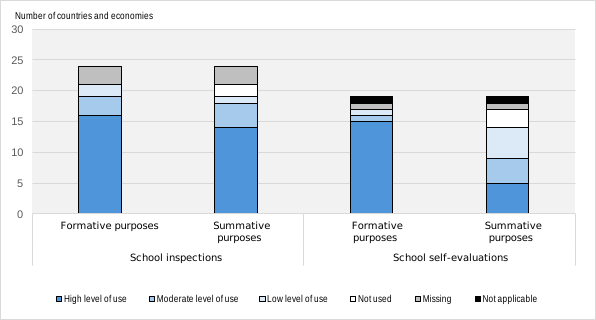
Figure D6.4 contrasts the extent to which countries use evaluation activities for either formative or summative purposes. The purpose of formative evaluation is to “improve”, while the purpose of summative evaluation is to “prove”. In other words, formative evaluations examine implementation and aim to obtain information that can be used to help improve the effectiveness of teachers, school managements or the school more generally. They are more relevant for internal audiences. Summative evaluations are often conducted at the end of a programme or at least at a point when long‑term outcomes are available. Summative evaluations are closely linked to accountability to higher-level education authorities and audiences outside the school.
School inspections
School inspections are frequently used for both formative and summative purposes (Figure D6.4). Lithuania and Portugal are the only countries where school inspections are used (to a high extent) for formative purposes only. In the 19 countries and economies where inspections are used for both purposes, they can be used to different extent for each purpose. In most cases, they are used to similar extent for these two purposes: from a low level in Hungary and a moderate level in Scotland (United Kingdom) to a high level of use in 11 countries and economies. There are only six countries where school inspections are used to different extents for formative and summative purposes. School inspections have a mix of moderate and high levels of use for formative and summative purposes in Austria, Czechia, France, the Netherlands and Spain whereas in Germany they have a high level of use for summative purpose, but a low level of use for formative purpose (Table D6.5, available online).
School self-evaluation
In contrast, school self-evaluations are more commonly used for formative than summative purposes. Of the 19 countries and economies employing such evaluations, 16 report a moderate or high level of use of them for formative purposes, while only 9 report a similar level of use for summative purposes. Conversely, all countries making moderate or high level of use of these self-evaluations for summative purposes also use them to a moderate or high level for formative purposes (Figure D6.4 and Table D6.5, available online).
In general programmes, at primary and secondary levels
Note: "Formative" refers to the use of evaluations for improvement. "Summative" refers to the use of evaluations to determine whether the object of the evaluation is doing what it is supposed to do.
For data, see Table D6.5, available online. The data for this figure can be accessed via https://stat.link/hwzdp9.
School compliance reporting
A key element of accountability involves schools submitting data and information to higher levels of authority. To a lesser extent, parents and students, as well as the general public, also need to know whether their schools comply with established laws and regulations. Compliance reporting aims to confirm that schools are adhering to these laws and regulations.
Compliance reporting differs from self‑evaluation and inspection in its purpose and scope. Compliance reporting is primarily concerned with compliance with established standards and consists in documenting whether schools meet prescribed legal, regulatory or administrative requirements. Whereas inspections and self‑evaluations assess broader aspects of teaching, learning and school effectiveness, compliance reporting has a narrower focus, centered on verifying conformity with the applicable policy framework.
Requirements and periodicity
Most countries and economies (25 out of 30) have policy frameworks covering school compliance reporting, either at the national or central level (in 23 countries and economies), or only in some schools (in Denmark at primary and lower secondary levels and in France at all levels). School compliance reporting is compulsory in all of these countries and economies except France (Table D6.4).
The frequency of reporting varies widely, but most commonly once a year (in nine countries and economies) or more than once a year (in seven). Of the rest, school compliance reports are prepared every two years in Türkiye and every three years in Austria. In Hungary, school compliance is an ongoing process rather than a periodic exercise (Table D6.4).
In most of the countries and economies with mandatory compliance reporting (19 out of 25), there are consequences for schools that fail to report compliance-oriented data by the deadline (Table D6.4). There is wide variation in the type of consequences for schools. Schools may simply be reminded to provide the compliance report and offered an extension (for example in Austria and the French Community of Belgium), or they may face financial consequences, which is the case in several countries and economies including Chile, the Flemish Community of Belgium, the Netherlands, Norway, Poland and Sweden. For example, compliance can be enforced through a fine or funding sanction (in the Netherlands and Sweden), or funds can be withheld until the required information is submitted (in Norway). Other types of consequences include administrative offence procedures (in Hungary); sanctions for the school head, who can be suspended or dismissed (in Czechia); or reducing student enrollment, cutting or closing classes, or suspending student admissions if the school fails to comply with a corrective active plan within the designated period (in Korea).
In general programmes, at primary and secondary levels in public institutions
For data, see Table D6.4. The data for this figure can be accessed via https://stat.link/hwzdp9.
Subjects covered
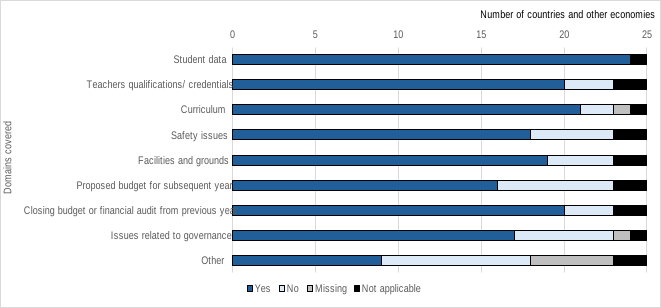
Compliance reports can address a large number of subjects and about three-fifths of the countries and economies report data on all eight of the specific domains considered in the data collection. In 24 out of the 25 countries and economies, public schools report data on their student populations. Schools also report on teachers' qualifications/ credentials, the curriculum, safety issues, facilities and grounds, and the closing budget or financial audit from the previous year in 18-21 countries and economies each. The least commonly reported domains are proposed budgets for the subsequent year and issues related to governance. Nevertheless, one-third of the countries and economies also report information on other subjects. For example, in Czechia schools also report information on admission procedures or enrolment in compulsory schooling, students’ results, and information on the prevention of socially pathological phenomena, risky behaviour and the provision of support for children. In Norway, schools need to report information on measures to protect students’ privacy (Figure D6.5 and Table D6.4).
Means of reporting and authorities
The recipients of school compliance reports vary widely across countries and across the areas covered. The central education authority or government is the most frequently designated recipient. This is the case in almost all countries and for all types of information reported, notably student data (in 23 out of 25 countries and economies). Reports on the curriculum, safety issues and closing budget or financial audit from previous year are also shared with state education authorities in at least half of the countries and economies (Table D6.6, available online).
Local educational authorities and schools are also common recipients, receiving information on each of the areas covered in one-third to one-half of countries and economies. Parents and students and the general public are least likely to receive this information. This is not surprising, given that compliance reporting is all about demonstrating accountability to higher-level authorities (Table D6.6, available online).
Several data collection methods are used for compliance reports. Although some countries and economies use a single method for all domains, others use multiple methods across domains. For example, in Austria, Chile, Denmark, Hungary, Lithuania and Romania, all the information is exclusively collected through online data management platforms, whereas in Spain the information is collected via a combination of electronic forms, paper forms and online data management platforms in the different domains. Online data management platforms are the most frequently used tools across all of the domains (Table D6.6, available online).
Formative evaluation has a purpose to improve. An example of formative evaluation could be reviews of teachers in the classroom with feedback provided so the teacher can become more effective. Any evaluation-related activity that is primarily intended to provide feedback for improvement can be considered formative evaluation.
School compliance reporting refers to reports and forms for higher levels of authority as part of regulatory accountability measures. Schools verify that they are compliant with relevant laws and regulations. In addition, schools may report basic information about their schools (number of students, curriculum etc.).
School inspections are defined as a mandated, formal process of external evaluation with the aim of holding schools accountable. Formal school inspections are not conducted by internal staff, parents, the community or the media.
School self-evaluations refer to activities in which schools systematically review the quality of the instruction and education services provided, as well as school outcomes. This activity involves internal evaluation that is formative in nature.
Summative evaluation has the purpose to prove, i.e. to determine whether the object of the evaluation is doing what it is supposed to do. It is primarily used for accountability. National examinations are an example of summative evaluation because they are primarily used to judge the amount of learning students have retained.
This chapter is based on a survey on evaluation and assessment of teachers, school heads and schools that captured qualitative information on school inspections and self-evaluations and on school compliance reporting. Thirty OECD and partner countries and economies contributed to this survey (Austria, Brazil, Bulgaria, Chile, Costa Rica, Czechia, Denmark, England [United Kingdom], Finland, the Flemish and French Communities of Belgium, France, Germany, Hungary, Japan, Korea, Lithuania, Luxembourg, the Netherlands, Norway, Poland, Portugal, Romania, Scotland [United Kingdom], the Slovak Republic, Slovenia, Spain, Sweden, Switzerland and Türkiye).
For more information please see Education at a Glance 2026 Sources, Methodologies and Technical Notes (https://doi.org/10.1787/dcf64a14-en).
Data presented in this chapter are from the OECD-INES 2025 survey on evaluation and assessment of teachers, school heads and schools and refer to the school year 2024/25 (or the school year 2025).
References
[4] OECD (2025), Results from TALIS 2024: The State of Teaching, TALIS, OECD Publishing, Paris, https://doi.org/10.1787/90df6235-en.
[1] OECD (2023), Education at a Glance 2023: OECD Indicators, OECD Publishing, Paris, https://doi.org/10.1787/e13bef63-en.
[5] OECD (2022), Education at a Glance 2022: OECD Indicators, OECD Publishing, Paris, https://doi.org/10.1787/3197152b-en.
[3] OECD (2021), Education at a Glance 2021: OECD Indicators, OECD Publishing, Paris, https://doi.org/10.1787/b35a14e5-en.
[2] OECD (2013), Synergies for Better Learning: An International Perspective on Evaluation and Assessment, OECD Reviews of Evaluation and Assessment in Education, OECD Publishing, Paris, https://doi.org/10.1787/9789264190658-en.
Data Download
The data for the figures and tables in this chapter can be downloaded via https://stat.link/hwzdp9.
To access further data and/or other education indicators, please visit the OECD Data Explorer: http://data-explorer.oecd.org/s/4s.
Data cut-off for the print publication 17 June 2026. Please note that the Data Explorer contains the most recent data.
In general programmes, at primary and secondary levels
Extent to which school inspections and self-evaluations are structured
Highly structured: Similar activities completed at each school based on specific set of data collection tools
Partially structured: Only few similar activities completed at each school based on specific set of data collection tools
Unstructured: Activities at each school vary and depend on the strengths and weaknesses of the school
Note: Data on the existence of school compliance reports (Column 1) and the characteristics of school compliance reports in government-dependent private institutions (Columns 15 to 27) are available for consultation online.
1. Primary and lower secondary levels only. Data on upper secondary level is available for consultation online.
2. Secondary level only. Data on primary level is available for consultation online. The data for this table can be accessed via https://stat.link/hwzdp9.
In general programmes, at primary and secondary levels
Note: Data on the existence of school inspections and self-evaluations (Columns 1 and 20), and on the areas covered in the resulting reports (Columns 11 to 19 and 30 to 38) are available for consultation online.
1. Primary and lower secondary levels only. Data on upper secondary level is available for consultation online.
2. Secondary level only. Data on primary level is available for consultation online. The data for this table can be accessed via https://stat.link/hwzdp9.
In general programmes, at primary and secondary levels
Note: Data on the existence of school inspections and self-evaluations (Columns 1 and 15) and their level of influence on remuneration and bonuses received by teachers (Columns 10 to 12 and 24 to 26) and on the likelihood of school closures (Columns 13 and 27) are available for consultation online.
1. Primary and lower secondary levels only. Data on upper secondary level is available for consultation online.
2. Secondary level only. Data on primary level is available for consultation online.
The data for this table can be accessed via https://stat.link/hwzdp9.
In general programmes, at primary and secondary levels
Level of authority
(national/central level): At the national/central level (for all types of schools)
(state level): In some states (for all types of schools)
(some schools): In some types of schools
Note: Data on the existence of school compliance reports (Column 1) and the characteristics of school compliance reports in government-dependent private institutions (Columns 15 to 27) are available for consultation online.
1. Primary and lower secondary levels only. Data on upper secondary level is available for consultation online.
2. Secondary level only. Data on primary level is available for consultation online.
The data for this table can be accessed via https://stat.link/hwzdp9.