A shrinking and ageing population will place significant pressure on public finance and multi-level governance frameworks in Campania. The increasing share of older adults among the regional population is projected to raise health expenditures as a share of GDP by an additional 4 percentage points by 2080. Shrinking also threatens to further fragment small municipalities, 37% of which are already fewer than 2 000 residents. An ageing and shrinking population risks increased disparities between urban and rural areas. Responding to these challenges calls for strengthening the inter-governmental fiscal framework, ensuring investments are forward-looking and strengthening multi-level governance.
Preparing for Demographic Change in Campania, Italy

Abstract
Campania is currently Italy’s youngest region, with an old-age dependency ratio of 31%, significantly lower than the national average of 38%. However, youth outmigration and persistently low fertility rates mean this demographic advantage is set to erode rapidly, with the inner provinces of Avellino and Benevento expected to be particularly affected. Alongside population ageing, the region is also projected to experience notable population decline.
These demographic shifts will require adapting subnational finances, public investment and multi-level governance. Demographic change will exacerbate existing pressures on public finances, especially the need to improve the quality and sustainability of healthcare services. For example, an older population may raise health expenditures as a share of GDP by an additional 4 percentage points by 2080. Moreover, local public service delivery will face growing challenges, as many municipalities are already small and will shrink further, leading to depleted administrative capacity and rising costs per capita. Addressing these challenges will require a comprehensive approach, including a review of expenditure and exploring ways to boost revenue to strengthen public finances, alongside targeted investment initiatives and adapting multi-level governance frameworks.
This chapter begins by assessing the impact of demographic change on subnational government finances. It then examines the alignment of current public investment priorities with demographic trends and explores how public investment can better respond to these shifts. The chapter goes on to consider how territorial fragmentation, government co-ordination mechanisms and public sector capacity may be strained by demographic change. Finally, it offers recommendations on adapting Campania’s public finances, infrastructure investment and multi-level governance to better address demographic challenges.
Demographic change will likely place significant pressure on subnational finance. Population ageing is expected to place particular pressure on health spending, which constitutes the largest share of regional government expenditure. Additionally, per capita spending in other sectors, such as education, may prove relatively inelastic to demographic shifts due to the presence of fixed costs. Combined with the negative effects of demographic decline on tax revenues, this may lead to a widening fiscal imbalance.
To assess these challenges, this section first examines regional government finances, focusing on how expenditure and revenue may be affected by demographic change. The second part considers the implications for local government finances. While this section does not examine the finances of metropolitan cities and provinces in detail, their capacity to fulfil their role in inter-municipal coordination will be addressed in a later section focused on adapting multi-level governance frameworks to demographic change.
Impact of demographic change on regional government finances
The impact of demographic change on regional government finances will be largely driven by rising healthcare demand, given the region’s significant responsibility in this area. Revenue, which is predominantly funded by central government transfers, will have to keep pace with rising healthcare costs. Additionally, the region will need to explore ways to boost its own tax revenue to help offset growing expenditures.
Regional government expenditure expected to increase significantly due to rising healthcare demands driven by an ageing population
Regional government expenditure responsibilities span a wide range of government functions. As outlined in Chapter 2, the central government holds exclusive legislative authority over national matters, such as foreign policy, defence and social protection, as explicitly outlined in the constitution. Meanwhile, regional governments like Campania possess exclusive legislative power over any matters not expressly reserved for the central government. This grants them broad authority over areas such as healthcare, transport, economic development and social services. The regional government accounted for 16% of total public expenditure in 2021, with significant responsibilities in healthcare, accounting for 91% of public health expenditure (Figure 4.1).
Public expenditure by level of government in Italy, 2021
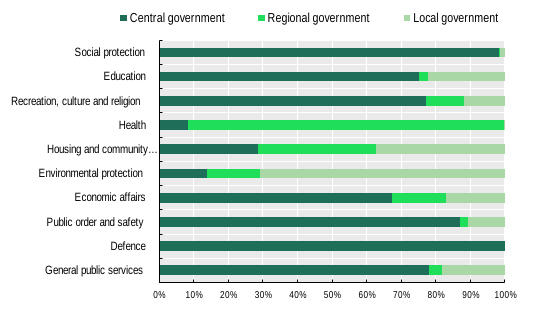
Note: Regional government includes ordinary and autonomous regional governments. Local government includes provinces and metropolitan cities.
Source: Agency for Territorial Cohesion, CPT Data Explorer (database)
Regional healthcare expenditure projected to increase substantially
Healthcare is the most significant expenditure responsibility for Campania. Healthcare has accounted for approximately 80% of total public spending in recent years (Figure 4.2), significantly higher than the OECD average for unitary countries, which stood at 18% in 2020.
Public expenditure in Campania by function of government, 2012-2021
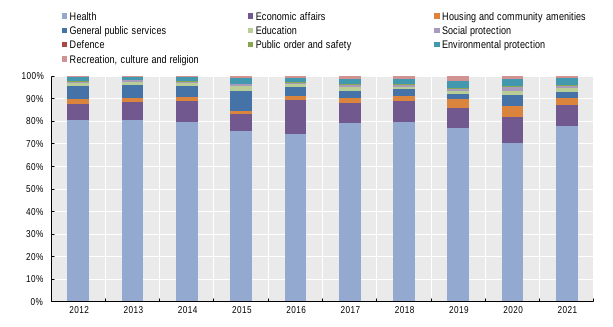
Source: Agency for Territorial Cohesion, CPT Data Explorer (database)
Health-related expenditures are expected to rise further due to Campania’s ageing population. The old-age dependency ratio, which measures the proportion of the population aged 65 and over relative to those aged 15-64, is projected to increase significantly – from 36% in 2023 to 67% by 2050 in the province of Avellino for example, compared to 50% in the EU by 2050, according to Eurostat baseline projections. This increase in the old-age dependency ratio is anticipated to lead to higher healthcare expenditures as a share of GDP, as healthcare costs tend to be more substantial for the elderly (European Commission, 2024[1]). Using data on population projections, an increase in the old-age dependency ratio is projected to raise health expenditures as a share of GDP by an additional 4 percentage points by 2080 (Figure 4.3, panel a, baseline scenario).
The need to improve the quality of healthcare in Campania may also require additional expenditures in the future. According to monitoring conducted by the Ministry of Health, Campania failed to meet essential levels of assistance (LEA) in district-level healthcare in 2022, with shortcomings in areas such as palliative care and socio-healthcare for the elderly (Ministero della Salute, 2022[2]). As also noted in Chapter 4, this suggests that the region will need to spend on healthcare to improve quality in addition to increased demand due to population ageing (Figure 4.3, panel b). Assuming an increase in per capita healthcare costs for the elderly (relative to the working-age population) to levels equivalent to those of the OECD average, health expenditures as a share of GDP could rise by an additional 1 percentage point compared to the baseline scenario (Figure 4.3, panel a, “Increase elderly care” scenario). As will be discussed in the next section, this may imply a greater reliance on government transfers, since most healthcare expenditures are financed through grants.

Note: Population projections and health expenditure age profiles are used to assess how changes in the old-age dependency ratio impact heath expenditures. Output projections use population projections for labour input and assume constant growth in total factor productivity at its historical average and capital accumulation following the balanced-growth condition (see Annex for further details). The baseline scenario uses baseline population projections provided by Eurostat and holds other parameters constant. The “Increase elderly care” scenario modifies the baseline scenario by assuming that per capita healthcare costs for the elderly relative to the working-age population achieve OECD average levels in 5 years. Regarding panel (b), the New Guarantee System CORE indicators evaluate the quality of the healthcare system in delivering essential levels of assistance (LEA) across three domains: collective prevention and public health, district level healthcare and hospital care. Scores range from 0 to 100, with a score of 60 representing the minimum guarantee threshold. Panel (b) shows the average score across these three domains.
Source: Agency for Territorial Cohesion, CPT Data Explorer (database); Eurostat (database); Istat (database); Maisonneuve and Martins (2013[3]); Ministry of Health, Monitoraggio dei LEA attraverso il Nuovo Sistema di Garanzia – Relazione 2022; OECD, OECD Data Explorer (database); Penn World Table (database)
Impact of demographic change on other expenditure items is less certain
The impact of demographic change on regional education expenditure is expected to be less significant than for other items such as healthcare. This is because education represents a small share of expenditures for the region – 2% of regional public expenditure in 2021 (Figure 4.1) – and the fixed costs associated with education provision, such as teacher training and school construction, mean that education expenditure generally exhibits low elasticity with respect to the youth population. As a result, education expenditures do not decline proportionately to demographic change (McMorrow and Roeger, 1999[4]). Moreover, education expenditures can both decrease and increase in response to demographic change. Higher enrolment rates and longer periods of education in response to a longer career may put upward pressure on total education expenditure (IMF, 2016[5]). Meanwhile, from a political economy perspective, a larger elderly population may shift public spending more towards their own needs, such as healthcare, and less towards education (Grob and Wolter, 2007[6]).
Expenditure on social protection is likely to increase as the population ages, while spending on economic affairs may rise depending on the strategy adopted by the region. Social protection spending – such as old-age and disability pensions – is likely to rise as the population ages (OECD, 2019[7]). However, as responsibilities for social protection primarily rest with the central government, the direct impact on regional finances may be limited. Indirect effects could still arise if mounting fiscal pressure at the national level constrains the central government’s capacity to maintain transfers to the region. At the same time, efforts to counter depopulation and enhance Campania’s attractiveness may drive increased spending on economic affairs, such as upgrading transport infrastructure. However, the scale of such investment will largely depend on the strategic approach the region chooses to pursue.
Regional revenue is expected to rely more on government transfers and shared taxes
Transfers from the state and shared VAT for health expenditure represented 79% of total revenue, whilst own taxes, including Corporate Income Tax (CIT), Personal Income Tax (PIT), non-health related VAT and automobile tax, represented 18% in 2022. The remaining 3% is comprised of user charges and fees, income from assets and other revenues (Figure 4.4).
Revenue structure of Campania
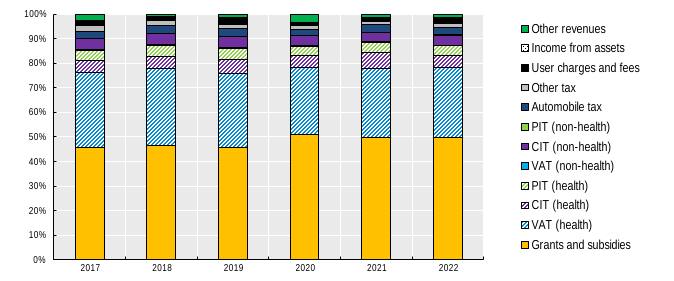
Note: Revenue excludes items collected on behalf of other entities, such as other public bodies, organisations, or individuals that do not constitute operating revenue.
Source: Istat, Tavola 1 - Entrate delle regioni e province autonome per titolo, tipologia e capitolo 2017-22
Both the composition and overall revenue levels have remained largely stable in recent years, though central government grants saw a modest increase following the pandemic. Given that transfers and taxes account for the vast majority of Campania’s revenue, the next subsection examines how demographic change may affect these sources and their broader implications. It is worth noting that the subnational fiscal framework is currently undergoing reform, which could affect Campania’s fiscal capacity (Box 4.1). However, the potential effects of these reforms are not included in the analysis, as their outcomes cannot be reliably anticipated at this stage.
Italy’s National Recovery and Resilience Plan (PNRR) seeks to advance the fiscal federalism framework outlined in the Fiscal Federalism Law of 2009 (Law No. 42/2009). In particular, the PNRR aims to reform equalisation mechanisms to better reflect the standard expenditure needs and fiscal capacities of regional governments, metropolitan cities, and provinces. This is expected to be published by March 2026, to launch the reform effective from 2027 (Governo Italiano, 2021[8]).
In this context, in August 2023, the Italian government approved an enabling act to reform the tax system (Law No. 111/2023), which includes the gradual phasing out of the Regional Tax on Productive Activities (IRAP) and its replacement with a surcharge on the Corporate Income Tax (IRES), with the aim of simplifying the tax structure. While the law mandates that regions should receive revenue equivalent to what they currently collect from IRAP, concerns have been raised over how this will be achieved in practice, as the IRES tax base is more spatially concentrated than IRAP (Ferretti and Lattarulo, 2023[9]). Nonetheless, an initial implementing legislative decree was approved by the Council of Ministers in May 2025, although it has not yet entered into force. Further reforms are also under discussion regarding the IRPEF (personal income tax).
In June 2024, Italy adopted a framework law, commonly known as the Calderoli Law, establishing the basis for implementing differentiated autonomy for ordinary-statute regions upon request. The law grants these regions broader competencies and allows them to retain the financial resources needed to exercise these powers, which would otherwise be allocated and managed centrally. To mitigate territorial disparities, the law stipulates that regions must be guaranteed the fiscal resources necessary to ensure Essential Levels of Performance (LEPs). However, following appeals from several regions expressing concerns about the adequacy of this safeguard, the Constitutional Court ruled in November 2024 (Judgment 192/2024) that certain provisions were unconstitutional, particularly those related to the lack of parliamentary oversight in defining LEPs (Bianchi and Prota, 2025[10]). An enabling bill is expected to be submitted to Parliament soon to align with the Court's ruling.
Government transfers and shared VAT may become increasingly important to fund health expenditures
Healthcare expenditure is primarily financed through VAT sharing and transfers from the central government. Ordinary-statute regions like Campania receive a share of the total VAT revenue collected by the central government to fund their regional healthcare systems, as well as through the equalisation fund. This fund is financed by a portion of VAT revenue from so-called "surplus" regions, which is then redistributed to "deficit" regions based on factors such as population age structure and epidemiological indicators. In addition to VAT, healthcare expenditure is also funded by a portion of the regional surcharge on IRPEF (personal income tax) and IRAP (regional production tax). To a lesser extent, there are also self-generated revenues from user fees for services directly borne by users, related to the provision of various healthcare services.
As an ordinary-statute region, Campania is a net recipient of the equalisation fund. Given that its per capita GDP is among the lowest of all Italian regions, Campania’s limited fiscal capacity prevents it from financing healthcare expenditure through revenues collected directly within its territory. As a result, compensation through the equalisation fund plays a compensatory role. For instance, in 2019, while Lombardy financed approximately 40% of its healthcare expenditure through its own taxes and 60% with VAT transfers, Campania financed less than 20% through its own taxes, relying on VAT transfers for the remaining expenses (Scope Ratings, 2019[11]).
VAT transfers and equalisation funds may become an increasingly important source of revenue as health expenditure increases amidst population ageing. Whilst raising own-tax revenue remains crucial, it has historically been challenging. Therefore, alongside exploring ways to enhance own revenue in general, the region must also assess the implications of greater reliance on government transfers.
High reliance on transfers necessitates strong policy co-ordination across all levels of government. Healthcare transfer allocations are determined through negotiations between central and regional governments at the State-Regions Conference. However, this process can yield suboptimal outcomes for certain regions due to disparities in revenue sources and socio-economic characteristics. For instance, a healthcare allocation mechanism based on consumption by age group disproportionately disadvantaged younger regions like Campania (Ufficio parlamentare di bilancio, 2024[12]). This imbalance was later addressed through the incorporation of socio-economic indicators in the 2023 State-Regions Conference negotiations, underscoring the importance of ongoing adjustments to align allocations with healthcare needs. Notably, the north-south divide is pronounced, with significant redistributive financial flows from wealthier northern regions to less affluent southern ones, resulting in many southern regions being net recipients of equalisation funds (Scope Ratings, 2019[13]). This dynamic has fuelled pressures from wealthier northern regions to retain greater autonomy, particularly amidst recent moves toward differentiated regional autonomy. Such reforms, however, risk exacerbating existing territorial inequalities (European Commission, 2023[14]).
The impact of demographic change on taxes for non-health expenditures is difficult to determine in advance
The main sources of own taxes for the region are the regional surcharge on PIT (IRPEF), the Regional Tax on Productive Activity (IRAP) which is a CIT and automobile tax. The share of own taxes represented 18% of total revenue in 2022.
Regions have limited autonomy in terms of the regional IRPEF surcharge. Introduced in 1998 by Legislative Decree No. 446 of 1997, this surcharge has been a crucial source of revenue for financing essential services. The autonomy enjoyed by regions essentially concerns the ability to vary the applied rate, always taking into account the same income brackets provided for IRPEF, as well as providing for exemptions or reductions of the tax burden. With the entry into force of Legislative Decree 68 of 2011, the base rate of the surcharge, which is used to determine the revenue allocated to financing the healthcare system, increased from 0.5% to 1.23%, allowing regions to increase the rate by up to a maximum of 2.1 percentage points. Until 2021, Campania applied a single rate for all income brackets, equal to 2.03 percentage points. Starting from the 2022 tax year, Campania revised its taxation system, moving to different and increasing rates based on income, setting the maximum rate at 3.33% (i.e., an addition of 2.1 percentage points to the base rate of 1.23%) for incomes exceeding €50,000.00.
Regions also have limited autonomy over IRAP, similar to that provided for the regional IRPEF surcharge. Regions can vary the rate, which is applied to the value of production and varies according to the productive sector, increasing it within a limit of 0.92 percentage points. Furthermore, regions subject to a healthcare deficit recovery plan are subject to an additional increase of 0.15 percentage points (Law No. 191/2009). In Campania, an additional 1.07 percentage points is applied, which combines the maximum allowed increase with the further 0.15 points due to the healthcare deficit.
The effect of demographic change on tax revenue will largely depend on how it influences the region's economy which is not clear a priori. Since Campania already applies the maximum applicable rate under the current tax framework1, future revenue from IRPEF and IRAP taxes will be shaped by shifts in the tax base, which is directly tied to economic output (i.e. household income and firm revenue). The literature on the economic effects of population ageing presents mixed findings. On the one hand, ageing can positively influence economic growth if it stimulates additional savings – since individuals who live longer are more likely to postpone consumption – and thus investments in research and development through lower interest rates (Prettner and Prskawetz, 2010[15]). On the other hand, it may have negative effects if ageing results from declining fertility rates that also dampen overall population growth.
Significant additional funding will be needed to maintain budget balance
Strict fiscal rules around Italy’s sub-sovereign finance framework have been crucial in maintaining stable budget balances and low debt levels. Italian subnational governments have consistently maintained balanced budgets in aggregate and low debt levels were maintained during and in the aftermath of the Global Financial and Sovereign Debt crises, due to balanced budget rules such as the Internal Stability Pact (Scope Ratings, 2019[11]). While Campania had higher debt levels than the subnational average before the crisis, the region has implemented spending rationalisation measures and improved service efficiency to reduce debt and enhance financial sustainability, narrowing the gap with the national average (Figure 4.5). As a result of its prudent fiscal management, S&P upgraded Campania’s credit rating to BBB in November 2023 – the first time it reached parity with the sovereign (Regione Campania, 2023[16]).
Campania’s subnational government gross debt as % of regional/national GDP
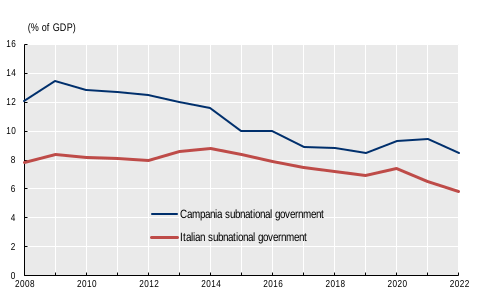
Note: Subnational government refers to the local government sector (S1313), which includes regions, provinces and municipalities.
Source: Banca d’Italia Statistical Database (database); Istat, GDP (database)
Strict cost controls, however, are also likely to have caused underinvestment in healthcare. The rebalancing plans (piani di rientro) introduced since the global financial crisis capped regional healthcare expenditures for regions with large healthcare-related deficits, requiring reorganisation of healthcare services and cost reduction. Whilst these measures helped to achieve fiscal consolidation, they also may have led to underinvestment in infrastructure and personnel, exacerbating regional disparities in the quality of healthcare (Scope ratings, 2021[17]).
Significant additional funding will likely be needed to address future healthcare expenditures. Based on healthcare expenditure projections and assuming a stable relationship between GDP, non-healthcare expenditure and revenue, Campania’s fiscal balance is projected to deteriorate by 4 percentage points of GDP compared to a scenario where the demographic structure remains fixed at 2021 levels (Figure 4.6; see Annex 4.A for further details). This imbalance could worsen further if healthcare spending on the elderly increases in response to population ageing.
Simulated impact of demographic change on public finances under various scenarios
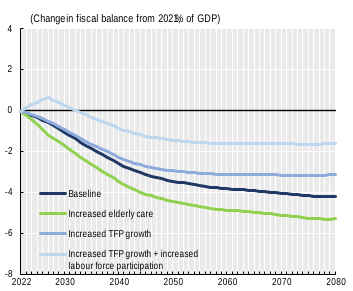
Note: Output projections use population projections for labour input and assume constant growth in total factor productivity at its historical average and capital accumulation following the balanced-growth condition. The “Increased elderly health care” scenario increases the per capita healthcare cost of the elderly relative to the young to OECD average levels. The “Increased TFP growth” scenario increases TFP growth by 5% from the baseline. The “Increased labour force participation” scenario assumes a labour force participation rate of 25–54-year-olds and 65–74-year-olds equivalent to the highest level in the EU (see Annex for further details).
Source: Agency for Territorial Cohesion, CPT Data Explorer (database); Eurostat (database); Istat (database); Maisonneuve and Martins (2013[3]); OECD, OECD Data Explorer (database), Penn World Table (database)
Efforts to increase tax revenue will be essential to easing fiscal pressures. With limited ability to adjust tax rates, in addition to ongoing efforts to address the informal sector (Box 4.2), Campania can look to strengthen the tax base. Boosting productivity can help stimulate output and, in turn, expand the tax base. Equally important is the development of a stronger and more inclusive labour market, particularly by increasing the participation of women, the young and the elderly (Box 4.3). Higher workforce participation can raise output and help mitigate the fiscal strain associated with demographic change (European Commission, 2024[18]). Projections suggest that a combination of productivity gains and increased labour force participation could significantly offset the negative impact of demographic trends on the fiscal balance (Figure 4.6). These efforts will be crucial alongside co-ordination with the national government to ensure transfers meet the needs of the region.
Italy has a large shadow economy – comprising informal and illegal economic activity that is not reflected in national accounts. Among OECD countries, Italy has one of the largest shadow economies (OECD, 2019[19]). In 2022, it was estimated at 11% of GDP, with higher prevalence in the South, reaching 16.9% in Campania (Istat, 2025[20]).
A large shadow economy typically results in lost tax revenue, as undeclared economic activity prevents governments from collecting taxes. To address this, the national government has renewed its efforts to improve compliance, most notably by operationalising pre-filled VAT returns to ease the compliance burden, upgrading technological systems to enhance monitoring and deliver better-targeted automated compliance notices and implement the National Plan to Combat Undeclared Work in 2022. This plan includes stricter sanctions to discourage informal employment while promoting formal work through financial incentives (Governo Italiano, 2021[8]). Successful implementation will be key to achieve the Plan’s objectives to reduce the incidence of undeclared work by at least 2 % points by 2026.
A significant share of Campania’s working-age population remains outside the labour force, indicating substantial opportunities for expansion. This is not only reflected in high unemployment rates, as discussed in Chapter 2, but also in a large number of individuals who are neither employed nor actively seeking work. By definition, unemployed individuals are part of the labour force, whereas those who are inactive are not.
In 2023, only 64% of Campania’s 25–54-year-olds participated in the labour force – well below the national average of 79% and the EU average of 87%. Youth employment is a particular concern, with 22% of 15–24-year-olds classified as NEETs (Not in Employment, Education, or Training), compared to 13% nationally and 9% across the EU. This raises long-term risks, as early school leaving can have lasting "scarring effects," increasing the likelihood of unemployment, poverty and social exclusion later in life (European Commission, 2024[21]).
Women and older individuals also represent untapped labour market potential. In 2023, labour force participation among 25–54-year-old women in Campania was just 48%, significantly lower than the national average of 70% and the EU average of 82%. Meanwhile, the participation rate for 65–74-year-olds stood at 9.6%, broadly in line with the national average of 9.9% but slightly below the EU average of 11%. However, this EU figure masks substantial variation, with some countries, such as Estonia, reaching rates as high as 29%.
Source: (Eurostat[22])
Impact of demographic change on local government finance
The impact of demographic change on local government finances is likely to result in heightened fiscal pressure. Expenditures per capita may increase or at best remain stable whilst tax revenue per capita is likely to decline. Transfer mechanisms will need to adapt to increasing fiscal pressure alongside efforts to increase own revenue.
Local government expenditure per capita is expected to rise or remain stable at best
Compared to the regional government, local government expenditure covers a wide range of government functions. The main expenditure items of the local government are environmental protection, such as waste management; education; general public services; and economic affairs, such as local transport and traffic management. In 2021, the share of total public expenditure allocated to these functions were 22%, 21%, 21% and 17% respectively (Figure 4.7).
Aggregated municipal government public expenditure by function of government, 2012-2021
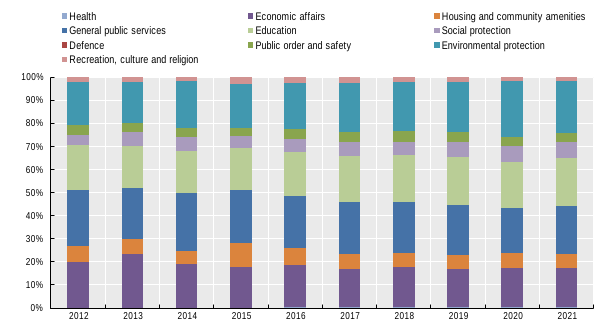
Source: Agency for Territorial Cohesion, CPT Data Explorer (database)
Expenditures per capita may increase or at best remain stable amidst population ageing. The demand for social protection services for the elderly is expected to rise as the population ages. However, these services currently represent a small portion of municipal spending priorities – approximately 1% of total social protection expenditures in 2021. For other expenditure categories, the impact of demographic change is less straightforward. Per capita expenditure might be relatively inelastic to demographic trends due to the presence of fixed costs. For instance, education spending often shows low elasticity with respect to changes in the youth population, as costs related to teacher training and school infrastructure remain largely fixed (IMF, 2016[5]). This dynamic suggests that a fiscal gap could emerge if per capita expenditures increase or stay constant while per capita revenues decline as a result of population ageing.
Local government tax revenue per capita is expected to decline, resulting in greater reliance on transfers
Campania’s municipal government is predominately funded by transfers and own taxes. In 2022, grants and subsidies comprised 49% of revenue, whilst own taxes – property tax, IRPEF surcharge, waste collection and disposal tax and others – comprised 38%. The remaining 13% was comprised of user charges and fees, income from assets and other revenues (Figure 4.8). Given their significance, the following subsections will explore taxes and transfers in greater detail and assess the broader implications of demographic change on these revenue sources.
Aggregate municipal government revenue structure in Campania
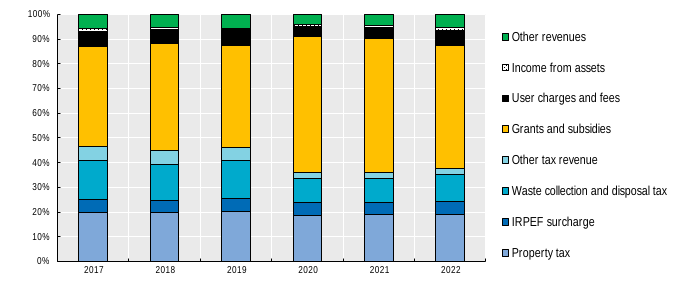
Note: Revenue excludes items collected on behalf of other entities, such as other public bodies, organisations, or individuals that do not constitute operating revenue. Other revenues include advances and debt issuance.
Source: Istat, Tavola 1 - Entrate dei comuni per regione, titolo, tipologia e categoria 2017-22
Tax revenue
The main sources of municipal tax revenue are the property tax, waste collection and disposal tax and municipal surcharge on IRPEF (ACI). These tax revenues corresponded to 19%, 11% and 5% of total municipal revenue in 2022 respectively (Figure 4.8). Tax rates differ by municipality as they can be adjusted within the boundaries set by national guidelines. For example, Naples applies an ACI rate of 1% for incomes above a certain threshold, whilst smaller municipalities typically apply lower rates2. Other tax revenue includes tourist tax which comprised 1% of tax revenue in 2022.
Demographic change is likely to result in reduced tax revenue per capita in the future. Population decline and ageing are typically associated with a drop in property tax revenue, which is the largest source of municipal revenue in Campania (Boyd, 2019[23]). This decline may stem from decreased demand for housing, higher vacancy rates, reduced investment in property and resulting deterioration of property conditions, as well as downsizing trends in housing. These factors lead to lower cadastral income – the notional value assigned to real estate properties - -and, consequently, reduced property tax revenue per capita. As a result, municipalities may face a shortfall in property tax revenue and will likely need to rely more on grants and subsidies to fill this gap.
Grants and subsidies
The main source of grants and subsidies derives from the Municipal Solidarity Fund (MSF). The MSF follows an equalisation framework based on a partial gap-filling mechanism, whereby the central government supplements - within a certain percentage, less than 100 percent - the gap between standardised costs for providing baseline services and revenue generation capacity (Dougherty and Forman, 2021[24])3. Standardised costs - which are used to determine standard needs - are calculated for 8 essential functions of municipal government4, whilst revenue generation capacity is calculated from standardised revenue collectable from ACI, IMU, TASI and other taxes and fees. The equalisation component of the fund is financed by all municipalities. However, municipalities with a positive fiscal gap (i.e., standard expenditure need greater than fiscal capacity) receive resources from the fund, while those with a negative gap (i.e., standard expenditure need greater than fiscal capacity) transfer part of their own revenues to other municipalities. Most municipalities in Campania are net receivers of the MSF, whereas many municipalities in Northern Italy are net contributors5.
Standardised cost calculations may need to adapt to demographic change to ensure the provision of baseline services. These calculations are based on factors such as population size, input costs and supply and demand dynamics, which partially account for population structure (L’Istituto per la Finanza e l’Economia Locale, 2018[25]). However, evidence shows that municipalities with smaller populations consistently spend more than is accounted for in standardised cost estimates according to the MSF allocation mechanism (Figure 4.9). While this reflects inefficiencies in service delivery in smaller municipalities, potentially incentivising them to improve efficiency, there are inherent limits to such improvements. With this in mind, while corrective measures to allocate more funding to smaller municipalities at a disadvantage have been introduced, the current MSF allocation mechanism may still need to better account for these structural realities to ensure that smaller municipalities can continue providing essential services. Although this is not currently a pressing issue for Campania, given its relatively larger municipalities compared to other regions, it is likely to become increasingly relevant as population sizes decline in the future.
Expenditure gap in MSF allocation by population of municipality
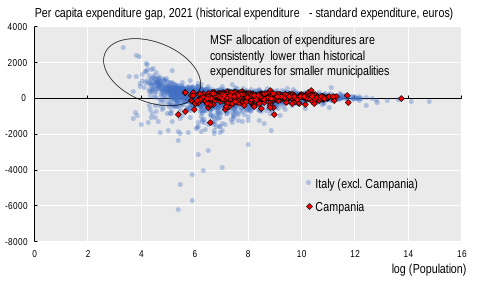
Note: The per capita expenditure gap is calculated as the difference between per capita historical expenditures and per capita standard expenditures calculated according to the MSF allocation mechanism. A positive gap shows that the MSF allocation of standard expenditures was insufficient to meet historical expenditures. A two-sample t-test of the bottom 10% and remaining 90% of municipalities by population showed a statistically significant expenditure gap between the two groups. Italy (excl. Campania) denotes municipalities of Ordinary Regions other than Campania.
Source: OpenCivitas (2024), 2021 Municipalities – Indicators and determinants
Own revenue generation and adaption of transfer mechanism needed to maintain budget balance
In the long run, increasing own source revenue and ensuring transfers are adequate will be essential for maintaining budget balance and reducing debt burdens. Many municipalities are already under fiscal strain. Before the pandemic, 40% of municipalities in Southern Italy operated at a deficit, compared to just 9% in the Centre-North, with Campania recording the largest aggregate municipal deficit (Banca d'Italia, 2022[26]). A case in point is Naples, which was on the brink of bankruptcy, leading to the signing of the Pact for Naples in March 2022, providing financial support and promoting structural reforms (Osservatorio Economia e Società Napoli, 2025[27]). Strengthening own-revenue generation will be crucial to offset declining per capita tax revenues. Furthermore, without adjustments to the allocation methodology of the MSF to account for demographic shifts and evolving public service demands, there is a risk that transfers will fail to meet local needs, increasing the likelihood of financial distress (Padovani, Porcelli and Zanardi, 2024[28]).
As demographic change accelerates, it will be increasingly important to align investment priorities with this evolving reality. The appropriate strategy will depend on the region’s recognition and acceptance of demographic trends, which may lead to pursuing an expansion strategy focused on economic growth, a maintenance approach, or planning for managed decline (Aurambout et al., 2021[29]).
As the youngest region in Italy, Campania might naturally be inclined towards expansive strategies aimed at revitalising the economy, rather than preparing for demographic and economic decline. However, as highlighted in Chapter 1, depopulation is expected to have a significant impact, particularly in the inner areas of Benevento and Avellino. Against this backdrop, this section assesses the extent to which current investment priorities are aligned with demographic change and later examines how the region can mobilise investment to better respond to these demographic shifts.
Older and shrinking areas are investing more in housing and community development
Subnational governments are important public spenders in Italy. As described in Chapter 2, subnational governments were responsible for approximately 50% of total government investment in 2022. In particular, local government provides the majority of public investment at the subnational level. Compared to public investment at the regional government level, the local governments in Campania invest roughly twice to three times more annually (Figure 4.10, panel a).

Note: Public investment is defined as gross fixed capital formation and land purchase. Data for 2022 is provisional. The national aggregate in panel (b) is an aggregation of Ordinary Regions.
Source: Istat, “Tavola 2 - Spese delle regioni e province autonome per titolo, macroaggregato e capitolo” and “Tavola 3b - Spese in conto capitale e per incremento di attività finanziarie dei comuni per regione, macroaggregato, missione e programma” 2018-22; OECD, Aggregated and disaggregated municipal government finance (database)
Local government investments in Campania are mainly directed towards economic affairs, mostly road infrastructure and local public transport, comprising approximately 40% of total public investment in 2021 (OECD[30]). Other priorities include environment protection such as water service and soil protection (17% of public investment in 2021) and housing and community amenities (15%), mostly related to urban planning.
The inland areas invest more per capita than the national average. Avellino and Benevento invest approximately EUR 300 and 400 per capita, considerably more than the national average of EUR 180 per capita (Figure 4.10, panel b). In particular, there is an emphasis on housing and community amenities, comprising 23% and 18% of total investment in 2021 for Avellino and Benevento respectively, compared to 10% for the national average. Being the two smallest provinces in Campania, the high investment per capita may reflect a loss of economies of scale-they must maintain basic infrastructure despite having fewer residents. On the other hand, this risks that investment may be directed towards depopulating areas that do not fully reflect demand.
The emphasis on housing and community development investment in inland areas raises questions about investment priorities. Avellino and Benevento, which had the highest old-age dependency ratios in Campania in 2023 (36% and 38%, respectively, compared to the regional average of 31%), may be prioritising such investments to support elderly-friendly infrastructure, including improved public housing and healthcare facilities. However, given ongoing population decline in these regions (see Chapter 1), investments in housing development and urban planning may not align with actual housing demand. Moreover, while data limitations prevent a detailed analysis of these investments, the observed expansion of built-up areas in rural inland regions (see Chapter 2) suggests that such spending may be contributing to uncontrolled expansion – an outcome that runs counter to the need for spatially concentrated services in shrinking communities.
EU and national funding provide opportunities for Campania to adapt to demographic change
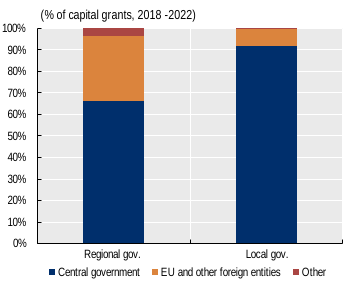
Beyond the national government, the EU is a key source of investment funding. On average, local governments in Campania receive most of their capital grants – funds provided for long-term investments – from the central government, while the regional government receives a substantial share of its funding – approximately 30% – directly from the EU (Figure 4.11). The significance of EU funding may be greater if EU funds sourced via the central government are considered.
Source of capital grants in Campania
Source: Istat, “Tavola 1 - Entrate delle regioni e province autonome per titolo, tipologia e capitolo“ and “Tavola 1 - Entrate dei comuni per regione, titolo, tipologia e categoria” 2018-22
EU and national funding programmes represent key opportunities for Campania to adapt to demographic change. While most EU Cohesion Policy programmes are not directly designed to address demographic challenges, they often contribute indirectly by tackling socio-economic disparities, which are closely linked to issues of population decline and rural shrinkage (Aurambout et al., 2021[29]). Many national programmes are also co-funded with such EU resources, further enhancing their impact. In this context, the European Regional Development Fund, the European Social Fund Plus, the National Strategy for Inner Areas and the National Recovery and Resilience Plan are particularly significant.
European Regional Development Fund (ERDF) & European Social Fund Plus (ESF+)
Among the various EU Cohesion Policy tools, the European Regional Development Fund (ERDF) is the most prominent EU regional development fund for Campania. For the 2021-27 programming period, the ERDF allocated a total of EUR 3.8 billion in EU financing, complemented by EUR 1.6 billion of national co-financing. Additionally, the European Social Fund Plus (ESF+) programme for Campania dedicated EUR 1 billion in EU financing for the same period, supported by EUR 431 million of national co-financing.
The main investment priority of the ERDF is increasing environmental sustainability, with several projects aimed at addressing population decline in rural areas. In alignment with EU objectives, the 2021-27 programming period emphasises the transition towards a net zero carbon economy. Approximately half of the total investment priorities for Campania are focused on promoting environmental sustainability (Figure 4.12, panel a). Around 6% of the budget is dedicated to promoting sustainable transport, which includes improving mobility in non-urban areas through developing cycling routes and creating charging facilities for electric vehicles. Approximately 4% of the budget is allocated under social inclusion priorities to improve access to healthcare. Measures such as promoting telemedicine aim to ensure that citizens in depopulated and rural areas have adequate access to healthcare services. Additionally, EUR 100 million (around 2% of the total budget) is earmarked for integrated development in rural and coastal areas, explicitly targeting the challenges posed by depopulation in these territories. As of March 2025, Campania has made progress broadly in line with the pace observed during the 2014–20 programming period in implementing the Regional Programme Campania ERDF 2021-27 (Box 4.4).
The proposed amendment to the Campania Regional Programme ERDF 2021–27 aims to achieve a better alignment between financial and investment profiles and the needs of the regional territory, also in light of additional complementary financial sources. Indeed, a territorial demand for investments – particularly in infrastructure – has emerged that cannot be fully met with the ERDF resources currently available. Among the strategic objectives, the Regional Administration intends to introduce a set of new priorities, including:
Strengthening industrial capacities to promote defence capabilities, with a focus on dual-use applications
Promoting secure access to water and the sustainable management of water resources, including integrated water management and water resilience
Promoting access to sustainable and affordable housing, with the dual objective of improving the energy performance and risk resilience of infrastructure, while achieving social goals in support of disadvantaged groups
Promoting energy interconnectors and related transmission, distribution, storage and support infrastructure, as well as the protection of critical energy infrastructure and the deployment of charging infrastructure. This measure is aimed at supporting investments in the replacement of public transport vehicles with “zero-emission” solutions, through the development of a charging infrastructure network
Promoting integrated territorial development, through access to affordable and sustainable housing across all types of territories.
The decisions regarding the reprogramming process take into account the need to identify operations that are immediately implementable and capable of achieving progress consistent with the N+3 target set for end-2025, as well as ensuring full absorption of available resources.
By means of Regional Government Resolution No. 248/2025, the Regional Executive has mandated the Managing Authority to prioritise ongoing operations or those that can meet the required implementation timelines, conditioning funding eligibility on the agreement of the Managing Authority, upon request by the Specific Objective Coordinator. These provisions have been formalised in Managerial Decree No. 12/2025, which approved Version 3 of the "Implementation Manual" of the Campania ERDF Programme 2021–27.
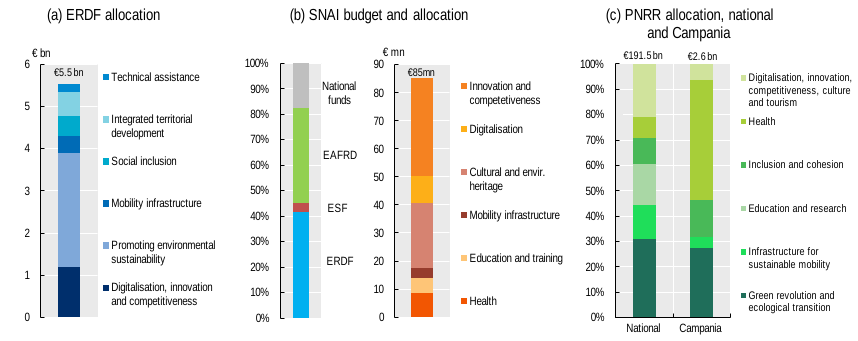
Note: The ERDF priorities correspond to the 5 policy objectives for the 2021-27 EU Cohesion Policy: smarter Europe; greener Europe; connected Europe; social Europe; Europe closer to citizens. The SNAI budget allocation is for the implementation of the programme agreements (APQs) decided as of end 2022. The PNRR budget allocation towards Campania is as of end 2023.
Source: Regione Campania, (2023[31]), Strategia Nazionale delle Aree Interne in Campania - Stato di attuazione al 31 dicembre 2022 and Campania PNRR; European Commission, Cohesion Open Data Platform (database)
The primary objectives of the ESF+ are to support regions in achieving social inclusion and cohesion, activating the labor market, and upholding the main principles and objectives of the European Pillar of Social Rights (see also Chapter 1).
In Campania, the one of the main investment priorities of the ESF+ is employment, where over 28% of resources are allocated. The interventions aim to support and incentivise employment and to raise and adapt workers' skills to meet market demands, in line with EU objectives.
Under the Education and Training Priority, which has a budget of approximately EUR 500 million in the 2021-27 programming period, the emphasis is on improving the quality, inclusiveness, effectiveness, and labor market relevance of education and training systems, on the effectiveness of training provision through support for vocational and technical training, also with a view to combating early school leaving by students in compulsory education. This is also to prevent young people from becoming NEETs. ESF+ support is also directed towards higher technical education in order to increase the number of students who, at the end of their studies, possess the skills required by the labor market. Significant resources are also allocated to support the right to education, which represents an indirect contribution to families.
Approximately 26% of the ESF+ program resources are allocated to social inclusion to improve access to services. Measures include vouchers for access to nurseries; vouchers for minors for free access to sports activities; actions to strengthen the governance of social and socio-medical services; interventions to support welfare measures with personalised care for the use of family services in conjunction with a voucher linked to the birth of a second child; all of which are expected to support fertility rates. Several of the indicated actions, if stabilised, could contribute to improving living conditions in the region.
Campania is making steady progress in implementing its Regional Programme ERDF 2021-27. As of March 2025, more than EUR 1.2 billion of funding has been decided, approximately 23% of the planned budget. Among the decided projects, approximately EUR 87 million, or 1.6% of the planned budget has been spent (Figure 4.13). This pace is broadly in line with the absorption rate of the 2014-20 programming cycle.
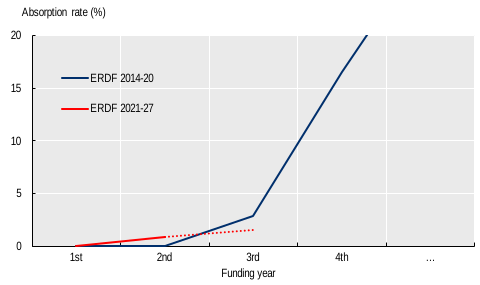
Note: The absorption rate is calculated as the share of total spending to total planned spending for funded programmes. The latest figure for ERDF 2021-27 is for March 2025.
Source: European Commission, Cohesion Open Data Platform (database)
National Strategy for Inner Areas
The National Strategy for Inner Areas (SNAI) specifically targets the issue of depopulation in Italy’s remote inland areas. This national policy seeks to counteract demographic decline through public investment in healthcare, mobility and digital services. By the end of 2022, approximately EUR 85 million had been budgeted for 93 municipalities in inland Campania, with the majority of funding sourced from the EU (Figure 4.12, panel b).
While Campania’s broader investment priorities focus on boosting local production and strengthening cultural identity, several initiatives are designed to address demographic change. Approximately 41% is allocated to boosting innovation and competitiveness in local production, such as in agriculture, and 27% towards promoting cultural and environmental heritage to strengthen cultural identity and to boost tourism. Some investments are more directly tailored to demographic challenges. For instance, roughly 10% of the budget is allocated to improving healthcare, which includes decentralising services by advancing telemedicine, expanding the network of community nurses and increasing the capacity of local pharmacies to provide first-aid interventions. Furthermore, 4% is allocated to improving mobility, with initiatives such as rationalising local transport routes and timetables and piloting demand-responsive transport systems.
National Recovery and Resilience Plan
The National Recovery and Resilience Plan (PNRR) provides substantial investment resources for Campania. In response to the pandemic and the need to promote a robust recovery of the European economy, the Next Generation EU programme set up the Recovery and Resilience Facility (RRF) to aid member countries. With Italy’s adoption of the National Recovery and Resilience Plan, the RRF has guaranteed EUR 191.5 billion in grants and loans to be deployed over the period 2021-27. Approximately 40% of the PNRR’s resources are earmarked for South Italy, reflecting the need for territorial rebalancing, with EUR 2.6 billion allocated to Campania as of end-2023.
Whilst few PNRR investments initiatives explicitly target demographic change, measures aimed at addressing socio-economic disparities in rural areas will indirectly support regions affected by depopulation. Campania has dedicated a significant 47% of its budget to healthcare, in contrast to the national allocation of 8% (Figure 4.12, panel c). These investments will not only address critically needed improvements in healthcare quality (Figure 4.3, panel b) but also ensure access to adequate healthcare for citizens in depopulated and remote areas. This includes initiatives such as the promotion of telemedicine, expanded home care and enhanced community healthcare services. Additionally, under the category of “digitalisation, innovation, competitiveness, culture and tourism,” approximately 4% of the budget is allocated to the regeneration of small villages at risk of abandonment and the preservation of rural architecture. These efforts aim to retain existing residents and attract newcomers, including tourists, thereby contributing to the revitalisation of these areas.
Small-scale investment projects may have lacked critical mass
EU funded projects in Italy are significantly smaller in scale, suggesting fragmented investment. During the 2014-20 programming period, Italy had the largest number of EU-funded projects among EU beneficiaries, at over 800 000. Each of these projects were smaller in scale compared to projects in other EU countries, recording the lowest funding per project at around EUR 100 000 per project (Figure 4.14, panel b). A similar issue is present in the National Recovery and Resilience Plan, where over 76 000 projects are worth less than EUR 70 000, with the majority of these micro-projects located in the north-west and the centre-south region which includes Campania (PNRR Lab di SDA Bocconi, 2023[32]). Investment efforts in small scale projects increase the risk of straining administrative capacity and hindering the scaling-up of initiatives needed to achieve meaningful impact (European Commission, 2024[33]).
Estimated funding per EU project

Note: Funding per EU project is calculated by dividing the total funds allocated to a country/region by the EU and national government as indicated in the Cohesion Open Data Platform with the number of EU projects available in the country/region as identified by Kohesio-a database of projects funded by EU Cohesion Policy during the 2014-20 programming period.
Source: European Commission, Cohesion Open Data Platform and Kohesio (database)
Population decline is set to exacerbate territorial fragmentation, posing challenges to the efficient delivery of local public services. This underscores the need to assess whether the current territorial structure is equipped to adapt to demographic change. In addition, effective policy co-ordination – both among and across levels of government – alongside a capable public sector, will be critical to implementing measures that address these demographic shifts.
This section examines Campania’s municipal fragmentation, followed by an analysis of the cross-sectoral, horizontal and vertical co-ordination mechanisms necessary to deliver effective policy responses. Finally, it will explore the implications of population ageing and decline for the capacity and performance of the public sector.
Municipal mergers are rare in Campania
Campania’s municipalities are small, which may impact the efficiency of local public service provision. Municipalities in Campania with fewer than 2 000 residents accounted for 37%, compared to 19% for OECD unitary countries on average in 2024 (Figure 4.15, panel a). Whilst it is essential to recognise that municipalities provide a wide array of services and the optimal scale for service delivery varies depending on the type of service (BLOM-HANSEN et al., 2016[34]), in general, smaller municipalities may benefit from amalgamation as larger units can achieve economies of scale (Dollery and Crase, 2004[35]) provided that the merger is executed smoothly. In the case of Italian municipal functions, several studies have found that a population threshold of 10 000 is most likely to provide efficient services (such as in terms of low per capita total expenditure) (Maria Dispotico, 2017[36]; Agasisti and Porcelli, 2022[37]). This suggests that consolidating smaller municipalities could help strengthen public sector capacity and improve the efficiency of local public service delivery.

Note: Population data is 2024 for Campania and 2022 for OECD unitary countries.
Source: Istat, Resident population on 1st January (database); OECD, Municipal level government by population size (database); Tuttitalia, Fusioni di Comuni in Italia
Despite efforts to promote mergers, such initiatives have not progressed significantly in Campania. In order to encourage the merger of municipalities, Law no. 56/2014 introduced financial incentives for municipalities willing to merge and prohibited the creation of new municipalities with populations under 10 000. However, since 2008, Campania has seen only one municipal merger, considerably fewer than in northern regions (Figure 4.15, panel b). The political challenges of merging municipalities are substantial, suggesting inter-municipal co-operation in the form of Unions of Municipalities may serve as an alternate or intermediate step towards more comprehensive mergers (Ambrosanio, Balduzzi and Bordignon, 2014[38]).
Effective policy co-ordination within and across government levels is crucial
Adapting to and mitigating the impacts of demographic change requires a comprehensive approach that cuts across multiple policy sectors, including health, education, social protection and economic affairs. This demands not only cross-sectoral co-ordination within governments but also collaboration across different levels of government. Additionally, horizontal co-ordination among municipalities is essential, allowing them to jointly deliver public services and investment initiatives beyond administrative boundaries, reducing fragmentation and achieving economies of scale.
Cross-sectoral co-ordination
Campania has undertaken significant steps to implement an integrated, cross-sectoral policy approach to regional development. Historically, planning instruments such as the Regional Territorial Plans (PTR) and the Provincial Territorial Coordination Plans (PTCP) were primarily sectoral, concentrating on land use and urban planning. During the 2014–20 EU Cohesion Policy programming cycle, the region introduced the Unitary Regional Planning (Strategia Unitaria Regionale) to harmonize EU, national and regional funds for cross-sectoral territorial development. This integrated approach has been continued into the 2021–27 programming period through the Regional Strategic Guidance Document (DRIS) (Regione Campania, 2020[39]). Moreover, in 2022, Campania approved the "Towards a Territorial Agenda of the Campania Region" document, establishing a comprehensive territorial planning framework that integrates urban regeneration, rural development, environmental protection and infrastructure enhancement to promote territorial development (Regione Campania, 2022[40]).
Campania's approach is strongly influenced by the EU’s Cohesion Policy. The timelines of both the "Towards a Territorial Agenda" and the DRIS correspond to the EU’s 2021–2027 programming cycle and are structured around EU priorities. The "Towards a Territorial Agenda" aligns with the EU’s objective of fostering a "Europe closer to citizens" through integrated territorial development, while the DRIS's programming lines are co-ordinated around the five strategic objectives outlined in EU Cohesion Policy. While this alignment enhances the region's eligibility for EU funding, it may limit flexibility in implementing strategies that address the region's specific needs (CEMR, 2022[41]).
Vertical and horizontal government co-operation
Italy has established various structures to facilitate vertical and horizontal governmental co-operation. Conferences serve as key platforms for dialogue between different levels of government: the State-Regions Conference fosters co-operation between the central government and regional authorities, the Conference of the State, Cities and Local Autonomies facilitates interaction between the central government and local entities, including municipalities and provinces and the Joint Conference brings together both conferences to address issues involving all levels of government. Additionally, central government oversight is maintained through prefects. Regional and local governments also co-operate through regional territorial plans and co-ordination structures developed for implementing various investment programs. As for horizontal co-operation, the Conference of Regions and Autonomous Provinces provides a platform for regional governments to align policies and share best practices. There are also various forms of inter-municipal co-operation, such as Conventions and Unions of Municipalities, which facilitate co-ordination among local governments (Figure 4.16).
An overview of the main co-operation structures in Italy
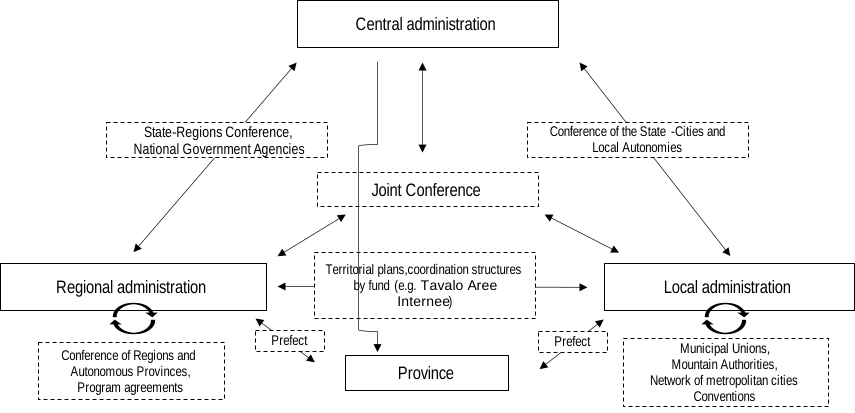
Note: The diagram is a non-exhaustive representation of selected co-operation structures in Italy. Arrows indicate lines of communication between entities.
Vertical co-operation among central and regional government
The majority of functions performed by regional governments are shared with the central government. The Italian Constitution defines several "concurrent functions," for which the central government defines the legislative framework and the regional government exerts legislative powers within these boundaries. The extent of the ‘concurrent competencies’ spans major government functions such as economic affairs, land-use planning and health (see Chapter 1).
Shared competencies have created difficulties for co-ordination among central and regional governments. In practice, the distinction between defining principles and legislation has not been clear, resulting in continued disputes between the central and regional government in front of the constitutional court (Ambrosanio, Balduzzi and Bordignon, 2014[38]). During 2006 and 2017, the most frequent matter of dispute between the central and regional government concerned the allocation of competencies, as defined in Article 117 of the constitution (Filippetti, Rondinella and Tuzi, 2024[42]). More recently, these conflicts became evident during the pandemic, as the national government faced criticism for its perceived lack of co-ordination in healthcare measure (Salvati, 2022[43]).
Clarifying responsibilities across levels of government and fostering transparent communication co-ordination will be essential to carry out concurrent competencies. While subsequent legislation and court rulings have mitigated some uncertainty, further clarification of responsibility-sharing across government levels will enhance effectiveness (OECD, 2021[44]). This process will require open dialogue among all levels of government to address the regional governments' capacity to provide services amid rising fiscal pressure and diminished public sector capacity due to population ageing. This issue is particularly acute for healthcare expenditures, since the system of transfers relies on agreements between the central and regional governments to determine financing needs (Brosio, 2018[45]). Anecdotal evidence provided during this study has also pointed to difficulties in co-ordinating between different agencies and levels of government when rationalising service networks, such as schools, often leading to slow decision making. Better co-ordination among central and regional government will also help overcome the political backlash following the failed 2016 national referendum, which sought to abolish 'concurrent competencies' but was criticised for recentralising power and undermining regional autonomy (Libero Pensiero, 2016[46]).
Vertical co-operation among regional and municipal government
Whilst vertical co-operation mechanisms with the central government is well defined, vertical co-ordination mechanisms between regional and local government vary in scope and clarity across different policy initiatives. For instance, the implementation of the National Strategy for Inner Areas is supported by the Tavolo Aree Interne, a platform that brings together regional and local stakeholders to co-ordinate investment initiatives. While the programme is still ongoing and yet to be fully assessed, there is evidence that this co-ordination mechanism has yielded positive results (Box 4.5). In contrast, the PNRR places greater emphasis on central government oversight, with a central co-ordination structure established at the Ministry of Economy and Finance. Regional and local governments who are responsible for implementing projects primarily focus on monitoring and reporting back to the central administration (Governo Italiano, 2021[8]). Although regional co-ordination mechanisms have also been put in place, such as Campania’s designation of the Special Office for Major Works (Ufficio Speciale Grandi Opere) as the regional contact point and co-ordinating body, its primary interactions are with the Regional Council, its role in co-ordinating directly with individual local governments remains less clearly defined.
Introduced in 2014, SNAI is a national initiative aimed at counteracting demographic decline in the country’s internal areas. The strategy focuses on improving public services like education, health and mobility, while fostering new economic activities in selected regions. For the 2021-27 period, 48 municipalities in Campania were chosen based on their accessibility to essential services.
The success of SNAI relies on a detailed governance structure that promotes institutional co-operation across different levels of government. At the national level, a steering committee sets the overall priorities and ensures coherence in the strategies proposed by inner areas (Figure 4.17). Regional governments play a co-ordinating role, especially in formulating the Framework Programme Agreement, which details specific intervention measures and allocates financial resources. In Campania, the Tavolo Aree Interene (Table for Inner Areas) was established to foster co-ordination among regional and local actors and provide administrative support. The implementation process involves municipalities forming a consortium to apply for the benefits. Within this consortium, municipalities establish a lead entity and political decision-making body to co-ordinate implementation. This step has been crucial in overcoming historical rivalries between neighbouring municipalities (Impact Assessment Office, 2023[47]).
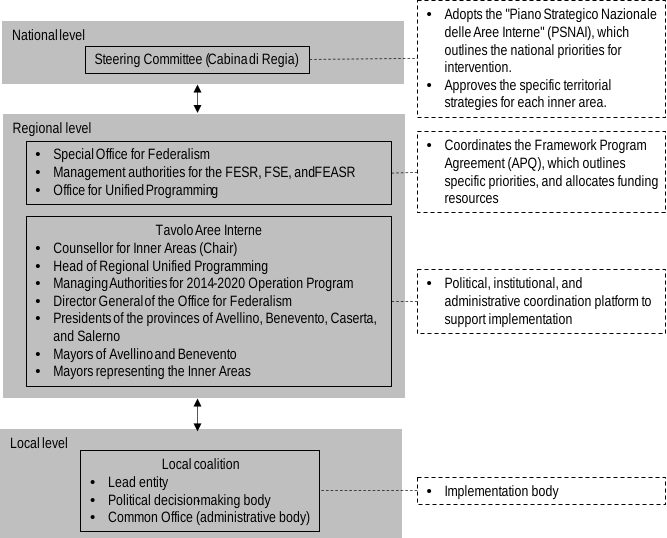
Source: Author’s elaboration based on documents provided by Campania Region
The implementation of SNAI has been generally successful, although co-ordination failures have emerged. A study of the 2014-20 period revealed a notable increase in business sites within selected areas, indicating institutional change conducive to population growth (Impact Assessment Office, 2023[47]). Additionally, municipalities involved in SNAI have improved their planning capacity, enabling them to access other regional programmes like LEADER (Barone et al., 2023[48]). However, as of late 2022, 32 out of 95 eligible projects had not yet started, potentially due to the complexity of the strategy’s processes (Campania Region[49]).
SNAI’s complex governance framework requires robust administrative capacity to function effectively. Involving multiple stakeholders from national, regional and local governments often leads to competing priorities. Managing various financial resources, sourced from both national budgets and European Structural and Investment Funds, adds to the difficulty. These difficulties are compounded by administrative fragmentation where small municipalities can struggle to co-operate effectively on large-scale projects or lack the administrative capacity to manage complex funding and implementation processes.
The role of metropolitan cities and provinces in co-ordinating municipalities
Metropolitan cities and provinces can play an important role in promoting co-ordination among municipal governments. For example, they are tasked with co-ordinating and planning communication and public service networks across their territories. However, despite their strategic importance, provinces and metropolitan cities often lack the legal authority and financial resources needed to fulfil their mandates effectively. For instance, provincial and metropolitan bodies accounted for only 3% of subnational government revenue in 2020 (Congress of Local and Regional Authorities, 2024[50]). The Metropolitan City of Naples, the only such entity in Campania, illustrates these challenges. Despite its high population density, Naples has exhibited lower productivity compared to metropolitan cities in northern and central Italy, suggesting that it has not been able to harness the agglomeration benefits typically associated with dense urban areas (OECD, 2019[51]).
These shortcomings are not only rooted in limited budgets, but also in unclear institutional roles and weak governance arrangements at a national level. Since the failure of the 2016 constitutional referendum, which aimed to clarify competencies among levels of government and fully transfer the responsibilities and funding of provinces to metropolitan cities, the institutional framework has remained incomplete. As a result, provinces and metropolitan cities continue to experience significant overlaps in responsibilities with both regional and municipal governments, particularly in areas such as environmental protection and local transport (OECD, 2019[51]). Moreover, the democratic legitimacy of these entities is limited. In provinces and metropolitan cities, presidents are elected indirectly by local mayors and councillors. In the case of metropolitan cities, the mayor of the capital city automatically serves as the metropolitan mayor, weakening the direct accountability of these institutions to citizens.
Horizontal co-operation among municipalities
Italy has adopted formal agreements to enhance inter-municipal co-operation. Law 142/1990 introduced Unions of Municipalities, a structured collaboration where two or more municipalities form a new legal entity to manage services collectively. It also established Consortia, similar to unions but usually created for specific purposes, such as healthcare. Conventions, in contrast, are more flexible agreements allowing municipalities to collaborate on specific tasks without forming a new entity. Subsequent laws strengthened this framework, expanding unions' roles and making co-operation mandatory for municipalities with fewer than 5 000 inhabitants (Law 122/2010, Law 135/2012).
Campania engages in inter-municipal co-operation less than other regions (Figure 4.18). According to the latest census data held by the Ministry of the Interior, the region had established 17 Unions of Municipalities formed by a total of 73 municipalities, a significantly lower number considering its total municipalities. Studies have shown that following the mandatory requirement for small municipalities to engage in inter-municipal co-operation, Campania was among the regions most inclined to adopt conventions – a simpler and more flexible form of co-operation – rather than Unions of Municipalities, which involve more formal procedures (Bolgherini, Casula and Marotta, 2018[52]). The authors suggest that this reluctance may stem from scepticism toward national government policies, historically weaker collaboration between neighbouring municipalities and hesitancy to change.
Percentage of municipalities in a Union of Municipalities by region
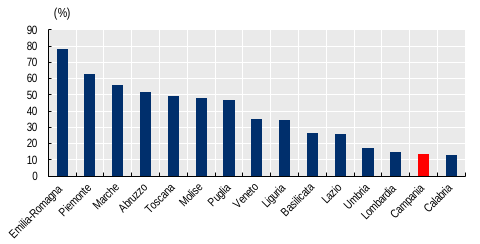
Source: Ministry of the Interior, Single Territorial System (database)
Strengthening skills in a shrinking and ageing local public administration
The local public administration is shrinking. In Campania, the number of local public employees per 1 000 residents fell by 36% between 2011 and 2020 (Figure 4.19, panel a). Nationwide, hiring restrictions throughout the 2010s, aimed at curbing public expenditure – particularly within subnational governments – reduced the public workforce to one of the lowest levels across OECD countries relative to the population (OECD, 2021[44]). The reduction in public employees was especially pronounced in southern Italy, where budgetary constraints were more severe. The effects are still evident, with municipalities in the Centre-South region, including Campania, managing the highest PNRR fund value per employee – highlighting the strain on an already overburdened public workforce (PNRR Lab di SDA Bocconi, 2023[32]). Additionally, legislative and political efforts to grant permanent contracts to temporary public workers, which were more common in the South, often bypassed competitive recruitment processes. This led to lower generational turnover and a workforce with diminished qualifications (Aimone Gigio et al., 2020[53]).
Public employees per 1,000 residents (left) and seniority of public employees (right)
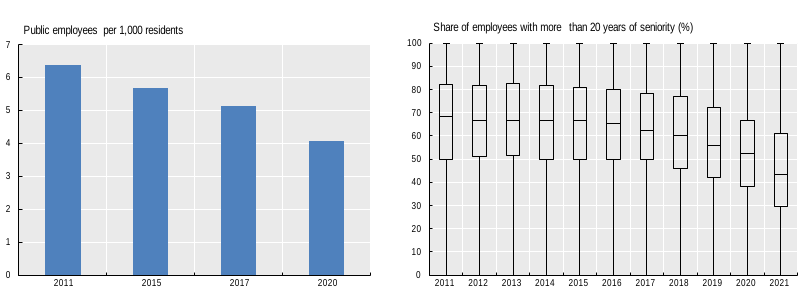
Note: The box plot in panel (b) shows the minimum, 1st quartile, 2nd quartile, 3rd quartile and maximum values.
Source: Istat, “Institutional units activities and organization” and “Accounts indicators and institutional units personnel indicators” (database)
The public workforce is also losing experience as elderly workers retire. Italy’s public servants are among the oldest in the OECD and the number eligible for retirement is set to rise sharply in the coming years. A less educated, older public workforce is linked to less efficient administrative service delivery and slower public investment spending (OECD, 2021[44]). The ageing of Campania’s public workforce will soon result in a significant loss of experience, but also a chance for regeneration. This process has already begun, as the proportion of employees with over 20 years of service has been steadily decreasing in Campania’s municipalities (Figure 4.19, panel b).
Administrative capacity plays a crucial role in harnessing the benefits of intermunicipal co-operation. While the primary goal of such co-operation is to improve service delivery through economies of scale, research shows mixed results. For instance, inter-municipal co-operation led to a reduction in per capita spending without diminishing public service levels in Emilia-Romagna (Ferraresi, Migali and Rizzo, 2018[54]). However, a study of small municipalities across Italy found no significant improvement in spending efficiency for municipalities joining unions (Luca and Modrego, 2019[55]). This may be due to co-ordination failures stemming from limited administrative capacity, particularly in less affluent regions. Conversely, wealthier municipalities in regions like Emilia-Romagna, with stronger administrative structures, appear better positioned to capitalise on these collaborations. Similarly, other studies emphasise the importance of administrative capacity, noting that the presence of a medium-sized municipality (with over 20 000 inhabitants) in the union tends to result in greater expenditure savings, thanks to the administrative expertise they bring (Gori et al., 2023[56]).
Administrative capacity is also important for effective public investment. During the 2014–20 ERDF policy programming period, Italy had one of the lowest absorption rates among EU countries as of the end of 2023 (Ciffolilli and Pompili, 2024[57]). Campania’s absorption of its regional ERDF programme also lagged behind, consistently underperforming the national average throughout most of the programming period (Figure 4.20). A survey of Italian municipalities identified technical capacity as the second most significant obstacle to infrastructure investment, following funding availability (Bulman, 2021[58]). Italian municipalities ranked this constraint 10 percentage points higher than the EU average, underscoring how limited technical capacity has hampered investment initiatives. Improving the capacity of the administrative workforce will be crucial – a recent study of Italian municipalities found that those with a higher share of bureaucrats holding university degrees were better able to execute their planned budgets (Morelli and Bellodi, 2023[59]).
Campania, aware of the need for a qualified workforce, implemented the "Work Plan" during the 2014-20 programming period with ESF resources. This procedure involved the selection, provision of training grants, and subsequent hiring of participants who completed the training and passed the final exam. The hiring was carried out by public bodies, including municipalities, that participated in the competition announced by the Region. A total of 140 Public Administrations were involved, and 1 836 scholarship holders were hired with permanent employment contracts.
At the same time, as previously mentioned, Campania is also leveraging the contribution of the National Technical Assistance Program "Capacity for Cohesion – CapCoe 2021/2027," aimed at strengthening the administrative capacity of local authorities. Within this framework, an extraordinary hiring plan for cohesion policy during the 2021-27 programming period has been implemented to reinforce Municipalities, Unions of Municipalities, regional Administrations, Provinces, and Metropolitan Cities in less developed regions, including Campania.
ERDF (2014-20) absorption rate
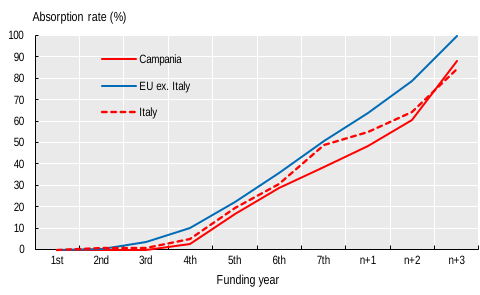
Note: The absorption rate is calculated as the share of total spending to total planned spending for funded programmes. Under the n+2/n+3 rule, funds must be spent by the end of the 2nd/3rd year after their allocation. The figures for EU ex. Italy denote the unweighted average for EU counties, excluding Italy.
Source: European Commission, Cohesion Open Data Platform (database)
Expanding access to upskilling opportunities for public administration is particularly urgent in Campania. A clear North-South divide persists in access to public administration training. In 2019, municipal staff in Northern regions attended an average of 1.5 training courses per employee, whereas in Southern regions, only half of municipal employees participated in any training. Furthermore, the content of training also differed: in the South, courses predominantly focused on transparency and anti-corruption, while in the North, training was more often aimed at enhancing digital innovation and soft skills, such as language proficiency and computer literacy (Aimone Gigio et al., 2020[53]). In this regard, the 2025 Training Directive (known as the Zangrillo Directive), which mandates 40 hours of annual training per public employee to strengthen the technical capacity of the public workforce, is a positive step forward. However, its effective implementation remains crucial.
As demographic change accelerates, it will be increasingly important to align public investment priorities with this evolving reality. A declining and ageing population is also expected to place significant fiscal pressure on subnational governments, primarily due to rising healthcare costs and a shrinking tax base. Addressing this challenge requires better co-ordination of investment strategies to achieve critical mass, a thorough review of expenditures and securing sufficient revenue to sustain public finances. At the same time, municipalities will need to explore ways to maintain the provision of essential local services despite population decline.
Establishing explicit strategies to co-ordinate policy initiatives on demographic change
Depopulation and ageing populations often coincide with socio-economic disparities, requiring a cross-sectoral approach that integrates economic development, access to essential services, enhanced healthcare services and expanded social protection. Additionally, a cross-territorial perspective is essential to enable municipalities to co-ordinate public services beyond administrative boundaries, ensuring responses are tailored to local needs (OECD, 2021[60]). However, Campania’s investment initiatives appear to face challenges related to policy co-ordination. EU funded investment programmes in Campania remain highly fragmented compared to other regions, limiting their effectiveness in addressing demographic challenges. To strengthen co-ordination of policy initiatives, key avenues are:
The regional government could consider adopting an overarching framework to address youth outmigration and population ageing. This framework could tailor initiatives to different demographic situations, co-ordinate all available funds and implement a rural-proofing mechanism, as in Castilla-La Mancha (Box 4.6). While the nationally led SNAI provides a strong cross-sectoral and territorial approach to tackling rural depopulation, it could be complemented by a region-led strategy capable of mobilising all available resources, including those beyond the SNAI framework, to address broader territorial challenges. The "Towards a Territorial Strategy" framework is a positive step toward greater policy coherence, but it lacks the legal authority of formal planning instruments such as Regional Territorial Plans, making its influence advisory rather than binding. Similarly, while cross-sectoral investment strategies like the Regional Strategic Guidance Document (DRIS) mark progress, their strict alignment with EU priorities and funding cycles may limit flexibility in adapting to local needs.
The regional government could further support the implementation of integrated territorial tools through establishing a dedicated peer-learning platform. Local stakeholders in Campania have gained practical experience in using integrated territorial tools such as ITI particularly through the roll-out of SNAI. However, both in Campania and across the EU, the effective implementation of these instruments continue to face challenges, including capacity constraints and a lack of structured support (CEMR, 2022[41]). To address this, the regional government could establish a peer-learning platform to facilitate the exchange of knowledge among municipalities and local actors who have implemented integrated strategies. This platform would help spread good practices, support joint problem-solving and build collective capacity for delivering place-based interventions. Inspired by models such as the European CAP Network, the platform could evolve into a central hub offering technical assistance, interactive planning tools, guidance materials and data for monitoring the impact of integrated investments. It would also directly reinforce the goals of the ERDF 2021–27 programming period, particularly under Policy Objective 5 (RSO 5.2), which aims to enhance the administrative capacity of local stakeholders involved in SNAI. Similar initiatives may be put in place for integrated strategies aimed at urban areas that face different challenges from rural areas.
In June 2021, Castilla-La Mancha, Spain, enacted the "Economic, Social, and Tax Measures Against Depopulation and for the Development of Rural Areas" (Law 2/2021, hereinafter the Law) to combat rural depopulation through a cross-sectoral, integrated approach. The Law was developed in response to the region’s severe demographic challenges: with more than 80% of its municipalities having fewer than 2 000 inhabitants, Castilla-La Mancha had long suffered from low population density, further exacerbated by depopulation and an ageing population.
A key feature of the Law is its place-based approach. The region conducted a detailed zoning exercise to assess varying levels of depopulation risk and tailor interventions accordingly. The zoning process covered over 900 municipalities across approximately 80 000 km² – six times the size of Campania. The classification focused on the degree of depopulation, socio-economic development and public service availability, in contrast to the National Strategy for Inner Areas, which defines inner areas primarily by distance to essential services. Municipalities classified as sparsely populated or at risk of depopulation benefit from tax incentives to attract businesses and reduce socio-economic inequalities. These areas also receive targeted programmes under the Regional Strategy to Combat Depopulation, which allocates over EUR 3 billion between 2021 and 2031.
Another defining aspect of the law is its integrated approach, which ensures co-ordination across fund managers, government sectors and stakeholders. It pools available funds to develop investment initiatives tailored to local needs, an approach previously applied in its Integrated Territorial Investment (ITI) 2014-20 – one of the first cases of combining EAFRD, ERDF and ESF funds in the EU. The Law also strengthens intergovernmental collaboration, establishing an interdepartmental commission that brings together various sectors such as tourism, trade and industry, environmental protection and social policy. Additionally, its open governance model promotes the involvement of all Regional Government Departments, Provincial Councils, local authorities and other stakeholders such as trade unions, universities and civic associations in the policy process.
Furthermore, the Law introduces rural proofing mechanisms to assess the impact of legislation on rural areas. Demographic Impact Reports are now required when drafting regulations to evaluate their effects on rural environments and depopulation trends. These reports are also integrated into the budgeting process to help identify and quantify the financial needs of different territories.
While it is still too early to assess the full impact – with mid-term reviews scheduled for 2025 – the EU has recognised its efforts as an inspiration for other regions (ENRD, 2022[61]). An assessment of the preceding ITI 2014-20 highlighted that one of the key achievements of the integrated approach was fostering a collaborative political culture, enabling EU fund managers to co-ordinate more effectively under a unified strategy (Paton, 2020[62]).
Strengthen subnational fiscal capacity to respond to demographic pressures
Demographic change presents a major challenge to the long-term fiscal sustainability of Campania. An ageing and declining population is likely to increase already-elevated healthcare expenditures while constraining revenue growth. Strengthening the region’s fiscal capacity will be essential to safeguard the provision of core public services and maintain financial stability in the face of these demographic pressures. Key considerations are:
The national government could consider reviewing the fiscal equalisation mechanisms to better reflect the challenges in sparsely populated and shrinking areas. Currently, the allocation of the National Equalisation Fund for health expenditures is guided by a formula that accounts for factors such as age structure and epidemiological indicators. However, the final distribution is ultimately decided through negotiations between central and regional governments within the State-Regions Conference. While this approach provides flexibility to address specific regional health needs, it also introduces uncertainty, as the allocation criteria can change frequently and have significant consequences for regional budgets (Ufficio parlamentare di bilancio, 2024[12]). A review of the underlying formula, particularly to account for the potential rising per capita costs linked to shrinking populations and the loss of economies of scale, could strengthen the system’s ability to respond to demographic trends and reduce the need for ad hoc adjustments. Similarly, the criteria used to allocate the Municipal Solidarity Fund could better capture the increased per capita expenditures and limited fiscal capacity of small municipalities. Although Law 232/2016 provides compensatory funding to municipalities with fewer than 5 000 inhabitants that receive negative MSF allocations, these demographic and structural challenges could be more systematically integrated into the calculation of standard requirements to ensure adequate and predictable funding for smaller municipalities.
Furthermore, the national government could consider introducing a specific IMU tax category for vacant properties. This could promote more efficient land use while also generating additional tax revenue. Enhanced tax autonomy would allow these governments to respond more flexibly to evolving needs driven by demographic change, while also supporting the broader objective of fiscal federalism as outlined in the PNRR’s review of the subnational fiscal framework. Although municipalities currently have the authority to tax second homes, some of which may be vacant, there is no dedicated category for vacant properties under the existing IMU framework 6. It is important to note, however, that a well-functioning vacant property tax would, by design, reduce vacancy over time and thus diminish its own revenue base. Moreover, administrative costs related to monitoring and enforcement would need to be carefully considered (OECD, 2022[63]).
Local governments could use participatory budgeting as a tool to build trust in public institutions and ultimately improve tax compliance. The gap between expected and actual tax revenues represents a significant source of untapped funding for the region. At the national level, it is estimated that collecting just 30% of the potential VAT revenue gap could generate an additional 0.8% of GDP (OECD, 2019[51]). The potential for increased revenue is likely even higher in Campania, where tax evasion is more widespread. In response, the national government plans to introduce measures to improve tax collection, including the implementation of pre-filled VAT returns to ease the compliance burden (Box 4.2). While these efforts focus on strengthening enforcement, they should be complemented by softer approaches aimed at improving voluntary compliance and enhancing tax morale (OECD, 2019[64]). One such approach is to foster greater citizen engagement in decisions on public spending, which can help reinforce the perceived link between tax contributions and local development outcomes. Local governments could consider various forms of participatory budgeting such as consultations and citizens’ juries (Box 4.7). Increased civic participation can also improve the quality of public investment decisions and reduce the risks of corruption and political capture (OECD, 2019[65]).
Participatory budgeting (PB) is a democratic process that allows citizens to directly influence how a portion of the public budget is allocated. Typically implemented at the local level, PB often focuses on capital expenditures, such as investments in sports centres, playgrounds, and bike lane (OECD, 2022[66]).
Since its pioneering implementation in Porto Alegre, Brazil, in the late 1980s, PB has spread to numerous countries and regions. In Italy, according to POLYAS, an online voting service provider, 35 municipalities actively use participatory budgeting. Most of these are located in the northern regions, such as Lombardy and Emilia-Romagna (POLYAS[67]), while uses in Campania have been recorded in the municipalities of Boscotrecase (Naples) and Vallesaccarda (Avellino) (Bassoli, Pittella and Stortone, 2021[68]).
PB is often promoted for its potential to enhance efficiency by better aligning public spending with citizen preferences, and to increase government transparency and accountability. However, the effectiveness of PB depends heavily on its design and implementation (OECD, 2020[69]). In particular, the mode of participation affects the representativeness, depth of discussion and operational complexity of the process.
For instance, open consultations are relatively simple to implement and accessible to a broad audience. However, they tend to lack deliberative depth and risk becoming platforms for airing grievances rather than spaces for problem-solving. Additionally, such processes typically rely on self-selected participants, who may not reflect the broader population. Milan’s 2018 PB process illustrates this challenge: while it collected citizen proposals for public spending, participation was limited to around 1% of eligible citizens, predominantly older, employed individuals, leaving out youth, low-income groups, the less educated and the unemployed (Cellini and Antonucci, 2020[70]). To promote more inclusive and thoughtful participation, some municipalities, such as Bologna and Vicenza, have introduced measures like neighbourhood workshops and technical support during proposal development prior to the voting phase.
More deliberative models. such as citizens’ juries, go further by enabling informed discussion and joint recommendations among a representative group of citizens. While these approaches are more resource-intensive and complex to manage, they support deeper engagement and more constructive outcomes. Random selection and stratification are often used to ensure demographic representation. For example, local councils in Australia, including those of Canada Bay and Darebin, have used citizens’ juries to deliberate on and propose budget allocations (OECD, 2020[69]).
Encourage higher labour force participation and increased digitalisation for greater economic output and tax revenue
While revising government transfers and exploring new tax powers will be important to bridge the gap between rising expenditure and limited revenues, the region should also seek to strengthen its current tax base. Complemented with measures to ease the expenditure burden – such as by promoting healthy ageing to contain healthcare costs as outlined in Chapter 5 – this will help the region avoid fiscal deficits. By creating greater employment opportunities and fostering more productive firms, these efforts can also help attract and retain young people.
Regarding active aging, as previously mentioned, an intervention supported jointly by resources from the PR Campania ESF+ 2021-27 and the PR Campania ERDF 2021-27 is currently being implemented. The purpose is to carry out structured and coordinated interventions aimed at facilitating adequate physical activity among elderly people and people with disabilities, who live in conditions of socioeconomic disadvantage and fragility, are usually less active and more difficult to reach.
Key avenues are:
Regional governments could further utilise active labour policies to drive economic output through boosting labour force participation. Although Italy dedicates a substantial 3.0% of GDP to labour policies – above the OECD average of 2.2% – only 7% of this spending is directed towards active policies, such as job placement services, training and upskilling programmes, compared to an OECD average of 31% in 2020. The bulk of resources is spent on passive measures like unemployment benefits and welfare support, which tend to be less cost-effective in the long-term (Bulman, 2021[58]). Shifting this balance towards more active interventions could help Campania better tap into its labour potential and strengthen its fiscal resilience. Campania’s significant allocation towards “inclusion and cohesion” in its PNRR programme, which includes active labour policies, is a welcome development in this regard (Figure 4.12). The region may also leverage the EU Cohesion Policy mid-term review’s prioritisation on innovation and competitiveness to frontload ESF+ and ERDF programmes to support skills developments in the region (Box 4.8). Alongside efforts to boost productivity, such measures have the potential to mitigate the negative fiscal impacts of demographic change (Figure 4.6).
In April 2025, the European Commission presented its mid-term review of the 2021–2027 EU Cohesion Policy, proposing amendments to key regulations governing the ERDF, the Cohesion Fund and the Just Transition Fund. This review responds to Europe’s shifting geopolitical, ecological and technological landscape and aims to better align regional investments with emerging strategic priorities. The review introduces new priority areas eligible for reallocation of existing cohesion funds:
Innovation and competitiveness
Defense and security
Affordable housing
Water resilience
Energy transition
Eastern Border Regions
To support this reorientation, the proposal offers increased co-financing (up to 100%), advance pre-financing (up to 30%), a one-year extension of eligibility, and simplified implementation rules, giving regions greater flexibility to respond to evolving needs.
Source: (European Commision, 2025[71])
The regional government could seek to increase youth labour participation through raising awareness of its employment programs. The National Programme for Youth, Women and Work seeks to tackle youth unemployment, with EUR 2.8 billion allocated to support young people’s transition into the workforce. While outreach has been identified as a priority within the programme, it is crucial to emphasise awareness-raising efforts. Participation in the previous Youth Guarantee Programme was notably low in southern regions like Campania, with most young people learning about the initiative through word of mouth (OECD, 2019[19]). Further leveraging social networks and expanding outreach efforts, not only through employment offices but also more broadly, such as in schools, churches and community centres, will be important in this regard. These measures could contribute to retaining and attracting young talent by fostering a more visible, supportive and attractive employment environment in the region.
All levels of government should work to expand access to affordable, quality childcare to enable more women to participate in the labour market. The limited availability of formal childcare has often prevented caregivers – primarily women – from entering or remaining in the workforce. In 2022, only 30.9% of children under the age of three in Italy were in formal childcare, compared to the EU average of 35.8%. This average mask stark regional disparities: in southern regions like Calabria and Campania, coverage was below 12%, compared to around 40% in regions like Umbria and Emilia-Romagna (Istat, 2023[72]). In order to indirectly expand the availability of nurseries, families receiving vouchers from the PR Campania ESF+ 2021/2027 can also use them at authorized private nurseries. While supporting women's participation in the labour force – such as by expanding crèches – has been a key priority of the PNRR, no investments have yet been planned for Campania under the 'Education and Research' category, which includes these initiatives (Figure 4.12). It is important to note that within the ESF+, measures aimed at work-life balance are currently being implemented. Other complementary or additional work-life balance measures will be programmed and implemented under the National Youth, Women, and Work Program, which will designate the Campania Region as an Intermediate Body and allocate EUR 72 million.
The regional government could work to expand skills development programmes for mature workers above 65. As the workforce ages, ensuring that older workers' skills remain aligned with labour market needs will be increasingly important. Designing lifelong learning programmes tailored to older workers can help equip them with the skills needed to perform non-routine tasks and meet the demands of technology-intensive occupations in the digital economy (OECD, 2019[7]). While the National Programme for the Guaranteed Employability of Workers (GOL), supported by the PNRR, aims to reskill and upskill mature workers, eligibility is effectively limited to those under 65, excluding a significant cohort of capable workers over this age (Regione Campania[73]). Programmes targeting this group could prioritise short, practical training courses tailored to specific tasks rather than focusing primarily on foundational skills. The prioritisation of skills development in the EU mid-term review may also offer an opportunity to accelerate ESF+ and ERDF programmes that support the reskilling of mature workers.
At the regional level, Campania should continue its efforts to increase the productivity of the economy through sustained investment in digitalisation, with a greater emphasis on small businesses. Investing in the ability of firms to harness the benefits of digitalisation will be important to foster innovation since less productive regions benefit more from enhancing production capabilities – that is, improving a region’s capacity to utilise technology, labour and organisational methods to increase output – rather than developing high-technology capabilities to drive cutting-edge innovation (OECD, 2020[74]). Significant investment in digitalisation, innovation and competitiveness, supported by funding programmes such as the ERDF and PNRR, will be vital in this regard. However, the region could consider shifting the allocation of the budget more towards small local firms since Italian microbusinesses are about 30% less productive than European peers, whereas large Italian businesses tend to already be more productive than their counterparts (OECD, 2024[75]).
Enhance public service efficiency through strengthening the role of metropolitan cities and promoting inter-municipal co-operation and municipal mergers
Achieving greater efficiency in service delivery will be crucial to help ease the burden on the shrinking public workforce. The strain on public employees remains evident, as seen with the PNRR, where municipalities in Central and Southern Italy manage the highest fund value per employee, underscoring significant pressure on local administrations. Reducing this burden may lead to better outcomes as evidence suggests that fewer and smaller projects per employee contribute to higher investment disbursement rates (Bulman, 2021[58]). Key considerations are:
The national government could consider strengthening the capacity and governance of metropolitan cities by clarifying the division of responsibilities among different levels of government, ensuring the direct election of mayors, and reinforcing fiscal capacity through equalisation mechanisms. Currently, the limited powers of metropolitan bodies hinder effective inter-municipal co-operation, especially in areas such as integrated land use and transport policies (OECD, 2019[51]) Progress in this area will depend on resolving the overlap of responsibilities between regions and municipalities, which could be addressed through thorough discussions, such as those in the States-Regions Conference, to avoid the public distrust that emerged during the 2016 constitutional reform. Additionally, direct election of metropolitan city mayors would ensure greater democratic legitimacy and accountability to the metropolitan area (Congress of Local and Regional Authorities, 2024[50]). As intended in the fiscal federalism reforms of the PNRR, these governance reforms could be complemented by a more accurate assessment of funding needs, based on standardised requirements and fiscal capacity to enhance the capacity of metropolitan cities.
The regional government could promote inter-municipal co-operation through enhancing communication on their costs and benefits. Regional governments have an important role to play as evidenced by Emilia-Romagna which played an active role in facilitating co-ordination, resulting in higher adoption of inter-municipal co-operation compared to Veneto, where a stronger tradition of local government independence limited uptake (Casula, 2016[76]). In this context, Campania could take a more proactive approach by clearly communicating the costs and benefits of inter-municipal co-operation, in addition to outlining evidence on successful models such as with Emilia Romagna which involves at least one large municipality when undertaking inter-municipal co-operation. These findings could be communicated through regular seminars and online platforms (Box 4.9).
The national government could consider promoting municipal mergers for small municipalities by increasing fiscal incentives or greater enforcement. While mergers do not automatically lead to efficiency gains – given that the optimal scale for service delivery varies by service type – ongoing population decline in certain areas may necessitate revisiting this issue in the future. In general, voluntary amalgamations, as is the case in Italy, tend to result in significantly fewer mergers compared to more directive approaches, such as setting amalgamation targets, applying implicit pressure or enforcing mergers. Among less-intrusive approaches, relying solely on information-based tools like impact assessments and guidance is often insufficient unless paired with fiscal incentives (Klausen, 2024[77]). This suggests that if Italy seeks to advance municipal mergers, it may need to increase financial incentives or consider more assertive policy tools as mentioned above.
Financial incentives play a crucial role in encouraging inter-municipal co-operation. Where municipalities are hesitant to engage in co-operation due to unclear efficiency gains and loss of autonomy, financial incentives can help nudge municipalities toward collaboration. Indeed, countries with widespread inter-municipal co-operation often provide financial incentives (Swianiewicz, 2011[78]). For instance, in Finland, where shared service entities manage various functions like healthcare, education and transportation, the government offers state grants to support co-operation (OECD, 2024[79]).
Italy provides national-level financial incentives through the Municipal Solidarity Fund, complemented by regional incentives under Article 33 of Legislative Decree 267/2000, which is also the case with Campania (Resolution No. 1446 of September 18, 2008). The lack of uptake despite these financial incentives suggests the presence of other barriers.
A key issue may be a lack of awareness among policymakers regarding the benefits of co-operation. Emerging evidence in Italy highlights the efficiency gains of co-operation and identifies the institutional mechanisms that may maximise these benefits. For example, inter-municipal co-operation involving at least one large municipality, as seen in Emilia Romagna, tends to achieve greater cost savings compared to co-operation structures with many smaller municipalities, which suffer from higher transaction costs (Vidoli et al., 2023[80]; Di Ielsi, Fiorillo and Porcelli, 2022[81]). Promoting such findings can help highlight the advantages of co-operation and guide municipalities in forming partnerships that generate the greatest benefits.
Even when the benefits are evident, a lack of trust among municipalities can hinder co-operation. To foster a more collaborative culture, it is important to increase municipalities’ experience in working together. For instance, if the PNRR model, which requires municipalities to form consortia to access investment initiatives, proves successful – as indicated in recent assessments (Impact Assessment Office, 2023[47]) – this approach could be expanded. Additionally, political and economic suasion by regional governments may encourage municipalities to collaborate (Bocchino, 2018[82]). In this regard, strong commitment from the regional government to promote co-operation can send this signal. For example, Emilia Romagna has a dedicated website on its efforts in promoting Unions, including information on seminars about Union operations and the Regional Observatory of Unions, which tracks the impact of Unions on public services.
Lastly, ensuring the fiscal autonomy of municipalities and shared service entities is crucial for successful co-operation. Financial independence provides municipalities with the right incentives to collaborate and realise cost-saving measures through co-operation (OECD, Forthcoming[83]). Meanwhile fiscal autonomy is relatively low in Campania where municipalities rely heavily on central government transfers and face strict debt limits, limiting their ability to issue bonds. In France, inter-municipal co-operation structures are granted the authority to levy taxes, offering them a high degree of fiscal autonomy that strengthens their capacity to fund joint services – an important factor in the success of IMC in France.
This Annex explains the calculations underlying Figure 4.3 and Figure 4.6 which illustrate how demographic change will further worsen the fiscal balance in Campania over time. Traditional fiscal balance estimates typically do not account for demographic trends. Yet demographic shifts will likely increase spending on age-sensitive services, such as health, while reducing the size of the working-age population that contributes to revenue. The purpose of this analysis is to provide a more realistic picture of the region’s future fiscal outlook by taking these changes into account. While the following explanations are not necessary to understand the figures provided in the chapter, they are included for transparency and for those interested in understanding how the figures were derived.
Following the approach outlines by (IMF, 2016[5]), the impact of demographic change on the fiscal balance is estimated using a simplistic framework consisting of three steps: (1) estimating long-term output; (2) forecasting revenue based on its long-term relationship with output; and (3) forecasting expenditure items, distinguishing between those significantly impacted by demographics and others. Whilst the framework abstracts from potential behavioural changes and policy reactions that may arise due to demographic shifts, it provides a tractable and flexible method for highlighting potential impacts on public finances.
First, long-term output is estimated using a production function approach. Following the Cobb-Douglas production function with constant returns to scale, output is expressed as
(1)
where is total factor productivity, is the stock of capital, is aggregate labour and is the share of labour in output. Demographic developments are considered by decomposing into demographic indicators of various age groups. Specifically, in logarithmic terms, output is expressed as
(2)
where indicates the age cohort, is the population of each cohort, and are the cohort-specific labour force participation rates and employment to labour force ratio, respectively and is the weight factor to adjust for the difference between the number of employees and the effective labour input. Here, the analysis uses average usual weekly hours worked by age group to account for effective labour input of each cohort.
(3)
Capital stock is estimated using the perpetual inventory method
(4)
where is the depreciation rate and is net capital formation. Here, the analysis uses a depreciation rate of 5.9%, in line with (IMF, 2016[5]).The initial capital stock is chosen so the capital-output ratio in the initial period is equal to the average capital-output ratio over a reference period of 10 years.
(5)
Inputting relevant data, equation (2) can be used to derive estimates for total factor productivity (TFP). It should be noted that TFP is measured as a residual, capturing measurement errors in the data.
Forecasts for output can now be calculated given several assumptions: (1) TFP is assumed to grow at its historical average rate, (2) the share of labour in output is assumed to be constant, calculated as its long-term average; (3) the labour force participation rate and employment rate are assumed to follow the average rate of the 5 years prior to the forecast period; (4) the weight factor that adjusts for effective labour input is assumed to be constant, calculated as its long-term average; and (5) capital accumulation is assumed to follow the balanced-growth condition
(6)
Based on these assumptions, output is determined by developments in demographic variables, using demographic forecasts of different age cohorts provided by the European Commission.
Government revenue is assumed to remain at its historical level as a share of GDP. Therefore, as output decreases, revenue is also assumed to decrease proportionally. This simple method abstracts from using data on age-specific tax liabilities, which is rarely publicly available. An important assumption is that the revenue-to-GDP elasticity is equal to 1, which may not be realistic if, for example, an ageing population results in an increase of the elderly paying taxes whilst not contributing to production, effectively increasing government revenue as a share of GDP.
Expenditures are calculated by differentiating between items likely to be significantly impacted by demographics and those that are not. Specifically, healthcare and education-related expenditures are modelled explicitly, given their significant susceptibility to demographic changes and their status as major expenditure components in the region.
Healthcare is expressed as the product of (1) the generosity of the healthcare package (GHP) for the working population, expressed as the per capita health expenditure for the 0–64-year-old cohort relative to GDP per employed person; (2) the inverse of the labour participation (LP) rate; and (3) the dependency ratio (DR) times a coefficient , which measures the per capita healthcare cost of the 65 year old and older cohort to the 0 -64 year old cohort. The equation is given as
(1)
where
Assuming that the generosity of the healthcare package (GHP), the labour participation rate (LP) and the per capita healthcare cost of the elderly relative to the young () is constant, demographic shifts affect health expenditures through developments in the dependency ratio.
Education expenditure as a share of GDP is assumed to maintain a constant relationship with the proportion of the population under 25. Therefore, as the share of the population under 25 decreases, education spending relative to GDP also declines.
Other items are thought to be less affected by demographic change and are assumed to remain at their historical level as a share of GDP, similar to the calculation for revenue. Again, an important assumption is that the expenditure-to-GDP elasticity is equal to 1.
The assumptions of key parameters are summarised in Annex Table 4.A.1.
References
[37] Agasisti, T. and F. Porcelli (2022), “Local governments’ efficiency and its heterogeneity – empirical evidence from a stochastic frontier analysis of Italian municipalities 2010-2018”, Applied Economics, Vol. 55/25, pp. 2902-2927, https://doi.org/10.1080/00036846.2022.2107988.
[53] Aimone Gigio, L. et al. (2020), La dinamica del personale degli enti territoriali. Mimeo.
[38] Ambrosanio, M., P. Balduzzi and M. Bordignon (2014), Economic crisis and fiscal federalism in Italy, Università Cattolica del Sacro Cuore, Dipartimento di Economia e Finanza (DISCE).
[29] Aurambout, J. et al. (2021), Shrinking Cities, https://publications.jrc.ec.europa.eu/repository/handle/JRC126011.
[26] Banca d’Italia (2022), Criticità e prospettive della finanza comunale nel Mezzogiorno alla vigilia del Covid-19., https://www.bancaditalia.it/pubblicazioni/qef/2022-0708/index.html?dotcache=refresh.
[48] Barone, V. et al. (2023), “LEADER local action groups and inner areas. An Italian case study”, Evaluation and Program Planning, Vol. 101, p. 102357, https://doi.org/10.1016/j.evalprogplan.2023.102357.
[68] Bassoli, M., G. Pittella and S. Stortone (2021), “2018 Dataset of Participatory Budgeting in Italy”, Research Data Unipd, https://doi.org/10.25430/RESEARCHDATA.CAB.UNIPD.IT.00000469.
[10] Bianchi, L. and F. Prota (2025), “Differentiated autonomy”, Contemporary Italian Politics, pp. 1-15, https://doi.org/10.1080/23248823.2025.2479352.
[34] BLOM-HANSEN, J. et al. (2016), “Jurisdiction Size and Local Government Policy Expenditure: Assessing the Effect of Municipal Amalgamation”, American Political Science Review, Vol. 110/4, pp. 812-831, https://doi.org/10.1017/s0003055416000320.
[82] Bocchino, M. (2018), Inter-municipal cooperation in Italy. Analysis and an opening research agenda for the Municipal Unions case.
[52] Bolgherini, S., M. Casula and M. Marotta (2018), “Municipal reaction to functional rescaling in Italy”, International Journal of Public Sector Management, Vol. 31/4, pp. 448-465, https://doi.org/10.1108/ijpsm-12-2016-0204.
[23] Boyd, D. (2019), Demographics, Aging, and State Taxes, https://www.pewtrusts.org/-/media/assets/2020/01/demographics_aging_and_state_taxes.pdf.
[45] Brosio, G. (2018), Ambition beyond feasibility? Equalization transfers to regional and local governments in Italy, Universita´di Torino, Turin, https://documentos.fedea.net/pubs/dt/2018/dt2018-09.pdf.
[58] Bulman, T. (2021), Strengthening Italy’s Public Sector Effectiveness.
[49] Campania Region (n.d.), Strategia Nazionale delle Aree Interne in Campania - Stato di attuazione al 31 dicembre 2022.
[76] Casula, M. (2016), “Between national constraints and the legacies of the past: explaining variations in inter-municipal cooperation in Italian regions”, Regional Studies, Regional Science, Vol. 3/1, pp. 482-490, https://doi.org/10.1080/21681376.2016.1255856.
[70] Cellini, M. and M. Antonucci (2020), Per pochi e in condizioni specifiche: L’esperienza del bilancio partecipativo (BP) nel comune di Milano, Center for Open Science, https://doi.org/10.31219/osf.io/wu56j.
[41] CEMR (2022), ITI and CLLD -The use of integrated territorial tools in cohesion policy, https://ccre-cemr.org/wp-content/uploads/2024/04/230124_EN_analysis_ITI_CLLD_final.pdf.
[57] Ciffolilli, A. and M. Pompili (2024), Absorption rates of Cohesion Policy funds, https://www.europarl.europa.eu/RegData/etudes/STUD/2023/747284/IPOL_STU(2023)747284_EN.pdf.
[50] Congress of Local and Regional Authorities (2024), Monitoring of the application of the European Charter of Local Self-Government in Italy, https://www.congress-monitoring.eu/en/6-pays.html.
[81] Di Ielsi, G., F. Fiorillo and P. Porcelli (2022), “Le unioni di comuni in Italia: modelli di gestione associata a confronto”, Moneta e Credito, Vol. 75/297, pp. 11-40, https://rosa.uniroma1.it/rosa04/moneta_e_credito/article/view/17740/16835.
[35] Dollery, B. and L. Crase (2004), Is Bigger Local Government Better? An Evaluation of the Economic Case for Australian Municipal Amalgamation Programs.
[24] Dougherty, S. and K. Forman (2021), “Evaluating fiscal equalisation: Finding the right balance”, OECD Working Papers on Fiscal Federalism, No. 36, OECD Publishing, Paris, https://doi.org/10.1787/253da2b8-en.
[61] ENRD (2022), The regional law in Castilla-La Mancha (Spain) to combat rural depopulation, https://ec.europa.eu/enrd/sites/default/files/enrd_publications/enrd_case_study_castilla_130622_final_0.pdf.
[71] European Commision (2025), A modernised Cohesion policy: The mid-term review, https://ec.europa.eu/regional_policy/sources/communication/mid-term-review-2025/communication-mid-term-review-2025_en.pdf.
[1] European Commission (2024), 2024 Ageing Report: Economic & budgetary projections for the EU member states (2022-2070).
[18] European Commission (2024), Council recommendation on the economic, social, employment, structural and budgetary policies of Italy, https://eur-lex.europa.eu/legal-content/EN/TXT/?uri=celex:52024DC0612.
[21] European Commission (2024), Country analysis on social convergence in line with the features of the Social Convergence Framework (SCF), https://cdn.cursdeguvernare.ro/wp-content/uploads/2024/05/SWD2024132_0.pdf.
[33] European Commission (2024), The future of European competitiveness – A competitiveness strategy for Europe, https://commission.europa.eu/topics/strengthening-european-competitiveness/eu-competitiveness-looking-ahead_en.
[14] European Commission (2023), 2023 Country Report - Italy, https://economy-finance.ec.europa.eu/system/files/2023-05/IT_SWD_2023_612_en.pdf.
[22] Eurostat (n.d.), Population by sex, age, citizenship, labour status and NUTS 2 region, https://ec.europa.eu/eurostat/databrowser/view/lfst_r_lfsd2pwn__custom_15366036/default/table.
[54] Ferraresi, M., G. Migali and L. Rizzo (2018), “Does intermunicipal cooperation promote efficiency gains? Evidence from Italian municipal unions”, Journal of Regional Science, Vol. 58/5, pp. 1017-1044, https://doi.org/10.1111/jors.12388.
[9] Ferretti, C. and P. Lattarulo (2023), FISCALITÀ REGIONALE SCENARI DI POSSIBILI ALTERNATIVE ALL’IRAP, https://www.irpet.it/fiscalita-regionale-scenari-di-possibili-alternative-allirap/.
[42] Filippetti, A., S. Rondinella and F. Tuzi (2024), “The Italian Constitutional Court and recentralization along the pendulum of regionalism”, Constitutional Political Economy, https://doi.org/10.1007/s10602-024-09445-0.
[56] Gori, G. et al. (2023), Does Inter-municipal Cooperation Increase Efficiency? Evidence from Italy.
[8] Governo Italiano (2021), Piano Nazionale Di Ripresae Resilienza, https://www.italiadomani.gov.it/content/sogei-ng/it/en/strumenti/documenti/archivio-documenti.html?orderby=%40jcr%3Acontent%2Fdate&sort=desc&category=Legislazione%2C%20regolamenti%20e%20linee%20guida%20generali%20per%20l%27attuazione%20del%20PNRR.
[6] Grob, U. and S. Wolter (2007), “Demographic Change and Public Education Spending: A Conflict between Young and Old?”, Education Economics, Vol. 15/3, pp. 277-292, https://doi.org/10.1080/09645290701273467.
[5] IMF (2016), How to Assess Fiscal Implications of Demographic Shifts: A Granular Approach.
[47] Impact Assessment Office (2023), The Impact of Italy’s Strategy for Inner Areas on Depopulation and Industrial Growth: A Staggered Difference-in-Difference Analysis with Spatial Spillover Effects.
[20] Istat (2025), CONTI ECONOMICI TERRITORIALI, https://www.istat.it/comunicato-stampa/conti-economici-territoriali-anni-2021-2023/.
[72] Istat (2023), I servizi educativi per l’infanzia in un’epoca di profondi cambiamenti, https://www.istat.it/it/files/2023/09/I-servizi-educativi-per-linfanzia-in-unepoca-di-profondi-cambiamenti-21-22.pdf.
[77] Klausen, J. (2024), “Governmental strategies for municipal amalgamations: evidence from 24 European countries”, Territory, Politics, Governance, pp. 1-20, https://doi.org/10.1080/21622671.2024.2406524.
[25] L’Istituto per la Finanza e l’Economia Locale (2018), Il sistema perequativo Un inquadramento generale.
[46] Libero Pensiero (2016), Appello dei Constituzionalisti, http://www.periodicoliberopensiero.it/pdf/periodico-giugno-2016/APPELLO-COSTITUZIONALISTI.pdf.
[55] Luca, D. and F. Modrego (2019), Stronger together? Assessing the causal effect of inter-municipal cooperation on the efficiency of small Italian municipalities.
[3] Maisonneuve, C. and J. Martins (2013), Public spending on health and long-term care: a new set of projections, OECD.
[36] Maria Dispotico, R. (2017), Unioni e fusioni di comuni: Quali rischi e quali opportunita per i piccoli comuni?, https://www.mef.gov.it/export/sites/MEF/documenti-allegati/2017/FORUMPA/Unioni_e_f_usioni_di_Comuni._Quali_rischi_e_quali_opportunitx__Sose.pdf.
[4] McMorrow, K. and W. Roeger (1999), The Economic Consequences of Ageing Populations (A Comparison of the EU, US and Japan).
[2] Ministero della Salute (2022), Monitoraggio dei LEA attraverso il Nuovo Sistema di Garanzia – Relazione 2022.
[59] Morelli, M. and L. Bellodi (2023), “Politicians’ Incentives and the Congested Budget Effect: Evidence from Italian Municipalities”, SSRN Electronic Journal, https://doi.org/10.2139/ssrn.4331565.
[79] OECD (2024), Enabling Inter-Municipal Shared Service Provision in Lithuania: Proposed Legal and Institutional Framework and Piloting Approach in Tauragė+ Functional Zone, OECD Multi-level Governance Studies, OECD Publishing, Paris, https://doi.org/10.1787/f8ad6859-en.
[75] OECD (2024), OECD Economic Surveys: Italy 2024, OECD Publishing, Paris, https://doi.org/10.1787/78add673-en.
[66] OECD (2022), Dispelling Myths about Participatory Budgeting across Levels of Government, https://www.oecd.org/content/dam/oecd/en/topics/policy-sub-issues/fiscal-federalism-network/participatory-budgeting-note.pdf.
[63] OECD (2022), Housing Taxation in OECD Countries, OECD Tax Policy Studies, No. 29, OECD Publishing, Paris, https://doi.org/10.1787/03dfe007-en.
[60] OECD (2021), Delivering Quality Education and Health Care to All: Preparing Regions for Demographic Change, OECD Rural Studies, OECD Publishing, Paris, https://doi.org/10.1787/83025c02-en.
[44] OECD (2021), OECD Economic Surveys: Italy 2021, OECD Publishing, Paris, https://doi.org/10.1787/07d8b9cd-en.
[74] OECD (2020), Broad-based Innovation Policy for All Regions and Cities, OECD Regional Development Studies, OECD Publishing, Paris, https://doi.org/10.1787/299731d2-en.
[69] OECD (2020), Innovative Citizen Participation and New Democratic Institutions: Catching the Deliberative Wave, OECD Publishing, Paris, https://doi.org/10.1787/339306da-en.
[65] OECD (2019), Effective Multi-level Public Investment: OECD Principles in Action, OECD Multi-level Governance Studies, OECD Publishing, Paris, https://doi.org/10.1787/c3bc625b-en.
[7] OECD (2019), Fiscal challenges and inclusive growth in ageing societies, OECD.
[51] OECD (2019), OECD Economic Surveys: Italy 2019, OECD Publishing, Paris, https://doi.org/10.1787/369ec0f2-en.
[19] OECD (2019), Strengthening Active Labour Market Policies in Italy, Connecting People with Jobs, OECD Publishing, Paris, https://doi.org/10.1787/160a3c28-en.
[64] OECD (2019), Tax Morale: What Drives People and Businesses to Pay Tax?, OECD Publishing, Paris, https://doi.org/10.1787/f3d8ea10-en.
[30] OECD (n.d.), Aggregated and disaggregated municipal government finance, https://data-explorer.oecd.org/vis?fs[0]=Topic%2C1%7CRegional%252C%20rural%20and%20urban%20development%23GEO%23%7CSubnational%20government%20finance%20and%20employment%23GEO_SNG%23&pg=0&fc=Topic&bp=true&snb=17&df[ds]=dsDisseminateFinalDMZ&df[id]=DSD_SNGF_.
[83] OECD (Forthcoming), Intermunicipal cooperation for efficient local governance: Legal, fiscal, and institutional strategies.
[27] Osservatorio Economia e Società Napoli (2025), Patto per Napoli, https://www.svimez.it/wp-content/uploads/2025/04/studio_patto_per_napoli.pdf.
[28] Padovani, E., F. Porcelli and A. Zanardi (2024), “The determinants of the financial distress of Italian municipalities: How much is it due to inadequate resources?”, International Tax and Public Finance, Vol. 31/6, pp. 1494-1533, https://doi.org/10.1007/s10797-024-09856-7.
[62] Paton, J. (2020), Analysis of the ITIs effectiveness in Spain (2014-2020), https://iti.castillalamancha.es/sites/iti.castillalamancha.es/files/2020-03/ITI_E3_FINAL_Report_Spanish_Version-CLM.pdf.
[32] PNRR Lab di SDA Bocconi (2023), Principali sfide per l’attuazione del PNRR, https://www.sdabocconi.it/upl/entities/attachment/Nota_CDP_Bocconi_PNRR_Lab_Apr23.pdf.
[67] POLYAS (n.d.), Bilancio partecipativo, https://www.polyas.it/glossario-elettorale/Bilancio-partecipativo (accessed on 20 May 2025).
[15] Prettner, K. and A. Prskawetz (2010), “Demographic change in models of endogenous economic growth. A survey”, Central European Journal of Operations Research, Vol. 18/4, pp. 593-608, https://doi.org/10.1007/s10100-010-0179-y.
[16] Regione Campania (2023), MIGLIORA IL RATING DEL BILANCIO DELLA REGIONE CAMPANIA: L’AGENZIA S&P GLOBAL ELEVA IL PROPRIO GIUDIZIO DA “BBB-” A “BBB” CON OUTLOOK STABILE, https://www.regione.campania.it/regione/it/news/primo-piano/migliora-il-rating-del-bilancio-della-regione-campania-l-agenzia-s-p-global-eleva-il-proprio-giudizio-da-bbb-a-bbb-con-outlook-stabile.
[31] Regione Campania (2023), Strategia Nazionale delle Aree Interne in Campania - Stato di attuazione al 31 dicembre 2022.
[40] Regione Campania (2022), Verso una Agenda Territoriale della Regione Campania, https://prfesr2127.regione.campania.it/images/Documenti/territoriali/Verso_Agenda_Territoriale.pdf.
[39] Regione Campania (2020), Documento Regionale Di Indirizzo Strategico DRIS, https://europa.regione.campania.it/en/documento-regionale-di-indirizzo-strategico/.
[73] Regione Campania (n.d.), Accesso al Programma GOL, https://lavoro.regione.campania.it/index.php/home/programma-gol/home-programma-gol/accesso-al-programma.
[43] Salvati, E. (2022), “Fragmentation and intergovernmental conflict during the Covid-19 crisis. The complex relationship between national and regional governments in Italy”, Regional & Federal Studies, Vol. 34/3, pp. 405-434, https://doi.org/10.1080/13597566.2022.2100769.
[13] Scope Ratings (2019), Italian regions’ autonomy plans weigh on the fiscal framework’s predictability.
[11] Scope Ratings (2019), Italian regions’ autonomy plans weigh on the fiscal framework’s predictability, https://www.scoperatings.com/#!search/research/detail/159565EN.
[17] Scope ratings (2021), Healthcare spending dynamics to challenge Italian regions’ fiscal framework, https://www.scoperatings.com/ScopeRatingsApi/api/downloadstudy?id=71cfa738-21c6-48f6-b22a-4ce67bf3ff7e.
[78] Swianiewicz, P. (2011), Working Together: Intermunicipal Cooperation in Five Central European Countries, Open Society Institute.
[12] Ufficio parlamentare di bilancio (2024), Il riparto del fabbisogno sanitario nazionale tra nuovi criteri e attuazioni incompiute, https://www.upbilancio.it/wp-content/uploads/2024/03/Focus_3_2024_Riparto-fabb_san.pdf.
[80] Vidoli, F. et al. (2023), “Do municipal unions improve cost efficiency for the social function? A quasi‐experimental endogenous stochastic frontier approach”, Journal of Regional Science, Vol. 64/2, pp. 308-332, https://doi.org/10.1111/jors.12673.
← 1. Hypothetically, Campania could apply the maximum IRPEF surcharge on lower income brackets. Whilst this would help to generate revenue, increasing the tax burden on lower-income individuals could raise concerns about tax equity and lead to out-migration.
← 2. For individual applications of municipal taxes, see Finance Department - Regional and Local Taxation
← 3. The MSF is composed of 4 main components: a historical component aimed to compensate for lower revenue as a result of the abolition of the Municipal Property Tax (ICI) and the transition to the Single Municipal Tax (IMU); an equalisation component compensating for the gap between standard service costs and revenue capacity; compensation for lower IMU and TASI revenue resulting from tax exemptions introduced by the 2016 Stability Law; and additional resources to develop local social services introduced in 2021. Legislative decree 124/2019 provides that the historical component is gradually phased out in favour for the equalisation component by 2030.
← 4. These government functions are waste management; general administration, planning and public roads; social services; complementary education services; local police; nursery services; and local public transport.
← 6. Although the cadastral classification includes category F/2 for unusable buildings, these properties are generally exempt from IMU, as they lack cadastral income and therefore do not demonstrate taxable capacity. This interpretation is confirmed, for example, in Resolution No. 4/DF (November 16, 2023) issued by the Department of Finance.