Campania faces acute demographic challenges, characterised by a natural population decline and sustained youth outmigration, partly driven by the region’s limited labour market opportunities. These trends are driving the overall population decline and accelerating population ageing. Looking ahead, depopulation and ageing are projected to continue, posing risks to the region’s economic resilience. Addressing these challenges requires a comprehensive and forward-looking policy response to promote the long-term economic sustainability of the region, including measures to retain and attract talent, co-ordinating strategies among levels of government, strengthening fiscal capacity and enhancing public service efficiency.
Preparing for Demographic Change in Campania, Italy

Abstract
By 2050, two-thirds of EU regions including Campania are expected to have smaller populations than in 2019, with nearly 90% of regions experiencing a higher median age. Low fertility rates, outmigration, and an ageing population threaten to reduce the workforce, lower tax revenues and increase per capita costs of providing infrastructure and essential services, creating a “scissors effect” where revenues shrink as expenditures rise (OECD, 2022[1]). In Campania, these dynamics are particularly acute, with the outflow of young talent and a growing ageing population straining healthcare systems, intensifying labour shortages and hindering economic growth. Addressing these challenges requires targeted policies to adapt to the demographic reality (Box 2.1), by creating opportunities to retain talent, adjusting spatial planning to meet territorial needs, fostering efficient operation across all levels of government or guaranteeing access to services to ensure a sustainable and inclusive future for the region (OECD, 2024[2]; European Commission, 2024[3]).
By 2050, two-thirds of EU regions are projected to have less population than in 2019, while nearly 9 of 10 regions are projected to have a higher median age. Population shrinking, ageing and outmigration of youth is negatively impacting many regions and risks leaving these places in a development trap.
Harnessing talent in Europe’s regions
In recognition of this challenge, the European Commission issued the Communication Harnessing Talent in Europe’s Regions (European Commission, 2023[4]) in January 2023. This Communication led to the establishment of the Talent Booster Mechanism (European Commission, 2025[5]) and the Harnessing Talent Platform (European Commission, 2025[6]), which aim to support regions facing a sharp decline in the working age population, a low and stagnating share of people with tertiary education and a significant departure of young people. These initiatives offer tailor-made, place-based and multi-dimensional solutions to support regions most affected by the demographic transition.

Source: European Commission (2025[5]), Talent Booster Mechanism, https://ec.europa.eu/regional_policy/policy/communities-and-networks/harnessing-talent-platform/talent-booster-mechanism_en (accessed on April 2025).
Smart adaptation of regions to the demographic transition
Pillar 2 of the Talent Booster Mechanism targets regions at risk of falling into a ‘talent development trap’, which are regions that have historically faced a high rate of departure of young people. Ten regions, including Campania, were selected based on an open call to receive support to address their demographic challenges with a targeted study focusing on land use and spatial planning, multi-level governance, subnational government finance and public investment, and public service delivery.
Adapting to demographic change to remain attractive
Meeting the challenge of demographic change requires focusing on both adaptation and attractiveness. Adaptation strategies seek to ensure policies, governance structures and public services are aligned with a changing demographic structure. Attractiveness initiatives aim to address quality of life factors to create an attractive environment and opportunities for current and potential residents.
These approaches reinforce one another:
Adapting land use to be more efficient can not only make public services easier and less costly to provide, but can also transform neighbourhoods into more attractive and lively environments that better serve current needs and attract residents and visitors.
Adapting multi-level governance structures, public finances and investment in line with population changes can help to manage the fiscal pressures from population ageing and facilitate more efficient public services, creating fiscal space to support investments in attractiveness.
Adapting public service delivery through digitalisation and mobile solutions, for example, can keep costs in check while also attracting younger populations and remote workers seeking residential mobility.
The necessity of adaptation thus becomes an opportunity to rethink and improve what makes places attractive and sustainable in the long-term.
This report is structured into four chapters, each addressing key dimensions relevant to demographic change. Chapter 1 sets the stage by reviewing Campania’s socio-economic context, including the main labour market trends, institutional arrangements, and overarching policy framework. Chapter 2 delves into land use, exploring spatial planning, housing, and sustainable urban development strategies. Chapter 3 examines multi-level governance (MLG), subnational government (SNG) finance and investment, focusing on the fiscal and administrative mechanisms. Finally, Chapter 4 assesses the delivery of key public services, highlighting the efficiency, equity and effectiveness. Together, these chapters provide a comprehensive analysis of the challenges and opportunities to help Campania adapt to demographic change.
Understanding the socio-economic landscape of Campania is crucial for identifying the region’s opportunities and challenges. This section provides a comprehensive overview of Campania’s geography, economic structure and current and future demographic trends, offering essential context for policymakers to identify patterns that shape regional growth and inform strategic policy action, on which the next chapters will elaborate further.
Campania is a coastal and mountainous region in southern Italy
Campania is one of the 20 administrative regions (or regioni) in Italy, equivalent to large (TL2) regions. It is a coastal region in southern Italy, bordered by the Tyrrhenian Sea and spread over 13 671 km2 of territory. Its geography is characterised by the Campanian plain near Naples and the mountainous terrain of the Apennines to the east.
As of 2023, Campania has 5.6 million inhabitants, representing 9.5% of the Italian population.1 The region is divided into five small (TL3) regions, equivalent to the administrative level of provinces (or province), each with a provincial capital of the same name. In 2015, the province of Naples was replaced by the Metropolitan City of Naples, which has the greatest population among the five provinces, accounting for 53% of the region's total population, followed by Salerno (19%), Caserta (16%), Avellino (7%) and Benevento (5%).
Campania has 550 municipalities, with Naples being the largest, with just above 920 000 inhabitants in 2023. Parts of Campania receive special policy attention within the National Strategy for Inner Areas (Strategia Nazionale Aree Interne - SNAI), a framework that seeks to promote territorial cohesion in Italy. Inner areas (or aree interne) are identified based on their geographical remoteness, low population density and distance to essential public services. In Campania, four groups of municipalities were initially designated under the SNAI as “inner areas” (Alta Irpinia, Cilento Interno, Tammaro-Titerno and Vallo di Diano), and three other target groups of municipalities (Alto Matese, Comunità Fortore Beneventano and Sele-Tanagro-Alburni) have subsequently been added.
Campania faces several economic challenges
Although Campania accounts for nearly half of southern Italy’s GDP (OECD, 2023[7]), the region had the third-lowest per capita regional income level in Italy at less than two-thirds of the national average in 2022, above only Calabria (59%) and Sicily (61%). Campania’s GDP per capita ranks in the bottom third of OECD TL2 regions. Among provinces, Naples had the highest GDP per capita at 73% of the Italian province average and Caserta the lowest at 65%.2
Labour productivity is low in Campania
In 2022, labour productivity stood at 83% of the national average, ranking as the fourth lowest among the 20 other Italian TL2 regions, only ahead of Sardinia, Calabria and Apulia. The region’s economic structure contributes to the gap, with a greater concentration in lower-productivity industries, such as low-skill services (Table 2.1), partly driven by tourism (Box 2.2).
Share of employment by economic activity (in %), 2021
Source: OECD Regional Economy Database.
In 2023, Campania hosted nearly 20.7 million tourists, representing 4.6% of Italy’s tourists.1 With its positive externalities on infrastructure development and the creation of economic opportunities, tourism can enhance a region’s attractiveness and partly prevent depopulation (Bianchino et al., 2024[8]). However, Campania’s most visited destinations are experiencing mounting pressures from high visitor concentrations. In the centre of Naples, the Amalfi Coast, Pompeii and Capri, unbalanced tourism strains considerably the infrastructure and services. Rising housing costs linked to short-term rentals contribute to the displacement of local residents, and increased maritime and road traffic exacerbates pollution and congestion. Seasonal peaks further intensify these challenges, as illustrated by the UNESCO-listed site of Pompeii, which welcomed over four million visitors in the summer of 2024, with up to 36 000 entries recorded on free-admission Sundays. In response, authorities have introduced a daily cap of 20 000 visitors and scheduled entry times. Other regions have implemented similar regulatory frameworks to mitigate tourism pressures, including visitor caps and digital traffic management in Dubrovnik, restrictions on short-term rentals and hotel developments in Barcelona, and limits on cruise ship arrivals in Santorini.
Campania is implementing targeted initiatives to ensure a more balanced distribution of tourism across the region. These include the promotion of key attractions in inland areas, the deployment of training programmes to enhance local skills in hospitality, management, and marketing, and the development of structured itineraries to showcase cultural, natural, artisanal, and food and wine assets in the region’s lesser-known areas. The region has launched several initiatives, such as the establishment of the Regional Atlas of Walking Routes (Atlante regionale dei Cammini), the promotion and support of school tourism activities, and the organisation of dedicated trade fairs.
A flagship initiative is the Sanza Borgo dell'Accoglienza project in the Cilento area, supported by EUR 20 million from the National Recovery and Resilience Plan (PNRR). The project focuses on improving hospitality infrastructure, transport connectivity, and cultural offerings, including the creation of an albergo diffuso, a hotel model where rooms are distributed across different buildings within a small town. Similarly, the Borghi Salute Benessere project promotes the region’s architectural and traditional heritage by actively involving local communities in the tourism sector. The Region is also providing financial support to initiatives such as the Giffoni Film Festival, founded in 1971 in Giffoni Valle Piana (Province of Salerno), which attracts over 100 000 visitors annually and serves as a hub for youth, creativity, and audiovisual production.
Bottom-up initiatives also contribute to enhancing tourism promotion in lesser-known areas, including the revitalisation of marginalised neighbourhoods in Naples, by leveraging cultural heritage as a driver for economic and social development. For example, in Rione Sanità, one of the city’s most disadvantaged districts, the La Paranza cooperative has transformed the Catacombs of San Gennaro into a major tourist attraction, increasing annual visitors from 6 000 to 230 000 and creating local employment opportunities. This success has fostered a broader ecosystem of cooperatives, cultural programmes, and social initiatives, offering young residents opportunities for education and employment, while also strengthening community cohesion. As of 2018, the district generates an estimated direct annual expenditure of between EUR 2.2 million and EUR 3.3 million, with an overall economic impact of EUR 33 million.
1 Istat, Movimento dei clienti negli esercizi ricettivi.
Source: OECD missions to Campania in July and November 2024.
Campania’s business landscape is more skewed towards micro firms than the national average, which tend to have lower productivity levels than large firms, a trend particularly pronounced in Italy (OECD, 2023[9]; Bugamelli et al., 2018[10]). In 2022, micro firms (0-9 workers) accounted for 95.4% of all firms in the region, compared to 94.4% nationally; while the shares of small (10-49 workers) and medium-sized firms (50-249 workers) were slightly lower, at 4.1% and 0.4%, respectively, compared to 4.9% and 0.6%.3
A weak rule of law and informality have constrained investment and business development
Firms in Campania are not only smaller, on average, but also fewer in number, reflecting underlying constraints on investment opportunities and business creation. In 2022, Campania had 74 firms per 1 000 inhabitants, 12 fewer than the national average.4 Challenges related to institutional capacity and perceptions of governance have posed obstacles to business development across the eight regions of southern Italy at times, where 62% of firms identified it as a major or severe obstacle, compared to much lower shares in the northeast (6%) and northwest (1.3%) between 2018-21.5
Targeted efforts to attract investment, strengthen innovation capacity and build human capital (Box 2.3) are gradually improving the region’s economic outlook. The new Southern Special Economic Zone (SEZ), which consolidates the eight previous SEZs in each of the southern Italian regions, provides tax incentives for firms relocating to the region and making investments exceeding EUR 200 000. These measures complement broader efforts within the National Recovery and Resilience Plan (Piano Nazionale di Ripresa e Resilienza or PNRR in Italian) that have increased investment, especially in the construction sector. However, productive investment, crucial for long-term economic growth and narrowing regional disparities, has expanded at a slower pace than in other Italian regions in 2024 (SVIMEZ, 2024[11]; SVIMEZ, 2022[12]).
In Campania, the University of Naples Federico II plays a key role in attracting and educating young talent in the region. In addition to providing traditional higher education, the university offers innovative programmes developed in partnership with the private sector and with the support of the region at its recently established campus in San Giovanni a Teduccio. This working-class suburb, located east of Naples, was once known for high crime rates and unemployment following the closure of a food-packing factory in 1980s. The abandoned factory site was transformed into one of the university’s campuses after redevelopment in 2015, creating positive change in the local community.
One of these programmes is the Apple Developer Academy, offered in co-operation with Apple, a nine-month training programme in software development, and start-up creation. Since its establishment in 2016, the program has educated approximately 2 700 students, half from Campania, 10% from other Italian regions and 40% from international backgrounds. Admitted students attend the course at no expense through a scholarship funded by the European Social Fund Plus (ESF+). After completing the training, 60% of graduates found a job (40% in Campania), and the other 40% continued their studies. Another programme example is Digita Academy, organised and fully funded by Deloitte, which provides specialised training on digital transformation for undergraduates and graduates through project-based work within partner companies in Campania. Since 2017, Digita Academy has trained 350 students, 60% of whom currently work with firms in the region.
Under the ESF+, resources have also been allocated to support an initiative aimed at strengthening Campania’s innovation ecosystem through the establishment of partnerships involving universities and entities specialised in business incubation. The initiative focuses on the implementation of support plans for business creation, targeting the priority thematic areas and underlying technological trajectories of the Regional Smart Specialisation Strategy (RIS3), as well as the cross-cutting themes of digital transition and the shift towards circular production models.
Source: European Commission (2020), https://ec.europa.eu/regional_policy/projects/projects-database/digital-academy-delivers-strong-economic-benefits-in-campania-italy_en; OECD (2023[7]); Information provided by the region.
Labour market opportunities are limited in the region
Campania’s structural challenges are reflected in its labour market, where limited formal employment opportunities constrain the region’s capacity to retain young talent. Informal employment remained widespread at an estimated 14% of total employment, above the Italian average (10%) in 2022.6 In addition, Campania has one of the lowest shares of working-age population employed in the OECD, particularly among women. In 2023, only 44% of the working-age population was employed in the region, the lowest share in Italy and well below the national average of 61%. Campania had the seventh-lowest share among 417 TL2 OECD regions.7 The employment rate was the lowest in Naples (41%) and Caserta (43%), the provinces with the highest and lowest GDP per capita, respectively; while Salerno (49%), Benevento and Avellino (both at 52%) also had rates significantly below the national average. In the region, only 31.1% of working-age women were employed, significantly below the national average of 52.5% over the same year. By contrast, the employment rate for men stood at 58%, above those of Calabria and Sicily and comparatively closer to the national average of 70.4%.
Campania records the highest unemployment rate among all Italian regions, suggesting that low employment levels are primarily driven by insufficient labour demand to absorb the available workforce. In 2023, the regional unemployment rate stood at 17.4%, more than double the national average of 7.7%.8 The number of vacancies for every unemployed person was also 80% lower than the national average, highlighting limited job openings relative to the size of the unemployment population compared to the Italian average.9 However, labour market conditions were comparatively tighter for high-skilled occupations such as managerial, technical and professional roles, than for the regional average in 2022 (Figure 2.2), mirroring national trends and signalling demand for highly-educated workers in Campania.
Relative labour market tightness to the regional average for the top three occupations, 2022

Note: Relative labour market tightness by occupation is calculated at the regional level as the number of vacancies over employment for a given occupation and region, divided by the average labour market tightness in the region.
Source: OECD elaboration based on Lightcast and EU-LFS (2022).
Recent demographic trends show Campania’s depopulation and ageing
Campania’s population has been decreasing in recent years (Figure 2.3). From 2000-23, the region’s population has declined by 1.9%, or by nearly 110 000 inhabitants, while the average OECD region experienced an increase of 18% in population over the same period. Campania ranks among the bottom 20% of 377 OECD regions in terms of population growth over the 2000-23 period.
Population change (persons) by year, 1990-2022

Note: The 2018 population change should be cautiously considered following a data break in the series for 2019.
Source: OECD Regional Demography database (accessed on 15 October 2024).
The population decline during 2000-23 has differed across provinces, with the greatest decline recorded in the most rural provinces of Benevento (-8.8%) and Avellino (-7.6%), followed by Naples (-2.9%) and Salerno (-1.5%). Caserta was the only province to experience population gains with a 6.4% increase overall, although its population has been declining since 2015.
At the municipal level, more than two-thirds of municipalities have seen a decline in population from 2001-22, including Naples. Although municipalities like Giugliano in Campania, close to the municipality of Naples, have seen a rise in population, the metropolitan area of Naples (defined as the Functional Urban Area, which includes the municipality and its commuting zone) has lost population in the last two decades (Chapter 2).
Until 2012, the population growth in the region was sustained by a natural increase, with births outnumbering deaths, and a positive net international migration, which helped counterbalance the long-standing trend of more people moving out to other Italian regions than moving into the region from other parts of the country. Since 2012, however, the persistent negative net inter-regional mobility added to a lower net international migration and a now negative natural population growth following a declining fertility rate (Figure 2.4). Campania’s historically high fertility rate, the highest among Italian regions in 2002, decreased from an average of 1.5 children for every woman of childbearing age in 2002 to 1.3 in 2023.
Decomposition of population change (persons) by year, 2002-21

Note: The correction refers to a statistical adjustment to align different data sources. The 2018 statistical correction should be cautiously considered following a data break in the population series used to compute it.
Source: OECD Regional Demography database (accessed on 15 October 2024).
Those leaving Campania are in their majority young adults (15-39 years old) seeking better economic opportunities in other Italian regions and abroad. In 2022, Campania experienced a net migration of -0.2% of its young population, compared to 1.1% nationally and 1.3% in the EU27 average.10 The young leaving the region have historically been better educated than the average resident, leading to the region’s brain drain (Becker, Ichino and Peri, 2003[13]). Other regions are actively supporting talent attraction and retention, e.g. Emilia-Romagna’s “Regional Law 2/2023 on the attraction, retention and valorisation of talents” aims to bring young people with knowledge and experience in the fields of training, research and innovation into the region.11
Despite the decrease in fertility rates and the youth outmigration, Campania is still the youngest region in Italy. The old-age dependency ratio of Campania, defined as the number of individuals aged 65 and over per 100 people of working age (15-64 years old), was the lowest among Italian regions in 2023 (31), and well below the Italian average (38). However, old-age dependency ratios were above the regional average (and closer to the national average) in the provinces of Salerno (34), and more rural Avellino (36) and Benevento (38), and below the regional average in Caserta (28) and Naples (30).
Population projections suggest Campania will continue depopulating and ageing
In the coming decades, as youth outmigration continues and the number of births remains below deaths, Campania’s total population is projected to decline from 6.8 million in 2023 to 5.6 million in 2080, a 20% reduction in population. Half of the decline is expected to happen within the next two decades (2023-43). From 2023-43, Benevento and Avellino, the most rural provinces, are projected to lose a larger share of their population (14%) while Naples and Salerno are projected to lose close to 12% and 10% of their populations, respectively. Caserta is projected to be the least affected by depopulation, with a projected population decline of close to 6%.12
Over the next decades, the region is also projected to age more rapidly than the Italian average, although its population will remain relatively younger. The population pyramid in 2050 is projected to have a much larger top than in 2023, showcasing a substantial increase in the population aged 65 and over, particularly those above 75. In 2050, the population pyramid base is projected to be smaller than in 2023, driven by a contraction in the size of the younger age population groups in the region (Figure 2.5). As a result, Campania is projected to have seven more people aged 65 and older (38) for every 100 working-age individuals (aged 15-64) in 2043 compared to 31 in 2023, while the national average will increase by only three (from 38 in 2023 to 41 in 2043).
Population and projected population, by age group and sex, 2023 and 2050

Source: OECD calculations based on Eurostat population projections (https://doi.org/10.2908/PROJ_19RP3).
While overall demographic trends are similar across provinces, the differences across provinces are substantial. In 2023, Benevento, the oldest province in 2023, is projected to see the smallest increase in the number of individuals aged 65 and over per 100 working-age individuals, while Avellino, the second oldest, will experience the largest increase, with 5 and 8 additional older than 65 for every 100 working-age individuals, respectively. By 2043, Avellino is expected to have the highest old-age dependency ratio at 44 followed by Benevento (43), while Caserta will have the lowest (35).13 Other population projections display even larger increases in the old-age dependency ratio across the provinces by 2050. Eurostat projections show there will be 32 more 65 and above for every 100 working-age inhabitants than in 2023 in Avellino, 28 more in Salerno, 27 in Benevento and Caserta, and 26 in Naples (Annex Figure 2.A.1).
As a consequence, demographic change is expected to strain the labour market in the region. While currently the labour market is less tight than the national average, projections show that the difficulty in filling vacancies measured by the level of tightness in the labour market will increase 7% faster than in the national average by 2050 (Figure 2.6).
Projected labour market tightness given evolution of working age population, 2022-2100 (2022=100)

Note: The projected labour market tightness is computed relative to national averages and normalised to 2022 (2022=100) for all the regions in the project for which data are available Castilla y León (ES), Extremadura (ES), Norte (PT), Nord Vest (RO), Campania (IT), Central Slovakia (SK), Centre Val de Loire (FR) and Thessaly (EL). Labour market tightness is computed as the number of vacancies in 2022 divided by the projected working-age population in a year. National labour market tightness is the total number of vacancies in 2022 divided by the total projected working age population in a year for all regions in that country except for the region of interest. For each region and country, tightness is then indexed to the year 2022, which is set to 100. Finally, the regional projected change in labour market tightness is indexed to the national projected change in labour market tightness, which is set to 100.
Source: OECD elaboration based on Lightcast and population projections from Eurostat and the EU-LFS (2022).
Across provinces, the most significant strain on the labour market is expected in Benevento and Avellino, the two most rural provinces where the largest declines in working-age population are projected. By 2043, the young working-age population (15-39) is projected to decline by 18% in Caserta, the least affected province, followed by reductions of 22% in Naples and Salerno, 27% in Benevento, and 29% in Avellino. Similarly, the older working-age population (40-64) is expected to shrink, with declines ranging from 10% in Caserta to 17% in Naples, 18% in Salerno, 20% in Benevento, and 23% in Avellino (Figure 2.7).
Projected population change from 2019 (in %), by age group and province, 2020-2100

Source: OECD calculations based on Eurostat population projections (https://doi.org/10.2908/PROJ_19RP3).
Effectively responding to demographic change requires a clear understanding of the institutional context in which policies are designed and implemented. This includes the multi-level governance framework, which defines the roles and responsibilities of national, regional and local authorities; the level of fiscal decentralisation, which determines the financial autonomy of subnational governments to address challenges; and the existing policy frameworks, which provide insight into ongoing efforts and potential gaps.
Moderate fiscal decentralisation supported by regional and local government autonomy
Italy has gradually advanced decentralisation through a series of legislative reforms since the 1990s. The process began with Law 142/1990 on local autonomy, followed by the Bassanini reform in 1997, which introduced the principle of subsidiarity--the idea that decisions should be made at the most local level of government possible--and significantly reshaped the fiscal, administrative and political framework at the subnational level. A major milestone came in 2001, when a constitutional reform formally recognised regions, provinces and municipalities as equal tiers of government alongside the central state. Subsequent reforms, such as the 2009 framework law on federalism and the 2014 territorial reform (Law no. 56/2014), redefined the roles of provinces and established metropolitan cities. However, efforts to further clarify the division of responsibilities between central and regional governments faced setbacks, most notably with the rejection of the 2016 constitutional referendum, which sought to recentralise certain policy areas (OECD/UCLG, 2022[14]).
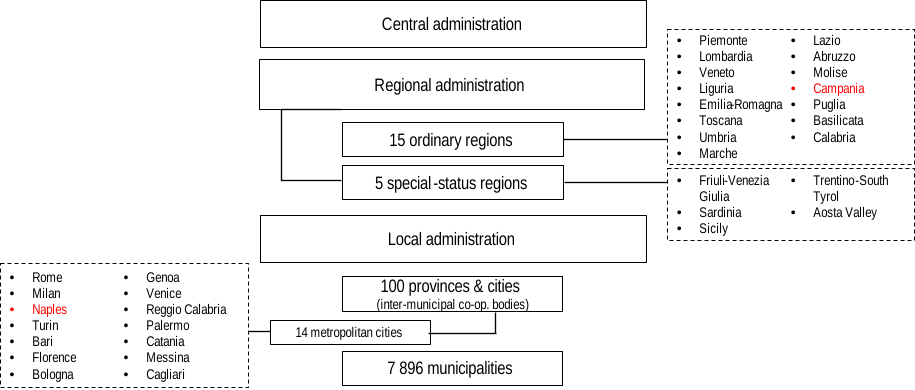
Italy is a unitary country with a two-tier system of subnational government, consisting of regional and local administrations. Among its 20 regions, 15 have ordinary status, like Campania, while 5 have been granted greater legislative and financial autonomy due to their distinct cultural and socio-geographical characteristics (Figure 2.8). At the local level, governance is structured around provinces, metropolitan cities and municipalities (communes). Provinces and metropolitan cities serve as inter-mediate administrative bodies, positioned between municipalities and regions, primarily functioning as inter-municipal co-ordination entities. There are 100 such bodies, including 14 metropolitan cities. As of 2024, Italy had 7 896 municipalities. In Campania, there are five provinces (Avellino, Benevento, Caserta, Naples and Salerno), 550 municipalities and the Metropolitan City of Naples.
Multi-level governance structure of Italy
Note: The number of administrations is as of 2024.
Source: (Istat[15])
The national government is responsible for several key policy areas, including foreign policy, defence, macroeconomic policy and social protection. In the context of demographic change, the national government plays a crucial role in determining the basic levels of social protection, thereby influencing pension schemes and child benefits.
Regional governments are responsible for a wide range of competencies. Pursuant to Article 117 of the Italian constitution, regions have legislative power over all subject matters that are not explicitly covered by State. In practice, many competencies are shared with the national government, whereby the national government defines service standards, and the regional government implements policies within these boundaries (Table 2.2). Healthcare is the most fiscally significant among the shared competencies, comprising approximately 80% of regional public expenditure.
Note: The list of competencies is for illustrative purposes and are not exhaustive. *Denote shared responsibilities between the central government and regional government for which the central government determines the fundamental principles (concurrent legislation). The regional government has legislative power over matters that are not attributed to the central government or in concurrent legislation. Regional competencies illustrate those of Ordinary Status Regions.
Source: Article 117 of the Constitution of Italy, Legislative Decree No. 267/2000, and author’s elaboration based on an OECD questionnaire to experts in the Campania regional government.
Provinces and metropolitan cities primarily serve a co-ordinating and supra-municipal role. Following the 2014 territorial reform (Law 56/2014), provinces lost their status as autonomous government entities and are no longer directly elected. Instead, they function as inter-municipal co-operation bodies, led by mayors and city councillors from their constituent municipalities. The reform also introduced metropolitan cities, which replaced provinces in major urban areas and took on key responsibilities such as spatial planning and transport co-ordination.
Municipal governments are the core administrative unit at the local level. Under Article 118 of the Italian Constitution, they operate under the general competence principle, meaning they are responsible for all local administrative functions unless explicitly assigned to another level of government. This includes local police, transport, maintenance of roads, waste management, maintenance of pre-school and primary school buildings, and social assistance (Table 2.2).
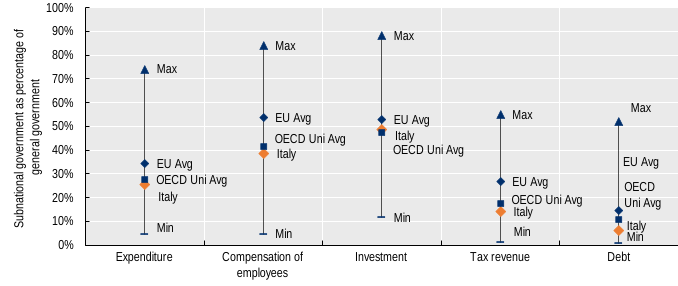
Italy’s level of fiscal decentralisation is broadly in line with that of other OECD countries. In 2022, regional and municipal governments accounted for 25.5% of total public expenditure, 38.7% of total public sector compensation and 48.7% of total public investment, closely aligning with the OECD unitary country averages of 27.4%, 41.4% and 47.6%, respectively (Figure 2.9). Meanwhile, Italian subnational governments collect a slightly lower share of total tax revenue (14.1%) compared to the OECD unitary country average (17.4%). Additionally, the share of subnational government debt in total public debt is lower in Italy (6.3%) than in OECD unitary countries on average (10.7% in 2022).
Key subnational government finance indicators for Italy, as % of general government (2022)
Source: (OECD, 2024[16])
Demographic challenges in Campania have been addressed through a multi-tiered and cross-sectoral approach
The impacts of demographic change extend across administrative boundaries and policy sectors, requiring coordinated action from multiple levels of government and a cross-sectoral approach. The national government has implemented reforms in family support to encourage childbearing and pension reforms to promote longer working lives in response to increased longevity. Meanwhile, regional governments have adopted a territorial approach, launching cross-sectoral initiatives to address severe depopulation in rural areas. They have also made significant efforts to adapt healthcare and transport systems to cope with population decline and ageing, while reforming education to prevent youth outmigration. Table 2.3 provides an overview of the key government policy documents related to demographic change, that will be described in further detail in the sections below.
Note: Non-exhaustive list of policy documents.
Source: Authors elaboration based on policy documents
National reforms for family support and pensions have sought to address demographic change
The national government has taken significant steps to reduce the costs of childbearing as part of its efforts to address persistently low fertility rates. A key milestone was the introduction of the General Family Allowance (Assegno Unico Universale) in 2022, which marked a shift from previous family policies that often blurred the lines between fertility support and income support by imposing income thresholds. The new allowance provides universal access to child benefits, ensuring that all families receive support regardless of income level (Madama and Mercuri, 2023[17]). This structural reform has been reinforced by additional measures introduced through annual budget laws, such as the 2024 Budget Law, which expanded social security contribution exemptions to employed mothers with two or more children (previously limited to those with three or more children), increased the wage replacement rate for the second month of parental leave, and raised the kindergarten allowance for lower-income households (Health Systems and Policy Monitor, 2024[18]).
The pension system has undergone a series of incremental adjustments to address old-age poverty and facilitate access to early retirement. The most notable structural reform in recent years was introduced in 2011 by Law 214/2011, commonly referred to as the “Fornero reform.” Implemented in the context of fiscal austerity following the Global Financial Crisis, the Fornero reform aimed to contain pension costs by raising the statutory retirement age and introducing automatic indexation to life expectancy. As a result, Italy’s retirement age is now among the highest in Europe, set at 67. Subsequent measures sought to ease some of the stricter provisions of the Fornero reform, focusing on reducing old-age poverty and providing more flexible pathways to early retirement. For instance, the Social Early Retirement Scheme (Anticipo Pensionistico Sociale - APE Sociale), introduced in 2017, allowed individuals in poor health or caring for a disabled relative to retire earlier with social assistance support. Additionally, early retirement options based on contribution years have been trialled, including the “Quota 100” scheme introduced in 2019, which allowed workers to retire when the sum of their age and years of paid social security contributions reached 100, irrespective of the statutory retirement age.
Regional government has implemented various territorial and sector specific policies to address demographic change
The regional government has implemented territorial initiatives focused on rural areas experiencing the most significant demographic decline. These efforts are complemented by targeted policies in sectors directly impacted by demographic change, such as health and education. Particular importance is the support provided through the ERDF and ESF+ (Box 2.4). Reference is made to the Rural Development Policy for the 2023–2027 programming period, under which Italy delegates to the Regions the planning and management of rural development interventions. These interventions are implemented through the Regional Complements for Rural Development (CSR) 2023–2027, which are the regional implementation documents of the national strategy. Among other measures, the CSRs include investments aimed at promoting the socio-economic development of rural areas and supporting diversification into non-agricultural activities, as outlined in the Rural Development Complement of the Campania Region 2023–2027, with a view to counteracting the depopulation of inland areas.
EU cohesion policy funds are a vital resource for Campania in tackling the complex challenges associated with demographic change. These funds are channelled through Regional Operational Programmes (ROPs) and are administered by managing authorities within the regional government.
The European Regional Development Fund (ERDF) is the primary source of regional development financing. For the 2021–27 programming period, Campania has been allocated approximately EUR 3.8 billion in ERDF funding from the EU, complemented by EUR 1.6 billion in national co-financing. The programme is structured around five strategic priorities: digitalisation and innovation, environmental sustainability, mobility infrastructure, social inclusion and integrated territorial development. Close to half of the total ERDF investments are directed towards promoting environmental sustainability.
In addition to the ERDF, the European Social Fund Plus (ESF+) represents another key source of support, with EUR 1 billion in EU funding and EUR 400 million in national co-financing allocated to policies promoting employment, education and training, social inclusion, youth employment, and innovative social actions during the 2021–27 programming period.
Campania also benefits from EU programmes managed at the national level. These include the National Recovery and Resilience Plan (PNRR), funded through the Recovery and Resilience Facility, as well as SNAI, which is supported in part by the European Agricultural Fund for Rural Development (EAFRD) and supported by national funds (CIPE Resolutions 43/2016, 80/2017, and 52/2018), as well as by ESI Funds allocated to the Region and by the National Program “Equità nella Salute 2021 – 2027". The management and co-ordination of these programmes involve multiple tiers of government. For example, in the case of SNAI, regional managing authorities are responsible for monitoring SNAI Framework Programme Agreements with national and local governments, helping to ensure strategic coherence and effective implementation across territories.
A cross-sectoral territorial approach has been taken to tackle depopulation in rural areas
Campania has utilised territorial planning to adopt a more place-based targeted approach to its rural areas, which face significant demographic challenges. From the 2008 Regional Territorial Plan to the 2022 policy framework Towards a Territorial Agenda for the Campania Region, the region has pursued strategies that recognise the socio-economic differences between urban and rural areas. Rural strategies have focused on countering population decline, addressing ageing demographics and preserving natural and cultural assets, while urban policies increasingly aim to reduce sprawl and increase affordable housing.
A key territorial investment programme has been SNAI. In the first wave of interventions, 93 municipalities in inland Campania facing severe demographic decline qualified for EUR 85 million of funding. These municipalities benefited from cross-sectoral investments aimed at enhancing innovation, promoting cultural and environmental heritage and strengthening local healthcare. Maintaining and optimising transport services has also been a priority, designating EUR 3.5 million of funding towards mobility infrastructure which include programmes to reassess routes and timetables in local transport services, ensuring they align with actual demand. Successfully implementing these initiatives will have a key role to supporting depopulating inner areas by overcoming potential delays arising from the complexity of the programme through a targeted administrative management approach (Campania Region[19]), and highlighting the need to strengthen administrative capacity.
Key sectoral initiatives in health and education also address demographic change
From a sectoral perspective, improving health services has been a key priority for Campania amid rising demand for elderly healthcare. As part of Mission 6 of Italy’s PNRR, the region has allocated over EUR 1 billion to strengthen its healthcare system. Within this framework, Campania’s new Territorial Health Plan aims to invest EUR 380 million in the construction of community homes and hospitals, enhancing access to healthcare for elderly citizens. In addition, the Region is managing the resources allocated under the National Programme “Health Equity” 2021–2027.
Campania has also invested in improving education and training, as well as in supporting employment and social inclusion. These investments may contribute to retaining and attracting young people. Regional Programmes funded by EU ESI Funds - such as the ERDF - have supported the renovation and expansion of schools and universities, while also enhancing technological infrastructure to create more attractive learning environments. In the 2021-27 programming period, ERDF programmes have allocated EUR 10 million for skills development, promoting smart specialisation, industrial transition, and entrepreneurship. Additionally, more than EUR 150 million has been directed towards investments in education and labour market integration, including upgrading school infrastructure, creating shared workspaces, and providing workshops for young entrepreneurs. However, effective implementation will be crucial, as the absorption of these funds currently lags behind that of European peers.
These issues were also addressed by the Campania SNAI 2014–2020, which allocated over EUR 7.5 million to interventions in the fields of healthcare and education, funded under the Stability Law, that is, through the national component of the SNAI financing system. Significant resources have also already been programmed under Campania ESF+ 2021–2027 to support employment, including youth and female employment (Box 2.5).
As of 30 June 2025, significant resources have been programmed under Campania ESF+ 2021–27 to support employment, including youth and female employment:
EUR 20 million - of which 10 million specifically allocated to women - has been earmarked for the provision of grants supporting self-employment and entrepreneurship initiatives for unemployed and inactive individuals.
EUR 50 million has been allocated to incentivise new hires of unemployed persons (including the long-term unemployed), inactive individuals, and young people aged 18 to 35, through de minimis employment incentives granted to economic operators based in the Campania Region.
Resources totalling EUR 32 million have been programmed to support the creation and recognition of corporate academies and sector-based academies, such as the Campania Industrial Academy (CAI), in production sectors identified as strategic for the regional economy. This is an innovative, multidisciplinary training initiative developed in collaboration with key industrial players from Campania’s strategic value chains.
An integrated intervention is also underway, co-financed with ERDF resources, providing financial aid to enterprises; under this framework, the ESF+ supports continuous training for employees of beneficiary companies receiving incentives for productive investment.
Further investments of EUR 30 million have been allocated to strengthen the dual education system, through support for Higher Technical Education and Training (IFTS) and Higher Technical Institutes (ITS) in Campania, in line with the skills needs of regional enterprises.
Moreover, EUR 105 million has been committed to expand vocational education and training (VET) pathways (IeFP).
In addition to the above, resources have also been allocated to support the right to education, currently amounting to approximately EUR 130 million, along with EUR 8.5 million dedicated to scholarships for attending international-level Regional Academies in the ICT and Digital sectors.
Source: Campania Regional government.
References
[13] Becker, S., A. Ichino and G. Peri (2003), “How Large is the Brain Drain from Italy?”, Giornale degli Economisti e Annali di Economia, Vol. Volume 63/1, https://www.econstor.eu/handle/10419/76278 (accessed on 5 March 2025).
[8] Bianchino, A. et al. (2024), “Tourism as a means to counteract inner areas (ias) depopulation: the case study of Campania region”, Rivista Italiana di Economia Demografia e Statistica, pp. 247-258, https://www.rieds-journal.org/rieds/article/view/270 (accessed on 9 January 2025).
[10] Bugamelli, M. et al. (2018), Productivity growth in Italy: a tale of a slow-motion change, Banca d’Italia.
[19] Campania Region (n.d.), Strategia Nazionale delle Aree Interne in Campania - Stato di attuazione al 31 dicembre 2022.
[6] European Commission (2025), Harnessing Talent Platform, https://ec.europa.eu/regional_policy/policy/communities-and-networks/harnessing-talent-platform_en (accessed on April 2025).
[5] European Commission (2025), Talent Booster Mechanism, https://ec.europa.eu/regional_policy/policy/communities-and-networks/harnessing-talent-platform/talent-booster-mechanism_en (accessed on April 2025).
[3] European Commission (2024), 2024 European Semester: Country Report Italy, https://economy-finance.ec.europa.eu/document/download/b276f45e-e9f4-4c8a-920c-c275e8133402_en?filename=SWD_2024_612_1_EN_Italy.pdf (accessed on 12 December 2024).
[4] European Commission (2023), Harnessing talent in Europe’s regions, https://ec.europa.eu/regional_policy/information-sources/publications/communications/2023/harnessing-talent-in-europe-s-regions_en (accessed on April 2025).
[18] Health Systems and Policy Monitor (2024), Recent Italian policies target the issue of low birth rates, https://eurohealthobservatory.who.int/monitors/health-systems-monitor/updates/hspm/italy-2023/recent-italian-policies-target-the-issue-of-low-birth-rates.
[15] Istat (n.d.), Number and type of institutional units, https://esploradati.istat.it/databrowser/#/en/dw/categories/IT1,Z0910PUB,1.0/DCAR_UI/IT1,123_713_DF_DCAR_UI_1,1.0.
[17] Madama, I. and E. Mercuri (2023), “All in, against all odds. Path shift in family policy via cross‐party agreement: the case of the Single Universal Allowance reform in Italy”, Social Policy & Administration, Vol. 58/3, pp. 474-490, https://doi.org/10.1111/spol.12981.
[2] OECD (2024), OECD Economic Surveys: Italy 2024, OECD Publishing, Paris, https://doi.org/10.1787/78add673-en.
[16] OECD (2024), OECD Subnational Government Structure and Finance Database.
[9] OECD (2023), OECD SME and Entrepreneurship Outlook 2023, OECD Publishing, Paris, https://doi.org/10.1787/342b8564-en.
[7] OECD (2023), “Rethinking regional attractiveness in the Italian region of Campania”, OECD Regional Development Papers, No. 109, OECD Publishing, Paris, https://doi.org/10.1787/73e7b099-en.
[1] OECD (2022), Shrinking Smartly in Estonia: Preparing Regions for Demographic Change, OECD Rural Studies, OECD Publishing, Paris, https://doi.org/10.1787/77cfe25e-en.
[14] OECD/UCLG (2022), 2022 Country Profiles of the World Observatory on Subnational Government Finance and Investment, https://www.sng-wofi.org/country-profiles/italy.html.
[11] SVIMEZ (2024), Rapporto SVIMEZ.
[12] SVIMEZ (2022), Rapporto SVIMEZ.
Projected old-age dependency ratio, by province, 2020-2100

Source: OECD calculations based on Eurostat population projections (https://doi.org/10.2908/PROJ_19RP3).
← 1. The population information was extracted from the OECD Population Regional Database on 19/06/2024. The information is presented for the last available year (2023).
← 2. The GDP per capita data was extracted from the OECD Economy Regional Database on 01/04/2025. It is computed as USD per person, PPP converted, constant prices (2015) and presented for the last available year for the region (2022) and provinces (2021).
← 3. ISTAT, Number of local units of active enterprises, by size class of persons employed, 2022. http://dati.istat.it/OECDStat_Metadata/ShowMetadata.ashx?Dataset=DICA_ASIAULP_TERRIFDATA&ShowOnWeb=true&Lang=en
← 4. ISTAT, Number of local units of active enterprises, by size class of persons employed, 2022. http://dati.istat.it/OECDStat_Metadata/ShowMetadata.ashx?Dataset=DICA_ASIAULP_TERRIFDATA&ShowOnWeb=true&Lang=en
← 5. World Business Enterprise Survey Data, 2018-21.
← 6. ISTAT, Rate of undeclared work (https://esploradati.istat.it/databrowser/#/en/dw/categories/IT1,DATAWAREHOUSE,1.0/UP_ACC_TERRIT/UP_DCCN_OCCTSEC2010/IT1,93_379_DF_DCCN_OCCTSEC2010_3,1.0).
← 7. OECD Regional Jobs Database, based on a labour force survey using ILO guidelines and collected from EU-LFS for EU countries and via delegates of the OECD Working Party on Territorial Indicators (WPTI), as well as from national statistical offices' websites.
← 9. OECD elaboration based on EU-LFS and Lightcast.
← 10. Eurostat data demo_r_d2jan and demo_r_magec. The net migration rate is computed as the difference between (i) the population at the end of the year and (ii) the sum of the population at the beginning of the year and the natural change, divided by the population at the beginning of the year.
← 11. See https://www.regione.emilia-romagna.it/talenti/english for details (accessed 10 July 2025).
← 12. OECD calculations based on ISTAT population projections referring to the median scenario.
← 13. ISTAT population projections.