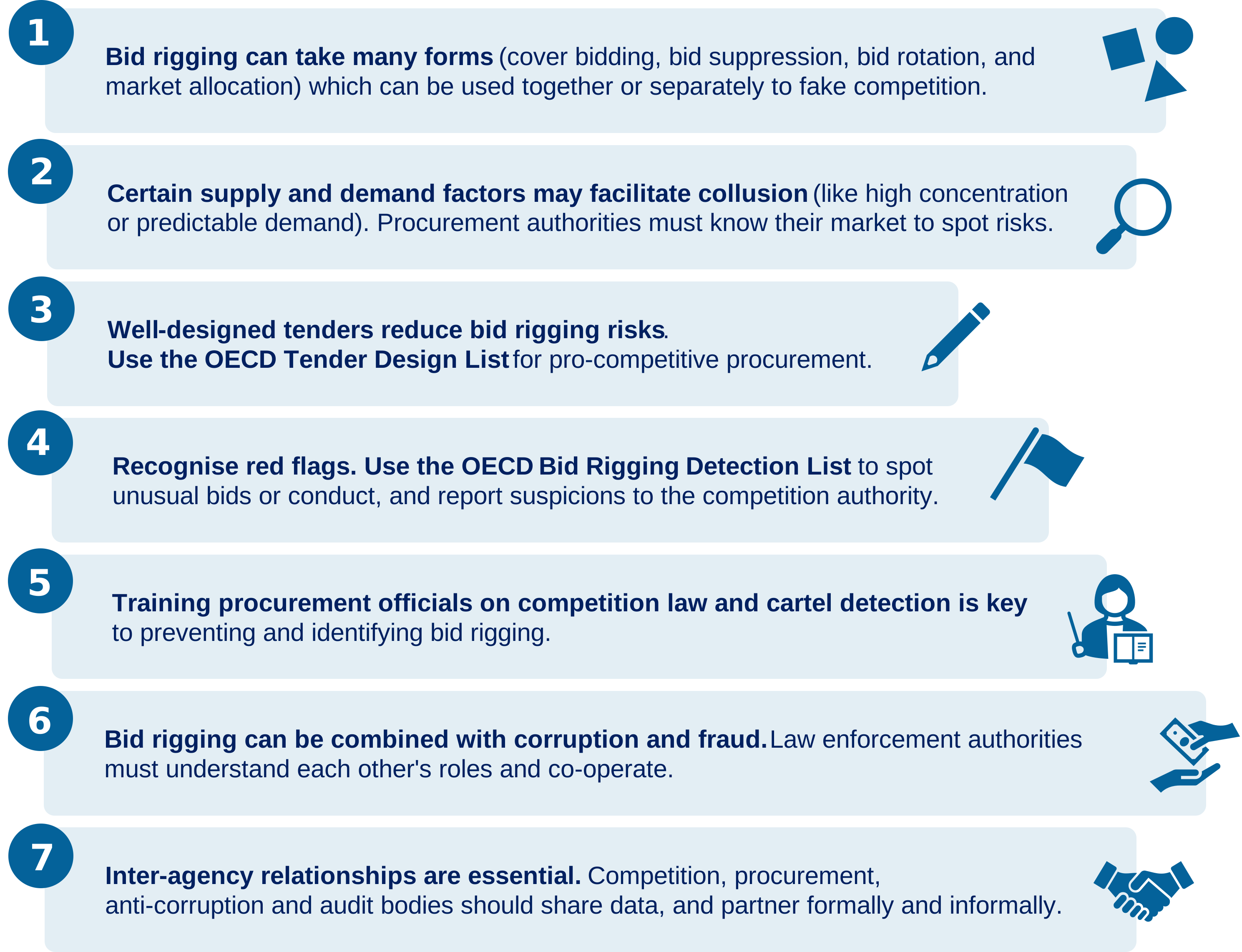
Bid rigging occurs when companies, that would otherwise be expected to compete, conspire to raise prices or lower the quality of their bids. The OECD Recommendation on Fighting Bid Rigging in Public Procurement [OECD-LEGAL-0396] (the “Recommendation”) establishes a series of principles to help OECD Members and non-Members having adhered to the Recommendation (the “Adherents”) prevent and detect bid rigging in public procurement. The Recommendation aims to make public procurement more competitive and strengthen the enforcement of competition law.
The Recommendation recognises that bid rigging is “among the most egregious violations of competition law that injures the public purchaser by raising prices, reducing quality, establishing output restrictions or quotas, or sharing or dividing markets, thus making goods and services unavailable or unnecessarily expensive for public purchasers, to the detriment of final users of public goods and services, and taxpayers”. It recommends that Adherents assess their procurement laws and practices to ensure that these do not inadvertently facilitate collusion. It also recommends taking action to make collusive schemes difficult to establish and maintain, as well as raise awareness of signs and patterns that may indicate collusion (red flags), so that suspicious activities are identified and investigated.
The Guidelines support the implementation of the Recommendation. They provide detailed guidance for public authorities, and in particular competition authorities and procurement officials, on how to prevent and detect bid rigging. Though addressed to public authorities, the explanation of the risks of bid rigging and the benefits of following the Guidelines are relevant for both public and private procurement entities.