This chapter examines the implementation of inclusive education and equity policies and practices in Catalonia (Spain). It reviews the policy and institutional context, highlighting sustained commitments to equity, investments in support resources and staff, and efforts to reduce school segregation and promote more balanced enrolment. The chapter analyses how inclusion is experienced in practice across the education system, within schools and across sectors. It identifies major strengths and persistent challenges, and concludes with policy recommendations.
Improving Learning Outcomes in Catalonia, Spain

Abstract
Equity and inclusion
The Autonomous Community of Catalonia in Spain has made substantial progress in strengthening equity and inclusion across its education system. A stable and comprehensive policy framework, sustained commitment to inclusive education and an established strategy to reduce school segregation provide a strong foundation for continued improvement. Increased investment in support resources and staffing, along with growing engagement with families and the community, has reinforced equity and inclusion as structural priorities across the Education Service.
Yet, the key challenge facing Catalonia lies less in the design of inclusive education policies than in their consistent implementation across schools, reflecting variations in capacity, resources and support systems. Evidence gathered during the review shows that inclusive education is realised unevenly across the system, with differences in how policies translate into classroom practice and student support.
Capacity constraints may affect the consistent use of inclusive pedagogies and support measures in some contexts, while persistent segregation trends continue to shape educational experiences and outcomes despite the progress achieved in recent years. Schools and stakeholders also mentioned challenges related to emotional and psychological support, diagnostic processes, co-ordination across services and the uneven distribution of resources and student needs across the publicly funded network. Addressing these challenges will require strengthening implementation capacity at school level and improving coherence across the support system, including better alignment between policies, resources and services.
This chapter identifies five recommendations to strengthen equity and inclusion:
Build a coherent support system to ensure effective implementation of inclusive education, by strengthening schools’ capacity to address emotional and psychological needs, reinforcing inspection guidance, and strengthening the consistency, timeliness and responsiveness of identification and diagnostic processes, so that support is aligned, early and effective.
Strengthen the implementation and monitoring of measures to tackle school segregation by improving the allocation of places across sectors and student groups, while continuing to monitor the effects of reforms and calibrating carefully future adjustments in light of emerging evidence and local context.
Reinforce capacity building to embed inclusion in everyday teaching, particularly in secondary education. This could include expanding practice-oriented professional learning, strengthening collaborative support within schools and enhancing the effective implementation of inclusive pedagogies in classroom practice.
Align resourcing and utilisation of support services to better respond to student needs, by connecting funding and staffing more closely to the concentration and complexity of needs in schools, and strengthening the co-ordination and effective use of support services.
Consolidate a shared vision of inclusion through collaboration and coherence, by strengthening collaboration with families and clarifying the role of special schools and special education centres providing services and resources (CEEPSIR).
While all five areas are important, particular attention may be needed to strengthening implementation capacity at school level and ensuring greater coherence across support services.
International evidence consistently shows that education systems combining high quality with high equity tend to perform more strongly overall, while also demonstrating greater social cohesion and resilience. In Catalonia, these issues have become increasingly important in recent years as schools respond to growing student diversity, rising socio-economic pressures and evolving expectations regarding inclusive education.
This chapter forms part of the broader collaboration between Catalonia and the OECD to support measurable improvements in educational outcomes and strengthen system capacity over the coming four years. Within this context, equity and inclusion are understood not only as normative objectives, but also as essential conditions for improving learning outcomes, reducing disparities and strengthening trust in the education system. The chapter therefore analyses both the policy frameworks underpinning inclusion and the extent to which these frameworks are experienced consistently across schools and territories.
Catalonia has developed a strong legal and policy foundation for inclusive education over the past decade. This includes the progressive implementation of Decree 150/2017, sustained efforts to reduce school segregation, the expansion of support services and increasing investment in staffing and educational resources. Yet schools are operating in a context of growing complexity. Student populations have become increasingly diverse in socio-economic, linguistic and educational terms, while schools are also facing rising expectations regarding emotional well-being, personalised support and inclusive pedagogical practice.
These developments have important implications for implementation delivery across the education system. While the policy direction towards inclusion is broadly established and widely supported, translating this vision into consistent classroom practice remains challenging. Schools vary in their ability to mobilise support services, implement inclusive pedagogies and respond effectively to increasingly complex student needs. Persistent segregation patterns and uneven access to support also continue to shape educational experiences and outcomes across the system.
This report does not treat equity and inclusion as the sole explanation for recent declines in learning outcomes. Rather, they are considered one important dimension of the system’s capacity to improve learning in a context of growing diversity, uneven support needs and persistent segregation. Strengthening inclusion can therefore contribute both to reducing disparities and to improving the quality and consistency of learning environments across schools.
Against this background, the chapter examines how equity and inclusion are currently organised and experienced across the Catalan education system. It first outlines key contextual features shaping inclusion policies and practices, including changes in student diversity, the evolution of specific educational support needs and the organisation of the tiered support model. It then analyses the main strengths and challenges associated with implementation before presenting recommendations aimed at strengthening coherence, capacity and equity across the education system.
This section outlines the main contextual features shaping equity and inclusion in Catalonia’s education system. It focusses in particular on changes in student diversity, the evolution of specific educational support needs and the institutional arrangements developed to support inclusive education across schools and territories. These dynamics shape demand for support and the system’s capacity to implement inclusive education consistently across the Education Service.
In Catalonia, student diversity has increased significantly in recent years. This is reflected in the growing number of students identified as having special educational support needs, particularly those linked to socio-economic disadvantage. This evolving context has reinforced the importance of equity and inclusion policies and practices, including tiered support frameworks, specialised services and flexible learning pathways designed to ensure that all students can participate and succeed in education.
Diversity patterns shaping equity and inclusion in education
This section examines the identification and evolution of specific educational support needs, changes in the types of needs identified among students, and the role of immigrant background in shaping student demographics.
The identification and evolution of specific educational support needs
Catalonia’s education framework emphasises the relationship between students’ needs and the educational context in which learning takes place. Students with specific educational support needs (necessitats específiques de suport educatiu) are therefore assessed in relation to their functioning within the educational environment, regardless of their personal or social circumstances, with the aim of providing the support necessary to promote learning under conditions of equity (XTEC, n.d.[1]). This approach takes into account students’ areas of strength, previously acquired skills and the most effective learning modalities, curricular challenges, and the personal or social conditions that may interfere with the student’s ability to learn (XTEC, n.d.[1]). Within this broader framework, students with special education needs (necessitat educativa especial) constitute a specific subgroup and are understood as situations in which there is a substantial mismatch between a student’s capacities and the demands of the educational context, affecting development and learning (XTEC, n.d.[1]).
Under Decree 150/2017, several groups of students are considered to have specific educational support needs (SESN) (DOGC, 2017[2]):
Students with special education needs associated with physical, intellectual or sensory disabilities, autism spectrum disorders, severe behavioural disorders, mental disorders, and serious and rare degenerative diseases.
Students with learning or communication disorders, the latter understood as disorders that affect the acquisition and functional use of language.
Students with education needs derived from particularly disadvantaged socio-economic and socio-cultural situations.
Students of foreign origin with educational needs arising from late incorporation into the educational system, lack of mastery of the language of instruction and inadequate prior schooling.
Students at risk of early leaving from education and training.
Students with high abilities derived from intellectual giftedness, simple and complex talents and precocity.
For monitoring and admission purposes, the Catalan system further groups students with SESN into two categories (XTEC, n.d.[1]; DOGC, 2017[2]):
SESN-A (necessitats educatives especiales): Students with SESN who are affected by a physical, intellectual or sensory disability, by autism spectrum disorders, severe behavioural disorders, mental health disorders or serious and rare degenerative diseases, if the disability, disorder or disease compromises their learning process or hinders their academic success.
SESN-B (necessitats educatives especifiques derivades de desavantatge educatiu): Students with needs derived from educational disadvantage, including socio-economic or socio-cultural situations that compromise their learning process or hinder their school success, as well as late incorporation into the education system.
The Catalan framework also recognises students with high abilities as requiring specific educational support, although their administrative treatment differs from that of students with disabilities or severe developmental disorders.
As noted in Chapter 2, student diversity has grown, with more learners requiring support, particularly support related to socio-economic disadvantage. In primary and compulsory secondary education, the number of students with SESN-A in mainstream schools increased from 22 169 in 2017/18 to 36 540, while the number with SESN-B rose from 47 581 to 247 673. As a share of total enrolment, the proportion of students with SESN-B increased by 421% (Figure 3.1). This trend appears to be driven primarily by the increased detection of needs and the emergence of new recognition categories, rather than by demographic growth, as overall enrolment declined slightly during this period.
Number of students with specific educational support needs between 2017/18 and 2025/26

Note: Students in mainstream primary and compulsory secondary education in private and public schools.
Source: Department of Education and Vocational Training (Unpublished[3]).
While the overall number of students identified with SESN has increased, it is also important to examine how the composition of these needs has evolved over time. Looking within SESN categories provides further insight into the specific student profiles contributing to this growth and the types of support increasingly required in schools.
Within the SESN-A category, the largest increases are observed among students with autism spectrum disorders. Between 2017/18 and 2024/25, their numbers increased by 155% (Table 3.1). This is also the most prevalent type of SESN among students. Other common SESN are intellectual disabilities and developmental delays without a clear aetiology. The number of students identified with intellectual disabilities and developmental delays increased by 18% and 2%, respectively, over the same period.
Number of students by the type of special educational support need
Note: Students in mainstream primary and compulsory secondary education in private and public schools.
Source: Department of Education and Vocational Training (Unpublished[3]), Internal analysis note prepared for the OECD Review Team.
Stakeholders also expressed growing concerns related to student well-being, emotional distress and students’ sense of belonging within schools. International evidence such as PISA 2022 and the Health Behaviour in School-aged Children (HBSC) study suggests that a substantial share of students report elevated levels of stress and lower levels of school belonging. These challenges may have important implications not only for learning outcomes, but also for student engagement, school climate and risks of educational disengagement. In response, Catalonia has expanded initiatives related to emotional well-being, co-existence and psychosocial support, including targeted crisis-response and support services for schools.
The evolving student demographics
Compared with other Spanish autonomous communities, Catalonia combines its position as Spain’s second-largest economy with a comparatively high and rapidly growing share of students with an immigrant background.
The share of students with an immigrant background has increased notably in Catalonia (Figure 3.2). In 2022, 24% of 15-year-old students had an immigrant background, compared to 15% in Spain (OECD, 2023[4]). This represents a marked increase from 2018 (when the shares stood at 14% in Catalonia and 12% in Spain) (OECD, 2018[5]).
Percentage of 15-year-old students with an immigrant background in PISA 2015, 2018 and 2022
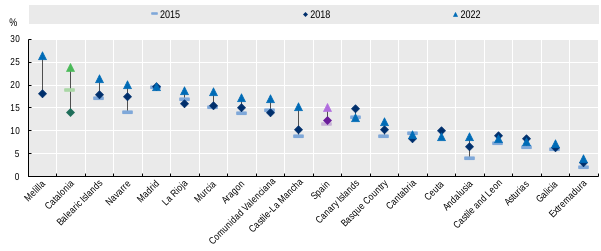
Note: Results for regions are approximations as they were not adjudicated (regions did not follow the same technical standards as at the national level). In Catalonia, the difference between 2022 and 2015 is not statistically significant, but the difference between 2022 and 2018 is statistically significant. In Spain, the difference between 2022 and 2015 is statistically significant, and the difference between 2022 and 2018 is also statistically significant. Ranked in descending order by the share in 2022.
Source: OECD (2015[6]), PISA 2015 (dataset), https://www.oecd.org/en/data/datasets/pisa-2015-database.html (accessed on 7 November 2025); OECD (2018[5]), PISA 2018 (dataset), https://www.oecd.org/en/data/datasets/pisa-2018-database.html (accessed on 7 November 2025); and OECD (2022[7]), PISA 2022 (dataset), https://www.oecd.org/en/data/datasets/pisa-2022-database.html (accessed on 7 November 2025).
Beyond overall shares, the characteristics of the immigrant student population are also relevant for understanding system-level challenges. In Catalonia, immigrant students tend to arrive relatively early, although a significant proportion also arrive later in their schooling. In PISA 2022, 41% of first-generation students arrived at or before the age of five, while 23% arrived at the age of 12 or later (panel A in Figure 3.3). In Spain, the corresponding shares were 34% and 31%, respectively, although the differences between Catalonia and Spain are not statistically significant.
Furthermore, immigrant students in Catalonia represent a highly heterogeneous population in terms of linguistic, educational and socio-economic profiles (see Chapter 2). Students have a wide range of geographic and linguistic backgrounds, with differing degrees of proximity to Catalan and Spanish, diverse prior schooling experiences and varying levels of socio-economic disadvantage. These differences are likely to shape students’ support needs in distinct ways.
As discussed in Chapter 2, Catalonia’s education system operates in a bilingual context in which Catalan is normally used as the main language of instruction and learning, while the curriculum must ensure that all students complete compulsory education with full proficiency in both Catalan and Spanish, as well as in Aranese in the Aran Valley. Within this context, multilingualism is not limited to students with an immigrant background. Non-immigrant students, including Spanish-speaking students, also report speaking at home a language that differs from the main language of instruction (panel B in Figure 3.3) (OECD, 2023[4]). This illustrates that linguistic diversity in Catalonia extends beyond students with an immigrant background. At the same time, available analyses based on PISA data suggest that observed differences in outcomes between Catalan-speaking and Spanish-speaking students are better explained by socio-economic and educational factors than by language use itself (Ferrer-Esteban and Albaigés, 2024[8]) (See also Chapter 2).
A large share of immigrant students in PISA 2022 were also socio-economically disadvantaged (panel C in Figure 3.3) (see also Chapter 2). In Catalonia, 49% of first-generation and 55% of second-generation students were disadvantaged, compared to 47% and 52% respectively in Spain (OECD, 2023[4]). By contrast, only 13% of non-immigrant students in Catalonia were disadvantaged (20% in Spain) (OECD, 2023[4]). These gaps show the importance of socio-economic conditions and prior educational experiences in shaping students’ learning needs and demand for support in Catalonia.
Share of 15-year-olds participating in PISA 2022, based on students’ self-reports

Note: Results for regions are approximations as they were not adjudicated (regions did not follow the same technical standards as at the national level). First-generation immigrants are students born outside the country of assessment and whose parents were also born outside the country of assessment. Second-generation students are students born in the country of assessment but whose parent(s) were born outside the country of assessment. Non-immigrant students are those with at least one parent born in the country of assessment. Ranked in descending order by the share of non-immigrant students.
Source: OECD (2022[7]), PISA 2022 (dataset), https://www.oecd.org/en/data/datasets/pisa-2022-database.html (accessed on 7 November 2025).
As discussed in Chapter 2, the challenges associated with equity and inclusion in Catalonia are shaped not only by the size of the immigrant student population but also by its characteristics and by the broader diversity of the student population. In particular, the interaction between socio-economic disadvantage, prior educational experiences and linguistic diversity is likely to increase the demand for targeted support and place additional demands on schools’ capacity to respond effectively.
A tiered system of support and specialised programmes structure the inclusive education model
Schools in Catalonia are expected to assess students’ SESN and adjust educational provision accordingly. The system is designed to operate progressively, starting with universal provision, intensifying support where needed, and reducing or withdrawing support as students make progress.
The assessment of needs and the organisation of corresponding interventions are structured through a three-tiered system of measures and supports (Response to Intervention, RTI) (Figure 3.4). Universal measures are provided at Tier 1, targeted measures at Tier 2 for students requiring additional or temporary assistance, and intensive measures at Tier 3 when needs are not met through the other tiers. This framework is complemented by a territorial network of educational services that brings together multidisciplinary teams from psycho-pedagogical advice and guidance teams (EAP), language and social cohesion advisory services (ELIC), pedagogical resource centres (CRP), and specialised resource centres to support schools and families (XTEC, n.d.[9]). It supports the design, implementation and co-ordination of educational responses across the system.

Source: Department of Education (2023[10]), Mesures i suports universals en el centre educatiu [Universal measures and supports in the educational centre], https://educacio.gencat.cat/ca/departament/publicacions/colleccions/inclusio/mesures-suports-universals-centre-educatiu/ (accessed on 2 February 2026).
Across the three tiers, the system is intended to be iterative and responsive (Department of Education and Vocational Training, 2023[10]). Schools are expected to monitor student progress and adjust support accordingly, including reducing intensity when appropriate. Universal provision is designed to form the foundation of the model, while targeted supports are expected to be time-bound and evidence-based, and intensive supports to remain specialised and closely linked to classroom practices (Department of Education and Vocational Training, 2023[10]).
While the tiered system primarily applies to primary and secondary education (ages 6 to 16), similar principles extend to post-compulsory education. Individualised education plans can be developed across all stages of education where necessary. In upper secondary general education and vocational pathways, the regulatory framework provides for educational support measures and adaptations to help students with specific educational support needs (SESN) continue their studies (DOGC, 2017[2]). Across vocational and other post-compulsory programmes, support may include curricular modifications and other adjustments to provision where appropriate. In practice, however, the nature and extent of these measures vary across educational programmes and contexts.
Tier 1: Universal measures and supports
Universal measures aim to create flexible learning environments that reduce barriers and support all students (Department of Education and Vocational Training, 2023[10]). These include whole-school approaches – such as flexible organisation, collaborative teaching and inclusive planning – as well as classroom practices like co-operative learning, multilevel instruction, peer tutoring and the use of technology (Department of Education and Vocational Training, 2023[10]).
They are complemented by broader programmes, including emotional and values education, community service and personalised tutoring (Department of Education and Vocational Training, 2023[10]). Responsibility for implementing these measures is shared across school staff, reflecting the principle that inclusion is a whole-school endeavour (Department of Education and Vocational Training, 2023[10]).
Tier 2: Additional measures and supports
Additional supports are designed as short-cycle, targeted interventions for students whose needs are not met through universal provision (Department of Education and Vocational Training, 2023[10]). Identification typically arises from ongoing classroom observation or assessment, after which a targeted plan is developed and co-ordinated within the school, often through the Inclusive Education Committee (Department of Education and Vocational Training, 2023[10]).
These plans include defined objectives, monitoring indicators and, where appropriate, an explicit pathway for reducing support once progress is achieved (Department of Education and Vocational Training, 2023[10]). While classroom teachers remain responsible for implementation, specialist staff contribute through co-planning, assessment, and guidance on pedagogical strategies. The emphasis remains on supporting students within mainstream settings while addressing specific barriers to learning.
In response to the growing linguistic and cultural diversity of the student population, Catalonia has progressively expanded reception and language support measures for newly arrived students. Reception classrooms for newly arrived students provide organisational and methodological support when students enter the mainstream education system. They aim to make students feel emotionally welcomed, cared for and valued, while giving them basic linguistic and learning tools – especially intensive Catalan – to begin learning successfully. The mainstream classroom remains the reference setting and students are progressively integrated into it. The Department is funding more than 1 600 of these classrooms, with investments of EUR 86 million (Government of Catalonia, 2026[11]).
Additional measures and supports include targeted personalised support delivered individually or in small groups, within or alongside regular classroom instruction, or through other adapted forms of provision depending on students’ needs. They also include curriculum diversification, in-class linguistic and social support, and other measures listedin Annex 3.A.
Tier 3: Intensive measures and supports
Intensive supports are provided for students whose needs cannot be addressed through universal and additional measures (Department of Education and Vocational Training, 2023[10]). Access is based on an EAP report that includes a psycho-pedagogical assessment, educational and contextual recommendations. The assessment is developed in collaboration with teachers, families and other specialists.
Even at this level, the system aims to maximise students’ participation in mainstream settings and maintain continuity with other intensive levels of support (Department of Education and Vocational Training, 2023[10]). Intensive interventions are guided by an individual education plan specifying objectives, responsibilities, methodological adaptations and monitoring processes.
These supports include inclusive schooling intensive supports (SIEI and SIEI Plus), support from special education centres providing services and resources (CEEPSIR), comprehensive support classrooms (AIS), and the support of specific educational resource centres, specialising in visual disabilities, hearing disabilities, behavioural disorders, mental health and autism (CREDA, CREDV, CRETDIC), among others (Annex 3.A).
Educational services
Catalonia relies on a broad network of area-based educational services, which are intended to support the co-ordinated and cohesive functioning of the inclusive education support network by generating synergies among schools, facilitating the sharing of training, projects and activities, supporting collaboration with health and social services across the territory, and contributing to the improvement of inclusive educational provision (DOGC, 2017[2]). These services operate through different functions and levels of intervention. Some are more directly linked to inclusive education processes through assessment, guidance, specialised intervention and support for schools responding to students’ SESN, while others provide broader pedagogical, curricular or methodological support across the education system.
Education services that play a stronger role in assessment, guidance and co-ordination include the psycho-pedagogical advice and guidance teams (equips d’assessorament i orientació psicopedagògic, EAP), which support schools in identifying and responding to students’ needs (XTEC, 2025[12]). While formal diagnosis falls within the competence of health services, EAPs recognise contextual support needs detected in schools. They conduct assessments, issue schooling reports, facilitate teacher collaboration and the dissemination of inclusive practices, and provide guidance to students and families. EAPs also play a key role in co-ordinating interventions, supporting transitions between educational stages, and liaising with specialised educational, health and social services. Their multidisciplinary teams include psycho-pedagogues, social workers and other specialists.
Language and social cohesion teams (equip de llengua, interculturalitat i cohesió social, ELIC) support schools in addressing linguistic diversity, intercultural education and social cohesion (XTEC, 2020[13]). They advise school leaders and teachers on language use, including the development of multilingual language projects, reception plans and co-existence plans. They also support the organisation of reception classrooms and provide guidance on inclusive pedagogical approaches, including the integration of language learning across the curriculum. In addition, they contribute to staff training, family engagement and collaboration with community actors (XTEC, 2020[13]).
Pedagogical resource centres (centres de recursos pedagògics, CRP) support schools in their processes of improvement and transformation (XTEC, 2025[14]). They provide on-site advisory support, contribute to teacher training and professional learning networks, and support initiatives deployed by the Department for the digitalisation of educational centres (XTEC, 2025[14]). The management of the CRP should ensure that the priorities and needs identified by schools and territorial services are met.
Other educational services provide more specialised or direct support to students and families, linked to inclusive schooling. These include the specialised educational resource centres for hearing impairments (centres de recursos educatius per a alumnes amb discapacitat auditiva, CREDA), visual impairments (centre de recursos educatius per a deficients visuals, CREDV), and developmental and behavioural disorders (centre de recursos educatius per a trastorns del desenvolupament i la conducta, CRETDIC). Their teams, composed primarily of specialised teachers and educational professionals, operate territorially. Their aim is to help teachers respond to students’ specific needs. They contribute to monitoring students’ progress over time and to planning appropriate responses in collaboration with schools.
Educational services that provide universal attention and are mainly aimed at curricular support include Learning Camps (els camps d'aprenentatge, CdA) and Centres of Specific Pedagogical Resources for Support of Innovation and Educational Research (centre de suport a la innovació i recerca educativa, CESIRE). They provide pedagogical tools and resources to teachers to support methodological improvement (XTEC, 2021[15]). Focussing on curriculum, Learning Camps (CdA) offer specific pedagogical resources and promote students' competence-based learning through didactic activities in natural, social and cultural environments. CESIRE contribute to pedagogical innovation based on research, with the aim of strengthening students’ key competences and supporting their personal and social development (XTEC, 2021[15]).
Although this report focusses primarily on compulsory education, inclusive education policies extend to post-compulsory pathways. Specific Training Pathways (Itineraris Formatius Específics) offer post-compulsory programmes for students aged 16 and over with mild or moderate intellectual disabilities who have not graduated from compulsory education. Catalonia also offers flexible routes and second-chance programmes to support students at risk of disengagement. Recent expansion of vocational education and training (VET), including basic and intermediate VET programmes, Training and Integration Programmes (PFI) and other flexible routes, reflects broader efforts to reduce early school leaving and strengthen continuity across educational trajectories. These developments are connected to broader efforts to reduce early school leaving and strengthen continuity across educational trajectories (Department of Education and Vocational Training, n.d.[16]). Shared Schooling Units (Unitats d’Escolarització Compartida) also provide alternative/shared provision for students at risk of disengagement or exclusion while remaining enrolled in their reference school. The Work Transition Plan (Plan de Transició al Treball) similarly supports young people in re-engaging with education and training (Directorate-General for Vocational Training, n.d.[17]). Second Chance Schools offer programmes for young people disengaged from mainstream education and training. Basic Vocational Education and Training (Ciclos Formativos de Grado Básico) offer alternative pathways for 15-year-old students for whom compulsory secondary education may not constitute a suitable route. These programmes combine the development of transversal skills with the acquisition of initial vocational competences. Stakeholders highlighted that strengthening continuity between compulsory and post-compulsory pathways may be particularly important for students facing socio-economic disadvantage, weak academic performance or risks of disengagement.
Catalonia’s approach to equity and inclusion benefits from several reinforcing strengths in policy design, system direction and implementation support.
Over time, the region has developed a relatively coherent framework that combines measures to reduce segregation, a sustained legal and policy commitment to inclusion, growing investments in support resources and staffing, and increasing attention to family engagement. These elements suggest that equity and inclusion are embedded in the organisation of the education system, rather than treated as isolated initiatives. While implementation remains uneven and significant challenges persist, the following strengths provide an important foundation for further progress towards a more equitable and inclusive system.
At the time of writing, implementation of the March 2026 agreement and additional commitments between the Department of Education and Vocational Training and trade unions constituted an important contextual development for equity and inclusion policies (see Chapter 2) (Government of Catalonia, 2026[18]; Government of Catalonia, 2026[19]).
The agreement includes a multi-year package of measures supported by increased financial investment, including reductions in student-teacher ratios, planned expansion of teaching and support staff, reinforcement of multidisciplinary services and measures aimed at strengthening delivery within schools (Government of Catalonia, 2026[18]; Government of Catalonia, 2026[19]). These measures may create favourable conditions for advancing inclusion and equity objectives if implementation is sustained and effectively aligned with local needs.
Measures to reduce segregation appear to be contributing to more balanced enrolment
Catalonia’s Pact Against School Segregation has taken steps to establish a shared, system-wide direction for action, endorsed by education authorities, municipalities, representatives of publicly funded private (PP) schools, unions and family groups (Catalan Ombudsman, 2019[20]).
The Pact introduced a package of fair admissions and planning measures, including protocols for reserving places for students with SESN-B across publicly funded schools, strengthened zoning and adscription mechanisms, increased transparency, and improved management of late arrivals (Catalan Ombudsman, 2019[20]). It also commits to advancing gratuity by regulating the fee regime in publicly-subsidised private schools and improving financing so that fees do not act as a barrier (Catalan Ombudsman, 2019[20]). Stakeholders in Catalonia generally appear to value the Pact, which has contributed to more balanced enrolment patterns over time. These measures have also begun to address historical patterns in which more advantaged students were concentrated in neighbourhood schools and in parts of the publicly-subsidised private sector.
Regulatory reform also appears to have reinforced these commitments. Decree 11/2021 on the planning of provision and school admissions seeks to strengthen tools to ensure a more balanced distribution of students with SESN-B (DOGC, 2021[21]). It permits reserved places for these students, keeps them available until the start of the school year to accommodate late arrivals, and prioritises balanced allocation when assigning places (Annex 3.B). The Department supports implementation through a monitoring commission and a follow-up unit; annual evaluation of segregation levels and early identification of SESN; operational guidance for local planning and admissions bodies; targeted funding for schools with socio-economically disadvantaged students (motxilles escolars); and a data-sharing framework enabling municipalities to apply the decree effectively (Department of Education and Vocational Training, 2021[22]).
Measured impacts point in the right direction. Dissimilarity indices – indicating the share of students who would need to move schools to achieve an even distribution – have declined since 2019/20 for students from disadvantaged backgrounds (SESN‑B), suggesting gradual progress towards more balanced enrolment (Catalan Ombudsman, 2025[23]).
Progress also suggests a more equitable approach in the publicly-subsidised private sector, complemented by targeted financial support. To lower barriers, fees are formally not allowed in publicly-subsidised private schools, and low-income families can receive annual subsidies through their schools of EUR 385 (public schools) and EUR 1 182 (publicly-subsidised private schools) per student to cover ancillary costs (motxilles escolars). Introduced in 2022/23, the funding guarantees gratuity for core schooling costs at key stages (Department of Education and Vocational Training, 2025[24]). It covers materials, books, digital licences, uniforms and outings, with broader coverage in publicly-subsidised private schools for extracurricular activities (Department of Education and Vocational Training, 2025[24]). Eligibility can be established during enrolment or the school year, and schools administer funds directly.
These measures seem to be helping to reduce financial barriers and to narrow compositional differences between public and publicly-subsidised private schools in serving students with certain SESN.
Inclusion benefits from a sustained legal and policy commitment
Catalonia’s inclusion agenda indicates sustained commitment rather than a short-term initiative. Since 2009, the core framework has remained stable, embedding social cohesion and inclusive education as guiding principles and requiring schools to adapt their organisation to support all learners, particularly during transitions (DOGC, 2009[25]).
A broader rights framework supports this foundation. Law 14/2010 establishes the right to inclusive education for children with disabilities, to ensure access on an equal basis and the provision of necessary supports, while prohibiting exclusion on grounds of disability (DOGC, 2010[26]). Accessibility legislation further commits the system to removing environmental and organisational barriers (DOGC, 2014[27]). School leaders interviewed by the OECD Review Team consistently framed schooling as a key driver of social cohesion, suggesting alignment between legal mandates, system values and practice. This stability appears to have supported a professional culture in which many schools value diverse intakes, maintain high expectations and foster belonging. Inspection also contributes by supervising supports, referring schools to specialist services, and working with school leaders to identify barriers and plan improvements.
Stakeholder perspectives further reinforce this picture. Many actors described a strong, student-centred ethos that values diversity and treats belonging as a benchmark of inclusive practice. The legal framework is widely seen as aligned with international guidance and as providing a clear long-term direction for reform.
From principles to practice: Mainstreaming with system supports and innovation
Decree 150/2017 marks the transition from a dual special and mainstream model to a unified mainstreaming framework. It positions barriers as primarily environmental and organisational, requiring the system to adapt to learners, with mainstream classrooms as the default setting (DOGC, 2017[2]). Inclusion is thus framed not only in terms of individual support needs, but in terms of system conditions that enable participation for all learners (Bofill Foundation, 2023[28]; Department of Education and Vocational Training, 2023[10]).
A growing set of tools and professional learning initiatives supports this orientation. The Department has issued guidance on universal supports, competency-based curriculum and inclusive classroom design, complemented by accessible materials (Department of Education, 2015[29]; Department of Education, 2016[30]; Department of Education, 2018[31]; Department of Education and Vocational Training, 2023[10]). Territorial capacity has also expanded: inclusive education trainers (DEI, formerly FEI) support schools through training, workshops and on-site accompaniment, building on and extending the earlier FEI model into a full-time role reaching several thousand participants. System learning has been supported through conferences, internal guidance documents, and cross-sector collaboration, including with health services.
This policy continuity appears to have enabled early stages of structural reform. Since 2024, a multi-year roadmap is guiding the transformation of special education schools into special education centres providing services and resources (CEEPSIR), aligning with international trends (Box 3.1). Implementation has emphasised co-construction, increased financing and expanded territorial coverage (Catalan Ombudsman, 2025[23]).
Catalonia’s legal and policy framework foresees the progressive conversion of special schools (centre d’educació especial, CEE) into special education centres providing services and resources (CEEPSIR). These reference resource centres work with and through mainstream schools to make inclusion effective. CEEPSIRs provide expert support to mainstream schools and leadership teams, co-design responses to individual needs, advise on accessible pedagogy and organisation, and help develop specific programmes that facilitate students’ presence, participation and learning in mainstream settings. The emphasis is on school-to-centre support rather than on direct, individual pull-out provision. Implementation is advancing through successive public calls and dedicated financing.
Territorial coverage has expanded to 81 CEEPSIRs across Catalonia out of 101 existing special schools, even though the total number of students in special schools has remained stagnant. A roadmap prepared by the Department with special-school leadership and higher education experts guides methodological, organisational and educational change in each special school and aims to reduce enrolment in special settings at a pace adapted to local circumstances.
The legal framework frames mainstream schools as the default setting for all students and enrolment in a special school as exceptional. Placement in a special school is reserved for learners with serious or severe disabilities who require high-intensity support and highly individualised curricular, methodological, organisational or psycho-pedagogical measures. Procedurally, enrolment requires: (i) recognition of SESN in a report prepared by the EAP that explicitly proposes schooling in a special school; (ii) the family’s acceptance of that proposal; (iii) where there is no acceptance, a report by the Inspectorate; and (iv) a reasoned resolution by the territorial services director (or Barcelona Education Consortium manager) that considers the report, the family’s position and, where applicable, the Inspectorate’s report.
Sources: Department of Education and Vocational Training (2024[32]) Document per a la transformació dels CEE en CEEPSIR a Catalunya [Document for the transformation of CEEs into CEEPSIRs in Catalonia], https://educacio.gencat.cat/web/.content/home/departament/publicacions/colleccions/inclusio/transformacio-cee-ceepsir/transformacio-cee-ceepsir.pdf; Department of Education and Vocational Training (2024[32]), Document per a la transformació dels CEE en CEEPSIR a Catalunya [Document for the transformation of CEEs into CEEPSIRs in Catalonia], https://educacio.gencat.cat/web/.content/home/departament/publicacions/colleccions/inclusio/transformacio-cee-ceepsir/transformacio-cee-ceepsir.pdf; DOGC (2017[2]), DECRET 150/2017, de 17 d'octubre, de l'atenció educativa a l'alumnat en el marc d'un sistema educatiu inclusiu [DECREE 150/2017, of October 17, on educational care for students within the framework of an inclusive educational system], https://portaljuridic.gencat.cat/eli/es-ct/d/2017/10/17/150; DOGC (2022[33]), RESOLUCIÓ EDU/1214/2022, de 27 d’abril, per la qual s’obre convocatòria pública per a la selecció de centres d’educació especial sostinguts amb fons públics interessats a esdevenir proveïdors de serveis i recursos (CEEPSIR), [RESOLUTION EDU/1214/2022, of April 27, which opens a public call for the selection of special education centres supported with public funds interested in becoming providers of services and resources (CEEPSIR)], https://dogc.gencat.cat/ca/document-del-dogc/?documentId=926904; DOGC (2023[34]), RESOLUCIÓ EDU/2188/2023, de 16 de juny, per la qual s’obre convocatòria pública per a la selecció de centres d’educació especial sostinguts amb fons públics interessats a esdevenir proveïdors de serveis i recursos (CEEPSIR), [RESOLUTION EDU/2188/2023, of June 16, which opens a public call for the selection of special education centres supported with public funds interested in becoming providers of services and resources (CEEPSIR)], https://dogc.gencat.cat/ca/document-del-dogc/?documentId=963619; DOGC (2024[35]), RESOLUCIÓ EDU/952/2024, de 13 de març, per la qual s’obre el procediment de convocatòria pública per a la concessió de subvencions als ens locals de Catalunya, [RESOLUTION EDU/952/2024, of March 13, which opens the public call procedure for the granting of subsidies to local entities in Catalonia], https://dogc.gencat.cat/ca/document-del-dogc/?documentId=981981; DOGC (2024[36]), RESOLUCIÓ EDU/1693/2024, de 14 de maig, per la qual s’obre convocatòria pública per a la selecció de centres d’educació especial de titularitat de la Generalitat de Catalunya, [RESOLUTION EDU/1693/2024, of May 14, by which a public call is opened for the selection of special education centres owned by the Government of Catalonia], https://dogc.gencat.cat/ca/document-del-dogc/?documentId=986159 (accessed on 10 November 2025).
Investments in support resources and staff strengthen inclusion
Catalonia has significantly expanded staffing and programmes supporting inclusion. As noted in Chapter 4, the number of teachers has increased by around 10 000 since 2017/18, reducing student-teacher ratios from 12.0 to 11.5 in 2022/23. In parallel, specialised support has grown substantially: the number of teachers providing inclusive schooling intensive supports (SIEI) increased from 687 to 1 615 between 2017/18 and 2025/26; assistant teacher hours more than doubled; and the number of special education teachers rose from 677 to 1 502 (Table 3.2). Provision in comprehensive support classrooms has also expanded significantly.
Financial investment has followed similar trends. Expenditure on key inclusive education services increased from EUR 31.2 million in 2022/23 to EUR 33.6 million in 2023/24, alongside notable increases in budgets for specialised resource centres (CREDA, CREDV and CRETDIC) and assistant staff (vetlladors) (Catalan Ombudsman, 2025[23]).
Note: For assistant teachers from 2024/25, data include the initial allocation and the increases processed from the second term onward, due to adjustments in demand. Data do not include hours contracted by the Barcelona Education Consortium. Special teachers include those in special schools. SIEI Plus include reinforced staffing levels compared to SIEI.
Source: Department of Education and Vocational Training (Unpublished[3]), Internal analysis note prepared for the OECD Review Team.
Additional supports, such as subsidised transport, school meals and material aid (motxilla escolar), further strengthen equitable access (Catalan Ombudsman, 2025[23]). For example, expanded meal subsidies ensure access to lunch for socio-economically disadvantaged students. These trends are expected to continue in the context of recent policy commitments to further expand staffing and strengthen support services, which may help address some of the capacity constraints identified by stakeholders (Government of Catalonia, 2026[19]).
Collaboration with families can support more inclusive education experiences
Engaging families can strengthen inclusion by improving school climate, supporting student outcomes and reinforcing well-being (OECD, 2019[37]; OECD, 2023[38]). This is particularly important for disadvantaged students, where parental engagement can help address barriers to learning (Cerna et al., 2021[39]).
In Catalonia, legislation recognises family engagement as a fundamental guiding principle and guarantees rights to information and participation (DOGC, 2009[25]). Families are involved in needs identification, psycho-pedagogical assessment and the development of individual education plans (DOGC, 2017[2]). The Department also provides institutional support through the Family Care and Educational Inclusion Support Unit (Department of Education and Vocational Training, 2025[40]). The counselling role of teachers is also recognised in legislation and can support family engagement.
School practices observed by the OECD Review Team suggest broad alignment with these principles, although approaches vary across contexts. Schools typically maintain regular communication channels, including formal participation in governance and informal exchanges. Many adopt proactive communication strategies and promote inclusive, student-centred environments. In some cases, schools also implement practical measures, such as multilingual communication and community activities, to reduce barriers and strengthen engagement.
Guidance further supports implementation. The Guidelines for Centres in Planning Universal Measures and Supports provide a structured approach to collaboration, including mixed commissions involving staff, families and students, and clear protocols for co-ordination and communication (Department of Education, n.d.[41]).
Despite a strong policy commitment to equity and inclusion, significant challenges remain in ensuring that inclusive and high-quality education is realised consistently across Catalonia. Implementation remains uneven across schools; enrolment imbalances persist across transitions, within schools and between sectors; capacity constraints limit the effective use of inclusive pedagogies; resource pressures continue to hinder implementation; and gaps in coherence and trust weaken the shared vision for inclusive education. The following sections examine the main challenges affecting the effective delivery of inclusive education. These challenges point to a gap between a well-developed policy framework and the system conditions required for consistent implementation at scale.
Recent policy commitments aimed at expanding staffing and increasing financial resources may help alleviate some of these constraints (Government of Catalonia, 2026[19]), although their impact will depend on effective and sustained implementation across schools and territories.
Variation remains in the implementation of inclusive education across schools
While Catalonia has developed a comprehensive policy and organisational framework to promote inclusive education, translating these commitments into consistent practice across schools remains a challenge. Narrow interpretations of inclusion, limited attention to students’ well-being, variability in the Inspectorate’s capacity to guide inclusive practice and disparities in the identification of SESN all influence how effectively schools respond to learner diversity.
Inclusion is sometimes operationalised too narrowly
Catalonia has established a strong legislative foundation for inclusive education. Laws and regulations enacted since 2009 enshrine social cohesion and inclusion as system principles and require schools to adapt to learner diversity (see section Inclusion benefits from a sustained legal and policy commitment). This framework has supported a professional culture in which many schools value diverse intakes, maintain high expectations and cultivate belonging. Moreover, the Response to Intervention model embedded in guidance provides a coherent operational pathway from principles to practice (Department of Education and Vocational Training, 2023[10]).
However, early evidence suggests that implementation has not yet fully translated this ambition into consistent practice across schools. Inclusion is sometimes interpreted narrowly, focussing primarily on students with SESN rather than as a whole-school and whole-system approach. The OECD Review Team observed that inclusion is sometimes discussed primarily in relation to specific groups of learners (“otherness”), rather than as a whole-school approach supporting all students. This can reinforce deficit-based understandings of learner diversity rather than reshaping teaching, assessment and relationships to support all learners. Evidence also indicates that some educators continue to locate inclusion primarily in specialist provision or support staff, with less emphasis on adapting core classroom practice (Catalan Ombudsman, 2025[23]). This framing, even when well-intentioned, may limit the development of a shared culture of universal design for learning and collective responsibility for outcomes. This challenge is reinforced by limited attention to students’ psychological well-being and by constraints in the Inspectorate’s role in supporting inclusive practices, as discussed in the following sections.
Limited emotional and psychological support hinders some learners’ ability to thrive
Well-being can be defined as “a dynamic state characterised by students experiencing the ability and opportunity to fulfil their personal and social goals” (Borgonovi and Pál, 2016, p. 37[42]). The psychological dimension of learners’ well-being includes their evaluations and views about life, their engagement with school, the extent to which they have a sense of agency, identity and empowerment, and the possibility of developing goals and ambitions for their future (Borgonovi and Pál, 2016[42]).
Available evidence suggests that some learners may not always have access to the emotional and psychological support needed to thrive. While teachers and school leaders recognise the importance of nurturing students’ sense of safety, identity and agency, many stakeholders interviewed by the OECD Review Team noted that broader social changes – such as longer working hours and reduced family support structures – mean that some children arrive at school with unmet emotional needs. This is particularly visible among newcomers and disadvantaged learners, who often require additional support, while specialised services and staff remain insufficient. Although schools strive to prioritise students’ psychological well-being and adapt their teaching accordingly, resource constraints and limited specialised teacher training make it difficult to ensure that all learners’ well-being needs are addressed. At the same time, reported that some children experience loneliness and isolation from their peers (Catalan Ombudsman, 2025[23]).
This is supported by evidence on some dimensions of students’ well-being (Figure 3.5). In Catalonia, 17% of 15-year-old students reported not feeling they belonged at school, the third-highest proportion among Spanish autonomous communities and significantly higher than in Spain (14%). Moreover, 16% of students feel lonely at school, the highest proportion among Spanish autonomous communities and significantly higher than the national total (12%).
Share of 15-year-old students who do not feel like they belong at school (panel A) and who feel lonely at school (panel B), PISA 2022

Note: Results for regions are approximations as they were not adjudicated (regions did not follow the same technical standards as at the national level).
Source: OECD (2022[7]), PISA 2022 (dataset), https://www.oecd.org/en/data/datasets/pisa-2022-database.html (accessed on 7 November 2025).
The Inspectorate’s generalist character may limit its capacity to provide specialised support on inclusion
One of the core purposes of the Inspectorate in Catalonia is to contribute to improving quality, inclusion and equity in the education system (DOGC, 2021[43]). In line with this, one of the Inspectorate’s priority lines focusses on promoting strategies that foster equity, including the promotion of balanced schooling, combating school attendance problems and ensuring the correct application of support measures for diverse learners (Department of Education, 2021[44]). The Inspectorate also contributes to inclusive education through the supervision and evaluation of educational centres and inclusive support resources, advisory work with schools regarding the implementation of support measures, and the promotion of co-ordination among educational, social and health services within territories (DOGC, 2021[43]).
During the OECD visit, the Review Team learned that some inspectors work more intensively with schools facing greater complexity, including those with new leadership or consistently low results. Some also indicated that they know their schools well, including the pedagogical approaches in place, and that they can identify schools that demonstrate inclusive practices as well as those that require further support. In some cases, inspectors have facilitated school-to-school networks specifically aimed at sharing effective practices in inclusion, strengthening peer learning and practical improvement. Furthermore, some inspectors have undertaken efforts to co-ordinate with specialised educational services and oversee additional support units, such as inclusive schooling intensive supports (SIEI), aiming to ensure that resources for inclusion are deployed proportionately and effectively (Department of Education, 2021[44]).
However, challenges persist in ensuring that the Inspectorate’s work consistently advances equity and inclusion in practice. Inspectors describe themselves as a generalist body, which means that not all inspectors share the same level of expertise or criteria when assessing inclusive practices. While the Inspectorate contributes through supervision, advice and territorial co-ordination, technical and pedagogical support for inclusive education is largely provided through the educational services network. The Catalan Ombudsman (2025[23]) stated that although the Inspectorate plays a key role in implementing the inclusive education model, including participating in admission processes and responding to school and family concerns, it does not yet appear to operate with a fully aligned and shared vision of inclusion with the Directorate-General for Inclusive Education and Students’ Well-being at the Department. Stakeholders indicated that differences in interpretation and practice may contribute to variation in the implementation of inclusive education policies across territories (Catalan Ombudsman, 2025[23]). As a result, while the system’s formal commitments are clear, the practical realisation of equitable and inclusive support can sometimes remain uneven, depending on local interpretations, inspector experience and resource co-ordination pathways.
Identification of specific educational support needs remains uneven across some student groups
Recognition of SESN by the EAP is the administrative mechanism that unlocks support and resources. In practice, this recognition allows schools to implement individualised support plans with tailored learning and assessment measures (Department of Education and Vocational Training, 2025[45]). Yet, the identification of SESN remains uneven across some student groups.
Boys constitute a slight majority of primary enrolment, about 51.2%, yet they account for approximately three-quarters of the students with SESN enrolled in mainstream primary settings and about two-thirds of enrolments in special schools (Catalan Ombudsman, 2025[23]). Part of this discrepancy aligns with categories with known male-skewed prevalence, notably autism spectrum disorders, where roughly 82% of identified cases are male, and severe behavioural disorders, where the figure approaches 88% (Catalan Ombudsman, 2025[23]).
However, boys outnumber girls across nearly all SESN types except those arising primarily from socio-economic situations. This may indicate that assessment and identification processes are more likely to detect externalising or disruptive presentations, which are more commonly observed among boys, than subtler or internalising profiles, which may be more common among girls. While the available evidence does not allow firm conclusions to be drawn, it highlights the importance of ensuring that identification practices are equally sensitive to different manifestations of need (Mayes, Castagna and Waschbusch, 2020[46]). In mainstream schools specifically, the over-representation of boys among students with SESN is explained mainly by a greater tendency to be diagnosed with SESN linked to behavioural disorders or developmental delays, as well as autism spectrum disorders and mild intellectual disabilities.
Evidence suggests that students with a foreign origin may be over-represented among several categories of specific educational support needs. This should be interpreted with caution, as it does not in itself imply inappropriate identification, but may reflect differences in identification practices, language-related assessment challenges and broader socio-economic factors.
This raises questions about the extent to which assessment processes are consistently able to distinguish between language acquisition needs (including among non-immigrant students with different home language profiles), adjustment to a new education system and underlying developmental or learning difficulties. If these distinctions are not always clear, there is a risk that some students may be directed towards support responses that do not fully correspond to the nature of their needs. For example, where language-sensitive assessment tools or sufficient mainstream supports are lacking, students may be more likely to be directed towards more intensive or specialised forms of support than would otherwise be appropriate.
At the same time, inequities in access to diagnosis may also exacerbate under-representation among socio-economically disadvantaged students. When public routes are saturated or slow, families with greater resources and know-how may substitute functions attributed to the EAP with private diagnostic services. Students whose families cannot access such services are therefore more dependent on public detection by teachers, the school, EAP and where appropriate, child and adolescent mental health centres (centre de salut mental infantil i juvenil, CSMIJ) or child development and early care centres (centres de desenvolupament infantil i atenció precoç, CDIAP). Delays along this chain can have immediate implications for the start of individualised supports, adapted evaluation arrangements and other supports. This suggests that identification processes may not yet operate consistently across different student groups. While some profiles may be more readily identified, others may be under-recognised or subject to delays, depending on the visibility of needs, available resources and families’ capacity to navigate the system (Catalan Ombudsman, 2025[23]).
Finally, while EAPs are mandated to assess learners’ psycho-pedagogical needs and support schools and families, their work has at times become weighted towards diagnosis, with fewer opportunities for sustained co-planning and in-class support alongside teachers (Catalan Ombudsman, 2025[23]). Processes for identifying SESN may thus not always translate into a shared repertoire of classroom practices. In some cases, EAPs’ engagement remains episodic (often triggered by specific requests) rather than embedded in ongoing school support. This is further hindered by staffing and resource constraints, which affect EAPs capacity to maintain a regular presence and support sustained change (Catalan Ombudsman, 2025[23]).
Imbalances in enrolment persist at transitions, within schools and between sectors
Catalonia has taken important steps to reduce school segregation and promote equity. While local evidence points to a move in the right direction (see section Measures to reduce segregation appear to be contributing to more balanced enrolment), comparisons with other Spanish autonomous communities indicate that imbalances remain. Catalonia records high levels of isolation by socio-economic and immigrant background among regions with available data (Figure 3.6).
Isolation index by socio-economic status (disadvantaged students from advantaged students) and immigrant background (immigrant students from non-immigrant students), PISA 2022

Note: Results for regions are approximations as they were not adjudicated (regions did not follow the same technical standards as at the national level). The isolation index is based on the normalised exposure index, and ranges from zero to one, where zero corresponds to full exposure and one to full isolation (OECD, 2023[47]). The isolation index has the advantage of being (close to) scale-invariant and bounded (between 0 and 1) (Owens et al., 2022[48]).
Source: OECD (2022[7]), PISA 2022 (dataset), https://www.oecd.org/en/data/datasets/pisa-2022-database.html (accessed on 7 November 2025).
However, these data need to be viewed with caution, because results for autonomous communities are approximations as they were not adjudicated (regions did not follow the same technical standards as at the national level). The isolation index measures the extent to which certain types of students (e.g. disadvantaged students) are isolated from all other types of students or from a specific group of students (e.g. advantaged students) based on the school they attend. It captures not only the degree of unequal distribution of a particular group within an education system, but also whether that group is isolated from or exposed to others (OECD, 2023[47]).
These challenges also interact with broader concerns around educational continuity and equity discussed in Chapter 2. Students with more vulnerable educational trajectories, including those experiencing weaker academic performance, interrupted schooling or socio-economic disadvantage, may require sustained support across transitions between compulsory and post-compulsory education.
Estimating and applying reserved places remains challenging
Policy instruments to balance intakes are in place but are not yet fully effective across territories. The controlled choice mechanism establishes the duty to avoid oversupply that undermines balanced schooling and empowers the Department to adjust the offer at the end of pre-enrolment, differentiating between general places and those reserved for students with SESN (Annex 3.B). It also permits a general reserve of places by area, based on detected and forecast demand from parents of children with SESN.
However, the calibration of reserved places for students with SESN is not always well aligned with local demand. This can result either in unmet demand that becomes concentrated in schools already serving high shares of students with SESN, or in unused capacity that fails to support rebalancing. Where demand exceeds the reserve, placements tend to be absorbed unevenly (Catalan Ombudsman, 2025[23]). Conversely, where reserves exceed demand, schools that already enrol higher shares of students with SESN tend to fill those places, while others leave them vacant, perpetuating disparities.
In 2023/24, for instance, applications from parents of students with SESN-B covered 82% of reserved places, compared to 67% for students with SESN-A (Catalan Ombudsman, 2025[23]). The fact that around one-third of places for students with SESN-A remained vacant reduces the potential to ease imbalances. There were nearly 1 000 more places than applications for students with SESN reserved on the provisional list, and 1 500 more on the final list (Catalan Ombudsman, 2025[23]).
Moreover, arrangements allowing certain student groups, such as newcomers, to enrol outside the regular pre-registration process (matrícula viva) can place additional pressure on particular schools. The OECD Review Team heard that meeting the needs of these students may be challenging, given language barriers and broader social and emotional needs. These dynamics can further constrain the system’s capacity to distribute students equitably across territories.
Stratification between public and publicly-subsidised private schools sustains unequal distribution
School ownership continues to influence the distribution of students with SESN. Financial contributions in publicly-subsidised private schools may continue to act as a barrier for some families, particularly recently arrived students, while socio-economically advantaged families are more likely to opt for private or subsidised provision. The OECD Review Team also found that the perceived differences in support between public and publicly-subsidised private schools shape choices. In Catalonia, the distribution of students by socio-economic background remains unevenly split (panel A in Figure 3.7). The share of disadvantaged students in public schools is 28%, compared to 15% in non-public schools (private independent or government-dependent schools). Similarly, the share of students with an immigrant background in public schools is 28% compared to 16% in non-public schools, although the difference between the two is not statistically significant (panel B in Figure 3.7).
Share of socio-economically disadvantaged and immigrant 15-year-old students in public and non-public schools, PISA 2022
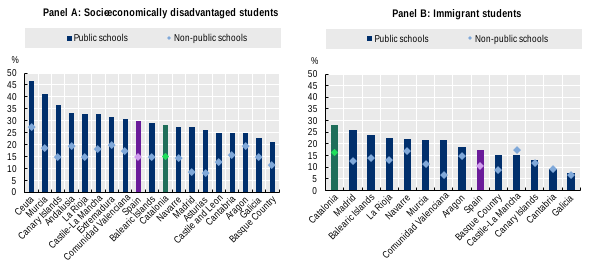
Note: Results for regions are approximations as they were not adjudicated (regions did not follow the same technical standards as at the national level). A socio-economically disadvantaged student is a student in the bottom quarter of the PISA index of economic, social, and cultural status in Spain. Non-public schools are private independent or private government-dependent schools.
Source: OECD (2022[7]), PISA 2022 (dataset), https://www.oecd.org/en/data/datasets/pisa-2022-database.html (accessed on 7 November 2025).
Sectoral differences also exist in the enrolment of students with SESN, with a consistently higher share and greater concentration in public schools than in publicly-subsidised private schools. In 2025/26 in primary education, 68% of all students were enrolled in the public sector, compared with 77% of students with SESN-A. In compulsory secondary education, 66% of all students were in public schools, compared with 74% of students with SESN-A. Public schools with low numbers of students with SESN-A are mainly small schools located in towns and villages. Table 3.3 shows the distribution of students with SESN across the two sectors. In 2025/26, 4.1% of public schools had more than 10% of students with SESN-A, compared to 1.0% of publicly-subsidised private schools. Moreover, 94% of public schools had more than 10% of students with SESN-B, compared to 76% in publicly-subsidised private schools. However, public schools currently have more resources to cater to the specific needs of these students than publicly-subsidised private schools.
Share of schools based on the concentration of students with special educational support needs (2025/26)
Note [*]: This share is due to rural schools, which have fewer students. Small towns rarely have publicly-subsidised or private schools.
Source: Department for Education and Vocational Training (Unpublished[3]), Internal analysis note prepared for the OECD Review Team.
Insufficient capacity building limits the effective implementation of inclusive practices
At classroom level, the practices and strategies employed play a central role in ensuring that all learners can reach their educational potential and develop a sense of belonging (OECD, 2023[38]). Addressing diverse needs requires a range of pedagogical approaches, including differentiated instruction, multiple ways of representing content, and flexible pacing. Recent policy measures aimed at strengthening professional learning and support for teachers may provide a foundation to address these gaps, though further efforts will be needed to ensure consistent implementation across schools (Government of Catalonia, 2026[19]).
In Catalonia, the effective implementation of inclusive pedagogical practices is challenged by persistent gaps in teacher capacity building. Many stakeholders reported to the OECD Review Team that teachers are not always sufficiently prepared to respond to diverse learning needs, with the quality of educational responses depending heavily on individual teachers rather than on systematically applied pedagogical resources. Some teachers referred to difficulties in managing wide differences in students’ starting points, behavioural challenges and mental health needs, which may result in uneven learning outcomes and frustration among both educators and families when pedagogical strategies are not adapted. These challenges appear particularly acute in secondary education, where initial teacher education tends to prioritise subject expertise over pedagogical skills. This can leave many teachers without the strategies needed to adapt teaching to SESN or to address increasingly common behavioural challenges.
Initial teacher education was also described to the OECD Review Team as overly theoretical and insufficiently focussed on practical, hands-on preparation for inclusive classrooms, including limited training on SESN, such as autism spectrum disorders, early identification of needs and co-ordination with EAPs.
As a result, many teachers reported relying on trial-and-error when mainstreaming students with complex needs, which can contribute to fatigue and make it difficult to sustain inclusive practices over time. Multiple local sources similarly identified insufficient teacher training as a barrier to implementing the inclusive education model, noting that deficits in attention to diversity within initial teacher education affect both the quality of educational responses and the system as a whole. This includes through delayed identification of needs and, in some cases, indirect exclusionary practices when schools lack the capacity or commitment to respond effectively (Catalan Ombudsman, 2025[23]; Educational Improvement Measures Driving Group, 2024[49]; Catalan Ombudsman, 2025[23]).
While data for Catalonia are not available, national evidence supports this picture. In Spain, 21% of lower secondary teachers reported a high level of need for professional learning activities around classroom management for student behaviour, 13% for approaches to individualised learning, 27% for teaching students with special education needs and 16% for teaching in a multicultural or multilingual setting (OECD, 2025[50]). Moreover, various issues related to equity and inclusion are sources of stress for substantial shares of teachers in Spain: 40% reported this in relation to modifying lessons for students with special education needs; and 34% for having too much work on diversity and equity issues, concerns or conflicts (OECD, 2025[50]).
Another challenge lies in ensuring that teachers have both inclusive attitudes and the professional competencies required to implement inclusive education effectively. The implementation of universal measures varies across schools, reflecting both resource constraints and differences in teacher preparedness and engagement (Catalan Ombudsman, 2025[23]). This is also evident in secondary education, where teachers often have less capacity to implement Universal Design for Learning and face more fragmented teaching assignments, making collaborative and context-responsive adaptation more difficult (Catalan Ombudsman, 2025[23]). These capacity constraints also interact with resource limitations and the availability of specialist support, as discussed in the following section.
The implementation of inclusion measures continues to be constrained by limited resources
Although Catalonia has strengthened its policy commitment to inclusive education and expanded support provision in recent years, implementation continues to face resource constraints. Rising and increasingly complex student needs, combined with challenges in aligning resource allocation to school contexts, continue to affect schools’ capacity to provide adequate support.
The growth in resources may not always fully match the growth and complexity of needs
Despite significant progress in policy and legal frameworks promoting inclusive education, as well as increases in staffing, available resources have not fully kept pace with growing demand. One factor limiting implementation has been the lack of an accompanying financial impact assessment (memòria econòmica) when the inclusion legislation was approved, which meant that the scale of funding, staffing and support needed to translate the legal framework into practice was not clearly established from the outset. Local stakeholders also consistently report that financial and human resources are insufficient to meet students’ needs (Catalan Ombudsman, 2025[23]).
The financial resources allocated to schools have not fully kept pace with the objectives of inclusion legislation. While most resources are allocated in-kind (Chapter 6), stakeholders consistently reported difficulties in meeting the needs of all students. Schools also face rising demands due to the increased number and complexity of students’ needs in mainstream settings.
Resource constraints are also present in staffing. During the OECD visit, teachers and school leaders highlighted shortages of specialised staff, such as teaching assistants and psycho-pedagogues. Available data point in the same direction, suggesting that resource growth has not kept pace with demand (Catalan Ombudsman, 2025[23]). For example, the number of students with SESN per psycho-pedagogue increased from 42 in 2017/18 to 56 in 2023/24 (Catalan Ombudsman, 2025[23]). While this is a crude indicator, it suggests that resource growth has not kept pace with rising needs.
These constraints affect both assessment and follow-up. EAPs play a central role in identifying and supporting students with SESN, but each psycho-pedagogue serves an increasing number of primary and secondary schools. Their limited presence in classrooms of about one day per week per school can contribute to delays in diagnostic reports and individualised educational plans (see section Identification of specific educational support needs remains uneven across some student groups). Once allocated support hours are exhausted, schools appear to have limited flexibility to respond to emerging needs.
These constraints also affect support for linguistic minorities and newly arrived students. Stakeholders reported limited interpreter availability and insufficient resources to support students arriving mid-year without knowledge of Catalan or Spanish. These challenges affect both communication with families and students’ academic integration.
Resource allocation could be more closely aligned with differences in school complexity and student need
Beyond overall resource constraints, the allocation of resources across schools does not consistently reflect differences in levels of need. At system level, funding and staffing arrangements remain relatively egalitarian, limiting the system’s ability to respond to variations in student composition and school complexity. The distribution of resources does not account for the concentration of students with SESN, leaving some schools overburdened and underfunded. As a result, schools with the greatest concentrations of diverse students often operate with insufficient resources.
Although the regulatory framework provides for some positive discrimination in favour of schools with greater complexity, the actual allocation of teaching and support staff does not reflect this. In the public sector, staffing increases have been concentrated in highly complex schools, where the number of teachers rose by approximately 1 000 between 2019/20 and 2023/24, equivalent to an increase from 35.9 to 38.7 staff members per school (Catalan Ombudsman, 2025[23]). However, the overall proportion of teaching staff dedicated to compensating for school complexity or inclusive education remains low. In 2022, only 1.8% of primary school teachers were assigned to address school complexity, and 2.7% to support inclusive education and students with SESN. Moreover, in the publicly-subsidised private sector, educational subsidies are distributed linearly, without adjusting for the SESN composition of the student body (Catalan Ombudsman, 2025[23]). As a result, schools serving highly diverse or vulnerable populations often receive the same per-student allocation as those with fewer challenges, leaving them unable to provide adequate support.
Mechanisms to adjust for the concentration of needs in schools are not fully developed. According to the Catalan Ombudsman (2025[23]), there were 887.5 SIEI teaching positions distributed across 680 public schools (28.5% of all public schools) in 2022. Yet, very high-complexity schools were less likely to have SIEI resources (22.8%) than those of high complexity (40.3%) or medium complexity (over 23%). An analogous pattern emerges in the publicly-subsidised private sector. Similarly, among educational support staff, the proportion of very high-complexity public schools with special education teachers or assistants is lower than the proportion in high- or medium-complexity schools with such support staff (Catalan Ombudsman, 2025[23]).
Finally, the OECD Review Team also heard concerns regarding the capacity and effectiveness of EAPs in supporting all students with SESN. Some stakeholders reported that existing EAP provision is increasingly stretched, raising questions about whether current staffing levels are sufficient to meet rising demand. At the same time, there is limited evidence on whether the current configuration of EAP roles is fully aligned with the complex and evolving challenges faced by schools. When school stakeholders operate under such limited resources, they often rely on referring students with complex needs to discrete, external services, an approach summarised as “passing on bits of the child” (Edwards and Downes, 2013[51]). As mentioned before, this can create inequities because access to timely support depends on the availability of individual specialist services. These resources challenges are closely related to broader issues of system coherence and trust, particularly where families perceive gaps between policy expectations and available support.
A lack of coherence and trust may weaken the shared vision for inclusive education
Despite a strong policy commitment to inclusive education, gaps between system ambitions and stakeholders’ lived experiences continue to affect confidence in inclusion. Challenges related to family engagement, differing perceptions of mainstream schools’ capacity to support diverse learners, and the evolving role of special schools contribute to fragmented understandings of inclusion.
Differences between policy ambition and stakeholder experiences may affect confidence in inclusive education
While the Catalan legislation sets out an ambitious vision of schooling for all students within the mainstream system (see section Inclusion benefits from a sustained legal and policy commitment), evidence collected by the Catalan Ombudsman indicates that implementation has been uneven and that confidence in the system may be weakening (Catalan Ombudsman, 2025[23]). Some families, particularly those with children with complex needs, reported unsatisfactory experiences in mainstream settings. They also cited insufficient classroom supports, lack of communication with teachers, and limited information on individual progress as significant shortcomings (Catalan Ombudsman, 2025[23]). Teachers similarly expressed to the OECD Review Team that inclusion policies have been introduced without adequate increases in staff or funding, leaving them to manage diverse classrooms with limited support.
Survey data reinforce this perception. In a 2020 survey in Barcelona among families with children in special schools, many respondents perceived regular schools as lacking the resources or specialist attention their children required (39% cited need for specialised attention and 15% cited insufficient resources) (Barcelona Education Consortium, 2021[52]). Another 10% reported a negative prior experience in mainstream schooling as the main reason for moving to special education (Barcelona Education Consortium, 2021[52]). Similarly, the Department of Education’s Family Care and Educational Inclusion Support Unit – set up to provide support to resolve any queries, complaints or requests related to inclusive education – received 401 cases by May 2024, of which 23% were related to doubts about classroom supports and measures, and nearly 10% concerned individualised support plans (Catalan Ombudsman, 2025[23]). These dynamics contribute to a more fragmented environment, in which advantaged families may increasingly seek private schooling options, while some families of children with SESN oscillate between frustration with mainstream provision and reliance on special schools.
Family-school engagement challenges persist for disadvantaged and immigrant communities
At school level, multiple stakeholders during the OECD visit commended the welcoming nature of many schools in Catalonia (see section Collaboration with families can support more inclusive education experiences). However, multiple stakeholders also highlighted that some families, particularly those with an immigrant background, face challenges in engaging with schools (Macià Bordalba and Burriel Manzanares, 2021[53]; Paniagua, 2017[54]). These parents sometimes report limited knowledge of the education system and formal means of participation, language difficulties and a lack of self-confidence to support their children’s schooling (Macià Bordalba and Burriel Manzanares, 2021[53]; Paniagua, 2017[54]).
A recent systematic review suggests that schools may at times operate through deficit-oriented assumptions, framing families with an immigrant background as lacking cultural or social capital and expecting them to adapt to existing school norms, which can alienate parents and limit meaningful engagement (Park, 2025[55]). In addition, as identified by the author, unwelcoming school environments, inadequate translation services, and disjointed bureaucratic practices often restrict parents’ access to information and opportunities for involvement (Park, 2025[55]). Broader systemic factors, also identified by this study, including economic hardship and a lack of social connections with others familiar with the school system, can further constrain immigrant parents’ confidence and capacity to engage, reinforcing inequalities in family-school relationships (Park, 2025[55]).
Reports from 15-year-old students also seem to point out that parents of students from a disadvantaged or immigrant background are less engaged by school staff (Figure 3.8). In Catalonia, 61% of socio-economically advantaged students attended schools whose school leaders reported that staff regularly initiated communication with parents about their child’s progress, compared to 50% of disadvantaged students. Differences were even larger regarding the provision of guidance to parents on supporting learning at home: 63% of advantaged students attended schools that reported providing information on homework and curriculum-related activities, compared to 44% of disadvantaged students. Similarly, 39% of advantaged students attended schools that reported providing guidance on improving mathematics skills, compared to 25% of disadvantaged students. Similar trends can be observed between immigrant and non-immigrant students. These trends suggest that parental engagement activities may not reach all families to the same extent, particularly those with diverse socio-economic and immigrant background.
Percentage of 15-year-old students whose school leaders indicated that the school staff has done the following activities at least a few times a month during the last academic year

Note: Results for Catalonia are approximations as they were not adjudicated (the region did not follow the same technical standards as at the national level).
Source: OECD (2022[7]), PISA 2022 (dataset), https://www.oecd.org/en/data/datasets/pisa-2022-database.html (accessed on 7 November 2025).
Unclear role and uneven use of special schools
This contributes to continued growth in special school enrolments, despite Catalonia’s stated commitment to inclusion. Some families’ attitudes reveal enduring scepticism about the mainstream system’s ability to provide genuine inclusion. In Barcelona in 2020, 69% of the surveyed families with children in special schools rated the capacity to meet students’ needs as excellent, and 80% reported they did not consider mainstream schooling an option for their children (Barcelona Education Consortium, 2021[52]). Even when asked hypothetically whether they would consider mainstream schooling if equivalent support were guaranteed, nearly half (48%) said they would still prefer a special school (Barcelona Education Consortium, 2021[52]). These findings should, however, be interpreted with caution, as Barcelona concentrates a large share of Catalonia’s special education schools, many with a long tradition and high levels of specialisation, and is therefore not fully representative of the wider Catalan context.
Indeed, despite Catalonia’s commitment to inclusion, the role of special schools remains ambiguous. The legislation defines special schooling as an exceptional measure, intended only for students with severe or profound disabilities requiring highly individualised support (DOGC, 2017[2]). However, data reveal that enrolment in special schools has not fallen substantially since 2017/18. In 2025/26, there were 6 244 students enrolled in special primary and compulsory secondary schools, slightly more than in 2017/18 (6 205). This appears to be at odds with the original aim of the inclusive reforms, which anticipated a progressive reduction of special-school placements as mainstream schools became more inclusive. It should be noted, however, that at the same time, the proportion and number of students with SESN in mainstream education has grown (see Figure 3.1 above), and, as mentioned earlier, the number of special schools has fallen (see section From principles to practice: Mainstreaming with system supports and innovation). These perceptions are shaped not only by lived experience, but also by capacity and resource constraints that affect schools’ ability to deliver inclusive practices consistently.
Overall, the challenges identified suggest that advancing inclusive education in Catalonia will require not only sustaining policy commitment, but also strengthening system capacity, aligning resources with need, and reinforcing coherence and trust across actors.
Building on the analysis of system strengths and challenges, this section presents policy recommendations to strengthen equity and inclusion in Catalonia. The recommendations prioritise building a robust support system for schools, strengthening measures to reduce segregation, reinforcing capacity building for inclusive teaching, aligning resources and support services more closely with student needs, and consolidating a shared vision of inclusion through stronger collaboration with families and clearer roles for special schools.
Recommendation 3.1. Build a coherent support system to ensure the effective implementation of inclusive education
The effective implementation of inclusive education requires a coherent and responsive support system operating across all levels of the system. This includes strengthening schools’ capacity to address students’ emotional and psychological needs, reinforcing the role of system actors – including the Inspectorate – in guiding inclusive practices, and improving diagnostic processes to ensure timely and equitable identification of needs. This should include strengthening the evidence base on language-related learning needs across student groups, including students who primarily speak Spanish at home, to ensure that support strategies adequately reflect the diversity of learning conditions within the system. These priorities respond to observed gaps in the consistency of support across schools, variation in professional capacity, and delays in identifying and responding to student needs.
Strengthen schools’ capacity to provide consistent emotional and psychological support
Student well-being is closely related to cognitive development and educational outcomes, through its influence on motivation, aspirations, attitudes and behaviours, as well as family and home environments (OECD, 2021[56]). Learners with higher levels of well-being tend to engage in fewer risky behaviours and perform better academically, while disadvantaged learners are more likely to face challenges such as lower educational aspirations and higher exposure to bullying (Clarke and Thévenon, 2022[57]; Gutman and Vorhaus, 2012[58]; Currie et al., 2012[59]). These disparities can have longer-term implications for individual and societal well-being (Marguerit, Cohen and Exton, 2018[60]).
Collaboration between the Education and Health Departments is leading to new initiatives to improve psychological well-being and increase specific supports, reflecting a broader policy effort to strengthen student support systems. At the same time, schools in Catalonia widely recognise the importance of supporting students’ emotional and psychological well-being. However, their capacity to do so remains uneven, particularly for disadvantaged learners and newcomers who may arrive with unmet needs. Teachers and school staff often assume this role, but report limited capacity building and a lack of structured guidance to respond consistently and effectively.
While Catalan legislation defines educational care as supporting students’ personal and social development within an inclusive system, practical expectations and procedures for addressing psychological well-being remain unevenly defined across schools (DOGC, 2017[2]). To address this, Catalonia could develop clearer and more coherent operational guidance to support schools in identifying and monitoring students’ emotional needs, organising internal and external support pathways, and implementing structured welcome and transition processes (Educational Improvement Measures Driving Group, 2024[49]). Clear professional guidance and shared practices would help ensure that schools are more consistently equipped to support students’ psychological well-being (Box 3.2).
Alberta (Canada) supports teachers in advancing student well-being and social-emotional learning (SEL) by providing practical, research-informed tools to guide instruction. Alberta also offers conversation guides to help teachers reflect on their practice as well as a curated library of classroom-ready resources. In addition, the Healthier Together initiative supplies lesson plans and activities to promote well-being and SEL in daily school routines, reinforcing a whole-school approach.
Well-being and SEL are also embedded in provincial curricula, particularly in Health and Life Skills at the primary level and Career and Life Management at the secondary level, ensuring that social and emotional competencies are developed progressively across schooling. To support resource selection, the province has developed Building Social-Emotional Competencies: Choosing Instructional Resources, which guides educators in identifying high-quality materials and designing S.A.F.E. – sequenced, active, focussed and explicit – learning experiences that are developmentally and culturally appropriate to local contexts. Alberta has also provided new funding to support universal and targeted school-based mental health services, encouraging collaboration with families and community providers to meet students’ diverse needs.
Sources: Government of Alberta (2025[61]), CALM, https://education.alberta.ca/career-and-life-management/program-of-studies/; Government of Alberta (2025[62]), Healthy Schools, https://education.alberta.ca/healthy-schools/student-health-and-learning/; Government of Alberta (2025[63]), Mental Health and Well-Being Funding: Questions and Answers, https://www.albertaschoolcouncils.ca/public/download/files/321210; Government of Alberta (2025[64]), Social-emotional learning, https://www.alberta.ca/social-emotional-learning; Government of Alberta (2025[65]), Welcome to new LearnAlberta, https://curriculum.learnalberta.ca/home/en; Government of Alberta (2020[66]), Building Social-Emotional Competencies: Choosing Instructional Resources, https://open.alberta.ca/publications/building-social-emotional-competencies-choosing-instructional-resources; Ministry of Education of Alberta (2022[67]), Building a Shared Understanding: Social-Emotional Learning, https://www.alberta.ca/system/files/custom_downloaded_images/edc-social-emotional-learning-coversation-guide.pdf; Primary Care Alberta (2025[68]), Teach, https://schools.healthiertogether.ca/en/teach/ (accessed on 13 November 2025).
Expand the Inspectorate’s role in promoting inclusive practices through structured feedback and knowledge sharing
School evaluation is a key tool for supporting decision making, resource allocation and school improvement. Effective monitoring and evaluation – including of equity and inclusion – provide schools with feedback on their practices and help identify areas for development. Several conditions can strengthen the role of evaluation in promoting inclusion, including clear reference standards that integrate equity objectives, access to benchmark data, adequate training of evaluators and a clear improvement-oriented purpose (Cerna et al., 2021[39]; OECD, 2015[69]).
In Catalonia, while the Inspectorate holds a formal mandate to promote equity and inclusion, variation in inspectors’ expertise and interpretation of inclusive practices can lead to differences in how inclusion is evaluated and supported across schools. Strengthening the Inspectorate’s capacity to provide consistent, improvement-oriented guidance on inclusive practices without the detriment to the specialisation of individual inspectors is therefore a key priority, while maintaining its generalist oversight role.
This could involve developing a shared, operational evaluation framework for inclusion with clearly defined and consistently interpreted criteria. In parallel, structured collaboration mechanisms with specialised support services (e.g. CEEPSIR, CREDA, CREDV and CRETDIC) could enable inspectors to draw on expert input when supporting schools facing complex challenges. The Inspectorate could also play a stronger role in facilitating the sharing of effective practices across schools. Together, these measures would help ensure that schools receive clear, aligned and pedagogically grounded feedback to support progress towards more inclusive practices. Some international examples are presented in Box 3.3.
Sharing of practices in Czechia
An online portal by the Czech School Inspectorate hosts a collection of examples of inspiring practices, which aims to make the evaluation criteria of the inspectorate more understandable and to inspire schools striving for higher quality in education. These examples, 168 in total across various types of institutions, are not intended as a certification of quality but rather illustrate selected aspects of excellence under specific criteria, including context, risks and opportunities, and insights into transferability. Schools can view full case descriptions with annexes, including evaluation tools, interview transcripts, student work and photo/video documentation. Shorter versions are also provided, offering contact details for the school’s leadership if other schools wish to learn more. Multiple case studies focus on inclusion, including fostering collaborations among teaching and non-teaching school staff, addressing school attendance problems, and exploring therapeutic approaches for students with communication challenges and others.
Multidisciplinary collaboration in Portugal
In Portugal, the General Inspectorate of Education and Science is responsible for external school evaluation and for monitoring the education system. One of the key objectives of the inspectorate is to evaluate schools in co-operation with other services and organisations, highlighting that collaboration with other bodies is a structural element of its work. External evaluation teams are composed of two inspectors and two external experts (professors or researchers at higher education institutions) to diversify evaluative perspectives. More recently, multidisciplinary teams within the inspectorate were established, embedding collaboration between inspectors and professionals with different areas of expertise into the organisational structure.
Sources: Czech School Inspectorat (n.d.[70]), Jak pracovat s portálem [How to work with the portal], https://www.kvalitniskola.cz/Aktuality/Jak-pracovat-s-metodickym-portalem; Eurydice (2025[71]), Garantia da qualidade [Quality assurance], https://eurydice.eacea.ec.europa.eu/pt-pt/eurypedia/portugal/garantia-de-qualidade-na-educacao-pre-escolar-e-escolar; IGEC (2025[72]), Plano de atividades 2025 [Activity plan 2025], https://www.igec.mec.pt/upload/Instrumentos_Gestao/IGEC_PA_2025.pdf; Official Journal of the Portuguese Republic (2024[73]), Despacho n.º 7552/2024, de 11 de julho [Order No. 7552/2024, of July 11], https://diariodarepublica.pt/dr/detalhe/despacho/7552-2024-871585155 (accessed on 13 November 2025).
Improve diagnostic capacity to ensure timely and equitable identification of students’ needs
Diagnostic assessment provides detailed information on students’ strengths, weaknesses and learning needs, and plays a critical role in identifying the sources of learning difficulties and informing appropriate interventions (OECD, 2023[38]). At the same time, it is important to minimise unintended consequences, such as stigmatisation or reduced expectations associated with labelling (Brussino, 2020[74]; Jahnukainen and Itkonen, 2010[75]). Diagnostic processes should therefore support early identification, guide intervention and remain focussed on students’ learning needs rather than fixed categories (OECD, 2013[76]).
Catalonia’s current procedures, supported by the EAPs, provide an established framework for early detection and intervention. The Department is already involved in an interdepartmental initiative involving Health and Social Rights departments (TNDiA Plan/working group; Pla de promoció, prevenció, detecció, atenció i recuperació dels Trastorns del Neurodesenvolupament i l’Aprenentatge) (Department of Education and Vocational Training, 2026[77]). It is developing shared protocols, early-detection circuits and specific materials on autism spectrum disorders, attention-deficit/hyperactivity disorder, learning disorders, language disorders and dyscalculia (Department of Education and Vocational Training, 2026[77]). Moreover, in 2025/26, the Department implemented the Prevention Actions to Promote Learning. These aim to promote the early detection of difficulties in developing oral communicative competence in the first year and reading competence in the third year of primary education, guide pedagogical decisions with clear and shared criteria, and improve classroom practices through didactic proposals that promote active and meaningful learning.
However, disparities persist across gender, socio-economic and immigrant backgrounds, suggesting that recognition pathways may favour students whose needs are more visible or whose families can access private assessments.
Strengthening public diagnostic capacity and improving the consistency of assessment criteria across EAPs could help address these inequities. Mechanisms could also be introduced to ensure that all students, regardless of origin or family resources, receive timely identification of needs. International examples, such as Austria’s language assessment tools and Luxembourg’s collaborative diagnostic approaches, illustrate how systems can better identify the needs of students (Box 3.4).
Messinstrument zur Kompetenzanalyse – Deutsch (MIKA-D, Measurement instrument for competence analysis – German) in Austria
Austria uses the MIKA-D to assess the language proficiency of students whose first language is not German. Administered by teachers at both primary and secondary levels, MIKA-D evaluates vocabulary, comprehension and oral expression through short interactive tasks lasting about 30 minutes. It is not an examination but a diagnostic tool that helps determine whether a student can follow German lessons or needs targeted support. Based on the results, students may be placed in remedial German classes or courses, with progress re-evaluated each semester. This structured and repeated assessment enables schools to monitor language development over time and adapt instruction accordingly.
Diagnostic assessment in Luxembourg
In Luxembourg, diagnostic assessment in primary education involves close collaboration between teachers, students and their families to build a comprehensive understanding of each learner’s background and prior educational experience. The process combines interviews with structured observations, age-appropriate exercises and playful activities to assess a broad range of developmental and academic skills, such as gross and fine motor abilities, early literacy and numeracy, and familiarity with languages including German, French, English and the child’s mother tongue. When potential learning difficulties or developmental concerns are identified, students are referred to specialised professionals for further evaluation and targeted support. This participatory approach aims to ensure that diagnostic practices are responsive to learners' linguistic and cultural diversity and that support measures are tailored to their needs.
Source: European Commission: European Education and Culture Executive Agency (2025[78]), Addressing underachievement in literacy, mathematics and science – Policy changes in European school education since 2020, https://data.europa.eu/doi/10.2797/1883015; and IQS (2022[79]), MIKA-D: Competence Analysis Measuring Instrument – German, https://sprachelesen.vobs.at/fileadmin/material/elterninfo/Elterninfo_Englisch_MIKA-D_allgemein_2022.pdf (accessed on 5 February 2026).
In addition to timely diagnosis, the EAPs could play a stronger role in supporting schools to implement appropriate responses in collaboration with teachers and other school staff. While a range of support measures exists in Catalonia, the absence of user-friendly tools to match identified needs with appropriate interventions may slow response times. Developing a digital platform or web-based tool enabling educators to link student profiles with tailored support strategies could help bridge this gap and support more timely and consistent responses (Box 3.5).
Confiance, Apprentissages, Partage: École Inclusive (Trust, Learning, Sharing: Inclusive School), developed in conjunction with the French national education authorities, serves as a digital support hub for pedagogical teams who work with students with special education needs. Accessible since 2020, it offers a suite of tools, including an online or downloadable observation grid, pedagogical adaptation sheets, and an interactive map of local resource persons, to help educators identify student needs, adapt teaching practices and foster inclusive learning environments.
The online tool allows teachers to answer a set of questions about a student’s languages for thinking and communicating, methods and tools for learning (e.g. task management, attention, memory) and others; and then rate the student’s proficiency (e.g. deciphering words). The system then outlines a range of accommodations and modifications available to the educators. These also include specific explanations on how to use them, with practical examples and, if available, software solutions.
Source: Canopé Network (n.d.[80]), CAP école inclusive [CAP inclusive school], https://www.reseau-canope.fr/cap-ecole-inclusive (accessed on 5 February 2026).
Recommendation 3.2. Strengthen measures to tackle school segregation
Reducing school segregation is central to improving equity. International evidence suggests that when students are more evenly distributed by socio-economic status, language background and special education needs, average performance rises and gaps narrow, peer effects are more positive, teaching is less polarised, and resources can be allocated more efficiently (OECD, 2019[81]; OECD, 2023[38]). Systems that combine controlled choice, fair admissions, transparent funding and proactive place management tend to achieve lower levels of concentration (OECD, 2019[81]; OECD, 2023[38]). Comparable indicators from PISA confirm that countries with weaker socio-economic stratification between schools exhibit smaller performance gaps (OECD, 2019[81]).
Catalonia’s strategy has contributed to reducing segregation and improving transparency. At the same time, segregation levels vary considerably across Catalan municipalities, with some cities showing much lower rates than others (Equitat, 2024[82]). However, the persistence of imbalances at key entry points and between sectors indicates the need to further strengthen implementation and extend monitoring to ensure enrolments are more evenly balanced across schools and stages. In particular, monitoring efforts could focus on better aligning the reservation of places for students with SESN with observed application patterns in each territory. Where demand exceeds reserved places, unmet demand may be absorbed by a limited number of schools already enrolling high shares of these students. Conversely, where reserved places exceed demand, capacity may remain underused in schools that typically enrol fewer students with SESN, while reserved places are filled in schools that already have higher concentrations.
Looking ahead, any further strengthening of these measures should be carefully calibrated to preserve confidence in the publicly funded system and to avoid unintended consequences, including increased demand for fully private provision. The Department could strengthen the responsiveness of the reserve system by reviewing the annual number and territorial distribution of reserved places in light of historical application patterns. Building on current practice, authorities could further adjust the overall offer once demand becomes clearer using pre-enrolment data, with the aim of avoiding both shortages that contribute to concentration and oversupply that leaves capacity unused. Regular public reporting on reserve utilisation, combined with clear protocols for reallocating unused places, could further support a more balanced distribution of students across schools.
Monitoring could also progressively extend to groups not directly covered by current controlled choice mechanisms but exhibiting higher levels of segregation, notably foreign students. Dissimilarity indices for these students remain higher than for students with SESN-A. The Department could therefore pilot zone-level monitoring of enrolment patterns for foreign students during both the main admission cycle and in-year allocation. Where strong concentrations emerge, additional balancing measures – such as maintaining capacity for late arrivals across a wider range of schools or introducing temporary thresholds – could support a more even distribution while ensuring timely access to support.
Finally, monitoring efforts could place greater emphasis on the distribution of students with SESN across public and publicly-subsidised private schools. Available data indicate that both the share and concentration of students with SESN remain higher in the public sector, while publicly-subsidised private schools, on average, enrol fewer such students. This pattern persists despite a regulatory framework assigning all publicly funded schools a role in promoting equitable access. Strengthening transparency around how these provisions are implemented in practice could help determine whether observed differences reflect implementation gaps or structural incentives. The Department could therefore monitor sectoral enrolment patterns more closely and identify factors associated with lower uptake in publicly-subsidised private schools. Where appropriate, regulatory or funding mechanisms could be adjusted to encourage a more balanced distribution, accompanied by targeted support measures. International examples, such as recent initiatives in the Slovak Republic, illustrate how systematic, data-driven monitoring can support desegregation efforts (Box 3.6).
The Ministry of Education, Research, Development and Youth of the Slovak Republic has committed to publishing a comprehensive monitoring report on segregation and to tracking the implementation of desegregation standards on a regular cycle. The approach is grounded in administrative data collected in the sector and is designed to identify risks rather than to adjudicate legal violations. It proceeds in two steps. First, schools “at risk of segregation” are identified using composition indicators, such as the share of students in a defined risk group, the relative over-representation of that group compared to the local area, and the index of dissimilarity between parallel classes or between school sites in the same municipality. Thresholds are set to flag contexts where the distribution of students is unlikely to be even. For example, an index of dissimilarity of 30 or higher is considered indicative of at least a moderate degree of segregation. Explicit attention is paid to distinguishing between public and private schools, as well as to segregation within schools.
Second, the analysis examines conditions and outcomes in schools at risk through an inputs-processes-outcomes framework, comparing factors such as staffing, attendance and learning results with those in non-risk schools to inform targeted support and follow-up. The ministry commits to subsequent refinement of methodology (if needed) and to a biennial publication cycle, with results used to guide assistance to municipalities and schools, and to co-ordinate with the State School Inspectorate and other agencies. This model demonstrates how a ministry can create a practical monitoring tool from existing data, link it to planning and sustain attention to desegregation over time.
Source: Ministry of Education, Research, Development and Youth of the Slovak Republic (2024[83]), Monitoring rizika segregácie [Monitoring the risk of segregation], https://www.minedu.sk/monitoring-rizika-segregacie/ (accessed on 5 February 2026).
Recommendation 3.3. Reinforce capacity building to embed inclusion in everyday teaching
Developing teachers’ capacity to respond to diverse learners is a key lever for advancing equity and inclusion. Beyond supporting academic achievement, inclusive teaching practices can contribute to students’ sense of belonging, well-being and engagement (Cerna et al., 2021[39]; OECD, 2023[38]). Teachers also play a central role in identifying and responding to students’ needs at an early stage, making their capacity critical to the effective functioning of inclusive systems.
Many education systems have strengthened initial teacher education and continuing professional learning to better prepare teachers for diverse classrooms. These efforts often combine theoretical preparation with practical experience, to enable teachers to translate inclusive pedagogical principles into classroom practice (Brussino, 2021[84]; OECD, 2023[38]). Ensuring access to sustained, practice-oriented professional learning – supported by adequate time and resources – remains essential (OECD, 2022[85]).
Catalonia has established a strong conceptual framework for inclusive education, notably through the adoption of Universal Design for Learning (UDL), and provides a range of training opportunities and guidance. Of almost 6 000 continuing professional learning activities, more than 9% focus specifically on inclusion. Additionally, Catalonia published Guidelines on Universal Design for Learning and offers specific training (Department of Education and Vocational Training, 2024[86]; Montalà, 2015[87]). More recently, the Department has committed to promote an inclusive culture throughout the educational community through the provision of training and advice to teachers and support staff (Government of Catalonia, 2026[19]). Additional training will also include the topics of mental health prevention and the provision of tools and strategies to detect, understand and intervene appropriately in situations of risk or emotional needs of students (Government of Catalonia, 2026[19]). The Department also expanded its offer on supporting students with SESN, with virtual courses on strategies such as differentiated instruction, multiple ways of representing content and flexible pacing. However, evidence from the OECD Review Team suggests that implementation remains uneven, particularly in secondary education, where teachers may have fewer opportunities for targeted training and face more fragmented organisational conditions.
To strengthen inclusive teaching practices, the Department could expand structured, practice-oriented capacity-building opportunities focussed on the implementation of UDL, with particular attention to secondary schools. This could include increasing time for collaborative planning, coaching and peer learning, as well as strengthening support for translating UDL principles into concrete classroom strategies. Ensuring that professional learning is embedded in teachers’ daily work could help move UDL from a conceptual framework to a consistently applied framework. The new programme leading centres in inclusive education (Centres referents en educació inclusive) is a step in this direction, providing continuing professional learning to 44 schools that will plan, implement and share good practices on inclusion over the next three years. Other innovative capacity-building approaches for UDL are summarised in Box 3.7.
As discussed further in the section below, strengthening collaborative support structures within schools could also help teachers access ongoing, responsive guidance. Formalising opportunities for co-planning and problem solving with specialised staff may support more consistent implementation of inclusive practices.
Center for Applied Special Technology UDL and AI Learning Community
The Center for Applied Special Technology, a non-profit organisation in education research and development, maintains the Online Community that offers educators, researchers and practitioners a collaborative digital platform where participants can engage in monthly expert talks, virtual design studios and ongoing peer exchange on the implementation of the UDL framework, including its intersection with artificial intelligence and inclusive practice. Participants share materials, raise questions and design solutions together, making this community-based approach a dynamic mechanism for supporting sustained professional learning and peer-led innovation in inclusive pedagogy.
Australian Disability Clearinghouse on Education and Training UDL resources
The Australian Disability Clearinghouse on Education and Training provides an online repository of UDL-focussed resources tailored for educators, including podcasts, webinars, checklists, templates and case studies covering topics such as teaching and assessment, creating accessible content and technology in inclusive settings. In addition to these tools, the Australian Disability Clearinghouse on Education and Training runs national symposia and professional learning opportunities, thereby supporting educators in translating UDL concepts into practical classroom strategies and systemic institutional change.
New Hampshire (United States) UDL Innovation Network
The New Hampshire UDL Innovation Network was a seven-year initiative of collaborative school-based instructional rounds, online learning, statewide workshop days and team-supported reflective practice. More than 1 500 educators and 140 schools engaged in team-based continuing professional learning and reflective practice to embed UDL into school-wide systems and instruction. Educators experienced growth in confidence and capacity, with 75% of survey respondents feeling highly confident in applying UDL by the project’s completion.
Source: ADCET (2026[88]) UDL Resources, https://www.adcet.edu.au/inclusive-teaching/universal-design-for-learning/udl-resources; CAST (2026[89]), Connect on our community platform, https://www.cast.org/connect/online-community/; CAST (2024[90]), NH UDL: New Hampshire UDL Innovation Network, https://www.cast.org/our-impact/projects/nh-udl-new-hampshire-udl-innovation-network/ (accessed on 28 January 2026); and CAST and New Hampshire Department of Education (n.d.[91]), The New Hampshire UDL Innovation Network: Year 7 Report, https://www.education.nh.gov/sites/g/files/ehbemt326/files/inline-documents/sonh/nhudl-year7-20240911-digital-a11y.pdf.
Teachers also reported difficulties in implementing inclusive practices due to limited time and insufficient opportunities for collaboration with specialised staff. Catalonia already has school-based collaborative structures in place, notably the Inclusive Education Committee (Comissió d’Atenció a l’Educació Inclusiva), operating in most schools. Bringing together school leaders, teachers and EAPs, these committees meet regularly to assess students’ needs, plan support and review its implementation. In addition, support to teachers is provided by special education teachers and, in secondary schools, by guidance and orientation specialists.
Strengthening school-based collaborative support structures could help address these challenges by embedding regular time for co-planning, coaching and shared problem solving. Such strengthening could be linked to a broader reorganisation of resources, as discussed in Chapters 3 and 5, with attention to both the quality of support and the way support is allocated across schools and students. Formalising support roles that connect classroom practice with specialised expertise could provide teachers with ongoing, responsive guidance. International examples, such as New Brunswick’s (Canada) school-based support teams, illustrate how structured collaboration can support inclusive practice (Box 3.8). In Catalonia, any new roles would need to be carefully aligned with Inclusive Education Committees, EAPs and existing school-based specialists to avoid duplication and strengthen overall system coherence.
School-based Support Teams
School-based Support Teams are structured groups of school personnel brought together to co-ordinate and monitor support for learners experiencing barriers to participation and learning. These teams typically include school leaders, classroom teachers and staff with specialist expertise (e.g. Support Teachers), working collaboratively to identify needs, design and evaluate intervention strategies, and ensure supports are coherent and timely. Their function is not simply advisory, but operational: supporting teachers promptly with instructional adaptations, liaising with district or external specialists, and fostering shared accountability for inclusive practice at the whole-school level. By embedding such teams within the school's daily rhythms, support is positioned as a collective responsibility that connects evidence-informed strategies with the realities of everyday teaching and learning.
Support Teachers
The Support Teacher acts as a direct support resource focussed on enhancing classroom practice. Rather than functioning as an outside consultant, the Support Teacher works alongside classroom teachers to co-plan instruction, model inclusive pedagogies and translate learner needs into practical strategies that can be enacted within mainstream classroom contexts. Support Teachers are active problem solvers and act as peers, not evaluators. This role can also help bridge information from school-wide planning (such as that generated by the School-based Support Team) to individualised classroom application, supporting continuity and coherence across levels of support.
Source: Inclusive Education Canada (2024[92]), School-based Support Teams, https://www.sourceforinclusiveeducation.ca/content?title=School-based+Support+Teams9 (accessed on 30 January 2026).
Recommendation 3.4. Align resourcing and utilisation of support services to better respond to student needs
Strengthening inclusive education requires ensuring that both system resources and support services are aligned with the distribution and complexity of students’ needs. This involves two complementary dimensions: improving how resources are allocated across schools, and strengthening how existing services are co-ordinated and used in practice.
Align resource allocation with the concentration of student needs
Building on recent commitments to expand staffing and strengthen inclusive education provision, the Department could further develop a funding and staffing allocation formula that accounts for the concentration of student needs within schools. Under current arrangements, schools with the highest concentrations of students with SESN often face insufficient resources, including staffing, as mentioned earlier. This work could build on broader efforts in Spain to develop a school vulnerability index combining common national indicators with region-specific components (OECD, 2023[93]).
Such an approach would involve introducing a weighted funding model that aligns allocations with student needs and school contexts. This could combine a universal base allocation ensuring stable funding for core functions, with additional weighted components reflecting school complexity and concentrations of students with SESN. This would support a shift from equality towards equity in resource distribution, ensuring that schools with greater needs receive adequate support.
Equity in resource allocation could also extend across ownership types. Any revised funding approach could apply to all publicly funded schools, including publicly-subsidised private schools, with allocations based on student needs rather than institutional status. This would likely require revising current mechanisms for the subsidised private sector, which are currently distributed linearly and do not account for the social composition of each school (Bofill Foundation, 2023[28]; Catalan Ombudsman, 2025[23]). Addressing this imbalance would be important to ensure that all schools can meet inclusion objectives.
The funding model could also incorporate access to complementary supports, such as priority access to professional learning or specialised services (e.g. CREDA, CREDV, CRETDIC and CEEPSIR). International examples, such as Ireland’s DEIS programme, illustrate how funding and support can be combined to address concentrated disadvantage (Box 3.9). Starting blocks are already being put in place. The Department is planning a review of the cataloguing of the complexity of schools as well as additional investments in e.g. SIEI Plus and increased numbers of special education teachers, special education assistants, and hearing and language teachers (Government of Catalonia, 2026[19]). Moreover, the Department is planning to add 16 new comprehensive support classrooms that provide temporary, comprehensive and intensive care to students at compulsory school age who have SESN associated with mental or behavioural disorders (Government of Catalonia, 2026[19]).
The Delivering Equality of Opportunity In Schools (DEIS) programme, commenced in 2005, is a policy initiative to address concentrated educational disadvantage at primary and secondary levels in Ireland. Recognising the profound consequences of educational disadvantage in schools, the DEIS programme seeks to provide targeted support to schools with concentrated populations of students from socio-economically disadvantaged communities.
The identification model uses a weighted, data-driven approach to determine the level of disadvantage in each school and to allocate resources accordingly. Students are assigned weights based on a deprivation index of their residential area, with higher weights reflecting greater levels of disadvantage. Additional weightings are also applied for students belonging to particularly vulnerable groups, including self-identified Traveller and Roma students, those living in International Protection Accommodation Services, Emergency Orientation and Reception Centres, or those experiencing homelessness. These individual weights are combined to produce a school-level score that reflects the overall concentration of disadvantage. Schools with the highest scores are designated DEIS Urban Band 1, followed by DEIS Urban Band 2 and DEIS Rural schools, each receiving a differentiated package of supports.
DEIS Urban Band 1 schools – serving communities with the highest levels of need – benefit from smaller student-teacher ratios and enhanced staffing structures, including administrative and deputy principal posts, to strengthen leadership capacity. All DEIS schools receive a targeted grant allocation and access to wrap-around supports such as the Home School Community Liaison Scheme and the School Completion Programme. Additional measures include literacy and numeracy supports, continuing professional learning and action-planning assistance for teachers, and priority access to the National Educational Psychological Service. Schools also benefit from initiatives like the School Books Grant Scheme and the Leaving Certificate Applied pathway, which aim to improve educational participation and attainment. Together, these supports form an integrated framework that addresses both academic and social barriers to learning, promoting equity and inclusion in the education system.
Source: OECD (2024[94]), OECD Review of Resourcing Schools to Address Educational Disadvantage in Ireland, https://doi.org/10.1787/3433784c-en.
Strengthen the co-ordination and utilisation of existing support services
Strengthening the response to students’ needs requires not only improving resource allocation but also making better use of those already available by co-ordinating support more effectively. The system should aim to address underlying needs rather than responding to isolated challenges as they emerge. This aligns with the logic of early intervention approaches, including multi-tiered models of support, which emphasise timely identification and response to student needs through classroom practices as well as access to specialised support.
Teachers therefore need to be able to mobilise broader networks of support, including the EAPs, and specialised provision (e.g. SIEI), as part of a continuous response to students’ needs. Research highlights that the resilience and well-being of learners depend on sustained access to such services, which in turn requires effective interaction and collaboration between different actors and institutions (OECD, 2021[95]). Catalonia could strengthen the articulation of support services within and beyond schools to ensure that existing resources are fully utilised in practice. International evidence suggests that integrating services around schools and strengthening collaboration between professionals can support more holistic responses to students’ needs (OECD, 2021[95]).
However, these arrangements depend on clear roles and responsibilities, as well as strong professional relationships, to ensure effective co-ordination and accountability (Kochhar-Bryant and Heishman, 2010[96]; OECD, 2021[95]). The Department is already committed to developing and consolidating the inclusive education model by mapping the functions and current allocations of professionals, reviewing support staffing levels with the aim of adapting them to current needs, reviewing intensive support ratios (e.g. SIEI) (Government of Catalonia, 2026[19]). The Department has also committed to expand support for students with complex needs through interdisciplinary health and education teams, progressive deployment of health professionals, and re-establishing teaching salary supplement for hospital classroom staff (Government of Catalonia, 2026[19]). Moreover, the Department is working to strengthen teachers’ capacity to detect and respond to SESN by estimating the number and level of need of students in mainstream publicly funded schools, comparing the needs perceived by teachers with those recognised by EAPs, assessing classroom complexity and the adequacy of educational responses, and incorporating the perspectives of families and students on inclusive education and support. Finally, the Department has committed to a progressive reduction in student-teacher ratios.
International examples illustrate how schools can act as hubs connecting learners and families to a broader ecosystem of support (Box 3.10). Strengthening such co-ordination could support the development of a more integrated system in which services are better aligned around student needs and schools play a central connecting role. Other cross-sector models already implemented in Catalonia, such as Barnahus and “Schools Free from Violence” plan (Pla “Las escoles lliures de violències”) point in a similar direction (Department of Education and Vocational Training, 2023[97]; Government of Catalonia, 2024[98]).
While these are more targeted safeguarding mechanisms rather than universal student guidance services, they illustrate how education, health, social protection and, where relevant, justice actors can be brought into co-ordinated pathways around the child. Barnahus provides an integrated, child-friendly response for children and adolescents who have experienced sexual abuse, while the “Schools Free from Violence” plan offers seeks to strengthen prevention, identification and response to violence affecting students through a restorative and child-centred approach across the education system (Government of Catalonia, 2024[98]; Department of Education and Vocational Training, 2023[97]).
As part of this framework, the Support Unit for Students Experiencing Violence (Unitat de Suport a l’Alumnat en situació de Violència, USAV) is a dedicated education-sector entry point for identifying, reporting and co-ordinating responses to violence affecting students (XTEC, 2026[99]). Together, these examples underline the importance of clear referral routes, shared protocols and multidisciplinary co-operation around students’ needs.
In the Flemish Community of Belgium, every school collaborates with a student guidance centre. This free, independent guidance centre brings together professionals from different disciplines (psychologists, educators, social workers, physicians, nurses, speech therapists, etc.) to support students, parents and school staff. The student guidance centre is designed to be responsive to a wide variety of needs: academic difficulties (reading/writing, concentration, study methods), choices about educational paths, social and emotional issues (bullying, mental health, problems at home), health concerns (physical health, vaccinations), and guidance during school transitions.
When concerns arise, whether from the school, parents or the students themselves, the student guidance centre intervenes through a process of reception and question clarification, then – if needed – through systematic diagnostics and flexible follow-up. Because of its multidisciplinary makeup, the student guidance centre can combine expertise from different fields to develop tailored, context-specific support plans, and co-ordinate with external services when more specialised help is required.
This approach aims to ensure that support is child-centred, holistic and continuous: it does not react to discrete challenges, but instead accompanies students across domains (learning, well-being, health and career) over time, addressing both individual and systemic needs in close partnership with families and schools.
Source: Flemish government (n.d.[100]), Centrum voor leerlingenbegeleiding (CLB) [Student Guidance Centre (CLB)], https://www.vlaanderen.be/onderwijs-en-vorming/ondersteuning-en-begeleiding-voor-leerlingen-cursisten-en-studenten/basis-en-secundair-onderwijs/centrum-voor-leerlingenbegeleiding (accessed on 2 December 2025).
Recommendation 3.5. Consolidate a shared vision of inclusion through collaboration and coherence
Strengthening inclusive education in Catalonia requires consolidating a shared system-wide vision grounded in collaboration, trust and coherence across policies and practices. Enhancing meaningful engagement with families, particularly families from immigrant backgrounds, and clarifying the evolving role of special schools as centres supporting inclusive provision are key elements in reinforcing confidence in the inclusive model.
Enhance school-family collaboration to foster inclusion, especially with immigrant families
Family engagement is a recognised strength of the Catalan education system. However, families from immigrant and socio-economically disadvantaged backgrounds continue to face barriers to meaningful engagement, including limited familiarity with the education system, language constraints, socio-economic pressures and perceptions of unwelcoming school environments. These persistent gaps suggest that existing approaches, while well-established, may not yet be sufficiently targeted or responsive to the needs of all students.
Promoting an inclusive school climate that supports all learners involves all members of the school community, including school staff, students, parents and families, as well as external actors engaging with schools (OECD, 2023[38]). Evidence shows that parental and community engagement plays a key role in supporting student achievement and well-being (OECD, 2019[37]; Rutigliano and Quarshie, 2021[101]).
To build on existing strengths, Catalonia could prioritise equity-oriented and culturally responsive approaches that actively reduce structural and cultural barriers to participation. This may include providing targeted guidance to schools, strengthening the use of liaison staff and home visits, and promoting the use of cultural mediators or language facilitators. Such measures can help build trust, improve communication and support more sustained engagement, particularly among families less familiar with the education system (OECD, 2023[38]). The Department is committed to advancing its efforts in this area, by introducing a dedicated social integration staff role with a dedicated budget of EUR 88 million (Government of Catalonia, 2026[19]). Recently, the Department also started raising awareness through videos with information on inclusive education. These positions will, among other responsibilities, provide ongoing support to families throughout the processes of welcoming and inclusion through regular engagement (Government of Catalonia, 2026[19]). International examples illustrate how structured approaches to family engagement can support more inclusive school environments (Box 3.11).
Home School Community Liaison (HSCL) Scheme in Ireland
The primary role of the HSCL Co-ordinator is to work with the adults in the child’s life to improve educational outcomes for the child, with a focus on improving attendance, participation and retention through both universal and targeted supports. HSCL Co-ordinators are teachers released from teaching duties for up to five years to engage in full-time liaison work between the home, the school and the community, operating in a spirit of partnership and collaboration with parents and teachers and as part of a wider integrated services approach to children’s educational welfare.
The Scheme aims to maximise children’s participation in learning, promote active co-operation between home, school and community agencies, raise parents’ awareness of their capacity to support learning, enhance retention and progression through education, and disseminate positive outcomes across the school system. In practice, HSCL Co-ordinators assume responsibilities aligned with fostering collaboration between parents and teachers, addressing educational disadvantage, and embedding parental involvement in school development processes, including identifying parental needs, involving parents in supporting their children’s education, facilitating key educational transitions, conducting home visits to build trust, and sharing information about school and community services.
Knowledge-centres for Mixed Schools in the Netherlands
At the local level in the Netherlands, Kenniscentrum Gemengde Scholen (Knowledge-centres for Mixed Schools) focus on supporting immigrant parents’ informed engagement with school choice. These centres seek to promote quality immigrant education by reducing segregation and share the common practice of developing manuals on fostering diverse school environments.
The knowledge centre in Rotterdam has also organised local school tours, led by municipalities, to help change preferences and misconceptions about schools and to support parents in navigating the education system. As many parents reported feeling more comfortable touring schools in groups, this intervention is particularly important for parents with an immigrant background who are navigating the system for the first time. After the tours, parents and facilitators discuss the pros and cons of different schools and explain the school choice process, enabling the parents to learn about schools in their area and make more informed decisions for their children.
Source: Cerna et al. (2019[102]), Strength through diversity’s Spotlight Report for Sweden, https://dx.doi.org/10.1787/059ce467-en; and OECD (2024[94]), OECD Review of Resourcing Schools to Address Educational Disadvantage in Ireland, https://doi.org/10.1787/3433784c-en.
Clarify and strengthen the role of special schools and CEEPSIR within the inclusive system
Clarifying and strengthening the role of special schools, and special education centres providing services and resources (CEEPSIR) within the inclusive system is an important step in building confidence among families, professionals and communities that the system can deliver high-quality learning and well-being for all students. International evidence shat trust is strengthened when policy ambitions are supported by a clear and consistently implemented vision that defines roles, responsibilities and expected outcomes across the system (OECD, 2023[38]). Inclusive systems also articulate how different settings, including special schools, contribute to inclusive pathways and system learning, thereby reducing uncertainty for families and educators (OECD, 2012[103]; OECD, 2023[38]).
The existing legal framework in Catalonia already enables special schools to provide specialised services and resources to mainstream schools, including support for teachers and targeted interventions in co-ordination with school management and educational services (DOGC, 2017[2]). This includes direct collaboration with mainstream teachers and the development of tailored interventions to support communication, adaptive and social skills, emotional self-regulation and autonomy among students (DOGC, 2017[2]).
At the same time, special schools continue to play a critical role in providing support to students with the most complex needs. This suggests an inherent dual function within the system: delivering specialised provision for some students while contributing to the capacity of mainstream schools to support a wider range of learners. Clarifying how these two functions are balanced in practice will be important for reinforcing both system coherence and trust. Special schools should therefore continue to support students requiring intensive provision, with a view to reintegration into mainstream settings where appropriate, while ensuring that those who cannot attend mainstream schools continue to receive full educational provision within settings that retain their educational – rather than socio-health – character and adequate pedagogical resources (Catalan Ombudsman, 2025[23]).
Within this context, reinforcing CEEPSIR as hubs of expertise supporting mainstream schools could improve consistency in implementation and strengthen confidence in inclusive practices. This would require further clarifying the strategic role of special schools within a structured pathway for their progressive transformation into centres of expertise. This is already being supported through an innovation programme involving 27 special schools, which aims to better define the CEEPSIR role, develop evaluation tools and share good practices to disseminate, strengthen and consolidate the model. Moreover, the Department has committed to expand the number of teachers in CEEPSIR (Government of Catalonia, 2026[19]). International experience suggests that such transformations can strengthen mainstream schools’ capacity to respond to diverse learning needs while maintaining access to specialised knowledge and support (OECD, 2022[104]). As demand for special education decreases, additional teaching capacity within CEEPSIR could further support mainstream schools.
Catalonia could therefore articulate a clearer policy vision in which special schools increasingly serve as centres of expertise, providing specialised guidance, capacity building and therapeutic services to mainstream schools, while continuing to educate a limited number of students with the most complex needs. This should also recognise the role of shared schooling arrangements, through which some students attend a mainstream school for part of the week and a special school for the remainder, allowing them to benefit from mainstream settings and specialised support. Making this vision operational would likely require formal co-operation agreements, joint planning mechanisms, specialist training and systematic evaluation (Box 3.12). Clear communication with families about the role of different provision settings would also be important to strengthen confidence in the inclusive model and improve understanding of how these contribute to students’ educational pathways.
Since 2009, Portugal has progressively transformed most of its special schools into resource centres for inclusion (RCI). This reform aimed to ensure that all students with special education needs attend mainstream schools, supported by specialised professionals and adapted teaching approaches rather than separate schools.
Special schools were redefined as multidisciplinary support hubs for inclusion. Today, around 100 accredited RCI operate across Portugal, providing specialised services to clusters of mainstream schools. Their staff include therapists, psychologists and special education experts who collaborate with teachers, families and students. RCI facilitate access not only to education but also to training, work, leisure and social participation. Each RCI signs an annual service contract with the Ministry of Education, defining its intervention areas, which typically include:
Specialised support units for the education of students with multiple disabilities and congenital deaf blindness.
Support for the specialised evaluation of children and young people with special education needs.
Support for the implementation of curricular enrichment activities (specific programmes, adapted sport practice, etc.).
Support in the development, implementation and monitoring of individual education plans.
However, evaluations found that implementation faced resource constraints, bureaucratic delays and ambiguities in governance between RCI and mainstream schools. Many professionals noted shortages of specialised staff and the need for stronger teacher preparation for inclusion. The reform also required cultural change, as schools adapted to serving all learners in shared classrooms.
The government gradually clarified RCI functions through regulatory updates and new legislation, which defined RCI as the specialised professional support pillar of the inclusive education strategy. This legal framework consolidated funding, accreditation and quality assurance procedures and promoted RCI as hubs of innovation and collaboration in local education systems.
Portugal’s approach is recognised as a successful shift from segregated to inclusive provision. In 2017/18, 99% of students with special education needs were enrolled in mainstream schools, supported by RCI. Research suggests that RCI are now not only key in supporting students with special education needs but also increasingly assist other students and teachers through pedagogical innovation and community-based projects.
Sources: Directorate-General for Innovation and Curriculum Development (2006[105]), Reorientação das Escolas Especiais em Centros de Recursos [Reorienting Special Schools into Resource Centres], https://www.dge.mec.pt/sites/default/files/EEspecial/doc_cri_reorientacao.pdf; OECD (2022[104]), Review of Inclusive Education in Portugal, Reviews of National Policies for Education, OECD Publishing, Paris, https://doi.org/10.1787/a9c95902-en; Official Journal of the Portuguese Republic (2018[106]), Decreto-Lei n.º 54/2018, de 6 de julho [Decree-Law No. 54/2018, of July 6], https://diariodarepublica.pt/dr/detalhe/decreto-lei/54-2018-115652961 (accessed on 13 November 2025); Sousa et al. (2014[107]), Avaliação das Políticas Públicas – Inclusão de Alunos com Necessidades Educativas Especiais: O Caso dos Centros de Recursos para a Inclusão [Evaluation of Public Policies – Inclusion of Students with SEN: The Case of Resource Centres for Inclusion], https://www.dge.mec.pt/sites/default/files/EEspecial/estudo_cri_mar2015.pdf.
References
[88] ADCET (2026), UDL Resources, https://www.adcet.edu.au/inclusive-teaching/universal-design-for-learning/udl-resources (accessed on 28 January 2026).
[52] Barcelona Education Consortium (2021), Enquesta a famílies d’alumnes amb necessitats d’educació especial escolaritzats a un centre d’educació especial de Barcelona [Survey of families of students with special education needs enrolled in a special education centre in Barcelona], https://www.edubcn.cat/rcs_gene/extra/01_documents_de_referencia/informes/20210301_CEB_AlumnesCEE_Informe.pdf (accessed on 13 November 2025).
[28] Bofill Foundation (2023), La Fundació Bofill engega una crida de país per reclamar un pla de xoc contra l’abandonament escolar [The Bofill Foundation launches a nationwide appeal to demand a shock plan against school dropout], https://fundaciobofill.cat/noticies/fundacio-bofill-crida-pais-reclamar-pla-de-xoc-abandonament-escolar (accessed on 10 November 2025).
[42] Borgonovi, F. and J. Pál (2016), “A Framework for the Analysis of Student Well-Being in the PISA 2015 Study: Being 15 In 2015”, OECD Education Working Papers, No. 140, OECD Publishing, Paris, https://doi.org/10.1787/5jlpszwghvvb-en.
[84] Brussino, O. (2021), Building capacity for inclusive teaching, OECD Publishing, https://doi.org/10.1787/57fe6a38-en.
[74] Brussino, O. (2020), “Mapping policy approaches and practices for the inclusion of students with special education needs”, OECD Education Working Papers, No. 227, OECD Publishing, Paris, https://doi.org/10.1787/600fbad5-en.
[80] Canopé Network (n.d.), CAP école inclusive [CAP inclusive school], https://www.reseau-canope.fr/cap-ecole-inclusive (accessed on 5 February 2026).
[89] CAST (2026), Connect on our community platform, https://www.cast.org/connect/online-community/ (accessed on 28 January 2026).
[90] CAST (2024), NH UDL: New Hampshire UDL Innovation Network, https://www.cast.org/our-impact/projects/nh-udl-new-hampshire-udl-innovation-network/ (accessed on 28 January 2026).
[91] CAST and New Hampshire Department of Education (n.d.), The New Hampshire UDL Innovation Network: Year 7 Report, https://www.education.nh.gov/sites/g/files/ehbemt326/files/inline-documents/sonh/nhudl-year7-20240911-digital-a11y.pdf.
[23] Catalan Ombudsman (2025), L’educació inclusiva a Catalunya [Inclusive education in Catalonia], Síndic de Greuges de Catalunya, https://www.sindic.cat/site/unitFiles/10530/Informe%20educacio%20inclusiva_gener_25_definitiu.pdf.
[20] Catalan Ombudsman (2019), Pacte contra la segregació escolar a Catalunya [Pact against school segregation in Catalonia], https://www.sindic.cat/site/unitFiles/6058/Pacte%20segregacio%20escolar%202018_definitiu.pdf.
[102] Cerna, L. et al. (2019), “Strength through diversity’s Spotlight Report for Sweden”, OECD Education Working Papers, No. 194, OECD Publishing, Paris, https://doi.org/10.1787/059ce467-en.
[39] Cerna, L. et al. (2021), “Promoting inclusive education for diverse societies: A conceptual framework”, OECD Education Working Papers, No. 260, OECD Publishing, Paris, https://doi.org/10.1787/94ab68c6-en.
[57] Clarke, C. and O. Thévenon (2022), “Starting unequal: How’s life for disadvantaged children?”, OECD Papers on Well-being and Inequalities, No. 06, OECD Publishing, Paris, https://doi.org/10.1787/a0ec330c-en.
[59] Currie, C. et al. (2012), Social Determinants of Health and Well-Being Among Young People, HBSC Study: international report from the 2009/2010 survey, http://www.euro.who.int/__data/assets/pdf_file/0003/163857/Social-determinants-of-health-and-well-being-among-young-people.pdf.
[70] Czech School Inspectorate (n.d.), Jak pracovat s portálem [How to work with the portal], https://www.kvalitniskola.cz/Aktuality/Jak-pracovat-s-metodickym-portalem (accessed on 13 November 2025).
[44] Department of Education (2021), Pla Director de la Inspecció D’educació 2021-2025 [Education Inspectorate Master Plan 2021-2025], https://educacio.gencat.cat/web/.content/home/departament/inspeccio-educacio/pla-director/pla-director-2021-2025.pdf.
[31] Department of Education (2018), El currículum competencial a l’aula [The competency-based curriculum in the classroom], https://www.google.com/url?sa=t&rct=j&q=&esrc=s&source=web&cd=&cad=rja&uact=8&ved=2ahUKEwjwuMfp7ueQAxXwMfsDHattMrYQFnoECB0QAQ&url=https%3A%2F%2Fxtec.gencat.cat%2Fweb%2F.content%2Fcurriculum%2Feso%2Forientacions%2F20180302ProgramacionsESO.pdf&usg=AOvVaw2LR (accessed on 10 November 2025).
[30] Department of Education (2016), De l’escola inclusiva al sistema inclusiu [From inclusive school to inclusive system], https://educacio.gencat.cat/web/.content/home/departament/publicacions/infografies/linies-estrategiques/linies-estrategiques-escola-inclusiva-sistema-inclusiu.pdf.
[29] Department of Education (2015), De l’escola inclusiva al sistema inclusiu [From inclusive school to inclusive system], https://educacio.gencat.cat/ca/departament/publicacions/colleccions/inclusio/escola-inclusiva/ (accessed on 10 November 2025).
[41] Department of Education (n.d.), Participació de les famílies [Participation of families], https://documents.espai.educacio.gencat.cat/documents_publics/Centres/Mesures_suports_universals/24_participacio_families.pdf.
[77] Department of Education and Vocational Training (2026), Memòria del Departament d’Educació i Formació Professional 2024 [Report of the Department of Education and Vocational Training 2024], https://educacio.gencat.cat/web/.content/home/departament/publicacions/memoria-activitat-departament/memoria-2024/memoria-2024.pdf.
[40] Department of Education and Vocational Training (2025), Atenció a les famílies i suport a la inclusió educativa [Care for families and support for educational inclusion], https://educacio.gencat.cat/ca/serveis-tramits/suport-educacio-inclusiva/ (accessed on 5 February 2026).
[108] Department of Education and Vocational Training (2025), Directrius per millorar la distribució equilibrada de l’alumnat amb necessitats educatives específiques derivades de situacions socioeconòmiques o socioculturals en el procediment d’admissió d’alumnat als centres del Servei d’Educació de Catalunya, [Guidelines to improve the balanced distribution of students with specific educational needs derived from socioeconomic or sociocultural situations in the admission procedure for students to the centers of the Education Service of Catalonia], https://documents.espai.educacio.gencat.cat/IPCNormativa/DisposicionsInternes/20250128-Directrius-distribucio-equilibrada.pdf.
[24] Department of Education and Vocational Training (2025), Motxilles escolars [School backpacks], https://educacio.gencat.cat/ca/arees-actuacio/families/families-escola/escolaritat/motxilles-escolars (accessed on 7 November 2025).
[45] Department of Education and Vocational Training (2025), Resolució de la Direcció General d’Educació Inclusiva que regula la gestió del reconeixement de les necessitats educatives específiques derivades de necessitats educatives especials o derivades de situacions socioeconòmiques desafavorides, [Resolution of the General Directorate of Inclusive Education that regulates the management of the recognition of special educational support needs derived from special education needs or derived from disadvantaged socio-economic situations], https://documents.espai.educacio.gencat.cat/ServeisEducatius/EAP_Resolucio.pdf.
[32] Department of Education and Vocational Training (2024), Document per a la transformació dels CEE en CEEPSIR a Catalunya [Document for the transformation of CEEs into CEEPSIRs in Catalonia], https://educacio.gencat.cat/web/.content/home/departament/publicacions/colleccions/inclusio/transformacio-cee-ceepsir/transformacio-cee-ceepsir.pdf.
[86] Department of Education and Vocational Training (2024), Formacions DUA [UDL Training], https://serveiseducatius.xtec.cat/riberadebre/portada/formacions-dua/ (accessed on 19 January 2026).
[10] Department of Education and Vocational Training (2023), Mesures i suports universals en el centre educatiu [Universal measures and supports in the educational centre], https://educacio.gencat.cat/ca/departament/publicacions/colleccions/inclusio/mesures-suports-universals-centre-educatiu/ (accessed on 5 February 2026).
[97] Department of Education and Vocational Training (2023), Pla Les escoles lliures de violències, https://educacio.gencat.cat/ca/departament/avaluacio-politiques-publiques/avaluacions-finalitzades/pla-escoles-lliures-violencies/ (accessed on 12 May 2026).
[22] Department of Education and Vocational Training (2021), Pacte contra la segregació escolar [Pact against school segregation], https://educacio.gencat.cat/ca/departament/linies-estrategiques/equitat-educativa/pacte-contra-segregacio-escolar/ (accessed on 7 November 2025).
[3] Department of Education and Vocational Training (Unpublished), Internal analysis note prepared for the OECD Review Team.
[16] Department of Education and Vocational Training (n.d.), Programes de formació i inserció (PFI) [Training and integration programs (PFI)], https://triaeducativa.gencat.cat/ca/fp/pfi/ (accessed on 7 November 2025).
[105] Directorate-General for Innovation and Curriculum Development (2006), Reorientação das Escolas Especiais em Centros de Recursos [Reorienting Special Schools into Resource Centers], Direcção-Geral de Inovação e de Desenvolvimento Curricular, https://www.dge.mec.pt/sites/default/files/EEspecial/doc_cri_reorientacao.pdf.
[17] Directorate-General for Vocational Training (n.d.), Plans de Transició al Treball (PTT) [Transition to Work Plans], https://projectes.xtec.cat/pfi/el-ptt/ (accessed on 7 November 2025).
[36] DOGC (2024), RESOLUCIÓ EDU/1693/2024, de 14 de maig, per la qual s’obre convocatòria pública per a la selecció de centres d’educació especial de titularitat de la Generalitat de Catalunya, [RESOLUTION EDU/1693/2024, of May 14, by which a public call is opened for the selection of special education centers owned by the Government of Catalonia], https://dogc.gencat.cat/ca/document-del-dogc/?documentId=986159 (accessed on 10 November 2025).
[35] DOGC (2024), RESOLUCIÓ EDU/952/2024, de 13 de març, per la qual s’obre el procediment de convocatòria pública per a la concessió de subvencions als ens locals de Catalunya, [RESOLUTION EDU/952/2024, of March 13, which opens the public call procedure for the granting of subsidies to local entities in Catalonia], https://dogc.gencat.cat/ca/document-del-dogc/?documentId=981981 (accessed on 10 November 2025).
[34] DOGC (2023), RESOLUCIÓ EDU/2188/2023, de 16 de juny, per la qual s’obre convocatòria pública per a la selecció de centres d’educació especial sostinguts amb fons públics interessats a esdevenir proveïdors de serveis i recursos (CEEPSIR), [RESOLUTION EDU/2188/2023, of June 16, which opens a public call for the selection of special education centres supported with public funds interested in becoming providers of services and resources (CEEPSIR)], https://dogc.gencat.cat/ca/document-del-dogc/?documentId=963619 (accessed on 10 November 2025).
[33] DOGC (2022), RESOLUCIÓ EDU/1214/2022, de 27 d’abril, per la qual s’obre convocatòria pública per a la selecció de centres d’educació especial sostinguts amb fons públics interessats a esdevenir proveïdors de serveis i recursos (CEEPSIR), [RESOLUTION EDU/1214/2022, of April 27, which opens a public call for the selection of special education centres supported with public funds interested in becoming providers of services and resources (CEEPSIR)], https://dogc.gencat.cat/ca/document-del-dogc/?documentId=926904 (accessed on 10 November 2025).
[21] DOGC (2021), DECRET 11/2021, de la programació de l’oferta educativa i del procediment d’admissió en els centres del Servei d’Educació, [DECREE 11/2021, on the programming of the educational offer and the admission procedure in the centers of the Education Service], https://portaljuridic.gencat.cat/eli/es-ct/d/2021/02/16/11 (accessed on 22 April 2026).
[43] DOGC (2021), DECRET 12/2021, de 2 de març, de la Inspecció d’Educació, [DECREE 12/2021, of March 2, of the Education Inspectorate], https://portaljuridic.gencat.cat/eli/es-ct/d/2021/03/02/12 (accessed on 22 April 2026).
[2] DOGC (2017), DECRET 150/2017, de 17 d’octubre, de l’atenció educativa a l’alumnat en el marc d’un sistema educatiu inclusiu, [DECREE 150/2017, of October 17, on educational care for students within the framework of an inclusive educational system], https://portaljuridic.gencat.cat/eli/es-ct/d/2017/10/17/150 (accessed on 22 April 2026).
[27] DOGC (2014), LLEI 13/2014, del 30 d’octubre, d’accessibilitat, [LAW 13/2014, of October 30, on accessibility], https://portaljuridic.gencat.cat/eli/es-ct/l/2014/10/30/13 (accessed on 22 April 2026).
[26] DOGC (2010), LLEI 14/2010, del 27 de maig, dels drets i les oportunitats en la infància i l’adolescència, [LAW 14/2010, of May 27, on the rights and opportunities of childhood and adolescence], https://portaljuridic.gencat.cat/eli/es-ct/l/2010/05/27/14 (accessed on 22 April 2026).
[25] DOGC (2009), LLEI 12/2009, del 10 de juliol, d’educació, [LAW 12/2009, of July 10, on education], https://portaljuridic.gencat.cat/eli/es-ct/l/2009/07/10/12.
[49] Educational Improvement Measures Driving Group (2024), Mesures per millorar l’educació a Catalunya [Measures to improve education in Catalonia], https://educacio.gencat.cat/ca/departament/publicacions/documents-tecnics/mesures-millorar-educacio-catalunya/ (accessed on 13 November 2025).
[51] Edwards, A. and P. Downes (2013), Alliances for Inclusion, https://www.dcu.ie/sites/default/files/edc/pdf/alliancesforinclusion.pdf.
[82] Equitat (2024), Mapa interactiu: Quin nivell de segregació escolar hi ha al teu municipi? [Interactive map: What level of school segregation is there in your municipality?], https://www.equitat.org/blog/mapa-interactiu-quin-nivell-de-segregaci-escolar-hi-ha-al-teu-municipi (accessed on 4 May 2026).
[78] European Commission: European Education and Culture Executive Agency (2025), Addressing underachievement in literacy, mathematics and science – Policy changes in European school education since 2020, Publications Office of the European Union, https://doi.org/10.2797/1883015.
[71] Eurydice (2025), Garantia da qualidade [Quality assurance], https://eurydice.eacea.ec.europa.eu/pt-pt/eurypedia/portugal/garantia-de-qualidade-na-educacao-pre-escolar-e-escolar (accessed on 13 November 2025).
[8] Ferrer-Esteban, B. and G. Albaigés (2024), Els condicionants de sistema de l’èxit educatiu: gestió dels sistemes educatius i igualtat d’oportunitats [The systemic determinants of educational success: management of educational systems and equality of opportunity], Fundació Jaume Bofill, https://www.equitat.org/app/uploads/2025/03/q94-anuari2024_estateducaciocatalunya_v2.pdf.
[100] Flemish government (n.d.), Centrum voor leerlingenbegeleiding (CLB) [Student Guidance Centre (CLB)], https://www.vlaanderen.be/onderwijs-en-vorming/ondersteuning-en-begeleiding-voor-leerlingen-cursisten-en-studenten/basis-en-secundair-onderwijs/centrum-voor-leerlingenbegeleiding (accessed on 2 December 2025).
[61] Government of Alberta (2025), CALM, https://education.alberta.ca/career-and-life-management/program-of-studies/ (accessed on 13 November 2025).
[62] Government of Alberta (2025), Healthy Schools, https://education.alberta.ca/healthy-schools/student-health-and-learning/ (accessed on 13 November 2025).
[63] Government of Alberta (2025), Mental Health and Well-Being Funding: Questions and Answers, https://www.albertaschoolcouncils.ca/public/download/files/321210 (accessed on 13 November 2025).
[64] Government of Alberta (2025), Social-emotional learning, https://www.alberta.ca/social-emotional-learning (accessed on 13 November 2025).
[65] Government of Alberta (2025), Welcome to new LearnAlberta, https://curriculum.learnalberta.ca/home/en (accessed on 13 November 2025).
[66] Government of Alberta (2020), Building Social-Emotional Competencies: Choosing Instructional Resources, https://open.alberta.ca/publications/building-social-emotional-competencies-choosing-instructional-resources (accessed on 13 November 2025).
[19] Government of Catalonia (2026), Acord entre el Departament d’Educació i Formació Professional i les organitzacions sindicals CCOO i UGT sobre millores del sistema educatiu i condicions de reball del personal funcionari docent del Departament d’Educació i Formació Professional, [Agreement between the Department of Education and Vocational Training and the union organisations CCOO and UGT on system improvements to the educational and working conditions of the teaching staff of the Department of Education and Vocational Training], https://www.ccoo.cat/educacio/wp-content/uploads/sites/139/2026/03/el-text-de-lacord.pdf.
[18] Government of Catalonia (2026), Acuerdo para la mejora educativa [Agreement for Educational Improvement], https://web.gencat.cat/ca/ciutadania/actualitat/noticies/2026/06/acord-per-a-la-millora-educativa (accessed on 12 June 2026).
[11] Government of Catalonia (2026), Creixen les aules d’acollida a Catalunya, i ja en són 1.635 [Reception classrooms are growing in Catalonia, and there are already 1 635], https://govern.cat/salapremsa/notes-premsa/780436/creixen-aules-dacollida-catalunya-ja-son-1635 (accessed on 13 May 2026).
[98] Government of Catalonia (2024), Drets Socials organitza una jornada per abordar l’estratègia Barnahus contra l’abús sexual a infants i adolescents [Social Rights organizes a day to address the Barnahus strategy against sexual abuse of children and adolescents], https://govern.cat/salapremsa/notes-premsa/612182/drets-socials-organitza-jornada-abordar-lestrategia-barnahus-contra-labus-sexual-infants-adolescents (accessed on 4 May 2026).
[58] Gutman, L. and J. Vorhaus (2012), The Impact of Pupil Behaviour and Wellbeing on Educational Outcomes, Research Report DFE-RR253, Department for Education (DfE), London, UK.
[72] IGEC (2025), Plano de atividades 2025 [Activity plan 2025], https://www.igec.mec.pt/upload/Instrumentos_Gestao/IGEC_PA_2025.pdf.
[92] Inclusive Education Canada (2024), School-based Support Teams, https://www.sourceforinclusiveeducation.ca/content?title=School-based+Support+Teams (accessed on 30 January 2026).
[79] IQS (2022), MIKA-D: Competence Analysis Measuring Instrument – German, https://sprachelesen.vobs.at/fileadmin/material/elterninfo/Elterninfo_Englisch_MIKA-D_allgemein_2022.pdf.
[75] Jahnukainen, M. and T. Itkonen (2010), “Disability or Learning Difficulty? Politicians or Educators? Constructing Special Education in Finland and the United States”, Comparative Sociology, Vol. 9/2, pp. 182-201, https://doi.org/10.1163/156913210x12536181351033.
[96] Kochhar-Bryant, C. and A. Heishman (2010), Effective Collaboration for Educating the Whole Child, Corwin Press, 2590 Conejo Spectrum, Thousand Oaks California 91320 United States , https://doi.org/10.4135/9781452219295.
[53] Macià Bordalba, M. and F. Burriel Manzanares (2021), Foreign families and schools Innovative strategies for improving the family-school relationship, Edicions de la Universitat de Lleida, https://doi.org/10.21001/foreign_families.2021.
[60] Marguerit, D., G. Cohen and C. Exton (2018), “Child well-being and the Sustainable Development Goals: How far are OECD countries from reaching the targets for children and young people?”, OECD Statistics Working Papers, No. 2018/05, OECD Publishing, Paris, https://doi.org/10.1787/5e53b12f-en.
[46] Mayes, S., P. Castagna and D. Waschbusch (2020), “Sex Differences in Externalizing and Internalizing Symptoms in ADHD, Autism, and General Population Samples”, Journal of Psychopathology and Behavioral Assessment, Vol. 42/3, pp. 519-526, https://doi.org/10.1007/s10862-020-09798-4.
[67] Ministry of Education of Alberta (2022), Building a Shared Understanding: Social-Emotional Learning, Government of Alberta, https://www.alberta.ca/system/files/custom_downloaded_images/edc-social-emotional-learning-coversation-guide.pdf.
[83] Ministry of Education, Research, Development and Youth of the Slovak Republic (2024), Monitoring rizika segregácie [Monitoring the risk of segregation], https://www.minedu.sk/monitoring-rizika-segregacie/ (accessed on 2 May 2026).
[87] Montalà, M. (2015), Pautes sobre el Disseny Universal per a l’Aprenentatge (DUA) [Guidelines on Universal Design for Learning (UDL)], https://blocs.xtec.cat/mobilsperlainclusio/files/2017/01/GUIA-DUA-PDF.pdf (accessed on 19 January 2026).
[50] OECD (2025), Results from TALIS 2024: The State of Teaching, TALIS, OECD Publishing, Paris, https://doi.org/10.1787/90df6235-en.
[94] OECD (2024), OECD Review of Resourcing Schools to Address Educational Disadvantage in Ireland, Reviews of National Policies for Education, OECD Publishing, Paris, https://doi.org/10.1787/3433784c-en.
[38] OECD (2023), Equity and Inclusion in Education: Finding Strength through Diversity, OECD Publishing, Paris, https://doi.org/10.1787/e9072e21-en.
[4] OECD (2023), PISA 2022 Results (Volume I): The State of Learning and Equity in Education, PISA, OECD Publishing, Paris, https://doi.org/10.1787/53f23881-en.
[47] OECD (2023), PISA 2022 Results (Volume II): Learning During – and From – Disruption, PISA, OECD Publishing, Paris, https://doi.org/10.1787/a97db61c-en.
[93] OECD (2023), “Proposal for an action plan to reduce early school leaving in Spain”, OECD Education Policy Perspectives, No. 71, OECD Publishing, Paris, https://doi.org/10.1787/0c249e7a-en.
[7] OECD (2022), PISA 2022 (dataset), https://www.oecd.org/en/data/datasets/pisa-2022-database.html (accessed on 7 November 2025).
[85] OECD (2022), Quality and Equity of Schooling in the German-speaking Community of Belgium, OECD Publishing, Paris, https://doi.org/10.1787/9a6b6f3a-en.
[104] OECD (2022), Review of Inclusive Education in Portugal, Reviews of National Policies for Education, OECD Publishing, Paris, https://doi.org/10.1787/a9c95902-en.
[95] OECD (2021), Education Policy Outlook 2021: Shaping Responsive and Resilient Education in a Changing World, OECD Publishing, Paris, https://doi.org/10.1787/75e40a16-en.
[56] OECD (2021), Measuring What Matters for Child Well-being and Policies, OECD Publishing, Paris, https://doi.org/10.1787/e82fded1-en.
[81] OECD (2019), Balancing School Choice and Equity: An International Perspective Based on Pisa, PISA, OECD Publishing, Paris, https://doi.org/10.1787/2592c974-en.
[37] OECD (2019), Education Policy Outlook 2019: Working Together to Help Students Achieve their Potential, OECD Publishing, Paris, https://doi.org/10.1787/2b8ad56e-en.
[5] OECD (2018), PISA 2018 (dataset), https://www.oecd.org/en/data/datasets/pisa-2018-database.html (accessed on 7 November 2025).
[69] OECD (2015), Education Policy Outlook 2015: Making Reforms Happen, OECD Publishing, Paris, https://doi.org/10.1787/9789264225442-en.
[6] OECD (2015), PISA 2015 (dataset), https://www.oecd.org/en/data/datasets/pisa-2015-database.html (accessed on 7 November 2025).
[76] OECD (2013), Synergies for Better Learning: An International Perspective on Evaluation and Assessment, OECD Reviews of Evaluation and Assessment in Education, OECD Publishing, Paris, https://doi.org/10.1787/9789264190658-en.
[103] OECD (2012), Equity and Quality in Education: Supporting Disadvantaged Students and Schools, OECD Publishing, Paris, https://doi.org/10.1787/9789264130852-en.
[73] Official Journal of the Portuguese Republic (2024), Despacho n.º 7552/2024, de 11 de julho [Order No. 7552/2024, of July 11], https://diariodarepublica.pt/dr/detalhe/despacho/7552-2024-871585155 (accessed on 13 November 2025).
[106] Official Journal of the Portuguese Republic (2018), Decreto-Lei n.º 54/2018, de 6 de julho [Decree-Law No. 54/2018, of July 6], https://diariodarepublica.pt/dr/detalhe/decreto-lei/54-2018-115652961 (accessed on 13 November 2025).
[48] Owens, A. et al. (2022), Measuring Segregation with the Normalized Exposure Index, https://edopportunity.org/papers/Measuring-Segregation-with-the-Normalized-Exposure-Index_Rnd6.pdf.
[54] Paniagua, A. (2017), “Enhancing the participation of immigrant families in schools through Intermediary Organizations? The case of Parents’ Associations in Catalonia”, International Journal of Qualitative Studies in Education, Vol. 31/2, pp. 87-101, https://doi.org/10.1080/09518398.2017.1349959.
[55] Park, S. (2025), “Breaking barriers to immigrant parental engagement: A systematic review and policy implications”, Policy Futures in Education, https://doi.org/10.1177/14782103251381948.
[68] Primary Care Alberta (2025), Teach, https://schools.healthiertogether.ca/en/teach/ (accessed on 13 November 2025).
[101] Rutigliano, A. and N. Quarshie (2021), “Policy approaches and initiatives for the inclusion of gifted students in OECD countries”, OECD Education Working Papers, No. 262, OECD Publishing, Paris, https://doi.org/10.1787/c3f9ed87-en.
[107] Sousa, J. et al. (2014), Avaliação das Políticas Públicas – Inclusão de Alunos com Necessidades Educativas Especiais: O Caso dos Centros de Recursos para a Inclusão [Evaluation of Public Policies – Inclusion of Students with SEN: The Case of Resource Centers for Inclusion], https://www.dge.mec.pt/sites/default/files/EEspecial/estudo_cri_mar2015.pdf.
[99] XTEC (2026), Unitat de Suport a l’Alumnat en situació de Violència (USAV) [Student Support Unit for Students in Situations of Violence (USAV)], https://xtec.gencat.cat/ca/alumnat/violencies/usav/ (accessed on 4 May 2026).
[14] XTEC (2025), Centres de Recursos Pedagògics (CRP) [Pedagogical Resource Centres], https://xtec.gencat.cat/ca/serveis/sez/crp/ (accessed on 7 November 2025).
[12] XTEC (2025), Equips d’assessorament i orientació psicopedagògica (EAP) [Psycho-pedagogical advisory and guidance teams (EAP)], https://xtec.gencat.cat/ca/serveis/sez/eap/ (accessed on 7 November 2025).
[15] XTEC (2021), Serveis educatius de suport curricular [Educational curricular support services], https://xtec.gencat.cat/ca/serveis/sesc (accessed on 7 November 2025).
[13] XTEC (2020), Equips d’assessorament i orientació en llengua, interculturalitat i cohesió social (ELIC) [Language, interculturality and social cohesion advisory and guidance teams (ELIC)], https://xtec.gencat.cat/ca/serveis/sez/elic (accessed on 7 November 2025).
[1] XTEC (n.d.), Necessitats Específiques de Suport Educatiu (NESE) [Specific Educational Support Needs (SESN)], https://xtec.gencat.cat/ca/curriculum/diversitat-i-inclusio/atencio-educativa-als-alumnes/nese/ (accessed on 7 November 2025).
[9] XTEC (n.d.), Serveis educatius de zona [Area educational services], https://xtec.gencat.cat/ca/serveis/sez/ (accessed on 7 November 2025).
The list below includes measures and support provided under additional (Tier 2) and intensive (Tier 3) levels.
Additional measures and support (Tier 2) include (Department of Education and Vocational Training, 2023[10]):
Personalised school support for primary education: flexible, short-term, preventive help (individual or very small groups) that starts as soon as needs are identified, runs in/alongside class time and ends when preset progress indicators are met.
Intensive improvement programme in compulsory secondary education: temporary support in the first two years that adds teaching hours and personalised methods in Catalan, Spanish and mathematics to consolidate and accelerate core skills.
Curriculum diversification in compulsory secondary education: time-limited reorganisation of subjects and methods in the last two years so students can meet the objectives and competencies of the educational level through a more tailored pathway.
Reception classroom: structured welcome for newly arrived students that combines emotional support with access to tools for learning, while keeping the regular class as the reference setting.
Linguistic and social support: in-class language-for-learning help for multilingual/foreign-origin students, following the same curriculum but prioritising communicative competence to progress in all subjects.
Project for promoting education among Roma students: school-community action led by a Roma school promoter to prevent absence, secure complete schooling, and support academic and socio-occupational success.
Home care: tutoring at home for illnesses longer than 30 days, co-ordinated with the student’s teacher to maintain learning.
Hospital classrooms: teaching in paediatric wards adapted to clinical needs to ensure continuity and plan a smooth return to school (and to home care if needed).
Day hospitals for adolescents: partial hospitalisation units with a teaching classroom that maintain learning for adolescents in crisis and prevent disconnection from education.
Teaching units in justice centres: education for minors/young people (generally 14-18) under judicial measures who cannot attend their usual school.
Teaching units in the directorate-general for child and adolescent care residential centres: compulsory education for learners in high social risk or homelessness, to improve school integration and future labour market access.
Intensive measures and support (Tier 3) include (DOGC, 2017[2]):
Inclusive schooling intensive supports (suport intensiu escolarització inclusive, SIEI and SIEI Plus): contribute to the schooling of students with SESN derived from significant limitations, both in intellectual functioning and in adaptive behaviour, who require intensive measures and supports throughout their education to be able to relate, participate and learn.
Intensive hearing and language support (suports intensius a l'audició i llenguatge SIAL): contributes to the schooling of students with severe and profound hearing disabilities who require unique equipment and professional specialisation.
The support of educational care staff.
Support from professionals at educational resource centres for the deaf (centres de recursos educatius per a alumnes amb discapacitat auditiva, CREDA), educational resources centres for the visually impaired (centre de recursos educatius per a deficients visuals, CREDV) and educational resource centres for students with developmental and behavioural disorders (centre de recursos educatius per a trastorns del desenvolupament i la conducta, CRETDIC). These centres operate territorially.
Comprehensive support classrooms (aula integral de suport, AIS): provide temporary, comprehensive and intensive care to students at compulsory school age who have SESN associated with mental or behavioural disorders.
Special education centres providing services and resources (centre d’educació especial proveïdor de serveis i recursos, CEEPSIR): develop programmes to support the education of students with SESN in mainstream schools. They collaborate with teachers to provide education for students with SESN, and implement programmes to stimulate communication and language, adaptive skills, emotional self-regulation, etc.
Shared schooling units in the last two years of compulsory secondary education (unitat d’escolarització compartida, UEC): offer curriculum diversification for students maladjusted to school and at risk of exclusion, rebuilding motivation through practice-linked activities and a co-ordinated individual education plan agreed before the school year starts.
New opportunities programmes (programa noves oportunitats, PNO): programmes for students who need more intensive support and the possibility of extending the school period, and promote the design and implementation of the personal, educational and professional itinerary of these learners.
Reduction in the duration of an educational stage for gifted students.
Catalonia’s school admissions design sits within the Pact against School Segregation, which commits all publicly funded schools – public and publicly-subsidised private schools – to share responsibility for a balanced intake of students with SESN-B, and to use the legal instruments available to reduce between-school disparities. The Pact explicitly calls for a strengthened admissions decree (that has already been legislated (DOGC, 2021[21])) and clearer, more transparent practice by local planning boards and Admissions Guarantee Commissions, so that offers reflect both family preferences and equity goals across each educational zone. In this framework, families make a choice at pre-enrolment by submitting a rank-ordered list of preferred schools and providing the information and documents used in admissions if needed (Annex Figure 3.B.1): proof of residence address (and, where applicable, workplace address) for proximity/adscription, sibling already enrolled at school(s), any recognised SESN category (A or B) with the corresponding report, relevant disability certificates (student/parent), large-family or single-parent accreditation, and standard identity/age documents. Whenever possible and with the family’s authorisation, the Department carries out administrative data checks, so that families do not need to submit the documentation. These data then feed the zone-level process that applies reserved places and balancing rules foreseen in the legislation and developed through departmental guidance.
When applications are consolidated, standard criteria set in regulations and annual guidance are applied to generate offers while pursuing balanced distribution across schools in the zone. In practice, this means prioritising (i) siblings already enrolled; (ii) proximity/adscription (zoning links and continuity across stages); (iii) recognised SESN status with differentiated reserved places for SESN-A and SESN-B; and (iv) other commonly used criteria specified in the legislation and set out in the Admissions Decree (e.g. disability of the student or a parent/guardian, large-family or single-parent status), followed – where needed – by a tie-break lottery. Consistent with the Pact’s orientations, authorities keep reserved places active (with SESN-B seats typically held until school start to accommodate late arrivals), may adjust ratios in limited, justified cases to avoid concentrations, and must ensure greater transparency (publication of vacancies, monitoring of live enrolment, and public fee information in publicly-subsidised private schools) so that admissions do not reproduce segregation.

Source: Catalan Ombudsman (2019[20]), Pacte contra la segregació escolar a Catalunya [Pact against school segregation in Catalonia], Síndic de Greuges de Catalunya, https://www.sindic.cat/site/unitFiles/6058/Pacte%20segregacio%20escolar%202018_definitiu.pdf; Government of Catalonia (2025[108]), Directrius per millorar la distribució equilibrada de l’alumnat amb necessitats educatives específiques derivades de situacions socioeconòmiques o socioculturals en el procediment d’admissió d’alumnat als centres del Servei d’Educació de Catalunya [Guidelines to improve the balanced distribution of students with specific educational needs derived from socioeconomic or sociocultural situations in the admission procedure for students to the centres of the Education Service of Catalonia], https://documents.espai.educacio.gencat.cat/IPCNormativa/DisposicionsInternes/20250128-Directrius-distribucio-equilibrada.pdf; and DOGC (2021[21]), DECRET 11/2021, de la programació de l'oferta educativa i del procediment d'admissió en els centres del Servei d'Educació [DECREE 11/2021, on the programming of the educational offer and the admission procedure in the centres of the Education Service], https://portaljuridic.gencat.cat/eli/es-ct/d/2021/02/16/11 (accessed on 22 April 2026).