This chapter examines how governance and funding arrangements in Catalonia shape the education system’s capacity to translate policy priorities and recent reforms into effective implementation across the Education service. It reviews the institutional, territorial and funding arrangements underpinning policy delivery, with particular attention to co-ordination across actors and provider sectors, the use of evidence in planning and resource allocation, and the alignment between resources, student need and implementation demands. The chapter identifies key strengths as well as continuing challenges related to territorial variation, implementation capacity and long-term planning. It concludes with policy recommendations aimed at strengthening governance and funding as enabling conditions for more consistent, evidence-informed and forward-looking educational improvement.
Improving Learning Outcomes in Catalonia, Spain

Abstract
Governance and funding
The Spanish Autonomous Community of Catalonia benefits from a solid institutional framework for governance and funding. This framework is supported by a strong legal basis, established planning and admissions arrangements, growing evaluation and analytical capacity, and a clear policy commitment to equity, inclusion and balanced schooling. Recent reforms and the 2026 education agreements further reinforce this framework through significant investment commitments and renewed focus on implementation capacity, workforce conditions and inclusion across the Education Service. These elements provide a strong foundation for co-ordinating policy delivery and supporting educational improvement across the system.
At the same time, translating these reforms and enabling conditions into consistent implementation across Catalonia and across providers remains an ongoing challenge. Connections between evidence, planning and allocation decisions could also be further strengthened, and resource allocation arrangements, particularly regarding staffing, time and compensatory measures, could be more consistently aligned with differences in student need, operational complexity and demand across schools. Increasing student diversity, administrative workload, demographic change and the expansion of VET are also creating additional co-ordination and implementation demands across governance and funding arrangements.
This chapter identifies five priorities to strengthen governance, funding and implementation capacity:
Strengthen territorial co-ordination and implementation capacity by improving co-ordination between system priorities, territorial delivery and support capacity across territories and provider sectors.
Embed evidence more systematically in planning and resource allocation by strengthening the use of evaluation, inspection and analytical evidence more consistently in decisions on programme design, staffing parameters and funding rules.
Align funding and compensatory mechanisms more closely with student need by improving transparency, strengthening the relationship between need and resource allocation and reducing disparities in access, services and participation costs across the publicly funded network.
Make resource trade-offs more explicit in policy and budgeting decisions by reviewing how staffing, time and service-related resources interact and ensuring that major decisions reflect their implications for school-level capacity and implementation.
Strengthen anticipatory planning and VET co-ordination by embedding forward-looking evidence more systematically into decisions on provision, staffing and investment across the system.
These priorities aim to help Catalonia translate recent reforms and increased investment into more consistent, evidence-informed and forward-looking implementation across the Education service. Particular attention may be needed to ensure that recent investments, staffing reforms and inclusion measures are accompanied by the co-ordination, evidence use and implementation capacity required to translate into improved learning conditions and student outcomes across the system.
Governance and funding are central to the capacity of an education system to translate policy priorities into consistent practice across schools and territories. Previous chapters have examined key areas for improvement in Catalonia – namely equity and inclusion, the teaching profession, and evaluation and foresight – and have emphasised the extent to which progress in these areas depends not only on policy design, but on how decisions are steered, resourced and implemented over time. This chapter builds on that analysis by analysing more explicitly how current governance arrangements and funding mechanisms shape the system’s ability to deliver on these priorities in practice. The analysis forms part of the broader collaboration between Catalonia and the OECD aimed at supporting sustained improvement in educational outcomes through the preparation of a comprehensive diagnosis of the education system. The report is intended to support a medium-term improvement agenda over the coming four years, identifying where governance, funding and implementation arrangements may contribute to measurable improvements in student outcomes and system capacity.
From this perspective, governance and funding are not treated as standalone policy domains. Rather, they are understood as cross-cutting levers that influence system alignment and sustained educational improvement. The analytical focus is therefore on how responsibilities are organised, how decisions are taken and adjusted, and how resources (e.g. financial, human and temporal) are allocated and used to support schools. In particular, the chapter considers whether existing arrangements generate sufficiently clear and consistent signals to schools. It also analyses whether they enable policies to be implemented with the level of differentiation required to respond to diverse contexts while maintaining system-wide alignment across the Education Service.
Catalonia’s education system operates within a context of increasing complexity. Rising student diversity, persistent inequalities and growing expectations placed on schools are reshaping the demands placed on the system. Similarly, Catalonia has entered a period of significant policy activity and reform. Recent agreements signed in 2026 regarding workforce conditions, staffing, inclusion and administrative simplification constitute a major investment framework shaping current governance and funding arrangements across the Education Service (Government of Catalonia, 2026[1]; Government of Catalonia, 2026[2]; Government of Catalonia, 2026[3]).
Recent budget proposals for 2026 further reinforce this framework through a substantial increase in education expenditure. The Department of Education and Vocational Training is projected to reach approximately EUR 8.36 billion, representing an increase of over 24% compared to the 2023 budget. This expansion includes more than 4 000 additional teachers, over 1 400 support staff and increased investment in inclusive education, vocational education and infrastructure (Government of Catalonia, 2026[4]). Additional measures introduced in May 2026 (including remuneration supplements and multi-year staffing plans), were explicitly related to implementation through social dialogue and annual budgetary adjustments (Government of Catalonia, 2026[2]) (See Chapter 2).
Against this background, this chapter examines how governance and funding arrangements function in practice across the Education Service of Catalonia (Servei d’’Educació de Catalunya), as defined in the Education Law of Catalonia (Law 12/2009), and complemented, in the field of vocational education and training, by Law 10/2015 on vocational education and professional qualifications (DOGC, 2015[5]; DOGC, 2009[6]). This framing is analytically important because it positions public schools and publicly funded private schools (centros educativos concertados) as components of a single public-interest service with shared obligations in relation to equity, quality and educational inclusion. Furthermore, it recognises differences in governance arrangements across providers (DOGC, 2009[6]). This means that governance and funding arrangements cannot be understood solely through public administration structures. They also depend on how incentives, accountability arrangements and operational capacity operate across different provider sectors within the publicly funded network.
This perspective shifts the focus from subsystems to the functioning of the publicly funded network as a whole. In a system where multiple providers operate under a shared public mandate, governance must do more than define formal responsibilities. It must also create conditions for co-ordinated action, consistent implementation and equitable access to learning conditions and services. This, in turn, requires attention to how decisions taken at central level are interpreted and enacted across territories, and how variation in local capacity shapes outcomes in practice.
Three interrelated governance and funding questions structure the analysis that follows. First, how provision is planned and adjusted as demographic change and student mobility reshape demand across territories. Second, how schooling opportunities are equalised across the publicly funded network, including access to staffing, learning time, services and the distribution of costs between public funding and households. Third, how resources are allocated and used in ways that reflect differences in student need while remaining financially sustainable and operationally feasible, and how these arrangements can support more consistent improvement across schools and territories.
These issues were consistently identified by education actors in exchanges with the OECD Review Team as strategic priorities for the current legislature, and as areas where clearer diagnosis and implementable policy options are required. By examining these questions, the chapter aims to support the preparation of a forward-looking diagnostic report identifying where governance and funding arrangements can strengthen operational capacity, improve coherence across the Education Service and contribute to measurable improvement in educational outcomes over the coming years.
Against this background, the chapter examines how governance and funding arrangements operate across the Education Service of Catalonia and analyses their implications for implementation capacity, coherence and sustained educational improvement. It first outlines the main contextual and institutional features shaping governance and funding decisions, including the distribution of responsibilities, territorial co-ordination and resource allocation arrangements. It then analyses the principal strengths and challenges affecting implementation across the system before presenting recommendations aimed at strengthening coherence, operational capacity and evidence-informed decision making across the Education Service.
This section outlines the key contextual features shaping how governance and funding operate in Catalonia’s education system. Rather than providing a comprehensive system overview (see Chapter 2), it focusses on the factors that most directly influence system steering, resource allocation and the capacity to translate policy priorities and reform objectives into consistent practice across schools and territories. Particular attention is given to the contextual conditions shaping implementation capacity and the ability of the system to sustain improvement over time.
Multilevel governance and distribution of responsibilities
Catalonia’s education system operates within Spain’s decentralised governance framework, in which responsibilities are shared across the State, the Autonomous Community and, to a lesser extent, local authorities. Within this structure, the Generalitat of Catalonia holds primary responsibility for the organisation and delivery of education, including curriculum implementation, teacher management and school organisation, while operating within a national framework that establishes overarching structures and minimum requirements (Eurydice, 2026[7]; DOGC, 2009[6]).
This arrangement provides Catalonia with significant scope to define policy priorities and delivery approaches aimed at improving education quality, equity and student outcomes. At the same time, it creates important co-ordination requirements across levels of governance. In practice, system functioning depends not only on the formal allocation of responsibilities, but on how effectively planning, resource allocation, support and accountability processes are articulated across institutions.
A key issue concerns the alignment between school autonomy and the authority and resources available to exercise it. While Catalonia’s legal framework provides a basis for school-level autonomy, particularly in pedagogical and organisational matters, the scope for decision making remains more limited in areas such as staffing and resource allocation. Comparative OECD data for Spain suggest that school-level decision making remains comparatively more centralised in key domains, especially resource management and planning, compared to the OECD average (OECD, 2023[8]) (Figure 6.1). As a result, schools are expected to lead improvement processes while operating within comparatively structured parameters regarding key inputs shaping implementation capacity.
Share of decisions taken at each level of government in public lower secondary education, by domain (2017)

Source: OECD (2018[9]), Education at a Glance 2018: OECD Indicators, OECD Publishing, Paris, https://doi.org/10.1787/eag-2018-en.
This tension is particularly visible in a funding model heavily based on staffing allocations, where decisions about teacher allocation, stability and support staffing are effectively experienced at school level as funding decisions. Where schools have formal responsibility for improvement but limited discretion over staffing profiles and time, implementation capacity may become uneven, particularly in high-complexity settings (see Chapters 2–3).
The structure of the Education Service further shapes how these dynamics play out in practice. Public schools and publicly-subsidised private schools operate under a shared public mandate within the Education Service, although under different governance arrangements. In this context, ensuring that system-level objectives related to equity, inclusion, quality and improved education outcomes are pursued consistently depends on how planning, admissions, funding and accountability processes are co-ordinated across providers. This introduces additional operational requirements for aligning decisions across institutional boundaries, particularly in areas where responsibilities are distributed across multiple actors.
Governance architecture and roles
In this multilevel framework, governance in Catalonia is organised across central, territorial and school levels, with additional roles played by oversight, evaluation and social dialogue mechanisms. At the central level, the Department of Education and Vocational Training defines strategic priorities, establishes regulatory frameworks and allocates resources, translating policy objectives into operational rules and funding decisions shaping system functioning.
Within the Department, responsibilities are differentiated across Secretariats and Directorates-General with specific mandates, including teacher workforce management, curriculum and innovation, inclusive education and vocational education and training, including co-ordination functions in relation to the Secretariat for Vocational Education established under Decree 273/2025 (DOGC, 2025[10]). This internal functional differentiation supports specialised policy design and implementation. However, it increases the need for co-ordination across units to ensure that policy instruments and resource allocation decisions remain aligned across domains.
At the territorial level, services of the Department and the Inspectorate of Education act as key intermediaries between system-level policy and school-level practice. References to territorial variation in this chapter relate primarily to differences across the territorial service areas through which education policies are implemented. Twelve territorial services are responsible for supporting delivery, co-ordinating provision and relaying information from schools within their jurisdictions back to central authorities. The Inspectorate, organised along territorial lines, combines functions related to oversight, guidance and support, and plays an important role in interpreting policy, monitoring implementation and identifying emerging challenges (see previous chapters).
These territorial structures are central to translating policy into practice. Their organisation across multiple territorial units can create variation in how priorities are interpreted and implemented. As a result, territorial capacity becomes a key factor shaping the consistency of implementation across the system. In addition, territorial-level bodies such as Territorial School Councils contribute to consultation and stakeholder engagement at intermediate level.
At the school level, leadership teams are typically composed of the school director, head of studies, pedagogical co-ordinator and administrative staff. These teams are responsible for organising teaching and learning within the scope of the autonomy granted to them (Department of Education and Vocational Training, 2025[11]; DOGC, 2010[12]). Their work provides a basis for adapting practices to local contexts, although, as noted above, the scope of schools’ decision making capacity varies across domains. School-level governance is further shaped by the presence of school councils in both public and publicly subsidised private schools, which provide a formal mechanism for the participation of teachers, families and, in some cases, students in decision-making. In integrated VET centres, governance arrangements established under Decree 137/2023 also include Training and Enterprise Councils aimed at strengthening collaboration with productive sectors (DOGC, 2023[13]).
In addition to these formal governance layers, Catalonia’s system includes structured mechanisms for stakeholder participation and social dialogue. These comprise system-level bodies such as the Consell Escolar de Catalunya (CEC), which brings together representatives of different stakeholder groups (BOE, 2024[14]). Other actors influence governance and operational capacity through more specific functions within the system:
Municipalities and consortia, particularly in large urban areas, play a role in planning, admissions support, transport and canteen services, and aspects of early childhood provision, linking education policy with local service delivery (see Chapter 2).
Provider organisations and networks influence internal governance arrangements, including resource pooling, implementation support, school support practices and accountability within the concertada network. These structures play an important role in shaping how system-level priorities, resource allocation decisions and practices are interpreted and operationalised (Eurydice, 2026[7]).
The Education Evaluation and Foresight Agency, together with implementation feedback from the Inspectorate, contributes to the development of evaluation frameworks and school evaluation protocols. This creates a shared space for evaluation and system monitoring, while requiring clear differentiation of roles to ensure alignment between accountability, support and evidence generation (DOGC, 2025[15]).
The VET governance ecosystem, including the Agència FPCAT and employer and social partner structures, plays a central role in shaping dual provision, workplace placements and qualification pathways (Agència Pública de Formació i Qualificació Professionals de Catalunya, 2025[16]).
Recent agreements between the Department and trade unions (CCOO, UGT and Aspepc-sps), established in a context of social mobilisation and sectoral dialogue (see Chapter 2), illustrate the increasing role of negotiated arrangements as governance instruments shaping priorities across the Education Service (Government of Catalonia, 2026[3]). The establishment of a Joint Deployment and Monitoring Commission introduces structured routines for follow-up, technical discussion and oversight of the implementation of these agreements over time (Government of Catalonia, 2026[1]; Government of Catalonia, 2026[2]; Government of Catalonia, 2026[3]). The recent agreements indicate that core elements such as staffing deployment and organisational adjustments are expected to be reviewed through this structure on a regular basis.
These and other mechanisms for social dialogue can strengthen implementation by creating shared accountability and more continuous feedback across actors, while supporting greater continuity in reform efforts over time. More broadly, the agreements represent a shift towards more structured governance, combining multi-year investment commitments with formalised monitoring and follow-up mechanisms across workforce, inclusion and organisational reform.
Beyond formal governance and social dialogue, research actors including universities and specialised working groups (for example on digitalisation and artificial intelligence), contribute to the broader knowledge ecosystem, informing policy debates and supporting evidence-informed decision-making.
This governance architecture combines central steering, territorial co-ordination and school-level leadership. Its effectiveness depends on how well these actors operate together in practice.
Funding architecture of the education system
From a system-level perspective, funding in Catalonia is characterised by a combination of multiple financing sources, a strong reliance on personnel-based allocation mechanisms, and a layered set of funding channels through which resources reach schools.
Recent analysis by the Consell Escolar de Catalunya (CEC) situates funding debates within the broader objective set out in the Education Law of Catalonia of progressively reaching education expenditure of around 6% of GDP. It also highlights that education funding is financed by multiple administrations, which include the Generalitat, the State and local entities. This complexity introduces issues of co-ordination, comparability and the use of consistent indicators to track expenditure over time. Differences in accounting criteria across sources further complicate time-series monitoring and cross-source comparisons (CEC, 2024[17]). More recent budgetary developments should also be interpreted in the context of extended budget carryovers in 2023 and 2024, following the absence of newly approved budgets during that period.
Available evidence also provides important context on overall levels of public expenditure. Drawing on CTESC-reported series, the same analysis indicates that total public education expenditure in Catalonia stood at around 4.3% of GDP in 2021, below both the Spanish and EU-27 averages. These figures provide an indicative reference point for understanding the broader funding context, although expenditure levels and budget proposals continue to evolve. Estimates from 2024 had suggested that reaching the level of spending intensity observed in Spain would imply additional financing of at least EUR 1.6 billion (CEC, 2024[17]). While these figures pre-date the 2026 agreements and subsequent budgetary commitments, they give an indication of the scale of the funding gap that policymakers have sought to address.
At the operational level, the funding system relies heavily on staffing allocations. Personnel expenditure therefore remains the dominant recurrent funding mechanism across the system. This is reflected in the Department’s expenditure profile: in 2026, remuneration of personnel accounted for around two-thirds of total spending (approximately 64%), while goods and services represented a smaller share (around 4%), and a further share was channelled through transfers (around 29%), also with some capital investment (3%) (Figure 6.2). Interpretation of recent budget evolution should nevertheless take into account that Catalonia has operated under extended budget arrangements following the approval of the 2023 budget, which hinders comparison of approved annual budget figures across years. Recent policy commitments further reinforce this staffing-based model (Government of Catalonia, 2026[3]). Beyond general workforce expansion, targeted measures include additional specialised staff, reinforcement of psycho-pedagogical services, expansion of reception classrooms and increased support roles for inclusive education. These developments further show the importance of allocation rules in determining how additional resources translate into effective capacity across schools (Government of Catalonia, 2026[4]).
Department expenditure structure (2026) and recent policy framing (2024-2026)
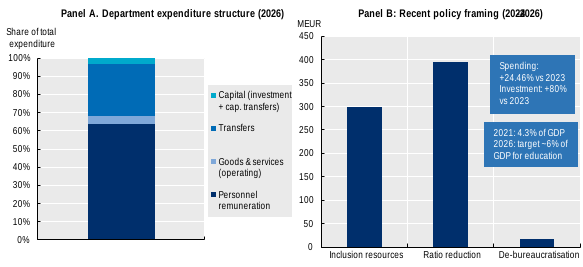
Source: Government of Catalonia (2026[18]), Acord de país per l’educació [Agreement on education], https://govern.cat/govern/docs/2026/03/09/13/04/Dossier%20Acord%20de%20pa%C3%ADs%20per%20l%27educaci%C3%B3.pdf; Government of Catalonia (2026[4]), Pressupostos (Projecte) 2026 [Budget proposal 2026], https://aplicacions.economia.gencat.cat/wpres/2026/03_projecte.htm; Department of Education and Vocational Training (2026[19]), Pressupostos 2026 (02/2026) [Budget 2026 (02:2026, proposal)], https://govern.cat/govern/docs/2026/03/03/16/36/Dossier%20Pressupost%20Educaci%C3%B3%20i%20FP%202026.pdf.
At the time of drafting, the Government had presented a budget proposal for 2026, which, if adopted, would further modify expenditure trajectories and investment priorities. The proposal allocates approximately EUR 639 million to educational quality and equity, EUR 376 million to inclusive education, EUR 672 million to vocational education and lifelong learning, and EUR 333 million to the modernisation of the education system (Department of Education and Vocational Training, 2026[19]). These proposed allocations indicate a continued prioritisation of educational quality, inclusion, vocational education and training, and system capacity, while also reflecting an effort to align funding with the Government's strategic policy priorities;
The expenditure structure shapes how funding is experienced at school level. These dynamics also operate differently across provider sectors, reflecting variation in governance arrangements, employment structures and operational conditions between public and publicly funded private schools. Where a large share of resources is embedded in staffing provision, schools receive funding primarily through teacher and support staff allocations, complemented by more limited discretionary financial resources. As a result, decisions regarding workforce levels, staff profiles and employment stability become key mechanisms through which funding is translated into operational capacity across the publicly funded network. This reinforces the importance of allocation rules as a central policy lever connecting funding decisions to implementation conditions across the Education Service.
At school level, resources are allocated through a combination of staffing assignments, operating grants and targeted funding mechanisms. A substantial share of resources is channelled through centrally determined staffing allocations regarding to educational stages, enrolment levels and school characteristics. Additional resources may be provided through compensatory and targeted measures intended to address educational complexity, socio-economic disadvantage and specific educational needs. Consequently, resource allocation combines staffing rules, operating funding and targeted support mechanisms, with many funding decisions experienced by schools through staffing levels, support provision and programme resources (Síndic de Greuges de Catalunya, 2020[20]; CEC, 2024[17]).
A more detailed perspective on how resources relate to provision is provided by analysis on the estimated cost of a school place, which distinguishes between components such as basic teaching and support staffing, operating costs, complementary services and the cost of responding to educational complexity (Síndic de Greuges de Catalunya, 2020[20]). It also introduces a distinction between public funding, the “real” cost of provision including family contributions, and the “theoretical” cost required to ensure free provision with equivalent quality standards. For 2018/19, the report estimated average public funding at around EUR 4 150 per student, compared to a real cost of around EUR 6 010. Under a scenario of socially balanced enrolment, theoretical costs were estimated at around EUR 4 970 per student in early childhood and primary education and EUR 6 100 in compulsory secondary education (Síndic de Greuges de Catalunya, 2020[20]). These estimates nevertheless need to be interpreted in light of differences in provision models across sectors. In particular, the calculations incorporate the cost associated with the additional instructional hour typically provided in publicly subsidised private schools, but not in public schools, which may affect direct comparison of estimated funding needs and provision conditions between provider types.
As such, these estimates should be interpreted cautiously given methodological assumptions and differences in provision models across sectors. Nevertheless, they illustrate how cost components, family contributions and schooling conditions interact across the publicly funded network. The Consell Escolar de Catalunya notes that household spending continues to cover elements such as materials and school activities, and that in publicly subsidised private provision, gaps in operating cost coverage are often compensated through family payments (CEC, 2024[17]).
Recent agreements between the Department and organisations representing publicly funded private providers also indicate efforts to strengthen the financing framework of the concertados sector within the broader Education Service. The March 2026 agreement establishes a multi-year funding framework for the 2026-2030 period, including additional allocations regarding operating costs, staffing provision and support for students with specific educational needs associated with socio-economically disadvantaged backgrounds (NESE B). The agreement also links funding adjustments to broader objectives related to equity, school stability and the reduction of school segregation across the publicly funded network (Canal Terrassa, 2026[21]; Government of Catalonia, n.d.[22])
Furthermore, other important recent policy developments indicate efforts to connect funding decisions with broader system priorities to improve responsiveness. The recent 2026 agreement reached by the Department of Education and Vocational Training and trade unions (CCOO, UGT and Aspepc-sps) establishes a broader multi-year framework combining financial commitments with operational measures affecting staffing, working conditions and organisational practices. It includes allocations for areas such as inclusive education, class size reduction and administrative simplification, and introduces a Joint Deployment and Monitoring Commission to oversee implementation (Government of Catalonia, 2026[2]; Government of Catalonia, 2026[3]). This agreement represents not only an additional funding commitment, but also a medium-term operative framework. It seeks to connect resource allocation decisions with workforce reform, inclusion measures and organisational capacity across the Education Service. The scale and predictability of these commitments may create more favourable conditions for sustained implementation, particularly in areas where previous reforms were constrained by fragmented funding or limited operational capacity.
Capital investment constitutes a further dimension of the funding architecture. It is typically governed through multi-year planning and, in some cases, supported by external financing instruments. For example, the European Investment Bank signed a EUR 100 million financing agreement with the Government of Catalonia in 2024 to support planned investment in the renovation, expansion and construction of education facilities (European Investment Bank, 2024[23]). Recent policy initiatives also include the creation of an extraordinary EUR 100 million fund for municipalities aimed at accelerating infrastructure improvement and school construction.
Funding in Catalonia can be therefore understood as a layered architecture combining staffing allocations, operating budgets, transfers, compensatory measures and capital investment. These elements together shape how resources are mobilised and distributed across the system, and provide the basis for analysing how governance and funding arrangements influence implementation, equity and system performance in the sections that follow.
VET governance and funding interfaces
Catalonia’s expansion of vocational education and training (VET) introduces additional governance and funding challenges. Within the framework established by Law 10/2015, delivery depends not only on school-based provision but also on co-ordination with employers, workplace placements and labour-market condition (Agència Pública de Formació i Qualificació Professionals de Catalunya, 2025[16]). This reflects a structural feature of VET provision. In contrast to general education, where delivery is primarily organised within schools, VET (particularly in its dual forms) combines centre-based learning with workplace experience. As participation expands, the organisation of workplace placements becomes an integral part of how the system functions.
In this context, governance arrangements extend beyond traditional areas such as curriculum, staffing and school organisation. They increasingly involve co-ordination with employers, intermediary bodies and economic sectors. A central institutional interface in Catalonia is the Sistema FPCAT, which seeks to integrate initial VET and VET for employment, while strengthening prospective analysis, evaluation and collaboration with employers and social partners. Within this framework, recent governance reforms, including Decree 273/2025, reinforce the co-ordinating role of the Secretariat for Vocational Education within the Department of Education and Vocational Training in establishing general criteria and ensuring co-ordination across vocational education and professional qualification policies (DOGC, 2025[10]). Furthermore, the V Pla general del Sistema FPCAT 2025–2028 positions VET as a strategic policy for employability and productive transformation (Agència Pública de Formació i Qualificació Professionals de Catalunya, 2025[16]).
At provider level, the delivery of dual VET involves a set of operational functions that complement teaching activities. These include establishing partnerships with employers, organising and allocating placements, formalising agreements and ensuring the monitoring and assessment of workplace learning (Government of Catalonia, n.d.[24]). These functions introduce organisational and co-ordination requirements that differ from those associated with purely school-based provision, combining pedagogical responsibilities with relational and administrative tasks.
Furthermore, the availability and distribution of workplace learning opportunities are influenced by sectoral structure, firm size and local economic conditions, which vary across territories. These factors shape how VET provision is organised in practice and highlight the importance of territorial conditions in determining feasibility. From a funding perspective, these territorial differences also affect how resources and organisational responsibilities are distributed across providers. In systems where funding is largely channelled through teaching posts, these additional organisational functions may be embedded within existing roles rather than explicitly recognised in funding models.
As VET expands, the importance of information on placement availability, allocation and outcomes also increases. Strategic frameworks emphasise the role of evaluation and prospective analysis in aligning provision with labour-market needs over time (Agència Pública de Formació i Qualificació Professionals de Catalunya, 2025[16]). Recent initiatives, including GOV/55/2025 on improving access to vocational education and training and expanding professional pathways, further reinforce this orientation by seeking to connect expansion of provision to territorial demand, continuity pathways and productive transformation priorities (DOGC, 2025[25]) (See Box 6.1).
In March 2025, the Government of Catalonia adopted Government Agreement GOV/55/2025 to improve access to vocational education and training (VET), expand the provision of vocational programmes and support continuity across educational pathways. The agreement forms part of broader efforts to strengthen the responsiveness of the VET system to labour-market transformation, territorial demand and increasing participation in vocational pathways.
The agreement established a significant expansion of publicly funded VET provision for the 2025/2026 academic year, including 7 583 additional places and 305 new groups across Catalonia, accompanied by 490 additional teaching positions. Expansion occurred predominantly in public centres, while also involving publicly subsidised private providers, reflecting the shared role of different providers within the Education Service. A substantial share of the additional provision was directed towards supporting continuity across educational and vocational pathways, particularly through training and insertion programmes (PFI), basic vocational education and training (CFGB) and intermediate vocational programmes (CFGM).
The expansion also reflected differentiated sectoral priorities in relation to labour-market demand. Areas receiving the largest increases in provision include health, administration and management, and physical and sports activities. In parallel, the measures were connected explicitly to territorial demand, productive-sector needs and broader demographic pressures affecting access to VET. The expansion therefore increased the organisational demands associated with staffing, infrastructure, workplace learning opportunities and co-ordination with employers and local actors.
From a governance perspective, the agreement illustrates the growing importance of co-ordinated planning mechanisms capable of aligning programme expansion with territorial implementation capacity, labour-market demand and continuity across educational pathways within the Education Service.
Source: DOGC (2025[25]), Acuerdo GOV/55/2025, de 4 de marzo, para optimizar y mejorar el acceso a la formación profesional, ampliar la oferta de las enseñanzas profesionalizadoras y fomentar la continuidad formativa [Agreement GOV/55/2025, of 4 March, to optimise and improve access to vocational training, expand the provision of vocational courses and promote continuous training], https://portaldogc.gencat.cat/utilsEADOP/PDF/9365/2075389.pdf; Cataluña incrementa en 7.583 plazas la oferta de FP - EFE.
A recent evaluation of graduate trajectories also shows that a substantial share of VET completers do not transition directly into full employment, but instead combine work and further study or remain in education. This points to the need for information systems that capture the diversity of post-completion pathways rather than relying solely on headline insertion rates (Direcció General de Formació Professional, 2025[26]).
As such, VET governance involves interactions across multiple actors, including education authorities, territorial services, providers, employers and social partners. The effectiveness of these arrangements depends on how clearly roles, responsibilities and information flows are articulated across this multi-actor system, and how they support the alignment of provision with both learner demand and labour-market accessibility. Recent legislative developments, including Law 8/2025 on the Statute of Rural Municipalities, further reinforce the importance of ensuring that basic vocational education and training provision remains accessible within rural areas and, where feasible, within reasonable proximity to students’ municipality of residence (DOGC, n.d.[27]).
Catalonia has also undertaken significant efforts to expand and strengthen vocational education and training pathways, including dual provision. Recent insertion studies indicate comparatively strong labour-market outcomes for VET graduates, with employment rates above 50% overall and substantially higher outcomes for intensive dual VET pathways, where around three out of four students are employed following completion. These findings reinforce the strategic importance of ensuring sufficient implementation capacity, workplace learning opportunities and employer engagement as participation expands. Current work towards a Dual VET Strategy 2030 also reflects efforts to consolidate a longer-term governance and implementation framework for dual provision, including the co-ordination of workplace learning capacity, provider participation and employer engagement across territories (BOE, 2022[28]).
Pressures shaping governance and funding choices
Governance and funding decisions in Catalonia are taking place in the context of evolving and, at times, competing pressures that shape both policy priorities and delivery conditions. These shape how the system operates in practice and the conditions under which governance and funding arrangements function.
One key factor is the increasing diversity of the student population, driven in part by migration and reflected in rising levels of socio-economic disadvantage and a broader range of educational needs. These dynamics increase demands on schools and require governance and funding arrangements that can support differentiated responses while maintaining system alignment. In the same way, system-level analyses and exchanges between the OECD Review Team and stakeholders point to persistent challenges related to equity and school segregation. While policy instruments exist to promote inclusion and more balanced school composition, their delivery depends on effective co-ordination across actors and territories, including alignment of admissions, sufficient resource allocation and support mechanisms (Government of Catalonia, 2024[29]; Grup Impulsor de Mesures de Millores Educatives, 2024[30]) (See also Chapter 2).
Administrative workload and organisational complexity are also key factors shaping implementation conditions. As discussed in Chapter 3, teachers and school leaders report high levels of administrative burden associated with documentation, reporting requirements and the management of multiple initiatives. These challenges were consistently raised in OECD Review Team exchanges with school leaders and teachers, although recent reform initiatives are beginning to place greater emphasis on administrative simplification and support. These demands are shaped by governance arrangements that define reporting, accountability and co-ordination processes (OECD, 2025[31]). Recent policy developments, including the 2026 education agreement, place “desburocratització” as an explicit reform component, highlighting the role of administrative processes in shaping system capacity (OECD, 2025[31]; Government of Catalonia, 2026[2]; Government of Catalonia, 2026[3]) (see also Chapter 3). Recent commitments under the 2026 agreement, particularly regarding administrative simplification and reinforcement of support staffing, indicate efforts to address some of these implementation pressures through organisational and resource adjustments (Government of Catalonia, 2026[3]).
Similarly, demographic trends introduce significant variation in pressures across territories. While some areas experience declining enrolment and excess capacity, others face increasing demand related to student mobility and the arrival of new students during the school year (matrícula viva). These dynamics were mentioned in discussions with territorial actors during the OECD review visit, particularly in relation to planning challenges and the need to adjust provision within the school year. They affect how provision is organised and require co-ordination and allocation mechanisms capable of responding to changing demand patterns over time (see Chapters 2 and 3).
Finally, technological developments and the increasing use of digital tools, including artificial intelligence, are adding new dimensions to system governance. These developments raise questions related to infrastructure, investment, regulation and professional capacity, and require forward-looking approaches to planning, resource allocation and capacity development (OECD, 2023[32]). Stakeholder exchanges during the review also pointed to uneven readiness across schools in terms of digital infrastructure, staff capacity and the integration of emerging technologies.
These contextual pressures suggest that governance and funding arrangements operate within a dynamic environment characterised by changing student needs, organisational demands and external developments. They provide the context for analysing how existing arrangements support system coherence, implementation capacity and responsiveness. The following sections assess the extent to which current arrangements provide a solid foundation for system performance, and identify the main challenges limiting their effectiveness in practice.
This section identifies key features of Catalonia’s governance and funding arrangements that support system-level steering and provide a basis for strengthening delivery capacity. It focusses on elements that contribute to consistency in implementation, predictability and the ability to translate policy priorities into consistent practice across the publicly funded network.
A strong legal and regulatory framework enabling system-wide steering
Catalonia benefits from a well-developed legal and regulatory framework anchored in the Education Law of Catalonia (Lei 12/2009), which defines the Education Service of Catalonia and establishes core principles for system organisation, responsibilities and financing (DOGC, 2009[6]). This framework is complemented in the area of vocational education and training by Law 10/2015 on vocational education and training and professional qualifications, which strengthens the institutional basis for co-ordination between education, training and labour-market policies (DOGC, 2015[33]). From a governance perspective, this provides an institutional basis for system-wide steering by defining roles, responsibilities and the scope of public action. By framing public and publicly funded private provision within a shared public-interest mandate, the law creates the conditions for aligning policy objectives, regulatory instruments and funding mechanisms across the network. This is particularly relevant in a mixed-provider system, where co-ordinated implementation depends on the existence of a common framework guiding different actors operating under a shared mandate.
This legal anchoring is complemented by operational instruments that translate system priorities into implementation processes. In particular, planning and admissions frameworks – such as those established under Decret 11/2021 – provide structured mechanisms to organise provision, manage student allocation and operationalise equity objectives at local level (DOGC, 2021[34]). Evidence and exchanges with stakeholders during the OECD Review visit indicate that these frameworks provide a recognised basis for system steering and a shared set of rules within which actors operate. This shared framework functions as a co-ordination device in a system characterised by multiple actors and levels of governance, reducing ambiguity in decision making and supporting more consistent application of rules across contexts.
In addition, intermediary structures, particularly the Inspectorate of Education, play a key role in operationalising these frameworks by providing interpretation, guidance and feedback on their implementation (DOGC, 2021[35]). This function is particularly important in a territorially diverse system, where consistency depends on the system’s capacity to translate formal rules into actionable guidance and support their consistent enactment across contexts, including in settings with differing levels of capacity.
Similarly, the framework establishes a basis for school-level leadership and autonomy, particularly in pedagogical and organisational domains. This provides schools with scope to adapt practices to local contexts, which is an important condition for responding to diverse student needs. As discussed in the contextual section, the scope of this autonomy varies across domains, particularly in relation to staffing and resource allocation. Nevertheless, its existence remains a key enabling condition for implementation, as it allows schools to translate system-level priorities into context-specific practices.
Availability of information to support decision making
Catalonia has a substantial information base to support evidence-informed governance. Administrative data, system monitoring processes and assessment frameworks provide information on system trends (see Chapters 3 and 5). At school level, initiatives such as the AVIM evaluation model provide mechanisms for generating evidence for improvement. In OECD Review Team exchanges with system actors, these tools were described as contributing to more structured approaches to self-evaluation and reflection within schools (see Chapter 5). These elements point to a relatively well-developed information infrastructure supporting monitoring, evaluation and planning functions.
However, evidence and OECD Review Team exchanges with stakeholders suggest that the use of this information for steering decisions remains uneven, particularly in relation to policy design and resource allocation. Comparative OECD analysis shows a recurring pattern in systems with publicly funded provision: while information systems and accountability mechanisms are often well developed, their use for informing policy design, resource allocation and strategic steering is more limited (Boeskens, 2016[36]). This distinction is particularly important in Catalonia, where many resource decisions are operationalised through staffing allocations and programme parameters rather than discretionary school budgets. In such contexts, effective governance depends on whether evidence is translated into adjustments of allocation rules, targeting mechanisms and support strategies, rather than being used primarily for reporting and compliance purposes (OECD, 2018[37]; OECD, 2025[38]).
Recent institutional developments further strengthen this potential. The reactivation of the Education Evaluation and Foresight Agency (Agència d’Avaluació i Prospectiva de l’Educació), established by Decree 65/2025, provides a formal basis to strengthen evaluation and forward-looking analytical capacity (DOGC, 2025[15]). This creates an opportunity to strengthen the integration of evaluation and foresight into system steering, particularly in areas such as demographic change, digitalisation and evolving skill needs. Its contribution will depend not only on technical capacity, but on how effectively its outputs are embedded in decision making processes and connected to planning and resource allocation cycles.
Emerging governance routines to support implementation over time
Recent policy developments indicate the emergence of more structured follow-through mechanisms supporting implementation beyond initial policy decisions. In particular, the 2026 education agreement introduces a Joint Deployment and Monitoring Commission (Comissió Paritària de Desplegament i Seguiment), which provides a formal structure for tracking delivery, facilitate dialogue between actors and enable adjustments over time (Government of Catalonia, 2026[1]; Government of Catalonia, 2026[2]; Government of Catalonia, 2026[3]). The 2026 agreement also represents a significant increase in the scale and predictability of medium-term education investment, which creates conditions for more sustained implementation across staffing, inclusion and organisational reform.
Evidence from OECD analysis shows that operative capacity depends not only on policy design, but on the existence of routines that connect decision, delivery and adjustment over time (OECD, 2018[37]). In this respect, structured follow-up mechanisms can strengthen governance by establishing a regular cadence for monitoring progress, identifying bottlenecks and revising implementation approaches. Earlier exchanges with stakeholders during the OECD Review suggest that the introduction of such mechanisms is perceived as a positive development, particularly in a context where previous reforms have sometimes been experienced as fragmented or insufficiently sustained over time.
Where these routines are clearly connected to decision making processes, they can support more predictable implementation, reduce policy volatility and help align expectations across actors. Nevertheless, their effectiveness depends on whether they incorporate feedback from territorial actors and schools, and whether monitoring leads to concrete adjustments in policy design and resource allocation.
A policy commitment to equity-oriented planning and funding
Catalonia’s education system is characterised by a clear and consistent policy commitment to equity and inclusion, which shapes both governance and funding frameworks (see Chapter 3; (DOGC, 2021[34]).
This orientation provides a strong rationale for differentiated resourcing, including targeted programmes, additional staffing and support services aimed at addressing socio-economic disadvantage and educational complexity. It also establishes equity as a central organising principle across multiple policy instruments, including planning, admissions and funding mechanisms.
Evidence reviewed in this report, including OECD Review Team exchanges with stakeholders, indicates that this equity orientation is widely recognised within the system as a guiding objective for policy development. This contributes to a shared understanding of system priorities, which is an important condition for co-ordinated action across actors. Ongoing efforts to refine indicators of school complexity and student need point towards a more systematic alignment between resources and levels of disadvantage, including through instruments such as the motxilles escolars (Department of Education and Vocational Training, 2025[39]). In the Catalan education context, such developments are particularly important for strengthening the responsiveness and transparency of funding mechanisms.
However, the effectiveness of equity-oriented resourcing depends on its predictability, clarity and consistency of implementation across the publicly funded network. Where compensatory measures operate as stable and clearly defined entitlements, they can strengthen schools’ capacity to plan and reduce reliance on informal or ad hoc practices. Where they are less predictable or unevenly applied, their impact on equity may be more limited.
This issue is particularly relevant in a context where participation costs and access to services vary across schools and territories. Evidence from the Consell Escolar de Catalunya shows the continued role of household contributions in covering elements of schooling, and the implications for equity and participation (CEC, 2024[17]). By explicitly framing equity as a system-wide objective, governance and funding arrangements can provide a basis for addressing disparities in conditions, participation and outcomes across the publicly funded network. Furthermore, the recent agreements on staffing, inclusive education and support services can reinforce this orientation by connecting additional resources to differentiated student needs and implementation capacity across schools.
Capacity to mobilise long‑term capital investment and external financing for infrastructure
Catalonia demonstrates the capacity to mobilise capital investment for the education system through multi-year planning and targeted funding mechanisms. A recent example is the creation of the EUR 100 million Fons Actualitza Escoles, which provides municipalities with resources to carry out renovation and improvement works in public schools between 2026 and 2028. By significantly increasing investment in school infrastructure and allocating funding according to objective criteria such as enrolment and the age of school buildings, the initiative aims to address maintenance needs while supporting more equitable conditions across the territory (Government of Catalonia, 2026[40]).
Such investments contribute to improving learning environments and supporting the delivery of broader policy priorities, including inclusion, well-being and the expansion of educational provision. From a governance perspective, this capacity is important because infrastructure conditions can either enable or constrain policy implementation. Long-term capital planning allows investment decisions to be aligned with evolving demographic trends, territorial needs and system priorities in ways that annual operating budgets alone often cannot achieve.
OECD analysis shows that multi-year capital investment can support the alignment of long-term system priorities with infrastructure development, which is difficult to achieve through annual operating budgets alone (OECD, 2022[41]). It can also help address accumulated disparities in facility conditions, accessibility and learning environments while contributing to broader objectives such as sustainability, energy efficiency and resilience.
Realising these benefits requires infrastructure planning to be closely integrated with demographic trends, territorial planning and educational priorities. Mechanisms that allocate investment according to objective indicators of need can help ensure that capital spending supports equity and quality objectives across the system, rather than responding only to short-term pressures (OECD, 2022[41]).
A structured but complex funding architecture enabling targeted intervention
As outlined earlier in this chapter, Catalonia’s funding system is characterised by a layered architecture combining staffing allocations, operating budgets, transfers, compensatory measures and capital investment. This structure provides multiple channels through which resources can be directed to schools and aligned with policy priorities, including equity, inclusion and system expansion. In particular, the combination of baseline staffing allocations and targeted programmes creates the potential to differentiate support according to student need and policy objectives.
From a governance perspective, this architecture offers some flexibility in how resources are mobilised and deployed. Different funding streams can be used to address distinct dimensions of provision, such as staffing, services, infrastructure or targeted support for disadvantaged students. Similarly, as discussed in the contextual section, the existence of multiple funding streams introduces co-ordination and transparency challenges. The effectiveness of this architecture therefore depends on how clearly the objectives of different funding channels are defined, how they are aligned, and how consistently they are implemented across the system.
These aspects provide a solid institutional and policy foundation for system steering in Catalonia. They reflect a governance framework with clear legal anchoring, structured delivery channels, growing analytical capacity and a strong orientation towards equity. However, translating these enabling conditions into consistent implementation across territories and providers remains an ongoing challenge. The following section examines the key challenges that limit this translation, focussing on co-ordination across actors, the use of evidence in decision-making, and the alignment between resources and operative capacity.
While Catalonia’s governance and funding arrangements provide a solid institutional foundation, several factors limit the system’s capacity to translate policy priorities into sustained and co-ordinated implementation across schools and territories. These challenges relate to co-ordination across actors and territories, the use of evidence in decision-making, and the alignment of resources, including time, with implementation needs.
Variation in territorial capacity and co-ordination affects implementation consistency
Catalonia’s governance framework includes a wide range of institutional actors and policy instruments, which provides important steering capacity but also increases co-ordination demands across the system. In multilevel systems, the key challenge is often less the formal distribution of responsibilities than the system’s capacity to generate consistent and actionable signals across levels, territories and providers in terms of expectations, support and resourcing.
This issue is salient given that Catalonia’s public and publicly funded private schools operate within a shared Education Service, although this is not atypical among OECD education systems. Planning, admissions and equity instruments require co-ordinated and sustained action across providers and territories. This is particularly important in Catalonia’s mixed-provider model, where publicly funded private providers play a substantial role in compulsory education and VET provision.
Ensuring coherent implementation therefore depends not only on public-sector steering capacity, but also on the alignment of incentives, accountability arrangements and funding conditions across the different provider sectors within the Education Service. While Decret 11/2021 establishes a governance architecture for programming the educational offer and managing admissions, its effectiveness depends on the consistency of operative routines and decision making practices across municipalities and territorial units (DOGC, 2021[34]). Evidence reviewed in this report and OECD analysis suggest that territorial capacity varies in terms of data use, co-ordination and operational decision-making.
These differences may influence how policies are interpreted and enacted in practice, particularly in areas such as the allocation of reserved places, the management of late arrivals (matrícula viva) and the co-ordination of support for students with complex needs. In these areas, implementation quality depends not only on formal rules, but on the capacity of territorial and local actors, including provider networks across the publicly funded system, to interpret data, broker agreement among providers, and adjust responses as needs evolve during the school year (OECD, 2018[37]; OECD, 2021[42]). As a result, similar policy frameworks may be implemented with different levels of intensity and consistency across contexts.
These differences can hinder the predictability of delivery and contribute to uneven experiences across schools and territories. Recent reforms and strengthened co-ordination mechanisms create opportunities to support more consistent implementation across the Education Service over the coming years.
Connections between evidence and decision making could be further strengthened
Catalonia has significantly strengthened its information and evaluation infrastructure in recent years. However, stronger routines are still needed to ensure that evaluation, inspection and analytical evidence systematically inform allocation decisions, programme design and implementation support. Evidence analysed by the OECD Review Team, including exchanges with system actors, suggests that evaluation and data do not yet appear to be systematically connected to all steering and allocation cycles. As a result, information has been more often used for monitoring and accountability than for adjusting allocation parameters, programme rules or implementation support (OECD, 2018[37]).
This gap is particularly significant in a system such as Catalonia’s, where many resource decisions are embedded in staffing rules, targeting criteria and administrative design rather than in discretionary school budgets. In such contexts, effective governance depends on whether evidence informs the rules that shape staffing allocations, support configurations and programme design, rather than being used primarily for reporting purposes (OECD, 2018[37]; OECD, 2022[41]). Where these connections are weak, the system’s capacity to respond to changing needs is reduced. Schools may face evolving student profiles or implementation pressures without corresponding adjustments in staffing, support or programme design. Nevertheless, increasing reporting requirements without visible consequences for resourcing or support can reduce the perceived relevance of evaluation and limit its contribution to improvement.
The reactivation of the Education Evaluation and Foresight Agency creates an opportunity to strengthen these links, provided that its outputs are systematically integrated into planning, budgeting and allocation decisions across the system.
Resource allocation and use could be more closely aligned with implementation needs
Recent reforms and additional funding commitments create opportunities to strengthen the alignment between resource allocation and implementation needs. Yet, important challenges remain in ensuring that staffing, support services and organisational resources are sufficiently differentiated to reflect variation in school context and student need.
This challenge becomes particularly salient in light of recent commitments to expand workforce capacity. The multi-year planning framework associated with the 2026 agreements foresees the deployment of a minimum of around 6 410 additional staff positions between 2026 and 2030, with annual adjustments based on evolving system needs, enrolment trends and resource availability. Such large-scale expansion reinforces the need for allocation mechanisms capable of dynamically aligning resources with territorial variation in demand (Government of Catalonia, 2026[2]; Government of Catalonia, 2026[3]).
Governance and funding challenges in Catalonia increasingly relate not only to the level of resources, but to how financial, human and temporal resources are organised and deployed to support learning, equity and implementation capacity. A central issue concerns the responsiveness of allocation mechanisms to differences in school context and student need. Schools serving more demanding contexts where staffing and support allocations are not fully aligned with concentrations of disadvantage or educational complexity may continue to experience significant implementation pressures despite recent efforts to strengthen support measures. This can hinder both equity and efficiency, as resources are not fully aligned with the conditions required for effective implementation.
Decisions on class size and overall student–teacher staffing levels illustrate the need to make resource trade-offs and synergies more explicit. In Catalonia, public debate and recent agreements have placed particular emphasis on reducing class size, especially in contexts of increasing educational complexity and inclusion demands. At the same time, the overall relationship between staffing levels and student numbers is also an important determinant of implementation capacity, as many support, co-ordination and inclusion functions depend on the broader availability of teaching staff across schools.
While reducing class size responds to stakeholder concerns and may improve classroom conditions (Government of Catalonia, 2026[2]; Government of Catalonia, 2026[3]), international evidence suggests that uniform reductions may not always represent the most effective use of resources across all contexts (OECD, 2022[41]) (Box 6.5). From a governance perspective, such policies involve opportunity costs and need to be considered alongside alternative uses of resources, including targeted support for high-complexity schools, strengthening leadership capacity and reducing workload pressures. Their effectiveness depends on how clearly these trade-offs are articulated and connected to evidence on impact and need. The commitments under the 2026 agreement, including class-size reductions, reinforcement of inclusive education and administrative simplification measures, are an occasion to address some of these implementation pressures. Their impact will also depend on how effectively additional resources are aligned with differentiated territorial and school-level needs
The organisation of learning time further illustrates how resource use interacts with equity and participation. Catalonia, like the rest of Spain, has both continuous and split-day models, and the design of the school day has implications for learning, inclusion and access to services. Evidence on school-day arrangements shows connections between time structures, access to meals and extracurricular activities, and costs borne by families (Department of Education and Vocational Training, 2025[43]; Ivàlua, 2024[44]). These factors shape both learning conditions and participation, particularly for disadvantaged students.
Time is also a critical resource for teachers and school leaders. Administrative and co-ordination requirements influence how time is used within schools and can reduce the capacity for teaching, collaboration and improvement (see Chapter 4). Governance processes that generate increasing reporting and organisational demands without corresponding simplification may consume the time and capacity they aim to strengthen.
Improving efficiency therefore depends not only on the volume of resources available, but also on how governance arrangements shape their use within schools. Schools across the publicly funded network where staffing, time and organisational demands are not aligned with implementation needs may face difficulties in adapting provision, sustaining collaboration and maintaining improvement efforts over time.
Opportunities to strengthen the equalising role of funding and compensatory measures
The Education Service framework implies a commitment to broadly equivalent schooling conditions across publicly funded provision. In practice, however, differences in access to services, schedules and family-borne costs may continue to shape participation and contribute to stratification. Evidence indicates that private contributions play a significant role in covering elements such as materials, meals, transport and extracurricular activities (Eurydice, 2026[7]). Recent budget measures also aim to expand compensatory support for families, including an extension of financial assistance to an estimated 189 000 beneficiaries. Such measures may reduce barriers to participation, but their effectiveness hinges on whether they adequately reflect actual schooling costs and are implemented consistently across schools and territories (Government of Catalonia, 2026[4]).
These dynamics illustrate how gaps between public funding and the effective costs of provision may contribute to variation in family contributions and schooling conditions. At the same time, the recent agreements between the Department and organisations representing publicly funded private providers also seek to strengthen financing conditions within the concertados sector, including through additional funding in relation to operating costs, staffing and support for disadvantaged students.
These developments raise questions about the adequacy, targeting and usability of compensatory measures, including motxilles escolars. Adequate and predictable funding, together with administratively accessible arrangements, are important for ensuring that such measures effectively reduce financial barriers. This includes making support easy for families to access and ensuring that entitlement rules are clear across contexts.
Where compensatory supports are not sufficiently co-ordinated or adequately resourced, families may still face significant costs, and schools may rely on ad hoc practices to ensure participation in core and complementary activities. These practices may vary across providers and territories, reflecting differences in funding structures, participation conditions and local implementation arrangements across the publicly funded network. Over time, these differences may contribute to variation in participation conditions and perceptions of fairness across the publicly funded network. Recent agreements including publicly funded private providers nevertheless indicate efforts to strengthen equity objectives and reduce disparities in operating conditions across sectors. These governance and funding dynamics take on additional complexity in vocational education and training.
VET governance and funding arrangements are adapting to the expansion of dual provision
Catalonia has undertaken significant reforms to expand and strengthen vocational education and training (VET) provision, including major increases in publicly funded places and efforts to strengthen dual pathways and territorial responsiveness. These reforms position VET as a central policy priority within broader economic and social transformation objectives. Similarly, governance and funding arrangements continue to evolve in response to the operational requirements associated with large-scale dual provision, including workplace learning, employer co-ordination and territorial implementation capacity (Agència Pública de Formació i Qualificació Professionals de Catalunya, 2025[16]). Recent budget measures also include targeted investments in vocational education, including additional teaching staff, expanded programme capacity and resources for equipment and innovation. These investments aim to support the expansion of participation and improve alignment with labour-market demand, while increasing the importance of co-ordination across providers and territories (Government of Catalonia, 2026[4]).
In practice, the availability of workplace placements is partly shaped by factors outside the education system, including employer participation, sectoral structure and local economic conditions. This creates variation in implementation conditions across territories and sectors. As a result, delivery requires co-ordination functions – including employer engagement, placement allocation and monitoring – which go beyond traditional school-based provision (Department of Education, 2024[45]). These functions involve organisational and relational capacities that are not always explicitly recognised or supported in governance and funding arrangements.
Given that funding is largely structured around teaching posts, these additional functions may in some cases be absorbed within existing roles rather than explicitly recognised within governance and funding arrangements. This places pressure on providers’ capacity to organise placements, maintain employer relationships and ensure consistent monitoring of workplace learning, particularly in contexts where employer engagement is more demanding. These constraints have implications for both equity and system performance. Variability in placement availability and co-ordination capacity may affect students’ access to workplace learning and the quality or intensity of dual provision across programmes and territories. Limited and uneven information on placement supply, allocation and outcomes further constrains system steering.
As participation continues to expand, ensuring consistent implementation across territories will increasingly depend on the capacity of governance and funding arrangements to support workplace learning, employer engagement and operational co-ordination. Strengthening these interfaces will therefore be important to avoid growing disparities in access and implementation conditions across programmes and territories.
Foresight could be more systematically embedded in planning and investment decisions
Catalonia has taken steps to strengthen forward-looking capacity, notably through the reactivation of the Education Evaluation and Foresight Agency. The key governance challenge is to connect this capacity to core planning, resource allocation and investment decisions. Foresight has greatest value when it informs decisions about the educational offer, including the expansion or adaptation of VET and specialised programmes, the development of emerging skills such as digital and technological competences, staffing requirements, infrastructure planning and long-term investment priorities. This is particularly important where planning needs to anticipate demographic change, student mobility, workforce pressures and technological transformation. At present, these connections are still developing and could be strengthened further. Planning processes continue to rely to an important extent on existing structures and historical allocation trends, which may reduce the system’s capacity to anticipate and respond to emerging needs in a timely way.
This challenge is closely related to territorial planning and the organisation of the school network. Decisions regarding the location and scale of provision, the organisation of the school network, the adaptation of education programmes to changing learner and labour-market demand, and the balance of provision across publicly funded providers all benefit from forward-looking analysis of demographic, economic and technological trends. Frameworks such as Decret 11/2021 provide a basis for programming educational provision and managing admissions. Proactive system adaptation, however, requites the integration of forward-looking analysis into decision making processes (DOGC, 2021[34]), Including for budgeting and investment decisions.
Without clearer integration between foresight, planning and investment decisions, the system may remain more reactive than anticipatory in responding to demographic, territorial and workforce pressures. Embedding forward-looking analysis more systematically within planning and budgeting cycles would help strengthen long-term responsiveness and strategic planning capacity across the Education Service.
Addressing these challenges requires strengthening not only policy design, but also the routines and capacities through which decisions are translated into practice.
Across these areas, a common challenge emerges: the need to move from well-developed policy frameworks to more consistent, evidence-informed and anticipatory implementation. The recommendations that follow therefore focus on strengthening the routines, capacities and interfaces through which governance and funding decisions are translated into practice. Strengthening governance and funding is central to Catalonia’s capacity to deliver on its policy objectives.
Previous chapters have set out priorities for equity and inclusion (Chapter 2), the teaching profession and school leadership (Chapter 3), and evaluation and foresight (Chapter 4). Catalonia’s current reform context, including the implementation of the 2026 agreements, creates an important opportunity to strengthen governance and funding arrangements as enabling conditions for sustained educational improvement. Building on the analysis earlier in this chapter, this section focusses on governance and funding as enabling conditions for system-wide improvement.
Recommendation 6.1. Strengthen territorial co-ordination and implementation capacity
In the context of recent reforms, Catalonia could strengthen implementation consistency by establishing a limited number of structured decision cycles that explicitly connect system priorities, resource allocation decisions and territorial implementation across the Education Service.
In complex, multi-level systems, governance depends not only on how policies are defined, but on the existence of routines that translate these priorities into consistent decisions on staffing, provision and support. Consolidating governance around a small number of decision-oriented cycles would help ensure that system-level priorities are systematically reflected in allocation rules and implementation practices across territories and schools
In practice, this could be operationalised through a recurring annual governance cycle aligned with planning and budgeting processes. Such a cycle would begin by translating system priorities into a limited set of operational parameters, including adjustments to staffing allocation rules, targeting criteria for programmes and territorial planning guidance for provision and admissions. These parameters would provide territorial actors with a shared basis for decisions on staffing, admissions and support provision. As the school year progresses, a structured mid-year review could allow territorial services to surface emerging pressures – such as changes in enrolment, staffing constraints or gaps in provision – and trigger co-ordinated adjustments in resource allocation and support. The cycle would conclude with an end-of-year phase in which evaluation evidence, including inputs from the Evaluation and Foresight Agency, is used to inform decisions on programme continuation, redesign and the recalibration of allocation rules.
In this way, decision-making, implementation and feedback would be more closely connected over time. Across these phases, roles and decision points would be explicitly defined, including how implementation risks are identified and escalated, and how adjustments translate into changes in staffing, resources and programme design. This would help ensure that governance routines generate consistent and actionable signals to schools, strengthening coherence and supporting more predictable implementation.
For these cycles to translate into practice, territorial services would need to operate with sufficient capacity and clearly defined functions. This includes the ability to interpret school-level and territorial data, use this information to inform decisions on provision and resource allocation, and co-ordinate responses across providers within the Education Service. It also involves a more explicit role in managing dynamic pressures such as matrícula viva and in brokering collaboration between schools, municipalities and social services.
In this context, territorial services and other actors responsible for supporting schools would play a key role in ensuring that support to schools is both coherent and differentiated, particularly in high-complexity settings. Making these functions more explicit, and supporting them through common analytical tools and service expectations, would help reduce reliance on informal practices and mitigate variation in implementation across territories. International experience suggests that strengthening the capacity to support and co-ordinate schools is critical to ensuring that system-level decisions are translated into co-ordinated local action (see Box 6.2).
OECD analysis of Portugal’s education system highlights how governance arrangements can be structured to improve implementation in a context characterised by multiple actors and levels of responsibility.
A central aspect of Portugal’s approach has been the organisation of schools into school clusters (agrupamentos), which group several schools under a single leadership structure. This has allowed schools to be organised and managed at a larger scale, facilitating more co-ordinated planning of provision, staffing and support across groups of schools. These clusters serve not only as administrative units, but also as structures for co-ordinating leadership, resources and support across schools, helping to reduce fragmentation and promote more consistent implementation of national priorities.
Portugal has combined this structure with efforts to clarify roles across levels of governance. Central authorities retain responsibility for defining policy priorities and key allocation parameters, while school clusters play an important role in co-ordinating provision, organising support and adapting educational responses to the needs of their school communities. This balance between central steering and local adaptation has been supported by clearer accountability frameworks and evaluation processes. Another important element is the strengthening of organisational and leadership capacity to support schools, particularly in areas such as resource management, pedagogical co-ordination and inclusion. By consolidating functions at the cluster level and providing leadership teams with broader responsibility, the system has been able to support more strategic use of resources and reduce reliance on isolated, school-level responses to complex challenges.
OECD findings suggest that these arrangements contribute to more consistent implementation by creating structured mechanisms for co-ordination and decision making across groups of schools, while maintaining alignment with system-wide objectives. They also illustrate how governance reforms can support efficiency and equity by enabling resources and support to be organised at a scale that reflects both system priorities and local needs.
For Catalonia, where governance involves multiple actors across central, territorial and provider levels, this example highlights the importance of ensuring that schools have access to sufficient organisational and leadership capacity to translate system priorities into co-ordinated local action, while retaining the flexibility to respond to diverse territorial contexts.
Source: Liebowitz, D. et al. (2018[46]), OECD Reviews of School Resources: Portugal 2018, OECD Reviews of School Resources, OECD Publishing, Paris, https://doi.org/10.1787/9789264308411-en.
Within these governance arrangements, workforce organisation and time use would need to be treated as explicit dimensions of resource allocation. This implies systematically assessing the time implications of new initiatives, connecting additional demands to the simplification or removal of existing processes, and ensuring that school leaders have sufficient time and administrative support to fulfil their roles. In staffing-based systems such as Catalonia’s, the way time and roles are organised is a key determinant of how resources translate into effective practice, particularly in areas such as inclusion, collaboration and instructional leadership.
OECD evidence shows that effective system steering depends on structured routines that connect decision-making, delivery and feedback, supported by strong intermediate capacity (OECD, 2018[37]). In systems where resources are largely embedded in staffing allocations, the organisation of roles and time becomes central to value for money, as it shapes whether investments translate into improved outcomes (OECD, 2017[47]; OECD, 2022[41]). Strengthening decision cycles and territorial capacity can therefore improve both implementation consistency and responsiveness by ensuring that priorities and evidence are systematically translated into allocation decisions and implementation practices.
This is particularly timely in Catalonia given the scale of reforms and funding commitments under the 2026 education agreement, which require sustained and co-ordinated implementation across areas such as staffing, inclusion and administrative simplification. In the context of the ongoing staffing-intensive reform, decisions regarding class-size reduction, inclusion support and workload management may generate important medium-term implications for staffing demand, infrastructure needs and operational capacity across the system (Gortazar, L. and J. Montalbán Castilla, 2026[48]).
The establishment of the Joint Deployment and Monitoring Commission provides an institutional anchor for such routines within the framework of its mandate. At the same time, increasing student diversity and territorial variation place greater demands on local co-ordination capacity. Strengthening decision cycles alongside territorial delivery capacity would help ensure that additional resources translate into consistent improvements in school-level conditions and outcomes across the Education Service. These routines should also support dialogue and feedback across provider sectors, ensuring that implementation evidence from different governance contexts informs planning and allocation decisions.
Recommendation 6.2. Embed evidence more systematically in planning and resource allocations
Building on recent policy developments, Catalonia could strengthen system steering by ensuring that evidence is used more systematically to inform planning, resource allocation and implementation decisions.
Catalonia already has a substantial information base. The key challenge is to ensure that evaluation, inspection and research outputs are consistently translated into decisions on priorities, programme design and allocation rules. In a system where many resource decisions are embedded in staffing allocations and programme criteria, effective use of evidence depends less on generating additional information than on establishing clear routines through which evidence is synthesised, interpreted and translated into decisions.
Building on the evaluation ecosystem described in Chapter 4, Catalonia could establish structured evidence-to-decision cycles aligned with planning and budgeting processes. These cycles would connect evaluation findings more directly to decisions on staffing allocations, programme design and targeted funding. In practice, this would involve defining expected outcomes, monitoring implementation signals and regularly consolidating evidence from administrative data, evaluations and implementation feedback.
As implementation progresses, evidence from administrative data, evaluation studies intelligence and system feedback gathered through the Inspectorate’s interactions with schools and territorial services, and other practitioner feedback would be progressively consolidated into periodic syntheses assessing what is working, for whom and under what conditions. These syntheses would then feed directly into decision points within the governance cycle, informing whether programmes are maintained, redesigned, retargeted or scaled, and how allocation rules, staffing parameters and support strategies are adjusted accordingly, including systems where staffing decisions constitute the main form of resource allocation.
A limited number of annual evidence dossiers could support this process in priority areas such as inclusion, staffing deployment, balanced schooling and VET placement access. Rather than functioning as stand-alone reports, these dossiers would synthesise key evidence and present decision-oriented policy options clarifying resource implications. They would be timed to inform key allocation and planning decisions, combining quantitative indicators, evaluation findings, inspection evidence and practitioner perspectives into a single, decision-oriented synthesis. Limiting the number of such dossiers would be important to avoid duplication, information overload and fragmentation, which can reduce the uptake of evidence in decision-making.
This approach would also help clarify the respective roles of the Evaluation and Foresight Agency, the Inspectorate and the Department. The Agency could lead evidence synthesis and foresight analysis; the Inspectorate could contribute implementation feedback from schools and territories; and the Department could use these findings to adjust allocation rules, programme parameters and support strategies. OECD analysis shows that such differentiation is essential to avoid role overload and to maintain a clear distinction between accountability and support functions, while strengthening the contribution of quality assurance systems to policy learning (OECD, 2025[38]) (See Box 6.3).
To ensure that evidence also supports implementation, these cycles would incorporate a knowledge mobilisation function directed at territorial services and schools. This would involve translating evaluation findings into usable guidance, peer learning opportunities and implementation support, enabling actors to interpret evidence in their specific contexts, rather than leaving it primarily at the level of system reporting and compliance. This implies that evidence is co-ordinated, quality-assured and tailored to the needs of different users within the system. International experience shows that intermediary functions play a critical role in bridging the gap between system-level knowledge and school-level practice, particularly when they are embedded within existing structures and connected to professional learning processes (Torres and Steponavičius, 2022[49]; OECD, 2025[38]).
OECD evidence indicates that dissemination alone is rarely sufficient to influence practice; impact depends on structured routines that connect evidence to decisions, supported by brokerage, collaboration and capacity building (Torres and Steponavičius, 2022[49]). Embedding these routines within governance processes could strengthen the system’s ability to adjust policies and resource allocation in response to emerging needs and implementation evidence, particularly in a system where allocation decisions are largely rule-based and embedded in staffing structures.
This is particularly timely in Catalonia given the reactivation of the Evaluation and Foresight Agency and the increased demands for monitoring and accountability associated with the 2026 education agreement (Government of Catalonia, 2026[3]). In the context of growing student diversity, implementation complexity and increased funding effort, structured evidence-to-decision cycles would help ensure that resources and support are adjusted in response to observed needs and implementation evidence, rather than resulting in parallel initiatives with limited feedback into allocation decisions. Such routines could also support the monitoring and adjustment of reforms introduced under the 2026 agreements, helping identify implementation challenges early and connect them more directly to planning and resource allocation decisions.
OECD evidence points to several ways in which education systems are strengthening the connection between evaluation, research and decision-making. These examples illustrate that effective evidence use depends not only on analytical capacity, but also on clearly assigned roles, structured routines and support for practitioners.
In the Netherlands, the Inspectorate of Education uses research frameworks to guide inspection and system-level supervision. These frameworks are regularly updated and supported by periodic review of their underlying policy logic, helping ensure that inspection focusses on areas with the greatest potential impact. The Inspectorate also conducts system-level research, including thematic studies and collaborative projects with academic partners, illustrating how quality assurance bodies can contribute to policy learning while maintaining a clear accountability role.
In Sweden, the principle that education should be based on “research and proven experience” is embedded in the legal framework. The Swedish School Inspectorate assesses whether this principle is reflected in practice, while the Swedish Institute for Educational Research supports schools through research summaries and funding for practice-based research. This combination of accountability and support helps create a system in which research use is both expected and enabled.
In Denmark, the National Agency for Education and Quality (STUK) deploys learning consultants who work directly with schools to support improvement processes, including the use of evidence and evaluation. These roles help bridge the gap between system-level knowledge and school-level practice, illustrating the importance of coupling evaluation with implementation support.
Across these examples, a common trait is the existence of a structured knowledge mobilisation architecture, in which different actors contribute complementary functions: generating and synthesising evidence, providing implementation intelligence, translating findings into guidance and peer learning, and connecting evidence to decisions on policy and resource allocation. For Catalonia, this shows the importance of clarifying the interface between the Evaluation and Foresight Agency, the Inspectorate and territorial services within a structured evidence-to-decision cycle.
Source: OECD (2025[38]), “How can quality assurance agencies support research use in policy and practice?”, OECD Education Policy Perspectives, No.132, OECD Publishing, Paris, https://doi.org/10.1787/086c85e2-en.
Recommendation 6.3. Align funding and compensatory mechanisms more closely with student need
The 2026 agreements provide a strong basis for Catalonia to strengthen equity and implementation capacity by reassessing how funding mechanisms translate student need into staffing, services and participation conditions across the publicly funded network.This is particularly relevant given the ongoing deployment of additional resources under the 2026 agreements (Government of Catalonia, 2026[3]). For example, planned increases in specialised staff, reception classrooms and inclusion-related support structures provide a concrete opportunity to test and refine how differences in student need are translated into resource allocation in practice. The multi-year deployment framework associated with the 2026 agreements could provide an operational vehicle for progressively aligning allocation parameters with observed needs, provided that allocation criteria are explicitly defined and systematically reviewed.
The system already includes several needs-sensitive mechanisms, including school complexity indicators, differentiated staffing allocations and targeted compensatory measures. However, these mechanisms operate through partially connected rules, which can result in uneven levels of support across schools with similar levels of need. The implementation implications of inclusion-related allocation measures may also vary across schools and territories depending on local contexts and organisational arrangements (Gortazar, L. and J. Montalbán Castilla, 2026[48]). The significant additional resources mobilised through recent agreements therefore create an opportunity to reassess how funding mechanisms translate investment into differentiated support for schools and students with varying levels of need.
A first step would be to map how existing funding and staffing allocations combine at school level. This would help clarify how baseline provision, specialised staffing and targeted programmes interact to form the total resource package received by each school. Building on the approach outlined in Chapter 2, Catalonia could progressively move towards a more transparent needs-based funding model, in which additional resources are allocated through clearly defined weighting mechanisms that reflect the concentration of student needs and educational complexity (OECD, 2017[47]). This reassessment should consider how allocation mechanisms operate across different provider sectors within the publicly funded network, taking into account variation in governance arrangements and operational conditions. Framing this reassessment through a structured set of analytical questions on how needs are defined, how they are translated into allocation parameters and how different funding streams interact in practice would help ensure that funding design operates as an integrated system rather than a set of parallel instruments (see Box 6.4).
The Department could then review how complexity indicators translate into staffing decisions, targeted programmes and support services, and whether these mechanisms produce sufficiently differentiated levels of support across schools. Where inconsistencies or gaps are identified, adjustments could be made to ensure that similar levels of need lead to comparable levels of staffing, support services and access to complementary resources across both public and publicly subsidised private schools.
To ensure that this approach remains responsive over time, these allocation parameters could be reviewed through planning and budgeting cycles, with adjustments triggered by significant changes in enrolment, student mobility or concentrations of disadvantage. This would allow the system to respond to evolving needs while maintaining sufficient predictability for schools to plan their staffing and provision.
A complementary priority concerns the role of compensatory mechanisms in equalising participation conditions across schools. Evidence shows that differences in access to materials, activities and essential services continue to generate variation in schooling conditions and costs for families. Strengthening mechanisms such as motxilles escolars would therefore require defining more precisely which elements of schooling are expected to be publicly funded as a minimum entitlement and ensuring that these are consistently covered across schools.
In practice, this would involve connecting compensatory measures more directly to school-level funding and organisation. Schools would be expected to use these resources to ensure access to identified core elements (e.g. learning materials, essential activities or services) while public authorities ensure that funding is sufficient, predictable and delivered in a timely manner. Simplifying access procedures and clarifying responsibilities between schools and administrations would further help ensure that support reaches eligible families and reduces effective costs.
OECD evidence shows that funding systems are most effective when they combine a clear allocation structure with transparent rules that connect student needs to resource levels, and when compensatory measures operate as predictable entitlements rather than fragmented programmes (OECD, 2022[41]; OECD, 2017[47]). In staffing-based systems, this requires particular attention to how allocation rules translate into actual school-level capacity, including staffing profiles and access to services.
This is particularly timely in Catalonia given the combination of increasing student complexity, continued socio-economic disparities and recent funding commitments under the 2026 education agreement. A more explicit and operational approach to funding design – aligned with the weighted allocation logic outlined in Chapter 2 – would help ensure that resources are distributed in a way that consistently reflects student needs and supports more equal schooling conditions across the Education Service.
OECD analysis shows that effective funding systems are not defined by a single model, but by the clarity, coherence and transparency of the choices underpinning their design. Reviewing funding arrangements therefore requires more than assessing individual instruments: it involves examining how different components interact to translate policy priorities (particularly equity and inclusion) into actual resource distribution across schools. A structured review can be supported by a set of guiding questions organised around key design dimensions.
Clarifying governance and responsibilities: A first step is to establish who is responsible for allocating different types of resources and how these responsibilities are co-ordinated. In many systems, fragmentation arises not from the absence of resources, but from unclear roles across levels of governance.
Which level(s) of the system are responsible for allocating staffing, operational funding and capital investment?
How clearly are responsibilities defined and co-ordinated across central, territorial and provider levels?
Clarifying these roles helps ensure that allocation decisions are co-ordinated and that actors have the authority and information needed to implement them effectively.
Structuring the allocation mechanism: Funding systems typically combine a main allocation mechanism with a range of targeted programmes. The balance between these elements has important implications for transparency, predictability and administrative complexity.
What proportion of funding is distributed through the main allocation mechanism compared to targeted programmes?
How are resources delivered in practice (e.g. school budgets, in-kind resources such as staff, or centrally managed provision)?
OECD evidence suggests that systems relying heavily on fragmented programmes may face challenges in ensuring coherence and predictability, particularly where schools have limited discretion over resource use.
Translating needs into resources: A central question is how differences in student and school needs are reflected in resource allocation. This involves both the measurement of need and the mechanisms used to translate it into resources.
How are student and school needs defined and measured (e.g. socio-economic background, additional learning needs, mobility)?
Through which mechanisms are these needs translated into resources (e.g. staffing rules, weights, targeted supports)?
To what extent are these criteria applied consistently across the publicly funded network?
This dimension is critical for equity: funding systems are most effective when differences in need lead to predictable and transparent differences in resource levels.
Ensuring alignment and balance across funding streams: In practice, schools often receive resources through multiple channels, including baseline allocations, targeted programmes and compensatory measures. The interaction between these streams determines the overall level of support available.
How do different funding streams interact in practice?
Does the combined allocation reflect system priorities, particularly in relation to equity and inclusion?
A key risk is that overlapping instruments create gaps, duplication or inconsistencies in resource distribution, making it difficult to understand how resources are distributed across schools.
Reviewing, implementing and sustaining the model: Finally, funding design is not static. Systems need mechanisms to review and adapt allocation rules over time, while maintaining stability for schools.
How are allocation rules reviewed and updated?
How are adequacy and distributional effects monitored?
How are transition arrangements, implementation capacity and political feasibility taken into account when introducing changes?
OECD analysis highlights that reforms to funding systems are most effective when they combine clear design principles with phased implementation and regular review cycles, allowing adjustments to be made based on evidence.
These questions provide a structured framework for assessing whether funding arrangements are aligned with system objectives and whether they operate as a whole. For Catalonia, applying this framework could support a more explicit articulation of how existing instruments, such as complexity indicators, staffing allocations and compensatory measures, combine to shape the distribution of resources across the publicly funded network.
Source: OECD (2017[47]), The Funding of School Education: Connecting Resources and Learning, OECD Publishing, Paris. http://dx.doi.org/10.1787/9789264276147-en.
Recommendation 6.4. Make resource trade-offs more explicit through a structured resource-use review
Recent investment commitments create an important occasion for Catalonia to strengthen the impact of its education investment. This could be done by introducing a structured resource-use review that makes explicit how staffing, time and service-related resources are combined to support learning, equity and school-level implementation capacity.
This is particularly pertinent given the scale and composition of recent investments, which combine commitments to reduce class sizes, expand staffing and strengthen inclusion simultaneously. As personnel expenditure represents the majority of spending, these measures imply significant trade-offs in how teacher time and support capacity are distributed across instructional, support and co-ordination functions (Government of Catalonia, 2026[2]; Government of Catalonia, 2026[3]; Government of Catalonia, 2026[4]). In a system where a large share of resources is allocated through staffing, decisions on class size, student–teacher ratios, support staff, learning time and administrative requirements are, in effect, core governance decisions that determine how funding translates into practice. OECD evidence shows that improving value for money depends not only on the level of investment, but on how such decisions are made, sequenced and aligned with system priorities (OECD, 2017[47]; OECD, 2022[41]).
In practice, this review could be embedded within the annual budget and workforce planning cycle as a structured decision process applied to major policy choices affecting staffing levels, time organisation and service provision. For each decision, the Department would articulate the objective pursued and assess whether the measure is designed as universal or targeted, how its expected effects vary across schools with different levels of complexity and across territories, and what opportunity costs it entails in relation to alternative uses of equivalent resources. This would include examining how decisions affect the balance between classroom instruction, specialised support, leadership functions and administrative capacity, and how these choices shape school-level implementation conditions.
A central aspect of this process would be to assess distributional effects explicitly. Measures such as reductions in class size or adjustments to student–teacher ratios would therefore be examined not only in terms of their average impact, but in terms of how they redistribute resources across schools serving different student populations. This would allow such policies to be considered alongside alternative uses of teacher time and staffing, such as targeted support for high-complexity schools, small-group instruction, or increased time for co-ordination and leadership. Making these trade-offs explicit would support more transparent and evidence-informed decisions on how limited resources are allocated (see Box 6.5).
The review would also require treating time as an explicit resource within allocation decisions. In practice, each major reform would include a time-impact assessment identifying the additional demands placed on teachers, school leaders and administrative staff, and specifying which existing tasks, reporting requirements or procedures would be removed or simplified in response. This would help ensure that administrative simplification is realised through measurable reductions in workload, rather than remaining a parallel objective disconnected from resource allocation decisions.
The review could also guide decisions on the organisation of learning time and associated services. In the Catalan context, as pointed out by a previous study, this would involve moving beyond a binary framing of intensive versus split-day models and instead assessing how specific components of time shape learning conditions, equity and implementation capacity (Ivàlua, 2024[44]). These include instructional time, access to meals and extracurricular activities, staff co-ordination time and the costs borne by families. Considering these dimensions as part of resource-use decisions would help ensure that changes in time organisation are aligned with system objectives and do not generate unintended disparities in participation or workload. It would also clarify when such changes require complementary resources, including additional staffing, compensatory funding or co-ordination with municipalities and service providers (see Box 6.6).
Embedding this review within existing governance arrangements would provide a structured basis for assessing resource trade-offs. It could also strengthen dialogue with social partners, territorial actors, municipalities, providers and schools regarding implementation implication. By making trade-offs explicit, the review would help ensure that increased investment strengthens operational capacity at school level, rather than leading to the accumulation of parallel initiatives that compete for the same staff time and organisational resources.
OECD analysis shows that systems that make resource trade-offs explicit are better able to align investment with policy priorities, particularly in contexts of increasing complexity and constrained capacity (OECD, 2022[41]; OECD, 2018[37]). This is especially relevant in Catalonia, where commitments regarding class size reduction, staffing expansion and administrative simplification will need to be co-ordinated over multiple years. A structured resource-use review would provide a practical mechanism to connect these decisions, ensuring that staffing, time and services are organised in ways that support effective implementation and more equitable learning conditions across the system.
In Catalonia, as in many education systems, reducing “ratios” has become a central element of policy discussion, reflecting widely shared concerns about classroom conditions, teacher workload and the capacity to respond to increasingly diverse student needs. In practice, however, the term often brings together two related but distinct concepts: class size and student–teacher ratios (STR). Distinguishing between them can support more precise and transparent decision-making, particularly in a context of increased investment and policy commitments.
Class size refers to the number of students assigned to a classroom group and therefore directly shapes the conditions in which teaching and learning take place. It is closely associated with teachers’ day-to-day experience of instruction, including their ability to manage the classroom, differentiate teaching and interact with students.
Across OECD countries, average class sizes are around 20–21 students in primary education and somewhat higher in lower secondary education, although variation across systems is considerable, reflecting different policy choices regarding student grouping and staffing (Figure 6.3).
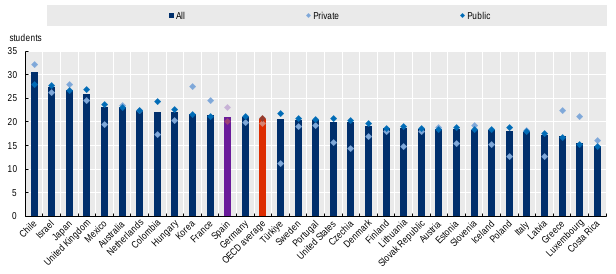
Source: OECD (2025[50]), Education at a Glance 2025: OECD Indicators, OECD Publishing, Paris, https://doi.org/10.1787/1c0d9c79-en.
International evidence suggests that smaller classes can be particularly beneficial in specific contexts (such as in the early years of schooling or in settings with higher levels of disadvantage) where more intensive interaction and support may be required. At the same time, OECD analysis indicates that when class size reductions are applied uniformly across the system, their average impact on learning outcomes tends to be more limited, especially where reductions are relatively modest (OECD, 2017[47]; OECD, 2022[41]).
Student–teacher ratios, by contrast, measure the overall relationship between the number of students and the total number of teachers in the system. This includes not only teachers leading classrooms, but also those in specialised or non-classroom roles, such as support teachers, co-ordinators or staff with leadership responsibilities. As a result, STR provides an indication of how teaching resources are distributed across different functions, rather than a direct measure of classroom experience.
Across OECD systems, STR averages around 14:1 in primary education and 13:1 in secondary education, but differences across countries are substantial. These differences reflect variation in how systems organise teaching resources, including the extent to which teachers are allocated to specialised support, co-teaching or co-ordination roles. OECD data show that countries with similar student–teacher ratios can have quite different class sizes, illustrating that these indicators capture distinct policy choices (Figure 6.4).
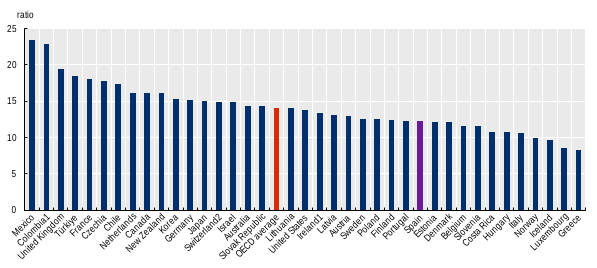
Note: (1) Year of reference differs from 2023: 2022 for Colombia and Ireland. (2) Public institutions only.
Source: OECD (2025[50]), Education at a Glance 2025: OECD Indicators, OECD Publishing, Paris, https://doi.org/10.1787/1c0d9c79-en
From a governance and funding perspective, this distinction is important because it shows that policies on “ratios” can operate through different channels. Reducing class size implies allocating more teachers to classroom instruction, thereby changing how students are grouped for learning. Adjusting student–teacher ratios, on the other hand, may also involve strengthening non-classroom functions, such as specialised support, co-teaching arrangements or time for co-ordination and collaboration. In both cases, the underlying policy choice concerns how a finite pool of teacher time is distributed across competing priorities.
Recent analysis of proposed class-size reforms in Spain also points out that changes in class-size caps may have significantly different operational implications depending on staffing structures, inclusion arrangements and territorial contexts. In particular, the staffing requirements associated with lower class sizes depend not only on the number of classes created, but also on specialist staffing needs, support provision and organisational arrangements within schools (Gortazar, L. and J. Montalbán Castilla, 2026[48]).
OECD work on school funding and value for money emphasises that such choices involve significant trade-offs. Reducing class size is among the most resource-intensive interventions available to education systems, as it requires sustained increases in staffing. This does not diminish its relevance as a policy option, particularly where it responds to clearly identified needs, but it does mean that decisions on class size are most effective when considered alongside alternative or complementary uses of resources. These may include targeted support for specific groups of students, structured small-group instruction, or increased time for teacher collaboration and preparation – all of which also depend on how teacher time is organised.
For Catalonia, where commitments to reducing class sizes form part of a broader effort to improve educational conditions, this evidence suggests the value of embedding such measures within a wider framework of resource-use decisions. These efforts would involve clarifying the objectives that class size reductions are expected to achieve, identifying the contexts in which they are likely to have the greatest impact, and considering how they interact with other elements of staffing, support and school organisation. It would also support a more explicit consideration of how changes in class size and student–teacher ratios affect teacher workload, the balance between instructional and non-instructional time, and the overall capacity of schools to implement reforms effectively.
In this way, distinguishing between class size and student–teacher ratios does not imply prioritising one approach over another. Rather, it provides a more nuanced basis for combining different resource-use strategies in ways that are aligned with system priorities on equity, quality and implementation capacity.
Source: OECD (2025[50]), Education at a Glance 2025: OECD Indicators, OECD Publishing, Paris, https://doi.org/10.1787/1c0d9c79-en; OECD (2022[41]) Value for Money in School Education: Smart Investments, Quality Outcomes, Equal Opportunities, OECD Publishing, Paris, https://doi.org/10.1787/f6de8710-en; OECD (2017[47]), The Funding of School Education: Connecting Resources and Learning, OECD Publishing, Paris. http://dx.doi.org/10.1787/9789264276147-en.
Evidence from Ivàlua suggests that the impact of school time depends less on the overall structure of the school day and more on specific components: instructional time, access to school meals, extracurricular participation, staff co-ordination and costs borne by families. This is consistent with OECD analysis of responsive school systems, which points to the need to align facilities, services and programmes with changing student needs, while avoiding fragmentation across sectors and programmes. For Catalonia, this suggests that reforms to school time should be assessed through the resource-use review against five operational questions:
1. Does the reform increase or better target instructional time?
2. Does it improve access to meals and extracurricular activities?
3. What staffing and co-ordination time do implementation require?
4. Does it shift costs to families?
5. Are compensatory measures, such as motxilles escolars, sufficient to preserve equal participation?
Considering these questions could help Catalonia to treat school-time decisions as part of funding and implementation design, rather than as timetable choices alone. Given limited context-specific evidence, reforms could be piloted and evaluated before wider implementation, with findings feeding back into the annual resource-use cycle.
Source: Ivàlua (2024[44]), Revisió d’evidències sobre la jornada escolar: Evidències internacionals sobre la seva efectivitat i implementació, [Review of evidence on the school day: international evidence on its effectiveness and implementation], https://www.ivalua.cat/sites/default/files/2025-07/Sintesi_evidencia_jornada_intensiva.pdf; OECD (2018[37]), Responsive School Systems: Connecting Facilities, Sectors and Programmes for Student Success, OECD Reviews of School Resources, OECD Publishing, Paris, https://doi.org/10.1787/9789264306707-en.
Recommendation 6.5. Strengthen anticipatory planning and VET co-ordination
The reactivation of the Evaluation and Foresight Agency has been an important step for Catalonia. Building on it, Catalonia could strengthen system responsiveness by connecting foresight and prospective analysis more systematically to planning and forecasting processes related to provision, staffing, infrastructure and funding. This would help ensure that both long-term uncertainties and more predictable demographic and labour-market trends inform system decision-making.
Catalonia could establish a structured foresight-to-decision cycle in which forward-looking analysis produced by the Agency informs allocation choices and is subsequently revisited at defined points in the planning and budget cycle. This would help ensure that anticipation of territorial demand is directly connected to how the publicly funded network is organised and resourced across territories.
In practice, the Agency, working with territorial services and relevant sectoral actors, could contribute both prospective analysis and forward-looking evidence to planning processes. Alongside broader foresight exercises exploring alternative demographic, social and economic developments, planning authorities could develop rolling three- to five-year territorial projections combining enrolment trends, matrícula viva (students enrolling after the start of the school year), demographic change, socio-economic indicators and emerging skills needs. These scenarios would serve as a shared reference point for annual and multi-year planning decisions, informing adjustments to school network organisation, admissions capacity, staffing profiles, specialised provision and capital investment. Where projections indicate sustained increases in student numbers, they would trigger earlier decisions on capacity expansion, staffing allocation and infrastructure investment.
Conversely, where they point to declining enrolment combined with changing skill demand, they could trigger decisions to reconfigure provision, staffing profiles and facilities over a defined planning horizon. In the context of Catalonia, expected demographic decline may create opportunities for strategic reallocation of resources over time. How these resources are used – whether to support smaller class sizes, reinforce inclusion measures, stabilise staffing or expand targeted support – depends on the extent to which demographic projections are integrated into medium-term planning and allocation decisions (Gortazar, L. and J. Montalbán Castilla, 2026[48]). Embedding these scenarios within planning and funding cycles would help ensure that demographic projections are systematically considered in decisions on resource allocation, including staffing levels, programme capacity and capital investment (OECD, 2017[47]) (see Box 6.7). In this way, scenarios would function not as contextual analysis, but as a shared reference point against which allocation decisions are discussed and justified across actors.
A central feature of this approach would be to connect these forward-looking scenarios to regularly scheduled review points within annual and multi-year planning cycles. Rather than informing one-off adjustments, projections would be revisited systematically, allowing allocation decisions to be updated as new information becomes available. This would support a shift from ex post adjustment, in which provision is modified after pressures emerge, towards planned adaptation based on anticipated changes in demand.
In the case of vocational education and training (VET), this cycle could be operationalised through a structured territorial governance routine connecting the Department, territorial services, providers, employers and bodies such as the Agència FPCAT. Existing foresight and sectoral analysis mechanisms already developed through the FPCAT system, including sectoral councils and territorial co-ordination structures, provide an important basis for identifying emerging skills needs and territorial demand. Within such an approach, territorial actors, including provider networks within the concertada sector, would contribute to the identification of local labour-market priorities and provision needs, while central authorities would retain responsibility for evaluating proposals and sequencing implementation in light of broader strategic priorities, resource constraints and system coherence.
Decisions on programme authorisation, expansion or adjustment would therefore be taken through a common decision framework that considers the interaction between student demand, labour market relevance and the availability of workplace learning opportunities. Embedding these dimensions within a single decision process would help ensure that decisions to expand provision remain aligned with labour-market demand, territorial implementation capacity and the availability of sufficient workplace learning opportunities, thereby reducing the risk of authorising programmes that cannot be sustainably or effectively delivered.
To support implementation, funding and staffing arrangements would need to reflect the organisational requirements of dual provision. Recent reforms related to the implementation of Organic Law 3/2022 also aim to strengthen the integration of vocational education and training pathways, including closer articulation between initial VET and training for employment (BOE, 2022[28]). In practice, however, these strands continue to rely on partially separate governance and funding arrangements, including distinct financial lines supporting innovation, mobility and teacher training on the one hand, and employment-oriented training programmes on the other. As these resources continue to be managed across different administrative structures, effective implementation increasingly depends on strong co-ordination mechanisms capable of aligning planning, funding and operational delivery across the VET system.
This also includes recognising functions such as employer engagement, placement co-ordination and monitoring of workplace learning, which place additional demands on providers. Where these functions are more intensive, allocation models could provide dedicated time or roles, ensuring that the capacity required to sustain employer partnerships is explicitly supported.
Monitoring information on placement access, participation and outcomes would then feed back into subsequent planning decisions, allowing adjustments to programme mix, capacity and resource allocation over time. This creates a continuous loop connecting anticipation, allocation and adaptation, and reduces the risk that expansion of VET provision leads to uneven implementation or variability in student access. International experience shows that systems which embed such routines are better able to align programme capacity with both labour market demand and placement availability (OECD, 2022[51]) (See Box 6.6). Given the important role of publicly funded private providers in VET delivery, these governance and co-ordination mechanisms would need to operate consistently across provider sectors.
OECD analysis of responsive systems shows that the value of foresight lies in its integration into routine governance processes that connect anticipation, decision making and evaluation (OECD, 2022[51]). In parallel, work on school funding emphasises the importance of combining predictable planning frameworks with the flexibility to adjust allocation in response to evolving needs (OECD, 2017[47]). In this perspective, foresight strengthens system steering when it informs concrete allocation choices and when those choices are regularly reviewed.
This is particularly timely in Catalonia given the convergence of several developments: the 2026 education agreement, increased funding commitments and the reactivation of the Evaluation and Foresight Agency. At the same time, demographic change, student mobility and the expansion of VET are increasing the complexity of territorial planning and resource allocation. Embedding foresight within allocation decisions, and using VET governance structures as a co-ordinated territorial planning interface connecting labour-market intelligence, provider capacity and strategic steering, would support a more anticipatory and coherent approach to system governance. This would enable schools, providers and territorial actors to plan with greater predictability while allowing staffing, provision and investment decisions to adapt more effectively evolving demographic, social and economic needs.
These recommendations aim to strengthen governance and funding not as isolated policy domains, but as the core mechanisms through which system priorities are translated into practice. This also requires recognising the diversity of governance and implementation arrangements operating across the publicly funded education network. By reinforcing decision making routines, aligning resources with need, and embedding evidence and foresight into planning cycles, Catalonia can enhance its capacity to deliver sustained and equitable improvement across the Education Service.
OECD countries increasingly seek to strengthen the connection between forward-looking analysis and concrete planning decisions, moving from ad hoc forecasting towards structured cycles of anticipation, adaptation and evaluation.
In several systems, such as Finland and Estonia, demographic and educational demand projections are produced on a regular basis and integrated into multi-year planning frameworks. These projections inform decisions on the organisation of the school network, teacher workforce planning and infrastructure investment. A key characteristic of these approaches is that projections are not treated as background analysis, but as shared reference points for decision-making, helping align actors across levels of the system and reducing reliance on short-term adjustments.
In the area of vocational education and training, countries such as Denmark and the Netherlands have developed more structured approaches to skills anticipation and provision planning. These systems combine labour market intelligence with ongoing dialogue between education providers, employers and public authorities. Programme capacity and specialisation are adjusted over time in response to changes in sectoral demand, while mechanisms are put in place to monitor outcomes and refine provision. This helps ensure that expansion in VET is aligned with both labour market needs and the availability of workplace learning opportunities.
Across these examples, a common aspect is the existence of institutionalised routines that connect foresight to decision-making, rather than relying on one-off studies or parallel analytical exercises. These routines support more predictable and transparent adjustments to provision and resource allocation, while maintaining the flexibility required to respond to changing conditions.
Source: OECD (2022[51]), Education Policy Outlook 2022: Transforming Pathways for Lifelong Learners, OECD Publishing, Paris, https://doi.org/10.1787/c77c7a97-en.
Moving from diagnosis to action will require Catalonia to treat governance and funding reform as a sequenced delivery programme, rather than as a set of parallel initiatives. The recommendations in this chapter rely on a common set of implementation conditions: a limited number of predictable decision cycles aligned with planning and budgeting, clear ownership of follow-through across levels of the system, protection of school-level capacity, and feedback loops that connect evidence and implementation to subsequent decisions. Embedding these elements in routine system governance will be key to sustaining reform efforts over time.
In the initial phase, the priority would be to establish a basic delivery architecture that connects decision making to implementation across actors. This would involve consolidating a small number of steering routines in relation to the annual planning and budget cycle and defining how these routines connect central decision making with territorial services, municipalities, providers and VET actors. At the same time, early actions would need to focus on identifying and delivering measurable reductions in administrative burden, so that the introduction of new routines does not add to existing workload. This phase would help create the conditions for reform by increasing clarity, building legitimacy and protecting school-level time.
Over the following one to three years, the focus would shift towards embedding the core governance mechanisms within these routines and connecting them to concrete decisions. Evidence-to-decision cycles would be integrated into annual planning processes, informing adjustments to staffing allocations, programme design and implementation support in priority areas such as inclusion, balanced schooling and evaluation. In parallel, reforms to improve resource allocation could be introduced through phased adjustments to allocation parameters, supported by transparent transition arrangements that clarify entitlements, manage redistribution effects and monitor potential unintended consequences such as instability or stigma. During this phase, governance routines would increasingly produce consistent outputs, including adjustments to allocation rules, programme parameters and support strategies, based on evidence and observed implementation conditions.
Over a longer horizon of three to five years, these mechanisms could be consolidated into a more adaptive governance and funding model. At this stage, regular review of allocation parameters, resource-use trade-offs and time impacts would be embedded within planning cycles, and foresight and labour-market intelligence would be systematically integrated into decisions on network organisation, workforce planning, infrastructure investment and VET provision. This would enable the system to move from reactive adjustment towards planned adaptation, in which changes in provision and resourcing are anticipated and sequenced over time.
Across all phases, maintaining a clear link between governance reforms and school-level capacity will be essential to implementation. New requirements should be accompanied by explicit assessment of their implications for time, staffing and administrative workload, and should be balanced by the removal or simplification of existing processes. Evaluation outputs should be treated as inputs into decision-making, informing adjustments to programme design, resource allocation and implementation support, rather than remaining at the level of reporting. Similarly, changes to funding rules and differentiated resourcing should be introduced through transparent and monitored transition processes, ensuring that their effects on distribution and feasibility are understood and managed.
These considerations reinforce the chapter’s central message: governance and funding reforms deliver value when they strengthen co-ordination, align resources with need, and support consistent implementation across territories and schools. Their success will depend less on creating new structures than on using existing reforms – particularly the 2026 education agreement and the Evaluation and Foresight Agency –to establish predictable routines that connect decision-making, implementation and adjustment over time.
References
[16] Agència Pública de Formació i Qualificació Professionals de Catalunya (2025), V Pla general del Sistema FPCAT (2025-2028) [V General Plan of the FPCAT System (2025-2028)], https://fp.gencat.cat/ca/sistema-fpcat/v-pla-general-del-sistema-fpcat-2025-2028 (accessed on 15 February 2026).
[14] BOE (2024), Ley 1/2024, de 3 de enero, de composición del Consejo de Educación de Cataluña [Law 1/2024 of 3 January on the composition of the Catalan Education Council], https://www.boe.es/eli/es-ct/l/2024/01/03/1.
[28] BOE (2022), Ley Orgánica 3/2022, de 31 de marzo, de ordenación e integración de la Formación Profesional [Organic Law 3/2022, of 31 March, on the organisation and integration of Vocational Training], https://www.boe.es/buscar/pdf/2022/BOE-A-2022-5139-consolidado.pdf.
[36] Boeskens, L. (2016), “Regulating Publicly Funded Private Schools: A Literature Review on Equity and Effectiveness”, OECD Education Working Papers, No. 147, OECD Publishing, Paris, https://doi.org/10.1787/5jln6jcg80r4-en.
[21] Canal Terrassa (2026), El Govern destinarà prop de 400 milions d’euros per millorar el finançament de l’escola concertada [The Government will allocate nearly EUR 400 million to improve funding for publicly subsidised private schools], https://terrassadigital.cat/el-govern-rubrica-amb-els-centres-educatius-diniciativa-social-un-nou-acord-per-a-la-millora-educativa/ (accessed on 20 May 2026).
[17] CEC (2024), El finançament del sistema educatiu a Catalunya [The funding of the education system in Catalonia], Consell Escolar de Catalunya, https://repositori.educacio.gencat.cat/handle/20.500.12694/5868#page=1 (accessed on 8 October 2026).
[45] Department of Education (2024), Documents per a l’organització i la gestió dels centres: Estades en empresa (formació en alternança dual i dual intensiva), [Documents for the organisation and management of centres: Work placements (dual and intensive dual-track training)], https://documents.espai.educacio.gencat.cat/IPCNormativa/DOIGC/CUR_FP_alternanca.pdf.
[19] Department of Education and Vocational Training (2026), Pressupostos 2026 (02/2026) [Budget 2026 (02:2026, proposal)], https://govern.cat/govern/docs/2026/03/03/16/36/Dossier%20Pressupost%20Educaci%C3%B3%20i%20FP%202026.pdf.
[43] Department of Education and Vocational Training (2025), Documents per a l’organització i la gestió dels centres - Organització del temps escolar, [Documents for the organisation and management of centres - Organisation of school time], https://documents.espai.educacio.gencat.cat/IPCNormativa/DOIGC/ORG_Temps_escolar.pdf.
[11] Department of Education and Vocational Training (2025), Documents per a l’organització i la gestió dels centres: Òrgans unipersonals de direcció i de coordinació, [Documents for the organisation and management of centres: Single-person leadership and coordination bodies], https://documents.espai.educacio.gencat.cat/IPCNormativa/DOIGC/ORG_Organs_unipersonals.pdf.
[39] Department of Education and Vocational Training (2025), Motxilles escolars. Informació per a les famílies. Curs 2025-26 [School Backpacks. Information for families. Academic Year 2025-26], https://educacio.gencat.cat/ca/arees-actuacio/families/families-escola/escolaritat/motxilles-escolars/ (accessed on 20 April 2026).
[26] Direcció General de Formació Professional (2025), Inserció laboral dels ensenyaments professionals 2024 [Labour market integration of vocational education programmes 2024], https://educacio.gencat.cat/web/.content/home/departament/estadistiques/insercio-laboral/estadistica-insercio-laboral/insercio-laboral-2024.pdf.
[25] DOGC (2025), Acuerdo GOV/55/2025, de 4 de marzo, para optimizar y mejorar el acceso a la formación profesional, ampliar la oferta de las enseñanzas profesionalizadoras y fomentar la continuidad formativa, [Agreement GOV/55/2025, of 4 March, to optimise and improve access to vocational training, expand the provision of vocational courses and promote continuous training], https://portaldogc.gencat.cat/utilsEADOP/PDF/9365/2075389.pdf.
[10] DOGC (2025), Decret 273/2025, de 23 de desembre, de reestructuració del Departament d’Educació i Formació Professional [Decree 273/2025, of 23 December, on the restructuring of the Department of Education and Vocational Training], https://portaldogc.gencat.cat/utilsEADOP/PDF/9572/2138329.pdf.
[15] DOGC (2025), Decret 65/2025, de 8 d’abril, de represa de l’activitat de l’Agència d’Avaluació i Prospectiva de l’Educació i de la constitució del seu Consell Rector, [Decree 65/2025 of 8 April on the resumption of the activities of the Agency for the Evaluation and Forecasting of Education and the establishment of its Governing Council], https://portaldogc.gencat.cat/utilsEADOP/PDF/9390/2082505.pdf.
[13] DOGC (2023), DECRET 137/2023, de 25 de juliol, dels centres de formació professional integrada [Decree 137/2023, of 25 July, on integrated vocational education and training centres], https://portaldogc.gencat.cat/utilsEADOP/PDF/8967/1988264.pdf.
[34] DOGC (2021), DECRET 11/2021, de 16 de febrer, de la programació de l’oferta educativa i del procediment d’admissió en els centres del Servei d’Educació de Catalunya, [DECREE 11/2021 of 16 February on the programming of the educational provision and the admissions procedure for schools in the Catalan Education Service], https://portaldogc.gencat.cat/utilsEADOP/PDF/8344/1836750.pdf.
[35] DOGC (2021), DECRET 12/2021, de 2 de març, de la Inspecció d’Educació, [DECREE 12/2021, of March 2, of the Education Inspectorate], https://portaldogc.gencat.cat/utilsEADOP/PDF/8356/1838954.pdf.
[33] DOGC (2015), LLEI 10/2015, del 19 de juny, de formació i qualificació professionals, [LAW 10/2015, of 19 June, on vocational education and training and professional qualifications], https://portaldogc.gencat.cat/utilsEADOP/PDF/6899/1432434.pdf.
[5] DOGC (2015), LLEI 10/2015, del 19 de juny, de formació i qualificació professionals [LAW 10/2015, of 19 June, on vocational education and training and professional qualifications], https://portaldogc.gencat.cat/utilsEADOP/PDF/6899/1432434.pdf.
[12] DOGC (2010), DECRET 102/2010, de 3 d’agost, d’autonomia dels centres educatius [DECREE 102/2010, of 3 August, on the autonomy of educational centres], https://portaljuridic.gencat.cat/eli/es-ct/d/2010/08/03/102 (accessed on 15 November 2026).
[6] DOGC (2009), LLEI 12/2009, del 10 de juliol, d’Educació [LAW 12/2009, of July 10, on Education], https://portaljuridic.gencat.cat/eli/es-ct/l/2009/07/10/12.
[27] DOGC (n.d.), Llei 8/2025, de 30 de juliol, de l’Estatut de municipis rurals, [Law 8/2025, of 30 July, on the Statute of Rural Municipalities], https://portaldogc.gencat.cat/utilsEADOP/PDF/9467/2110166.pdf.
[23] European Investment Bank (2024), Spain: EIB signs €100 million loan with Government of Catalonia to renovate and build public education facilities, https://www.eib.org/en/press/all/2024-221-eib-signs-eur100-million-loan-with-government-of-catalonia-to-renovate-and-build-public-education-facilities (accessed on 1 February 2026).
[7] Eurydice (2026), Spain: Funding in Education, https://eurydice.eacea.ec.europa.eu/eurypedia/spain/funding-education (accessed on 1 April 2026).
[48] Gortazar, L. and J. Montalbán Castilla (2026), La nueva ley de ratios escolares: estimando su impacto económico [The new school ratios law: estimating its economic impact], EsadeEcPol, Center for Economic Policy, https://www.esade.edu/ecpol/es/publicaciones/la-nueva-ley-de-ratios-escolares-estimando-su-impacto-economico/ (accessed on 26 May 2026).
[18] Government of Catalonia (2026), Acord de país per l’educació [Agreement on education], https://govern.cat/govern/docs/2026/03/09/13/04/Dossier%20Acord%20de%20pa%C3%ADs%20per%20l%27educaci%C3%B3.pdf.
[2] Government of Catalonia (2026), Acord entre el Departament d’Educació i Formació Professional i les organitzacions sindicals CCOO i UGT sobre millores del sistema educatiu i condicions de reball del personal funcionari docent del Departament d’Educació i Formació Professional, [Agreement between the Department of Education and Vocational Training and the union organisations CCOO and UGT on system improvements to the educational and working conditions of the teaching staff of the Department of Education and Vocational Training], https://www.ccoo.cat/educacio/wp-content/uploads/sites/139/2026/03/el-text-de-lacord.pdf.
[3] Government of Catalonia (2026), Acuerdo para la mejora educativa [Agreement for Educational Improvement], https://web.gencat.cat/ca/ciutadania/actualitat/noticies/2026/06/acord-per-a-la-millora-educativa (accessed on 12 June 2026).
[1] Government of Catalonia (2026), Educació i FP i CCOO i UGT signen un acord històric per a la millora educativa i les condicions laborals de tots els docents i personal PAE, [The Department of Education and Vocational Training and CCOO and UGT sign a historic agreement for the educational improvement and the working conditions of all teachers and PAE staff], https://govern.cat/salapremsa/notes-premsa/799324/educacio-fp-ccoo-ugt-signen-acord-historic-millora-educativa-condicions-laborals-tots-docents-personal-pae (accessed on 20 April 2026).
[40] Government of Catalonia (2026), El Govern destinarà 100 M€ als ajuntaments per fer obres de millora a escoles i quadruplicarà així la inversió en reformes [The Government will allocate EUR 100 million to municipalities for school improvement works, quadrupling investment in renovations], https://govern.cat/gov/notes-premsa/809996/govern-destinara-100-m-euros-als-ajuntaments-obres-millora-escoles-quadruplicara-aixi-inversio-reformes.
[4] Government of Catalonia (2026), Pressupostos (Projecte) 2026 [Budget proposal 2026], https://aplicacions.economia.gencat.cat/wpres/2026/03_projecte.htm.
[29] Government of Catalonia (2024), Resposta del Departament d’Educació al Document de propostes del Grup Impulsor de Mesures de Millores, Response of the Department of Education to the Improvement Measures Steering Group’s Proposals Document, https://govern.cat/govern/docs/2024/04/09/16/52/8939965d-5109-481f-94ca-ac61f72c6790.pdf.
[24] Government of Catalonia (n.d.), Catalan Model of Dual Vocational Training Guideline Document, https://fp.gencat.cat/web/.content/04_Arees/model-aprenentage-practiques/Catalan-model-of-dual-vocational-training-Guideline-document.pdf.
[22] Government of Catalonia (n.d.), El Govern aprova una millora del finançament dels centres educatius d’iniciativa social, https://govern.cat/salapremsa/notes-premsa/804908/el-govern-aprova-una-millora-del-financament-dels-centres-educatius-d-iniciativa-social?department=47&canal=48&contentType=1 (accessed on 20 April 2026).
[30] Grup Impulsor de Mesures de Millores Educatives (2024), Document de propostes d’actuació per a millorar el sistema educatiu [Document of proposals for action to improve the education system], https://educacio.gencat.cat/web/.content/home/departament/publicacions/document-propostes-grup-impulsor-millores-educatives.pdf.
[44] Ivàlua (2024), Revisió d’evidències sobre la jornada escolar: Evidències internacionals sobre la seva efectivitat i implementació, [Review of evidence on the school day: international evidence on its effectiveness and implementation], https://www.ivalua.cat/sites/default/files/2025-07/Sintesi_evidencia_jornada_intensiva.pdf.
[46] Liebowitz, D. et al. (2018), OECD Reviews of School Resources: Portugal 2018, OECD Reviews of School Resources, OECD Publishing, Paris, https://doi.org/10.1787/9789264308411-en.
[50] OECD (2025), Education at a Glance 2025: OECD Indicators, OECD Publishing, Paris, https://doi.org/10.1787/1c0d9c79-en.
[38] OECD (2025), “How can quality assurance agencies support research use in policy and practice?”, OECD Education Policy Perspectives, No. 132, OECD Publishing, Paris, https://doi.org/10.1787/086c85e2-en.
[31] OECD (2025), Results from TALIS 2024: The State of Teaching, TALIS, OECD Publishing, Paris, https://doi.org/10.1787/90df6235-en.
[8] OECD (2023), Education at a Glance 2023: OECD Indicators, OECD Publishing, Paris, https://doi.org/10.1787/e13bef63-en.
[32] OECD (2023), OECD Digital Education Outlook 2023: Towards an Effective Digital Education Ecosystem, OECD Publishing, Paris, https://doi.org/10.1787/c74f03de-en.
[51] OECD (2022), Education Policy Outlook 2022: Transforming Pathways for Lifelong Learners, OECD Publishing, Paris, https://doi.org/10.1787/c77c7a97-en.
[41] OECD (2022), Value for Money in School Education: Smart Investments, Quality Outcomes, Equal Opportunities, OECD Publishing, Paris, https://doi.org/10.1787/f6de8710-en.
[42] OECD (2021), Education Policy Outlook 2021: Shaping Responsive and Resilient Education in a Changing World, OECD Publishing, Paris, https://doi.org/10.1787/75e40a16-en.
[9] OECD (2018), Education at a Glance 2018: OECD Indicators, OECD Publishing, Paris, https://doi.org/10.1787/eag-2018-en.
[37] OECD (2018), Responsive School Systems: Connecting Facilities, Sectors and Programmes for Student Success, OECD Reviews of School Resources, OECD Publishing, Paris, https://doi.org/10.1787/9789264306707-en.
[47] OECD (2017), The Funding of School Education: Connecting Resources and Learning, OECD Reviews of School Resources, OECD Publishing, Paris, https://doi.org/10.1787/9789264276147-en.
[20] Síndic de Greuges de Catalunya (2020), Estimació del cost de la plaça escolar a Catalunya [Estimation of the cost of a school place in Catalonia], Síndic de Greuges de Catalunya, https://www.sindic.cat/site/unitFiles/7154/Informe%20estimacio%20cost%20pla%C3%A7a_escolar_2020_cat_def.pdf.
[49] Torres, J. and M. Steponavičius (2022), “More than just a go-between: The role of intermediaries in knowledge mobilisation”, OECD Education Working Papers, No. 285, OECD Publishing, Paris, https://doi.org/10.1787/aa29cfd3-en.