This chapter explores policy options to create a more attractive, relevant and accessible tertiary education system that can better meet the needs of Romania’s modernising economy. It outlines measures that Romania can consider to strengthen institutional capacity, enhance trust in the system, and make tertiary education accessible to a wider range of learners. Striking a better balance between merit and social need in tuition fee policy, centralising admissions and social scholarship allocations, and taking steps to expand provision outside main cities could all help promote greater equity of access. The analysis also highlights the value of greater differentiation and more flexible and targeted quality assurance to drive quality improvements in the sector. At the system level, it recommends rethinking the existing funding mechanism for tertiary education institutions, clarifying Romania’s vision for professional tertiary education, and addressing risks to integrity.
Education and Skills in Romania

Abstract
Several efforts have been made to reform and modernise the Romanian tertiary education system in recent decades. The 2023 revision of the tertiary education law was founded on the long-term vision of the "Educated Romania" strategy, developed through extensive public consultation – a welcome development after years of policy volatility in the sector. Public investment has increased substantially, and steps have been taken to modernise administrative functions and develop more robust evidence for policymaking. Capacity for carrying out external quality assurance functions has also been strengthened in recent years.
At the same time, analysis of the system shows several areas where further progress is needed. Many functions and decisions vital to improving accessibility and equity are administered by institutions, despite acknowledged deficiencies in internal institution governance and low public trust. Many important policy processes, including differentiation of institutions, external quality assurance and allocating public funding to institutions are heavily based on indicators and complex formulas, and appear to foster a compliance culture among institutions rather than supporting their innovation and excellence. While improving access to tertiary education is a policy priority, overall, tertiary education attainment continues to be a privilege enjoyed by a minority within Romanian society and is especially limited among rural and Roma students. This chapter outlines policy options that Romania can consider to build capacity and enhance trust in the system, reduce equity gaps and make tertiary education accessible to a wider range of learners.
Section I: Provides an overview of Romania’s tertiary sector, focusing on how policies compare internationally.
Section II: Compares the sector’s performance with OECD benchmarks on international indicators.
Section III: Provides recommendations on how Romania can learn from OECD evidence and experience to further improve tertiary education.
Governance and structure of the tertiary education system
Tertiary education is centrally governed, with multiple national bodies involved in regulation and oversight
Since the 1990s, tertiary education governance in Romania has evolved from a highly centralised, state‑controlled system to a more decentralised model focused on institutional autonomy, accountability and alignment with European standards (Dobbins, 2017[1]).The Ministry of Education develops national policy and strategy with respect to tertiary education, supported by the Executive Agency for Higher Education, Research, Development and Innovation Funding (UEFISCDI), a public body under its authority, while research policy is led by the Ministry of Research, Innovation and Digitalisation. UEFISCDI plays an important role, supporting consultative activities and providing policy analysis, data and evidence to support national strategies in tertiary education and research. UEFISCDI also conducts research, including projects that track inputs, outputs and outcomes of the tertiary education system, and inform the distribution of national funding to TEI’s.
The work of the Ministry of Education and UEFISCDI is supported by specialised national commissions of representatives from TEIs, which play an integral role in decision-making on the funding and regulation of tertiary education (see Figure 5.2).

Source: Ministry of Education of Romania (2023[2]), Legea învățământului superior nr 199/2023 [Law on higher education no. 199/2023], https://edu.ro/sites/default/files/_fi%C8%99iere/Minister/2023/Legi_educatie_Romania_educata/legi_monitor/Legea_invatamantului_superior_nr_199.pdf
While each country has a unique approach to tertiary education governance and policy development, Romania’s mode of interaction between the Ministry of Education and some consultative commissions is unusual. Typically, in most OECD countries the line Ministry or a designated public agency develops proposals for the allocation of resources, consulting widely with representative stakeholder bodies. However, in Romania it is the consultative commissions that take on this role. The National Commission for Higher Education Statistics and Forecasting (CNSPIS) and the National Commission for the Financing of Higher Education (CNFIS), comprised at any one time of representatives from a subset of TEIs, develop detailed recommendations on an annual basis for allocating these resources. Based on these recommendations, the Ministry of Education prepares a draft proposal, which undergoes consultation with relevant stakeholders before it is finalised and approved. The current process has at times created tension between the Ministry and some TEIs, relating to perceived injustice in allocations to individual institutions (Badescu, Mihut and Sum, 2018[3]). More recently, in 2023, operating regulations of the CNFIS were revised that emphasise the role of the Ministry in coordinating the commission and introducing new regulations on membership and measures to counteract potential conflict of interest (Ministry of Education of Romania, 2023[4]).
Outside of the academic expert commissions, institutions organise their representation through the National Council of Rectors and various consortia of universities with common approaches, fields of study or views on the development of the system. Examples include the Universitaria Consortium which brings together many of the larger general and regional universities, the Romanian Alliance of Technical Universities (ARUT) representing five of the largest technical universities, and consortia organised by fields of study such as G6- Medicine and Pharmacy University Alliance Association. Unlike in many OECD countries, institutional representative bodies are not formed along the lines of distinct nationally recognised subsectors or categories of institutions.
Most students pursue full-time education in public institutions, with provision concentrated in wealthier urban areas
In line with the European Bologna process, Romanian public and private TEI’s offer bachelor’s and master’s degree programmes and doctoral study programmes (Ministry of Education of Romania, 2023[5]). The government has sought in recent years to improve efficiency through consolidation. In 2022/23, there were 83 TEIs in Romania, consisting of 53 public and 30 private institutions, a decline from 127 institutions (including 70 private) in 2000 (National Institute of Statistics, 2023[6]). In 2022/23 the vast majority (almost 90%) of students were enrolled in public institutions (see Figure 5.3). There are some notable differences between public and private TEIs. Public institutions have on average more students than private institutions. Public TEIs also offer most of their programmes full-time, with fewer places for part-time education than private ones (public TEIs have 2.92% of maximum tuition capacity in part-time programmes, compared to 9% in private TEIs). In addition, while most public TEIs offer doctoral studies (48 out of 53 institutions), only 3 private TEIs provide education at this level (Ministry of Education of Romania, 2023[7]).
Consolidation is particularly important given Romania’s demographic decline in recent decades, which has progressively shrunk consecutive entry cohorts. The number of 20-24 year-olds in Romania has halved since 2000 (Eurostat, 2023[8]), while the number of enrolled students peaked in 2007/08 at approximately 900 000 students before progressively declining to its current level of around 540 000 students1 (National Institute of Statistics, 2023[6]).
Students in Romanian tertiary education institutions, 2022/23

Source: CNFIS (2022[9]), Raportul public anual 2022. Starea finanțării învățământului superior [The state of higher education financing], http://www.cnfis.ro/rapoarte-cnfis/
TEIs are concentrated in large cities within wealthier regions. Of the 83 TEIs, 29 are in the city of București, with the remainder mainly in Cluj-Napoca, Iaşi, and Timişoara (National Institute of Statistics, 2023[6]). During periods of demographic decline, as Romania is currently experiencing, TEIs in small urban areas, which are typically closer to students from rural areas, tend to be harder hit by falling enrolment than institutions located in more attractive urban areas (OECD, 2023[10]). In Romania, evidence indicates that many universities can recruit only from a single “recruitment basin” and that these are dwindling in size (Santa and Fierăscu, 2022[11]). For example, the university in Târgu Jiu, where most students come from the local county, is particularly vulnerable to demographic decline. Declining student numbers are already negatively affecting the economic viability of some TEIs. Many already have had to resort to applying for emergency public funding or other compensatory mechanisms (Santa and Fierăscu, 2022[11]). Without intervention, the situation of many universities, particularly outside of the main cities, is likely to worsen - demographic projections suggest the population under 20 will decline by more than 30% by 2070 (Eurostat, 2024[12]) (see Chapter 2).
Romania lacks a clear differentiation of TEIs both horizontally, by institutional type, or vertically, by quality and prestige
TEIs in Romania may be comprehensive, with study programmes in different fields, or specialised in one single field (e.g. agronomics, medicine, engineering or arts). The fields of study and study programmes organised within each faculty, along with the maximum tuition capacity for each programme/field, are established by government decision on an annual basis. Despite distinctions according to field of specialisation, and the noted differences between public and private TEIs, in many ways the tertiary education landscape in Romania is characterised by a more homogeneous approach than that found in most other OECD countries (Usher and Williams, 2022[13]). For example, Romania lacks a formal horizontal differentiation of institutions found in many other countries, where TEIs are clearly categorised by orientation or type of provision, such as binary systems (for example in the Netherlands or Austria) or colleges dedicated to short-cycle higher education or mid-level qualifications (for example community colleges in the United States or post-secondary ISCED 4 and 5 providers in Norway).
The government has sought to improve differentiation of missions by proposing three TEI types - advanced research universities, teaching and research universities and teaching-only TEIs. A project aiming to revise Romania’s quality assurance framework, developed and piloted a methodology to classify TEIs according to this framework, dividing TEIs into different groups by specialisation and grading them according to the intensity of their activities in each specialisation using a complex set of metrics (QAFIN, 2018[14]). This activity-based methodology for classifying institutions is not common practice in OECD countries. To date, it has not yet been formally adopted in Romania, and is not used, for example, to differentiate external quality assurance processes, allocate of funding, or as a grouping for statistical reporting.
Attempts to provide a clear vertical differentiation of TEIs have also not provided a clear outcome. Few institutions achieve elite status through placement in international rankings. Recent national efforts to measure and compare institution performance have yielded conflicting and overly complex rankings, which seem to have not gained traction in the system. For example, in 2016 a "metaranking" of institutions was introduced, with the methodology established by Ministerial order and overseen by an expert group, based on the placement of Romanian TEIs in international rankings. This metaranking is used to indicate high-performing institutions for the purposes of deciding on the allocation of research funding but a different set of indicators of research performance is used when allocating general performance-based funding.
There are plans to introduce new tertiary programme types
Romania plans to diversify tertiary education to improve labour market relevance by developing a new "dual" model of vocational bachelor’s degrees, combining classroom and work-based learning. The Educated Romania plan also envisages the future introduction of tertiary programmes at ISCED 5 level, which is currently not offered in Romania. ISCED 5 programmes are increasingly prevalent in OECD countries, enrolling an average of 19% of first-time tertiary entrants in 2022 (OECD, 2022[15]). These are welcome changes as historically, the provision of tertiary programmes has lacked diversity, with few opportunities for work-based and research-informed learning.
Romania also offers a form of post-secondary education, known as “non-university tertiary education”, provided at colleges located within accredited TEIs and focusing on vocational domains. These colleges target students from vocational high schools who have not passed the upper secondary baccalaureate exam. Students completing studies at a non-university college are awarded a college diploma (diplomã de absolvire a unui colegiu) at the post-secondary non-tertiary qualification level (ISCED 4). However, graduates may not progress to enrol in tertiary education unless they also pass the baccalaureate. There are currently 18 such colleges attached to 16 universities in Romania, primarily located in large cities. In 2023/2024, 1 287 students were enrolled in these programmes, representing a small share of the approximately 75 thousand post-secondary, non-tertiary education students (Ministry of Education of Romania, 2023[5]).
Romania has made progress in strengthening institutional governance, yet integrity remains a concern as does weak leadership capacity
Autonomy is a fundamental principle of tertiary education, and Romania’s constitution and 2023 tertiary education law guarantees TEIs’ academic freedom and right to establish and implement their own mission, institutional strategy, structure, activities, and many organisational functions. The Ministry of Education has implemented measures to strengthen transparency and accountability to support this autonomy. For example, institutions are required to report annually to the Ministry of Education on their operations and activities, the financial situation of the institution, quality assurance activities and graduate outcomes. Romania has also progressed on ethics and integrity mechanisms in tertiary education, many supported by legislation. Each TEI has an Ethics Commission, including staff and students, and a national University Ethics and Management Council (CEMU) has been operating since 2016. The success of these initiatives has been acknowledged at European Commission level.
While Romania has come a long way in strengthening the professional independence and ethical climate of TEIs, national policies have long recognised the need to increase some elements of TEI autonomy while simultaneously strengthening their capacity for strategic leadership, effective decision-making, and internal governance (Ministry of Education of Romania, 2023[5]). Romania ranks relatively low in the EU in terms of organisational autonomy. This includes the capacity of TEI’s to define their own leadership model, the composition and structure of their governance bodies, and internal academic structures (see Figure 5.4). Even though Romania ranks relatively highly in Europe for financial autonomy, certain restrictions may hinder system development. For instance, TEIs can only create legal entities if the state is the majority shareholder, must transfer all spin-off company profits to the state, and need government approval to spend privately raised funds (EUA, 2023[16]).
University autonomy scores (out of 100%) in Romania and position within European countries, 2023

Note: Scores range from 1-100% where 1%=low autonomy and 100% = high autonomy. The country with the highest score in each dimension ranks 1st, while that with the lowest score ranks 35th.
Source: EUA (2023[16]), University Autonomy in Europe IV - the scorecard 2023, https://eua.eu/downloads/publications/eua%20autonomy%20scorecard.pdf
National initiatives to strengthen university governance are promising but not yet addressing the main challenges
There are three notable challenges in TEI’s internal governance. First is the concentration of power among rectors and other academic leaders. High-performing institutions across OECD countries tend to have widely distributed academic leadership and successfully cultivate a sense of ownership for strategic development across individual schools and faculties, as well as at the most senior levels of the organisation (OECD, 2022[17]). While rectors in Romania may be appointed by open competition or elected by academic staff and student representatives for a maximum of two five-year terms, legal loopholes have allowed some rectors to extend their terms of leadership for a longer period, and there are ongoing concerns about nepotistic interplay between public servants and senior leaders in some TEIs (European Parliament, 2024[18]). As a result, rectors in some TEIs may eventually hold their positions for more than two decades – with more than half of rectors elected in 2023 commencing their third or fourth term, many of them unopposed (Cocea, 2024[19]). Excessively long leadership terms risk creating organisational stagnation, instilling a more autocratic culture within TEIs, and preventing students and staff from benefiting from the innovative perspectives of talented potential leaders.
Second, TEIs in Romania have not sufficiently invested in institution-wide “horizontal” initiatives to develop capacity for research, innovation, entrepreneurship, and engagement with economic sectors (OECD/European Union, 2019[20]). This has restrained their ability to effectively update curricula to ensure labour market relevance and invest in research and innovation (OECD/European Union, 2019[20]). Third, despite measures to strengthen ethics, in recent years the system has continued to witness frequent reports of quality problems and ethics violations, including high-profile cases of plagiarism and academic dishonesty, which are likely to have damaged public trust (Ghiațău, 2021[21]; Ives et al., 2017[22]).
National initiatives have aimed to strengthen university governance and internal organisational capacity. For example, as part of the project “Developing the capacity of the Ministry of National Education to monitor and forecast the evolution of higher education in relation to the labour market”, a Centre for the Professionalisation of University Management was established and training courses in university management were attended by 500 management staff across the higher education sector (EUA, 2021[23]). However, such capacity-building initiatives appear sporadic and have only been implemented at the project level (OECD/European Union, 2019[20]). As noted below, there are also signs of a change in orientation in quality assurance procedures (see System information and quality assurance below).
Decisions on student admission rely on a selective baccalaureate exam and a decentralised placement system with implications for equity and inclusion
Across the OECD, admission practices to TEIs vary from highly selective in countries like Finland and Sweden, to open admission in the Netherlands, Austria and Czechia. Romania leans towards the more selective end of this spectrum, though the approach to selection is distinct in several respects. One notable feature relates to the criteria that determine eligibility for tertiary access. Like many countries, a core criterion is success on the national exam at the end of upper secondary education, which all students have to pass to apply for university. As noted in Chapter 4, the Romanian baccalaureate has traditionally differed from upper secondary education exams in many other OECD countries, both in terms of setting a very high bar to entry and in terms of assessing only a narrow range of academic subjects and competences. However, plans are underway to review the baccalaureate to better align it to different upper secondary pathways and support smoother transitions from upper secondary to tertiary education (see Chapter 4).
Another distinctive aspect is the absence of a transparent national admissions system. A centralised online application facility, commonplace in many OECD countries, does not exist in Romania (Santa and Fierăscu, 2022[11]). While the Ministry of Education sets the number of total places available and subsidised places, institutions have discretion in selecting students, and may add additional selection criteria such as upper secondary results, placement in national competitions or entrance exams devised by the institutions.
The admissions process also has implications for equity and inclusion in tertiary education. Students need to make separate applications to each faculty and may also need to travel to institutions to sit entrance examinations, placing additional burden on those of limited financial means, or those located far from the relevant campus (UEFISCDI, 2022[24]). While the Ministry sets general requirements on the timeframe and the information that must be published annually by TEIs on their admissions processes, the institutions themselves specify the criteria for the application and admissions process. Thus, there are inconsistencies in the way that Romanian TEIs publish their regulations for admission, the supporting documents applicants must provide, the extent to which TEIs promote equal opportunities and accessibility in the application process, the timing of publication of criteria for admission decisions and the specifics of appeals processes (ANOSR, 2020[25]). This inconsistency limits students’ ability to understand what is expected of them, and may be especially tough for disadvantaged students to navigate (Haj, Geanta and Orr, 2018[26]).
In addition, information on student financial supports is not always readily available, which may discourage some students from applying to tertiary education in the first place. In Romania, responsibility for providing accessible information for underrepresented groups on their entitlements for financial aid seems to largely be left to individual counties, municipalities, schools or TEIs. The review team heard about promising local projects aimed at raising awareness of available supports. However, such efforts depend on local initiatives and likely vary in quality and effectiveness due to differences in regional and local capacities (OECD, 2023[27]). The limited clarity and consistency in communication about student supports disproportionately affects rural students who must relocate and rely on additional social supports and reserved places. To address this, national initiatives like 'The First Student in the Family' programme, support upper secondary students from families with no prior university experience by informing them about the benefits of tertiary education and providing guidance throughout the application process (see Main reforms below).
Academic staff are subject to performance evaluation but are also increasingly likely to have fixed-term contracts
There are approximately 50 000 staff employed in the Romanian tertiary education system, of which around half are academic staff. The number of academic staff has increased in recent years, from around 22 000 in 2016/17 to 24 000 in 2022/23 (CNFIS, 2022[9]). Teaching and research-only career pathways exist, but all academic staff are required to have a doctoral degree, and the CNATDCU sets additional minimum standards for certain academic staff categories. Appointment to an academic position can be on a permanent or fixed-term basis, and the vast majority have full-time contracts.
Similar to measures introduced for pre-tertiary teachers, Romania is taking steps to create a competitive, performance-based academic career. Recruitment into permanent positions is carried out through public competition, with an internal promotion route for academics also available, based on a promotion exam. Institutions must evaluate the performance of teaching and research staff at intervals of no more than five years, following a methodology approved and applied by the university senate. Students in Romania have the legal right to assess the performance of teaching staff, although institutions have autonomy to decide how to implement such assessments and how to use and share the results. However, concerns remain, both in terms of institutions’ internal capacity to support staff’s professional development, and the legacy system of merit pay. This gradation rewards 16% of teaching staff in tertiary education with a monetary bonus of 25% of their basic salary, for a period of five years. Providing monetary rewards as a significant percentage of teacher’s base salary is not common practice in the OECD.
Funding of tertiary education
Romania’s investment in tertiary education is low by OECD standards, though public funding has risen in recent years
Between 2016 and 2022, in nominal terms, Romania more than doubled the total value of institutional funding allocated to tertiary education institutions, from approximately USD 1 467 million to USD 2 969 million PPP2 (CNFIS, 2022[9]). However, expenditure on tertiary education remains low compared to most OECD countries. In 2021, Romania spent USD 10 137 PPP per student enrolled in tertiary education, close to half of the OECD average (USD 20 499 USD PPP) and significantly less than most OECD and EU countries. Romania also spends one of the lowest shares of its GDP on tertiary education (0.7% in 2021, compared to the OECD average of 1.5%) (see Figure 5.5).
Total expenditure on tertiary institutions, 2021

Note: Panel A ranked in descending order of expenditure per full-time equivalent student. Panel B ranked in descending order by expenditure as a percentage of GDP.
Source: OECD (2024[28]), Education at a Glance 2024, https://doi.org/10.1787/c00cad36-en.
The tertiary education system largely relies on public funds, with limited private investment
Public tertiary education institutions receive allocations mainly from the budget of the Ministry of Education but may also receive funds from other sources, including from tuition fees, loans and external funding. Compared to other OECD and EU countries, Romania’s tertiary education system attracts little private investment. In total 92% of the tertiary education budget comes from the government (compared to 69% OECD average and 76% OECD-EU average) with the majority of the remaining 8% coming from international sources, notably the European Union (see Figure 5.6).
The main source of private income for Romanian TEIs is through tuition fees charged to students. In addition to the quota of tuition-free places provided by the government to each institution, TEIs are allowed to provide additional places to students on a fee-paying basis and have autonomy to determine the amount of fees. However, as noted, institutions are bound by overall maximum student quotas set by government decision on an annual basis, for each study field. Both public and private TEIs may charge a registration fee to students intended to cover the cost of admission. In addition, private TEIs charge tuition fees to all enrolled students, while public TEIs may only charge tuition fees to students admitted on a fee-paying basis. For most TEIs the fees of fee-paying students do not provide a stable revenue stream.
Private investment can also be raised through university-business collaboration, which can increase innovative activity, stimulate private investment, and improve the relevance and impact of both research and education (Guimón, 2013[29]). However, Romanian private sector investment and engagement with the tertiary education sector is currently extremely limited, particularly among domestic firms, which are less productive than multinationals (OECD, 2023[27]). Stakeholders reported that currently few incentives are provided at the policy level to stimulate collaboration between business and TEIs. Plans to introduce “dual” tertiary programmes, as mentioned above, aim to foster stronger partnerships between TEIs and the private sector.
Relative share of government, private and non-domestic expenditure on tertiary education institutions, 2021

Note: Ranked in descending order of relative share of government expenditure on tertiary education.
Source: OECD (2021[30]), Distribution of government, private and non-domestic expenditure on educational institutions, http://data-explorer.oecd.org/s/hc.
Public funding for tertiary education institutions is largely determined by weighted student numbers and performance indicators
Public funding is mainly allocated to public TEIs through institutional funding contracts, following a methodology developed by the CNFIS and approved by the Ministry of Education. Institutional funding contract amounts are calculated and allocated separately for different purposes, including but not limited to basic funding, performance-based funds, and development funds (see Figure 5.7). As is the case in many other OECD countries, basic funding is largely determined based on student units, weighted by study field, study cycle and tuition language. It represents approximately 66% of total institutional funding, and is intended to cover the salaries of staff, student assessments, material and operational expenses and to support educational and staff development (CNFIS, 2022[9]). An allocation for student scholarships and social protection is also included in the institutional funding.
The Ministry of Education allocates a substantial additional tranche of funding, equivalent to about 25% of the entire budget envelope based on institutions' performance across four categories, using indicators proposed by the CNFIS. In total, 15 indicators are used, with some indicators also incorporating field-specific sub calculations. Indicator-based public funding is used in several OECD countries as an important means for the government to steer the development of tertiary education and stimulate institutions to improve outcomes in education, research and engagement (OECD, 2022[31]). However, the approach to indicator-based funding in Romania differs from common practice in OECD countries and raises several concerns. Firstly, the disproportionate share of funds awarded based on performance rather than activity leads to inequalities and unpredictability in resource distribution. In 2022, performance-based funding varied widely, constituting anywhere from 11% to 30% of the total allocated funds for different institutions (CNFIS, 2022[32]). Moreover, national studies show significant annual fluctuations in the share of performance funding awarded to many institutions (UEFISCDI, 2022[33]). Alongside basic funding allocations that are also variable because of declining student enrolments and government-set quotas, this creates significant unpredictability in funding levels, undermining the long-term planning efforts of TEIs.
Total public funding for TEIs, with institutional funding disaggregated by category (basic, performance, development and other) in millions of USD PPP, 2022

Note: Institutional funding is disaggregated by basic funding, performance funding, development funding and other. Other institutional funding includes special situations funding, doctoral grants and supplementary budget. National currency values have been converted using purchasing power parity (PPP) rates. Total public funding not counted as institutional funding includes financial support to students (scholarships, transport, dormitories, canteens), investments and capital expenditures.
Source: CNFIS (2022[9]), Raportul public anual 2022. Starea finanțării învățământului superior [The state of higher education financing], http://www.cnfis.ro/rapoarte-cnfis/
Secondly, performance funding is allocated according to a one-size-fits-all process, in which all public institutions of different types and capacities are assessed based on the same indicators. National analysis indicates that a small handful of institutions repeatedly emerge as "winners," while most institutions get a correspondingly lower share (UEFISCDI, 2022[33]). This mechanism likely leads to progressively strengthening capacity of a small number of institutions while depriving lower‑performing institutions of essential resources for improvement. A third concern is the perceived fairness, rationality, and inclusivity of the chosen performance indicators and their weightings. Although CNFIS details the calculation methodology, it does not clearly explain the rationale for selecting specific indicators and their weightings, or their link to system-level objectives. For example, one third of the allocation is determined based on research outputs while education outputs and outcomes commonly used in other OECD funding models (e.g. degrees awarded or graduation rates) are not considered at all.
In addition to basic and performance-based funding, institutions may receive development funding on a competitive basis to support institution-level projects linked to nationally set strategic goals. However, this type of funding is not supporting institutional development as well as it might. The allocation for institutional development represents only 1.5% of the overall funding pot, substantially less than performance-based funding. It is also awarded only on a competitive basis and requires institution co-financing, which may again privilege those institutions with greater capacity and financial resources.
Research activity is underdeveloped and underfunded, but there are some signs of progress
Beyond directly supporting research, the availability of research funding provides other benefits, attracting talented academics, raising teaching quality and boosting TEIs’ national and international reputation. It also enables infrastructure investment, making institutions viable partners in regional and local innovation initiatives. As well as the institutional funding contracts described above, Romanian TEIs may receive complementary allocations of research funding from UEFISCDI linked to initiatives developed under Romania’s National Research, Development and Innovation Plan and based on competitive grants and performance-based criteria. Despite efforts to increase investment in recent years, spending on tertiary education research and development is extremely low, amounting to less than USD 100 PPP per enrolled tertiary student in 2021, far below the OECD average of almost USD 7 000 PPP (OECD, 2024[28]).
The extremely limited expenditure reflects the well-documented weakness and low effectiveness of the public research and innovation system in Romania, which has been characterised as fragmented, underfunded, misfunded and requiring comprehensive reform (European Commission, 2022[34]; OECD/European Union, 2019[20]). Romania remained one of the most modest performers in attracting funding from EU Research and Innovation framework programmes, in terms of number and share of applications and success rates (European Commission, 2024[35]).
Small amounts of core funding for research were provided to TEIs by the Ministry of Education for the first time in 2021, partially based on the metaranking exercise. More recently, in 2023, the Ministry of Education established a dedicated fund for financing scientific research in public TEIs, endowed with 100 million lei (approximately USD 58 million PPP) from the public budget. UEFISCDI is also aiming to improve Romania’s access to EU research funds through its National Contact Point (NCP) unit, which assists researchers and institutions in securing EU funding, provides strategic advice, and facilitates participation in European research framework programmes, such as Horizon.
Public spending on student financial aid is low by international standards and is mostly awarded based on academic achievement rather than on social need
In 2021 the share of public expenditure on tertiary education allocated to student aid amounted to 9%, significantly less than the 12% average share spent by EU countries (Eurostat, 2022[36]). Financial supports are funnelled through Romanian TEIs. The Ministry provides, for each TEI, a quota of tuition-free places and a block funding allocation for student scholarships. Within general guidelines specified by the Ministry of Education, TEIs may develop their own criteria for allocating each category of scholarship among students, although minimum scholarship amounts are proposed by CNFIS annually and are intended to cover at least the cost of food and accommodation (Government of Romania, 2023[37]). TEIs may also elect to supplement their scholarship fund from their own funds, and the extent to which they do so is one of the indicators used to calculate their performance funding allocation.
A portion of available tuition-free places are reserved for priority student groups, including rural, and Roma students, as well as students with special educational needs (SEN) (see Section 2 below). Aside from these priority places, the allocation of tuition-free places is based on merit, using the baccalaureate exam results, without any adjustment for socio-economic disadvantage (e.g. family income). Similarly, while the number of social scholarships has increased significantly since 2015 (see Figure 5.8) merit and performance scholarships – awarded based on exam results, or exceptional academic, scientific or sports performance – remain the dominant scholarship type and have higher average individual value than social scholarships. Experience in OECD countries shows merit-based scholarships tend to disproportionately benefit students from wealthier backgrounds who might be able to afford the costs of their education without financial aid (OECD, 2020[38]).
Granting TEIs flexibility in the allocation process has some theoretical benefits, allowing amounts to be adapted in accordance with local costs and allowing individual institutions to better align allocations with specific student needs. However, the current system lacks clarity and consistency across institutions and creates considerable uncertainty for prospective students about the financial supports they may expect to receive when enrolling in tertiary education. National studies indicate that in some universities around 3-in-10 applicants may be eventually offered a scholarship, while in others everyone who applied received one (Cismaru and Corbu, 2019[39]). In addition, scholarships are awarded only for one academic year – students may have to apply and compete again for scholarships for their subsequent years of study. Time series data from the CNFIS shows significant variability in the volume of scholarships of different types awarded year-on-year (see Figure 5.8). This decentralised system also increases administrative burden on institutions who must devise and operate a process for managing applications, assessing eligibility and deciding on award amounts.
Scholarships awarded to Romanian tertiary education students, by type, 2015-2021

Source: CNFIS (2022[9]), Raportul public anual 2022. Starea finanțării învățământului superior [The state of higher education financing], http://www.cnfis.ro/rapoarte-cnfis/
The net effect of Romania’s current decentralised allocation process for scholarships is that students do not have any advance guarantee of the extent of financial supports available to them. This, combined with the lack of consistent information about student financial supports, can deter prospective students from enrolling in tertiary education (JRC, 2019[40]).
System information and quality assurance
Quality assurance processes were traditionally perceived by TEIs as legalistic and compliance-oriented
External quality evaluation of TEIs is performed by the Romanian Agency for Quality Assurance in Higher Education (ARACIS), an autonomous national institution and a member of the European Association for Quality Assurance in Higher Education (ENQA) since 2009. ARACIS is responsible for the provision of provisional authorisation, accreditation and periodic reaccreditation of institutions, study programmes and study domains, including doctoral studies.
The attitude of Romanian TEIs to quality assurance has historically been perceived as ritualistic, compliance-oriented and disconnected from internal management processes. While standards for external quality assurance have long been aligned with European norms (including the European Standards and Guidelines for Quality Assurance), studies have previously documented a tendency within institutions to focus primarily on technical compliance with the indicators and metrics used in external quality assurance, while having an underdeveloped internal quality culture (Geven et al., 2015[41]). There are, however, signs of evolution in attitudes towards quality improvement within TEIs. An ARACIS study based on analysis of institutional evaluation reports between 2008 and 2015 noted that internal institutional quality assurance processes improved considerably over the period, although ARACIS also noted that institutions frequently requested simplification of the quantitative indicators used in external quality assurance processes and clarification of their rationale in some cases (ARACIS, 2019[42]). Romania has recently moved to reduce the number of indicators used in institution and programme level evaluation (Government of Romania, 2024[43]).
System-level capacity for external quality evaluation has been strengthened in recent years and methods updated, laying the ground for a more differentiated approach
Recognising the need for change, ARACIS has updated its approach and strengthened its capacity in recent years. In 2018, ARACIS extensively reviewed and updated its external evaluation methodology, standards, and performance indicators (QAFIN, 2020[44]). This revision aimed to shift the focus from input indicators to processes and outcomes, placing greater responsibility on TEIs for their own quality assurance. For instance, as part of these changes, bachelor programmes are required to provide demonstrably positive employment outcomes, and labour market representatives and students are involved in both the design and periodic review of programmes (QAFIN, 2020[44]). A new model was also implemented for doctoral education, culminating in a complete accreditation of all doctoral programmes by the end of 2021 based on a simplified set of evaluation indicators (Government of Romania, 2024[43]).
In addition, ARACIS carried out an internal reorganisation between 2021 and 2022, which created clearer roles and responsibilities for each of its mandated functions and established new organisation units within the Agency, including an internal Research Office. ARACIS has also secured an increase in the number of permanent staff from 33 to 58 between 2018 and 2022, helping to strengthen its organisational capacity (ENQA, 2023[45]).
The maturation of the quality assurance framework in, Romania is providing a basis for a more differentiated and enhancement-oriented approach. The Ministry of Education reports that a new framework methodology coming on stream in 2024 will allow institutions to avail of streamlined external evaluation in some cases (Government of Romania, 2024[43]). As discussed in Section III, a clearer formal differentiation of TEI profiles and missions could help to support the objectives of ARACIS in this regard.
Romania has strengthened its data infrastructure, supporting the development of new evidence on the quality and performance of tertiary education
To fully understand the quality of tertiary education, qualitative evidence generated by typical quality assurance processes needs to be complemented by quantitative information on outputs and outcomes (Staring et al., 2022[46]). The Ministry of Education and UEFISCDI have taken important steps to develop the information base for tertiary education. A National Platform for Statistical Data Collection for Higher Education (ANS) has been introduced, standardising and streamlining data collection from TEIs needed for policy analysis and performance assessment. Data collection on student characteristics and enrolments have been integrated to a central register (REI/RMU). The REI allows tracking of students’ educational progress, including calculating dropout rates. In addition, Romania has also participated in several waves of the Eurostudent survey covering a range of topics related to students’ social and economic conditions in European tertiary education (Eurostudent, n.d.[47]).
Romania is also collecting new data to understand the outcomes of tertiary education and student experience. The first National Student Survey took place in 2019-2020, showing 51% of respondents had a positive perception of teaching activity and of the academic support they received in their programme (Deaconu and Hâj, 2022[48]). A National Survey of Employability of Higher Education Graduates has also been recently carried out and may be repeated in the future (UEFISCDI, n.d.[49]). UEFISCDI has also carried out one-off data matching projects to gain a deeper understanding of access and dropout patterns (Hâj and Ţucă, 2022[50]). For the moment, however, these data-driven research efforts exist mainly at the project level and are not yet systematised.
Use of digital education technologies
Romania is building capacity for digitally enhanced teaching and learning through targeted investments but online and hybrid learning is limited and heavily regulated
As in many countries, the COVID-19 pandemic spurred a leap forward in digitalisation in Romanian tertiary education, with an ex-post study showing that overall digital competence among learners increased (Deaconu and Hâj, 2022[48]). Romania is also using its National Recovery and Resilience Plan (NRRP) to substantially invest in the digitalisation of universities (Ministry of Investments and European Projects of Romania, 2023[51]), with 61 projects valued in total value at EUR 244 million, aiming to improve digital infrastructure, enhance the digital skills of students and staff, digitalise administrative processes, and better prepare students for emerging professions in digitalised industries (Ministry of Education of Romania, 2023[7]).
Despite this progress, online and hybrid learning appears underdeveloped. In 2023, 28% of individuals aged 20 to 24 in Romania were using online learning material or participating in an online course, the lowest percentage in the EU, and below the EU average (51%) (Eurostat, 2023[52]). This may be driven by relatively heavy regulation of online and hybrid learning in Romania, compared to many other OECD countries – fully online education programmes up to recently were not permitted, while Romania was also one of only three responding countries in the 2022 OECD Higher Education Policy Survey reporting distinct regulations in place for hybrid programmes (see Figure 5.9).
Programme authorisation standards for online and hybrid tertiary education programmes, 2020

Source: Broberg, N. and G. Golden (2023[53]), "How are OECD governments navigating the digital higher education landscape?: Evidence from a comparative policy survey", OECD Education Working Papers, No. 303, OECD Publishing, Paris, https://doi.org/10.1787/93468ccb-en.
Main reform priorities
As is the case with other levels of education, the 2023 update to higher education legislation (Law no.199 of July 4, 2023 on higher education) together with EU funding through Romania’s National Recovery and Resilience Plan (NRRP) and the European Social Fund (ESF+) is lending new momentum to reform efforts in the tertiary sector (Ministry of Investments and European Projects of Romania, 2023[51]). In summary, key reform objectives include:
Increasing the labour market relevance of tertiary education: As noted, a key reform objective is the development of a new stream of professional tertiary education, which will be aligned with the dual education planned at upper secondary education. In its NRRP, Romania sets the goal to enrol 3 000 students in the full dual route by 2026 (Ministry of Investments and European Projects of Romania, 2023[51]). The main vehicle for achieving this objective is the establishment of dual education clusters which are intended to co-locate vocational secondary, post-secondary, and tertiary education within the same physical campus.
The NRRP has also allocated funding to upgrade the digital infrastructure of universities and develop new training programmes for tertiary students and the broader adult population. These programmes will focus on digital skills, entrepreneurial skills for the digital sector, and advanced digital skills for emerging technologies such as Quantum Computing, Artificial Intelligence, Blockchain, and the Internet of Things (Ministry of Investments and European Projects of Romania, 2023[51]).
Improving participation and inclusion in tertiary education: By 2030, Romania aims to increase the share of tertiary graduates among individuals aged 30-34 from 23% in 2023 to 40% (President of Romania, 2021[54]). Developing a new dual stream of tertiary education will be important to increase participation, particularly for students from vocational high schools. Additional measures are also being pursued to improve inclusion. The law continues to reserve a number of university places for students from rural high schools and Roma background, and adds two new categories: students with disabilities, and students under the social protection system. The law also introduces a National Programme for the Reduction of University Dropouts (PNRAU), funded by the national budget and the European Social Fund (ESF+). The programme includes measures to support transitions to tertiary education, strengthen university career counselling and guidance, and introduce an early warning system for university dropout (Ministry of Education of Romania, 2023[2]). Special support is also offered to students from families where parents have not completed tertiary education through the "First Student in the Family" initiative. Finally, the NRRP allocates funding to develop university infrastructure, including the construction of over 3 700 student dorms, and the extension or upgrade of over 11 500 existing dorms, with the goal to allocate at least 40% of places to students from disadvantaged socio-economic backgrounds (Ministry of Investments and European Projects of Romania, 2023[51]).
Access and participation
The share of adults that have completed tertiary education in Romania is far below the OECD and EU averages and making little progress
Relatively few adults in Romania have achieved a tertiary education. Approximately 1-in-5 of the adult population aged 25-64 have a tertiary degree - one of the lowest rates in Europe and substantially lower than the OECD average (41%) and the EU-27 average (35%) (Eurostat, 2023[55]; OECD, 2023[56]). Romania’s attainment rate in 2023 stood at roughly the same level as the average attainment rate of EU‑27 countries in 2002 (see Figure 5.10). Given this much lower base, the slow progress in advancing tertiary education attainment among younger adults is a particular concern. In 2023, the share of 25-34 year-olds with tertiary education stood at 23%, almost half the OECD and EU-27 averages (48% and 43% respectively) (Eurostat, 2023[55]; OECD, 2023[56]).
Percentage of 25-64 year-olds and 25-34 year-olds with tertiary education

Source: Eurostat (2023[55]), Population by educational attainment level, sex and age (%) - main indicators, https://doi.org/10.2908/EDAT_LFSE_03
Romania’s low attainment rate is partially driven by a notable over-reliance on the traditional entry cohort from upper secondary education to drive enrolments. In the Eurostudent VII comparative survey, for example, 81% of surveyed Romanian students in tertiary education reported transferring into tertiary education within 12 months of completing secondary education, compared to an average of 66% across the surveyed countries (Hauschildt et al., 2021[57]). Enrolment rates of adults in education are also below the OECD average in Romania – 10% of adults aged 25-29 were enrolled in formal education in 2022, compared to the OECD average of 16% for the same cohort (OECD, 2022[58]).
Other factors also contribute to low participation in tertiary education. As discussed in Chapter 4, Romania has been less successful than most other OECD and EU countries in supporting students to complete upper secondary and access tertiary education, and many tertiary students drop out (see below) (Hâj and Ţucă, 2022[50]). Furthermore, enrolment in part-time tertiary education appears to be more limited in Romania than in many European and OECD countries. The proportion of part‑time students in tertiary education has remained stable over the last decade at around 8-9% of the total students enrolled, lower than the EU-27 average (14%) and considerably lower than neighbouring Central and Eastern European (CEE) countries (Eurostat, 2022[59]). For instance, at least 28% of students in Latvia, Hungary and Poland study part-time. The number of students enrolled in distance education is also low and decreasing, with only 2 400 students enrolled in 2022/23 academic year (Ministry of Education of Romania, 2023[7]).
Romania is a net exporter of students for both degree and credit mobility
One of the key pathways that OECD countries have pursued to address demographic change is policies that encourage inward migration, including through internationalisation of tertiary education. Romania is also seeking to increase internationalisation across its tertiary education system, enhancing the marketing of Romanian tertiary education abroad, and providing scholarships for Romanians and other prospective students living abroad to study in Romania. Romanian TEIs are also proactively seeking partnerships across Europe through participation in the European Universities Alliances initiative, which should in time help to increase their international recognition.
However, Romania is not yet a preferred destination for international students. The share of international first-time entrants is lower in Romania than the OECD average share (6% compared to 10%) (OECD, 2022[60]). Internationalisation is also more limited in Romania than in most OECD-EU countries for both degree and credit mobility. In 2022, Romania’s share of foreign students in tertiary degree programmes stood at 6%, lower than most countries in the CEE region, including neighbouring Hungary (14%), Slovenia (9%), Czechia (16%) and similar to Poland (7%) (OECD, 2024[28]). In terms of credit mobility, Romania is a net sending country of students and staff on ERASMUS mobility experiences, with one of the highest ratios of outgoing to incoming students in Europe, and in neighbouring/peer countries (see Figure 5.11). The 2023 law on higher education sets out measures to promote Romanian tertiary education internationally and attract foreign students.
Staff and student mobility through ERASMUS+ in selected countries, 2022

Note: Ranked in descending order of outgoing for each incoming.
Source: European Commission (2023[61]), Erasmus+ annual report 2022 : annex, https://data.europa.eu/doi/10.2766/090374
Quality of programmes and outcomes
Romanian TEIs have a higher-than-average student-staff ratio, and research activity of academic staff is extremely limited
The ratio of students to each full-time-equivalent teaching staff in tertiary institutions in Romania is 20, higher than in most OECD countries (16 on average) and significantly higher than other CEE countries such as Estonia (11) and Poland (13) (see Figure 5.12). Although there are challenges to interpreting this indicator, it implies that Romania may have relatively lower levels of academic support available to its tertiary education students, despite the decline in enrolments in recent years (OECD, 2019[62]).
As noted, research activity of Romanian TEIs has significant room for development and up until recently had not been earmarked specifically as a target for public funding. Increasing research activity in Romanian tertiary education can help to increase students' exposure to practical research and cutting-edge developments in their fields of study and promote the development of important transversal competencies (Mägi and Beerkens, 2015[63]). However, as the experience of OECD countries shows, an increased emphasis on research activity in Romania would need to be managed carefully so that available academic support for students does not dwindle further.
Ratio of students to teaching staff in tertiary educational institutions, 2022

Note: At the tertiary level, the ratio of students to teaching staff is obtained by dividing the number of full-time equivalent tertiary students by the number of full-time equivalent academic staff. Ranked by descending order of ratio of students to teaching staff.
Source: OECD (2024[28]), Education at a Glance 2024, https://doi.org/10.1787/c00cad36-en.
Tertiary education dropout is widespread
Despite the relatively low share of the population entering tertiary education, Romania’s tertiary education system suffers substantial loss of talent through its elevated rate of dropout, particularly in the early years of bachelor education. According to a recent national entry cohort study, approximately 52% of the students who enrolled in the first year of a bachelor programme in 2015/16 had graduated with a degree two years after the end of the theoretical duration of their programme (Herteliu et al., 2022[64]; UEFISCDI, 2022[65]).
While directly comparable data for other countries is not available, a 2022 entry cohort analysis of 23 OECD countries found that on average 68% of entrants to a bachelor’s programme had graduated with a qualification by three years after the theoretical duration (OECD, 2022[66]). This implies that Romania’s dropout challenge is overall likely to be more severe than in most OECD countries, and that Romanian TEIs may struggle to provide sufficient levels of academic and social supports for students, particularly those who do not manage to complete their degree programme within the theoretical duration.
While multiple factors contribute to university dropout, two are notable in Romania. The first are financial barriers, as scholarships and tuition-free places are primarily awarded based on merit, rather than social need. National data shows that students who pay tuition fees at public institutions have higher dropout rates—53% compared to 38% for those with tuition-free places in the 2015 cohort, while the dropout rates for private institutions was above 62% (Herteliu et al., 2022[64]). The second factor relates to the lack of coherence between upper secondary pathways and programmes available at tertiary level. Tertiary dropout rates are particularly high for graduates of vocational upper secondary schools, suggesting issues both with the relevance of existing tertiary options for these students, and with the quality of vocational high schools in terms of preparing young people for success in further education (see Chapter 4). At the same time, dropout rates among enrolled older adults, many of whom presumably have work experience as well as the baccalaureate, are even higher than for younger age cohorts, which may indicated a lack of flexibility in tertiary education programmes to accommodate working students (Curaj, Salmi and Hâj, 2022[67]).
Labour market outcomes for tertiary education graduates are relatively positive, and Romania produces a higher-than-average share of STEM graduates
In Romania, attaining a tertiary education qualification comes with substantial labour market rewards. Employment rates among tertiary-educated young adults (91%) are almost double those of their peers with below upper secondary education (48%), reflecting the relative scarcity of such adults in the labour market (OECD, 2024[28]). Thus, while those with lower levels of education are less likely to be employed, those with tertiary education in Romania have better employment prospects than their counterparts in OECD and OECD-EU countries on average (see Figure 5.13).
Percentage of employed 25-64 year-olds among all 25-64 year-olds, by level of educational attainment, 2023

Source: OECD (2024[28]), Education at a Glance 2024, https://doi.org/10.1787/c00cad36-en.
Although lower than the OECD and OECD-EU averages, Romanian tertiary education graduates also enjoy substantial earnings premiums over those with lower levels of education. Compared to upper secondary education, workers with tertiary attainment (25-64 year-olds) earn on average 43% more in Romania, compared to a premium of 52% on average in the EU and 56% in OECD countries (OECD, 2024[28]). The highest proportion of tertiary students graduate from STEM programmes (28%), where Romania has a larger share of graduates than most countries in the OECD and EU countries (OECD, 2022[68]). As in other OECD countries, employment rates are higher for graduates from the most in-demand fields of study, such as ICT, engineering, manufacturing and construction (Ministry of Education of Romania, 2023[5]).
Equity
There are substantial gaps in participation in tertiary education between the urban and rural population
Across OECD countries, prospective students in rural areas face specific obstacles to accessing tertiary education, such as lack of physical accessibility or reliable transport, inability to financially support a move to an urban area to access tertiary education, or local family or caring commitments which make travelling to enrol infeasible (OECD, 2022[31]). These challenges are particularly pronounced in Romania. Estimates suggest that while 45% of Romanian school children are living in rural areas, just 24% of tertiary education enrolments come from rural students (World Bank, 2019[69]).
The resulting differences between tertiary attainment in Romanian cities and rural areas are stark. Romania had the lowest share of the rural population aged 25-64 having achieved tertiary education in 2023 in the EU (see Figure 5.14), and rural attainment has barely increased in the past decade even as many other countries made significant progress (Eurostat, 2023[70]). The tertiary attainment rate of 25‑64 year-olds in rural areas amounted to just 6.2% in 2023, compared to the EU-27 average of 25.5%. The differences between areas containing large cities and less urbanised and populated regions further highlight the extent of attainment gaps across the country. For example, 39.4% of 25‑64 year-olds attained tertiary education in the Bucureşti-Ilfov region, compared to just 12.6% in the largely rural Sud-Muntenia region (see Figure 5.14).
Tertiary attainment (25–64 year-olds)

Note: Panel A ranked in descending order of percentage of tertiary attainment in rural areas. Panel B ranked in descending order of percentage of tertiary attainment in 2023.
Source: Eurostat (2023[70]), Population by educational attainment level, sex, age and degree of urbanisation (%), https://doi.org/10.2908/EDAT_LFS_9913; Eurostat (2023[71]), Population by educational attainment level, sex, age, citizenship and NUTS 2 regions (%), https://doi.org/10.2908/EDAT_LFS_9918.
The Romanian state has been taking measures to close access gaps and improve academic performance for rural students. In the 2022/23 academic year, for example, specific tuition-free state-funded places were made available to graduates of high schools situated in rural areas. However, of the 2 000 places made available, just 1 207 places were eventually occupied (Eurydice, 2023[72]).
Roma students also face substantial barriers to enrolment
One of the most marginalised groups in Romania is the Roma Community. Roma are severely underrepresented in tertiary education – a 2015 study, the most recent analysis available, estimated that while about 2.25%3 of 18–24 year-olds in Romania were Roma, they made up only 0.23% of enrolled students (Dervis, Trifan and Jitaru, 2022[73]). This low participation rate reflects the high dropout rate of Roma from secondary education. It also reflects the wider situation across Europe, where best estimates indicate that between 1% and 4% of the Roma population have achieved a tertiary education qualification (Rutigliano and Cerna, 2020[74]).
Priority reserved places are made available annually for Roma students, but, as with the rural priority places, stakeholders reported that not all of them are filled. This is likely to be partly attributable to poor diffusion of information about the availability of the places. National studies indicate that students often only find out about potential supports during or after the enrolment process, and in other cases students did not apply for places reserved for rural or Roma students because they mistakenly believed that competition would be higher than for regular places (Dervis, Trifan and Jitaru, 2022[73]).
Equality of opportunity and access: Making greater progress on equity and accessibility of tertiary education
As noted, Romania’s tertiary education system faces several challenges relating to accessibility and equity of access. Access to tertiary education requires the baccalaureate diploma, cutting off a large share of the population. Even those achieving the baccalaureate must navigate complex decentralised admission processes and face financial uncertainty in a system where scholarships and tuition-free places tend to prioritise merit with limited consideration of socio-economic disadvantage. Rural students are particularly underserved, resulting in persistently low tertiary attainment in rural areas, while many regional TEIs face dwindling enrolments due to demographic change, jeopardising their continued operation.
Policies to tackle equity issues in school education in Romania, successfully implemented, should help to support greater participation in tertiary education in years to come (see Chapter 4). As noted, the Romanian government has also expanded tuition-free places and social scholarships for students enrolled in tertiary education and introduced targeted quotas for some underrepresented groups. In recent years, between 60% and 65% of students enrolled in public TEIs were benefiting from state-funded places, while social scholarships have been demonstrably effective in reducing dropout (Cismaru and Corbu, 2019[39]). Take‑up of reserved priority places for Roma and rural students, currently lower than desired, should improve over time as successive cohorts become aware of their availability. Evidence from other countries shows that reserved places, combined with academic support, can improve equity of access over time.
Building on these achievements, Romania should take additional steps to orient the system towards greater equity of access. The section below proposes several actions that Romania could consider, including centralising admissions and social scholarship allocations, expanding the current system of quota places to improve access among low-income students and mature learners, and taking steps to fortify tertiary education in rural areas. Centralised admissions may require some upfront investment in the Ministry of Education’s administrative capacity but should deliver greater efficiency and transparency in the long term.
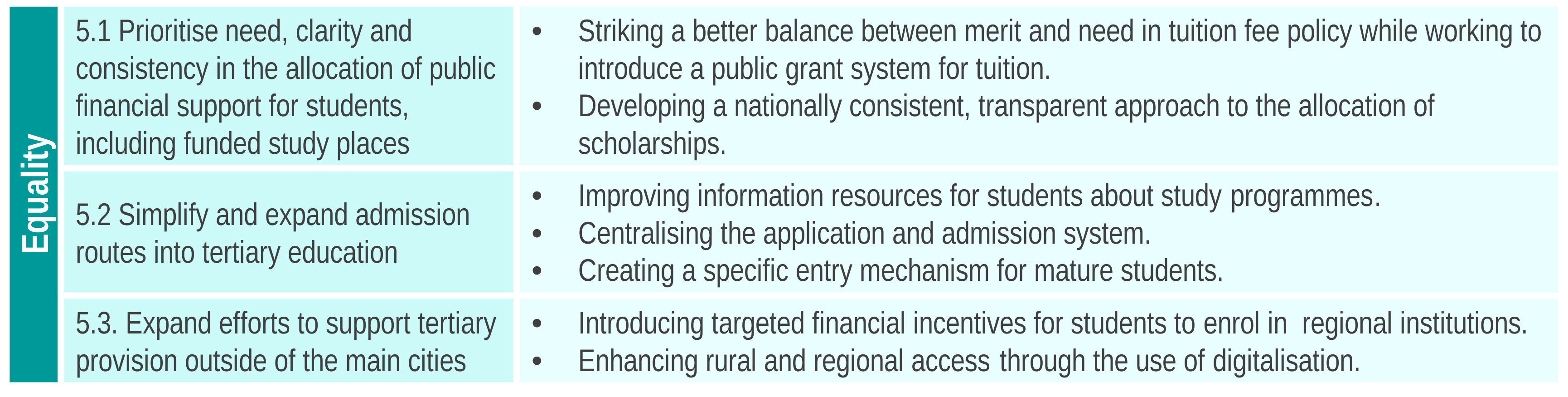
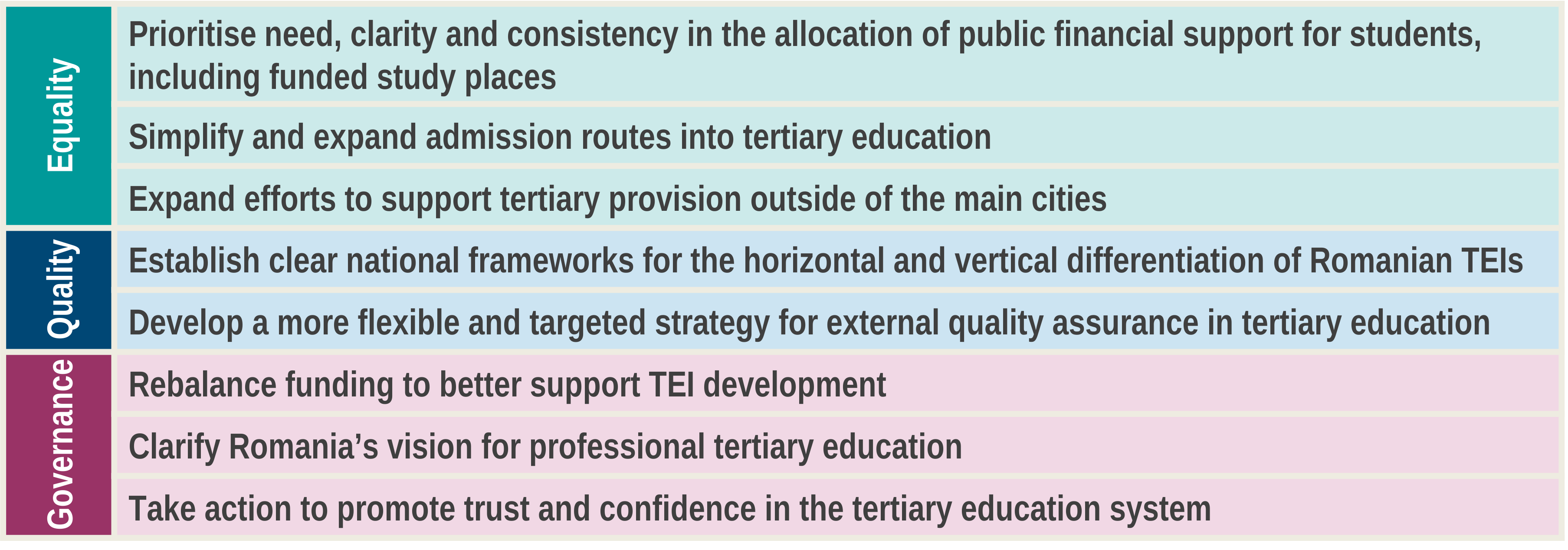
Recommendation 5.1. Prioritise need, clarity and consistency in the allocation of public financial supports for students, including funded study places
In systems where financial resources are severely constrained, as in Romania, reviewing tuition fees policy to balance ability to pay with academic ability can support more equitable distribution of public funds. Without careful management of eligibility criteria, free and subsidised tertiary education combined with restricted access may lead to wealthier families appropriating most of the benefit (de Gayardon, 2019[75]). Research shows that the most effective policies to improve access and increase equity are those that combine adequate financial aid with targeted assistance to overcome non-financial impediments, such as information barriers (OECD, 2008[76]; OECD, 2020[38]). With this in mind, Romania could take measures to rebalance the allocation of tuition-free places and scholarships towards students with the greatest financial need, while ensuring that all students have access to clear and transparent information resources about the offer of tertiary education and their entitlements to state support.
Striking a better balance between merit and need in tuition fee policy while working to introduce a public grant system for tuition
Across OECD countries, tuition-free places on tertiary education programmes are more often prioritised based on need rather than academic performance. A 2020 OECD survey showed that out of 23 jurisdictions with at least one form of tuition fee waiver, 20 had waivers based either on membership of a disadvantaged population group or according to household income, while just 11 supported waivers based on merit. As a first step to nudge the system towards a more equitable balance between performance‑based and need-based allocation, Romania could consider reserving a reasonable share of the existing state-funded tuition places for students with income below a designated limit, allowing the remainder to be allocated based on the existing merit system.
An advantage of this approach is that it would be relatively easy for the government to implement – the share of places per institution to be reserved for lower-income students could be allocated in the annual Government Decision on specialisations, fields and places in TEIs. The disadvantage is that institutions would be tasked with administering yet another quota system, on top of those that already exist, and all the other decentralised administrative decision processes (e.g., admissions and allocation of scholarships). A longer-term goal could be to design a more comprehensive reform, introducing a public grant system to cover tuition fees. A common approach within the OECD involves TEIs universally charging tuition fees in principle, with governments subsidising these fees for certain students through grants. Allocation of tuition‑fee grants is most often determined by means-testing (Golden, Troy and Weko, 2021[77]). This would lead to a fairer and more transparent system than the current ‘all or nothing’ approach, while still ensuring that TEIs can access a source of private fee income from households.
Many countries use public grant systems to cover both tuition fees and living expenses, aiming for transparent and efficiency that comes with a centralised system. Romania could work to align more closely with international best practice by introducing a similar model combining the introduction of a grant system for tuition fees with an overhaul of its complex scholarship allocation process, as detailed below.
Developing a nationally consistent, transparent approach to the allocation of scholarships
Romania should consider replacing the current merit-oriented, decentralised approach with a centralised allocation mechanism that sets objective qualification criteria based on both merit and need. This would shift the allocation of scholarships away from TEIs, as the current decentralised system, while offering some flexibility, can lead to a lack of transparency and uncertainty for prospective students regarding the financial support they can expect when enrolling in tertiary education. In considering a unified approach, Romania has many examples to draw from, not least its own centralised allocation system for student scholarships at secondary level. Many OECD tertiary education systems provide a fixed or sliding scale of guaranteed public student financial support, the amounts of which are specified in advance, where the conditions for qualification are clearly set out, and, in many cases, accompanied by a centralised online application process (see Box 5.1).
The DSU (Diritto allo Studio Universitario) scholarship in Italy is a need-based grant available to both domestic and international students enrolled in Italian universities. The scholarship considers family income and assets to determine financial need and eligibility, based on a standardised Equivalent Economic Situation Indicator (ISEE). The application process is managed regionally, however, comprehensive information on eligibility conditions and application procedures for each region is provided centrally on a government website.
In Lithuania, need-based grants are administered centrally by the Ministry of Education, Science, and Sport to support domestic students in tertiary education. Grants are provided based on financial need, assessed through family income and other socio-economic factors. The full criteria for eligibility are provided on the State Study Fund website. Students may also apply for merit-based scholarships which are administered by individual institutions.
The Executive Education Agency of the Netherlands (Dienst Uitvoering Onderwijs - DUO) provides a clear set of rules for eligibility to basic and supplementary student finance, the amounts involved and a specification of the eligibility period for grants for each category of student and programme on its website, with an associated digital application service linked to citizens’ digital identification profile for accessing public services.
Source: Ministry of Education, University and Research of Italy (n.d.[78]), Diritto allo studio [Right to education], http://www.dsu.miur.gov.it/#fourth (accessed on 16 July 2024); Ministries and institutions (n.d.[79]), VALSTYBINIS STUDIJŲ FONDAS [State Study Fund], https://vsf.lrv.lt/lt/ (accessed on 16 July 2024); DUO (n.d.[80]), Funding for school and studies, https://duo.nl/particulier/student-finance/ (accessed on 16 July 2024)
Recommendation 5.2. Simplify and expand admissions routes into tertiary education
Despite a decrease in student numbers in traditional upper secondary entry cohorts and one of the lowest tertiary attainment rates in the OECD, Romania has made little progress on increasing access for adults who are not making a direct transfer from upper secondary education but may wish to return to education later. The firm requirement for the baccalaureate for entrants of all ages closes off opportunity for a large share of adults to access tertiary education. At the same time, the decentralised application and admissions process, combined with limited accessible comparative information on study choices, is difficult to navigate even for upper secondary applicants.
Romania should consider streamlining the current admissions process to make it easier for all applicants to navigate, while at the same time opening new admissions routes that serve a wider share of the adult population. Across OECD countries, carefully designed centralised application and admissions systems provide a rational, streamlined, equitable and transparent method for making admission decisions based on student’s preferences and performance, and for reducing the administrative burden of individualised application and admission decisions (OECD, 2020[81]).
Improving information resources for students about study programmes
Currently, information on study programmes, admission criteria and available financial support is not always easily accessible. Notably, there appear to be more well-developed information products for foreign students wishing to study in Romania than domestic students. The Study in Romania website and mobile application provides a “one-stop” source of information on education programmes and supports for international students (Study In Romania, n.d.[82]). A similarly user-friendly information resource for domestic upper secondary students would help them navigate Romania’s complex system of admissions and support their choice among available education options. Such systems are available in many OECD countries. For example, the Studykeuze123 platform in the Netherlands promotes transparency and supports student choice by providing comprehensive, objective information to prospective students about Dutch tertiary education, including study programmes, institutions, and student experiences.
Centralising the application and admission system
Romania is already deliberating the potential introduction of centralised admissions. A recent national ex-ante evaluation highlighted the importance of a fair, transparent system that recognises both achievements and potential of applicants. It noted the benefits such a system could bring to Romania and how the centralised admissions process at the upper secondary level and online admissions during the Covid pandemic laid the groundwork for further unification (UEFISCDI, 2022[24]) Given these benefits, Romania should progress the centralisation of the system as soon as possible. Potentially, such a system could be rolled out in stages, starting with institutions currently making decisions only based on the baccalaureate results and subsequently extending to include institution-specific requirements.
Some stakeholders in Romania have suggested that admissions should only be unified alongside a redesign of the baccalaureate exam, while others raised concerns about the potential negative impact of centralised admissions on universities' autonomy in student selection (UEFISCDI, 2022[24]). However, as shown in other OECD countries, progress on centralisation of admissions does not have to be tied to reform of upper secondary assessment - it is possible to make beneficial progress on both independently. As an example, the United Kingdom designed and introduced the “T-level” high school education tracks by creating an equivalent points system that aligned with the existing tertiary education admissions procedure. Conversely, Finland has recently simplified its admissions system by providing for most admissions to henceforth be based on national matriculation exam results, without making simultaneous reforms to its upper secondary assessment procedures.
Centralised admission processes can also still provide for flexibility and institutional autonomy by allowing positive weightings on baccalaureate subjects relevant to specific study domains or by considering other factors in the decision process. For example, Croatia’s central admissions process allows TEIs to set individualised criteria for ranking applications to undergraduate programmes within a nationally set framework. The publication of decision criteria, applications and submission of supporting documents submitted through an online portal managed by the Croatian Agency for Science and Higher Education (Agency for Science and Higher Education, n.d.[83]). While the Croatian system is undoubtedly still complex, the centralised system promotes transparency and comparability of criteria for admissions across education programmes. It also provides a basis for systemic analysis of how well applicant preferences match available educational opportunities, in turn providing evidence to support adjustment of educational offerings.
Creating a specific entry mechanism for mature students
Even in countries with centralised admissions, supplementary admissions tracks are often organised alongside the centralised system to support equity or representativeness goals (Salmi and Sursock, 2020[84]). There are many options for designing such programmes and ensuring that they are integrated with wider policy objectives and initiatives.
As a first step that is aligned with its current policy framework, Romania could introduce a quota of state-funded places in tertiary education programmes specifically for adults, following the examples of Ireland and Spain, both of which require TEIs to reserve a share of state-funded places on undergraduate programmes for so-called “mature students” (OECD, 2022[85]). Romania could also go further and pilot the allocation of these places based on a wider set of admission requirements, relaxing the hard requirement for the baccalaureate in all cases. This is commonplace in many other OECD countries (see Box 5.2).
In Ireland, each tertiary education institution is required to reserve a share of fee-free places for mature students (those aged over 23). The application process and entry requirements for mature students can differ from those of traditional students, based on the principle that life experience, work history, and other educational achievements can serve to prepare students for success in tertiary education as well as upper secondary results.
Unemployed adults in Ireland can maintain welfare payments if they enrol in tertiary education to obtain a first qualification through the mature student entry route. In addition, adults may apply for state-funded places in undergraduate and postgraduate programmes which lead to qualifications in areas of high labour market demand, through the Springboard+ programme. Springboard+ programmes may be offered on a full-time or part-time basis and are provided in-person, online or in hybrid form. They typically lead to the equivalent of ISCED 5, 6, or 7 qualifications, and are free for unemployed adults, with employed adults paying a small contribution to the cost (typically 10% of the fee).
Spain's policy for mature student access to tertiary education involves allowing adults aged 25 and over, who do not have the traditional secondary education qualifications, to enter university through specific entry exams designed to assess the knowledge gained from varied educational and professional experiences of mature students, providing a pathway for them to pursue tertiary education. TEIs in Spain are required to reserve 2% of their undergraduate places for students entering through this stream.
Source: Government of Ireland (2024[86]), Back to Education Allowance, https://www.gov.ie/en/service/418e3f-back-to-education-allowance/ (accessed on 17 July 2024); HEA (n.d.[87]), Springboard+, https://hea.ie/springboard/ (accessed on 17 July 2024); Government of Spain, (2024[88]), Real Decreto 534/2024, de 11 de junio, por el que se regulan los requisitos de acceso a las enseñanzas universitarias oficiales de Grado, las características básicas de la prueba de acceso y la normativa básica de los procedimientos de admisión [Royal Decree 534/2024, of 11 June, regulating the admission requirements for official Bachelor's degree university studies, the basic characteristics of the entrance exam, and the fundamental regulations of the admission procedures], https://www.boe.es/diario_boe/txt.php?id=BOE-A-2024-11858
An alternative to reserving a share of places across all TEIs is to develop specific education programmes for adults as part of active labour market measures, which are notably underdeveloped and under resourced in Romania (see Chapter 6) (OECD, 2025[89]; OECD, 2022[90]). For example, in Ireland, the SpringBoard+ programme provides free or subsidised-tuition places to adults on tertiary education programmes in areas of designated skills shortage, promoting both adult participation in tertiary education and labour market relevance of tertiary education programmes (see Box 5.2).
Recommendation 5.3. Expand efforts to support tertiary provision outside of the main cities
As discussed, universities located outside of Romania’s largest cities, are likely to be more severely impacted by falling enrolments, which, without intervention, is likely to exacerbate already substantial attainment gaps between urban and rural areas. The stark rural-urban divide in attainment in Romania adds urgency to the need to create more opportunities for its rural population to access tertiary education in their local areas, or to attract more students from across the country to enrol in regional TEIs.
Many OECD countries are grappling with this challenge of regional imbalance. Their experience shows that TEIs in less urbanised locations need tailored strategies that can counteract dwindling local populations, concentrate expertise and create the dynamism needed to attract talent from major cities (OECD, 2007[91]). The government’s plans to develop 29 regional campuses that will co-locate vocational dual education at secondary, post-secondary, and tertiary level indicate a step in this direction (see Chapter 4). However, these campuses alone may not build the critical mass needed to address the regional disparities Romania faces. The following outlines two additional actions that Romania could take to achieve greater accessibility and spatial balance in its tertiary education system – incentivising students to enrol in rural areas and making more comprehensive use of digitalisation to support rural provision.
Introducing targeted financial incentives for students to enrol in regional institutions
Some OECD countries have attempted to expand initiatives in remote and regional locations using incentive schemes for students or TEIs that aim to counterweight the “magnet” effect of urban areas. Romania could similarly design a financial incentive scheme specifically targeted towards increasing enrolment in designated TEIs in regional and small urban areas. Financial incentives targeting students, such as the provision of special grants for those electing to move to rural areas to study, have been successfully introduced in some other OECD countries. For example, the Mais Superior (+Superior) grant in Portugal aims to improve territorial cohesion in the tertiary education system by awarding grants to eligible students who enrol in designated TEIs in regional locations, and who are not resident in the local area. The grant is integrated with the wider public grant system and prioritised towards low-income students. While the impact of the grant has not been independently evaluated, national statistics show that the grant programme was oversubscribed in every region and that almost 80% of students who obtained a grant when the programme started in 2014/15, renewed the grant in the following year (DGES, 2024[92]; OECD, 2022[31]). Romania could consider introducing a similar scholarship scheme for students, either integrated into a newly centralised scholarship system (as discussed in the previous section), or as a separate scheme in a similar style to the scholarship system operated by the Romanian government for foreign students.
Enhancing rural and regional access through the use of digitalisation
Across OECD countries, there is a growing recognition of the new opportunities provided by digitalisation to engage students in rural and remote areas. Romania should explore possibilities to use the increased digital capacity developed through its NRRP projects to develop innovative ways to provide supported remote access to tertiary education programmes. This could be progressed through students enrolling on fully online programmes, or through hybrid means where students first complete a period of remote study and then progress to in-person study at a TEI campus.
Several OECD countries have successfully rolled out initiatives that combine online access with on‑site academic support in specialised learning centres, located in regional locations with traditionally lower participation in tertiary education. For example, the "Campus Connectés" programme in France has established learning centres in various remote and rural locations, providing students in these areas with remote access to tertiary education, digital resources and academic support services (Ministry of National Education and Youth of France, n.d.[93]). These centres help to overcome many of the key challenges faced by learners in areas with limited physical access to education, including the need for technical assistance, support in developing digital skills, and lack of a sense of community and social interaction that often characterises fully online settings.
Quality of programmes and outcomes: Developing an enhancement-oriented approach to quality assurance, based on clear differentiation of institutions
Romania faces relatively pressing quality challenges within its tertiary education system, as evidenced by high dropout rates, its limited appeal to international students and education programmes that are neither research-informed nor greatly aligned to labour market needs. Efforts to improve quality are ongoing, evidenced in particular by continuous improvement of the capacity for external quality assurance system, and the methods applied. The most recent updates to the methodology in 2024, although not yet implemented in practice, appear clearly targeted towards supporting a more differentiated approach to external quality assurance processes.
Looking forward, Romania’s efforts to improve the quality and outcomes of education programmes could be further supported by setting a clearer national vision for the system that distinguishes TEIs horizontally (by mission and orientation) and vertically (by performance across different domains). These distinctions would create the basis for a more strategic approach to quality assurance and enhancement, one that is more focused on development and that allows more of ARACIS’s resources to be channelled towards capacity-building and supporting innovative practices in TEIs.
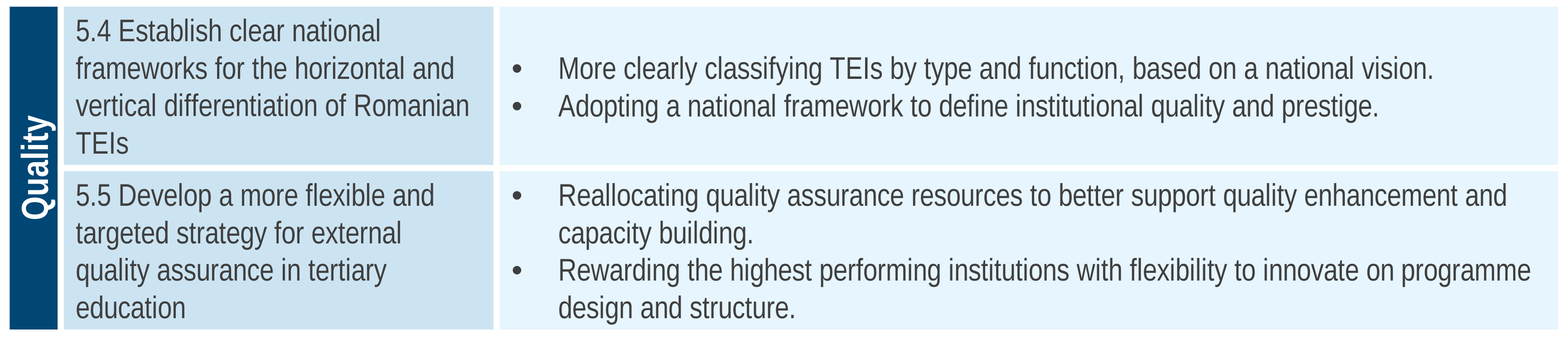
Recommendation 5.4. Establish clear national frameworks for the horizontal and vertical differentiation of Romanian TEIs
Despite existing variation by field of specialisation and public/private status, there is currently no formal framework to differentiate institutions by type, function, or quality. The government has taken steps in this direction by proposing a typology of three institutional categories and by piloting a methodology to classify institutions by their specialisation and level of activity across various domains. However, this framework has not yet been formally adopted or used to guide processes such as external quality assurance, funding, or statistical reporting. Similarly, attempts to establish a clearer vertical differentiation based on institutional quality and prestige have yet to produce a clear outcome. A well-defined and widely endorsed framework to differentiate tertiary education institutions—both horizontally, by institutional type, and vertically, by quality and prestige—could help simplify and strengthen key policy processes, including funding allocation quality assurance, and access policies. It could also support more informed choices by students and academic staff.
More clearly classifying TEIs by type and function, based on a national vision
As noted, Romania’s efforts to horizontally classify institutions based on existing activities have resulted in complex categorisations that do not serve national needs. The reverse of this process is the more common approach in OECD countries – the government, in consultation with stakeholders, sets a vision for the institutional landscape and profiles that will best serve the country’s current and future needs, and seeks, using policy instruments, to steer the TEIs activities to support that vision.
Based on a wide consultation of stakeholders (including representatives from business and society students and academic staff as well as TEI leaders), the Romanian Ministry should prepare a vision for the horizontal classification of institutions that will best serve national aims, taking account of international best practice. The resulting classification should meet the criterion of being a useful means to differentiate and simplify key policy processes related to tertiary education, including but not limited to quality assurance, funding and access policies.
Most OECD systems have designated horizontal subgroupings to support profiling and differentiation of their TEIs. Classification may be based on the ISCED level of degree programmes offered, as the case for the Carnegie Classification used in the United States. It may also be based on the extent to which the institution offers professional or vocational education, which is used, for example to distinguish universities from professionally oriented TEIs in countries such as Netherlands, Austria, Czechia and Poland. A widely endorsed horizontal classification could also promote the formation of TEI representative bodies organised along sectoral lines (as for example, Universities Austria and the Austrian Association of Universities of Applied Sciences) potentially streamlining Romania's fragmented university consortia and increasing their influence on policy.
Adopting a national framework to define institutional quality and prestige
Romanian authorities could consolidate the fragmented and complex information on TEI quality and performance generated from, for example, performance indicators used in funding calculations, the results of quality assurance assessments, and national metaranking. This could be achieved by establishing a framework for understanding quality and publish it in a way that enhances visibility, accessibility, and clarity – for example, in a user-friendly digital portal. Providing accessible means to differentiate institutions on different dimensions of performance and quality would offer numerous benefits. For example, it could inform the decisions of national or international prospective students and academic staff, inspire research on the system, help boost the reputation of institutions, and justify more targeted approaches to quality assurance (as discussed in the next section).
The Bulgarian University Ranking System (BURS) provides an illustrative example of what can be achieved in terms of accessible and transparent presentation of comparative institution data. Comparative performance indicators, and their evolution over time, are presented together with information on the institutions’ education offer and the performance rating of institutions from external quality evaluations, providing a rich and detailed view of performance across different dimensions (Ministry of Education and Science of Bulgaria, n.d.[94]). Romania could work towards providing a similarly accessible view of institution performance that is clearly endorsed by policymakers and demonstrably aligned with systemic priorities, that can effectively enhance capacity for comparative evaluation, peer learning and public trust.
Recommendation 5.5. Develop a more flexible and targeted strategy for external quality assurance in tertiary education
In the light of recent high-profile quality concerns, it is important that ARACIS is rigorous and visible in its external quality assurance activities and that ARACIS' activities support confidence-building in the system. The introduction of a new model for the reaccreditation of doctoral training providers was an important step in this regard, given the recent public focus on ethical lapses which had substantially discredited doctoral education in the country. The new model, based on a simplified set of indicators, appears to have received a positive reception within the system and was also praised in a recent external review of ARACIS by ENQA. The ENQA review of ARACIS also noted that internal quality assurance mechanisms in Romania are progressing, which provides some scope for ARACIS to streamline quality assurance processes, including reducing the number of indicators used in accreditation processes and continuously reviewing their fitness for purpose (ENQA, 2023[45]). Accordingly, Romania has recently moved to reduce the number of indicators used in institution and programme level evaluation (Government of Romania, 2024[43]).
Reallocating quality assurance resources to better support quality enhancement and capacity building
Moving towards a more enhancement-oriented model should enable ARACIS to devote more resources to research and meta-level synthesis of evidence on different aspects of quality. This approach should also allow greater attention by ARACIS to capacity-building activities within TEIs, such as enhancing strategic leadership, renewing curricula, and promoting staff development—areas where support is critically needed in many Romanian institutions.
Transitioning to an enhancement-oriented approach requires a fundamental shift in the current quality assurance framework. It would require ARACIS to develop a methodology for concentrating external evaluation and accreditation activities in institutions, programmes or study domains judged most in need of improvements, freeing up resources for enhancement-based activities. A clear and accessible national framework of institution classifications and performance assessments would help provide a legitimate basis for a differentiated, risk-based approach. However, it is also possible to achieve the pivot towards enhancement in other ways. Norway’s approach to quality assurance provides an inspiring model built on quality improvement principles rather than compliance-based quality assurance (see Box 5.3).
The Norwegian model of external quality assurance provides an example of an approach that is designed to be flexible and adaptive to different institution contexts, while maintaining robustness and providing unparalleled transparency. External Quality Assurance is managed by the Norwegian Agency for Quality Assurance in Education (NOKUT). NOKUT’s procedures and practices indicate many of the hallmarks of an agency that has transitioned its focus on enhancement and improvement rather than a rigid standards-based approach.
Both institution and programme accreditation exist – however responsibility for accrediting programmes is differentiated according to the nationally recognised categories of institutions. Comprehensive universities have the right to self-accredit all types of programmes, while specialised institutions have the right to self-accredit programmes within their discipline of specialisation. University colleges may have authorisation to self-accredit, or not (in the latter case NOKUT accredits their programmes).
The right to self-accreditation of programmes is not granted for a fixed period – instead it is granted unless there is a specific revocation of the right by NOKUT, following an audit of an institutions’ internal quality assurance system.
NOKUT and the external experts focus their efforts on advising institutions on how to further develop their quality assurance practices.
The regulations governing NOKUT’s supervisory activities have recently been updated, based on the principle that supervisory processes should inspire the institutions to re-think existing practices and to try out new ideas, so that quality assurance activities can stimulate quality enhancement.
The most recent round of institutional audits, carried out between 2018 and 2024 have used a concept of “audit heats”. In a typical audit heat, institutions with similar contexts or circumstances are grouped together (for example, institutions offering education within the same disciplines, institutions that have recently merged, or institutions with regional campuses). Institutions involved in the same audit heat are encourages to share and discuss internal quality assurance practices before and after their audits take place. The intention is for the grouped institutions to be encouraged to develop more long-standing contacts and collaborative activities.
NOKUT is also notable for its publication of thematic and discipline-specific educational quality reports which provide research-informed views on the extent of development of different aspects of quality (for example, improving work placements, or the experiences of first-year students) and recommendations for further development of disciplines (for example, teacher education or economics). These research reports often integrate insights from the annual Student Survey (Studiebarometer) and the periodic higher education Teacher Survey.
Source: ENQA (2019[95]), A brief description of the quality assurance system in Norway, https://www.enqa.eu/wp-content/uploads/2019/10/NOKUT.pdf; NOKUT (n.d[96]), Quality assurance and enhancement, https://www.nokut.no/en/quality-enhancement/ (accessed on 26 July 2024).
Rewarding the highest performing institutions with flexibility to innovate on programme design and structure
Across countries, the length and complexity of accreditation processes for tertiary education programmes is often cited as a contributor to the inflexibility of curricula and a barrier to innovation in tertiary education programme design (Duarte and Vascarda, 2023[97]; Phillips and Kinser, 2018[98]). If a clear framework for identifying high-performing institutions were established (as discussed in the previous section), the Ministry of Education and ARACIS could consider adapting or relaxing some accreditation processes for top-performing TEIs to support innovation of curricula and programme design. This would enable high-performing institutions to design and pilot education offerings that are not yet referenced in current qualification frameworks or where external quality assurance standards are not yet defined or lie outside of government-designated enrolment quotas (e.g. micro-credentials, or programmes in an emerging or frontier discipline that may not yet be recognised within the national system of disciplinary quotas). Such flexibility could stimulate the diversification of Romania’s tertiary education system, which, as noted, remains heavily reliant on traditional full-time, theoretical, campus-based degree programmes.
Good governance: Strengthening governance to progress all three missions of tertiary education
In a well-functioning tertiary education system, institutions have clear and differentiated missions encompassing education, research, and societal engagement, while strong governance ensures their accountability and supports continuous improvement of their capacities. Romania’s tertiary education system has traditionally been heavily oriented towards education, with comparatively low research activity and limited engagement with business and society. Efforts to strengthen research and engagement as well as improve the labour market relevance of education are hampered by lack of investment, but also by weak institutional governance and a complex, fragmented, overly procedural approach to strategy and policy development.
As discussed in the previous section, reforms to quality assurance and greater differentiation of TEIs can provide a stronger basis for identifying and addressing weaknesses in internal institutional capacity. However, the Ministry should also seek to build its own capacity for governance, making better use of the policy levers at its disposal to steer TEIs towards system priorities. This section offers recommendations for Romania to consider that can support better governance and steering at policy level. They include rethinking the existing funding mechanism for TEIs, which is overengineered and not supporting institutional improvement as well as it might. Romania would also benefit from greater leadership and clarity from the Ministry on the development of professionally oriented post-secondary education, which is a top strategic priority but where implementation to date has been fragmented, with different reforms and initiatives lacking cohesion. Finally, the Ministry should take additional action to identify and act against risks to integrity.
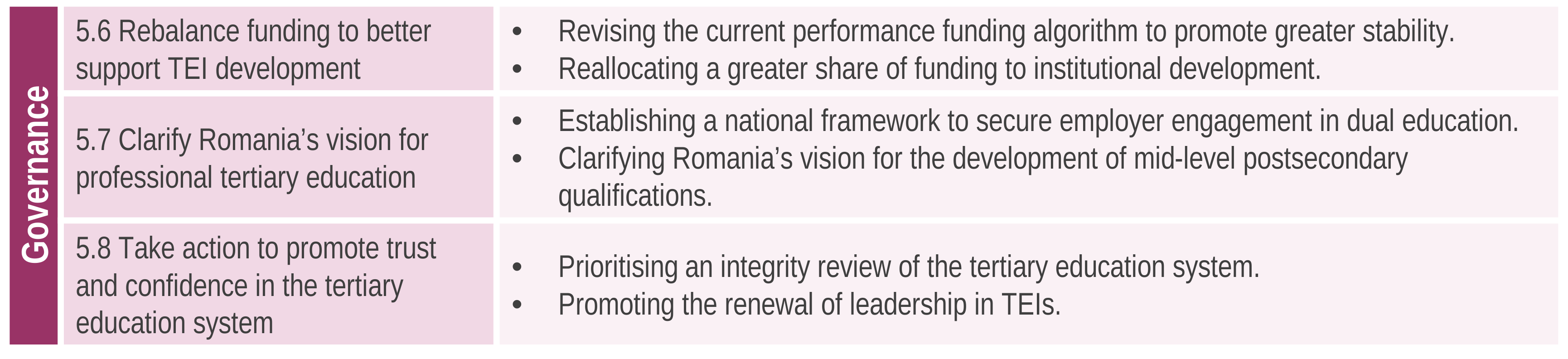
Recommendation 5.6. Rebalance funding to better support TEI development
Considering the funding gaps in lower education levels, prioritising substantial public spending for tertiary education is politically challenging. The most realistic short-term approach is to incrementally increase public funding for education and research as the budget allows, while raising income and stimulating investment from other sources. The changes proposed above to tuition fees and scholarships represent an important part of this strategy. Recent public funding through the Ministry of Education specifically for research and its efforts to build institutional capacity for accessing EU funds are likewise positive steps towards a more strategic approach to funding. However, as we examine below, Romania could also benefit from reflecting on the efficiency and effectiveness of its main funding model for TEIs, particularly the balance of emphasis between rewarding performance and supporting institution development.
Revising the current performance funding algorithm to promote greater stability
As discussed, a substantial share of Romanian TEIs’ budgets depends on performance-related funding, yet the indicators and weightings used for its calculation are complex, not clearly substantiated and can lead to year-on-year instability in funding allocations. International research indicates that on balance there is limited positive benefit to allocating a minority share of funding using a wide set of complicated parameters – the practice limits widespread understanding of the model, increases administrative burden on TEIs and its effectiveness over a simpler model in terms of improving performance is questionable (OECD, 2022[31]).
The Ministry and CNFIS should seek to revise the current performance funding model for TEIs, with a view to simplifying the calculation methodology, better promoting stability of funding and providing clearer articulation of how the indicators and weightings used align with current reform efforts. The revision could also consider current and emerging best practice in other countries in relation to performance indicators used to allocate funding. Some countries, for example Denmark, have recently adjusted the share of variable formula funding downwards to ensure greater stability, while others build in contingency measures so that funding reductions remain with a fixed range compared to previous years (OECD, 2022[31]).
Reallocating a greater share of funding to institutional development
In Romania, the government’s stated priority of strengthening internal institution governance and effectiveness should be reflected in funding policy levers that prioritise building capacity in all TEIs over consistently and substantially rewarding a small share of high performers. The 1.5% of the funding pool allocated to the institutional development fund appears to be the primary mechanism for advancing numerous strategic objectives. Moreover, since this fund is awarded competitively, TEIs are not guaranteed to receive any financial support for improvement, limiting their ability to address and enhance specific areas of performance.
Providing consistent opportunities for lower-capacity institutions to strengthen their governance is likely to lead to systemic improvement over time. Romania could reallocate a sizeable share of its current performance-based fund towards institution development and prioritise the allocation of the newly increased fund in ways that can support all institutions. Countries across the OECD do this in two distinct ways, both of which Romania could consider. One approach is to “top slice” a share of the funding pot to promote knowledge building and sharing across the system on the highest strategic priorities, such as improving teaching and learning. For example, Ireland funds a National Forum for the Enhancement of Teaching and Learning in Higher Education, which provides a focal point for TEIs to collaborate on developing knowledge and learning material on best teaching practices for the benefit of the entire sector (HEA, n.d.[99]).
A second common approach is to allocate strategic funding to all institutions, negotiated between the Ministry and individual TEIs based on institutional development plans. OECD research indicates that providing institutions with a budget envelope of around 5% of core funding for their strategic development can have positive effects, although variations may be required depending on institution context. An emerging practice in some European systems is to integrate development funding into sectoral or (more relevant in Romania’s case) institution funding contracts containing individualised objectives for improvement (see Box 5.4).
OECD countries are increasingly using institution-based performance agreements to strategically allocate funding, targeting specific objectives established between the government and individual institution, based on the institution’s context, profile and needs for performance improvements. The following table shows key design features of the performance contracts used in Finland, the Netherlands and Ireland.
Source: OECD (2022[31]), Resourcing Higher Education in Portugal, Higher Education, OECD Publishing, Paris, https://doi.org/10.1787/a91a175e-en.
Recommendation 5.7. Clarify Romania’s vision for professional tertiary education
The most ambitious reform currently planned in Romania regarding work-based learning in tertiary education is dual education, which would see employers and TEIs collaborating on the development of degree-length programmes. The dual education model, properly designed and implemented, has been shown to be highly effective, for example, leading to accelerated career advancement in Germany and enhancing productivity and increasing social mobility in the United Kingdom (Kocsis and Pusztai, 2021[100]) (Nawaz et al., 2022[101]). Romania’s drive to introduce dual education is, therefore, a positive development and OECD reviewers noted enthusiasm and willingness to engage in dual education among institution representatives.
However, as international research shows, securing employer engagement even on a shorter-term basis to collaborate on work-based learning can be a challenge. Developing degree-length dual education will require concerted effort on the part of the government to properly incentivise the long-term engagement of employers in the process. The rollout of dual education also coincides with Romania making provision for the rollout of short-cycle tertiary education programmes at ISCED 5 and with the relatively recent introduction of mid-level vocational education located on university campuses. In light of these developments, Romania would benefit from developing a more coherent and integrated strategy for professional education, with a clear delineation of provider profiles and a robust framework for the employer engagement crucial to the system's success.
Establishing a national framework to secure employer engagement in dual education
The Ministerial Order on the functioning of dual education outlines some incentives for participating employers, such as tax incentives (Ministry of Education of Romania, 2024[102]). Local and regional partnerships, which Romania pursues, are also recognised in other countries as an effective way to engage employers in developing education that meets community requirements. Individual TEIs, particularly those leading the development of tertiary dual programmes, can also establish cooperative structures to engage employers in the design and funding of these programmes.
However, while individual TEIs can make significant progress in coordinating employer engagement, this approach is particularly relevant for larger TEIs that have more resources and established networks. Furthermore, given Romania’s existing challenges with employer engagement in tertiary education provision and the greater commitment required for dual education, a more comprehensive national policy framework may be needed to secure sustained employer engagement in the development of individual education programmes. A national framework would help to ensure coherent engagement industry partners across the country and benefit the full range of providers. This could involve creating regional and/or sectoral platforms where industry partners can engage with the development of training and skills across the provider landscape, including VET high schools, tertiary institutions, colleges, and other non-tertiary providers.
Other OECD countries have progressed a systemic framework for employer engagement through the establishment of nationally recognised cooperative structures with a clear and distinguishable identity, along with a well-defined mandate, supporting a nationally cohesive approach. The South Korean government, for example, has taken a distinctive approach to stimulating private investment and collaboration with tertiary education, through the creation of Industry-Academia Cooperation Foundations (OECD, 2023[103]; OECD, 2023[104]). These are dedicated entities within universities that facilitate and manage collaboration with industries. Foundations play a key coordinating role in facilitating research collaboration in universities, but also play a role in curriculum development, ensuring that university programmes remain relevant to current industry needs, and facilitating internship and training opportunities for students in partner industries.
Clarifying Romania’s vision for the development of mid-level post-secondary qualifications
Romania’s plans to introduce short-cycle tertiary education (ISCED 5) are a positive development. Across the OECD, more than 20 countries have introduced some form of ISCED 5 education, with the average share of entrants to short-cycle education in 2022 reaching 19% (OECD, 2022[15]). Short-cycle tertiary education has been shown to provide realistic and aligned education opportunities for students coming from vocational and technical upper secondary education and potential alternative pathways to graduation for students who might otherwise drop out. Meanwhile, other mid-level qualifications have also been recently introduced in Romania to support vocational upper secondary students seeking applied programmes for the labour market. These come in the form of non-university tertiary education (ISCED 4) provided by colleges located within accredited TEIs, in addition to the already existing post-secondary non‑tertiary providers.
However, limited clarity among stakeholders was encountered as to the intended future development of programmes at ISCED 4 and 5, and their linkage with other forms of provision and policy objectives. The absence of an integrated national strategy might lead to an increasingly fragmented landscape of provision and providers of mid-level qualifications. The Romanian government should develop a clearer vision and operational plan for the development of programmes leading to mid-level qualifications in consultation with relevant stakeholders. Recent OECD research highlights the key considerations to be taken into account when developing a strategy for higher vocational and professional tertiary education programmes. These include: providing a diverse offer of programmes (which can include programmes offered at different levels or fulfilling different functions); making programmes relevant by building in strong linkages with employers and work-based learning; ensuring post-secondary VET teachers have the right skills and training, and taking steps to ensure smooth transitions in and out of the programmes (OECD, 2023[105]).
Recommendation 5.8. Take action to promote trust and confidence in the tertiary education system
As noted, various high-profile integrity violations and concerns continue to affect the Romanian tertiary education system, generating negative public and international attention and eroding trust in the system. While ethical issues arise in all tertiary education systems, what sets systems apart is the extent and visibility of their commitment to proactively identifying risks, addressing breaches and ensuring accountability. Although steps have been taken to improve the ethical climate in Romanian TEIs, without further action the reputational damage to Romanian tertiary education will likely persist, stifling progress, and penalising TEIs that have reformed and modernised their practices. Additional actions for Romanian authorities to consider in the short term are provided below.
Prioritising an integrity review of the tertiary education system
A recent OECD public governance review of integrity in Romania highlighted that despite progress, many concerns remain about potential risks for integrity violations in the tertiary education system, though, for example, academic inbreeding, influence trading, and lack of transparency in admissions (OECD, 2023[106]). The report recommends carrying out robust diagnosis of integrity risk in the education sector, covering risks of corruption, clientelism and conflicts of interest. Such a review would enable a thorough comparison of current national policymaking and stakeholder engagement norms in Romania’s tertiary education system, along with internal governance in TEIs, against best practice across peer countries. It would highlight areas and institutions that have progressed (of which there are many examples) and provide a foundation for an action plan to address remaining integrity risks, helping to build trust and confidence in the system. Considering the continued concerns highlighted in this review about integrity, limited institutional capacity and concentration of leadership within some TEIs, Romania should take forward this recommendation as soon as possible.
Promoting the renewal of leadership in TEIs
Romania should also move quickly to address the issue of rectors serving more than two terms of office. While technically legal, this practice goes against the spirit and intention of setting term limits in the law, and, as long as it continues, will continue to carry with it the perception of unchecked power and resistance to change in the institutions concerned. Public authorities should prioritise policies that promote the renewal and wider distribution of academic leadership within TEIs. Ideally this could be achieved through finding a legislative solution to the term limit loophole. Alternatively, or additionally, Romania could find ways to recognise and reward institutions that exemplify best practice in this regard – for example by prioritising institutions with more dynamic approaches to leadership and management for project-based public funding or collecting and publicising comparative data on TEI leadership renewal.
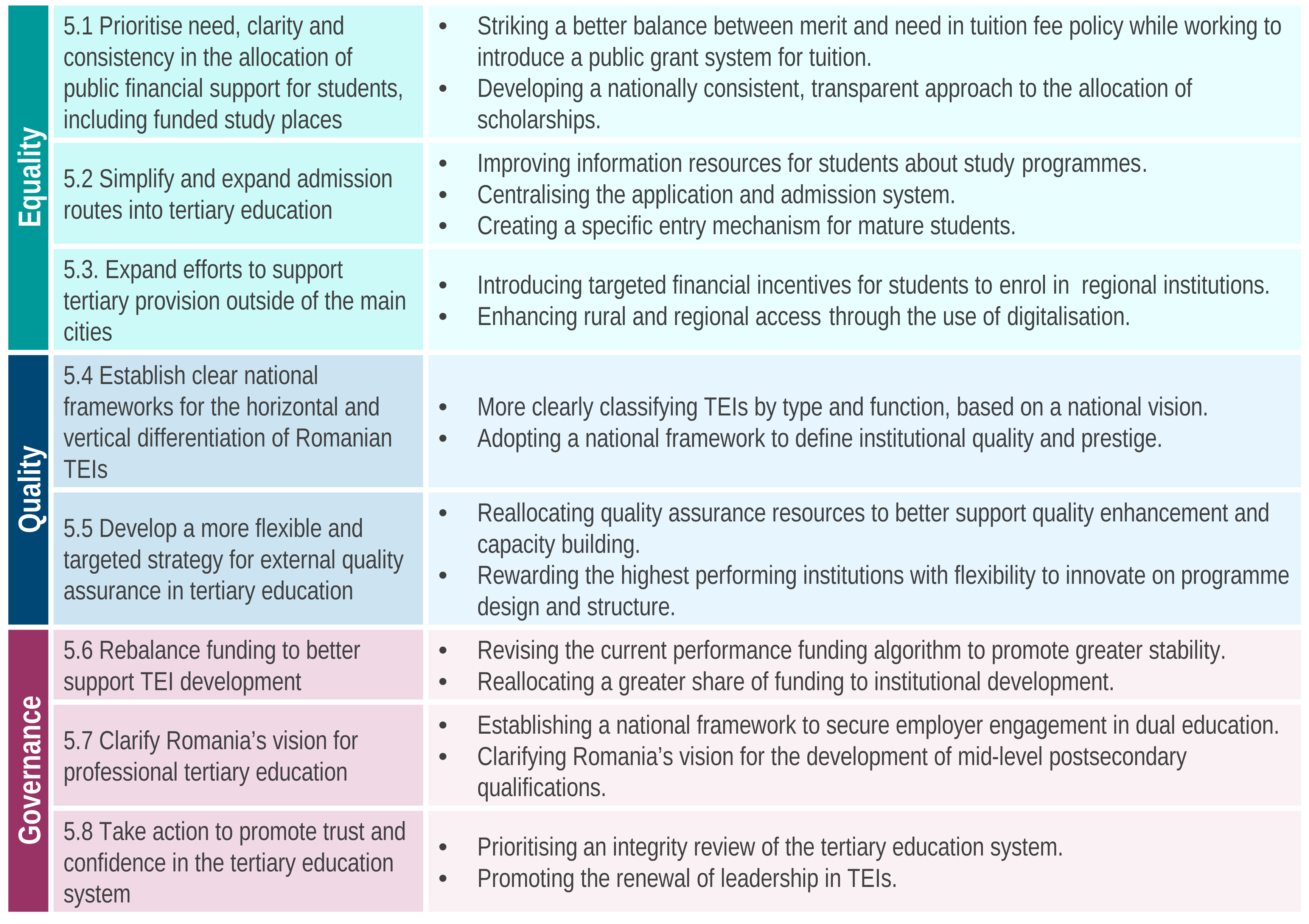
References
[13] Adrian Curaj, J. (ed.) (2022), Losing Ground: Romanian Higher Education Since 2006 in Comparative Perspective, Springer, https://link.springer.com/book/10.1007/978-3-030-94496-4.
[83] Agency for Science and Higher Education (n.d.), Studij.hr, https://www.studij.hr/ (accessed on 26 July 2024).
[25] ANOSR (2020), Access to higher education. Admission and Current Challenges, https://anosr.ro/wp-content/uploads/2021/04/2020-%E2%80%93-Admiterea-in-invatamantul-superior-%E2%80%93-deconectata-de-realitatile-actuale.pdf.
[42] ARACIS (2019), Summary report on trends in the evolution of quality in higher education following the assessments made, https://www.aracis.ro/wp-content/uploads/2019/08/Raport_sintetic_en_online.pdf.
[3] Badescu, G., G. Mihut and P. Sum (2018), Reforma învățământului superior în România: propuneri de schimbări pentru un sistem onest, eficient și incluziv [Reform of Higher Education in Romania: Proposals for Changes towards an Honest, Efficient, and Inclusive System], https://www.researchgate.net/publication/327630995_Reforma_invatamantului_superior_in_Romania_propuneri_de_schimbari_pentru_un_sistem_onest_eficient_si_incluziv.
[53] Broberg, N. and G. Golden (2023), “How are OECD governments navigating the digital higher education landscape?: Evidence from a comparative policy survey”, OECD Education Working Papers, No. 303, OECD Publishing, Paris, https://doi.org/10.1787/93468ccb-en.
[39] Cismaru, D. and N. Corbu (2019), “The Multiple Impact of Education Gaps in Romania”, in Development in Turbulent Times, Springer International Publishing, Cham, https://doi.org/10.1007/978-3-030-11361-2_12.
[9] CNFIS (2022), “Raportul public anual 2022. Starea finanțării învățământului superior [The state of higher education financing]”, http://www.cnfis.ro/rapoarte-cnfis/.
[32] CNFIS (2022), “The state of higher education financing”, http://www.cnfis.ro/rapoarte-cnfis/.
[19] Cocea (2024), “Legal loophole allows Romanian rectors to remain in post”, Science Business, https://sciencebusiness.net/news/universities/legal-loophole-allows-romanian-rectors-remain-pos.
[50] Curaj, A., J. Salmi and C. Hâj (eds.) (2022), Access to Higher Education: Losing Precious Human Resources Before the Start Line, https://doi.org/10.1007/978-3-030-94496-4_3.
[64] Curaj, A., J. Salmi and C. Hâj (eds.) (2022), Defining and Measuring Dropout Phenomenon in Romanian Public Universities, https://doi.org/10.1007/978-3-030-94496-4_3.
[67] Curaj, A., J. Salmi and C. Hâj (eds.) (2022), Higher Education in Romania: Overcoming Challenges and Embracing Opportunities, Springer International Publishing, Cham, https://doi.org/10.1007/978-3-030-94496-4.
[75] de Gayardon (2019), There is No Such Thing as Free Higher Education: A Global Perspective on the (Many) Realities of Free Systems, https://discovery.ucl.ac.uk/id/eprint/10049992/.
[48] Deaconu, S. and C. Hâj (2022), National student questionnaire: Study on the student satisfaction with the quality of higher education (2019-2020), UE Fiscali Publishing House.
[73] Dervis, O., E. Trifan and G. Jitaru (2022), The Socio-Economic Challenges in Access to Romanian Higher Education. Student Perception and Funding Policy Directions, https://link.springer.com/chapter/10.1007/978-3-030-94496-4_5.
[92] DGES (2024), Informação Estatística - Programa +Superior, https://www.dges.gov.pt/pt/pagina/estatisticas-programa-superior?plid=373 (accessed on 26 July 2024).
[1] Dobbins, M. (2017), “Exploring higher education governance in Poland and Romania: Re-convergence after divergence?”, European Educational Research Journal, Vol. 16/5, pp. 684-704, https://doi.org/10.1177/1474904116684138.
[97] Duarte and Vascarda (2023), Literature Review of Accreditation Systems in Higher Education, https://www.mdpi.com/2227-7102/13/6/582.
[80] DUO (n.d.), Funding for school and studies, https://duo.nl/particulier/student-finance/ (accessed on 16 July 2024).
[45] ENQA (2023), “ENQA Targeted Review - ARACIS”, https://www.aracis.ro/wp-content/uploads/2023/10/ARACIS-external-review-report-2023.pdf.
[95] ENQA (2019), A brief description of the quality assurance system in Norway, https://www.enqa.eu/wp-content/uploads/2019/10/NOKUT.pdf.
[16] EUA (2023), University Autonomy in Europe IV - the scorecard 2023, https://eua.eu/downloads/publications/eua%20autonomy%20scorecard.pdf.
[23] EUA (2021), Institutional transformation and leadership development at universities - A mapping exercise, https://eua.eu/downloads/publications/newlead%20report%20v2.pdf.
[35] European Commission (2024), Annexes 1-6 of the final evaluation of Horizon 2020, https://research-and-innovation.ec.europa.eu/document/download/c3b6ab34-9d98-45d7-b238-c86d4924273e_en.
[61] European Commission (2023), Erasmus+ annual report 2022 : annex, https://data.europa.eu/doi/10.2766/090374.
[34] European Commission (2022), Country Review of the Romanian Research and Innovation System, https://projects.research-and-innovation.ec.europa.eu/sites/default/files/rio/report/PSF-RO-Final-Report_03.06.2022.pdf.
[18] European Parliament (2024), “EP Academic Freedom Monitor 2023”, https://www.europarl.europa.eu/RegData/etudes/STUD/2024/757798/EPRS_STU(2024)757798_EN.pdf.
[12] Eurostat (2024), Population on 1st January by age, sex and type of projection, https://doi.org/10.2908/PROJ_23NP (accessed on October 2024).
[52] Eurostat (2023), Individuals - internet activities, https://doi.org/10.2908/ISOC_CI_AC_I (accessed on 5 October 2024).
[55] Eurostat (2023), Population by educational attainment level, sex and age (%) - main indicators, https://doi.org/10.2908/EDAT_LFSE_03 (accessed on 5 October 2024).
[70] Eurostat (2023), Population by educational attainment level, sex, age and degree of urbanisation (%), https://doi.org/10.2908/EDAT_LFS_9913 (accessed on 10 October 2024).
[71] Eurostat (2023), Population by educational attainment level, sex, age, citizenship and NUTS 2 regions (%), https://doi.org/10.2908/EDAT_LFS_9918 (accessed on 10 October 2024).
[8] Eurostat (2023), Population on 1 January by age group and sex, https://doi.org/10.2908/DEMO_PJANGROUP (accessed on 11 October 2024).
[36] Eurostat (2022), Financial aid to students by education level - as % of total public expenditure, https://doi.org/10.2908/EDUC_UOE_FINA01 (accessed on 5 October 2024).
[59] Eurostat (2022), Students enrolled in tertiary education by education level, programme orientation, sex, type of institution and intensity of participation [EDUC_UOE_ENRT01], https://doi.org/10.2908/EDUC_UOE_ENRT01 (accessed on 2 October 2024).
[47] Eurostudent (n.d.), About us, https://www.eurostudent.eu/about.
[72] Eurydice (2023), “Romania”, 14. Ongoing reforms and policy development. 14.4 National reforms in higher education, https://eurydice.eacea.ec.europa.eu/national-education-systems/romania/national-reforms-higher-education (accessed on 30 August 2023).
[41] Geven, K. et al. (2015), “Why do Romanian universities fail to internalize quality assurance?”, Higher Education Reforms in Romania: Between the Bologna Process and National Challenges, pp. 43-61, https://doi.org/10.1007/978-3-319-08054-3_3/TABLES/2.
[21] Ghiațău, R. (2021), “Fighting Academic Dishonesty in Romanian Universities: Lessons from International Research”, Vol. 40, pp. 329-343, https://doi.org/10.1108/S1479-367920210000040018.
[77] Golden, G., L. Troy and T. Weko (2021), “How are higher education systems in OECD countries resourced?: Evidence from an OECD Policy Survey”, OECD Education Working Papers, No. 259, OECD Publishing, Paris, https://doi.org/10.1787/0ac1fbad-en.
[86] Government of Ireland (2024), Back to Education Allowance, https://www.gov.ie/en/service/418e3f-back-to-education-allowance/ (accessed on 17 July 2024).
[43] Government of Romania (2024), METODOLOGIE din 8 august 2024 de evaluare externă a calității educației în învățământul superior [Methodology of 8 August 2024 for the external evaluation of the quality of education in higher education], https://legislatie.just.ro/Public/DetaliiDocumentAfis/286995.
[37] Government of Romania (2023), Higher Education Law - Statement of Reasons (Expunere motive lege).
[88] Government of Spain (2024), Real Decreto 534/2024, de 11 de junio, por el que se regulan los requisitos de acceso a las enseñanzas universitarias oficiales de Grado, las características básicas de la prueba de acceso y la normativa básica de los procedimientos de admisión., https://www.boe.es/diario_boe/txt.php?id=BOE-A-2024-11858.
[29] Guimón (2013), “Promoting university-industry collaboration in developing countries”, https://www.researchgate.net/publication/278961909_Promoting_university-industry_collaboration_in_developing_countries_Innovation_Policy_PlatformOECD_and_World_Bank.
[26] Haj, C., I. Geanta and D. Orr (2018), “A Typology of Admission Systems Across Europe and Their Impact on the Equity of Access, Progression and Completion in Higher Education”, European Higher Education Area: The Impact of Past and Future Policies, pp. 171-187, https://doi.org/10.1007/978-3-319-77407-7_12.
[57] Hauschildt, K. et al. (2021), Social and Economic Conditions of Student Life in Europe. EUROSTUDENT VII Synopsis of Indicators 2018–2021., https://www.eurostudent.eu/download_files/documents/EUROSTUDENT_VII_Synopsis_of_Indicators.pdf.
[99] HEA (n.d.), National Forum for the Enhancement of Teaching and Learning in Higher Education, https://www.teachingandlearning.ie/ (accessed on 17 July 2024).
[87] HEA (n.d.), Springboard+, https://hea.ie/springboard/ (accessed on 17 July 2024).
[22] Ives, B. et al. (2017), “Patterns and predictors of academic dishonesty in Romanian university students”, Higher Education, Vol. 74/5, pp. 815-831, https://doi.org/10.1007/S10734-016-0079-8/TABLES/6.
[40] JRC (2019), Social Inclusion Policies in Higher Education: Evidence from the EU, https://ris.utwente.nl/ws/portalfiles/portal/135881389/jrc_117257_social_inclusion_policies_in_higher_education_evidence_from_the_eu.pdf.
[100] Kocsis, Z. and G. Pusztai (2021), A double road to success? Impact of dual education on effectiveness, https://doi.org/10.1080/13596748.2021.1909923.
[63] Mägi, E. and M. Beerkens (2015), “Linking research and teaching: Are research-active staff members different teachers?”, Higher Education, Vol. 72/2, pp. 241-258, https://doi.org/10.1007/s10734-015-9951-1.
[79] Ministries and institutions (n.d.), VALSTYBINIS STUDIJŲ FONDAS [State Study Fund], https://vsf.lrv.lt/lt/ (accessed on 16 July 2024).
[94] Ministry of Education and Science of Bulgaria (n.d.), РЕЙТИНГОВА СИСТЕМА Рейтинг на висшите училища в България за 2023 година [RATING SYSTEM Ranking of Higher Education Institutions in Bulgaria for 2023], https://rsvu.mon.bg/rsvu4/# (accessed on 26 July 2024).
[102] Ministry of Education of Romania (2024), ORDIN Nr. 4275/2024 din 15 aprilie 2024 pentru aprobarea Metodologiei de organizare şi funcţionare a învăţământului superior dual, https://www.edu.ro/sites/default/files/OM_4275-2024.pdf.
[5] Ministry of Education of Romania (2023), Accession candidate country’s self-assessment of policies and practices in the area of education and skills: Guidelines and questionnaire Romania.
[2] Ministry of Education of Romania (2023), Legea învățământului superior nr 199/2023 [Law on higher education no. 199/2023], https://edu.ro/sites/default/files/_fi%C8%99iere/Minister/2023/Legi_educatie_Romania_educata/legi_monitor/Legea_invatamantului_superior_nr_199.pdf.
[4] Ministry of Education of Romania (2023), ORDIN Nr. 6270/2023 din 14 septembrie 2023 privind aprobarea Regulamentului de organizare şi funcţionare a Comisiei Naţionale pentru Finanţarea Învăţământului Superior, https://www.edu.ro/sites/default/files/ordin%206270-2023.pdf.
[7] Ministry of Education of Romania (2023), Raport privind starea învățământului superior din România 2022–2023 [Report on the state of higher education in Romania 2022-2023], https://www.edu.ro/sites/default/files/_fi%C8%99iere/Minister/2023/Transparenta/Rapoarte_sistem/Raport-Starea-invatamantului-superior-2022-2023.pdf.
[78] Ministry of Education, University and Research of Italy (n.d.), Diritto allo studio [Right to education], http://www.dsu.miur.gov.it/#fourth (accessed on 16 July 2024).
[51] Ministry of Investments and European Projects of Romania (2023), Planului Național de Redresare și Reziliență [Nation Recovery and Resilience Plan], https://mfe.gov.ro/pnrr/.
[93] Ministry of National Education and Youth of France (n.d.), Campus Comnnectés [Connected Campuses], https://www.education.gouv.fr/campus-connectes-413766#:~:text=Les%20campus%20connect%C3%A9s%20permettent%20de,dans%20des%20formations%20%C3%A0%20distance. (accessed on 17 July 2024).
[6] National Institute of Statistics (2023), Anuarul statistic al României [Statistical Yearbook of Romania], https://insse.ro/cms/ro/tags/anuarul-statistic-al-romaniei.
[101] Nawaz, R. et al. (2022), “The impact of degree apprenticeships: analysis, insights and policy recommendations”, Transforming Government: People, Process and Policy.
[96] NOKUT (n.d), Quality assurance and enhancement, https://www.nokut.no/en/quality-enhancement/ (accessed on 26 July 2024).
[89] OECD (2025), OECD Reviews of Labour Market and Social Policies: Romania,, OECD Publishing.
[28] OECD (2024), Education at a Glance 2024: OECD Indicators, OECD Publishing, Paris, https://doi.org/10.1787/c00cad36-en.
[56] OECD (2023), Adults’ educational attainment distribution, by age group and gender, http://data-explorer.oecd.org/s/g0 (accessed on 10 October 2024).
[105] OECD (2023), Building Future-Ready Vocational Education and Training Systems, OECD Reviews of Vocational Education and Training, OECD Publishing, Paris, https://doi.org/10.1787/28551a79-en.
[27] OECD (2023), Enhancing Strategic Planning and Innovation Services: Supporting Romanian Regional Development Agencies, https://doi.org/10.1787/8d80ef62-en.
[10] OECD (2023), Institutional missions and profiles in higher education in Lithuania, https://www.oecd.org/publications/institutional-missions-and-profiles-in-higher-education-in-lithuania-286832a7-en.htm.
[103] OECD (2023), OECD Reviews of Innovation Policy: Korea 2023, OECD Reviews of Innovation Policy, OECD Publishing, Paris, https://doi.org/10.1787/bdcf9685-en.
[104] OECD (2023), STIP COMPASS: THE DIRECTORATE FOR ACADEMIC RESEARCH AND UNIVERSITY FUNDING OF THE NATIONAL RESEARCH FOUNDATION OF KOREA, https://stip.oecd.org/stip/interactive-dashboards/policy-initiatives/2023%2Fdata%2FpolicyInitiatives%2F99993612 (accessed on 26 July 2024).
[106] OECD (2023), Strengthening Romania’s Integrity and Anti-corruption Measures, OECD Public Governance Reviews, OECD Publishing, Paris, https://doi.org/10.1787/ff88cfa4-en.
[17] OECD (2022), A review of technological university academic career paths, contracts and organisation in Ireland, OECD Education Policy Perspectives, No. 64, https://doi.org/10.1787/2b7ee217-en.
[68] OECD (2022), Distribution of enrolled students, new entrants and graduates by field of education, http://data-explorer.oecd.org/s/is (accessed on 7 October 2024).
[66] OECD (2022), Education at a Glance 2022, https://doi.org/10.1787/3197152b-en.
[58] OECD (2022), Enrolment rate by age, http://data-explorer.oecd.org/s/g1 (accessed on 5 October 2024).
[90] OECD (2022), OECD Economic Surveys: Romania 2022, https://doi.org/10.1787/e2174606-en.
[85] OECD (2022), Resourcing higher education in Ireland - Funding higher education institutions, https://www.oecd-ilibrary.org/education/resourcing-higher-education-in-ireland_67dd76e0-en.
[31] OECD (2022), Resourcing Higher Education in Portugal, Higher Education, OECD Publishing, Paris, https://doi.org/10.1787/a91a175e-en.
[60] OECD (2022), Share of mobile new entrants and graduates, https://data-viewer.oecd.org?chartId=acb63f27-b654-4a03-90c4-ca60d4a13957 (accessed on 10 October 2024).
[15] OECD (2022), Share of new entrants to and first-time graduates at tertiary education, http://data-explorer.oecd.org/s/fl (accessed on 11 October 2024).
[30] OECD (2021), Distribution of government, private and non-domestic expenditure on educational institutions, http://data-explorer.oecd.org/s/hb (accessed on 11 October 2024).
[81] OECD (2020), OECD Reviews of Evaluation and Assessment in Education: Serbia, https://doi.org/10.1787/225350d9-en.
[38] OECD (2020), Resourcing Higher Education: Challenges, Choices and Consequences, https://doi.org/10.1787/735e1f44-en.
[62] OECD (2019), Benchmarking Higher Education System Performance, Higher Education, OECD Publishing, Paris, https://doi.org/10.1787/be5514d7-en.
[76] OECD (2008), Tertiary Education for the Knowledge Society: Volume 1 and Volume 2, OECD Reviews of Tertiary Education, OECD Publishing, Paris, https://doi.org/10.1787/9789264046535-en.
[91] OECD (2007), Higher Education and Regions -Globally Competitive, Locally Engaged, https://www.oecd-ilibrary.org/urban-rural-and-regional-development/higher-education-and-regions_9789264034150-en.
[20] OECD/European Union (2019), Supporting Entrepreneurship and Innovation in Higher Education in Romania, https://heinnovate.eu/sites/default/files/oecd_ec_supporting_entrepreneurship_and_innovation_in_higher_education_in_romania.pdf.
[98] Phillips and Kinser (2018), Accreditation on the edge: Challenging quality assurance in higher education, https://pure.psu.edu/en/publications/accreditation-on-the-edge-challenging-quality-assurance-in-higher.
[54] President of Romania (2021), Educated Romania, https://www.presidency.ro/en/commitments/educated-romania.
[44] QAFIN (2020), METHODOLOGY AND GUIDELINES ON EXTERNAL QUALITY EVALUATION IN HIGHER EDUCATION IN ROMANIA, https://www.aracis.ro/wp-content/uploads/2021/11/Result-1.-Part-III-GUIDELINES-BACHELORS-DEGREE-EN.pdf.
[14] QAFIN (2018), Draft Recommendation for the Methodology for the Classification of Higher Education Institutions, https://www.aracis.ro/wp-content/uploads/2019/08/Output_2.1Classification_Second__Draft_April_20181.pdf.
[74] Rutigliano and L. Cerna (2020), Inclusion of Roma Students in Europe: A literature review and examples of policy initiatives, https://one.oecd.org/document/EDU/WKP(2020)16/En/pdf.
[84] Salmi and Sursock (2020), Access and completion for underserved students: International perspectives, https://www.acenet.edu/Documents/GAIN-working-paper-Access-and-Completion-for-Underserved-Students.pdf.
[11] Santa, R. and S. Fierăscu (2022), Access Patterns in Romanian Higher Education. A Story of Asymmetry and Polarization, https://link.springer.com/book/10.1007/978-3-030-94496-4.
[46] Staring et al. (2022), Digital higher education: Emerging quality standards, practices and supports, OECD Education Working Papers, No. 281, https://doi.org/10.1787/f622f257-en.
[82] Study In Romania (n.d.), , https://studyinromania.gov.ro/.
[65] UEFISCDI (2022), Abandonul în învățământul superior românesc. Definire, măsurare, interpretare [Dropout in Romanian higher education. Definition, measurement, interpretation], https://editura.uefiscdi.ro/6-abandonul-in-invatamantul-superior-romanesc-definire-masurare-interpretare.
[33] UEFISCDI (2022), ANALIZA DISTRIBUȚIEI ȘI IMPLEMENTĂRII FINANȚĂRII SUPLIMENTARE, 2016-2021 [Analysis of the Distribution and Implementation of Additional Funding, 2016-2021], http://pocu-intl.uefiscdi.ro/images/Rezultate/A431_RT16_Raport-FS-2016-2021-final-dec2022.pdf.
[24] UEFISCDI (2022), Evaluare ex-ante a impactului introducerii unui sistem centralizat de admitere-in-universitati [Ex-ante evaluation of the introduction of a unified system of admission in universities], https://editura.uefiscdi.ro/1-evaluare-ex-ante-a-impactului-introducerii-unui-sistem-centralizat-de-admitere-in-universitati.
[49] UEFISCDI (n.d.), Chestionar absolventi, https://chestionar-absolventi.ro/?page_id=2.
[69] World Bank (2019), Romania Systematic Diagnostic Country Update, https://documents1.worldbank.org/curated/en/763281530905054127/pdf/128056-SCD-PUBLIC-P160439-RomaniaSCDBackgroundNoteEducation.pdf.
← 1. A collapse in enrolments between 2009 and 2013 can be mainly explained by the demographic transition (Usher and Williams, 2022[13]). However, quality assurance difficulties in the private higher education sector also contributed to the decline.
← 2. National currency values have been converted using purchasing power parity (PPP) rates.
← 3. Estimates of the size and relative proportion of the Roma population in European countries are subject to substantial variability, due to the difficulties of accurately enumerating the group (Rutigliano and Cerna, 2020[74]).