This chapter analyses key features of Romania’s school system and proposes measures to ensure that all young Romanians acquire the skills they need for work or future learning. Romania can build on several ongoing efforts, including a new competency-based curriculum, plans to increase public funding, and measures to introduce more flexible vocational pathways with stronger work-based learning. The chapter recommends ways to provide teachers with on-site support, including guidance from school leaders and peers to implement the curriculum and improve student outcomes. It also explores measures to promote equity, including by reviewing the school network, and enhancing the quality and labour market relevance of vocational tracks. Finally, the chapter suggests avenues to strengthen the capacity of local education authorities to support school improvement and foster a school culture that values and effectively uses data for learning.
Education and Skills in Romania

Abstract
Romania is undertaking ambitious reforms to improve the quality and relevance of its school system. It has committed to increase funding for the sector, rolled out a new competency-based national curricula, and set out plans to introduce more flexible VET pathways with stronger work-based learning. These much‑needed changes come at an opportune time for Romanian education. Despite some improvement, learning achievement, as measured by the OECD Programme for International Student Assessment (PISA), has stagnated at low levels, leading too many young Romanians to leave school without the foundational skills required for work and lifelong learning. Students from disadvantaged backgrounds, especially those living in rural areas and enrolled in vocational tracks, are at particular risk of falling behind.
This chapter examines how Romania can build on its ongoing school reforms to help raise the quality of teaching and learning for all students. It focuses in particular on policies to strengthen the impact of school leaders and teachers, address geographic disparities in learning opportunities, and better fund and support school improvement.
Section I: Provides an overview of Romania’s school sector, focusing on how policies compare internationally.
Section II: Compares the sector’s performance with OECD benchmarks on international indicators.
Section III: Provides recommendations on how Romania can learn from OECD evidence and experience to further improve school education.
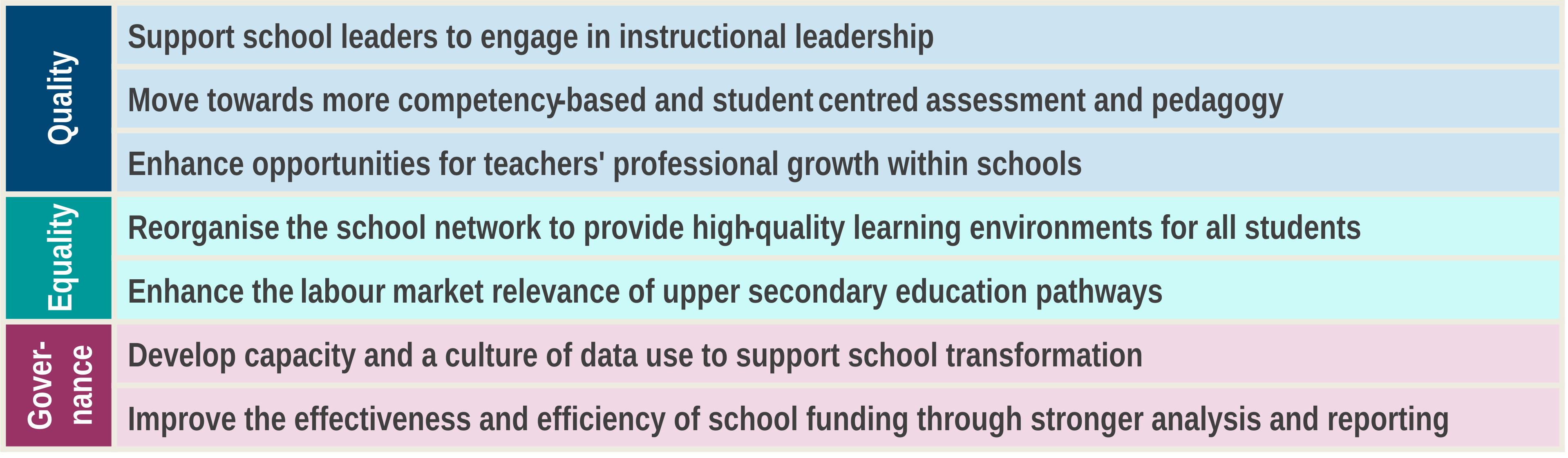
Governance and structure
The Ministry of Education is responsible for setting the education system’s overall strategy and policy, and receives technical support from specialised bodies
The Ministry of Education holds all key responsibilities for the strategy and policy of school education in Romania. Policies are determined centrally in Bucureşti, with most operational decisions directed by the Ministry and implemented through its local representatives, the 42 County School Inspectorates (inspectorate școlare județene, CSIs). Local political authorities, namely counties and municipalities, play a limited role in shaping education policy. However, they do play a role in managing school infrastructure and transportation, and in providing complementary funding for these and other school services, such as extracurricular activities and canteens (Ministry of Education of Romania, 2023[1]).
As in most OECD countries, the Ministry can draw on the expertise of a network of specialised bodies, which provide technical support in curriculum development, assessment and examination, school quality assurance, vocational education and educational research (see Chapter 2). While these semi-independent institutes hold critical responsibilities for quality improvement, they face shortages of qualified staff and other resources, and their mandates are not always clear.
Ongoing reforms aim to strengthen Romania’s specialised bodies so they can better support government policymaking and delivery. For instance, school evaluation responsibilities, which are currently fragmented, will be consolidated under a single national agency (the Agency for Quality Assurance and Inspection in Pre-University Education, ARACIIP) (see below). Reforms also promise the creation of two new national centres to advance national priorities on inclusive education, and the professional development of teachers. However, resourcing remains a concern.
County School Inspectorates have significant influence over school planning and resourcing decisions
Historically, CSIs have served as agents of government control and administration. They oversee the implementation of national policies in schools, appoint school principals who have passed a national contest, provide continuous professional development for school staff through their affiliated teacher training houses and, together with local authorities, have the main responsibility for planning the school network. They also lead individual teacher appraisals, referred to as “specialty inspections” and, until recently, undertook school inspections.
Over the past decade, there have been attempts to rebalance CSI functions to focus more on school support. There have also been important efforts to address conflicts of interests and perceptions that roles are offered in exchange for political support, notably with the introduction of centralised procedures for the appointment of school principals. These reforms have been given new impetus under the 2023 Law, notably by reorganising CSIs into County Directorates for Pre-university education (Direcțiile județene de învățământ Preuniversitar, County Directorates hereafter), and stripping away many of their inspection functions. However, concerns identified in previous OECD analysis regarding the role of CSIs in teacher promotion still persist (see below) (OECD, 2024[2]).
The Ministry of Education has a unit that oversees and supports CSIs. The unit has benefited from EU and other external funds to promote cross-county exchanges in areas like teacher training and curriculum implementation and organises regular meetings to discuss issues of common concern. However, there is still significant scope for the unit to further enhance cross-county collaboration and resource-sharing, particularly to strengthen CSIs’ school improvement functions or to providing guidance in key areas such as school network planning.
Recent reforms have sought to give schools more instructional autonomy, yet schools report low levels of decision-making responsibility
There have been efforts in the last decade to give schools more responsibility, including more flexibility to adapt the curriculum. However, in the OECD's Programme for International Student Assessment (PISA), Romanian principals report among the lowest levels of perceived responsibility for decisions on course content and student assessment across participating countries (see Figure 4.2). Various factors might explain this, from limited capacity and guidance on how to assume these new responsibilities, to continued high levels of bureaucratic controls outside and inside schools that take schools’ time and attention away from instructional tasks.
Percentage of students in schools where principals report that their school has the main responsibility for determining course content and student assessment policies

Note: “School” refers to the principal, teachers or members of school management team and school governing board.
Source: OECD (2023[3]), PISA 2022 Results (Volume II): Learning During – and From – Disruption, PISA, OECD Publishing, Paris, https://doi.org/10.1787/a97db61c-en
School-level governance is complex and bureaucratic
School governance in Romania stands out for its complexity. The school board is the school’s main management body involving school staff, parents, and local authorities. The school board, generally presided by the school principal, is responsible for adopting and executing the school budget, making staffing decisions, and approving the curriculum. There are six additional school commissions specialised in different domains such as quality assurance, curriculum implementation, teachers’ professional development, and inclusion. These governance arrangements can facilitate teacher and parent involvement in school planning. Nonetheless, they make it difficult to ensure an integrated school-wide approach to instructional planning and quality improvement. Core tasks related to teaching and learning are fragmented across commissions and focused on administrative process rather than improving practices and outcomes. This also adds to the administrative responsibilities of school principals, again taking time away from instructional matters (see Teachers and School leaders below).
Schooling is structured into three cycles, offering diverse pathways in upper secondary education
School education is organised in primary education (Școală primară), covering the preparatory grade and grades 1-4 (ages 6 to 10), lower secondary education (Școală Gimnazială) covering grades 5-8 (ages 11 to 14) and upper secondary education (Liceiu) covering grades 9-12 (ages 15 to 18). In most cases, primary and lower secondary education are provided by the same school, while upper secondary education is offered in a separate institution. With the recent extension of mandatory pre-primary education (see Chapters 2 and 3), schools are also increasingly combining pre-primary with primary education. Most primary and secondary schools are public – In 2022 the private sector represented 2% of total student enrolment in primary education and 1% in lower secondary education (OECD, 2024[4]).
There are three main upper secondary pathways: theoretical, aptitude-based and technological tracks (filiera teoretică, liceu filiera vocațională, filiera tehnologică) (see Figure 4.3). The more prestigious theoretical and aptitude-based upper secondary schools follow the general curricula, the latter focusing on the arts, sports, theology, the military or educational pedagogy. They attract students that want to pursue tertiary education. Technological schools offer four-year initial vocational education and training (IVET) programmes that combine a general and a professional curriculum. These programmes focus on technical, service, natural resource or environmental protection fields. Vocational courses are primarily delivered in a school-based setting, with approximately 25% of the time allocated to work-based activities (CEDEFOP, 2021[5]). These three upper secondary education tracks culminate in a common school-leaving exam (the Baccalaureate), with technological and aptitude-based students also taking an additional examination to obtain a certificate of professional competencies (Level 4 EQF). More than half of upper secondary students (57%) enrol in an IVET track (OECD, 2022[6]).
Like many OECD countries, Romania also offers shorter, more applied vocational pathways
As an alternative to the four-year IVET programmes provided in technological schools, students in Romania have the option to pursue a three-year IVET track. Since 2017-2018, this shorter IVET programme can also be taken in a “dual” format (Școala Profesională/ Școala Profesională în Sistem Dual). Both three-year IVET and dual IVET programmes integrate theoretical learning with practical learning, devoting up to 50% of learning time to work-based learning (CEDEFOP, 2021[5]). Graduates from these programmes obtain a certificate of professional education (Level 3 EQF) and can transition into adult education or the labour market. However, because these shorter IVET programmes do not prepare students for the Baccalaureate, students cannot directly apply for entry to tertiary education. To pursue tertiary education, students must transfer to a technological upper secondary programme, complete two additional years of study (grades 11 and 12) and pass the Baccalaureate.
The main distinction between dual and non-dual IVET is the extent to which individual companies are involved. Dual programmes are established at the request of local companies, which sign a partnership agreement with the school and local authority. Local businesses offer practical training contracts to students enrolled in the programme. In 2022-23, the share of students enrolled in dual IVET programmes constituted 4.7% of the total IVET population in upper secondary education, compared to 24% in the three‑year IVET programme, and 71% in the four-year IVET track (Ministry of Education of Romania, 2023[1]).

The selection, pathways and certification of upper secondary programmes limit student engagement and progression into higher levels of education
The design of upper secondary education in Romania does not support equality of opportunity as well as it could. From a comparative perspective, a number of issues stand out regarding policies for selection, programme design and certification. First is the reliance on academic examination results for admissions into upper secondary pathways, in contrast to wider evidence of aptitude and interests (see Figure 4.4). There is strong competition to enrol in the most prestigious general education upper secondary programmes. Socio-economically disadvantaged students are less likely to excel academically and therefore tend to be directed to IVET programmes, regardless of their personal preferences and goals (OECD, 2020[7]).
Second is the lack of permeability of upper secondary tracks. IVET programmes, both technological and shorter IVET streams, provide limited flexibility for students to transition to other upper secondary tracks. While in principle students in technological upper secondary programmes can transfer to the theoretical track based on their academic results, they may need to sit additional exams. This contrasts with a growing number of education systems in the OECD, which increasingly ensure permeability across upper secondary programmes, so that students can transition into other tracks or combine content, based on their evolving aspirations and interests (Stronati, 2023[8]).
Finally, a single national examination in Grade 12 (the Baccalaureate) determines whether students can enrol in tertiary education. It is academically focused and does not assess technical or applied skills. National data shows that students in the technological IVET track have much lower success rates at the Baccalaureate, compared to students in the theoretical track, and are therefore less likely to enrol in tertiary education (Ministry of Education of Romania, 2023[1]). While IVET students can also earn a certificate of professional education that grants them entry to post-secondary non-tertiary education, few pursue education at this level. In 2023 only 3% of 25–34 year-olds held a post-secondary non-tertiary qualification (OECD, 2023[9]).
The new 2023 Law introduces changes to the Baccalaureate to make it more adapted to different upper secondary pathways. Starting in the 2025-2026 school year, students in aptitude-based and technological streams will be assessed on disciplines relevant to their profile (Ministry of Education of Romania, 2023[10]; European Commission, 2023[11]).
Percentage of students in schools where student’s record of academic performance is considered for admission to school, based on principals’ reports, 2022

Note: Ranked in descending order of percentage of students in schools where student’s record of academic performance is always considered for admission to school.
Source: OECD (2023[3]), PISA 2022 Results (Volume II): Learning During – and From – Disruption, PISA, OECD Publishing, Paris, https://doi.org/10.1787/a97db61c-en
IVET programmes are not sufficiently aligned with the labour market, but efforts are underway to expand work-based learning opportunities
Upper secondary IVET programmes place a low emphasis on work-based learning, which OECD research has shown to be a determinant feature of VET programme quality (see Figure 4.5) (OECD, 2018[12]). As noted, learning in technological upper secondary programmes primarily takes place in a classroom setting, and while shorter IVET programmes allocate more time to work-based learning, stakeholders interviewed for this review stressed this often happens in school workshops and laboratories, simulating a workplace environment rather than involving actual employers. As a result, students' exposure to employers’ practices and expectations is limited, providing them with relatively little opportunity to develop in-depth applied knowledge and an understanding of the real-world workplace (CEDEFOP, 2021[5]).
Ongoing reforms aim to address this challenge. Notably, Romania plans to gradually increase the availability of “dual” vocational programmes organised in partnership with local employers and with a stronger element of work-based learning. Starting in 2025-2026, the Ministry of Education will phase out three-year IVET programmes, offering only the 4-year technological programmes exclusively in a dual format. Students will still have the option to obtain certificate of professional education (NQF level 3) after completing three years (European Commission, 2023[11]). New legislation also introduces a new dual model of vocational bachelor’s degrees to provide a coherent pathway from upper secondary vocational programmes to higher education (see below and Chapter 5).
Share of upper secondary vocational students enrolled in combined school- and work-based programmes (2015 and 2022)

Note: Combined school- and work-based programmes are defined as programmes where at least 10% but less than 75% of the curriculum is presented in the school environment or through distance education. Therefore, the work-based component of a school- and work-based programme would be a minimum of 25% and a maximum of 90%. Ranked in descending order of share of upper secondary vocational students enrolled in combined school- and work-based programmes in 2022.
Source: OECD (2022[13]), Share of students enrolled in school and work-based programmes, http://data-explorer.oecd.org/s/gl
The school network is large and dispersed, with many small, rural schools, making quality improvements challenging
With over 16 500 schools, most of which are small, satellite schools, the school network has not adapted to changing demographics. Urban schools are typically large, and many operate on multiple shifts to accommodate the growing urban student population (Ministry of Education of Romania, 2023[1]). Although this approach enables a more efficient use of school facilities, it risks lowering the quality of learning by creating a stressful environment with shorter breaks for teachers and fewer chances for students to access support outside teaching hours (OECD, 2018[14]; Government of Romania, 2022[15]). In contrast, rural schools are often small satellite sites attached to a larger main school. Satellite schools face challenges in attracting and retaining qualified teachers and securing sufficient resources to deliver a high-quality provision. One reason is that principals in main sites often lack support to address the specific needs of the satellite schools under their responsibility, such as managing shared teaching staff and resources across sites.
Ongoing reforms seek to optimise the use of school resources by promoting school consortia between rural and urban schools. These consortia encourage the mobility of specialised teaching staff, shared facilities and a joint provision of courses. However, other important mechanisms to manage the school network in ways that promote quality, equitable access and efficiency seem to be underutilised. For example, the Ministry of Education has not defined a clear strategy or criteria to review small schools for potential closure or consolidation, or analysed and adapted the funding formula to encourage network optimisation. This means that local authorities are required to develop proposals to reorganise the network every year without a guiding framework, sufficient data or incentives to adjust their educational offer to a changing number of students. Similarly, national investments in school infrastructure appear to be disconnected from network planning (OECD, 2024[2]).
Romania is taking steps to promote the inclusion of students with special education needs in mainstream education
In Romania, students with Special Education Needs (SEN) can attend either special education or mainstream schools. According to the latest OECD Teaching and Learning International Survey (TALIS), in 2018, 12% of lower secondary teachers in Romania reported teaching in classes where more than 10% of students had special needs, compared to the OECD average of 27% (OECD, 2020[16]). The 2023 Law aims to accommodate SEN students, to the greatest extent possible, in mainstream schools. The law reviews the funding formula, increasing the standard cost per student by 75% for schools enrolling students with SEN. It also introduces a multi-tier support model with four levels of support tailored to students’ needs. Students with milder needs should be accommodated in mainstream schools, and only those requiring the highest level of specialised support will attend special education schools. Schools can draw on Country Centres for Educational Resources and Assistance to access a range of resources multi‑disciplinary specialist teams (e.g. counsellors, speech therapists, psychologists, school mediators, social workers, and support teachers) (Ministry of Education of Romania, 2023[10]). These changes are in line with international practice. Most OECD countries have started to provide more inclusive education for students with SEN in mainstream school settings, recognising that integration can improve the learning experience of SEN students and reduce their marginalisation (Brussino, 2020[17]).
Funding of school education
Funding for school education is low but set to increase
According to the latest available data, primary and secondary education received 4.5% of total government expenditure in 2021. This stands below the OECD average of 7.3% and is the second lowest spending among Central and Eastern European (CEE) countries (see Figure 4.6). This translates into very low levels of per student expenditure, in particular at primary level, where spending is less than a third of the OECD average (see Figure 4.6). The new legislative package aims to increase public expenditure for education, bringing spending levels closer to OECD and EU standards (see Chapter 2) (Government of Romania, 2020[18]). This increase is necessary, yet it will take time to implement, making the efficiency and effectiveness of interim spending decisions critically important.

Note: Panel A ranked in descending order of total public expenditure to primary and secondary. Panel B ranked in descending order of total expenditure on primary and secondary education.
Source: OECD (2024[4]), Education at a Glance 2024: OECD Indicators, OECD Publishing, Paris, https://doi.org/10.1787/c00cad36-en.
The Ministry of Education funds schools primarily through a per-capita funding formula, and has plans to provide additional targeted funds to disadvantaged schools
Romanian schools rely largely on public funds determined by a per-capita funding formula. These funds account for an estimated 87% of total funds received by schools (World Bank, 2023[19]). In recent years, the funding formula has been revised to better reflect need, by including adjustments to provide additional funds to small and rural schools, and more recently – with the 2023 Law – to schools enrolling disadvantaged students and students with special education needs (SEN). While these changes are intended to improve equity, they also create a more complex formula, making it harder to anticipate how much funding each school or locality will receive, and potentially undermining incentives to rationalise the school network. This is important in Romania’s context, where the benefits of having smaller, more accessible schools appear to be often offset by the challenges of attracting qualified teachers and supporting good teaching (OECD, 2024[2]).
Similar to many OECD countries, ongoing reforms also plan to supplement the main funding mechanism with targeted programmes that channel additional funds to disadvantaged schools. The 2023 Law introduced the concept of priority investment areas in education to concentrate sizeable resources and integrate social and educational services in the most disadvantaged communities. Additionally, Romania’s National Recovery and Resilience Plan (NRRP) includes the provision of targeted grants for schools with high rates of early school leaving (European Commission, 2021[20]). These grants are designed to enable schools to better support vulnerable students as they transition from lower secondary to upper secondary education (European Commission, 2021[20]).
While most school funding comes from the central government, local funding makes a difference to schools
Most funding for current expenditure in school education comes from the central government budget and is primarily absorbed by staff salaries and administrative costs. In 2021, staff compensation accounted for 88% of current expenditure in primary education, 77% in lower secondary education and 74% in upper secondary education (OECD, 2024[4]). However, local authorities (communes, towns and cities), may also provide complementary funding to cover investment in infrastructure, transportation, extracurricular activities, teaching materials and other ancillary costs. This leaves institutions in socio-economically deprived areas at a disadvantage, as poorer localities typically have lower revenues (see Chapter 2).
Romania's NRRP has allocated over EUR 1 billion to supply schools with essential teaching materials, easing their reliance on local funding for these needs (Ministry of Education of Romania, 2023[1]). Despite this support, mechanisms for resource transfers between different levels of government, which could alleviate these disparities in local funding in the longer-term, such as targeted grants from central government to local authorities, do not exist in Romania (see Figure 4.7) (World Bank, 2022[21]; CNFIS, 2022[22]).
Distribution of sources of total government funds devoted to primary, secondary and post-secondary non-tertiary education, by level of government, 2021

Note: The share and composition of public funds allocated to schools by central and sub-central governments includes current and capital expenditure. Ranked in descending order of percentage of public funds allocated to schools by the central government in primary, secondary and post-secondary non-tertiary education.
Source: OECD (2024[4]), Education at a Glance 2024: OECD Indicators, OECD Publishing, Paris, https://doi.org/10.1787/c00cad36-en.
Teachers and school leaders
Romania’s teaching workforce is predominantly female and slightly younger than the average in the OECD
Similar to all countries in the OECD, in Romania men are underrepresented in the teaching profession. However, Romania’s gender gap is larger: men represent 7% of primary teachers (17% in the OECD on average) and 29% of upper secondary vocational teachers (43% in the OECD) (OECD, 2024[4]).
While there is no overall teacher shortage, the government is concerned about its ability to attract adequately qualified candidates into the profession, especially to work in rural schools. Romania’s share of teachers above age 50 is slightly below the OECD average, in both general and vocational tracks. In 2022, 36% of teachers in general USE were aged 50 or older, and 38% in vocational programmes, compared to the OECD averages of 39% and 43% respectively (OECD, 2024[4]). However, there are emerging shortages of qualified teachers in STEM subjects. An estimated 41% of science teachers, and 47% of math teachers are aged above 50 (Universitatea din București, 2021[23]).
Romania is taking measures to increase the attractiveness of the teaching career through better pay
While teacher salaries in Romania remain low compared to the OECD average, and salary progression is slow and based primarily on seniority, there have been significant improvements in recent years (OECD, 2024[2]). In 2022, the annual average salary of a general upper secondary teacher in Romania was of USD 33 085, below the OECD average (USD 53 119) (OECD, 2023[24]). Recognising the need for more competitive wages, in 2023-2024 the government increased teachers’ salaries by an average of 50% (Ministry of Education of Romania, 2023[1]).
Romania also has a reward scheme – “merit pay” – which is intended to reward and motivate good teachers. This bonus can represent 25% of a teacher’s basic salary and is granted for a five-year period to 16% of teachers in each discipline. Previous OECD analysis has raised concerns regarding its effectiveness and integrity (Kitchen, 2017[25]; OECD, 2024[2]). While some OECD countries provide salary rewards based on teachers’ performance or other factors, these rewards are rarely allocated as a significant percentage of teachers’ base salary as is the case in Romania (OECD, 2019[26]). The OECD has signalled more effective ways to recognise and reward good teaching, making closer links between performance, promotion and pay (OECD, 2024[2]).
Romania has a clearly defined career structure for teachers, but there are weak links between promotion, pay and performance
Romania’s teacher career includes three levels: Beginning Teacher, Didactical Qualification Level II and Didactical Qualification Level I. Teachers can also compete for “professor emeritus” status 15 years after earning their last didactic degree, which provides additional benefits. The 2023 Law introduces changes to this structure. It keeps the same levels but sets out plans to develop new teacher standards that clarify expectations for different career levels and create new roles for teachers (e.g. teacher mentors). Certification and promotion decisions will also draw on more authentic evidence of the quality of teaching practice, moving away from a narrow reliance on teacher examinations. Developed by tertiary education institutions, these examinations include written and oral tests on pedagogy and subject knowledge, and influence promotion decisions at different stages of teachers’ career paths (OECD, 2024[2]). However, pay growth across levels will remain relatively flat. Recent reforms also do not address long-standing concerns about how promotion decisions are taken in Romania, in particular the influential role of CSIs in the process and the risks this poses to the integrity and consistency of teacher promotion.
Teacher professional development is being overhauled, with much greater emphasis on job-embedded learning to improve teachers' pedagogical skills
Romania has recently strengthened initial teacher education with the development of a new master’s in teaching. A master’s programme, introduced in 2020-2021, includes a practicum under the coordination of a mentor teacher, addressing previous shortcomings in initial teacher preparation, particularly the limited guidance and practice for developing pedagogical skills.
The 2023 Law also plans to address long-standing concerns with teachers’ continuous professional development, which has typically consisted of short training outside schools, often of poor quality and relevance. It introduces structured mentorship for practicing teachers and sets expectations for each school to organise learning communities that promote collaborative learning among teachers. These learning opportunities have been shown to be particularly effective in supporting teacher professional growth, as they connect learning to the specific challenges that teachers face in their classroom (OECD, 2019[26]). Such systems of peer collaboration are commonly used to improve teachers’ instructional practices across the OECD.
One important aspect of school-based professional development that current reforms do not address, and that could make mentorship and peer learning more effective, is regular teacher appraisal. Annual in‑school teacher appraisals are not currently designed in a way that help teachers improve their teaching practices. These reviews are undertaken by a committee, including actors from outside the school, and principals lack the mandate or expertise to lead the process (Kitchen, 2017[25]). Appraisers review teachers’ self-evaluation, along with other information, such as CSI inspections and student results in national exams and academic competitions, and can conduct classroom observations, though these are not systematically included. At the end of the process, teacher receive a summative appraisal mark, which determines their eligibility to compete for salary bonuses and career advancement. Given the high-stakes nature of these regular appraisals, they offer limited space for formative feedback, and do not systematically identify areas for improvement that could be addressed through continuous professional development (Kitchen, 2017[25]; OECD, 2024[2]).
School leaders need support to become effective pedagogical leaders
Romanian principals, or members of the school management team, report higher levels of engagement in instructional tasks than their peers in many OECD countries, yet several factors stand in the way of them doing so effectively. While school leadership positions —principals and deputy principals — are intended to be filled through open competition, not all positions are consistently filled through this process. For example, in 2021-2022, 20% of all positions remained vacant, and had to be filled by principals and deputy principals appointed by CSIs through secondment for a fixed period. Stakeholders have expressed concerns that political affiliations or connections to local officials may influence these appointments, potentially undermining the independence of appointment decisions and affecting the quality of leadership (Kitchen, 2017[25]; Ministry of Education of Romania, 2021[27]). Dedicated professional standards that illustrate expected competencies and practices for school leadership roles are yet to be approved. In addition, the pre-service training new principals receive covers generic knowledge and skills on educational management, rather than the competencies needed for instructional leadership and school improvement. As a result, Romanian principals report a relatively high need for support in important areas, such as teacher professional development and using data to improve school quality (see Figure 4.8).

Source: OECD (2023[3]), PISA 2022 Results (Volume II): Learning During – and From – Disruption, PISA, OECD Publishing, Paris, https://doi.org/10.1787/a97db61c-en; OECD (2019[28]), TALIS 2018 Results (Volume I): Teachers and School Leaders as Lifelong Learners, TALIS, OECD Publishing, Paris, https://doi.org/10.1787/1d0bc92a-en
In addition, principals are burdened with administration that limits their time to engage in instructional leadership. A large proportion of Romanian principals (93%) report that they are often reviewing school administrative procedures and reports, the second highest percentage amongst all TALIS-participating countries, after Bulgaria (OECD, 2020[16]). The administrative burden on principals is further exacerbated by the shortage of administrative support staff, even in cases where principals manage multiple satellite schools. For instance, only 39% principals in Romania reported having a deputy principal in the school management team, well below the OECD average of 82% (OECD, 2020[16]).
Complex school governance also limits principals’ role as instructional leaders. As noted, many important instructional tasks are undertaken by school commissions where principals often have a limited say and whose focus is largely administrative (OECD, 2020[29]). The 2023 Law intends to give principals more authority in important areas such as teacher appraisal and school quality assurance, but it falls short in removing the bureaucratic processes and structures in schools that currently limit principals’ roles.
Curriculum framework
Romania is rolling out a new competency-based curriculum
Over the last decade, Romania has been implementing a significant curriculum reform. Informed by the EU Reference Framework of Key Competencies, the new curriculum encourages more student-centred learning and places greater emphasis on the application of knowledge and the development of cross‑curricular or “21st century” competencies, such critical thinking, creativity and collaboration. This is in line with reforms seen across an increasing number of OECD countries, where student agency, real-world relevance and “learning to learn” are increasingly at the fore (OECD, 2020[30]). The new curriculum has been progressively rolled out in primary and lower secondary education since 2012-2013 and its implementation in upper secondary education is planned to start in 2025-2026 (Ministry of Education of Romania, 2023[31]; Ministry of Education of Romania, n.y.[32]).
The new curriculum represents a significant departure from previous teaching and learning strategies in Romania. It requires a shift in pedagogical approaches, away from teacher-led, rote-memorisation and subject-specific methods of instruction towards more personalised, competence-based approaches that focus on fostering higher order abilities and the practical use of knowledge in real-life settings. These are areas where Romanian teachers report a high need for professional development (see Figure 4.9).
Percentage of teachers reporting a high level of need for professional development in the following areas

Note: *For example, creativity, critical thinking and problem solving. Ranked in descending order of percentage of teachers reporting a high level of need for professional development in teacher cross-curricular skills.
Source: OECD (2019[28]), TALIS 2018 Results (Volume I): Teachers and School Leaders as Lifelong Learners, TALIS, OECD Publishing, Paris, https://doi.org/10.1787/1d0bc92a-en.
As in many countries that have embarked on similar reforms, there remains a gap between curriculum intent and teaching practice in Romania’s classrooms (OECD, 2020[33]). To address this, through the EU‑funded Relevant curriculum, Open Education for All (CRED) project, Romania has developed resources and large-scale training to help teachers adopt new instructional practices. An evaluation of the programme showed that while teachers gained a better understanding of the curriculum’s expectations, they need additional support to develop lesson plans, activities, and assessments that bring these expectations to life in the classroom. The role of school leadership in bridging the gap between policy and practice is also highlighted (Horvath, 2023[34]).
Assessment and evaluation practices
Classroom assessments tend to focus on evaluating students at the end of a learning period rather than on providing feedback to shape and deepen future learning
Previous OECD analysis has highlighted several weaknesses in classroom assessment policies and practices in Romania as compared with practices across the OECD. High-stakes exams in grades 8 and 12 weigh heavily on the system, with a significant backwash on classroom practice both in terms of curriculum narrowing (teaching to the test) and the marginalisation of low-achieving students. Romania has taken some steps to mitigate these negative impacts - for example by no longer counting a students’ marks from school assessment throughout lower secondary (grades 5-8) in the final Grade 8 exam. However, other issues raised previously by the OECD, such as the emphasis the exams place on the memorisation of subject-based knowledge rather than the competencies in the curriculum, remain as obstacles to improvements in classroom assessment and student outcomes (Kitchen, 2017[25]).
Some government policies reinforce a narrow focus on summative test scores. Teacher promotion and rewards, school evaluation and student scholarships are still closely tied to students’ test scores. This reinforces the emphasis on norm-based grading, where teachers assign marks based on students’ performance relative to their peers, rather than the criterion-referenced approach intended by the curriculum that evaluates students based on absolute levels of mastery. In addition, the types of resources that many OECD countries have developed to encourage more formative assessment methods, from proficiency levels and item banks to guidance on how to provide feedback and differentiation, have long been planned, but are yet to be introduced.
Efforts have been made to improve teachers’ assessment literacy as part of the reforms to professional development outlined above. However, understanding of core assessment concepts and techniques remains weak, in particular with regards to how to use assessment formatively – to identify learning needs and adjust teaching accordingly– and how to assess complex competencies in the curriculum (Kitchen, 2017[25]). The new Law sets out plans to develop learning and assessment standards for all levels of education, including standards on functional literacy.1 Moreover, a second phase of the EU-funded Relevant Curriculum, Open Education for All (CRED) project, approved in 2024, support efforts to develop assessment standards and enhance teachers' assessment literacy.
Romania aims to standardise and digitalise national student assessments
The 2023 Law introduces plans to digitalise and standardise national census-based student assessments in grades 2, 4 and 6. This is expected to address a notable gap in Romania’s assessment framework. Paper-based administration, lengthy reporting delays and absence of standardised marking prevent the current national assessments from providing comparable data to monitor the system’s performance over time or help teachers benchmark student achievement against national standards (OECD, 2024[2]).
While reforms promise to improve the reliability of national assessments, other previously identified concerns remain. Of particular importance is the risk that such extensive external assessment, alongside national exams, and international assessments, detracts focus and resources from developing other assessment resources more useful to teachers in the classroom. Many OECD countries are increasingly focused on how to create a balanced national assessment framework, where external tests are deployed more selectively, and greater attention is given to practices - such as diagnostic tests and moderation - that can improve the quality of classroom assessment judgments. This question of balance appears largely absent in the discussion of national assessment reform in Romania.
Romania is taking measures to develop its education data infrastructure
Until recently, Romania had one of the least developed Education Management Information Systems (EMIS) in the EU (OECD, 2024[2]). The current data management system, called SIIIR, has some important features of a modern EMIS, such as a unique student identifier, and automatic reports that help actors filter and analyse selected data. However, limited national investment and shortage of specialised staff within the Ministry of Education have made it difficult to maintain and develop the platform. In addition, while SIIIR collects large amounts of data from the education system, this data is not easily accessible to schools. Data is not displayed in a user-friendly format, but instead presented in lengthy tables that require a higher level of data literacy than what is typically available in schools (OECD, 2024[2]).
The Ministry of Education plans to make significant investments to strengthen the education data infrastructure, notably by building on SIIIR to establish a new, integrated system. This provides an opportunity for the Ministry to connect its data management system to other important datasets needed to monitor national education quality and equity goals, such as school financial data, and student standardised testing results. Reforms have also introduced changes to improve data entry and use by schools. These include a new central unit within the Ministry tasked with providing IT support and strengthening the capacity of actors to use the EMIS platform, and the redefinition of County Directorates’ functions to include coaching schools in the entry and use of data.
Ongoing efforts aim to make school evaluation more useful for schools
Until recently, Romania had two parallel school evaluation processes, led by the CSIs and the Romanian Agency for Quality Assurance in Pre-University Education (ARACIP). This duplication is uncommon across education systems in the OECD and the EU, where evaluation responsibilities are generally consolidated in one independent, national school evaluation body. The 2023 law established ARACIIP as the main independent evaluator, aligning Romania with international practice.
Recent reforms also introduced a number of positive changes to the organisation and conduct of school evaluations. ARACIIP’s new evaluation framework places a stronger focus on the quality of the teaching and learning process rather than on verifying compliance with national policies and regulations. The agency also has plans to develop a cadre of permanent evaluators to work alongside contracted experts. These evaluators would assure the quality of evaluations and help apply standards consistently across schools (Eurydice, 2022[35]; Ministry of Education of Romania, 2023[31]).
Despite these positive steps, there are still areas where school evaluations may not fully serve as a helpful resource for schools. For instance, while empowering schools to take the lead on quality improvement has been a long-standing national goal, school leadership teams receive limited resources and support to lead meaningful self-evaluations and improvement planning for their schools. Common supports available in many OECD and EU countries, such as coaching, exemplar case studies, and accessible school data to enable contextualised comparisons and monitor progress over time, are also yet to be developed in Romania. Additionally, while many EU countries use school evaluation results to promote system-wide learning through initiatives like school pairing and peer-learning networks, such a systematic approach is currently lacking in Romania.
Use of digital education technology
Most schools in the country report having adequate levels of digital infrastructure and resources. According to the latest round of PISA, only 26 % of students were enrolled in schools where principals reported a lack of digital resources, very similar to the OECD average of 24% (OECD, 2023[3]). In terms of preparedness for digital learning, almost all principals reported most of their students have teachers with the necessary skills to integrate digital devices in instruction (97.9%) (OECD, 2023[3]). However, the extent to which teachers are doing this effectively remains unclear. Only 65% of teachers reported feeling confident in supporting student learning through the use of digital technology, suggesting that approximately one in three teachers might feel they lack relevant skills in this area (OECD, 2019[28]).
Ongoing investments are directed towards enhancing schools’ digital infrastructure, pedagogical resources, and teachers’ digital competences. Both the National Recovery and Resilience Plan (NRRP), and the World Bank-funded Romania Secondary Education Project (ROSE) invest in digital equipment, pedagogical resources, and training to help school principals and teachers use digital technologies for personalised learning (Ministry of Education of Romania, 2023[1]; Government of Romania, 2022[15]). With NRRP funding, Romania is on track to train at least 100 000 public school teachers by 2026, nearly half of the country's active teaching workforce (Ministry of Education of Romania, 2023[1]).
Main reform priorities
In summary, the main reform goals for the school sector signal significant changes across the board. These changes impact how schools are evaluated, funded and supported, how teachers develop professionally, and how students learn and progress in secondary education. Immediate to medium-term priorities will be significantly shaped by EU funding, notably the National Recovery and Resilience Plan (NRRP) and the European Social Fund (ESF) (see Chapter 2). Three notable areas of reform include:
Developing teacher capacity to deliver the new competency-based curriculum. Although the new school curriculum has been progressively introduced over the last decade, recent reforms and investments provide new impetus to improve its implementation in the classroom. Measures outlined above focus on strengthening school support and teacher professional development, through the redefinition of CSI’s role from control to support, mentorship to strengthen instructional leadership, and expectations for schools to promote professional learning communities for teachers. With EU funding Romania will continue to provide large-scale training for teachers, school leaders and CSI staff, and develop a suite of open instructional resources– including digital resources – for curriculum implementation.
Improving the relevance and attractiveness of vocational tracks and reducing dropout in secondary education. Since 2020, Romania has undertaken a number of initiatives in this direction, notably by strengthening mechanisms to monitor vocational graduates’ transitions to employment, anticipate labour market needs, and evaluate VET policies (see Chapter 6). Another key reform objective is the transition of IVET programmes into a dual format by 2029-2030 and the development of a new dual stream in tertiary education (see Chapter 5). These measures aim to provide IVET students with more opportunities for applied learning, higher qualifications and smoother transitions into the labour market. To advance these goals, Romania will establish 29 regional campuses for dual education. These campuses will bring together universities, upper secondary schools, local authorities, and the private sector to offer a range of vocational qualifications and provide students with opportunities for applied learning. Romania also plans to provide additional financial and academic support to disadvantaged IVET students, develop professional training standards for IVET teachers, and strengthen quality assurance processes for IVET providers.
Introducing a number of policies to improve equity and inclusion in school education. Besides allocating additional funding to support disadvantaged students and schools, both through the funding formula and targeted school grants and scholarships, the 2023 law establishes a new National Centre for Inclusive Education. The centre will be tasked with developing, implementing and evaluating policies that promote the inclusion of students with special educational needs and other at-risk groups in mainstream education, notably through multi-tier interventions that provide different levels of support according to student need.
Romania is also making significant investments to reduce early school leaving. The National Program for Reducing School Dropout (PNRAS), currently implemented in over 2 500 schools, aims to identify effective measures to enhance participation in school education. The Early Warning Mechanism in Education (MATE) supports these efforts by collecting real-time data on early risk factors, helping schools identify students at risk of dropping out and develop tailored measures to address challenges at the individual, class, and school levels.
Access and participation
Enrolment in primary and secondary education is low by OECD standards
Contrary to most OECD countries, Romania has not yet achieved universal participation in primary education and still has low enrolment in secondary education (see Chapter 2). In 2022, net enrolment rates (reflecting students of the appropriate age) in primary and secondary education ranked among the lowest when compared to OECD and the lowest among CEE countries (see Figure 4.10).
Low participation rates in secondary education are closely associated with high student dropout. In 2022, around 20% of 15-year-olds and 22% of 16-year-olds were out-of-school (Eurostat, 2022[36]). High dropout in secondary education is likely the result of progressive disengagement that begins in earlier grades.
Total net enrolment by level of education, 2022

Note: Ranked in descending order of total net enrolment in primary education.
Source: UIS (2022[37]), Total net enrolment rate by level of education, https://data.uis.unesco.org/#
Quality, learning and well-being outcomes
Close to half of Romanian students do not master basic competencies by age 15
Student performance in Romania in reading, mathematics and science, as measured by the OECD Programme for International Student Assessment (PISA), is the third lowest in the European Union, after Bulgaria and Cyprus. This is largely driven by a high share of students who scored below the baseline level of proficiency (level 2), considered the minimum level for students to participate fully in society, and a very low share of top performers reaching level 5 or 6. The share of students scoring below level 2 in all three subjects has remained consistently high since 2006 (see Figure 4.11).
However, while low by overall OECD standards, Romania’s performance is above that of other PISA participants with similar expenditure levels, like Colombia and Uruguay. Moreover, between 2006 and 2022, the PISA sample expanded its coverage of 15-year-olds in the country, increasing from 72% of the total 15-year-old population in 2006 to 76% in 2022. Maintaining relatively stable levels of performance despite this broader cohort, is itself an indicator of progress (see Chapter 2).
Percentage of low performers (below level 2)

Note: Below level 2 is less than 420.07 score points in mathematics, less than 407.47 score points in reading and less than 409.54 score points in science.
Source: OECD (2024[38]), PISA database 2022, https://www.oecd.org/pisa/data/
Performance-related anxiety and a growth mindset influence students’ academic performance
PISA assesses a range of student emotions, attitudes and behaviours that can influence academic achievement (Lee and Stankov, 2018[39]; OECD, 2023[3]). In Romania, two non-cognitive characteristics appear to have the largest influence on students’ mathematics achievement, after accounting for students’ and schools’ socio-economic background: learning anxiety, and a growth mindset. Overall, Romanian 15‑year-old students experience similar levels of mathematics anxiety as their OECD peers, but fewer exhibit a growth mindset, with 43% of students who believed intelligence can be developed through effort, good strategies, and support from others, compared to 58% across the OECD. In Romania, students with a growth mindset scored on average 12 points higher in mathematics than their peers who believed their abilities and intelligence are static traits (OECD, 2023[40]) (see Chapter 2).
Equity
Romania has a small share of disadvantaged students who succeed academically
As in most OECD countries, student learning outcomes are associated with socio-economic background. However, in Romania, student background is a much stronger predictor of performance. The share of disadvantaged students who performed in the top quarter of performance in mathematics (6.6%) – and who are considered “resilient” in PISA – is the second lowest when compared with OECD and CEE countries participating in PISA, only after the Slovak Republic (6.1%) (see Figure 4.12).
Percentage of resilient students in mathematics*

Note: * Resilient students in mathematics are disadvantaged students who scored in the top quarter of performance in mathematics amongst students in their own country. Ranked in descending order of percentage of resilience students in mathematics.
Source : OECD (2023[40]), PISA 2022 Results (Volume I): The State of Learning and Equity in Education, PISA, OECD Publishing, Paris, https://doi.org/10.1787/53f23881-en.
Participation and outcomes vary considerably between rural and urban schools
Students in rural areas face overlapping barriers to learning and participation, largely based on their socio‑economic background (OECD, 2024[38]). For instance, in PISA 2022, students in rural schools scored on average 119 points lower in mathematics compared to students in urban schools, before controlling for students’ and schools’ socio-economic status. The difference is no longer significant after accounting for student and school background, suggesting the concentration of disadvantage in rural schools has a strong influence on learning outcomes. This is the largest gap amongst PISA participating countries and is higher than in other CEE countries (see Figure 4.13). Low learning outcomes are closely linked with student disengagement and subsequent early school leaving (OECD, 2023[41]). In 2023, in rural areas, 27.5% of 18- to 24-year-olds had left school before completing upper secondary education, compared to only 3.3% in cities (Eurostat, 2023[42]).

Note: Panel A ranked in descending order of difference in PISA 2022 mean mathematics score of students in urban areas compared to rural areas before accounting for socio-economic profile. Empty triangles/diamonds show the change in mathematics performance is not statistically significant. Panel B ranked in descending order of early leavers from education and training in rural areas.
Source: OECD (2024[38]), PISA database 2022, https://www.oecd.org/pisa/data/; Eurostat (2023[42]), Early leavers from education and training by sex and degree of urbanisation, https://doi.org/10.2908/EDAT_LFSE_30.
Romania has a relatively large Roma population, that faces severe barriers to accessing and progressing in school education
While estimates vary and issues of underreporting exist, Romania has the largest Roma population in Europe (see Chapter 2) (Rutigliano, 2020[43]). Roma children and youth face severe socio-economic marginalisation and persistent inequity in terms of access to high-quality schooling. Estimates suggest that over 80% of out-of-school children and youth in Romania are Roma (Rotaru, 2019[44]).
Roma students enrolled in school face high levels of segregation2 and are at higher risk of dropping out of school than non-Roma students. A 2021 survey covering eight EU countries3, found that in Romania, one out of two Roma students aged 6 to 15 were enrolled in schools where the majority of students are Roma (European Union Agency for Fundamental Rights, 2023[45]). Segregation exacerbates the marginalisation of Roma students, and prevent interactions with more advantaged peers, which evidence shows can help improve learning outcomes. This contributes to academic underachievement, disengagement and eventual dropout. According to the same survey, only 22% of Roma respondents aged 20 to 24 had completed at least upper secondary education, in stark contrast with 83% of the general population within the same age group (European Union Agency for Fundamental Rights, 2023[45]).
Romania is implementing a range of measures to enhance the inclusion of Roma children and youth in school education (Ministry of Education of Romania, 2023[46]). Since 2001, the Ministry of Education has hired school mediators that work with Roma families to facilitate their communication and involvement with their child’s school. Other measures include teaching in Romani language and the organisation of extracurricular activities with Roma parents. In addition to the measures outlined above to improve equity and inclusion, the Ministry of Education has recently received technical assistance from the EU and UNICEF to strengthen its capacity to monitor, prevent, and combat school segregation.
Quality of programmes and outcomes: Enhancing the impact of school leaders and teachers
Currently, schools in Romania are not fully supporting all students in their learning. Many students do not attain basic levels of competency by the age of 15 and are disengaged from school, as evidenced by PISA results. Over the last decade, Romania has been implementing a new curriculum that encourages more student‑centred learning and the development of cross-curricular or '21st century' competencies. This approach aims to make learning more relevant, engaging, and tailored to students' needs. However, teachers will need sustained guidance, including from their leaders and peers, if they are to translate the curriculum’s intent into their classroom practice and improve student outcomes. Drawing on rich evidence and experience across the OECD, this section highlights policies Romania could consider in its ongoing efforts to enhance the impact of school leaders and teachers, and encourage them to embrace new ways of teaching, working and learning together.
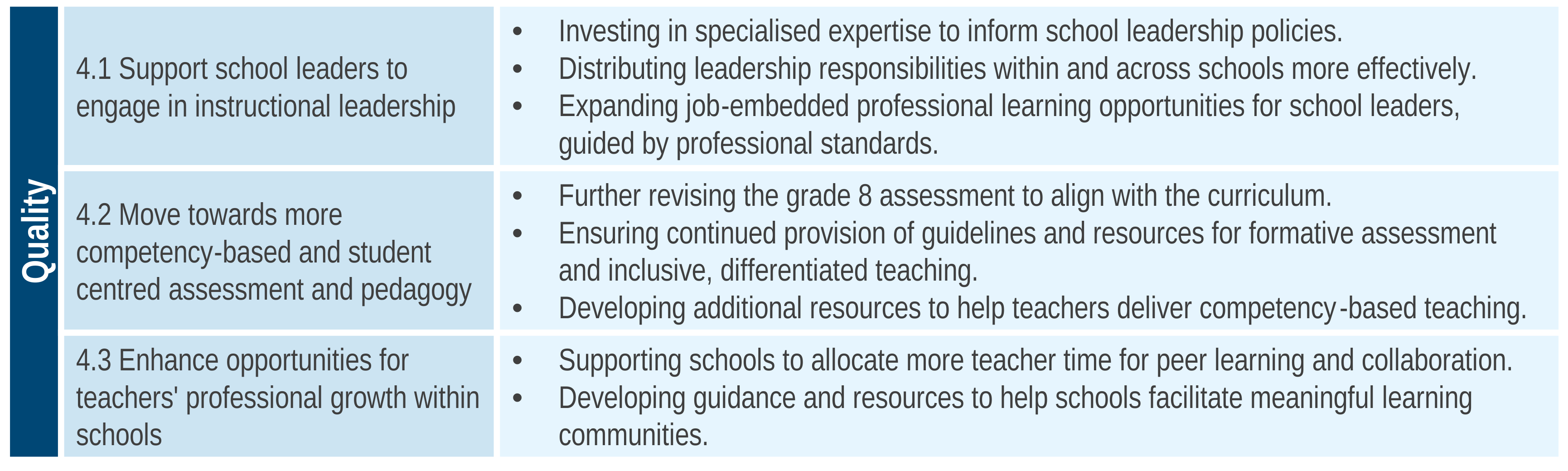
Recommendation 4.1. Support school leaders to engage in instructional leadership
School leadership can have a powerful impact on student learning. Strong instructional leaders create the conditions for effective teaching and learning within the school. This includes setting clear expectations and standards for teaching and learning, providing support, feedback and resources, and building a positive school culture that promotes professional growth and encourages innovation and improvement (OECD, 2019[26]; OECD, 2020[16]). While Romanian principals engage in some instructional leadership tasks, they report limited support to develop as instructional leaders.
These challenges are compounded by a complex school governance structure, where core instructional leadership tasks are fragmented across multiple commissions. This makes it difficult for school leaders to implement an integrated, school-wide approach to instructional planning and quality improvement. The Romanian government acknowledges these challenges and is undertaking reforms to strengthen the school leadership profession. The Ministry plans to introduce structured mentoring for school leaders and has secured funding from the NRRP to train 10 000 school leaders and inspectors. This section provides insights on how Romania can advance these efforts and enable leaders to play a stronger instructional role.
Investing in specialised expertise to inform school leadership policies
Romania is taking important steps to professionalise school leadership roles. In 2016 it introduced a merit‑based, open competition to select new school leaders, and plans to develop professional standards and expand in-service professional development opportunities directly linked to school leaders’ daily work. However, building school leadership is a long-term process. OECD countries implementing similar reforms have found it useful to establish a dedicated institution or unit within the Ministry of Education to maintain a strong focus on school leadership over time. This can help to consolidate expertise and ensure coherence across different leadership policies. As part of efforts to strengthen school leadership, a number of OECD countries have also partnered with academic institutions to access independent scientific advice and technical support, and progressively build their own internal capacity in this area.
For example, over the past decade, Chile has professionalised school leadership through measures similar to those planned in Romania. These include creating a Good School Leadership Framework with standards of practice, introducing a national standardised selection process, and implementing a new training programme led by the Centre for Pedagogical Training, Experimentation, and Research (CPEIP), akin to Romania's planned national centre for teachers. More recently, Chile established three leadership centres, each with a specific regional and thematic focus –such as leadership in vocational education and training – and in partnership with different academic institutions. Chile’s leadership centres conduct research, develop tools and resources for school leaders, offer training, and advise the Ministry of Education on leadership policies (Santiago et al., 2017[47]).
Distributing leadership responsibilities within and across schools more effectively
The current distribution of leadership responsibilities in Romanian schools does not help school leaders to play a meaningful role in instructional planning and quality improvement. On the one hand, schools have multiple commissions responsible for key instructional tasks, including teacher professional development, curriculum design, and school evaluation and improvement. These critical responsibilities are fragmented and often delegated to school staff who lack the necessary experience and training to perform them effectively. On the other hand, principals who are responsible for a cluster including their own school and several satellite schools, often are not sufficiently prepared or supported to lead improvements across their clusters (Kitchen, 2017[25]).
Plans to develop new professional standards for the school leader profession provide an opportunity to rethink how school leadership is organised and distributed within schools and across school clusters. In doing so, Romania might consider:
Assigning school leaders direct responsibility for instructional and improvement tasks. Previous OECD analysis has highlighted three areas where granting school leaders a more central role would be particularly important. First, school leaders could conduct in-school appraisals for teachers, providing developmental feedback, and replacing the current appraisal process led by commissions (OECD, 2024[2]; Kitchen, 2017[25]). Second, school leaders could play a more central role in shaping the professional development activities offered to school staff. Third, they could have more responsibility for school self-evaluation. These changes would enable school leaders to implement a more coherent, school-wide approach to instructional planning and quality improvement. At the same time, they would help reduce the number of school commissions, stripping away many of the bureaucratic processes that divert principals' attention from instructional tasks.
Developing a school leadership model for school clusters. Distributed leadership roles will be important to support instructional improvement within school clusters. Schools overseeing large clusters should more systematically benefit from deputy principals who assist with their administrative and instructional tasks. Additionally, Romania could develop and formalise other cluster leadership roles in areas such as special education, formative assessment, and early childhood education and care for schools overseeing ECEC settings (see Chapter 3). To identify the most relevant roles, the Ministry of Education could collect information on the specific administrative and instructional support needs of school principals in clusters. National guidelines on the ideal leadership staff to student ratios would help ensure human resources are allocated where they are most needed. For example, Austria has formalised a range of leadership roles specific to school clusters. This includes a school cluster management team, with cross-site leadership functions such as school development, teacher organisation, and professional development (Federal Ministry, 2019[48]). Each school with more than 200 students within the cluster is entitled to an area manager who supports the cluster management team at that site.
Expanding job-embedded professional learning opportunities for school leaders, guided by professional standards
Plans to develop job-embedded professional learning opportunities for school leaders are among the most positive measures introduced by the 2023 law. This initiative promises to address long-standing concerns about school leaders’ limited preparation in important areas such as leading school self-evaluation and improvement planning, and supporting teachers in implementing student-centred, competency-based teaching approaches. Romania could draw on the experience of some OECD countries in developing its leader mentoring scheme. Three considerations merit highlighting:
Carefully selecting and training mentors and taking a targeted approach: Experience shows it is essential to invest in selecting and developing mentors to ensure they have the necessary skills and experience and a good understanding of adult learning principles. A gradual approach to scaling mentoring is helpful to balance costs and maintain quality. This might mean targeting resources by, for example, starting with early career leaders, or those working in disadvantaged school clusters (OECD, 2019[26]).
Using standards of good practice to guide mentoring activities: Mentoring activities should connect to professional standards that set out clear expectations for the competencies and practices required for school leaders. In developing these standards, Romania could look at the Transformational Leadership Framework developed by the United States' New Leaders foundation. This framework, based on the examination of over 100 high-performing schools, defines effective leadership practices to improve student learning at the system, school, and team levels (OECD, 2019[26]). It is not used to evaluate principals, but instead intended to help external mentors and appraisers identify priority areas to support schools.
Combining individual and collective mentoring for school leadership teams: Mentoring can be beneficial for broader leadership teams (and not just for the school principal) but in Romania efforts have focused narrowly on principals and their deputies. Romania could learn from examples such as Colombia's Transformative School Principals programme, which provides managerial and educational training to entire school leadership teams. The programme includes four weeks of intensive training followed by 36 weeks of continuous support within the school. It involves individual and group coaching and the development of a two-year transformation plan (OECD, 2019[26]).
Recommendation 4.2. Move towards more competency-based and student-centred assessment and pedagogy
Romania’s new curriculum encourages more student-centred learning, placing greater emphasis on the development of transversal “21st century” competencies and the practical use of knowledge in real-life settings. While these measures have the potential to enhance student engagement and learning, changes in teaching practices have been slow to take effect. Teachers will need a range of support and guidance to bring these expectations to life in the classroom. This section suggests potential changes to the national Grade 8 examination that would encourage learning across the breadth of the curriculum. It discusses how to support teachers to integrate assessment into the learning process to monitor student progress, provide timely feedback, and incorporate differentiation strategies in their classrooms. Finally, it highlights the need for additional specialised resources to help Romania's teachers plan and implement cross-curricular lessons and adapt instruction to students’ needs.
Further revising the Grade 8 assessment to align with the curriculum
The high-stakes exam in Grade 8 weighs heavily on the system, with negative consequences for student learning, motivation and progression (Kitchen, 2017[25]). The Ministry of Education has taken some steps to address this. Student results from earlier grades in lower secondary (grades 5-8) no longer count towards the final Grade 8 exam. This reduces the pressure of classroom assessments in lower secondary education and allows earlier assessments to be refocussed on learning rather than demonstrating performance. This can support students to identify and reveal gaps in their knowledge or to feel it is safe to make mistakes, both of which are integral to effective learning.
At the same time, these changes further raise the stakes of the Grade 8 examination. Decisions about the placement of students into upper secondary programmes need to consider broader evidence of aptitude and interests rather than simply one exam. Romania could review the composition of the final grade and include marks from school assessments in grades 7 and 8, as recommended in previous OECD analysis (Kitchen, 2017[25]). Moving from numerical grades to proficiency levels could also support a shift to a system that is designed for all students to succeed. Proficiency levels would signal whether students have met national learning goals in upper secondary education. Plans to develop national learning and assessments standards are a positive step in this direction.
There are also other shortcomings of the current Grade 8 exam that have not yet been addressed. The content and format of the exam could better reflect the competency-based curriculum. As recommended in earlier OECD analysis, this includes broadening both the types of tasks used for assessment and the domains that are assessed. Assessing students not only in their knowledge of a topic but also in their ability to apply that knowledge (e.g. using more open-ended tasks or multiple-choice questions that present students with more complex options and authentic contexts) would support the competency-based curriculum (Kitchen, 2017[25]).
Ensuring continued provision of guidelines and resources for formative assessment and inclusive, differentiated teaching
Romania has yet to introduce the types of resources seen in many OECD countries to help teachers assess where students are in their learning and differentiate their instruction. Teachers in Romania still focus mainly on grading students and recording and reporting summative results. Without regular formative assessment of student learning to understand their challenges, tailoring instruction to meet student needs becomes difficult. To address this, Romania should move forward with its plans to create a national resource bank. Of particular importance are resources specifically for assessing student progress in the knowledge and competencies covered by the new curriculum, exemplars of feedback that help students understand how they can progress, and guidelines and examples for the design of individual learning plans informed by assessment.
The experience of other countries has shown that it is important to develop a clear concept and scope for such a resource bank and to allocate the necessary funding and staff to its development (OECD, 2023[49]). New Zealand provides an example for how such a tool can support teachers to implement effective formative assessment. Since the early 2000s, Assessment Resource Banks (ARBs) serve as a repository of curriculum-aligned, classroom-based resources that facilitate assessment for learning. The content development process is teacher-driven to ensure that the resources are practical and beneficial in real classroom settings. Teachers pilot and trial resources before they are validated for inclusion. Teachers can also submit their own assessment resource/tool to be shared with others. The platform compiles nearly three thousand formative assessment resources that teachers can browse to select for example, the curriculum area they want to assess and compare the different assessment tools available. It also provides specific tasks to measure student learning in English, Mathematics and Science, based on learning progression frameworks (OECD, 2023[49]).
Developing additional resources to help teachers deliver competency-based teaching
In recent years, the Ministry of Education in Romania has been providing targeted training and new resources to help teachers align their practices with the new learning goals. It has now set aside additional funding to develop further materials, including resources to support teachers’ use of digital technologies for new ways of teaching.
Resources that teachers have found helpful in other countries undertaking similar reforms, include targeted grade-level frameworks with examples of learning activities that promote competencies (e.g. critical thinking, creativity) combined with guidance, such as marked exemplars, on how to assess such competencies; Curriculum materials such as project kits, real-world problem-solving tasks and case studies that encourage students to apply knowledge, and interactive platforms where teachers can access tutorials and demonstrations of competency-based teaching practices (Gouëdard et al., 2020[50]).
Recommendation 4.3. Enhance opportunities for teachers' professional growth within schools
Romania is taking steps to revitalise the teaching profession and increase its appeal. Emphasising teacher professionalism can support an ethos of continuing improvement and prompt schools and teachers to respond proactively to the changing demands of the teaching profession (Mezza, 2022[51]). Romania could do more to encourage schools to view professional learning as an ongoing part of teachers’ day-to-day work and enable teachers to work collaboratively to help each other learn (OECD, 2019[26]). This can be particularly beneficial for Romanian teachers, who are younger than the OECD average, and many of whom are still adapting to new pedagogies focused on student competencies.
Romania has recognised the benefits of teacher development that is embedded as a collective practice within schools. Creating a collaborative culture in schools, however, is a considerable undertaking for any school system. This is also true for Romania where individual merit pay and high-stakes appraisal create a competitive environment for teachers, and a heavy curriculum leaves little time for teachers to collaborate. International experience demonstrates that collaboration requires support for schools and teachers to adjust their schedules and guidance on how to facilitate meaningful and collaborative professional development activities in schools.
Supporting schools to allocate more teacher time for peer learning and collaboration
Professional learning among peers in schools requires time away from routine teaching to observe each other’s practice, reflect collectively, and provide feedback. In Romania teacher contracts include a 40-hour work week, which accounts for tasks beyond teaching in the classrooms (Ministry of Education of Romania, 2023[1]; Eurydice, 2023[52]). This contractual arrangement provides a good basis for developing collaborative practices (OECD, 2019[26]). However changing time management habits can be difficult. Providing guidance and support will be essential if Romanian schools and teachers are to leave sufficient room for professional collaboration.
Some OECD countries have developed national frameworks to guide schools and teachers in the best use of their time, in collaboration with schools. These frameworks typically reflect national priorities, such as professional collaboration, while leaving schools sufficient discretion to manage individual teachers’ time. They provide guidance on how teachers can redistribute their time for routine tasks, such as grading and administration, and how schools can coordinate teacher schedules to facilitate professional exchange (OECD, 2021[53]). Frameworks for teachers’ use of time can also allocate specific days for school-based professional learning. In Romania, this might involve dedicating some “methodological days”, currently designated for external training, to school-based professional learning.
Developing guidance and resources to help schools facilitate meaningful learning communities
Job-embedded, collaborative learning represents a significant shift in how Romanian teachers develop professionally. Until recently, apart from the relatively formal teacher “pedagogical circles”, teachers had few opportunities to engage and learn as a team, and principals had a limited role in guiding professional development in their school. For teachers to perceive these communities as meaningful learning opportunities, schools will need much more guidance on how to facilitate teamwork focused on improving instructional practices. This requires, at a minimum, clear leadership roles to direct the team's work, defined activities that focus on instructional and organisational improvement, and a school culture that welcomes and promotes critical peer-to-peer feedback (OECD, 2019[26]).
A number of OECD countries have developed portfolios of resources and support to guide learning communities in schools. For instance, Ontario in Canada has developed practical briefs for teachers to form collaborative inquiry groups (see Box 4.1).
Ontario's Ministry of Education has focused heavily on supporting effective teacher collaboration. This includes capacity building briefs that offer practical strategies for teachers and leaders to refine their practices in a collaborative inquiry process. As part of this process, teachers in teams research and address specific challenges in their school, employing Plan-Do-Study-Act cycles and using some of the following practices:
Co-teaching classes, with shared planning, execution and reflection.
A “Teaching Learning Critical Pathway” involving data gathering, analysis and planning for a teaching unit, followed by assessment and reflection.
Looking at student work: discussing student work based on common assessment criteria; deconstructing curriculum to understand how it translates to student learning and examining student learning progression across grades.
Monitoring “marker students”, that is focusing on a small group of students, sharing assessment results, and evaluating teaching strategies based on their learning outcomes.
Source: OECD (2019[26]), Working and Learning Together: Rethinking Human Resource Policies for Schools, https://doi.org/10.1787/b7aaf050-en
Equality of opportunities and access: Addressing regional disparities in learning opportunities
While Romania’s top performing students in PISA demonstrate similar levels of advanced knowledge and skills as their peers in other OECD and EU countries, overall levels of achievement are low. A large majority of students are not mastering core foundational competencies. Low-achieving students are disproportionately represented in rural areas, where 45% of the population is at risk of poverty and around 27% self-identify as Roma (see Chapter 2). Socio-economic background is also closely associated with students’ choices and orientations in upper secondary education. Disadvantaged students are overrepresented in vocational tracks, which tend to be of low quality and provide limited opportunities for further education.
Ongoing reforms introduce a number of policies to improve equity and inclusion in school education, ranging from changes in the funding formula to better align funding with need, and targeted school grants and scholarships, to the creation of a new National Centre for Inclusive Education. However additional steps will be needed to give all students a fair chance to succeed in their schooling and beyond. Two key areas warrant special focus: the planning and organisation of the school network to guarantee access and high-quality provision, and the design of upper secondary pathways, and in particular, of vocational tracks.
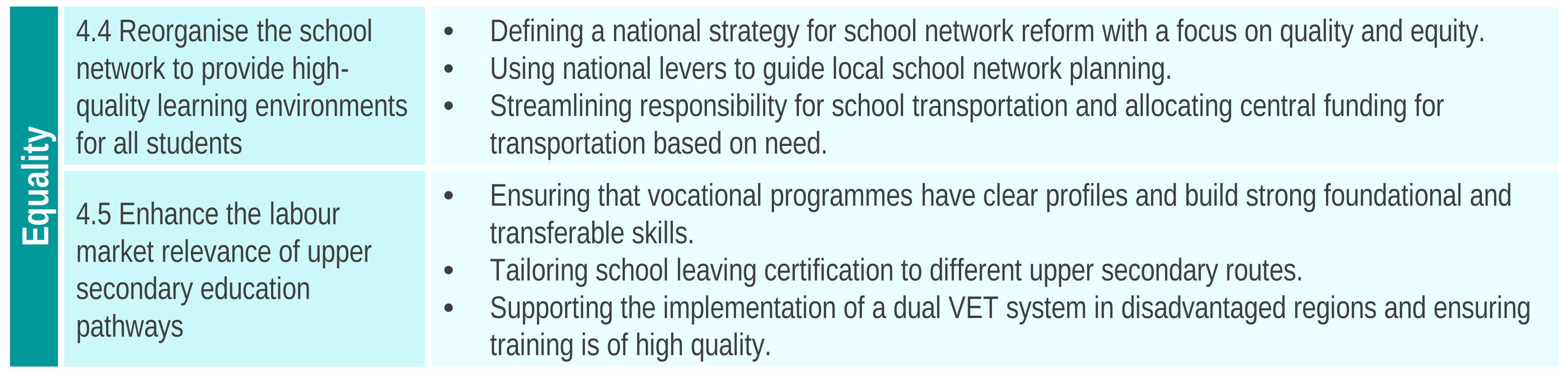
Recommendation 4.4. Reorganise the school network to provide high-quality learning environments for all students
Local authorities in Romania need to adapt their school networks to respond to rapid demographic decline, particularly in rural areas. So far, efforts have focused largely on organising schools into clusters, where one larger school oversees smaller satellite schools. However, the benefits of satellite schools for increasing access in rural areas have been often offset by difficulties in attracting enough qualified teachers and ensuring teaching quality in these schools. Recent reforms aim to address this by providing financial incentives to form school consortia, allowing rural and urban schools to share resources, including specialised teaching staff and facilities.
While improving resources in small satellite schools is a positive step, local authorities will need more guidance and support to plan and organise their school networks in ways that improve efficiency and guarantee quality provision. Currently Romania lacks both a guiding national framework, and data and incentives to support local authorities to adjust their educational offer to changing numbers of students. This section highlights potential measures Romania can consider, including a national strategy to reorganise the school network, regulations and procedures to support network planning, and clear responsibilities for student transportation.
Defining a national strategy for school network reform with a focus on quality and equity
To ensure that the school network is more strategically organised to support quality and equity in learning opportunities, the Ministry of Education could develop a national strategy for school network reform. This strategy could outline the overall direction for organising the school network and provide core principles for local decision-making, such as consultation with the school community. The national strategy could draw on existing options for school network reform, namely clustering, consortia, and closure, but more clearly describe the advantages and limitations of the different options, the trade-offs they involve, and the criteria and processes for selecting and implementing them. In recognition of the difficulty of school closures (e.g. in remote areas), the strategy could also lay out measures to support quality in schools that cannot be closed (e.g. through virtual classrooms that connect schools).
School network reform involves navigating various interests and needs, making it difficult in any context. The process of developing a national strategy therefore would benefit from a broad engagement of all major stakeholders to build shared understanding and support for change. In Romania, this includes the local authorities in charge of managing the school infrastructure and representatives from parent and student groups, including those from vulnerable populations, particularly Roma. Underpinning the national strategy with a robust analysis of the current network's shortcomings in terms of quality and equity, along with assessing the benefits and costs of various reform options, can help mobilise support for its implementation. Clearly demonstrating how the strategy will lead to tangible improvements for students can be equally critical in gaining widespread backing. In the medium term, as the population declines, network reorganisation is expected to lead to efficiencies and savings. Since students in rural schools often have lower learning outcomes, largely influenced by their disadvantaged socio-economic background, the strategy should ensure that any savings are reinvested in improving rural schools.
Portugal’s experience with school network reform to address inefficiencies and inequalities demonstrates the value of national leadership for school network reform and of bringing stakeholders on board. The reform was guided by a clear vision and criteria that specified which schools could be closed and what they should be replaced with. The commitment to invest resources freed up through the reform in improvements of the school infrastructure and pedagogical offerings, such as after-school programmes, helped create support for the reform (OECD, 2018[14]; Radinger and Boeskens, 2021[54]).
Using national levers to guide local school network planning
Romania could make more strategic use of different policy levers to implement the proposed national strategy and help reorganise the school network. These include regulations like minimum school and class sizes, specific procedures for the review of small schools, and monetary and in-kind incentives to consolidate schools (OECD, 2018[14]). Previous OECD analysis has provided insights on how Romania could make more strategic use of these different levers (OECD, 2024[2]).
Suggested measures include defining a robust process and relevant criteria for the review of small schools before they are included in network reform measures. For instance, in Scotland, criteria include a low projected student enrolment, low occupancy levels, high operating costs, a significant decline in student performance and an urgent need for investment that is deemed disproportionate (OECD, 2018[14]).
As Romania reviews its school funding formula, authorities should also analyse whether the funding formula is supporting or discouraging school network optimisation. For instance, a strict per-capita formula places schools with a higher number of students at an advantage, whereas a formula considering different variables of disadvantage (e.g. school size, isolation) can support smaller schools. One approach could involve revising the formula to better support consolidation, while protecting small and isolated schools in underserved areas that should not be closed (e.g. through direct grants). In-kind incentives, such as investments in school infrastructure can also support local authorities in rationalising their network. For instance, in Portugal, decisions to consolidate schools were matched with financial support to make visible improvements to the infrastructure of host schools and guarantee school transport for students (OECD, 2018[14]).
Streamlining responsibility for school transportation and allocating central funding for transportation based on need
Ensuring adequate school transportation is a crucial aspect of school network organisation, especially in contexts with declining student demographics and network consolidation. Students in Romania have the right to free public transportation and are reimbursed for any out-of-pocket expenses they incur to commute to school. However public transportation schedules do not always align with school timetables, and in some remote and rural areas, public options are entirely lacking. This contributes to low attendance, truancy and dropout (OECD, 2023[41]).
Fragmented responsibilities for student transportation and a disconnect between transportation and network planning make it difficult to guarantee adequate provision. While local authorities are primarily responsible for network planning, the organisation of school transportation can fall to county councils, local authorities, or schools, depending on the context. With no single entity ultimately in charge, transportation planning can be inconsistent, resulting in overlapping transportation routes, or underserved areas. Adequate school transportation is also hindered by funding issues. The Ministry of Education provides most funding for student transportation, and local authorities and schools can contribute additional funds. However, there are no clear processes to allocate central transportation funding to the areas and schools that need it most.
To address this, the government could create platforms at the county level for coordinating network planning and school transportation. This would require collaboration between the Ministry of Education, the Ministry of Development, Public Works and Administration, county councils, and existing associations of local authorities (as discussed in Chapter 3). Ensuring that county platforms have access to data and analyses on the local transportation offer and unmet needs, will be important to guarantee a good provision (OECD, 2024[2]). The Ministry of Education could also provide targeted funds to local authorities or schools in areas where public transportation arrangements are lacking or insufficient.
Recommendation 4.5. Enhance the labour market relevance of upper secondary education pathways
High-quality upper secondary education programmes, pathways, and certifications are essential to enhance students’ core skills and prepare them for tertiary education or the labour market (Perico e Santos, 2023[55]; Stronati, 2023[8]). In Romania, improving the design of upper secondary education is particularly important for equity. Currently, upper secondary programmes differ in quality, and some of them do not offer equal opportunities to master foundational skills. Technological upper secondary programmes, with their limited scope for applied learning in work-based settings, and heavy academic load, often fail to support student success as demonstrated by poor learning outcomes and career prospects.
Ongoing reforms recognise and address these issues. They foresee transforming all IVET programmes into a dual format of delivery, introducing more flexibility for students to change tracks through a modular approach, and new methods of assessing and certifying learning, adapted to each programme. The following actions draw on lessons learned from other countries for how these changes can be implemented.
Ensuring that vocational programmes have clear profiles and build strong foundational and transferable skills
Offering differentiated VET programmes in upper secondary education is a means to cater to an increasingly diverse student population (Stronati, 2023[8]). In Romania, students can choose between a four-year technological high-school programme, or a more applied three-year IVET programme. In practice however, technological high-school programmes have lacked a clear applied profile, with their strong focus on academic content offering no real alternative to general programmes. Meanwhile, dual IVET programmes still enrol a very small share of students (4.7% of all IVET students in 2022-2023) (Ministry of Education of Romania, 2023[1]).
The Ministry of Education is reforming the existing upper secondary VET offer. Romania aims to phase out three-year IVET programmes, offering only the 4-year technological programmes exclusively in a dual format. Students will still have the option to obtain certificate of professional education after completing 3 years. The Ministry recognises that this transformation will be gradual as it takes time to engage employers and equip them with the capacity to deliver quality workplace learning. The experiences of OECD countries point to a number of policies Romania can consider strengthening the labour market relevance of these vocational programmes, ensuring they provide relevant knowledge and skills as well as giving access to continuing education. These include:
Preserving differentiated vocational programmes at the upper secondary level: It is positive that the Ministry of Education will provide students the option to pursue a full 4-year technological IVET programme, while still allowing them the opportunity to obtain a certificate of professional education after completing three years. To cater to the diverse interests of students, including those who may prefer less academically focused programmes, the Ministry could continue to offer programmes with varying intensities of work-based learning. In all cases, the emphasis should be on providing applied learning experiences with employers, rather than relying on school workshops and laboratories that simulate a workplace environment. For instance, in the Netherlands, upper secondary vocational qualifications can be obtained either through school-based VET with a solid work placement, or through a more extensive apprenticeship (see Box 4.2). Differentiated vocational pathways have a number of advantages. They provide students with more choices regarding how intensely they wish to study applied learning. They also give employers different options to engage with the education system in ways that fit their capacity.
Ensuring all students have a chance to master foundational and transversal competencies: PISA data shows that in Romania, students in vocational tracks achieve lower levels in both foundational (reading, science, and mathematics) and transversal (such as creative thinking or global competence) competencies compared to their peers in academic tracks. This makes it particularly important for Romania to carefully consider how VET programmes can best help students who might have previously struggled academically to master core competencies (OECD, 2018[14]). OECD analysis focusing on how different systems teach mathematics in upper secondary school found that balancing applied, and school-based instruction provides vocational students with multiple opportunities to learn mathematical concepts at varying levels of complexity and enables them to see the direct relevance of these skills while also acquiring broader mathematical knowledge. Employers could play a role in determining the content and teaching methods of mathematics in the workplace, as is the case in Switzerland, for example (OECD, 2024[56]). Moreover, curriculum design and teaching practices can foster positive attitudes towards mathematics. Key strategies that could be adopted in Romania include reinforcing basic numerical and spatial skills, reducing time pressure during assessments, and enhancing teachers’ ability and confidence to teach mathematics (OECD, 2016[57]).
Providing valued certification: The experience of OECD countries highlights the importance of introducing valued certification adapted to vocational upper secondary tracks. To ensure that more applied programmes do not become dead ends for students and to enhance the long-term outcomes of vocational graduates, these certifications should signal parity with academic certifications and provide students with options for progressing to tertiary education and further training. This leads to the next action: on how Romania might adapt the school leaving examination.
Differentiated vocational pathways in the Netherlands
VET programmes in the Netherlands are delivered at lower secondary, upper secondary and tertiary levels. Students can choose from a wide range of pathways, which provide different levels of emphasis on practical subjects and working arrangements.
Upper secondary vocational qualifications (MBO) can be obtained either through a school-based track, including a work placement (20-60% of learning in the workplace), or through a work-based track (60% or more of learning in the workplace). This approach to VET allows a broader offer that might be beneficial for weaker economic regions or during recessions, when it is difficult to obtain apprenticeships.
There are many possible progression routes after upper secondary education. Post-secondary non-tertiary education (MBO 4) (ISCED 4) generally follows a curriculum focused on entry to the labour market, but the programmes also provide a pathway into tertiary education. Higher professional education (HBO) (ISCED 5) consists of a two-year programme leading to an associate degree. Given that associate degree programmes largely coincide with the first half of professional bachelor programmes, their graduates have the opportunity to follow another two-year-long programme in order to receive a professional bachelor’s degree. A substantial share of post-secondary, non-tertiary graduates enter an HBO programme: in the 2020-21, 44% started an HBO course.
Source: OECD (2022[58]), The Landscape of Providers of Vocational Education and Training, OECD Reviews of Vocational Education and Training, OECD Publishing, Paris, https://doi.org/10.1787/a3641ff3-en; CEDEFOP (2021[59]) Vocational education and training in Europe. Netherlands, https://www.cedefop.europa.eu/en/tools/vet-in-europe/systems/netherlands-u2; Kuczera, M. (2017[60]), "Striking the right balance: Costs and benefits of apprenticeship", OECD Education Working Papers, No. 153, OECD Publishing, Paris, https://doi.org/10.1787/995fff01-en.
Tailoring school leaving certification to different upper secondary routes
Romania recognises that reforming upper secondary education will necessitate a review of how learning is examined and certified. Educated Romania has set an objective to reform the current examination system, adopting a more flexible, modular approach adapted to the needs of students pursuing any track. This is a positive step, as the current assessment and examination approach is neither well aligned with the curriculum nor designed to encourage and recognise the diverse pathways Romania aims to create.
Romania could consider the following steps as it reviews examination and certification in upper secondary education:
Advance plans to provide school leaving examinations adapted to each track, while ensuring that all certificates have parity within the national qualifications framework. The new 2023 Law sets out plans to review the structure of the Baccalaureate, to make it more adapted to different upper secondary pathways. Notably, students in the IVET stream will be assessed on subjects relevant to their specialisation. These efforts to adapt the school leaving examination to different learning pathways, while ensuring equal value for all certifications, are a step towards recognising the specific skills of vocational students and providing them with a fairer chance to progress into tertiary education. In France, for example, students at the age of 18 can take either the Baccalauréat général, technique or professionnel. All qualifications are achieved at the same level in the country's National Qualifications Framework. However, the content and assessment are different. As students in the Baccalauréat professionnel spend time learning on the job and less time on general subjects, they take differentiated examinations in these general subjects. All these different types of the Baccalaureate provide access to tertiary education, but they are each a pathway to different specific options (OECD, 2023[61]).
Defining a set of core, common examination subjects: Many countries have established a common core of subjects for all students taking a given certificate, typically in mathematics and the national language, while allowing for some level of subject choice. Choice needs to be limited to allow for depth and focus on learning, but some flexibility supports a balanced approach that provides a broad educational foundation and caters to individual student interests.
Allowing students to choose subjects for advanced qualifications. This gives students across the ability range the chance to certify their skills in key subjects depending on the programme they study and on where they want to go with completion of upper secondary education. For example, Ireland's Leaving Certificate offers three levels in subjects like Irish and mathematics, accommodating varied student aspirations. While all students need a solid basis in mathematics, not all students need high level mathematics required for scientific careers.
Including tasks that are assessed in school or, in the case of dual VET, in the workplace: This could include alternative assessments, such as portfolios, projects or extended essays and reports. Such formats can ensure that important competencies that cannot easily be captured in a time-bound written central examination – especially important transversal competencies like collaboration, problem solving and creativity - are valued and recognised.
In addition to a valued school-leaving examination, most systems provide VET credentials and qualifications that are developed with industry partners. This is currently the case in Romania. Continuing these certifications alongside the central school-leaving examinations is important to facilitate transitions into the labour market and/or further training. This would help build stronger and more diverse skills development pathways, whereby individuals can progressively and flexibly gain new qualifications from upper secondary education, and up to tertiary education and adult learning (see Chapters 5 and 6).
Supporting the implementation of a dual VET system in disadvantaged regions and ensuring training is of high quality
Efforts to enhance Initial Vocational Education and Training (IVET) in Romania by implementing dual VET programmes that incorporate more work-based learning are promising. Evidence suggests a focus on work-based learning can reduce dropout rates and facilitate smoother transitions into the workforce (OECD, 2018[14]). However, the challenge lies in scaling this initiative and motivating and supporting companies, especially in rural and disadvantaged areas, to offer high-quality training opportunities.
The implementation of work-based learning involves balancing the apprentice's value to the company against the costs incurred (OECD, 2018[14]). In Romania, stakeholders have expressed concerns that companies may be reluctant to invest in training students, as there is no guarantee the students will accept a job with the company afterwards. To address cost barriers, the Ministry of Education supports students by subsidising professional scholarships and provides financial incentives to companies to encourage participation—including tax benefits, and support to cover training expenses.
Beyond cost, other challenges in adopting dual VET, particularly in rural areas, need to be addressed. Dual VET schools in these areas may not be able to offer their students the same curricular diversity as larger, urban schools, and to find sufficient partner companies for work-based learning. The government’s plan to develop 29 regional campuses that will co-locate vocational dual education at secondary, post-secondary, and tertiary level is a positive step to address this. Such integrated sites form an important part of the VET landscape in established OECD VET systems, such as Austria and Germany (Musset et al., 2013[62]). These dual campuses could provide vocational students from rural schools with opportunities to attend some courses delivered by universities or post-secondary, non-tertiary colleges, including in a hybrid format. They could also host cooperative platforms to engage employers at regional and sectoral levels (see Chapter 5). By offering employers a centralised point of contact to engage with the full range of dual vocational education providers in the region (from secondary to tertiary levels), these platforms can facilitate their involvement in developing and delivering training.
Logistical challenges related to travel between vocational schools and workplaces must also be addressed, especially if students have to commute long distances for work-based learning opportunities. Some countries, such as Norway, structure apprenticeships with two years in school followed by two years in the workplace to minimise the need to regularly travel between schools and workplaces. Similarly, Ireland and Canada use longer alternating phases between college and workplace to reduce commuting issues, a model that could suit Romania’s rural context (OECD, 2018[14]).
Finally, ensuring quality in VET programmes as they scale means providing training and support to companies to ensure they can adequately facilitate student’s work-based learning. VET trainers in companies bring up-to-date industry knowledge and experience but might lack the pedagogical skills required for their role (OECD, 2021[63]). This issue may be even more acute in small businesses in rural areas. Ensuring that training and support measures are available and accessible for company trainers in these small rural businesses will be of critical importance.
Romania is already making progress in this area, with pilot projects in 29 dual education campuses allocating a budget to train in-company instructors. As these efforts advance, Romania could look at the experience of OECD countries with well-developed VET systems, such as Germany and Norway. In Germany, an “Ordinance on Trainer Aptitude” defines the pedagogical knowledge and competences expected of in-company training staff, which include both occupational skills specific to their profession, and pedagogical knowledge. Companies involved in work-based learning must demonstrate that at least one staff member is qualified to train apprentices. In-company training staff also receive guidance from training advisors. Norway’s Directorate for Education offers free instructional resources for company instructors online, and apprenticeship training agencies, which are organisations established by companies, assist small and medium-sized enterprises with supervision and administrative tasks.
Good governance: Driving forward changes in governance and funding to help schools learn and improve
Romania's school system is evolving to support schools more effectively on their improvement journeys. County Directorates are expected to relinquish most of their inspection responsibilities and become centres for support and monitoring. The Ministry of Education is also strengthening the existing data infrastructure with a new integrated data management system and plans to deliver training for school staff on data entry and use. These changes provide a solid basis to develop a culture of continuous school improvement based on data insights and professional guidance. However, transforming long-standing roles in the system, and building capacity for greater and more meaningful use of data, will require time and impetus.
At the same time, the new law sets outs plans to gradually increase public spending on education and direct more funding to schools located in disadvantaged areas. These measures will be necessary to take forward many of the reforms described in this chapter, including investments in the system’s professional capabilities, and addressing geographical disparities in educational outcomes. To sustain social support for fiscal efforts for schooling, and ensure targeted funds to disadvantaged schools improve teaching and learning, the Ministry of Education will need to invest in stronger analysis and reporting. This section recommends potential avenues Romania can consider strengthening the governance of school education.

Recommendation 4.6. Develop capacity and a culture of data use to support school transformation
The steps taken to refocus County Directorates’ roles on school monitoring and support are positive. Their close proximity to schools means they are well placed to help schools improve. However, the Ministry of Education could do more to improve organisational processes and capacity. For County Directorates, this is a significant change which challenges the traditional top-down and bureaucratic approach to governance. A successful transition will require clarifying roles and reshaping how staff in schools and County Directorates perceive their responsibilities, as well as building the technical competencies of county staff in school support. The ministry will also need to foster a school culture that values and effectively uses data for learning. Experience shows that making data available in a more user-friendly way and coaching school leadership teams can help schools exploit this information for their own improvement.
Developing County Directorates’ capacity to support school improvement
Previous OECD analysis has highlighted some of the measures Romania can consider to support counties in their transition from a control to a support role (OECD, 2024[2]). Of these, two merit restating in the context of this review: building trust between County Directorates and schools and strengthening counties’ competencies to coach and support schools.
Trust with schools might be difficult to build since Country Directorates still influence decisions on teacher pay and promotion, which can contradict their supportive role. As a priority, Romania should review the role of the Directorates in these high-stakes decisions. Building the capabilities of County Directorate staff, for example through professional development and coaching, will also be important for them to assume their new role. Staff need both hard skills like data literacy to work on school improvement strategies and soft skills to engage with schools in a collaborative manner. The Ministry of Education plays an important role here and will need to reform how it manages County Directorates, engaging less in top-down control and seeing its role as an enabler of horizontal learning and collaboration. The experience of other countries engaging in efforts to improve local school support highlights the potential of horizontal exchange for building the capacity of local staff (see Box 4.3). These measures will need to be underpinned by an effective governance structure, where counties and ARACIIP play complementary roles and coordinate closely on school evaluation and support (OECD, 2024[2]).
Scotland's Collaborative Improvement (CI) initiative, launched in 2021 by Education Scotland – the system’s agency responsible for supporting quality and improvement – and the Association of Directors of Education in Scotland (ADES) – a professional association of educational leaders and managers – aims to foster collaboration among local authorities overseeing schools. The initiative promotes the sharing of effective practices and focuses on common goals. Each month, one local authority hosts a three-day CI exercise with a team from Education Scotland and volunteers from other authorities, focusing on enhancing their improvement planning based on a chosen topic. This topic is selected from the host's self-evaluation and refined with Education Scotland.
ADES forms the core team, choosing members for their expertise and to ensure diverse representation. During these sessions, the team supports the host authority, involving school leaders and practitioners in the process. Following the visit, the host authority prepares an evaluative summary to highlight strengths and areas for further attention, integrating findings into their improvement planning.
All 32 local authorities have participated in the initiative, finding value in both the direct support received and the professional development opportunities for volunteers. Authorities are encouraged to maintain collaborative relationships post-visit, enhancing the initiative's impact. By October 2024, every local authority is expected to have hosted an exercise, with discussions ongoing about the project's future.
Source: Education Scotland (2023[64]), Collaborative Improvement, https://education.gov.scot/improvement/research/collaborative-improvement
Providing schools with accessible data for self-evaluation and improvement planning
Schools need to draw on a range of information to understand what influences student outcomes in their context and what quality of education they are providing. Good qualitative data, in the form of evaluative questions and observation protocols, are particularly important, as they help schools reflect deeply on their teaching and learning practices and how they can be improved. However, quantitative data – such as student scores in national assessments and examinations, attendance, and dropout – also plays an important role in school self-evaluation and improvement planning. Specifically, such data can help schools monitor their own progress over time and serve as a benchmark for how they compare to similar schools.
Planned measures to offer training on the use the EMIS platform is a first important step to improve schools' ability to efficiently input and extract data. However, if schools are to use the data to inform their work, Romania will need to address user-interface design. Portals that allow users to visualise and export data in a real-time and user-friendly format are a common strategy to facilitate access and use of information. Such portals are most helpful for school self-evaluation when they allow schools to create tailored reports, charts and figures, see visual representations of progress towards selected indicators, and make contextualised comparisons across schools operating in similar contexts or serving groups of students with similar profiles (Abdul-Hamid, 2014[65]; Abdul-Hamid, 2017[66]). Countries like Estonia offer a successful model. Building on its existing data information system (EHIS), Estonia recently developed 'A New Performance View for Schools,' an interactive interface that provides schools with an overview of key indicators, helping them better understand their performance.
Building a culture of meaningful data use will also require professional development activities and technical support to improve the data literacy of school leadership staff (OECD, 2013[67]). For instance, in Denmark and Wales (United Kingdom), external staff work with schools as learning consultants and “challenge advisors”, respectively. An important part of their job is to support school leadership in cultivating a belief in the utility and importance of data for decision-making, and to develop the necessary knowledge, skills, and motivation to effectively interpret and use data, and make changes based on data insights.
Recommendation 4.7. Improve the effectiveness and efficiency of school funding through stronger analysis and reporting
The Ministry of Education intends not only to increase the level of resources available for school education, but also to allocate more resources to the most disadvantaged schools. Fulfilling these commitments will be the cornerstone for implementing many of the reforms laid out in Educated Romania and the recommendations of this report to improve the quality and equity of schooling. Increases in funding will take time to implement, making it critical to ensure the effectiveness and efficiency of current spending decisions. This requires a fundamental shift in how resource decisions are taken, from a focus on covering costs to a focus on how funding can deliver improvement. In Romania two areas warrant particular attention: expanding the use of evidence to inform and justify national spending decisions, and ensuring resources channelled to school in priority investment areas are used effectively to improve teaching and learning.
Strengthening analysis on the effectiveness and efficiency of spending on schools
Demonstrating effectiveness and efficiency can help build social consensus about fiscal efforts for schooling and maintain support for planned investments. In Romania, funding from the state budget is monitored closely and in detail by the Ministry of Finance’s database Forexbug, but the Ministry of Education itself does not engage in active analysis of the efficiency and effectiveness of its spending. It will be important for the ministry to expand its use of evidence to inform and justify spending decisions. There are two relevant tools for this, regular spending reviews that assess value for money, and policy evaluations, both of which are currently underutilised in Romania.
Concerning spending reviews, as part of its commitments under the NRRP, Romania will complete a pilot spending review in education, after which future reviews are planned on a regular basis. Romania could plan these reviews in line with a multi-annual budgeting cycle. A number of OECD countries have opted for this option, as integrating spending reviews within the budget preparation process can help embed fiscal discipline and focus attention on how funds are being used to improve outcomes (Fakharzadeh, 2016[68]; OECD, 2017[69]).
Concerning policy evaluations, in Romania these are usually focused on the evaluation of specific projects, typically to comply with funding regulations from the European Commission. The Ministry of Education could consider investing in key institutions like the Institute of Educational Sciences to create a strong hub for external evaluation and designing and funding a multi-annual policy evaluation plan. Defining a standard process to use evaluation results to inform policy decisions would further support an increased focus on learning from evaluation results to direct funding. For instance, in the United States, many federal grants for education are distributed using a tiered system based on the efficacy evidence of each programme. Programmes with limited or no evaluation receive less funding, while those with substantial supporting evidence are allocated more resources (OECD, 2022[70]).
Designing an effective area-based funding programme for schools
The planned reforms aim to strengthen equity weights in the school funding formula and establish a targeted programme to assist schools within designated priority investment areas. This approach is promising. As the experience of OECD countries suggests, targeted programmes can help to compensate for inequities, especially if combined with a stable funding allocation that promotes equity (OECD, 2022[70]). Area-based funding programmes could be complemented by policies to address disparities in local revenue-raising capacity, such as targeted national investment programmes in school infrastructure and transportation (see Chapter 3), as well as fiscal equalisation measures.
Several countries have set up similar targeted funding streams for disadvantaged schools. Their experiences suggest it is important to:
Select the right indicators for targeting these resources, which means taking into account the geographical concentration of disadvantage and students’ individual risk. Recent OECD analysis highlighted how combining area-based and student-specific indicators would allow resources to be targeted more precisely, ensuring that funding reaches the schools and students most in need (OECD, 2024[2]). It is also important that the criteria used for including schools are transparent to stakeholders and based on research evidence (OECD, 2017[69]; OECD, 2022[70]).
Provide multidimensional support to better address the multifaceted needs of disadvantaged students. In Ireland, for example, the Delivering Equality of Opportunity in Schools (DEIS) programme provides schools with a high concentration of socio-economically disadvantaged students with a range of supports, along with targeted funds. Some of these supports include programmes for continuous professional learning for teachers, expanded access to the School Meals Programme, and the Home School Community Liaison Scheme (HSCL) that aims to build a positive relationship between families and schools (OECD, 2024[71]).
Support schools in their use of funding. Countries with similar programmes have targeted external school evaluations and support to ensure additional funds are effectively used to make a difference to disadvantaged students. Their experiences show, however, that it is important integrate these processes into existing planning and evaluation cycles to avoid adding administrative burdens. In Chile, schools are required to outline, in their school improvement plans, how targeted funds will support disadvantaged students, and the specific activities planned to improve teaching and learning. In England (United Kingdom), and the Flemish Community of Belgium, the national school inspectorates closely monitor outcomes for disadvantaged students and assess how beneficiary schools address their needs. These inspections are designed to help schools effectively use additional funding to improve learning outcomes for target groups (OECD, 2017[69]). If Romania’s national school evaluation agency, ARACIIP, moves towards a differentiated approach, as suggested previously by the OECD, it could focus external evaluation on schools receiving targeted funding, and collaborate with County Directorates to ensure these schools receive sustained support to plan and implement improvements (OECD, 2024[2]).
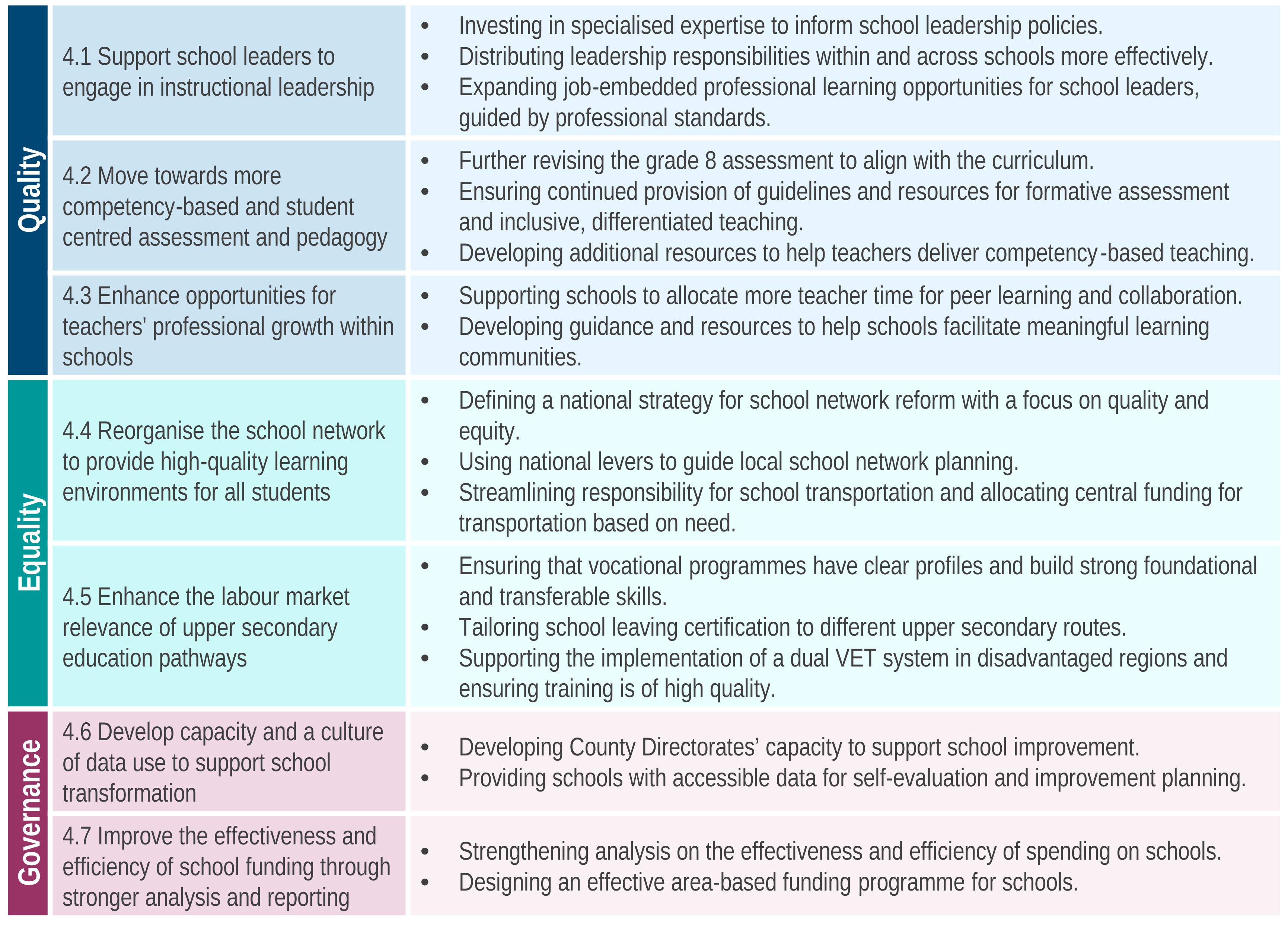
References
[66] Abdul-Hamid, H. (2017), From Compliance to Learning: A System for Harnessing the Power of Data in the State of Maryland, https://doi.org/10.1596/978-1-4648-1058-9 (accessed on 8 December 2018).
[65] Abdul-Hamid, H. (2014), What Matters Most for Education Management Information Systems.
[17] Brussino, O. (2020), “Mapping policy approaches and practices for the inclusion of students with special education needs”, OECD Education Working Papers, No. 227, OECD Publishing, Paris, https://doi.org/10.1787/600fbad5-en.
[5] CEDEFOP (2021), Vocational education and training in Europe. Detailed description of VET systems in Europe., https://www.cedefop.europa.eu/en/tools/vet-in-europe/systems/romania-u2#programme-146750 (accessed on 26 March 2024).
[59] CEDEFOP (2021), Vocational education and training in Europe. Netherlands., https://www.cedefop.europa.eu/en/tools/vet-in-europe/systems/netherlands-u2 (accessed on 13 June 2024).
[22] CNFIS (2022), “The state of higher education financing”, http://www.cnfis.ro/rapoarte-cnfis/.
[64] Education Scotland (2023), Collaborative Improvement, https://education.gov.scot/improvement/research/collaborative-improvement/ (accessed on 30 May 2023).
[11] European Commission (2023), Education and training monitor 2023 : Romania, Publications Office of the European Union, https://data.europa.eu/doi/10.2766/306112.
[20] European Commission (2021), Annex to the Proposal for a Council Implementing Decision on the approval of the assessment of the recovery and resilience plan for Romania.
[45] European Union Agency for Fundamental Rights (2023), Roma in 10 European Countries. Main results Roma survey 2021., Publications Office of the European Union, https://fra.europa.eu/sites/default/files/fra_uploads/fra-2022-roma-survey-2021-main-results2_en.pdf.
[42] Eurostat (2023), Early leavers from education and training by sex and degree of urbanisation, https://doi.org/10.2908/EDAT_LFSE_30 (accessed on 10 October 2024).
[36] Eurostat (2022), Out-of-school rate by sex and age - as % of the population of the corresponding age, https://doi.org/10.2908/EDUC_UOE_ENRA27 (accessed on 10 October 2024).
[52] Eurydice (2023), Management staff for early childhood and school education, https://eurydice.eacea.ec.europa.eu/national-education-systems/romania/management-staff-early-childhood-and-school-education (accessed on 16 September 2024).
[35] Eurydice (2022), Romania: Quality assurance in early childhood and school education, https://eurydice.eacea.ec.europa.eu/national-education-systems/romania/quality-assurance-early-childhood-and-school-education (accessed on 19 May 2023).
[68] Fakharzadeh, T. (2016), “Budgeting and Accounting in OECD Education Systems: A Literature Review”, OECD Education Working Papers, No. 128, OECD Publishing, Paris, https://doi.org/10.1787/5jm3xgsz03kh-en.
[48] Federal Ministry (2019), Arbeitsbehelf für Schulclusterleitungen [Working manual for school cluster management], https://www.google.com/url?sa=t&rct=j&q=&esrc=s&source=web&cd=&ved=2ahUKEwiZ5ZDyxYqHAxV1fKQEHcw4C-0QFnoECCsQAQ&url=https%3A%2F%2Fwww.bmbwf.gv.at%2Fdam%2Fjcr%3A2cbe0cdf-9f66-4356-8297-e8ef3ad09f71%2Fschulclusterleitungen_ab.pdf&usg=AOvVaw3O3mce6RLVzyXZzfYQ.
[50] Gouëdard, P. et al. (2020), “Curriculum reform: A literature review to support effective implementation”, OECD Education Working Papers, No. 239, OECD Publishing, Paris, https://doi.org/10.1787/efe8a48c-en.
[15] Government of Romania (2022), PLANUL NAȚIONAL DE REDRESARE ȘI REZILIENȚĂ. Pilonul VI. Politici pentru noua generație. Componenta C15: Educație. [NATIONAL RECOVERY AND RESILIENCE PLAN. Pillar VI. Policies for the New Generation. Component C15: Education.], https://www.edu.ro/sites/default/files/Consultare_publica_Ghid_dotari_preuniversitar.pdf.
[18] Government of Romania (2020), Educated Romania: Project initiated by the President of Romania.
[34] Horvath (2023), RAPORT FINAL: SERVICII DE MONITORIZARE, EVALUARE ȘI COMPATIBILIZARE PENTRU EVALUAREA IMPLEMENTĂRII UNOR ACTIVITĂȚI ALE PROIECTULUI „CURRICULUM RELEVANT, EDUCAȚIE DESCHISĂ PENTRU TOȚI” – CRED, https://drive.google.com/file/d/1Q9yVE64F2AvNd41lqfwGMQM-K8eUrRuO/view.
[25] Kitchen, H. (2017), Romania 2017, OECD Publishing, Paris, https://doi.org/10.1787/9789264274051-en.
[60] Kuczera, M. (2017), “Striking the right balance: Costs and benefits of apprenticeship”, OECD Education Working Papers, No. 153, OECD Publishing, Paris, https://doi.org/10.1787/995fff01-en.
[39] Lee, J. and L. Stankov (2018), “Non-cognitive predictors of academic achievement: Evidence from TIMSS and PISA”, Learning and Individual Differences, Vol. 65, pp. 50-64, https://doi.org/10.1016/j.lindif.2018.05.009.
[51] Mezza, A. (2022), “Reinforcing and innovating teacher professionalism: Learning from other professions”, OECD Education Working Papers, No. 276, OECD Publishing, Paris, https://doi.org/10.1787/117a675c-en.
[1] Ministry of Education of Romania (2023), Accession candidate country’s self-assessment of policies and practices in the area of education and skills: Guidelines and questionnaire Romania.
[31] Ministry of Education of Romania (2023), Background Questionnaire: Support for Strengthening the Governance Model in Pre-tertiary Education in Romania.
[10] Ministry of Education of Romania (2023), Legea învăţământului preuniversitar nr. 198/2023 [Pre-university education law no. 198/2023], https://lege5.ro/Gratuit/geztqmjtgq2tm/legea-invatamantului-preuniversitar-nr-198-2023/3.
[46] Ministry of Education of Romania (2023), Raport privind starea învățământului preuniversitar din România 2022 – 2023 [Report on the state of pre-university education in Romania 2022-2023], https://www.edu.ro/sites/default/files/_fi%C8%99iere/Minister/2023/Transparenta/Rapoarte_sistem/Raport-Starea-invatamantului-preuniversitar-2022-2023.pdf.
[27] Ministry of Education of Romania (2021), Raport privind starea învățământului preuniversitar din România 2020 – 2021 [State of education report on pre-university education in Romania 2020-2021], https://www.edu.ro/sites/default/files/_fi%C8%99iere/Minister/2021/Transparenta/Stare%20invatamant/Raport_stare_invatamant_preuniversitar_RO_2020_2021.pdf.
[32] Ministry of Education of Romania (n.y.), GRAFICUL ACTIVITĂȚILOR PRIVIND NOUL CURRICULUM NAȚIONAL, https://www.edu.ro/sites/default/files/GRAFIC_CURRICULUM.pdf.
[62] Musset, P. et al. (2013), A Skills beyond School Review of Austria, OECD Reviews of Vocational Education and Training, OECD Publishing, Paris, https://doi.org/10.1787/9789264200418-en.
[4] OECD (2024), Education at a Glance 2024: OECD Indicators, OECD Publishing, Paris, https://doi.org/10.1787/c00cad36-en.
[56] OECD (2024), Mathematics for Life and Work: A Comparative Perspective on Mathematics to Inform Upper Secondary Reform in England, OECD Publishing, Paris, https://doi.org/10.1787/26f18d39-en.
[71] OECD (2024), OECD Review of Resourcing Schools to Address Educational Disadvantage in Ireland, Reviews of National Policies for Education, OECD Publishing, Paris, https://doi.org/10.1787/3433784c-en.
[38] OECD (2024), PISA database 2022, https://www.oecd.org/pisa/data/ (accessed on 16 January 2024).
[2] OECD (2024), “Reforming school education in Romania: Strengthening governance, evaluation and support systems”, OECD Education Policy Perspectives, No. 92, OECD Publishing, Paris, https://doi.org/10.1787/5333f031-en.
[9] OECD (2023), Adults’ educational attainment distribution, by age group and gender, http://data-explorer.oecd.org/s/gk (accessed on 9 October 2024).
[24] OECD (2023), Education at a Glance 2023: OECD Indicators, OECD Publishing, Paris, https://doi.org/10.1787/e13bef63-en.
[41] OECD (2023), Equity and Inclusion in Education: Finding Strength through Diversity, OECD Publishing, Paris, https://doi.org/10.1787/e9072e21-en.
[40] OECD (2023), PISA 2022 Results (Volume I): The State of Learning and Equity in Education, PISA, OECD Publishing, Paris, https://doi.org/10.1787/53f23881-en.
[3] OECD (2023), PISA 2022 Results (Volume II): Learning During – and From – Disruption, PISA, OECD Publishing, Paris, https://doi.org/10.1787/a97db61c-en.
[61] OECD (2023), “Strengthening pathways in upper secondary education”, in Strengthening Upper Secondary Education in Lithuania, OECD Publishing, Paris, https://doi.org/10.1787/6fd6bee9-en.
[49] OECD (2023), “Untapping the potential of resource banks in the classroom”, OECD Education Policy Perspectives, No. 74, OECD Publishing, Paris, https://doi.org/10.1787/f1a19b94-en.
[6] OECD (2022), Number of enrolled students and graduates by type of institution, http://data-explorer.oecd.org/s/gj (accessed on 9 October 2024).
[13] OECD (2022), Share of students enrolled in school and work-based programmes, http://data-explorer.oecd.org/s/gl (accessed on 9 October 2024).
[58] OECD (2022), The Landscape of Providers of Vocational Education and Training, OECD Reviews of Vocational Education and Training, OECD Publishing, Paris, https://doi.org/10.1787/a3641ff3-en.
[70] OECD (2022), Value for Money in School Education: Smart Investments, Quality Outcomes, Equal Opportunities, OECD Publishing, Paris, https://doi.org/10.1787/f6de8710-en.
[53] OECD (2021), “Making the most of teachers’ time”, OECD Education Policy Perspectives, No. 29, OECD Publishing, Paris, https://doi.org/10.1787/d005c027-en.
[63] OECD (2021), Teachers and Leaders in Vocational Education and Training, OECD Reviews of Vocational Education and Training, OECD Publishing, Paris, https://doi.org/10.1787/59d4fbb1-en.
[7] OECD (2020), “Improving educational equity in Romania”, OECD Publishing, Paris, https://doi.org/10.1787/f4a8c506-en.
[33] OECD (2020), Curriculum (re)design. A series of thematic reports from the OECD Education 2030 project., https://www.oecd.org/education/2030-project/contact/brochure-thematic-reports-on-curriculum-redesign.pdf.
[29] OECD (2020), “Improving professional leadership in Romania’s school system”, OECD Education Policy Perspectives, No. 2, OECD Publishing, Paris, https://doi.org/10.1787/e2fe224f-en.
[16] OECD (2020), TALIS 2018 Results (Volume II): Teachers and School Leaders as Valued Professionals, OECD Publishing, https://doi.org/10.1787/19cf08df-en.
[30] OECD (2020), What Students Learn Matters: Towards a 21st Century Curriculum, OECD Publishing, Paris, https://doi.org/10.1787/d86d4d9a-en.
[28] OECD (2019), TALIS 2018 Results (Volume I): Teachers and School Leaders as Lifelong Learners, TALIS, OECD Publishing, Paris, https://doi.org/10.1787/1d0bc92a-en.
[26] OECD (2019), Working and Learning Together: Rethinking Human Resource Policies for Schools, OECD Reviews of School Resources, OECD Publishing, Paris, https://doi.org/10.1787/b7aaf050-en.
[14] OECD (2018), Responsive School Systems: Connecting Facilities, Sectors and Programmes for Student Success, OECD Reviews of School Resources, OECD Publishing, Paris, https://doi.org/10.1787/9789264306707-en.
[12] OECD (2018), Seven Questions about Apprenticeships: Answers from International Experience, OECD Reviews of Vocational Education and Training, OECD Publishing, Paris, https://doi.org/10.1787/9789264306486-en.
[69] OECD (2017), The Funding of School Education: Connecting Resources and Learning, OECD Reviews of School Resources, OECD Publishing, Paris, https://doi.org/10.1787/9789264276147-en.
[57] OECD (2016), Equations and Inequalities: Making Mathematics Accessible to All, PISA, OECD Publishing, Paris, https://doi.org/10.1787/9789264258495-en.
[67] OECD (2013), Synergies for Better Learning: An International Perspective on Evaluation and Assessment, OECD Reviews of Evaluation and Assessment in Education, OECD Publishing, Paris, https://doi.org/10.1787/9789264190658-en.
[55] Perico e Santos (2023), Managing student transitions into upper secondary pathways, OECD publishing, Paris, https://doi.org/10.1787/663d6f7b-en.
[54] Radinger, T. and L. Boeskens (2021), “More time at school: Lessons from case studies and research on extended school days”, OECD Education Working Papers, No. 252, OECD Publishing, Paris, https://doi.org/10.1787/1f50c70d-en.
[44] Rotaru, H. (2019), SCHOOL DROPOUT OF ROMA IN ROMANIA - Between antigypsyism, the socio - economic dysfunction of the Romanian educational system and educational success, European Roma Grassroots Organisations Network (ERGO), https://ergonetwork.org/wp-content/uploads/2019/11/School-dropout_Nevo-Romania.pdf.
[43] Rutigliano, A. (2020), “Inclusion of Roma students in Europe: A literature review and examples of policy initiatives”, OECD Education Working Papers, No. 228, OECD Publishing, Paris, https://doi.org/10.1787/8ce7d6eb-en.
[47] Santiago, P. et al. (2017), OECD Reviews of School Resources: Chile 2017, OECD Reviews of School Resources, OECD Publishing, Paris, https://doi.org/10.1787/9789264285637-en.
[8] Stronati, C. (2023), The design of upper secondary education across OECD countries: Managing choice, coherence and specialisation, OECD Publishing, https://doi.org/10.1787/158101f0-en.
[37] UIS (2022), Total net enrolment rate by level of education, https://data.uis.unesco.org/# (accessed on 10 October 2024).
[23] Universitatea din București (2021), Trends in International Mathematics and Science Study - România în TIMSS 2019: Raport de țară, https://unibuc.ro/wp-content/uploads/2021/06/Raport-TIMSS-2019-recomandari-de-politica-educationala.pdf.
[19] World Bank (2023), Functional Analysis of the Pre-university System. Romania Public Expenditure Review: Enhancing the Equity of Public Spending in Pre-University Education.
[21] World Bank (2022), ROMANIA Advisory Services Agreement on Strengthening Planning and Budgeting Capacity II (P168605), https://documents1.worldbank.org/curated/en/099050523033552476/pdf/P168605069bf6604b0bf38017ce2a2c90cd.pdf.
← 1. Functional literacy refers to a set of skills that enables individuals to make independent decisions, achieve their goals, develop their potential, and actively participate in society. It includes the ability to understand, use, and evaluate texts; mathematical literacy, which involves applying reasoning and mathematical tools to describe and explain phenomena; and scientific literacy, which enables individuals to engage with science-related issues and interpret data and evidence critically as informed citizens (Ministry of Education of Romania, 2023[10]).
← 2. Segregation in education refers to a form of discrimination within educational institutions where students are physically separated from their peers based on their ethnicity, disability or SEN, the socio-economic status of families, disadvantaged group status, residential background, or academic performance. This separation can occur in groups, classrooms, rooms, or buildings (Ministry of Education of Romania, 2023[10]).
← 3. Bulgaria, Czechia, Greece, Spain, Croatia, Hungary, Italy, Portugal, Romania and Slovak Republic. Also covered North Macedonia and Serbia.