Romania’s strong economic performance offers a timely opportunity to build a more inclusive and relevant skills system. As the country faces demographic decline and evolving labour market demands, expanding access to quality reskilling and upskilling initiatives will be critical to sustaining productivity and long-term growth. This chapter focuses primarily on skills developed outside the formal education system or beyond upper secondary education. It proposes measures to help more adults acquire the basic and technical skills needed to integrate into the labour market and advance in their careers. It underscores how stronger employer engagement, wider validation services, and improved outreach can make adult learning more accessible and appealing for disadvantaged groups. The chapter also emphasises the need for stronger whole-of government coordination and evidence-based policymaking to guide coherent and effective adult learning policies.
Education and Skills in Romania

Abstract
Romania has achieved remarkable economic growth and is rapidly transitioning towards a more sophisticated, service-based economy. However, Romania’s labour market is facing twin pressures that will need to be addressed if this progress is to be sustained. While demographic decline and an ageing population are common across OECD countries, Romania has experienced a particularly sharp decline in its working-age population over the past decades, largely driven by high emigration. Meanwhile, working‑age individuals often lack relevant skills, and adult participation in education and training is low, especially among adults with lower levels of education and living in the country’s economically lagging rural regions.
To address these challenges, Romania is taking steps to expand coverage and demand for upskilling and reskilling programmes. The government has set goals to double participation in adult education and training by 2027, and has introduced measures, supported by substantial EU funding, to personalise activation services, raise awareness and expand adult learning opportunities, including on foundational, entrepreneurial, and digital skills. Romania has also streamlined skills anticipation data collection, analysis, and reporting, to better anticipate and meet evolving skills needs.
This chapter examines how Romania can build on its ongoing efforts to enhance the quality and reach of adult learning programmes. It focuses primarily on skills developed outside the formal education system or after upper secondary education, while Chapters 3-5 cover skills outcomes and policies earlier in life.
Section I: Provides an overview of Romania’s skills sector, focusing on how policies compare internationally.
Section II: Compares the sector’s performance with OECD benchmarks on international indicators.
Section III: Provides recommendations on how Romania can learn from OECD evidence and experience to further improve the upskilling and reskilling of its adult population.
Governance and structure of the skills system
Responsibilities for skills development are split between the Ministry of Education, the Ministry of Labour and Social Solidarity and several subsidiary bodies
In Romania, like in many OECD countries, responsibilities for skills development are primarily divided between the Ministry of Education and the Ministry of Labour and Social Solidarity (hereafter Ministry of Labour), with the support of several specialised bodies (see Figure 6.2).
The Ministry of Education has the main responsibility for second chance education (ISCED 1-3), post‑secondary non-tertiary education (ISCED 4) provided in colleges and technological upper secondary schools, and adult learning delivered in tertiary education institutions. Its subsidiary bodies play important roles in developing qualification frameworks and recognising non-formal and informal learning. They help coordinate the quality assurance system, validate occupational and professional training standards, and participate in developing national and sectoral strategies for professional training.
The Ministry of Labour focuses on adult vocational training, work-based and apprenticeship training. It authorises and monitors adult vocational training providers outside of the education system. It also oversees two specialised bodies that deliver labour market measures (e.g. employment subsidies, training, job-search assistance) and produce research on the labour market.

Source: Ministry of Education of Romania (2023[1]), Accession candidate country's self-assessment of policies and practices in the area of education and skills: Guidelines and questionnaire Romania.
Inter-ministerial coordination has been weak, but efforts to strengthen governance are underway
Most OECD countries have governance arrangements similar to Romania, in that ministries of education and labour (or their equivalents) share responsibilities for skills policy. However, in Romania, coordination between ministries appears to be relatively weak, leading in some instances to duplication of work and fragmented policy interventions (see Figure 6.3). For instance, the Ministry of Labour and the Ministry of Education have developed separate strategies, regarding adult training and adult education respectively. These strategies are presented as complementary, but they lay out similar objectives, such as improving adults’ digital skills, and enhancing the flexibility of qualification routes, and each set different timeframes. The Ministry of Education’s strategy covers 2024-2030, whereas the Ministry of Labour’s strategy spans 2024-2027. These discrepancies and overlap may lead to confusion and prevent stakeholders from focusing on priority goals.
Formal and informal inter-ministerial coordination, 2022

Note: Formal coordination refers to scores that countries are assigned on the question, “How effectively do ministry officials/civil servants coordinate policy proposals?” Informal coordination refers to scores that countries are assigned on the question, “How effectively do informal coordination mechanisms complement formal mechanisms of inter-ministerial coordination?” Scores range from 1 to 10. The higher the score, the better the country’s performance. Scores are assigned by country and sector experts and reviewed and approved by scholars and practitioners. Ranked in descending order by formal inter-ministerial coordination.
Source: OECD (2023[2]), OECD Skills Strategy Ireland: Assessment and Recommendations, OECD Skills Studies, OECD Publishing, Paris, https://doi.org/10.1787/d7b8b40b-en.
In light of these challenges, Romania has been taking steps to improve inter-ministerial collaboration, especially in data collection, analysis, and use. The EU-funded ReCONECT project is developing an integrated data platform to help anticipate skills needs, monitor graduate transitions, and evaluate vocational education and training policies. Romania has also adopted a National Implementation Plan for Initial and Continuous Vocational Education and Training (2021-2027). This outlines detailed measures and assigns clear responsibilities for implementing change, including establishing a technical group to coordinate implementation comprised of representatives from the different ministries and bodies involved in vocational education and training (VET). These measures are important for Romania to develop a more unified and strategic vision for adult learning and address skills shortages and mismatches in a context of rapid demographic decline (see Box 6.1).
Romania has experienced remarkable economic growth over the last decades. The country’s GDP per capita has increased rapidly, converging towards the OECD average. While the economy is still characterised by relatively large agriculture and manufacturing sectors, services are growing quickly (see Chapter 2). However, Romania has a small labour force and is experiencing skills shortages, two significant challenges for its productivity and economic growth. Workers in Romania have on average, working lives that are nearly five years shorter than the EU average (32 years in Romania in 2023, compared to 37 in the EU). This is reflected in the relatively low share of employed youth (19% of 15–24-year-olds) and older adults (51% of 55-6- year-olds), around 20 and 10 percentage points below the OECD average, respectively. Combined with an ageing population and one of the highest rates of brain drain globally, this has led to a tightening labour market (see Chapter 2). Employers are now reporting skills shortages in high growing sectors such as transportation and storage, information and communications technology (ICT), and manufacturing, as well as in slower growing sectors like education, human health and social work activities. Recent legislative changes aim to extend working lives and address labour shortages through measures such as raising the retirement age for women from 63 to 65 by 2035 and allowing pensioners to continue working beyond the standard retirement age with their employer’s approval.
Sources: OECD (2024[3]), OECD Economic Surveys: Romania 2024, OECD Publishing, Paris, https://doi.org/10.1787/106b32c4-en; OECD, (2022[4]) OECD Economic Surveys: Romania 2022, OECD Publishing, Paris, https://doi.org/10.1787/e2174606-en; Ministry of Labour and Social Justice of Romania (2019[5]), Măsuri pentru sprijinirea îmbunătățirii calității și relevanței formării competențelor [Measures to support quality improvement and relevance of skills training], https://www.mmuncii.ro/j33/images/Documente/MMPS/Rapoarte_si_studii_MMPS/DPOCM/2019_-_Agenda_pentru_competene_ROMNIA_2020_2025_Raport_4.pdf; Parliament of Romania (2023[6]), LEGE nr. 360 din 29 noiembrie 2023 privind sistemul public de pensii [LAW no. 360 of November 29, 2023 on the public pension system], https://legislatie.just.ro/Public/DetaliiDocumentAfis/276927
Romania is taking step to streamline social partner engagement in adult education and training policy
Romania has formal consultative bodies to discuss skills policies and legislation. For instance, the Economic and Social Council brings together trade unions, employers and civil society to advise the Romanian parliament and government on legal measures prior to their adoption. In addition, the Ministry of Education and the Ministry of Labour each have a Social Dialogue Commission that gathers social and economic partners to discuss relevant legislative and policy initiatives. Although these bodies facilitate engagement with social partners, they operate independently from each other, which can lead to fragmented discussions and dilute their collective influence on skills policies.
To streamline consultation on skills policy, in 2020 the Ministry of Labour established the National Coordination Group bringing together 50 representatives from various ministries, the education and training sector—including vocational training providers— NGOs, and industry and social partners. The group meets regularly to discuss policies on labour market skills demand, quality assurance, and funding in adult education.
Financial resources for skills
Public spending on adult education and training is low
Like most OECD countries, Romania relies on a mix of financing by government, employers, and individuals to provide education and training opportunities for adults (OECD, 2019[7]). The central government allocates funds for adult learning primarily by providing free tuition in formal education institutions, subsidies and tax deductions for companies offering continuing VET (CVET), and through its active labour market policies (ALMPs) for the unemployed (e.g. training, job-search assistance, and entrepreneurship support) (see Table 6.1).
Source: Authors based on Ministry of Education of Romania (2023[1]), Accession candidate country's self-assessment of policies and practices in the area of education and skills: Guidelines and questionnaire Romania.
Data on aggregated public spending on adult education and training, covering all types of provision, are not available in Romania. However, the latest available data on labour market training programmes shows Romania’s public spending is low by international standards (see Figure 6.4).
Public expenditure on labour market measures (training), % of GDP, 2020

Note: Countries ranked in descending order by total labour market expenditure on training.
Source: Eurostat (2020[8]), LMP expenditure by type of action – summary tables https://webgate.ec.europa.eu/empl/redisstat/databrowser/view/LMP_EXPSUMM/default/table?lang=en&category=lmp_expend.
Relatively few companies invest in adult training and education
Companies in Romania that reported investing in training for their employees spent 8% of their total expenditure on training in 2023, which is similar to the EU average of 10% (EIB, 2023[9]). However, the overall share of companies investing in training is low: In 2020, only one in five Romanian companies provided any form of CVET (see below).
Romania offers limited financial incentives for companies to provide training. For instance, companies can apply for a subsidy of approximately EUR 470 to offer apprenticeships and deduct training costs from their taxable income. However, the apprenticeship subsidy is small and involves a complex and bureaucratic application process. Even after applying, eligible companies face uncertainty about receiving the subsidy, as its disbursement depends on the availability of funds (CEDEFOP, 2021[10]).
EU funding plays a significant role in expanding adult education and training opportunities
In Romania, EU funding for education and training is substantial and increasing (see Chapter 2). For instance, the ESF+ Education and Employment programme (2021-2027) provided EUR 3 484 million to support a range of training and employment measures. The programme funds increased access to training and personalised activation services to help jobseekers find employment, the development of apprenticeships and work-based learning, and the expansion of training on key competencies, including foundational, entrepreneurial and digital skills (Ministry of European Investment and Projects of Romania, 2024[11]). The National Recovery and Resilience Plan (2021-2026) complements these investments with funds to develop adult training in specific areas, such as construction and digital skills.
Education and training offer
Non-formal adult education and training opportunities are more common than programmes that lead to formal qualifications
In Romania, adult learning includes second chance education (ISCED 1-3), CVET, including apprenticeships organised by employers, and training programmes for the unemployed (Eurydice, 2023[12]).
Non-formal adult learning opportunities attract more participants than formal programmes leading to a qualification. In 2022, 25% of Romanian adults reported participating in non-formal education and training over the last year, compared to only 1% who participated in formal education (Eurostat, 2022[13]). As in most countries in the region, employers were major providers of non-formal adult education and training programmes (see Figure 6.5).
Share of non-formal education and training activities of adults aged 25–64 by provider, 2022

Note: Ranked in descending order of percentage of non-formal education and training provided by employers or prospective employers.
Source: Eurostat (2022[14]), Distribution of non-formal education and training activities by provider, https://doi.org/10.2908/TRNG_AES_170
Companies, especially smaller ones, face barriers in offering continuing vocational education and training
Despite being viewed as key providers, few companies offer continuing VET courses (CVET) (OECD, 2025[15]). In 2020, 18% of all enterprises in Romania provided some form of CVET compared to an EU average of 67% (Eurostat, 2020[16]). As is the case in all EU countries, small and medium-sized enterprises (SMEs) are less likely to offer training than larger companies. In 2020, 13% of small enterprises in Romania (with less than 50 employees) provided CVET, compared to 62% of large enterprises with 250 or more employees (see Figure 6.6). Given that SMEs are the biggest group of active companies in the country, representing around 68% of total private sector employment, increasing training provision in this sector presents a significant opportunity for workforce development (Eurostat, 2022[17]).
Besides limited financial incentives, a limited flexibility in programme and curriculum design may further detract companies from engaging in CVET (CEDEFOP, 2022[18]). Occupational or professional training standards, validated by Sectoral Committees, dictate the curricula used in apprenticeships. However, the process of updating these standards is complex, leading to curricula that are not always up-to-date or aligned with the specific needs of companies. This can turn apprenticeships into a generic form of vocational education and training rather than company-oriented initiatives (CEDEFOP, 2021[10]).
Percentage of all enterprises providing continuing vocational training by size class, 2020

Note: Ranked in descending order of percentage of SMEs (10 to 49 workers) providing continuing vocational training.
Source: Eurostat (2020[16]) Enterprises providing training by type of training and size class - % of all enterprises, https://doi.org/10.2908/TRNG_CVT_01S
The offer of training programmes for the unemployed is limited
The National Agency for Employment (Agentia Nationala pentru Ocuparea fortei de Munca, ANOFM/PES), is mandated to provide adult training opportunities for registered jobseekers in its authorised training centres or other authorised private training providers. It is also responsible for validating competencies gained in non-formal or informal contexts, either through its own assessment centres or other private accredited assessment centres. These services are free of charge for registered jobseekers, with costs covered by the unemployment insurance fund (CEDEFOP, 2017[19]).
Previous OECD analysis has highlighted Romania could place greater emphasis on providing training, information, and guidance services for jobseekers (OECD, 2022[4]). International data shows in 2020, around 8% of registered jobseekers engaged in activation measures such as job-search assistance, training, or subsidised employment to help them find jobs (Eurostat, 2020[20]). There have been some positive recent initiatives to strengthen active labour market policies. For instance, the national project INTESPO (Registration of Young People in the Public Employment Service Records), conducted community outreach to inform young people who were not in employment, education or training (NEET) about unemployment benefits and services and encourage them to register with ANOFM/PES between 2017 and 2022. After an initial assessment, over 180 000 registered youth received an individual activation plan, and benefitted from integrated education, employment, and social services (Ministry of Labour and Social Solidarity of Romania, n.d.[21]; European Commission, 2020[22]). For the moment, however, these more tailored support measures exist mainly at the project level and are not yet systematised. While ANOFM/PES has profiling tools to assess the characteristics, skills, and needs of job seekers, it provides little personalised guidance and support (OECD, 2022[4]; Kinstellar, 2023[23]).
Participation in second chance programmes is growing, with ongoing efforts to make these programmes more individualised and relevant to students’ interests and needs
Romania has been progressively expanding provision of second chance programmes for individuals who have not attended or completed primary or secondary education. Between 2015 and 2023, the total number of students in second chance programmes nearly doubled, increasing from around 12 000 students in 2015 to close to 22 000 in 2023. Most of these are enrolled in programmes at the secondary level (68% of the total enrolment) (Ministry of Education of Romania, 2023[1]). Although participation has grown, stakeholders reported that funding for second chance programmes at the upper secondary level remains insufficient, despite some efforts to cover these costs through ESF+ funding.
Romania’s second chance programmes demonstrate many of the features shown by research to be effective in reaching those who did not complete school (CEDEFOP, n.d.[24]). Second chance programmes in Romania provide students with formal qualifications, enabling them to return to mainstream education, pursue higher levels of education or transition to employment upon completion. They also offer flexible timetables, including various schedule options during weekdays and weekends. Flexibility is important to help students balance their studies with employment or other family responsibilities. Importantly, a recent ministry review of second chance programmes increased the emphasis on individualised teaching methods. Teaching is organised in small groups (i.e. 10 to 16 students per class), and is guided by individualised learning plans based on an initial assessment of student competences (Ministry of Education of Romania, 2022[25]). These measures aim to address previously identified concerns, notably the need for these programmes to deliver more individualised, student-centred learning (European Commission, 2015[26]; S2CENE, 2022[27]; OECD, 2020[28]).
Information on the skills system and its use
Romania conducts multiple skills assessment and anticipation analyses, but there is scope to increase their impact on adult learning policy and provision
Skills assessment and anticipation (SAA) analyses are tools to generate information about current and future skills needs in the labour market. Multiple government agencies conduct such exercises in Romania. Key players include the ANOFM/PES, the National Scientific Research Institute for Labour and Social Protection (INCSMPS), the National Centre for the Development of VET (CNDIPT), the Executive Agency for Higher Education, Research, Development and Innovation Funding (UEFISCDI), and Sectoral Committees under the National Qualifications Authority (ANC) (CEDEFOP, 2023[29]). These agencies use a range of information to conduct SAA analyses, including graduates’ access to employment, skills shortages reported by employers, skills forecasts, and economic and demographic trends at the national, regional and county levels.
The Ministry of Education and the Ministry of Labour use SAA findings to allocate subsidised places in vocational schools (ISCED 3-4) and design labour market training programmes. Sectoral committees also use these findings to define occupational standards. However, SAA analyses generally have a limited impact on adult education and training policies and provision (OECD, 2022[4]; European Commission, 2019[30]). There are three reasons that help explain this. SAA exercises are conducted on a project basis, with no predefined frequency or consistent methodology, and often focusing narrowly on specific sectors or regions. This inconsistency and fragmentation limit government agencies’ ability to plan and adjust policies based on current labour market needs. The existence of many parallel SAA exercises also makes it difficult to systematically involve relevant government agencies and social partners in their design and development. This means that the way SAAs define and measure skills and report results (e.g. disaggregated by sector, demographic group or geographical area) may not always meet user needs, limiting their usability. Furthermore, the publication of SAA reports is not always accompanied by an official launch or other dissemination activities (CEDEFOP, 2023[29]). Insufficient communication leads to little discussion of their main findings amongst government agencies, and by social and economic partners. As noted above, ongoing efforts by the ReCONECT project to streamline skills anticipation data collection, analysis, and reporting are a positive step, but more could be done to align these exercises with end-users’ needs and communicate results.
Romania is working to expand access to information on adult education and training opportunities to help individuals and employers make informed decisions
OECD countries use a range of strategies to raise awareness about adult learning opportunities (OECD, 2019[7]). For example, many countries publish easily accessible data on providers and their programme offer, as well as on user satisfaction and outcomes, covering the full landscape of adult learning providers. While such consolidated information is currently missing in Romania, plans are underway to address this. Currently, the Ministry of Education collects administrative data on second chance education programmes through its SIIIR database but does not publish these data to raise awareness about the options and opportunities available to young people and adults to earn certification. Similarly, the Ministry of Labour publishes the list of professional training providers in various national registers. Through an ESF+ project, Romania aims to unify the different provider registers into a single platform and expand the information to include individual providers’ training offers. Plans outlined in the 2023 higher education law also foresee expanding this unified registry to encompass the full range of providers and programmes, including all adult education and training opportunities available in the country (Ministry of Education of Romania, 2023[31]).
Romania has also launched national awareness campaigns to promote adult education and training. For instance, with EU funding, the Ministry of Labour carried out a large-scale media campaign featuring video and radio spots, along with informative brochures and materials. These efforts to improve the availability of accessible data and conduct outreach through multiple channels are important to help individuals and employers make informed decisions about their education and training investments.
Quality assurance for adult learning and recognition of prior learning
Romania has well-established accreditation and evaluation processes for adult learning providers, but could do more to emphasise building capacity for improvement
In Romania, the authorisation of adult training providers offering nationally recognised certificates follows a structured process overseen primarily by the Ministry of Labour and the Ministry of Education. Authorisation is overseen by County Authorisation Commissions, which involve representatives from these ministries and social partners. Providers must seek authorisation for each training programme, and programme authorisation is renewed every four years. The process involves a preliminary review of documentation, which includes detailed plans for training programmes, financial sustainability, and adherence to occupational standards or professional training standards. This initial phase serves as a foundation for the subsequent on-site inspection, where specialised evaluators assess providers’ compliance with established quality standards covering the physical infrastructure, instructional materials and the qualifications and competence of teaching staff. This procedure is standard practice in many other European and OECD countries to ensure the quality of CVET (Espinoza and Martinez-Yarza, 2023[32]).
The Ministry of Labour’s National Adult Education and Training strategy 2024-2027 aims to enhance the quality of training providers by developing their internal quality assurance processes and strengthening their capacity to monitor and report data on adult vocational training. These measures aim to address some of the challenges in the quality assurance system. Currently, quality assurance processes for CVET providers in Romania have a large focus on compliance with national standards, with much less emphasis on building providers’ capacity for quality enhancement (World Bank, 2022[33]; World Bank, 2017[34]; OECD, 2024[35]). Training providers can receive methodological assistance to prepare their accreditation or re-accreditation process from the County Authorisation Commissions. These commissions also periodically monitor authorised providers, employing two external specialists selected for each field of activity. However, sustained support for quality enhancement appears to be limited (World Bank, 2017[34]). In addition, contrary to initial vocational education and training (IVET) providers, who are required to conduct annual self-evaluations and develop a school development plan, CVET providers are not required to have internal quality assurance processes in place (European Commission, 2019[36]).
Notable steps have been taken to strengthen the validation of formal, non-formal and informal learning, but take-up remains low
Recognition of Prior Learning (RPL) allows adults to receive credit for their skills, knowledge, and experiences acquired through informal or non-traditional learning pathways. For adults who have already gained skills through work, life experiences, or previous education, RPL can save time and reduce the cost of education. Being exempt from redundant learning allows adults to focus on acquiring new, relevant knowledge and skills. In Romania, RPL processes are conducted by County Employment Agencies (for jobseekers), and by assessment centres authorised by the National Authority for Qualifications for the general population. These centres evaluate and certify vocational competences against established occupational standards (UNESCO, 2023[37]).
However, Romania’s current RPL system differs from those in many OECD countries because it covers only vocational qualifications up to level 3 in the national qualifications framework, which excludes post‑secondary and tertiary education (ISCED 4+) (UNESCO, 2023[37]; Stanciu and Banciu, 2012[38]). This means that at the end of this process, individuals receive a certificate of professional competences but cannot obtain more advanced qualifications. These limitations, combined with low awareness of RPL services amongst individuals and employers, and sparce geographical coverage of assessment centres, results in low take-up for some of these services (see Section II, Equity below). Since 2017, Community Lifelong Learning Centres established by local authorities in collaboration with training providers, have sought to address some of these challenges. These centres bring RPL services along with other adult learning activities (e.g. second chance programmes, and counselling services) closer to local communities (UNESCO, 2023[37]).
Use of digital education technology
Romania has limited data on the availability and use of digital education technologies in youth and adult education programmes. Available data shows that online and hybrid learning are underdeveloped. In 2023, only 4% of 25–54 year-olds in Romania reported using the internet for an online course in the last three months, compared to an average of 25% in OECD countries (OECD, 2023[39]). However national data shows promising signs of progress. Following legislative changes in 2020 that authorised online and hybrid vocational training programmes, participation in these programmes has steadily grown, from approximately 260 000 individuals registered in 2020 to 300 000 in 2022.
Romania’s National Recovery and Resilience Plan (NRRP) further supports a range of measures to develop adults’ digital competencies. These include investing in schemes to upskill and reskill employees in digital skills within firms, developing digital skills training programmes for civil servants, and providing accessible digital skills training services in public libraries (Ministry of Investments and European Projects of Romania, 2021[40]). Second chance programmes also cover digital skills and provide 25% of the learning activities online.
Main reform priorities
Romania’s current adult education and training reforms focus on expanding coverage and demand for upskilling and reskilling programmes. They aim to reduce labour shortages and meet future skills needs, particularly in the context of rapid demographic decline and the digital and green transitions. The EU funds many of these reforms. Notable measures include:
Addressing financial and informational barriers to increase demand for adult learning: The Ministry of Labour’s National Adult Education and Training strategy aims to double participation in adult learning by 2027, with the goal of reaching 12% of adults participating in training within the past four weeks, up from 5.4% in 2022. The strategy introduces measures to expand demand for adult learning, notably by offering more flexible pathways through micro-certifications and modular training programmes. Romania also aims to pilot the introduction of individual learning accounts, deploy information and awareness campaigns, and enhance the competencies and tools used by ANOFM/PES’ caseworkers to provide more personalised counselling and career guidance to jobseekers (Ministry of Labor and Social Solidarity of Romania, 2024[41]). Together, these measures aim to remove financial and information barriers to participation in adult learning.
Enhancing the quality and labour market relevance of adult learning. There are plans to identify the training needs and priorities of SMEs, which will be central to addressing structural challenges in the Romanian economy and labour market. Additionally, Romania is investing in training programmes specifically aimed at developing digital skills. For example, Romania’s National Recovery and Resilience Plan (NRRP) allocates almost EUR 6 billion (20.5% of Romania’s total allocation) to measures to advance digitalisation, which include digital skills training in SMEs, tertiary education institutions, and public libraries (European Commission, 2024[42]). By 2023, Romania had implemented 12% of the measures aimed at advancing digital transformation, including initiatives to enhance digital skills (European Commission, 2024[42]).
Access and participation
Adult participation in education and training has increased significantly but remains low
In 2022, 26% of Romanians aged 25 to 64 participated in formal and non-formal education and training in the last 12 months. While this represents a significant increase since 2016, when only 7% of adults participated in education and training, it still remains below most EU countries, and the EU target for 2030 (60%) (see Figure 6.7).
Percentage of the population aged 25 to 64 participating in formal and non-formal education and training in the last 12 months, 2022

Note: Ranked in descending order of participation rate in formal and non-formal education and training.
Source: Eurostat (2022[13]), Participation rate in education and training by sex, https://doi.org/10.2908/TRNG_AES_100
Similar to many EU countries, young adults are more likely to participate in education and training than the general adult population: 63% of 18–24 year-olds participated in formal and non‑formal education and training in 2022 (Eurostat, 2022[13]). However, young adult Romanians are less likely to participate in employment, education or training compared to their peers in the OECD. This contributes to Romania having one of the highest shares of youth not in education, employment or training (NEET) in the EU and higher than in most OECD countries (see Figure 6.8). A growing body of research highlights the importance of supporting NEET’s transition to further education or the labour market, as the longer they remain NEET, the less promising their job prospects, making them more likely to become inactive or long-term unemployed (OECD, 2016[43]).The INTESPO project, which sought to increase participation of NEET youth in activation measures, was a welcome development in this respect.
Percentage of 18-24 year-olds in education/not in education, by work status, 2023

Note: Countries are ranked in descending order of the share of 18-24 year-old NEETs
Source: OECD (2024[44]), Education at a Glance 2024: OECD Indicators, OECD Publishing, Paris, https://doi.org/10.1787/c00cad36-en.
Quality and outcomes
Most Romanian adults have attained upper secondary education as their highest qualification
In 2023, most Romanian adults had attained upper secondary education as their highest qualification (see Figure 6.9). This distribution is similar to that of most CEE countries. Relatively few adults in Romania have achieved tertiary education. Approximately one in five adults aged 25-64 have a tertiary degree - the lowest rate in Europe and below the OECD average (41%) and the OECD EU average (37%) (OECD, 2024[44]).
Percentage of adults (aged 25-64) with a given level of education as the highest level attained, 2023

Note: Ranked in descending order of percentage of the population aged 25-64 with below upper secondary.
Source: OECD (2024[44]), Education at a Glance 2024: OECD Indicators, OECD Publishing, Paris, https://doi.org/10.1787/c00cad36-en.
Skills mismatches pose a challenge for workforce productivity and economic growth
Romania faces both horizontal mismatches, where employees have the right level of qualification, but their qualification type or field of study does not match their job, and vertical mismatches, where employees are underqualified or overqualified for their job (IFC, 2023[45]; OECD, 2025[15]). In 2019, 39% of individuals experienced a field‑of-study (horizontal) mismatch, compared to 32% in the OECD on average (see Figure 6.10). Estimates also suggest that while in Romania the share of underqualified or overqualified workers (26%) is below the OECD average (34%), it exceeds that of other CEE countries such as Bulgaria, Hungary and Poland (OECD, 2022[46]). A recent national study on the employability of tertiary education graduates also found some degree of skills mismatches. Nearly 47% of tertiary graduates perceived their area of study matched their current job, while another 24% perceived it was somewhat related. However, 28% perceived their field of study did not match their job or that the job did not require tertiary qualifications (UEFISCDI, 2022[47]).
Percentage of workers (age 15 to 64) that have a qualification or field of study that does not match their job's requirements, 2019

Note: Field-of-study mismatch arises when workers are employed in a different field from what they have specialised in. Ranked in descending order of field-of-study mismatch.
Source: OECD (2022[46]), OECD Skills for Jobs Database, https://www.oecdskillsforjobsdatabase.org.
Skills mismatches suggest that Romania’s education and training offerings are not always aligned with the labour market. In a survey of almost 1 000 companies, around 29% of respondents identified an inadequately educated workforce as a major constraint for doing business in Romania (World Bank, 2024[48]). Employers report that university graduates possess sufficient but overly theoretical academic skills, while VET students or graduates have outdated skills because until recently, initial vocational education and training (IVET) programmes offered limited work-based learning opportunities, and typically used old-fashioned equipment and teaching methods (Chapter 4 analyses planned measures to increase the relevance of IVET through stronger work-based learning). Soft skills are also in short supply (World Bank Group, 2023[49]).
High economic growth has also increased the demand for skilled workers. However, Romania’s low share of tertiary graduates and high rates of emigration for the best educated means employers often have to hire workers who are not fully qualified for the job. Current skills forecasts suggest vertical mismatches are expected to persist. While there will likely be enough workers with medium-level qualifications (ISCED 3 and 4), shortages are anticipated at both the high and low ends of the education spectrum. This means it may be difficult to find properly qualified workers for high-skilled jobs in fields such as business administration, as well as for jobs in sales, mining, construction, manufacturing and transport (Cedefop, 2023[50]).
Many adults, and particularly seniors, have no or only basic digital skills
Basic digital skills in the adult population are very low. In Romania in 2023, only 28% of youth and adults aged 16 to 74 had basic or above basic digital skills, the lowest level in the EU (see Figure 6.11). An estimated 10% of Romanians had no digital skills at all, more than three times the EU average of 3% (Eurostat, 2023[51]). Digital literacy in Romania is especially low among seniors aged 65-74 – a growing segment of the population. In 2023, 6% of seniors had at least basic digital skills compared to the EU average of 28% (see Figure 6.11).
Percentage of people with basic or above basic overall digital skills, 2023

Note: Overall digital skills refer to five areas: information and data literacy skills, communication and collaboration skills, digital content creation skills, safety skills and problem-solving skills. To have at least basic overall digital skills, people must know how to do at least one activity related to each area. Ranked in descending order of percentage of all individuals with basic or above basic overall digital skills.
Source: Eurostat (2023[51]), Individuals' level of digital skills (from 2021 onwards), https://doi.org/10.2908/ISOC_SK_DSKL_I21.
The low level of digital skills among adults in Romania and in particular seniors, has implications for their access to online services, including education and training opportunities. For instance, despite relatively extensive network coverage, use of internet services remains among the lowest in the EU, with 18% of individuals aged 16 to 74 never having used the internet (World Bank Group, 2023[49]). Furthermore, those who do use the internet mainly do so for communication and entertainment, rather than for activities such as education and training (World Bank Group, 2023[49]).
Despite Romania's relatively low levels of basic digital skills compared to the EU average, the country has a high and growing share of ICT graduates. In 2021, 6.3% of all Romanian graduates were in an ICT field, surpassing the EU average of 3.9%, placing Romania fourth in the EU (European Commission, 2021[52]).
Despite not always leading to salary or career progression, adult learning is generally valued by Romanians
Low participation in lifelong learning may be partly explained by adult education and training not usually leading to salary or career progression, and not always being valued on a personal level, especially among those aged over 40 (IFC, 2023[45]). A 2020 survey covering EU member states showed that in Romania there are preconceived notions regarding age and learning, with 37% of Romanians indicating that they do not participate in CVET because they feel too old (Cedefop, 2020[53]). However, the same survey revealed that 74% of respondents in Romania believe learning through life is important, and a similar share (75%) thinks the government should prioritise investment in the sector.
Equity
Adults living in Romania’s rural areas have limited access to education and training and validation of prior learning
Romania is facing widening regional disparities between the Bucureşti-Ilfov region, and other more rural parts of the country. More than 45% of Romanians live in rural areas, which have higher poverty, informality and inactivity rates, and struggle with depopulation (see Chapter 2) (European Commission, 2024[54]). Adults in rural areas also have lower levels of educational attainment. As of 2023, 32% of those aged 25 to 64 in rural areas had less than upper secondary education, compared to 5% in cities (Eurostat, 2023[55]).
Despite having lower levels of education, adults in rural areas have limited opportunities to develop their basic competencies and acquire applied skills for the labour market. For instance, in 2017, 78% of participants in second chance courses lived in urban areas, compared to only 22% in rural areas (OECD, 2020[28]). Similarly, in 2022, only 16% of adults in rural areas had participated in training in the past year, compared to 36% of adults in cities (see Figure 6.12). This disparity is linked to geographical differences in provision, with most companies offering CVET being concentrated in the Bucureşti-Ilfov region and other large urban areas (Ministry of Labour and Social Solidarity of Romania, 2019[5]). Similarly, while the validation of competences acquired in informal and non-formal contexts is gaining momentum and there has been a notable increase of certified validation centres, the geographic coverage of the assessment centres remains sparce in rural regions. This limits access to upskilling and reskilling programmes for rural, low-educated and Roma populations (UNESCO, 2023[37]).
Percentage of 25-64 year-olds that have participated in education and training in the last 12 months by degree of urbanisation, 2022

Note: Countries ranked by descending order of rural participation rate in education and training.
Source: Eurostat (2022[56]), Participation rate in education and training by degree of urbanisation, https://doi.org/10.2908/TRNG_AES_105
Women face specific barriers to participating in adult education and training
In Romania, participation in adult education and training is similar for both men and women (26% in 2022) (Eurostat, 2022[13]). However, the participation of women in the labour market is low: in 2023, only 62% of Romanian women aged 20-64 were active, compared to 83% of men, and below the EU female participation average of 75% (Eurostat, 2023[57]). While a long parental leave, with a significantly larger portion reserved for mothers compared to fathers may contribute to this low participation (see Chapter 3), costs and family responsibilities are commonly cited as barriers preventing women from engaging in training to acquire labour market skills (see Figure 6.13).
Population (25 to 64 years old) wanting to participate in education and training, by reason for not participating and sex, 2022

Note: Ranked by decreasing percentage wanting to participate by reason for not participating of female respondents.
Source: Eurostat (2022[58]), Population wanting to participate in education and training, by reason for not participating and sex, https://doi.org/10.2908/TRNG_AES_176.
While Roma youth have low educational attainment, their participation in reskilling and upskilling programmes is very limited
In 2021, only around one in five Roma aged 20-24 reported completing at least upper secondary education, and just 1% of those aged 30-34 had completed tertiary education (European Union Agency for Fundamental Rights, 2023[59]). This contributes to very low labour market participation, with only around 41% of Roma declared being in paid work (see Chapter 2). Despite the higher need for reskilling and upskilling, participation in education and training is particularly low amongst Roma youth. According to the 2021 Roma survey, 59% of Roma respondents aged 16 to 24 were not in employment, education or training, close to four times the share of NEET in the general population of the same age group (European Union Agency for Fundamental Rights, 2023[59]). The most commonly cited barriers preventing Roma youth with lower secondary education or less from continuing education were financial constraints (23%) and lack of interest (21%) (European Union Agency for Fundamental Rights, 2023[59]).
Quality of programmes and outcomes: Tailoring adult learning to better meet individual and labour market needs
Romania's labour market is facing twin pressures. Its workforce is small and shrinking, largely as a result of demographic decline, emigration, and high inactivity. Meanwhile, working-age individuals often lack the relevant skills to meet future labour market needs. Roughly one out of four 15-year-old students in Romania is expected to work in an occupation projected to decline between 2019 and 2029 (OECD, 2021[60]), and demand for skills such as entrepreneurship, digital, and interpersonal skills which are not always covered in current VET programmes, is expected to rise (Ministry of Labor and Social Solidarity of Romania, 2024[41]; Ministry of Education of Romania, 2023[61]).
In light of the changing world of work, Romania will need to increase the relevance of its adult education and training programmes. (Ministry of Labor and Social Solidarity of Romania, 2024[41]; Ministry of Education of Romania, 2023[61]). Adults will require more support to acquire advanced technical skills, along with job-specific knowledge and expertise, to help them integrate into the labour market and advance in their careers (OECD, 2021[60]). High-quality adult education and training focusing on basic skills, will also be important to give the least educated, most marginalised adults a chance to participate in further learning and access better-quality jobs. This section provides potential avenues for increasing the relevance of adult education training for individuals and the economy.

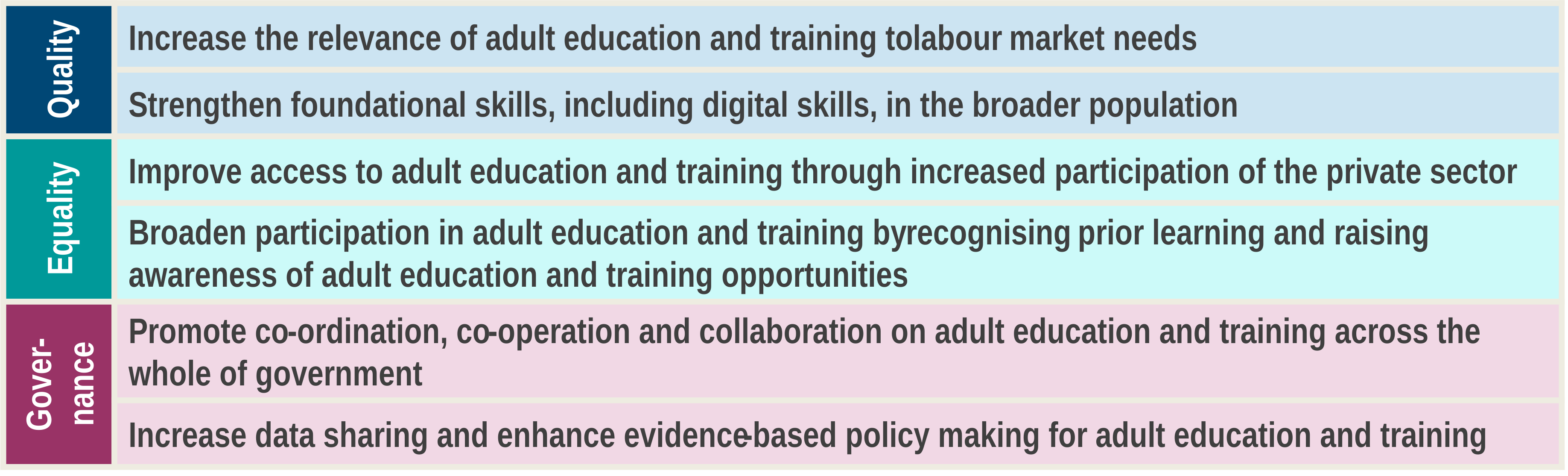
Recommendation 6.1. Increase the relevance of adult education and training to labour market needs
An important aspect of making adult learning more impactful and attractive in Romania will be making it more relevant to Romania’s current and future labour market. There are two important avenues to achieve this. First, the Ministry of Education and the Ministry of Labour would benefit from strengthening mechanisms to engage with social and economic partners, potentially by granting greater decision-making authority to the main National Coordination Group for adult education and training. This would help ensure that input collected through consultations on skills policy design is integrated into policy, and ultimately helps increase the relevance of interventions, in particular for employers and employees. Second, Romania would need to provide more tailored adult education and training opportunities to ensure the learning experience is relevant to the diverse skills and life circumstances of individuals.
Promoting the involvement of stakeholders in the design of adult education and training
Romania is taking steps to increase stakeholder engagement in policy design for adult education and training. In 2016, the government launched an online consultation platform, called E-Consultare, which replaced and combined previous websites for policy consultation and debate (OECD, 2023[62]). This platform has the potential to facilitate more interactions with stakeholders and simplify access to participatory opportunities (OECD, 2023[62]). More recently, the National Adult Education and Training strategy 2024-2027 set out plans to ensure a legal framework for the development of partnership and cooperation structures in adult education and training.
Romania made further progress by establishing the National Coordination Group under the Ministry of Labour, which includes representatives from various ministries, industry, NGOs, and vocational training providers. This group meets regularly to discuss key issues in adult education, such as skills demand in the labour market, quality assurance, and funding. To maximise the impact of such efforts, Romania could consider ensuring that the National Coordination Group operates with clear objectives and decision-making authority, rather than serving solely as a forum for discussion. Additionally, it could be empowered to influence policy throughout the entire cycle, from design to implementation and evaluation.
In Poland, for example, sectoral skills councils (SSCs) help implement Poland’s national skills policy (OECD, 2023[63]). SSCs are collaborations between the Polish Agency for Enterprise Development and business representatives in various sectors. They identify skills needs within the sector and facilitate dialogue between sectoral entities, such as employers’ organisations, trade unions, and training providers. SSCs also develop strategies and plans to upskill workers and improve relevant adult education and training, determine funding priorities for sectoral training; and inform employers and employees on sector‑level changes. While SSCs are responsible for coordination within their respective sectors, the national Programme Council on Competences helps to coordinate work across the SSCs. The Council on Competences comprises 19 members, incorporating representatives from key ministries involved in Poland’s skills ecosystem.
Improving the quality of public employment services by providing more tailored assistance
Greater investment in activation programmes—such as training, job-search counselling, and entrepreneurship support—is an important means to offer unemployed individuals more comprehensive assistance to improve their chances of re-entering the labour market. To rebalance its support for the unemployed, ANOFM/PES would need to both expand training and better tailor it to the needs of unemployed adults, especially those from vulnerable groups (youth, Roma and low-educated/low-skilled adults). This would require an increased frequency and intensity of caseworker interactions with unemployed adults (including to conduct in-depth assessments of clients’ skills and training needs) in order to provide more adapted assistance. To make this possible, caseworkers’ time will need to be allocated more efficiently and targeted to vulnerable groups.
The Ministry of Labour’s National Adult Education and Training strategy 2024-2027 already plans to enhance the competencies and tools used by PES caseworkers to provide more personalised counselling and career guidance to jobseekers. In taking this forward, Romania could develop an updated statistical profiling tool, with the ability to predict clients’ unemployment duration. Allocating more funding to PES when developing the unemployment insurance budget should also be considered, as this might be necessary to provide more personalised services and a broader range of training (OECD, 2022[4]).
As an example, in France, close coordination between employment and social services takes place to deliver a personalised follow-up to job seekers from vulnerable groups and help them overcome barriers to employment. Upon entering the programme, job seekers undergo a comprehensive assessment of their professional background (by the PES counsellor) and an assessment of their social situation (by the district social worker). Then, both parties establish a joint action plan to facilitate the job seeker’s return to the labour market. This plan defines concrete actions to find a new job, as well as advice and referrals to relevant social services such as healthcare, housing, education, mobility, etc. (OECD, 2023[63]; ILO, 2018[64]).
Recommendation 6.2. Strengthen foundational skills, including digital skills, in the broader population
In Romania, high and increasing early school leaving (16.6% in 2023) means that many young people leave school without mastering foundational competencies (Eurostat, 2023[65]). In most OECD countries, upper secondary attainment is considered the minimum level of education necessary to participate fully in the labour market – without this, individuals are at risk of marginalisation and unemployment (OECD, 2024[44]). Community Lifelong Learning Centres and instruction methods more adapted to youth, two recent measures in Romania, can help those who have not completed upper secondary education re-enter education and obtain a basic qualification (OECD, 2021[66]; Savelsberg, Pignata and Weckert, 2017[67]). Experience in OECD provides insights on how Romania might further strengthen its second chance education provision.
Romania would strongly benefit from programmes to improve the digital skills of the population as a whole, and especially of seniors (individuals aged 65 and above). The low level of digital skills among adults in Romania and in particular seniors, has important implications for their access to online services, including education and training opportunities. Moreover, as more services move online, there is risk of a growing digital divide, with older individuals not having the skills to access these services. This issue was highlighted during the pandemic when many seniors faced difficulties accessing essential services online (OECD, 2019[68]; UNECE, 2021[69]).
Tailoring second chance programmes to the needs of adult learners
Romania’s second chance programmes have many positive features. They provide students with formal qualifications, offer flexible timetables, and have increased emphasis on individualised teaching methods. To further strengthen second chance education Romania can consider:
Developing guidance and resources for flexible, differentiated teaching in second chance programmes: Second chance classrooms typically involve young and adult learners with more heterogeneous levels of learning. Of particular importance is guidance and tools to help teachers recognise a broader range of previous learning and work experience so that students avoid repeating their previous learning, deliver lessons in smaller, manageable blocks, and monitor individual learning progress to accommodate for learners who participate irregularly or struggle to achieve. Mentoring and support to help teachers adopt more hands-on pedagogies will also be important to helping them capture the interests of learners (OECD, 2020[28]).
Strengthening connections with multidisciplinary teams that provide integrated social and healthcare services for second chance students. Second chance students are likely to face multiple and inter-related challenges that led to them leaving mainstream education in the first place (such as academic, socio-economic, and motivational issues) (Adams and Hakonarson, 2024[70]). Romania’s second chance programmes have introduced some additional support to students through school mediators and counsellors, but more could be done. In Spain for example, second chance schools work with community social services and health institutions (Escuelas de Segunda Oportunidad España, 2015[71]).
Developing strong connections between second chance programmes and employers: In 2021, the Ministry of Education and the Ministry of Labour signed a partnership agreement to direct unemployed adults with low levels of education to second chance programmes and provide those students with job-search counselling and support from the employment services (Ministry of Education of Romania, 2021[72]). This positive initiative is expected to primarily benefit adult learners registered with the ANOFM/PES. Romania can consider additional measures to expand opportunities for work-based learning to the broader pool of second chance students following a vocational track. In France, Spain and Portugal, for example, the national networks of second chance schools facilitate partnerships with employers (Réseau E2C France, n.d.[73]; Escuelas de Segunda Oportunidad España, n.d.[74]; E2O Portugal, n.d.[75]). By centralising employer engagement within a larger association or network, these countries have been able to provide students with a broader range of work-based learning opportunities.
Strengthening the digital skills of seniors
Romania has introduced policies to facilitate the digital transition. For example, it is taking action to advance digitalisation across education levels and expand digital skills training programmes for civil servants and communities through a network of public libraries. Some of the planned measures are intended to benefit senior citizens.
To build on these efforts, the Government of Romania might benefit from developing a national strategy for enhancing the digital skills of seniors, with a specific focus on developing a National Digital Literacy Programme for Seniors. Such a strategy would not only streamline and standardise the quality of digital literacy programmes across the country, but would also ensure equitable access for all seniors, regardless of their geographical location or socio-economic status. Developing a comprehensive national plan to implement the proposed strategy could enable Romania to tackle the digital literacy gap more effectively, ensuring that its elderly population is not left behind. This could include a programme to provide free or subsidised training courses on basic computer use, internet navigation, online safety, and the use of digital tools for everyday tasks. In addition, this training could be integrated in existing senior programmes by, for example, holding digital training sessions in senior community centres, retirement homes, and during health check-ups. Such integration ensures that digital education becomes a routine part of seniors' activities, increasing the likelihood of participation and learning retention. Australia provides an example on how such programmes can be effectively delivered through community-based organisations (see Box 6.2).
Australia’s Be Connected Network
Be Connected is an Australian government initiative intended to help older citizens improve their digital skills, confidence and online safety. The initiative responds to the Digital Literacy for Older Australians strategy, which makes bridging the digital divide affecting older people a priority. Managed by Good Things Foundation Australia and funded by the government, the programme is based on the creation of a collaborative network of community organisations and individuals dedicated to providing digital skills training to people over 50 years of age.
The initiative connects over 3 500 community organisations, libraries, and local councils across the country, facilitating the sharing of effective teaching methods and resources. Be Connected offers an online learning portal where adults can access a wide range of resources for free, including games, podcasts, or instructional videos. In addition to online resources, Be Connected also offers digital mentoring opportunities. For instance, Young Mentors is an initiative that brings together secondary school students and older Australians to share digital skills and knowledge.
The initiative was launched in 2017, with a four-year budget of approximately USD PPP 31.9 million. A pre-post survey of programme participants conducted from 2017 to 2020 showed Be Connected reportedly improved participants’ foundational digital skills and knowledge, digital confidence, social connectedness and loneliness, and online safety. Australia’s commitment to digital inclusion goes beyond Be Connected, the government recently approved the “Aged Care Data and Digital Strategy 2024-2029” promoting digital literacy of older Australians, as well as the use of data and technology to improve age care services.
Source: Australian Government (2024[76]), Be Connected, https://beconnected.esafety.gov.au/index.php?redirect=0 (accessed on 8 July 2024); McCosker et al. (2020[77]), Improving the digital inclusion of older Australians: The social impact of Be Connected., https://www.dss.gov.au/sites/default/files/documents/03_2021/improving-digital-inclusion-older-australians-social-impact-be-connected-16-june-2020.pdf; Australian Government (2024[78]), Aged Care Data and Digital Strategy. Driving better care and leading a sustainable and productive care and support economy. 2024-2029., https://www.health.gov.au/sites/default/files/2024-07/aged-care-data-and-digital-strategy-2024-2029_0_0.pdf
Equality of opportunity and access: Making adult learning accessible and appealing to the most disadvantaged Romanians
Many of Romania’s adult learning opportunities are provided free of charge. However, there is considerable scope to increase participation in adult education and training amongst the most marginalised groups, such as rural populations, NEET and Roma. Raising awareness about available training programmes and skills certification services (recognition of prior learning, RPL) would make existing adult learning opportunities seem more accessible and attractive, especially for those who have lower educational attainment and/or are in low-skilled jobs. Meanwhile, expanding provision of adult learning in the most disadvantaged, rural parts of the country will also be important to reach those most in need of upskilling and reskilling. These efforts can be advanced through policies that encourage private sector participation in delivering adult learning in under-served areas or sectors.

Recommendation 6.3. Improve access to adult education and training through increased participation of the private sector
Currently the private sector in Romania offers and invests very little in adult education and training. Only one in five enterprises in Romania offered continuing vocational education and training (CVET) in 2020, and the majority of these active providers were large companies, typically located in urban areas. At the same time, there are few efforts underway to encourage the private sector to invest in adult education and training. In this context, it is important to incentivise the private sector to engage through financial means and by lowering the barriers of entry.
Improving financial mechanisms to increase employer motivation to provide adult education and training
Romania provides training subsidies and tax breaks to companies that engage in CVET. However, these incentives currently offer the same level of support to companies regardless of size. International evidence shows targeted and well-designed financial incentives can be more effective than universal ones to encourage employers to provide training opportunities (OECD, 2018[79]). Given the lower engagement of SMEs in adult learning and their importance to the national economy, Romania would benefit from targeting funding and support to increase their participation in skills development initiatives. Many OECD countries use a range of financial incentives, including tax breaks, training or wage subsidies, and levy schemes. These are often targeted or scaled progressively to provide greater support to smaller firms (see Box 6.3).
Many OECD countries run programmes to support adult learning targeted exclusively at SMEs. Some are designed to help SMEs overcome cost barriers, while others aim to enhance growth and competitiveness through skills investments. For instance, in Flanders (Belgium) the SME Wallet (KMO-portefeuille) is a subsidy targeted exclusively at SMEs seeking to invest in training or consultancy services in priority areas, such as digitalisation and financial literacy. Small enterprises receive a 30% subsidy on costs, while medium-sized enterprises receive 20%. A recent study indicates that approximately 55 000 SMEs benefit annually from the SME Wallet. The study also points out the programme has had a positive effect on competitiveness and productivity of small companies.
Other financial incentives are open to firms of all sizes but provide a larger support to SMEs. For example, in Lithuania enterprises can benefit from a competence voucher which must be used within 12 months to purchase training services for company employees. Reimbursement covers 80% of the training costs for the micro, small and medium enterprises and 70% for large enterprises. Similarly, in Croatia, the Croatian State Subsidy for Education and Training Act allows for a deduction from the tax base of up to 50% (70% in the case of SMEs) of the cost of general adult education and training, and 25% (35% for SMEs) of the cost of specific employee education and training.
Source: Agency for Innovation and Entrepreneurship (n.d.[80]), Kmo-portefeuille [SME Wallet], https://www.vlaio.be/nl/subsidies-financiering/kmo-portefeuille (accessed on 11 July 2024); OECD (2020[81]), OECD Skills Strategy Slovak Republic: Assessment and Recommendations, OECD Skills Studies, OECD Publishing, Paris, https://doi.org/10.1787/bb688e68-en; CEDEFOP (2018[82]), Lithuania: The competence voucher – a ticket to training for employees in SMEs and large enterprises, https://www.cedefop.europa.eu/en/news/lithuania-competence-voucher-ticket-training-employees-smes-and-large-enterprises; CEDEFOP (2020[83]), Financing adult learning database, https://www.cedefop.europa.eu/en/tools/financing-adult-learning-db/overview (accessed on 12 June 2024).
Among the different financial mechanisms, the Ministry of Labour could consider introducing a training levy scheme to collect funds from employers specifically for adult education and training. However, levy schemes must be designed carefully to ensure training focuses on developing important skills for the labour market and is accessible to smaller companies. For instance, in Italy, much of the funds collected through training levies are used for mandatory health and safety training, which would have likely taken place in the absence of such schemes (OECD, 2019[7]).
One way to avoid this pitfall is by using the levy to finance the creation of regional or sectoral training funds that would distribute training grants to firms in the sector and/or region in line with the fund’s strategic priorities. Experience in OECD countries shows that employer commitment to sectoral levies is generally strong, particularly when they target sectors where the labour market is tight and it is difficult to find skilled workers (OECD, 2018[79]). The resulting funds could also be targeted to the types of employers that are currently less likely to offer training opportunities (e.g. SMEs, rural companies). The advantage of such targeted levy scheme would be twofold: it could help increase the funds available for adult education and training and allow for the redistribution of funding in line with national priorities. For instance, Australia has a levy scheme in the construction sector covering all regions, as well as in the electro-metallic industry in one specific province. In Switzerland, professional organisations can request that the Federal Council establishes a sectoral fund for the provision of VET. All companies in the sector are required to contribute to the fund, with the amount of their contributions depending on the company payroll (OECD, 2018[79]).
Facilitating employer involvement in apprenticeship programmes
A more flexible curriculum framework could help ensure that apprenticeships are better aligned with the specific technological processes, working conditions, and customer demands of companies, making them more adaptable and appealing. Enterprises in Romania should have a greater say in designing apprenticeship curricula and in deciding how apprenticeship programmes are run. This approach would acknowledge that the practical and theoretical knowledge requirements for each occupation are best identified at the enterprise level.
For example, although the German apprenticeship system is based on a series of occupational skills profiles that are determined at the national level, employers have a strong influence on the development of curricula and examination. This is achieved through collaboration at the federal level with the Federal Employment Agency, and ongoing discussions with regional chambers of commerce, regional employment agencies and social services (OECD, 2017[84]). The Federal Ministry for Labour and Social Affairs develops regulations on training content, with advice from the Federal Institute for Vocational Education and Training. Employers, through their associations and industry chambers, actively contribute to updating these regulations. They ensure the training content aligns with current industry needs and technological advancements by proposing changes to training profiles or introducing new occupations.
Recommendation 6.4. Broaden participation in adult education and training by recognising prior learning and raising awareness of adult education and training opportunities
Valuing and recognising prior learning and experience promotes participation in adult learning by acknowledging existing skills, reducing training time and costs to engage in training, and allowing adults to focus on acquiring new, relevant knowledge and skills. While the last two decades have seen an increase in the number of validation centres, work still needs to be done to improve the reach and effectiveness of validation services. Currently, the system only allows for the validation of vocational qualifications up to level 3 in the national qualifications framework, making skills certification services (RPL) unattractive for those aspiring to obtain higher qualification levels. Furthermore, validation centres are unevenly distributed across the country, and services are often inaccessible in remote and rural regions.
Raising awareness of opportunities and benefits of adult education and training is also important to support more equal participation. Many adults face barriers such as lack of information, societal stigma, or perceived challenges associated with returning to education. Raising awareness helps break down these barriers, making education seem more attainable and approachable. In Romania there have been some campaigns to increase awareness of adult education and training opportunities, such as the INTESPO project, which demonstrated that young individuals that are NEET do not always take up services that are provided for them, in part because of lack of knowledge about programmes available. However, more needs to be done to increase public awareness, including developing a platform with all available training options.
Improving the recognition of prior non-formal and informal learning
Recognition of prior learning (RPL) is pivotal for adult upskilling and reskilling in Romania, enabling personalised learning pathways that address individual needs and reduce training time. Despite existing mechanisms, RPL take-up in Romania remains low for the reasons outlined above. To promote greater participation in RPL, Romania might consider:
Expanding the RPL framework to include higher levels of education, providing opportunities for more advanced qualifications. This expansion would make RPL a more attractive and valuable option for individuals.
Raising awareness, to increase the visibility and understanding of RPL benefits among both individuals and employers. Adult learning providers should serve as the primary contact points for individuals seeking RPL, offering comprehensive information about the process, guiding applicants through each step, and providing support in documenting their prior learning experiences. At the same time, national campaigns would help raise awareness amongst the broader adult population who might benefit from RPL but are not yet aware of these services.
Involving stakeholders such as trade unions, non-governmental organisations (NGOs), and the private sector in the RPL system. Trade unions and NGOs can help raise awareness about RPL opportunities and advocate for the interests of their constituencies, while the private sector can contribute by recognising RPL certifications and incorporating RPL into their training and recruitment practices. The AFEST (Action de formation en situation de travail) programme in France provides a compelling example and a model that Romania could consider. The programme, which aims to promote continuing training, especially in small enterprises and among low-skilled workers, was introduced in 2018 (Duclos, 2018[85]). It recognises informal on-the-job learning and allows employers to access public funding, usually available only for formal education and training. To be recognised, informal learning must meet four conditions: the on-the-job training is adjusted to match the specific purpose of the training; the training provider is appointed before the training begins; the training includes reflection outside of the workplace to reinforce the lessons learned; and an assessment of training outcomes is carried out after the training. The assessment involves an evaluation by both the learner and the trainer. OPCOs (Opérateurs de compétences) or “skills operators”, which are organised by different sectors, validate the informal learning through the AFEST programme and cover part or all of the learning costs or connect employers with other financial support (OECD, 2023[2]; OECD/European Union, 2019[86]).
Improving outreach and information sharing to promote broader participation in adult education and training
Outreach mechanisms are needed to engage those detached from the labour market in job search or training (OECD, 2022[4]). Romania has implemented a number of outreach initiatives, such as the national project INTESPO and large-scale media campaigns. Efforts are also underway to consolidate information on adult education and training providers into a single national register. To further enhance access to comprehensive information for both individuals and employers, Romania, would benefit from collecting and sharing more detailed data on providers and their training programmes such as evaluations, learning outcomes, and user satisfaction. Making this information available through a single, open, and user-friendly platform would make it easier to access and use.
In Sweden, for example, a portal provides up-to-date information to foreign workers on skills needs and job offers by region, online language training, regulated occupations and recognition of foreign qualifications, as well as the possibility to apply for work permits online. All of this is available in numerous languages (Swedish Institute, 2024[87]). In Scotland, the Scottish Credit and Qualifications Framework (SCQF) enhances educational access by defining qualification levels and offering a database with over 10 000 courses, enabling users to filter by topic, title, or key words. Meanwhile, Finland’s Studyinfo platform serves as a comprehensive resource for over 5 600 degree and non-degree courses, allowing applications and tracking of course completion, with filters for topic, language, and more.
Good governance: Steering coherent adult learning policies through stronger coordination and evidence use
Working at the intersection of education and the labour market, adult learning policies require strong cross-sectoral coordination, and evidence to adapt provision to employers’ needs. Romania is making commendable efforts to improve inter-ministerial collaboration, especially in data collection, analysis, and use. However, challenges remain. By international comparison, coordination between ministries appears to be relatively weak, leading in some instances to duplication of work and fragmented policy interventions, as illustrated by the existence of two separate adult education strategies. While Romania produces valuable analysis on the skills needed by the labour market, there is room to enhance its use to inform adult education and training policies and provision. This section makes recommendations for how Romania might strengthen the governance of its skills sector, through stronger coordination and better use of evidence on skills needs to inform policies and provision.
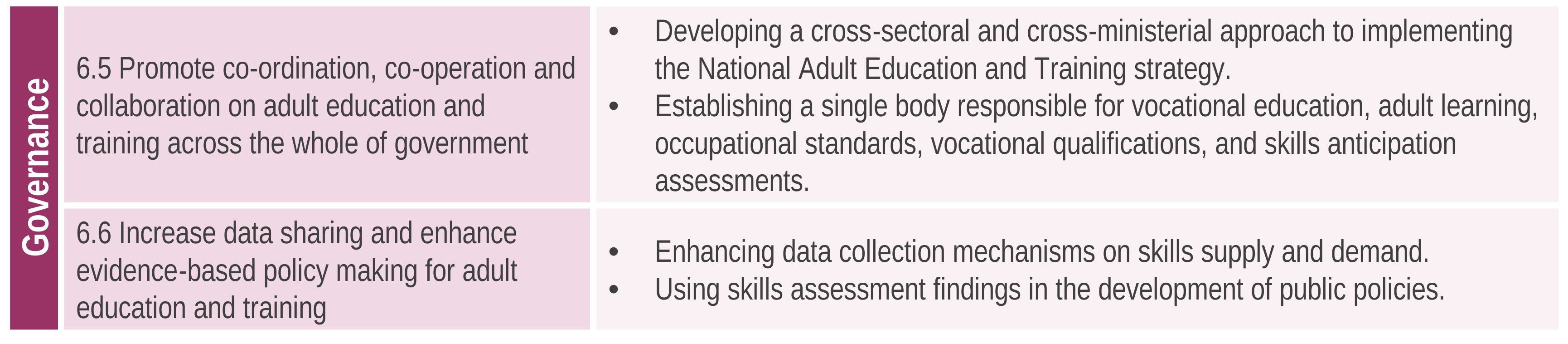
Recommendation 6.5. Promote coordination, cooperation and collaboration on adult education and training across the whole of government
Adequately investing in skills and ensuring that skills policies are consistent, coherent, and effectively implemented can only happen with a stronger whole-of-government approach. There are a number of mechanisms currently in place in Romania to foster cooperation between ministries. For example, ministries proposing policies can seek to establish inter-ministerial committees and proposed laws are sent for inter-ministerial review to the ministries affected by them. However, issues arise with these current coordination mechanisms. For instance, the onus is on the line ministry to seek out coordination and to put together inter-ministerial committees, which means that there is no systematic process of consulting all ministries involved. Greater clarity on roles and responsibilities, along with more active coordination, would ensure that the various government agencies involved in skills policies work towards shared objectives.
Developing a cross-sectoral and cross-ministerial approach to implementing the National Adult Education and Training strategy
The Ministry of Labour’s National Adult Education and Training strategy includes a plan that assigns responsibilities for meeting its objectives. Recent OECD analysis of skills strategies across EU countries offers insights on how to strengthen cross-sectoral strategies for skills (OECD, 2024[88]). These include setting clear targets and performance indicators for all forms and levels of adult education and training, ensuring accountability, and clarifying the roles of stakeholders. Indicators should be based on a comprehensive assessment of the country’s current skills system to effectively address key gaps. Timing is also crucial. Romania could enhance the strategy’s impact by aligning its implementation with moments of strong political will and available funding opportunities.
To ensure coherence, the strategy should align with other national policies, such as labour market and education strategies, creating synergies across sectors. Drawing on OECD country examples, Romania could also formalise a binding agreement among key partners—government, employers, trade unions, and civil society—to ensure collective ownership of the strategy and cooperation in its implementation. Identifying influential champions within government and industry would help maintain momentum and secure long-term support. Finally, robust monitoring and evaluation mechanisms are essential to track progress, make necessary adjustments, and ensure the strategy remains effective over time.
Several OECD countries have developed comprehensive and cross-sectoral strategies that help coordinate the efforts of different actors and set the direction for adult learning and skills. The Norwegian Strategy for Skills Policy 2017-2021, for example, established a binding agreement among Strategy Partners, namely the government, employer associations, trade unions, the voluntary sector and the Sámi Parliament (the representative body for people of Sámi heritage in Norway). The strategy delineated the roles and responsibilities of each partner. The government (ministries), in cooperation with social partners, were responsible for the development and implementation of the skills policy, and for ensuring coordination across policy sectors and levels of government. Municipalities, including local and regional authorities, provided numerous adult learning services to the end user. Employers provided training at the workplace, often in collaboration with other partners. The Sámi Parliament ensured that measures supported the linguistic and cultural expertise needed to develop Sámi society and businesses. The voluntary sector contributed to skills development both within and outside the labour market. The strategy emphasised the importance of partners working together to develop and implement measures (OECD, 2018[89]).
Establishing a single body responsible for vocational education, adult learning, occupational standards, vocational qualifications, and skills anticipation assessments
Like in many countries, Romania’s skills landscape is complex with many ministries and government agencies working on adult learning and education (OECD, 2019[90]). However, in Romania, there appears to be a blurred division of labour between the Ministry of Education and the Ministry of Labour. To mitigate this issue, the Romanian government could consider establishing a coordinating committee responsible for vocational education, adult learning, occupational standards, vocational qualifications, and skills anticipation assessments, that aligns efforts and streamlines processes across existing agencies and ministries. This measure would help streamline decision-making, while simultaneously keeping accountability with both ministries.
For example, the National Agency for Qualification and Vocational Education and Training (ANQEP) in Portugal, operating under the supervision of several ministries, focuses on coordinating and managing vocational education and training for adults and young people. Key responsibilities include updating the National Catalogue of Qualifications, promoting double certification programs, ensuring quality and flexibility in training systems, and supporting the professional development of educators. ANQEP also works on enhancing the international comparability of qualifications to facilitate mobility in vocational education across borders. Similarly, in Estonia, the Ministry of Education and Research delegates responsibility for occupational standards, qualifications and assessment to the National Agency for Vocational Education (Kutsekoda). This body is managed by a collaboration of employer and employee organisations, including trade unions, and other government departments. Kutsekoda also assesses the future needs for skills in Estonia.
Recommendation 6.6. Increase data sharing and enhance evidence-based policy making for adult education and training
Relevant skills policies and provision can help address skills mismatches and shortages, but doing so successfully relies on having up-to-date high-quality data and information on the changing demand for skills (OECD, 2020[91]). Romania is taking positive steps to strengthen its skills data infrastructure. Law No 242, adopted on 20 July 2022, aims to foster interconnectivity between the IT systems of different government agencies and facilitate data exchange according to the objectives of the European Interoperability Framework (European Commission, 2023[92]). Moreover, as part of the ReCONECT programme an electronic platform will be designed to connect existing skills databases. In doing so, it will be the first interconnected platform in Romania to offer a systemic approach by linking databases on graduates from initial VET, higher education and continuing VET and tracing their transition to the labour market (OECD, 2022[4]). However, to further improve data sharing and enhance the use of labour market intelligence to inform policies, more efforts are needed to strengthen data collection and use.
Enhancing data collection mechanisms on skills supply and demand
The existence of many parallel skills assessments and anticipation (SAA) exercises makes it difficult to systematically involve relevant government agencies and social partners in their design and use. This means that the way SAAs define and measure skills and report results may not always meet user needs.
The ReCONECT programme is a step towards having a single skills data platform and enabling better and more regular anticipation of skills. To make the most of this programme, the Ministry of Education, the Ministry of Labour, ANOFM/PES, other relevant ministries and agencies, subnational authorities and social partners might benefit from collaborating in order to define the data they need from SAA initiatives. Based on this assessment, these actors could commission experts to improve and consolidate Romania’s SAA methods. For example, this could include expanding existing quantitative tools to provide short-, medium- and long-term analysis on the needs of specific sectors, occupations, educational levels, demographics and regions. This would make these exercises more useful to end users responsible for policy decisions across these areas. It could also involve drawing on qualitative insights from consultation with employers and potentially from foresight techniques.
Ultimately, designating a single subsidiary body with experts from relevant ministries and key stakeholders to produce SAAs would have several benefits, including a more focused, consistent and efficient approach to collecting data for skills analysis, enhancing the relevance and quality of the data, as well as providing a central repository making data easier to access to support policy decisions. Estonia’s System of Labour Market Monitoring and Future Skills Forecasting (OSKA) provides an example of how a single body centralises key responsibilities for SAA analysis and recommendations (see Box 6.4 below).
Using skills assessment findings in the development of public policies
Evidence-based policy making could also be enhanced in Romania by using skills assessment and anticipation (SAA) findings more consistently for policy making and programme design. Ongoing efforts to streamline SAA analysis and reporting are positive to provide consistent visibility, making it easier for government agencies to plan and adjust policies and provision based on up-to-date information of labour market needs. However, ensuring that information on skills needs is more consistent and regularly reported will not always guarantee that it is used to inform policies.
Some OECD countries have established mechanisms to ensure that skills anticipation exercises support the development of skills policies (see Box 6.4). These include:
Connecting SAA to specific policy uses: Designing SAA exercises to address specific policy-related issues makes it easier to involve relevant stakeholders and ensure the measurement and reporting of skills align with their needs. This contributes to a greater ownership and use of results (OECD, 2016[93]). Establishing a standard procedure to translate SAA findings into policy recommendations can also ensure that SAA findings are taken into account. This could involve designating a specific body – or bodies – responsible for formulating concrete recommendations, and a process for government agencies to report whether and how they are acting on those recommendations.
Establishing platforms to discuss SAA findings with relevant users: Improving how SAA findings are disseminated and discussed would also help end users to interpret and make greater use of results data to inform policy and provision. Some OECD countries have established platforms to discuss SAA findings with relevant ministries, subnational authorities, and social and economic partners. These discussions are not only important to communicate findings, but to help build consensus on skill needs. An overarching Skills Policy Council or a broader Social Dialogue Commission (see Recommendation 6.1 above) would be well placed to facilitate these discussions at the national level.
There are different ways in which countries ensure the use of skills assessment and anticipation (SAA) exercises to inform policy and provision. Examples include:
In Estonia, the Estonian Qualification Authority launched the System of Labour Market Monitoring and Future Skills Forecasting (OSKA) project to map out skills provision based on labour market needs. OSKA uses both quantitative and qualitative methods to determine the skills that will be most relevant to Estonia’s future labour market. In addition to using available administrative data and quantitative forecasts to determine these skills, OSKA collects qualitative insights through sector-level surveys and expert panels to understand skills needs across five sectors. OSKA publishes annual reports on labour market trends and skills needs based on its quantitative and qualitative analyses. Beyond identifying future in-demand skills, OSKA is also involved in developing policy recommendations about how to meet the demand for these skills. OSKA is cofunded by the Estonian Qualification Authority and ESF. Non-governmental stakeholders, including education providers and business associations, are involved in the OSKA project through involvement on sectoral expert panels and/or on the OSKA Panel of Advisors, which is active in determining the methodological approach of OSKA to SAA. Between 2015 and 2020, OSKA received EUR 4.4 million, with 85% financed by the European Social Fund and the remaining 15% covered by the Estonian government.
In Austria, the Standing Committee on New Skills, operating under the Public Employment Service (PES) identifies changing skills and qualification needs with the explicit goal of informing training provision for the unemployed. Based on SAA exercises conducted by expert working groups, the Committee formulates concrete proposals to develop or expand continuing education and training programmes. These proposals are then used by the Austrian PES to develop call for tenders for certain active labour market programmes and guide investments in continuing training for companies in specific occupations.
In Norway, the Committee on Skill Needs (Kompetansebehovsutvalget, KBU) composed by social partners, researchers and representatives from the county councils facilitates and stimulates open dialogue and discussion about society’s skill needs with different stakeholders and society more generally. For instance, the Committee organises events with business representatives and education providers to disseminate SAA findings, focusing on specific sectors or themes, such as skills for the green transition.
Source: Cedefop (2020[94]) Strengthening Skills Anticipation and Matching in Estonia. Capitalising on OSKA’s potential to realise national ambitions, https://skytte.ut.ee/sites/default/files/2022-05/governance_of_EU_skills_report_en.pdf; OECD (2023[63]) OECD Skills Strategy Bulgaria: Assessment and Recommendations, OECD Skills Studies, OECD Publishing, Paris, https://doi.org/10.1787/c2eb2f34-en.; OECD (2020[91]), Strengthening the Governance of Skills Systems: Lessons from Six OECD Countries, OECD Skills Studies, OECD Publishing, Paris, https://doi.org/10.1787/3a4bb6ea-en.; OECD (2023[95]), Assessing and Anticipating Skills for the Green Transition: Unlocking Talent for a Sustainable Future, Getting Skills Right, OECD Publishing, Paris, https://doi.org/10.1787/28fa0bb5-en; CEDEFOP (2022[96]), AMS Standing Committee on New Skills, https://www.cedefop.europa.eu/en/tools/matching-skills/all-instruments/ams-standing-committee-new-skills (accessed 17 July 2024); Kompetansebehovsutvalget (2021[97]), Norwegian Committee on Skill Needs, https://kompetansebehovsutvalget.no/ (accessed on 17 July 2024).
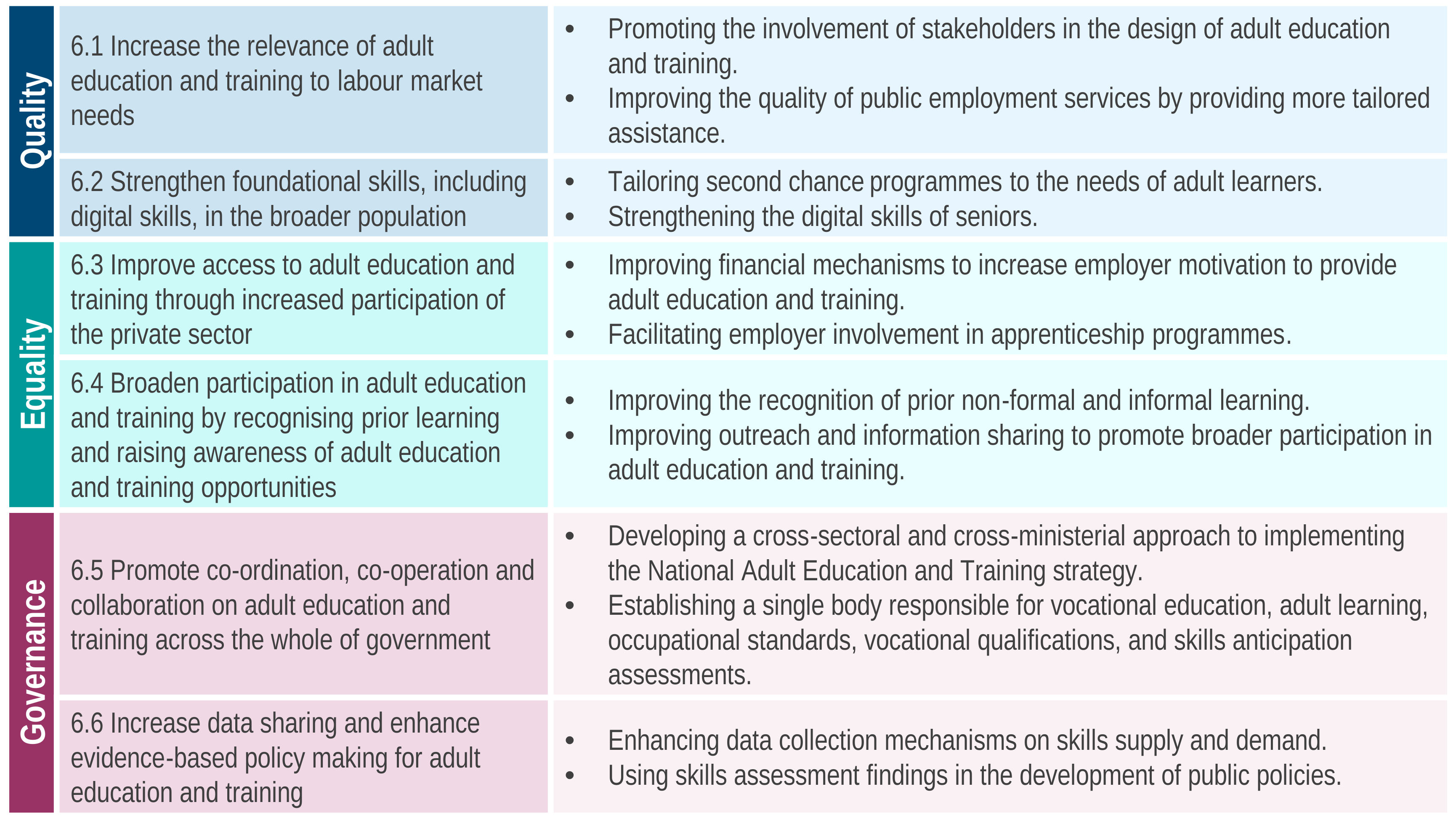
References
[70] Adams, D. and H. Hakonarson (2024), “An integrated approach to service delivery for people with multiple and complex needs”, OECD Social, Employment and Migration Working Papers, No. 305, OECD Publishing, Paris, https://doi.org/10.1787/d837a06a-en.
[80] Agency for Innovation and Entrepreneurship (n.d.), Kmo-portefeuille [SME Wallet], https://www.vlaio.be/nl/subsidies-financiering/kmo-portefeuille (accessed on 11 July 2024).
[78] Australian Government (2024), Aged Care Data and Digital Strategy. Driving better care and leading a sustainable and productive care and support economy. 2024-2029., https://www.health.gov.au/sites/default/files/2024-07/aged-care-data-and-digital-strategy-2024-2029_0_0.pdf.
[76] Australian Government (2024), Be Connected, https://beconnected.esafety.gov.au/index.php?redirect=0 (accessed on 8 July 2024).
[29] CEDEFOP (2023), “Skills anticipation in Romania (2023 Update).”, Skills intelligence: data insights., https://www.cedefop.europa.eu/en/data-insights/skills-anticipation-romania-2023-update (accessed on 9 March 2024).
[96] CEDEFOP (2022), AMS Standing Committee on New Skills, https://cedefop.europa.eu/en/tools/matching-skills/all-instruments/ams-standing-committee-new-skills (accessed on 16 February 2024).
[18] CEDEFOP (2022), BUILT TO LAST: APPRENTICESHIP VISION, PURPOSE, AND RESILIENCE IN TIMES OF CRISIS Short papers from the Cedefop community of apprenticeship experts, Publications Office of the European Union, https://www.cedefop.europa.eu/files/6212_en.pdf.
[10] CEDEFOP (2021), Apprenticeship Governance and In-Company Training: Where Labour Market and Education Meet, https://www.cedefop.europa.eu/files/6203_en.pdf (accessed on 3 March 2024).
[83] CEDEFOP (2020), Financing adult learning database, https://www.cedefop.europa.eu/en/tools/financing-adult-learning-db/overview (accessed on 12 June 2024).
[82] CEDEFOP (2018), Lithuania: The competence voucher – a ticket to training for employees in SMEs and large enterprises, https://www.cedefop.europa.eu/en/news/lithuania-competence-voucher-ticket-training-employees-smes-and-large-enterprises.
[19] CEDEFOP (2017), Skills validation (since 2014) ANOFM – PES Romania, https://www.cedefop.europa.eu/files/ro_case_study_summary_ok.pdf.
[24] CEDEFOP (n.d.), Second chance measures, https://www.cedefop.europa.eu/en/tools/vet-toolkit-tackling-early-leaving/intervention-approaches/second-chance-measures (accessed on 10 March 2024).
[50] Cedefop (2023), 2023 skills forecast - Romania, https://www.cedefop.europa.eu/files/skills_forecast_2023_romania.pdf (accessed on 3 March 2024).
[53] Cedefop (2020), Perceptions on adult learning and continuing vocational education and training in Europe - Volume 1: Second opinion survey, https://www.cedefop.europa.eu/files/3086_en.pdf (accessed on 4 March 2024).
[94] Cedefop (2020), Strengthening Skills Anticipation and Matching in Estonia. Capitalising on OSKA’s potential to realise national ambitions., https://skytte.ut.ee/sites/default/files/2022-05/governance_of_EU_skills_report_en.pdf.
[85] Duclos, L. (2018), L’AFEST : cadrages et débordements.
[75] E2O Portugal (n.d.), Direção [Governing bodies], https://www.e2oportugal.org/c%C3%B3pia-parcerias (accessed on 10 July 2024).
[9] EIB (2023), EIB Investment Survey (EIBIS), https://data.eib.org/eibis/graph (accessed on 12 June 2024).
[71] Escuelas de Segunda Oportunidad España (2015), Principios, https://www.e2oespana.org/modelo-e2o/principios/ (accessed on 8 July 2022).
[74] Escuelas de Segunda Oportunidad España (n.d.), E2OforJobs, https://www.e2oforjobs.org/ (accessed on 10 July 2024).
[32] Espinoza, R. and N. Martinez-Yarza (2023), “Quality matters: A comparative analysis of quality assurance mechanisms in adult education and training in OECD countries”, OECD Social, Employment and Migration Working Papers, No. 302, OECD Publishing, Paris, https://doi.org/10.1787/fc5ae97c-en.
[54] European Commission (2024), Factsheet on 2014-2020 Rural Development Programme for Romania, https://agriculture.ec.europa.eu/system/files/2023-11/rdp-factsheet-romania_en_.pdf.
[42] European Commission (2024), Recovery and Resilience Scoreboard, https://ec.europa.eu/economy_finance/recovery-and-resilience-scoreboard/country_overview.html?lang=en (accessed on 20 August 2024).
[92] European Commission (2023), Romania - 2023 Digital Public Administration factsheets, https://joinup.ec.europa.eu/sites/default/files/inline-files/DPAF_Annex_2023_Romania_vFINAL_1.pdf (accessed on 24 February 2024).
[52] European Commission (2021), Digital Economy and Society Index (DESI) 2021 Romania, https://www.mac-team.eu/index.php/files/174/Digital-Economy-and-Society-Index-DESI-2021/1039/DESI-2021---RO---eng.pdf.
[22] European Commission (2020), Youth Guarantee country by country. Romania., https://ec.europa.eu/social/BlobServlet?docId=13658&langId=en.
[30] European Commission (2019), Commission Staff Working Document, Country Report Romania 2019, https://eur-lex.europa.eu/legal-content/EN/TXT/PDF/?uri=CELEX:52019SC1022 (accessed on 2 March 2024).
[36] European Commission (2019), Study on EU VET instruments (EQAVET and ECVET), https://op.europa.eu/en/publication-detail/-/publication/205aa0ac-460d-11e9-a8ed-01aa75ed71a1/language-en.
[26] European Commission (2015), An in-depth analysis of adult learning policies and their effectiveness in Europe, https://op.europa.eu/en/publication-detail/-/publication/c8c38dc9-89d0-11e5-b8b7-01aa75ed71a1/language-en (accessed on 3 March 2024).
[59] European Union Agency for Fundamental Rights (2023), Roma in 10 European Countries. Main results Roma survey 2021., Publications Office of the European Union, https://fra.europa.eu/en/publication/2022/roma-survey-findings.
[65] Eurostat (2023), Early leavers from education and training by sex and degree of urbanisation, https://doi.org/10.2908/EDAT_LFSE_30 (accessed on 19 September 2024).
[57] Eurostat (2023), Employment and activity by sex and age - annual data, https://doi.org/10.2908/LFSI_EMP_A (accessed on 3 October 2024).
[51] Eurostat (2023), Individuals’ level of digital skills (from 2021 onwards), https://doi.org/10.2908/ISOC_SK_DSKL_I21 (accessed on 4 June 2024).
[55] Eurostat (2023), Population by educational attainment level, sex, age and degree of urbanisation (%), https://doi.org/10.2908/EDAT_LFS_9913 (accessed on 2 October 2024).
[14] Eurostat (2022), Distribution of non-formal education and training activities by provider, https://doi.org/10.2908/TRNG_AES_170 (accessed on 4 October 2024).
[17] Eurostat (2022), Enterprise statistics by size class and NACE Rev.2 activity (from 2021 onwards), https://doi.org/10.2908/SBS_SC_OVW (accessed on 3 October 2024).
[56] Eurostat (2022), Participation rate in education and training by degree of urbanisation, https://doi.org/10.2908/TRNG_AES_105 (accessed on 3 October 2023).
[13] Eurostat (2022), Participation rate in education and training by sex, https://doi.org/10.2908/TRNG_AES_100 (accessed on 3 October 2024).
[58] Eurostat (2022), Population wanting to participate in education and training, by reason for not participating and sex, https://doi.org/10.2908/TRNG_AES_176 (accessed on 3 October 2024).
[20] Eurostat (2020), Activation of registered unemployed, https://webgate.ec.europa.eu/empl/redisstat/databrowser/view/LMP_IND_ACTRU/default/table?lang=en&category=lmp_indic (accessed on 3 October 2024).
[16] Eurostat (2020), Enterprises providing training by type of training and size class - % of all enterprises, https://doi.org/10.2908/TRNG_CVT_01S (accessed on 3 October 2024).
[8] Eurostat (2020), LMP expenditure by type of action - summary tables, https://webgate.ec.europa.eu/empl/redisstat/databrowser/view/LMP_EXPSUMM/default/table?lang=en&category=lmp_expend (accessed on 3 October 2024).
[12] Eurydice (2023), Romania. 8. Adult education and training., https://eurydice.eacea.ec.europa.eu/national-education-systems/romania/main-types-provision (accessed on 10 June 2024).
[45] IFC (2023), Country Private Sector Diagnostic - Creating Markets in Romania, https://www.ifc.org/content/dam/ifc/doc/2023/romania-country-private-sector-diagnostic-en.pdf (accessed on 12 February 2024).
[64] ILO (2018), Public employment services: Joined-up services for people facing labour market disadvantage, https://www.ilo.org/wcmsp5/groups/public/---ed_emp/documents/publication/wcms_632629.pdf (accessed on 2 March 2024).
[23] Kinstellar (2023), Top hiring and training incentives for employers in Romania, https://kinstellar.com/upload/Top%20hiring%20and%20training%20incentives%20for%20employers%20in%20Romania.pdf.
[97] Kompetansebehovsutvalget (2021), Norwegian Committee on Skill Needs, https://kompetansebehovsutvalget.no/mandate-of-official-norwegian-committee-on-skill-needs/ (accessed on 17 July 2024).
[77] McCosker, A. et al. (2020), Improving the digital inclusion of older Australians: The social impact of Be Connected, Swinburne University of Technology, https://www.dss.gov.au/sites/default/files/documents/03_2021/improving-digital-inclusion-older-australians-social-impact-be-connected-16-june-2020.pdf.
[1] Ministry of Education of Romania (2023), Accession candidate country’s self-assessment of policies and practices in the area of education and skills: Guidelines and questionnaire Romania.
[31] Ministry of Education of Romania (2023), Legea învățământului superior nr 199/2023 [Law on higher education no. 199/2023], https://edu.ro/sites/default/files/_fi%C8%99iere/Minister/2023/Legi_educatie_Romania_educata/legi_monitor/Legea_invatamantului_superior_nr_199.pdf.
[61] Ministry of Education of Romania (2023), Planul Național de Implementare pentru Educație și Formare Profesională Inițială și Continuă (PNI-VET) ROMÂNIA [The National Implementation Plan for Initial and Continuous Vocational Education and Training (PNI-VET) ROMANIA], https://www.edu.ro/sites/default/files/_fi%C8%99iere/Cooperare-Internationala/2023/Romania_PNI-VET_RO.pdf.
[25] Ministry of Education of Romania (2022), ORDIN pentru aprobarea Metodologiei privind organizarea Programului „A doua șansă” — învățământ primar și a Metodologiei privind organizarea Programului „A doua șansă” — învățământ secundar, https://www.edu.ro/sites/default/files/OM_3.062_2022_ADS.pdf.
[72] Ministry of Education of Romania (2021), “Parteneriat între Ministerul Muncii și Protecției Sociale și Ministerul Educației pentru dezvoltarea programului „A doua Șansă””, [Partnership between the Ministry of Labor and Social Protection and the Ministry of Education to develop the "Second Chance" program], https://www.edu.ro/parteneriat-%C3%AEntre-ministerul-muncii-%C8%99i-protec%C8%9Biei-sociale-%C8%99i-ministerul-educa%C8%9Biei-pentru-dezvoltarea (accessed on 8 July 2024).
[11] Ministry of European Investment and Projects of Romania (2024), Education and Employment Program, https://oportunitati-ue.gov.ro/en/program/programul-educatie-si-ocupare/#buget-total.
[40] Ministry of Investments and European Projects of Romania (2021), PLANUL NAȚIONAL DE REDRESARE ȘI REZILIENȚĂ AL ROMÂNIEI [Romania National Recovery and Resilience Plan], https://mfe.gov.ro/pnrr/.
[41] Ministry of Labor and Social Solidarity of Romania (2024), Strategia Nationala Pentru Formarea Adultilor in perioada 2024-2027 [National Strategy for Adult Education 2024-2027], https://mmuncii.ro/j33/images/Documente/MMSS/Strategia_nationala_formare_adulti_2024-2027_si_Plan_de_actiune.pdf (accessed on 3 March 2024).
[5] Ministry of Labour and Social Solidarity of Romania (2019), Măsuri pentru sprijinirea îmbunătățirii calității și relevanței formării competențelor [Measures to support quality improvement and relevance of skills training], https://www.mmuncii.ro/j33/images/Documente/MMPS/Rapoarte_si_studii_MMPS/DPOCM/2019_-_Agenda_pentru_competene_ROMNIA_2020_2025_Raport_4.pdf.
[21] Ministry of Labour and Social Solidarity of Romania (n.d.), INTESPO – Registration of Young People in the Records of the Public Employment Service – MySMIS code -113589, https://www.mmanpis.ro/despre-anpis/proiecte/i-proiectul-intespo-inregistrarea-tinerilor-in-evidentele-serviciului-public-de-ocupare-cod-mysmis-113589/ (accessed on 13 June 2024).
[15] OECD (2025), OECD Reviews of Labour Market and Social Policies: Romania, OECD Publishing.
[44] OECD (2024), Education at a Glance 2024: OECD Indicators, OECD Publishing, Paris, https://doi.org/10.1787/c00cad36-en.
[88] OECD (2024), Insights from Skills Strategies in the European Union: Lessons Learnt for Developing and Implementing Effective Skills Policies, OECD Skills Studies, OECD Publishing, Paris, https://doi.org/10.1787/0bf9e78e-en.
[3] OECD (2024), OECD Economic Surveys: Romania 2024, OECD Publishing, Paris, https://doi.org/10.1787/106b32c4-en.
[35] OECD (2024), Quality Matters: Strengthening the Quality Assurance of Adult Education and Training, OECD Skills Studies, OECD Publishing, Paris, https://doi.org/10.1787/f44a185b-en.
[95] OECD (2023), Assessing and Anticipating Skills for the Green Transition: Unlocking Talent for a Sustainable Future, Getting Skills Right, OECD Publishing, Paris, https://doi.org/10.1787/28fa0bb5-en.
[62] OECD (2023), Civic Space Review of Romania, OECD Public Governance Reviews, OECD Publishing, Paris, https://doi.org/10.1787/f11191be-en.
[39] OECD (2023), ICT Access and Usage by Individuals, http://data-explorer.oecd.org/s/fk (accessed on 3 October 2024).
[63] OECD (2023), OECD Skills Strategy Bulgaria: Assessment and Recommendations, OECD Skills Studies, OECD Publishing, Paris, https://doi.org/10.1787/c2eb2f34-en.
[2] OECD (2023), OECD Skills Strategy Ireland: Assessment and Recommendations, OECD Skills Studies, OECD Publishing, Paris, https://doi.org/10.1787/d7b8b40b-en.
[4] OECD (2022), OECD Economic Surveys: Romania 2022, OECD Publishing, Paris, https://doi.org/10.1787/e2174606-en.
[46] OECD (2022), OECD Skills for Jobs Database, https://www.oecdskillsforjobsdatabase.org/index.php#FR/_ (accessed on 5 June 2024).
[60] OECD (2021), OECD Skills Outlook 2021: Learning for Life, OECD Publishing, Paris, https://doi.org/10.1787/0ae365b4-en.
[66] OECD (2021), Young People with Migrant Parents, Making Integration Work, OECD Publishing, Paris, https://doi.org/10.1787/6e773bfe-en.
[28] OECD (2020), “Improving educational equity in Romania”, OECD Education Policy Perspectives, No. 4, OECD Publishing, Paris, https://doi.org/10.1787/f4a8c506-en.
[81] OECD (2020), OECD Skills Strategy Slovak Republic: Assessment and Recommendations, OECD Skills Studies, OECD Publishing, Paris, https://doi.org/10.1787/bb688e68-en.
[91] OECD (2020), Strengthening the Governance of Skills Systems: Lessons from Six OECD Countries, OECD Skills Studies, OECD Publishing, Paris, https://doi.org/10.1787/3a4bb6ea-en.
[7] OECD (2019), Getting Skills Right: Future-Ready Adult Learning Systems, Getting Skills Right, OECD Publishing, Paris, https://doi.org/10.1787/9789264311756-en.
[68] OECD (2019), How’s Life in the Digital Age?: Opportunities and Risks of the Digital Transformation for People’s Well-being, OECD Publishing, Paris, https://doi.org/10.1787/9789264311800-en.
[90] OECD (2019), OECD Skills Strategy 2019: Skills to Shape a Better Future, OECD Publishing, Paris, https://doi.org/10.1787/9789264313835-en.
[79] OECD (2018), Seven Questions about Apprenticeships: Answers from International Experience, OECD Reviews of Vocational Education and Training, OECD Publishing, Paris, https://doi.org/10.1787/9789264306486-en.
[89] OECD (2018), Skills Strategy Implementation Guidance for Slovenia: Improving the Governance of Adult Learning, OECD Skills Studies, OECD Publishing, Paris, https://doi.org/10.1787/9789264308459-en.
[84] OECD (2017), Engaging Employers in Apprenticeship Opportunities, https://www.oecd.org/industry/engaging-employers-in-apprenticeship-opportunities-9789264266681-en.htm (accessed on 1 March 2024).
[93] OECD (2016), Getting Skills Right: Assessing and Anticipating Changing Skill Needs, Getting Skills Right, OECD Publishing, Paris, https://doi.org/10.1787/9789264252073-en.
[43] OECD (2016), “The NEET challenge: What can be done for jobless and disengaged youth?”, in Society at a Glance 2016: OECD Social Indicators, OECD Publishing, Paris, https://doi.org/10.1787/soc_glance-2016-4-en.
[86] OECD/European Union (2019), Supporting Entrepreneurship and Innovation in Higher Education in Italy, OECD Skills Studies, OECD Publishing, Paris, https://doi.org/10.1787/43e88f48-en.
[6] Parliament of Romania (2023), LEGE nr. 360 din 29 noiembrie 2023 privind sistemul public de pensii [LAW no. 360 of November 29, 2023 on the public pension system], https://legislatie.just.ro/Public/DetaliiDocumentAfis/276927.
[73] Réseau E2C France (n.d.), Pourquoi s’engager auprès des E2C [Why get involved with E2C], https://reseau-e2c.fr/sengager-aupres-e2c (accessed on 8 July 2024).
[27] S2CENE (2022), Framework for Second Chance Schools in Europe, https://s2cene.eu/wp-content/uploads/2022/12/D.1.2-FRAMEWORK-FOR-SCS-IN-EUROPE-Report.pdf (accessed on 10 March 2024).
[67] Savelsberg, H., S. Pignata and P. Weckert (2017), “Second chance education: barriers, supports and engagement strategies”, Australian Journal of Adult Learning, Vol. 57/1, pp. 36-57, https://files.eric.ed.gov/fulltext/EJ1140791.pdf.
[38] Stanciu, S. and V. Banciu (2012), “National Qualifications System (NQS) in Romania and Validation of Formal and Non formal Learning”, Procedia - Social and Behavioral Sciences, Vol. 69, pp. 816-820, https://doi.org/10.1016/j.sbspro.2012.12.003.
[87] Swedish Institute (2024), Sweden has long fostered innovation and entrepreneurship. Here’s how., https://sweden.se/work-business/business-in-sweden/innovation-in-sweden (accessed on 26 February 2024).
[47] UEFISCDI (2022), CNAAIS, https://angajabilitate.uefiscdi.ro/cnaais/dashboard/explorare (accessed on 17 September 2024).
[69] UNECE (2021), Ageing in the digital era – UNECE highlights key actions to ensure digital inclusion of older persons, https://unece.org/media/Population/press/358156 (accessed on 30 November 2023).
[37] UNESCO (2023), Recognition, Validation and Accreditation in Romania, https://www.uil.unesco.org/en/articles/recognition-validation-and-accreditation-romania (accessed on 2 March 2024).
[48] World Bank (2024), Enterprise Surveys, http://www.enterprisesurveys.org (accessed on 4 March 2024).
[33] World Bank (2022), Technical and Vocational Education and Training (TVET): Transforming and Resilience during Uncertain Times, https://documents1.worldbank.org/curated/en/099020001222341816/P1707470f0193d0c082a807de890d846cd.docx.
[34] World Bank (2017), Romania. Workforce Development., https://documents1.worldbank.org/curated/en/147031513776857610/pdf/SABER-Workforce-Development-Romania-Country-Report-2017.pdf.
[49] World Bank Group (2023), Systematic Country Diagnostic Update - Romania, https://documents1.worldbank.org/curated/en/099134003102323181/pdf/BOSIB0480d508207e0805908b215a1d78b8.pdf (accessed on 15 February 2024).