Romania is taking important steps to improve access to quality early childhood education and care (ECEC). In recent years, the country has progressively transitioned to an integrated system, lowered the age of compulsory education, and invested in new ECEC facilities and staff training. However, compared to OECD countries, enrolment in Romania’s ECEC sector remains low—particularly among children from disadvantaged, rural, and Roma backgrounds—and has declined in recent years. This chapter explores how Romania can build on its promising reforms and learn from OECD evidence and experience to enhance the skills and support for ECEC professionals, expand coverage in disadvantaged areas, remove barriers to participation, and ensure adequate funding and more effective resource allocation to support families and young children.
Education and Skills in Romania

Abstract
Romania increasingly recognises the power and promise of early childhood education and care (ECEC), particularly for disadvantaged children who stand to gain the most from early learning and developmental support. In the past years, the Romanian government has embarked on a range of reforms to raise participation in ECEC, expand coverage and enhance the quality of services. It has progressively transitioned to an integrated system, lowered the age of compulsory education, and devoted substantial funds from the National Recovery and Resilience Plan (NRRP) to new facilities and staff training.
This growing commitment to ECEC is well-timed to address prevailing challenges in the sector. ECEC enrolment rates are below the OECD average at every age and have been declining in recent years. As in most OECD countries, children from low socio-economic backgrounds, including those from rural areas or of Roma origin, are less likely to participate in ECEC programmes. Despite growing recognition of the benefits of ECEC and the emphasis given to the sector in recent policies, funding for the sector remains lower than for other education levels and below international standards. This chapter highlights how Romania can learn from OECD countries to build on its promising initiatives and policy reforms aimed at promoting equal access to quality ECEC services. It focuses on policies to enhance the skills and support provided for ECEC professionals, expand ECEC coverage in disadvantaged areas and remove barriers to participation. It also provides avenues to ensure adequate funding and a more effective resource allocation to support families and young children.
Section I: Provides an overview of Romania’s ECEC sector, focusing on how policies compare internationally.
Section II: Compares the sector’s performance with OECD benchmarks on international indicators.
Section III: Provides recommendations on how Romania can learn from OECD evidence and experience to further improve ECEC.
Governance and structure
Romania is moving towards an integrated ECEC system
As in most OECD countries, ECEC is divided into two age-based cycles in Romania: early childhood educational development, referred to as "ante pre-primary education” (ISCED 01, for children aged 3 months – 3 years), and pre-primary education (ISCED 02, for children aged 3-6). From the 2021-2022 school year, the Ministry of Education has been gradually integrating nurseries into the education system, as part of government efforts to improve the quality and availability of ECEC services. Previously, nurseries had been overseen by local authorities under the authority of the Ministry of Health, with a focus primarily on childcare. The Ministry of Health continues to help define accreditation criteria for ECEC providers related to hygiene and school health care standards, while the Ministry of Development, Public Works and Administration defines infrastructure quality requirements and supervises the construction of new ECEC facilities.
Investments through Romania’s National Recovery and Resilience Plan (NRRP) aim to strengthen coordination among various ministries working on policies that support early childhood education (Portal Legislativ, 2023[1]). NRRP funds supported the development of a national intersectoral collaboration framework for early childhood education that outlines responsibilities for the ministries involved and includes annual implementation plans. An intersectoral committee for early education has also been established to coordinate the delivery of planned measures (see Figure 3.2). However, the Ministry of Finance, responsible for providing funding for the sector, currently does not appear as one of its core members.

Source: Ministry of Education of Romania (2023[2]), Accession candidate country's self-assessment of policies and practices in the area of education and skills: Guidelines and questionnaire Romania; Portal legislativ (2023[1]), ORDIN 5407 17/08/2023, https://legislatie.just.ro/Public/DetaliiDocument/277069
The Ministry manages the ECEC sector through its county representations, though local authorities have an important say on network planning and infrastructure
As with other levels of education, the Ministry of Education determines ECEC policies and regulations centrally. Implementation is overseen by the 42 County School Inspectorates (CSIs), which are the Ministry’s representatives at the county level. The 2023 pre-university education law introduced significant changes to the balance of responsibilities between central government and CSIs.
These changes are most notable in the area of quality assurance, where the majority of inspection responsibilities are being transferred from CSIs to the Romanian Agency for Quality Assurance and Inspection in Pre-University Education (ARACIIP, previously ARACIP). CSIs themselves will be reorganised into County Directorates for pre-university education (County Directorates, hereafter) and the focus of their work will shift from control to support. Here, they will be able to draw on the expertise of the affiliated County Centres for the Teaching Career and Centres for Educational Resources and Assistance.
Local public authorities (communes, towns, and cities) have a limited role in ECEC policy in Romania except in the areas of network planning and infrastructure, where they have an important function in the allocation of services, and in the construction, maintenance, and rehabilitation of ECEC facilities. While local governments often have a better understanding of the needs of local communities, they currently receive relatively limited support to plan their ECEC network. Inadequate investments in the ECEC network can have implications for the equity and efficiency of provision.
ECEC provision in Romania is primarily public and centre-based
ECEC is mainly provided in formal public settings. These include kindergartens (for children aged 3‑6) and nurseries (for children aged 3 months to 3 years), though as of 2023 nurseries represented only 3% of all ECEC settings (see Table 3.1). A distinct feature of the ECEC network in Romania is the organisation of individual institutions within larger clusters. In the 2022-2023 school year, most ECEC institutions (76%) were managed by either a larger kindergarten (in the case of nurseries) or a school (Ministry of Education of Romania, 2023[2]). The remaining 24% of ECEC facilities were independent “legal entities”, meaning that they operated under their own leadership, without being subordinate to another institution. This feature of Romania’s ECEC network has implications for the development of specialised leadership in ECEC settings that are managed by a school.
The majority of ECEC settings are public institutions1 (see Table 3.1). In 2022, less than 7% of children were enrolled in private institutions (see Figure 3.3). Since 2023, Romania has sought to expand the provision of complementary services, such as toy libraries (also called “ludothèques”), play groups, and community kindergartens. These complementary services are seen as a means to increase coverage in remote and disadvantaged communities, as well as in areas with high unmet demand (see Main reform priorities below).
Young children from vulnerable families can also access day-care centres, which provide social services for children from birth and up to age 18. Young children can attend these centres in addition to formal ECEC settings (Ministry of Labor and Social Justice of Romania, 2019[3]). These centres are not part of the education system. They are administered by public local authorities and authorised by the Ministry of Labour and Social Solidarity.
Beyond the above, informal childcare arrangements are widespread. In 2019, more than 50% of children aged 0-5 were cared for informally, including by relatives, friends or other informal caregivers (OECD, 2019[4]). However, contrary to most EU countries, in Romania there is no publicly regulated home-based provision (European Commission/EACEA/Eurydice, 2019[5]).
Note: Includes all ECEC facilities, public and private, regardless of their legal status.
Source: Ministry of Education of Romania (2023[2]), Accession candidate country's self-assessment of policies and practices in the area of education and skills: Guidelines and questionnaire Romania.
Percentage of children enrolled in public and private institutions (government-dependent and independent private institutions), ISCED 0, 2022

Note: Ranked in descending order of percentage of children enrolled in public institutions.
Source: Eurostat (2022[6]), Pupils enrolled in early childhood education by sex, type of institution and intensity of participation, https://doi.org/10.2908/EDUC_UOE_ENRP01.
Romania is progressively extending compulsory education to include the pre-primary years
Starting in 2020, Romania extended compulsory education to include the last two years of pre-primary (for children aged 4 and 5), with plans to further lower the starting age to 3 years old by 2030. This progressive lowering of the starting age brings Romania closer to common practice across the OECD. In almost half of OECD countries, pre-primary is mandatory, and in several countries, children have the legal entitlement to attend early childhood education before the compulsory starting age (OECD, 2024[7]).
However, Romania currently has no legal entitlement to ECEC for children under age 5, although the Ministry of Education introduced priority enrolment for all 4 and 5-year-old children in kindergarten. Insufficient facilities and human resources remain two important barriers to participation.
Funding of ECEC
Total spending in ECEC has increased in recent years, but remains below international standards
While the share of total spending devoted to ECEC (ISCED 01 and 02) has been rising, Romania devoted 0.4% of GDP to ECEC in 2021, less than half the OECD and EU-25 average of 0.9% (OECD, 2024[7]). These cross-country differences reflect variations in legal entitlements, participation intensity, and starting ages. Therefore, focusing on children aged 3-5 provides a more consistent basis for comparison. Data for this age group shows that Romania's expenditure remains below that of other Central and Eastern European (CEE) and OECD countries (see Figure 3.4).
As a result, per-child expenditure remains below OECD levels (see Figure 3.5). In 2021, annual total expenditure per child (ISCED 01 and 02) amounted to approximately USD 5 521, compared to USD 12 749 on average across the OECD. The average annual expenditure on pre-primary education has increased to a larger extent in Romania compared to other CEE countries as well as the OECD and EU averages, although this increase has been coupled by a reduction in the number of enrolled children (see Figure 3.5). As in OECD countries, per-child spending on early childhood educational development (USD 14 183 spend per child in 2021) is substantially higher than for pre-primary education (USD 5 201 in 2021) (OECD, 2024[7]). The 2023 law aims to progressively increase annual public expenditure for education, to meet at least 15% of total government expenditure (see Chapter 2).
Expenditure on educational institutions as a percentage of GDP for all children aged 3 to 5 enrolled in ECE and primary education, 2021

Note: Ranked in descending order of expenditure as a percentage of GDP.
Source: OECD (2024[7]), Education at a Glance 2024: OECD Indicators, OECD Publishing, Paris, https://doi.org/10.1787/c00cad36-en.

Note: Ranked in descending order of average annual change in total expenditure on pre-primary education per child between 2015 and 2020. Ranked in descending order of total expenditure on educational institutions per child in all ECE.
Source: OECD (2023[8]), Education at a Glance 2023: OECD Indicators, OECD Publishing, Paris, https://doi.org/10.1787/e13bef63-en; OECD (2024[7]), Education at a Glance 2024: OECD Indicators, OECD Publishing, Paris, https://doi.org/10.1787/c00cad36-en.
Most spending for ECEC is public, and stems from central government
In Romania, most expenditure for ECEC is public. Private funding represents a small share: in 2021, private funding represented just 0.8% of total expenditure on early childhood development (ISCED 01) and 0.5% on pre-primary education (ISCED 02) (see Figure 3.6). This is lower than in the OECD, where countries have often relied on private funding to increase coverage where public provision has not been able to keep up with demand.
In 2021, international funding, primarily from the EU, accounted for around 3% of total expenditure on ECEC in Romania (OECD, 2021[9]). These resources play a critical role in financing investments to expand the sector. For instance, between 2013-2024 Romania built 364 kindergartens through the EU-funded Early Education Reform Project (PRET). More recently, the NRRP has allocated funds to build 124 new nurseries and 98 complementary education and care services by 2025. Additionally, both the NRRP, and the Education and Employment Program (PEO) 2021-2027 fund large-scale training of ECEC staff. NRRP finances training for 19 950 staff, including teachers, educators, and quality monitoring personnel in both standard and complementary early education services, prioritising newly established ones (Ministry of Investments and European Projects of Romania, 2021[10]). The PEO aims to train 10 350 ECEC staff with focus on curriculum, quality and access.
Relative proportions of private expenditure on early childhood education (after public to private transfers), 2021

Note: Ranked in descending order of average pre-primary (ISCED 02).
Source: OECD (2021[9]), Distribution of government, private and non-domestic expenditure on educational institutions, http://data-explorer.oecd.org/s/f5
In 2021, central funding represented 71% of total government expenditure in pre-primary education, with local governments covering the remaining 29% (OECD, 2024[7]). In contrast, local authorities have historically provided the bulk of funding for early childhood development (Ministry of Education of Romania, 2023[2]). However, following the recent transfer of nurseries from local authorities to the Ministry of Education, these costs will now be primarily funded by the central government based on a per-capita funding formula, in line with the funding model used for kindergartens and schools (see Chapter 2).
Local authorities play an important role in funding infrastructure and ad-hoc subsidies for families, but their capacity to do so varies
Local authorities are responsible for the construction and maintenance of ECEC settings, and for raising capital funds for ECEC, either from their own revenues, or through applying for national or international funding. Poorer localities typically have lower revenues to invest in infrastructure. In addition, Romania lacks system-level mechanisms to target capital funding to specific areas, apart from prioritising funding demands stemming from disadvantaged localities, from localities with a growing population or that demonstrate strong parental demand. This means smaller rural municipalities, with lower administrative capacity or sparse demand – including those with concentrations of low-educated families who may be less informed about the benefits of ECEC – are less likely to raise capital funding than larger and more advantaged ones, even if they face higher socio-economic disadvantage.
A similar situation occurs with ad-hoc family subsidies. While public nurseries do not charge fees, families must cover the costs of meals for children enrolled in extended programmes. Local authorities can provide ad-hoc subsidies from their own revenues to help low-income families cover ancillary costs of childcare. However, as with infrastructure, poorer localities might not have the same capacity to provide these subsidies as wealthier ones. In the absence of national targeted programmes to allocate funds based on evidence of need, communities in socio-economically deprived areas are at a disadvantage.
ECEC Workforce
ECEC settings employ staff with diverse qualifications
Romania’s ECEC centres employ a diversity of staff (see Figure 3.7). Two main types of professionals work directly with children in pre-primary education: pre-primary teachers, and educators. Pre-primary teachers need a bachelor’s degree (ISCED 6), and educators need at least a specialised high-school degree (ISCED 3). The Ministry of Education has repeatedly sought to raise the minimum qualification requirements for all pre-primary teaching staff to ISCED 6, yet some still enter with the minimum requirement of ISCED 3 (as the option to train in a pedagogical high school remains).
While minimum qualifications at ISCED 3 are below the formal requirements in many OECD countries, in practice, pre-primary educators often enrol in bachelor’s or master’s degree programmes to gain a teacher status and move up in the salary scale (European Commission, 2022[11]). Currently, most pre-primary staff hold a bachelor’s degree (European Education and Culture Executive Agency, Eurydice, 2023[12]).
With the recent integration of nurseries into the education system, nurseries have also opened teaching positions to promote early learning and development, with minimum qualification in pedagogy at ISCED 3 level (Ministry of Education of Romania, 2023[2]). Similar to pre-primary educators, qualifications for early years educators are lower than in the OECD. While there is some variation, the majority of OECD countries require minimum qualifications at post-secondary level (ISCED 4) (European Commission / EACEA / Eurydice, 2023[13]; European Commission/EACEA/Eurydice, 2019[5]).
Currently, in nurseries, there are two main staff profiles: early years educators, who are the main practitioners working with children, and caregivers. Previously, not all nursery staff were required to have specialised training on child development. However, as of 2022, early years educators are required to have a high-school degree in pedagogy (ISCED 3), whereas caregivers must have a high-school diploma, in any field, and complete a 30-hour training module on early childhood education (Government of Romania, 2022[14]).2
ECEC settings in Romania would benefit from stronger pedagogical leadership
Leaders of nurseries and kindergartens need a university degree and experience in early childhood education and care. However, since most ECEC facilities are kindergartens attached to a larger school, their leadership teams are not always specialised in the early and pre-primary years. These facilities operate under the school principal's supervision, who appoints a coordinator from within the ECEC staff. ECEC coordinators remain ‘peers among peers’, and typically have roles limited to providing information about regulatory changes in the system and professional development opportunities. As a result, it is possible that many ECEC centres face challenges in providing strong pedagogical leadership for the pre-primary and early years.3

Source: Ministry of Education of Romania (2023[15]), Legea învăţământului preuniversitar nr. 198/2023 [Pre-university education law no. 198/2023], https://lege5.ro/Gratuit/geztqmjtgq2tm/legea-invatamantului-preuniversitar-nr-198-2023/3; Oberhuemer and Schreyer, (2018[16]), Early Childhood Workforce Profiles in 30 countries with key contextual data, https://www.seepro.eu/ISBN-publication.pdf
Efforts are underway to improve the quality of initial preparation for ECEC staff and to upskill and expand the nursery workforce
Romania has introduced policies to ensure consistency in initial education, given that the quality of initial preparation for ECEC staff has generally been mixed. Notably, initial education programmes are now expected to align with professional competency profiles. However, accreditation procedures do not yet require providers to demonstrate how their study programmes help candidates develop key competencies in the early education curriculum. This can lead to significant variation in the quality and relevance of initial education. To address this, the Ministry of Education has introduced a new “Early Education” bachelor’s programme for future ECEC teachers, with the first cohorts expected to start in 2025. This programme, which will be provided in three tertiary education institutions (TEIs) in Bucureşti and Iași, is informed by the recently developed profile and professional standards for educator and teachers in early education. The Romanian Agency for Quality Assurance in Higher Education (ARACIS) has also defined quality standards for the new bachelor, which will be revised in line with the profile, the professional standards and other curricular directions from the Ministry of Education.
In addition, the Ministry of Education introduced in 2023 new in-service training programmes to enable existing and new staff to reskill as part of efforts to address shortages of qualified specialists in nurseries. For example, practicing pre-primary and primary school teachers, and those with qualifications in pre-primary or primary education are able to retrain to work in nurseries. These individuals can be transferred directly to nurseries and will have until 2025 to complete a specialised in-service training course on early education and care in order to remain in post (Ministry of Education of Romania, 2023[2]). Existing nursery staff will also be able to retrain to fill educator positions until September 2028.
Ongoing reforms aim to develop opportunities for centre-based, collaborative learning
In-service professional development has traditionally consisted of individual participation in courses. Other than the teacher pedagogical circles, ECEC staff have limited opportunities to engage as a team in collaborative learning. Teachers and educators are required to accumulate a specific number of credits from accredited external training providers to be eligible for promotion and financial rewards (Ministry of Education of Romania, 2023[2]). Along with other barriers, such as training sessions being held at inconvenient times or days for staff, this may lead staff to prioritise training options based on the number of credits they offer or their scheduled time, rather than their quality or relevance.
In a positive move, the 2023 pre-university education law aims to develop centre-based opportunities for teachers to learn and develop professionally. It introduced structured mentorship for novice and practicing teachers, as well as the expectations that ECEC centres and schools organise peer-learning communities. The 2019 curriculum reform for ECEC introduced collaborative learning activities for staff as part of their weekly schedule. In addition to the 25 teaching hours, 3 hours per week are allocated for collaborative learning at the school level. These are promising measures, as mentorship and collaboration are amongst the most effective strategies to transform teaching and caring practices (Boeskens, Nusche and Yurita, 2020[17]).
A relatively slow salary progression lowers the attractiveness of ECEC careers, but there are plans to address this
Pre-primary teacher salaries in Romania are below those of international peers. For example, in 2023 the annual average salary for pre-primary teachers (ISCED 02) in Romania stood at USD 33 267 PPP, compared to the OECD average of USD 40 167 PPP and the OECD EU average of 38 039 (OECD, 2024[7]). Salary progression for teachers in Romania is also slow with relatively modest increases after 10 and 15 years of experience, and significant raises occurring only at the top of the salary scale (see Figure 3.8). Recent reforms aim to address this. In 2023, the Ministry of Education increased the base pay for teachers with further plans to reduce the time it takes to reach the top of the salary scale (OECD, 2024[18]).
Nationally, the salaries of ECEC teaching staff are more competitive with salaries of primary and secondary teachers than in most OECD and CEE countries. For instance, lower secondary teachers earn, on average, 18% more than pre-primary teachers in the OECD, while in Romania this difference is only of 4% (OECD, 2024[7]).
Pre-primary teachers’ statutory salaries, based on the most prevalent qualifications at different points in teachers’ careers, 2023

Note: Annual salaries of full-time teachers in public institutions, in equivalent USD converted using PPPs for private consumption. Ranked in descending order of starting salary.
Source: OECD (2024[7]), Education at a Glance 2024: OECD Indicators, OECD Publishing, Paris, https://doi.org/10.1787/c00cad36-en.
There is scope to develop tools and processes to identify teachers’ and educators’ professional development needs
OECD countries generally rely on two types of practices to monitor staff quality and identify professional development needs, although there is large variation between countries in the extent to which these practices are used: external monitoring of overall staff practice, often conducted through inspections; and internal appraisal, generally carried out through staff self-evaluations and centre-based reviews (OECD, 2015[19]). In Romania, external monitoring, previously carried out through CSI inspections and now transitioning to ARACIIP under the new legislation, looks at overall staff practice (see below). However, in the past, this information has not appeared to be analysed or used to inform professional development. In addition, individual teachers are evaluated externally through “specialty inspections” to determine promotion. However, these appraisals gather limited authentic evidence of practice and, again, do not appear to be used by inspectors to shape training (Kitchen et al., 2017[20]).
ECEC centres may benefit from additional tools – such as observation forms – to collect evidence of practice, and use appraisal results to orient staff to relevant learning, for instance through an individual professional development plan (OECD, 2024[18]; Kitchen et al., 2017[20]). This would provide opportunities for staff to openly discuss professional development needs and identify areas for collaborative learning within and across centres.
Moreover, information on the profile and training needs of staff appears to be limited. Ongoing reforms aim to establish a new national centre for the professional development of teachers, which among other tasks, will be responsible for collecting periodic information on teachers’ and educators’ training needs and monitor their participation in professional development. The Ministry of Education is also developing a questionnaire to survey nursery staff on their training needs.
Monitoring and quality assurance practices
Romania has established quality standards for licensing, external evaluation, and self-evaluation of ECEC settings, yet there is room to strengthen these processes
Kindergartens, and since 2021 nurseries, are licensed and evaluated by the Romanian Agency for Quality Assurance Pre-university Education (ARACIP, which will become the Romanian Agency for Quality Assurance and Inspection in Pre-university Education, ARACIIP). ARACIP’s licensing framework, also called “provisional operating authorisation” establishes minimum requirements for new nurseries and kindergartens, including compliance with regulations regarding the provision of health, care and nutrition services, and the physical environment (Government of Romania, 2020[21]).
The Ministry of Education has also developed guidelines on operating requirements – e.g. opening hours, maximum group size – as well as standards for the use of space and materials in ECEC settings (Ministry of Education of Romania, 2022[22]; Government of Romania, 2022[14]; Government of Romania, 2022[23]). While these standards define the minimum requirements to operate, they are dispersed in different ministerial orders, and many are drafted in general, legal terms. In addition, ECEC settings, and in particular nurseries, appear to need more hands-on support to organise the physical space and acquire materials that enable rich child-staff interactions. The absence of a consolidated licensing framework and support makes it hard for prospective providers and existing settings to have a clear and comprehensive overview of the minimum standards new nurseries should follow.
With regards to evaluation, ARACIP has recently revised its evaluation standards and process in an attempt to make them more useful for schools and ECEC centres. For example, standards, which apply to both external evaluation and self-evaluation, are now less compliance-oriented and more focused on examining practices, while the external evaluation process devotes more time to the observation of teaching and learning and less to reviewing paperwork (Eurydice, 2022[24]; Ministry of Education of Romania, 2023[25]). However, ARACIP is yet to develop resources to help apply its standards to the ECEC sector. Recognising that many ECEC settings are managed by a larger school, most standards in the framework are common to all pre-university institutions, and some are specific for ECEC settings. Descriptors provide a list of requirements rather than statements of practice that help evaluators and ECEC centres visualise what good practice looks like. Furthermore, while there are evaluators specialised in ECEC, they seem insufficient to meet national needs. In 2022, from the 434 external evaluators, only 19 evaluators had a pedagogical qualification in pre-primary and none yet in the earlier years.
Romania collects data on ECEC settings, but the scope and analysis of data, and its use to steer the expansion of the sector remains limited
ECEC centres submit information primarily through the Ministry of Education’s main education data management system (SIIIR). SIIIR collects extensive administrative data on children enrolled in formal ECEC settings and the institutions they attend. This includes the number of children enrolled, as well as individual details such as names, gender, and mother tongue. It also gathers detailed data on facilities' infrastructure and material resources.
Ongoing reforms aim to strengthen the education data infrastructure by expanding SIIIR to create an integrated education data management system that centralises various education databases. These efforts provide an opportunity to streamline data collection from ECEC centres and schools and allow for more detailed analyses on the supply of ECEC services to inform the sector expansion.
Despite these initiatives, limited statistical capacity, combined with data gaps can often prevent ministries and governmental agencies’ staff from analysing and using data to inform policy. For example, SIIIR’s modules on human resources and financing are not yet fully operational. Moreover, while the Ministry of Education collects data on ECEC places through SIIIR, and produces analyses on overall trends, over time, and by rural/urban areas, there appears to be a lack of more detailed analysis on the distribution of places by type of provider (nurseries, kindergartens, complementary services), location, quality of services, and state of existing infrastructure. These data and analysis gaps that exist in many OECD countries make it difficult to monitor the supply of ECEC services and inform the sector's expansion.
Curriculum frameworks and pedagogy in ECEC
Romania has an integrated curriculum framework that takes a holistic approach to child development
In 2019 Romania introduced an integrated curriculum for early education, covering the pre-primary and early years (children aged 0 to 6) (OECD, 2019[26]). The curriculum has many positive features. It is structured for different age groups (children aged under 3 and aged between 3-6) and balances pre‑academic skills with whole-child development, including physical, social, emotional and cognitive growth, as well as language development and attitudes towards learning. It emphasises many modern concepts for early childhood education, like child-centred education, and active learning, and promotes continuity with the first years of primary education (Ministry of Education of Romania, 2023[2]; OECD, 2020[27]).
Teaching staff need more resources and support for the implementation of the curriculum
The curriculum provides teachers and educators with a range of principles for their interactions with children, such as individualisation, play-based learning, diversity of learning contexts and situations, and partnership with families and communities. The curriculum also features six annual study themes, with broad examples of the different types of activities, timetables, and behaviours teachers can observe to assess children’s development.
Teachers have received some support to translate the new curriculum into their day-to-day work. For instance, the Ministry of Education provides regular guidance notes on curricular implementation to CSIs, who are responsible for monitoring and supporting ECEC settings, and in 2019 compiled a report with updated examples of good teaching practice in ECEC. More recently, in 2024, the Ministry of Education updated learning and development standards for children aged 0-7, initially developed in 2010 (UNICEF, 2010[28]; Ministry of Education of Romania, 2024[29]). However, opportunities to receive guidance, from external evaluators and centre leaders are still limited, as specialty inspections are usually conducted for career progression purposes and most ECEC centres lack strong pedagogical leadership. Stakeholders reported early career staff often rely on collaborations and support from peers to understand and implement the curriculum into their practices.
Family and community engagement
Romania places a strong emphasis on family and community engagement, both for the families of children already enrolled in ECEC settings, and for those who receive informal care at home. At the centre level, ARACIP’s evaluation framework and the Early education curriculum highlight the importance of parental involvement and cooperation, and the Ministry of Education provides training modules for ECEC professionals on this topic through the PRET programme and other accredited providers.
Romania has also developed campaigns on the benefits of ECEC services and parental education programmes to engage families in children’s education and development. This is particularly important in Romania, where relatively traditional norms surrounding childcare among certain population groups, coupled with low levels of parental education and high poverty, limit families’ awareness of the benefits of ECEC and their ability to provide stimulating learning environments at home (Gromada and Richardson, 2021[30]). A recent survey on the public perception of early education in Romania shows that 6 in 10 respondents mentioned education as an essential need for their young children, and only one out of three understood the concept of early education (IRES, 2021[31]). However, this survey was conducted before nurseries transitioned to an educational role.
Digital technologies for the ECEC sector
So far, digital technologies in early childhood education and care settings have primarily served administrative and communication purposes in Romania, facilitating interactions with various stakeholders including education authorities and parents (Ministry of Education of Romania, 2023[2]). The Ministry of Education is actively working to develop a national digital framework for education. These efforts include investments in digital teaching and learning resources, as well as training programmes for ECEC teachers and educators. For instance, while the curriculum for Early Education does not explicitly cover early digital literacy, it recommends that educators provide activities to develop children’s digital competencies whenever resources are available. Romania has also produced open resources for teachers and parents on distance early education, which are accessible online (CRED, n.d.[32]). These include guidelines to create engaging home learning environments, ensure safe screen time management, as well as interactive games for children. In addition, the NRRP provides funds to develop continuous training programmes for ECEC professionals, with modules on digital education in the pre-primary and early years (European Commission, 2021[33]).
Main reform priorities
As noted, Romania is moving towards a unitary, integrated ECEC sector, and is taking important steps to improve the quality and coverage of ECEC services. EU funds play an important role: approximately EUR 347 million from the Romanian National Recovery and Resilience Plan will be allocated to support integration, quality and expansion efforts (Ministry of Investments and European Projects of Romania, 2021[34]). In summary, notable areas of reform include:
Building a unitary ECEC sector: the Ministry of Education has recently taken over the management of nurseries which were previously overseen by local authorities. Existing large nurseries will become independent educational units, while smaller ones will be integrated into larger independent kindergartens or schools offering pre-primary services. This transition aims to ensure all young children in formal settings have their developmental and learning needs addressed.
Improving quality of early educational development: There are several measures intended to increase the quality of services in the early years. Nurseries have recently become subject to the same licensing procedures and quality monitoring as kindergartens and are expected to implement the integrated Early education curriculum. Importantly, as noted above, nurseries now need to hire teaching staff, trained in early childhood educational development.
Increasing enrolment in ECEC services: Romania also aims to raise enrolment in early education and care in line with international standards, primarily by building new public nurseries and complementary ECEC services and increasing the number of qualified ECEC staff. The goal is that at least 22% of children under 3 and 95% of children aged 4-6 are enrolled in ECEC services by 2027 (Government of Romania, 2023[35]).
Access and participation
Enrolment rates in early childhood education and care fall below the OECD average, especially among children under the age of 3
The net enrolment rate in early childhood education and care (reflecting children of the appropriate age) falls below the OECD and EU average across all age groups (see Figure 3.9). Enrolment is particularly low at the earlier stages of education. At age 2, the enrolment rate stood at 19% in Romania in 2022, compared to 42% on average across the OECD and 39% on average across EU countries. Romania is one of the few countries in the region experiencing a decrease in participation for children aged 3, 4 and 5, together with Bulgaria (OECD, 2024[7]). Between 2015 and 2022, participation rates for these ages declined (see Figure 3.9). However, there have been positive developments: enrolment for children under the age of 2 increased from 0.8% in 2021 to 1.4% in 2022, and for 2-year-olds, it rose from 15% to 19% over the same period (OECD, 2024[7])

Note: Panel A includes education programmes meeting ISCED criteria and other registered ECEC services outside the scope of ISCED. Ranked in descending order of percentage enrolment in ECEC and primary at age 3. Panel B shows the percentage of young children enrolled in ECE as a percentage of corresponding age population.
Source: OECD (2024[7]), Education at a Glance 2024: OECD Indicators, OECD Publishing, Paris, https://doi.org/10.1787/c00cad36-en; Eurostat (2022[36]), Pupils in early childhood and primary education by education level and age – as % of corresponding age population, https://doi.org/10.2908/EDUC_UOE_ENRP07
Romania’s extended parental leave policies contribute to the low participation rates of children under the age of 3
Romania offers a generous parental leave by international standards (see Figure 3.10), with a significantly larger portion reserved for mothers ("maternity leave") compared to fathers ("paternity leave") (Gromada and Richardson, 2021[30]; OECD, 2024[37]). Parents can take up to two years of leave after the birth of a child, or up to three years in the case of children with disabilities. During this period, they receive 85% of their previous year's income, subject to minimum and maximum payment limits (OECD, 2023[38]).
Duration of paid parental and home care leave available to mothers, and the average payment rate across paid parental and home care leave available to mothers for an individual on national average earnings, 2023

Note: Striped bars indicate payment rates based on net earnings. Ranked in descending order of number of weeks of paid parental and home care leave.
Source: OECD (2023[38]), OECD Family Database, PF2.1.B. Paid parental and home care leave available to mothers, https://www.oecd.org/els/family/database.htm.
There is room to strengthen incentives for mothers to return to work when their children are young
In Romania the maternal employment rate (61%) is below the OECD average (71%) and surpasses only Italy and Greece in the EU (OECD, 2021[39]). Amongst working mothers, nearly all are employed full-time (see Figure 3.11). There are few opportunities available for part-time employment. While labour laws have been relaxed in recent years, regulations on part-time, temporary, and other non-standard work arrangements still remain quite restrictive and part-time jobs are uncommon (OECD, 2024[37]). The limited offer of flexible jobs may make it difficult for working mothers and fathers to balance the demands of childcare and work (OECD, 2025[40]).
Low maternal employment can also be attributed to the limited incentives for mothers to return to work, especially those in low-earning jobs. For instance, in Romania, when a low-earning mother with a working partner and young children takes up full-time work, she loses more than 60% of her gross employment earnings to higher taxes, lower benefits and childcare costs. This is above the EU average of almost 50% and higher than in most EU countries, except for Ireland, Cyprus, Denmark, Czechia, and Slovenia (Rastrigina and Pearsall, 2023[41]). In addition, while parents on leave can receive an insertion bonus if they return to work early, the limited offer of subsidised childcare alternatives often means they have to hire nannies and therefore the reinsertion bonus is absorbed by childcare costs (OECD, 2024[37]).
Employment rates (%) for women (15-64 year-olds) with at least one child aged 0-14, 2021 or latest available year

Note: Full-time employment is defined as usual weekly working hours of 30 or more per week in the main job. Ranked in descending order of employment rates for women with at least one child aged 0-14.
Source: OECD (2021[39]), OECD Family Database, LMF1.2 Maternal employment, https://www.oecd.org/els/family/database.htm.
Children’s learning and development outcomes
In Romania, longer participation in early childhood education and care is linked to improved learning outcomes later on
According to the Programme for International Student Assessment (PISA), in Romania, as in the OECD on average, longer participation in ECEC seems to be associated with better performance for students aged 15, even after accounting for students and schools’ socio-economic profiles (see Figure 3.12). Students who attended ECEC for at least two years achieved higher scores in mathematics in PISA and were also significantly less likely to have repeated a grade later on, compared to students who had not attended ECEC at all or had attended for less than a year (OECD, 2023[42]).
Change in mathematics performance when students had attended ECEC for the following length of time, compared to not having attended, or having attended for less than a year, after accounting for students’ and schools’ socio-economic profile

Note: Striped bars show the change in mathematics performance is not statistically significant. Ranked by years of ECEC attendance.
Source: OECD (2023[42]), PISA 2022 Results (Volume II): Learning During – and From – Disruption, PISA, OECD Publishing, Paris, https://doi.org/10.1787/a97db61c-en.
Child-staff ratios in nurseries are high by international comparison
While in Romania ECEC participation seems to be associated with better student outcomes, there is potential to further enhance the quality of children’s educational and developmental experiences. Quality interactions between staff and children, often referred to as “process quality” are essential to support children’s cognitive and socio-emotional development. These interactions are shaped by various structural features of quality, including child-staff ratios. In 2022, Romania's ratio of children to educators was high compared to international standards. While national standards foresee lower ratios, collected data shows that for every teacher in early childhood educational development there were 22 children (ISCED 01) compared to 9 in the OECD average (see Figure 3.13). This can compromise the quality of staff-child interactions.
In pre-primary education, Romania's child-to-staff ratios are similar to the OECD average, but there is a notably low share of teacher assistants among the staff directly working with children (5% relative to an OECD average of 36%) (see Figure 3.13). These support roles provide greater flexibility in recruitment and can work with teachers and educators to provide children with more individualised attention and care (European Commission, 2020[43]).
Ratio of children to staff in early childhood education (ECE), by level of education,2022

Source: OECD (2024[7]), Education at a Glance 2024: OECD Indicators, OECD Publishing, Paris, https://doi.org/10.1787/c00cad36-en.
Equity
Children from low socio-economic backgrounds, rural areas or of Roma origin tend to participate less in ECEC
Despite almost half of the population residing in rural areas – where close to one in two residents is at risk of poverty, and 27% self-identify as Roma– 10% of all nurseries are situated in rural areas (Eurostat, 2023[44]; European Commission, 2022[45]; European Union Agency for Fundamental Rights, 2023[46]). Specifically, there are only 37 nurseries serving rural areas nationwide (Ministry of Education of Romania, 2023[2]). Enrolment rates across all age groups are significantly lower in these areas. For instance, in 2022-23, only 6% of all children enrolled in nurseries lived in rural areas (see Figure 3.14). The difference is less pronounced in pre-primary education, where 42% of all children in pre-primary are enrolled in rural areas (Ministry of Education of Romania, 2023[47]). While the pre-primary enrolment gap between rural and urban areas was narrowing in the pre-pandemic period, it has been widening since 2021 (see Figure 3.14). Enrolment rates are particularly low among the Roma population: estimates suggest in 2021, only 27% of Roma children participated in pre-primary education (European Union Agency for Fundamental Rights, 2023[46]).

Source: Ministry of Education of Romania (2023[47]) Raport privind starea învățământului preuniversitar din România 2022 – 2023 [Report on the state of pre-university education in Romania 2022-2023], https://www.edu.ro/sites/default/files/_fi%C8%99iere/Minister/2023/Transparenta/Rapoarte_sistem/Raport-Starea-invatamantului-preuniversitar-2022-2023.pdf
Quality of programmes and outcomes: Enhancing the skills and support provided to ECEC professionals
Romania has taken important steps to improve the quality of early education and care, particularly in the early years. As nurseries transform from sites of childcare to child development and education, they will be subject to the same licensing procedures and quality monitoring as kindergartens. To fulfil their new educational mission, nurseries are implementing the national integrated Early education curriculum and hiring teaching staff.
In a context of rapid expansion, success will largely depend on attracting, training, and supporting sufficient staff for delivering high-quality ECEC. The 2023 pre-university education law places welcome emphasis on making teaching an attractive, rewarding and high-skilled career through better pay, and a new approach to professional development with much greater emphasis on job-embedded learning and collaboration. Building on these measures, Romania could consider additional steps to better prepare all staff to work with young children and attract new professionals into the sector. This includes strengthening the quality and relevance of initial education and continuous training, and supporting ECEC centres and staff to develop positive environments and implement the pedagogical approaches promoted in the national ECEC curriculum. This section draws on OECD evidence and examples to recommend potential avenues Romania can consider to make the most of these reforms and build a strong ECEC workforce.
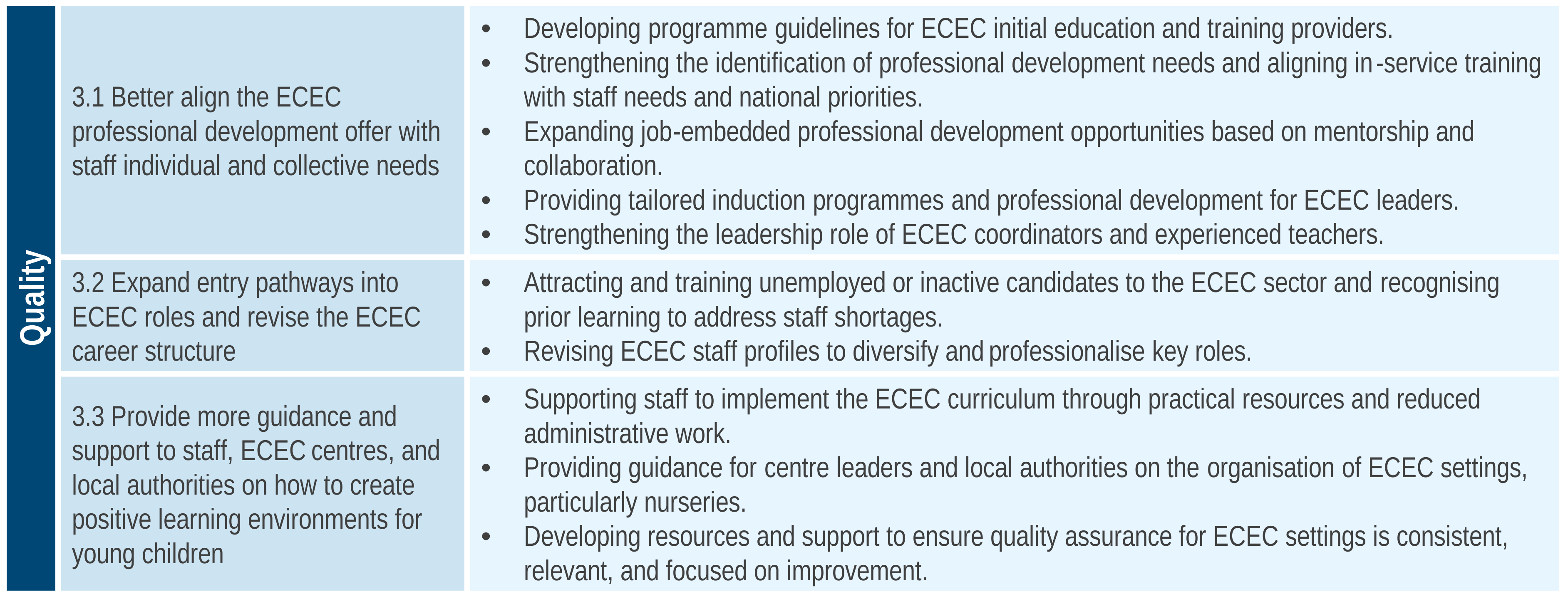
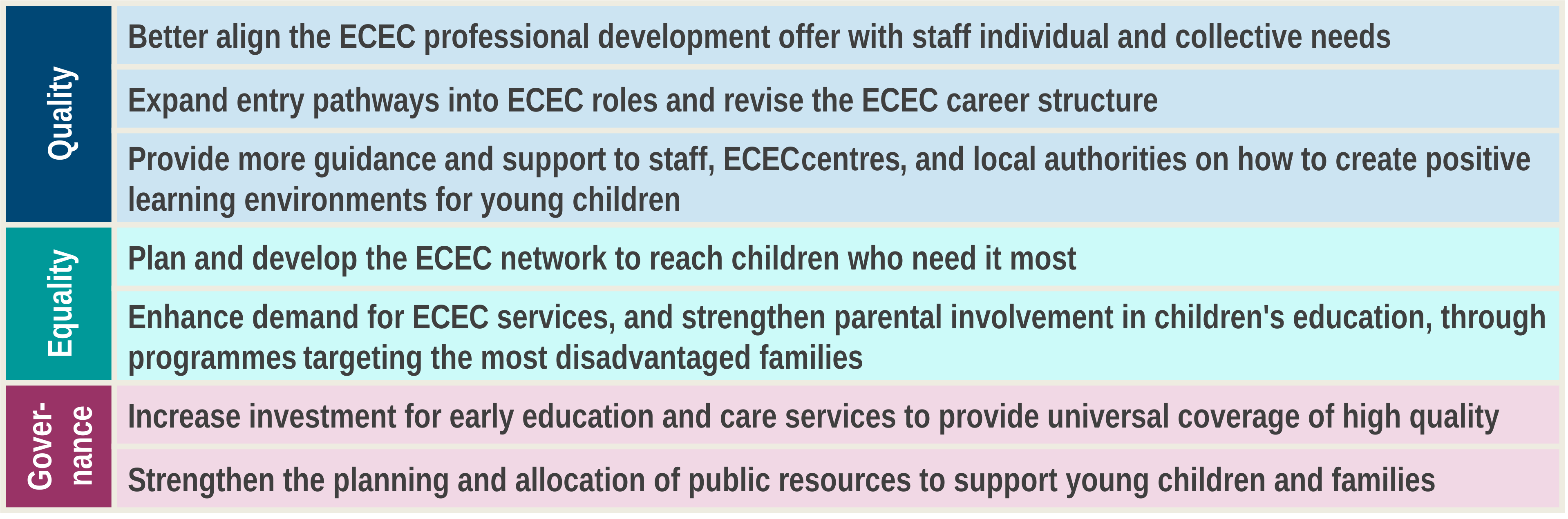
Recommendation 3.1. Better align the ECEC professional development offer with staff individual and collective needs
The Ministry of Education could build upon and strengthen existing mechanisms to ensure consistency and quality across the diverse range of initial education and training providers and better align in-service training with the needs of ECEC staff. More attention needs to be given both to developing a well-functioning system to identify professional learning needs across the sector and to the preparation of ECEC leaders, particularly in ECEC centres that are not legal entities and are part of a school. Collaborating with the Ministry of Labour and Social Solidarity in designing active labour market policies is also a potential avenue to attract new professionals to the sector.
Developing programme guidelines for ECEC initial education and training providers
Romania has taken important steps to ensure consistency and quality of initial teacher education. Notably, the Romanian Agency for Quality Assurance in Higher Education (ARACIS) is currently working to develop quality standards for the new bachelor’s in early education. These standards will be adapted based on the profile and professional standards for educators and teachers in ECEC.
In advancing these efforts, ARACIIP should consider updating quality standards and provider guidelines not only for the new bachelor’s programme but also for the existing programmes at ISCED levels 3 and 4, and the in-service upskilling and reskilling programmes for practitioners who want to take on a teaching role in nurseries. As Romania rolls out its new quality standards, it can draw on Ireland’s experience. Ireland recently updated its accreditation procedures to standardise the wide range of initial education programmes for ECEC professionals. After research and stakeholder consultations, in 2019 the Irish Government published the 'Professional Award Criteria and Guidelines for Initial Professional Education Degree Programmes for the Early Learning and Care Sector'. These specify minimum requirements for programme content, duration, and practicum. To oversee implementation, the government formed a Qualifications Advisory Board to ensure compliance with these standards (European Commission, 2020[43]; OECD, 2021[48]).
Strengthening the identification of professional development needs and aligning in-service training with staff needs and national priorities
Information on staff profiles, professional development needs and activities will be essential to provide a relevant in-service training offer. There are several strategies Romania can pursue to systematically collect evidence of staff development needs at the system, centre, and individual level:
Collecting sector-wide data on staff profiles and professional development needs: The Ministry is currently developing a questionnaire to identify training needs among nursery staff. This positive one-off survey could be conducted on a regular basis (e.g., every 3-5 years), and expanded to cover staff working in kindergartens and in complementary early education services. Sector-wide training needs surveys can be carried out at the national level through international or national data collection efforts, or at the county level through harmonised surveys, potentially managed by County Centres for the Teaching Career. Beyond collecting staff self-reported data, the Ministry of Education could train actors working directly with ECEC centres and staff –such as ECEC leaders, teacher mentors, external appraisers and County Directorate staff– to gather direct evidence of staff needs and convey the information to institutions responsible for teachers’ professional development.
Defining and monitoring a range of professional learning indicators for ECEC staff: Regularly monitoring a broader range of variables, such as staff working conditions, participation in professional development activities by type, barriers to participation and perceived impact would help the Ministry of Education, and County Centres for the Teaching Career better address challenges related to the quality, relevance, and inclusiveness of the professional development system. It would also provide critical information to strengthen the links between skills acquired through professional development and career advancement.
To collect this information, the Ministry of Education could more systematically draw on existing sources such as inspection or quality assurance reports, or engage in new data collection efforts, such as the teaching staff surveys described above. Some OECD countries have also provided teaching staff with guidance and resources – including digital tools – to help them assess their own training needs and report on their learning activities. Such self-assessments help align training with individual need and preferences and capture more informal forms of professional learning (see Box 3.1).
Drawing on the newly established commission for teachers’ professional development to identify training needs within each centre: The 2023 pre-university education law creates a new commission responsible for teachers’ professional development within each education institution. The commission identifies needs and opportunities, monitors staff engagement in training and career progression, and coordinates peer mentorship within the institution. Evidence on training needs collected at the commission level can be aggregated at the centre level to understand collective in-service training needs and develop a professional learning plan for the centre.
To ensure the commission provides meaningful guidance, its members must be able to identify training needs, orient staff to relevant training opportunities in early education and care and have dedicated time to fulfil their role effectively. They may need regular training in needs assessment techniques and to keep up to date with any changes in possible training routes for ECEC staff. This should be coupled with targeted resources for ECEC staff training to ensure that needs assessments translate into concrete steps for improvement and skills development.
Professional Learning Passport - Wales
The Professional Learning Passport (PLP) allows school teachers’ engagement in continuous professional learning to be recorded and supported, in line with the Professional Standards for Teaching and Leadership. Teachers use the Passport to upload materials, lesson plans or resources that showcase their professional learning and can also engage in collaborative work with peers through the PLP.
Online Teacher Self-Assessment Tool - Australia
The Australian Institute for Teaching and School Leadership launched an online Teacher Self-Assessment tool so teachers can review their practice against the Australian Professional Standards for Teachers and identify areas for further development, professional learning planning and setting career goals. Australia also provides a High-Quality Professional Learning Toolkit to guide teachers in designing a professional learning plan in line with the needs they identify, which includes access to a range of implementation resources.
Source: Minea-Pic, A. (2020[49]), “Innovating teachers’ professional learning through digital technologies”, OECD Education Working Papers, No. 237, OECD Publishing, Paris, https://doi.org/10.1787/3329fae9-en; Boeskens, L., D. Nusche and M. Yurita (2020[17]), “Policies to support teachers’ continuing professional learning: A conceptual framework and mapping of OECD data”, OECD Education Working Papers, No. 235, OECD Publishing, Paris, https://doi.org/10.1787/247b7c4d-en; Australian Institute for Teaching and School Leadership (n.d.[50]), High Quality Professional Learning Toolkit, https://www.aitsl.edu.au/teach/improve-practice/high-quality-professional-learning-toolkit (accessed 26 July 2024).
Expanding job-embedded professional development opportunities based on mentorship and collaboration
The Ministry of Education has goals to encourage more teacher-led and collaborative professional development. These are commendable efforts, as centre-embedded approaches such as coaching and mentoring are particularly effective models of professional development for ECEC staff (OECD, 2020[51]; Kraft, Blazar and Hogan, 2018[52]). Previous OECD analysis provides recommendations on the importance of providing training and support for mentors (OECD, 2024[18]). Romania might consider the approach taken by the Government of Victoria (Australia), which developed a Coach and Mentor Training Programme that equips experienced early childhood teachers and educators with coaching and mentoring skills and provides opportunities for career advancement (Victoria Government, n.d.[53]).
Efforts to deploy mentoring at scale will take time and will likely need to initially focus on centres and teachers with greater needs. In this context, professional learning communities both within and across ECEC centres hold great potential to support collaborative staff development. These require dedicated time, commitment from leaders, and a culture that welcomes critical peer feedback. Providing practical guidance, resources for collaboration, and training leaders and teaching staff will also be important to facilitate effective collaborative professional learning (see Chapter 4) (OECD, 2021[54])
These communities can facilitate whole-centre approaches to training, whereby all staff involved in interactions with children have the opportunity and time to learn together, exchange on their practices and critically reflect as a team on what the professional learning experience means for their daily practice. France, for example, has developed a model called local initiative training (“Formations d’initiative locale”), where training programmes are organised at the request of educational institutions and tailored to their specific needs. School leaders conduct internal consultations bringing together all teaching staff to identify specific training needs and objectives at the school level. Based on these consultations, schools can seek assistance from regional training academies to refine their training requirements, and benefit from on-site training sessions that bring together the entire school team (OCDE, 2024[55]).
Promoting professional learning across ECEC centres can also be beneficial, especially for nurseries as they transition to an educational role. Some nurseries and kindergartens in Romania already collaborate in professional development. County Directorates could expand these initiatives and pair ECEC centres, allowing staff from different settings to observe each other, collaborate during professional learning days, or work together on specific topics.
Providing tailored induction programmes and professional development for ECEC leaders
Effective ECEC leaders create enabling conditions for staff to deliver high-quality experiences for children, including by facilitating their professional development and fostering a culture of collaboration (OECD, 2022[56]; OECD, 2021[57]; OECD, 2020[51]). In Romania, most ECEC facilities are kindergartens attached to a larger school, which means they do not always have leadership teams specialised in ECEC. Romania should consider expanding tailored induction programmes and professional development opportunities focused on ECEC management and pedagogy for these leaders.
In the case of nursery leaders, it is crucial that induction and professional development programmes include a specific focus on early childhood development. This is important to ensure that newly appointed leaders coming from kindergartens or other positions in the education system are prepared for the specificities of the early years and are able to develop a physical and pedagogical environment that enables rich child-staff interactions.
Reducing ECEC leaders’ administrative workload would also enable leaders to devote more time to their own professional development and to engage in pedagogical leadership (OECD, 2020[51]). Planned investments in an integrated education data management system is a welcome development in this respect. However, providing more administrative support —especially for leaders overseeing ECEC as part of a school cluster— would further advance these efforts (see Chapter 4).
Strengthening the leadership role of ECEC coordinators and experienced teachers
The Ministry of Education might also consider developing a more distributed ECEC leadership structure to leverage the specialised expertise of existing staff in ECEC centres attached to schools. This could be progressed by giving current ECEC coordinators and experienced teachers more responsibilities and training to lead professional development within their settings. Such distributed leadership can free up leaders’ time, facilitate career diversification and offer more opportunities for ECEC staff to receive formative feedback to improve their practices. For instance, as part of their functions, staff with leadership responsibilities in the area of professional development could guide the work of the commission responsible for teachers’ training. They could also conduct formative, centre-based appraisals to support job-embedded learning and steer centre-based professional development activities.
Such distributed leadership responsibilities require, however, allocating sufficient time and training for staff to perform these activities. For instance in England (United Kingdom), the National Professional Qualification for Leading Teacher Development supports the development of teachers who have or aspire to have responsibilities to lead the development of other teachers in their school (OCDE, 2024[55]).
Recommendation 3.2. Expand entry pathways to an ECEC role and revise the ECEC career structure
Attracting and retaining qualified staff in ECEC settings is core to Romania’s efforts to expand its ECEC network and integrate nurseries into the education system. Achieving this will require proactive efforts to recruit more teaching and care professionals. While attracting staff from kindergartens to nurseries can help mitigate staff shortages in the medium term, it risks creating shortages at the pre-primary level. This could slow down efforts to raise pre-primary participation, especially as Romania progressively lowers the compulsory age for education and so requires more pre-primary teaching staff.
Romania will need to consider policies to attract and retain more qualified staff in ECEC settings beyond those coming from kindergartens. There are a range of promising avenues to achieve this. Flexible training/retraining programmes and recognition of prior learning (RPL) targeting individuals with weak labour market attachment and who are motivated to work in the ECEC sector can help extend the pool of qualified ECEC professionals, while promoting the integration of these individuals in the labour market. Training and skills recognition initiatives will also be relevant to upskill and/or reskill existing nursery staff aspiring to take on a teaching role but lacking formal qualifications to do so. In addition, a more diversified career structure could enhance the attractiveness of the ECEC teaching career, making it more appealing to new entrants and providing motivation for those already in the profession to stay and advance in their roles.
Exploring opportunities to attract and train unemployed or inactive candidates to the ECEC sector and recognising prior learning to address staff shortages
Designing a combination of active labour market policies to attract and prepare unemployed and inactive individuals for ECEC roles could help expand the ECEC workforce and support the inclusion of populations with weak labour market attachment. Given the barriers these groups face, activation is inherently challenging, yet it may present an option worth exploring to address staff shortages. Romania’s Ministry of Education could collaborate with the Ministry of Labour and Social Solidarity to develop measures to identify and proactively contact individuals with weak labour market attachment, who may have prior experience in the sector, or display interest in working with young children and acquiring the formal qualifications needed to become ECEC staff. The government could direct them to ECEC education and training to develop foundational and specialised skills and provide continued support and professional development after job placement. Tax reform is also essential to enhance participation incentives for low-skilled workers (OECD, 2024[37]). While designing these measures, the government’s focus needs to remain on ensuring the quality of the teaching process through qualified ECEC staff.
Efforts to recognise and validate relevant skills gained outside of ECEC, along with flexible education and training programmes can help candidates, and especially women, balance training with other responsibilities, and acquire the formal qualifications and skills required to enter the ECEC profession more rapidly (OECD, 2019[58]). Some of the recommendations provided in Chapters 5 and 6 —such as introducing short-cycle tertiary programmes including in hybrid format, offering more flexible admission routes for adults who are not making a direct transfer from upper secondary education, and raising awareness about opportunities to recognise prior learning— will be particularly relevant to expand the number of qualified professionals entering the ECEC sector.
Flexible retraining programmes and skills certification would also benefit nursery staff who have valuable skills and experience working with young children but lack formal qualifications to work as educators. As noted, the Ministry of Education plans to develop new in-service training programmes to enable existing nursery staff to retrain to fill educator positions. In developing such programmes, Romania can look at examples from different OECD countries. For instance, Australia and New Zealand have implemented programmes to support experienced unqualified staff become qualified ECEC professionals without having to engage in a full ECEC training programme (OECD, 2019[58]). As with new entrants to the profession, recognition of prior learning, managed by existing providers of ECEC education and training providers, would enable staff to have their previous skills, knowledge and experience recognised and count towards an ECEC qualification.
Revising ECEC staff profiles to diversify and professionalise key roles
A differentiated career structure is a means to formalise important roles to support improvements in the system, and to motivate staff wishing to take on new or higher responsibilities (OECD, 2024[18]). The Ministry of Education could review the career structure of ECEC staff in Romania to provide opportunities for career growth across a range of pathways, requiring different levels of qualifications and skills, and progressing jointly with salaries. Multi-stage careers can encompass horizontal transitions (i.e. specialisation in specific tasks) and vertical transitions (i.e. increasing responsibilities, such as moving into leadership roles) (OECD, 2020[51]). The Ministry of Education could develop competency frameworks for various roles to support horizontal and vertical career progressions.
For instance, in 2016 Ireland introduced the role of Inclusion Coordinator, a specific leadership position to enable more inclusive environments in ECEC settings. ECEC staff aspiring to take on an Inclusion Coordinator role must complete an award provided by The Leadership for Inclusion in the Early Years (LINC) programme, which offers part-time, blended training at ISCED 5 level and builds on a Competency Framework for Inclusion in ECEC (OECD, 2021[48]).
Recommendation 3.3. Provide more guidance and support to staff, ECEC centres, and local authorities on how to create positive learning environments for young children
Romania’s integrated curriculum for early education encourages child-centred and active learning and aims to foster the holistic development of children. However, stakeholders reported that ECEC staff in Romania, particularly new entrants to the sector and staff in nurseries, would benefit from more support to translate the curriculum into high-quality and meaningful interaction and stimulating activities for young children. As nurseries transition to an education role, teams will also need guidance to adjust their space, furniture and materials to support children’s holistic development. This section draws on OECD experience to suggest how Romania might assist ECEC staff in implementing the curriculum and designing learning environments that enable higher process quality, and ultimately lead to better children’s outcomes.
Supporting staff to implement the ECEC curriculum through practical resources and reduced administrative work
ECEC initial education, induction, and ongoing professional development should place strong emphasis on helping staff understand the curriculum and translate it into practice. To further help both practicing ECEC staff and families appropriate the principles, practices and learning outcomes that ECEC services should meet, the Ministry of Education, along with the National Centre for Curriculum and Evaluation and the planned National Centre for Teacher Training and Career Development, could develop a bank of resources and make them easily accessible in a single platform. This would enhance access to existing curricular materials, such as the 2019 report with examples of good teaching practice, and learning and development standards for children aged 0-7, while also incorporating additional support material.
In the United States, for example, the Head Start programme, which supports the learning and development of disadvantaged children, provides staff with a range of practical resources. These include online tip sheets, video samples of instructional strategies, training modules, and disability guides (OECD, 2022[59]). Developing such support materials in collaboration with experienced ECEC practitioners would help ensure the content is user-friendly and applicable in real-life settings.
Reducing the burden of administrative work for ECEC staff would also provide more opportunity to engage in higher-quality interactions with children, plan meaningful activities, and implement the curriculum effectively. Even with high-quality practical support materials accompanying the curriculum, improving quality will be challenging unless this issue is addressed. Chapter 4 explores this topic in greater detail.
Providing guidance for centre leaders and local authorities on the organisation of ECEC settings, particularly nurseries
ECEC centres, particularly nurseries, need more guidance as well as regular feedback and support to organise the physical space and acquire materials that enable rich child-staff interactions through various group formats, indoor and outdoor activities, and learning through play. Pedagogical spaces and materials should be planed and organised so that they are conducive to children’s active engagement, and exploration, and tailored to children’s interests and abilities (Chazan-Cohen et al., 2017[60]). To help ECEC facilities create stimulating and safe environments Romania can consider:
Developing a unified licensing framework: Romania has defined minimum operating requirements for ECEC facilities. However, these standards are dispersed in different ministerial orders. A consolidated licensing framework would make them more easily accessible for prospective providers. For instance, in England (United Kingdom), the Department of Education developed the Early Years Foundation Stage Statutory Framework. This framework sets the standards that school-based providers and childminders must meet for the learning, development and care of young children from birth to age five. It specifies learning and development requirements, and safeguarding and welfare requirements (Department for Education, 2023[61]).
Offering clearer guidance and hands-on support to organise the physical space and acquire furniture and materials: While Romania has developed guidance on how to organise ECEC setting’s physical space, they are drafted in general terms. Building on these existing guidelines, more detailed information on the organisation of ECEC settings, along with training and potentially on-site support for leaders and local authorities in charge of acquiring materials and infrastructure, can help ensure investments are used to create the types of spaces that support children’s development. Guidance and examples (e.g. videos, images) should be provided for both the types of furniture acquired for nurseries (such as the types of beds and tables) and how this furniture is distributed within the nursery to create a stimulating and safe learning environment (e.g. using flexible beds that can be regrouped in a small part of the room and can provide more space for pedagogical activities for older children). Observation tools that evaluate the overall quality in ECEC settings, including space and furnishing, such as the Infant/Toddler Environment Rating Scale, can be used to set standards for infant or toddler spaces.
Developing resources and support to ensure quality assurance for ECEC settings is consistent, relevant, and focused on improvement
ARACIP has developed criteria to evaluate ECEC centres, but it has yet to develop resources to help ECEC professionals understand and apply them effectively. The 2023 pre-university education law provides impetus to address this in two ways. First, it consolidates ARACIIP as the main national evaluator of ECEC facilities and increases the number of evaluators. While these measures can improve the consistency of evaluations, more can be done to enhance their relevance to ECEC settings.
A number of inspectorates in OECD countries have developed bespoke evaluation frameworks for the early and pre-primary years, with statements of practice that help evaluators and ECEC centres visualise and understand what very good practices looks in their setting. Ensuring there are sufficient qualified evaluators for the early and pre-primary years will also be important to provide ECEC settings with the specialised guidance they need to improve.
Second, the 2023 law gives County Directorates an explicit support role. As part of this role, local support teams in County Directorates could help new nurseries and complementary early education services prepare their licensing process and effectively implement requirements for the organisation of ECEC settings from the onset. They could also monitor established settings, help them organise their physical environment, and access additional support – e.g. from County Centres for Educational Resources, mentors, or peers– to improve the learning, stimulation and care that young children receive.
Equality of opportunities and access: Expanding ECEC coverage in disadvantaged areas and removing barriers to participation
Romania has taken significant steps to increase access to early childhood education and care. Starting in 2020, the Ministry of Education lowered the starting age for compulsory education to include the last two years of pre-primary (for children aged 4 and 5) and is in the process of building new nurseries and complementary settings throughout the country.
This section examines policies that would help Romania raise participation, in particular for those disadvantaged children who stand to benefit the most from early education. Drawing on examples from OECD countries, it highlights how the Ministry of Education could steer service expansion to ensure provision meets the diverse needs of children and families. It also suggests measures that can help overcome some of the demand-side barriers to participation in Romania, that range from limited awareness to traditional family norms.
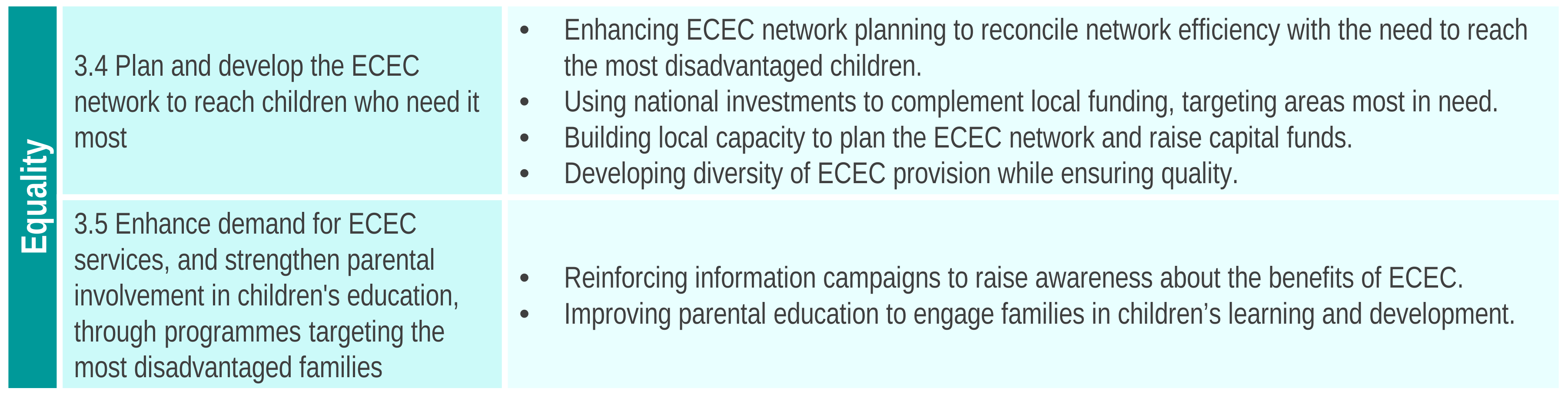
Recommendation 3.4. Plan and develop the ECEC network to reach children who need it most
Currently, Romania’s ECEC infrastructure does not meet demand across the country, and further provision will be needed to reach Romania’s participation goals, particularly in urban and isolated rural areas. The Ministry of Education typically prioritises capital funding requests from localities that demonstrate high parental demand or that are experiencing a growing population. The NRRP also allocated funds to expand complementary services in disadvantaged or isolated areas, especially in rural settings. However, these services might not be sufficient to meet all needs. As a result, smaller rural areas, which typically have declining populations and face cumulated disadvantage, may struggle secure sufficient funding to expand ECEC coverage to meet their needs.
Investing in ECEC in disadvantaged areas would yield substantial benefits, including reducing early school leaving, and supporting parental employment. It can also help increase the attractiveness of less developed regions and slow down emigration and further population decline. National policies to expand service coverage and transportation in these areas – through clear guiding principles for network development, coordinated network planning, and targeted funding and capacity-building – can help ensure Romania’s growing investments in ECEC pay off and deliver their potential benefits for the most vulnerable children and communities.
Enhancing ECEC network planning to reconcile network efficiency with the need to reach the most disadvantaged children
To ensure network planning aligns with national policy goals for expanding the sector and reach the most disadvantaged children, Romania would benefit from developing a long-term strategic planning perspective at the system level. This could entail:
Defining a national strategy to organise the network: As a first step, the Ministry of Education could develop a national strategy, including guiding principles to organise the network and criteria to guide investment decisions (see also Chapter 4). A long-term strategic perspective on the organisation of the ECEC network would need to be accompanied by investments in high-quality data and reliable forecasts of future demand for early education and care to monitor infrastructure needs in the sector (see Recommendation 3.7 below). Better coordinating ECEC infrastructure investment with other local investments is an additional means to ensure ECEC settings reach areas most in need. For instance, integrating requirements for the construction of ECEC centres into urban planning and housing development projects could help ensure new facilities are built in areas with rising populations and alleviate over-crowding.
Enhancing coordination mechanisms for ECEC network planning. With more than 3 000 local authorities in the country, the government could create planning and coordination platforms at the county level to prevent fragmentation in network planning (OECD, 2018[62]). This would require collaboration between the Ministry of Education, the Ministry of Development, Public Works and Administration, county councils, and existing associations of local authorities, such as intercommunity development associations and association of municipalities. These platforms would bring together relevant stakeholders in the organisation of the ECEC network and facilitate a better match between demand and supply, especially where urban centres face incoming demand from nearby rural areas. They could also allow small local authorities or those with limited capacity to engage in resource sharing and joint ECEC service provision. For instance, in Portugal, municipalities can organise themselves as inter-municipal communities (Comunidades Intermunicipais, CIMs). These communities provide a platform to share information and develop integrated network plans at the regional level, based on the local plans of participating municipalities. They also play a role in helping central authorities steer and regulate the educational offer (OECD, 2018[62]).
The Ministry of Education could allocate resources and assign and train dedicated staff within County Directorates to facilitate their involvement in county coordination platforms, foster collaboration between local authorities in need, and provide guidance to local authorities seeking to apply for ECEC capital investments (see section below).
Allocating additional transportation funding to ECEC facilities that need it most: Reliable transportation to the nearest ECEC centre should be ensured in rural areas with insufficient children for an ECEC centre. Convenient transportation is crucial for young children’s safety, enhancing ECEC participation and offering parents more flexibility to work. The Ministry of Education could provide targeted funds to local authorities and ECEC centres that need it most.
Using national investments to complement local funding, targeting areas most in need
National investments can help address inequalities by targeting communities where local investments are sub-optimal or inconsistent. This requires a clear understanding of local unmet needs. In Romania, identifying individual children who are not enrolled in ECEC and are at developmental risk is challenging. This task involves triangulating data on individual child-level indicators, which is often spread across multiple databases from different public service providers. Meanwhile, some risk factors, such as having a Roma background, are generally underreported due to concerns about stigmatisation, and emigration results in a constantly changing population, making it difficult to identify and track children who may need support.
Given these challenges, the government can consider geographic area targeting for the progressive expansion of the ECEC sector. The 2023 pre-university education law introduced the concept of priority investment areas in education that will benefit from additional central funding (see Chapters 2 and 4). Central-led interventions or programmes to expand access to ECEC in Romania could target disadvantaged areas first, while building their capacity for accessing EU or other funds. One approach could be to target ECEC capital funds to disadvantaged rural areas or cities with a relatively stable population. Local authorities that do not show high levels of disadvantage could continue to rely on standard national or EU funding applications and local ECEC investments. Cooperation between the Ministry of Education and local authorities should be integral to expanding the sector, as local authorities are well-positioned to identify needs and challenges at a local level.
Building local capacity to plan the ECEC network and raise capital funds
Local authorities are primarily responsible for planning the ECEC network and managing the associated infrastructure. Decentralised planning helps adapt early education and care services to local needs. However, it requires adequate investments in local capacity to secure and use capital funding. Low absorption of EU funds remains a critical challenge in Romania due to limited capacity and low quality of project preparation (OECD, 2022[63]). Although the government has simplified application procedures for NRRP and national funds, local authorities with stronger capacity and prior experience with EU funds are naturally more likely to successfully access ECEC capital investments.
Measures to develop local capacities will therefore be critical to ensure a more equitable expansion of services for the early years. This can be achieved through stronger collaboration and resource sharing between local authorities, and through partnerships with existing associations in the system. Some localities have already relied on other local authorities with more capacity to apply for funding on their behalf. These efforts could become more systematic. Coordination platforms could facilitate such collaboration and match localities depending on their need for support.
The Ministry could also consider partnering with existing associations of local authorities to identify capacity needs, enhance communication about existing funding opportunities, and deliver staff professional development programmes that build the capacity of small or disadvantaged localities to apply for and manage ECEC capital funding.
Developing diversity of ECEC provision while ensuring quality
In Romania, nurseries and kindergartens already offer flexible opening hours and attendance days. The Ministry of Education is also taking additional steps to diversify provision through the creation of community kindergartens, toy libraries and play groups. These are welcome efforts to expand coverage in remote and disadvantaged communities as well as in areas with high unmet demand. However, if these new complementary services are to make a difference to child outcomes, providers will need more guidance to engage with families, as well as sufficient qualified staff.
Complementary services are not only a means to expand provision but also offer a space where families can learn about the benefits of ECEC services and receive guidance on how to support their child’s development and learning. Such parental engagement efforts are important to build trust in ECEC services, promote positive parenting behaviours and encourage further participation in early education and care. For example, in Toronto (Canada), EarlyON Child and Family community centres provide free programmes to parents and children to strengthen adult-child relationships, support parent education and foster healthy child development. Centres provide an environment for children to play, learn and interact with other children, while qualified staff offer support and advice to families. Public libraries in the city also run a range of programmes for children aged five or under and their families to foster their love of reading.
Another key priority for Romania will be to attract sufficient qualified staff to work in complementary services. Hiring and training staff from the local community is one way to address staff shortages, especially in settings within hard-to-reach or marginalised communities. This can also enhance parental involvement, as locally hired staff are more likely to be familiar with the context and culture of the communities they serve (European Commission, 2020[43]). Flexible initial education programmes, accessible to aspiring ECEC professionals in disadvantaged rural and Roma communities will be important to support these efforts (as noted above, in Recommendation 3.2).
Hungary’s alternative day-care model can provide relevant insights. Inspired by the Sure Start programme pioneered in the United Kingdom, Hungary established Sure Start Children’s Houses (SSCHs) in disadvantaged areas with a high proportion of Roma population. These centres offer a variety of services tailored to individual families, ranging from parental support and health counselling to play activities for children. Key staff members at these centres are Roma, well-known within their community, and trained in intercultural mediation (European Commission, 2019[64]). An evaluation showed SSCH centres helped children develop their social skills and vocabulary and appeared to have positive effects on parenting skills (HÉTFA Kutatóintézet, 2016[65]).
Recommendation 3.5. Enhance demand for ECEC services, and strengthen parental involvement in children’s education through programmes targeting the most disadvantaged families
Greater coverage and flexibility of provision (see the examples of Toronto, Canada and Hungary in the previous recommendation) can make a significant difference in access to early learning and development opportunities, but other factors, such as parental preferences, beliefs, and behaviours also play a crucial role. In Romania, many parents and caregivers are not fully aware of the benefits that quality early education and care can have on children’s development. Stakeholders have also reported that some parents have had negative perceptions of the quality of formal nursery services, probably because nurseries previously focused on childcare and had few qualified staff.
Tackling these demand-side barriers is important in Romania, in particular for children living in poverty and in Roma communities. Socio-economically disadvantaged families generally have fewer appropriate play and learning materials at home, tend to spend less time interacting with their child, and have lower awareness of effective parenting techniques (Duncan et al., 2023[66]). Romania has already implemented a number of initiatives to raise caregivers’ awareness on the importance of early education and care and engage them as active participants in their child’s early learning and development. There are ways that Romania could learn from OECD country experience to expand these efforts, so they have greater impact and reach.
Reinforcing information campaigns to raise awareness about the benefits of ECEC
Enhancing parental demand for early learning programmes will be central to the success of expansion efforts. Romania’s Quality and Inclusive Early Childhood Education project has already developed accessible messages explaining the benefits of early childhood education and care for children aged 0-6, the different range of public services available, as well as some features parents can look for to recognise quality in early education and care settings. The Ministry of Education could do more, however, to disseminate these messages through channels aimed at reaching parents and in particular those from the most marginalised backgrounds. These include school mediators working in disadvantaged communities, and general media campaigns.
To promote early awareness, the Ministry of Health, in coordination with the Ministry of Education, could also offer this information to expectant parents directly in health care centres and maternity wards. For instance, in France, as part of the '1000 premiers jours' (first 1000 days) programme, parents receive a 'welcome to parenthood' bag at the maternity ward. The bag contains essential items for the baby's first few months and includes references to online resources (website and mobile app) to promote healthy behaviours and provide information about available support services, as well as options for childhood education and care.
Even if parents are informed of potential benefits and options available, perceived quality can influence parental decisions to enrol their children in formal early education and care. The transition of nurseries from local authorities to the Ministry of Education provides a new opportunity to transform nurseries into genuine places where young children develop and learn. As Romania progressively expands and develops the quality of the sector, information campaigns could play a crucial role in making these improvements broadly visible. This will be important to enhance public confidence in the quality of early education and care and increase demand.
Improving parental education to engage families in children’s learning and development
Families are children’s first educators. Romania has already implemented various programmes to engage parents in their child’s development, and the new legislative package foresees the introduction of a National Strategy for Parental Education. Notwithstanding these positive initiatives, parental education programmes alone cannot address the multiple barriers that prevent disadvantaged families from supporting their children’s learning and development. Poverty, as well as other physical and emotional stressors, can impact families’ ability to provide nurturing home environments.
A number of OECD countries provide parental education programmes as part of an integrated package of social services for families and children. Services can range from counselling and financial advice to training modules on effective parenting techniques. Integrated social services, which can be coordinated by a single agency, or co-located in the same space, eliminate the need for individuals to navigate multiple agencies to access the support they need.
In Romania, the Ministries of Education, Health and Labour have piloted integrated community services to combat poverty and social exclusion and have expanded these services to 2 000 local communities. Moving forward, these ministries could consider adding a strong parental education component to further engage families in children’s learning and development. In doing so, it will be important to ensure service professionals across agencies and ECEC facilities collaborate closely, including engaging in joint training, to identify the needs of children and families and coordinate service provision (OECD, 2022[59]). Initiatives in the United States and in the United Kingdom show how parental education programmes can be combined with other forms of support for families (see Box 3.2).
Supporting parental education
The Early Head Start programme in the United States begins before birth and runs until children are aged three years old. It involves a range of options that are available depending on the area, including home-based services (e.g. weekly home-visits), centre-based services (e.g. education and child development services delivered in a centre) and family childcare services (e.g. education and child development services delivered in a private home or family-like setting). It supports parents as primary caregivers to enhance their self-efficiency in terms of housing stability, education, and financial security. In addition, centre-based services also align to the needs of young parents enrolled in school settings by adjusting service delivery to the school year requirements and ensuring home-based services during the summer break.
Addressing cumulated disadvantages through co-located services
Since 1999, Sure Start Children’s Centres in the United Kingdom provide a range of services for families and children from pre-birth to age 11 in disadvantaged neighbourhoods. These centres offer support and advice on child and family health, parenting, financial planning, training, and employment. Some centres also provide early learning and care for young children. They feature co-located services—including education, antenatal and primary healthcare, adult learning, and parenting classes—and are designed based on local needs. Centres involved co-located agencies were designed based on local needs, and relied on strong leadership.
Source: ECLKC (2023[67]), Early Head Start Programs, https://eclkc.ohs.acf.hhs.gov/programs/article/early-head-start-programs
(accessed on 17 May 2024); Melhuish, Belsky and Barnes (2018[68]), Sure Start and its Evaluation in England, https://www.child-encyclopedia.com/pdf/expert/integrated-early-childhood-development-services/according-experts/sure-start-and-its-evaluation
Good governance: Increasing and effectively allocating resources to support families and young children
The policy measures discussed earlier in this chapter can support higher quality and equity in the provision of ECEC services. However, achieving the country’s ambitious expansion and quality goals will require additional funding, as well as a stronger coordination among national agencies in policy planning and delivery. This is important if national investments to support families and mothers are to encourage participation in early learning and promote greater parental choice. The below examples from OECD evidence and experience provide policy insights on how Romania might change the funding of the sector and strengthen cross-sectoral collaboration to ensure adequate levels of funding and more efficient spending in policies that benefit children, mothers and society at large.

Recommendation 3.6. Increase investment for early education and care services to provide universal coverage of high quality
Romania has significantly increased funding for early education and care in recent years. This shift is largely driven by the mobilisation of EU funds and increases in government spending. However, expenditure per child is still low compared to international practices. The significant new investments required to expand services, grow the workforce, and improve the quality of provision highlight the need for Romania to rethink how it funds the sector. This implies a reprioritisation of public expenditure in favour of early education and care, together with proactive efforts to identify and leverage alternative funding sources. This would help Romania increase total investment, and at the same time ensure public funding benefits those young children and families that need it most.
Giving higher priority to ECEC in the public education budget
The 2023 pre-university law aims to increase the share of public expenditure for education to at least 15% of the total government expenditure by 2027. Meeting this target, combined with ongoing economic growth, would translate into a notable increase in funding for education compared to previous years, when public spending has been consistently below 10% of total government expenditure (Chapter 2) (Eurostat, 2022[69]). However, Romania does not seem to be considering how this increase would benefit the early years. Currently, ECEC receives significantly less funding compared to other levels of education (see Figure 3.18). This gap is all the more significant considering Romania has the highest child poverty rate in the EU (Eurostat, 2023[70]). International evidence suggests that investing in quality early childhood education and care yields substantial benefits for society as well as for children and families (Dougherty and Morabito, 2023[71]). Therefore, as funding increases, Romania should consider prioritising additional spending on the early years. One way to do this would be by setting targets or minimum benchmarks for an increase in the share of the education budget allocated to ECEC over the period to 2027. The Institutional Strategic Plan (ISP) that the Ministry of Education is required to develop under the NRRP to support more strategic planning and budgeting would be the natural place to do this.
Government expenditure on education, by education level as a percentage of total government expenditure, 2021

Note: Ranked by descending order of government expenditure on education.
Source: OECD (2024[7]), Education at a Glance 2024: OECD Indicators, OECD Publishing, Paris, https://doi.org/10.1787/c00cad36-en.
Harnessing private funding for the expansion of the nursery network
Reprioritising public expenditure in education in favour of the early years can help Romania secure some of the important investments needed in the sector. However, in the context of low overall government spending, such reallocation will likely be insufficient to achieve the sector’s expansion goals. Many countries in the EU and the OECD have tapped into private sources to expand childcare services and address demand that the public sector cannot fulfil.
One option would involve introducing parental fees for children from higher socio-economic backgrounds while ensuring free places for those who cannot afford to pay. In all nine OECD countries participating in the TALIS Starting Strong Survey, some publicly managed centres charge private fees, ranging from 22% of centres in Iceland to 95% in Norway (OECD, 2019[72]). A parental fee proportional to parents’ income would enable Romania to fund the creation of additional places in nurseries.
International experience shows that these income-based nursery fees need to be carefully designed. In Romania, it will be particularly important to account for potential work disincentives for second earners in the family, who are typically women (OECD, 2022[63]). Considering other family characteristics besides income would also help improve the targeting of subsidised fees. For example, single parents, families with multiple children, or Roma families may face additional challenges that aren't fully captured by income alone (OECD, 2020[73]). France provides an example on how benefits are determined by a broader range of criteria. Parents typically pay monthly childcare fees that vary based on their income. They also receive childcare allowances determined by their income level and number of children, and there is also a specific allowance available for separated parents (Paull and Wilson, 2020[74]).
A second, complementary option is to encourage private investment from employers in publicly managed nurseries. This strategy would require providing incentives – such as tax exemptions, or general business credits to cover childcare expenditures – so companies finance nurseries for their workers. Such efforts would help expand coverage in large, dynamic, urban areas facing significant unmet demand and allow public funds to target more disadvantaged areas. Placing employer-supported nurseries under public management, and subjecting them to the same standards, regulations and monitoring activities as public nurseries, would help the Ministry of Education oversee and assure the quality of provision.
Recommendation 3.7. Strengthen the planning and allocation of public resources to support young children and families
Romania has mobilised national and EU funding to expand the ECEC sector. Securing these investments is positive and necessary to meet national expansion targets. However, additional resources will not have the desired impact on child outcomes unless spending effectiveness is addressed. So far, capital funds to expand ECEC services have been allocated primarily based on local demand, rather than according to evidence of need. Meanwhile, investments in welfare and social policies for children and families are not always efficient or mutually reinforcing in encouraging ECEC participation and better outcomes. For instance, the social safety net does not adequately protect children against poverty, and a long parental leave, and relatively rigid regulations on working hours are not helping families, and especially mothers, balance their caregiving and professional aspirations as well as they might (OECD, 2022[63]).
This underscores the need for Romania to strengthen its cross-sectoral policy planning and administrative capacity. Important initiatives are already underway. Romania’s National Recovery and Resilience Plan includes measures to strengthen line ministries’ capacity for strategic budgeting, planning, and procurement. Complementary reforms also aim to strengthen the government’s digital infrastructure and data management (OECD, 2024[37]; OECD, 2024[18]). However additional steps focused on ECEC policies are needed. Improving the availability and reliability of routine data on ECEC provision and need, and developing a central mechanism to track, manage and allocate capital funds would support better planning for the sector and help reach the most vulnerable populations. A coherent policy framework will also be important to provide families with more balanced choices and allocate public resources to their best advantage.
Monitoring needs for early education and care
Given the current disparities in access, decisions on where to invest and locate new ECEC centres need to be based on national analysis of population profile, demographic trends, and available places. This evidence will be essential to direct investments where they would have the greatest impact. It would also strengthen the Ministry of Education’s position in budget negotiations with the Ministry of Finance (OECD, 2022[75]). Such analysis could involve:
Estimating gross demand: by collecting data on the number of children under the age of 3 and 6 in each local authority. Local data sources, such as birth records can provide more up-to-date information than decennial census data. To identify localities in greater need, Romania could combine this data with population projections and area-based indicators of poverty. These indicators might include education levels, single-parent rates, occupation and employment rates, and dependency ratios in each area.
Monitoring supply of ECEC places: by conducting analyses on the distribution of places, disaggregated by type of provider (including nurseries, kindergartens, and complementary services), location, quality of services provided, and the state of existing infrastructure.
Understanding local preferences: As Romania develops complementary services, local authorities can be supported to conduct surveys to identify the type of provision that would best fit the needs and preferences of their communities.
Developing a central mechanism to pool, distribute and monitor capital investments for ECEC
The mechanisms used to distribute capital funds play an important role in ensuring that these funds reach the areas and facilities in greater need of investment (OECD, 2018[62]). As many OECD countries, Romania, relies on a mix of sources, including EU funding, national funding and local (municipal) funding to invest in its pre-school infrastructure. However, the Ministry of Education does not have a centralised database to monitor the availability and use of capital funds, or a mechanism to distribute them in a way that prioritises projects likely to reach communities in greater need.
A centralised fund can allow for better coordination and planning, ensuring that resources from different funding sources for capital investments are consolidated and funds are allocated where they are most needed. It can make it easier for the Ministry of Education to have a comprehensive view of funds available, and monitor the allocation and use of resources (OECD, 2022[75]). It can also build capacity for planning and disbursement at delivery levels, through the feedback that such monitoring allows.
The successful management of this fund would require that the Ministry of Education develops capacities to conduct needs assessments (as noted above) and strengthens its administrative capacity to plan, budget and monitor multi-annual capital investments (OECD, 2024[18]). For instance, Colombia introduced an Education Infrastructure Fund (Fondo de Financiamiento de la Infraestructura Educativa, FFIE) within the Ministry of Education to implement the National Educational Infrastructure Plan (Plan Nacional de Infraestructura Educativa, PNIE) and finance projects for the construction, expansion or rehabilitation of education infrastructure, including at the pre-primary level. The resources of the fund stem from the government budget, financial returns from investments of the Fund’s resources, international cooperation, local authorities, and the private sector (OECD, 2022[75]; FFIE, n.d.[76]).
Designing a coherent policy framework for young children and families
A coherent policy framework considering social policies for children, families and mothers is important to achieve national goals for child development, poverty reduction and women’s employment and allocate resources in an efficient way. In Romania such coherence needs to be strengthened. Romania stands out internationally in terms of having particularly generous parental leave entitlements, that enable mothers to take extended breaks from work after having children. While the effects of parental leave policies on female employment are mixed, challenges can arise in countries like Romania where incentives for mothers of young children to return to work remain weak, even after accounting for return-to-work bonuses and the option to earn small amounts of money while on leave (OECD, 2024[37]). These policies may be associated with negative socio-economic outcomes, from low female labour market participation and a declining population.
As highlighted by previous OECD analysis, investments to expand access to quality early education and care services for children under 3 provide an opportunity to progressively reduce the duration of parental leave and divide parental leave more evenly among mothers and fathers, as done in several OECD countries (OECD, 2024[37]). Romania has already taken positive steps to allocate more parental leave to fathers. Since 2023, two months of out of the two-year parental leave entitlement are reserved for the secondary caregiver, doubling the previous one-month period of non-transferable leave, which was primarily intended for fathers. Progressively reducing the parental leave and dividing leave more evenly among parents, combined with more flexible regulations of working hours, would offer several benefits to families, mothers, and society at large. First, these measures would provide parents, and especially mothers, with more choices in selecting childcare and work arrangements that best meet their and their children's needs. This is important to increase women’s participation in the labour market, raise living standards and reduce poverty. Second, they would also enhance fathers’ involvement in their children’s education, contributing to shift conservative views about childcare as the primary responsibility of mothers.
A progressive reduction in maternity leave in the long term would free up public resources previously allocated for extended leave and return-to-work incentives, which could be redirected to support the expansion of the ECEC sector. Norway has developed a coherent family policy framework that helps mothers and fathers balance their professional and childcare responsibilities (see Box 3.3). Romania could envisage a similar approach, which would need to be adapted based on its available funding for ECEC.
The Norwegian family policy framework
Families in Norway are supported by a wide range of family policies that combine generous paid parental leave with universal and affordable early childhood education and care from age 1. The aim of the Norwegian model is to guarantee children develop under safe economic and social conditions and foster overall well-being of families. Both mothers and fathers have specific amounts of parental leave reserved just for them, plus there is additional leave they can share. Compared to other OECD countries, the parental leave is almost twice as long than the average for fathers and shorter for mothers. Parental leave is complemented by universal and affordable childcare from age 1 with discounts on parental fees for kindergartens. Research evidence shows that the availability, quality and affordability of ECEC in Norway are also linked with higher fertility.
Source: OECD (2023[77]), Exploring Norway's Fertility, Work, and Family Policy Trends, OECD Publishing, Paris, https://doi.org/10.1787/f0c7bddf-en.
Finally, all efforts to ensure greater policy coherence in early childhood education and care will largely depend on stronger cross-sectoral coordination. Romania’s new intersectoral committee for early education, created to coordinate NRRP investments in the sector, is well placed to facilitate inter-ministerial coordination in planning and budgeting policies for families and children. To enhance its effectiveness, the committee would benefit from becoming a more permanent platform beyond the NRRP, and involving the Ministry of Finance, which currently does not appear as one of its core members. With its comprehensive view of different sectoral budgets, the Ministry of Finance can help streamline public resources for children and families to avoid duplication and ensure greater complementarity. Ireland’s Whole-of-Government Strategy for Babies, Young Children, and their Families provides an example of how Romania might plan a system of integrated, cross-sectoral, and high-quality supports and services for the early years (Government of Ireland, 2019[78]).
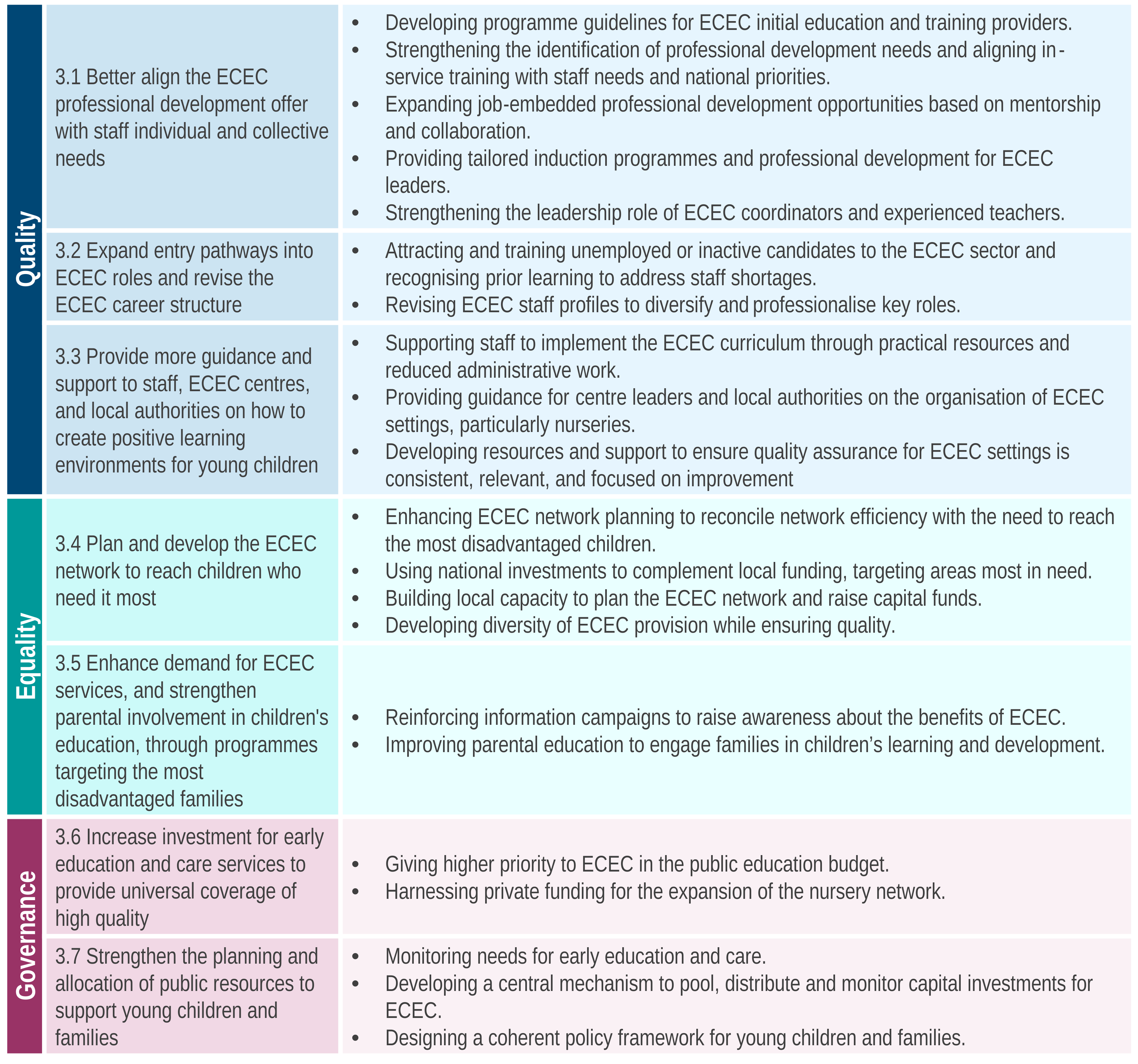
References
[50] Australian Institute for Teaching and School Leadership (n.d.), High Quality Professional Learning Toolkit, https://www.aitsl.edu.au/teach/improve-practice/high-quality-professional-learning-toolkit (accessed on 26 July 2024).
[17] Boeskens, L., D. Nusche and M. Yurita (2020), “Policies to support teachers’ continuing professional learning: A conceptual framework and mapping of OECD data”, OECD Education Working Papers, No. 235, OECD Publishing, Paris, https://doi.org/10.1787/247b7c4d-en.
[60] Chazan-Cohen, R. et al. (2017), “Working Toward a Definition of Infant/Toddler Curricula: Intentionally Furthering the Development of Individual Children within Responsive Relationships”.
[32] CRED (n.d.), Educație timpurie [Early childhood education], https://digital.educred.ro/educatie-timpurie (accessed on 2 May 2024).
[61] Department for Education (2023), Early years foundation stage statutory framework. For group and school-based providers. Setting the standards for learning, development and care for children from birth to five., https://assets.publishing.service.gov.uk/media/65aa5e42ed27ca001327b2c7/EYFS_statutory_framework_for_group_and_school_based_providers.pdf.
[71] Dougherty, S. and C. Morabito (2023), “Financing and delivering early childhood education and childcare across levels of government”, OECD Journal on Budgeting, https://doi.org/10.1787/7bd38503-en.
[79] Douglass, A. (2019), “Leadership for quality early childhood education and care”, OECD Education Working Papers, No. 211, OECD Publishing, Paris, https://doi.org/10.1787/6e563bae-en.
[66] Duncan, G. et al. (2023), “Investing in early childhood development in preschool and at home”, Handbook of the Economics of Education, Vol. 6, pp. 1-91, https://doi.org/10.1016/BS.HESEDU.2022.11.005.
[67] ECLKC (2023), Early Head Start Programs, https://eclkc.ohs.acf.hhs.gov/programs/article/early-head-start-programs (accessed on 17 May 2024).
[45] European Commission (2022), Romania - national Roma strategic framework 2022-2027, https://commission.europa.eu/document/download/d6eacde7-c02e-4ec5-88e8-e35727b1032a_en?filename=1_1romania_national_roma_strategic_framework_2022_2027.pdf.
[33] European Commission (2021), Proposal for a Council Implementing Decision on the approval of the assessment of the recovery and resilience plan of Romania and Annex, https://commission.europa.eu/publications/proposal-council-implementing-decision-approval-assessment-recovery-and-resilience-plan-romania-and_en (accessed on 5 January 2024).
[43] European Commission (2020), Early Childhood Education and Care How to recruit, train and motivate well-qualified staff, https://www.dge.mec.pt/sites/default/files/EInfancia/documentos/early_childhood_and_care_-_how_to_recruit_train_and_motivate_well-qualified_staff.pdf.
[64] European Commission (2019), The role and place of ECEC in integrated working, benefitting vulnerable groups such as Roma – Analytical report,, https://op.europa.eu/en/publication-detail/-/publication/8cbec817-6fa9-11e9-9f05-01aa75ed71a1/language-en.
[13] European Commission / EACEA / Eurydice (2023), Structural indicators for monitoring education and training systems in Europe - 2023: Early childhood education and care., Publications Office of the European Union, https://eurydice.eacea.ec.europa.eu/sites/default/files/2023-11/1_ECEC_2.pdf.
[5] European Commission/EACEA/Eurydice (2019), Key Data on Early Childhood Education and Care in Europe – 2019 Edition., Publications Office of the European Union, https://eurydice.eacea.ec.europa.eu/sites/default/files/2023-01/EC0319375ENN.pdf.
[11] European Commission, E. (2022), Teachers’ and school heads’ salaries and allowances in Europe, Publications Office of the European Union, https://op.europa.eu/en/publication-detail/-/publication/ac952388-4911-11ed-92ed-01aa75ed71a1 (accessed on 4 January 2024).
[12] European Education and Culture Executive Agency, Eurydice (2023), Structural indicators for monitoring education and training systems in Europe 2023 : early childhood education and care, Publications Office of the European Union, https://data.europa.eu/doi/10.2797/670097.
[46] European Union Agency for Fundamental Rights (2023), Roma in 10 European Countries. Main results Roma survey 2021., Publications Office of the European Union, https://fra.europa.eu/sites/default/files/fra_uploads/fra-2022-roma-survey-2021-main-results2_en.pdf.
[70] Eurostat (2023), Persons at risk of poverty or social exclusion by age and sex, https://doi.org/10.2908/ILC_PEPS01N (accessed on 26 July 2024).
[44] Eurostat (2023), Persons at risk of poverty or social exclusion by degree of urbanisation, https://doi.org/10.2908/ILC_PEPS13N (accessed on 2 October 2024).
[69] Eurostat (2022), General government expenditure by function (COFOG), https://doi.org/10.2908/GOV_10A_EXP (accessed on 16 October 2024).
[6] Eurostat (2022), Pupils enrolled in early childhood education by sex, type of institution and intensity of participation, https://doi.org/10.2908/EDUC_UOE_ENRP01 (accessed on 1 October 2024).
[36] Eurostat (2022), Pupils in early childhood and primary education by education level and age - as % of corresponding age population, https://doi.org/10.2908/EDUC_UOE_ENRP07 (accessed on 2 October 2024).
[24] Eurydice (2022), Romania: Quality assurance in early childhood and school education, https://eurydice.eacea.ec.europa.eu/national-education-systems/romania/quality-assurance-early-childhood-and-school-education (accessed on 19 May 2023).
[76] FFIE (n.d.), ¿Qué es FFIE? - Fondo de Financiamiento de la Infraestructura Educativa, https://ffie.com.co/conocenos/queesffie/ (accessed on 23 November 2023).
[78] Government of Ireland (2019), A Whole-of-Government Strategy for Babies, Young Children and their Families 2019-2028, https://assets.gov.ie/31184/62acc54f4bdf4405b74e53a4afb8e71b.pdf.
[35] Government of Romania (2023), HOTĂRÂRE nr. 969 din 12 octombrie 2023 privind aprobarea Strategiei naționale pentru protecția și promovarea drepturilor copilului “Copii protejați, România sigură” 2023-2027, https://legislatie.just.ro/Public/DetaliiDocument/275402.
[14] Government of Romania (2022), METODOLOGIE din 28 aprilie 2022 de organizare și funcționare a creșelor și a altor unități de educație timpurie antepreșcolară [METHODOLOGY of April 28, 2022 organization and operation of crèches and other early childhood education units], https://legislatie.just.ro/Public/DetaliiDocumentAfis/254658.
[23] Government of Romania (2022), METODOLOGIE din 28 decembrie 2022 de organizare și funcționare a serviciilor de educație timpurie complementare [METHODOLOGY of December 28, 2022 for the organisation and operation of complementary early education services], https://legislatie.just.ro/Public/DetaliiDocumentAfis/263359 (accessed on 23 July 2024).
[21] Government of Romania (2020), HOTĂRÂRE nr. 994 din 18 noiembrie 2020 privind aprobarea standardelor de autorizare de funcţionare provizorie şi a standardelor de acreditare şi de evaluare externă periodică în învăţământul preuniversitar, https://aracip.eu/storage/app/media/Documente/Ghid%20-HG%20994/HG%20-%20nr.%20994%20-%202020%20abroga%20HG%20nr.%2021%20-%202007%20incepand%20cu%20data%20de%2001.09.2021.pdf.
[30] Gromada, A. and D. Richardson (2021), “Where do rich countries stand on childcare?”, http://www.unicef-irc.org (accessed on 9 January 2024).
[65] HÉTFA Kutatóintézet (2016), Biztos Kezdet program hatásvizsgálata [Impact evauation of the Safe Start programme], https://hetfa.hu/wp-content/uploads/hetfa_biztoskezdet_zarotanulmany0210.pdf.
[31] IRES (2021), Sondaj: Percepția Publică Privind Educația Timpurie în România – 2021 [Survey: Public Perception of Early Childhood in Romania - 2021], https://www.stepbystep.ro/sondaj-perceptia-publica-privind-educatia-timpurie-in-romania-2021/.
[20] Kitchen, H. et al. (2017), Romania 2017, OECD Reviews of Evaluation and Assessment in Education, OECD Publishing, Paris, https://doi.org/10.1787/9789264274051-en.
[52] Kraft, M., D. Blazar and D. Hogan (2018), “The Effect of Teacher Coaching on Instruction and Achievement: A Meta-Analysis of the Causal Evidence”, Review of Educational Research, Vol. 88/4, pp. 547-588, https://doi.org/10.3102/0034654318759268/ASSET/IMAGES/LARGE/10.3102_0034654318759268-FIG4.JPEG.

[68] Melhuish, E., J. Belsky and J. Barnes (2018), Sure Start and its Evaluation in England, https://www.child-encyclopedia.com/pdf/expert/integrated-early-childhood-development-services/according-experts/sure-start-and-its-evaluation.
[49] Minea-Pic, A. (2020), “Innovating teachers’ professional learning through digital technologies”, OECD Education Working Papers, No. 237, OECD Publishing, Paris, https://www.oecd-ilibrary.org/education/innovating-teachers-professional-learning-through-digital-technologies_3329fae9-en (accessed on 24 February 2021).
[29] Ministry of Education of Romania (2024), Repere fundamentale în învățarea și dezvoltarea timpurie a copilului de la naștere la 7 ani (2024) [The Fundamental Milestones in Early Childhood Learning and Development from Birth to Age 7 (2024)], https://www.edu.ro/sites/default/files/Repere_fundamentale_ET_2024.pdf.
[2] Ministry of Education of Romania (2023), Accession candidate country’s self-assessment of policies and practices in the area of education and skills: Guidelines and questionnaire Romania.
[25] Ministry of Education of Romania (2023), Background Questionnaire: Support for Strengthening the Governance Model in Pre-tertiary Education in Romania.
[15] Ministry of Education of Romania (2023), Legea învăţământului preuniversitar nr. 198/2023 [Pre-university education law no. 198/2023], https://lege5.ro/Gratuit/geztqmjtgq2tm/legea-invatamantului-preuniversitar-nr-198-2023/3.
[47] Ministry of Education of Romania (2023), Raport privind starea învățământului preuniversitar din România 2022 – 2023 [Report on the state of pre-university education in Romania 2022-2023], https://www.edu.ro/sites/default/files/_fi%C8%99iere/Minister/2023/Transparenta/Rapoarte_sistem/Raport-Starea-invatamantului-preuniversitar-2022-2023.pdf.
[22] Ministry of Education of Romania (2022), ORDIN nr. 4.143 din 29 iunie 2022 pentru aprobarea Standardelor privind materialele de predare-învăţare în educaţia timpurie şi a Normativului de dotare minimală pentru serviciile de educaţie timpurie a copiilor de la naştere la 6 ani, https://www.edu.ro/sites/default/files/_fi%C8%99iere/Legislatie/2022/OM_4143_2022_normativ_dotare.pdf.
[34] Ministry of Investments and European Projects of Romania (2021), BUGETUL PLANUL NAȚIONAL DE REDRESARE ȘI REZILIENȚĂ [National Recovery and Resilience Plan Budget], https://mfe.gov.ro/wp-content/uploads/2021/10/6c5361a5fd58b7b22eddf8316192abc8.pdf.
[10] Ministry of Investments and European Projects of Romania (2021), PLANUL NAȚIONAL DE REDRESARE ȘI REZILIENȚĂ AL ROMÂNIEI [Romania National Recovery and Resilience Plan], https://mfe.gov.ro/pnrr/.
[3] Ministry of Labor and Social Justice of Romania (2019), ORDIN Nr. 27/2019 din 3 ianuarie 2019 privind aprobarea standardelor minime de calitate pentru serviciile sociale de zi destinate copiilor [ORDER No. 27/2019 of January 3, 2019 approving the minimum quality standards for day-care for children], https://www.mmuncii.ro/j33/images/Documente/Familie/2019/Ordine_standard/Ordin_27_2019.pdf.
[16] Oberhuemer, P. and I. Schreyer (2018), Early Childhood Workforce Profiles in 30 countries with key contextual data, Seepro-r, https://www.seepro.eu/ISBN-publication.pdf.
[55] OCDE (2024), “Cultiver l’excellence dans l’apprentissage et le développement professionnel des personnels de l’éducation”, Éditions OCDE, Paris, https://doi.org/10.1787/CD020F15-FR.
[40] OECD (2025), OECD Reviews of Labour Market and Social Policies: Romania,, OECD Publishing.
[7] OECD (2024), Education at a Glance 2024: OECD Indicators, OECD Publishing, Paris, https://doi.org/10.1787/c00cad36-en.
[37] OECD (2024), OECD Economic Surveys: Romania 2024, OECD Publishing, Paris, https://doi.org/10.1787/106b32c4-en.
[18] OECD (2024), “Reforming school education in Romania: Strengthening governance, evaluation and support systems”, OECD Education Policy Perspectives, No. 92, OECD Publishing, Paris, https://doi.org/10.1787/5333f031-en.
[8] OECD (2023), Education at a Glance 2023: OECD Indicators, OECD Publishing, Paris, https://doi.org/10.1787/e13bef63-en.
[77] OECD (2023), Exploring Norway’s Fertility, Work, and Family Policy Trends, OECD Publishing, Paris, https://doi.org/10.1787/f0c7bddf-en.
[38] OECD (2023), “OECD Family Database”, PF2.1.B. Paid parental and home care leave available to mothers, https://www.oecd.org/en/data/datasets/oecd-family-database.html (accessed on 1 October 2024).
[42] OECD (2023), PISA 2022 Results (Volume II): Learning During – and From – Disruption, PISA, OECD Publishing, Paris, https://doi.org/10.1787/a97db61c-en.
[75] OECD (2022), Value for Money in School Education: Smart Investments, Quality Outcomes, Equal Opportunities, OECD Publishing, Paris, https://www.oecd-ilibrary.org/docserver/f6de8710-en.pdf?expires=1671103843&id=id&accname=ocid84004878&checksum=866643CB4318D824F19C6F81C8BEF9F7 (accessed on 15 December 2022).
[59] OECD (2022), Finland’s Right to Learn Programme: Achieving equity and quality in education | en | OECD, OECD Education Policy Perspectives, No. 61, OECD Publishing, Paris, https://www.oecd.org/education/finland-s-right-to-learn-programme-65eff23e-en.htm (accessed on 14 December 2023).
[63] OECD (2022), OECD Economic Surveys: Romania 2022, OECD Publishing, Paris, https://doi.org/10.1787/19990685.
[56] OECD (2022), Strengthening Early Childhood Education and Care in Luxembourg: A Focus on Non-formal Education, OECD Publishing, Paris, https://doi.org/10.1787/04780b15-en.
[9] OECD (2021), Distribution of government, private and non-domestic expenditure on educational institutions, http://data-explorer.oecd.org/s/f5 (accessed on 1 October 2024).
[39] OECD (2021), “OECD Family Database”, LMF1.2 Maternal employment, https://www.oecd.org/en/data/datasets/oecd-family-database.html (accessed on 1 October 2024).
[57] OECD (2021), Starting Strong VI: Supporting Meaningful Interactions in Early Childhood Education and Care, Starting Strong, OECD Publishing, Paris, https://doi.org/10.1787/f47a06ae-en.
[48] OECD (2021), Strengthening Early Childhood Education and Care in Ireland: Review on Sector Quality, OECD Publishing, Paris, https://doi.org/10.1787/72fab7d1-en.
[54] OECD (2021), Teachers’ professional learning study: Diagnostic report for the Flemish Community of Belgium, https://doi.org/10.1787/7a6d6736-en.
[51] OECD (2020), Building a High-Quality Early Childhood Education and Care Workforce: Further Results from the Starting Strong Survey 2018, TALIS, OECD Publishing, Paris, https://doi.org/10.1787/b90bba3d-en.
[27] OECD (2020), “Improving access to quality early education in Romania”, OECD Education Policy Perspectives, No. 3, OECD Publishing, Paris, https://doi.org/10.1787/f398e488-en.
[73] OECD (2020), “Is Childcare Affordable?”, POLICY BRIEF ON EMPLOYMENT, LABOUR AND SOCIAL AFFAIRS, http://oe.cd/TaxBEN. (accessed on 15 December 2023).
[26] OECD (2019), Education at a Glance 2019: OECD Indicators, OECD Publishing, Paris, https://doi.org/10.1787/f8d7880d-en.
[58] OECD (2019), Good Practice for Good Jobs in Early Childhood Education and Care, OECD Publishing, Paris, https://doi.org/10.1787/64562be6-en.
[4] OECD (2019), “OECD Family Database”, PF3.3 Informal childcare arrangements, https://www.oecd.org/els/family/database.htm (accessed on 1 October 2024).
[72] OECD (2019), Providing Quality Early Childhood Education and Care: Results from the Starting Strong Survey 2018, TALIS, OECD Publishing, Paris, https://doi.org/10.1787/301005d1-en.
[62] OECD (2018), Responsive School Systems: Connecting Facilities, Sectors and Programmes for Student Success, OECD Reviews of School Resources, OECD Publishing, Paris, https://doi.org/10.1787/9789264306707-en.
[19] OECD (2015), Starting Strong IV: Monitoring Quality in Early Childhood Education and Care, Starting Strong, OECD Publishing, Paris, https://doi.org/10.1787/9789264233515-en.
[74] Paull, G. and C. Wilson (2020), “Early Learning and Care and School-Age Childcare: Towards a New Funding Model”.
[1] Portal Legislativ (2023), ORDIN 5407 17/08/2023, https://legislatie.just.ro/Public/DetaliiDocument/277069 (accessed on 19 July 2024).
[41] Rastrigina, O. and E. Pearsall (2023), “Net childcare costs in the EU, 2022 - Analysis for working families and disadvantaged families”.
[28] UNICEF (2010), Repere fundamentale în învãåarea æi dezvoltarea timpurie a copilului de la naætere la 7 ani [Key milestones in the early learning and development of children from birth to 7 years old], https://www.edu.ro/sites/default/files/_fi%C8%99iere/Invatamant-Preuniversitar/2016/prescolar/ORDIN%203851_2010_ANEXA_RFIDT.pdf.
[53] Victoria Government (n.d.), Coach and Mentor Training Program, https://www.vic.gov.au/coach-and-mentor-training (accessed on 27 August 2024).
← 1. In Romania, ECEC can be provided by public, private or confessional institutions that require accreditation from ARACIP.
← 2. The module must cover at least the principles of early childhood education, holistic approach to the child and teamwork, and education and supporting families for the development of parenting skills.
← 3. Pedagogical leadership refers to support for staff development, creating a culture of trust, facilitating peer learning, promoting the implementation of the curriculum, etc. (Douglass, 2019[79]).