This chapter explores how Moldova’s justice system is shaped by its commitment to the rule of law, democratic governance and EU integration, further aligning with the EU acquis, particularly Chapter 23 on Judiciary and Fundamental Rights. It underscores the concept of justice as a core public service and highlights the importance of a trusted people-centred justice sector, grounded in OECD and EU standards.
OECD Justice Review of the Republic of Moldova
Improving Access to Justice Services and Building Trust

Abstract
*This designation is without prejudice to positions on status, and is in line with United Nations Security Council Resolution 1244/99 and the Advisory Opinion of the International Court of Justice on Kosovo’s declaration of independence.
The rule of law and democratic governance are the foundation of resilient and prosperous societies. As a core principle, the rule of law ensures that all individuals and institutions – public or private, domestic or international – are accountable under the law. Its fair, consistent and impartial implementation protects rights, reinforces good governance and serves as a bulwark against arbitrariness and abuse of power. It ensures that legal processes, institutions and norms remain predictable and aligned with human rights principles (UN Security Council, 2004[1]). The rule of law promotes accountability and public trust in institutions by ensuring the fair application of laws, peaceful resolution of disputes and protection of fundamental rights. The rule of law, human rights and democracy are interdependent; each reinforcing the other (UNGA, 2012[2]).
The quality of the rule of law and justice system have a direct bearing on economic growth: investment, entrepreneurship, contract enforcement and market integrity require legal predictability and institutional stability. Weak rule of law, manifested in legal uncertainty, high transaction costs, procedural complexity and politicised institutions, can deter investment and business activity and limit economic opportunity (OECD, 2025[3]). As countries increasingly emphasise competitiveness as well as growth and social cohesion, a strong rule of law underpinned by people-centred justice institutions is essential.1
Rule of law is at the core of the Organisation for Economic Co-operation and Development’s (OECD) and the European Union’s (EU) institutional mandates and value frameworks. It ensures the proper functioning of the EU Single Market and enforcement of the EU’s four freedoms of goods, services, capital and people (European Commission, 2025[4]). Alignment with the OECD and EU rule of law standards is not only a requirement for European integration, but a strategic imperative for Moldova’s long-term governance, development and resilience. It would foster strong, independent justice institutions, robust legal frameworks and justice services for people and businesses. More broadly, it would support Moldova’s trajectory toward democratic consolidation, institutional trust and economic growth.
2.1.1. The rule of law and integrity in Moldova
Moldova continues to position the rule of law as a central pillar for development, reaffirming its commitment to reinforce the independence and efficiency of justice institutions, strengthening legal frameworks and ensuring alignment with international standards (Permanent Mission of the Republic of Moldova to the UN, 2025[5]). The significant reform efforts are recognised for addressing entrenched practices, reinforcing democratic institutions and positioning Moldova as a regional leader in public administration and governance reforms (Eastern Partnership Civil Society Forum, 2025[6]; Aloia and Brovdiy, 2025[7]).
Moldova's progress in strengthening the rule of law is reflected in international rankings. The World Justice Project’s Rule of Law Index shows a general upward trend in Moldova’s Rule of Law Score in recent years. It ranked the country 68th out of 143 in 2025,2 five places above its ranking a decade ago, with a score that is above the region’s average3 (World Justice Project, 2025[8]). Nonetheless, the index shows that challenges remain in areas such as corruption, criminal justice and regulatory enforcement, where continued efforts could help consolidate recent gains.

Note: The World Justice Project’s Rule of Law Index assigns values between 0 and 1 to countries, with 1 indicating perfect alignment with the rule of law and 0 the opposite. The index takes into account the following 8 dimensions of the rule of law: Constraints on Government Powers, Absence of Corruption, Open Government, Fundamental Rights, Order and Security, Regulatory Enforcement, as well as Civil and Criminal Justice.
Source: (World Justice Project, 2025[8]).
Similarly, in terms of corruption perceptions, the Transparency International’s Corruption Perceptions Index4 ranked Moldova 80th out of 182 in 2025.5 Its position and ranking reflect Moldova’s efforts at strengthening judicial vetting and advancing EU-aligned reforms despite geopolitical pressure and persistent implementation challenges (Transparency International, 2026[9]; Transparency International, 2025[10]). Some of the reforms include the establishment of a specialised anti-corruption court, which facilitated high-profile prosecutions, including cases related to officials involved in bribery and illegal party financing (OCCRP, 2024[11]). Additionally, anti-corruption prosecutors have been mandated to quickly process high-profile cases to strengthen deterrence and prevent corrupt officials from evading justice (Transparency International, 2024[12]).
Indeed, OECD Public Integrity Indicators (PII) show that Moldova performs above the OECD average on quality of the practice and regulation of the anti-corruption strategic framework, as well as in policy areas, such as conflicts of interest, judicial integrity, prosecutorial integrity and political finance (OECD, 2026[13]) (Figure 2.2). Complementing these insights, the PII highlight that Moldova regularly updates its anti-corruption policies through an inclusive, evidence-based process, applying monitoring and evaluation mechanisms. In the areas of judicial and prosecutorial integrity, Moldova shows strong regulatory performance, reflecting the country’s efforts to rebuild confidence in the justice system and to implement international guidance on integrity safeguards. In addition, GRECO’s Fifth Evaluation Round on preventing corruption and promoting integrity in central government and law enforcement agencies noted progress with regard to several recommendations: transparency of advisers, integrity training for senior officials, internal audit capacity within ministries, and anti‑corruption investigative jurisdiction. In total, out of 25 recommendations seven were found to be satisfactorily implemented, twelve partially implemented, and six not implemented. The sixth evaluation report of this series is due to be released by September 2027 (GRECO, 2024[14]).
However, the PII reveal a large implementation gap between regulations and practice (36 percentage points for judicial integrity and 44 percentage points for prosecutorial integrity) (OECD, 2026[13]). The gap reflects the early stage of implementation: reforms enacted recently have not yet had sufficient time to translate into consistent practice. At the same time, translating reforms into practice is a common challenge across OECD countries, highlighting the need for stronger operational arrangements to ensure that rules are consistently implemented (OECD, 2026[15]).
At the same time, a range of persistent challenges continue to constrain Moldova’s progress in fully realising the rule of law. These include, among others, gaps in enforcement, accountability, low public trust and barriers to justice (OECD, 2026[13]). Capacity constraints and uneven implementation, in particular, hinder reform efforts, as they require sustained resource investments that have yet to fully materialise (Aloia and Brovdiy, 2025[7]; European Democracy Hub, 2025[16]). Moreover, the pace and scope of reforms - accelerated by the demands of the EU accession agenda - place significant pressure on institutions to absorb change while maintaining operational stability.
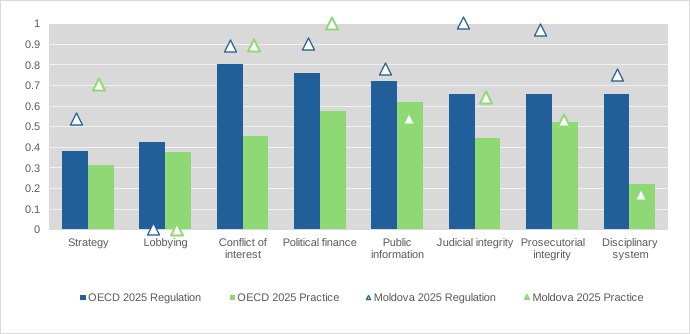
Note: The list of criteria for strategy is available here; the list of criteria for conflict of interest, lobbying, political finance and transparency of public information is available here; the list of criteria for judicial integrity, prosecutorial integrity and the disciplinary system are here
Source: (OECD, 2026[13]).
These challenges are not all of the same type or degree. Issues such as corruption, low public trust, limited accountability, and barriers to justice are, in many cases, closely associated with underlying weaknesses in the rule of law. Others, such as the pressure to absorb reforms while maintaining stable operations, reflect the ambitious scale and pace of Moldova’s reform agenda. Paying attention to this distinction can help Moldova prioritise its efforts and develop long-term momentum for reform. Moldova’s institutions are being rebuilt at a rapid pace, and reforms are increasingly embedded in strategic planning and cross‑government processes. The country continues to demonstrate strong political will to advance rule of law reforms as part of its European integration path. Moldova’s progress in this area has been incremental and subject to significant constructive challenges, including sustained debate among authorities, legal practitioners and civil society actors on how to align the justice system with internationally recognised rule of law standards.
Trust in institutions is essential for democratic resilience, growth and the successful implementation of reforms. Public trust in the judiciary serves as an indicator that checks and balances are perceived to be working as intended in healthy democratic systems. When people perceive justice systems as fair, transparent and responsive, they are also more likely to engage with and trust public institutions (OECD, 2025[17]).
Across OECD countries, law and order institutions generally enjoy higher levels of trust than other public institutions. On average, in 2023, 54% of people report high or moderately high trust in courts and the justice system, compared to 45% for civil services and only 37% for national parliaments (OECD, 2025[17]). Although this varies, across different groups, levels of trust reflect their distinct experiences, interactions and expectations (OECD, 2025[18]).
Trust in justice institutions is strongly influenced by access, independence and user satisfaction making responsiveness and people-centricity of justice a key lever for building public trust (OECD, 2025[17]). In addition, perceived judicial independence is positively correlated with public confidence in the broader justice system (OECD, 2025[17]; OECD, 2024[19]). The OECD’s Reinforcing Democracy and Building Trust Agenda and the recent Government at a Glance report emphasise that advancing people-centred justice can be a lever for strengthening the legitimacy of institutions in the eyes of the public, as well as public trust (OECD, 2025[17]; OECD, 2022[20]).
In Moldova, in general terms, while citizens continue to support democratic norms and procedures, trust in democratic governance in Moldova remains moderate and unevenly distributed, reflecting long-standing concerns about corruption and the performance of public institutions (Bertelsmann Stiftung, 2024[21]). Similarly, trust in justice institutions in Moldova remains low but recent public opinion data show signs of improvement. A 2025 Barometer of Public Opinion survey found that 27.5% of Moldovans expressed confidence in the justice system, a notable increase from just 15% in 2024 (Institute of Public Policy, 2025[22]; Institute of Public Policy, 2024[23]). The majority however – 70% – still reported little or no trust. Additionally, in the recent second national survey on integrity in the justice sector, 49% of respondents believed the situation had improved in recent years, up from 32% in 2023, while 20% believed it had worsened (Institute of Public Policy, 2025[22]; Institute of Public Policy, 2024[23]). Over half of respondents acknowledged that the positive developments were a result of government efforts in the previous term. Nonetheless, challenges persist, with 57% citing corruption as the most pressing issue (IPRE, 2026[24]).
Justice professionals perceive similar pressures in the system. According to a 2025 survey, 72% of lawyers, 46% of prosecutors and 37% of judges believe that corruption levels in Moldova are high or very high (LRCM, 2025[25]). However, respondents in all three professions perceive corruption to be more prevalent in other institutions than their own. These conclusions suggest that, while legal professionals recognise systemic challenges, they may underestimate corruption within their respective branches of the justice system (LRCM, 2025[25]).
These findings highlight the need to continue building trust in Moldova’s justice institutions. Closing these gaps will require more than structural reforms; it will depend on visible gains in integrity, accountability, and user-centred justice. Only then can justice institutions demonstrate to people they can deliver fairly and effectively.
Legal problems in Moldova are both widespread and complex and arise primarily from everyday life situations (UNDP, 2025[26]). A significant share of the population reports experiencing disputes, most commonly related to neighbours, public services, employment, land or interactions with authorities (see Chapter 6). These problems are not isolated: they often cluster and cascade, with one issue triggering additional legal, social and economic challenges. Their prevalence and distribution are shaped by socio-economic and geographic factors, with vulnerable groups - particularly those living in poverty or in rural areas - more likely to experience multiple and severe problems. At the same time, differences in legal awareness and reporting suggest that many issues remain unrecognised or unaddressed, further compounding their impact.
These characteristics point to the need to treat justice not only as a system of institutions, but as a service that responds to people’s experiences. Because legal problems emerge from daily life and often cut across sectors, justice services must be accessible, integrated and user-oriented. This includes going beyond courts to encompass legal aid, administrative bodies and community-based support, and ensuring that services are designed around how people recognise problems, seek help and navigate resolution pathways. Adopting a justice-as-a-service approach is therefore essential to address the complexity of legal needs and justice problems, reduce barriers to access and provide timely, effective and people-centred solutions.
Indeed, the OECD Recommendation of the Council on Human-Centred Public Administrative Services highlights that strategies to improve all public administrative services should include administrative and judicial review mechanisms as these are essential to protecting the rights of service users (OECD, 2024[27]). Moreover, an increasing number of EU and OECD countries recognise justice as a public service, forming a service sector comparable to health, education and social protection (see Chapter 6). Viewing justice through this public service lens also strengthens the case for applying modern public financial management tools, including performance budgeting and expenditure review, to ensure that resources are directed towards services that effectively meet people’s needs. In this context, service design offers a useful lens for modernising the justice system, as also recognised in the OECD Recommendation on Access to Justice and People-Centred Justice Systems, which the EU formally adhered to in May 2024 (OECD, 2023[28]). The EU acquis is also in line with these principles, particularly Chapters 23 and 24, which guide justice reforms and fundamental rights in the enlargement process.
Designing effective justice services means organising justice around the experience of those facing legal problems rather than solely around institutional structures or caseloads. A people-centred system looks at the entire service journey, from the prevention of legal problems and access to early information through to resolution and enforcement, and asks whether each step is accessible, fair and effective (OECD, 2019[29]; OECD, 2023[28]). Above all, it shifts the focus from supply to demand and resolution, ensuring that justice is measured by what institutions deliver as well as the outcomes people achieve in their everyday lives.
Reforming a justice system therefore requires both solid institutional foundations respecting independence, integrity and accountability and sound, people-centred service delivery. Importantly, this must be pursued through a whole-of-sector approach, recognising that justice is delivered not only by the judiciary but through a wider ecosystem of actors, including legal aid providers, ombuds institutions, law enforcement, mediation services and community organisations. Co‑ordinated action across these actors is essential to ensure that justice is experienced as a coherent, accessible and effective public service, reflecting people’s pathways (see Chapter 6).
Moldova has made considerable strides in justice reform in the last decade and its reform agenda reflects many of these principles. As part of its EU accession process, the justice sector is at the heart of institutional transformation.6 Key priorities include strengthening judicial independence through merit-based appointments; reinforcing anti-corruption frameworks via a robust vetting process; updating the judicial map, including prosecution services, and improving access to justice and institutional performance. Moldova’s Strategy for Ensuring the Independence and Integrity of the Justice Sector 2022-2025 provided a comprehensive roadmap for achieving these objectives. By focusing on accountability, transparency and service quality, alongside digital transformation, the strategy sought to translate institutional reforms into more accessible, fair and user-oriented justice outcomes, in line with OECD people-centred service standards. The upcoming strategy for the justice sector provides an opportunity to more firmly anchor a public service lens, ensuring that future reforms are guided not only by institutional compliance but go hand in hand with and reinforce people-centred justice service delivery and outcomes.7 Indeed, the Ministry of Justice’s Concept of the Programme for the Development of the Justice Sector for 2027-2031 explicitly commits to a people-centred and focuses on service-delivery-focused justice system (Ministry of Justice, Moldova, 2026[30]).
These efforts are further reinforced by the National Programme for the Accession of the Republic of Moldova to the European Union (NPA) 2025-2029 that sets out detailed institutional and legislative priorities, including the implementation of justice sector reforms and alignment with the EU acquis under Chapters 23 and 24. These documents are complemented by the government’s Rule of Law Roadmap that was approved in May 2025 (Ministry of Justice, Moldova, 2025[31]). These frameworks, alongside ambitious scope and accelerated pace of reforms reflect strong political commitment and a dynamic reform trajectory, however, broader service integration could still be strengthened. It would ensure that justice in Moldova is not only seen solely as a reformed institutional system aligned with international frameworks, but as a public service that delivers outcomes for people and businesses.
References
[7] Aloia, A. and Y. Brovdiy (2025), “Moldova’s progress is real but fragile — this weekend’s election could reverse that”, euobserver, https://euobserver.com/19580/moldovas-progress-is-real-but-fragile-this-weekends-election-could-reverse-that/ (accessed on 13 February 2026).
[21] Bertelsmann Stiftung (2024), BTI Transformation Index Moldova, https://bti-project.org/en/reports/country-dashboard/MDA (accessed on 13 February 2026).
[6] Eastern Partnership Civil Society Forum (2025), Eastern Partnership Index 2025. Charting Performance in the Eastern Partnership: Democracy and Good Governance, Policy Convergence and Sustainable Development, https://eap-csf.eu/what-we-do/eap-index/ (accessed on 13 February 2026).
[4] European Commission (2025), Speech by Commissioner McGrath on the Rule of Law at the UCD Sutherland School of Law, https://ec.europa.eu/commission/presscorner/detail/en/speech_25_1026 (accessed on 13 February 2026).
[16] European Democracy Hub (2025), Tackling the Pressing Challenges to Moldova’s Democracy, https://europeandemocracyhub.epd.eu/tackling-the-pressing-challenges-to-moldovas-democracy/ (accessed on 13 February 2026).
[14] GRECO (2024), Fifth Evaluation Round: Preventing Corruption and Promoting Integrity in Central Governments - Republic of Moldova, https://rm.coe.int/fifth-evaluation-round-preventing-corruption-and-promoting-integrity-i/1680aec9a5.
[22] Institute of Public Policy (2025), Public Opinion Barometer 2025, https://ipp.md/wp-content/uploads/2025/09/Sondaj-BOP-2025.pdf (accessed on 22 December 2025).
[23] Institute of Public Policy (2024), Public Opinion Barometer, September-October 2024, https://ipp.md/wp-content/uploads/2024/10/Raport-final-BOP-2024.pdf.
[24] IPRE (2026), Second National Public Opinion Poll: Integrity in the Justice Sector, Institute for European Policies and Reforms, https://ipre.md/wp-content/uploads/2026/02/2025-IPRE-w2-Survey-Justice4Moldova-EN_final.pdf.
[25] LRCM (2025), Perception of Judges, Prosecutors and Lawyers about Justice and Corruption, Legal Resources Centre from Moldova, https://crjm.org/perceptia-judecatorilor-procurorilor-si-avocatilor-despre-justitie-si-fenomenul-coruptiei-editia-2025/26735/ (accessed on 13 February 2026).
[30] Ministry of Justice, Moldova (2026), Concept of the Programme for the Development of the Justice Sector for 2027–2031, https://justice.gov.md/sites/default/files/document/attachments/conceptul_noului_document_de_politici_in_sectorul_justitiei.pdf.
[31] Ministry of Justice, Moldova (2025), The Government approved the Roadmap on the Rule of Law – essential for EU accession, https://justice.gov.md/ro/content/guvernul-aprobat-foaia-de-parcurs-privind-statul-de-drept-esentiala-aderarea-la-ue (accessed on 13 February 2026).
[11] OCCRP (2024), Moldova Arrests Officials For Helping Criminals Bypass Interpol Red Notices, Organized Crime and Corruption Reporting Project, https://www.occrp.org/en/news/moldova-arrests-officials-for-helping-criminals-bypass-interpol-red-notices (accessed on 13 February 2026).
[15] OECD (2026), Anti-Corruption and Integrity Outlook 2026: Harnessing the Integrity Advantage, OECD Publishing, https://doi.org/10.1787/16708b78-en.
[13] OECD (2026), OECD Public Integrity Indicators: Moldova Country Fact Sheet 2026, OECD, Paris, https://www.oecd.org/content/dam/oecd/en/publications/reports/2026/03/anti-corruption-and-integrity-outlook-2026-country-notes_b1df9263/moldova_471162c6/9e74e510-en.pdf.
[17] OECD (2025), Government at a Glance 2025, OECD Publishing, Paris, https://doi.org/10.1787/0efd0bcd-en.
[18] OECD (2025), Making Justice Systems More Effective and People Centred: Advancing a Responsive Rule of Law, OECD Publishing, Paris, https://doi.org/10.1787/e02fd90b-en.
[3] OECD (2025), “Supporting businesses through better justice systems: A focus on SMEs and entrepreneurship”, OECD Public Governance Policy Papers, No. 79, OECD Publishing, Paris, https://doi.org/10.1787/1791ca66-en.
[19] OECD (2024), OECD Survey on Drivers of Trust in Public Institutions – 2024 Results: Building Trust in a Complex Policy Environment, OECD Publishing, Paris, https://doi.org/10.1787/9a20554b-en.
[27] OECD (2024), “Recommendation of the Council on Human-Centred Public Administrative Services”, OECD Legal Instruments, OECD/LEGAL/0503, OECD, Paris, https://legalinstruments.oecd.org/en/instruments/OECD-LEGAL-0503.
[28] OECD (2023), “Recommendation of the Council on Access to Justice and People-Centred Justice Systems”, OECD Legal Instruments, OECD/LEGAL/0498, OECD, Paris, https://legalinstruments.oecd.org/en/instruments/OECD-LEGAL-0498.
[20] OECD (2022), Building Trust to Reinforce Democracy: Main Findings from the 2021 OECD Survey on Drivers of Trust in Public Institutions, Building Trust in Public Institutions, OECD Publishing, Paris, https://doi.org/10.1787/b407f99c-en.
[29] OECD (2019), Equal Access to Justice for Inclusive Growth: Putting People at the Centre, OECD Publishing, Paris, https://doi.org/10.1787/597f5b7f-en.
[5] Permanent Mission of the Republic of Moldova to the UN (2025), Statement by H.E. Mr. Gheorghe LEUCA, Ambassador, Permanent Representative of the Republic of Moldova at the General Debate of the Sixth Committee of the United Nations General Assembly on agenda item 84: Rule of Law at national and international level, https://www.un.org/en/ga/sixth/80/pdfs/statements/rule_of_law/07mtg_moldova.pdf.
[9] Transparency International (2026), Corruption Perceptions Index 2025: Weak institutions are fuelling corruption in Eastern Europe and Central Asia, https://www.transparency.org/en/press/corruption-perceptions-index-2025-weak-institutions-fuelling-corruption-eastern-europe-central-asia.
[10] Transparency International (2025), Corruption Perceptions Index 2025: Moldova, https://www.transparency.org/en/cpi/2025/index/mda.
[12] Transparency International (2024), CPI 2024 for Eastern Europe & Central Asia: Vicious cycle of weak democracy and flourishing corruption, https://www.transparency.org/en/news/cpi-2024-eastern-europe-central-asia--vicious-cycle-weak-democracy-flourishing-corruption (accessed on 13 February 2026).
[1] UN Security Council (2004), The rule of law and transitional justice in conflict and post-conflict societies - Report of the Secretary General, United Nations, https://digitallibrary.un.org/record/527647?ln=en&v=pdf.
[26] UNDP (2025), Survey on access to justice in the Republic of Moldova, United Nations Development Programme, https://www.undp.org/moldova/publications/survey-access-justice-republic-moldova (accessed on 13 February 2026).
[2] UNGA (2012), Declaration of the high-level meeting of the General Assembly on the rule of law at the national and international levels, UN General Assembly, https://docs.un.org/en/A/RES/67/1.
[8] World Justice Project (2025), Rule of Law Index 2025, https://worldjusticeproject.org/rule-of-law-index/downloads/WJPIndex2025.pdf (accessed on 22 December 2025).
← 1. The OECD Policy Framework for Investment, along with evidence from the OECD work on justice and rule of law, World Justice Project and the European Commission, underscores that effective access to justice is a prerequisite for a stable and competitive business environment.
← 2. Despite the overall positive trend, Moldova’s rule of law score stagnated between 2024 and 2025, with a score change of -0.01, leading to Moldova falling back three spots in the comparative ranking.
← 3. Other countries in the considered region (Eastern Europe and Central Asia): Georgia, Montenegro, Kosovo*, Kazakhstan, North Macedonia, Bosnia and Herzegovina, Uzbekistan, Ukraine, Albania, Serbia, Kyrgyz Republic, Belarus, Russian Federation, Türkiye.
← 4. The Corruption Perceptions Index compiles data from various sources that reflect the views of business representatives and country experts regarding the extent of public sector corruption.
← 5. Despite the +1 score increase in the 2024 edition of the Index, Moldova returned to its 2023 level in 2025, marking a decline in its international ranking.
← 6. Following its candidate status in 2022, Moldova formally launched accession negotiations at the Intergovernmental Conference in June 2024. Chapter 23 of the EU acquis, which covers Judiciary and Fundamental Rights, is central to the screening process and expected to shape the overall pace of negotiations.
← 7. The Ministry of Justice is currently developing the new strategy to be launched in 2027.