This 2026 edition of the Multilateral Development Finance report examines a system at a pivotal moment of its existence. After decades of expansion, the multilateral development system is facing a convergence of pressures, including declining trust in multilateralism, tightening aid budgets and growing scrutiny of value for money. Drawing on OECD data and forward-looking projections, this overview chapter assesses recent trends in multilateral inflows and outflows, highlighting that despite record delivery volumes, funding cuts – if indiscriminate and uncoordinated – could have disproportionate consequences, especially for low-income and vulnerable countries. It makes recommendations for how the current moment can be used as an opportunity to reset multilateral development finance around clearer principles and co-ordinated action.
Multilateral Development Finance 2026

Abstract
1.1.1. Development co-operation covers a wide spectrum of needs, risks and financing contexts
The multilateral development system has expanded steadily since its inception in the aftermath of the Second World War. Over decades, countries have established new multilateral institutions to address emerging development challenges, adding successive layers of mandates and institutional complexity. This gradual process has produced a diverse yet intricate architecture. In the past two decades alone, the number of multilateral development organisations (MDOs) has nearly doubled, reaching more than 200 entities by 2020 (OECD, 2024[1]).
Today, the multilateral development system is a core pillar of the development co-operation architecture. MDOs have been receiving and channelling a growing share of development co-operation from the members of the OECD Development Assistance Committee (DAC): in 2024, 41% of DAC members’ official development assistance (ODA) was delivered to or through the multilateral development system, up from 37% in 2010. Bilateral donors have thus been increasingly relying on multilateral mechanisms to support the global development agenda.
Beyond this growing importance as a channel of ODA, the system also delivers value that no individual donor could achieve alone: global reach (including in high fragility and conflict-affected contexts), the ability to deliver at scale (through resource pooling and capital leveraging), and specialised expertise (in areas ranging from humanitarian response to infrastructure finance and global public goods).
The system’s unique value allows it to operate across a broad range of needs, risks and financing contexts. Collectively, MDOs support countries at every development stage, from delivering essential services and humanitarian assistance in high-risk contexts, to financing large-scale public investment and mobilising private capital where conditions permit. Understanding how these roles relate to one another is essential for assessing whether the system’s architecture remains coherent and fit for purpose, particularly in a context of rising demands and tighter resources (Figure 1.1).
At the non-bankable end of the spectrum, the United Nations Development System (UNDS) plays a foundational role in building the ecosystem that underpins development. UNDS activities are heavily concentrated in humanitarian assistance and social sectors. These activities are rarely bankable and often take place in highly fragile or crisis-affected contexts, yet they are indispensable for protecting lives and maintaining basic service provision. Beyond immediate delivery, UNDS activities contribute to the enabling environment (including norms, institutional capacity and human capital) without which neither public nor private investment can be sustained.
Vertical funds typically operate primarily in the high-risk, catalytic segment of the financing spectrum, focusing on global public goods and market failures that require collective action. Their strong presence in sectors such as health, climate and biodiversity reflects mandates designed to pilot new approaches, absorb early-stage risk and demonstrate viability where incentives for private investment are weak. Some vertical funds also have a footprint in infrastructure-related areas, largely related to green investments.
The concessional windows of multilateral development banks (MDBs) occupy a pivotal position in the financing spectrum, transforming high-risk investments into scalable opportunities. These windows are active across both social and infrastructure sectors, reflecting their dual mandate: supporting essential public investments while enabling large-scale financing in low-income and vulnerable countries. In doing so, they bridge the gap between grant-based interventions and more market-oriented forms of finance.
At the more bankable end of the spectrum, MDB non-concessional arms and private sector arms focus on scaling infrastructure and productive investment. These institutions play a critical role in translating earlier risk absorption and de-risking efforts into sustained investment. However, their effectiveness depends on the functioning of the upstream parts of the financing chain, which prepare countries and projects for market-based finance.

Maintaining a coherent division of labour across the multilateral development system, in a context of cuts and loss of trust, requires proactive attention from both multilateral institutions and their donors. Over time, some MDOs may expand beyond their core and traditional areas of comparative advantage in response to shifting donor priorities or competitive funding pressures. While such adaptation can be justified in specific circumstances or at the institutional level, it can also end up blurring the logical division of roles across the system. The financing spectrum presented above, although simplified and non-exhaustive, provides a broad compass for system stewardship by clarifying where each type of institution adds the greatest value.
While the multilateral development system has steadily expanded and gained new mandates over time, the conditions that enabled this growth are now changing. The multilateral development architecture, which was progressively built up in an era of relative optimism for multilateralism, now operates in a context of heightened contestation over its role, legitimacy and effectiveness, with several large donors reducing their development co-operation budgets. As a result, the system is entering a period of retrenchment, with a funding contraction estimated at about 23-30% between 2023 and 2027. These dynamics, explored in greater detail in Chapter 2, are exposing long-standing structural challenges and forcing a reassessment of the system’s architecture, funding structure and strategic role.
1.1.2. Pressure on multiple fronts means the multilateral development system must adapt to survive
The multilateral development system must adapt to preserve its relevance. For years, long-standing concerns about institutional proliferation, funding quality and fragmentation have shaped debates on the effectiveness of multilateral development co-operation. However simultaneous more acute pressures are now forcing it to move from debate to action. Three inter-related forces, described below, are reshaping incentives and funding models: (i) geopolitical fragmentation and declining trust in multilateralism, (ii) tighter and more volatile aid budgets, and (iii) growing scrutiny of value for money.
The rise of a more fragmented geopolitical order could mark the end of a golden age of multilateralism
Geopolitical fragmentation is weakening the foundations of consensus-based multilateral co-operation and reshaping donor incentives. As trust among key stakeholders declines, funding and engagement decisions are increasingly influenced by national strategic considerations rather than assessments of collective efficiency or global needs.
The multilateral development system was initially designed to function as a collective investment, supported by predictable and flexible funding that enabled resource pooling and economies of scale, as illustrated by the green quadrant in Figure 1.2. Over time, however, the behaviour of multilateral stakeholders has gradually shifted: donors have progressively favoured more discretionary and earmarked forms of engagement to maximise control and visibility over their contributions, while MDOs faced incentives to expand their mandates and resources.
The current context of geopolitical fragmentation and declining trust in multilateralism is accelerating these trends, incentivising unilateral approaches and weakening the political foundations on which collective action depends. In this environment, the incentives facing both donors and multilateral development organisations increasingly resemble a prisoner’s dilemma, where rational individual decisions can yield sub-optimal collective outcomes: some donors have started reducing or rebalancing their multilateral commitments and, as a result, MDOs may increasingly compete for earmarked resources to compensate for declining contributions, reinforcing behaviours that risk undermining multilateral effectiveness. These trends suggest that the system is no longer operating in the co-operative equilibrium. Instead, it increasingly resembles the intermediary and unstable configurations represented by the orange quadrants.
If these non-co-operative dynamics persist, the multilateral development system could see its foundations weaken and its effectiveness decline. If the system is allowed to drift towards a low co-operation equilibrium (red quadrant), where the retrenchment of some multilateral stakeholders prompts most others to scale back as well, this could weaken the system’s foundations and reduce overall effectiveness. Avoiding this trajectory requires deliberate choices that reinforce collective incentives rather than amplify competitive dynamics.

In recent years, these geopolitical dynamics have already begun reshaping the landscape of multilateral development co-operation. As broad-based consensus becomes harder to achieve, donors and MDOs increasingly rely on narrower, coalition-based forms of engagement to advance specific priorities. The proliferation of vertical funds and other purpose-specific mechanisms since the 2000s in part reflects this trend. In this sense, the “variable geometry” multilateralism invoked by some political leaders (Government of Canada, 2026[2]) is the intensification of a longer-term trend, now accelerated by growing contestation of multilateralism and increasingly divergent priorities among donors. The growing reliance on such “coalitions of the willing” raises questions about whether such arrangements will ultimately serve as stepping stones or stumbling blocks for the multilateral system: reinforcing progress by enabling progress where consensus is elusive or further fragmenting it by diverting attention and resources away from universal frameworks.
The global aid crisis threatens to unravel the financial foundations of multilateral development co-operation
The development co-operation landscape is entering a period of acute financial stress, after major DAC providers announced substantial reductions to their aid budgets in 2025. At least 11 members of the OECD DAC are scaling back their ODA budgets, signalling a break from the expansionary trend that characterised the multilateral development system in previous decades. This group includes several of the largest contributors to the multilateral development system, such as the United States, United Kingdom, Germany and France. As shown in Figure 1.3, these members account for a substantial share of funding to major MDOs, suggesting that the impact of the announced cuts is likely to be both substantial and widespread. And as highlighted in Section 1.2.1 below, this is likely to be a sustained contraction rather than a short-lived adjustment.

Note: Gavi=Global Alliance for Vaccines and Immunization; GCF=Green Climate Fund; GEF=Global Environment Facility; IDA=International Development Association; IOM=International Organization for Migration; UNDP=United Nations Development Programme; UNHCR= United Nations High Commissioner for Refugees; UNICEF=United Nations Children's Fund; WFP= World Food Programme.
Source: Calculations for Panel A are based on a dataset of donor contributions to the United Nations Development System (UNDS) in 2023 and 2024 provided to the authors directly by United Nations Department of Economic and Social Affairs (UNDESA). It excludes local contributions (i.e. funding provided by a government to UN activities implemented in its own country) from analysis. Calculations for Panel B are based on multilateral funds' last completed replenishments for which full contributions data is available: IDA20 (IDA, 2022[3]), Global Fund-7 (The Global Fund, 2022[4]), GCF Second Formal Replenishment (Green Climate Fund, 2023[5]), Gavi 2021-2025 (Global Alliance for Vaccines and Immunization, 2026[6]) and GEF-8 (Global Environmental Fund, 2022[7]). Not all ODA providers that have announced cuts to ODA for 2025-27 participate in all multilateral funds analysed.
Although the most visible effects of the aid crisis have so far manifested themselves in bilateral flows, the multilateral development system is not insulated from these shocks. Reductions in bilateral aid budgets, the downsizing of development co-operation agencies, and the merging of aid portfolios into ministries of foreign affairs have made the headlines. However, signs of strains are also emerging across MDOs as funding becomes more volatile and uncertain, and a sustained reduction in funding to the multilateral development system is expected in coming years.
The extent to which these pressures translate into reduced multilateral funding will depend on how donors allocate cuts between bilateral and multilateral channels. Reductions may be transmitted symmetrically across both, fall disproportionately on multilateral contributions, or be partly offset if donors shift a larger share of constrained aid budgets through multilateral mechanisms.
Cost efficiency considerations are driving multilateral reform
Political and financial imperatives are driving multilateral reform in ways that risk sidelining effectiveness goals. In a context of tightening budgets and increased domestic accountability demands, current reform agendas are often being framed around demonstrating value for money, maximising leverage and containing costs. The current wave of multilateral reforms reflects these pressures. It includes the shareholder-driven and G7- and G20-backed efforts to expand the lending capacity of MDBs by optimising their balance sheets (U.S. Department of the Treasury, 2024[8]; G20, 2024[9]), as well as ongoing reforms within the UN system reforms aimed at improving its financial sustainability and efficiency. While these objectives respond to legitimate constraints, they can narrow the reform lens to financial metrics and short-term efficiencies, potentially sidelining more ambitious and harder-to-attain goals related to effectiveness, co-ordination and long-term development impact.
Among MDBs, reform efforts have increasingly centred on balance sheet optimisation and expanding lending capacity. While some discussions have emphasised scaling up finance for global public goods, particularly climate action (Bridgetown Initiative, 2022[10]), current MDB reforms have gradually narrowed their focus on capital adequacy frameworks and financial innovation aimed at stretching existing resources. This reorientation reflects in part an effort to adapt to domestic political shifts in major shareholders like the United States.
Within the UNDS, reform is unfolding under acute liquidity constraints that are shaping both its pace and substance. Persistent arrears and reduced contributions have compelled the United Nations to adopt cost-containment measures, including programme budget reductions and workforce adjustments (United Nations, 2025[11]) (Figure 1.4). While these steps may be unavoidable in the short term, ensuring that fiscal consolidation does not crowd out strategic reform is essential, particularly at a time when demands on the UNDS (and in particular its humanitarian agencies) continue to rise.

Note: The UN programme budget is used primarily to finance the operating, staff, and programme expenses of the UN’s main organs (General Assembly, Security Council, Economic and Social Council, Secretariat and International Court of Justice).
Source: Authors’ calculations based on United Nations (2024[12]), Resolutions Adopted by the General Assembly on 24 December 2024, https://digitallibrary.un.org/record/4071044?ln=en&v=pdf and United Nations (2025[13]), Resolutions Adopted by the General Assembly on 30 December 2025, https://docs.un.org/en/A/RES/80/244%20A-C.
While driven largely by political and financial imperatives, the current wave of reforms creates openings to address some long-standing structural weaknesses in the system. Persistent concerns about mandate overlap, institutional proliferation and limited transparency on system-wide results may now receive greater attention as financial pressures force clearer prioritisation. Evidence of overlapping portfolios, particularly in areas such as health, underscores the importance of clearer role differentiation and stronger co-ordination mechanisms (Sands, 2025[14]). If approached strategically, ongoing reforms could therefore strengthen systemic coherence rather than merely reduce costs. Building on and expanding the analytical work already undertaken by the OECD on portfolio similarity analysis could support this objective by clarifying the division of labour, overlaps and potential synergies across MDOs’ portfolios (OECD, 2022[15]).
The three pressure points outlined in this section expose a multilateral development system that delivers significant collective value but from increasingly fragile foundations. Its ability to pool resources, leverage capital and operate across a wide range of risk and financing contexts has allowed it to achieve outcomes that the sum of individual donors could not deliver. Yet this collective value depends critically on trust in collective action and funding choices that reinforce system-wide coherence.
1.2.1. The growth in donors’ multilateral contributions has reversed, and structural challenges are now visible
After several years of sustained growth, funding to the multilateral development system reversed course in 2024, signalling a turning point in its trajectory. DAC countries’ core and earmarked contributions to multilateral development organisations rose steadily through 2023, reaching a peak of USD 107.6 billion before falling to USD 91.3 billion in 2024. This represents a decline of more than 15% in real terms (Figure 1.5).
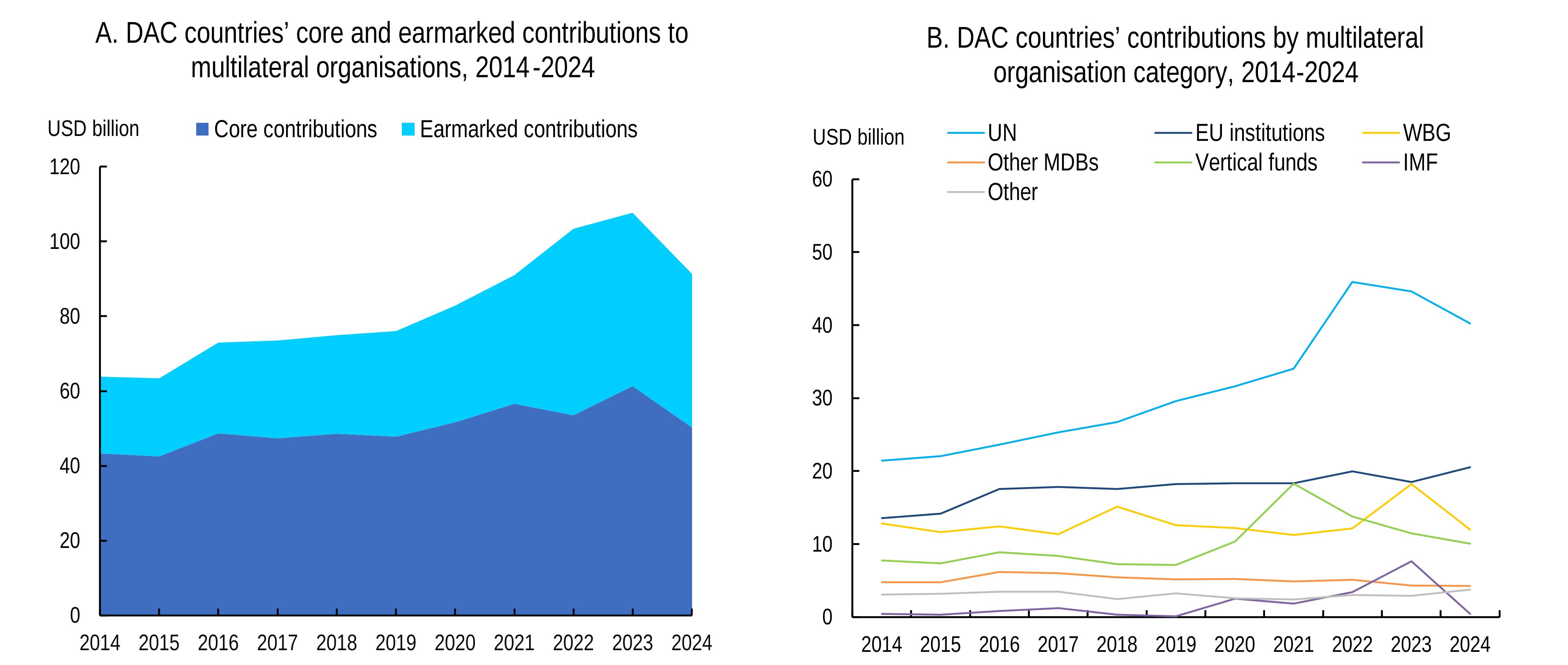
Note: Calculations are based on disbursements, in 2023 constant prices. EU=European Union; IMF=International Monetary Fund; WBG=World Bank Group.
Source: Authors’ calculations based on OECD (2026[16]), Providers’ total use of the multilateral system (database). Retrieved 22 February 2026, http://data-explorer.oecd.org/s/1td.
Unlike previous episodes of volatility, the 2024 decline reflects deeper structural pressures on aid budgets. Earlier fluctuations, such as the dip in core contributions in 2022, occurred within an overall upward trend and partly reflected post-crisis corrections following exceptional increases linked to the COVID-19 pandemic and Russia’s war of aggression against Ukraine. By contrast, the current downturn coincides with multi-year reductions in ODA announced across several major donors, suggesting that the contraction in multilateral contributions signals a medium-term reversal rather than a temporary adjustment.
The system’s heavy reliance on a few DAC donors leaves it highly exposed to cuts
The concentration of multilateral funding among a small number of DAC donors amplifies the system’s exposure to the announced cuts. As mentioned above, a large share of DAC members’ contributions to the multilateral development system comes from donors that have announced aid cuts. Eleven DAC members, collectively accounting for 63% of total DAC contributions to the system in 2024, have announced reductions to their ODA budgets in 2024 (Figure 1.3 and Figure 1.6), with most anticipating further cuts through the end of 2027 (OECD, 2025[17]). The simultaneous and substantial funding cuts by one third of the DAC membership are unprecedented in recent decades, and have system-wide implications.
Share of DAC members’ total contributions, 2024

Note: Calculations are based on disbursements, in 2023 constant prices.
Source: Authors’ calculations based on OECD (2026[16]), Providers’ total use of the multilateral system (database). Retrieved 22 February 2026, http://data-explorer.oecd.org/s/1td.
Forward-looking projections suggest that multilateral contributions could decline further if the announced aid cuts are implemented as planned. Based on survey data on expected changes in DAC members’ ODA budgets (OECD, 2025[17]), total funding to the multilateral development system could fall by between approximately 23% and 30% between 2023 and 2027 (Figure 1.7), reinforcing the likelihood of a sustained contraction rather than a short-lived adjustment.
DAC members’ total contributions to the multilateral system, 2010-2024 and projections

Note: Calculations are based on disbursements, in 2023 constant prices. Projections are generated by applying each donor’s ODA percentage change, as estimated in (OECD, 2025[17]), to their respective multilateral contributions.
Source: Authors’ calculations based on OECD (2026[16]), OECD Data Explorer, Providers’ total use of the multilateral system (database). Retrieved 22 February 2026, http://data-explorer.oecd.org/s/1td and OECD (2025[17]), Cuts in official development assistance: OECD projections for 2025 and the near term, https://doi.org/10.1787/8c530629-en.
The pullback by the multilateral system’s traditional donors could accelerate changes in donor patterns and influence. Although non-DAC government donors and private providers remain relatively small contributors at the system level, targeted increases can materially affect individual organisations’ financing structures and governance dynamics when major donors scale back.
The latest replenishments of the International Development Association (IDA), the World Bank Group’s concessional window, is a case in point. During IDA21, concluded in 2025, several top donors (United States, Japan, Germany and France) reduced their pledges compared to the previous cycle. The People’s Republic of China, hereafter China, meanwhile, boosted its pledge by 14%, becoming a top five pledger to an IDA replenishment for the first time in history. This is a notable rise considering China ranked only 20th as recently as IDA16, concluded in 2010 (Martinez and Estes, 2025[18]).
Similar dynamics are visible among private donors, which can assume greater prominence when traditional providers scale back. For example, in the absence of a United States pledge in the latest GAVI replenishment, the Gates Foundation became the institution’s second largest contributor, behind the United Kingdom (Rigby, 2025[19]), and the largest funder of the World Health Organisation’s (WHO) core budget. This has left the philanthropic organisations with an extraordinarily large donor share and influence over global public health governance.
1.2.2. What the funding dry-out means for the multilateral development system
Shrinking funding raises difficult trade-offs for donors to the multilateral development system
Depending on which institutions and instruments are prioritised, reductions in funding can translate into markedly different outcomes for the scale, composition and distribution of multilateral outflows. Figure 1.8 illustrates these trade-offs through a stylised simulation based on a hypothetical yet plausible 15% reduction in donor contributions. Donors broadly face three strategic options, with each option entailing trade-offs between scale and concessionality:
1) prioritise highly leveraged institutions to preserve overall volumes;
2) safeguard grants and concessional finance to protect the poorest contexts; or
3) apply proportional cuts across the board (“haircut”).
Illustrative trade-offs of aid funding cuts: 15% budget cuts scenario

Note: To keep the illustration transparent, the simulation assumes simplified leverage relationships: grant financing is treated as having a one-to-one relationship between donor cost and financing delivered, while loans are assumed to generate three dollars of financing for each dollar of donor contribution. The baseline scenario assumes an outflow composition of 30% grants and 70% loans, which broadly represents the historical balance between concessional and non-concessional multilateral finance.
These three scenarios illustrate why the frequently invoked ambition for the multilateral development system to “do more with less” is unrealistic in a contracting funding environment. While multilateral development organisations can sometimes increase productivity and efficiency through reforms or innovation, evidence from recent and ongoing reforms shows that such gains take time to materialise and do not eliminate the need for trade-offs (G20 Independent Experts Group, 2024[20]; Dag Hammarskjöld Foundation, 2021[21]). When overall donor envelopes shrink significantly, multilateral stakeholders cannot simultaneously preserve volumes and concessionality. The question facing donors is therefore not whether the system can absorb cuts without consequences, but which objectives should be prioritised and which consequences they are willing to accept.
Shifts in core and earmarked funding could compound the effects of declining multilateral contributions
The balance between core and earmarked contributions has major implications for how the system functions. Core contributions provide MDOs with flexibility to deliver on their mandates, invest in institutional capacities, and respond to evolving needs within an overarching strategy. Non-core, earmarked contributions allow member states to retain a degree of control over their use and can help target emerging priorities. When used strategically and aligned with institutional mandates and partner country priorities, earmarking can therefore play a constructive role in the system. However, extensive reliance on earmarked funding has also been shown to fragment funding, increase transaction costs, and reduce multilateral flexibility (Ihl et al., 2025[22]). Changes to this balance therefore affect not only individual organisations, but also the coherence of the multilateral development system as a whole.
Earmarked funding has risen steadily over the past decade and may increasingly displace core multilateral funding as budgets tighten. Figure 1.9 shows that its share of DAC members’ total ODA increased from 11% in 2010 to 18% in 2024, peaking at 21% in 2022. Over the same period, core multilateral funding, which had remained close to 27% for most of the past decade, fell to 23% in 2024, signalling that core funding can become a margin of adjustment when priorities shift and donor envelopes contract.
Share of DAC countries’ direct bilateral, core and earmarked multilateral contributions in total ODA, 2010-2024

Note: Direct bilateral ODA refers to DAC members’ bilateral ODA excluding earmarked contributions (multi-bi aid). Calculations are based on gross disbursements in 2023 constant prices.
Source: Authors’ calculations based on OECD (2026[23]), DAC1: Flows by provider (ODA+OOF+Private) (dataset). Retrieved 22 February 2026, http://data-explorer.oecd.org/s/9w.
A shift from earmarking displacing bilateral programmes to earmarking displacing core funding would weaken multilateral effectiveness. Without sufficient core resources, multilateral development organisations may struggle to finance cross-cutting functions such as country co-ordination or rapid responses to emerging crises that cannot be easily financed through tightly earmarked projects. Moreover, when earmarking displaces core funding, multilateralism risks becoming a channel for bilateral priorities rather than a platform for collective action. Preserving core funding is therefore not only a question of institutional stability, but also of restoring the system’s founding logic.
Individual multilateral development organisations vary in their exposure and vulnerability to donor cuts
Funding reductions and shifts in funding modalities, such as a move from flexible to more tightly earmarked contributions, do not affect all multilateral development organisations equally. The impact of donor cuts on individual organisations depends not only on the size of cuts, but also on structural characteristics of the organisations themselves. These characteristics include their funding model (grant-based versus leveraged), the concentration of their donor base, their reliance on voluntary versus assessed contributions, and their access to private sources of finance. Rather than representing isolated risks, these dimensions often interact, amplifying the exposure of individual organisations to funding cuts and donor withdrawals.
Across the UNDS, multiple dimensions of funding vulnerability often coincide, creating particularly high exposure to funding contractions. Figure 1.10 illustrates how most UNDS entities rely overwhelmingly on voluntary funding, draw funding from a relatively concentrated group of government donors, and attract limited private resources. Organisations that combine these three factors (such as IOM, WFP, UNAIDS and UNODC) emerge as particularly exposed to reductions in multilateral contributions (top-right quadrant).
Share of voluntary funding (%), government donor concentration (0-100) and share of private funding of UNDS entities, 2023-2024 average

Note: The share of voluntary funding (x-axis) ranges from 0% (only assessed funding) to 100% (only voluntary funding). The government donor concentration index (y-axis) captures whether each organisation’s funding from official bilateral donors is evenly distributed amongst all government donors (0) or whether it is concentrated amongst just a few (100). The share of private funding (%) represents the proportion of funding from the private sector, foundations and NGOs in total funding. The chart includes all entities in the UNDS except those with 10 or fewer government donors both in 2023 and 2024. The chart excludes local contributions from the analysis (i.e. funding provided by a government to UN activities implemented in its own country).
Source: Authors’ calculations based on a dataset of donor contributions to the United Nations Development System (UNDS) in 2024 provided to the authors directly by United Nations Department of Economic and Social Affairs (UNDESA).
The experience of UNESCO illustrates the risks of funding volatility, but also the scope for organisational adaptation. Repeated funding suspensions and withdrawals by the United States since 2011 have exposed the organisation to significant funding shocks. Following the 2017 US withdrawal, increased voluntary contributions from other members helped cushion the impact in the short term. Beyond these short-term adjustments, UNESCO is pursuing various longer-term adaptation strategies. These include efforts to further diversify its donor base, adjust expenditures, and continue reforms already underway. Although the organisation has also engaged in risk anticipation and mitigation to soften the impact of the most recent withdrawal by the United States, the latter is still expected to have material financial and operational effects, highlighting both the opportunities and limits of organisational adaptation to funding volatility.
How multilateral development organisations respond to these funding pressures will shape not only the volume and composition of multilateral resources, but also how effectively they are able to deploy them. The next section examines multilateral outflows, analysing how multilateral development organisations translate contributions into financing for low- and middle-income countries.
1.3.1. Record multilateral outflows in 2024 mask mounting pressure beneath the surface
Total multilateral outflows reached a new peak in 2024, demonstrating the multilateral system’s ability to scale up delivery in response to recent shocks. As shown in Figure 1.11, multilateral outflows, which include both outflows from MDOs’ core resources and earmarked flows channelled through them, totalled USD 296 billion in 2024, up 37% from pre-pandemic levels (2019) and up 4% from 2023. This expansion reflects, among other things, the sustained increase in lending capacity among MDBs over the past decade, supported by periodic capital increases and successive reforms to their financial models.
Evolution of multilateral outflows and their composition, 2004-2024

Note: Calculations are based on commitments, in 2023 constant prices. Calculations include ODA loans, ODA grants, other official flows (OOF) (excluding export credits), equity investments, and private sector instruments (PSIs).
Source: Authors’ calculations based on OECD (2026[24]), Creditor Reporting System (dataset). Retrieved 22 February 2026, https://data-explorer.oecd.org/s/52.
However, this apparent resilience reflects cushioning mechanisms that may delay, but not prevent, adjustment. Because parts of the system operate through multi-year arrangements (e.g. replenishments) and, in the case of MDBs, through balance sheet models, there may be a lag between deteriorating inflow conditions and multilateral outflows contractions. While these features can temporarily cushion delivery and delay funding cuts, they also risk obscuring the extent of the underlying strain on the multilateral development system and delay necessary adjustments. Once this buffer is exhausted, however, multilateral institutions may need to scale back existing or new commitments, increasing the risk of a sharper downturn in multilateral outflows than current headline figures suggest.
Early signs of strain are appearing, particularly among grant-based UNDS entities
While MDBs have continued expanding lending volumes, many UNDS entities have experienced a stagnation or decline in their outflows since 2022. The contraction is particularly pronounced among large humanitarian UNDS entities. Between 2022 and 2024, outflows from the World Food Programme (WFP), the largest UNDS agency by volume of financing delivered, fell by nearly one-third (-31%), from USD 8.2 billion to USD 5.6 billion (Figure 1.12). The humanitarian implications are immediate and far-reaching. In early 2025, WFP forecast that a further 34% funding cut relative to 2024 could materialise (WFP, 2025[25]). Under that scenario, 16.7 million people, representing around 21% of its beneficiaries, would lose access to food assistance.
Change in outflow volume among top 20 UNDS organisations, 2022-2024

Note: Calculations are based on commitments, in 2023 constant prices.
Source: Authors’ calculations based on OECD (2026[24]), Creditor Reporting System (dataset). Retrieved 22 February 2026, https://data-explorer.oecd.org/s/52.
In the short term, many multilateral development organisations are resorting to adjustment measures to absorb the funding shock. Across the system, MDOs have introduced hiring freezes, expenditure deferrals and administrative cost containment. Evidence from a recent survey of MDOs also indicates that funding cuts are already leading to programme delays, reduced geographic coverage and lower delivery targets (Figure 1.13). In addition, funding cuts are placing pressure on upstream functions that are less visible but critical to development effectiveness, such as policy support, oversight and norm-setting.
Operational implications of current funding reductions to MDOs

Note: This graph presents the survey respondents’ responses to the question “What are the operational implications of the current funding reductions for your organisation?”. The 18 survey respondents included 14 UN entities, three partnerships or funds and one international financial institution.
Source: MOPAN (2025[26]), Mapping of Multilateral Organisations’ Response to the Current Funding Environment, https://www.mopan.org/content/dam/mopan/en/publications/our-work/insights/thematic-briefs/mapping/mopan-mapping-exercise-2025.pdf.
1.3.2. The coming squeeze raises implications for multilateral outflows
Impacts on the system’s reach and ambition may be substantial and lasting
The very strengths that have enabled the multilateral development system to deliver at scale also create vulnerabilities in times of tightening aid budgets. In normal times, institutions with the capacity to leverage members’ contributions, such as multilateral development banks and replenished concessional windows multiply each dollar of donor support into several dollars of financing, allowing the system to mobilise resources far beyond direct budgetary contributions. Yet, this multiplier effect can operate in reverse: when donor commitments decline, the contraction in financing capacity can be disproportionately large. Figure 4.9 illustrates how a one-dollar reduction in funding to leveraged mechanisms such as the IDA, the African Development Fund (ADF) or the International Fund for Agricultural Development (IFAD) can translate into three or more dollars in lost investment in the poorest countries.

Source: IFAD (2025[27]), 2025 Report on IFAD’s Development Effectiveness, https://webapps.ifad.org/members/eb/145/docs/english/EB-2025-145-R-19.pdf?attach=1; African Development Bank (2025[28]), “African Development Fund mobilises a historic $11 billion, marking a new era of African ownership and investment-led development”, https://www.afdb.org/en/news-and-events/press-releases/african-development-fund-mobilises-historic-11-billion-marking-new-era-african-ownership-and-investment-led-development-89755; World Bank Group (2023[29]), IDA20 Mid-term Review, https://thedocs.worldbank.org/en/doc/f1d0b477064fadf03bd4e4aa96b5b63d-0410012023/original/ida-20-MTR-factsheet-11-16-2020.pdf.
Given these dynamics, bilateral providers must deploy scarce resources strategically to preserve the catalytic impact of the multilateral system. In other words, they should make deliberate choices about where resources can unlock the greatest development impact, without diluting mandates or exacerbating duplication. This may involve reassessing how scarce donor resources are allocated and comparing the expected development impacts of various funding modalities and mechanisms. For example, targeted core contributions to MDB concessional windows might generate greater impact than a multitude of small, fragmented contributions to MDB trust funds.
The implications of funding cuts extend beyond individual organisations to the whole system. The following section examines how cuts to some central institutions within the multilateral architecture may generate ripple effects across the system and to the countries it serves.
Uncoordinated funding cuts to central multilateral channels could trigger system-wide delivery failures
The multilateral development system functions as an interdependent delivery chain along which disruptions at central nodes can reverberate widely. Bilateral donors rely heavily on UNDS entities to implement humanitarian and development programmes. Vertical funds depend on MDBs and UNDS entities as implementing partners for green and health financing. Normative agencies, such as the WHO or ILO, shape standards and frameworks that other development actors operationalise.
In this interconnected architecture, where cuts are applied can matter as much as their scale. The network centrality analysis in Figure 1.15, Panel A indicates that several of the institutions most central to the multilateral delivery chain and therefore most relied upon by other actors – such as UNHCR, UNICEF and UN Women – are among those currently facing funding pressures. When cuts affect the highly central nodes, the risk is not only a contraction of their own operations, but also a weakening of the system’s connective tissue, impacting operational continuity across the network.
The consequences of such disruptions are likely to fall disproportionately on the poorest and most fragile contexts. As shown in Figure 1.15, Panel B, fragile and conflict-affected settings (FCAS) and least developed countries (LDCs) are respectively 52% and 42% more exposed to potential delivery failures from these highly central institutions than the average developing country. Cuts to central multilateral actors therefore risk amplifying financing gaps precisely where needs are greatest and substitution by other actors is least feasible.
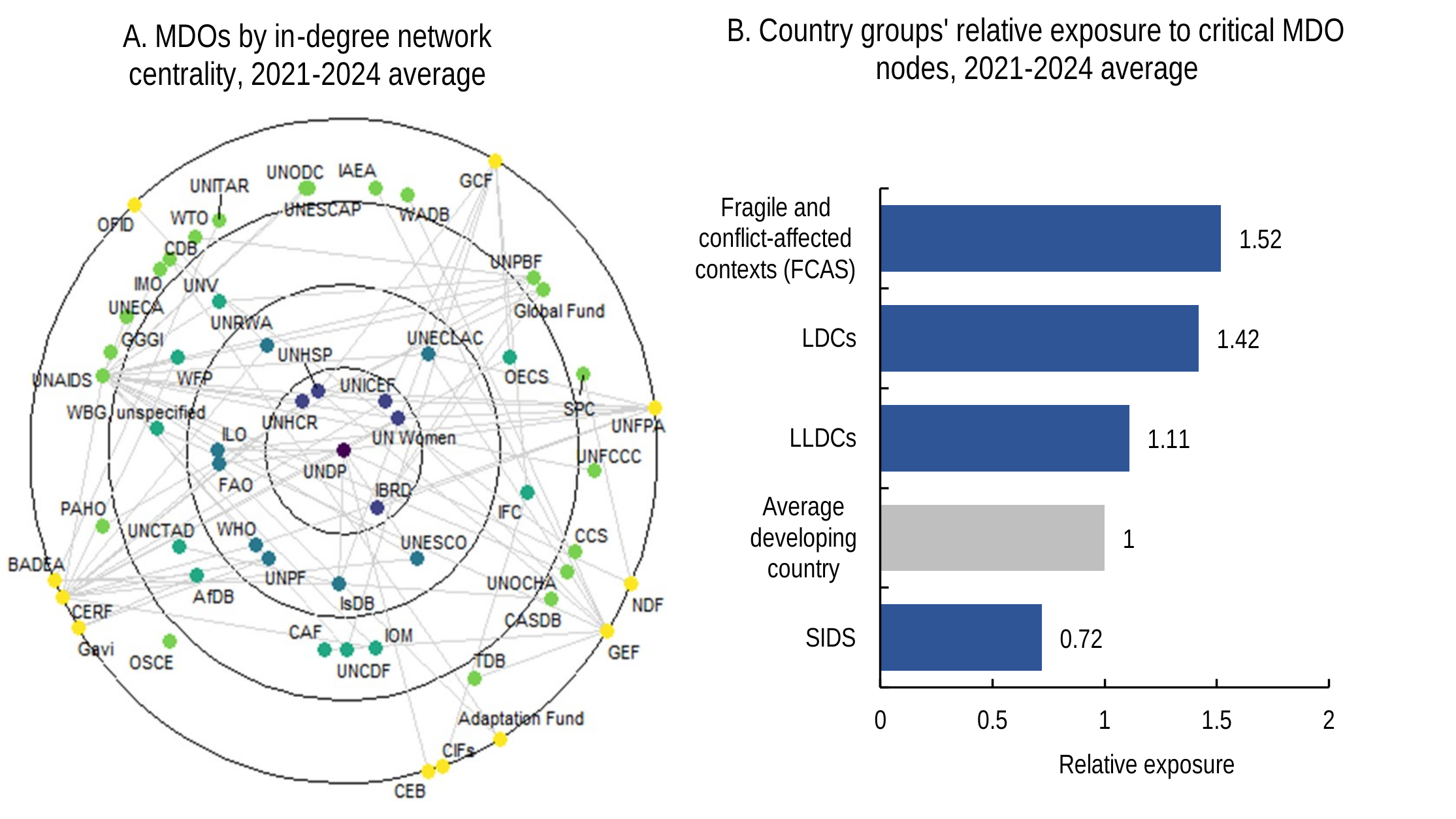
Note: In Panel A, in‑degree network centrality measures how many incoming connections an organisation receives from others in the network. Applied here to the network of multilateral development organisations, it highlights which MDOs are most frequently relied upon as delivery channels within the multilateral development system. MDOs with the highest network centrality scores appear in the inner circles of the network graph and are represented in darker colours. Panel B shows the relative exposure of different country groups to potential delivery failures by MDOs that both exhibit a high in-degree centrality score and are affected by current funding reductions, namely: UNHCR, UNICEF, United Nations Human Settlements Programme (UNHSP), UNDP and UN Women.
Source: Authors’ calculations based on OECD (2026[24]), Creditor Reporting System (dataset). Retrieved 22 February 2026, https://data-explorer.oecd.org/s/52.
Beyond the risk of delivery chain disruptions, the current funding environment risks shifting where and how multilateral resources are allocated. Under pressure to demonstrate scale and financial returns, institutions may prioritise operations that maximise leverage or disbursement speed, potentially at the expense of harder-to-finance contexts and sectors.
Concessional resources are at risk, with consequences for the most vulnerable
Concessional finance is central to the multilateral development system’s ability to serve low-income countries and essential social sectors. In 2024, concessional flows accounted for the overwhelming majority of multilateral financing received by low-income countries, while humanitarian, governance and social sectors also relied predominantly on grants and highly concessional resources (Figure 1.16). If these instruments become the primary margin of adjustment under fiscal pressure, the consequences will fall disproportionately on countries and sectors with the least access to alternative sources of finance.

Note: Calculations are based on commitments, in 2023 constant prices. Charts illustrate volumes of ODA loans, ODA grants, and OOF (excluding export credits) but do not display equity investment and private sector instruments (PSIs), which represent marginal shares of total volumes. These components are nevertheless included in the calculations presented in the text.
LIC=low-income country; LMIC=lower-middle income country; UMIC=upper-middle income country.
Source: Authors’ calculations based on OECD (2026[24]), Creditor Reporting System (dataset). Retrieved 22 February 2026, https://data-explorer.oecd.org/s/52.
Declining bilateral ODA to the poorest and most vulnerable countries further increases the strategic importance of multilateral concessional finance. Recent OECD projections suggest that LDCs and sub-Saharan Africa could face double-digit declines in net bilateral ODA in 2025 compared to 2023 levels (OECD, 2025[17]). Because a substantial share of support to these contexts is also channelled through multilateral institutions, the role of the multilateral development system as a stabilising anchor becomes more pronounced when bilateral engagement contracts. If multilateral concessional finance retrenches in parallel, vulnerable countries may face compounded financing gaps.
In this context, safeguarding concessional capacity becomes a strategic imperative. Protecting allocations to low-income and fragile settings, as well as to sectors such as humanitarian action, basic services and human capital, requires deliberate prioritisation within shrinking envelopes. Without this discipline, the multilateral development system risks drifting towards easier-to-finance contexts. However, doing so requires managing a strategic tension in development finance: between deploying scarce public resources where they can mobilise the greatest volume of additional capital, and directing them to contexts where no other sources of finance are available.
Multilateral stakeholders therefore face a critical choice between unmanaged retrenchment and deliberate strategic adaptation. That choice will determine whether the system emerges from this period diminished and more fragmented, or leaner and strategically refocused around its core principle of collective action.
Periods of constraint can create openings for renewal: the current inflection point offers an opportunity to reset the multilateral development system, based on its core original principles. The pressures facing the system need not lead to a loss of effectiveness if they are met with deliberate and co-ordinated action. Deliberate choices under constraints need to be made so that the system remains greater than the sum of its parts. Member states and multilateral development organisations share a responsibility to safeguard the system’s core function: enabling collective action and delivering beyond what bilateral approaches can achieve. With deliberate and co-ordinated action by both member states and multilateral development organisations, the system can emerge leaner and more focused, retaining a capacity to deliver value that no single actor can achieve. Enhancing the system’s effectiveness requires multilateral organisations to pursue reforms that sharpen rather than dilute their development additionality and strengthen system-wide coherence. This section summarises the main recommendations emerging from this report.
1.4.1. Recommendations for member states
Protect the system’s financial foundations
Preserve flexible and predictable contributions. Core resources underpin many of the system’s unique benefits, such as its ability to operate globally, respond flexibly and deliver programmes at scale across countries and sectors. For this reason, a continued increase in the share of earmarked funding cannot occur without consequences for the system’s effectiveness. The system’s funders should thus avoid the gradual displacement of flexible and predictable resources, recognising the essential role of core contributions in supporting mandate delivery.
Use earmarked funding more strategically to restore coherence in the system. In the near term, reducing the share of earmarking may not be realistic, particularly as such modalities can help sustain organisations financially in periods of retrenchment by major donors. Controlling for that potentially distortionary effect of earmarking is possible however, if such funding is aligned with (i) donor priorities, (ii) institutional mandates and (iii) partner country strategies. This “triple alignment” approach can help balance accountability and visibility with collective objectives. This requires donors to clarify in their multilateral engagement strategies how they intend to use different funding modalities.
Reassess burden-sharing among the funders of the system. The recent contraction in multilateral contributions has exposed the heavy reliance of many multilateral development organisations on a limited number of contributors, which makes them vulnerable to policy shifts or budget cuts by a handful of member states. Diversifying the funding base can help reduce this vulnerability. Internally (within the DAC), this means avoiding excessive donor concentration that leaves organisations dependent on one or a few major DAC funders. Externally (beyond the DAC), it implies engaging emerging donors and exploring ways of increasing their participation in replenishments.
Avoid indiscriminate and uncoordinated cuts that risk generating systemic damage
Protect institutions and functions that are central to systemic coherence and development additionality, rather than applying across-the-board haircuts, when faced with budget cuts (Figure 1.8). Funding decisions should explicitly account for systemic spillovers, i.e. the indirect effects that funding reductions in one part of the system can have on the whole. For example, cuts to leveraged multilateral mechanisms can reduce overall financing volumes by several times the value of the funding reduction because of a reverse leverage effect. Similarly, reductions in funding to central UN entities can disrupt programmes financed by other multilateral development organisations and bilateral donors. Considering these interdependencies can help ensure that short-term fiscal restraint does not produce disproportionate long-term opportunity costs.
Strengthen co-ordination among donors to mitigate the risks of correlated and destabilising adjustments. Increasing transparency over forward funding intentions (such as through DAC surveys and structured discussions at the DAC and with multilateral partners) can provide early warning signals and reduce MDOs’ funding uncertainty. Where possible, donors should avoid simultaneous cuts to systemically important institutions whose contraction could trigger cascading effects across low-income and vulnerable contexts.
1.4.2. Recommendations for multilateral development organisations
Adapt structurally to a fragmented and constrained environment
Strengthen effectiveness through renewed mandate discipline and a clearer differentiation of comparative advantages. Institutions need to refocus on areas where they add distinct value, and --where fragmentation undermines impact-- consider rationalising the architecture to reduce overlap and transaction costs. This may involve, where appropriate, organisational mergers or the orderly sunsetting of organisations whose mandates have become redundant or no longer reflect current development priorities, building on approaches such as the portfolio similarity analyses developed by the OECD. In doing so, MDOs should also rethink how structural reforms can help them better respond to the needs and priorities of partner countries. At the same time, as bilateral aid portfolios are increasingly used to pursue donors’ geopolitical or national priorities, multilateral channels may need to assume a greater role to protect development objectives that risk being deprioritised, such as poverty reduction or investment in low-income and high fragility contexts.
Building resilience through careful diversification and adaptation of MDOs’ funding models. Expanding MDOs’ funding base (including through engagement with non-DAC government donors and, where appropriate, private actors) can enhance individual organisations’ stability, but must be managed to safeguard governance balance and development additionality. In parts of the system where earmarked contributions have risen steadily in recent years, MDOs’ governing bodies may need to review their earmarked portfolios to ensure alignment with their core mandates. They may also consider adapting their budgetary processes, for example by requiring that every earmarked contribution includes a charge-back to core budgets. In parallel, unleveraged organisations, such as most UNDS entities and vertical funds, could investigate opportunities for increasing their catalytic impact through the adoption of innovative financing mechanisms or increased co-financing with MDBs, provided these efforts do not divert them from their institutional mandates.
Treat concessional resources as a strategic asset and not an adjustment variable
Safeguard concessional envelopes for the poorest and most vulnerable countries. This is essential for preserving development additionality and preventing widening financing gaps. Where alternative sources of finance exist, particularly in some middle-income countries, allocation frameworks may need recalibration to protect scarce concessional capacity for sectors where it is indispensable. Protecting sectors with high development impact but limited financial leverage (including humanitarian action, basic services and human capital) is equally critical.
Make allocation choices explicit to strengthen accountability and strategic clarity. Multilateral development organisations should assess, monitor and communicate the allocative impacts of funding reductions, ensuring that distributional consequences across countries, sectors and instruments are understood by their funders and shareholders. In practice, this means tracking how funding cuts affect different country groups and sectors that rely heavily on concessional resources. Greater transparency on these impacts can inform member states’ funding decisions and help ensure that reductions in funding do not inadvertently fall on countries and sectors with limited alternative sources of finance.
Sequence grants, blended finance and non-concessional instruments more deliberately so that scarce concessional resources are used where they add the most value. For example: grants cover what markets will not, blended finance reduce risk, and non-concessional finance can scale investments once conditions allow. This clarity can help avoid situations where scarce concessional resources are used on projects that could have been funded by less subsidised instruments.
References
[28] African Development Bank (2025), African Development Fund mobilises a historic $11 billion, marking a new era of African ownership and investment-led development, https://www.afdb.org/en/news-and-events/press-releases/african-development-fund-mobilises-historic-11-billion-marking-new-era-african-ownership-and-investment-led-development-89755.
[10] Bridgetown Initiative (2022), Bridgetown Initiative on the Reform of the International Development and Climate Finance Architecture, https://www.bridgetown-initiative.org/.
[21] Dag Hammarskjöld Foundation (2021), The Way Forward: Fulfilling the Potential of the Funding Compact at the Country Level, https://www.daghammarskjold.se/wp-content/uploads/2021/11/dhf-funding-compact-2021-web.pdf.
[9] G20 (2024), Roadmap towards better, bigger and more effective MDBs, https://coebank.org/documents/1724/G20_Roadmap_towards_better_bigger_and_more_effective_MDBs_T69DXmX.pdf.
[20] G20 Independent Experts Group (2024), Implementing MDB Reforms: A Stocktake, Center for Global Development, https://www.cgdev.org/publication/implementing-mdb-reforms-stocktake.
[6] Global Alliance for Vaccines and Immunization (2026), Overview 2000–2037, https://www.gavi.org/investing-gavi/funding/overview-2000-2037.
[7] Global Environmental Fund (2022), Summary of Negotiations of the 8th Replenishment of the GEF Trust Fund, https://www.thegef.org/council-meeting-documents/gef-c-62-03.
[2] Government of Canada (2026), Davos 2026: Special address by Mark Carney, Prime Minister of Canada, https://www.weforum.org/stories/2026/01/davos-2026-special-address-by-mark-carney-prime-minister-of-canada/.
[5] Green Climate Fund (2023), Report on the outcomes of GCF’s second formal replenishment, https://www.greenclimate.fund/document/gcf-b37-16-rev01.
[3] IDA (2022), IDA20 - Building Back Better from the Crisis : Toward a Green, Resilient and Inclusive Future, https://documents.worldbank.org/en/publication/documents-reports/documentdetail/163861645554924417.
[27] IFAD (2025), 2025 Report on IFAD’s Development Effectiveness, https://webapps.ifad.org/members/eb/145/docs/english/EB-2025-145-R-19.pdf?attach=1.
[22] Ihl, J. et al. (2025), “The effectiveness of core and earmarked funding in multilateral development cooperation: Systematic review”, DEval Discussion Paper, Vol. 02/2025, https://www.deval.org/fileadmin/Redaktion/PDF/05-Publikationen/Berichte/2025_Multilaterale_EZ/DEval-DP-02-2025-MultilateralDC-Web.pdf.
[18] Martinez, N. and J. Estes (2025), The ABCs of the IFIs: IDA21 Update, Center for Global Development, https://www.cgdev.org/publication/abcs-ifis.
[26] MOPAN (2025), Mapping of Multilateral Organisations’ Response to the Current Funding Environment, Multilateral Organisation Performance Assessment Network, Paris, https://www.mopan.org/en/our-work/performance-insights/multilateral-effectiveness-in-a-shifting-landscape/mapping-thematic-brief.html.
[24] OECD (2026), Creditor Reporting System (dataset), https://data-explorer.oecd.org/s/52 (accessed on 15 January 2026).
[23] OECD (2026), DAC1 table, http://data-explorer.oecd.org/s/9w (accessed on 22 February 2026).
[16] OECD (2026), Providers’ total use of the multilateral system (database), http://data-explorer.oecd.org/s/1td (accessed on 22 February 2026).
[17] OECD (2025), “Cuts in official development assistance: OECD projections for 2025 and the near term”, OECD Policy Briefs, No. 26, OECD Publishing, Paris, https://doi.org/10.1787/8c530629-en.
[1] OECD (2024), Multilateral Development Finance 2024, OECD Publishing, Paris, https://doi.org/10.1787/8f1e2b9b-en.
[15] OECD (2022), Comparing multilateral and bilateral aid: A portfolio similarity analysis, OECD Development Perspectives, https://www.oecd.org/en/publications/comparing-multilateral-and-bilateral-aid_81686d2f-en.html.
[19] Rigby, J. (2025), Global vaccine group Gavi has $9 billion, short of its target, https://www.reuters.com/business/healthcare-pharmaceuticals/global-vaccine-group-gavi-secures-9-billion-after-funding-summit-2025-06-25/#:~:text=The%20United%20Kingdom%20was%20the,in%20cutting%20international%20aid%20budgets.
[14] Sands, P. (2025), Transforming Global Health To Maximize Impact And Accelerate Self-Reliance, https://www.forbes.com/sites/petersands/2025/11/13/transforming-global-health-to-maximize-impact-and-accelerate-self-reliance/.
[4] The Global Fund (2022), Pledges at Global Fund Seventh Replenishment Conference, https://archive.theglobalfund.org/media/12328/archive_seventh-replenishment-pledges_list_en.pdf.
[8] U.S. Department of the Treasury (2024), G7 Finance Ministers and Central Bank Governors’ Communiqué, https://home.treasury.gov/news/press-releases/jy2371.
[13] United Nations (2025), Resolutions adopted by the General Assembly on 30 December 2025, https://docs.un.org/en/A/RES/80/244%20A-C.
[11] United Nations (2025), “United Nations revises 2026 regular budget proposal, pairing cost reductions with initial reform measures”, UN News, https://news.un.org/en/story/2025/09/1165850.
[12] United Nations (2024), Resolutions adopted by the General Assembly on 24 December 2024, https://digitallibrary.un.org/record/4071044?ln=en&v=pdf.
[25] WFP (2025), Food Security Impact of Reduction in WFP Funding, https://docs.wfp.org/api/documents/WFP-0000166581/download/.
[29] World Bank Group (2023), IDA20 Mid-term Review, World Bank Group, Washington DC, https://thedocs.worldbank.org/en/doc/f1d0b477064fadf03bd4e4aa96b5b63d-0410012023/original/ida-20-MTR-factsheet-11-16-2020.pdf.