This chapter analyses inflows to the multilateral development system, exploring the implications for the system of recent ODA cuts announced by major donors. It documents the sharp reversal of multilateral funding growth in 2024 and shows that the system’s exposure stems in part from its reliance on a small group of major donors, several of whom have announced substantial ODA cuts. The implications include unavoidable trade-offs between scale and concessionality, and a heightened risk of earmarked funding displacing rather than complementing core contributions, weakening the financial foundations of multilateral effectiveness at a time when the system is needed most. Finally, the chapter shows how organisations’ vulnerability differs depending on their funding models, the balance between funding modalities, donor concentration and the diversification of the donor base.
Multilateral Development Finance 2026

Abstract
3.1.1. Funding to the multilateral development system is in decline
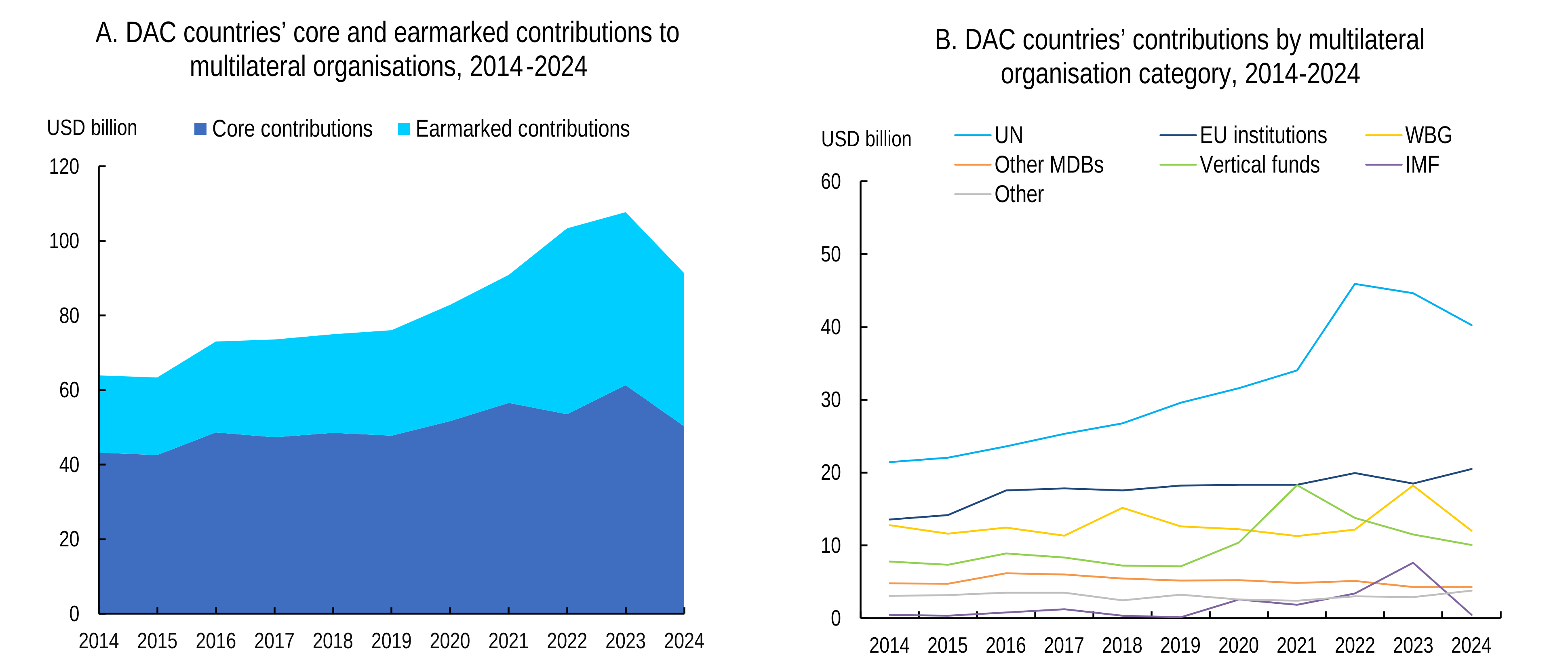
After several years of steady growth, funding to the multilateral development system reversed course in 2024, reflecting mounting fiscal and political pressures in donor countries. Although core and earmarked contributions to multilateral development organisations continued to increase through 2023 to reach a USD 107.6 billion all-time-high – supported by a temporary rebound in core funding following the pandemic – in 2024, both core and earmarked contributions declined sharply, bringing total multilateral contributions down to USD 91.3 billion (a 15% fall) (Figure 3.1, Panel A). The contraction in total inflows was driven mainly by reduced funding to UNDS entities, vertical funds and international financial institutions (IFIs), including the World Bank Group and the International Monetary Fund (Figure 3.1, Panel B).
This decline in funding to the multilateral system mirrors the global contraction observed in total official development assistance. Unlike previous episodes of volatility driven by exceptional shocks, such as the 5% decline in core contributions observed in 2022 (coinciding with the COVID-19 pandemic and the war in Ukraine), the current downturn reflects deeper structural pressures on aid budgets. As a result, the decline observed in 2024 is more likely to be the start of a medium-term trend, rather than a short-lived fluctuation in ODA volumes. The simultaneous and substantial funding cuts announced by one-third of DAC members in 2025 (discussed in Section 2.2.2) are unprecedented in recent decades, and most of the cutters have announced further reductions through 2027, as discussed later in this section (OECD, 2025[1]).
Note: Calculations are based on disbursements, in 2023 constant prices.
Source: Authors’ calculations based on OECD (2026[2]), Providers’ Total Use of the Multilateral System (dataset), http://data-explorer.oecd.org/s/1td.
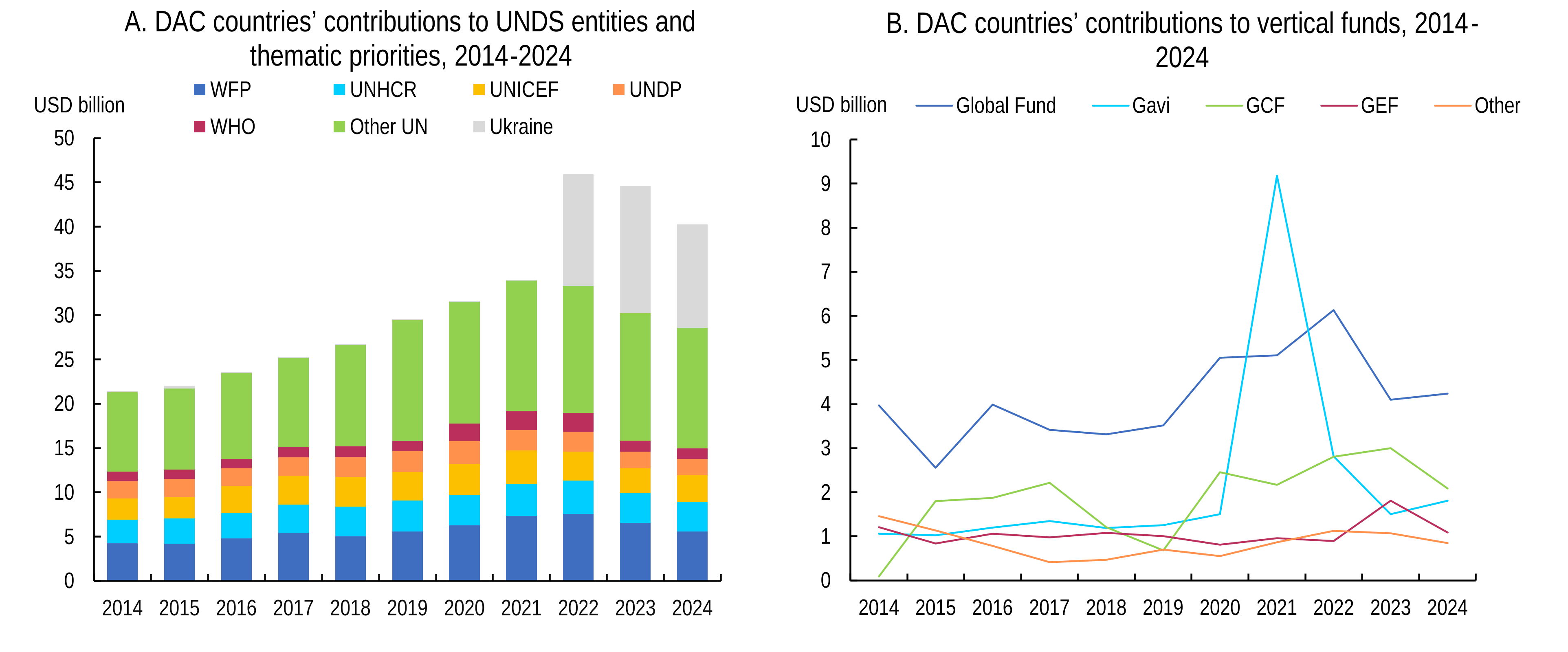
The extent of the funding drop over 2023-2024 differed across categories of multilateral organisations. Funding to the UNDS declined in 2023 and 2024 following a decade of gradual expansion that peaked in 2022. The 2022 peak was driven partly by a surge in crisis-related funding, notably in response to Russia’s war of aggression against Ukraine. As Figure 3.1, Panel B shows, total funding to the UNDS decreased by 2.8% in 2023, and by 9.8% in 2024, down to USD 40.2 billion, affecting both core and earmarked contributions. The sharp fall in 2024 contributions was driven by a 19% fall in Ukraine funding, while the gradual decline of non-Ukraine funding starting as early as 2022 (Figure 3.2, Panel A).
Recent trends in funding to vertical funds illustrate how these issue-specific mechanisms can scale up rapidly in response to shocks, but also how exposed they are to shifting priorities and fiscal tightening. Funding to health-focused vertical funds – Gavi and The Global Fund to Fight AIDS, Tuberculosis and Malaria – peaked in 2021 and 2022, reflecting the surge in resources mobilised in response to the COVID-19 pandemic (Figure 3.2, Panel B). In 2023 and 2024, this expansion slowed down, with inflows declining as emergency financing needs receded and donor attention shifted to other priorities. Environment and climate-related vertical funds – the Green Climate Fund (GCF) and the Global Environment Facility (GEF) – show a different pattern, with funding continuing to rise until 2023, before declining in 2024. This downturn coincided with the broader contraction in multilateral funding and reflects, in part, changes in the policy priorities of some donors alongside tighter budgetary conditions.
For the World Bank Group and the IMF, their 2024 decline largely reflects the unwinding of exceptionally high contribution levels recorded in 2023 (Figure 3.1, Panel B), which coincided with major replenishment cycles: IDA20 for the World Bank Group, and the launch and inaugural capitalisation of the Resilience and Sustainability Trust (RST) at the IMF. In contrast, funding to the European Union institutions increased over the same period, from USD 18.4 to USD 20.5 billion.
Note: Calculations are based on disbursements, in 2023 constant prices. In Panel A, contributions to specific UNDS entities exclude disbursements for which Ukraine is the recipient country, which are lumped together under the “Ukraine” category. The Global Fund=The Global Fund to Fight AIDS, Tuberculosis and Malaria.
Source: Authors’ calculations based on OECD (2026[2]), Providers’ Total Use of the Multilateral System (dataset), http://data-explorer.oecd.org/s/1td.
The funding decline is set to continue
Projections suggest that multilateral contributions could decline further if the aid cuts announced by donors are implemented as planned. The projections shown in Figure 3.3 are derived from a survey which asked DAC members about their recent and expected reductions in their total ODA budgets over the coming years (OECD, 2025[1]). To translate these expected reductions into a forward-looking scenario for multilateral funding, the analysis assumes that each donor maintains a constant share of multilateral contributions within its overall ODA envelope. Under this assumption, total contributions to the multilateral development system are projected to decline by approximately 23% to 30% between 2023 and 2027. This shows that MDOs will face a deteriorating funding environment even in the absence of deliberate policy decisions to scale back multilateral engagement.
DAC members’ total contributions to the multilateral system, 2010-2024 and projections

Note: Calculations are based on disbursements, in 2023 constant prices. Projections are generated by applying each donor’s ODA percentage change, as estimated in (OECD, 2025[1]), to their respective multilateral contributions.
Source: Authors’ calculations based on OECD (2026[2]), Providers’ Total Use of the Multilateral System (dataset), http://data-explorer.oecd.org/s/1td; and OECD (2025[1]), “Cuts in official development assistance: OECD projections for 2025 and the near term”, https://doi.org/10.1787/8c530629-en.
A significant share of multilateral development organisations have already had funding reductions confirmed by their donors. While the projections in Figure 3.3 provide a perspective on the overall potential impact of the announced budget cuts, they only capture one side of the picture. A complementary perspective emerges when looking at the expectations of MDOs themselves. Evidence from a recent survey among MDOs indicates that most of them have received formal donor notices of funding reductions (MOPAN, 2025[3]). Across the 18 respondents that responded to the question, 15 indicated they had received formal notice of funding reductions from donors. In addition, one-third of the respondents (6) estimated the scale of their funding reduction for their next budget or replenishment to be within a range of 21% to 30% lower relative to the previous budget. When considered in conjunction with the donors’ own projections, these MDO expectations suggest that the multilateral development system is entering a period of significant, and potentially sustained, funding contraction.
The severity and concurrence of the projected declines in multilateral contributions raise concerns about the system’s ability to plan for and absorb the resulting shock. Beyond their scale, these projected cuts also matter because of how they are likely to be implemented: in a constrained environment, pressures to preserve visibility or maintain specific priorities may increasingly shape decisions about funding modalities and allocation choices. This raises questions not only about the overall volume of resources flowing to the multilateral development system, but also about the balance between core and earmarked funding – a topic which is turned to in Section 3.1.3.
3.1.2. Heavy reliance on a few DAC donors leaves the system highly exposed
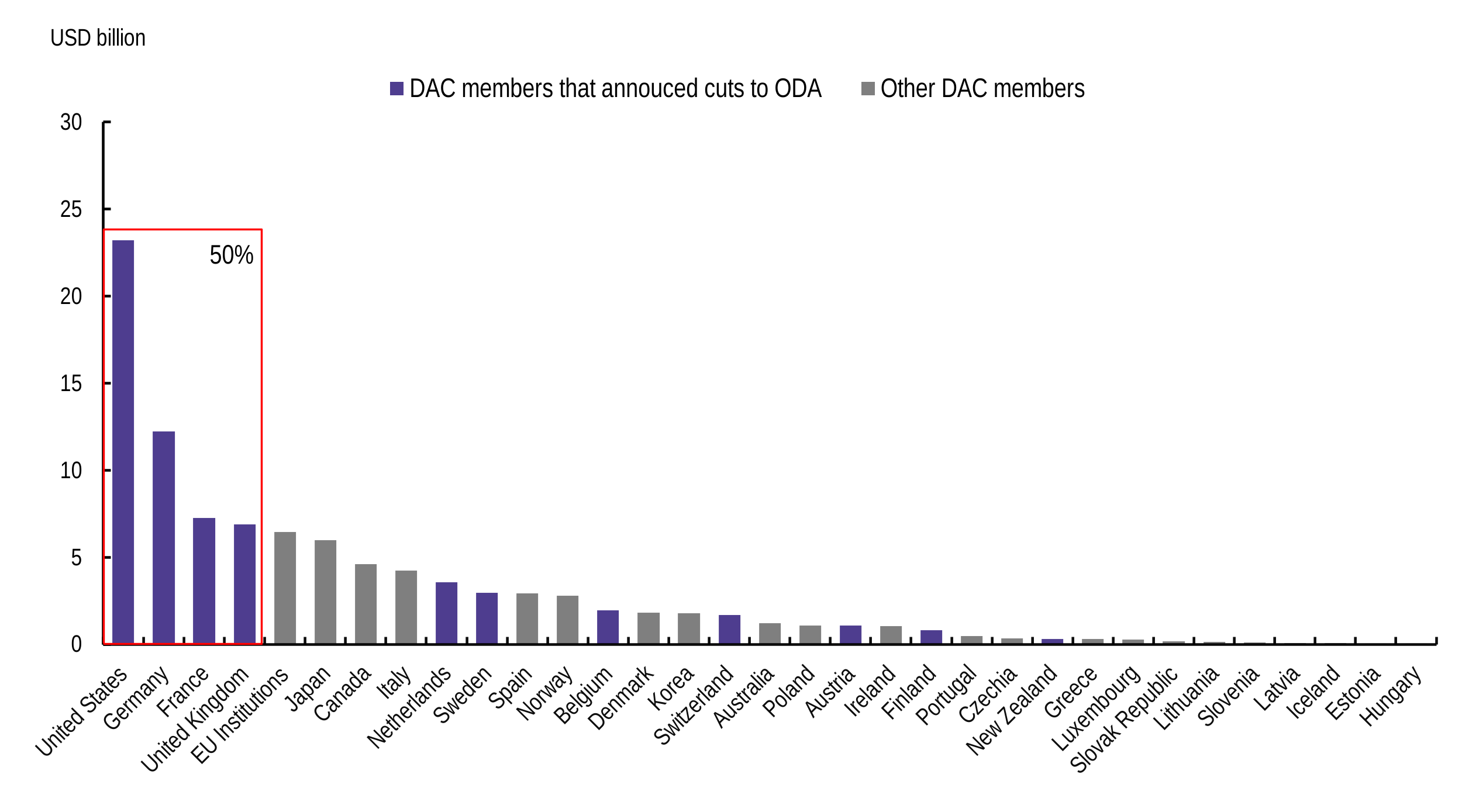
The heavy dependence of the multilateral development system on a small number of DAC providers has implications for both the stability and the vulnerability of the system. In 2024, four countries accounted for about half of total DAC contributions to the multilateral development system: the United States, Germany, France and the United Kingdom (Figure 3.4). As a result, funding decisions of a handful donors have system-wide implications for the multilateral development system.
DAC members’ total multilateral contributions, 2024
Note: Calculations are based on disbursements, in 2023 constant prices.
Source: Authors’ calculations based on OECD (2026[2]), Providers’ Total Use of the Multilateral System (dataset), http://data-explorer.oecd.org/s/1td.
Aid cuts announced by the system’s top donors have exposed the risks this dependence creates. Importantly, the exposure of the multilateral development system is amplified by the fact that the four largest DAC contributors are all among those that have announced reductions to their ODA budgets (Section 3.1.1). As a result, the current funding downturn is not only broad-based but is also concentrated among those donors whose decisions carry the greatest weight for the system as a whole, increasing the risk of abrupt impacts on MDOs’ financial capacity and planning. As shown in Figure 3.5, a significant share of multilateral funding currently comes from these and the other seven DAC members that have announced or are already implementing cuts to their ODA, suggesting that the impact on multilateral development finance is likely to be both substantial and widespread. Section 3.2.3 outlines some ways in which MDOs can broaden their funding bases.

Source: Calculations for Panel A are based on a dataset of donor contributions to the United Nations Development System (UNDS) provided directly by United Nations Department of Economic and Social Affairs (UNDESA). It excludes local contributions (i.e. funding provided by a government to UN activities implemented in its own country) from analysis. Calculations for Panel B are based on the latest completed replenishments for those multilateral funds for which full contributions data are available: IDA20, Global Fund-7, Global Climate Fund (GCF) Second Formal Replenishment, Gavi 2021-2025 and Global Environment Facility (GEF-8). Not all ODA providers that have announced cuts to ODA for 2025-27 participate in all the multilateral funds analysed here.
3.1.3. Core contributions continue to lose out to earmarked funding
Earmarked funding has shifted from substituting bilateral aid to increasingly displacing core contributions in DAC members’ total ODA
For much of the 2010s, earmarking largely expanded at the expense of direct bilateral aid, while core contributions remained comparatively stable as a share of DAC members’ total ODA. Between 2010 and 2021, the share of direct bilateral aid in DAC members’ ODA declined from 63% to 55%, while earmarked multilateral funding rose from 11% to 17% (Figure 3.6). Over that same period, core multilateral funding remained close to its long-run range, at around 27% of total ODA. Although this increase in earmarked contributions was not without consequences for the system’s effectiveness (e.g. increasing fragmentation), on the whole the core funding base underpinning multilateral mandates was not directly impacted.
Recent shifts suggest earmarked funding may increasingly displace core multilateral funding in DAC members’ total ODA. Since 2020, the relationship between direct bilateral aid, earmarked and core funding has evolved, as spikes in earmarking have coincided with sharper dips in core funding. Figure 3.6 shows that earmarked contributions increased from 17% of DAC members’ total ODA in 2021 to 21% in 2022, before going back to 19% and 18% in 2023 and 2024 respectively. Meanwhile, the share of core multilateral funding, which had remained constant at around 27% between 2010 and 2021, fell to 23% in 2024. The implications of these recent shifts for the multilateral development system are discussed in Section 3.2.2.
Share of DAC countries’ direct bilateral, core and earmarked multilateral contributions, 2010-2024

Note: Direct bilateral ODA refers to DAC members’ bilateral ODA excluding earmarked contributions (multi-bi aid). Calculations are based on gross disbursements in 2023 constant prices.
Source: Authors’ calculations based on OECD (2026[4]), DAC1: Flows by Provider (ODA+OOF+Private) (dataset), http://data-explorer.oecd.org/s/9w.
Multilateral development organisations receive a growing share of contributions in the form of earmarked resources, but patterns vary across DAC members
The evolution of earmarking within multilateral contributions confirms their growing importance in the funding mix of the system. After experiencing a period of slow but steady growth from 2010 to 2021, the share of DAC countries’ earmarked contributions to multilateral organisations peaked in 2022 (at 48% of DAC members’ total multilateral contributions) amid exceptional crisis-related financing linked to the COVID-19 pandemic and the war in Ukraine (Figure 3.7). It then briefly declined in 2023 to 43% of total contributions – reflecting a decline of earmarked funding for the COVID-19 response and a moderate rebound in core contributions – before rising again in 2024 to 45%, its second highest level on record.
Share of DAC countries’ earmarked contributions to multilateral organisations, 2014-2024

Note: Calculations are based on disbursements, in 2023 constant prices.
Source: Authors’ calculations based on OECD (2026[2]), Providers’ Total Use of the Multilateral System (dataset), http://data-explorer.oecd.org/s/1td.
DAC members differ markedly in how they adjust the balance between core and earmarked funding. Year-on-year changes in core and earmarked contributions show significantly more variation across donors in 2024 than in previous years. The most dramatic differences in approach are those by the United States and Germany – the two largest contributors to the multilateral system (Figure 3.8). In 2024, the United States reduced its core contributions by USD 7.3 billion while expanding its earmarked flows by USD 9.4 billion, largely driven by increased support to Ukraine. On the other hand, Germany increased its core contributions by USD 7.5 billion while reducing earmarked funding by USD 9.2 billion. These divergent approaches are shaped by domestic political considerations, budgetary processes and strategic preferences regarding the role of multilateral organisations. At the same time, they reflect a broader environment of heightened uncertainty and limited co-ordination across the system, as funding decisions remain primarily shaped by national budget processes and domestic political considerations, with adjustments made largely at the national level. The result is an increasingly fragmented and uncertain multilateral funding landscape.
Change in DAC members’ total use of the multilateral development system (top 20 members showing the largest change), 2021-2022 contributions versus 2023-2024 contributions

Note: Calculations are based on disbursements, in 2023 constant prices.
Source: Authors’ calculations based on OECD (2026[2]),Providers’ Total Use of the Multilateral System (dataset), http://data-explorer.oecd.org/s/1td.
Despite the overall trend towards rising earmarking, several DAC members continue to demonstrate a strong commitment to core funding. In 2024, 24 out of 32 DAC countries, accounting for roughly 60% of total multilateral contributions, provided core contributions exceeding what would be expected based on their share of DAC gross national income (GNI). Nordic and Benelux countries continue to feature prominently in this group, reflecting a sustained commitment to providing predictable and flexible funding to the multilateral system (Figure 3.9). Together, these countries account for seven of the top ten positions for core contributions relative to DAC GNI.
Core contributions to multilateral organisations relative to countries’ share in the overall DAC GNI, 2022-2024

Note: Calculations are based on disbursements, in 2023 constant prices.
Source: Authors’ calculations based on OECD (2026[2]), Providers’ Total Use of the Multilateral System (dataset), http://data-explorer.oecd.org/s/1td.
3.1.4. Tightening budgets among the system’s traditional donors may open space for emerging donors to play a greater role
In the last decade, there has been limited success in crowding in emerging donors and diversifying the UNDS’ donor base. For years, UN funding experts have called for a broadening of the UNDS’s donor base beyond a handful of DAC members (Dag Hammarskjöld Foundation; UN MPTFO, 2017[5]). Yet even accounting for the recent contraction, DAC countries’ contributions have risen strongly over the past decade, increasing from USD 23.3 billion in 2014 to 29.5 billion in 2024 (Figure 3.10, Panel A), raising their share in total funding to the UNDS from 65% in 2014 to 69% in 2024 (Figure 3.10, Panel B). In contrast, emerging donors – defined loosely as non-DAC countries and private donors (i.e. private sector, foundations and NGOs) – have seen a downward funding trend. Over the same period, the combined contributions of the 162 non-DAC UN member states fell from USD 2.6 to 2.3 billion, an 11% reduction, driven notably by significant declines in contributions by Saudi Arabia (-60%) and Kuwait (-85%). Total private funding declined from USD 4.6 to 3.8 billion, an 18% fall. These declines brought non-DAC countries’ funding share down from 7% to 5%, while the private donor share declined even more, from 13% to 9%.

Note: In Panel A, calculations are based on contributions to the United Nations Development System (UNDS) by donor category in 2024 constant prices, excluding local contributions (i.e. funding provided by a government to UN activities implemented in its own country). “Non-DAC countries” capture the contributions of the 162 non-DAC UN member states. “Private donors” include the private sector, foundations and NGOs, while “Other” primarily contains the multilateral funders of the UNDS, including IFIs, vertical funds and EU Institutions. The chart compares 2014 with 2024 contributions due to data constraints for other years. Panel B is also based on 2024 prices, excluding local contributions.
Source: Authors’ calculations based on a dataset of donor contributions to the United Nations Development System (UNDS) provided directly by the United Nations Department of Economic and Social Affairs (UNDESA).
The decline of emerging donor funding to the UNDS underscores the urgency of strengthening efforts to diversify the UN system’s funding base. The UNDS still depends on DAC donors for 69% of total funding (77% when we include European Commission contributions), a vulnerability that has been exposed by the current wave of correlated DAC donor cuts. Reversing the slowdown in emerging donor funding could help reduce this dependence on DAC donors over time. Strengthening this diversification drive will be important both to weather the current aid crisis and to build resilience to future shocks.
Despite the overall downward trend in non-DAC government contributions, there have been some notable increases by some countries. The People’s Republic of China quadrupled its funding to the UNDS between 2014 and 2024, making it the fastest-growing contributor of the top 20 government donors in 2014. It jumped three positions in the ranking of non-DAC government donors to the UNDS, becoming by far the biggest non-DAC donor in 2024 (Figure 3.11). While Saudi Arabia and Kuwait retreated as the top two donors in 2014, two other Gulf States, the UAE and Qatar, jumped two and six positions respectively. India also accelerated its contributions, rising six places and re-establishing itself among the top five non-DAC contributors.
Top 10 non-DAC government donors to the UNDS in 2024, with arrows indicating change in rank relative to 2014

Note: Local contributions (i.e. funding provided by a government to UN activities implemented in its own country) are excluded from analysis.
Source: Authors’ calculations based on a dataset of donor contributions to the United Nations Development System (UNDS) provided directly by the United Nations Department of Economic and Social Affairs (UNDESA).
While non-DAC countries are small system-wide donors, they can be important funders at the entity level. For example, in 2024 amid the humanitarian crisis in Gaza, Saudi Arabia boosted its funding to the United Nations Relief and Works Agency for Palestine Refugees in the Near East (UNRWA) by 140% relative to 2023, becoming its sixth largest government donor that year. From 2018 to 2023 when the United States were out of UNESCO (rejoined mid-2023), China was the leading donor to the entity, providing a financial lifeline to the budget-constrained organisation (see Section 3.2.3 for further details on UNESCO’s navigation of budget cuts). As highlighted in the last edition of the Multilateral Development Finance report, such targeted support to regions, themes and entities can boost emerging donors’ influence in select organisations (OECD, 2024[6]). For example, shortly after the US withdrawal from UNESCO in 2017, and the resulting jump in China’s share of funding, a Chinese official was appointed Deputy Director General, the organisation’s second most senior leadership position (UNESCO, 2018[7]).
The recent aid pullback by the multilateral system’s traditional donors could accelerate changes in donor patterns in other parts of the system, with IDA’s recent replenishment a case in point. For IDA’s 20th replenishment, negotiated in 2021, France, Germany, Japan, the United Kingdom and the United States pledged the largest amounts by far (Martinez and Landers, 2025[8]). At IDA21 in 2025, all these top donors, except for the United Kingdom, reduced their pledges compared to the previous replenishment. China, meanwhile, boosted its pledge by 14% in nominal terms compared to the last cycle, becoming a top five pledger to an IDA replenishment for the first time in history. This is a remarkable rise, considering China was only 20th largest pledger as recently as IDA16, which was completed in 2010 (Martinez and Estes, 2025[9]).
Shifting aid dynamics are also prompting African countries to rethink their role as investors in regional development via the African Development Bank (AfDB). Until recently, African countries contributing to the African Development Fund (ADF, AfDB’s concessional window) was a rare occurrence, with only four African countries pledging at ADF16 (African Center for Economic Transformation, 2025[10]). At the ADF’s 17th replenishment, concluded in 2025, however, an additional 19 African countries pledged funding for the first time (African Development Fund, 2025[11]).
Amid traditional donor pull-back, the Gates Foundation has also become a dominant funder of specific multilateral organisations, especially in the health sector. While several large DAC donors have simultaneously decided to cut ODA over 2025-27, non-official donors such as the private sector and foundations have not necessarily followed suit, with some sustaining or even increasing funding levels. At a Gavi fundraising event in 2025, the Gates Foundation announced it would maintain its substantial funding level at USD 1.6 billion for the next five-year cycle (Rigby, 2025[12]). With the United States not making a pledge, the foundation has become the second largest pledger to Gavi, behind only the United Kingdom (Rigby, 2025[12]). It is also the leading funder of the WHO’s core budget (Box 3.1). This has left the philanthropic organisations with an extraordinarily large donor share of, and influence over, global public health governance.
The evolving funding mix of the World Health Organization (WHO) illustrates how the global aid crisis can accelerate shifts in donor composition, including increasing dependence on philanthropic donors. As several traditional public donors have reduced their contributions, non-official donors now account for a growing share of WHO’s resources. The ranking of largest contributors to WHO’s core budget shows private and philanthropic actors such as the Gates Foundation (1st) and Rotary International (9th) among the largest funders (Figure 3.12). In addition to becoming the single largest donor to WHO’s core budget in 2024-2025, the Gates Foundation is a leading donor to Gavi, itself a major funder of WHO (3rd) and a major global health provider. Given the United States’ withdrawal from WHO and Gavi in 2025, the foundation’s funding share is likely to rise further, giving it unprecedented leverage over global public health governance.
Greater reliance on non-official funding sources introduces new dynamics into multilateral financing, including differences in funding predictability, accountability arrangements and decision-making processes. Over time, these changes have the potential to influence priority-setting, governance dynamics and the balance between collectively agreed mandates and donor-driven preferences, with implications for how multilateral organisations define and pursue their core functions.
Disbursements to WHO’s programme budget, 2024-2025, USD million

Note: In 2024, the programme budget accounted for 79% of the WHO’s total revenue.
Sources: World Health Organization (2026[13]), Contributors (dataset), https://open.who.int/2024-25/contributors/contributor; World Health Organization (2025[14]), Audited Financial Statements for the Year Ended 2024, https://apps.who.int/gb/ebwha/pdf_files/WHA78/A78_18-en.pdf.
These trends and shifts in volumes, funding modalities and donor composition also point to deeper structural pressures within the multilateral funding model. The next section examines the implications of these trends, exploring how tightening budgets and shifting donor behaviour may reshape funding patterns, intensify trade-offs, and affect the stability and predictability of resources entering the multilateral development system.
3.2.1. In a context of shrinking funding, donors face difficult trade-offs
Tightening aid budgets are forcing donors to make difficult choices about how to use limited resources. A reduction in donor contributions can translate into markedly different outcomes for the composition, scale and impact of multilateral outflows depending on how donors prioritise competing objectives and allocate funding. Figure 3.13 illustrates these trade-offs using a stylised simulation based on a hypothetical yet plausible 15% reduction in DAC donor contributions to the multilateral system, consistent with the projections presented in Section 3.1.2. It shows three options:
1. Safeguard overall multilateral output by prioritising leverage mechanisms. In practice, this could include capital increases, hybrid capital instruments or sovereign guarantees to MDBs. By concentrating limited resources in institutions able to mobilise or intermediate larger volumes of finance, this option seeks to preserve the aggregate financial footprint of the multilateral development system and maintain delivery at scale. However, it also implies a shift in the composition of outflows towards non-concessional instruments, potentially reducing the share of grant-based and highly concessional support available to low-income and vulnerable countries, where needs are highest and access to alternative financing is most constrained.
2. Preserve concessionality, even if total multilateral volumes decline as a result of reduced leverage. Under this option, donors could protect grants and other concessional flows to ensure continued support for the poorest countries and those with limited access to alternative financing. While this approach safeguards support to contexts where multilateral development finance plays a critical stabilising role, it comes at the cost of a smaller overall footprint and a reduced capacity to finance large-scale investments.
3. Apply proportional cuts across institutions and instruments (often described as a “haircut” approach). This strategy spreads reductions evenly and may be perceived as politically simpler or more neutral, as it avoids explicit prioritisation of activities or institutions. However, it is the least strategic response to constrained budgets. Because it applies cuts indiscriminately between institutions, mandates, contexts and instruments rather than concentrating resources where they can generate the greatest impact, it risks eroding the comparative advantages of several parts of the multilateral development system and thus weakening the system’s ability to deliver. Rather than preserving balance, across-the-board cuts can dilute impact by forcing all organisations to retrench simultaneously, regardless of their role, leverage capacity or relevance to the poorest and most vulnerable contexts.
These three scenarios illustrate why the frequently invoked ambition for the multilateral development system to “do more with less” is unrealistic. When overall envelopes shrink, the system cannot simultaneously preserve volumes and concessionality. Reduced resources inevitably translate into trade-offs between scale and support to the poorest and most vulnerable contexts. The question facing donors is therefore not whether the system can absorb cuts without consequences, but which consequences they are willing to accept. In this sense, declining multilateral contributions require not doing more with less, but doing differently through deliberate, strategic choices about what to protect, what to scale back and how to align scarce resources with collective priorities.
Illustrative trade-offs of aid funding cuts: 15% budget cuts scenario

Note: To keep the illustration transparent, the simulation assumes simplified leverage relationships: grant financing is treated as having a one-to-one relationship between donor cost and financing delivered, while loans are assumed to generate three dollars of financing for each dollar of donor contribution. The baseline scenario assumes an outflow composition of 30% grants and 70% loans, broadly representative of the historical balance between concessional and non-concessional multilateral finance.
3.2.2. The growing use of earmarked funding risks compounding the effects of declining multilateral contribution and threatens the foundations of multilateral effectiveness
In a context of constrained budgets, pressures to preserve visibility, attribution and control increasingly influence donors’ choices between core and earmarked funding, as discussed in Section 3.1.3. These modality choices matter because they affect not only what the multilateral development system delivers, but also its capacity to plan, co-ordinate and sustain collective action over time. This section examines how the changing role of earmarked funding has implications that go beyond headline funding volumes.
The trend towards greater earmarking points to a continued “bilateralisation” of multilateral development finance, whereby donors increasingly use earmarked contributions to pursue national priorities through multilateral channels. While earmarked funding can expand the volume of resources available to international organisations, enabling higher levels of activity in the short term (Heinzel, Reinsberg and Zaccaria, 2024[15]), at the same time, evidence shows that growing reliance on earmarked funding can fragment financing, increase administrative burdens, and constrain multilateral organisations’ flexibility in allocating resources in line with collectively agreed priorities (Ihl et al., 2025[16]). Moreover, core contributions remain structurally essential for multilateral organisations to deliver on their mandates. Being predictable and unearmarked, they underpin strategic planning, support governance and oversight functions, and allow institutions to allocate resources in line with their own agreed priorities rather than donor-specific preferences (OECD, 2024[6]). Core funding also enables multilateral organisations to invest in cross-cutting capabilities, co-ordination and long-term programming that cannot be efficiently financed through hard earmarking.
The growing prominence of earmarking also means that challenges traditionally associated with bilateral aid have progressively been offloaded onto the multilateral system. These challenges include a greater risk of political motivation, short-termism and fragmentation. MDOs are increasingly asked to manage an expanding set of donor-driven priorities within institutional frameworks that were designed to deliver collective outcomes. Over time, these dynamics risk weakening the system’s ability to act strategically, and may in turn erode confidence in multilateral institutions as vehicles for effective collective action, creating a self-reinforcing cycle that further discourages investment in core contributions. This has concrete implications for the coherence, flexibility and effectiveness of multilateral action.
A shift from earmarking displacing bilateral programmes to earmarking displacing core funding would further weaken the foundations of multilateral effectiveness. If core is eroded while earmarking remains high, the multilateral development system may be pushed towards a more projectised and fragmented operating model, reinforcing a cycle in which weakened coherence further discourages investment in core. This dynamic matters especially in the current funding environment because it can amplify MDOs’ funding vulnerabilities (analysed in the next section). In such a context, it will be challenging even for well-designed reforms to bear fruit, as they would lack the institutional and financial stability required to take root.
The system can no longer afford funding practices that dilute collective value. Both donors and MDOs share the responsibility for resisting funding practices that undermine coherence and for prioritising collective value addition over individual attribution. When earmarking displaces core funding, multilateralism risks becoming a channel for bilateral priorities rather than a platform for collective action (Sridhar and Woods, 2013[17]). Preserving core funding is important to maintain the conditions that allow multilateral institutions to deliver coherent and effective programmes. This is confirmed by research which shows that high reliance on earmarked funding can distort organisational incentives and performance (Baumann, 2021[18]; Reinsberg, 2023[19]).
Under present conditions, it may be unrealistic in the short term to expect donors and MDOs to significantly reduce their reliance on earmarked funding. As shown in Section 3.2.3, earmarked contributions can, in specific circumstances, provide short-term relief when organisations face abrupt defunding. However, while earmarking may offer tactical flexibility in the short run, the medium- to long-term objective should be to prevent it from structurally displacing core resources, or at least to encourage the use of broader thematic earmarking rather than tightly specified project-level restrictions (OECD, 2020[20]).
A more practical approach in the short term could therefore be to ensure that earmarked funding reinforces rather than undermines institutional mandates. In practice, this could mean assessing whether earmarked funding reflects a “triple alignment” between donors’ national interests, collectively agreed multilateral priorities and partner countries’ development strategies. When this alignment is in place, earmarked funding can complement core resources and enhance responsiveness without fragmenting the system. When it is absent, earmarking risks accelerating the drift towards bilateralisation and weakening the foundations of multilateral effectiveness (Schmid, Reitzenstein and Hall, 2021[21]).
Operationalising this approach may require donors to clearly articulate in their multilateral engagement strategies and operational processes how and for what purposes they intend to use different funding modalities. Evidence from donor good practice shows that making such strategies explicit and public enhances transparency for multilateral partners and partner countries, clarifying the intended role of modalities such as earmarking within an overall engagement framework (OECD, 2021[22]). It also strengthens internal coherence within donor administrations by guiding staff on when and how earmarked contributions are justified. At the operational level, embedding the “triple alignment” principle into internal processes could help ensure that earmarked funding decisions are consistent with both collective priorities and institutional mandates.
3.2.3. Funding vulnerability differs markedly across multilateral development organisations
While changes in funding volumes and modalities have systemic implications for the scale, focus and effectiveness of multilateral development finance, how they affect individual organisations varies. The same aggregate funding choices can translate into very different pressures for individual multilateral development organisations depending on their funding models, donor concentration and diversification, and their institutional capacity to swiftly adapt to changing funding environments (Eijking, 2026[23]). As a result, constrained funding does not affect the system evenly but instead creates differentiated vulnerabilities that can reinforce existing structural imbalances. This section shifts the focus from system-wide implications to organisation-level exposure, examining which parts of the multilateral development system are most at risk in the current funding environment and how they can mitigate this exposure.
Different funding structures translate similar donor cuts into very different institutional risks
How MDOs are affected by donor cuts depends as much on the size of the reduction as on the organisation’s key dimensions of vulnerability. These include whether the organisation’s funding model is grant-based versus leveraged, the concentration of its donor base, the balance between funding modalities, and the extent to which it can draw on private sources of finance (Table 3.1). Depending on these dimensions, the same reduction in donor contributions can translate into very different operational impacts from one institution to another. Table 3.1 summarises how these vulnerability dimensions shape the way funding cuts are transmitted through the system. Rather than representing isolated risks, the dimensions often interact, amplifying exposure for individual organisations.
Funding models are a primary determinant of resilience, with grant-based organisations structurally more exposed to funding contractions than leveraged institutions. Grant-funded MDOs, such as most UNDS entities, rely directly on sustained donor inflows to maintain operations. By contrast, MDBs can absorb short to medium-term funding shocks more effectively by leveraging their balance sheets and capital markets access. Vertical funds occupy an intermediate position: while multi-year replenishments provide short to medium-term predictability, narrow donor bases can leave them highly exposed when replenishment cycles coincide with periods of fiscal tightening or shifting donor priorities. This is illustrated by the dynamics of the latest Global Fund’s recent replenishment: at the November 2025 Global Fund Summit, four of the seven top contributors to the fund, which collectively provide around 90% of total pledged funding, announced lower pledges than in the previous cycle, while the other three were not ready to pledge (Madan Keller, Bonnifield and Baker, 2026[24]).
Where organisations are dependent on just a few donors for funding, this can amplify exposure to donor shifts and increase the likelihood of abrupt adjustments. Changes in the fiscal position, political priorities or strategic orientation of a single donor can have disproportionate effects. In such cases, even modest reductions in funding may trigger rapid adjustments in staffing, programme scope and thematic or geographic coverage. Overall, organisations with broader, more balanced and diversified donor bases are better positioned to smooth shocks over time and reallocate resources internally, reducing the need for sudden scaling back of their operations.
The scale and concentration of funding cuts among traditional donors highlight the need to rethink burden-sharing – not only between traditional and emerging donors, but also within the DAC itself. While Section 3.1.4 emphasised the importance of engaging non-DAC and emerging contributors, recent trends also reveal the imbalances among DAC members in supporting systemically important MDOs. UNHCR illustrates this vulnerability particularly clearly. In 2023, DAC members accounted for 98% of the organisation’s government funding, and within that group, the United States alone represented 58% of DAC contributions. Such concentration leaves the UN’s leading refugee actor structurally exposed to domestic political cycles in a single member state. Cases of this kind point to the need for more deliberate burden-sharing among DAC members.
The balance between funding modalities also plays a central role in shaping MDOs’ funding stability. Institutions that receive a significant share of core, assessed contributions (legally binding contributions based on agreed burden-sharing formulas) tend to benefit from greater funding predictability and short-term protection from funding vulnerability. Conversely, organisations that rely predominantly on voluntary funding are more exposed to fluctuations driven by donors’ annual budget cycles, shifting priorities and crisis-driven reallocations. Where assessed funding is limited, and voluntary earmarked resources dominate, funding volatility from member states becomes a structural feature, often translating into constraints on medium-term planning. Yet, as the UNESCO case below illustrates, voluntary funding can, in specific and time-bound circumstances, help offset losses from individual donors in the short term, even if it does not necessarily provide a durable substitute for predictable core resources.
Access to private funding can partially mitigate exposure to public funding cycles but remains limited and uneven across the system. Contributions from private actors, philanthropic foundations and NGOs have the potential to buffer individual organisations from correlated fiscal tightening by government donors. However, reliance on a small number of large private contributors can also create new forms of concentration risk if their priorities shift. However, as shown in Section 3.1, such funding remains modest at the system level and highly concentrated in a small number of entities. As a result, private funding can strengthen resilience for some organisations but is insufficient to offset systemic shocks affecting public donors as a group.
Diversification opportunities also extend beyond bilateral and private sources. In some cases, multilateral development organisations receive significant resources from other multilateral actors such as vertical funds, which can provide an additional layer of funding diversification. For example, in 2025 the United Nations Environment Programme (UNEP) received almost half of its funding (48%) from the Global Environment Facility (GEF) and the Green Climate Fund (GCF) (UNEP, 2026[25]). Such arrangements can partially reduce exposure to fluctuations in bilateral donors’ budgets. However, vertical funds themselves rely on periodic replenishments and relatively concentrated donor bases, meaning that they are not immune to broader fiscal tightening. While they can strengthen resilience at the level of individual organisations, they do not eliminate systemic vulnerability.
Across the UNDS, multiple dimensions of vulnerability often coincide, creating particularly high exposure to funding contractions. Figure 3.14 maps UNDS entities across three dimensions: reliance on voluntary (i.e. non-assessed) funding, concentration of the government donor base, and the share of private funding (i.e. private sector, philanthropic foundations and NGOs in this case). A defining characteristic of UNDS entities’ funding mix is the systemic dependence on voluntary funding, with the majority of agencies relying on voluntary contributions for at least 90% of their total resources. Organisations combining high donor concentration, heavy reliance on voluntary funding and limited access to private resources (such as IOM, WFP, UNAIDS and UNODC) emerge as particularly exposed to reductions in multilateral contributions. Only 4 of the 25 UNDS entities featured in Figure 3.14 attract more than 10% of their funding from private sources (UNICEF, WHO, UNHCR and the International Telecommunication Union), suggesting that while it can provide some buffer at the level of individual entities, private funding remains insufficient to provide meaningful resilience to the system as a whole.
Share of voluntary funding (%), government donor concentration (0-100) and share of private funding of UNDS entities, 2023-2024 average

Note: The share of voluntary funding ranges from 0% (only assessed funding) to 100% (only voluntary funding). The government donor concentration index captures whether each organisation’s funding from official bilateral donors is evenly distributed amongst all government donors (0) or whether it is concentrated amongst just a few (100). The share of private funding (%) represents the proportion of funding from the private sector, foundations and NGOs in total funding and is represented by the orange slice in each blue pie. The chart includes all entities in the UNDS except those with 10 or fewer government donors in both 2023 and 2024. The chart excludes local contributions (i.e. funding provided by a government to UN activities implemented in its own country) from analysis.
Source: Authors’ calculations based on datasets of donor contributions to the United Nations Development System (UNDS) in 2023 and 2024 provided directly by United Nations Department of Economic and Social Affairs (UNDESA).
Funding vulnerability is closely linked to organisational mandates, implying that funding diversification strategies cannot be uniform across institutions. Agencies with significant humanitarian operations tend to attract a larger share of private and philanthropic funding, reflecting donor preferences for visible, time-bound and crisis-oriented interventions. This pattern is consistent with evidence showing that aid framed as humanitarian relief or disaster response attracts higher public support than aid framed around long-term development or institutional reform (Munnelly and Pfitzner, 2025[26]). Organisations without a strong humanitarian profile (such as UNDP or UNEP) face greater constraints in mobilising private funding and may need to be clearer about the value of their activities. Other organisations may be cautious about engaging with the private sector due to reputational risks, including concerns about undue influence. The recent emphasis placed by UNDP’s leadership on expanding private fundraising illustrates growing recognition of both the opportunities and challenges of diversification (Hancock and Dubois, 2026[27]). UNESCO offers an example of how organisations can mitigate funding vulnerability – in its case, following several withdrawals by a major donor.
The case of UNESCO illustrates both the opportunities and limits of MDOs’ response to funding shocks
The experience of UNESCO illustrates how funding volatility driven by domestic political and budget cycles in a small number of major contributors can affect MDOs’ stability. The United States and Israel suspended their financial contributions to UNESCO in 2011 as a result of UNESCO’s admission of Palestine as a member state. The suspension in United States’ contributions was followed by formal withdrawal in 2017, re-entry in 2023, and a renewed withdrawal announcement in 2025 (effective end-2026), exposing UNESCO to repeated and significant reductions in funding over more than a decade (Figure 3.15).
Initially, UNESCO absorbed the 2011 shock largely through an increase in voluntary contributions. Following the 2011 suspension of United States funding, voluntary funding expanded progressively over the 2010s, helping to financially stabilise the institution. For example, DAC countries’ earmarked contributions to the organisation grew by 162%, increasing from USD 47.2 million in 2011 to USD 123.5 million in 2019, when they reached a peak, before stabilising at around USD 115 million since 2021. In contrast, core contributions from DAC countries decreased by 9% between 2011 and 2019. UNESCO’s position as a global leader in various thematic areas (such as education, statistics, culture and communications), which was highlighted in the latest MOPAN assessment of the organisations (MOPAN, 2025[28]), may have helped maintain contributor engagement beyond the initial shock.
DAC countries’ core and earmarked contributions to UNESCO, 2011-2024, and US funding decisions

Note: Calculations are based on disbursements, in 2023 constant prices. Data used in this graph is based on DAC countries’ reporting to the OECD Creditor Reporting System (CRS).
Source: Authors’ calculations based on OECD (2026[2]), Providers’ Total Use of the Multilateral System (dataset), http://data-explorer.oecd.org/s/1td.
Beyond these short-term adjustments, UNESCO is pursuing various longer-term adaptation strategies. These include efforts to further diversify its donor base, adjust expenditures, and continue reforms already underway, including ensuring the alignment of voluntary contributions with the organisation’s core mandates, in accordance with UNESCO’s strategy. Although the organisation has also engaged in risk anticipation and mitigation, the most recent withdrawal by the United States is still expected to have material financial and operational effects.
Recent evidence provides a more detailed picture of the implications of the organisation’s funding volatility over the past decade. The 2020 and 2025 MOPAN assessments of UNESCO have examined how the organisation managed and was impacted by the successive funding suspensions and withdrawals (Box 3.2).
The suspension of the United States’ and Israel’s financial contributions to UNESCO in 2011 and their withdrawal in 2017 resulted in the loss of approximately 22% of UNESCO’s assessed contributions, creating a significant and prolonged funding shock for the organisation.
A 2020 MOPAN assessment examined how UNESCO had responded to these funding decisions and the implications for its organisational capacity. The assessment found that, despite the sharp reduction in available resources, the UNESCO governing bodies have not sufficiently reprioritised UNESCO’s programme of work. Instead, the organisation continued to maintain a very broad mandate and programme portfolio, with resources spread across numerous activities.
In the absence of a significant adjustment to the programme of work, UNESCO’s management implemented the financial adjustment primarily through targeted efficiency measures. Efforts focused on protecting normative functions and programme delivery, while concentrating cost reductions on administrative capacity. This included reductions in support staff, delays in investment in organisational infrastructure and management systems, and tighter budgets for headquarters operations.
MOPAN’s follow-up assessment in 2025 found that UNESCO continued to deliver relevant and impactful work despite the constrained financial environment. However, the assessment also highlighted that the sustained underfunding of administrative functions and organisational infrastructure had slowed the development of key corporate systems and management tools, thereby limiting UNESCO’s overall organisational effectiveness, even against a backdrop of generally satisfactory organisational performance.
The decision by the United States to rejoin UNESCO in 2023 therefore represented a critical opportunity to reinforce key functions that had remained under-resourced, including the field office network. While the organisation took a prudent approach to allocating these additional funds, the renewed withdrawal of the United States reopens the question of how to resource key functions in a sustainable manner. Uncertainty regarding the payment of the 2025 contribution nevertheless adds further short-term financial pressure.
Source: MOPAN (2025[28]) MOPAN Assessment Report: United Nations Educational, Scientific and Cultural Organization (UNESCO) (Part I), https://www.mopan.org/en/our-work/performance-evidence/unesco.html; and MOPAN (2019[29]) United Nations Educational, Scientific and Cultural Organization (UNESCO) 2017-18 Performance Assessment, https://www.mopan.org/content/dam/mopan/en/publications/our-work/evidence/unesco/unesco-2019/mopan-unesco-assessment-report-2019.pdf.
The UNESCO case highlights both the possibilities and the limits of organisational adaptation to funding volatility. Overall, the case highlights the dual role of voluntary funding: while excessive reliance on it increases vulnerability and undermines predictability, it can, under specific conditions, provide short-term relief to cushion abrupt funding shocks. However, such temporary increases in voluntary funding cannot substitute for aligning mandates, programmes and resources over time. As emphasised in the latest MOPAN assessment of UNESCO, stricter mandate discipline and prioritisation by governing bodies are also necessary to strengthen resilience and ensure that constrained resources are used effectively (MOPAN, 2025[28]). In response to this, UNESCO is currently considering a reform package ‘UNESCO80 Roadmap’ dealing with, inter alia, the financial aspects as well as the mandate focus.
References
[10] African Center for Economic Transformation (2025), Historic African Development Fund replenishment signals a new era for African-led development, African Center for Economic Transformation, https://acetforafrica.org/research-and-analysis/insights-ideas/articles/historic-african-development-fund-replenishment-signals-a-new-era-for-african-led-development/#:~:text=The%20pledging%20session%20for%20the,over%20ADF%2D16%27s%20%248.9%20billion.
[11] African Development Fund (2025), ADF-17 Replenishment: In historic move, African countries race to contribute to continent’s development, https://adf.afdb.org/adf-17-replenishment-in-historic-move-african-countries-race-to-contribute-to-continents-development/.
[18] Baumann, M. (2021), “How earmarking has become self‐perpetuating in United Nations development co‐operation”, Development Policy review, Vol. 39/3, pp. 343-359, https://doi.org/10.1111/dpr.12504.
[5] Dag Hammarskjöld Foundation; UN MPTFO (2017), Financing the UN Development System: Pathways to Reposition for Agenda 2030, https://www.daghammarskjold.se/wp-content/uploads/2017/08/Financial-Instr-Report-2017_interactive.pdf.
[23] Eijking, J. (2026), “Time frames: Crisis expertise and rapid response mechanisms”, Review of International Studies, Vol. First View, pp. 1-17, https://doi.org/10.1017/S0260210526101727.
[27] Hancock, A. and L. Dubois (2026), “UN seeks private finance drive for development projects”, Financial Times, https://www.ft.com/content/0979b14c-5e9c-45ab-864f-b560c5fdf6c8.
[15] Heinzel, M., B. Reinsberg and G. Zaccaria (2024), “Core funding and the performance of international organizations: Evidence from UNDP projects”, Regulation & Governance, Vol. 19/3, https://doi.org/10.1111/rego.12632.
[16] Ihl, J. et al. (2025), “The effectiveness of core and earmarked funding in multilateral development cooperation: Systematic review”, DEval Discussion Paper, Vol. 02/2025, https://www.deval.org/fileadmin/Redaktion/PDF/05-Publikationen/Berichte/2025_Multilaterale_EZ/DEval-DP-02-2025-MultilateralDC-Web.pdf.
[24] Madan Keller, J., R. Bonnifield and P. Baker (2026), A Radically Simplified Global Fund to Meet the Moment, Center for Global Development, https://www.cgdev.org/publication/radically-simplified-global-fund-meet-moment.
[9] Martinez, N. and J. Estes (2025), The ABCs of the IFIs: IDA21 Update, Center for Global Development, https://www.cgdev.org/publication/abcs-ifis.
[8] Martinez, N. and C. Landers (2025), “Can IDA weather the development finance storm?”, Center for Global Development blog, https://www.cgdev.org/blog/can-ida-weather-development-finance-storm.
[3] MOPAN (2025), Mapping of Multilateral Organisations’ Response to the Current Funding Environment, Multilateral Organisation Performance Assessment Network, Paris, https://www.mopan.org/en/our-work/performance-insights/multilateral-effectiveness-in-a-shifting-landscape/mapping-thematic-brief.html.
[28] MOPAN (2025), MOPAN Assessment Report: United Nations Educational, Scientific and Cultural Organization (UNESCO) (Part I), Multilateral Organisation Performance Assessment Network, Paris, https://www.mopan.org/en/our-work/performance-evidence/unesco.html.
[29] MOPAN (2019), United Nations Educational, Scientific and Cultural Organization (UNESCO): 2017-18 Performance Assessment, Multilateral Organisation Performance Assessment Network, Paris, https://www.mopan.org/content/dam/mopan/en/publications/our-work/evidence/unesco/unesco-2019/mopan-unesco-assessment-report-2019.pdf.
[26] Munnelly, C. and S. Pfitzner (2025), Remaking the Case for International Development: Findings from a cross-country public opinion project, Public First, https://www.publicfirst.co.uk/wp-content/uploads/2026/01/CIFF-v06sm.pdf.
[4] OECD (2026), DAC1: Flows by provider (ODA+OOF+Private) (dataset), http://data-explorer.oecd.org/s/9w.
[2] OECD (2026), Providers’ Total Use of the Multilateral System (dataset), http://data-explorer.oecd.org/s/1td (accessed on 22 February 2026).
[1] OECD (2025), “Cuts in official development assistance: OECD projections for 2025 and the near term”, OECD Policy Briefs, No. 26, OECD Publishing, Paris, https://doi.org/10.1787/8c530629-en.
[6] OECD (2024), Multilateral Development Finance 2024, OECD Publishing, Paris, https://doi.org/10.1787/8f1e2b9b-en.
[22] OECD (2021), Partnering with the Multilateral System, https://www.oecd.org/content/dam/oecd/en/publications/reports/2021/03/development-co-operation-tips-tools-insights-practices_d307b396/partnering-with-the-multilateral-system_72629d0f/ebed4316-en.pdf.
[20] OECD (2020), Earmarked Funding to Multilateral Organisations: How is it used and what constitutes good practice?, https://www.oecd.org/content/dam/oecd/en/publications/reports/2020/10/earmarked-funding-to-multilateral-organisations_bd41e2bd/a5620480-en.pdf.
[19] Reinsberg, B. (2023), “Earmarked funding and the performance of international organizations: Evidence from Food and Agricultural Development Agencies”, Global Studies Quarterly, Vol. 3/4, https://doi.org/10.1093/isagsq/ksad056.
[12] Rigby, J. (2025), Global vaccine group Gavi has $9 billion, short of its target, https://www.reuters.com/business/healthcare-pharmaceuticals/global-vaccine-group-gavi-secures-9-billion-after-funding-summit-2025-06-25/#:~:text=The%20United%20Kingdom%20was%20the,in%20cutting%20international%20aid%20budgets.
[21] Schmid, L., A. Reitzenstein and N. Hall (2021), “Blessing or curse?: The effects of earmarked funding in UNICEF and UNDP”, Global Governance: A Review of Multilateralism and International Organizations, Vol. 27/3, pp. 433-459, https://doi.org/10.1163/19426720-02703002.
[17] Sridhar and N. Woods (2013), “Trojan multilateralism: Global cooperation in health”, Global Policy, Vol. 4/4, pp. 325-335, https://doi.org/10.1111/1758-5899.12066.
[25] UNEP (2026), Our Planet. Our Purpose: UNEP Annual Report 2025, United Nations Environment Programme, Nairobi, https://wedocs.unep.org/items/7f7ba2ae-c408-461e-91e7-b72146917ec6.
[7] UNESCO (2018), UNESCO Executive appointments, https://www.unesco.org/en/articles/unesco-executive-appointments.
[13] World Health Organization (2026), Contributors (dataset), https://open.who.int/2024-25/contributors/contributor.
[14] World Health Organization (2025), Audited Financial Statements for the Year Ended 31 December 2024, World Health Organization, Geneva, https://apps.who.int/gb/ebwha/pdf_files/WHA78/A78_18-en.pdf.