This chapter analyses outflows from the multilateral development system and assesses how recent trends and projected funding pressures are impacting its delivery capacity. It shows that while multilateral outflows reached a record high in 2024, this resilience masks mounting vulnerabilities. The expansion has been driven primarily by leveraged institutions, notably multilateral development banks, while grant-based entities are already experiencing contraction, particularly in humanitarian and social sectors. The chapter highlights emerging shifts in the geographic, sectoral and income distribution of multilateral finance. Looking ahead, it warns that without concrete action from multilateral stakeholders, several factors risk undermining the system’s countercyclical role and its ability to support the poorest and most vulnerable.
Multilateral Development Finance 2026

Abstract
4.1.1. Multilateral outflows reached a new record high in 2024, but pressure is mounting beneath the surface
Total multilateral outflows reached a new peak in 2024, in part driven by MDBs’ increasing lending capacity. As shown in Figure 4.1, multilateral outflows – which include both outflows from MDOs’ core resources and earmarked flows channelled through them – totalled USD 296 billion in 2024, up 37% from pre-pandemic levels (2019) and 4% from 2023. This expansion reflects, in particular, the sustained increase in lending capacity among MDBs over the past decade, supported by periodic capital increases and successive reforms to their financial models.
The growing scale of multilateral outflows enables the system to play a crucial role in the broader development co-operation landscape. In recent decades, it has allowed MDOs to help address a growing number of global development challenges and crises and to play an important countercyclical role by expanding support to low and middle-income countries during major shocks. Previous editions of this report have documented how MDOs have repeatedly reoriented portfolios to respond to successive crises (OECD, 2022[1]; OECD, 2024[2]). This pattern is also visible in Figure 4.1: outflows rose sharply after the 2008 global financial crisis (from USD 109 billion in 2008 to USD 162 billion in 2009), and again at the onset of the 2020 COVID-19 crisis (from USD 216 billion in 2019 to USD 287 billion in 2020), highlighting the system’s role as a stabilising force, even while global financing conditions are deteriorating.
Evolution of multilateral outflows and their composition, 2004-2024

Note: Calculations are based on commitments, in 2023 constant prices. Calculations include ODA loans, ODA grants, OOF (excluding export credits), equity investments, and private sector instruments (PSIs).
Source: Authors’ calculations based on OECD (2026[3]), Creditor Reporting System (dataset), https://data-explorer.oecd.org/s/52.
The composition of multilateral outflows helps explain both the system’s scale and its resilience. In 2024, outflows financed from MDOs’ core resources reached USD 258 billion (accounting for 87% of total multilateral outflows), while earmarked outflows amounted to USD 39 billion (13% of total) (Figure 4.1). This split matters because core resources are what underpins the system’s surge capacity: they can be pooled and, for leveraged institutions, expanded through capital markets access. Earmarked outflows, by contrast, largely pass through on a one-to-one basis and therefore cannot, on their own, sustain the same countercyclical role. Protecting predictable core contributions is therefore not only a question of institutional stability – it also directly allows the system to scale when shocks hit developing countries (Chapter 3).
However, the growth and resilience described above masks the pressure building beneath the surface. Because much of the system operates through multi-year funding arrangements (e.g. replenishments) and, in the case of MDBs, through balance sheet models that smooth short-term fluctuations in shareholder funding, there is a lag between declining inflows and multilateral outflow contractions. While these features can temporarily cushion delivery and delay visible funding cuts, they also risk obscuring the extent of the underlying strain on the multilateral development system and delaying necessary adjustments.
Early signals of this adjustment are already emerging in parts of the system. While the cushioning effects of past replenishments and available balance sheet headroom may temporarily support multilateral commitments, these margins are finite. Once the buffers are exhausted, multilateral institutions may need to scale back existing or new commitments, increasing the risk of a sharper downturn in multilateral outflows than current headline figures suggest. Early signals of this adjustment are already emerging in parts of the system: findings from the 2025 MOPAN survey show that a growing number of MDOs have received formal donor notices of reduced funding and are implementing cost-containment measures, with direct implications for delivery (MOPAN, 2025[4]), as discussed in Section 4.2.1.
These dynamics risk weakening the system’s countercyclical capacity at a time of heightened global instability. Any erosion of countercyclicality would have significant implications, particularly for countries facing debt distress, climate vulnerability or macroeconomic instability, which may experience reduced access to timely and adequate multilateral support in the event of an external shock. Protecting the mechanisms that enable surge capacity is therefore not only about sustaining volumes, but also about preserving the system’s ability to act when needs spike.
4.1.2. The rise in overall multilateral outflows masks already observable pressures on UNDS programmes
Over the past decade, growth in multilateral outflows has been primarily driven by leveraged institutions, particularly the MDBs, while UNDS outflows have moderated. Between 2014 and 2024, outflows from the World Bank Group increased from USD 57 billion to nearly USD 90 billion, a 57% increase (Figure 4.2). Over the same period, outflows from the other MDBs more than doubled, from USD 49 billion to USD 103 billion (+109%). EU Institutions, including the European Investment Bank (EIB), have also scaled up outflows from USD 20 billion to USD 45 billion (+125%) in 2024, reflecting surging support to Ukraine from 2022 onwards. By contrast, UNDS outflows grew modestly, from USD 19 billion to USD 28 billion in 2024 (+49%), with delivery struggling to recover from its 2023 contraction.
Evolution of multilateral outflows by provider type, 2014-2024

Note: Calculations are based on commitments, in 2023 constant prices. Calculations include ODA loans, ODA grants, OOF (excluding export credits), equity investment, and private sector instruments (PSI).
Source: Authors’ calculations based on OECD (2026[3]), Creditor Reporting System (dataset), https://data-explorer.oecd.org/s/52.
This divergence between the outflows of leveraged institutions and those of the UNDS reflects structural differences in financing models and balance sheet capacity. MDBs have been able to scale and sustain higher levels of delivery due to capital increases, financial innovations and capital adequacy reforms implemented over the past decade. The introduction of the hybrid capital model under IDA18 in 2017, for example, reduced reliance on donor contributions and enabled IDA to diversify its funding base (OECD, 2022[1]). Similarly, the Asian Development Bank’s consolidation of its concessional and ordinary capital resources significantly expanded its lending headroom (AsDB, 2025[5]). In 2024, AsDB outflows rose to USD 35 billion, up from USD 24 billion in 2023 and USD 19 billion in 2022 (Figure 4.3). More recently, financial innovations under the World Bank Group’s evolution agenda have further increased capital efficiency. These reforms have translated directly into sustained lending capacity following recent global crises.

Note: Calculations are based on commitments, in 2023 constant prices. Calculations include ODA loans, ODA grants, OOF (excluding export credits), equity investments, and private sector instruments (PSIs). In Panel B, the last bar, labelled “Others”, includes: African Export-Import Bank, Arab Bank for Economic Development in Africa, Asian Development Fund, Black Sea Trade and Development Bank, Caribbean Development Bank, Development Bank of Central African States, FONPLATA Development Bank, International Investment Bank, New Development Bank, North American Development Bank, Trade and Development Bank and other regional development banks.
Source: Authors’ calculations based on OECD (2026[3]), Creditor Reporting System (dataset), https://data-explorer.oecd.org/s/52.
By contrast, grant-based institutions, such as UNDS entities, are less insulated from funding volatility and are already experiencing the effects of funding cuts on their delivery capacity. UNDS outflows declined 16% overall between 2022 and 2024: from USD 33 billion in 2022 to 27 billion in 2023, with a marginal recovery to 28 billion in 2024. Unlike leveraged institutions, which can temporarily absorb reductions in inflows through balance sheet mechanisms, grant-funded entities transmit funding shocks more directly into programme volumes. In the case of the UNDS’ humanitarian entities, it is life-saving, hard-to-replace assistance to vulnerable groups which is at stake (Box 4.1).
The contraction is particularly pronounced among large humanitarian UNDS entities and is likely to persist in the medium term. Between 2022 and 2024, outflows from the WFP, the largest UNDS agency in volume of financing delivered, fell by nearly one third (-31%), declining from USD 8.2 billion to USD 5.6 billion (Figure 4.4) (Box 4.1). Over the same period, outflows from UNICEF declined by 14%, from USD 4.0 billion to USD 3.4 billion, while those from the UNHCR decreased by 21%, from USD 3.9 billion to USD 3.1 billion. Even steeper reductions were observed for UNDP and WHO, whose outflows fell by 48% and 42% respectively over the same period. These reductions reflect the high share of voluntary and earmarked funding in their financing structures, which limits their capacity to smooth shocks across programmes or regions to address short-term funding constraints (Dag Hammarskjöld Foundation, 2025[6]). Against the backdrop of the UN’s ongoing liquidity constraints, continued pressure on financial resources may further constrain both the normative and operational activities of the UNDS, potentially affecting the scale, scope and predictability of its engagement across programme areas (Dag Hammarskjöld Foundation, 2025[6]).
Change in outflow volume among top UNDS organisations, 2022-2024

Note: Calculations are based on commitments, in 2023 constant prices.
Source: Authors’ calculations based on OECD (2026[3]), Creditor Reporting System (dataset), https://data-explorer.oecd.org/s/52.
Contrasting outflow trends across the various MDO types signals that recent aggregate growth may mask asymmetries in individual MDOs’ delivery capacity. While leveraged institutions continue to sustain or expand delivery, outflows from grant-based MDOs are already contracting, particularly in humanitarian and social sectors. As funding pressures intensify, these differences in financing models may increasingly shape not only who delivers more, but also where and to whom multilateral development finance flows. The story of the WFP is a case in point (Box 4.1).
The World Food Programme (WFP), the world’s biggest provider of food assistance, has seen a major cut in its outflows (World Bank, FAO and WFP, 2025[7]). While WFP is the largest UNDS entity both in terms of inflows and outflows, its delivery capacity has rapidly deteriorated in recent years. After peaking at USD 8.2 billion in 2022, its output fell to 5.6 billion in 2024, amounting to a 32% fall and the largest absolute decline among UNDS agencies. This contraction mirrors the sustained decline in its inflows over the same period.
The humanitarian implications of this contraction are immediate and large-scale. In early 2025, WFP forecasted that a further 34% funding cut relative to 2024 could materialise (WFP, 2025[8]). Under this contraction scenario, which is plausible according to recent projections (OECD, 2025[9]), 16.7 million people, representing around 21% of its beneficiaries, would lose access to food assistance. Of these, up to 3 million people facing acute hunger could lose support, with millions more at risk of falling into food insecurity. A 2024 MOPAN assessment of WFP had already raised the risks of funding volatility in the scope and reach of the organisation’s work, including programme contraction, restructuring and increased reputational and governance pressures (MOPAN, 2024[10]).
The system-level implications are equally significant, as WFP occupies a central and difficult-to-replace position in highly fragile contexts. Eight of the eleven countries projected to experience the largest reductions in food assistance are active conflict settings where WFP has built operational presence over decades (WFP, 2025[8]). Previous editions of this report have shown that the ability to pursue operations in fragile and conflict-affected contexts is a comparative advantage of the multilateral development system (OECD, 2020[11]). In a context of widespread bilateral aid reductions, it is unlikely that any single actor could rapidly replicate WFP’s reach, procurement systems or logistical networks.
The WFP case illustrates a broader systemic risk. When core grant-funded institutions contract, the loss in delivery is immediate, highly concentrated in vulnerable contexts, and difficult to offset. While leveraged institutions may cushion funding shocks temporarily, reductions affecting central humanitarian actors translate directly into diminished life-saving assistance. The majority of WFP’s resources are earmarked and short-term, limiting flexibility in reallocating funds across operations or over time. As a result, funding volatility is transmitted almost one-to-one into programme contraction. This asymmetry reinforces the importance of considering distributional and delivery chain consequences when assessing funding reductions.
Source: World Bank, FAO and WFP (2025[7]), Strengthening Strategic Grain Reserves to Enhance Food Security, https://openknowledge.worldbank.org/server/api/core/bitstreams/9b5e0861-e981-4f9e-820a-84030ed1d981/content; WFP (2025[8]), Food Security Impact of Reduction in WFP Funding, https://docs.wfp.org/api/documents/WFP-0000166581/download/; OECD (2025[9]), “Cuts in official development assistance: OECD projections for 2025 and the near term”, https://doi.org/10.1787/8c530629-en; MOPAN (2024[10]) Performance at a Glance: World Food Programme (WFP), https://www.mopan.org/en/our-work/performance-evidence/wfp.html; OECD (2020[11]), Multilateral Development Finance 2020, https://doi.org/10.1787/e61fdf00-en.
4.1.3. Recent crises have displaced the geographical and sectoral centre of gravity of multilateral development finance
Multilateral outflows to Europe increased sharply after 2021, largely reflecting expanded support to Ukraine. Between 2021 and 2024, multilateral outflows to Europe more than tripled, rising from USD 17 billion to USD 51 billion (+201%) (Figure 4.5). Over the same period, outflows to Africa stagnated (-1%), those to the Americas declined by 4% and those to the Middle East by 6%. Asia recorded a 26% increase and Oceania a 40% increase, though from a low base.
EU Institutions play a leading role in the support provided to Ukraine. In 2023-24, Ukraine accounted for nearly half (44% on average) of outflows from EU Institutions, compared with only 4% in 2021 (OECD, 2026[3]). While this surge highlights the European Union’s capacity to mobilise significant resources in response to a major crisis at its borders, it also raises questions regarding the medium-term sustainability of such spending amid intensifying fiscal pressures across many EU member states.
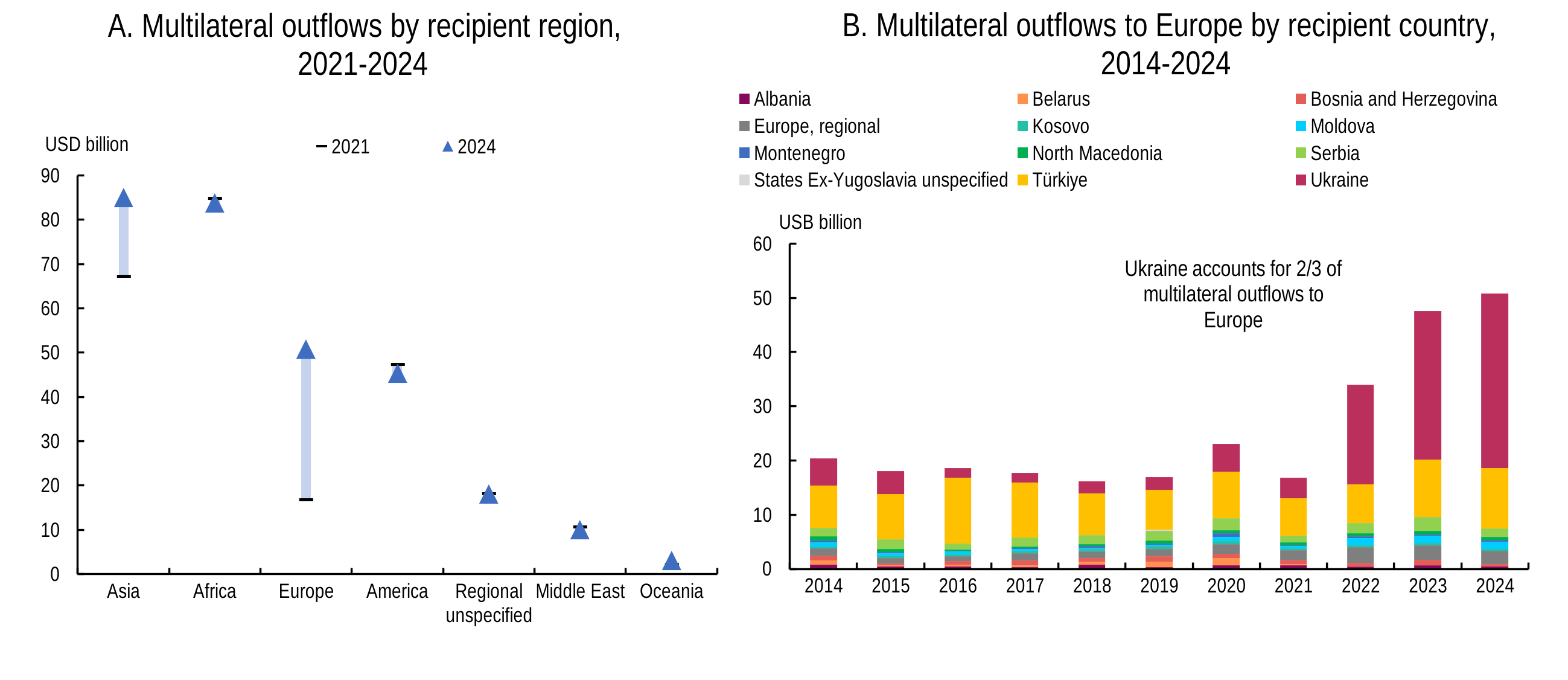
Note: Calculations are based on commitments, in 2023 constant prices. Calculations include ODA loans, ODA grants, OOF (excluding export credits), equity investments, and private sector instruments (PSIs).
Source: Authors’ calculations based on OECD (2026[3]), Creditor Reporting System (dataset), https://data-explorer.oecd.org/s/52.
These geographic shifts reinforce a longer-term tilt of multilateral development finance towards middle-income countries. In 2024, three-quarters of multilateral outflows to developing countries were directed towards LMICs and UMICs. By contrast, LICs received only 10% of total multilateral outflows: USD 31 billion, of which Ethiopia alone accounted for USD 7 billion. Since 2014, outflows to UMICs have increased by 109% and to LMICs by 81%, compared to growth of 55% for LICs.
Multilateral outflows are also increasingly concentrated in a small number of countries. In 2024, Ukraine alone received more than one-tenth of total multilateral outflows to developing countries (11%), up from around 2% between 2014 and 2021 (Figure 4.6). This increase resulted in Ukraine receiving a larger volume of multilateral outflows in 2024 than the 25 LICs combined. More broadly, the top 20 recipient countries together accounted for more than half of total multilateral outflows. Such concentration may reflect legitimate crisis-response priorities and large-scale infrastructure operations in middle-income countries, but it also raises questions about the distributional effects of recent crises.
Multilateral outflows received by developing countries by income group and recipient country, 2024, in USD billion

Note: Calculations are based on commitments, in 2023 constant prices. Calculations include ODA loans, ODA grants, OOF (excluding export credits), equity investment, and private sector instruments (PSIs). Recipient country income groups refer to the World Bank income group classification. The category “not applicable” corresponds primarily to activities that are regional or global in nature.
Source: Authors’ calculations based on OECD (2026[3]), Creditor Reporting System (dataset), https://data-explorer.oecd.org/s/52. Calculations used the World Bank (2026[12]) 2024 country income group classification, https://datahelpdesk.worldbank.org/knowledgebase/articles/906519-world-bank-country-and-lending-groups. As Ethiopia was not classified in 2024, the World Bank (2024[13]) 2023 classification (low income) was applied, https://blogs.worldbank.org/en/opendata/world-bank-country-classifications-by-income-level-for-2024-2025.
Crisis response has also reshaped the sectoral composition of multilateral portfolios, with potential long-term consequences. The succession of major global crises in recent years has required multilateral organisations to reallocate resources towards immediate and emerging priorities. The COVID-19 pandemic prompted a temporary surge in social sector spending, as multilateral portfolios pivoted towards health, emergency response and social protection (OECD, 2024[2]). As shown in Figure 4.7, the share of multilateral outflows allocated to the social sector increased from 16% in 2019 to 23% in 2020 and further to 27% in 2021. As pandemic-related pressures eased, resources were redirected towards budget support for Ukraine, recorded under the governance category, underscoring the continued crisis-driven reorientation of multilateral portfolios.
While this reorientation has enabled crisis response, it has also narrowed the space for longer-term development investment. Infrastructure financing, for example, fell from 33% of total multilateral outflows in 2014 to around 21% over the period 2020-2023 (Figure 4.7). Although multilateral development finance has grown in volume over the past decade, current and expected funding constraints mean that continued prioritisation of short-term crisis response could increasingly crowd out long-term development. Given the central role of long-term development in driving countries’ productivity growth, climate resilience and structural transformation, this shift may ultimately constrain long-term development trajectories, especially in countries that have little or no alternatives to public finance.
Distribution of multilateral outflows by macro sector, 2014-2024

Note: Calculations are based on commitments, in 2023 constant prices. Calculations include ODA loans, ODA grants, OOF (excluding export credits), equity investment, and private sector instruments (PSI).
Source: Authors’ calculations based on OECD (2026[3]), Creditor Reporting System (dataset), https://data-explorer.oecd.org/s/52.
With mounting financial pressures likely to materialise in coming years, the next section turns to the potential implications of the current aid crisis for multilateral delivery, examining how funding reductions could translate into outflow contraction, delivery failures and shifts in allocation.
4.2.1. Impacts on the system’s reach and ambition may be substantial and lasting
Many multilateral development organisations are resorting to adjustment measures to absorb the funding shock, but there are likely to be impacts on development effectiveness. Across the system, MDOs have introduced hiring freezes and staff reductions, withdrawn budgeted job positions, reduced travel, relocated functions to lower-cost duty stations and deferred planned expenditures. These measures aim to preserve frontline delivery while containing administrative costs. However, available evidence suggests that the savings generated are generally insufficient to offset the magnitude of projected funding reductions and cannot avoid impacts on organisations’ delivery capacities. Evidence from a 2025 survey of multilateral organisations indicates that most MDOs are experiencing programme delays, reduced geographic coverage, lower delivery targets, diminished engagement with partners and the closure of country offices (MOPAN, 2025[4]). In addition, MOPAN’s analysis indicates that funding cuts are also placing pressure on MDOs’ upstream functions that are less visible but still critical to development effectiveness, such as policy support, knowledge work, monitoring and evaluation, oversight and norm-setting.
Operational implications of current funding reductions to MDOs

Note: This graph presents the survey respondents’ responses to the question “What are the operational implications of the current funding reductions for your organisation?”. The 18 survey respondents included 14 UN entities, three partnerships or funds and one international financial institution.
Source: (MOPAN, 2025[4]), Mapping of Multilateral Organisations’ Response to the Current Funding Environment, https://www.mopan.org/content/dam/mopan/en/publications/our-work/insights/thematic-briefs/mapping/mopan-mapping-exercise-2025.pdf.
Multilateral development finance risks moving beyond temporary belt-tightening towards a contraction in reach and ambition. The adjustments made by MDOs can buy time and preserve core functions in the near term, but they offer limited protection if funding reductions persist, particularly where cuts affect predictable, multi-year funding streams. As flexibility, institutional memory and surge capacity erode, organisations may find it increasingly difficult to respond rapidly to country’s needs and emerging development challenges. This shift carries risks not only for operational outputs and mandate fulfilment, but also for transparency, accountability and stakeholders’ trust in the capacity of multilateral institutions.
For organisations highly dependent on voluntary grants, funding cuts are already reducing their capacity to respond to existing needs. In 2025, WFP announced that funding reductions could result in 16.7 million people losing access to emergency food assistance, including 4.8 million people in Yemen, 2.5 million in Afghanistan, and 1.6 million in Somalia (WFP, 2025[8]). Similarly, UNICEF indicated that funding cuts could force an additional 6 million children out of school (UNICEF, 2025[14]), while UNHCR has warned that 11.6 million people risk losing humanitarian assistance as a result of reduced funding (UNHCR, 2025[15]).
For replenished and leveraged mechanisms, the main risk is not immediate collapse but reverse leverage, where small funding cuts translate into larger falls in outflows in the medium term. A defining advantage of MDB concessional windows and certain funds is that each dollar of donor contribution can translate into several dollars of financing. When contributions fall, however, this multiplier can work in reverse: a one-dollar reduction in funding can translate into a larger reduction in available financing capacity (Figure 4.9). In line with the prisoner’s dilemma described in Chapter 2, cutting funding for leveraged instruments like ADF, IDA and IFAD may seem attractive as it can yield budgetary savings in the short term for member states, but it comes at the expense of substantially larger costs in terms of foregone investment in the poorest and most vulnerable countries. Donors should therefore account for reverse leverage effects in budget decisions and assess the scale of foregone financing and their downstream consequences, including for debt sustainability.

Source: IFAD (2025[16]), 2025 Report on IFAD’s Development Effectiveness, https://webapps.ifad.org/members/eb/145/docs/english/EB-2025-145-R-19.pdf?attach=1; African Development Bank (2025[17]), “African Development Fund mobilises a historic $11 billion, marking a new era of African ownership and investment-led development”, https://www.afdb.org/en/news-and-events/press-releases/african-development-fund-mobilises-historic-11-billion-marking-new-era-african-ownership-and-investment-led-development-89755; World Bank Group (2023[18]), IDA20 Mid-term Review, https://thedocs.worldbank.org/en/doc/f1d0b477064fadf03bd4e4aa96b5b63d-0410012023/original/ida-20-MTR-factsheet-11-16-2020.pdf.
Importantly, recognising the risks of reverse leverage should not translate into a narrow focus on protecting existing mechanisms alone. It also highlights the need to use scarce capital more strategically across the system. In a constrained environment there may be scope to enhance catalytic effects beyond traditional MDB windows, provided this is done without diluting mandates or exacerbating duplication. Options could include: (i) exploring whether some vertical funds could integrate limited leveraging features where consistent with their mandates; (ii) consolidating the numerous trust funds hosted in MDBs and assessing whether part of these resources could be redeployed as capital to expand lending headroom (Lee, 2026[19]); and (iii) strengthening structured co-financing arrangements between grant-based and leveraged entities to maximise the use of scarce concessional resources.
While funding reductions constrain delivery by individual organisations, their implications extend well beyond the institutional level. The multilateral development system operates as an interconnected delivery chain in which bilateral development partners, UNDS entities, vertical funds and IFIs rely on one another to implement their mandates (Chapter 2). In such a system, cuts targeted at some key institutions may generate ripple effects across the system and to the countries they serve. The following section examines how uncoordinated funding reductions to central MDOs risk weakening not only individual organisations, but also the collective delivery capacity of the entire multilateral system.
4.2.2. Uncoordinated funding cuts to central multilateral channels risk triggering system-wide delivery failures
The multilateral development system functions as an interdependent delivery chain in which disruptions at central nodes can reverberate far beyond their own programmes. Bilateral donors rely heavily on UNDS entities to implement humanitarian and development programmes. Vertical funds depend on MDBs and UNDS entities as implementing partners for green and health financing. Normative agencies, such as WHO and ILO shape standards and frameworks that other development actors operationalise. In this architecture, funding shocks to one part of the delivery chain can disrupt multiple layers simultaneously.
Several of the organisations most exposed to funding cuts are also among the most relied upon within the multilateral development system. Network centrality analysis shows that traditional MDOs remain the backbone of the delivery network, with high in-degree centrality scores reflecting their frequent use as channels by other actors (Figure 4.10, Panel A). Yet many of the most central MDOs, such as UNDP, UNHCR, UNICEF and UN Women, are among those currently facing confirmed or anticipated funding reductions from major donors. In this context, the United States’ decision to allocate around USD 2 billion in humanitarian funding through country-based pooled funds managed by the United Nations Office for the Coordination of Humanitarian Affairs (OCHA) is unlikely to offset the approximately USD 10 billion of voluntary contributions the United States channelled annually to UN entities in recent years (Lynch, 2026[20]). When cuts affect highly central nodes, the risk is not only a contraction of their own operations, but a weakening of the system’s connective tissue, impacting operational continuity across the network.
The consequences of such disruptions are likely to fall disproportionately on the poorest and highest fragility contexts. As shown in Figure 4.10, Panel B, high-fragility and conflict-affected settings (FCAS) and least developed countries (LDCs) are respectively 52% and 42% more exposed to potential delivery failures from these highly central institutions than the average developing country. Cuts to central multilateral actors therefore risk amplifying financing gaps precisely where needs are greatest and substitution by other actors is least feasible.
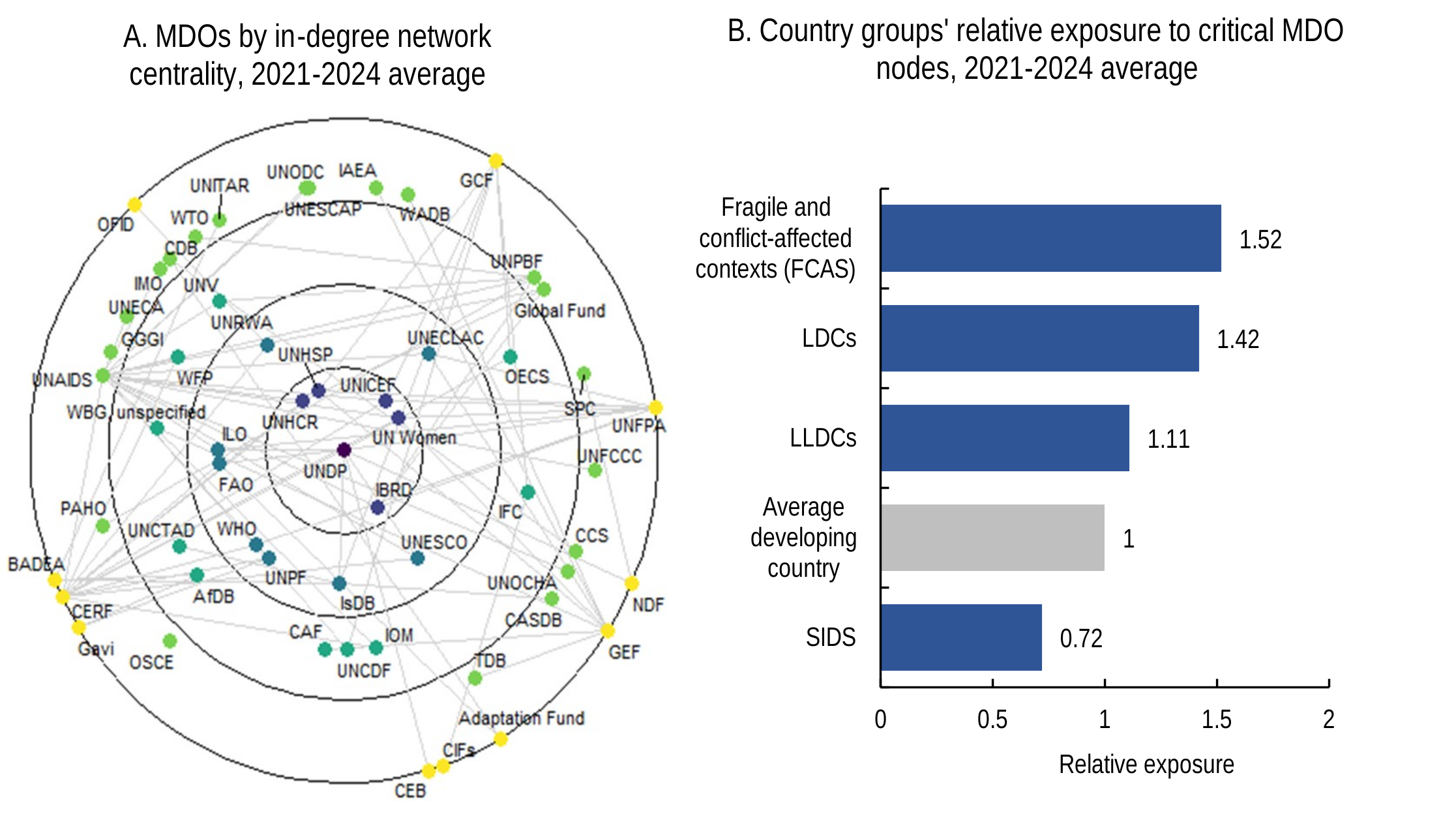
Note: In Panel A, in‑degree network centrality measures how many incoming connections an organisation receives from others in the network. Applied here to the network of multilateral development organisations, it highlights which MDOs are most frequently relied upon as delivery channels within the multilateral development system. MDOs with the highest network centrality scores appear in the inner circles of the network graph and are represented in darker colours. Panel B shows the relative exposure of the most vulnerable country groups to potential delivery failures by MDOs that both exhibit a high in-degree centrality score and are affected by current funding reductions, namely: UNHCR, UNICEF, United Nations Human Settlements Programme (UNHSP), UNDP and UN Women. LDC=least-developed country; LLDC=landlocked developing country; SIDS=small island developing state.
Source: Authors’ calculations based on OECD (2026[3]), Creditor Reporting System (dataset), https://data-explorer.oecd.org/s/52.
Uncoordinated funding cuts may generate domino effects. When individual donors reduce support to specific institutions without considering system-wide interdependencies, the resulting impacts may extend to their own earmarked contributions as well as to programmes financed by other donors. Funding decisions that focus narrowly on institutional envelopes rather than system-wide roles risk weakening the very mechanisms through which donors pursue their strategic and humanitarian objectives.
To mitigate these risks, funding decisions should account explicitly for systemic spillovers and downstream distributional impacts. In a constrained funding environment, safeguarding central delivery nodes may be essential to preserve the coherence and effectiveness of the system as a whole. For their part, MDOs can strengthen the evidence base on their system roles (e.g. pooled financing efficiencies and implementing capacity in fragile contexts) to clarify the implications of funding reductions.
Beyond the risk of delivery chain disruptions, the current funding environment may also reshape where and how multilateral resources are allocated. While this section has highlighted the systemic implications of cutting central actors, an equally important question concerns the direction of remaining resources. In a context of fiscal tightening and heightened scrutiny of value for money, MDOs may face incentives to prioritise contexts and instruments that maximise visible financial returns. This dynamic risks compounding existing shifts in the composition of multilateral development finance away from countries and sectors where development returns are highest but financial leverage is limited.
4.2.3. Concessional resources are at risk, with consequences for the most vulnerable
Multilateral organisations have demonstrated a strong capacity to support the most vulnerable countries and to engage in high priority sectors. The system does this by using concessional finance (ODA grants and loans), which is essential for its capacity to intervene in lower income countries and key sectors, especially those critical to human development. As illustrated in Figure 4.11, Panel A, in 2024 concessional financing represented 93% of total multilateral outflows received by LICs. In contrast, concessional financing accounted for only 39% of development finance received by LMICs and 27% of the total in UMICs. As illustrated in Figure 4.11, Panel B, the humanitarian and social sectors rely heavily on concessional financing, which accounts for 84% of financing in the humanitarian sector and 60% in the social sector.

Note: Calculations are based on commitments, in 2023 constant prices. Charts illustrate volumes of ODA loans, ODA grants, and OOF (excluding export credits) but do not display equity investment and private sector instruments (PSIs), which represent marginal shares of total volumes. These components are nevertheless included in the calculations presented in the text. LIC=low-income country; LMIC=lower-middle income country; UMIC=upper-middle income country.
Source: Authors’ calculations based on OECD (2026[3]), Creditor Reporting System (dataset), https://data-explorer.oecd.org/s/52.
Declining bilateral ODA, particularly to the poorest and most vulnerable countries, raises fundamental questions about the evolving role of multilateral development finance. Recent OECD projections show that least developed countries (LDCs) could face a 13% to 25% decline in net bilateral ODA in 2025 compared to 2023 levels, while sub-Saharan African could see reductions of 16-28% (OECD, 2025[9]). Multilateral development organisations play a critical role in these contexts: in 2023, nearly half of ODA to LDCs was channelled through multilateral development organisations. As bilateral aid contracts, the relative importance of multilateral channels in sustaining support to these countries could further increase.
Similarly, multilateral organisations are likely to assume a central role in preserving support for essential sectors that are particularly exposed to funding pressures. Humanitarian, social and governance sectors rely predominantly on grants and concessional finance, which generate limited or no financial returns and therefore rely more on public aid budgets, making them more exposed to reductions in periods of fiscal constraint. Available projections suggest that these sectors will be among the most severely affected by aid cuts. Bilateral ODA for health is projected to decline by 19-33 % in 2025 compared with 2023 levels, falling below pre-COVID-19 levels (OECD, 2025[9]). Over the same period, humanitarian assistance (including both bilateral and multilateral aid) is projected to fall by 21-36%, while ODA for education is expected to decline by 18-22%, with primary education being particularly affected (OECD, 2025[9]).
This evolving landscape calls for a clearer articulation of complementarity between bilateral and multilateral development finance. Bilateral ODA is increasingly influenced by domestic, geopolitical and strategic considerations, including security priorities, such as support to Ukraine, migration-related spending, and in-donor refugee costs. As a result, bilateral allocations may become shorter-term or politically prioritised. In this context, multilateral development finance has the potential to serve as a stabilising anchor, preserving engagement in underfunded regions, maintaining support to global public goods and ensuring continuity in the most vulnerable contexts where bilateral providers scale back. However, this stabilising role cannot be taken for granted. If multilateral concessional finance retrenches in parallel to bilateral ODA, the result would be a compounding effect on vulnerable countries.
The risk is not only a reduction in total aid volumes, but a hollowing out of concessional support where it matters the most. Concessional finance (ODA grants and concessional loans) has declined as a share of total multilateral development finance over the past decade, falling from 52% in 2014 to 46% in 2024 (Figure 4.12). This decline has been driven primarily by a reduction in the share of ODA grants, which represented around one third of total multilateral development finance in 2021-22 but fell to 26-27% in 2023-24. ODA loans also declined modestly, accounting for 19% of the total in 2024, down from 21% in 2022-23. In an environment where non-concessional lending is expanding and pressure to demonstrate leverage is intensifying, concessional resources risk becoming the adjustment variable. Such a shift would disproportionately affect countries with limited borrowing capacity and sectors that rely on grant financing.
An excessive tilt towards non-concessional financing also carries potential crowding out risks. As MDOs face pressure to demonstrate scale and leverage, there is a risk that easier-to-disburse sovereign lending operations crowd out private capital instead of bringing it in, weakening the catalytic role that multilateral finance is intended to play.
Evolution of multilateral development finance by instrument, 2014-2024

Note: ODA: official development assistance; OOF: other official flows (excluding export credits). Calculations are based on commitments, in 2023 constant prices. Calculations include ODA loans, ODA grants, OOF (excluding export credits), equity investment and private sector instruments (PSI). Equity investment and PSI are not shown in the chart since they represent marginal shares but were considered a part of total multilateral development aid when calculating the shares of ODA grants, ODA loans and OOF in total aid.
Source: Authors’ calculations based on OECD (2026[3]), Creditor Reporting System (dataset), https://data-explorer.oecd.org/s/52.
Making best use of scarce multilateral concessional resources therefore becomes a strategic imperative. Concessional finance should be treated as a strategic input that enables engagement where risks are high and social returns exceed financial returns. First, by safeguarding concessional envelopes for LICs, LDCs and fragile and conflict-affected settings, including through minimum allocation floors or income-weighted safeguards in allocation frameworks. Second, by protecting financing for areas that underpin long-term development but generate limited financial leverage, such as humanitarian action, basic services, human capital and institution-building. Without such discipline, the system risks drifting towards easier-to-finance contexts and sectors, reinforcing the very inequalities that multilateral development finance is designed to mitigate. Doing so requires managing a fundamental tension between deploying scarce public resources where they can mobilise the greatest volume of additional capital and directing them to contexts where no other sources of finance are available.
Preserving concessional capacity is also essential for sustaining the system’s legitimacy and development additionality. The comparative advantage of MDOs lies not only in scale and leverage, but in their ability to operate where bilateral providers withdraw and where private capital does not flow. If concessional finance shrinks, multilateral institutions may appear increasingly indistinguishable from other official providers, weakening their claim to development additionality.
In this context, multilateral development stakeholders face a pivotal choice. They can let multilateral development finance retrench alongside bilateral ODA, amplifying financing gaps in the poorest and most fragile countries, or they can use it as a counterweight, preserving concessional support where bilateral engagement declines. The outcome will depend on whether donors treat multilateral contributions as residual budget items or as instruments of system stewardship, and on whether MDOs align allocation decisions with explicit distributional and vulnerability objectives.
References
[17] African Development Bank (2025), African Development Fund mobilises a historic $11 billion, marking a new era of African ownership and investment-led development, https://www.afdb.org/en/news-and-events/press-releases/african-development-fund-mobilises-historic-11-billion-marking-new-era-african-ownership-and-investment-led-development-89755.
[5] AsDB (2025), Asian Development Bank: Annual Report 2024 Solving Complex Challenges Together, Asian Development Bank, https://doi.org/10.22617/fls250100.
[6] Dag Hammarskjöld Foundation (2025), Financing the UN Development System: Managing Unprecedented times, https://www.financingun.report/.
[16] IFAD (2025), 2025 Report on IFAD’s Development Effectiveness, https://webapps.ifad.org/members/eb/145/docs/english/EB-2025-145-R-19.pdf?attach=1.
[19] Lee, N. (2026), ““CAF 2.0: The next callenges for MDB capital adequacy”, https://www.cgdev.org/publication/caf-20-next-challenges-mdb-capital-adequacy#_edn2.
[20] Lynch, C. (2026), Exclusive: Inside US-UN plan to remake funding for humanitarian crises, https://www.devex.com/news/exclusive-inside-us-un-plan-to-remake-funding-for-humanitarian-crises-111682.
[4] MOPAN (2025), Mapping of Multilateral Organisations’ Response to the Current Funding Environment, Multilateral Organisation Performance Assessment Network, Paris, https://www.mopan.org/en/our-work/performance-insights/multilateral-effectiveness-in-a-shifting-landscape/mapping-thematic-brief.html.
[10] MOPAN (2024), Performance at a Glance: World Food Programme (WFP), Multilateral Organisation Performance Assessment Network, Paris, https://www.mopan.org/en/our-work/performance-evidence/wfp.html.
[3] OECD (2026), Creditor Reporting System (dataset), https://data-explorer.oecd.org/s/52 (accessed on 15 January 2026).
[9] OECD (2025), “Cuts in official development assistance: OECD projections for 2025 and the near term”, OECD Policy Briefs, No. 26, OECD Publishing, Paris, https://doi.org/10.1787/8c530629-en.
[2] OECD (2024), Multilateral Development Finance 2024, OECD Publishing, Paris, https://doi.org/10.1787/8f1e2b9b-en.
[1] OECD (2022), Multilateral Development Finance 2022, OECD Publishing, Paris, https://doi.org/10.1787/9fea4cf2-en.
[11] OECD (2020), Multilateral Development Finance 2020, OECD Publishing, Paris, https://doi.org/10.1787/e61fdf00-en.
[15] UNHCR (2025), “UNHCR: As funding cuts bite, some 11m people are losing aid”, Briefing Notes, https://www.unhcr.org/news/briefing-notes/unhcr-funding-cuts-bite-some-11m-people-are-losing-aid.
[14] UNICEF (2025), “Funding cuts could push 6 million more children out of school, warns UNICEF”, UN News, https://news.un.org/en/story/2025/09/1165764#:~:text=village%20in%20Mali.-,Funding%20cuts%20could%20push%206%20million,out%20of%20school%2C%20warns%20UNICEF&text=Global%20education%20funding%20is%20facing,(UNICEF)%20warned%20on%20Wednesday.
[8] WFP (2025), Food Security Impact of Reduction in WFP Funding, https://docs.wfp.org/api/documents/WFP-0000166581/download/.
[12] World Bank (2026), World Bank Country and Lending Groups (dataset), https://datahelpdesk.worldbank.org/knowledgebase/articles/906519-world-bank-country-and-lending-groups.
[13] World Bank (2024), World Bank Country Classifications by Income Level for 2024-2025 (dataset), https://blogs.worldbank.org/en/opendata/world-bank-country-classifications-by-income-level-for-2024-2025.
[18] World Bank Group (2023), IDA20 Mid-term Review, World Bank Group, Washington DC, https://thedocs.worldbank.org/en/doc/f1d0b477064fadf03bd4e4aa96b5b63d-0410012023/original/ida-20-MTR-factsheet-11-16-2020.pdf.
[7] World Bank, FAO and WFP (2025), Strengthening Strategic Grain Reserves to Enhance Food Security, World Bank, Washington DC, https://openknowledge.worldbank.org/server/api/core/bitstreams/9b5e0861-e981-4f9e-820a-84030ed1d981/content.