Peru has expanded tertiary education rapidly over the past two decades, achieving one of the highest participation and attainment rates in the region. This expansion has been accompanied by important governance reforms, including the introduction of stronger quality assurance system and a national strategy to better integrate the tertiary and vocational education sectors. However, the reform momentum created by such landmark legislation and policy has slowed, and in some areas, progress has been reversed. This chapter explores policy options to strengthen national leadership for tertiary education and modernise funding models. It examines how quality assurance can be reinforced and how tertiary education programmes can be made more relevant to national priorities. It also considers how student support and information systems can widen participation and help ensure that the benefits of tertiary education are shared more equitably.
Education and Skills in Peru

Abstract
In the last two decades, Peru has significantly expanded tertiary education enrolment and attainment, resulting in one of the highest participation rates in the region. Peru has also stepped up efforts to improve access and completion among disadvantaged groups. This drive for expansion has been accompanied by stronger governance. The 2014 University Law, which created an independent supervision body (the Superintendencia Nacional de Educación Superior Universitaria, SUNEDU), and the 2016 Law on Institutes and Schools of Tertiary Education, laid the foundations for a more transparent and rigorous quality assurance system. This has given Peru tools to ensure providers meet basic quality standards and manage the previously unregulated, proliferation of new private tertiary education institutions. In addition, the 2020 National Policy for Tertiary and Technical-Productive Education (PNESTP) laid out, for the first time, a comprehensive strategy for the entire vocational and tertiary education sector through to 2030. It provides much needed direction on how Peru can create a tertiary system that is more clearly differentiated, integrated and aligned with national priorities.
However, the reform momentum created by such landmark legislation and policy has slowed, and in some areas, progress has been reversed. Implementing the PNESTP requires strong leadership to drive coherent and sustained reform across the system, yet government capacity remains relatively weak and few mechanisms exist to incentivise tertiary education institutions to align with the strategy’s goals. While efforts have been made to increase public investment in tertiary education, the funding model is outdated and has limited transparency, and the sustainability of the public system is a pressing challenge. Financial support for disadvantaged groups also remains limited in scale and will be difficult to expand without a long-term funding strategy for the sector. Most importantly, progress in developing a quality assurance system has experienced significant setbacks, notably due to the weakening of SUNEDU’s regulatory powers and independence in 2022 and the limited capacity to complete the licensing of professionally-oriented tertiary education institutions. Guidelines on the creation of new public universities also need to be respected.
This chapter draws on OECD research and international experience to explore how Peru can steer the system towards national priorities and deliver on its vision for tertiary education (see Figure 5.1). It examines policies to strengthen national leadership for tertiary education and reviews funding models to ensure a more strategic and sustainable use of public funds. It also elaborates on ways to establish a robust system for quality assurance and explores mechanisms to ensure the relevance of tertiary education programmes. Finally, it looks at how student financial aid and information systems can be used to increase participation among disadvantaged students.
Section I: Provides an overall assessment of Peru’s tertiary education in relation to the principles of quality, equity and good governance.
Section II: Provides recommendations on how Peru can learn from OECD policies and practices to further improve tertiary education performance across these three domains.
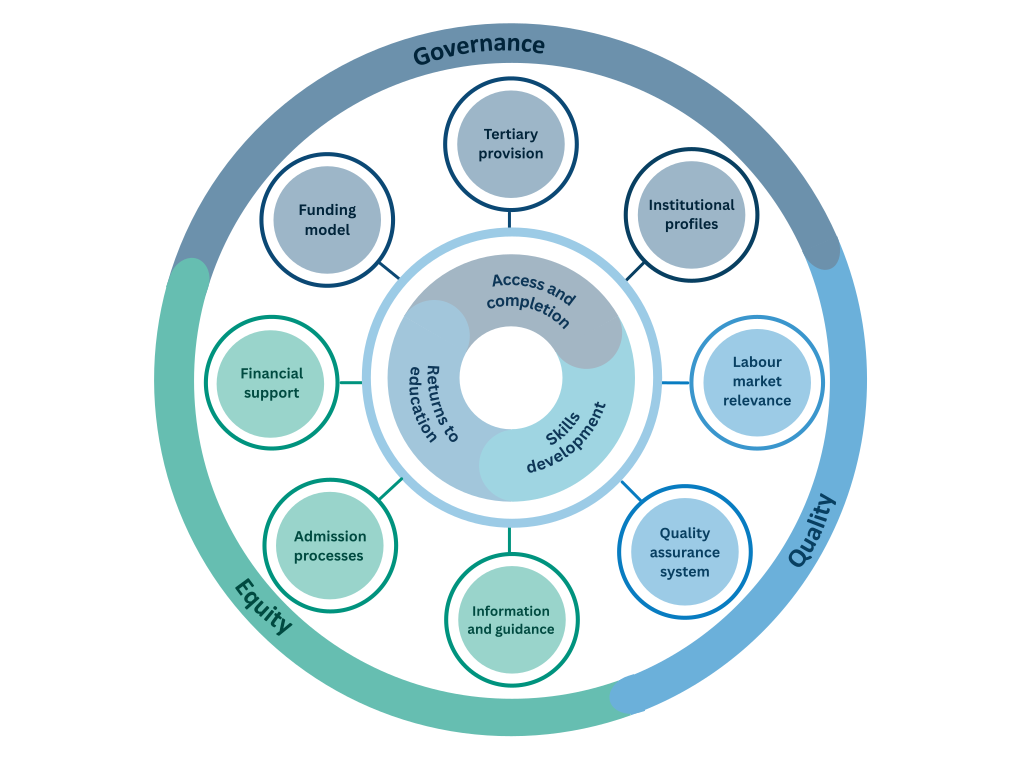
Source: Authors' own work.
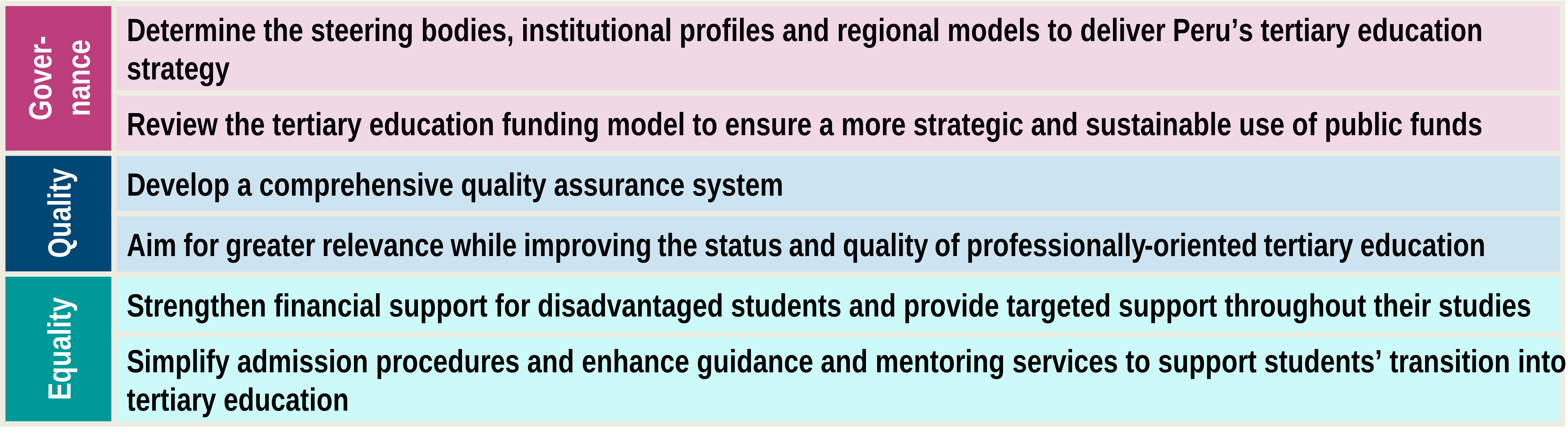
Performance overview: Peru has significantly expanded enrolment and attainment in tertiary education, but further efforts are needed to improve the quality and relevance of provision, and make access more equitable
Participation in tertiary education has grown significantly, primarily enabled through the expansion of the private sector
With 51% of adults aged 25-34 having completed tertiary education in 2024, Peru has the highest tertiary attainment rate compared to all OECD countries in the region (see Figure 5.4). While the country’s tertiary participation rate in the early 2000s was similar to those in other OECD-LAC countries, Peru's net enrolment rate has since increased at a faster pace than most regional peers, surpassing all OECD-LAC countries except Chile (see Chapter 2) (SITEAL, 2023[1]). This achievement reflects substantial progress in expanding access, to both university programmes, which offer more academic and research-oriented degrees, and non-university or professionally-oriented programmes, which provide technical or professional training in applied fields.
Growth in enrolment has been particularly pronounced in the private tertiary sector. Between 2000 and 2023, enrolment in private universities increased by over 600%, from approximately 169 000 to 1.2 million students. In contrast, enrolment in public universities rose by only around 40%, from around 255 000 to 355 000 (INEI, 2023[2]; Díaz, 2008[3]). This expansion in private enrolment was largely driven by the rapid, and initially unregulated, proliferation of new private tertiary education providers, following a legislative decree issued in 1996 which stimulated private investment in education (Ministry of Education of Peru, 2023[4]; UMBRAL, 2022[5]).
Note: * Data from 2022. **The number of licensed professionally-oriented education institutions (institutes and schools) refers to 2025 data.
Source: INEI (2024[6]), Perú Compendio Estadístico 2024 [Peru Statistical Compendium 2024], https://cdn.www.gob.pe/uploads/document/file/7366940/6284790-tomo-1-peru-compendio-estadistico-2024.pdf; Ministry of Education of Peru (2025[7]) Institutos de educación superior (IES) y Escuelas de educación superior tecnológicas (EEST) licenciadas (2018-2025) [Licensed Higher Education Institutes and Technological Higher Education Schools (2018-2025)], https://app.powerbi.com/view?r=eyJrIjoiZWVlODdmZDMtYzlkOC00NDg5LWI5MjItYzBmZDNiZDFlZjU0IiwidCI6IjE3OWJkZGE4LWQ5NjQtNDNmZi1hZDNiLTY3NDE4NmEyZmEyOCIsImMiOjR9 (accessed 28 August 2025); Ministry of Education of Peru (2023[4]) La universidad en cifras [University in figures], https://repositorio.minedu.gob.pe/handle/20.500.12799/9077
In the professionally-oriented tertiary sector, the number of public institutions more than doubled (from 284 to 500) between 1990 and 2023, while the number of private providers more than tripled (from 137 to 509) (INEI, 2024[6]; Díaz, 2008[3]). A similar expansionary trend was observed in university education. Between 1990 and 2014, the number of public universities nearly doubled (from 28 to 49) and the number of private universities more than tripled (from 24 to 91) (INEI, 2024[6]). However, in 2014, Peru established the National Superintendence of Higher University Education (Superintendencia Nacional de Educación Superior Universitaria, SUNEDU) and introduced a licensing process, which led to the closure of many private universities that did not meet basic quality standards. The initial licensing process for the existing universities, completed by 2020, did not grant a licence to 48 institutions (46 private and 2 public) compelling them to shut down their activities. As a result, by 2025, the total number of licensed private universities had fallen to 49 and 2 graduate schools, similar to the number of licensed public universities, though larger in terms of enrolment (SUNEDU, 2025[8]).
Tertiary provision and licensed institutions are concentrated in Lima and a few coastal regions
Tertiary education provision in Peru is concentrated in the Lima Metropolitan area (see Figure 5.3). At the university level, 37% of institutions are based in Lima. This concentration is especially pronounced among private universities, 56% of which are located in the capital, although some operate regional branches (Ministry of Education of Peru, 2025[9]). In contrast, public universities are more widely distributed, with 82% located in other regions (Ministry of Education of Peru, 2025[10]). Professionally-oriented institutions are somewhat less concentrated geographically, yet the largest institutions – those with the highest enrolment – are also located in Lima. In 2023, 22% of professionally-oriented technological institutions were based in the capital, which in 2022 enrolled more than half (52%) of all students (UNESCO, 2024[11]; INEI, 2024[6]). Most students in technological programmes (97%) are enrolled in urban areas (UNESCO, 2024[11]). The geographical concentration extends beyond provision to quality, with Lima, Callao, and Tacna, all regions in the most prosperous Costa area, hosting most of the tertiary education institutions (TEIs) judged to meet established minimum quality standards through the licensing process (SINEACE, 2023[12]).
Number of tertiary education institutions by region, 2024

Note: The map includes professionally-oriented institutions and universities, both public and private.
Source: INEI (2024[6]), Perú Compendio Estadístico 2024 [Peru Statistical Compendium 2024], https://cdn.www.gob.pe/uploads/document/file/7366940/6284790-tomo-1-peru-compendio-estadistico-2024.pdf; Ministry of Education of Peru (2025[9]), Mapa de universidades privadas [Map of private universities], https://www.gob.pe/institucion/minedu/informes-publicaciones/5839987-mapa-de-universidades-privadas; and, Ministry of Education of Peru (2025[10]), Mapa de universidades públicas [Map of public universities], https://www.gob.pe/institucion/minedu/informes-publicaciones/5837858-mapa-de-universidades-publicas.
Total expenditure on tertiary education is low by international comparison and unevenly distributed across institutions.
Peru allocates a comparable share of public expenditure to tertiary education as OECD countries. In 2022, 1.4% of total public spending was directed to the sector, matching the OECD average. However, government expenditure on TEIs as a percentage of GDP was 0.5% in 2022, almost half the OECD average of 0.9% (OECD, 2025[13]).
Total spending per student (including both public and private sources) remains low by OECD and regional standards (see Figure 5.4). In 2022, total expenditure amounted to USD PPP 3 641 per full-time equivalent student – about one-sixth of the OECD average and one-third of the OECD-LAC average (OECD, 2025[13]). Most of this spending (61%) comes from private sources, more than double the OECD average of 30% (OECD, 2025[13]). Low per student spending reflects relatively low-income levels that constrain both public revenues and household contributions, inefficiencies in tax collections that reduce resources for education, and a funding model for tertiary education that places much of the cost on students and families.
Public spending is unevenly distributed both between university and professionally-oriented institutions and within each group. On average, public spending per student on university programmes is twice as high as that for professionally-oriented programmes (INEI, 2024[6]). There are also notable disparities in public spending per student by regions (see Figure 5.4). And some public universities receive significantly more resources per student than others (Ministry of Education of Peru, 2023[4]).
Despite having similar employment rates, tertiary graduates in Peru earn more and are more likely to work in formal jobs than those with lower levels of education.
In contrast to most OECD countries, where completing education beyond the secondary level is associated with higher employment rates, individuals with tertiary education in Peru have similar employment rates to those with upper secondary education. In 2023, 82% of tertiary graduates aged 25-64 were employed (OECD average: 87%), compared to 81% of upper secondary graduates (OECD average: 78%) (see Figure 5.4). However, tertiary graduates are more likely to hold formal jobs and tend to earn higher wages than those with lower levels of education (Ministry of Labour and Employment Promotion of Peru, 2023[14]). On average, tertiary graduates aged 25-64 earn 67% more than those with only upper secondary education, a larger wage premium than in the OECD (see Figure 5.4) (OECD, 2025[13]). Amongst tertiary-educated individuals, university graduates generally earn higher salaries than those with professionally-oriented tertiary education (Thapa et al., 2022[15]). However, a longitudinal study that followed a cohort of 700 individuals from age 8 to 26 found that this earnings advantage applies mainly to those who attended higher-quality institutions, defined as universities eligible for licensing (Sánchez, Favara and Porter, 2021[16]).
There is a disconnect between labour market needs and skills developed in tertiary education
In Peru, the majority of new entrants to tertiary education at bachelor degree level or equivalent (ISCED 6) are concentrated in three fields: health and welfare (22%); business, administration, and law (21%); and engineering, manufacturing, and construction (18%) (OECD, 2023[17]). While these sectors are also dominant across OECD countries, Peru exhibits a higher concentration of students in these areas. Areas like business and engineering, which show high enrolment, are also in high demand in the labour market, yet enrolment in sectors such as Information and Communication Technologies (ICT) remains limited despite increasing labour market demand (TAREA, 2021[18]; Ministry of Labour and Employment Promotion of Peru, 2024[19]). Meanwhile, a high share of tertiary graduates is working in jobs that do not require their level of education. The 2022 National Household Survey (ENAHO) found that 58% of tertiary-educated workers were in roles misaligned with their qualifications, with most occupying positions below their education level. The mismatch was higher among professionally-oriented tertiary graduates (64%) compared to university graduates (52%) (Ministry of Labour and Employment Promotion of Peru, 2022[20]).
Most students aspire to complete tertiary education, yet completion rates are low and access and completion remain closely linked to students’ background
In Peru, as in other OECD-LAC countries, the majority of students aspire to complete tertiary education. According to the Programme for International Student Assessment (PISA) 91% of 15-year-olds in Peru expect to complete at least professionally-oriented tertiary education (ISCED 5), compared to 69% OECD average and 90% OECD-LAC average, with no major differences by socio-economic status (see Figure 5.4). In 2023, 31% of individuals aged 20 to 24 were enrolled in tertiary education, slightly below the 34% OECD average and above most OECD-LAC countries, except Chile (OECD, 2023[21]). However, completion rates are the lowest when compared to all OECD countries. In 2023, only 40% of students who entered a bachelor’s degree or equivalent (ISCED 6) completed at any tertiary level within the expected study time plus three years (OECD average: 70%) (OECD, 2025[13]). Completion was even lower in short-cycle tertiary programmes (ISCED 5), with just 19% completing within the same timeframe (OECD average: 48%).
Access and completion of tertiary education remain closely linked to socio-economic background. In 2023, tertiary enrolment among individuals aged 17 to 24 reached 56% in the wealthiest population quintile, compared to just 16% in the poorest, with differences also by place of residence and native language (see Figure 5.4) (INEI, 2024[22]). Enrolment rates also vary significantly across regions, from 43% in Moquegua to 19% in Loreto, with generally lower rates in the Selva region (INEI, 2024[22]). Professionally-oriented tertiary education (including technological, artistic and pedagogical programmes) remains the primary pathway for the few disadvantaged students and rural youth that pursue tertiary studies (UNESCO, 2024[11]). However, dropout rates are higher in these professionally-oriented tracks: 26% in technological programmes and 19% in artistic programmes, compared to 14% in universities. An exception is pedagogical programmes, where the dropout rate is lower, at 8% (Ministry of Education of Peru, 2023[23]). Family socio-economic status is the main factor associated with tertiary dropout (SUNEDU, 2023[24]; UNESCO, 2024[11]). Other factors, such as speaking an indigenous language as a mother tongue, are also linked to higher dropout, particularly among women (SUNEDU, 2023[24]).

Note: In Panel B (2) "Lima 2" refers to the Department of Lima, and "Lima 1" refers to the Province of Lima (or Metropolitan Lima).
Source: OECD (2024[25]), Adults' educational attainment distribution, by age group and gender, http://data-explorer.oecd.org/s/207 (accessed on September 6, 2025); OECD (2025[13]), Education at a Glance 2025: OECD Indicators, OECD Publishing, Paris, https://doi.org/10.1787/1c0d9c79-en; INEI (2024[6]), Perú Compendio Estadístico 2024 [Peru Statistical Compendium 2024], https://cdn.www.gob.pe/uploads/document/file/7366940/6284790-tomo-1-peru-compendio-estadistico-2024.pdf; OECD (2024[26]), PISA 2022 Results (Volume V): Learning Strategies and Attitudes for Life, PISA, OECD Publishing, Paris, https://doi.org/10.1787/c2e44201-en; and INEI (2024[22]), Perú: Indicadores de Educación según Departamentos, 2013-2023 [Education indicators by departments, 2013-2023], https://cdn.www.gob.pe/uploads/document/file/704309 6/6061323-peru-indicadores-de-educacion-segun-departamentos-2013-2023.pdf?v=1728072117.
Governance assessment: There is a shared, system-wide vision for tertiary education in Peru, but educational authorities have few instruments to steer the system towards societal objectives
Peru now has, for the first time, a comprehensive strategy to steer the development of its vocational and tertiary education systems
In 2020, the government adopted the National Policy for Tertiary and Technical-Productive Education (PNESTP), which laid out, for the first time, a comprehensive strategy for the entire vocational and tertiary education sector through to 2030. It covers both the university and professionally-oriented sub-systems of tertiary education, as well as vocational programmes delivered at ISCED levels 3 and 4 through Centres for Technical-Productive Education (CETPROs). Key strengths of the PNESTP are its thorough diagnosis of the sector, which identifies major challenges and sets out high-level policy priorities to address them, and the extensive consultations of the relevant stakeholders that informed its development. The policy places a strong emphasis on expanding access with equity, including through a more diverse and relevant programme offer. It also focuses on improving the quality of programmes, institutions, and academic staff; strengthening governance in tertiary education, by for instance reinforcing the Ministry of Education’s (MINEDU’s) steering role; and mobilising resources to enhance the capacity and quality of research and innovation activities (Ministry of Education of Peru, 2020[27]).
While the adoption of the PNESTP marks an important milestone, its effective implementation will require both stronger leadership to drive coherent and sustained reform across the system, and incentives for the TEIs to align to it. Steering tertiary education in Peru towards national goals is challenging given the dominance of enrolment in private institutions and the limited integration between the university and the professionally-oriented tertiary sub-systems. This structure is not unique to Peru; however, what sets Peru apart are significant gaps in its policy framework to steer the system, ensure policy coherence and align key actors – public and private, university and non-university – behind the national strategy. For instance, regulation of and incentives to shape private provision remain narrow, accountability of highly autonomous universities is limited, and the university and professional-oriented sub-systems remain isolated from each other.
MINEDU has introduced some policies to support a more coherent and integrated tertiary education system, but several important questions are yet to be addressed
Peru’s tertiary education system is marked by significant institutional diversity, encompassing a wide range of universities and professionally-oriented TEIs. While such diversity offers the potential to address varied national needs, it also carries the risk of fragmentation if not carefully coordinated. Without clear missions and effective coordination mechanisms, the various sub-systems may evolve in isolation, stray from national objectives, and ultimately erode the coherence of the system as a whole. These risks appear to be evident in Peru. In the non-university tertiary sector, institutions have expanded without a clear mandate to offer high-quality, specialised professionally-oriented programmes. Except for a few strong sectoral vocational institutions, like SENATI in the manufacturing sector, and SENCICO in industry and construction, most professionally-oriented tertiary institutions offer a similar set of programmes that mirror academic education, rather than positioning themselves as specialised providers of distinct technical or applied education. This academic drift, combined with the weak integration between CETPROs (ISCED 3 and 4 levels) and the tertiary sector, has undermined the development of attractive professionally-oriented pathways (TAREA, 2021[18]). The policy framework to govern the professionally-oriented sector also has elements – such as institutional management, funding, human resource management – that resemble more those of the school sector, which not only hinders coherence of the overall tertiary system but also weakens the credibility of professionally-oriented institutions as providers of advanced, specialised training in the eyes of students and employers.
Universities also tend to lack clear institutional profiles, with little differentiation in mission or orientation. For instance, there are no traditional research universities, all institutions are expected to engage in research, but resources are limited. As a result, sustained research activity is concentrated in a small number of private institutions, limiting the system’s capacity to contribute to innovation and evidence-based policy (Bonifaz and Stuart, 2020[28]; Ministry of Education of Peru, 2023[4]). In the absence of a well-managed diversification strategy with clearly defined institutional missions and broader efforts to improve quality and relevance, it will be difficult for Peru’s tertiary system to effectively respond to national imperatives – such as research and innovation, workforce development, social inclusion, and regional growth – and to build the technical skills base required to raise competitiveness in high-potential sectors such as mining, agro-industry, fisheries, and logistics.
Another factor that erodes coherence and hampers integration within the tertiary sector are the difficulties students face in moving across sub-systems and institutions. Peru has taken positive steps to support learner mobility between academic and professionally-oriented pathways, notably through the development of the National Qualifications Framework (NQF). The NQF intends to establish a common reference for learning outcomes and qualification levels, helping to align programmes across sub-systems and making it easier for students to transfer credits and continue their studies without unnecessary duplication. However, implementation of the NQF has been slow and a single system regulating how credits are granted and recognised in tertiary education is still not in place (see Chapter 6). As a result, permeability between university and professionally-oriented sectors remains difficult, limiting opportunities for students to move flexibly across the system.
Initiatives to overcome the limited access to tertiary education outside the Lima metropolitan region are underway but the extensive creation of new public universities in regions carries risks
Achieving greater regional balance in tertiary participation and ensuring stronger alignment with local development priorities remains a significant challenge for Peru’s tertiary education system. Marked disparities persist across and within regions in terms of enrolment, access to accredited TEIs, and the distribution of public resources. Lima alone concentrates close to one fourth of all tertiary institutions in the country (Ministry of Education of Peru, 2025[10]; Ministry of Education of Peru, 2025[9]; INEI, 2024[6]). Even within the same regions, access is often uneven, with most TEIs located in larger cities, leaving rural and remote areas underserved.
To address this, Peru has introduced explicit procedures to help expand university provision beyond the capital. A 2022 Vice-Ministerial Resolution outlines three options for expanding university access: increasing student places in existing institutions, establishing regional branches, or creating new universities, with the latter explicitly identified as a last resort (Ministry of Education of Peru, 2022[29]). It also sets out a structured process to justify expansion decisions, including identifying the needs of upper secondary graduates and the local economy, as well as assessing whether existing public universities in the region have the capacity to absorb additional demand. In parallel, regulatory changes in 2024 and 2025 expanded the scope for distance and blended provision in Peru’s universities, increasing flexibility for students living outside the areas where universities are located (Congress of the Republic of Peru, 2024[30]; SUNEDU, 2025[31]).
However, this guidance is not systematically applied in practice. Since 2022, more than 40 public universities have been approved by Congress, most of which in regions with low tertiary enrolment, but without viability studies or financial planning (National Council of Education of Peru, 2024[32]). Once approved by Congress, the Ministry of Education and the Ministry of Finance are expected to assess the proposal, and if they issue a favourable opinion, they are then required to appoint a board (Comisión organizadora) to establish the new university and allocate the necessary public funds. A new university typically takes 7 to 15 years to start operating and receive proper licensing. Given the limited public funds available for tertiary education in Peru, there are risks the quality of the services in well-established public universities will be affected by such unmanaged expansion (National Council of Education of Peru, 2024[32]).
While existing guidelines call for studies of the needs of the local economy, there are no formal platforms to ensure that the views of regional stakeholders, such as regional and local governments, employers, and civil society, are systematically reflected in decisions on the creation of new institutions and programmes. As a result, consultation tends to occur on an ad hoc basis, reducing the likelihood that new provision will be well aligned with regional development priorities. Additionally, broader mechanisms to support a sustainable and regionally balanced expansion have received limited attention so far. The current strategy has focused primarily on expanding study places in existing or new physical institutions, with limited consideration of more flexible and cost-effective alternatives, such as hybrid delivery models.
While there are efforts to increase public investment in tertiary education, the funding model is not used strategically and the sustainability of the public system is a pressing challenge
While public spending per tertiary student and as a proportion of GDP in Peru remains well below the OECD average, the overall share of public expenditure allocated to tertiary education is in line with OECD standards, standing at 1.4% in 2022 (OECD, 2025[13]). This reflects some efforts to invest in the sector despite limited fiscal space, making it critical to ensure the effectiveness and efficiency of public spending decisions. However, there are three aspects of the current funding model that may limit the system’s sustainable and equitable expansion.
The first is the absence of a clearly defined funding strategy to ensure that resources are adequate, and equitably distributed. Questions of long-term sustainability, adequacy of public funding, and fairness in cost-sharing remain largely absent from the policy agenda. This is particularly important in a context of growing enrolments, and where access, academic achievement, and programme selection remain strongly influenced by students’ socio-economic background. Public universities are tuition-free for all students, yet the level of public investment per student remains low, and it is unclear how this model can sustain continued expansion while maintaining or improving quality (SINEACE, 2023[33]). The equity implications of current funding arrangements also warrant greater attention. Public universities tend to enrol students from more advantaged backgrounds who are better prepared to pass competitive admission exams. These students often benefit from higher-quality schooling, private tutoring, and strong family support (see Chapter 4). In contrast, students from poorer households are more likely to attend professionally-oriented tertiary institutions or be excluded from tertiary education altogether (SUNEDU, 2023[24]). As a result, public subsidies allocated to public universities largely benefit those who could afford to pay, making current public spending patterns regressive (Valenzuela and Yáñez, 2022[34]). When it comes to the private sector, tuition fees are largely unregulated. Institutions are free to set their own prices, with no safeguards to ensure affordability. This leaves low-income students at risk of financial exclusion from higher-quality, often higher-cost private institutions, leaving only lower-cost, often lower-quality options within reach. Tools commonly used in OECD countries to promote fairness while preserving institutional autonomy – such as tuition caps, targeted subsidies, or fee waivers – are small in scale, or yet to be developed in Peru (Golden, Troy and Weko, 2021[35]).
Second, the mechanism used to allocate core public funding to individual TEIs gives limited attention to equity, efficiency, and institutional needs. As in other levels of education, public funding for TEIs in Peru is primarily allocated based on historical costs, with limited consideration for factors such as student enrolment, programme type, or institutional performance. This approach has led to significant disparities in funding allocations, both between public universities and professionally-oriented institutions, and within each group. This contrasts with common practice in the OECD, where well-designed funding formulas are increasingly recognised as effective mechanisms for distributing current expenditure in an efficient, equitable, and transparent manner. A recent OECD survey found that 24 out of 27 OECD jurisdictions used such formulas to guide core public funding for tertiary education. Among these, around half allocate 76–100% of their funding through a formula-based approach (see Figure 5.5).
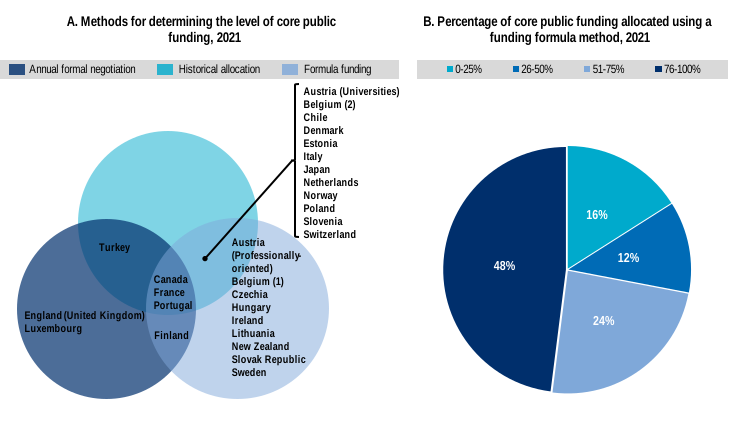
Note: In Panel A, Belgium (1) refers to the Flemish Community and Belgium (2) to the French Community. Panel A includes 27 OECD jurisdictions, while Panel B covers 24 OECD jurisdictions. In Panel B, Austria is counted twice to reflect differentiated percentages for universities and professionally-oriented higher education institutions.
Source: OECD (2021[35]), How are higher education systems in OECD countries resourced? Evidence from an OECD Policy Survey, Table 5.8, OECD Publishing, Paris, https://dx.doi.org/10.1787/0ac1fbad-en.
A final aspect of tertiary funding that remains relatively underdeveloped in Peru is the use of financial incentives, such as competitive grants or performance-based allocations. The latter are increasingly part of tertiary funding strategies in most OECD countries as they can provide means to orient providers towards national objectives and stimulate innovation. Some initiatives exist in Peru but remain relatively limited in scale. For example, in 2022, MINEDU allocated targeted funds to public universities based on progress toward targets in areas such as graduates’ labour market outcomes, research, quality, and institutional management in alignment with the PNESTP (Ministry of Education of Peru, 2022[36]). Similarly, MINEDU has two targeted funding schemes with competitive funding mechanisms: PMESUT for the improvement of institutional management in TEIs and PMESTP for institutional infrastructure. Selection criteria emphasise quality, for instance by requiring beneficiary institutions to be licensed or ranked among the top-performing institutions (Ministry of Education of Peru, 2025[37]). However, it is unclear whether MINEDU plans to expand the approach of using targeted funding to steer TEIs towards other strategic national goals.
Quality assessment: Quality assurance processes are still at an early stage of development while mechanisms to ensure the relevance of tertiary programmes require strengthening
After a wave of ambitious reforms to strengthen quality assurance in tertiary education, Peru has seen progress stall and experienced significant setbacks
In the past decade, Peru undertook a series of ambitious reforms to strengthen quality assurance in tertiary education. The 2014 University Law and the 2016 Law on Institutes and Schools of Tertiary Education aimed to establish a more transparent and rigorous quality assurance system. A key strength of these reforms was the creation of SUNEDU in 2014, establishing, for the first time in Peru’s history, an independent body for the licensing and supervision of universities. The reforms also defined a clear sequencing of priorities to raise quality across the system, making institutional licensing mandatory for both universities and professionally-oriented institutions, with the immediate objective of evaluating all existing institutions in order to ensure compliance with minimum quality standards and address the rapid, largely unregulated expansion of the private sector. They also established programme-level licensing, with priority given to university programmes in education and health (SUNEDU, 2022[38]). Meanwhile, institutional and programme accreditation were introduced as a higher standard for licensed institutions and programmes, ready to demonstrate educational excellence. Accreditation is the responsibility of the National System for Evaluation, Accreditation and Certification of Educational Quality (SINEACE, Sistema Nacional de Evaluación, Acreditación y Certificación de la Calidad Educativa), established in 2006 and since 2022 undergoing a process of reinstatement. Accreditation remains voluntary for all institutions and programmes, except those in the fields of initial teacher education, health and law.
However, reform momentum has slowed, and recent developments have undermined the progress made. Enforcement of the – theoretically mandatory – licensing system remains uneven across the university and professionally-oriented sectors. While the first round of university licensing was completed in 2020, licensing in the professionally-oriented sector, which is the responsibility of MINEDU, has been much slower. As of 2025, only 20% of professionally-oriented institutions had been licensed (Ministry of Education of Peru, 2025[7]), meaning the vast majority of institutions in this sector continue to operate without having undergone any formal evaluation as to whether they met minimum quality standards. At the same time, among licensed institutions, accreditation remains marginal. Currently, only one university has received institutional accreditation, while no professionally-oriented institutions have obtained it. By 2025, only 2% of programmes in licensed institutions were accredited – 75 in universities and 17 in professionally-oriented TEIs – most of them concentrated in a small number of private providers (Ministry of Education of Peru, 2024[39]).
Several factors constrain the system’s ability to hold providers to account in a timely and impartial way. A first major concern is the weakening of institutional independence and oversight of universities due to recent legislative reforms. In 2022, legislative changes substantially reduced SUNEDU’s regulatory powers and independence by introducing broader stakeholder representation in licensing boards, including representatives from public and private universities (Congress of the Republic of Peru, 2022[40]). Although intended to enhance participation, this arrangement raises concerns about potential conflicts of interest, as some board members may be directly linked to institutions under review. This undermines the credibility of licensing decisions and reduces public trust in the quality assurance system. Similarly, both SINEACE’s Councils in charge of accreditation processes (the Council for the Evaluation, Accreditation, and Certification of the Quality of University Education [CONEAU]; and the Council for the Evaluation, Accreditation, and Certification of the Quality of Non-University Education [CONEACES]) include representatives from TEIs and public authorities, raising similar concerns about the independence of accreditation decisions. In 2022, SUNEDU also lost its mandate to license university programmes and, more recently in 2024, its responsibility to re-license institutions, as institutional licensing was changed from a cyclical to a one-off process with the introduction of a lighter supervision system that reviews programmes created after the licensing decision (Congress of the Republic of Peru, 2022[40]; Congress of the Republic of Peru, 2024[30]; SUNEDU, 2025[41]). Although some OECD countries follow this approach, it is generally supported by robust performance monitoring and mandatory accreditation – two conditions that are currently not fulfilled in the Peruvian quality assurance system (see below).
A second, equally critical challenge is the fragmented governance and lack of strong national leadership across the quality assurance system (see Figure 5.6). Multiple bodies are responsible for licensing and accreditation, none of which currently operates with sufficient professional independence (SINEACE, 2022[42]). In the absence of a strong and independent national lead, it is difficult to consolidate expertise and resources, and to ensure coherence across the different quality assurance processes. The slow progress in licensing professionally-oriented TEIs can in part be explained by MINEDU’s limited operational capacity, particularly a shortage of specialised staff to manage licensing applications (CNE, 2025[43]). Developing national leadership is also important to develop a more coherent quality assurance system, where licensing, accreditation and institutional enhancement activities are robust and work as complementary processes – in contrast to the largely uncoordinated approach adopted in Peru. In a 2022 national survey of 23 licensed public universities, for instance, institutions reported that the timing and intensity of the licensing process disrupted ongoing accreditation efforts (SINEACE, 2023[33]). Many universities paused their self-evaluation and accreditation activities to comply with licensing requirements and have not resumed them due to ongoing budget constraints and staff fatigue. The reinstatement of SINEACE, following the 2022 legislative reform, has also been slow and done with limited resources, further slowing accreditation processes.
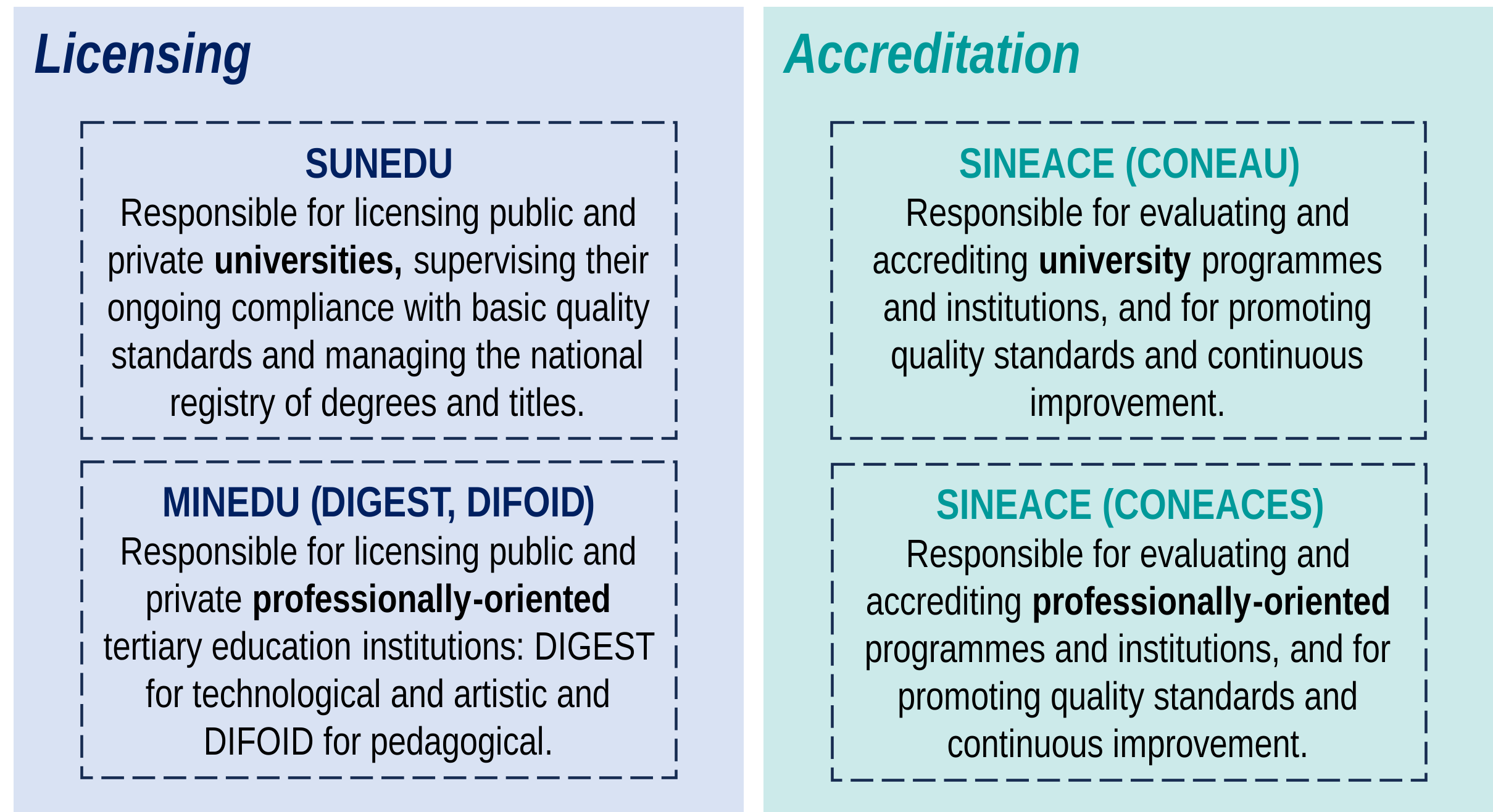
Source: Authors' own work.
Neither licensing nor accreditation currently fulfil their functions of systematically guaranteeing minimum standards and encouraging quality improvement
Beyond the governance of the quality assurance system, there is room to strengthen licensing, accreditation and performance monitoring, so they can better support TEIs in meeting basic quality standards and encourage continuous quality improvement (World Bank, 2020[44]). For both universities and professionally-oriented TEIs, the institutional licensing process focuses primarily on inputs, such as minimum infrastructure and educational requirements, institutional management capacity, qualifications of staff and financial sustainability. As such, licensing examines the minimum structural conditions for institutions to offer tertiary education programmes and is not designed to monitor the quality of the actual educational provision or institutional performance. For instance, the visit of experts conducted as part of the licensing process focusses on the assessment of infrastructure. Furthermore, as referred to above, institutional licensing is still far from universal, with a particularly high proportion of unlicensed professionally-oriented institutions, and concerns about the limited follow-up to the initial licensing of universities as re-licensing is no longer required and the new model of post-licensing supervision lacks depth and resources.
Frameworks and evaluation criteria for licensing are also similar across universities and professionally-oriented institutions and, in particular, do not adequately recognise the labour orientation of professionally-oriented institutions. In addition, MINEDU does not yet have a dedicated platform that consolidates administrative data across both university and professionally-oriented institutions. However, it is developing the Integrated Information System for Higher and Technical-Productive Education (SIIESTP), as part of the National Policy for Tertiary and Technical-Productive Education (PNESTP). This system will allow performance monitoring of TEIs and the identification of emerging challenges. Until then, multiple uncoordinated systems will co-exist, making it difficult to track and compare performance or ensure consistent oversight of key indicators of quality, such as student progression and completion rates, the number of degrees awarded, graduate employment outcomes, research outputs, and doctoral training (see Chapter 6) (Ministry of Education of Peru, 2020[27]).
With accreditation both voluntary for TEIs and for most programmes and seldom used, the tertiary quality assurance system has limited ability to address the quality of instruction and study programmes and generate a culture of continuous quality improvement. SINEACE urgently needs to consolidate its capacity to undertake accreditation processes at a larger scale. Existing accreditation frameworks, however, include valuable design elements. Accreditation encourages self-evaluation as an initial stage of the process. Accreditation frameworks are also differentiated by type of institution (university and professionally-oriented institutions), by type of degree (e.g. Master’s, PhD) and may be programme-specific (e.g. medicine, law). While they cover similar domains, standards are tailored for each sub-system and have descriptors to show a scale of progression. Institutions that meet the highest level of quality can receive accreditation for six years instead of two. This structure sends the important signal that quality can look different across sub-systems, and that institutions can progressively work towards achieving standards of excellence (World Bank, 2020[44]). Furthermore, accreditation includes a number of criteria to assess labour-market relevance, such as whether institutions periodically assess the relevance of their programmes in light of changes in the labour market and technological developments, establish links to the productive sector to identify needs that could inform research or programme content, and monitor graduate employment outcomes (SINEACE, 2025[45]; SINEACE, 2022[46]).
Despite some strengths, other areas warrant further attention if accreditation is to help drive system-wide improvements. One is the standards themselves. Within the accreditation frameworks for university and professionally-oriented TEIs, there is limited further differentiation of standards by institutional mission or role. For example, a research-intensive university is assessed against the same criteria as a teaching-focused university, despite clear differences in their orientation, resources, and priorities (SINEACE, 2023[47]). In addition, accreditation tends to be perceived as a demanding process with limited tangible benefits for individual institutions (CNE, 2025[43]). In many OECD countries, accreditation is either mandatory or actively encouraged through strong incentives. Accreditation may be linked to eligibility for public funding, scholarships, or research grants, or grant greater autonomy to institutions that demonstrate high performance and strong internal quality assurance processes. Peru offers some of these incentives, such as tax benefits, but in many cases, these incentives are not sufficient to offset the human and financial capacity constraints that prevent institutions from engaging in the accreditation process in the first place (CNE, 2025[43]).
While awareness of its importance is growing, few institutions systematically use internal quality assurance processes to inform improvement planning
Internal quality assurance processes are not systematically used in Peruvian TEIs to guide improvement planning. In public universities, there is a requirement to establish Quality Management Offices, but practices vary considerably, from comprehensive internal reviews of institutional programmes to inform continuous improvement to a narrower focus on preparing self-evaluations as part of the institutional or programme accreditations undertaken by SINEACE. Professionally-oriented TEIs are only required to form a Quality Committee if they are applying for SINEACE accreditation. Such weak expectations for internal quality assurance are combined with relatively weak oversight of institutional practices. The only external review of internal quality assurance is the examination of “Quality Management” that SINEACE conducts as part of the “Strategic Dimension” of its accreditation processes. However, accreditation is purely voluntary in Peru and there is no other external monitoring of internal quality assurance, limiting the incentives for institutions to invest in gathering evidence to inform improvement planning.
Capacity is also an issue. Many TEIs have low technical capacity to carry out internal evaluation and improvement planning. SINEACE provides guidance on how institutional units in charge of self-evaluation for accreditation should be composed and operate, encouraging broad participation from the academic community, students, and administrative staff. SINEACE has also developed practical guidance for TEIs on how to conduct self-evaluations, and offers webinars, training sessions, and technical assistance. However, analysis suggests that this support has not been sufficient to help institutions manage these processes, design tools to collect and analyse information, and engage stakeholders (World Bank, 2020[44]). At the same time, financial constraints also play a role. Institutions dedicate modest budgets for internal quality assurance, limiting the scope and thoroughness of self-evaluations or resources invested in actions for improvement (SINEACE, 2023[33]). As a result, many TEIs lack the practical means – and often the perceived value – to implement internal quality processes that can meaningfully inform ongoing improvement. In the absence of strong internal quality assurance processes, external mechanisms alone are unlikely to lead to sustained improvement, as they cannot substitute for the continuous, institution-led efforts needed to identify challenges, adapt practices, and embed a culture of improvement over time.
The influence of labour market actors in shaping tertiary programmes is increasing but mechanisms to improve programme relevance remain insufficient
Peru has taken some steps to better reflect labour market needs in the design of tertiary education programmes, in particular for those that are professionally-oriented (ISCED 3-5). In 2022, MINEDU updated the national catalogue of education offer (Catálogo Nacional de Oferta Formativa, CNOF) to guide institutions in designing their study programmes and curricula in line with labour market demands. Developed in collaboration with economic partners, the CNOF provides a structured list of study programmes, classified by economic sector, and links each programme to its qualification level, credit load, and expected competencies for graduates. When institutions wish to create a programme that is not included in the CNOF, they are expected to carry out an analysis of the corresponding productive sector drawing on input from relevant social and economic partners, to inform its design (Ministry of Education of Peru, 2022[48]).
However, the use of the CNOF faces some challenges and Peru does not yet have robust, systematic processes to help align tertiary programmes with labour market needs. First, existing tools to guide programme design are not regularly updated, and their use by institutions is not verified. For instance, while the CNOF was intended to be a dynamic tool updated regularly in collaboration with industry partners, such updates have not occurred systematically, leaving some programme areas outdated, particularly in fast-evolving sectors such as digital technologies, where several programmes have not been updated since 2015 (Ministry of Education of Peru, 2025[49]). Moreover, although institutions are expected to refer to the CNOF or justify new programmes through a sectoral analysis, there is no effective mechanism to verify compliance. In addition, the Office of Management of Institutes and Schools of Tertiary Education (EDUCATEC), created by Law in 2016 to plan the supply of professionally-oriented tertiary education in coordination with regional governments and labour market actors, is yet to start its operations.
Another challenge is the limited role quality assurance plays in helping to ensure the relevance of tertiary education programmes. Mandatory licensing processes place little emphasis on the relevance of the institutional offer and its quality while accreditation processes, which review the labour market relevance of programmes and linkages to the productive sector, remain voluntary. This provides little incentive for institutions to focus on the relevance of their programmes. Another driver of relevance is student choice, in so far as students may choose programmes leading to good outcomes thus incentivising institutions to respond to such demand and demonstrate the relevance of their offering. However, the information provided to students on the labour market outcomes of tertiary education programmes is very limited in Peru.
In addition, TEIs lack access to regular and comprehensive information on labour market needs to design their programmes. Skills anticipation exercises, such as labour market assessments, foresight analyses, and employer surveys, are not regularly carried out in Peru. Existing efforts are fragmented and often developed on an ad hoc basis. As discussed in Chapter 6, no single government entity currently holds a formal mandate to coordinate the collection and analysis of skills demand and supply data. Instead, various institutions gather information independently, using different methodologies and definitions. This fragmentation limits the comparability and coherence of available data, making it difficult to generate a comprehensive and timely picture of current and future skill needs by sector, occupation, and region.
Professionally-oriented programmes have an important role to play in meeting labour market needs for mid-level skills, but their quality and status are low
Professionally-oriented tertiary programmes are essential for Peru’s economic development, particularly to meet the substantial demand for mid-level technical skills. In the latest Occupational Demand Survey in 2025 (EDO), 10.3% of employers report needing employees with a professionally-oriented qualifications (ISCED 4 or 5) to fill new jobs, while 7% require workers with a university degree (ISCED 6, 7 or 8) (Ministry of Labour and Employment Promotion of Peru, 2024[19]). However, professionally-oriented TEIs continue to attract a limited share of tertiary students, in part due to persistent perceptions of low quality and limited labour market relevance (UNESCO, 2024[11]). An internationally comparative perspective highlights some areas where Peru’s professionally-oriented programmes could be strengthened. Perhaps the most significant is the need to enhance employer engagement in the design and delivery of tertiary education programmes (see Chapter 6). Some institutions, particularly well-established sectoral schools, have managed to build strong partnerships with employers, offering valuable examples of effective collaboration for work-based learning. Yet, as is often the case in systems where professional education is still consolidating and labour market informality is high, many TEIs in Peru face difficulties in securing employer collaboration to provide their students with work-based placements. Meanwhile, while professionally-oriented TEIs are legally required to include representatives from the business or professional sector in their Advisory Boards, which advise institutional leadership and contribute to curriculum development, in practice, employer involvement in these internal governance structures is often limited (OEI, 2021[50]). This reduces the capacity of institutions to be responsive to labour market needs and ensure their curricula remain up-to-date and relevant.
Equity assessment: Peru has stepped up efforts to improve tertiary education access and completion among disadvantaged groups, though significant barriers persist
Financial support for disadvantaged groups has increased and refined its targeting, but remains limited in scale
MINEDU provides targeted financial support to help vulnerable students access and complete tertiary education. Established in 2012, the Programa Nacional de Becas y Crédito Educativo (National Programme for Scholarships and Educational Loans, PRONABEC) offers scholarships and loans for young people with a financial need who have traditionally been excluded from tertiary education. Large private institutions also typically offer scholarships and loans to their students. PRONABEC schemes are available to students attending both public and private TEIs, although they have historically benefited a greater share of students enrolled in private institutions, a trend reversed in recent years (see Figure 5.7) (PRONABEC, 2025[51]). Evidence suggests these schemes have had a positive impact on access, completion and employment outcomes among beneficiaries (UNESCO, 2023[52]).
PRONABEC incorporates design elements that international evidence identifies as important for promoting effectiveness and equity in student financial support systems. First, scholarships and loans schemes consider students’ financial need as well as other dimensions of disadvantage. A variety of schemes exist targeting student characteristics (e.g. socio-economic disadvantage, special needs, children of school teachers) or the type of offer (e.g. general programmes, short-term training, higher technological studies, master’s and PhD programmes). The main schemes are Beca 18, for secondary graduates entering tertiary education, and Beca Permanencia, to support students already attending tertiary education. Beca 18 provides students with a stipend for living expenses, including food, accommodation and transport. It also covers direct academic costs, such as tuition fees in private institutions and admission exam fees, as well as indirect costs, such as study materials and laptops. Beca Permanencia is an incentive to complete studies and provides students with a subsidy for meals, transportation and study materials. Loans are provided mostly to unsuccessful applicants to scholarship schemes, are means-tested and involve a publicly-subsidised interest rate.
Second, PRONABEC scholarships and loans are only available to students enrolling in programmes in licensed public and private TEIs, in both the university and professionally-oriented sectors, and aim to take into account the relevance of the chosen study programme to the local labour market, intending to support students pursuing fields of study with strong employment prospects upon graduation. In line with this, PRONABEC publishes a list of eligible TEIs based on quality criteria, to guide students towards institutions that offer an adequate standard of education (UNESCO, 2023[52]). The award of financial aid takes into account quality indicators for eligible institutions, including official rankings, and the rate of student selectivity to enter eligible TEIs. For Beca 18, candidate students also need to take an assessment on mathematical and reading skills.
Third, information on available support has also become more accessible for students and their families. Each region now hosts at least one decentralised PRONABEC office where students and families can ask questions and get support with navigating the application process. These efforts are complemented by improved digital outreach, including an up-to-date website and mobile app with personalised filters to help students navigate the system and identify support schemes suited to their profile (PRONABEC, 2025[53]).
Despite these positive features, student financial support in Peru remains both very limited in scale and fragmented, reaching only a small share of vulnerable students and spread across multiple schemes. The number of scholarships and total funding have increased significantly – from almost 5 400 beneficiaries and PEN 121.1 million in 2012 (approximately USD PPP 75.2 million1) to almost 19 100 beneficiaries and PEN 1 125.9 million in 2024 (approximately USD PPP 631.8 million) (PRONABEC, 2025[54]; PRONABEC, 2025[51]). Yet, scholarships like Beca 18 still reach only 7.6% of its target population (Ministry of Education of Peru, forthcoming[55]). Between 2012 and 2025, 68% of all scholarships were awarded to university students, compared to just around 30% for those in professionally-oriented programmes (PRONABEC, 2025[51]). Student loans remain very limited, averaging 487 between 2016 and 2025, for years with available data (PRONABEC, 2025[51]) At the same time, the existence of multiple scholarship and loan streams can make it hard for students to navigate their options and may increase the administrative burden of managing support schemes. In 2024, there were 14 different funding streams, each with its own eligibility criteria and application procedures (PRONABEC, 2025[54]).
Another concern is how selection criteria are used to award most grants. At present, decisions are made based on socio-economic need and academic performance (in Beca 18’s standardised aptitude exam), with the latter used to discriminate between candidates when socio-economic needs are judged to be the same. While this approach provides consistency in how grants are allocated, it requires a reliable system for identifying students in need of support. Otherwise, given the close association between academic performance and socio-economic background in Peru, the use of exam data risks excluding students who face the greatest access barriers. It also appears that resources available for grants and loans vary radically from year to year (see Figure 5.7), undermining predictability, which is a key factor for systems designed to widen access to lower income populations (e.g. assurance for students to receive continuous funding).
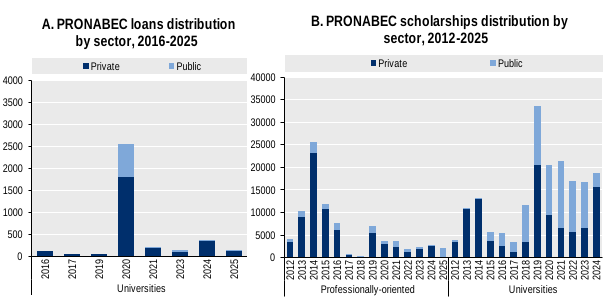
Note: Panel A considers 4 distinct loans: Crédito Continuidad, Crédito Talento, Crédito 18 and Crédito PRO. Professionally-oriented institutions are excluded from Panel A due to the low volume of loan, with only 207 issued between 2016 and 2025. Panel B includes 35 scholarships with Beca 18, Beca Permanencia and Beca Continuación de Estudios alone represent 82% of the total.
Source: PRONABEC (2025[51]), Dashboard de Becas y Créditos en la Educación Superior PRONABEC [Higher Education PRONABEC scholarships and Loans Dashboard], https://www.pronabec.gob.pe/gestion-estadistica-y-encuestas/ (accessed on August 28, 2025).
Additional support for students from disadvantaged backgrounds exists, but stronger incentives for TEIs to provide support and monitoring data are needed
Some targeted academic and social support exists in Peru to help disadvantaged students succeed in tertiary education. Beneficiaries of PRONABEC and vulnerable students in larger public and private universities often have access to publicly-subsidised meals, transportation and housing, to counselling and socio-emotional services, or to remedial classes to help them meet entry-level standards and continue their studies (PRONABEC, 2025[53]; Ministry of Education of Peru, 2024[56]). Institutional accreditation also considers whether institutions implement their own mechanisms to monitor students’ academic progress, which can help identify students at risk and design more targeted interventions.
However, beyond these initiatives, institutions have few incentives to strengthen support for disadvantaged learners (Ministry of Education of Peru, 2024[56]; Ministry of Education of Peru, 2023[23]). This is particularly evident in professionally-oriented institutions, where such support services are far less common, even though these institutions enrol a larger share of students from disadvantaged backgrounds and face higher dropout rates (Ministry of Education of Peru, 2023[23]). Neither the historical institutional funding model nor the recently introduced programme-based funding includes measures that encourage institutions to enrol and retain students from vulnerable groups, such as low-income backgrounds, ethnic minorities, or students with disabilities. Institutions also lack the necessary information to systematically monitor student progress unless they develop their own monitoring tools. A centralised, individualised student register does not yet exist to enable the tracking of student profiles and academic trajectories across the system (Ministry of Education of Peru, 2020[27]). However, MINEDU is developing the Integrated Information System for Higher and Technical-Productive Education (SIIESTP) to support student monitoring. Such data systems are increasingly implemented in OECD countries, not only for monitoring labour market relevance and system performance, but also for assessing progress towards equity objectives at the national level and informing more targeted support (OECD, 2019[57]).
Admission processes are complex and hinder equity of access
Admission and selection processes in tertiary education remain fragmented and often difficult to navigate. Each TEI requires a separate application and sets its own admission criteria beyond the basic requirement of secondary school completion. While admission to professionally-oriented TEIs and lower-prestige private universities is often non-competitive, selective universities and high-prestige professionally-oriented institutions administer separate entrance exams with little coordination across calendars or formats (SUNEDU, 2023[24]). In contrast to the majority of OECD countries, Peru does not conduct any standardised exams at the end of upper secondary education whose results could be used to inform tertiary admissions decisions (see Chapter 4).
This decentralised system imposes significant information and transaction costs, especially on disadvantaged students whose families may lack the educational, cultural, and financial capital to support them through the process. Travel to sit entrance exams and the absence of a unified source of information on admissions further disadvantage rural and low-income applicants, challenges that are compounded by inconsistencies across institutions in publishing admission regulations, documentation requirements, timelines, and appeal processes. In addition, candidates pay fees to take each exam (an important source of funds for institutions), introducing further socio-economic inequities. Furthermore, unlike in many OECD countries where affirmative mechanisms, such as reserved quotas or outreach activities support access for under-represented groups, tertiary institutions in Peru are not required to reserve places for disadvantaged students, with the exception of students with disabilities (Salmi and D’Addio, 2020[58]).
Initiatives are underway to expand information and guidance to help students navigate their tertiary education pathways
MINEDU and the Ministry of Labour and Employment Promotion (MTPE) have made important efforts to improve the information available to help students navigate their tertiary education choices. Online platforms such as “Mi Carrera” (managed by MTPE), “Ponte en Carrera” (managed by MTPE until 2019, since 2020 under MINEDU), and TUNI.PE (managed by SUNEDU with information about university programmes) provide information on study programmes, labour market outcomes by field of study, funding options, and career guidance services. Professionally-oriented programmes are well represented on the platforms, raising their visibility and helping students connect education choices with labour market prospects. Uptake of such platforms is high: according to the Programme for International Student Assessment (PISA), 90% of 15-year-olds in Peru reported having searched the Internet for career information – well above the OECD average (79%) (OECD, 2024[26]). And, while not mandatory, many TEIs, especially universities, also offer psycho-pedagogical support and career counselling services, helping students plan their academic path and professional future.
However, there is still scope to strengthen the impact and reach of these initiatives, particularly given high dropout rates in tertiary education, unclear transitions between programmes and high labour market informality. The existence of multiple information platforms makes it harder for students to navigate their options, as there is no single, comprehensive source of information. It is for this reason that many OECD countries have a single information platform that students can use for all institutions. In Peru, some of the platforms also contain outdated content and lack disaggregated labour market data by programme and institution. They do not link individual education and employment records over time, which would allow for more detailed analyses of learners’ transitions and programme outcomes. This reduces their value for students making informed choices and limits the visibility of institutional performance, weakening incentives for quality improvements (see Quality assessment above). In school education, although career guidance is formally included in the curriculum, the number of trained school counsellors and psychologists remains limited (Osores Queirolo, 2021[59]). These roles often fall to teachers, who typically have little specialised training or access to up-to-date labour market information. Students in professionally-oriented tracks are also less likely to benefit from guidance services on-site, although MTPE offers in-person and online career guidance services (Servicio de Orientación Vocacional e Información Ocupacional, SOVIO) for young people aged 16 to 24. In 2024, a total of 98 137 young people received one-to-one guidance, and a further 97 520 benefited from complementary activities such as career fairs or information sessions (Ministry of Education of Peru, 2024[39]).
Good governance: Delivering Peru’s vision for tertiary education through stronger national leadership and a reformed funding model
The adoption of the 2020 National Policy for Tertiary and Technical-Productive Education (PNESTP) marked a significant milestone in Peru by setting out, for the first time, a unified vision for vocational and tertiary education. The policy puts forward ambitious objectives across several fronts – from expanding access with equity, to improving the quality of programmes, institutions, and academic staff, and strengthening research and innovation capacity. Delivering on this comprehensive vision now calls for stronger national leadership to bring all relevant actors behind shared priorities and ensure coherent, coordinated implementation across the system. It also requires a new approach to funding tertiary education, one that is more strategic, in terms of resourcing national priorities, and also more sustainable, in terms of balancing how costs and resources are shared across individuals and institutions. This section looks at how Peru can learn from OECD evidence and experience to advance on these two fronts.
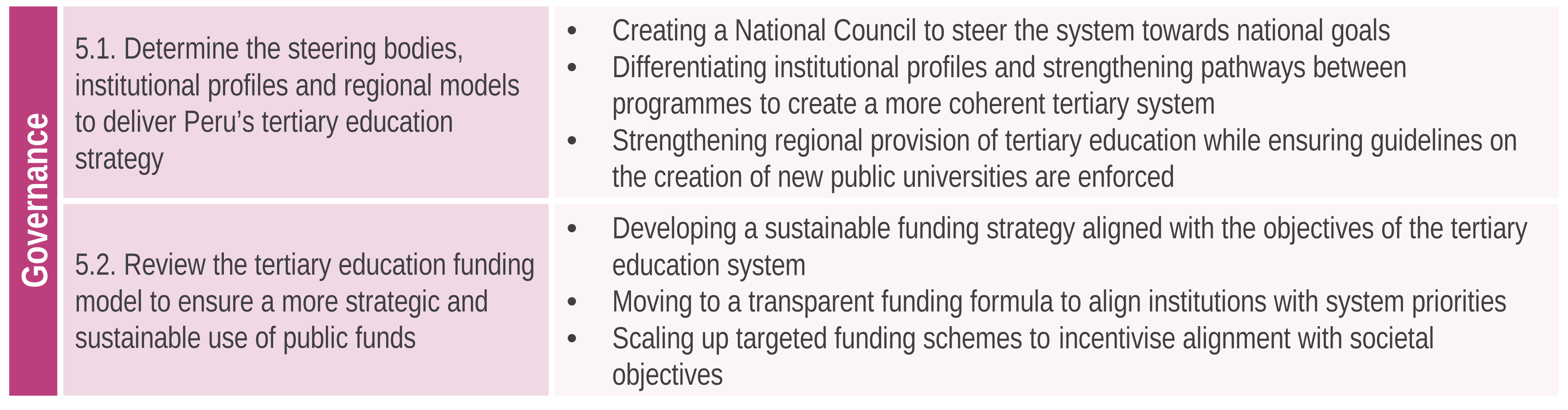
Recommendation 5.1: Determine the steering bodies, institutional profiles and regional models to deliver Peru’s tertiary education strategy
Given its complex structure – with a majority of provision in the private sector, strong university autonomy, and fragmented sub-sectors – a first priority is to strengthen the policy framework and establish robust mechanisms to steer Peru’s tertiary sector towards national goals. As elaborated in the following related actions, this will entail funding strategies that provide incentives for institutions to align to the tertiary strategy; a comprehensive quality assurance framework to hold institutions accountable; high-quality data and information to ensure the effectiveness of market mechanisms in Peru’s tertiary education; and the further integration of policies for university education and professionally-oriented education. This section focuses on overall leadership for these reforms. In particular, it suggests how the creation of a dedicated advisory body could help to build consensus behind the national vision for tertiary education and drive its implementation. It also looks at actions Peru can take to forge a more coherent and integrated tertiary sector, by clarifying the goals of different institutions and sub-sectors, advancing work on the National Qualifications Framework and credit transfer system, and strengthening regional provision of tertiary education.
Creating a National Council to steer the system towards national goals
To help guide the development of the more robust policy mechanisms proposed in later recommendations, it would be beneficial to establish a dedicated advisory body – such as a National Council for Tertiary and Technical-Productive Education – tasked with fostering strategic leadership, supporting policy planning, and facilitating coordination across the sector. This council should be broad-based and inclusive, comprising representatives from government, public and private institutions (including CETPROs, given their inclusion in the strategy), students, academic and research communities, employers, and civil society. Chaired by the Minister of Education, the council could act as a forum for reconciling diverse interests and reaching agreement on a national pact for a shared long-term strategy. While policy formulation and implementation would remain the responsibility of relevant educational authorities, the council would play an advisory role making recommendations, monitoring progress, and supporting future policy development. The council could also help to steer and monitor the development of system-wide frameworks and procedures in tertiary education. Colombia offers a valuable example. Its National Council for Higher Education (Consejo Nacional de Educacion Superior, CESU), plays a key role in planning and coordination, providing advice and recommendations to the Ministry of National Education on tertiary education development and quality assurance. CESU is chaired by the Minister of Education and includes members from academia, science, business, and other public agencies, reflecting a broad base of expertise and stakeholder engagement (OECD, 2016[60]; Ministry of Education of Colombia, n.d.[61]). In Peru’s context, the successful implementation of a vision for tertiary and technical-productive education also requires a political pact whereby no new universities are created without a positive assessment of need by the relevant educational authorities and guarantees of financial sustainability.
Differentiating institutional profiles and strengthening pathways between programmes to create a more coherent tertiary system
In a mixed and highly diverse tertiary education system like Peru’s, not only divided along public and private lines but also across distinct sub-systems, it is particularly important to develop policies that support a more coherent and integrated sector. Two areas merit particular attention: articulating a shared vision for the institutional landscape, roles and profiles of providers and developing tools and mechanisms to foster stronger integration across sub-systems.
A well-managed diversification and specialisation strategy, with a vision for the institutional landscape and profiles, would enable the system to better serve current and future economic needs. To progress this, MINEDU should define the specific goals of each sub-sector and articulate how they contribute to the tertiary strategy; establish mechanisms to ensure institutions within each sub-sector stick to their agreed mission and profile (e.g. avoid academic drift among professionally-oriented institutions); and provide incentives for some differentiation within sub-sectors. The latter includes recognising the research-orientation of some universities, focusing some universities on their role in regional and local development, and promoting specialisation in some institutions (e.g. in pedagogical studies; engineering; manufacturing). This requires the policy framework (e.g. funding, quality assurance) to recognise and reward the profiles and missions of individual institutions. For instance, the funding of regional universities should recognise their contributions to local communities.
One critical issue is to build an identity for professionally-oriented tertiary education as a prominent part of the tertiary education system. In this sector, the rewards for excellence have to be substantial enough to discourage academic drift. In these institutions, the primary criterion for accreditation to award degrees should be a demonstration of adequacy of education provision with labour market demand. There is also a need to develop a vision for applied and practice-oriented research and development in the sector to best serve regional development. Entrepreneurship and innovation can be useful general criteria for research and knowledge transfer in the professionally-oriented tertiary sector. Improving this sector is of major importance to ensure the responsiveness of the educational system to labour market needs.
Creating a more integrated tertiary education system in Peru also requires stronger articulation between its various sub-sectors and institutions. This should be part of a broader strategy to promote flexible learning pathways and the recognition of prior learning throughout the system (see Chapter 6). At present, credit transfer in Peru relies largely on ad hoc, local, voluntary agreements between institutions. In contrast, many OECD countries have introduced more structured tools such as national qualifications frameworks, credit accumulation and transfer systems (for example, the European Credit Transfer and Accumulation System, ECTS), and unique student identifiers to enhance system coherence and integration. These mechanisms not only support student mobility across institutions and levels of education but also enable greater inter-institutional collaboration, including joint programmes and student exchanges. Moving in this direction would involve finalising and implementing Peru’s National Qualifications Framework, advancing the development of a national credit accumulation and transfer system – whether through legislation or formal guidance – and ensuring the consistent use of a single student identifier across the tertiary education system. These steps could help build a more integrated, student-centred, and strategically aligned tertiary education system.
Strengthening regional provision of tertiary education while ensuring guidelines on the creation of new public universities are enforced
In its efforts to achieve greater regional balance in tertiary participation, Peru has taken steps to manage carefully the creation of new universities outside the Lima metropolitan region, namely through the 2022 Vice-Ministerial Resolution (Ministry of Education of Peru, 2022[62]). The cautious approach suggested by these guidelines, whereby establishing new public universities in remote regions is the last resort to expand university education in regions, is to be supported. The long-term sustainability of newly established public universities can be undermined by challenges such as low enrolment and difficulties in attracting and retaining qualified academic staff. Therefore, it is fundamental to ensure the application of the existing provisions in the 2022 Vice-Ministerial Resolution to undertake rigorous viability assessments in close coordination with national education authorities before establishing a new university. Regional stakeholders, particularly from the productive sector, should play a central role in this planning. Licensing decisions should consider the alignment of proposed programmes with regional development goals and ensure that institutions can maintain minimum quality standards over time. In some regions, institutional collaboration or even mergers could help achieve the scale necessary for sustainable operations. This calls for a re-assessment of the relevance and viability of the large number of regionally-based public universities approved by the Congress of the Republic since 2022.
As proposed by the 2022 Vice-Ministerial Resolution a more viable alternative to establishing entirely new universities is to continue supporting the creation of regional campuses by established, urban-based institutions. These campuses should offer programmes that are directly relevant to the local context. To facilitate this, Peru could introduce a competitive funding scheme that incentivises universities to expand and improve programme quality in regional campuses, particularly in underserved areas (see Recommendation 5.2 below).
Still, improving regional access to tertiary education will above all depend on developing the regional provision of professionally-oriented tertiary education. This requires the careful planning of regions’ networks of professionally-oriented tertiary institutions, with stronger leadership by regional directorates of education (DREs), closer collaboration between DREs and local education management units (UGELs), and clearer guidance from MINEDU. In this context, the 2023 law establishing executive units in regional governments represents a positive development, as it allows regions to manage the budgets of technological and pedagogical institutions and thus contributes to better planning and use of resources (Congress of the Republic of Peru, 2023[36]). So far, Arequipa is the first region to establish an executive unit (Ministry of Education of Peru, 2024[4]). In some regions, there could be a case for some rationalisation, with the consolidation of educational programmes and the merging of some institutions. One strategy to make regional institutions more sustainable would be to focus on specialised fields, where local labour demand is strong and where they can build a sustainable academic base and foster the dynamism needed to attract both students and staff (OECD, 2007[63]).
Digitalisation also presents new opportunities to reach students in rural and remote areas. Peru should explore remote access models that combine online learning with local academic support. While the development of fully online programmes may not yet be advisable given the current state of quality assurance in Peru’s tertiary education, hybrid models could be effective. These would allow students to begin their studies remotely and later transition to in-person instruction. Given the low connectivity in rural areas, this would require dedicated investments in digital infrastructure. Such programmes should be subject to specific licensing and accreditation standards. Similar approaches have been implemented in countries like France, where the Campus Connectés initiative offers remote learners access to tertiary education along with academic and digital support at local learning centres (Ministry of National Education and Youth of France, n.d.[64]).
Ensuring that a more balanced tertiary education coverage across regions reduces socio-economic disparities between regions requires that programmes meet the needs of local economies. National and regional authorities should develop strategies that strengthen the ties between tertiary institutions and the regional economy. This includes involving employers in the design and governance of tertiary programmes and ensuring that tertiary offerings support local development goals. Coordinating the supply of tertiary programmes at the regional level is also crucial. Establishing Regional Coordinating Councils – comprised of representatives from educational institutions, local governments, and the private sector – could facilitate this. These councils would promote dialogue between academia and industry, align tertiary education with labour market needs, and enhance coordination across different institutions, institution types and programmes.
Recommendation 5.2: Review the tertiary education funding model to ensure a more strategic and sustainable use of public funds
The guiding principle for the development of any funding strategy is that public funds steer the tertiary education system in a way that facilitates its contribution to society and the economy in alignment with the system’s objectives and policy goals. In Peru, this means funding strategies need to promote the objectives of the National Policy for Tertiary and Technical-Productive Education (PNESTP), namely expansion with equity of access, quality of teaching and learning (including improving the qualifications of academic staff), efficient governance (including institutional governance), and greater capacity for research and innovation. At present, however, Peru has limited means to use funding to steer the system in this way, both because the government still needs to set out a long-term vision for financing tertiary education, and because many of the policies that guide how funds are allocated are not well designed to incentivise reform. This section looks at steps Peru can take to address these gaps so that the government’s investment in tertiary education yields higher returns.
Developing a sustainable funding strategy aligned with the objectives of the tertiary education system
Expanding access to tertiary education, while maintaining or improving quality, will require additional resources. Although Peru allocates a share of government expenditure to tertiary education similar to the OECD average, the level of public investment per student and relative to national wealth remains low. Given the country’s tight fiscal space and the pressing demands at lower levels of education, it is unclear how much further the system can expand under current public funding levels, even with some reallocation between institutions. In this context, the most realistic short-term approach is to incrementally raise public investment in tertiary education and research as the budget allows, while mobilising income and attracting investment from other sources. To progress this, Peru will need a long-term and strategic vision for how to fund its tertiary education system. This includes addressing several key questions:
How to better balance public and private spending, particularly in public TEIs. This could include considering mechanisms such as income-based tuition policies to ensure that public subsidies are progressive and benefit students who could not otherwise afford to pay. Addressing this issue would also help clarify the extent to which the public system can expand sustainably without compromising quality, particularly in terms of increasing publicly-subsidised places.
How to rebalance public funding across tertiary subsystems. A policy objective in Peru’s tertiary education is to diversify the supply of programmes at the tertiary level to both accommodate a more diverse student population and better respond to labour market needs, namely through the expansion and consolidation of professionally-oriented tertiary programmes. This will require specific funding efforts to address the significantly lower public per student funding in professionally-oriented tertiary education.
How to improve the allocation of public funding. Peru’s efforts to expand and transform tertiary education will hinge in large part on the ability to allocate and use available public resources more effectively and efficiently. Advancing this goal will require improving the transparency of funding allocations, while creating incentives for institutions to align with national priorities for quality and equity, as recommended in this report (see below).
How to efficiently organise the network of tertiary education institutions. An efficient use of public resources requires periodic reviews of the cost-efficiency of the network of public institutions to identify opportunities for mergers, consolidation of study areas, and consortia. There could be some opportunities for rationalisation, in particular in the professionally-oriented tertiary sector where some institutions are rather small.
How to incentivise private institutions to align with national objectives. Public funding strategies can also be used to incentivise private institutions to align with national objectives, which is of key importance given their dominance in the tertiary education system. This is already happening – for example, through students in private universities being eligible for financial aid. However, Peru could go further, notably by regulating tuition fees in the private sector (e.g. introducing tuition ceilings) and allowing private institutions to compete for competitive public funds. The latter would be particularly important for public programmes seeking to achieve strategic objectives such as building capacity for research and innovation or responding to the needs of local communities.
Moving to a transparent funding formula to align institutions with system priorities
To make more effective and efficient use of public resources in tertiary education, Peru will need to consider reviewing its current funding mechanisms. A key priority in Peru is to move from funding allocations based on historic levels or negotiations of budgets between the government and public institutions to a formula-based allocation that aims to shield allocation decisions against excessive political pressures and encourage desired institutional behaviour. A more transparent formula has the potential to provide incentives for institutions to better align with national goals for tertiary education. The most common method used to allocate core public funding to TEIs in OECD countries is the formula-funding methodology (Golden, Troy and Weko, 2021[35]). Great diversity exists in the design of the funding formula across countries, including in terms of the types of indicators used to calculate funding allocations. In many systems with formula funding, input indicators play the most important role in determining the amount of funding an institution receives via a block grant. The most common input used is the overall enrolment or number of study credits. However, and given that input indicators can incentivise institutions to focus too heavily on volume of enrolments, output indicators are also widely used (see Figure 5.9). Funding formulae allow the authorities to pursue policy objectives through setting specific criteria.
As a starting point, Peru should develop a funding formula to allocate public core funding to public institutions based on numbers of students enrolled, and changes in those numbers. Programmes at different levels and in different fields of study have different unit costs; and these too should be reflected in allocations through differentiated funding rates. As the system gains maturity, some output indicators can be added to the funding formula to enhance internal efficiency (e.g. costs, completion rates) and external efficiency (e.g. quality of graduates). The most common output indicators used are the number of publications, doctoral degrees awarded, degrees awarded, graduates in employment, and study credits completed (Golden, Troy and Weko, 2021[35]).
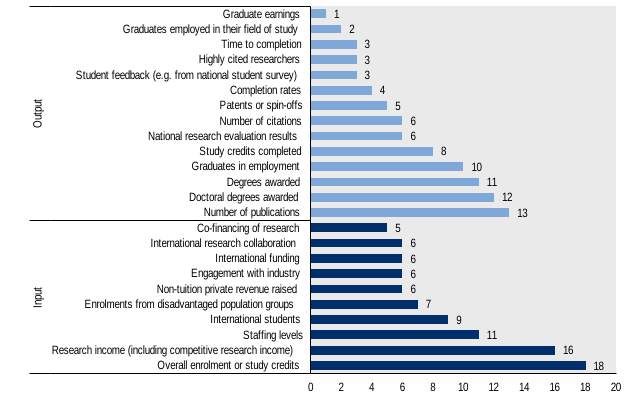
Note: The figure considers 27 OECD jurisdictions.
Source: Golden, Troy and Weko (2021[35]), How are higher education systems in OECD countries resourced? Evidence from an OECD Policy Survey, Figure 4.4, OECD Publishing, Paris, https://dx.doi.org/10.1787/0ac1fbad-en.
However, to be successful, a performance-linked funding system must be carefully designed – especially if it is to avoid the risks of goal displacement, such as discouraging institutions from enrolling students from disadvantaged backgrounds who are more difficult to teach and less likely to succeed, thus reducing diversity of access (see OECD (2020[65]), for a discussion on the design of performance-linked funding mechanisms). Portugal provides a good example of a country which recently transitioned to using a funding formula, after a period of historical allocations. In the initial phase, the formula was kept simple (using student enrolment with weights, differentiated by university/polytechnic, and with the inclusion of a fixed component to help provide stability) but with the possibility of adding output indicators at a later stage (see Box 5.1).
Portugal has recently undertaken a significant reform of its higher education funding model, reintroducing a formula-based system after years of relying on historical allocations. Since 2009, Portugal's higher education funding operated primarily on an incremental, historical basis. Over time, this contributed to a growing gap between funding levels and actual enrolment, leading to notable disparities in public resources per student. For instance, in 2022, some universities received almost 2.5 times more funding per student than others.
The new funding model is designed for progressive introduction over four years, from 2024 to 2027. Its overarching goals are to promote efficiency, effectiveness, and quality within higher education institutions, while ensuring stability and predictability in funding. The reform also explicitly aims to correct historical imbalances and foster a clear, simple, and transparent allocation of public funds. The new funding model introduces a formula with three key components:
Activity Component: Core funding primarily aimed for teaching, based on weighted enrolled students, which links directly to human resource costs and teaching/research expenses. The formula approach is common for universities and polytechnic institutes, but weights are pondered differently.
Stabilisation Component: Accounts for 20% of the total budget and is based on each institution's historical share. It aims to smooth annual variations and ensure predictability, recognising the high fixed costs of higher education institutions. During the transition period (2024-2027), part of this budget is specifically allocated to institutions historically underfunded.
Performance Component: Planned for introduction from 2027 at the earliest, this future element will use multidimensional performance indicators, considering dimensions such as research performance and community engagement.
Source: Government of Portugal (2024[66]), Portaria n.º 101/2024/1. Procede à aprovação da fórmula de cálculo do orçamento de referência das instituições de ensino superior [Ordinance No. 101/2024/1. Approves the formula for calculating the reference budget of higher education institutions], https://files.diariodarepublica.pt/1s/2024/03/05200/0003400046.pdf; and, OECD (2022[67]), Resourcing Higher Education in Portugal, OECD Publishing, Paris, https://doi.org/10.1787/a91a175e-en.
The development of a new funding model will require a considerable effort of time and resources to develop appropriate unit costs and find ways to replace existing budget processes with a more rational model without causing unacceptable financial instability for individual institutions. An integrated approach to funding also requires a funding framework for professionally-oriented institutions to follow principles similar to that of universities. This could involve a different set of indicators to incentivise specialisation and commitment to institutional mission, and ensure professionally-oriented institutions are funded at a level that allows them to deliver high-quality programmes in some expensive fields (such as engineering or nursing).
Also, particularly in a system with a high proportion of private institutions where market mechanisms are instrumental, it is important to ensure that financing arrangements allow student demand to have a significant influence both on the overall size and shape of tertiary education systems and provision at institutional level. This entails financing institutions based on actual enrolments or graduations rather than pre-defined places in particular fields and levels of study. The desired incentives for institutions to improve the quality of their programmes will only occur, however, if there are limited restrictions on enrolment numbers in institutions; students have access to reliable information on programmes and their quality; credit recognition facilitates student mobility between institutions; and, as is already the case in Peru, student financial aid allows for student’s choice of institution.
Scaling up targeted funding schemes to incentivise alignment with societal objectives
Another supplementary approach that can be highly effective in aligning the mission of institutions with the overall strategy for tertiary education is the expansion of targeted funding in addition to formula-based allocation systems. Peru already has two targeted funding schemes through which public institutions can compete, one that focusses on the improvement of institutional management in TEIs (PMESUT) and the other that focusses on institutional infrastructure (PMESTP). Considering Peru’s key goals for 2030, as proposed in the 2020 PNESTP, Peru could consider establishing new targeted funding schemes in priority areas such as the improvement of the qualifications and skills of academic staff, and the improvement of institutional support and facilities for learners from disadvantaged backgrounds. In case resources are available, and in collaboration with regions, another good case for using targeted funding schemes is the support to the regional engagement of tertiary institutions with communities and local employers, the development of local entrepreneurial skills and technology transfer in regions. In order to provide incentives for private institutions to contribute to national objectives, competitions within these programmes could be open to them.
Quality of programmes and outcomes: Establishing a robust system for quality assurance to make tertiary education more relevant to societal needs
Peru’s tertiary education system faces significant challenges in ensuring quality and relevance amid rapid expansion, institutional diversity, and limited regulatory oversight. While recent reforms, such as the creation of SUNEDU and provisions for quality assurance in professionally-oriented tertiary education, have laid important groundwork, the system still lacks a coherent, robust approach to quality assurance. Therefore, there is a need for a comprehensive quality assurance system to enhance institutional accountability and promote continuous quality improvement. Such a system requires good co-ordination among its component parts – licensing, programme accreditation, institutional accreditation, and internal quality processes – under a trusted and independent agency with proper capacity. Another priority, as part of the effort to improve the relevance of tertiary education offerings, is elevating the quality and status of professionally-oriented tertiary programmes, which requires closer links with the productive sector and stronger evidence on their labour market outcomes.
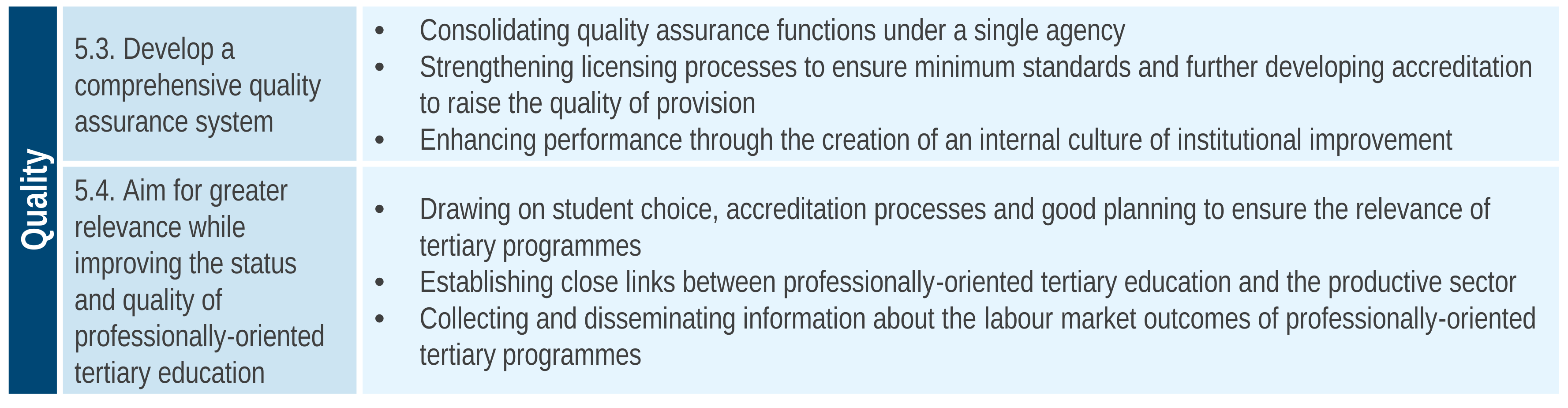
Recommendation 5.3: Develop a comprehensive quality assurance system
The serious prevailing quality problems in Peru’s tertiary education, resulting from a weakly regulated rapid expansion, mean that quality assurance should receive high priority in tertiary education reform. It is essential to build a national commitment to quality in tertiary education so that students’ rights are protected, institutions have incentives to continuously improve their programmes, and quality assurance supports institutions in aligning with national objectives. The efforts initiated through the 2014 University Law (creation of SUNEDU and its functions in quality assurance) and the 2016 Law of Institutes and Schools of Tertiary Education (with provisions for licensing and accreditation in professionally-oriented tertiary education) deserve strong support and should be sustained. However, a more comprehensive approach to quality assurance, with a strong external component, is needed given the continuing expansion of the system, the large private sector, the greater diversity of institutional types and educational offerings, the unrestrained creation of new public universities and the low level of maturity of most TEIs when it comes to internal quality assurance. As elaborated below, the ambition should be to consolidate institutional licensing processes, make institutional accreditation mandatory, introduce a process of mandatory programme accreditation, and mandate institutions to establish internal quality assurance mechanisms.
Consolidating quality assurance functions under a single agency
A more ambitious comprehensive quality assurance system requires better co-ordination. The objective is to ensure that its component parts – licensing, programme accreditation, institutional accreditation, and internal quality processes – work together in a coordinated way, permitting institutions to take as much responsibility for quality as their own capacities permit and the system to collectively raise the quality of teaching and learning in its programmes. This is best accomplished through a single quality assurance agency with adequate technical capacity, which Peru should establish. This agency would take responsibility for quality assurance in the whole of tertiary education, combining the current quality assurance functions of MINEDU, SINEACE and SUNEDU. It would promote stronger, independent and coherent direction for quality assurance in ways that integrate the university and the professionally-oriented tertiary sectors.
To be trusted, impartial, and stable, the body must be independent of both TEIs and government and stand outside MINEDU. In particular, it should not have representatives of institutions in its governance structure to avoid potential conflicts of interest, as is currently the case with SUNEDU and SINEACE. International experience offers models of special legal forms that provide quality assurance bodies with a very high degree of autonomy, such as Portugal’s Agency for Assessment and Accreditation of Higher Education (A3ES), whose management is appointed by a Board of Trustees. In the near-term, targeted public funding would be necessary to develop properly the capacities of the quality assurance agency, while on a long-term basis the organisation would best achieve independence by operating primarily on a fee basis for services provided (see OECD (2025[68]) for a review of trends in quality assurance in tertiary and vocational education).
An important role for the quality assurance agency is enhancing improvement by being available to institutions of tertiary education for advice, consultation, research, and development on request. The development of dialogue and frequent communication between external experts and the institutions should be a vital characteristic of the quality assurance system. This, however, requires a high level of professional expertise within the agency. The agency could also undertake research on quality in tertiary education, disseminate best practices and provide benchmarking data across the sector.
Strengthening licensing processes to ensure minimum standards and further developing accreditation to raise the quality of provision
Peru should prioritise strengthening the licensing system so that it provides an effective guarantee of basic quality in the tertiary sector. The licensing process must be modest and realistic: to ensure an acceptable minimum level of provision through a process of inspection that focuses on educational inputs and processes for new institutions and programmes and extending to outputs for programmes seeking re-licensing. An improved system would benefit from improved monitoring and enforcement capabilities. Permission to operate should be accompanied by a requirement that institutions provide authorities with a minimum data set that supports ongoing monitoring and enforcement, diminishing their exclusive reliance on complaints as the basis for intervention. The licensing procedure for universities should involve regular re-licensing (e.g. every 6 years) until a mandatory institutional accreditation process is established (see below). In the professionally-oriented tertiary sector the mandatory regular institutional licensing process should be enforced and completed for the entirety of institutions, which requires strengthening the capacity of MINEDU to engage in these processes.
However, providing institutions with incentives to raise the quality of provision is best achieved through institutional accreditation. Accreditation processes involve an evaluation of the quality of the programmes and instruction, engage institutional actors in a dialogue about quality provision, and generate opportunities for improvement of teaching and learning practices. The foundations for voluntary institutional accreditation, for both public and private institutions, have been established and are under the responsibility of SINEACE for both the university and professionally-oriented sectors. Incentives for participation essentially relate to signalling quality in the market but progress in setting up accreditation processes and the take-up among institutions have been very slow. There must be renewed efforts to develop capacity to engage in institutional accreditation across all subsectors in tertiary education and aspire to make such process mandatory for all institutions.
As the quality assurance system gains maturity and capacity, a process for systematic programme accreditation should be developed. In many OECD countries programme accreditation remains mandatory, although a growing proportion of mature systems in Europe and elsewhere are moving to institutional accreditation only (OECD, 2025[68]). If resources allow, a single cycle of mandatory accreditation for existing programmes should be established, with priority given to programmes in institutions which are not accredited. This would apply to programmes across the system in any type of institution. Such a single round of assessments would permit the system to review the quality of its programmes, provide advice for improvement, and identify those programmes which should not be offered. Following this initial single cycle, programme accreditation should be targeted at new programmes in non-accredited institutions. The option for institutions to voluntarily submit their programmes to accreditation should be retained in case resources do not allow a mandatory scheme for programme accreditation. This would provide institutions with the opportunity to both receive public recognition for the quality of their programmes and advice for improvement. Programme accreditation should be linked to funding, ensuring both that only accredited programmes are publicly funded and that student financial support is only provided to students attending accredited programmes.
Also, as institutions successfully demonstrate the quality of their programmes – and prove that their institution has the capacity to take responsibility for the quality of their study programmes through a process of institutional accreditation – they should be permitted to assume responsibility for the quality of their programme offerings, subject to a continuing and periodic renewal of this self-accrediting status. This has several advantages – institutional accreditation is cost-efficient vis-à-vis programme accreditation; institutions assume responsibility for the quality of programmes and their improvement; and institutions have incentives to link quality to their institutional strategies. This requires institutional accreditation to have a strong focus on reviewing the capacity of institutions to monitor and improve the quality of their educational programmes.
A comprehensive quality assurance system must also be grounded in robust, transparent data that reflect the performance of individual TEIs. Key indicators should include, at the programme and institutional levels, labour market outcomes, student progression, dropout and completion rates, and time to degree. This data would support a risk-based approach, enabling Peru to prioritise the evaluation of institutions or programmes with poor performance indicators. As the quality assurance system matures, risk-based monitoring could also be used to identify instances where an institution needs to have its self-accrediting status reviewed or cases in which accredited programmes require a re-accreditation process.
Both licensing and accreditation processes must reflect the diverse missions and profiles of TEIs. Professionally-oriented tertiary institutions differ significantly from universities in terms of curriculum, staffing, pedagogy, and stakeholder engagement. Quality assurance processes must account for these differences – particularly the labour market orientation of many TEIs – including by involving employers and other industry stakeholders in evaluating relevance and outcomes. Conversely, quality assurance for research-oriented universities may reasonably include expectations around academic staff qualifications (e.g., PhD-level educators), full-time employment, and research engagement. Such standards, however, may be impractical for high-quality private institutions focused on professional education in fields like law or business, and the quality assurance system should be flexible enough to accommodate these differences.
To ensure that accreditation contributes to broader societal goals, the process must engage stakeholders beyond academia, including employers, students, and civil society representatives. This inclusive approach is increasingly recognised as essential to shift quality assurance from a purely academic peer review toward a more outward-facing system. Such an approach would help align tertiary education more closely with Peru’s social and economic development priorities.
In Brazil, where private provision is also dominant in tertiary education, a system of institutional accreditation and programme-level recognition is used to regulate market entry for TEIs and undergraduate programmes, mostly affecting the private sector (see Box 5.2).
Brazil's tertiary education landscape is characterised by the dominance of private provision, which accounted for 75,9% of total enrolments in 2022. To oversee quality in the sector, Brazil has developed a comprehensive National System of Evaluation of Higher Education (Sistema Nacional de Avaliação da Educação Superior – SINAES) that combines periodic institutional accreditation with programme-level authorisation and recognition, that regularly monitors tertiary education institutions (TEIs) performance and tracks student outcomes.
The Secretariat for Regulation and Supervision of Higher Education (Secretaria de Regulação e Supervisão da Educação Superior – SERES) an integral part of the Ministry of Education (MEC) is responsible for approving the operation of TEIs and individual undergraduate programmes, based on the results of the following quality assurance processes:
Institutional accreditation (credenciamento) and its periodic renewal (recredenciamento) are compulsory for all TEIs. New private TEIs are initially accredit as Colleges (Faculdade), which specialise in specific knowledge areas. After meeting established standards, they can transition to University Centres (Centro Universitários) focusing on undergraduate education, and then to Universities (Universidades), multidisciplinary institutions involved in teaching, research, and extension. Public institutions follow similar accreditation pathways and enjoy the same levels of autonomy as their private counterparts. While core accreditation applies to all, private TEIs must also meet financial and operational requirements, including demonstrating economic capacity and lawful origin of funds.
Programme-level authorisation (autorização) by the Ministry of Education is generally required for Colleges launching new undergraduate programmes. Universities and University Centres have greater autonomy and only need to notify the Ministry of Education of new programmes, except in the fields of medicine and law, which require formal authorisation.
Programme-level recognition (reconhecimento) is required for all TEIs. New programmes must be submitted for recognition once the first cohort of students have completed half of their studies and must also be renewed periodically.
Decisions on accreditation, authorisation and recognition are based on the results of institutional and programme evaluations, undertaken by the evaluation directorate of the National Institute for Educational Studies and Research (Instituto Nacional de Estudos e Pesquisas Educacionais Anísio Teixeira – INEP), an autonomous federal agency linked to the Ministry of Education. These evaluation activities encompass external evaluation of institutions and programmes. Student learning outcomes measured through the National Examination of Student Performance (ENADE), and institutional self-evaluation carried out by TEIs also serve as input to external evaluations.
SERES also monitors the performance of individual TEIs based on INEP’s evaluation results, and extensive administrative data, such as the annual Higher Education Census. The e-MEC system, managed by SERES, serves as the official database for continuous monitoring. This data, along with various quality indicators developed by INEP (e.g., Conceito Enade, CPC, IGC), is used to identify performance trends and potential early risks in programmes or institutions, informing preventive or corrective actions.
Source: OECD, (2025[69]), Education GPS. Brazil, Overview of the education system (EAG 2024), https://gpseducation.oecd.org/CountryProfile?plotter=h5&primaryCountry=BRA&treshold=5&topic=EO, (accessed June 23, 2025); Presidência da República, (2017[70]), Decreto Nº 9235, https://www.planalto.gov.br/ccivil_03/_ato2015-2018/2017/decreto/d9235.htm; and, OECD (2018[71]), Rethinking Quality Assurance for Higher Education in Brazil, Reviews of National Policies for Education, OECD Publishing, Paris. https://doi.org/10.1787/9789264309050-en.
Enhancing performance through the creation of an internal culture of institutional improvement
While the immediate priority of quality assurance in Peru’s tertiary education system is to enforce accountability and ensure minimum standards, it is equally important that it serves as a basis for continuous quality enhancement. Sustainable improvement is best achieved through the development of internal quality assurance processes within institutions – mechanisms that foster self-reflection, institutional learning, and gradual performance enhancement. These internal processes can be supported and validated through periodic external audits conducted by the national quality assurance agency, ensuring both alignment with national goals and institutional ownership. The expectation is that these processes will gradually contribute to building a quality culture in TEIs – shared by academic leadership, staff and students – and trigger intrinsic motivation to achieve improvement. An approach mostly based on external quality assurance mechanisms is likely to be excessively costly and inefficient in achieving sustained improvement.
Ideally, internal quality assurance mechanisms should enable academic departments to systematically collect and analyse feedback from students, evaluate the effectiveness of their programmes, and identify actionable improvements. This requires access to tools for obtaining fair and reliable assessments of teaching and learning, as well as the resources and institutional support to implement enhancements. While institutional autonomy and initiative must be respected, the national quality assurance agency can play a valuable role by providing technical guidance, facilitating knowledge exchange, and promoting effective models tailored to Peru’s tertiary education context. This support might include training workshops, dissemination of good practices, and the development of self-assessment tools.
Internal quality processes ought to be non-burdensome and delegation of responsibility within institutions for quality should go to those people able to effect change at the teaching-learning interface. Informal internal quality monitoring may be most valuable in terms of improvement and enhancement of student learning. Peer observation of teaching should be encouraged in a way that is conducive to improvement, i.e. by being separated from other institutional processes for probation, under-performance or promotion, and with feedback to individual staff remaining confidential. These approaches could be assisted by the creation of centres of teaching excellence within TEIs (or across institutions) to develop pedagogical strategies and training materials.
To incentivise internal quality assurance processes, one aim of institutional accreditation should be to build up institutional capacity for continuous improvement. This means that the accreditation process, as is already the case, should encourage self-evaluation as an initial part of the process. It also means that one of the tests of quality in a programme is the capacity of the institution to evaluate and monitor the success of the programmes, and feedback this experience into the programme characteristics.
Recommendation 5.4: Aim for greater relevance while improving the status and quality of professionally-oriented tertiary education
In Peru, there is a clear need to improve the relevance of the supply of tertiary education programmes. Evidence shows that a significant proportion of tertiary degrees yield modest returns for graduates, particularly those from lower-quality institutions. Many graduates are either underemployed or employed in roles that do not require tertiary-level qualifications. This misalignment suggests that the relevance of current programme offerings must be addressed both at the level of existing degrees and when new ones are introduced. At the same time, it is essential to establish a clear and positive vision for professionally-oriented tertiary education. Elevating the status of such programmes is a complex task, but the goal must be to promote high-quality professional and vocational education within a tertiary sector that is closely aligned with employer needs and regional labour market demands. These qualifications, fully integrated in the overall tertiary education system, should command respect in their own right, rather than be perceived as second-tier options. Part of the strategy to achieve this is disseminating information about the labour market outcomes of professionally-oriented programmes. In many countries experiencing tertiary expansion, growth has focused on professionally-oriented programmes due to their labour market relevance and broader accessibility.
Drawing on student choice, accreditation processes and good planning to ensure the relevance of tertiary programmes
When new programmes are introduced, relevance can be ensured through both proper planning and programme accreditation. A starting point involves an assessment of future skills’ needs in the growing Peruvian economy to identify areas within tertiary education where new educational programmes are needed to ensure adequate human capital in key competitive areas. This requires intersectoral collaboration within Peru’s government, consultations with employers and industry representatives, and input from civil society (see Chapter 6). Such an exercise should be replicated at the regional level through the previously suggested Regional Coordinating Councils. These exercises would inform skills’ needs as part of development strategies at the national, regional and local levels which, in turn, would inform educational needs at these levels. They could also benefit from the integrated skills data system suggested in Chapter 6. In professionally-oriented tertiary education, the Office of Management of Institutes and Schools of Tertiary Education (EDUCATEC), once operational, should play an important role in planning the educational offer based on assessments of relevance and analysis of needs.
Accreditation of new programmes should also have relevance of the programme as a criterion. The objective is to ensure public funding is provided only to those new educational offers that are deemed to meet the needs of society, learners and the labour market; that do not duplicate existing publicly-funded offers; and that provide guarantees of being offered with high quality The approach to ensuring relevance is closely interconnected with quality assurance mechanisms since low quality programmes are unlikely to be relevant, for instance, for the labour market.
For existing programmes, in a market-based system such as Peru’s, relevance can be addressed through well-informed student choice, requiring quality information of the labour market outcomes of tertiary programmes, and good communication of such information among students in combination with good quality career guidance. In addition, the mandatory cycle of programme accreditation suggested above should review student demand as well as labour market outcomes at programme level, collect the views of employers and local communities on the value of programmes and use such information for accreditation decisions.
Establishing close links between professionally-oriented tertiary education and the productive sector
Building the credibility of professionally-oriented programmes requires active and ongoing employer engagement at every stage – policy formulation, curriculum design, programme delivery, and assessment. At the policy level, labour market actors (businesses, industry associations, trade unions) should be represented in national advisory bodies, as recommended earlier. Educational authorities should also involve government actors responsible for employment and economic development policies in these bodies, to ensure holistic and coherent decision-making. Some OECD countries have formalised this kind of collaboration through industry-tertiary education councils, which provide structured forums for dialogue and joint initiatives between academic and professional stakeholders. For instance, Estonia has piloted sectoral consortia involving employers, universities and VET institutions to identify skills needs and work on developing new credentials (OECD, 2024[72]).
At the institutional level, public authorities should seek to widen the participation of labour market actors (e.g. representatives of firms, not-for-profit organisations, professions, or public sector entities such as directors of schools or hospitals) in the bodies responsible for the strategic governance of TEIs, and not merely in bodies confined to an advisory role. The direct involvement of labour market actors in TEIs has the potential to improve the responsiveness of institutions to labour market needs. A complementary initiative is to encourage tertiary institutions with greater orientation towards professional programmes, to engage employers, both public and private, in the design of programmes and the assessment of students through, for instance, their involvement in councils or committees for curriculum development within institutions. At the national level, professional associations often monitor the extent to which TEIs are meeting the needs of their profession and set standards for professional registration. This direct influence on course design may also take place as part of developing or adjusting the NQF, through skills councils (see Chapter 6).
Another way of securing employer engagement in tertiary education is through the actual delivery of tertiary education programmes, either through work placement and traineeships as part of tertiary curricula, or the recruitment of industry employees as adjunct professors by TEIs. This can be part of more targeted policies to improve the attractiveness of professional education, taking a more learner-oriented approach to the design of programmes. Work-based and industry-relevant learning remains underdeveloped in Peru’s TEIs and needs to receive greater policy attention (see Chapter 6). However, securing employer engagement even on a shorter-term basis to collaborate on work-based learning can be a challenge. Developing programmes with work-based learning requires concerted effort on the part of the government to properly incentivise the long-term engagement of employers in the process. One way some OECD countries have addressed this is by creating a dedicated public fund to finance improvements in curricula and support TEIs to develop work-based learning. An example is Ireland’s national training fund, which is used to support targeted skills development initiatives (Parliamentary Budget Office, 2023[73]).
Collecting and disseminating information about the labour market outcomes of professionally-oriented tertiary programmes
Developing quality data and analysis on graduate labour market outcomes should remain a policy priority across a tertiary education system where market mechanisms play a key role. Such information, when well disseminated to different audiences, can improve students’ responsiveness to labour market signals, the capacity of public officials to adapt resource allocation to labour market needs, and the ability of tertiary institutions to systematically learn about and respond to labour markets. Particular focus should go into information on labour market outcomes of professionally-oriented programmes and ensure those programmes with high returns are publicised and the reasons for their success analysed.
If students are to respond to labour market signals when making enrolment choices, students need information about salaries and employment among recent graduates that is: (i) easily accessible and frequently updated; (ii) disaggregated to the level of study field or programme orientation; and (iii) able to reveal the variability in salaries and employment across TEIs where degrees are completed. For a given field of study, indicators could include graduate numbers by gender, the proportion of graduates in employment, the proportion in employment within the area covered by the programme, average salary at different stages of career, grade or promotion level distributions, status of employment (e.g. full-time, part-time or unemployed, whether in self-employment) and employment growth rates. This could be associated with the requirement that institutions conduct graduate surveys. However, care is needed not to excessively add to the administrative burden placed on TEIs by, for instance, developing survey instruments centrally. Professionally-oriented programmes that have strong labour market outcomes should be promoted as examples of excellence in tertiary education.
Equality of opportunities and access: Using financial aid and information systems to increase participation among disadvantaged students
A major barrier to equitable access to tertiary education in Peru is that students from disadvantaged backgrounds often do not attain the qualifications needed for entry. Therefore, policy recommendations in earlier chapters that aim to improve learning outcomes and reduce inequities throughout the education system are crucial. A key priority is to facilitate transitions from secondary to tertiary education – particularly from vocational tracks into professionally-oriented tertiary programmes, where disadvantaged students are overrepresented. As discussed in Chapter 6, this will involve developing the vocational upper secondary offer in Peru, including by strengthening CETPROs whose programmes do not currently enable students to progress to tertiary education. As proposed below, however, improving student transitions also requires changes within the tertiary sector. One is the more widespread implementation of bridging programmes to equip students with the skills needed to succeed at the tertiary level. At present, few professionally-oriented institutions are able to provide such support. Another significant equity concern is the concentration of disadvantaged students in under-resourced, low-quality tertiary programmes. Recommendations above to strengthen the quality assurance and funding systems will help, over time, to reduce disparities in the quality of provision. However, measures are also needed to address the obstacles disadvantaged students face in accessing the full range of tertiary programmes. In Peru, as in many countries, this is not just about overcoming material barriers, in terms of finance or location, but also disparities in information and aspiration.

Recommendation 5.5: Strengthen financial support for disadvantaged students and provide targeted support throughout their studies
Student support systems play a vital role in enabling access by easing financial constraints. Peru’s mixed model of grants and loans provides some support with tuition and living costs, helping students reduce dependence on part-time work or family contributions. However, current support levels are clearly inadequate to meet the needs of all qualified low-income students. The student support system should be significantly expanded, further targeted to student need, and used to promote enrolment in high-quality programmes.
Expanding the student financial support scheme and ensuring it targets student needs
A serious commitment to improve the access of disadvantaged students to tertiary education in Peru requires a significant expansion of the student grants scheme to reach a much larger proportion of disadvantaged students than is currently the case. In most OECD countries, grants or tuition waivers are part of the student financial support system. Publicly funded grants exist in all European tertiary education systems apart from Iceland and the United Kingdom – England, where there are only student loans – i.e. repayable types of student support (OECD, 2020[65]). Where they exist, the share of grant recipients among enrolled students is at the minimum % (e.g. Croatia, Switzerland), typically around 40-60% (e.g., France, Italy, Romania, Spain) but can be above 80% (e.g. Denmark, Sweden) (OECD, 2025[13]).
In expanding the system, Peru should retain a number of features of its current grants scheme, namely its focus on targeting students’ disadvantage; requiring enrolment in licensed institutions; providing grants to disadvantaged students enrolled in licensed private institutions; and ensuring the grant comprises a stipend for living costs, covers tuition fees in private institutions (which, as a consequence, should be regulated) and provides for social and academic support. In addition, it is important that grants have limited entitlements (e.g. by programme duration) to provide incentives for completion and contain the costs of the grant scheme.
A critical improvement, however, will be to ensure that financial need and disadvantage are the main drivers to award grants among all students eligible to enter tertiary education. This requires reliable indicators that sufficiently discriminate financial need and disadvantage. As such indicators become more fine-grained and the grants scheme expands to cover a much larger proportion of disadvantaged students eligible for tertiary education, the importance of academic performance among criteria to award grants could progressively be lessened. The standardised aptitude exam used in Beca 18 to assess academic performance should also progressively be replaced by a new school-leaving national examination recommended in Chapter 4 as curriculum-based examinations may offer fairer measures of aptitude than separate tertiary access tests. Also, as Peru expands its accreditation system (institutional and programme-level), eligibility for grants should be linked to enrolment in accredited programmes (or institutions) and the current practice of associating opaque quality rankings of tertiary education institutions (developed by SUNEDU and MINEDU) with the awarding of grants should be discontinued. There is also a need to stabilise resources available for grants and loans across years (and across grant streams) to provide greater predictability on available student financial support. Finally, Peru may want to consider simplifying its student grants scheme given the many existing scholarship streams by merging some of them into a more limited number of streams. This would improve ease of understanding for students and their families and administrative efficiency.
There is also a case to expand the loan schemes offered by PRONABEC as a complement to the grants scheme. If resources are available, and it is administratively feasible, loans could be made income-contingent, i.e. repayment would depend on the income of graduates once in the labour market. The income-contingent nature of the loans system would address the risk and uncertainty faced by individuals (insurance against inability to repay) and improve the progressiveness of the overall system (lower public subsidy for graduates with higher private returns). Given the initial significant investment such a scheme requires, it could be launched on a means-tested basis but could become universal as it reaches maturity. Box 5.3 provides the example of Chile, where income-contingent loan schemes alongside tuition waivers address financial needs of students in a system based on cost-sharing between the State and students, an approach that could be followed in the future in Peru to improve the funding base for the tertiary education system and improve its progressiveness.
Chile’s tertiary education funding system has historically been characterised by high levels of private expenditure and limited public investment. In 2021, 61% of tertiary education spending came from private sources, with households contributing 58%, nearly three times the OECD average. Tuition fees, introduced in the 1980s for public and private institutions, remain among the highest in Latin America. By 2023, fees still constituted the main source of revenue, accounting for up to 54.3% of revenues. To increase affordability, the government significantly expanded public financial support for students between 2004 and 2015, with much of this increase coming from two subsidised loan schemes: the Crédito con Aval del Estado (CAE) and Fondo Solidario de Crédito Universitario (FSCU). These schemes significantly expanded access, particularly to private universities and professionally-oriented institutions, but also drew criticism for contributing to long-term student debt and encouraging profit-driven practices through the involvement of private banks. In response to mounting concerns, Chile introduced two major reforms:
A tuition-free policy for students from lower-income backgrounds: Following student protests, in 2016 Chile introduced a system of limited tuition-free tertiary education known as Gratuidad and significantly increased public spending in tertiary education. This financing mechanism provides full coverage of tuition fees for eligible students from the lowest 60% of the national income distribution enrolled in institutions participating in the programme. While mandatory for public institutions, private institutions can voluntarily participate, provided they meet accreditation standards and comply with regulations on fees and enrolment quotas. Their participation provides a stable, government-guaranteed revenue source for eligible students, thereby expanding their potential student pool. Gratuidad reduced direct costs and improved affordability of tertiary education for disadvantaged students, with beneficiaries growing from 140,000 in 2016 to over 400,000 by 2020. However, it has had a more limited impact on widening access to more selective universities, highlighting the need to complement financial support with academic preparation and guidance to help disadvantaged students meet entry requirements.
A shift to income-contingent contributions: In 2024, the Chilean government proposed the Fondo para la Educación Superior (FES) to replace existing debt-based loan systems with an income-contingent contribution system. Unlike current schemes, FES fully links repayments to income, eliminates interest and default risk, and limits repayment to a fixed period, especially for dropouts. This substantially reduces financial risk and uncertainty for individuals, while enhancing the system’s progressiveness by ensuring higher contributions from high-earning graduates. FES also offers significant benefits for the public sector: it projects a much higher recovery rate and eliminates the need for the state to repurchase defaulted debts from private banks, a common and costly issue with the CAE.
Source: OECD, (2025[74]), OECD Data Explorer, Distribution of government, private and non-domestic expenditure on educational institutions, http://data-explorer.oecd.org/s/2bi (accessed on June 23, 2025); Superintendence of Higher University Education of Chile (2024[75]), Salud Financiera: Ingresos y perfiles de riesgo en la educación superior chilena [Financial Health: Income and Risk Profiles in Chilean Higher Education], https://www.sesuperior.cl/wp-content/uploads/2025/01/Estudio-Salud-Financiera-2024-20250115.pdf; OECD (2017[76]), Education in Chile, Reviews of National Policies for Education, OECD Publishing, Paris. http://dx.doi.org/10.1787/9789264284425-en; Espinoza, et al. (2021[77]), Reducing inequality in access to university in Chile: the relative contribution of cultural capital and financial aid, Higher Education Vol 83. Pages 1355-1370, https://doi.org/10.1007/s10734-021-00746-z/; and, Dearden, Ríos-Jara & Valdés, (2025[78]), Reforma a los créditos estudiantiles en Chile [Reform of Student Loans in Chile], https://educacionsuperior.mineduc.cl/wp-content/uploads/sites/49/2025/06/Reporte-UCL.-Reforma-a-los-creditos-estudiantiles-en-Chile.-Traduccion-2025.pdf
Monitoring the progress of disadvantaged students and providing targeted support
Stronger tracking of student progress would enhance system-level monitoring of equity and equip institutions with the information needed to design more timely and targeted support. While Peru has a robust education data infrastructure, it could develop a centralised, individualised system for tracking students through tertiary education that can interconnect with other administrative data sources. Individualised, centralised student data has been implemented in many OECD countries, providing a basis for far more sophisticated analysis of student pathways and outcomes than can be achieved with aggregate data collected from institutions. For example, Norway’s Database for Statistics on higher education (DBH), managed by Statistics Norway, collects individualised data on enrolments, completions, and outcomes, as well as related information about their study programme and institution, and links it to other public data for in-depth policy analysis (Directorate for Statistics on Higher Education, 2025[79]). Peru could adopt a similar approach, enabling better monitoring of dropout rates, graduation trends, and labour market outcomes by institution, programme type, and student profile. This could benefit from close coordination with the Ministry of Labour and Employment Promotion (MTPE), which already manages key labour market data sources.
Another important initiative would be to collect data on student perspectives to support quality monitoring and improvement through a regular national student survey about students’ experience of tertiary education. For example, the United Kingdom’s annual National Student Survey (NSS) gathers final-year students’ opinions on the quality of their courses which helps to inform prospective students’ choices; provide data that supports institutions to improve the student experience; and support public accountability (Office for Students, 2025[80]). This information is instrumental for policymakers and institutions themselves to develop policies that enhance equity policies and the supports and teaching that students encounter in Peru’s tertiary education system.
Individual TEIs also have a critical role to play in ensuring the success of disadvantaged students in their tertiary studies. In order to address low completion rates in Peruvian tertiary education, institutions could more systematically develop initiatives to support students from disadvantaged backgrounds in their study progression, particularly in the first year of education programmes when the majority of dropouts happen, and in the professionally-oriented sector where these are most needed. These additional supports could include mandatory institutional services and accommodations, to be reviewed by institutional accreditation, for students with special needs, counselling and socio-emotional support for all students, and tutoring services for students with academic difficulties.
A critical problem in Peru is the lack of tertiary-readiness among many school leavers, an area that should receive particular attention by institutions through, for instance, bridging programmes to prepare entering students to study at the tertiary level, teaching methods which are more student-centred, extra remedial classes at the beginning of terms, or early warning mechanisms to identify students at the risk of dropout. This problem can also be addressed by establishing closer connections between VET schools, CETPROs and TEIs (as suggested in Chapter 6), including through articulating curricula in upper secondary vocational education and in professionally-oriented tertiary education. TEIs need to be provided with incentives to provide specific groups with extra support. An incentive could be, for instance, through a premium in the student component of the previously suggested funding formula to particular groups of students such as minorities or students with disabilities or a graduation premium if the funding formula considers the number of graduates. An alternative is to establish an extraordinary (competitive) funding programme focused on the development of student support programmes, giving preference to TEIs serving larger numbers of disadvantaged students, and inviting them to adopt student support practices that research has shown to be effective.
Recommendation 5.6: Simplify admission procedures and enhance guidance and mentoring services to support students’ transition into tertiary education
Tertiary admissions processes are particularly complex in Peru. They impose high information and transaction costs on all students and significant obstacles to access for disadvantaged students, whose families might not be able to support them through the process. Moreover, while Peru has invested in platforms to explain career and study options to students, and usage is relatively high, there is scope to improve the quality of such services and embed guidance more centrally within the school curriculum. OECD experience provides insights on how Peru can do this in ways that improve students’ transitions and expand opportunities for disadvantaged groups.
Simplifying admissions to tertiary education
Peru could explore ways to simplify admission procedures in tertiary education to reduce enrolment barriers for disadvantaged groups, advance fairness in admissions through greater transparency and consistency, and improve cost efficiency. One option is centralising admissions to tertiary education. Some countries have central agencies which process all applications to TEIs, offer detailed information about conditions to access educational programmes, provide statistical data about applications and acceptances in previous periods, and manage information needed to make admission decisions (such as students’ marks in admission exams). Candidates register their applications and manage supporting documentation through a centralised portal and are kept updated on the status of their application. Examples include the Universities and Colleges Admissions Service (UCAS) in the United Kingdom and the clearing-house system administered by the Council of Rectors of Chilean Universities (CRUCH), for those who take the university entry test in Chile. For TEIs, centralisation reduces administrative costs and helps safeguard the integrity of admission decisions by minimising the risk of bias, nepotism, or corruption. Introducing a central admissions platform in Peru would signal a strong governmental commitment to fairness and transparency in a process crucial to young people’s life opportunities and the country’s broader equity goals. A centralised approach, by not charging individual candidates, would also address the financial inequities associated to the current system where candidates pay fees to take entrance exams at TEIs. While initial investment in administrative capacity would be necessary – either within the Ministry of Education or a dedicated agency – the long-term benefits in terms of efficiency, trust, and equity are substantial.
Moreover, while preserving TEIs’ autonomy in setting admission criteria, the adoption of standardised assessment instruments would enable fairer and more consistent comparisons among applicants. Results from a national school-leaving exam could be used in admissions, particularly in key subjects such as language, mathematics, and science (see Chapter 4) (OECD, 2026[81]). Alternatively, centrally administered tertiary entrance exams in a small number of core areas could provide results that TEIs can use and weigh according to their specific programme needs. Such practices are common across OECD countries and contribute both to fairness and reduced institutional costs. Nonetheless, it is important to recognise that standardised test scores often reflect socio-economic disparities and unequal access to preparatory resources such as private tutoring. For this reason, consideration should be given to affirmative action strategies – such as targeted outreach, preferential admission thresholds, or reserved quotas for underrepresented groups – which can help level the playing field and promote equity in tertiary education.
Improving career guidance resources to help students make informed choices
Supporting students in making informed decisions about tertiary education and career pathways is critical in Peru, where access remains unequal, dropout rates are high, transitions between programmes and institutions are unclear, and labour market outcomes for graduates are often limited. The goal is to maximise students’ chances of completing tertiary education and pursuing careers aligned with their skills and aspirations. International evidence shows that disadvantaged students, in particular, are more likely to make suboptimal choices – such as enrolling in less selective programmes than their academic achievements would allow – due to limited information and guidance (OECD, 2024[82]; Nuffield Foundation, 2020[83]; Murphy and Silva, 2024[84]). Without effective supports, students may struggle to navigate the complex array of tertiary options, leading to poor enrolment decisions and reduced opportunities for success (Lavecchia, Liu and Oreopoulos, 2016[85]).
A key priority for Peru is therefore the development of a single user-friendly, centralised information portal that provides clear, up-to-date, and comprehensive data on tertiary programmes and institutions (that could draw on the existing information platforms). This should include information on entry requirements, application procedures, financing options, and labour market outcomes. Many OECD countries have implemented such tools. For example, the Studykeuze123 platform in the Netherlands helps prospective students compare study programmes and institutions based on objective data, including student satisfaction and employment outcomes (see (Hofer, Zhivkovikj and Smyth, 2020[86]) for a variety of examples). As suggested earlier, given the importance of labour market returns in students’ decision-making, the portal should also include disaggregated data on graduate outcomes by programme and institution. In Chile, the Mifuturo.cl Web portal is designed to help students choose what to study and in which TEI. It brings together administrative data on tuition, enrolment, and graduation at TEIs and includes detailed labour market information, such as employment rates and salary progressions by educational programme in all Chilean public and private universities and technical colleges. The information is broken down by region, field of study, and occupation and represents an invaluable resource for students, parents, and guidance counsellors.
Equally important are robust career guidance and counselling services at both school and tertiary levels. In schools, these services play a crucial role in raising awareness – particularly among students from disadvantaged backgrounds – of the value of tertiary education and broadening their aspirations. Establishing a national network of well-trained, adequately resourced career guidance professionals is essential. These advisors should have access to reliable, up-to-date information about tertiary education options, application processes, and programme-level returns to education. Career guidance should be prioritised for disadvantaged students and delivered at key transition points. Schools should also build stronger links with tertiary institutions, including through mentorship programmes connecting school students with tertiary students (ideally from similar backgrounds), campus visits, and targeted outreach. TEIs themselves should also provide ongoing academic and career counselling services to support student retention and successful transitions to the workforce. By improving access to reliable information and personalised guidance, Peru can empower students to make better-informed decisions, promote more equitable access to tertiary education, and help ensure that graduates are better prepared for meaningful and rewarding employment.
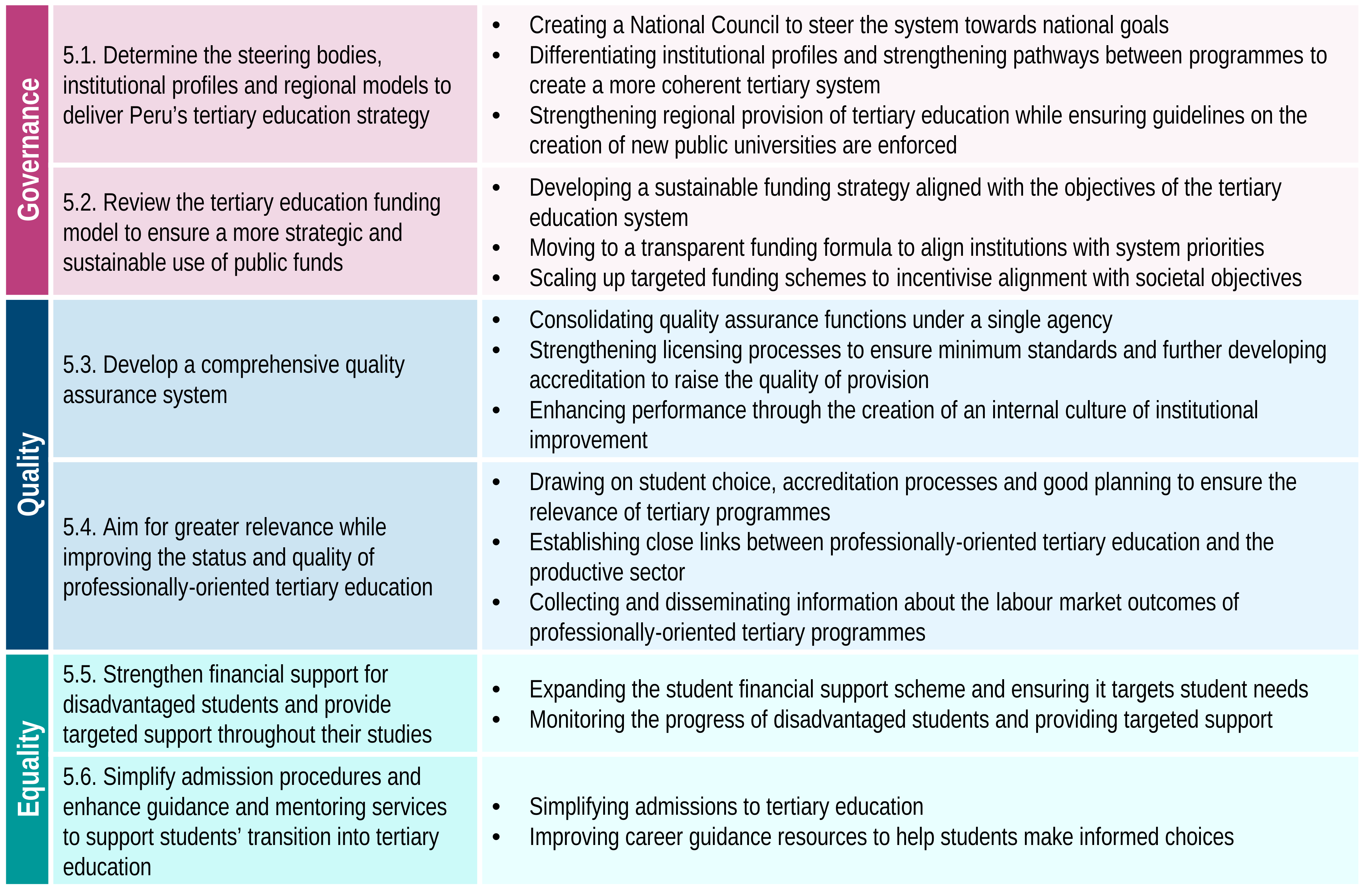
References
[3] Benavides, M. (ed.) (2008), Educación superior en el Perú: tendencias de la demanda y la oferta [Tertiary education in Peru: trends in demand and offer], GRADE, https://www.grade.org.pe/wp-content/uploads/analisis-2.pdf.
[28] Bonifaz, M. and P. Stuart (2020), Current Situation and Challenges in Peruvian Universities, https://www.researchgate.net/publication/349927980_Current_Situation_and_Challenges_in_Peruvian_Universities.
[43] CNE (2025), Licenciamiento en la Educación Superior Tecnológica: situación actual y recomendaciones para una mejora integral [Licensing in Higher Technological Education: Current Situation and Recommendations for Comprehensive Improvement], https://repositorio.minedu.gob.pe/bitstream/handle/20.500.12799/11390/Licenciamiento%20en%20la%20Educaci%C3%B3n%20Superior%20Tecnol%C3%B3gica%20situaci%C3%B3n%20actual%20y%20recomendaciones%20para%20una%20mejora%20integral.pdf?sequence=1&isAllowed=y.
[30] Congress of the Republic of Peru (2024), LEY Nº 32105 [LAW Nº 32105], https://img.lpderecho.pe/wp-content/uploads/2024/08/Ley-32105-LPDerecho.pdf.
[40] Congress of the Republic of Peru (2022), Ley N.° 31520: Ley que restablece la autonomía y la institucionalidad de las universidades peruanas [Law N.° 31520: Law restoring the autonomy and institutional framework of Peruvian universities.], https://www.gob.pe/institucion/sunedu/normas-legales/4628540-31520.
[78] Dearden, L., H. Ríos-Jara and N. Valdés (2025), Reforma a los créditos estudiantiles en Chile [Reform of Student Loans in Chile], https://educacionsuperior.mineduc.cl/wp-content/uploads/sites/49/2025/06/Reporte-UCL.-Reforma-a-los-creditos-estudiantiles-en-Chile.-Traduccion-2025.pdf.
[79] Directorate for Statistics on Higher Education (2025), “Database for statistikk om høyere utdanning,”, https://dbh.hkdir.no/datainnhold/tabell-dokumentasjon.
[77] Espinoza, O. et al. (2021), “Reducing inequality in access to university in Chile: The relative contribution of cultural capital and financial aid”, Higher Education, Vol. 83, pp. 1355-1370, https://doi.org/10.1007/s10734-021-00746-z.
[35] Golden, G., L. Troy and T. Weko (2021), “How are higher education systems in OECD countries resourced?: Evidence from an OECD Policy Survey”, OECD Education Working Papers, No. 259, OECD Publishing, Paris, https://doi.org/10.1787/0ac1fbad-en.
[66] Government of Portugal (2024), Ordinance No. 101/2024/1 – Approves the formula for calculating the reference budget of higher education institutions [Portaria n.º 101/2024/1. Procede à aprovação da fórmula de cálculo do orçamento de referência das instituições de ensino superior], Diário da República, https://files.diariodarepublica.pt/1s/2024/03/05200/0003400046.pdf.
[86] Hofer, A., A. Zhivkovikj and R. Smyth (2020), “The role of labour market information in guiding educational and occupational choices https://doi.org/10.1787/59bbac06-en.”, Vol. 229/OECD Publishing, Paris, https://doi.org/10.1787/59bbac06-en.
[6] INEI (2024), Perú Compendio Estadístico 2024 [Peru Statistical Compendium 2024], https://cdn.www.gob.pe/uploads/document/file/7366940/6284790-tomo-1-peru-compendio-estadistico-2024.pdf.
[22] INEI (2024), Perú: Indicadores de Educación según Departamentos, 2013-2023 [Peru: Education Indicators by Department, 2013-2023], https://cdn.www.gob.pe/uploads/document/file/7043096/6061323-peru-indicadores-de-educacion-segun-departamentos-2013-2023.pdf?v=1728072117.
[2] INEI (2023), Número de alumnos/as matriculados en universidades privadas, 2012-2023 [Number of students enroled in private universities, 2012-2023], https://m.inei.gob.pe/estadisticas/indice-tematico/education/ (accessed on 8 April 2025).
[85] Lavecchia, A., H. Liu and P. Oreopoulos (2016), “Behavioral Economics of Education”, in Handbook of the Economics of Education, Elsevier, https://doi.org/10.1016/b978-0-444-63459-7.00001-4.
[61] Ministry of Education of Colombia (n.d.), CESU, https://www.mineducacion.gov.co/portal/Educacion-superior/CESU/ (accessed on 28 July 2025).
[49] Ministry of Education of Peru (2025), Consultar programas de estudios del Catálogo Nacional de la Oferta Formativa (CNOF) [Consult study programmes from the National Catalogue of Training Opportunities (CNOF)], https://www.gob.pe/57095-consultar-programas-de-estudios-del-catalogo-nacional-de-la-oferta-formativa-cnof (accessed on 13 June 2025).
[7] Ministry of Education of Peru (2025), Institutos de educación superior (IES) y Escuelas de educación superior tecnológicas (EEST) licenciadas (2018-2025) [Licensed Higher Education Institutes (HEIs) and Technological Higher Education Schools (THES) (2018-2025)], https://app.powerbi.com/view?r=eyJrIjoiZWVlODdmZDMtYzlkOC00NDg5LWI5MjItYzBmZDNiZDFlZjU0IiwidCI6IjE3OWJkZGE4LWQ5NjQtNDNmZi1hZDNiLTY3NDE4NmEyZmEyOCIsImMiOjR9.
[9] Ministry of Education of Peru (2025), Mapa de universidades privadas [Map of private universities], https://www.gob.pe/institucion/minedu/informes-publicaciones/5839987-mapa-de-universidades-privadas.
[10] Ministry of Education of Peru (2025), Mapa de universidades públicas [Map of public universities], https://www.gob.pe/institucion/minedu/informes-publicaciones/5837858-mapa-de-universidades-publicas.
[37] Ministry of Education of Peru (2025), Unidad Ejecutora 118 [Executive Unit 118], https://www.ue118.gob.pe/ (accessed on 12 June 2025).
[39] Ministry of Education of Peru (2024), Accession candidate country’s self-assessment of policies and practices in the area of education and skills: Guidelines and questionnaire Peru..
[56] Ministry of Education of Peru (2024), Orientaciones para implementar acciones de prevención de la interrupción de estudios universitarios y de promoción de la continuidad de estudios con calidad y equidad, https://cdn.www.gob.pe/uploads/document/file/6894408/5957002-rvm_n-_095-2024-minedu.pdf.
[4] Ministry of Education of Peru (2023), La universidad en cifras [University in figures], https://repositorio.minedu.gob.pe/bitstream/handle/20.500.12799/9077/La%20Universidad%20en%20Cifras.pdf?sequence=1&isAllowed=y.
[23] Ministry of Education of Peru (2023), Reporte de seguimiento, Informe de Evaluación, matriz de compromisos y reporte de cumplimiento de Políticas Nacionales [Follow-up report, appraisal report, commitment matrix and compliance report on national policies], https://cdn.www.gob.pe/uploads/document/file/7007908/5969407-reporte-de-seguimiento-informe-de-evaluacion-matriz-de-compromisos-y-reporte-de-cumplimiento-de-politicas-nacionales.pdf?v=1727465416.
[29] Ministry of Education of Peru (2022), Crecimiento de la oferta de educación superior universitaria (RVM N. º 075-2022-MINEDU) [Expansion of public university education provision (Ministerial Resolution No. 075-2022-MINEDU)], https://cdn.www.gob.pe/uploads/document/file/6731192/5840390-crecimiento-de-la-oferta-de-educacion-superior-universitaria.pdf.
[62] Ministry of Education of Peru (2022), Crecimiento de la oferta de educación superior universitaria (RVM N. º 075-2022-MINEDU) [Expansion of public university education provision (Ministerial Resolution No. 075-2022-MINEDU)], https://cdn.www.gob.pe/uploads/document/file/6731192/5840390-crecimiento-de-la-oferta-de-educacion-superior-universitaria.pdf.
[36] Ministry of Education of Peru (2022), Documento Normativo “Herramienta de incentivos para el logro de resultados en universidades públicas en el marco de los objectivos prioritarios de la Política Nacional de Educación Superior y Técnico-Productiva para el ejercicio fiscal 2022”, https://repositorio.minedu.gob.pe/bitstream/handle/20.500.12799/7727/Herramienta%20de%20incentivos%20para%20el%20logro%20de%20resultados%20en%20universidades%20p%C3%BAblicas%20en%20el%20marco%20de%20los%20objetivos%20prioritarios%20de%20la%20PNESTP%20para.
[48] Ministry of Education of Peru (2022), Resolución Viceministerial N.° 049-2022-MINEDU [Vice-Ministerial Resolution No. 049-2022-MINEDU], https://www.gob.pe/institucion/minedu/normas-legales/2946166-049-2022-minedu.
[27] Ministry of Education of Peru (2020), Política Nacional de Educación Superior y Técnico-Productiva [National Policy for Tertiary and Technical-Productive Education], https://cdn.www.gob.pe/uploads/document/file/1481464/Pol%C3%ADtica%20Nacional%20de%20Educaci%C3%B3n%20Superior%20y%20T%C3%A9cnico-Productiva.pdf.
[55] Ministry of Education of Peru (forthcoming), Reporte de evaluación anual 2024 del Plan Estratégico Institucional del Ministerio de Educación[2024 Annual Evaluation Report of the Institutional Strategic Plan of the Ministry of Education].
[19] Ministry of Labour and Employment Promotion of Peru (2024), Encuesta de Demanda Ocupacional (EDO) con proyecciones al 2025 [Occupational Demand Survey (EDS) with projections to 2025], https://www.gob.pe/institucion/mtpe/informes-publicaciones/6312746-encuesta-de-demanda-ocupacional-edo-con-proyecciones-al-2025.
[14] Ministry of Labour and Employment Promotion of Peru (2023), Informe anual del empleo 2023 [Anual employment report 2023], https://cdn.www.gob.pe/uploads/document/file/7766184/6561596-iae-2023.pdf?v=1741823488.
[20] Ministry of Labour and Employment Promotion of Peru (2022), Informe Anual del Empleo 2022 [Anual Employment Report 2022], https://cdn.www.gob.pe/uploads/document/file/5245690/IAE%202022%20VF.pdf.
[64] Ministry of National Education and Youth of France (n.d.), Campus Comnnectés [Connected Campuses], https://www.education.gouv.fr/campus-connectes-413766#:~:text=Les%20campus%20connect%C3%A9s%20permettent%20de,dans%20des%20formations%20%C3%A0%20distance (accessed on 10 June 2025).
[84] Murphy, R. and P. Silva (2024), Keeping It in the Family: Student to Degree Match, https://www.iza.org/publications/dp/16931.
[32] National Council of Education of Peru (2024), No a la creación masiva de universidades públicas, sin presupuesto ni sustento técnico [No to the mass creation of public universities without funding or technical justification], https://www.gob.pe/institucion/cne/informes-publicaciones/6321761-no-a-la-creacion-masiva-de-universidades-publicas-sin-presupuesto-ni-sustento-tecnico.
[83] Nuffield Foundation (2020), “Fair admission to universities in England: improving policy and practice”, https://www.nuffieldfoundation.org/project/fair-admission-to-universities-in-england-improving-policy-practice.
[81] OECD (2026), The Theory and Practice of Upper Secondary Certification, OECD Publishing, Paris, https://doi.org/10.1787/b3fea5ba-en.
[74] OECD (2025), Distribution of government, private and non-domestic expenditure on educational institutions, https://data-explorer.oecd.org/vis?tm=tertiary%20spending&pg=0&hc[Unit%20of%20measure]=&hc[Education%20level]=&snb=33&df[ds]=dsDisseminateFinalDMZ&df[id]=DSD_EAG_UOE_FIN%40DF_UOE_FIN_SOURCE_GV_PR_NDOM&df[ag]=OECD.EDU.IMEP&df[vs]=3.0&dq=OECD%2BCRI%2BCHL..I.
[13] OECD (2025), Education at a Glance 2025: OECD Indicators, OECD Publishing, Paris, https://doi.org/10.1787/1c0d9c79-en.
[69] OECD (2025), Education GPS. Brazil, Overview of the education system (EAG 2024), http://gpseducation.oecd.org/ (accessed on 23 June 2025).
[68] OECD (2025), “Ensuring quality in VET and higher education: Getting quality assurance right”, OECD Education Policy Perspectives, No. 118, OECD Publishing, Paris, https://doi.org/10.1787/812ff006-en.
[25] OECD (2024), Adults’ educational attainment distribution, by age group and gender, https://data-explorer.oecd.org/s/2r8 (accessed on 6 September 2025).
[82] OECD (2024), Challenging Social Inequality Through Career Guidance: Insights from International Data and Practice, OECD Publishing, Paris, https://doi.org/10.1787/619667e2-en.
[26] OECD (2024), PISA 2022 Results (Volume V): Learning Strategies and Attitudes for Life, PISA, OECD Publishing, Paris, https://doi.org/10.1787/c2e44201-en.
[72] OECD (2024), “Promoting green and digital innovation: The role of upskilling and reskilling in higher education”, OECD Education Policy Perspectives, No. 103, OECD Publishing, Paris, https://doi.org/10.1787/feb029df-en.
[17] OECD (2023), Distribution of enrolled students, new entrants and graduates by field of education, https://data-explorer.oecd.org/s/2r6 (accessed on 4 September 2025).
[21] OECD (2023), Enrolment rate by age, https://data-explorer.oecd.org/s/2r7 (accessed on 8 September 2025).
[67] OECD (2022), Resourcing Higher Education in Portugal, OECD Publishing, Paris, https://doi.org/10.1787/a91a175e-en.
[65] OECD (2020), “Resourcing Higher Education: Challenges, Choices and Consequences”, https://www.oecd.org/en/publications/resourcing-higher-education_735e1f44-en.html.
[57] OECD (2019), Benchmarking Higher Education System Performance, Higher Education, OECD Publishing, Paris, https://doi.org/10.1787/be5514d7-en.
[71] OECD (2018), Rethinking Quality Assurance for Higher Education in Brazil, Reviews of National Policies for Education, https://doi.org/10.1787/9789264309050-en.
[76] OECD (2017), Education in Chile, Reviews of National Policies for Education, https://doi.org/10.1787/9789264284425-en.
[60] OECD (2016), Education in Colombia, Reviews of National Policies for Education, OECD Publishing, Paris, https://doi.org/10.1787/9789264250604-en.
[63] OECD (2007), OECD (2007), Higher Education and Regions -Globally Competitive, Locally Engaged, https://www.oecd-ilibrary.org/urban-rural-and-regional-development/higher-education-and-regions_9789264034150-en.
[50] OEI (2021), Marco de análisis y hoja de ruta de la ETP dual en la Alianza del Pacífico (Chile, Colombia, México y Perú)., https://oei.int/wp-content/uploads/2021/10/hojas-de-ruta-etp-dual-interactivo.pdf.
[80] Office for Students (2025), National Student Survey - NSS, https://www.officeforstudents.org.uk/for-providers/student-choice-and-flexible-learning/national-student-survey-nss/ (accessed on 22 July 2025).
[59] Osores Queirolo, S. (2021), Condiciones desfavorables en la elección vocacional del adolescente en el Perú [Unfavourable conditions in adolescents’ vocational choices in Peru.], https://doi.org/10.33539/consensus.2021.n26.2606.
[73] Parliamentary Budget Office (2023), An Overview of the National Training Fund (NTF), https://data.oireachtas.ie/ie/oireachtas/parliamentaryBudgetOffice/2023/2023-06-20_an-overview-of-the-national-training-fund-ntf_en.pdf.
[70] Presidência da República (2017), Decreto Nº 9235. Dispõe sobre o exercício das funções de regulação, supervisão e avaliação das instituições de educação superior e dos cursos superiores de graduação e de pós-graduação no sistema federal de ensino., https://www.planalto.gov.br/ccivil_03/_ato2015-2018/2017/decreto/d9235.htm.
[53] PRONABEC (2025), Concursos por becas y créditos Pronabec [Calls for PRONABEC scholarships and loans], https://www.gob.pe/pronabec (accessed on 2 June 2025).
[51] PRONABEC (2025), Dashboard de Becas y Créditos en la Educación Superior PRONABEC [Higher Education PRONABEC Scholarships and Loans Dashboard], https://www.pronabec.gob.pe/gestion-estadistica-y-encuestas/ (accessed on 28 August 2025).
[54] PRONABEC (2025), Memoria Anual 2024 [Annual report 2024], https://cdn.www.gob.pe/uploads/document/file/8154351/6826853-memoria-anual-del-pronabec-2024.pdf?v=1748894612.
[58] Salmi, J. and A. D’Addio (2020), “Policies for achieving inclusion in higher education”, Policy Reviews in Higher Education, Vol. 5/1, pp. 47-72, https://doi.org/10.1080/23322969.2020.1835529.
[16] Sánchez, A., M. Favara and C. Porter (2021), Stratification of returns to higher education in Peru: the role of education quality and major choices, Peruvian Economic Association, https://perueconomics.org/wp-content/uploads/2021/05/WP-180a.pdf.
[45] SINEACE (2025), Modelo de Acreditación Institucional para Institutos y Escuelas de Educación Superior Tecnológica [Institutional Accreditation Model for Technological Higher Education Institutes and Schools], https://cdn.www.gob.pe/uploads/document/file/7841747/6613209-modelo-de-acreditacion-institucional-para-institutos-y-escuelas-de-educacion-superior-tecnologica.pdf?v=1743111980.
[47] SINEACE (2023), Balance del Estado de la Acreditación y Recomendaciones de Política. Reporte Nacional n 3 Sineace. [Assessment of the State of Accreditation and Policy Recommendations. National Report No. 3, Sineace.], https://repositorio.sineace.gob.pe/repositorio/bitstream/handle/20.500.12982/7227/Reporte%20Nacional%203.pdf?sequence=1&isAllowed=y.
[33] SINEACE (2023), Financiamiento de la garantía de la calidad de la educación superior universitaria en el marco del aseguramiento de la calidad [Financing of the guarantee of quality in university higher education within the framework of quality assurance], https://repositorio.sineace.gob.pe/repositorio/bitstream/handle/20.500.12982/7229/Estudio%20financiamiento%20resumen.pdf?sequence=1&isAllowed=y.
[12] SINEACE (2023), Reporte n° 4 Balance General del Estado de Avance en Material de Acreditación y Recomendaciones de Política [Report No. 4 – General Overview of Progress on Accreditation and Policy Recommendations], https://repositorio.sineace.gob.pe/repositorio/handle/20.500.12982/7258.
[46] SINEACE (2022), Modelo de Calidad para la Acreditación Institucional de Universidades [Quality Model for the Institutional Accreditation of Universities], https://repositorio.sineace.gob.pe/repositorio/handle/20.500.12982/7117.
[42] SINEACE (2022), Reporte Nacional n° 1 Brechas y oportunidades de la acreditación en el Perú. Estado de avance y recomendaciones de política (semestre I-2022), https://repositorio.sineace.gob.pe/repositorio/handle/20.500.12982/7150.
[1] SITEAL (2023), Indicadores estadísticos. Tasa neta de asistencia a la educación superior. [Statistical indicators. Net attendance to higher education], https://siteal.iiep.unesco.org/indicadores (accessed on 7 April 2025).
[31] SUNEDU (2025), Resolución de Consejo Directivo No. 0017-2025-SUNEDU-CD [Board Resolution No. 0017-2025-SUNEDU-CD], https://www.gob.pe/institucion/sunedu/normas-legales/6882154-0017-2025-sunedu-cd.
[41] SUNEDU (2025), Resolución de superintendencia N 008-2025-SUNEDU [SUNEDU Resolution No. 008-2025-SUNEDU], https://cdn.www.gob.pe/uploads/document/file/7568082/6426654-resolucion-de-superintendencia-n-008-2025-sunedu.pdf?v=1738598712.
[8] SUNEDU (2025), Universidades Licenciadas [Licensed Universities], https://www.sunedu.gob.pe/lista-de-universidades-licenciadas/ (accessed on 2025 September 1).
[24] SUNEDU (2023), III Informe bienal sobre la realidad universitaria en el Perú [III Biennial Report on the University Reality in Peru], https://cdn.www.gob.pe/uploads/document/file/3018068/III%20Informe%20Bienal.pdf?v=1649883911.
[38] SUNEDU (2022), Modelo de licenciamiento de programas de pregrado de educación [Licensing model for undergraduate education programmes], https://occaa.unmsm.edu.pe/occaa/storage/uploads/files/RESOLUCI%C3%93N-000142-2022-SUNEDU%20-%20Modelo%20de%20licenciamiento%20para%20Educaci%C3%B3n.pdf.
[75] Superintendence of Higher University Education of Chile (2024), Salud Financiera: Ingresos y perfiles de riesgo en la educación superior chilena [Financial Health: Income and Risk Profiles in Chilean Higher Education], https://www.sesuperior.cl/wp-content/uploads/2025/01/Estudio-Salud-Financiera-2024-20250115.pdf.
[18] TAREA (2021), El puente roto de la transitabilidad: la formación profesional técnica. Actualidad, retos y perspectivas [The Broken Bridge of Mobility: Technical Vocational Education and Training. Current Situation, Challenges, and Perspectives.], https://tarea.org.pe/wp-content/uploads/2021/03/Tarea101_26_Miguel_Calderon.pdf.
[15] Thapa, A. et al. (2022), “‘Marketization’ of higher education in Peru: Who attends private institutions and what are the perceived advantages (disadvantages)?”, Higher Education Quarterly, Vol. 77/3, pp. 465-485, https://doi.org/10.1111/hequ.12413.
[5] UMBRAL (2022), La educación superior técnica en el Perú [Higher technical education in Peru], https://www.consorcio.edu.pe/umbral/wp-content/uploads/2022/08/BOLETIN-INFORMATIVO-N.%C2%B0-6-UMBRAL.pdf.
[11] UNESCO (2024), Revisión de la política de educación y formación técnica y profesional (EFTP) del Perú [Review of Peru’s Technical and Vocational Education and Training (TVET) Policy], https://articles.unesco.org/sites/default/files/medias/fichiers/2024/11/EFTP_Per%C3%BA_Documento%20de%20trabajo_UNESCO%202024.pdf.
[52] UNESCO (2023), Peru: tracing good and emerging practices on the right to higher education around the world; Policy initiatives on the right to higher education in Peru, https://unesdoc.unesco.org/ark:/48223/pf0000385633_eng.
[34] Valenzuela, J. and N. Yáñez (2022), Trayectoria y políticas de inclusión en educación superior en América Latina y el Caribe en el contexto de la pandemia: dos décadas de avances y desafíos, CEPAL, https://hdl.handle.net/11362/47877.
[44] World Bank (2020), Sistema de Aseguramiento de la Calidad de la Educación Superior en Perú: Análisis y recomendaciones al proceso de licenciamiento de universidades por parte de la Superintendencia de Educación Universitaria (SUNEDU), https://documents1.worldbank.org/curated/en/547761591940403809/pdf/Sistema-de-Aseguramiento-de-la-Calidad-de-la-Educaci%C3%B3n-Superior-en-Per%C3%BA-An%C3%A1lisis-y-Recomendaciones-al-Proceso-de-Licenciamiento-de-Universidades-por-Parte-de-la-Superintende (accessed on 2020).
← 1. Peruvian Soles (PEN) were converted to International Dollars using the implied Purchasing Power Parity (PPP) conversion rate for the respective year, as provided by the International Monetary Fund (IMF). IMF (2025), Implied PPP conversion rate, available at:
https://www.imf.org/external/datamapper/PPPEX@WEO/PER?zoom=PER&highlight=PER