In recent years, Peru has prioritised strengthening early childhood education and care (ECEC), positioning pre-primary education as a foundation for later learning. This has resulted in high enrolment among children aged 3 to 5 and a relatively well-qualified workforce. However, participation of the youngest children remains limited and concentrated in non-formal settings, where infrastructure and pedagogical support are weaker. This chapter examines how Peru can draw on OECD evidence and experience to strengthen system leadership, steer expansion towards vulnerable children, reinforce quality assurance, and make better use of data to support continuous improvement across ECEC.
Education and Skills in Peru

Abstract
Over the last decade, Peru has positioned the second stage of early childhood education and care (ECEC) as a building block of successful education for the country’s youth. Very high shares of children aged 3 to 5 are enrolled in pre-primary education, and most attend public, formal and regulated settings. The adoption of the national curriculum has increased alignment with primary education and most ECEC teachers hold tertiary education qualifications. These developments were backed by growing public investment and have shown positive outcomes later on for children who attended formal pre-primary education. Recently, the government has signalled its ambition to also provide high-quality educational and care services for children under age 3 by introducing the EduCuna programme.
Nonetheless, challenges remain to ensure ECEC gives all children in Peru a strong start in life. The ECEC system is yet to serve adequately the youngest children, with participation in ISCED 01 programmes by children under age 3 still below OECD and OECD-LAC averages and concentrated in non-formal settings (PRONOEI) with poor infrastructure and limited pedagogical support. The types of high-quality interactions envisaged by the curriculum have also yet to materialise in pre-primary settings, hindered by the absence of an overall ECEC quality framework that lays out clear quality standards for service provision. There is also scope to make fuller use of Peru’s data systems to monitor and inform early education policies.
This chapter highlights how Peru can learn from research and policy experiences in OECD countries to advance its strong commitment to the early childhood development agenda. It discusses avenues to reinforce leadership for early learning and care programmes and to better exploit its rich data infrastructure. It also explores strategies to steer the expansion of services for children under age 3 to the most vulnerable groups, while making early enrolment an attractive option for all families through investments in quality. Lastly, it considers ways to advance the implementation of the national curriculum in ECEC, to boost professional learning and improvement processes within ECEC settings, and to strengthen quality assurance as the sector expands.
Section I: Provides an overall assessment of Peru’s early childhood education and care (ECEC) sector in relation to the principles of quality, equity and good governance.
Section II: Provides recommendations on how Peru can learn from OECD policies and practices to further improve ECEC performance across these three domains.

Source: Authors' own work

Performance overview: Peru has made remarkable progress in expanding pre-primary education, but further efforts are needed to reach younger children and reduce disparities in access and quality
Peru has achieved high participation rates in pre-primary education, especially among 4- and 5-year-olds, driven by sustained efforts to expand access to formal public provision
According to the most recent OECD data, enrolment in pre-primary education (ISCED 02, Ciclo II) among 3- to 5-year-olds in Peru reached 94% in 2023, above the OECD average of 84% and the OECD-LAC average of 69%. Enrolment grew by more than 10 percentage points since 2013, a major achievement compared to trends observed in most regional peers (see Figure 3.3). While enrolment at age 5 is virtually universal in most OECD countries, including OECD-LAC countries, Peru stands out in achieving high participation rates in ISCED 0 programmes for children aged 4 (99%) and 3 (83%) (see Figure 3.3). Pre-primary education in Peru is predominantly public, with 75% of children attending public institutions in 2023, above the OECD and OECD-LAC averages (67% and 73%, respectively) (OECD, 2023[1]) .
National administrative data show that, out of 1.6 million Peruvian children enrolled in pre-primary programmes in 2024, 93% attended formal pre-primary settings (atención escolarizada), including 88% in kindergartens (Jardín, for children aged 3 to 5) and 12% in age-integrated settings (Cuna Jardín, for children aged 0 to 5), with the remaining 7% attending non-formal (atención no escolarizada) community- or family-based settings (PRONOEI Ciclo II) (Ministry of Education of Peru, 2024[2]). This reflects efforts from the Ministry of Education (MINEDU) to increase the coverage of formal pre-primary programmes over the last decade, with for instance close to 5 000 PRONOEI in urban areas being transformed into kindergartens between 2014 and 2018 (National Council of Education of Peru, 2021[3]; Ministry of Education of Peru, 2015[4]). Consistent with high overall participation rates in pre-primary education according to international data, national survey data for 2023 indicate minimal disparities in enrolment between boys and girls and between children living in urban and rural areas. However, a 12 percentage-point gap in enrolment remained between children in the top and bottom quintiles of the socio-economic distribution (INEI, 2024[5]).
Note: Special education programmes for children with disabilities (PRITE and CEBE) not included.
Enrolment in ECEC services among children under age 3 remains low and concentrated in non-formal programmes
In contrast to the situation at the pre-primary level, participation in early childhood educational development programmes (ISCED 01, Ciclo I) among children under age 3 is low in Peru: just 6% in 2023, below the OECD average of 36% and the OECD-LAC average of 9%. This reflects minor progress relative to the 3% participation rate in 2013 (OECD, 2023[6]). At age 2, around 13% of Peruvian children attend ECEC services, a percentage that rises to over six times at age 3 (see Figure 3.3). As of 2024, enrolments are concentrated in non-formal programmes, with 65% of the around 70 000 children under age 3 participating in ECEC attending PRONOEI Ciclo I (Ministry of Education of Peru, 2024[2]). These are located mostly in rural and peripheral urban areas where formal ECEC services are not available and implement activities such as parent-child meetings, group activities with children, educational visits, and learning in families, depending on whether they are community- or family-based. Another 34% of the young children participating in ISCED 01 programmes attend age-integrated settings (Cuna Jardín), and just around 1% nationally attend nurseries (Cuna), both of which are most often found in urban locations (Ministry of Education of Peru, 2024[2]). A strong socio-economic gradient is also visible in participation in all types of ISCED 01 programmes: national administrative data indicate that 76% of the children under age 3 enrolled in age-integrated settings and nurseries and 47% of the children enrolled in non-formal programmes lived in the richest 20% of households (Ministry of Education of Peru, 2024[2]).
Peru has significantly increased per-child spending on ECEC, but regional imbalances persist leading to uneven provision and quality of services across the country
Peru’s public investment in early childhood education and care (Educación Inicial as a whole) relative to GDP was 0.5% in 2022, lower than the OECD average of 0.8% and an intermediate level among OECD-LAC countries (OECD, 2025[7]). Public investment is concentrated at the pre-primary level due to the high coverage of public provision in pre-primary education compared to the very low coverage in early childhood educational development programmes. Between 2015 and 2022, investment relative to GDP decreased by 10% in Peru, slightly lower than the 13% decline observed in OECD-LAC countries with available data (Chile, Costa Rica and Mexico), while it increased by 11% on average across OECD countries (OECD, 2025[7]; OECD, 2024[8]).
However, thanks to Peru’s sustained economic growth, public spending per child has increased over the last two decades. In 2023, spending per child in pre-primary education reached USD PPP 2 242, which represents almost a fourfold increase (3.8) in real terms relative to 2004, the largest relative increase compared to other OECD-LAC countries (see Figure 3.3). This is particularly noteworthy considering the growth in pre-primary enrolment over the same period. Capital expenditure appears to have accounted for a large share of the spending increase. As an example, investment in improving and extending educational infrastructure at the ECEC level increased dramatically, multiplying more than twenty-fold in nominal terms from PEN 17.9 million (approximately USD PPP 11.1 million1) in 2012 to PEN 424.4 million (approximately USD PPP 255.5 million) in 2015 (Banco Mundial, 2018[9]).
As in other levels of compulsory education (see Chapter 4), regional imbalances characterise investment in ECEC in Peru. For instance, in 2022, central government spending per child in one of the highest-funded regions, Moquegua, was more than twice that in one of the lowest-funded, Ucayali, despite the latter facing considerably greater socio-economic challenges (see Figure 3.3).
Pre-primary education is linked to positive educational outcomes for children in Peru, especially those who attended formal settings
Using both longitudinal surveys and administrative data, research has shown positive associations between participation in pre-primary education and the educational outcomes of children in Peru, including cognitive skills by age 5, test scores and skills in language and mathematics in primary school, and socio-emotional competences in middle childhood (ages 6-12) (Cueto et al., 2016[10]; Majerowicz Nieto, 2016[11]; Arapa et al., 2021[12]; Díaz, 2006[13]). Studies comparing the impact of different types of pre-primary programmes consistently find that positive effects are larger and sometimes limited to children who were enrolled in kindergartens (Jardines) as opposed to non-formal programmes (PRONOEI).
In Peru, fifteen-year-old students who attended ECEC for two years or more also show stronger mathematics performance in the Programme for International Student Assessment (PISA), compared to students having attended ECEC less than two years or not attended at all (see Figure 3.3). Further, the likelihood of repeating a grade at least once at any education level is reduced by half when a student has attended pre-primary school for at least one year, relative to less time. Both differences remain statistically significant after accounting for family and school socio-economic status. Overall, while referring to participation patterns a decade ago, these findings highlight the value of participation in ECEC in Peru to support children’s educational success and the value of extending access to formal ECEC services starting at an earlier age so that these benefits accrue more widely across society.
However, child development indicators have shown little improvement in recent years
Peru’s efforts to improve its ECEC system are part of a broader policy agenda that aims to promote holistic early childhood development. Like other countries in the LAC region, Peru faces important challenges to ensure conditions that help all children to be developmentally on track in health, learning and psychosocial well-being. National monitoring of child development goals indicates that outcomes have seen little improvement in recent years (see Figure 3.3). With regard to children’s health, for instance, in 2023 anaemia affected 43% of children aged 6 to 35 months, while 13% of children under age 3 suffered chronic malnutrition, in both cases with little change relative to 2018 levels. Indicators of child cognitive and socio-emotional development also reveal concerns. For example, according the 2023 Demographic and Family Health Survey (Encuesta Demográfica y de Salud Familiar, ENDES), less than half (44%) of 9- to 36-month-olds were reported to engage in effective verbal communication, about a third (36%) of 24- to 71-month-olds to achieve effective behavioural and emotional regulation, and less than half (42%) of 24- to 36- month-olds to engage in symbolic play and drawing. These figures show no improvement relative to 2018 (INEI, 2025[14]). A large body of research highlights the critical relationship between children’s health and their early learning and development, and hence the need for policies that support families starting from pregnancy and throughout the early years to ensure adequate conditions in family environments for children’s brain and physical development (OECD, 2025[15]).

Note: In Panel A, (1) ISCED 01 refers to children under age 3, and ISCED 02 to children aged 3 to 5 and (2) countries are ranked in ascending order of enrolment rates at age 3. For age 4 and 5, enrolment figures include primary education. Panel C displays average PISA mathematics scores, with standard error shown by the whiskers.
Source: OECD (2023[6]) Enrolment rate by age, https://data-explorer.oecd.org/s/30s; UIS (2023[16]), Initial Government funding per pre-primary student, constant $PPP, https://databrowser.uis.unesco.org/; INEI (2023[17]), Gasto Público Por Alumno en Educación Básica Regular, Según Nivel Educativo y Departamento, 2013-2022 [Public spending per student in regular basic education, by education level and department, 2013-2022], https://m.inei.gob.pe/estadisticas/indice-tematico/education/; OECD (2023[18]), PISA 2022 Results (Volume II): Learning During – and From – Disruption, PISA, OECD Publishing, Paris, https://doi.org/10.1787/a97db61c-en; INEI (2025[14]) Encuesta Demográfica y de Salud Familiar, [Demographic and Family Health Survey], https://proyectos.inei.gob.pe/endes/
Governance assessment: Peru has established cross-sectoral policies to promote holistic child development, yet clearer institutional leadership and better data use are needed to steer reform in the ECEC sector
Peru has a unitary ECEC system where MINEDU holds the main responsibility for overseeing educational services for children below age 6, with a strong basis for inter-sectoral collaboration
In Peru, the main responsibility for overseeing ECEC settings for children under age 6, both formal and non-formal, lies with the Ministry of Education (MINEDU). As with other levels of education, MINEDU is responsible for determining ECEC policies and regulations centrally, but policy implementation is a shared competence with regional directorates of education (DREs) and local education authorities (UGELs) (see Chapter 2). In addition, the General Education Law requires MINEDU to co-ordinate regulatory, supervisory and budgetary responsibilities with other sectors and entities, including the Ministry of Development and Social Inclusion (MIDIS), the Ministry of Health (MINSA), and the Ministry of Women and Vulnerable Populations (MIMP). This places Peru’s unitary ECEC system and its cross-sectoral governance model in the context of a broader policy agenda to support holistic early child development (Desarrollo Infantil Temprano, DIT).
Peru’s cross-sectoral approach to early childhood development was first crystalised in the National Action Plan for Children and Adolescents 2012–2021 (Plan Nacional de Acción por la Infancia y la Adolescencia 2012-2021, PNAIA) and the 2016 Children First (Primero la Infancia) guidelines, which identified seven priority outcomes regarding physical, cognitive and socio-emotional development that children under age 6 should achieve, as well as related indicators and support factors. The guidelines were approved by 10 ministries, including MINEDU, MIDIS, MIMP and MINSA. These frameworks were anchored in scientific evidence, linked to policy pointers for intervention, and supported by a results-oriented budget programme (Programa Presupuestal orientado a Resultados para el Desarrollo Infantil Temprano, PPoR DIT) (Guerrero, 2019[19]).
Building on these foundations, the current National Multisectoral Policy for Children and Adolescents to 2030 (Política Nacional Multisectorial para las Niñas, Niños y Adolescentes al 2030, PNMNNA) and related guidelines were formally approved in 2021. The policy designates the MIMP as the overall institutional lead and establishes a permanent multisectoral commission tasked with reinforcing co-operation across government entities and monitoring progress with implementation. The policy is also backed by substantial funding. In 2024, within the framework of the PNMNNA, public spending on children and adolescents (Gasto público en niñas, niños y adolescentes, GPNNA) reached PEN 57 million (approximately USD PPP 32 million), which represents a 32% increase relative to its level in 2020. Educational services accounted for 63% of the GPNNA in both 2023 and 2024 (Ministry of Education of Peru, 2024[2]).
Among its positive features, the policy highlights for the first time the contribution of both levels of early childhood education and care (ECEC) – Ciclo I and Ciclo II – to the broader child development agenda, marking a shift from earlier strategies that largely overlooked the role of Ciclo I. In support of this, the new framework assigns MINEDU responsibility for leading the priority objective (one of five) of strengthening the development of children’s autonomy through basic education. This is a welcome step, as research demonstrates that participation in high-quality ECEC, including in the first three years of life, can have important benefits for children in many of the areas related to the key targets of Peru’s early childhood development policies (OECD, 2018[20])
Under these strategies, Peru has a number of programmes to provide integrated support to families with young children, most notably Juntos and Programa Nacional Cuna Más, both managed by MIDIS. Juntos is a poverty remediation programme introduced in 2005 as a conditional cash transfer for families living in poverty and extreme poverty in rural and urban areas, with coverage extended to all localities since 2021, including urban areas. Juntos provides monetary incentives to households to fulfil commitments in health and education, such as ensuring vaccinations, iron supplements, anaemia screening and growth monitoring for young children. In 2021 the programme introduced an additional transfer for pregnant women and newborns. Evidence shows Juntos’ wide-ranging benefits for young children, including increased uptake of health services, improved educational outcomes, and stronger nutritional and cognitive development – particularly when children are first exposed within the first four years of life (OECD, 2023[21]; Sánchez, Meléndez and Behrman, 2020[22]; UNICEF, 2025[23]). The Programa Nacional Cuna Más, established in 2012, supports the development of children under age 3 living in poverty through a day-care service in urban areas and a family support service in rural areas, offering services related to nutrition, health, early learning and capacity building for parents and other primary caregivers. This includes assistance from pregnancy and throughout the early years through the family support service (OECD, 2019[24]). Evaluations show positive impacts on children’s cognitive and language development, reduced harsh parenting, and greater likelihood of later pre-primary enrolment (Araujo, Dormal and Schady, 2018[25]; Araujo et al., 2021[26]; Castro Aguirre et al., 2024[27]). While coverage remains limited – reaching 21% of the target population in 2023 – it has grown significantly since 2014, when it reached just 12% (OECD, 2019[24]; Ministry of Development and Social Inclusion of Peru, 2024[28]). However, the potential of ECEC to contribute to the early childhood development agenda is constrained by an unclear division of responsibilities across government sectors and limited coordination in-service delivery.
The unitary structure of Peru’s ECEC system means the main responsibility for early education and care settings lies with MINEDU, notwithstanding a cross-sectoral governance model in which MIDIS, MIMP and MINSA have also some remits. However, MINEDU still needs to build the capacity to exert strategic leadership for the ECEC sector. This is particularly the case with respect to the provision of services for children under age 3, which is where Peru faces the widest ECEC participation gaps compared with the OECD and other OECD-LAC countries.
Naturally, holistic early childhood development requires an intersectoral approach. Health and social protection in contexts of high poverty are areas where MIDIS is well-positioned to lead. Moreover, the Programa Nacional Cuna Más includes an early learning component that considers development opportunities (e.g. spaces, materials, experiences) to be provided to children according to their characteristics. However, stronger integration of educational objectives is needed from the outset for all children, not only those participation in targeted care services. A major challenge for Peru lies in embedding foundational cognitive and socio-emotional development more intentionally within different programmes for young children, especially those below age 3, to ensure they are not only in good health and protected but also supported in their early learning.
The multisectoral PNMNNA policy identifies MINEDU as the institution responsible for education services, including for young children, and includes participation rates at both Ciclo I and Ciclo II as relevant indicators. This offers a valuable opportunity to direct more attention and resources toward early education and care for the youngest children. However, the policy still leaves unresolved the articulation between actions to be implemented by different ministries. It also lacks concrete goals, targets, and indicators to steer the expansion of ECEC services, particularly with respect to quality and developmental outcomes other than secure emotional attachment with primary caregivers. Interviewed stakeholders noted limited progress in the implementation of multi-sectoral policy plans due to governance models with insufficient specification of each sector’s responsibilities and limited effective leadership – a matter raised with regard to PNAIA (Guerrero, 2019[19]) and acknowledged in PNMNNA official documents (Ministry of Women and Vulnerable Populations of Peru, 2024[29]).
This lack of institutional leadership at the national level also contributes to fragmentation in how services are delivered on the ground. In addition to clearer operational guidance to implement the national vision, stronger coordination at the point of service delivery is essential to make inter-sectoral strategies work in practice. Despite positive examples such as the National School Feeding programme (Qali Warma, now renamed Wasi Mikuna), led by MIDIS and delivered through public schools in close coordination with MINEDU, stakeholders also noted insufficient coordination in local service delivery generally. Professionals from different sectors and organisations often work separately with families and young children, rather than facilitating their access to a broader range of complementary supports and services. This fragmentation is compounded by the fact that local personnel often lack the specialised competencies needed to liaise and mediate between different service providers, and thereby to help families navigate the various professional languages and systems involved and guide them toward the most appropriate services.
Peru has comprehensive data systems at the ECEC level, yet better integration and accessibility are needed to fully harness their potential for informing policy and practice
As in other levels of education, Peru’s remarkable data infrastructure has the potential to improve the governance and effectiveness of its ECEC sector. The Education Management Information System (SIAGIE) maintained by MINEDU enables tracking of individual children’s trajectories from their entry into the education system, by virtue of the availability of child-level permanent identifiers. SIAGIE is used to monitor children’s participation in ECEC in both ISCED 01 (Ciclo I) and pre-primary (Ciclo II) services, enabling analysis that can compare regions and socio-economic levels. This administrative information is instrumental in building a detailed view of participation patterns in different areas of the country and for different sectors of its population.
Moreover, Peru has taken on the challenge of measuring the development outcomes of 5-year-olds enrolled in ECEC services as well as the quality of the learning environments in their classrooms. An important achievement has been the adaptation of the Measuring Early Learning Quality and Outcomes (MELQO) study to the Peruvian context, building on the experience of Colombia. MELQO was carried out in Peru in 2017 and 2019 to nationally representative samples of ECEC services for 5-year-olds, yielding information on their structural and process quality levels through direct classroom observations and teacher and setting leader reports (MELE module). Information on children’s early learning and development in the domains of mathematics, communication, socio-emotional skills, executive function, and motor skills was also gathered through direct assessment and educators’ reports (CDL module). A new data collection took place in 2024, renamed as Monitoreo de la Calidad de los Entornos de Aprendizaje y Desarrollo Infantil Temprano (MEDIT). Regarding children’s development outcomes more generally, monitoring capacity has also been strengthened by the inclusion of a dedicated early development module in the annual national health survey (ENDES) since 2015.
The wealth of information provided by MELQO/MEDIT and other national datasets represents a major asset for monitoring quality and evaluating ECEC policies in Peru – with equivalents existing in only a handful of OECD countries. For instance, MELQO data have been used to identify aspects of Peru’s ECEC services associated with better outcomes for children, such as closer and warmer relationships with ECEC staff (Ministry of Education of Peru, 2020[30]). However, the potential of these valuable resources has not been fully realised. Three areas warrant particular attention. One is the scope of data collection. Existing surveys and administrative data focus mainly on pre-primary education (Ciclo II, ISCED 02), while services for younger children (Ciclo I, ISCED 01) remain largely invisible. As provision for this age group expands, there is a growing need for data on intensity of participation and structural and process quality to complement information on enrolment, particularly in new programmes such as EduCuna. Equally important is mobilising data on young children who are not enrolled in any ECEC setting, particularly those in vulnerable situations, as they stand to gain the most from these services. Although relevant administrative data exist across ministries and through the National Register of Children under age 6 (Padrón Nominal de Niñas y Niños menores de 6 años), stakeholders highlighted limited access to and interoperability between administrative and ECEC-related data systems (Ministry of Health of Peru, 2020[31]). This limits the ability to identify access gaps and develop targeted outreach strategies to improve children’s access to ECEC and early development activities.
The second area relates to the integration of data on service provision and child outcomes. While SIAGIE provides data on enrolment and staff qualifications, it is not yet connected to setting-level information on funding or adherence to quality standards, such as the Condiciones Básicas de Calidad. Similarly, rich datasets such as MELQO/MEDIT, which capture children's development outcomes, are not yet linked to other relevant data collection efforts, such as MINEDU’s Monitoreo de Prácticas Escolares (MPE), which gathers information on teaching and learning practices through classroom observations, including at the ECEC level.
The third area involves how data are reported and accessed across the system. At present, only high-level summaries of key studies – such as the 2017 and 2019 MELQO surveys – with limited variables and levels of disaggregation have been made publicly available, and results are reported with significant delays. For instance, the summary of results from MELQO 2017 was made available in 2019, and that of MELQO 2019 was published at the end of 2020. Such delays limit the ability of ECEC stakeholders, including settings themselves to draw timely lessons from the data, reducing opportunities to inform local improvement efforts. Meanwhile, microdata files cannot be accessed by actors outside MINEDU, which restricts opportunities for research and policy evaluation. More robust research and evaluation would be timely, as much of the existing evidence on the benefits of ECEC predates the significant expansion of formal pre-primary education since 2015 and current efforts to extend services for the early years.
Equity assessment: Promoting equitable access to ECEC for children under 3 will require prioritising public provision for disadvantaged groups and addressing indirect barriers to participation
Peru has the ambition to expand participation for children under age 3, where limited infrastructure is a major barrier
Peru’s Constitution (Article 17) and General Education Law (Articles 2, 48 and 49) enshrine basic education as a right, starting from the ECEC level (Educación Inicial). The Law sets the universalisation of ECEC as a national priority, with a focus on poor and vulnerable children, and emphasises the obligation of families to enrol their children in ECEC services from age 3. In line with these ambitions, enrolment in pre-primary education is almost universal in Peru and free of charge for families in public institutions, where about three quarters of children aged 3 to 5 are enrolled (OECD, 2025[7]).
However, ECEC services at the ISCED 01 remain notably underdeveloped with a coverage of just 6% of children under age 3 (OECD, 2025[7]). This reflects a historic deficit in investment in educational and care services for the youngest children, despite the formal consideration of Ciclo I as part of the public ECEC system and its recognition in the national curriculum (CNEB). As of 2023, settings for children under age 3 included about 7 500 non-formal PRONOEI Ciclo I, which represented about three quarters of enrolment, 1 600 Cuna-Jardines operating also at the pre-primary level, and 25 Cunas. In comparison, over 33 000 formal Jardines and over 10 000 non-formal PRONOEI Ciclo II provided ECEC services for children aged 3 to 5 (Ministry of Education of Peru, 2024[2]).
Low coverage of ECEC services for the youngest children remains a significant barrier, particularly for the most disadvantaged families. In densely populated urban areas, where Cuna and Cuna-Jardín services are concentrated, demand often exceeds available capacity, with the greater uptake of these services by high-income families suggesting the current network is ill-matched with the goal of serving disadvantaged communities. At the same time, in many remote and rural areas, formal ISCED 01 services remain extremely limited or entirely unavailable, leaving large segments of the population without any access to modalities of early childhood educational development other than non-formal programmes (PRONOEI).
Many OECD countries have seen socio-economic gaps in enrolment widen as overall participation rates in ECEC have increased (OECD, 2025[15]). However, others have expanded overall participation while at the same reducing those enrolment gaps, which shows that policies can make a difference. Strategic network planning and equitable funding policies are particularly important to achieving equitable service planning, yet both are relatively weak in Peru. Two main considerations help explain current barriers in achieving more equitable service expansion, particularly at the ISCED 01 level. First, network planning does not appear to be consistently guided by clear national criteria or strategic targets that reflect territorial needs and population demand. The National Plan of Education Infrastructure to 2025 (Plan Nacional de Infraestructura Educativa, PNIE) focused on improving existing infrastructure at the pre-primary level (e.g. space requirements for transforming non-formal settings into formal ones) and provided limited guidance for the development of new settings for the youngest children. The plan establishes technical criteria for prioritising investments, but sub-national entities (DREs and UGELs) remain responsible for deciding on the location of new settings based on their regional and local plans. The role of MINEDU is therefore mainly one of technical assistance; providing evidence of need is left to regional actors. Insufficient guidance will make it harder to address the many planning challenges that Peru will face as it expands the system, from rural migration flows into cities to ensuring the adequacy of construction norms.
Second, infrastructure investments for early childhood education in Peru are financed through multiple, often fragmented sources. These include the National Programme for Educational Infrastructure (Programa Nacional de Infraestructura Educativa, PRONIED), national treasury funds (Recursos Ordinarios), royalties from natural resource exploitation (e.g. Canon), official credit operations, donations, and private sector contributions through the Obras por Impuestos mechanism, which allows companies to finance public projects in exchange for tax deductions. This fragmentation makes it more difficult to co-ordinate investments across funding sources, increasing the risk of duplication and limiting the ability to plan investments strategically in line with territorial needs. Meanwhile, not all funding mechanisms are designed to respond to local disparities. For instance, while PRONIED prioritises areas with the largest infrastructure gaps, typically found in rural and high-poverty regions, other sources, such as Canon royalties are allocated to resource-producing areas, which are generally wealthier (see Chapter 2).
As Peru expands ECEC for children under age 3, greater attention is needed to strengthen existing services and consider the potential role of alternative models to support more equitable access
Peru has a clear ambition to expand access to ECEC for the youngest children in a more equitable way. Given the currently low levels of enrolment, this will require both strengthening the reach and quality of existing services and considering alternative models of provision. Yet key strategic questions, such as how to scale promising initiatives, improve quality, and diversify provision, have not yet moved to the forefront of policy discussions.
Among current models of public provision, some initiatives show strong potential but remain limited in scale. An important recent development has been the implementation of EduCuna, a new MINEDU programme under the the Results-Based Budget for Early Childhood Development (PPoR DIT). EduCuna seek to extend coverage of ECEC services for children aged 12 to 36 months from single-parent households headed by women in situations of poverty, extreme poverty, or vulnerability. In 2024, EduCuna was implemented in 316 educational institutions in urban areas nationwide, giving priority to the poorest areas, with an investment of PEN 205 million (approximately USD PPP 115 million). The programme created over 3 000 new positions in the public sector, the majority of which are permanent positions (nombrados) including 669 for teachers, 2 145 for assistants, and 219 for centre leaders, and is estimated to have reached around 8 300 children. The programme also integrates nutritional support for children and offers advice to mothers on a rage of health and parenting topics. While EduCuna represents a very promising development, its coverage is still low and limited to urban areas. MINEDU estimates that it reaches around 7% of the children living in poverty nationally, which represents around one in ten children enrolled at the ISCED 01 level (Ministry of Education of Peru, 2024[2]). Discussions between MINEDU and regional governments are ongoing to explore conditions to extend the programme.
A complementary strategy is the development of age-integrated settings (Cuna-Jardines), which could extend services to younger children by building on Peru’s large network of over 33 000 pre-primary settings (Jardines). As of 2024, a relatively small number of age-integrated settings exist nationwide – 1 750, of which around 40% are publicly managed – and there are no clear plans to systematically leverage the infrastructure of settings for children aged 3 to 5 to increase participation among younger children (Ministry of Education of Peru, 2024[2]).
Meanwhile, non-formal PRONOEI operate at much larger scale and have played a critical role in expanding access to early education in rural and peripheral urban communities lacking formal services. PRONOEI are designed to offer flexible and culturally relevant educational services that consider children’s social, cultural, economic, and migration characteristics, particularly those from indigenous communities. They employ Community Educational Promoters (Promotoras), who are community members, most often mothers, that provide educational care to children under the pedagogical guidance from coordinating ECEC teachers. Promotoras speak the children’s native languages and are knowledgeable about local cultural traditions. These are very positive features that support early learning, strengthen cultural identity and ensure more meaningful engagement between educators, children and their families in the communities where these services operate. However, PRONOEI face important quality challenges that will need to be addressed if they are to have a more meaningful impact on young children’s cognitive and developmental outcomes. Factors such as inadequate basic infrastructure and limited support for community educators limit their capacity to provide quality services (Ministry of Education of Peru, 2020[30]). For instance, in 2019, one in five promotoras reported not having received a monitoring or support visit from their coordinator over the previous 12 months (Ministry of Education of Peru, 2020[30]).
While improving the reach and quality of existing public models will be important to expand access more equitably, significantly scaling up provision using only public resources may prove challenging for Peru in a context of tight fiscal space (see Chapter 2). Despite this, there appears to be limited consideration within MINEDU of alternative approaches to provision at the ISCED 01 level – such as cost-sharing arrangements for private provision or regulated home-based services. Given the large prevalence of informal care arrangements for children under age 3, home-based provision can be an avenue for training and integrating carers with relevant experience but no qualifications into the formal ECEC sector, hence helping to reduce informal employment among women (see Chapter 2). Currently, Peru provides a competency certification for non-professional personnel responsible for the care of children under age 3 (mother caregivers in the Programa Nacional Cuna Más), while the certification process by MINEDU of Community Education Promoters (PEC) in PRONOEI settings is in progress. These efforts go in a good direction but would need to be scaled up as service provision at the ISCED 01 level expands nationally.
Indirect barriers such as parental beliefs and information gaps continue to hinder participation at the ISCED 01 level while contributing to informality in the labour market
In Peru, low levels of participation in ECEC among children under age 3 reflect not only a thin offer of ECEC services for this age group and the limited availability of paid leave for parents but also the influence of cultural values. The view that ECEC services are not suitable for younger age groups is related to social norms that emphasise the importance of parental childcare, particularly when provided by mothers. Internationally, research shows that this view is especially prevalent among families where the traditional role of women as the primary caregivers is deeply rooted. In 2018, 44% of adults in Peru agreed with the statement that children suffer when their mothers work outside the household, compared to 33% on average across OECD (see Figure 3.4). This belief is generally associated with lower ECEC enrolment rates for children aged 0 to 2 (OECD, 2025[15]). However, in countries that extend free provision to younger age groups, this view no longer aligns with actual enrolment rates and participation among younger children is higher.
Association between the national population who agrees that “when a mother works for pay, the children suffer” and ECEC enrolment for 0-2-year-olds.

Note: Data for 0-2-year-olds generally include children enrolled in early childhood education services (ISCED 2011 Level 01) and other
registered ECEC services (outside the scope of ISCED Level 01). Percentages for the response options “agree” and “strongly agree” from the World Values Survey (WVS) were combined. The WVS data was matched to the closest, most recent year of ECEC enrolment data available for each country. Only OECD member and accession countries with available WVS and ECEC enrolment data were included.
Source: OECD (2024[32]), Family Database. Indicator PF3.2, https://webfs.oecd.org/els-com/Family_Database/PF3_2_Enrolment_childcare_preschool.pdf, (accessed on 12 September 2024); and, Haerpfer, et al. (2022[33]), World Values Survey Wave 7 (2017– 2022) Database, https://doi.org/10.14281/18241.24.
Other indirect barriers, such as limited information on the availability and benefits of ECEC, also play a role. MINEDU is already implementing some initiatives to raise parents’ awareness on the importance of early education and care and the availability of existing services. These include, for instance, short videos describing the new EduCuna, with accessible messages that present some of the features parents can look for to recognise quality in early education and care settings, and highlighting benefits of enrolment in terms of children’s developmental outcomes. Similarly, a number of audiovisual resources have been produced by MINEDU and different UGELs to raise awareness about PRONOEI, including in indigenous languages. While these efforts represent a positive step, their current scale may fall short of what is needed to boost demand for ECEC services for the youngest children and reach families with limited access to digital media, particularly in areas where traditional social norms may discourage participation.
Policies aiming to increase the coverage of ECEC services at the ISCED 01 level in Peru need to be considered in light of the prevailing care arrangements for children in this age group. Data from the nationally representative ENDES survey show that, in 2019, informal care by family members represented the bulk of childcare arrangements, including primarily care by mothers (even when employed outside the household) and grandparents and other family members when the mother is not present (Alcázar and Laszlo, 2022[34]). Qualitative evidence from the Young Lives Study finds that female household members bear the main responsibilities for childcare among Peruvian families in poor urban and rural areas (Rojas, 2021[35]). Therefore, making formal ISCED 01 services more accessible and affordable in Peru could also help increase women’s participation in paid work and reduce the high level of informality in the labour market (see Chapter 2) by easing childcare responsibilities currently undertaken in the family context, particularly in the case of young mothers.
Quality assessment: Peru’s curriculum and a qualified workforce provide a good basis for delivering quality ECEC in Peru, but more supports are needed to drive improvement
Peru’s age-integrated ECEC curriculum blends broad concepts and learning areas while attending to age progression
In Peru, all ECEC programmes – at both ISCED 01 and ISCED 02 levels, and both formal and non-formal – are expected to follow the National Curriculum for Basic Education (CNEB) introduced in 2016 and encompassing all levels of compulsory education. This competency-based curriculum focuses on transversal competencies and active learning, and grants schools and teachers ample flexibility for implementation (see Chapter 2 and Chapter 4). Within the CNEB, the Programa Curricular de Educación Inicial (2016) sets directions for adapting the guiding cross-cutting approaches to the ECEC level and defines competencies and progression levels for young children across curricular areas. Among the positive features of Peru’s ECEC curriculum is its holistic and integrated view of early development and learning (OECD, 2021[36]). The curriculum goals are broad and include principles and values (e.g. respect for children’s autonomy, secure emotional attachment, free movement and play) and competencies (e.g. oral communication, motor skills, reasoning skills) common across Ciclo I and Ciclo II, which are well adapted to ECEC for the youngest children. Starting from age 3, goals also include a gradual alignment with the learning areas for the first stage of primary education, covering Spanish Language (including as a second language for children whose mother tongue is an indigenous language), mathematics, and science and technology. This blend of broad concepts, principles and values together with traditional learning areas is found in many ECEC curricula in OECD countries covering children aged 0 to 5 (see Figure 3.5).
Percentage of curriculum frameworks covering children aged 0 to 5/primary school entry with goals expressed in the following ways, 2019.

Note: Data from the 26 countries that participated in the OECD’s “Quality beyond Regulations” 2019 policy survey.
Source: OECD (2021[37]), Starting Strong VI: Supporting Meaningful Interactions in Early Childhood Education and Care, Figure 2.1, OECD Publishing, Paris, https://doi.org/10.1787/f47a06ae-en.
Peru has set high qualification requirements for ECEC professionals, in line with OECD standards, but child-staff ratios are comparatively high
Workforce initial preparation is another central dimension of quality in ECEC. In Peru, ECEC teachers are expected to complete initial teacher education (ITE) programmes for early childhood at ISCED 6 level, in line with most OECD countries. In 2019, 70% of teachers in public pre-primary settings held a basic tertiary education degree, and an additional 28% had obtained a master’s qualification (Ministry of Education of Peru, 2020[30]). In formal settings, ECEC teachers can be supported by assistants, who are required to hold qualifications at ISCED 5 level. In non-formal settings, promotoras must have completed at least secondary education (ISCED 3), although a sizeable share (43%) had also attained ISCED 6 level qualifications (Ministry of Education of Peru, 2020[30]). These profiles have remained stable in recent years, with up to 97% of ECEC teachers holding tertiary qualifications in 2024 (Ministry of Education of Peru, 2024[2]).
Child-staff ratios are particularly important in the early years, as smaller groups make it easier for staff to provide safe, nurturing, and developmentally supportive environments. Child-staff ratios in ECEC in Peru tend to be higher than those in OECD countries, particularly in settings serving the youngest children. In 2021, settings for children under age 3 (ISCED 01) in Peru had, on average, one teacher for every 11 children, above the OECD average of 9 children per teacher and higher than ratios observed in OECD-LAC countries. At the pre-primary level (ISCED 02), the average was 20 children per teacher, also exceeding the OECD average of 15, though more in line with figures from other OECD-LAC countries (OECD, 2024[38]). These figures suggest that any expansion of ECEC services for the early years will need to be accompanied by efforts to attract, train, and retain qualified staff.
However, ECEC staff need more practical pedagogical guidance and resources to meet the expectations set by the competency-based curriculum
Notwithstanding the positive association between participation in ECEC and children’s outcomes, MINEDU’s monitoring activities suggest ample room for improving the quality of interactions in Peru’s ECEC settings. Before 2016, pre-primary teaching in Peru was largely teacher-led, with an emphasis on memorisation and repetition (Gallego, Näslund-Hadley and Alfonso, 2021[39]). The current curriculum aims to shift practice towards more interactive, child-centred approaches, but as in many countries, this transformation has proven difficult. Evidence from MELQO reveals that, across public, private and non-formal settings, less than 10% of pre-primary teachers develop play-based activities with open and reflective questions or activities exposing children to new vocabulary, and less than 20% promote activities encouraging collaboration between children (Ministry of Education of Peru, 2020[30]). Complementary data from the Monitoreo de Prácticas Escolares (MPE) indicate that a majority (63%) of ECEC teachers establish warm and positive relationships with children, but also that less than half (42%) are effective in managing children’s behaviours, and that a very small minority (below 5%) propose activities that stimulate children’s agency and critical reasoning (Ministry of Education of Peru, 2023[40]).
Interviewed stakeholders pointed to several areas where further support could make a difference. These include aligning initial teacher education more closely with the curriculum (see Chapter 4), as well as developing practical curricular resources, and strengthening in-service professional development to help educators translate curricular principles into their day-to-day practice.
With regard to curricular materials, the standards in the Programa curricular de Educación Inicial provide good descriptions of children’s age-specific expected levels of competencies across curriculum areas, but do not offer sufficient guidance on how to create stimulating environments and establish meaningful interactions with young children in terms of staff practices and uses of space and materials in ECEC classrooms. In addition, pointers for teachers on how to support and enrich children’s play and how to engage with parents and families – two key ECEC curricular areas in most OECD countries (OECD, 2021[36]) – appear relatively underdeveloped in Peru’s ECEC curriculum.
In recent years, however, MINEDU has produced a range of pedagogical resources with a more practical orientation to assist ECEC teachers with the implementation of many aspects of the curriculum, such as planning and designing learning experiences, supporting playful interaction at home and in the classroom, or collecting information on development milestones with a view to inform formative assessment of young children (Ministry of Education of Peru, 2021[41]). These resources, which are increasingly available in digital platforms (e.g. SIFODS, Peru Educa), describe specific sequences of activities and offer concrete examples of intentional interactions with children, providing a good model for pedagogical guidance for ECEC staff. These are positive developments reinforcing capacity to address important areas such as guided play (Weisberg, Hirsh‐Pasek and Golinkoff, 2013[42]; Skene et al., 2022[43]) or partnerships with families (Bruïne et al., 2018[44]; Thompson et al., 2018[45]), but their adoption and implementation will have to grow to permeate ECEC staff practices at a scale.
ECEC staff also require more consistent continuous professional development to improve their ability to engage children in stimulating interactions
While high-quality curriculum resources are a valuable tool to support implementation, international experience suggests that their effective use in daily practice often depends on complementary in-service professional development. Such support helps ECEC staff internalise key principles, adapt guidance to their specific context, and reflect on their interactions with children. Available information suggests that current in-service training at the ECEC level in Peru is not yet resulting in consistent professional development trajectories that help staff meet the expectations set by the curriculum. Independent courses are offered by multiple providers at the central, regional and local levels, most often in virtual format, and uptake relies mainly on individual initiative, resulting in limited coverage. For instance, a hybrid training programme for ECEC teachers to strengthen professional competences organised by MINEDU reached less than 500 teachers nationally in 2018 and 2019 (National Council of Education of Peru, 2021[3]). More recently, however, a new programme targeted some 2 800 ECEC staff in urban nurseries to provide 250 hours of hybrid training with differentiated modules for leaders, teachers and assistants, and focusing also on their collaboration within settings (Ministry of Education of Peru, 2024[46]). This promising development is however limited to settings in urban areas. In non-formal programmes (PRONOEI) prevalent in rural areas, practical support to promotoras to better adapt and implement the CNEB curriculum in their local contexts remains insufficient. Additionally, gaining a better understanding of the professional development needs of ECEC staff and the conditions in which such training could best be delivered would also be required, as current assessments of those needs in local contexts remains limited.
Basic quality assurance mechanisms are not fully implemented and there is no systematic approach to develop improvement plans for ECEC settings
Ensuring young children attend ECEC settings with adequate infrastructure remains a challenge in Peru, particularly in non-formal settings. In 2019, only around one in six (15%) non-formal settings (PRONOEI) had access to basic electricity, clean water, and sanitation services, compared to 66% of Cunas, 78% of Cunas-Jardines, and 39% of pre-primary settings overall (National Council of Education of Peru, 2021[3]). A third of pre-primary settings in the public sector and half of non-formal settings were also reported to present risks to children’s safety because of their infrastructure (Ministry of Education of Peru, 2020[30]).
In 2021, MINEDU introduced the Condiciones Básicas de Calidad, a set of minimum quality standards for early childhood education and care (ECEC) and school education that define the essential conditions for a setting to operate. These include requirements related to infrastructure, materials, and basic services, as well as expectations for management and instructional planning processes (Ministry of Education of Peru, 2021[47]). In the ECEC sector, the Condiciones Básicas de Calidad are intended to be used by UGELs and DREs to guide the initial authorisation of new settings, both formal (e.g. Cunas, Jardines, Cuna-Jardines) and non-formal (PRONOEI). Their existence provides a helpful reference point for setting minimum material expectations in a context where infrastructure gaps remain significant, but there is no data on how many ECEC settings have been evaluated against these standards or currently meet them. However, a number of features limit the potential of these standards to support quality assurance in the ECEC sector. In particular, the Condiciones Básicas de Calidad formulate similar requirements across all levels of education – early childhood, primary, and secondary – without adapting to the specific needs of young children or the diversity of ECEC settings. This is problematic given the wide variety of ECEC provision in Peru (e.g. Cuna, Cuna-Jardín, PRONOEI), in contrast to the more standardised structure of primary and secondary schools. As discussed in Chapter 4, responsibilities for quality assurance are also fragmented across several teams within MINEDU and sub-national entities, limiting the government’s ability to enforce minimum standards and guide continuous improvement in ECEC and school education.
Besides the need for better mechanisms to ensure basic structural quality across the ECEC sector, available evidence suggests a high number of pre-primary settings (Ciclo II) would need to receive support to improve the quality of their provision. In Peru, the main responsibility for supporting quality improvement in accredited/authorised settings lies with UGELs. However, many UGELs have limited resources to fulfil their responsibilities and central guidance and oversight are relatively weak (see Chapter 4). In this context, there is an untapped potential to use existing quality monitoring data to prioritise settings where support is most needed and orient the work of local authorities. At present, neither MINEDU nor DREs or UGELs appear to be systemically leveraging data collected through instruments such as MELQO/MEDIT or MPE to target support (e.g., training, external visits) and help design improvement plans. Even if these instruments are sample- rather than census-based, which makes it difficult to map support needs to specific settings, the data could be used to identify profiles of settings based on associations between structural conditions and reported levels of process quality. Combining different sources of data (e.g. setting profiles and area-based indicators on child poverty rates) could help DREs and UGELs concentrate their limited resources on the schools where they are most needed.
In light of the limited capacity of regional and local actors to provide direct support to settings, many quality assurance functions fall on ECEC setting leaders. SINEACE, MINEDU’s quality assurance body, includes self-evaluation as part of the institutional accreditation process. However, accreditation is voluntary in Peru, and while all ECEC settings are encouraged to engage in self-evaluation, there is no evidence to suggest this is a consistent practice in the ECEC sector, neither in public nor private settings. Moreover, ECEC setting leaders need more support on how to evaluate quality, in particular when it comes to the quality of interactions between children and staff. In 2022, around 62% of leaders of Jardines and Cuna-Jardines evaluated as part of the Monitoreo de Prácticas Escolares were estimated to not attain emerging or basic effectiveness in monitoring and supporting teachers’ pedagogical practices in their settings (Ministry of Education of Peru, 2023[40]).
Good governance: Providing the leadership and data to steer expansion and improvement efforts
In recent years, Peru has made important strides to strengthen early years policies, backed by ambitious strategies and growing investment. Cross-sectoral approaches have helped position early childhood development as a national priority, and important planning and budgetary tools are now in place. But as the country seeks to expand access and improve the quality of early education and care, particularly for children under age three, ensuring coherent leadership and making better use of data will be critical to sustaining progress and addressing persistent gaps.
The recommendations and examples that follow draw on OECD evidence and country experiences to provide policy insights on how Peru could provide the national leadership and build on its rich data systems to give all children a more equal start in life.

Recommendation 3.1: Strengthen the role of ECEC in multi-sectoral programmes for the early years
Cross-sectoral strategies grounded in scientific evidence have helped define essential goals for holistic child development and link them to a results-oriented budget programme. The approval of the National Multisectoral Policy for Children and Adolescents to 2030 (PNMNNA) marks another step forward by explicitly recognising ECEC programmes – including for the youngest children – as integral to Peru’s child development agenda.
Despite this progress, institutional responsibilities for the early years remain unclear. No single agency provides effective leadership for services targeting children under age 3, and service delivery at the community level continues to be fragmented. While solid strategic directions to support the early childhood development agenda are already in place, realising their full potential will require clear national leadership for services aimed at the youngest children, along with stronger coordination across sectors when services are delivered.
Clarifying the role for MINEDU in the implementation of the national policy strategy for the early years
Many OECD countries have adopted integrated policy plans for child well-being, which are generally seen as making positive contributions (Dirwan and Thévenon, 2023[48]). A key goal of these plans is to provide a framework for co-ordination across government silos and strengthen collaborative efforts. Peru has also adopted a comprehensive policy agenda for child development through its National Multisectoral Policy for Children and Adolescents to 2030 (PNMNNA), which explicitly recognises, for the first time, the importance of early educational development from birth. Peru has put a single ministry (MIMP) in the lead for the whole strategy, which has the potential to strengthen coordination, while the new permanent commission offers a platform to support data sharing, joint monitoring, and cross-sector accountability. MIMP provides technical assistance to regional governments for the implementation of the PNMNNA in the territory, has set different internal working groups (including with MINEDU), and prepares annual monitoring and compliance reports and biennial evaluations. However, the current institutional setup is not yet equipped to deliver on the ambitions of the multi-sectoral commission. Several factors contribute to this mismatch. Leadership capacity is constrained by MIMP’s limited budget and authority. Further, while MINEDU holds formal responsibility for ECEC services for all children under 6, other key programmes – such as Cuna Más, managed by MIDIS – continue to serve the majority of children under 3 receiving public education and care services.
To support the effective implementation of this agenda, Peru could draw on international evidence and recent multisectoral policy frameworks for child development in OECD and other countries (see Box 3.1). Key features in these strategies that would be of special relevance for Peru include:
Ensuring that multi-sectoral implementation is led by an agency – or group of agencies – with the necessary resources and political authority to drive coordination across sectors. In some countries, a single agency is tasked with leading the strategy, while others use a shared model involving several ministries. In Peru, this leadership role is assigned to MIMP. Regardless of the structure, what matters most is that the designated body has the capacity and authority to act as a high-level political champion, able to foster engagement from other ministries and support national and local coordination efforts.
Clarifying the responsibilities of each ministry and sector, especially for children under age 3. Peru could make use of the permanent commission established under the PNMNNA to more clearly identify which ministry will have lead responsibility for policy delivery in each area and according to the age of the child (Government of Peru, 2022[49]). This process could also help establish clear objectives for the education sector, including precise goals, targets and indicators to steer the expansion of quality education and care services for the early years. Vertical coordination across different levels of government is also crucial and requires well-defined roles across national, regional, and local levels – for instance, through the DREs and UGELs in the case of education – to ensure coherent implementation and accountability.
Strengthening review and update processes. Scheduled reviews can help track progress, respond to emerging challenges, and incorporate new evidence and evaluation of early stages of implementation into policy design and delivery for later stages. PNMNNA already embeds monitoring and evaluation procedures with an accountability logic, but it could better explain how policies will be updated and adjusted over time.
Ireland’s “First 5” is a 10-year strategy (2019-2028) that focuses on improving systems and supports in the first five years of a child’s life, recognising that no single measure can address the full range of child and family needs in this period of the life course. Designed as a living strategy that develops and adapts to the context, it includes a built-in process for review and updates every three years. Oversight and accountability are in the hands of the Cabinet Committee on Social Policy and Public Services, which is comprised of ministers from numerous departments, and national leadership for implementation lies with the Department of Children, Equality, Disability, Integration and Youth, which is the agency responsible for ECEC in Ireland.
Australia launched its national Early Years Strategy 2024-2034 in May 2024 as a 10-year framework to shape how the Australian Government prioritises young children’s well-being and delivers strong outcomes for them by creating a more integrated, holistic approach to the early years. Strengthening accountability and coordination is among the priority focus areas for Australia. The Commonwealth Minister for Social Services and Minister for Early Childhood Education jointly lead implementation of the strategy, in collaboration with other relevant ministers and a cross-Commonwealth steering committee.
Chile launched its new National Policy for Childhood and Adolescence and Action Plan 2024-2032 (Política Nacional de la Niñez y Adolescencia y su Plan de Acción 2024-2032) in August 2024. The strategy seeks to prioritise the well-being of children through intersectoral work, including 29 actions on the strategic objective of strengthening educational trajectories starting from early childhood.
Also in 2024, Costa Rica introduced its new National Policy for Childhood and Adolescence (Política Nacional de la Niñez y la Adolescencia 2024-2036), which includes education as one of its seven strategic axes, and which articulates a governance model for the coordination of different actors at the national, regional and local levels.
South Africa adopted its 2030 Strategy for Early Childhood Development Programmes in 2023. Placing the equitable expansion of ECEC services at its core, it introduces a service delivery model that promotes co-ordination and collaboration between various state and non-state actors for the planning, funding and regulation of the sector. The strategy includes estimates of the number of additional ECEC settings and staff required to meet its access targets and proposes a pragmatic combination of different types of infrastructure and services in the short- to medium- and in the long-term.
Source: OECD (2025[15]), Reducing Inequalities by Investing in Early Childhood Education and Care, Starting Strong, OECD Publishing, Paris, https://doi.org/10.1787/b78f8b25-en; Ministry of Social Development and Family of Chile (2024[50]), Política Nacional de la Niñez y la Adolescencia y su Plan de Acción 2024-2034 [National Policy for Childhood and Adolescents and Action Plan 2024-2034], https://chilecrecemas.cl/storage/documentos/Resumen_ejecutivo.pdf; National Council for Children and Adolescents of Costa Rica (2024[51]), Política Nacional de Niñez y Adolescencia 2023-2032 [National Policy for Childhood and Adolescence 2024-2036], https://cnna.go.cr/wp-content/uploads/2024/04/Politica-Nacional-de-la-Ninez-y-Adolescencia-2024-2036.pdf; and Department of Basic Education of the Republic of South Africa (2023[52]), South Africa’s 2030 Strategy for Early Childhood Development Programmes: Every Child Matters, https://ecdan.org/resource/south-africas-2030-strategy-for-early-childhood-development-programmes/.
Improving capacity for inter-sectoral co-ordination with a place-based approach to service delivery
For ECEC to be effectively placed alongside other early years policies, the top-down direction provided by national strategies and formal inter-ministerial co-ordination structures needs to be complemented by a better integrated bottom-up approach at the point of service delivery. This involves actively engaging local actors to raise awareness of ECEC and encourage its uptake, as well as establishing intentional connections across complementary policies and services for families and children (OECD, 2025[15]).
Two key considerations for achieving integrated service delivery are the entry points for beneficiaries and the ease with which inter-service connections can be made. A place-based approach, which focuses on co-ordination of services within a specific geographic area (i.e. neighbourhood or community), is increasingly recognised as a promising strategy that is rooted in the ecological model of child development (Goldfeld et al., 2021[53]). Such initiatives capitalise on the notion that children’s development is shaped by their local environments and by multiple types of interactions and services. Peru could consider piloting integrated service hubs for families with young children by building on existing services already delivered locally that are relevant to specific community needs and interests. These hubs would provide families a single point of contact to access a range of supports, even when services are not physically co-located. International experience shows such hubs can enable a “no wrong door” approach – ensuring families are connected to the services they need regardless of whether they initially seek healthcare, ECEC or another type of service – and may also help improve efficiency in identifying and addressing the holistic development needs of children and their families (OECD, 2025[15]). Over time, co-locating at least some services could further strengthen coordination and improve the overall experience for families.
Notably, integrated service hubs, where families can learn about ECEC options while engaging with other supports, could be a meaningful strategy to promote awareness and use of ECEC, particularly for children under age 3. Services with relatively high levels of trust in communities can represent a soft entry point into ECEC for families facing adversity and who may not otherwise engage. As an initial step, Peru could take advantage of both the day-care and home-visiting services of the Programa Nacional Cuna Más, as well as of existing preventive health services (e.g. routine health check-ups), as platforms for raising awareness among families of the benefits and accessibility of educational development services for the youngest children, with an emphasis on outreach to families who may not seek these services on their own. Over time, ECEC settings, including the comprehensive network of formal pre-primary centres (Jardines and Cuna-Jardines), and gradually the growing network of centres for children under age 3 (Cunas, including in age-integrated Cuna-Jardines) could also become trusted entry points to a wider range of services for families and children (see Recommendation 3.3 below).
To make the most of this approach, it will be particularly important in Peru to ensure that integrated service hubs reach the most vulnerable families, including those living in rural or isolated areas. This also calls for investing in staff with the specialised competencies needed to act as trusted intermediaries across different services. Two examples offer valuable insights. In Australia, growing interest in-service hubs (as of 2024, there are around 460 such hubs across jurisdictions in the country), led to the creation of the National Child and Family Hubs Network as a multidisciplinary group that offers a shared framework to strengthen these initiatives (Australian Research Alliance for Children and Youth, 2024[54]). In the state of Queensland (Australia), service hubs in the form of Early Years Places (EYPs) exist in more than 50 rural, remote and high-growth communities across the state. EYPs deliver a mix of integrated services and activities, including playgroups, ECEC, child and maternal health services, and family and parenting support for families with children aged up to eight years-old. Meanwhile, in Iceland, the 2022 Prosperity Act established dedicated service coordinators – professionals based in settings families already use, such as healthcare and ECEC centres – who act as “interpreters” between service providers (OECD, 2025[55]). These coordinators help users navigate different systems, translate professional jargon, and connect families to the most appropriate supports. The professionalisation of the co-ordination role can support frontline service delivery by bringing in specialised competencies and freeing other professionals from administrative and liaising tasks.
Recommendation 3.2: Strengthen data collection and data use to support improvement in ECEC
High-quality data on structural and process quality in ECEC settings, as well as on children’s early learning and development outcomes, are critical inputs for system monitoring, quality improvement, and evidence-based policymaking. When used for monitoring, such data help set expectations across providers, track progress, and inform targeted support (OECD, 2022[56]) – particularly important as Peru expands services for the youngest children and aims to reach the most vulnerable. At the same time, making these data available for research, including by independent and external partners, can offer additional perspectives on system performance, strengthen transparency, and deepen understanding of what works in practice.
Peru is in a good position to advance on these two fronts, given its existing data infrastructure and ongoing initiatives to generate information on critical aspects of the quality of its ECEC system. Further developments in data collection, particularly for settings serving the youngest children, and improved conditions within and beyond government agencies to access available data could support stronger monitoring, richer research, and more responsive policy planning in the ECEC sector.
Consolidating efforts to measure ECEC quality and early development outcomes
Peru has made strong progress in monitoring ECEC quality through administrative data and national surveys. Administrative data are collected via the EMIS system (SIAGIE), while the MELQO/MEDIT surveys offer valuable insights into both structural and process quality in pre-primary settings, along with measures of children’s learning and development. MELQO/MEDIT has identified factors linked to better outcomes, and its three waves of data (2017, 2019, 2024) will allow Peru to track changes in-service quality and highlight persistent gaps at the system level. Additional data sources include the Monitoreo de Prácticas Escolares (MPE), which annually assesses teaching and management practices, and ENDES, which monitors broader early development and health outcomes. Sustaining these efforts will be key to ensure that reliable data continues to inform ECEC policy and practice. Key areas for consideration include:
Extending coverage of existing monitoring instruments to include settings for children under age 3. As Peru expands provision at ISCED 01 level, gathering more information on enrolment, intensity of participation, and the structural and process quality of services for this age group will be essential. This includes collecting the data needed to monitor and evaluate new types of provision – such as EduCuna or, if introduced, home-based settings. Better data on Ciclo I and on pilot programmes in particular can support informed decisions to guide expansion while safeguarding quality and equity. This could be achieved by expanding MELQO/MEDIT and MPE coverage to a representative sample of settings serving children under 3, including non-formal settings (PRONOEI) at that level, as it is done for samples of settings attended by 5-year-olds.
Leveraging data from different sectors to identify young children not enrolled in ECEC. To expand early educational development services equitably and allocate resources effectively, Peru needs stronger evidence on where children with the greatest needs live, which public services they access and which not, and what barriers they face for enrolling in ECEC. Linking data across sectors could help assess developmental risks among young children and support more co-ordinated policy and service responses. This would require establishing data-sharing agreements and protocols among line ministries and agencies that collect data on young children and their families (OECD, 2025[15]). Integrated data systems have been used for ECEC policy planning in several OECD countries. For example, the city of Philadelphia (United States) used such a system to identify areas with a high proportion of children facing developmental risks – such as low birthweight, low maternal education, or homelessness – as well as neighbourhoods lacking access to high-quality ECEC. Given limited resources to expand coverage universally, the city prioritised investment in the areas with the greatest need and least access (Fantuzzo et al., 2021[57]).
Broadening the scope of analysis on participation, quality, outcomes, and system performance in ECEC. Beyond expanding data collection, Peru could make more strategic use of existing datasets by developing analyses that draw on linkages across sources – both within MINEDU and beyond. For example, linking data on ECEC participation with later standardised assessments, such as those in Grade 2, would allow to explore the long-term effects of ECEC. Similarly, combining MELQO/MEDIT findings with early development indicators from ENDES (administered by INEI) could provide broader insights into the interrelation of process and structural quality and child development outcomes. These efforts could build on the availability of permanent child identifiers in SIAGIE, which provide a basis for linking individual-level data across sources over time. This could enable a range of novel analyses on how early educational experiences influence schooling and social outcomes later in life, similar for instance to those carried out with the longitudinal samples of the Young Lives survey in Peru (Young Lives, 2018[58]).
More broadly, linking ECEC monitoring data with information systems on quality assurance and funding – including data maintained by the Ministry of Economy and Finance – could give Peru a more integrated view of its ECEC system. This could take the form of a regularly updated dashboard of key indicators drawn from multiple sources, with data disaggregated at the setting level. Indicators could include child enrolment, staff numbers and qualifications, funding allocations, and results from DRE/UGEL assessment of compliance with basic quality conditions (Condiciones Básicas de Calidad). Such a system could help local authorities target resources, supervision and support to the settings with the greatest needs. The LinkB5 data system in Virginia (United States) offers an example of how integrated ECEC data can support quality improvement for children aged 0 to 5. It combines information on enrolment, staff qualifications and salaries, and facility conditions, with classroom-level quality measures such as teacher–child interactions and curriculum use. These data are used to generate quality profiles of ECEC settings that inform policymakers, families, and the public (Virginia Deparment of Education, 2024[59]; OECD, 2023[60])
Enhancing ECEC data use through improved reporting and research access
As in many OECD countries, the use of ECEC data in Peru is currently concentrated on system-level evaluation, accountability and management. For instance, a recent OECD policy survey found that around 80% of the participating countries identified these functions as high priorities for their ECEC data systems. To support broader improvement across the sector, however, it is equally important to consider how data are reported and who can access them. In particular, shortening delays and increasing disaggregation in reporting can help national data inform more timely decision-making and support planning at the regional and local level, and within settings. At the same time, improving access for external actors, and in particular researchers, can foster independent analysis and generate new evidence to inform policy and practice. To advance on these fronts Peru could consider:
Strengthening reporting through timelier, more detailed and diverse outputs: A practical first step would be to reduce delays in disseminating results from established surveys. For example, it would be important to release the findings of MEDIT 2024 more promptly than was the case for MELQO 2017 and 2019. Similarly, publishing more granular results – covering a broader range of variables and levels of disaggregation – could make data more useful for diverse users. Releasing ECEC-specific analyses from existing monitoring efforts such as the Monitoreo de Prácticas Escolares (MPE) would also be valuable. To meet the needs of a wide range of stakeholders, technical reports could be complemented by executive summaries and practice-oriented briefs.
Considering options for enabling better access for external researchers: Peru could explore how to facilitate access to MINEDU datasets – both for ECEC and other education levels – for independent researchers. Allowing access to anonymised microdata under clear data protection safeguards could support the production of new evidence on the ECEC system. Individual-level, longitudinal administrative data offer powerful opportunities for policy-relevant research, as demonstrated in many OECD countries (Figlio, Karbownik and Salvanes, 2016[61]). Peru could consider secure access options such as public-use anonymised datasets or supervised access to more sensitive files via secure on-site or remote platforms. Application processes and responsible-use protocols would ensure data are handled appropriately. MINEDU could also establish data-sharing partnerships with universities or research institutions to support its analytical agenda. In doing so, Peru could draw on the Recommendation on Enhancing Access to and Sharing of Data [OECD/LEGAL/0463], which offers international guidance on how governments can unlock the value of data while protecting rights and privacy (OECD, 2021[62]).
Equality of opportunities and access: Extending participation in ECEC for the youngest children with a focus on disadvantaged social groups
Evidence from across OECD and Latin American countries shows that the earlier high-quality support is offered, the greater the benefits for children's development and equity – particularly for those from disadvantaged backgrounds. Early investment supports brain development, help to close achievement gaps before they become entrenched and smooths the transition into basic education. While pre-primary education is now virtually universal in Peru – a major achievement – participation in Ciclo I remains low. In 2022, just 6% of children under age three were enrolled, around one-quarter of the OECD average and below the OECD-LAC average of 9%. At this level, most enrolled children attend non-formal settings (PRONOEI), which face significant structural and process quality challenges, while formal public provision remains largely concentrated in urban and more advantaged areas.
This section explores how Peru could increase participation in ECEC among children under 3, especially those from disadvantaged communities who stand to gain the most. Drawing on international examples, it offers guidance on how to steer service expansion towards the most vulnerable populations and proposes ways to address demand-side barriers, including those rooted in traditional family norms and limited awareness of the benefits of early education.

Recommendation 3.3: Expand the network of ECEC settings for children under age 3 prioritising provision for vulnerable children
As Peru moves forward with the gradual expansion of ECEC services for the youngest children, there is a strong case for strengthening the strategic planning and allocation of public capital investments. Infrastructure remains a binding constraint to access quality services in many parts of the country, and future investment decisions will be critical in determining whether services reach the children who need them most. The Social Pact for Education (2024), which places infrastructure investment at the heart of its agenda, and the forthcoming update of the National Educational Infrastructure Plan to 2040 provide renewed momentum to align infrastructure decisions with national goals for access and equity.
At the same time, Peru has an opportunity to make more effective use of the networks and service models already in place, while also exploring alternative approaches that involve stronger cost-sharing based on families’ ability to pay. Strengthening the reach and quality of existing public provision will be essential to advancing equity, yet significantly scaling up access may be difficult through public investment alone.
Developing clear national criteria and targets for the expansion of educational services for the early years, alongside a more co-ordinated approach to capital investment
Peru could benefit from developing clear, unified national targets and criteria to guide capital investments aimed at expanding the ECEC network at the ISCED 01 level. MINEDU could draw more strategically on data to identify both where demand for early childhood services is greatest and where supply falls short. On the demand side, this includes using forecasts of future enrolment and indicators of social disadvantage – such as poverty, rurality, and population growth – to identify communities with the greatest unmet need. A complementary strategy to improve alignment between the expansion of the ECEC network and demographic trends is to establish co-ordination platforms at the sub-central level that enable local authorities to work together and co-ordinate planning. For example, in Portugal inter-municipal communities develop integrated network plans at the regional level and support central authorities steer and regulate the educational offer (OECD, 2018[63]).
On the supply side, administrative data on service coverage and infrastructure quality can help identify where capacity lacks or facilities require improvement. The state of infrastructure in PRONOEI, which currently do not benefit from national ECEC capital investments, will also need to be considered and explicitly included in future investment decisions.
At the same time, the mechanisms used to distribute capital funds play an important role in ensuring that these resources reach the areas and facilities most in need of investment (OECD, 2018[63]). This is particularly relevant in Peru’s context, where there are multiple, fragmented sources of funding for ECEC infrastructure. A critical first step would be switching the main funding allocation mechanisms from a historical-cost basis to a per-student funding formula to better align spending with need (see Chapter 4). Funding formulas are a common approach internationally in designing funding mechanisms to recognise different needs across geographical and/or settings, typically by including weightings in the formula for certain social groups to compensate for variations in the composition of child populations (e.g., concentration of vulnerable profiles, differences in more disadvantaged or remote areas) (OECD, 2022[64]). Given challenges to identify children who are at developmental risk and not enrolled in ECEC (and thus not included in the SIAGIE information system), the government could also consider geographic area targeting based on aggregate indicators of social disadvantage for the progressive expansion of the ECEC sector.
Additionally, Peru could consider complementary mechanisms to redistribute tax resources for capital investments in ECEC between regions, such as a national equalisation fund. This would give MINEDU greater leverage to ensure expansion efforts work towards enrolling more young children in ECEC, particularly those from disadvantaged groups. For instance, to access these central funds, DREs could be required to submit ECEC investment plans outlining how the funds will be used and to what end. MINEDU could then review and approve these plans to ensure alignment with national equity goals.
Colombia’s Education Infrastructure Fund (Fondo de Financiamiento de la Infraestructura Educativa, FFIE), under the Ministry of Education, implements the National Educational Infrastructure Plan (Plan Nacional de Infraestructura Educativa, PNIE). It centralises funds from different sources – including the government budget, investments returns, international co-operation, local authorities, and the private sector – to finance projects for the construction, expansion, or rehabilitation of education infrastructure, including at the pre-primary level.
Canada’s federal government established the Early Learning and Child Care Infrastructure Fund in response to concerns from provinces and territories about the high real estate and construction costs faced by non-profit and public providers. The fund enables provinces and territories to make additional child care investments, including the building of new facilities.
In the case of South Africa, ECEC services are mainly funded through the combination of two sources. The Early Childhood Development Conditional Grant, which provides subsidies for services attending children from impoverished backgrounds, supporting both the construction of new settings and infrastructure improvements. Meanwhile, the Provincial Equitable Share is a weighted shares formula that distributes national revenue for various services, including educational infrastructure, according to a set of province-specific demographic indicators.
Source: OECD (2022[65]), Value for Money in School Education: Smart Investments, Quality Outcomes, Equal Opportunities, OECD Publishing, Paris, https://doi.org/10.1787/f6de8710-en; Department of Finance of Canada (2022[66]), Supporting Early Learning and Child Care, https://www.canada.ca/en/department-finance/news/2022/04/supporting-early-learning-and-child-care.html; Hall et al. (2024[67]) South African Early Childhood Review 2024, https://ilifalabantwana.co.za/wp-content/uploads/2024/07/SA-early-childhood-review-2024-FINAL.pdf; Mthimkhulu and Tewari (2024[68]), The Education Component and the Inclusion of the Enrolment Survival Measure: Provincial Equitable Share (PES), https://doi.org/10.3390/economies12010020.
Developing existing models of public provision and enhancing their quality
The expansion of ISCED 01 services in Peru could build primarily on the development of three existing models: the recently introduced EduCuna, age-integrated Cuna-Jardines, and the PRONOEI Ciclo I. Such development would require investments to not only increase the number of settings for the youngest children but also, and equally important, to enhance the quality of provision, particularly in the case of PRONOEI.
The first option that Peru could consider is the gradual scaling-up of EduCuna, following its implementation in over 300 settings in 2024. The EduCuna model presents many of the features that international evidence suggests can effectively support child development and promote equity in the early years (OECD, 2025[15]). While targeting highly vulnerable children, EduCuna is not conceived as an aid programme (programa asistencial) but a comprehensive educational and care service aiming to support both early development outcomes (DIT), with a focus on emotional attachment, and the competencies recognised in the national curriculum for Ciclo I. As an integrated service that brings a strong pedagogical dimension to early care services, it is provided by education professionals in settings equipped with spaces and materials designed for pedagogical interactions. EduCuna services offer educational care for 8 hours a day as provided by one teacher and two assistants (auxiliares) working together in 4-hour shifts, compared to traditional Cunas which provide 4 hours of care per day and are staffed by one teacher and one assistant only.
The EduCuna programme is expected to undergo an evaluation study in 2025 led by the Ministry of Economy and Finance, which will look at indicators of impact on children’s early learning and development outcomes. MINEDU could build on lessons from this evaluation study to refine the model and identify conditions for its successful implementation at scale. Being a model with higher staffing requirements, the programme may be better suited for more densely populated urban and peri-urban areas. Its expansion will also put pressure on Peru’s training system, highlighting the importance of recommendations elsewhere in this report on the need to better regulate and support pedagogical institutes and other higher education institutions responsible for preparing ECEC teachers and assistants (see Chapter 5).
Age-integrated settings (Cuna-Jardines) could constitute a second model for the expansion of services at the ISCED 01 level. In 2023, almost 1 600 Cuna-Jardines operated already in Peru, enrolling about a quarter of the children under age 3 currently participating in ECEC in the country, and a large majority of those enrolled in formal services. The model allows nurseries (Cunas) that serve children from the age of 6 months to be in the same location as pre-schools for children aged 3 to 5 (Jardines). Young children can attend these integrated settings for 6 hours per day and 30 hours per week. Existing Cuna-Jardines are heavily concentrated in urban areas, with around two thirds of the settings being public and another third being privately managed.
To develop this second model, Peru could build on the extensive national network of pre-primary settings (Jardines) and expand it to children below age 3. Demographic projections for Peru (see Chapter 2) mean that more places will be available in at least some of these kindergartens in the future, which can free-up spaces for children under age 3. In doing so, care will be needed to ensure that physical spaces, learning materials, and group activities undergo some adaptation to become appropriate for children of younger ages. In geographical areas of Peru having small Jardines (e.g., with around 10 children or less) and limited funding to develop settings for the youngest children, age-integrated settings (Cuna-Jardines) could be a cost-effective option. Another advantage of expanding the number of age-integrated settings could be to bring together ECEC staff working with different age groups. Given that Ciclo I and Ciclo II share the same curriculum framework, this could create opportunities for professional collaboration and learning for various staff roles (see Recommendation 3.5 below), ensuring also that the perspective of staff working with the youngest children is well taken into account in these integrated settings. The transformation of some Jardines into Cuna-Jardines could be piloted in some municipalities and progressively extended to co-exist with or replace age-specific Cunas and Jardines, depending also on local needs and constraints to adapt the facilities of existing settings.
Finally, the development of non-formal community- or family-based services (PRONOEI Ciclo I) could represent an essential pillar to the expansion of the ISCED 01 sector in Peru. These settings remain the most prevalent service at the ISCED 01 level and are well positioned to meet the needs of the youngest children living in areas of the country with strong indigenous cultural and linguistic heritages. However, the available evidence suggests that many PRONOEI have a limited capacity to provide quality environments for children, and their expansion would need to be accompanied by quality enhancements in order to contribute to equity in the ECEC system. In particular, efforts would need to focus on three key areas: improving basic material conditions in non-formal settings, which most often operate in community-owned facilities that do not receive funds from the sector to improve their infrastructure; strengthening professional support for community educators to ensure effective curriculum implementation and the quality of pedagogical interactions; and developing more consistent quality monitoring and assurance mechanisms for these services (see Recommendation 3.6 below).
Considering alternative models of provision and funding to meet the needs of families
In a context of tight fiscal space, relying solely on public finances to expand early childhood education and care for the youngest children will be difficult, given the significant upfront investments required in infrastructure and staffing. While efforts to improve the reach and quality of public models remain essential, current public spending on Ciclo I remains insufficient and also appears to be regressive in some instances. Recent data show that children enrolled in public Cunas are disproportionately from more advantaged socio-economic groups. This highlights the importance of giving greater consideration to cost-sharing approaches, particularly for families with the capacity to pay.
International experience suggests that a mixed model of provision, including with regulated home-based and private centre-based services combined with private funding when public resources are limited, can help meet demand and increase flexibility for families, provided strong safeguards are in place to protect quality and equity. Building these safeguards is particularly relevant in the Peruvian context, where the rapid or poorly regulated expansion of private school and tertiary education have contributed to variation in quality and socio-economic segregation (see Chapters 4 and 5).
First, Peru could explore the possibility of developing home-based ECEC provision for children under age 3. Home-based ECEC is often appealing to parents of young children as it more closely resembles a family environment. It can be a good option in less densely populated rural or remote areas, where there opening centre-based facilities is not viable. Home-based settings can also alleviate shortages of ECEC in urban areas, where demand is high and real estate prices can be a strong disincentive to the opening of new ECEC centres. Given the overreliance on informal family care in Peru, a home-based ECEC model could become an attractive and realistic employment opportunity for many individuals who already engage in childcare activities, from mothers who take or have taken care of their own children to domestic workers who provide childcare to a non-negligible proportion of middle- to high-income families (Alcázar and Laszlo, 2022[34]). This would require measures to recognise and validate prior learning and skills gained outside of ECEC, along flexible learning and training programmes to enable the development of qualified ECEC staff (see Chapter 6). For example, Australia and New Zealand have implemented programmes to support unqualified workers with relevant experience to become qualified ECEC staff without having to engage in a full ECEC training programme (OECD, 2019[69]). Like for private ECEC provision, a mix of public and private funding related to socio-economic criteria can support the development of home-based settings.
Second, Peru could clarify its position on the role of the private sector in helping to increase ECEC participation at the ISCED 01 level. Private provision is extensive at other levels of education in Peru, but relatively low at the pre-primary level (24%) and at the ISCED 01 level (10%) compared to the OECD average (33% and 50%, respectively). Indeed, many OECD countries have relied on private provision to expand ECEC services, particularly for children under age 3, and often partially financed by public spending, thus leading to the development of a mixed economy of ECEC where public, private-for profit and private not-for-profit providers operate together (OECD, 2025[15]). Peru could fund participation in privately-operated settings depending on family income and under cost-sharing arrangements, thus creating an incentive for private providers to operate in underserved (typically, disadvantaged) areas.
Private actors could also play a role in supplying services in workplace ECEC centres in mid- and large-size companies and organisations, through fiscal incentives for these companies to invest in these services (Rousseau, 2021[70]). In France, for example, private entities that invest in ECEC for their employees benefits from tax reductions. The government has created some guidelines to help firms determine the best option in co-operation with public childcare services and a feasibility plan that looks at range of criteria is developed (Family Benefits Fund of France, 2024[71]). These processes aim to ensure that private capital investment leads to a strategic development of the privately managed ECEC network and that the overall ECEC network, including both publicly and privately managed settings, meets the needs of the population.
In exploring these alternative models of provision, two key considerations for Peru to safeguard against quality and equity risks would be:
Establishing clear quality standards and monitoring specifically designed for these types of settings: Peru would need to ensure that both private and home-based providers are qualified and that settings are fully registered and inspected before they begin to operate. The quality standards should align with the Condiciones Basicas de Calidad, but in the case of home-based provision they may need to be adapted to the situation of a single staff person working alone in a small setting or home. Many OECD countries have adopted strategies to promote and regulate quality in this sector. For example, in Luxembourg, although only 4% of all ECEC places are in home-based settings, national quality assurance arrangements, such as registration, regulation, inspection and quality assurance, exist for all types of ECEC provision (OECD, 2022[72]). And in Flanders (Belgium), the “Pedagogical framework for childcare of babies and toddlers”, which defines quality in the early childcare sector and the development of instruments for its measurement and monitoring, is intended for both centre-based and home-based ECEC settings (Kind en Gezin, 2014[73]).
Establishing mechanisms to manage cost and quality among private providers: Peru would need to avoid the risks of an increasingly marketised ECEC system. These include higher costs for families and the exclusion of low-income children as well as lower service quality, which is detrimental to children and means that investments (both public and private) are partially lost. Quality monitoring, regulation of private providers (with particular attention to for-profit players), funding conditionality and measures to limit family costs – are several policy levers that can help mitigate the risks that can emerge in mixed ECEC systems and ensure the efficiency of public and private investments. Examples of OECD countries having introduced policies in this direction include Canada, Ireland, and Norway (OECD, 2025[15]).
Recommendation 3.4: Address indirect barriers to participation in ECEC
Greater availability and flexibility of provision can make a major difference in access to early learning and development opportunities, but other factors, such as parental attitudes and behaviours also play a crucial role. In Peru, a significant share of parents and caregivers might not be fully aware of the benefits that quality ECEC can have on children’s development. Cultural norms likewise influence perceptions of ECEC, and views that children can only be well-cared for in the home are deeply rooted in Peru. Stakeholders also reported that some parents have negative perceptions of the security conditions and quality of existing services for the youngest children. This makes information and outreach central components of any strategy to improve ECEC access, especially among indigenous and rural communities where demand for early learning and care services is low but the potential benefits to families and children significant.
Developing information campaigns on the benefits of ECEC participation for the youngest children and for maternal employment
Information campaigns should also highlight better conditions for mothers to remain attached to the labour market. There is evidence that subsidised childcare through the Programa Nacional Cuna Más, which serves children in the same age range, increased the likelihood of maternal employment in the formal sector (Boyd and Rentería, 2018[74]). Making ECEC services for the youngest children increasingly accessible and affordable would facilitate that mothers of children from 6 to 36 months of age join or stay in the labour market, thereby benefiting children through a poverty reduction effect while increasing women’s financial autonomy and reducing gender gaps in employment (Rousseau, 2021[70]).
Even if parents are informed of potential benefits and options available, perceived quality can influence parental decisions to enrol their children in formal early education and care. As Peru progressively expands and develops the quality of the sector, information campaigns could play a crucial role in making these improvements broadly visible. This will be important to enhance public confidence in the quality of early education and care and increase demand. The development of the EduCuna model and quality-enhancements in PRONOEI would provide new opportunities in this area.
Co-ordinated actions from different ministries could be important to disseminate messages about ECEC, particularly to families from disadvantaged or marginalised backgrounds. For instance, MINSA and MIDIS, in coordination with MINEDU, could offer this information to expectant parents directly in health care centres and maternity wards. Multi-sectoral service hubs (see Recommendation 3.1 above) could also be important in disseminating information. As an example, in France, as part of the ‘1000 premiers jours’ (First 1000 days) programme, parents receive a ‘welcome to parenthood’ bag at the maternity ward which contains not only essential items for the baby’s first few months but also references to online resources providing information on healthy behaviours, other available support services, as well as options for ECEC services (Minister of Labour, Health, Social Affairs, and Families in France, 2025[75]).
Quality of programmes and outcomes: Enhancing the quality of interactions in ECEC settings with a focus on setting-level collaborative processes
Almost a decade ago, Peru adopted an ambitious national curriculum which aligns values and core competences between ECEC and subsequent levels of education. Peru has also set high expectations on the qualifications and practices of its ECEC teachers, and taken initial steps to support their work through training and teaching resources. However, the implementation of the curriculum has yet to gain full traction given limited opportunities for professional learning that responds to local needs, and the absence of a general ECEC quality framework laying out clear quality standards for service provision. In this context, improving both structural and process quality will require clarifying operational criteria, developing curriculum implementation materials, and leveraging collaborative learning and self-evaluation process at the setting-level.
Building on OECD analysis and the experience of member countries, this section provides recommendations and examples to illustrate directions that Peru could take to advance the implementation of its national curriculum at the ECEC level.
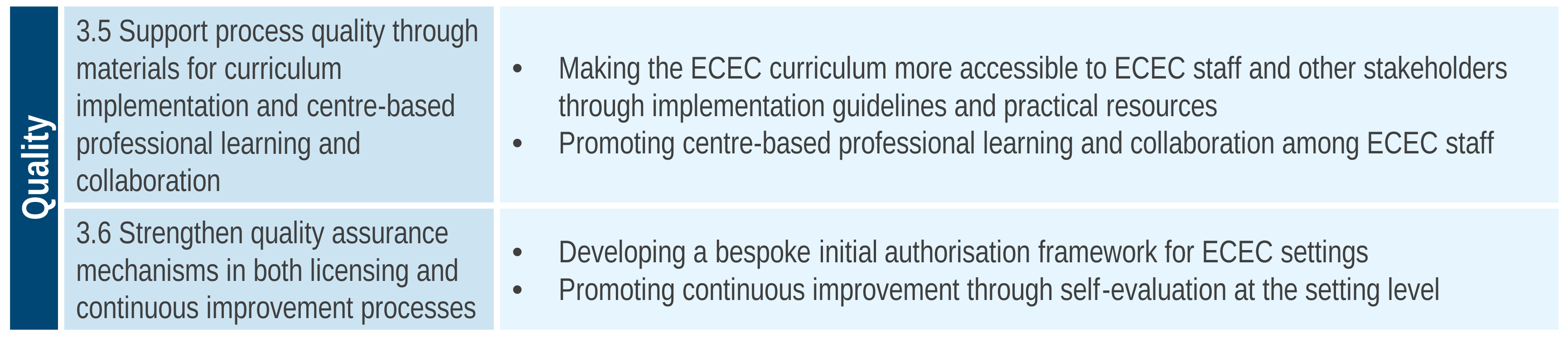
Recommendation 3.5: Support process quality through materials for curriculum implementation and centre-based professional learning and collaboration
Peru has taken important steps to strengthen the quality of ECEC. Since 2016, expectations for pedagogical work with young children have evolved with the introduction of a new national curriculum, which integrates Ciclo I, Ciclo II, and the early years of school education. The curriculum promotes a holistic view of child development, with a strong focus on respecting children’s individual characteristics and promoting their autonomy and secure attachment. To support its implementation, MINEDU has developed a range of curricular resources for age-specific learning goals, and practical tools to help early educators design engaging learning experiences for young children and track developmental milestones.
However, moving from teacher-led to more child-centred practices is not without challenges. Monitoring data from nationally representative surveys suggest that only small shares of pre-primary teachers support children’s play in meaningful ways and implement activities that intentionally promote their agency or critical thinking. Beyond the need for clearer pedagogical guidance and professional support, many teachers face also the challenge of securing families’ buy-in. Stakeholders noted that some parents remain sceptical of competency-based approaches and expect more traditional instruction focused on school preparedness, which can create tensions and discourage innovation in the classroom.
Drawing on OECD evidence, this section explores how Peru can bridge the gap between curricular intent and everyday practice through more targeted practical guidance and more contextualised professional learning. It considers how existing resources could be further developed, and how collaborative professional development, within and across ECEC settings, can help teachers bring the curriculum to life in meaningful, developmentally appropriate ways.
Making the ECEC curriculum more accessible to ECEC staff and other stakeholders through implementation guidelines and practical resources
Support materials that set out clear and practical guidelines for ECEC staff regarding their interactions with children and families are an important mechanism to facilitate curriculum implementation. These materials should place a strong emphasis on helping staff and other stakeholders understand the concepts and goals of the curriculum and translate them into practice. To help ECEC staff and families become more acquainted and comfortable with the learning and development principles and outcomes that ECEC services should strive for, MINEDU could step up efforts to develop a bank of resources, make them easily accessible in a single platform and promote their use by ECEC staff. This would enhance access to existing materials, such as activities illustrating good teaching practice, while also incorporating additional supports and extending their use. Positive examples exist, such as the pointers to support early skill development (Orientaciones pedagógicas para el desarrollo de competencias de las niñas y niños). These were published in 2022 in the context of the return to in-person education after the COVID-19 pandemic, but a systematic and easily accessible mapping of existing resources to the curriculum is lacking. Monitoring the uptake of these materials, providing tutorials on their implementation and collecting feedback from staff after their use would also be important to refine and develop the platform.
The majority of OECD countries and jurisdictions provide guides for implementation as a companion resource to ECEC curriculum frameworks (see Box 3.3). While ECEC settings are the audience most frequently targeted by curriculum implementation guidelines, many countries also provide materials targeted at parents and families. This appears relevant in the Peruvian context. Interviewed stakeholders reported that ECEC staff in Peru often find it difficult to communicate curriculum goals (e.g. transversal competences) to families, given parental expectations often focused on traditional early literacy and numeracy outcomes (e.g. letter recognition, number patterns). Resources specifically designed to facilitate discussions with families about the curriculum and its learning and development goals could support staff engagement with families and contribute to a greater alignment between activities in ECEC settings and home environments.
In New Zealand, Kōwhiti Whakapae is an online curriculum resource designed to help ECEC teachers strengthen planning, formative assessment and teaching practice, and thereby the implementation of the Te Whāriki early years curriculum. Kōwhiti Whakapae and its associated resources focus on ways to support children’s progress in three areas of learning: social and emotional, oral language and literacy, and maths. Kōwhiti Whakapae provides multiple examples of how ECEC teachers can notice and recognise children’s capabilities and then respond through practice. It is integrated in the broader Tāhūrangi online curriculum platform of the Ministry of Education, where many other Te Whāriki online curriculum resources are available, including for parents and families.
In Victoria (Australia), the Victorian Early Years Learning and Development Framework (VEYLDF) and the Victorian Curriculum F-10 offer guidance for implementation. Among other resources and materials, the VEYLDF includes guides with practice principles in 8 key areas to support ECEC staff in their work together, with children and with families (e.g. reflective practice, partnerships with families); a set of Illustrative Maps for ECEC staff to inform planning of their practice with young children, which link the learning and development outcomes of the framework with the first three levels of the Victorian Curriculum F-10; and four modules of professional learning support staff in embedding the VEYLDF in daily practice, each containing short videos with examples, exercises suitable for individual or team use, and other supporting materials.
In Ireland, the Aistear Early Childhood Curriculum Framework for babies, toddlers and young children was updated in 2024. The revised Framework is supported by a Guidance for Good Practice document designed to support ECEC teachers to understand and engage with new concepts introduced in the updated Framework. This builds on and updates the original guidelines from 2009 to reflect advances in educational research since the late 2000s. Additional support materials are available help teachers to identify priorities for development and to plan actions for positive change, with practical descriptions of learning experiences across themes (e.g. exploring and thinking), age groups (e.g. babies, toddlers, young children) and locations (e.g. infant classrooms, home-based settings).
Sources: Shuey et al. (2019[76]), Curriculum alignment and progression between early childhood education and care and primary school : A brief review and case studies, OECD Education Working Papers, No. 193, OECD Publishing, Paris, https://doi.org/10.1787/d2821a65-en;
OECD (2025[15]), Reducing Inequalities by Investing in Early Childhood Education and Care, Starting Strong, OECD Publishing, Paris, https://doi.org/10.1787/b78f8b25-en.
Promoting centre-based professional learning and collaboration among ECEC staff
Enhancing continuous professional development for ECEC staff and leaders in Peru will also be required for a successful implementation of the national curriculum, including its adaptation to local contexts, that fosters quality interactions with children and families. Peru could benefit from complementing its current offer of mainly stand-alone and virtual in-service training courses with opportunities for job-embedded professional development. Research has identified active learning methods, centre-embedded delivery and personalised feedback, including through coaching and mentorship models, as features of high-quality continuous professional development for educators (Brunsek et al., 2020[77]; Egert, Fukkink and Eckhardt, 2018[78]). The practical dimension and the peer feedback and collective reflection components enhance conditions for educators to learn to adapt pedagogical principes to the contexts in which they work. The new training programme for EduCuna, which brings together ECEC staff in different roles (i.e. teachers, assistants, and centre leaders), appears to align with some of these principles and could serve as a blueprint for further initiatives with a deliberate focus on collaborative work within settings, rather than on role-specific responsibilities. Whole-centre approaches to in-service training give all the professionals interacting with children the opportunity and time to learn together, exchange on their practices and critically reflect as a team on what the professional development experience means for their daily practice. An expansion of the network of age-integrated settings (see Recommendation 3.3 above) may create new opportunities and lower of cost of such training models, taking advantage also of the shared curricular principles between Ciclo I and Ciclo II.
However, given the existence of small ECEC settings, particularly in rural areas, it would also be important for Peru to maintain or create new opportunities for professional learning across settings, including through hybrid formats. These can allow staff from different settings to observe each other, collaborate during professional learning days, or work together on specific topics. This can be particular important for PRONOEI, for instance by bringing together different Community Educational Promoters (promotoras) receiving pedagogical guidance from the same coordinator ECEC teacher. This would require concrete supports for promotoras, for example protected training time and stipends for transportation, to attend these training activities. Collaborative learning across settings can also be crucial for ECEC centre leaders, and existing initiatives such as the Círculos de inter-aprendizaje directivo for school/centre leaders and deputies could be reinforced at the ECEC level. More generally, Peru would benefit from strengthening the identification of the professional development needs of ECEC staff, to then align specific in-service training contents and delivery models with those needs. Currently, these needs may be indirectly assessed from quality monitoring exercises such as MELQO/MEDIT or MPE, as well as from information from entry tests into the professions (Pruebas Nacionales del Concurso de Ingreso a la Carrera Pública Magisterial and Concurso de Ascenso de Escala Educación Básica, as well as the outcomes of the Evaluación de Desempeño Docente Nivel Inicial) and consultations with DREs. More direct assessments of professional development needs according to staff profiles could however be collected on a regular basis (e.g., every 3-5 years) as part of existing and extended data collection efforts (see Recommendation 3.2 above). Box 3.4 provides examples that could be informative for Peru in promoting professional development opportunities for ECEC staff.
In many Canadian provinces and territories, early childhood consultants play a crucial role in supporting quality improvement within ECEC settings, especially those receiving public funding and adhering to quality standards. For instance, most ECEC settings in Québec have access to consultants who provide a range of supports to enhance service quality, including facilitating meetings, engaging with parents and the community, and assisting with the development of pedagogical tools and learning environment design. British Columbia has further invested in several professional development community programs such as Peer Mentoring, First Nations Pedagogies Network, and the Early Years Pedagogical Network, which coordinates a provincial network of pedagogical specialists to support ECEC teachers.
Similarly, Luxembourg uses a credit-based system to fund professional development in both formal and non-formal ECEC settings, covering more hours of training than the legally required. Each setting is granted with a credit of training hours (equivalent to 24 hours per full-time staff). ECEC centre leaders can allocate additional training to staff who need it most and choose from various formats of training, such as coaching or group training.
Source: OECD (2021[36]), Starting Strong VI: Supporting Meaningful Interactions in Early Childhood Education and Care, Starting Strong, OECD Publishing, Paris, https://doi.org/10.1787/f47a06ae-en; OECD (2022[72]) Strengthening Early Childhood Education and Care in Luxembourg: A Focus on Non-formal Education, OECD Publishing, Paris, https://doi.org/10.1787/04780b15-en.
Recommendation 3.6: Strengthen quality assurance mechanisms in both licensing and continuous improvement processes
Peru currently lacks an integrated quality framework for ECEC that systematically articulates what high-quality provision would look like at the setting level, attending to both structural and process dimensions of quality. Several OECD countries have introduced such frameworks to define a consistent quality floor across the ECEC sector to the benefit of all children, and to provide a lever for continuous improvement that encourages settings to aim for quality levels beyond basic compliance. This is the case in Australia, for example, through the 2024 National Quality Framework, and in Ireland, under the Síolta National Quality Framework for Early Childhood Education, that was established in 2006. These frameworks are most effective when accompanied by strong institutional leadership for quality assurance, for instance in the form of a national inspectorate or other independent quality assurance body (see Chapter 4, Recommendation 4.3).
In the absence of an integrated quality framework and clear institutional leadership for quality assurance, however, Peru could take intermediate steps to strengthen its licensing framework for ECEC services, particularly with the perspective of expanding the network at the ISCED 01 level, and to promote continuous improvement in existing settings, especially at the pre-primary level.
Developing a bespoke initial authorisation framework for ECEC settings
If the ECEC sector is to undergo expansion in the coming years, particularly regarding services for children under age 3, the Condiciones Básicas de Calidad framework would require sector-specific enhancements to make sure clear criteria exist to authorise new settings to operate, identify and monitor settings where structural conditions are not supportive of children’s safety and development, and design plans to progressively improve these conditions with the necessary resources. While complementary technical norms exist specifically for the construction of ECEC centres, the Condiciones do not offer tailored guidance to ECEC centre leaders and staff on how to organise the physical space and arrange furniture and materials in ways that are adequate for the youngest children. Importantly, the scope of the Condiciones should be extended beyond basic structural quality features to include statements of practice that ECEC professionals can use to visualise and understand what good practices could look like in their settings.
To enhance its rapidly growing and diverse ECEC sector, Peru could draw on international examples of comprehensive authorisation frameworks. For instance, England’s (United Kingdom) mandatory Early Years Foundation Stage (EYFS) Statutory Framework sets clear, comprehensive standards and recommended practices for learning, development, and care, alongside rigorous safeguarding and welfare requirements. The framework is consistently applied across varied settings including childminders and school-based provisions (Department of Education of England, 2024[79]). New Zealand offers another relevant example. A recent review found the ECEC regulatory system overly complex and administratively burdensome for providers limiting the expansion of ECEC provision. In response, reforms are being introduced to create a graduated compliance system, streamline regulatory criteria by removing low-risk or redundant rules, and increase flexibility in workforce requirements, particularly to improve access in underserved areas (Ministry of Regulation of New Zealand, 2024[80]). Considerations for Peru might include establishing unambiguous mandatory requirements alongside recommended practices, implementing a gradual monitoring and enforcement system beyond mere license status changes, and carefully balancing robust quality standards with necessary flexibility in ECEC staff qualifications and diverse service models to support equitable supply, particularly in rural areas.
Promoting continuous improvement through self-evaluation at the setting level
Quality self-assessments are becoming increasingly common in ECEC systems across the OECD, based on the notion that ensuring the commitment of providers to a culture of continuous improvement can fruitfully complement “top-down” mechanisms (e.g. regulation, compliance) towards embedding high quality in the sector (OECD, 2022[56]). Peru could consider the use of different policy levers to promote self-evaluation and improvement planning arrangements in the sector. In Luxembourg, for example, self-evaluation is a mandatory requirement for centres receiving funding through their national subsidy scheme sector (OECD, 2022[56]). Peru might consider making self-evaluation a requirement for ECEC settings that benefit from central funding to build and renovate infrastructure.
Given that most ECEC services in Peru do not receive external evaluations or detailed feedback on their practices, introducing requirements to conduct self-evaluations could help build their capacity for improvement. Careful attention must be given, however, to avoid that self-evaluations become just an administrative burden, particularly for small settings. Any requirements to conduct self-evaluation should be matched with support to help ECEC settings to use this exercise to improve their structural and process quality. The latter is crucial to helping staff understand how to translate the national curriculum into high-quality interactions with young children and their families.
Examples of useful self-evaluation resources from OECD countries include descriptors and benchmarks that explain what “poor” to “very good” structural and process quality look like and help ECEC staff make more reliable judgements about their own practices; examples of effective self-evaluation reports and improvement plans; and advice and training resources on how to carry out self-evaluations and act on the findings to drive improvement.
In countries with well-established practices, self-evaluation is often supported by comprehensive national frameworks and resources. For instance, Scotland (United Kingdom) exemplifies a mature system where complementary inspectorates (Education Scotland and the Care Inspectorate), proactively foster self-evaluation and improvement planning. Education Scotland, the national agency for improving education quality, has published “How Good is our Learning and Childcare?”, a core self-evaluation resource complemented by specific tools like the “Early Learning Play Pedagogy Toolkit”. Concurrently, the Care Inspectorate, regulating care services, released “Self-evaluation for Improvement – your Guide”, offering guidance on systematic performance assessment against National Standards and translating findings into action plans, with online ‘bite-size’ videos (Care Inspectorate of Scotland, 2023[81]). Similarly, Italy launched a national pre-school self-evaluation pilot in 2018-20, co-ordinated by the National Institute for Educational Evaluation (INVALSI) and mandated by the Ministry of Education. This project aimed to develop comprehensive self-evaluation tools and a quality framework, engaging stakeholders throughout its design. INVALSI's approach, emphasising consensus and avoiding accountability pressure, facilitated success and laid groundwork for national scale-up (Freddano and Stringher, 2021[82]). These examples demonstrate that effective self-evaluation practices rely on clear guidance, practical resources, and a commitment to continuous improvement, not merely administrative burdens.
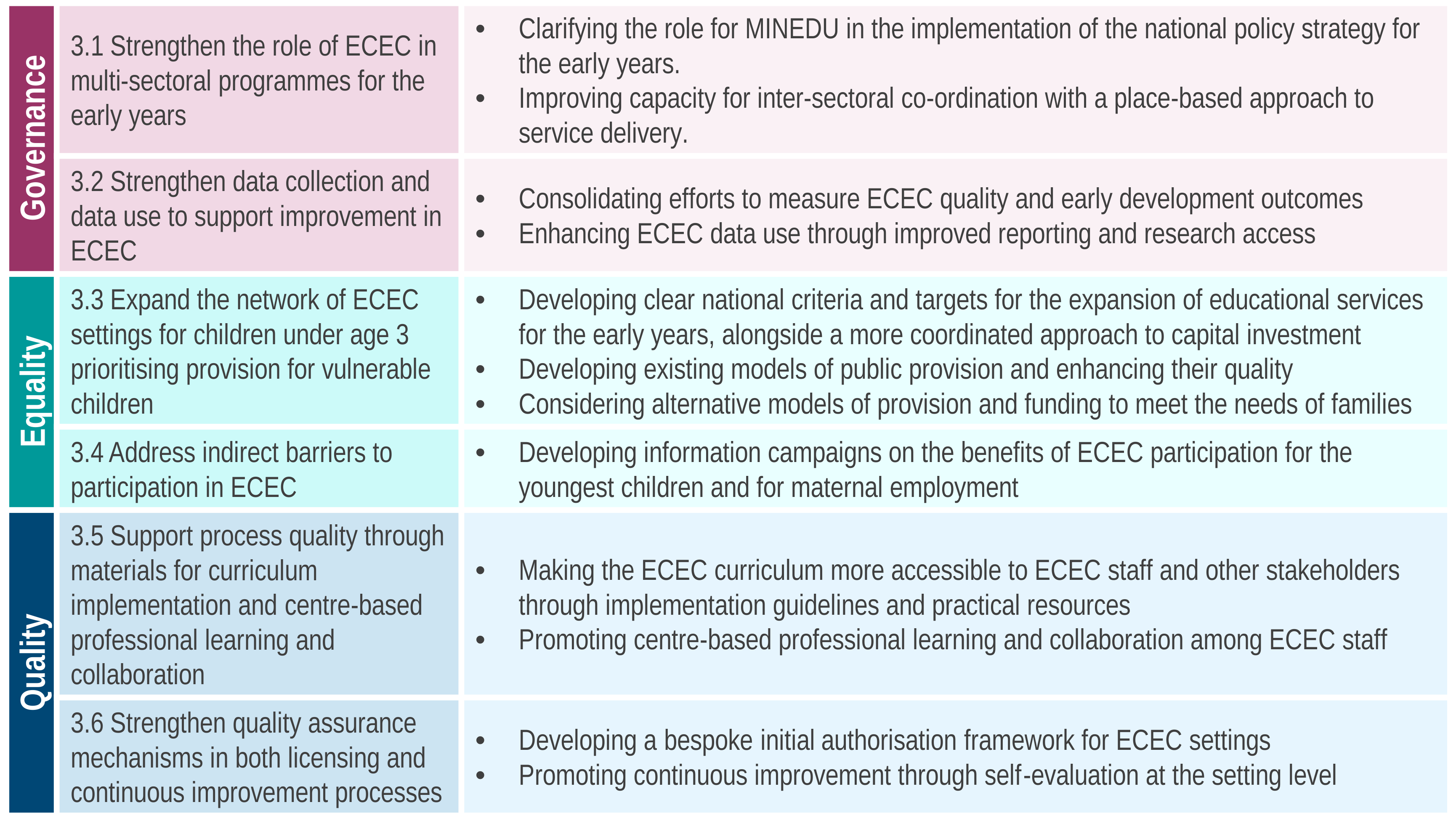
References
[34] Alcázar, L. and S. Laszlo (2022), La importancia de mejorar la oferta de cuidado diurno en un Perú postpandémico, GRADE, https://repositorio.grade.org.pe/handle/20.500.12820/720.
[12] Arapa, B. et al. (2021), “The relationship between access to pre-school education and the development of social-emotional competencies: Longitudinal evidence from Peru”, International Journal of Educational Development, Vol. 87, p. 102482, https://doi.org/10.1016/j.ijedudev.2021.102482.
[26] Araujo, M. et al. (2021), “Home visiting at scale and child development”, Journal of Public Economics Plus, Vol. 2, p. 100003, https://doi.org/10.1016/j.pubecp.2021.100003.
[25] Araujo, M., M. Dormal and N. Schady (2018), “Childcare Quality and Child Development”, Journal of Human Resources, Vol. 54/3, pp. 656-682, https://doi.org/10.3368/jhr.54.3.0217.8572r1.
[54] Australian Research Alliance for Children and Youth (2024), Child and Family Hubs Framework, https://www.childandfamilyhubs.org.au/media/se5fgiwp/final-child-and-family-hubs-framework-document-1-background-purposes-underpinning-and-principles.pdf.
[9] Banco Mundial (2018), Revisión del gasto público en educación: Mejores aprendizajes para todos [Review of Public Spending on Education: Better Learning for All], http://documents.worldbank.org/curated/en/561561542048277246.
[74] Boyd, C. and J. Rentería (2018), “Care Economy, Gender and Labour Market Inequalities: The Case of Cuna Más [Economía del Cuidado, Desigualdades de Género Y Desigualdades en el Mercado Laboral: El Caso de Cuna Más]” Instituto de Estudios Peruanos (IEP), https://cies.org.pe/investigacion/economia-del-cuidado-desigualdades-de-genero-y-participacion-cuna-mas/.
[44] Bruïne, E. et al. (2018), “Small-scale curriculum changes for improving pre-service teachers’ preparation for Family-School Partnerships”, Journal of Education for Teaching, Vol. 44/3, pp. 381-396, https://doi.org/10.1080/02607476.2018.1465667.
[77] Brunsek, A. et al. (2020), “A meta-analysis and systematic review of the associations between professional development of early childhood educators and children’s outcomes”, Early Childhood Research Quarterly, Vol. 53, pp. 217-248, https://doi.org/10.1016/j.ecresq.2020.03.003.
[81] Care Inspectorate of Scotland (2023), Self-evaluation for improvement - your guide, https://www.careinspectorate.com/images/documents/5866/Self%20evaluation%20for%20improvement%20-%20your%20guide.pdf.
[27] Castro Aguirre, F. et al. (2024), Informe final de evaluación de impacto del Servicio de Cuidado Diurno del Programa Nacional Cuna Más en el Desarrollo Infantil Temprano, 2018-2022 [Impact evaluation of the Day Care Service of the Programa Nacional Cuna Más on early childhood development].
[10] Cueto, S. et al. (2016), Education Trajectories: From Early Childhood to Early Adulthood in Peru, Young Lives Peru, https://repositorio.grade.org.pe/handle/20.500.12820/443.
[52] Department of Basic Education of the Republic of South Africa (2023), South Africa’s 2030 Strategy for Early Childhood Development Programmes, https://ecdan.org/resource/south-africas-2030-strategy-for-early-childhood-development-programmes/.
[79] Department of Education of England (2024), Early years foundation stage (EYFS) statutory framework, https://www.gov.uk/government/publications/early-years-foundation-stage-framework--2.
[66] Department of Finance of Canada (2022), Supporting Early Learning and Child Care, https://www.canada.ca/en/department-finance/news/2022/04/supporting-early-learning-and-child-care.html.
[13] Díaz, J. (2006), Preschool education and schooling outcomes in Peru, GRADE: Niños del Milenio, https://repositorio.minedu.gob.pe/handle/20.500.12799/1148.
[48] Dirwan, G. and O. Thévenon (2023), “Integrated policy making for child well-being: Common approaches and challenges ahead”, OECD Papers on Well-being and Inequalities, No. 16, OECD Publishing, Paris, https://doi.org/10.1787/1a5202af-en.
[78] Egert, F., R. Fukkink and A. Eckhardt (2018), “Impact of In-Service Professional Development Programs for Early Childhood Teachers on Quality Ratings and Child Outcomes: A Meta-Analysis”, Review of Educational Research, Vol. 88/3, pp. 401-433, https://doi.org/10.3102/0034654317751918.
[71] Family Benefits Fund of France (2024), Implementing a parenting policy [Mener une politique de parentalité], https://www.caf.fr/sites/default/files/medias/661/Espace-Partenaires/Documents-Partenaires/Petite-Enfance/kit_employeurs-creche-entreprise-reser-places.pdf.
[57] Fantuzzo, J. et al. (2021), “Expansion of quality preschool in Philadelphia: Leveraging an evidence-based, integrated data system to provide actionable intelligence for policy and program planning”, Children and Youth Services Review, Vol. 127, p. 106093, https://doi.org/10.1016/j.childyouth.2021.106093.
[61] Figlio, D., K. Karbownik and K. Salvanes (2016), “Education Research and Administrative Data”, in Handbook of the Economics of Education, Elsevier, https://doi.org/10.1016/b978-0-444-63459-7.00002-6.
[82] Freddano, M. and C. Stringher (2021), Fare autovalutazione nella scuola dell’infanzia, FrancoAngeli, https://series.francoangeli.it/index.php/oa/catalog/view/673/504/3887.
[39] Gallego, F., E. Näslund-Hadley and M. Alfonso (2021), “Changing Pedagogy to Improve Skills in Preschools: Experimental Evidence from Peru”, The World Bank Economic Review, Vol. 35/1, pp. 261-286, https://doi.org/10.1093/wber/lhz022.
[49] Government of Peru (2022), Supreme Decree No. 011-2022 [Decreto Supremo N.° 001-2022-MIMP], https://www.gob.pe/institucion/mimp/normas-legales/2725558-001-2022-mimp.
[19] Guerrero, G. (2019), Perú: Informe de Progreso de Políticas de Primera Infancia, Diálogo Interamericano y GRADE, https://www.grade.org.pe/publicaciones/peru-informe-de-progreso-de-politicas-de-primera-infancia/.
[33] Haerpfer, C. (2022), “World Values Survey: Round Seven – Country-Pooled Datafile Version 6.0.”, https://doi.org/10.14281/18241.24.
[67] Hall, K. et al. (2024), South African Early Childhood Review 2024, Children’s Institute University of Cape Town and Ilifa Labantwana, https://ilifalabantwana.co.za/wp-content/uploads/2024/07/SA-early-childhood-review-2024-FINAL.pdf.
[14] INEI (2025), Encuesta Demográfica y de Salud Familiar [Demographic and Family Health Survey] ENDES 2024, Instituto Nacional de Estadística e Informática, https://proyectos.inei.gob.pe/endes/.
[5] INEI (2024), Perú Indicadores de Educación, Según Departamento, 2013-2023 [Peru Indicators of education by department, 2013-2023], https://www.gob.pe/en/institucion/inei/informes-publicaciones/6061323-peru-education-indicators-according-departments-2013-2023.
[17] INEI (2023), “Gasto Público Por Alumno en Educación Básica Regular, Según Nivel Educativo y Departamento, 2013-2022 [Public spending per student in regular basic education, by education level and department, 2013-2022]”, https://m.inei.gob.pe/estadisticas/indice-tematico/education/.
[73] Kind en Gezin (2014), A Pedagogical Framework for Childcare for Babies and Toddlers, https://www.kindengezin.be/sites/default/files/2021-05/pedagogical-framework-english.pdf.
[11] Majerowicz Nieto, S. (2016), Impacto de Educación Inicial Sobre Desempeño Académico, FORGE. Fortalecimiento de la Gestión de la Educación en el Perú, https://repositorio.minedu.gob.pe/handle/20.500.12799/6036.
[75] Minister of Labour, Health, Social Affairs, and Families in France (2025), Fighting Life Inequalities From a Child’s First 1000 days [Lutter contre les inégalités de destin dès les 1000 premiers jours de l’enfant], https://solidarites.gouv.fr/lutter-contre-les-inegalites-de-destin-des-les-1000-premiers-jours-de-lenfant.
[28] Ministry of Development and Social Inclusion of Peru (2024), Memoria Anual 2023 - Programa Nacional Cuna Más [2023 Annual Report – Cuna Más National Programme], https://www.cunamas.gob.pe/repositorio/Transparencia/Planeamiento_y_Organizacion/Informacion_Adicional/2024/memoria_anual/MEMORIA_ANUAL_2023_CUNA_MAS.pdf.
[2] Ministry of Education of Peru (2024), Accession candidate country’s self-assessment of policies and practices in the area of education and skills: Guidelines and questionnaire Peru.
[46] Ministry of Education of Peru (2024), Competency Strengthening Program [Programa de fortalecimiento de competencias para los directores o subdirectores docentes y auxiliares de los servicios de cuna en zonas urbanas], https://cdn.www.gob.pe/uploads/document/file/6670521/5796703-programa-de-fortalecimiento.pdf.
[40] Ministry of Education of Peru (2023), Reporte de resultados Monitoreo de Prácticas Escolares 2022, https://repositorio.minedu.gob.pe/bitstream/handle/20.500.12799/8988/Reporte%20de%20Resultados%20del%20Monitoreo%20de%20Pr%C3%A1cticas%20Escolares%202022.pdf?sequence=1&isAllowed=y.
[47] Ministry of Education of Peru (2021), Resolucion Ministerial N. 263-2021 MINEDU [Ministerial Resolution No. 263-2021-MINEDU], https://cdn.www.gob.pe/uploads/document/file/2034360/RM%20N%C2%B0%20263-2021-MINEDU.pdf.pdf?v=1627073940.
[41] Ministry of Education of Peru (2021), “Teaching materials by level [Materiales para docentes por niveles]”, https://repositorio.minedu.gob.pe/handle/20.500.12799/7218.
[30] Ministry of Education of Peru (2020), Medición de la calidad de los entornos de aprendizaje y desarrollo tempreano - MELQO 2019 [Measuring the Quality of Early Learning and Development Environments – MELQO 2019], https://repositorio.minedu.gob.pe/handle/20.500.12799/7704.
[4] Ministry of Education of Peru (2015), Resolución Viceministerial N.° 036-2015-MINEDU [Vice-Ministerial Resolution No. 036-2015-MINEDU], https://www.gob.pe/institucion/minedu/normas-legales/171283-036-2015-minedu.
[31] Ministry of Health of Peru (2020), Padrón Nominal de Niñas y Niños menores 6 años [National Register of Children under age 6], https://www.mef.gob.pe/contenidos/presu_publ/migl/metas/3_Padron_Nominal_Actividad1_Meta4.pdf.
[80] Ministry of Regulation of New Zealand (2024), Regulatory Review of Early Childhood Education, https://www.regulation.govt.nz/assets/Publication-Documents/Regulatory-Review-of-Early-Childhood-Education-full-report-v2.pdf.
[50] Ministry of Social Development and Family of Chile (2024), Política Nacional de la Niñez y la Adolescencia y su Plan de Acción 2024-2034 [National Policy for Childhood and Adolescents and Action Plan 2024-2034], https://chilecrecemas.cl/storage/documentos/Resumen_ejecutivo.pdf.
[29] Ministry of Women and Vulnerable Populations of Peru (2024), Resumen Ejecutivo Política Nacional Multisectorial para las Niñas, Niños y Adolescentes al 2030 - PNMNNA [Executive Summary – National Multisectoral Policy for Children and Adolescents to 2030 (PNMNNA)], https://cdn.www.gob.pe/uploads/document/file/5117506/4625053-pnmnna_resumen_ejecutivo.pdf.
[68] Mthimkhulu, S. and D. Tewari (2024), “The Education Component and the Inclusion of the Enrolment Survival Measure: Provincial Equitable Share (PES)”, Economies, Vol. 12/1, p. 20, https://doi.org/10.3390/economies12010020.
[51] National Council for Children and Adolescents of Costa Rica (2024), Política Nacional de Niñez y Adolescencia 2023-2032 [National Policy for Childhood and Adolescence 2024-2036], https://cnna.go.cr/wp-content/uploads/2024/04/Politica-Nacional-de-la-Ninez-y-Adolescencia-2024-2036.pdf.
[84] National Council of Education of Peru (2021), “National education project up to 2021 [Proyecto educativo nacional al 2021]”, https://repositorio.minedu.gob.pe/bitstream/handle/20.500.12799/6079/Proyecto%20Educativo%20Nacional%20al%202021%20balance%20y%20recomendaciones%202017-2018.pdf?sequence=1&isAllowed=y.
[3] National Council of Education of Peru (2021), Proyecto Educativo Nacional al 2021: Balance y recomendaciones 2018-2020 [National Education Project to 2021: Assessment and Recommendations 2018–2020], https://repositorio.minedu.gob.pe/handle/20.500.12799/7661.
[7] OECD (2025), Education at a Glance 2025: OECD Indicators, OECD Publishing, Paris, https://doi.org/10.1787/1c0d9c79-en.
[55] OECD (2025), Iceland’s Act on the Integration of Services in the Interest of Children’s Prosperity (“Prosperity Act”), https://www.oecd.org/en/publications/well-being-knowledge-exchange-platform-kep_93d45d63-en/iceland-s-act-on-the-integration-of-services-in-the-interest-of-children-s-prosperity-prosperity-act_63070721-en.html.
[15] OECD (2025), Reducing Inequalities by Investing in Early Childhood Education and Care, Starting Strong, OECD Publishing, Paris, https://doi.org/10.1787/b78f8b25-en.
[38] OECD (2024), Education at a Glance 2024 Sources, Methodologies and Technical Notes, OECD Publishing, Paris, https://doi.org/10.1787/e7d20315-en.
[83] OECD (2024), Education at a Glance 2024: OECD Indicators, OECD Publishing, Paris, https://doi.org/10.1787/c00cad36-en.
[8] OECD (2024), “Expenditure on educational institutions as a percentage of GDP”, https://data-explorer.oecd.org/vis?fs[0]=Topic%2C1%7CEducation%20and%20skills%23EDU%23%7CEducation%20resources%23EDU_RES%23&pg=0&fc=Topic&bp=true&snb=7&vw=tb&df[ds]=dsDisseminateFinalDMZ&df[id]=DSD_EAG_UOE_FIN%40DF_UOE_INDIC_FIN_GDP&df[ag]=OECD.EDU.IMEP&d.
[32] OECD (2024), “Family Database. PF3.2: Enrolment in childcare and pre-school”, https://webfs.oecd.org/els-com/Family_Database/PF3_2_Enrolment_childcare_preschool.pdf.
[1] OECD (2023), Distribution of enrolled students and graduates by type of institution, https://data-explorer.oecd.org/s/2uo (accessed on 15 September 2025).
[60] OECD (2023), Empowering Young Children in the Digital Age, Starting Strong, OECD Publishing, Paris, https://doi.org/10.1787/50967622-en.
[6] OECD (2023), Enrolment rate by age, https://data-explorer.oecd.org/s/30s (accessed on 13 October 2025).
[21] OECD (2023), OECD Economic Surveys: Peru 2023, OECD Publishing, Paris, https://doi.org/10.1787/081e0906-en.
[18] OECD (2023), PISA 2022 Results (Volume II): Learning During – and From – Disruption, PISA, OECD Publishing, Paris, https://doi.org/10.1787/a97db61c-en.
[64] OECD (2022), “Finland’s Right to Learn Programme: Achieving equity and quality in education”, OECD Education Policy Perspectives, No. 61, OECD Publishing, Paris, https://doi.org/10.1787/65eff23e-en.
[56] OECD (2022), “Quality assurance and improvement in the early education and care sector”, OECD Education Policy Perspectives, No. 55, OECD Publishing, Paris, https://doi.org/10.1787/774688bf-en.
[72] OECD (2022), Strengthening Early Childhood Education and Care in Luxembourg: A Focus on Non-formal Education, OECD Publishing, Paris, https://doi.org/10.1787/04780b15-en.
[65] OECD (2022), Value for Money in School Education: Smart Investments, Quality Outcomes, Equal Opportunities, OECD Publishing, Paris, https://doi.org/10.1787/f6de8710-en.
[62] OECD (2021), Recommendation of the Council on Enhancing Access to and Sharing of Data, https://legalinstruments.oecd.org/en/instruments/OECD-LEGAL-0463.
[37] OECD (2021), “Starting Strong VI: Supporting Meaningful Interactions in Early Childhood Education and Care” OECD Publishing, Paris, https://doi.org/10.1787/f47a06ae-en.
[36] OECD (2021), Starting Strong VI: Supporting Meaningful Interactions in Early Childhood Education and Care, Starting Strong, OECD Publishing, Paris, https://doi.org/10.1787/f47a06ae-en.
[69] OECD (2019), Good Practice for Good Jobs in Early Childhood Education and Care, OECD Publishing, Paris, https://doi.org/10.1787/64562be6-en.
[24] OECD (2019), Investing in Youth: Peru, Investing in Youth, OECD Publishing, Paris, https://doi.org/10.1787/9789264305823-en.
[20] OECD (2018), Engaging Young Children: Lessons from Research about Quality in Early Childhood Education and Care, Starting Strong, OECD Publishing, Paris, https://doi.org/10.1787/9789264085145-en.
[63] OECD (2018), Responsive School Systems: Connecting Facilities, Sectors and Programmes for Student Success, OECD Reviews of School Resources, OECD Publishing, Paris, https://doi.org/10.1787/9789264306707-en.
[35] Rojas, V. (2021), Estrategias de cuidado infantil en familias vulnerables peruanas: Evidencia del estudio cualitativo longitudinal Niños del Milenio., https://grade.org.pe/en/publicaciones/estrategias-de-cuidado-infantil-en-familias-vulnerables-peruanas-evidencia-del-estudio-cualitativo-longitudinal-ninos-del-milenio/.
[70] Rousseau, S. (2021), Universalize access to daycare to reduce social and gender gaps [Universalizar las cunas para reducir las brechas sociales y de género], https://cies.org.pe/investigacion/universalizar-las-cunas-para-reducir-las-brechas-sociales/.
[22] Sánchez, A., G. Meléndez and J. Behrman (2020), “Impact of the Juntos Conditional Cash Transfer Program on Nutritional and Cognitive Outcomes in Peru: Comparison between Younger and Older Initial Exposure”, Economic Development and Cultural Change, Vol. 68/3, pp. 865-897, https://doi.org/10.1086/701233.
[53] Shah, T. (ed.) (2021), “Findings from the Kids in Communities Study (KiCS): A mixed methods study examining community-level influences on early childhood development”, PLOS ONE, Vol. 16/9, p. e0256431, https://doi.org/10.1371/journal.pone.0256431.
[76] Shuey, E. et al. (2019), “Curriculum alignment and progression between early childhood education and care and primary school : A brief review and case studies”, OECD Education Working Papers, No. 193, OECD Publishing, Paris, https://doi.org/10.1787/d2821a65-en.
[43] Skene, K. et al. (2022), “Can guidance during play enhance children’s learning and development in educational contexts? A systematic review and meta‐analysis”, Child Development, Vol. 93/4, pp. 1162-1180, https://doi.org/10.1111/cdev.13730.
[45] Thompson, I. et al. (2018), “Teacher education and family–school partnerships in different contexts: A cross country analysis of national teacher education frameworks across a range of European countries”, Journal of Education for Teaching, Vol. 44/3, pp. 258-277, https://doi.org/10.1080/02607476.2018.1465621.
[16] UIS (2023), “Initial Government funding per pre-primary student, constant $PPP”, https://databrowser.uis.unesco.org/ (accessed on 25 June 2025).
[23] UNICEF (2025), Best Practices in Social Policy Focused on Children and Adolescents in Latin America: The Role of UNICEF., https://www.unicef.org/lac/media/52051/file/Best%20practices%20in%20social%20policy%20focused%20on%20children%20and%20adolescents%20ENG.pdf.pdf.
[59] Virginia Deparment of Education (2024), 2024-2025 Unified Virginia Quality Birth to Five System (VQB5) Guidelines, https://www.doe.virginia.gov/teaching-learning-assessment/early-childhood-care-education/quality-measurement-and-improvement-vqb5.
[42] Weisberg, D., K. Hirsh‐Pasek and R. Golinkoff (2013), “Guided Play: Where Curricular Goals Meet a Playful Pedagogy”, Mind, Brain, and Education, Vol. 7/2, pp. 104-112, https://doi.org/10.1111/mbe.12015.
[58] Young Lives (2018), What have we learned from the Young Lives study in Peru?, Young Lives, University of Oxford, https://ninosdelmilenio.org/publicaciones/.
← 1. Peruvian Soles (PEN) were converted to International Dollars using the implied Purchasing Power Parity (PPP) conversion rate for the respective year, as provided by the International Monetary Fund (IMF). IMF (2025), Implied PPP conversion rate, available at:
https://www.imf.org/external/datamapper/PPPEX@WEO/PER?zoom=PER&highlight=PER