Peru’s skills development system plays a central role in addressing long-standing challenges such as labour informality and unequal access to relevant training. In recent years, the country has taken steps to strengthen vocational education and training and lifelong learning, including reforms to expand vocational provision, the introduction of a National Qualifications Framework, and closer engagement with the productive sector. Despite these advances, many policies remain largely at the legislative stage and have yet to translate into effective action. This chapter examines policy options to support a more inclusive and responsive skills system in a changing world of work, by strengthening employer engagement, improving co-ordination across institutions involved in skills development, and expanding access to quality and flexible training for rural and disadvantaged groups.
Education and Skills in Peru

Abstract
This chapter evaluates Peru’s policies and practices in skills development – including vocational education and training (VET) and lifelong learning more broadly. Some of the challenges facing Peru are long-standing and well recognised. Chief among them is labour informality and its implications for equitable access to relevant training and skills development. In recent years, Peru has made progress in identifying potential policy responses to this and other persistent issues. National efforts continue to pursue a closer alignment of education and training with labour market demands. Initiatives such as the 2016 Law on Institutes and Schools of Tertiary Education support the expansion of vocational education, while the 2021 National Qualifications Framework (NQF), currently under implementation, aims to standardise training provision and facilitate learner mobility. Emerging partnerships with the productive sector further demonstrate progress in linking training to industry needs.
However, despite these advances, much of the policy response remains at the level of legislation, with aspirations often struggling to translate into actions. Several initiatives are already underway but face challenges in achieving greater effectiveness, while others are still seeking to overcome barriers to implementation. Significant constraints persist, such as insufficient infrastructure in training centres, weak collaboration mechanisms, slow curriculum updates, and uneven quality across training institutions. These factors continue to hinder the system’s ability to deliver inclusive and responsive skills development at scale.
This chapter explores how Peru can draw on international experience to advance its skills development agenda (see Figure 6.1). While long-standing challenges such as high levels of informality, limited access in rural areas, and financial constraints remain pressing, new pressures have also emerged from the rapid pace of technological change, including the expansion of digitalisation and the introduction of artificial intelligence (AI). These evolving dynamics underscore the urgency of building a more flexible, inclusive and result-oriented skills system. One that prepares individuals for the future of work while continuing to address persistent foundational gaps.
Section I: Provides an overall assessment of Peru’s skills system in relation to the principles of quality, equity and good governance.
Section II: Provides recommendations on how Peru can learn from OECD policies and practices to further improve skills performance across these three domains.
The chapter draws on the most recent data on the performance of the skills system, while focusing on the strategic areas and recommendations already identified in two earlier OECD reviews conducted in 2016: A Skills beyond School Review of Peru, which examined vocational education and training, and the OECD Skills Strategy Diagnostic Report: Peru 2016, which provided a broader assessment of the performance of the national skills system (McCarthy and Musset, 2016[1]; OECD, 2016[2]).
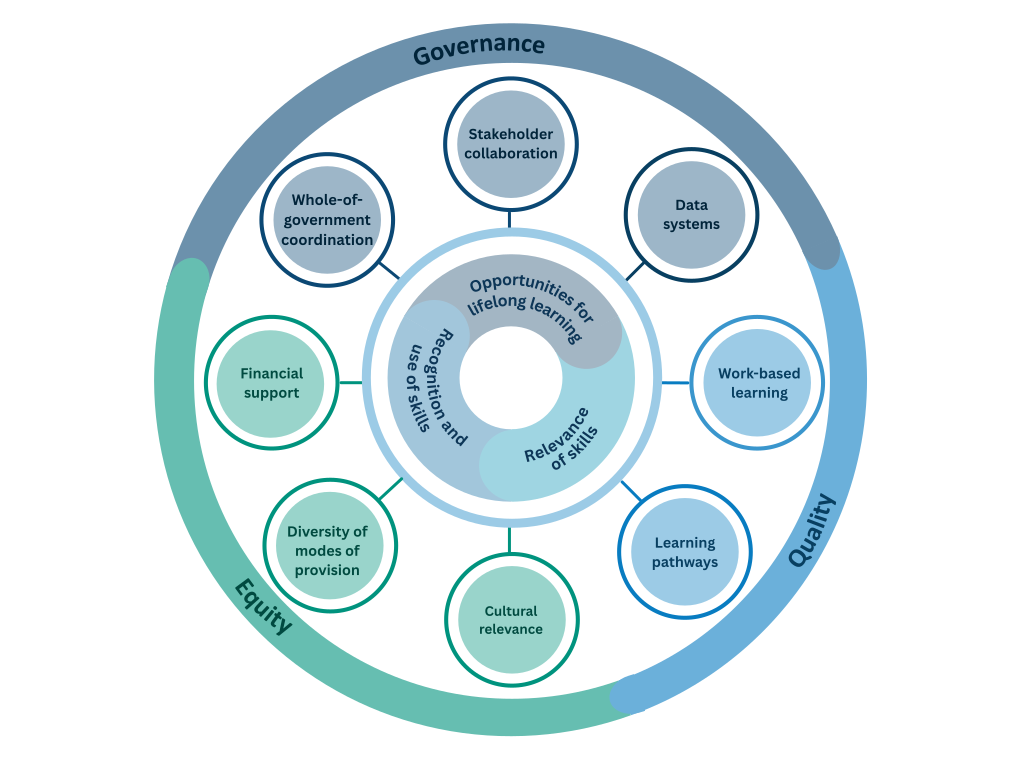
Source: Authors' own work.
Performance overview: Peru is placing greater emphasis on skills development and lifelong learning by expanding the provision of education and training, but further efforts are needed to address persistent skills shortages and boost participation in high-quality learning opportunities
Peru has experienced rapid economic growth in recent years, but structural vulnerabilities, particularly high labour market informality, continue to constrain its long-term potential
Peru has grown faster than any other major Latin American economy in recent decades, averaging 4.1% of annual GDP growth between 2000 and 2024 (World Bank, 2024[3]). Structural reforms in the 1990s helped open up the economy, stimulate foreign investment and develop key sectors such as mining, agriculture and tourism (see Chapter 2). However, high labour market informality remains a significant barrier to productivity gains, increased tax revenues, and more inclusive economic growth (OECD, 2023[4]).
In 2024, 72% of the workforce in Peru was employed informally, one of the highest rates in Latin America (ILOSTAT, 2025[5]). The vast majority of micro, small and medium enterprises (MSMEs) – which account for 99.5% of firms – operate informally (86%) (COMEXPERU, 2024[6]). This widespread informality limits access to quality employment, social protection, while also constrains opportunities for on-the-job learning.
Informality is more prevalent in the Selva and Sierra regions compared to the Costa regions (see Figure 6.3). It disproportionately affects young people, with 86% of individuals aged 14-24 participating in the labour market doing so informally (INEI, 2025[7]). Informality is also deeply entrenched among low-income groups, rural communities, and ethnic minority groups (see Chapter 2).
Peru has made strong gains in educational attainment, yet widespread skills shortages persist in the labour market
Peru has achieved notable progress in expanding access to education, particularly at the tertiary level. As of 2024, 51% of adults aged 25-34 had completed tertiary education. The highest rate among OECD countries in the region (OECD, 2024[8]). However, despite this progress, the labour market continues to face widespread skills mismatches. This suggests that the rapid expansion in participation has not always been accompanied by improvements in quality or alignment with labour market needs (see Chapter 5).
A national study conducted in 2022 found that 58% of tertiary-educated workers were working in jobs that did not align with their level of education or training (Ministry of Labour and Employment Promotion of Peru, 2022[9]). Meanwhile, workers also lack the specific skills employers require – ranging from foundational skills to more advanced technical competencies. According to the 2018 OECD Survey of Adult Skills (PIAAC), 80% of Peruvian adults demonstrated low levels of literacy and/or numeracy, a figure far exceeding the OECD average of 27% (see Figure 6.3).
At the same time, employer demand for advanced technical skills continues to grow, particularly in sectors such as IT and manufacturing (see Chapter 2). Gaps in digital and socio-emotional skills also remain prominent, further limiting workforce adaptability and productivity (Novella and Rosas-Shady, 2023[10]).
Education and training opportunities for young people and adults in Peru are diverse
Peru offers a broad and growing array of education and training opportunities for young people and adults, encompassing both formal and non-formal programmes aimed at upskilling or reskilling (see Table 6.1).
Formal vocational education and training is delivered through various institutions. CETPROs (Centros de Educación Técnico-Productiva) provide technical-productive training at the upper secondary and post-secondary levels (ISCED 3 and 4), while professionally-oriented tertiary education institutions (TEIs) offer technological programmes at ISCED levels 5 and 6. As of 2023, there were 1 606 CETPROs in operation, half of which were public, and 792 technological professionally-oriented institutions, of which 46% were public (INEI, 2024[11]).
Employer-led institutions also play a significant role in the VET landscape. These institutions deliver technical and professionally-oriented programmes (ISCED levels 4 to 6) aligned with key economic sectors and typically adopt a dual education model, combining classroom instruction with hands-on, practical training. These include SENATI (Servicio Nacional de Adiestramiento en Trabajo Industrial), which serve the manufacturing sector, SENCICO (Servicio Nacional de Capacitación para la Industria de la Construcción), which focuses on the construction industry, and CENFOTUR (Centro de Formación en Turismo), which specialised in tourism and hospitality.
Adult learners have access to basic education through CEBA (Centros de Educación Básica Alternativa), which offer literacy and basic education programmes. The number of CEBAs has increased by nearly 60% between 2013 and 2023, reaching 2 415 in 2023, with 59% of them publicly funded (INEI, 2024[11]).
Non-formal learning opportunities are also available through a range of community-based or private institutions that offer targeted skills training outside of the formal education system. Complementary to these, the Ministry of Labour and Employment Promotion (Ministerio de Trabajo y Promoción del Empleo, MTPE) has initiatives to support training for employment, such as the “Jóvenes Productivos” programme or and online training courses available through the CAPACITA-T platform.
Note: Private-sectoral provision is not included in the table.
However, participation in vocational and adult education and training in Peru remains low by OECD standards
Despite the broad range of programmes available, vocational and adult education and training in Peru remains underutilised. This underutilisation contributes to a high share of young people who are neither studying nor working. In 2024, 21% of the individuals aged 18 to 24 were not in employment, education or training (NEET), a rate comparable to the OECD-LAC average but substantially higher than the OECD average of 14% (see Figure 6.3).
In Peru, only 2.1% of individuals aged 15 to 24 are enrolled in VET programmes at any level – well below both the regional and OECD averages (see Figure 6.3). While enrolment in CETPROs has declined by around 10% in the last decade, from 244.7 thousand students in 2014 to 221.5 thousand in 2023, enrolment in technological professionally-oriented programmes has increased from 361.4 thousand students in 2014 to 550.5 thousand students in 2023 (INEI, 2024[11]). However, only 15% of VET students are enrolled in sectoral schools that offer practical, industry-relevant training. The majority attend institutions with limited workplace integration and outdated curricula (OECD, 2023[4]).
Participation in adult learning and lifelong education is also low, constraining opportunities for upskilling and workforce adaptability. In 2022, just 3.9% of adults aged 25 to 54 participated in formal or non-formal education– well below the OECD-LAC average of 6% and the OECD average of 13% (UIS, 2023[12]). Participation is especially low among adults with incomplete basic education, a group that includes over 8 million Peruvians. Educación Básica Alternativa (EBA), the second-chance education programme designed to serve individuals who did not complete regular basic education, currently reaches only 2% of those eligible (Vasques Quispe, 2024[13]). While non-formal education and community-based learning initiatives show promise, their current reach remains limited.
Returns to vocational education and training are relatively modest compared to other countries in the region
In Peru, VET is generally perceived as having limited value, both by learners and within the labour market. Compared to other countries in Latin America, the earnings premium from VET, relative to both upper secondary and university programmes, is the lowest in the Latin American region (Ferreyra et al., 2021[14]).
Nevertheless, VET still offers a measurable advantage over general secondary education. In 2022, 67% of VET graduates aged 18 to 29 earned more than the national minimum wage, compared to 45% of general secondary graduates and 74% of university graduates (74%) (UNESCO, 2024[15]). On average, young university graduates earn about 1.5 times more than their peers with VET qualifications (UNESCO, 2024[15]). However, evidence indicates these higher returns are closely tied to the quality of the university attended, suggesting that not all tertiary education yields equally strong outcomes (see Chapter 5).
Public funding for vocational and adult learning remains limited but has increased in recent years, reflecting growing recognition of the importance of skills development and lifelong learning
Public expenditure on vocational and adult education represents a small share of Peru’s total education budget. In 2023, only 1.5% of the total education budget was allocated to technical-productive and technological professionally-oriented tertiary education (UNESCO, 2024[15]). Resources allocated to EBA also remain limited, accounting for only 3.4% of the total budget assigned to basic education in 2025 (Ministry of Education of Peru, 2024[16]).
Public per student spending in vocational and adult education is particularly low when compared to other levels of education. Spending on professionally-oriented programmes is approximately half that of university programmes, while spending on technical-productive education is roughly three-quarters of that in general secondary education (INEI, 2024[11]). In 2023, funding for EBA students was similar to that for children enrolled in regular basic education (INEI, 2024[11]).
Despite historically low levels, per student spending in both technical-productive education and EBA has increased in recent years indicating a growing policy focus on these areas. However, as in other educational system, regional disparities in funding remain a significant concern.
Peru continues to face persistent regional and social disparities in access to VET and lifelong learning, particularly in rural areas and among informal workers
Access to VET and adult learning in Peru remains heavily concentrated in urban areas, leaving rural populations at a disadvantage. In 2022, 92% of students enrolled in technical-productive programmes and 97% of those in professionally-oriented technological education were based in urban areas. Lima alone accounts for one-third of enrolments in technical-productive education and half of those in technological education (UNESCO, 2024[15]).
Lifelong learning opportunities also remain limited in rural areas. A recent study estimating the potential need for second-chance programmes (EBA) across Peru found that 29.5% of young people aged 18-30 in rural areas had not completed secondary education – more than double the urban rate of 11.9%. Despite this higher relative need, 93% of CEBAs are located in urban areas (Rojas et al., 2024[17]). As a result, 95% of CEBA students are enrolled in urban areas (Ministry of Education of Peru, 2024[16]). Limited internet access in rural areas further restricts learners’ opportunities to engage in digital learning. In 2025, internet access reached 80.3% of people in Lima, 60.7% in other urban areas, and just 20.5% in rural areas (INEI, 2025[18]).
For those in informal employment, access to skills development is particularly limited. In Peru, 90% of workers who accessed vocational training or skills development programmes were in formal employment, while only 10% were in informal jobs (OECD, 2024[19]). Informal workers tend to acquire skills through self-training or informal apprenticeships, with limited opportunities to upgrade or certify their competences.

Note: In Panel B, values correspond to the Survey of Adult Skills (PIAAC) Cycle 1 that ranges from 2012, 2015 and 2018. In Panel C, values for Chile correspond to the years 2022 and 2020, respectively. In Panel D, latest information for Colombia and Mexico correspond to 2022; and vocational education refers to people participating in technical or vocational education either in formal or non-formal education (e.g. work-based, or other settings).
Source: INEI (2025[7]), Indicadores del Mercado Laboral a Nivel Departamental, 2022-2024 [Labour Market Indicators by Region, 2022-2024], https://cdn.www.gob.pe/uploads/document/file/8393806/6978987-peru-indicadores-del-mercado-laboral-a-nivel-departamental-2022-2024.pdf?v=1753129807; OECD (2019[20]), Skills Matter: Additional Results from the Survey of Adult Skills, OECD Skills Studies, OECD Publishing, Paris, https://doi.org/10.1787/1f029d8f-en; OECD (2025[21]), Education at a Glance 2025: OECD Indicators, Table A2.2, OECD Publishing, Paris, https://doi.org/10.1787/1c0d9c79-en; UIS (2024[22]), Proportion of 15- to 24-year-olds enrolled in vocational education, both sexes (%), https://databrowser.uis.unesco.org.
Quality assessment: Peru’s emerging reforms aim to broaden flexible and work-based learning opportunities, though implementation remains in its early stages
Over the last decade, Peru has made progress in strengthening industry collaboration in vocational training, although employer engagement remains limited
Peru has taken important steps to involve employers more actively in VET, with many recent policies closely aligned with recommendations from the 2016 OECD Skills Beyond School review (McCarthy and Musset, 2016[1]). In particular, efforts have focused on introducing practical components into VET programmes. For example, since 2016 professionally-oriented institutions, and since 2019 CETPROs, have been permitted to offer apprenticeship (formación en alternancia) and dual training models (Ministry of Education of Peru, 2019[23]; Congress of the Republic of Peru, 2016[24]). General guidelines for technological professionally-oriented institutions now require that at least 30% of credits be earned in real-work settings (Ministry of Education of Peru, 2022[25]). Jóvenes Productivos programme’s also offers dual training aligned with employers’ needs. These measures aim to extend the availability of dual education beyond the sectors covered by Peru’s long-established, employer-led sectoral institutions, such as SENATI, SENCICO and CENFOTUR.
In parallel, Peru has introduced mechanisms to better align training programmes with labour market needs. Since 2016, sectoral councils (consejos sectoriales de competencias) – involving ministries and industry representatives – have been piloted in sectors such as construction and tourism (see Governance assessment below). More recently, in 2021, approval of the National Qualifications Framework (Marco Nacional de Cualificaciones, NQF) represents an important step toward integrating formal, non-formal, and informal learning within a unified framework. The NQF is designed to clarify qualification levels, support lifelong learning, and strengthen recognition of on-the-job training, particularly in micro, small and medium-sized enterprises (MSMEs) and informal sectors. However, progress in implementation has been slow. The framework had already been in development during the 2016 OECD reviews, and without a major shift in approach, it is unlikely that the 2030 completion target will be met (Ministry of Education of Peru, 2025[26]).
Despite these efforts, employer engagement in VET remains limited. Most vocational programmes still lack structured work-based learning components, and several systemic barriers must be addressed to strengthen collaboration. First, practical training is not mandatory for CETPROs, and incentives for employers to participate are minimal. Financial support is currently limited to small-scale pilots of formación en alternancia and lacks a comprehensive funding model. Many MSMEs, particularly in highly informal or low-margin sectors, have limited capacity and resources to offer structured training placements. The absence of targeted incentives or co-financing schemes discourages participation, while logistical challenges such as supervision requirements or administrative burden further deter smaller firms.
Second, platforms for collaboration between employers and education and training providers remain underdeveloped. Sectoral councils are not yet widespread and lack a formal and permanent governance structures. Stakeholder interviews highlighted limited engagement opportunities with local businesses and limited institutional autonomy as key factors hindering CETPROs from adapting programmes to sector-specific needs.
Third, Peru lacks detailed guidance to support the implementation of quality apprenticeships. Although the Ministry of Education (MINEDU) issued Methodological Guidelines for Pre-Professional Practice in 2020, these remain high level. The guidelines do not provide practical instructions on establishing partnerships or clarify the roles and responsibilities of providers and employers.
Peru has taken steps to improve flexibility in adult learning, but well-defined learning pathways remain limited
Peru has made some progress in diversifying learning pathways. These flexible approaches can enhance the quality and inclusiveness of the skills system by opening training and employment opportunities to a wider population. The expansion of digital learning, accelerated by the COVID-19 pandemic, has further increased access to online training opportunities (Aguilera-Hermida et al., 2021[27]). In 2020, the MTPE launched CAPACITA-T offering free online learning through modular courses. However, these efforts remain at an early stage. Peru has introduced regulations for the recognition of prior learning (RPL). Yet, unlike many OECD countries, these measures have not yet translated into a comprehensive system, largely due to the slow implementation of the NQF (see above) and limited data infrastructure to support skills assessment, certification and recognition (see Governance assessment below). As a result, learners often cannot accumulate recognised credits over time or transition easily across different levels of education and training.
This limited permeability is particularly problematic for students in CETPROs. These institutions do not confer a secondary education diploma, which is a prerequisite for entry into professionally-oriented TEIs and universities. In addition, admission exams in tertiary education institutions rarely assess the practical skills developed in CETPROs, limiting their chances to access. This limited articulation creates the perception of CETPROs as a “dead end” rather than a stepping stone. The Government is trying to address this through an initiative called Mi Oportunidad Técnica, which allows students to attend regular secondary school and a CETPRO in parallel, enabling them to obtain both a secondary school certificate and a CETPRO qualification (see Chapter 4).
In 2021, the Ministry of Education also issued a Vice-Ministerial Resolution on learning mobility (transitabilidad) between basic education, technical-productive education and technological professional-oriented education (Ministry of Education of Peru, 2021[28]). It promotes two main mechanisms to support learner transitions: the recognition of prior learning and formal cooperation agreements between institutions. However, progress has been slow. In the absence of a fully implemented NQF, credit recognition remains largely ad hoc and dependent on voluntary agreements between individual institutions (SINEACE, 2022[29]). The 2024 modification of the Vice-Ministerial Resolution represents a positive step, as it allows basic education students to obtain an Auxiliar Técnico certification (ISCED 3), which facilitates their transition to the labour market or further VET studies (Ministry of Education of Peru, 2024[30]).
Efforts are also underway to standardise the certification of skills acquired outside the formal education and training system. The same Vice-Ministerial Resolution established provisions to link Educación Comunitaria with basic education and technical-productive education. It enables officially recognised community organisations to certify community‑based learning, which can then be validated and integrated into formal education pathways.
In parallel, since 2010, the National System for Evaluation, Accreditation and Certification of Educational Quality (SINEACE, Sistema Nacional de Evaluación, Acreditación y Certificación de la Calidad Educativa) and MTPE have issued certificates recognising skills acquired in workplaces. As of August 2025, more than 67 000 people had received certification of labour competencies through the MTPE’s National Registry (Ministry of Labour and Employment Promotion of Peru, 2025[31]). The 2023 National Strategy to Promote the Certification of Labour Competences aims to expand access to these services (Ministry of Labour and Employment Promotion of Peru, 2025[32]). While these efforts mark clear progress, evidence on the labour market impact of certification remains mixed. Some studies report positive effects on employment and earnings, while others find limited or no impact (SINEACE, 2020[33]; CAF, 2024[34]).
Equity assessment: Peru is progressively expanding education and training opportunities for adults and undeserved communities, but further efforts are needed to target support and diversify funding sources
Peru has taken important steps to scale and diversify adult learning, but systemic barriers remain unresolved
Since the 2016 OECD reviews, Peru has made notable progress in expanding and diversifying adult learning, particularly by broadening the range and reach of services offered. However, three persistent systemic barriers continue to limit the impact of these efforts and hinder access for those that are most in need.
First, most lifelong learning programmes operate in silos. Many are developed and implemented by different government actors without a shared strategy for coordination or territorial coverage (see Governance assessment below). This lack of integration results in fragmented provision and limited guidance on how to effectively engage indigenous and rural populations in culturally relevant, context-adapted training. For example, the National Fund for Employment Education and Promotion (FONDOEMPLEO), an entity linked to MTPE that finances skills development initiatives, supports high-demand economic sectors, vulnerable groups and geographic areas with high unemployment or poverty. However, its interventions are not embedded in a broader territorial or lifelong learning strategy. This limits the coherence of provision and makes it more difficult for individuals to find and access relevant learning opportunities. While some awareness-raising efforts exist, such as public campaigns for EBA, they remain small in scale and insufficient to inform or motivate wider participation.
Second, the physical distribution of adult and vocational training continues to be heavily concentrated in urban areas. Nearly all CEBA and VET students are enrolled in urban institutions (UNESCO, 2024[15]) (Ministry of Education of Peru, 2024[16]). This geographic imbalance contributes to low participation rates among vulnerable groups, particularly older adults and rural learners. Nonetheless, there have been promising efforts to expand and better target learning opportunities for the most vulnerable groups. For instance, CEBAs have expanded through peripheral classrooms (aulas periféricas) or learning circles (círculos de aprendizaje), which offer community-based delivery in public spaces to bring basic education closer to learners who cannot access a main CEBA site, especially in rural or remote areas. The targeting of adult programmes to specific vulnerable groups has also improved. The EBA literacy programme now prioritises regions with high levels of rurality and poverty, and, since 2021, MINEDU has introduced a model of EBA specifically designed for older adults (aged 60 and over). This marks a significant step in improving access to education to a group previously overlooked in adult learning policy.
Third, Peru has yet to fully scale the use of digital and hybrid learning models. Many OECD countries have adopted such models to deliver flexible, employment-relevant learning to adults in remote areas (OECD, 2023[35]). In recent years, Peru has launched several innovative initiatives to support remote learning, especially where internet access remains limited – only 20.5% of rural households have internet access (INEI, 2025[18]). For instance, EBA offers two remote study formats: the “mobile” format, designed for areas without internet connectivity, provides printed materials and in-person facilitator support; and the “online” format, intended for learners with internet access, offers digital content and remote tutoring. Similarly, Aprendo en Casa, implemented during the COVID-19 pandemic, delivered education through radio and online platforms to support first and second-chance learners. However, remote learning is still not extended, for instance, it only accounts for only 5% of total EBA enrolment (Ministry of Education of Peru, 2024[16]). Despite their promise, these initiatives face challenges related to scale and effectiveness. Infrastructure and investment constraints limit their reach, while gaps in implementation – such as the absence of user guidance and learner support – reduce their impact. Fully realising the potential of digital and hybrid learning will require a more strategic approach, including stronger integration with national education and employment strategies, improved delivery mechanisms, and sustained investment in technology and training capacity.
Peru’s current adult learning funding model does not yet sufficiently support individual learners, incentivise employer engagement or strategically leverage private resources
The 2016 OECD reviews of Peru highlighted the urgent need to diversify and expand funding mechanisms for vocational and adult learning (McCarthy and Musset, 2016[1]; OECD, 2016[2]). They pointed to a lack of sustainable funding – particularly in underserved regions – and called for greater employer involvement. These challenges remain relevant today, as confirmed by stakeholder interviews, and continue to constrain equitable access to upskilling and reskilling opportunities. Financial barriers limit both individuals’ ability to access training and the capacity of providers and employers to provide high-quality training.
To date, Peru’s financial support has focused primarily on young learners, offering limited support to adult learners. MINEDU’s National Programme for Scholarships and Educational Loans (Programa Nacional de Becas y Crédito Educativo, PRONABEC) offers scholarships and loans for tertiary studies, historically granting more to university students than to those in professionally-oriented programmes (see Chapter 5). Recent initiatives, such as Beca Tec, signal greater attention to vocational education, although they remain limited in scale (PRONABEC, 2025[36]). Other initiatives from the MTPE, such as Jóvenes Bicentenario or scholarships funded by FONDOEMPLEO target youth to develop technical and employability skills (Rivero Panaqué and Sánchez Huarcaya, 2025[37]). However, there remains a need to expand funding mechanisms to support adult learners in developing their skills throughout life.
Support for training providers and employers is also limited, particularly for CETPROs and MSMEs. CETPROs, especially those located in rural and remote areas, face persistent funding constraints that hinder their ability to modernise equipment and deliver relevant training. Likewise, MSMEs receive little public support to invest in workforce development or participate in co-financed training initiatives. Without a coordinated financing strategy, lifelong learning remains fragmented and heavily reliant on short-term or project-based initiatives. Evidence from OECD countries suggests that coordinated financing approaches – grounded in shared responsibility and diversified funding – are key to enabling lifelong learning at scale, especially for those most at risk of being left behind (OECD, 2023[35]).
Governance assessment: Peru has taken steps to strengthen coordination and data use in the skills sector, but inter-ministerial coordination and data interoperability are needed to steer reform in the skills sector
Promising initiatives have improved coordination among stakeholders in skills development, yet cross-government collaboration could be further strengthened
As in many OECD countries, Peru is working towards a more coherent and coordinated approach to lifelong learning. Responsibility for skills development in Peru is shared among several ministries and agencies, sometimes with overlapping mandates. The Ministry of Education (Ministerio de Educación, MINEDU) oversees formal education (including basic, technical-productive and tertiary education), while the Ministry of Labour and Employment Promotion (Ministerio de Trabajo y Promoción del Empleo, MTPE) leads on employment-related training programmes, including short-term, non-formal courses for job seekers, and on labour skills certification and active labour market programmes. In addition, various sectoral ministries operate their own training institutions or programmes. For example, the Ministry of Production (Ministerio de la Producción, PRODUCE) on technical training for industry; the Ministry of Housing, Construction and Sanitation (Ministerio de Vivienda, Construcción y Saneamiento) on construction sector training via SENCICO; and the Ministry of Foreign Trade and Tourism (Ministerio de Comercio Exterior y Turismo) on hospitality training via CENFOTUR. While this plurality of actors brings sector-specific expertise, it complicates efforts to establish a unified skills strategy.
The 2016 OECD Skills Strategy Diagnostic Report for Peru noted the absence of strong whole-of-government coordination mechanisms, resulting in gaps, fragmentation, and inefficiencies (OECD, 2016[2]). Since then, several mechanisms have been introduced to improve stakeholder collaboration and coordination in shaping skills policies and programmes. One such initiative is the piloting of sectoral skills councils (consejos sectoriales de competencias) in selected industries. Launched in 2016 by MTPE, the initial three sectoral councils focused on sanitation services, construction, and tourism, bringing together relevant ministries and employers to identify priority skills needs and develop occupational standards and training frameworks (Rosas Shady, 2017[38]). Development partners later supported additional pilots in sectors such as mining and agribusiness. However, these remain pilot efforts without permanent legal status or institutionalisation. Recent policy frameworks, including the 2019 National Plan for Competitiveness and Productivity (PNCP 2019-2030) and the NQF, have called for the formal establishment and expansion of sectoral councils.
At the national level, the National Council for Labour and Employment Promotion (Consejo Nacional de Trabajo y Promoción del Empleo, CNTPE) serves as a platform for tripartite dialogue among government, employers, and workers. Established in 2001, CNTPE regularly bringing together government, employers and workers to discuss labour, employment and training policies. However, its advisory nature and exclusion of MINEDU limit its influence over cross-sectoral coordination – particularly in aligning education and training systems with labour market needs. Across individual ministries, coordination challenges persist. For example, responsibilities such as aligning training curricula with labour competency standards and implementing prior learning recognition require close collaboration between MINEDU and MTPE, yet these efforts are largely reliant on informal exchanges rather than formal mechanisms. As a result, reform implementation has often been delayed or fragmented, and overlaps or gaps in provision remain.
A more recent and promising development is the creation of the National Commission for the Implementation of the NQF (Comisión Nacional Para el Seguimiento a la Implementación del MNCP). Established in 2021, the National Commission brings together public and private sector representatives, including different ministries (MINEDU, MTPE, PRODUCE), to oversee the rollout of the NQF and articulate qualifications across various education and training subsystems. Another positive step is the National Strategy for Promoting Labour Competency Certification to 2025 (ENPCCL), which aims to expand certification frameworks through greater inter-sectoral coordination, involving multiple ministries and regional governments in its implementation (Ministry of Labour and Employment Promotion of Peru, 2025[32]). This strategy places a strong emphasis on inter-ministerial and regional collaboration, and could provide a model for broader cross-government coordination in the skills system.
Peru has improved the availability of skills data, yet limited interoperability across platforms and underutilisation of data for planning and evaluation hinder the development of a more responsive, evidence-based skills system
Peru has made notable progress in increasing the availability of data on skills. However, challenges remain in achieving full interoperability across platforms and in leveraging data for effective planning and evaluation. Skills-related data are collected and managed by multiple institutions with distinct mandates and systems, including MINEDU, MTPE, National System for Evaluation, Accreditation and Certification of Educational Quality (SINEACE), National Institute of Statistics and Informatics (INEI), and National Superintendency of Customs and Tax Administration (SUNAT). These institutions often use divergent definitions, standards, and information systems tailored to their specific functions, making it challenging to consolidate and compare the data across the skills system.
Despite these challenges, Peru has made important progress towards improving data integration. The State Interoperability Platform (Plataforma de Interoperabilidad del Estado, PIDE), a government-wide digital infrastructure managed by the Secretariat of Government and Digital Transformation (Secretaría de Gobierno y Transformación Digital, SGTD) provides a government-wide infrastructure for secure data exchange using standardised digital protocols.
Although PIDE has enabled progress in other domains, its use in the education and labour fields is still limited. One barrier is the lack of harmonised catalogues, codes, and classification systems between MINEDU and MTPE, which reduces the usability of exchanged data and requires ad hoc processing. Effective data integration requires more than digital infrastructure: it depends on institutional cooperation, clear legal frameworks, and established procedures for secure, routine data sharing. In the absence of these elements, information remains fragmented and difficult to use for system-wide monitoring and decision-making. This is especially evident in vocational education, where CETPROs, and professionally-oriented TEIs operate largely in institutional silos.
A more coordinated approach to data governance and integration could support current efforts to monitor learner pathways, assess programme performance, and align education and training provision with labour market needs. Some promising initiatives are already underway. For example, Ponte en Carrera and Mi Carrera are public online platforms that provide career guidance by displaying earnings and employment outcomes associated with different tertiary education programmes. However, due in part to data fragmentation, longitudinal data linking enrolment, graduation and labour market outcomes are not yet available (see Chapter 5). Such data would enable more in-depth analysis of learner pathways and programme effectiveness.
The MTPE has also undertaken periodic skills assessment and anticipation (SAA) exercises to understand current and future labour market needs. While these efforts are a useful starting point, further development of the SAA system could help provide a more comprehensive evidence base for policy planning and reform.
Quality of programmes and outcomes: Expanding work-based learning and flexible pathways can prepare more people for labour market needs
Peru has taken important steps to broaden work-based and flexible learning opportunities, but implementation remains fragmented and at an early stage. These steps are critical to improving the quality of the skills system, as they can help ensure that training is relevant to labour market needs, accessible to diverse learners, and supportive of career progression.
While there are emerging sectoral initiatives and pilots for skills recognition, most vocational and adult education programmes still lack structured work-based components and there is little engagement of employers, with MSMEs facing resource constraints. Furthermore, articulation between CETPROs, professionally-oriented TEIs, and universities remains weak, leading to a lack of clear qualification pathways for VET graduates to progress into higher levels of education or securing formal employment.
The recommendations outlined below can help Peru advance towards a more flexible and relevant skills system for the future. Although the informality of Peru’s labour market can make implementation more complex, countries with similar challenges have progressed with the engagement of employers, and international experience suggest that well-designed skills systems can not only adapt to informality but become a vehicle to help reduce it.
Modular, competency-based learning linked to national qualifications frameworks can provide clear, flexible pathways into formal education and training. Training tax credits can incentivise MSMEs, where informality is concentrated, to participate in upskilling their workers. Structured dual education systems can bring employers into the training ecosystem, even in informal economies, through co-financing, standardised internship models, and sectoral governance.
For Peru, adopting a combined approach that incorporates these strategies could strengthen the connection between training and employment, while gradually creating incentives for informal actors to formalise. This would be achieved by offering clearer pathways to skills recognition, employment, and productivity gains.

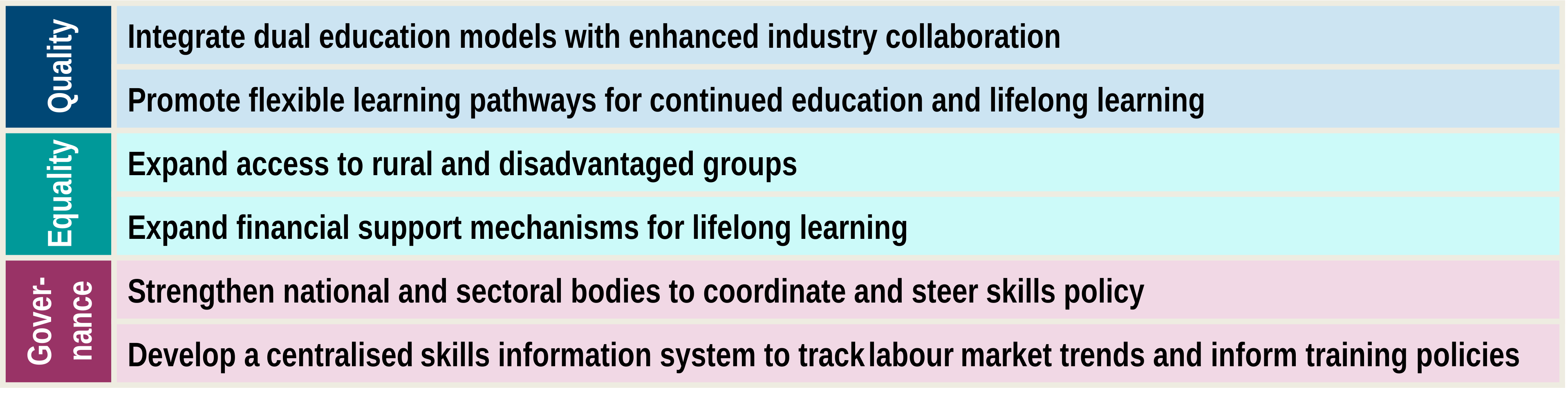
Recommendation 6.1 Integrate dual education models with enhanced industry collaboration
Integrating dual education models with enhanced industry collaboration is crucial to strengthening Peru’s skills system. To address the growing demand for skilled workers and improve the employability of young people and adults, Peru can expand structured, work-based learning opportunities. OECD experience with dual education models – combining classroom instruction with on-the-job training – have proven effective in equipping learners with job-relevant skills while fostering stronger links between education providers and industries.
Expanding and formalising work-based dual training with larger private sector participation
Dual training models are already operating in Peru; the challenge now is scaling them across a wider range of sectors, particularly in a labour market where 72% of workers are employed informally and 86% of MSMEs operate outside the formal system. This creates major constraints for expanding structured training models that require formal employment contracts and employer accountability. SENATI’s dual training model, inspired by the German apprenticeship system, has helped students transition to formal, better-paid jobs (Angles and Lindemann, 2019[39]). Adapting the model to other sectors and regions, and formalising agreements between training providers and firms with clear learning outcomes and mentoring responsibilities, could help expand dual training opportunities. Still, many firms remain reluctant to hire apprentices through formal contracts, due to regulatory burdens, fear of retroactive penalties, and limited financial capacity.
Implementing regulations and incentives can encourage firms to engage in on-the-job training and apprenticeships. National mandates are common. For example, Brazil and Colombia mandate that medium and large firms hire apprentices (ILO, n.d.[40]). In Peru’s context of widespread informality, replicating models based on formal employer obligations requires a phased and flexible approach.
One option is to pilot hybrid dual models in partnership with sector associations that can act as intermediaries between training institutions and informal firms. Another is to allow informal firms to offer work-based learning under simplified cooperation agreements that provide a clear framework of rights and responsibilities for both the learner and the host enterprise, without establishing a formal employment relationship, while progressively linking participation to access to public programmes or technical assistance. Over time, this could foster gradual formalisation anchored in clear benefits rather than strict enforcement. Evidence across the OECD, including from Mexico, shows that when firms see tangible benefits – such as productivity improvements, reduced hiring risks, and access to certified workers – they are more likely to formalise to access training partnerships.
Peru can also seek to incentivise private sector participation in training provision and internships through tax benefits or subsidies, and pilot innovative training models with industry involvement. This is common across OECD countries. For instance, Austria provides tax relief for companies that offer apprenticeships, reducing the financial burden on businesses. Peru can also take inspiration from Mexico’s Modelo Mexicano de Formación Dual, which provides tax benefits and technical support to SMEs that participate in apprenticeships (Smeck, Oviedo and Fiszbein, 2020[41]). Similarly, Chile’s SENCE model offers a training tax credit scheme that encourages workforce development across all firm sizes, including informal businesses willing to engage with the system. In predominantly informal economies like Peru, dual education programmes can also provide incentives for informal firms to participate in training delivery by offering co-financing schemes (see Recommendation 6.4 below) and simplified registration processes.
CETPROs are a central part of Peru’s training landscape, so integrating work-based learning into their programmes will be crucial if employment outcomes are to improve. Currently, many Peruvian VET institutions lack systematic links with employers, and practical training often occurs in an ad-hoc manner. By embedding structured work-based learning into CETPRO programmes, students can gain hands-on experience aligned with industry needs while improving their transition into skilled employment or further education.
For this to happen in Peru’s context, CETPROs are likely to need to develop partnerships not only with formal firms, but also with informal or semi-formal employers through flexible, low-risk engagement models. Some OECD countries mandate workplace training in their VET systems – e.g. Denmark’s VET students spend up to 50% of their learning time in companies (Cedefop; University College Copenhagen, 2022[42]). In Peru, at least 30% of credits in technological professionally-oriented programmes need to be completed in real-work settings (Ministry of Education of Peru, 2022[25]). But CETPROs in Peru would need to see their mandates reframed first measures like this can be effective.
Many of these institutions lack clarity on their main training goals – often emphasising more generic training for entrepreneurship skills (useful, indeed) over specialised training for sector-specific employability. They also have insufficient autonomy to engage with businesses to adapt offerings to local needs across regions. The gradual roll out of specialised apprenticeships can enhance the relevance of CETPROS. Colombia’s government training institution, SENA (Servicio Nacional de Aprendizaje), successfully integrates structured apprenticeships into vocational programmes, ensuring learners acquire competencies relevant to the labour market (Smeck, Oviedo and Fiszbein, 2020[41]). All this needs to be guided by a coordinated national skills strategy (see Recommendation 6.5 below).
Fostering collaboration between educational institutions and industries through joint sectoral councils and co-designed curricula
Effective VET programmes require collaboration between local governments, employers, and community organisations to ensure alignment with labour market needs. Engaging firms in co-designing curriculums and managing training programmes would improve the match between developed skills and labour demand (OECD, 2019[43]). A model to replicate in Peru are the sectoral schools, such as SENATI, that collaborates closely with firms and local governments to adapt training offers to regional economic profiles and labour demands. Formalising collaboration mechanisms between educational institutions and industries can also help ensure that flexible learning pathways lead to tangible employment outcomes. Peru’s NQF already provides a platform for this alignment by linking educational standards with occupational profiles, though further efforts are needed to operationalise it across sectors and institutions. In Colombia, SENA actively involves local employers to design and deliver region-specific courses. Other countries have successfully aligned VET with labour market needs using data-driven approaches (see Recommendation 6.6 below). Skills assessment and anticipation tools, like Estonia’s OSKA, use labour market data to forecast future skill needs and inform training priorities.
Industry partnerships and sectoral councils can help co-design curricula and structure internships and apprenticeship programmes (see Recommendation 6.5 below). Sectoral advisory councils are common across the OECD, fostering industry-education collaboration to shape vocational training, where businesses and educational institutions co-design curricula to reflect labour market needs (OECD, 2019[44]). Formalising collaboration mechanisms between educational institutions and industries can also help ensure that learning pathways lead to tangible employment outcomes.
In Brazil, the National Industrial Apprenticeship Service (Serviço Nacional de Aprendizagem Industrial, SENAI) has developed strong employer partnerships to co-design technical education curricula and offer structured workplace training (Almeida, Amaral and De Felicio, 2015[45]). Mexico has also created wider industry alliances. Via the Modelo Mexicano de Formación Dual, a wider alliance of public sector institutions and industry associations seek to advise on the curricular designs of different study areas, and establish plans for implementing and monitoring the Model’s application in different regions. Mexican states have been incorporated into the project only when a state’s education system signs agreements with local industry associations and specific companies operating in that state, which can help expand access across diverse regions (a key challenge in Peru, further covered in Recommendation 6.3 below).
Recommendation 6.2 Promote flexible learning pathways for continued education and lifelong learning
Promoting flexible learning pathways is essential to building an inclusive and responsive skills system in Peru. Despite recent progress in expanding learning opportunities, rigid educational structures continue to limit the transition between upper secondary, technical-productive, and higher education. Many Peruvians, especially adults and those in informal employment, acquire skills outside formal education but struggle to gain recognised certifications. Addressing these challenges requires a system that acknowledges prior learning, integrates competency-based assessments, and strengthens articulation across education levels. Many CETPRO graduates still struggle to transition to higher education or secure recognised credentials that are valued in the labour market.
Implementing modular curricula, aligned with the National Qualifications Framework and with enhanced articulation between education levels
Building on Peru’s NQF, which already sets the foundation for a structured and outcomes-based classification of learning, the country could progressively develop a more modular education system. Implementing modular courses – along with recognising prior learning – would increase flexibility and enable students to combine study with work or re-enter education at different stages (OECD, 2023[35]). In the short term, Peru could prioritise defining modular structures within existing vocational programmes, developing guidelines for credit accumulation and transfer, and linking modules to occupational standards already defined under the NQF. Over the longer term, efforts could focus on integrating modular learning across education levels, harmonising assessment and certification systems, and expanding recognition of non-formal and informal learning to ensure broader permeability.
A developed modular education system can improve transition opportunities upper secondary, technical-productive, and higher education by allowing learners to accumulate and stack recognised credits over time. This flexibility is particularly beneficial for low-income or rural learners, who often face interruptions in their education or need to combine study with work. Modular structures – when paired with robust recognition of prior learning (RPL) systems – enable students to re-enter education without restarting from scratch, making educational progression more accessible and affordable. Currently, little curricular coherence results in learning duplication and limited mobility. International experience points to some actions Peru could consider, including:
Designing a modular learning structure within existing VET and adult education programmes, where learners can complete short learning units (modules) that lead to intermediate certifications and can be accumulated over time to achieve full qualifications. Peru could align this system with its NQF, drawing from international practices such as Spain’s use of modular pathways linked to its NQF (see Box 6.1) and Switzerland’s VET system, which supports progression from apprenticeships to higher vocational education through clearly defined levels and standards.
Classifying qualifications into levels based on learning outcomes, ensuring consistency across all education sectors and providers – including, in the case of Peru, between CETPROs, professionally-oriented TEIs, and universities. This approach allows individuals to progressively combine validated competencies – whether acquired through formal education, work experience, or informal learning – into complete, industry-recognised credentials, helping to bridge the gap between informal and formal pathways.
Developing robust legal and institutional frameworks to validate skills acquired through non-formal and informal learning. This includes enhancing coordination between the two existing certification systems (SINEACE and the MTPE), which both issue competency-based certifications through different institutional channels. Improving coherence and accessibility across these systems could help formally recognise the skills of informal workers, support career progression, and facilitate educational mobility.
Facilitating modular learning in underserved areas. Mexico’s Education Model for Life and Work (Modelo Educación para la Vida y el Trabajo, MEVyT) expands access to learning for the most disadvantaged and remote populations by providing flexible, modular education opportunities for youth and adults who lack formal schooling, operating through community-learning centres and mobile units equipped with digital resources. This programme is also relevant for Recommendation 6.3 on access equity (see below). MEVyT is highly inclusive, with specialised learning modules tailored to indigenous communities, rural populations, and disadvantaged social groups (OECD, 2021[46]).
There are several examples of maturing NQF across the OECD, but the one from Spain offers important lessons for Peru. A key feature of Spain’s approach is the strong role given to the validation of non-formal and informal learning, underpinned by its mature National Qualification system (see Box 6.1).
Spain has a National Qualifications Framework for lifelong learning (Marco Español de Cualificaciones, MECU) to enhance transparency, mobility, and recognition of qualifications. The framework aims to integrate all formal education and training qualifications, including VET, and to align with the European Qualifications Framework (EQF). A separate framework, the Spanish Qualifications Framework for Higher Education (Marco Español de Cualificaciones para la Educación Superior, MECES), was established in 2014 to ensure compatibility with the Bologna Process. MECU is designed to facilitate lifelong learning, improve access to qualifications, and enhance trust in Spanish education and training credentials.
The 2009 Royal Decree on recognising professional competencies acquired through work experience has been updated to create a more open and flexible validation system. Furthermore, Spain has strengthened vocational training by improving coordination between the education and labour sectors, simplifying qualification structures, and enhancing access to modular, short-term training programmes. These efforts support labour market adaptability and employability, especially for workers affected by economic disruptions.
Spain’s experience offers several lessons for countries like Peru, which seek to advance NQF implementation. First, integrating validation of prior learning into the framework can increase accessibility and ensure workforce upskilling. Second, aligning the NQF with international frameworks like the EQF and the Bologna Process enhances the global recognition of national qualifications. Third, sustained political commitment and coordination across ministries and stakeholders are essential for effective implementation. By following these principles, Peru can ensure that its NQF supports lifelong learning and labour market integration.
Source: UNESCO (2023[47]). Global Inventory of National and Regional Qualifications Frameworks 2022, Volume II, National and Regional case studies, https://unesdoc.unesco.org/ark:/48223/pf0000387845
Strengthening recognition of prior learning to improve transitions across the education and training system
Peru has already established important components of a RPL system. Through the MTPE, the country manages a formal, voluntary process for certifying the competencies that individuals have acquired through work experience. This is carried out via authorised Centres for Labour Competency Certification (Centros de Certificación de Competencias Laborales), which assess knowledge, skills and attitudes based on National occupational standards. In parallel, SINEACE also certifies competencies in regulated professions through recognised bodies.
While these initiatives represent meaningful progress, the current challenge lies in expanding coverage and fully implementing a national RPL system that is explicitly aligned with the NQF. This alignment is essential to ensure consistency in how competencies are assessed, classified, and recognised across different sectors and education levels. A robust, NQF, aligned RPL system, would allow individuals, particularly those in informal employment or with interrupted learning pathways, to validate previously acquired competencies, avoid duplication of learning, and progress across CETPROs, professionally-oriented TEIs, and universities. Ultimately, this would support smoother transitions throughout the education and training system, improve access to further education and formal employment, and strengthen the overall coherence of Peru’s skills architecture.
Peru can learn from Chile’s structured approach to competency certification by establishing a centralised national system that aligns with the NQF and industry needs. Implementing a system similar to ChileValora, requires strong sectoral collaboration and formalised skill assessments. Peru can also draw lessons from Mexico’s experience with its comprehensive RPL framework for a formal, scalable system for assessing and certifying informal workers’ competencies (see Box 6.2).
Chile’s competency-based certification system
Chile’s competency-based certification system was introduced in the early 2000s to formally recognise workers’ skills and improve labour mobility. The programme was institutionalised through ChileValora, (Sistema Nacional de Certificación de Competencias Laborales), created in 2008 under the Ministry of Labour and Social Security. ChileValora is designed to validate and certify skills acquired through work experience, particularly for individuals without formal education. The system is aligned with national occupational standards and was developed through collaboration with employer associations, trade unions, and vocational training providers. The programme aims to strengthen lifelong learning opportunities and integrate informal workers into the formal labour market.
In practice, Chile’s competency-based certification process involves assessment centres that evaluate workers’ skills against national occupational standards. The assessments are conducted by accredited sectoral bodies, using performance-based evaluations, workplace simulations, and interviews to verify competencies. Certification is recognised by employers and educational institutions, enabling career progression and further training.
Mexico’s National System of Competency Standards
Mexico’s RPL system provides a structured pathway for workers, particularly in the informal sector, to gain recognised qualifications and improve their employment prospects. Through the National System of Competency Standards (NSCS), workers can validate skills acquired through work experience, self-learning, or non-formal training. The system is accessible to all, regardless of their educational background, and assessments are carried out through accredited evaluation centres. These centres use a combination of diagnostic tests, portfolio assessments, practical demonstrations, and structured exams to measure competencies. Successful candidates receive official certifications that are recognised by employers and educational institutions, enabling them to transition into higher-skilled employment or formal education. The flexibility of the RPL system has been particularly beneficial for informal workers, who represent a significant share of Mexico’s labour force, allowing them to gain formal recognition for skills acquired on the job and improve their career mobility.
The RPL framework is integrated into Mexico’s broader lifelong learning strategy, ensuring that workers can continuously update and certify their skills to remain competitive in the labour market. In sectors such as construction, retail, and manufacturing, the system has enabled workers to access new job opportunities, negotiate better wages, and transition into formal employment. Additionally, at the higher education level, adults over the age of 25 can obtain a baccalaureate qualification through a structured assessment process that evaluates their knowledge across core subjects. The system is designed to be holistic, assessing not just technical skills but also social, intellectual, and ethical competencies. Employers and professional bodies actively participate in the accreditation process, ensuring that certified skills align with industry demands. As a result, RPL has contributed to greater labour mobility, enhanced workforce productivity, and increased participation in formal education among adults who previously lacked formal credentials.
Source: OECD (2018[48]), Getting Skills Right: Chile, OECD Publishing, Paris. http://dx.doi.org/10.1787/9789264293151-en; and, Singh (2015[49]), Global Perspectives on Recognising Non-formal and Informal Learning, Springer International Publishing, https://unesdoc.unesco.org/ark:/48223/pf0000233655.
Equality of opportunities and access: addressing persistent territorial and financial barriers
Peru has taken steps to expand access to training for disadvantaged and rural populations and to offer financial support to learners. Equity is a critical dimension of a well-functioning skills system, ensuring that all individuals – regardless of location, income, or background – can access opportunities to upskill and improve their livelihoods. While PRONABEC support schemes focus on broadening access to tertiary education for low-income and vulnerable groups, funding for adult learners remains limited, incentives for MSME training are scarce, CETPROs are under-resourced, and there is no cost-sharing framework to support sustainable lifelong learning. EBA programmes aim to reach adult and rural learners through flexible training models. However, training provision remains heavily concentrated in urban areas and digital infrastructure is inadequate to ensure access in connectivity-poor areas.
Two areas of action could help address these persistent disparities. First is improving access for rural and underserved groups through territorially coordinated provision, culturally relevant programmes, and digital and offline learning models. Second is expanding financial support mechanisms tailored to lifelong learning, with a focus on adult learners, vocational pathways, and incentives for MSMEs. The following recommendations outline approaches that Peru could adopt to advance in these directions and make its skills system more inclusive, adaptable, and equitable.
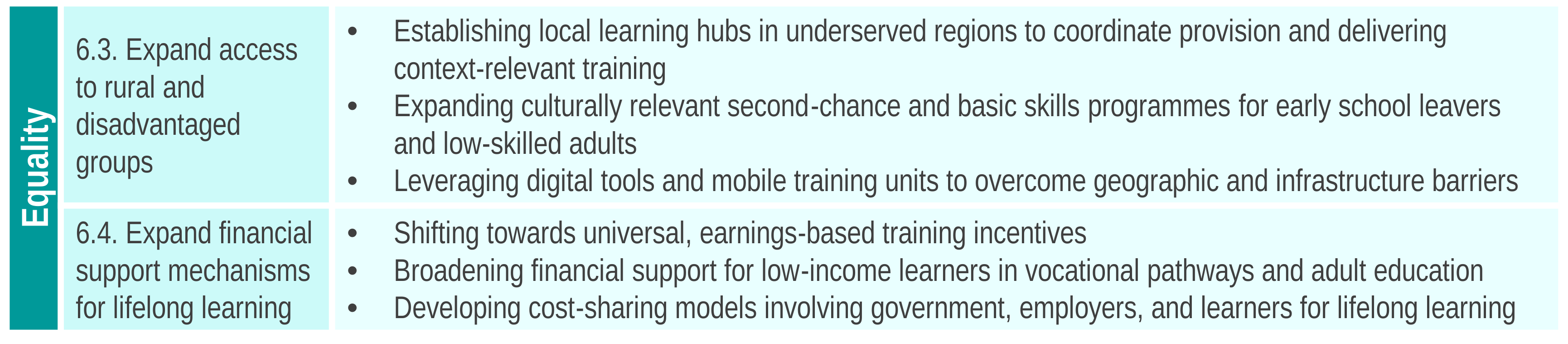
Recommendation 6.3 Expand access to rural and disadvantaged groups
Improving access to learning opportunities for rural and disadvantaged populations is essential to build an inclusive and responsive skills system in Peru. While recent years have seen progress in expanding vocational and adult education offers, wide disparities remain in access and participation. Rural populations and those in informal employment continue to face significant barriers to accessing training opportunities due to geographic isolation, limited programme availability, infrastructure gaps, and insufficient recognition of diverse learning needs. This restricts Peru’s ability to fully leverage its human capital and deepens social and economic inequalities.
Establishing local learning hubs in underserved regions to coordinate provision and delivering context-relevant training
Expanding training provision through local learning hubs can increase access and coordination in rural and marginalised areas. While Peru already has valuable local initiatives, such as CETPROs and CEBAs, these operate with limited territorial coordination and are often concentrated in urban zones. For example, 93% of CEBA centres are located in cities, despite significant unmet demand for basic education among rural youth and adults.
Local learning hubs – publicly funded, community-based and territorially anchored – could serve as centralised access points for vocational training, career guidance, digital learning, and recognition of prior learning. Rather than creating new structures from scratch, these hubs could connect and consolidate existing services: CETPROs, CEBAs, SENATI branches, municipal initiatives, and employment services. They could also integrate mobile and flexible outreach modalities already in use, such as peripheral classrooms (aulas periféricas) or learning circles (círculos de aprendizaje). These existing experiences show promise in bringing services closer to learners and could be scaled and connected through local hubs to maximise reach and efficiency.
Learning infrastructure should be embedded in regional development strategies and tailored to local labour market needs. Place-based approaches are key to improving access and ensuring relevance. Portugal’s Qualifica Centres offer a useful reference: located across the country, they act as adult learning one-stop-shops providing skills assessment, recognition, career guidance and flexible training offers. Each centre works closely with municipalities and employers to adapt to local contexts.
Similarly, Colombia’s SENA training centres illustrate how decentralised networks with mobile outreach and public-private partnerships can expand vocational training in remote areas. Evidence from SENA shows measurable improvements in employment and earnings, particularly when programmes are well targeted and adapted to regional needs.
Good governance improves the chances of success. Peru could adapt this model by using regional education directorates (DREs) and municipalities to host local hubs, with central oversight from MTPE and MINEDU. Investment should prioritise regions with high NEET rates and low training participation. Municipal alliances could host such hubs, connecting CEBAs, CETPROs, and SENATI branches, with funding from FONDOEMPLEO and regional governments.
Expanding culturally relevant second-chance and basic skills programmes for early school leavers and low-skilled adults
Second-chance programmes tailored to local contexts are key to re-engaging early school leavers and adults with low foundational skills. Second-chance education must be scaled and adapted to regional, cultural, and linguistic realities. Many disadvantaged youth and adults, especially in rural and indigenous communities, lack basic literacy, numeracy, or secondary education credentials. While some progress has been made through CEBAs and community-based initiatives, these remain underfunded, poorly integrated with training pathways, and limited in cultural and linguistic relevance. Mexico’s INEA (National Institute for Adult Education) delivers literacy and basic education in indigenous languages through mobile tutors and local centres, combining formal recognition with tailored support (UNESCO, n.d.[50]). It is a relevant example for Peru, combining basic education in indigenous languages with certification.
Peru could consider revitalising CEBAs as part of a laddered second-chance education system. This involves integrating skills recognition (see Recommendation 6.2 above), vocational pathways, and tailored support for older adults and out-of-school youth. Revitalising CEBA centres as part of a coherent second-chance strategy with improved teacher training, digital modules, and links to training providers like SENATI or CETPROs would create a more functional ladder for upskilling. Culturally adapted curricula in Quechua and other native languages are essential to ensure inclusion.
Leveraging digital tools and mobile training units to overcome geographic and infrastructure barriers
Digital and mobile delivery models are essential to reach dispersed populations where physical infrastructure is lacking. Peru’s geographic diversity poses major access challenges, especially for remote Andean and Amazonian communities. Investing in hybrid learning models – combining online platforms, radio/TV education, mobile units, and local facilitators – can significantly broaden reach (see action on establishing local learning hubs above). The COVID-19 pandemic accelerated the use of distance learning, revealing both its potential and the persistent digital divide.
While digital tools could play a key role in making lifelong learning more flexible and accessible, particularly for rural learners and working adults, they need to be accompanied by user support, offline alternatives, and investment in digital infrastructure and skills if they are to be effective (OECD, 2019[44]). Digital platforms like Aprendo en Casa, used during the pandemic, have shown promise in Peru. However, rural learners continue to face major connectivity barriers. Many households in remote areas lack stable internet access or rely on low-speed mobile networks, limiting the effectiveness of digital tools in reaching underserved populations.
Blended and mobile models, such as EBA’s mobile and online delivery formats, must be scaled. Australia’s Skills for Education and Employment (SEE) programme integrates online and blended literacy and vocational modules with face-to-face support in regional communities. It supports adult learners, particularly in remote areas, including aboriginal communities. The program is delivered by a national network of 22 training providers across metropolitan, regional and remote Australia. It delivers free language, literacy, numeracy and digital skills training to eligible Australians (Australian Government, n.d.[51]). In Brazil, SENAI operates over 450 mobile training units delivering short-term vocational and digital skills programmes in remote and underserved areas (UNESCO, 2022[52]). Peru could consider expand its mobile training units and invest in “offline-compatible” learning solutions, while equipping community centres and libraries to serve as digital access points with tutor support. Scaling such initiatives requires coordinated investment in digital literacy, content adaptation, and connectivity, especially through community centres or public libraries acting as access points.
Recommendation 6.4 Expand financial support mechanisms for lifelong learning
Ensuring that all Peruvians, especially youth and adults from disadvantaged backgrounds, can access and benefit from lifelong learning requires a comprehensive and sustainable funding system. Despite some progress since 2016, the financial architecture supporting continuing education and training in Peru remains limited and unevenly distributed. While efforts such as PRONABEC’s scholarship schemes have been key in widening access to tertiary education, they remain largely concentrated on university pathways and do not sufficiently support non-traditional learners or vocational training routes. Moreover, micro, small and medium-sized enterprises (MSMEs), which employ almost 50% of Peru’s workforce (COMEXPERU, 2024[6]), have little fiscal incentive or support to invest in the upskilling of their workers.
In a context of limited public resources, the expansion of financial support should be sequenced by urgency and impact. First, empowering MSMEs to train their workers can generate immediate returns for productivity and inclusion. Second, strengthening student support for vocational training could improve equity and diversify learning pathways, building on that already available under PRONABEC for tertiary-level programmes in professionally-oriented institutions (see Chapter 5). Finally, developing co-financing models between government, employers, and learners can ensure long-term financial sustainability.
Shifting towards universal, earnings-based training incentives
MSMEs in Peru face significant barriers to investing in training, including limited financial capacity and information, and concerns about employee retention. These barriers disproportionately affect low-skilled workers and rural businesses. Shifting towards universal, earnings-based training incentives – such as training vouchers or payroll-based deductions – can encourage employers to invest in upskilling their workforce, contributing to both productivity gains and social inclusion. OECD evidence shows that targeted financial incentives for MSMEs significantly boost participation in training (OECD, 2021[53]). Chile’s SENCE programme provides tax credits to companies that invest in employee training, especially for low-income or low-skilled workers, that has shown positive results in upskilling and reskilling, improving chances of employment (ILO, 2022[54]). In Peru, a pilot programme could begin with key sectors such as agroindustry, hospitality, and retail – areas with high informality and potential for inclusive growth. The programme should be managed in partnership with sectoral training councils and include clear eligibility rules, monitoring of outcomes, and gender-sensitive design to ensure broad access.
Broadening financial support for low-income learners in vocational pathways and adult education
Ensuring equitable access to post-secondary education – particularly in technical-productive, and professionally-oriented programmes – requires a more inclusive, better targeted, and more predictable student financial support system. While Peru has developed financial aid schemes in recent years, these remain limited in coverage, fragmented across multiple streams, and largely support university education (see Chapter 5). As a result, many disadvantaged youth and adults, especially those from rural areas or engaged in informal work, are unable to access or complete further education due to financial barriers and eligibility rules that do not always align with their realities.
To make progress, Peru could strengthen and streamline its student financial support framework. This would entail placing greater emphasis on financial need and social disadvantage when awarding support, and reducing reliance on academic performance as a selection criterion – an approach that, as discussed in Chapter 5, may unintentionally exclude those most in need. It would also involve expanding coverage to include more flexible, short-cycle, and labour-market-relevant programmes offered by accredited CETPROs and TEIs. Furthermore, the sustainability of financial support depends on improving funding predictability over time and simplifying the structure of available schemes, which are currently dispersed across multiple programmes with different eligibility rules and procedures.
PRONABEC could play a central role in these reforms, building on its institutional foundation and reach. As outlined in Chapter 5, consolidating existing schemes, ensuring alignment with quality standards and labour market needs, and progressively incorporating income-contingent loans could help reduce access gaps and make public investment more effective. In sum, a stronger and more inclusive student financial support system would be essential to achieving more equitable outcomes in Peru’s tertiary and technical-productive education landscape.
Developing cost-sharing models involving government, employers, and learners for lifelong learning
A sustainable skills system works better when it goes beyond public subsidies to include co-investment from employers and learners, especially for mid-career and informal training. Tripartite cost-sharing models help distribute the financial responsibility fairly and incentivise all stakeholders to prioritise relevant, high-quality training. Examples include France’s Compte Personnel de Formation (CPF), a lifelong learning account system that allows employees to accumulate training hours over time, funded by employers through a payroll levy. Workers can use these credits flexibly for certified training, and low-skilled workers receive top-ups (OECD, 2020[55]). While the CPF model relies on high levels of formality and tax compliance that may not yet be feasible in Peru, it provides a useful example of how individual learning accounts can be designed to promote continuous upskilling. For instance, in Costa Rica’s INA (National Training Institute) operates a hybrid model funded by employer payroll contributions and government transfers. INA works closely with employers and unions to deliver training, especially for adults in vulnerable conditions, and has been key in increasing the country’s formalisation rates. It collaborates with employers to deliver training and supports adult learners through partial subsidies and free short courses in high-demand areas (UNESCO, 2022[56]).
In Peru, this model could begin by piloting sectoral training funds in collaboration with industry associations, aligned with national productivity goals. Over time, these funds could integrate contributions from workers through individual learning accounts. The model must be underpinned by clear governance structures, outcome monitoring, and strong coordination with regional governments and CETPROs. In Peru, such models could be piloted in rural areas with high concentrations of informal labour, creating regional skills funds co-managed by local chambers of commerce and regional governments. Over time, these could evolve into a national co-investment system with clear governance, performance indicators, and quality assurance mechanisms.
Good governance: Strengthening institutions and data to deliver better skills outcomes
Fragmented governance and limited use of data continue to undermine Peru’s ability to plan, implement, and evaluate effective adult learning and training policies. Establishing stronger coordination mechanisms – both across ministries and with regional and sectoral actors – can help align efforts and reduce duplication. At the same time, developing a centralised, interoperable skills information system would support evidence-based decision-making, allowing policymakers to monitor outcomes, anticipate future skills needs, and target investment where it matters most.

Recommendation 6.5 Strengthen national and sectoral bodies to coordinate and steer skills policy
Effective governance of a country’s skills system is critical for designing, implementing and coordinating policies in adult education and training. In Peru, as in most countries, the skills system involves multiple ministries and stakeholders at national and regional levels, and overlapping responsibilities and fragmentation have long been identified as barriers to coherent skills policy. The government has already taken some important steps to improve coordination in this complex context. One is the creation of the National Commission for the Implementation of the NQF, which has the potential to improve coherence in training provision and qualifications. Another is the National Strategy for Promoting Labour Competency Certification to 2025 (ENPCCL), which seeks to recognise skills acquired informally by expanding certification services. Launched in 2023, this strategy is explicitly inter-sectoral and involves multiple ministries and regional governments in its implementation. However, such initiatives are focused on specific aspects of the skills system. They are not designed to provide direction and coordination for overall skills policy. Nor do established coordination mechanisms yet engage adequately the productive sector. Peru has piloted sectoral councils to connect government and employers in some key industries. Making such councils permanent, expanding them to other sectors, and giving them a mandate for shaping policy will be important to ensure the skills system is responsive to labour market needs.
Strengthening whole-of-government coordination on skills
Multiple ministries in Peru hold responsibility for skills-related policies, yet coordination remains limited. Fragmented governance has resulted in overlapping mandates, disconnected initiatives, and missed opportunities to align education, training, and employment efforts under a coherent national vision (OECD, 2016[2]; OECD, 2019[43]). Addressing this challenge requires a whole-of-government approach that strengthens both horizontal and vertical coordination, ensuring that policies are not designed or implemented in isolation but reinforce one another across sectors and levels of government.
Peru could begin by establishing a high-level mechanism for cross-ministerial collaboration on skills. This could take the form of a national skills council or inter-ministerial committee bringing together key ministries – such as Education, Labour, Economy, and Production – under the leadership of a senior authority, such as the Prime Minister’s Office or a designated “skills champion.” The body would be tasked with setting shared priorities, developing integrated strategies, and ensuring alignment across vocational education, adult learning, and labour market programmes. Coordination could be supported by joint planning exercises, shared targets, and regular inter-agency meetings or task forces on issues such as skills forecasting, certification, or digital learning. Peru’s national planning agency, CEPLAN, could be empowered to oversee the alignment of sectoral strategies with national skills objectives, while the Ministry of Economy and Finance (MEF) could help integrate budgeting processes to ensure that funding supports cross-cutting priorities rather than reinforcing institutional silos. Norway’s Skills Policy Council offers a strong model for improving ministerial coordination around skills in Peru (see Box 6.3). For Peru, creating a similar council could support the shift from fragmented governance to a more integrated skills system, enabling ministries to jointly plan, implement and monitor policies aligned with national development goals.
In parallel, Peru could strengthen vertical coordination by creating permanent channels of consultation and capacity-building between national and regional authorities. This may include an annual national-regional forum on skills, where regional officials from education and labour sectors collaborate with central ministries to shape implementation plans. Results-based management mechanisms already in place could be leveraged to link regional funding allocations to performance in skills outcomes, helping to align incentives across levels of government. Existing regional councils or committees on skills could also be strengthened to ensure their actions are coherent with national strategies, while responding to specific local labour market conditions. In this context, the national council for tertiary and technical-productive education proposed in Chapter 5 could serve as a key coordination space among education providers and stakeholders, complementing the inter-ministerial mechanisms outlined above.
For any coordination body to be effective, it must be underpinned by a clear mandate, adequate resources, and strong analytical support (OECD, 2023[57]). It should be empowered not only to plan and convene but also to monitor progress and address conflicts across institutions. A dedicated technical secretariat with capacity in data, research, and policy design could reinforce its effectiveness. Over time, such a structure would help foster a culture of collaboration within the public administration. This would lead to more integrated programme design – where, for instance, youth training schemes and adult upskilling initiatives are developed in conjunction with broader education and employment reforms, rather than as stand-alone interventions. Stronger internal coherence would also allow the government to engage more consistently with external partners, including employers and training providers, laying the groundwork for broader collaboration.
Enhancing stakeholder collaboration through sectoral skills councils
In Peru, employers, industry associations, and unions have had limited and ad-hoc involvement in shaping training policies and programmes. This disconnect contributes to persistent skills mismatches and weakens the responsiveness of the system to labour market needs. Employers often report that graduates lack the skills required for available jobs, and training providers have few opportunities to engage with industry to co-design curricula or update occupational standards. Addressing this gap requires formal mechanisms to bring non-government stakeholders into the heart of skills governance.
Building on earlier efforts to improve coordination in the skills system, one way forward could be to institutionalise permanent sectoral skills councils across a broader range of industries. The Peruvian government has already piloted such councils in sectors such as sanitation services, construction, and tourism, with support from development partners in mining and agribusiness. These initiatives brought together relevant ministries and employers to identify priority skills and develop occupational standards. This experience provides a useful foundation to expand the model to other sectors of the economy, such as manufacturing, logistics, or renewable energy.
These councils could play a central role in identifying critical skills, developing competency frameworks, contributing to the design of training packages, and providing feedback on VET curricula. Rather than serving only as advisory bodies, councils should have a recognised mandate in shaping vocational training in their sector, including endorsement of new programmes and input into certification standards. Their role could also extend to co-managing sector-specific training initiatives or funds, ensuring that resources are allocated to priority areas identified by the sector itself.
A more ambitious approach would be to scale up and formalise these councils as part of the governance structure of the National Qualifications System. This could include integrating them into the process for updating occupational standards, validating qualifications, and accrediting training providers. Councils should have majority representation from the productive sector, with government acting as a facilitator and regulator. Coordination with the proposed national inter-ministerial body on skills would ensure that sectoral insights feed into broader strategy, while enabling consistency across sectors – for instance, in how different certification schemes map onto national qualifications.
The United Kingdom’s experience with Sector Skills Councils illustrates the value of such a model. Created in the early 2000s, these employer-led bodies operated across a wide range of industries, from engineering to healthcare, under the strategic oversight of the UK Commission for Employment and Skills. Councils were responsible for articulating skills needs, designing qualifications, and working with training providers to ensure alignment with industry expectations. They also helped develop new apprenticeship frameworks tailored to emerging sectors.
Recommendation 6.6 Develop a centralised skills information system to track labour market trends and inform training policies
A well-functioning skills system requires timely, granular, and actionable information to guide decision-making by individuals, training providers, and public authorities. In Peru, the lack of a comprehensive and integrated information system limits the ability of the education and training system to respond effectively to labour market needs and anticipate emerging skills demand. Although recent efforts have improved data availability challenges remain in terms of data integration, governance, and the systematic use of evidence for planning and evaluation. Addressing these challenges will require both the development of an integrated, forward-looking skills data infrastructure and the more effective use of data analytics to support policy design and implementation.
Building an integrated skills data system to generate coherent, forward-looking insights for policy and planning
To strengthen the skills system, Peru could take two key steps: first, reinforce its institutional and technical capacity to collect, harmonise, and link data across the education and employment systems; and second, use this integrated data to construct a unified learner record that connects enrolment, completion, and employment information. Peru does not currently have a single government entity with a formal mandate to coordinate data collection on skills demand and supply. Instead, multiple institutions gather information based on their own mandates, methods, and definitions, leading to fragmentation and inconsistencies. This weakens the ability of the skills system to produce coherent insights across the education and employment continuum.
To address this, Peru could strengthen its institutional and technical capacity to collect, harmonise, and link data across the education and employment systems. While this recommendation is relevant for the entire education sector, it is particularly critical – and also more complex – in the case of secondary technical education, CETPROs, professionally-oriented TEIs, and adult training programmes. These subsystems often operate under different regulatory and data regimes, which increases the need for coordination.
Priority areas include defining shared working definitions, establishing minimum data standards, and investing in digital infrastructure to support interoperability across platforms. While linking educational records with employment and tax data using the national ID (DNI) could support longitudinal tracking, such efforts may be constrained by Peru’s high levels of informal employment. Therefore, it may be more feasible to prioritise complementary sources – such as administrative records from other ministries, social protection registries, and data collected by employment services – as alternative means to monitor learner trajectories and outcomes, and to strengthen the overall evidence base for policy decisions.
These efforts would allow the construction of a unified learner record that connects enrolment, completion, and employment information. This would represent a significant expansion of existing initiatives such as the Ponte en Carrera or Mi Carrera platforms, which currently provide aggregated information on earnings and labour market outcomes by career and institution. Building on these foundations, Peru could work towards building individual-level tracking mechanisms – such as graduate tracking systems – that capture transitions across the full learner journey (also see Chapter 5).
The resulting insights could then be used to monitor programme outcomes, assess transitions into the workforce, and identify equity gaps or system bottlenecks. Enhanced coordination among actors such as MINEDU, MTPE, SINEACE, INEI, SUNAT, and regional governments would be essential for ensuring broad coverage and sustainability of the data infrastructure. Estonia offers a strong example in this area. Its integrated platform, the Estonian Education Information System (EHIS), combines a unique identifier with links to other government systems, showing how digital infrastructure and clear governance can enable individual-level tracking and support evidence-based education policy (see Box 6.3).
Norway’s Skills Policy Council
Norway’s Skills Policy Council (Kompetansepolitisk råd), established under the 2017-2021 National Skills Strategy, serves as a high-level coordination body that brings together national ministries, regional authorities, employers’ organisations, trade unions, and civil society to guide and oversee the country’s lifelong learning and skills development agenda. Chaired by the Minister of Education, the Council ensures whole-of-government alignment across education, labour market, and regional development policies, and is supported by the Future Skills Needs Committee, an expert advisory group producing forward-looking labour market and skills intelligence. This governance model is complemented by Regional Skills Fora, where subnational actors co-design and implement training and upskilling initiatives aligned with local economic needs. Together, these mechanisms enable Norway to maintain a decentralised yet coherent system, grounded in stakeholder consensus, evidence-based planning, and shared accountability for skills policy outcomes.
Estonian Education Information System (EHIS)
Estonia’s Education Information System (EHIS) is a central, web-based database created in 2004. It collects real-time data from all levels of education, including early childhood, schools, and universities. Each student and teacher are tracked using a personal identification number, allowing for accurate, long-term monitoring of student progress, exam results, support needs, and teacher qualifications. This system is managed by the Ministry of Education and Research and connects to other public databases through Estonia’s X-Road digital infrastructure. EHIS can pull data from sources like the population register and share information with institutions such as the Health Insurance Fund.
Schools are legally required to keep their data up to date in EHIS. Compliance is encouraged through financial incentives and automatic validation checks, for example to ensure students are not enrolled in more than one school. Data can be entered manually, uploaded via XML, or transferred directly from school management systems like eKool and Studium. Aggregated data are available to the public through the HaridusSilm (Education Eye) portal. EHIS has become a key part of Estonia’s digital government and education policy.
Source: OECD, (2025[58]), The role of subnational governments in adult skills systems, OECD Local Economic and Employment Development (LEED) Papers, OECD Publishing, Paris, https://doi.org/10.1787/d452e8b7-en; and, OECD (2020[59]), Strengthening the Governance of Skills Systems: Lessons from Six OECD Countries, OECD Skills Studies, OECD Publishing, Paris, https://doi.org/10.1787/3a4bb6ea-en.
Using skills data analytics to improve policy design
To fully capitalise on a more integrated and coherent skills data infrastructure, Peru could focus on enhancing its capacity to analyse and use data for decision-making across the skills system. This builds on the previous action focused on data integration and means not only collecting better data but also investing in the analytical tools, institutional mechanisms, and human capital needed to transform information into actionable insights. Two priorities stand out: first, developing the capacity to monitor and evaluate the performance of training programmes, and second, improving the ability to anticipate future skills needs – not only in the short term, but also with a longer-term, strategic outlook.
To evaluate training programmes, Peru could build on existing institutional capacities within the MTPE and MINEDU by strengthening their analytical functions and improving access to integrated datasets. This includes linking training participation records with administrative data from SUNAT or social security systems to assess graduates’ labour market trajectories. However, given that informality remains widespread, administrative data alone cannot capture all participants or potential control groups, which limits the representativeness of evaluations. This explains why employer and household surveys continue to play a central role in assessing training outcomes and labour market trends.
Tools such as automated dashboards, longitudinal tracking systems, and simple cost-benefit models could support regular monitoring and enable evidence-based decisions. Outcome indicators, such as post-training employment, income gains, or further education, should be systematically defined and monitored. These insights could guide decisions on whether to scale, redesign, or discontinue specific programmes. Australia offers a good example in this area. Through its Vocational Education and Training National Data Asset (VNDA), the Australian government integrates administrative datasets to follow learners’ outcomes before and after training. These insights are used to adjust programme content and funding based on real-world results, ensuring public investments are more accountable and better aligned with labour market needs.
In parallel, Peru could work to strengthen its capacity for forward-looking skills planning. While current tools – such as employer surveys conducted periodically by the MTPE to identify immediate skills needs enable limited short-term forecasting, Peru still lacks a coordinated system to anticipate medium-term skills needs that captures both formal and informal labour market dynamics. A national skills anticipation system, which could be led by MTPE with support from INEI and informed by employer insights, could project future labour market demand by region and occupation. This would support Peru in identifying and anticipating the strategic skills needed to enhance competitiveness and attract investment, particularly in high-potential sectors such as mining, agro-industry, fisheries, and logistics. Finland’s Service Centre for Continuous Learning and Employment (SECLE) offers a useful model: it uses big data from job ads, investments, and research outputs to detect emerging skills needs and fund targeted training in over 130 occupational fields, aligning education with labour market trends.
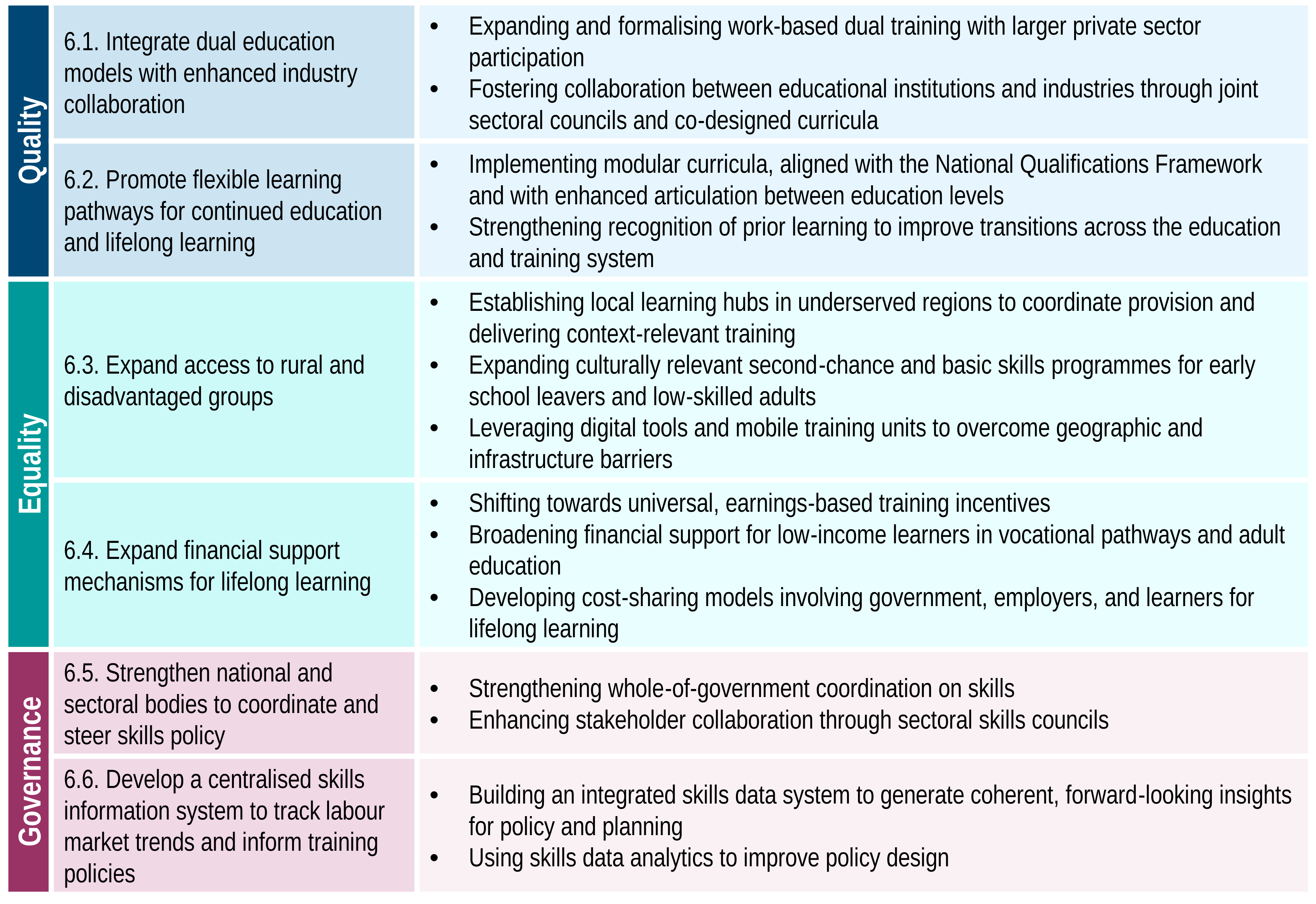
References
[27] Aguilera-Hermida, A. et al. (2021), “Comparison of students’ use and acceptance of emergency online learning due to COVID-19 in the USA, Mexico, Peru, and Turkey”, Education and Information Technologies, Vol. 26/6, pp. 6823-6845, https://doi.org/10.1007/s10639-021-10473-8.
[45] Almeida, R., N. Amaral and F. De Felicio (2015), Assessing advances and challenges in technical education in Brazil (English), World Bank, http://documents.worldbank.org/curated/en/514951467987824244.
[39] Angles, E. and H. Lindemann (2019), “Dual model of vocational training in Peru.”, TVET@Asia 13, pp. 1-16.
[51] Australian Government (n.d.), Skills for Education and Employment (SEE) Program, https://www.dewr.gov.au/skills-education-and-employment#:~:text=The%20Skills%20for%20Education%20and,metropolitan%2C%20regional%20and%20remote%20Australia (accessed on 28 July 2025).
[34] CAF (2024), ¿La certificación de competencias mejora los resultados laborales de trabajores vulnerables? [Does the certification of competences improve labour outcomes for vulnerable workers?], https://scioteca.caf.com/bitstream/handle/123456789/2373/Policy%20Brief_Evaluacion%20Impacto%20Certificacion%20Competencias%20%28DADMI%2c%20Peru%2c%202024%29.pdf?sequence=1&isAllowed=y.
[42] Cedefop; University College Copenhagen (2022), Vocational education and training in Europe - Denmark: system description, https://www.cedefop.europa.eu/en/tools/vet-in-europe/systems/denmark-u2 (accessed on 29 July 2025).
[6] COMEXPERU (2024), Las micro y pequeñas empresas en el Perú. Resultados en 2023 [The micro and small enterprises in Peru. 2023 results], https://www.comexperu.org.pe/upload/articles/reportes/reporte-mypes-2023.pdf.
[24] Congress of the Republic of Peru (2016), Ley de Institutos y Escuelas de Educación Superior y de la Carrera Pública de sus Docentes [Law on Institutes and Schools of Higher Education and the Public Career of their Teachers], https://cdn.www.gob.pe/uploads/document/file/105228/_30512_-_03-11-2016_11_50_02_-Ley_30512__Ley_de_Institutos_y_Escuelas_de_Educaci%C3%B3n_Superior.pdf?v=1586905427.
[14] Ferreyra, M. et al. (2021), The Fast Track to New Skills: Short-Cycle Higher Education Programs in Latin America and the Caribbean, World Bank, http://hdl.handle.net/10986/35598.
[54] ILO (2022), (Un)Employment and skills formation in Chile, ILO, Geneva, https://doi.org/10.54394/vein3474.
[40] ILO (n.d.), Incentives to promote Quality Apprenticeships.
[5] ILOSTAT (2025), Informal employment rate, https://ilostat.ilo.org/topics/informality/ (accessed on 28 August 2025).
[18] INEI (2025), Estadísticas de las Tecnologías de Información y Comunicación en los Hogares [Information and Communication Technology Statistics in Households], https://m.inei.gob.pe/media/MenuRecursivo/boletines/informe-tecnico_tecnologiasdelainformacion_ene_feb_mar2025.pdf.
[7] INEI (2025), Indicadores del Mercado Laboral a Nivel Departamental, 2022-2024 [Labour Market Indicators by Region, 2022-2024], https://cdn.www.gob.pe/uploads/document/file/8393806/6978987-peru-indicadores-del-mercado-laboral-a-nivel-departamental-2022-2024.pdf?v=1753129807.
[11] INEI (2024), Perú Compendio Estadístico 2024 [Peru Statistical Compendium 2024], https://cdn.www.gob.pe/uploads/document/file/7366940/6284790-tomo-1-peru-compendio-estadistico-2024.pdf.
[1] McCarthy, M. and P. Musset (2016), A Skills beyond School Review of Peru, OECD Reviews of Vocational Education and Training, OECD Publishing, Paris, https://doi.org/10.1787/9789264265400-en.
[26] Ministry of Education of Peru (2025), Informe anual 2024. Reporte sobre el avance en la implementación del MNCP vinculados a los ejes del plan de implementación del MNCP. [2024 Annual Report. Progress report on the implementation of the MNCP linked to the axes of the MNCP implementation plan], https://cdn.www.gob.pe/uploads/document/file/7908904/6658511-informe-anual-2024-mncp.pdf?v=1744318040.
[16] Ministry of Education of Peru (2024), Accession candidate country’s self-assessment of policies and practices in the area of education and skills: Guidelines and questionnaire Peru..
[30] Ministry of Education of Peru (2024), Resolución Viceministerial N°146-2024-MINEDU [Vice Ministerial Resolution 146-2024-MINEDU], https://cdn.www.gob.pe/uploads/document/file/7331150/6259743-rvm_n-_146-2024-minedu.pdf?v=1733412019.
[25] Ministry of Education of Peru (2022), Lineamientos académicos generales para los Institutos de Educación Superior (IES) [General academic guidelines for Institutes of Higher Education (IES)], https://cdn.www.gob.pe/uploads/document/file/3061359/RVM%20N%C2%B0%20049-2022-MINEDU.pdf.pdf.
[28] Ministry of Education of Peru (2021), Resolución Viceministerial N.º 052-2021-MINEDU [Vice-Ministerial Resolution N.º 052-2021-MINEDU], https://cdn.www.gob.pe/uploads/document/file/1709573/RVM%20N%C2%B0%20052-2021-MINEDU.pdf.pdf.
[23] Ministry of Education of Peru (2019), Decreto Supremo 004‑2019‑MINEDU [Supreme Decree 004‑2019‑MINEDU], https://www.calameo.com/read/0005073999a1d41b37161.
[32] Ministry of Labour and Employment Promotion of Peru (2025), Plan de Trabajo de la Estrategia Nacional para Promover la Certificación de Competencias Laborales a 2025 [Work Plan of the National Strategy to Promote the Certification of Labour Competences to 2025], https://cdn.www.gob.pe/uploads/document/file/7583738/6436402-plan-de-trabajo-dncll-31-01-v2-f-f%282%29.pdf?v=1738882575.
[31] Ministry of Labour and Employment Promotion of Peru (2025), Registro nacional de personas certificadas [National Register of Certified Individuals], https://www.gob.pe/institucion/mtpe/informes-publicaciones/4705063-registro-nacional-de-personas-certificadas (accessed on 10 September 2025).
[9] Ministry of Labour and Employment Promotion of Peru (2022), Informe Anual del Empleo 2022 [Anual Employment Report 2022], https://cdn.www.gob.pe/uploads/document/file/5245690/IAE%202022%20VF.pdf.
[10] Novella, R. and D. Rosas-Shady (2023), Estudio talento digital en el Perú 2023: la demanda insatisfecha de talento digital en el Perú, Banco Interamericano de Desarrollo, https://doi.org/10.18235/0005310.
[21] OECD (2025), Education at a Glance 2025: OECD Indicators, OECD Publishing, Paris, https://doi.org/10.1787/1c0d9c79-en.
[58] OECD (2025), The Role of Subnational Governments in Adult Skills Systems: Norway, OECD Publishing, https://doi.org/10.1787/d452e8b7-en.
[8] OECD (2024), Adults’ educational attainment distribution, by age group and gender, https://data-explorer.oecd.org/s/2r8 (accessed on 6 September 2025).
[19] OECD (2024), Breaking the Vicious Circles of Informal Employment and Low-Paying Work, OECD Publishing, Paris, https://doi.org/10.1787/f95c5a74-en.
[35] OECD (2023), Building Future-Ready Vocational Education and Training Systems, OECD Reviews of Vocational Education and Training, OECD Publishing, Paris, https://doi.org/10.1787/28551a79-en.
[57] OECD (2023), “Lessons learned from the implementation of the European Competency Framework for Public Procurement Professionals: Towards an international competency framework”, OECD Public Governance Policy Papers, No. 32, OECD Publishing, Paris, https://doi.org/10.1787/a0b8c9b7-en.
[4] OECD (2023), OECD Economic Surveys: Peru 2023, OECD Publishing, Paris, https://doi.org/10.1787/081e0906-en.
[46] OECD (2021), “Future-Ready Adult Learning in Latin America: Action Plan”, No. 2021/1, OECD Publishing, Paris, https://doi.org/10.1787/18d2f2f1-en.
[53] OECD (2021), Incentives for SMEs to Invest in Skills: Lessons from European Good Practices, Getting Skills Right, OECD Publishing, Paris, https://doi.org/10.1787/1eb16dc7-en.
[55] OECD (2020), “Individualising training access schemes: France – the Compte Personnel de Formation (Personal Training Account – CPF)”, OECD Social, Employment and Migration Working Papers, No. 245, OECD Publishing, Paris, https://doi.org/10.1787/301041f1-en.
[59] OECD (2020), Strengthening the Governance of Skills Systems: Lessons from Six OECD Countries, OECD Skills Studies, OECD Publishing, Paris, https://doi.org/10.1787/3a4bb6ea-en.
[43] OECD (2019), Investing in Youth: Peru, Investing in Youth, OECD Publishing, Paris, https://doi.org/10.1787/9789264305823-en.
[44] OECD (2019), OECD Skills Strategy 2019: Skills to Shape a Better Future, OECD Publishing, Paris, https://doi.org/10.1787/9789264313835-en.
[20] OECD (2019), Skills Matter: Additional Results from the Survey of Adult Skills,, OECD Publishing, Paris, https://doi.org/10.1787/1f029d8f-en.
[48] OECD (2018), Getting Skills Right: Chile, Getting Skills Right, OECD Publishing, Paris, https://doi.org/10.1787/9789264293151-en.
[2] OECD (2016), OECD Skills Strategy Diagnostic Report: Peru 2016, OECD Skills Studies, OECD Publishing, Paris, https://doi.org/10.1787/9789264300293-en.
[36] PRONABEC (2025), Beca Tec, https://www.pronabec.gob.pe/beca-tec/ (accessed on 26 July 2025).
[37] Rivero Panaqué, C. and A. Sánchez Huarcaya (2025), Situación de la educación de jóvenes y adultos en el Perú: una mirada integral [Situation of Youth and Adult Education in Peru: A Comprehensive Overview], https://cise.pucp.edu.pe/wp-content/uploads/2025/01/Informe-Situacion-EPJA-en-el-Peru.pdf.
[17] Rojas, V. et al. (2024), Interrupción escolar y vulnerabilidad educativa en el Perú: Datos, estudios y recomendaciones para la educación básica en el Perú [School interruption and educational vulnerability in Peru: Data, studies and recommendations for basic education in Peru], https://grade.org.pe/publicaciones/interrupcion-escolar-y-vulnerabilidad-educativa-en-el-peru-datos-estudios-y-recomendaciones-para-la-educacion-basica-en-el-peru/.
[38] Rosas Shady, D. (2017), The experience of two pilots of sector skills councils in Peru, https://iyfglobal.org/sites/default/files/IDB_webinar-presentation_6.pdf#:~:text=involvement%20of%20the%20productive%20sector,sector%20skills%20councils%20in%20Peru.
[29] SINEACE (2022), Análisis de la certificación de competencias: Una mirada funcional del sector Educación en el Perú [Analysis of Competency Certification: A Functional Overview of the Education Sector in Peru.], https://cdn.www.gob.pe/uploads/document/file/4031025/An%C3%A1lisis%20de%20la%20certificaci%C3%B3n%20de%20competencias%3A%20Una%20mirada%20funcional%20del%20Sector%20Educaci%C3%B3n%20en%20el%20Per%C3%BA.pdf.
[33] SINEACE (2020), Evaluación de Impacto de la Certificación de Competencias en Ocupaciones Productivas y Servicios [Impact Evaluation of Competency Certification in Productive Occupations and Services], https://guia.oitcinterfor.org/node/230.
[49] Singh, M. (2015), Global Perspectives on Recognising Non-formal and Informal Learning, Springer International Publishing, Cham, https://doi.org/10.1007/978-3-319-15278-3.
[41] Smeck, S., M. Oviedo and A. Fiszbein (2020), Dual Education in Latin America: Challenges and Opportunities, https://thedialogue.org/wp-content/uploads/2019/12/Dual-education-12.9.2019-ENG.pdf.
[22] UIS (2024), Proportion of 15- to 24-year-olds enrolled in vocational education, both sexes (%), https://databrowser.uis.unesco.org/.
[12] UIS (2023), Participation rate of youth and adults in formal and non-formal education and training in the previous 12 months, 25-54 years old, both sexes, https://databrowser.uis.unesco.org/ (accessed on 17 March 2025).
[15] UNESCO (2024), Revisión de la política de Educación y Formación Técnica y profesional (EFTP) del Perú [Review of Peru’s Technical and Vocational Education and Training (TVET) policy], https://www.unesco.org/es/articles/fortaleciendo-la-educacion-y-formacion-tecnica-y-profesional-eftp-en-peru-analisis-y-propuestas.
[47] UNESCO (2023), Global inventory of national and regional qualications frameworks 2022, volume I: thematic chapters, https://doi.org/10.54675/kuzz6891.
[52] UNESCO (2022), Brazil’s S-system: The Example of the National Industrial Apprenticeship Service (Serviço Nacional de Aprendizagem Industrial – SENAI), Global Review of Training Fund, Country Briefs, https://unevoc.unesco.org/countryprofiles/docs/UNESCO_Funding-of-Training_Brazil-SENAI.pdf.
[56] UNESCO (2022), Global review of training funds: spotlight on levy-schemes in 75 countries, UNESCO, https://doi.org/10.54675/mpmz1114.
[50] UNESCO (n.d.), Background information, https://lifelonglearning-toolkit.uil.unesco.org/en/node/124 (accessed on 28 July 2025).
[13] Vasques Quispe, L. (2024), La Educación Básica Alternativa en el Perú. Encuentros y desencuentros con la EPJA [Alternative Basic Education in Peru: Encounters and Discrepancies with Adult and Youth Education (EPJA).], https://decisio.crefal.org/wp-content/uploads/2024/11/decisio-60-art07.pdf.
[3] World Bank (2024), GDP growth (annual %), https://data.worldbank.org/indicator/NY.GDP.MKTP.KD.ZG?end=2024&start=2000 (accessed on 28 August 2025).