Peru introduced a series of ambitious school education reforms in the 2010s to improve quality and equity, including a new competency-based curriculum, higher standards for teacher preparation, and minimum requirements for school operation, supported by rising public investment. These reforms have contributed to improvements in student outcomes and higher completion rates. However, learning levels are still low for many students, socio-economic segregation across schools is high, and funding and support vary widely across regions. This chapter draws on OECD evidence and international experience to help Peru regain the direction set by earlier reforms. It focuses on supporting teachers and school leaders to implement the curriculum through stronger quality assurance and school-level support, managing school choice more transparently to reduce segregation, and aligning funding and improvement measures more closely with local needs, particularly in disadvantaged contexts.
Education and Skills in Peru

Abstract
In the 2010s, Peru introduced a series of ambitious reforms to improve the quality and equity of its school system. It rolled out a new curriculum designed to make learning more relevant and engaging, passed legislation to raise the quality of initial teacher education, and defined minimum standards for schools to operate. It has also trialled measures to reduce dropout and curb the inequities of a system marked by extensive school choice. These efforts have been supported by significant increases in public education spending, which has more than doubled over the past two decades, both in total and per student terms.
However, reform momentum has stalled in recent years, as frequent changes in leadership and shifting political priorities have made it harder to address the challenges still present in Peru’s school sector. Despite progress in improving student outcomes, two-thirds of 15-year-olds do not master basic mathematics, and nearly half fall short in reading and science according to the OECD’s Programme for International Student Assessment (PISA). Peru also records a higher level of socio-economic segregation in schooling than OECD countries, and funding and support vary markedly across regions and schools.
This chapter draws on OECD research and international experience to explore how Peru can regain the direction set by previous reforms to improve quality and equity in school education (see Figure 4.1). It examines policies to strengthen teachers’ initial preparation, on-site support, and quality assurance processes to help schools put the new curriculum into practice and foster better learning. It also considers ways to manage school choice more transparently to reduce segregation and expand programme options – particularly in upper secondary education – to better reflect students’ interests and aspirations. Finally, it looks at how school funding and improvement support can be more closely aligned with local needs, especially in disadvantaged contexts.
Section I: Provides an overall assessment of Peru’s school sector in relation to the principles of quality, equity and good governance.
Section II: Provides recommendations on how Peru can learn from OECD policies and practices to further improve school performance across these three domains.

Source: Authors’s own work

Performance overview: Peru has improved student learning outcomes and reduced dropout, but further efforts are needed to support low-performers, ease transitions, and better align funding with needs
While Peru has recorded impressive improvements in learning outcomes, a large share of students do not master basic competencies
International assessments show that Peru has made sustained progress in improving student outcomes. Between 2009 and 2022, Peru recorded significant gains in PISA, with average outcomes for fifteen-year-old students moving closer to the OECD-LAC average (see Figure 4.4). These gains are largely driven by an increase in the proportion of students reaching the baseline level of proficiency (Level 2) in reading, science and mathematics. Progress at secondary level has been underpinned by improvements in earlier grades. The regional Latin American assessment ERCE indicates that Peru recorded a steep rise in average scores in reading, science and mathematics between 2013 and 2019 at both grades 3 and 6 (UNESCO, 2023[1]).
Despite these improvements, a sizeable share of students do not master the basic competencies needed to participate fully in society (see Figure 4.4). With weak foundations, many students face difficulties keeping up with the curriculum. National assessments in Grades 2, 4, 6 and 8, which evaluate students’ learning relative to curriculum standards, show that only 37% of grade 2 students met expected competencies in reading and 11% in mathematics, with less progress over time than seen in international tests. These gaps persist in secondary education and contribute to disengagement and dropout, particularly among low-income, rural, and indigenous students (see Chapter 2) (Ministry of Education of Peru, 2024[2]).
Participation in school education has expanded significantly, yet transitions between cycles remain a challenge
Enrolment in primary and lower secondary education in Peru has increased steadily since 2017, with net enrolment, which shows the percentage of children enrolled at the right age for each grade, nearing universality (UIS, 2024[3]). Participation rates in upper secondary education (USE) have increased the most, reaching 91% in 2023, a 14-percentage point increase since 2017. Peru’s rate of USE participation is now close to the OECD-LAC and OECD averages (93% and 94% respectively in 2022). Despite this expansion in enrolment, transitions between school education cycles remain a challenge and contribute to relatively high dropout rates (Ministry of Education of Peru, 2018[4]). Dropout is particularly pronounced at the transition point from primary to lower secondary education (Grade 6) and in rural areas. In 2020–2021, the dropout rate for rural students at the end of primary school was four times higher than that of their urban peers (see Figure 4.4). Indigenous students are at particularly high risk of dropout, with completion rates consistently below those of Spanish-speaking students at all levels of education, although the gap has narrowed considerably in recent years (Ministry of Education of Peru, 2024[5]).
The private sector has played a significant role in expanding schooling in Peru, as a response to both pro-market public policy, parental preferences, and urbanisation
Private provision of school education has grown by 30% over the past two decades (Bruns, Schneider and Saavedra, 2023[6]). In 2023, nearly one in three students were enrolled in private institutions (29% in primary, 30% in lower secondary, and 28% in upper secondary education) (OECD, 2023[7]). While relatively high private enrolment is common in other OECD-LAC countries, what sets Peru apart is that most private school students attend independent private institutions, which do not receive core government funding and rely mainly on tuition and private contributions, rather than government-dependent private schools, which are private schools that receive significant government funding to operate. The growth in independent private schooling reflects a combination of factors, including the expansion of middle-class families willing to invest in their children’s education, unmet demand for school places in the public sector, particularly in urban areas, and pro-market policies, such as tax incentives to encourage the operation of for-profit institutions (see Chapter 2). In 2023, 26% of primary and lower secondary students in Peru were enrolled in independent private schools, a share higher than in any OECD country (OECD, 2023[7]).
In 2018, the Ministry of Education (MINEDU) found that more than half of students in private urban primary schools (51%) and about a third of students in private urban secondary schools (35%) were enrolled in low-cost schools, charging fees equal to or below 15% of the average labour income in each region. In Lima, for example, this corresponds to fees equal to or below PEN 200 per month (approximately USD PPP 1171). Students attending these low-cost private schools tend to show lower average performance in national assessments compared to those in mid- and high-cost private schools, as well as public schools in urban areas (see below) (Ministry of Education of Peru, 2018[4]).
Despite progress in tackling inequities, learning outcomes remain strongly tied to students’ background and school segregation is high
Data from OECD surveys suggest that Peru has reduced the impact background has on student outcomes. According to PISA, the gap in mathematics performance between the top and bottom 25% of students by socio-economic status narrowed in Peru between 2012 and 2022, while it remained stable on average across OECD countries (OECD, 2023[8]). Similarly, according to the OECD Survey of Social and Emotional Skills (SSES), Peruvian students from low socio-economic backgrounds performed equally as well as their more advantaged peers in contrast to other participating economies, where advantaged students typically reported higher levels of social and emotional skills (OECD, 2024[9]).
Despite these positive indicators, several features of Peru’s school system limit, rather than promote, equality of opportunity. Notably, the level of socio-economic segregation across schools is higher in Peru than in any OECD country (see Figure 4.3). This means that disadvantaged students rarely attend the same schools as their advantaged peers, reducing the “peer effect” that such interactions can have in terms of raising the academic aspirations and achievement of children from lower socio-economic backgrounds (Cueto, León and Miranda, 2016[10]).
In Peru, such segregation exists not only between public and private schools, with the majority of advantaged students attending private institutions, but also within the private sector itself, where a large proportion of low-cost private schools primarily enrol disadvantaged students. Such segregation is closely reflected in student learning outcomes. While PISA results show that private schools outperform public schools by over 60 points in all subjects, most of this gap can be explained by students’ socio-economic background (Ministry of Education of Peru, 2024[11]; OECD, 2023[12]). Within the private sector itself, national census evaluations show that students in low-cost private schools, perform similarly to or even worse than those in public schools in comparable socio-economic contexts (Balarin, 2016[13]; Ministry of Education of Peru, 2018[4]).
Isolation index, isolation of disadvantaged students from advantaged students

Note: Isolation index refers to the extent to which disadvantaged students are isolated from advantaged students, based on the schools they attend. It ranges from 0 to 1 where 0 corresponds to full exposure (no segregation) and 1 to full isolation/segregation. Countries are ranked in ascending order of isolation index.
Source: OECD (2024[14]), PISA database 2022, https://www.oecd.org/pisa/data/.
Government expenditure on school education has increased significantly over the past two decades, but the allocation of funds does not reflect differences in local need
Government expenditure on primary and secondary education has grown significantly over the past two decades, contributing to significant increases in per student spending (see Figure 4.4). In 2023, annual public spending per student reached USD PPP 2 592 in secondary education and USD PPP 2 030 in primary education – representing a nominal increase since 2004, though at a slower pace than the OECD average (UIS, 2023[15]). Per student spending remains low by regional comparison and varies greatly across Peru’s regions (see Chapter 2 and Figure 4.4). For example, in 2022, public expenditure per primary school student in Moquegua was almost 80% higher than the national average and 166% than in Ucayali, even though Ucayali has higher poverty rates (INEI, 2024[16]). One factor contributing to these disparities is the way that public funding is allocated to schools in Peru, which does not adequately account for the additional costs of educating students from disadvantaged backgrounds or in sparsely populated rural areas. A 2018 World Bank study found no clear relationship between the average per student spending by each Unidad de Gestión Educativa Local (UGEL, or local education authority) and the geographic dispersion of the schools they managed (World Bank, 2018[17]).

Source: OECD (2024[14]), PISA database 2022, https://www.oecd.org/pisa/data/; INEI (2022[18]), Pandemia y deserción educativa en la Educación Básica Regular: factores asociados y posibles efectos, 2017-2021 [Pandemic and educational dropout in Regular Basic Education: associated factors and possible effects, 2017-2021], https://www.inei.gob.pe/media/MenuRecursivo/investigaciones/desercion-escolar.pdf; UIS (2025[19]), Initial government funding per student, constant PPP$ (millions), https://databrowser.uis.unesco.org/ (accessed 29 September 2025); INEI (2024[16]), Perú Compendio Estadístico 2024 [Peru Statistical Compendium 2024], https://cdn.www.gob.pe/uploads/document/file/73669 40/6284790-tomo-1-peru-compendio-estadistico-2024.pdf.
Quality assessment: The government aims to transform learning to make it more relevant and engaging, with the new school curriculum a central driver of change
The 2016 curriculum has redefined expectations for teaching and learning in Peru
Peru’s new competency-based curriculum is at the core of the government’s efforts to enhance the quality and relevance of schooling. The curriculum encourages active pedagogies and emphasises formative assessment. It allows teachers to choose content based on competency goals and is designed to be adapted by regional and local authorities to better reflect local contexts. This is in line with reforms seen across an increasing number of OECD countries, where there is a growing focus on developing cross-curricular competencies, connecting learning to real-world contexts, and granting teachers more flexibility in curriculum implementation (OECD, 2020[20]; OECD, 2020[21]; OECD, 2024[22]).
Peru has laid many of the foundations for the successful implementation of its curricular reform. It has established a clear vision of the knowledge, skills, and behaviours expected under the new curriculum. This includes learning standards that define the level of competencies that students should achieve for each schooling cycle, alongside performance standards that describe, in measurable terms, different levels of mastery by grade and subject/domain. These standards are important for helping teachers set clear expectations for students, and for designing effective assessment tasks. To monitor progress, MINEDU’s Office of Strategic Monitoring and Evaluation (Oficina de Segumiento y Evaluacón Estratégica, OSEE) and Office of Quality Measurement of Learning (Oficina de Medición de la Calidad de los Aprendizajes, UMC) regularly collects data from school leaders, teachers and students. This includes classroom observations (Monitoreo de Prácticas Escolares) to assess teaching practices, and student sample-based and census assessments to measure learning against curriculum goals. Professional teacher standards (Marco del buen desempeño docente) also encourage teachers to adopt student-centred teaching methods aligned with the curriculum. These standards are intended to serve as a guide both for teachers in the classroom and for policies aimed at improving teaching quality, such as in-service training and initial teacher education (ITE).
However, as in many countries that have embarked on similar reforms, there remains a gap between curriculum intent and teaching in Peru’s classrooms. While data from PISA suggest positive changes in teaching practices between 2012 and 2022 – with more students stating that teachers help them learn, provide additional support when needed, and continue teaching until concepts are understood – the effectiveness of these practices remains in question (OECD, 2023[12]). Nationally representative classroom observations reveal that fewer than 3% of teachers demonstrate strong skills in critical areas such as designing engaging, thought-provoking activities or providing formative feedback during lessons and on students’ written work (see Figure 4.5). Other research echoes these findings, showing that teachers face challenges in connecting lessons to students’ real-world experiences and fostering an environment where students can explore complex ideas and question the world around them (Balarin and Rodríguez, 2024[23]).

Note: In Panel A, answers to the question “In which topics would you like to receive training to improve your classroom performance? (multiple answers)”. In Panel B, the effectiveness of these practices is categorised into four levels: Nivel 1: En inicio (beginner); Nivel 2: En proceso (In progress); Nivel 3: Efectivo (Effective) and Nivel 4: Altamente efectivo (highly effective).
Source: Ministry of Education of Peru (2022[24]), ENDO: Encuesta Nacional de Docentes de Instituciones Educativas Públicas de Educación Básica Regular [ENDO: National Survey of Teachers in public educational institutions of regular basic education], http://www.minedu.gob.pe/politicas/docencia/encuesta-nacional-a-docentes-endo.php; Ministry of Education of Peru (2024[25]), Reporte de resultados Monitoreo de Prácticas Escolares 2023 [Results Report Monitoring of School Practices 2023], https://repositorio.minedu.gob.pe/handle/20.500.12799/10541.
Teachers have access to online curricular resources, but appear to have limited school-based support on how to use them effectively in the classroom
Peru has expanded access to up-to-date pedagogical and curricular content as part of efforts to improve teaching practice. Through its PerúEduca and Sistema Integrado de Formación Docente en Servicio (SIFODS) platforms, MINEDU provides online courses, and disseminates a range of open education resources, including annual lesson planning guides and sample lesson plans. Many of these materials are available in Spanish and other languages like Quechua and Aymara. While these resources are valuable for teachers, stakeholders highlighted ways in which they could be made more accessible and relevant. These include the need for clearer guidance on how to integrate competencies with core subject matter, and on how key reference documents – such as the curriculum framework, study plans, and student assessment criteria – fit together.
Interviews also highlighted teachers’ need for more hands-on support to select and use these resources in the classroom. In-service training remains fragmented, with multiple actors – including different units within MINEDU, regional education authorities (DREs), UGELs, and non-governmental organisations – offering largely isolated initiatives. Beyond formal training, job-embedded support remains limited. National initiatives like Soporte Pedagógico, which combined teacher coaching, professional learning communities, school resources, and remedial support for students, have shown promise but have not been sustained over time (Chinen and Bonilla, 2017[26]). More recent efforts have focused on expanding its reach through virtual or hybrid initiatives (DIFODS, 2025[27]).
Peru has also sought to strengthen the role of school leaders in developing teachers’ pedagogical skills. As in many OECD countries, Peruvian principals and their deputies are expected to guide curriculum implementation and provide formative feedback to teachers. To prepare them for this role, Peru now requires new principals and deputy principals to complete an online leadership induction programme within their first two years in post. Induction includes training in important practices, such as how to coach teachers, provide pedagogical feedback, and guide school self-evaluation and planning (Ministry of Education of Peru, 2021[28]). However, participation in induction remains low, particularly among encargados (teachers temporarily assigned to leadership roles) who make up half of all principals posts (50%) and are mostly in rural schools (90%) (Ministry of Education of Peru, 2024[5]). In-service leadership training opportunities are also reportedly limited. At the same time, heavy administrative and teaching workloads leave many principals with little time to focus on instructional leadership. Although initiatives such as Escritorio Limpio (Tidy Desk) aim to reduce administrative burdens, many principals still juggle teaching responsibilities alongside extensive management tasks (Ministry of Education of Peru, 2021[29]).
Efforts to raise the quality of initial teacher education are promising but need to go further, while standards for entry into the profession have not been consistently upheld
Initial teacher education (ITE) remains the main entry point for a career in schools in Peru, as is common across the OECD. Ensuring quality preparation programmes is therefore essential to realise new national expectations for teaching and learning. In recent years, Peru has taken important steps to attract, prepare and recruit good teachers. Nearly all school teachers now hold a tertiary education degree (97% of primary education teachers and 95% of secondary education teachers), and nominal teaching salaries have more than doubled since 2015, reaching nearly three times the minimum wage in 2024 (Ciriaco Ruiz, 2025[30]; Ministry of Education of Peru, 2024[5]). The 2016 Ley de Institutos y Escuelas de Educación Superior introduced further reforms to improve the quality of initial teacher education. These include stricter licensing requirements for pedagogical institutes, which accounted for 57% of graduates in 2023, and a revised ITE curriculum that emphasises competency-based learning and structured teaching practice throughout the course of study (Ministry of Education of Peru, 2024[5])
However, many ITE graduates still come from low-quality pedagogical institutes (see Chapter 5). By 2025, only 48 of 191 teacher training institutes had secured a licence. This slow progress can in part be explained by MINEDU’s limited operational capacity, particularly a shortage of specialised staff to manage licensing applications (see Chapter 5). Progress in programme accreditation has also been slow. Across the country, just 14 out of the 755 licensed bachelor tertiary programmes in education, health and law, all fields where accreditation is mandatory, have completed the process (SINEACE, MINEDU, 2023[31]). This means many institutions are operating without a licence or external oversight, making it difficult for the government to ensure alignment with national quality standards and learning goals. This is particularly problematic in a context where tertiary institutions enjoy a high degree of autonomy (see Chapter 5). As a result, while the new ITE curriculum introduced positive changes, many programmes still rely on traditional, lecture-based teaching, which does not equip future teachers for the student-centred, competency-based approaches they are expected to use in the classroom. Institutions also have limited guidance and support to implement the new curriculum. For example, study programmes are supposed to include sequenced teaching practice, but ITE providers must independently secure practicum placements with nearby schools, which for many is a challenge. Stakeholders reported that many student teachers cannot access quality practical experience.
Meanwhile, despite the 2012 Teacher Reform Law introducing a national licensing exam for new teachers in the public sector (the Prueba Única Nacional, PUN), and making success on this exam a condition for permanent positions (nombrados), a large share of teachers enter and remain in the system without meeting this requirement. During the 2015-2021 period, nearly 40% of public-school teachers have either not taken or failed the PUN, in many cases reflecting gaps in the quality of their initial preparation (Bruns, Schneider and Saavedra, 2023[6]). Many of them are hired in temporary positions (contratados), with no obligation to undertake further training or retake the exam. While this approach has helped meet the needs of a growing school system, it has also allowed underprepared teachers to remain in the classroom without a clear path to improvement. This situation was further compounded in 2024, when a government decree authorised the reinstatement of 14 000 teachers who had previously been dismissed for not meeting the performance-based requirements established by the 2012 reform (Ministry of Education of Peru, 2024[32]). By granting access to public permanent positions without requiring passing the national licensing exam, the measure weakens the principle of meritocracy and risks undermining the credibility of efforts to professionalise the teaching workforce in Peru.
In the private sector, teachers are not required to pass the PUN, but they are expected to have completed an ITE degree. However, according to the 2024 School Census, 25% of private school teachers did not have a pedagogical degree (Ministry of Education of Peru, 2024[5]). This reflects a dual challenge. First, the qualification requirement is not consistently enforced, highlighting weak oversight by local education authorities (see below). Second, even when the requirement is met, concerns remain about the quality of ITE programmes. Without stronger enforcement and a clear commitment to raising standards in initial teacher education, efforts to improve teaching quality will remain limited.
Peru could make greater use of standardised assessments to support and certify learning
Looking at assessment policy in Peru from a comparative perspective reveals areas where current policy could be strengthened. For example, data from national assessments is released after students have already moved to the next academic year, with little guidance on how it can be used to moderate teacher judgements or shape instructional responses. While proficiency levels exist, they are not matched with sample tasks or marked exemplars to help teachers and students understand whether, why, and to what extent a competency has been met. Many countries also use national assessment data to develop structured interventions for improving basic literacy and numeracy instruction, which is not yet the case in Peru.
Notable too from a comparative perspective is the absence of any external examinations to recognise and certify student achievement. While external examinations need to be managed carefully so they do not narrow the curriculum or create excessive pressure on students, they provide a fair and transparent basis for certifying successful completion of school and determining student access to tertiary education (Perico E Santos, 2023[33]). External exams can also be valuable in focusing classroom attention on national learning standards, especially in contexts like Peru where teachers’ assessment literacy is weak. For such reasons, more than three-quarters of OECD countries have national examinations in the final years of upper secondary education (see Figure 4.6).
In general education

Note: Number of examinations reported refers to the maximum number that one student is expected to take for the specified level of
education. * Year of reference 2022. The shading in the chart represents the frequency of assessments: darker shades of blue indicate three or more examinations per year, while the lightest shades indicate only one examination per year. No shading refers to no examinations and grey indicates data is missing.
Source: OECD (2023[34]), Education at a Glance 2023: OECD Indicators, OECD Publishing, Paris, https://doi.org/10.1787/e13bef63-en
Peru collects rich data to monitor school quality and has established basic school quality standards
Peru has significantly improved its capacity to generate data on school quality. MINEDU collects data on student outcomes through standardised assessments and its Education Management Information System (SIAGIE), as well as on teacher and principal practices in public schools through nationally representative surveys. Innovative initiatives such as Semáforo Escuela (School Traffic Light), have also enhanced real-time school-level performance monitoring. From 2015 to 2019, centrally trained surveyors conducted unannounced school visits to collect data on key school-level indicators, including teacher and student attendance, infrastructure, and available resources. During the pandemic, the programme was adapted to remote surveys of teachers and families, and MINEDU is now developing a new decentralised tool building on these experiences. While these efforts have improved the availability of data on schools, some important information – such as the national classroom observations (Monitoreo de Prácticas Escolares) – is not collected for private schools.
In 2021, MINEDU also introduced basic quality standards (Condiciones Básicas) to define minimum requirements for school operations, including management and instructional planning processes, educational materials, school infrastructure, and essential services like water and sanitation (Ministry of Education of Peru, 2021[35]). In the public sector, these standards are used by UGELs to guide the initial authorisation of new schools, which matters in a context where many schools have started operating without providing adequate infrastructure and basic services (see Chapter 2). The standards have also played a critical role in strengthening public oversight over the private sector: since 2022, all new and existing private schools have been required to obtain authorisation from UGELs based on these standards (Ministry of Education of Peru, 2022[36]; Ministry of Education of Peru, 2024[37]). Existing private schools must submit a self-assessment and supporting documentation to UGELs on their compliance with minimum standards, and can receive guidance and recommendations from UGELs on necessary improvements. All private schools have until March 2027 to meet the standards, after which those that fail to comply may be sanctioned or ultimately closed. This is a positive development, given the sector had been expanding without control.
Yet, fragmented leadership and weak accountability and capacity at local level mean schools receive limited oversight
Several factors limit the use of these standards for quality assurance. One are the standards themselves. While these are well designed to guide UGELs on whether to authorise schools to operate, they do not provide a good basis for UGELs or schools to evaluate and improve the quality of teaching and learning. Across most OECD countries, school quality frameworks look beyond material conditions to focus attention on key outcomes – such as student learning, progression, and equity – while also highlighting the practices and processes that enable these outcomes, using descriptors that illustrate effective teaching, instructional leadership, school governance, and supportive learning environments. Such orientation is currently lacking in Peru.
A second factor relates to local capacity, which has contributed to slow progress in carrying out initial authorisations, especially in the private sector. The deadline for private schools to meet basic quality standards, initially set for 2025, has now been extended to 2027. As of 2024, less than half of all private schools had submitted their self-assessment, the first step in the process, and approximately one quarter have received support to meet the minimum standards (MINEDU SIMON, n.d.[38]; Ministry of Education of Peru, 2024[5]). While UGELs are responsible for guiding this process, past evidence suggests they lack the staffing, capacity, and in some instances the professional independence to do so effectively. A 2019 survey by Peru’s Ombudsman’s Office found that UGELs in three out of eight surveyed DREs had not visited any private schools that year, while UGELs in the remaining five did so to varying degrees (Office of the Ombudsman of Peru, 2019[39]). This raises concerns about whether private schools are receiving the oversight and guidance they need to improve, especially given persistent quality challenges in the sector.
Fragmented and relatively weak national leadership for quality assurance contributes to these challenges. There is no single national body in Peru with the authority to ensure schools meet minimum standards and oversee the development of policies and tools that can support their continuous improvement. Within MINEDU, a small team is responsible for guiding the authorisation activities of DREs and UGELs for public and private schools. Meanwhile, separate teams within SINEACE – MINEDU’s national accreditation body – focus on voluntary accreditation and promoting school self-evaluation, although both processes remain marginal across the school sector. In the absence of a strong and independent national lead, it is difficult to consolidate expertise and resources, evolve the school quality framework into a tool that goes beyond compliance and supports continuous improvement, and develop guidance and capacity-building activities to help DREs, UGELs, and schools appropriate and work towards meeting quality goals. It is also difficult to provide direction and accountability for DREs/UGELs, to make sure authorisation of private schools happens and does so in a consistent way. In many OECD countries, the creation of a professional quality assurance body has been considered an important step to improve education governance by developing regulatory independence and professional expertise.
UGELs are responsible for supporting schools, but limited capacity and the absence of a clear strategy for school improvement hinder their ability to deliver support
Once schools are authorised to operate, UGELs are also responsible for supporting quality improvement. They do so primarily through a wide range of nationally designed and funded pedagogical interventions, professional development programmes, and school networking initiatives for rural schools (Redes Educativas Rurales, RER). In 2024, 1 866 rural schools were organised into 186 networks (Ministry of Education of Peru, 2024[5]). These networks, which reached around 4% of all rural schools in 2024, enable schools to share resources and management under a Coordinator, appointed by MINEDU, and organise professional learning communities among teachers (Alcaíno et al., 2022[40]; Ministry of Education of Peru, 2015[41]; Ministry of Education of Peru, 2024[5]). Additionally, in 2025, 474 working groups (Equipos de Trabajo Colegiado) have been established in 21 regions to strengthen the management of single-teachers and multigrade rural schools (Ministry of Education of Peru, 2025[42]; Ministry of Education of Peru, 2024[5]).
Yet, despite the breadth of these efforts, UGELs currently lack a coherent framework for identifying which schools to prioritise for follow-up support beyond programme-specific interventions, and there is no overarching school improvement strategy to guide their work. While Peru collects rich school performance data, it is not used systematically to identify schools at risk that would benefit most from targeted support. At the same time, national school improvement programmes remain fragmented – with 25 different pedagogical interventions in 2024 alone –varying significantly in reach and scope and following different targeting criteria. Interventions range from improving access to remote locations through fluvial transportation services, and delivering workshops on social and emotional skills, to implementing broader initiatives like the Jornada Escolar Completa (Whole School Day Programme), which aims to improve quality and retention in secondary education. The absence of a clear targeting framework and support model is especially salient given UGEL’s limited resources. In 2024, each UGEL had on average, one pedagogical expert responsible for 34 public schools, 161 teachers, and over 2 500 students (Ministry of Education of Peru, 2024[5]). In some regions, the ratios were considerably higher.
Equity assessment: Managing school and programme choice will be central to improving equity in Peru’s school sector
School choice is an important feature of Peru’s education system
Peru offers a high level of school choice, not only between public and private schools but also within the private sector. School choice has become an increasingly common feature in OECD education systems, driven by various factors – from parental demand for education that reflects their preferences to the idea that choice can improve quality and efficiency through market mechanisms (OECD, 2019[43]; OECD, 2024[44]). In Peru, it is also, in some respects, a necessity, as private sector “choice” has emerged by default given the public sector’s difficulty in meeting demand. However, international experience shows that choice must be managed carefully to avoid negative impacts, particularly on equity. School choice can contribute to socio-economic segregation, as affluent families often have greater access to information about school quality and application processes, as well as the financial means to afford high fees, transportation or relocate closer to desirable schools. As certain schools become known for enrolling higher-income students, they may attract more families of similar socio-economic status, reinforcing segregation. Conversely, less affluent families often face constraints in time, information, and resources needed to choose and access the school that best meets their child’s needs. As shown above, these negative impacts are evident in Peru, and the policy response still relatively limited, especially with respect to regulating fees and admissions policies and providing accessible information for families.
Peru has improved information to help families choose schools
Experience in OECD countries shows that student selection is influenced not only by explicit admission criteria but also by parents' self-selection and more subtle barriers, like the information available and the time it takes to apply (OECD, 2017[45]). In 2015, MINEDU launched Identicole, an open online portal designed to provide families with comprehensive information on both public and private schools across the country. The platform allows parents to compare schools based on various criteria, such as location, education level, student enrolment numbers, infrastructure, teacher qualifications, connectivity, and fees for private institutions. It also includes results from national student assessments. Such information is valuable to help parents make more informed choices of where to enroll their children. It can also support smoother transitions, especially in Peru, where most students change schools between primary and secondary education, but often have limited information on available options (Guadalupe and Rivera, 2020[46]; GRADE, 2022[47]). However, families still face barriers in accessing timely and relevant school quality information. The Identicole platform includes results from national student assessments, but these are outdated, with the latest assessment results dating back to 2018. In addition, the platform provides raw test scores, which are influenced by students’ socio-economic background, prior knowledge, and access to resources, and therefore do not offer a reliable measure of school effectiveness.
Peru’s recent pilot of a centralised, transparent admission system show promise in reducing hidden barriers and promoting fairer access across public schools
In Peru’s public schools, admissions are decentralised. Each school implements its own admission procedure, subject to national rules that set parameters on criteria and quotas. Regulations require public schools to reserve places for students with special needs and prioritise those with siblings already enrolled. However, three main challenges persist. First, selection criteria do not explicitly promote socio-economic equity. Oversubscribed public schools are not required to give preference or reserve places for low-income students, limiting access to high-demand institutions for disadvantaged families. Second, the regulation surrounding how schools set and publish admission criteria is weak. While public schools cannot select students based on academic performance or charge fees, they are allowed to apply additional admission criteria. The law does not clearly define what would constitute discriminatory practice, leaving broad room for interpretation (GRADE, 2022[47]). Moreover, admissions criteria are not systematically published. Regulations require schools to disclose information on vacancies and admission criteria, but compliance is weak: a 2019 audit in 2 560 schools found that only 59% of schools published vacancy details and 44% provided enrolment schedules (GRADE, 2022[47]). In practice, schools operate independently in managing their admissions, with little coordination across institutions. This allows high-demand schools to create barriers for families, who often queue for long hours and, in some cases, pay discretionary add-on fees to secure a place (Office of the Ombudsman of Peru, 2024[48]; Llanos Fajardo, 2024[49]).
To address these challenges, MINEDU started developing Matrícula Digital in 2019, a centralised digital enrolment system which was piloted in the city of Tacna in 2021 with support from the Inter-American Development Bank. In 2024, the system expanded to six additional locations, with plans for further expansion in the coming years (Ministry of Education of Peru, 2025[50]). The system provides an online platform where families can apply to multiple public schools, ranking them in order of preference. A Deferred Acceptance algorithm, a widely used method internationally, processes allocations based on transparent rules.
Without targeted policies to address financial barriers, Peru’s most prestigious independent private schools remain out of reach for many low-income families
Private independent schools have greater flexibility than public schools in selecting students. Like public schools, they must reserve places for students with special needs and cannot discriminate based on factors such as ethnicity or social background. However, they can select students based on academic performance and assess families’ ability to pay fees. MINEDU has taken measures to improve transparency in the private education sector and protect families from unfair practices. In 2020, new legislation required private schools to publicly disclose their tuition fees, reportedly prompting some institutions to reduce their charges (Presidency of the Republic of Peru, 2020[51]). In addition, there are regulations that prohibit the expulsion of students due to unpaid fees before the end of the school year. However, there are no policies to address financial barriers to private education. Private schools set their own tuition fees, and there are no targeted social support measures to help disadvantaged students enroll in or remain in these institutions. As a result, elite private schools, with high tuition fees, are out of reach for low-income families, limiting their access to the socio-economic advantages these schools typically offer, such as stronger preparation for tertiary education, access to top universities, and enhanced career opportunities. Mid-range private schools, which provide better educational opportunities than some public or low-cost private institutions, are also inaccessible for many families without financial assistance. This issue is particularly significant in a context where one in four students is enrolled in a private independent school, whether by choice or as a result of the limited availability or quality of public school options.
A unique secondary curriculum aims to provide students with a common learning foundation but limits relevance and choice
Peru has taken important steps to reduce some of the financial and physical barriers to secondary education, helping more students stay in school and complete compulsory education. On the demand side, programmes like the conditional cash transfer scheme Juntos have supported participation among students from poor households. Peru has also developed diverse models of provision to better meet the needs of vulnerable learners. These include extended learning time through the Jornada Escolar Completa (Whole School Day programme), as well as flexible arrangements for rural secondary students, such as boarding schools and models that alternate periods of classroom instruction with individual learning in students’ homes (Barnechea, 2018[52]) (see Chapter 2). Although limited in scale, these initiatives have been effective in improving student learning outcomes and secondary completion rates (Ministry of Development and Social Inclusion of Peru, 2018[53]; Ministry of Education of Peru, 2021[54]).
While adapting provision has helped tailor education delivery to Peru’s varied local contexts, comparatively little attention has been paid to diversifying what students learn. Peru offers a single track for most secondary students, which follows a common, academic curriculum. There are very limited options for secondary students who might prefer or excel in more applied learning. Only 655 schools nationwide offer Secundaria con Formación Técnica (SFT), integrating technical training with general studies and allowing students to transition to tertiary education. Together, they enroll just 11% of Peru’s 2.91 million secondary students (Ministry of Education of Peru, 2024[5]). Students can also access CETPROS, which are more widely available (over 1 900 centers nationwide) and offer technical education at the ISCED 3 or 4 level. However, these centres are generally of low quality, provide limited access to work-based learning opportunities, and do not offer students the learning foundations or certifications that would permit entry to tertiary education (see Chapter 6). To expand opportunities for applied training, MINEDU launched the Mi Oportunidad Técnica (My Technical Opportunity) initiative in 2022. This programme allows students in general USE tracks to develop applied skills by complementing their regular studies with specialised training at a CETPRO outside school hours. While promising, the initiative remains at a pilot scale and does not seek to address the structural issues with CETPRO’s quality mentioned above (Ministry of Education of Peru, 2024[5]).
This predominantly comprehensive approach, based on a single academic track for most secondary students, carries some advantages. It avoids the risks associated with differentiated systems, where students – often the most disadvantaged – are tracked into programmes often regarded as second class and of lower quality. However, such a comprehensive approach also has limitations, not just for students’ education but also their prospects beyond school, especially in a context where a significant percentage of disadvantaged secondary students move into the formal or informal labour market rather than tertiary education. Nationally representative household data shows that one key factor associated with school dropout in Peru is students’ perception that education does not align with their personal interests in the short and medium term (Ministry of Education of Peru, 2022[55]). A more flexible structure can increase engagement, improve upper secondary completion rates and help students transition more smoothly to further education and employment (Stronati, 2023[56]). For this reason, OECD countries are increasingly offering more diverse upper secondary pathways, enabling students to choose programmes that align with their interests and abilities as well as with labour market needs. Diversity can come from separate programmes or tracks or by allowing choice within a single programme, with many countries providing both (Stronati, 2023[56]).
Governance assessment: School funding and support policies need to evolve to meet the diverse needs of schools
School funding policies are not directing resources to where they can make the most difference
Peru has significantly increased total public and per student funding over the past two decades, supporting important reforms such as higher teacher salaries, infrastructure investments, and lower pupil-teacher ratios. Virtually all public education financing comes from central government, with a sizeable share transferred and spent by regional governments (50% in 2022) (COMEXPERU, 2022[57]) (see Chapter 2). Central allocations consist of a main transfer for education intended to cover for all current and some capital expenses, and an additional allocation from natural resource royalties (Ministry of Economy and Finance of Peru, 2024[58]). Although there is no fixed percentage of canon transfers allocated specifically to education, regional governments can and do use these resources to fund public investment projects in the sector, such as building and improving educational infrastructure. In 2022, royalties accounted for an average of 72% of all capital investments in education across regions (COMEXPERU, 2022[57]).
However, two aspects of Peru’s education funding model differ from what OECD research suggests as good practice in school resourcing. First, there is limited attention to equity. Neither of these transfers accounts for regional and school-level differences in financial need. The main education transfer is based on historical spending rather than objective criteria of need. Subnational governments often rely on political lobbying and additional funding requests to the Ministry of Economy and Finance to secure budget increases. This practice has reinforced regional disparities, as wealthier or better-represented regions have historically secured larger budgets (National Council of Education of Peru, 2022[59]). Similarly, royalty transfers are allocated primarily to producing regions and municipalities, rather than according to spending needs or fiscal capacity. This results in a regressive distribution of resources, with municipalities that have fewer financial needs receiving a larger share of funding (see Chapter 2).
Second, there seems to be limited attention to managing the overall efficiency of a large school network with many small schools. National demographic and enrolment data suggest that while new schools and teaching positions have been created in areas with population growth, there has been little adjustment in areas experiencing population decline (Guadalupe and Rivera, 2020[46]). International experience shows that historical funding mechanisms offer little incentive for subnational authorities or schools to reduce costs or improve efficiency, as they perpetuate existing spending patterns without accounting for changing demographics. In response, many OECD countries have shifted from historical cost funding to weighted per capita funding formulas, which, if well designed, better align resources with student needs and promote a more equitable and efficient education system (OECD, 2017[60]).
Local education authorities are responsible for supporting schools, but they require more capacity to do so effectively
Peru’s education governance structure consists of 26 DREs, which are part of regional governments and operate under the technical leadership of MINEDU, and 224 Local UGELs, directly managed by DREs. DREs are responsible, amongst other tasks, for adapting national policies to the regional context, designing training programmes for UGELs to implement with schools, supporting and training UGEL specialists, and monitoring their performance. UGELs, in turn, play a more operational role, working directly with schools to monitor quality standards and provide training and guidance to teachers and school leaders (see Chapter 2). In a country with a large territory and extensive school network, this two-tier governance structure does not seem overly fragmented and has the potential to facilitate more localised and effective delivery of education services (OECD, 2016[61]).
However, despite efforts by MINEDU and international partners to strengthen regional and local capacities, subnational authorities, and in particular UGEL’s, are not well equipped to fulfil their responsibilities for school monitoring and support. Two major challenges undermine UGELs’ effectiveness: the breadth of their responsibilities and a lack of sufficient qualified staff. Beyond their core pedagogical functions, UGELs are also responsible for a wide range of administrative tasks. These include managing the recruitment, evaluation, pay, and training of public school staff; overseeing school infrastructure, furniture, and equipment; and distributing school funding and materials. Infrastructure is also a legal responsibility of municipalities, creating a potential overlap. This extensive remit, combined with limited technical staff, restricts UGELs’ capacity to prioritise pedagogical support and school improvement. Most UGELs (134) operate with around 30 staff in total, and only a small number (8) have around 100 staff (Sierra, 2021[62]). Yet higher staffing levels do not necessarily translate into more manageable workloads. For instance, an UGEL located in a large and densely populated school district in Lima operates with close to 80 staff – around 35 of whom are responsible for supporting and monitoring 670 schools, and more than 6 000 teachers. Some smaller and more remote UGELs face comparable or even greater capacity constraints. (Government of Peru, n.d.[63]). At the same time, staffing does not appear to be allocated based on need. Analysis suggests that UGELs that operate in very challenging contexts – characterised by high shares of rural and single-teacher schools, and greater average distances to schools – have similar or even lower ratios of pedagogical specialists compared to UGELs in more advantaged areas (Alcaíno et al., 2022[40]).
Several factors have held back efforts to strengthen capacities. Rigidities in personnel and budget management have made it difficult for UGELs to adjust their teams or finance essential activities, such as transport for school visits (Balarin and Escudero, 2018[64]). Following the Ley de la Reforma de la Carrera Pública Magisterial, and starting in 2016, specialist roles in UGELs have become career positions filled through national competitive processes (Alcaíno et al., 2022[40]). While this is an important move to professionalise local teams, opening new positions is highly regulated, and requires formal amendments to the UGEL’s staffing plan and budget, which must be centrally approved. The nationally designed and funded pedagogical interventions aim to help bridge this capacity gap. While such initiatives have addressed immediate needs, they have sometimes bypassed UGELs, contributing to fragmentation and, in some cases, drawing qualified staff away by offering higher salaries (World Bank, 2018[17]).
Quality of programmes and outcomes: Advancing efforts to modernise teaching and strengthen quality assurance for public and private schools
Since 2016, Peru has sought to enhance the quality of schooling through a new curriculum that emphasises 21st-century skills, active pedagogies and formative assessment. MINEDU has expanded access to updated pedagogical and curricular resources for practising teachers, introduced new legislation to strengthen initial teacher education, and defined standards to help schools meet essential conditions for education quality. Yet with two-thirds of 15-year-olds not mastering basic skills in mathematics, and nearly half in reading and science, the full potential of these reforms is still to be realised. Drawing on OECD evidence, this section examines policies that Peru might consider to catalyse greater change in school practices and outcomes. It looks at measures to further improve the quality of initial education programmes. It makes proposals on student evaluation, to help teachers better use assessments and examinations to support student learning and progression. It also offers suggestions on how Peru might move forward with plans to establish a more coherent school quality assurance system, that provides stronger oversight and a clearer model for school support across the public and private sectors.
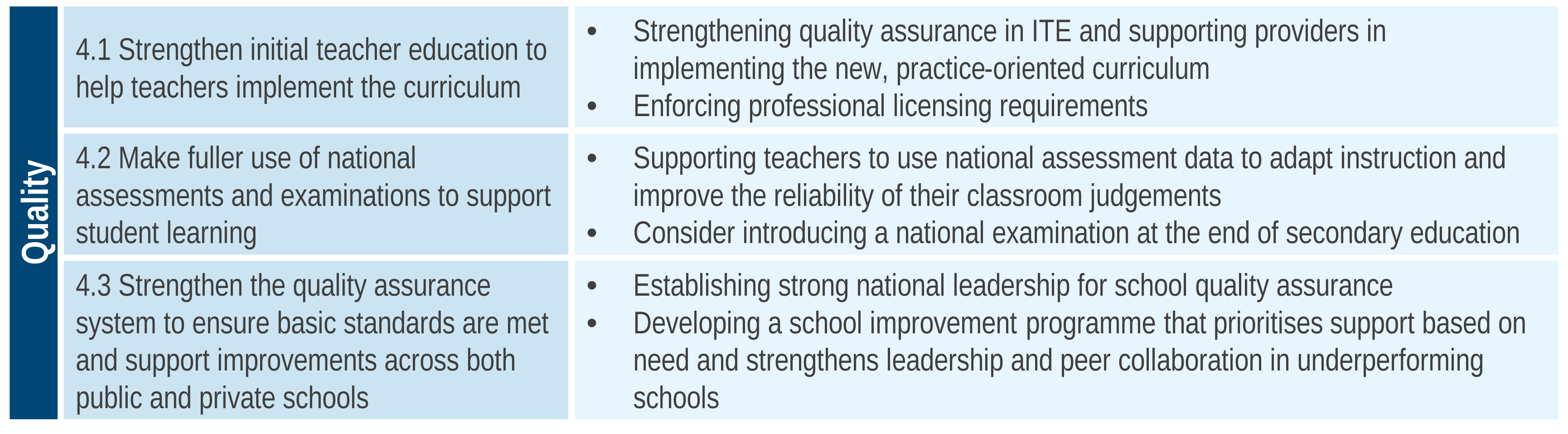
Recommendation 4.1 Strengthen initial teacher education to help teachers implement the curriculum
Peru has laid many of the foundations for effective curriculum reform. It has defined clear learning and performance standards, regularly collects data to monitor student progress, and has expanded access to up-to-date pedagogical content in Spanish and indigenous languages through platforms like PerúEduca and SIFODS. As in many countries, however, a gap remains between the curriculum’s ambitions and classroom practice. Bridging this gap calls for efforts focused on the people most critical to turning curriculum goals into meaningful learning: teachers. While enhancing school-based support for practising teachers will be important, including through coaching and on-the-job support, given the large number of new teachers entering schools each year, raising standards of preparation and entry is central to any strategy aimed at improving student outcomes in Peru. A milestone in this regard was the introduction of a merit-based teaching career structure in 2012, which included the requirement that aspirant public-school teachers pass the national professional licensing exam (Prueba Única Nacional, PUN) in order to obtain a permanent position. However, this reform remains incomplete, as it has not been accompanied by adequate oversight and support to improve initial teacher education, nor by the systematic enforcement of professional licensing requirements. This section draws on international evidence and experience to suggest avenues Peru could consider to strengthen how teachers are prepared and selected into the profession, and how they are supported to develop throughout their careers.
Strengthening quality assurance in ITE and supporting providers in implementing the new, practice-oriented curriculum
In Peru, the large expansion of ITE providers over the last fifty years has increased access to tertiary education opportunities, particularly in regional locations. However, this expansion has resulted in a large and fragmented sector, with many providers offering low-quality programmes. Recognising the need to strengthen prospective teachers’ preparation, Peru’s 2016 Ley de Institutos introduced compulsory licensing procedures and updated the ITE curriculum to place a stronger focus on practical teaching experience. Yet, nearly a decade later, progress has been slow: only 48 of 191 institutes have been licensed, and just 14 tertiary study programmes across education, health, and law have undergone accreditation.
Strengthening ITE quality assurance can help raise the standard of teaching, especially if combined with stronger enforcement of professional licensing requirements (see below). Experience from OECD countries points to steps Peru might consider to strengthen initial teacher preparation:
Stepping up efforts to license and accredit ITE providers: Given ongoing quality concerns, accelerating licensing as well as institutional and programme accreditation is a priority to ensure that pedagogical institutes and universities meet minimum quality standards (see Recommendation 5.3 in Chapter 5). This requires a realistic timeline for the initial licensing of both public and private pedagogical institutes, together with increased central capacity to make sure that licensing is completed as planned across all professionally-oriented tertiary institutions. In the case of universities, which have all been licensed by SUNEDU, Peru might consider introducing a requirement for regular re-licensing (e.g. every 6 years), as a means to ensure recommendations from initial licensing are addressed and standards maintained. In the longer term, when Peru has established an effective accreditation system, this requirement might be replaced by regular accreditation. Many OECD countries make programme-level accreditation mandatory for teaching and for other high-skilled, certified professions (OECD, 2022[65]).
Consolidating ITE provision into a smaller number of institutions. With 191 ITE providers in the country, including 104 public pedagogical institutes, ensuring adequate public funding and support for quality enhancement is a challenge (Ministry of Education of Peru, 2025[66]). In the OECD, Ireland, offers an example of consolidation, having grouped smaller providers into larger institutions as part of broader efforts to strengthen the efficiency and quality of ITE (Sahlberg, 2019[67]). Such efforts can help concentrate resources, research capacity, and faculty development in fewer, stronger institutions. They can also enable greater investment in high-need teaching specialisations, such as intercultural and bilingual education.
Consolidation can be done through policies that shape both the supply of ITE providers, such as licensing requirements, and those that influence demand, such as measures that guide student choices. On the supply side, regional studies on ITE supply and demand can help align provision with projected workforce needs. Blended ITE programmes that combine remote learning with in-person study at physical campuses could also help to engage students in rural and remote areas (see Chapter 5). On the demand side, increasing transparency about student outcomes – for example by requiring ITE providers to publish data on the success rates of graduates in the national teacher licensing exam, could also play a role in shaping ITE provision by steering enrolment towards stronger institutions.
Developing a network of practicum schools to strengthen practice-based learning: Peru’s ITE curricula already incorporates sequenced teaching practice throughout the course of study, which helps teachers gradually develop their practical experience alongside the knowledge and skills they acquire in the classroom. However, ITE providers must individually secure partnerships with nearby schools for practicum placements, which stakeholders reported as increasingly challenging. In many OECD and Latin American countries, education authorities help ITE providers connect with practicum schools with strong professional learning cultures and supportive environments for student teachers. These schools are selected based on criteria such as teacher mentor qualifications, the diversity of the learning environment (e.g. rural/urban, multilingual, multigrade), and effective teaching practices. For example, in Uruguay, education authorities designate practice schools (escuelas de práctica) for teacher training. Teacher mentors in these schools receive dedicated training and additional compensation through a salary allowance (OECD, 2021[68]).
Enforcing professional licensing requirements
The 2012 Teacher Reform Law established a national licensing exam (Prueba Única Nacional, PUN) as a condition for accessing permanent positions in the public teaching career. This was an important reform in Peru, both to ensure that new teachers possess the basic knowledge and competencies required for effective teaching, and to maintain accountability for public funds, particularly as nominal salaries have more than doubled since 2015. The exam is also a means to strengthen accountability for ITE providers, especially when other mechanisms remain weak. It is therefore concerning that the licensing requirement is not being upheld, and that four out of ten teachers in public schools have either not taken the exam or failed. While the government needs some flexibility to issue temporary contracts for teachers who have not passed the PUN in order to meet immediate staffing needs and fill hard-to-staff positions, the absence of clear expectations or timelines for obtaining full licensure risks allowing underqualified teachers to remain in classrooms for extended periods, potentially to the detriment of student learning. As highlighted, strengthening ITE is a critical first step, since the professional licensing requirement can only be sustained without affecting school staffing if a sufficient number of well-prepared graduates are able to pass the exam. In the medium-term, as the quality of ITE improves, complementary measures, such as introducing mandatory training for unlicensed teachers, a clear deadline for passing the national licensing exam, and limits on the number of permitted attempts would all help to ensure minimum standards for entry into the teaching career.
Recommendation 4.2 Make fuller use of national assessments and examinations to support student learning
Peru has well-established standardised assessments that monitor student learning against national curriculum goals. These assessments generate valuable data to track progress and inform education policy. However, less emphasis has been placed on supporting teachers use this data in the classroom to improve teaching and learning – particularly important in a context where many students are not mastering basic skills. This section explores how Peru can make better use of its rich national assessment data to strengthen teacher practices. It also considers how a well-designed end-of-cycle examination could help focus attention on learning, establish consistent expectations across schools, and support fairer access to tertiary education.
Supporting teachers to use national assessment data to adapt instruction and improve the reliability of their classroom judgements
Helping teachers assess student learning reliably in relation to national standards is essential for improving outcomes. National assessments can support this goal by offering information that can be used to develop instructional resources – for example, resources to diagnose where students are in their learning, on how to respond when they are falling behind, as well as ways to improve the quality of teachers’ own assessment judgements. Experience from OECD countries provides examples of the types of resources that Peru might develop to help teachers better understand and address students’ learning needs:
Using standardised assessment results to develop resources to support teachers’ classroom assessment practice: Assessment results show that many students in Peru are not acquiring basic skills early in their schooling. However, teachers are given little guidance on how to adapt the curriculum for students who have not mastered fundamental competencies, including reading and maths. Data from grades 2 and 4 assessments could be used to inform the design of targeted teaching resources (such as diagnostic tests, guidance to develop individual learning plans, and lesson plans with remediation activities in core subjects), to help teachers work with struggling students, and to direct support to schools (see Recommendation 4.3 below). Many OECD countries have used national assessment data to design interventions that improve mathematics and language teaching in primary education, providing useful insights for Peru. Colombia’s Todos a Aprender programme, launched in 2011 and now known as the Tutoring Programme for Learning and Holistic Development, uses national standardised assessments (Pruebas Saber) to identify underperforming schools and target them for support. The programme provides on-site pedagogical assistance through a cascade training model, in which national trainers support mentor teachers, who in turn help classroom teachers improve instruction in language and mathematics. Schools that meet improvement goals – measured through standardised assessments in grades 3 and 5 and strong results in the Synthetic Education Quality Index (ISCE) – graduate from the programme, allowing resources to be redirected to other schools (Radinger, Echazarra and Guerrero, 2018[69]; SITEAL, 2024[70]).
The timing of national assessment data collection and reporting also matters to classroom use. Peru could consider administering the test earlier in the school year (currently held in November, with the academic year ending in December) to support its formative purpose. Releasing results more quickly would give teachers and students useful feedback for the following year. Although Peru’s national assessments are currently paper-based, the country could progressively move towards computer-based implementation, building on its experience with digital testing in the last three PISA rounds.
Using standardised assessment results to help improve reliability of classroom judgements: Standardised assessments offer reliable benchmarks of student achievement in relation to national learning objectives, providing a reference point that teachers and students can use to reflect upon and calibrate their own assessment judgements. For instance, when there are notable discrepancies between classroom assessment results and national assessment outcomes, this can prompt valuable professional discussions within schools about how particular competencies are being assessed and understood. Some OECD systems have developed guidance to help schools organise internal moderation meetings and use standardised assessment results as a reference point for discussions about classroom marking standards and criteria interpretation. Australia illustrates this approach well. The National Assessment Program in Literacy and Numeracy (NAPLAN) provides schools with a range of reports, including Item Analysis Reports and Student Response Reports. These offer detailed insights into student performance across various competencies, helping teachers better identify and respond to learner needs. The state of Victoria has also developed an introductory guide for teachers on how to use NAPLAN data to better understand student performance and adapt teaching strategies accordingly (Victoria, 2013[71]).
Consolidating and expanding assessment support materials through an online resource bank mapped to the curriculum: An increasing number of OECD countries use resource banks to help teachers improve the quality of classroom-based assessments, make more consistent judgements, and use results formatively to inform instruction (OECD, 2023[72]). Practical assessment resources that could be made available through the PeruEduca or SIFODS platforms include example assessment items and tasks such as examples of performance tasks or open-ended questions aligned with learning standards; correction grids for open-ended questions; marked exemplars of students’ work; and feedback guidelines to help teachers communicate clearly learning goals, progress towards those goals and steps needed to improve. Such resources not only support more reliable judgements of student progress but also enhance teachers’ assessment literacy by helping them design their own tasks and scoring criteria aligned with national learning goals (OECD, 2013[73]).
Consider introducing a national examination at the end of secondary education
In Peru, there is currently no national examination to signal expectations and certify completion of upper secondary education. Students receive a certificate upon finishing secondary school, which provides a record of achievement based on classroom assessments. This certificate is a basic prerequisite accessing tertiary education, but the majority of tertiary institutions determine entry based on their own exams (see Chapter 5). This contrasts with common practice in OECD countries, where national examinations are typically used to certify secondary education completion and determine progression to the next level.
Including an external examination within upper secondary certification could bring a number of potential benefits in Peru. External examinations clearly indicate the learning standards that are expected nationally and can motivate teachers and students to focus on their achievement. An extensive body of large-scale quantitative research suggests that students in countries that have external school exit examinations perform significantly better on international student assessments than students in countries that do not have such examinations (OECD, 2013[73]). Exams can also facilitate student transitions beyond school by providing information that both education institutions and employers can trust. In this, upper secondary external examinations can likewise promote greater equity, notably in accessing limited tertiary opportunities (OECD, 2018[74]). In Peru, a single common examination could make admissions to tertiary education simpler, fairer and more transparent, while also increasing the number of institutions that students can apply to. Importantly, if such an examination becomes the primary criterion for tertiary admission, it could also play a role in helping to improve consistency in standards across the private school sector. As private school students would need to prepare for the exam, this would create pressure for private schools to set expectations equivalent to the national curriculum.
While approaches to exit examinations vary considerably across the OECD, comparative analysis shows several common trends as well as evidence of what makes for good practice (OECD, 2026[75]). This analysis shows how Peru might realise the educational benefits of examinations while reducing any potential negative effects, such as curriculum narrowing or increased disengagement and dropout if standards are set too high. The following three considerations are of particular relevance to Peru:
Establishing a common core of compulsory subjects: Nearly all OECD countries include national language and mathematics as compulsory subjects in their end-of-cycle examination, often offering students the opportunity to choose the level at which they study and certify core competencies (e.g. basic/advanced). This would be especially important in Peru, where many secondary students have fragile learning foundations in these subjects.
Allowing some level of subject choice: This enables students to gain recognition in areas where they have strengths and interests, as well as fields that align with their post-secondary aspirations. In Peru, greater flexibility in examined subjects would support the changes this review recommends to the secondary education curriculum, including expanded subject choice within general high schools and a better-defined vocational pathway (see Recommendation 4.5 below).
Including a variety of assessment tasks in upper secondary certification: While a large proportion of upper secondary certification in Peru would need to be centrally administered to ensure reliability and stakeholder trust, incorporating a classroom-assessed component – such as projects, extended essays or practical tasks – could allow students to demonstrate a broader range of competencies not easily captured in a traditional, time-bound written exam. This could also positively influence teaching by encouraging a stronger focus on higher-order thinking skills rather than rote memorisation. Such an approach would be especially valuable for students in vocational pathways, enabling the recognition and certification of applied competencies that are essential for progression into further education, training or employment (see Chapter 6).
Chile’s recent reform of its university entrance exam illustrates many of these principles in practice. In 2022, Chile replaced its university entrance exam, the Prueba de Selección Universitaria (PSU), with the Prueba de Acceso a la Educación Superior (PAES), to shift the focus from a knowledge-heavy assessment to a competency-based evaluation. The PAES includes compulsory tests in national language and mathematics and offers two levels of mathematics: a basic level for all students and an advanced level for those pursuing careers that require higher mathematical skills (MINEDUC, 2022[76]). PAES also allows students to choose elective subjects, offering options between Sciences, History and Social Sciences, and integrates equity measures aimed at widening access to tertiary education. These include allowing students to take the test multiple times and using their highest score from all attempts (DEMRE, 2022[77]; 2023[78]).
Recommendation 4.3 Strengthen the quality assurance system to ensure basic standards are met and support improvements across both public and private schools
Peru has recently introduced measures to strengthen school quality assurance, including a new set of minimum quality standards that outline the essential requirements for schools to operate, and a standard process to authorise new public schools and existing private institutions. These reforms offer a solid foundation for raising quality, particularly in a context where many schools still lack adequate facilities and resources. On their own, however, these changes are unlikely to bring about improvements in teaching and learning. While minimum standards are useful for initial school authorisation, they provide limited guidance on how to strengthen instructional practice or create more effective learning environments. Moreover, there is no clear guidance to help UGELs identify which schools need greater support, nor a defined national school improvement strategy to help them prioritise and tailor their support activities. Strengthening Peru’s quality assurance system will be particularly important in a context where school choice is widespread, and the quality of provision remains highly uneven. This section explores how Peru can build on recent reforms to define a shared vision of what makes a good school, uphold quality standards, and support improvement across both public and independent private schools.
Establishing strong national leadership for school quality assurance
Strengthening oversight and continuous quality improvement in both public and private schools is an urgent priority for Peru. This will require not only building the professional capacity of UGELs, as discussed below (see Recommendation 4.7 below), but also providing clearer direction and stronger oversight of the roles that UGELs and DREs are expected to fulfil in relation to school authorisation, ongoing monitoring, and follow-up support. The current institutional set-up is not well designed to fulfil this role, as central responsibilities are fragmented across various actors, all under the authority of MINEDU, and overall capacity remains limited in terms of professional expertise and resources. Establishing stronger, and more independent national leadership could help ensure that authorisation processes are applied consistently across the country, while also promoting the development of tools and resources to move the quality assurance system beyond compliance towards improvement. This could include developing, in addition to authorisation standards (Condiciones Basicas), a school evaluation framework focused on teaching and learning, instructional leadership, and teacher development, that can guide efforts to raise school quality (OECD, 2013[79]).
Therefore, this review recommends advancing the proposal set out in Peru’s National Education Project 2036 (a strategic vision document designed to guide and align efforts across the education system, though not legally binding), which calls for the establishment of clear, independent institutional leadership to monitor schools against quality standards and support their improvement. Other countries have adopted diverse institutional arrangements for overseeing school quality. In some systems, a single quality assurance body is responsible for both public and private schools, while in others, separate institutions have been created to address the specific needs of the public and private sectors (see Box 4.1). Experience shows that whether responsibilities are centralised under an umbrella organisation or divided across different bodies, what matters most is designating dedicated teams with clear mandates, expertise, and sufficient independence to operate effectively. In Peru’s context, where quality assurance is already spread across several institutions, establishing separate bodies could risk deepening fragmentation. At the same time, given the high level of autonomy granted to private schools, there may be value in creating a dedicated national team within a unified school quality assurance body, focused on overseeing quality in the independent private sector using standards and processes tailored to its specific context.
Regardless of their structure, these teams would need clear mandates, sufficient institutional independence, and well-defined roles within the broader governance system to ensure coherence with MINEDU, SINEACE and DREs/UGELs’ work. Defining their work plans in legislation – such as four-year plans specifying clear objectives for authorising private schools and the development of a quality framework – could also help sustain progress and provide stability amid political changes.
A growing number of OECD countries have set up dedicated bodies responsible for school quality assurance. These bodies aim to improve the quality of teaching and learning and employ or contract staff with professional expertise in education, often including experienced principals or teachers. They typically monitor system performance and student learning and establish the processes and activities to support school improvement. They also operate with sufficient autonomy and operational independence from the Ministry of Education to develop focused expertise and resources over time, and to safeguard the integrity and credibility of licensing and evaluation processes. Examples include:
A single quality assurance agency for public and publicly funded private schools
In the Netherlands, where virtually all primary and lower-secondary students are enrolled in publicly funded private institutions, the Dutch Inspectorate of Education ensures quality across all schools using common national standards. It assesses education quality through risk-based inspections, monitors compliance with national regulations, and publishes public reports on school performance. The Inspectorate evaluates teaching quality, student outcomes, leadership, and adherence to legal requirements in areas like governance and financial management. At the system level, it advises policymakers based on its findings, helping to shape educational reforms.
Similarly, in Chile, the Education Quality Agency, established in 2009 as an independent agency with its own legal status and assets, oversees both public and publicly subsidised private schools. The agency evaluates student learning outcomes through national standardised assessments, conducts on-site inspections, provides guidance to public and private schools in working towards common national quality standards, and publishes information on the performance of individual schools. The Superintendency of Education plays a complementary role, by ensuring the compliance with educational regulations, monitoring the legal use of resources, handling complaints, and raising awareness of educational rights.
A specific agency to oversee quality in independent private institutions
In England (United Kingdom), a separate body, the Independent Schools Inspectorate (ISI), works alongside the national school inspectorate, Ofsted, to oversee and support privately-funded independent schools. ISI applies a distinct set of quality standards (the Independent School Standards), and works with inspection teams composed of senior leaders from independent schools, ensuring evaluations reflect their specific challenges and contexts.
In Dubai, the Dubai Schools Inspection Bureau (DSIB) was established in 2007 to oversee independent private schools. DSIB sets quality standards covering teaching, learning, governance and overall school management. It conducts annual inspections to assess school performance (e.g. student outcomes, teaching quality, leadership), fosters improvement through structured feedback, and publishes regular reports to inform parents and policymakers.
Source: OECD (2013[79]), Synergies for Better Learning: An International Perspective on Evaluation and Assessment, OECD Reviews of Evaluation and Assessment in Education, OECD Publishing, Paris, 10.1787/9789264190658-en; Dutch Inspectorate of Education (2025[80]), System level supervision, https://english.onderwijsinspectie.nl/inspection/inspection-of-schools-by-the-dutch-inspectorate-of-education/the-inspectorate%E2%80%99s-approach/system-level-supervision?u (accessed on 28 March, 2025); Santiago et al. (2017[81]), OECD Reviews of School Resources: Chile 2017, OECD Reviews of School Resources, OECD Publishing, Paris, https://doi.org/10.1787/9789264285637-en; Ofsted (2020[82]), The Annual Report of Her Majesty's Chief Inspect of Education, Children's Services and Skills 2019/20, https://www.gov.uk/government/publications/ofsted-annual-report-201920-education-childrens-services-and-skills/the-annual-report-of-her-majestys-chief-inspector-of-education-childrens-services-and-skills-201920 (accessed on 28 March, 2025); Government of Dubai (2021[83]), Dubai Schools Inspection Bureau (DSIB), https://web.khda.gov.ae/en/Resources/Private-education-quality-in-dubai/Dubai-Schools-Inspection-Bureau-(DSIB) (accessed on 24 March 2025).
Developing a school improvement programme that prioritises support based on need and strengthens leadership and peer collaboration in underperforming schools
In Peru, many schools, including those of very low quality, are not receiving sufficient support to improve. In addition to low accountability and capacity constraints in UGELs, two other factors contribute to this challenge. First, there appears to be a lack of clear policy direction on which schools should be prioritised for support. Addressing this could help UGELs concentrate their limited resources on the schools where they are most needed. Peru has rich school performance data that could serve as a tool for identifying schools most in need of guidance. As a first step, MINEDU would need to define a balanced set of indicators common to most schools that provide a clear, multidimensional view of school quality. International experience points to two broad approaches for using such indicators to prioritise support. Some countries, such as Brazil and Colombia, have developed education quality indexes to define targets and improvement plans at system and school level. Individual school performance results are also made accessible to the public to strengthen accountability. These indexes summarise complex information into simple scores (1–10) by combining data on student learning in standardised tests, progression, and, in Colombia’s case, other indicators such as students’ perceptions of the school environment. Other countries, such as the Netherlands, use school-level data primarily to identify schools at risk and in need of inspection and support, without making results public. Their risk-based assessments draw on a broader set of quantitative and qualitative information, including student performance, schools’ accounts, documents submitted to the Inspectorate, and external “failure signals” such as complaints or media reports. Whichever approach Peru choses, both require the regular collection of reliable census data on students and schools performance as well as careful attention to how such data is analysed and shared. In particular, if data is to be used to support improvement, then results need to be contextualised and explained to schools and local authorities in terms that go beyond simple rankings and focus on the factors associated with performance and how they can be addressed (OECD, 2021[84]).
A second concern in Peru is the absence of a clearly defined national school improvement strategy to guide how UGELs support schools. A model based on peer (school-to-school) networking may offer a promising strategy for Peru to explore, both because it has been shown to be effective in many similar contexts (OECD, 2025[85]), and because most UGELs lack the capacity to be provide more direct models of support themselves. Here, Peru could build on existing initiatives, such as the Redes Educativas Rurales (RER) and Equipos de Trabajo Colegiado, to cluster schools and enable them to learn from one another. Some OECD countries that have introduced national school networking programmes set explicit expectations for how local education authorities should use school performance data and other quality indicators to pair schools and facilitate peer learning. These networks typically include both high- and lower-performing schools with similar characteristics (e.g., size and community demographics), enabling them to share practices and address common challenges. Some education systems also provide incentives for high-performing schools to engage in peer learning. This approach has been effective in states like Ceará, Brazil, where high-performing schools receive additional funding to support low-performing schools in improving their outcomes (World Bank, 2020[86])
However, school networking may have more limited potential in the most disadvantaged parts of the country, where there are fewer high-performing schools. In such cases, targeted leadership development and teacher coaching programmes are likely to be needed. In Colombia, for instance, the Rectores Líderes Transformadores programme was created to strengthen leadership in public schools, offering intensive training and technical support to principals and leadership teams as they developed and implemented school transformation plans (Mineducación, 2022[87]). A similar approach in Peru could provide targeted support to school leaders in rural and isolated areas, especially where leadership roles are often filled on a temporary basis by teachers.
When it comes to teacher coaching programmes, Peru already has a strong foundation to build on, notably through the Soporte Pedagógico programme, which incorporated features identified by research as hallmarks of effective professional development. Specifically, it provided expert coaching, fostered collaboration in job-embedded contexts, and used models and demonstrations of effective practices – all elements that should remain central to future initiatives (Darling-Hammond, Hyler and Gardener, 2017[88]). To expand the reach of coaching initiatives, some OECD countries have combined individual, group and hybrid coaching, especially in rural areas where one-on-one support may not always be feasible. In Chile, for example, rural microcentros bring together teachers from nearby multigrade schools for structured peer learning, supported by facilitators and offered in remote, in person, or hybrid formats to accommodate geographic distance (OECD, 2020[89]). Making the new coaching programme a national flagship initiative could further help overcome the limitations of past professional learning efforts, which have often been fragmented and short-lived. This would require long-term funding, centrally developed materials, and delivery through UGELs – either directly or in close collaboration with centrally hired experts who work with local teams to progressively build their capacity to lead the programme over time (see Recommendation 4.7 below).
Equality of opportunities and access: Managing school choice across the public and private sectors, and diversifying secondary education
Peru has implemented measures to promote more equitable access to quality school education. Targeted programmes such as Juntos, Jornada Escolar Completa (Whole School Day Programme), and flexible models for rural students have helped reduce financial and physical barriers, enabling more young people to stay in school and complete compulsory education. Peru has also begun to mitigate some of the equity risks associated with school choice, by improving information for families and piloting solutions to simplify admissions in public schools. Yet learning outcomes still remain strongly tied to students’ background and school segregation is high by international standards. Achieving greater equity will require not only sustaining these efforts, but also rethinking how choice – both between public and private schools and across study programmes – is managed and expanded. This section draws on OECD evidence and experience to suggest avenues Peru might consider to ensure that all students, regardless of their background, have fair access to quality options in both the public and private sectors.

Recommendation 4.4 Review admission and fee policies as well as how information is shared with parents to help reduce school segregation
In Peru, families have the right to send their child to the school of their preference, but the decentralised nature of admissions and an unregulated fee structure have created significant barriers for disadvantaged families to exercise meaningful choice. To address this, Peru has launched promising initiatives to promote greater fairness, most notably by requiring transparency on private schools’ fees, and piloting a centralised admissions platform for public schools that allocates places based on clear and objective criteria. However, with Peru showing the highest level of socio-economic segregation in schooling compared to the OECD, there is still considerable scope to expand these efforts to ensure that disadvantaged students have fairer access to high-demand schools and reduce socio-economic divides across the system. In the public sector, this could involve refining the platform’s admission criteria to give more priority to disadvantaged students and enriching the information available to families. In the independent private sector, reviewing admissions and fee policies, and introducing targeted financial support, could help expand access to the academic and social opportunities that quality private schools often provide.
Scaling up a centralised and transparent school admissions platform
Peru’s pilot for centralised admissions (Matrícula Digital) is a welcome step toward a fairer and more transparent process, as it assigns students to school vacancies based on clear, objective criteria and uses random allocation for any remaining spots. This approach helps to reduce the influence of factors such as a student’s background, school principal preferences, or informal payments on school admissions. The platform also enables MINEDU to respond flexibly to changing demand for public sector enrolment. For example, during the pandemic, MINEDU was able to swiftly transfer to public schools more than 100,000 students whose families could no longer afford private tuition fees (Elacqua et al., 2023[90]). Expanding this system to all public schools is therefore something that Peru should consider – as, in the longer term, is its suitability for use by the private sector as well. In doing so, several features of the platform could be developed to strengthen its impact on reducing disparities.
One is expanding admission criteria to prioritise school places based on a student’s socio-economic background, helping to foster greater diversity, particularly in high-demand public schools. This could take the form of reserved places for students from low-income backgrounds or minority groups in oversubscribed public schools (OECD, 2019[43]). Spain uses such a system, allowing parental choice while including safeguards to ensure disadvantaged students are not crowded-out of popular schools. Oversubscribed schools consider factors such as low family income, disabilities, previously enrolled siblings and the proximity of the parents’ home or workplace (Educagob, 2025[91]).
A second feature that could be improved is how data is presented to parents. Housing the new centralised application system on Identicole could offer several advantages. Since Identicole already provides information on both public and private schools, it can facilitate better comparisons, particularly in disadvantaged areas where public schools often compete with low-cost independent private schools, some of which may offer education of lower quality. Enriching Identicole with value-added indicators, rather than relying solely on raw student test scores, would provide families with a clearer and more meaningful picture of school quality. For instance, Australia’s My School website, launched in 2010 by the Australian Curriculum Assessment and Reporting Authority (ACARA), allows parents to compare a school’s standardised assessment results and student progress over time with both the national average and a group of similar schools. This comparison group includes schools with similar student backgrounds (such as parental education and occupation) and community factors (such as remoteness, proportion of Indigenous students, and a measure of disadvantage for non-native English-speaking students) (Boeskens, 2016[92]).
A third feature concerns platform design and accessibility. Peru’s pilot platform is already mobile-friendly, a crucial feature given that many families in the country do not have access to a computer at home. As the system scales up nationally, preserving and further optimising this mobile usability will be important to ensure equitable access for all users. Complementary support measures, such as video tutorials, a help desk, and training for school staff and UGEL personnel, who families often rely on for guidance, could further help those with low digital literacy navigate the system with confidence (Elacqua et al., 2021[93]).
Reviewing admissions and fee policies in the private sector to improve social inclusion
Private independent schools are free to define their own fee structure and can assess both academic performance and families’ ability to pay fees when admitting students. MINEDU has taken important measures, such as introducing legislation to improve transparency of school fees, requiring private institutions to reserve places for students with special educational needs (SEN), and prohibiting expulsion due to unpaid fees. However, more could be done to ensure that enrolment in private schools, in particular to more prestigious and high-quality institutions, is not limited by family income, and to create conditions for a more inclusive admissions. This is important to enable more low-income students to benefit from the advantages these schools offer in terms of pathways to further education and labour market opportunities.
International experience highlights two avenues Peru could explore to foster greater social inclusion in independent private schools. One option is to regulate admissions policies to ensure disadvantaged students have better access to private schools. As with the centralised admission process for public schools, independent private schools could be required to reserve a share of places for socio-economically disadvantaged students and/or apply adjusted academic criteria for their admission. This could help reduce segregation and promote greater diversity in their student intake. A second way to address financial barriers is by reviewing fee policies and expanding financial aid for disadvantaged students. The government could make it a condition for private schools charging high fees to allocate a certain number of free places for low-income students, using fees paid by wealthier families to cross-subsidise their education. For instance, in Chile, until 2021, fee-charging schools were required to spend up to 10% of their income from fees to finance scholarships (MINEDUC, n.d.[94]). For lower-fee private schools, the government could introduce incentives such as subsidies or scholarships for students attending those schools that meet basic quality standards. This approach would help reduce financial barriers and promote compliance with authorisation requirements (see Box 4.2).
Mechanisms for the public financing of private education can be directly provided to the operators of private schools (demand-side subsidies, such as tax reductions or public grants for private school operators) as well as or to households with children enrolled in private education (supply-side subsidies, such as vouchers, tax credits or deductions). Whether public funding is provided to private schools through demand-side or supply-side mechanisms, governments can establish eligibility criteria that schools must meet in order to receive public financial support. These can include initial authorisation and accreditation requirements tied to schools meeting various standards pertaining to quality, such as staff qualifications, curricula, and the participation in assessment and evaluation processes amongst others. Examples include:
Since the 1980s, Chile has operated a large-scale voucher programme. The 2008 Preferential School Subsidy Act (SEP) sought to reduce selective admissions and improve quality by providing additional funding to schools enrolling disadvantaged students, while introducing conditions on admissions and performance. To access SEP funds, public and private voucher schools had to eliminate tuition fees for eligible students and refrain from selective admissions. They were also required to sign an agreement with the Ministry of Education outlining a school improvement plan and quality targets, with progress monitored by the Agency for Quality Education. These provisions were further reinforced by the 2016 Inclusion Law, which broadly prohibited selection based on academic or socio-economic criteria in all voucher schools.
In Czechia, private schools receive state subsidies from the state budget through regional authorities. Funds are allocated based on a contract that specifies the educational activities for which the subsidies are allocated and the number of students to which they will reach. If a school meets basic administrative requirements, such as submitting financial and activity reports for previous subsidies, it receives the "basic subsidy”. Those schools that meet additional quality criteria, like a positive evaluation from the Czech School Inspectorate, receive an increased subsidy, further incentivising quality improvement.
In countries such as the Netherlands, Denmark and Sweden, where funding for private schools comes primarily from public sources, private schools are required to adhere to the same regulations and quality standards as public schools. Typically, the national Inspectorates ensure that all schools comply with these standards.
Source: BCN (2018[95]), Subvención Escolar Preferencial [Preferential School Subsidy], https://www.bcn.cl/portal/leyfacil/recurso/subvencion-escolar-preferencial (accessed 24 April 2025); Eurydice (2025[96]) Funding in education. Early childhood and school education funding, https://eurydice.eacea.ec.europa.eu/eurypedia/czechia/early-childhood-and-school-education-funding#3_1_6_Private_education (accessed 25 April 2025); ECNAIS (2018[97]), Public funding of independent schools, 549_5_Funding independent schools_2018_11_07.pdf; OECD (2016), Regulating Publicly Funded Private Schools: A Literature Review on Equity and Effectiveness, OECD Education Working Paper No. 147, https://doi.org/10.1787/5jln6jcg80r4-en
Recommendation 4.5 Introduce greater diversity and choice in upper secondary education
Peru has made significant progress in expanding school participation and reducing dropout rates over the past decade. However, national data show that drop out still remains high, in particular at transition points, with students continuing to leave school throughout the secondary cycle. While economic pressures and long travel distances, especially in remote and rural areas, remain important barriers, low student engagement is also a contributing factor (Ministry of Education of Peru, 2022[55]). Many young people struggle to see the relevance of their studies and often prioritise work over continuing their education (Rojas et al., 2024[98]). This section explores how introducing greater subject and programme choice in upper secondary education could help improve student engagement, motivation and retention.
Introducing greater subject and programme choice within general upper secondary education
Peru has sought to diversify the delivery of secondary education, adapting provision to better reflect the realities of learners across the country. Initiatives such as the Jornada Escolar Completa (Whole School Day Programme) and flexible models for rural students reflect a growing recognition that one-size-fits-all approaches are ill-suited to Peru’s diverse contexts. These initiatives are valuable and merit continued support, with the next step focusing on assessing their effectiveness and scaling up the components or models that prove most impactful.
However, while delivery models have evolved, comparatively less attention has been given to diversifying the content and structure of what students learn. Compared to lower levels of schooling, students in upper secondary education are more independent and have a broader range of interests. They are also at a transition stage, preparing for different pathways beyond school. This is particularly evident in Peru, where compulsory upper secondary education has seen significant enrolment growth, and now serves a larger and more diverse cohort of learners. Offering more choice at this stage is therefore worth exploring, both to give students a more active role in their education, which can help to foster motivation and engagement, as well as to prepare them better for the next stage of their life.
One policy option would be to expand subject choice in general upper secondary education, which currently enrols the majority of students and offers a single, academically oriented curriculum with limited flexibility or differentiation. A common approach in OECD countries is to combine a set of compulsory subjects, such as mother-tongue language and mathematics, with electives that allow students to explore their interests and develop specialised knowledge. Some systems further structure this choice by defining programme profiles that group related subjects (e.g. science and mathematics or languages and literature). These profiles may be set at the national level or determined by individual schools based on their capacity and resources (OECD, 2024[99]). In Peru’s context, where schools vary widely in size and resources, it will be important to allow some flexibility in how choice is introduced (see below).
In introducing more choice, Peru may want to consider expanding the availability of vocational options for secondary students. This is particularly relevant in a context where employers have a high demand for secondary graduates with technical and applied skills. Peru has already promising efforts underway, such as Secundaria con Formacion Tecnica (SFT) and Mi Oportunidad Técnica initiatives. These programmes allow upper-secondary students to develop both academic and applied competencies and merit further expansion. However, aspects of their design could be strengthened. For instance, Mi Oportunidad Técnica requires students to attend CETPROs outside regular school hours, placing additional pressure on their already full timetables. As Peru introduces greater subject choice in general upper secondary education, there is an opportunity to rethink this structure. Students pursuing a more applied track could focus on essential core academic subjects and select applied subjects through CETPROs as part of their regular curriculum. This would support a more balanced learning experience and avoid overburdening students with a full academic curriculum and after-hours training. In parallel, ensuring the quality and relevance of CETPRO provision will be critical if this combined pathway is to succeed. Chapter 6 of this review outlines measures Peru could take to strengthen CETPROs, complementing efforts to redesign vocational options at the upper secondary level.
Any decision to introduce more choice would need to be accompanied by guidance and information to students (and their parents) on the programmes available and the types of options they offer beyond school. OECD research shows that offering such guidance early on can be particularly beneficial, especially in terms of counteracting the impact socio-economic background can have on limiting students’ aspirations and the perceived relevance of school, which is a concern in Peru (Perico E Santos, 2023[33]).
Supporting the expansion of subject and programme choice in smaller and rural schools
Expanding subject choice and more applied learning pathways in upper secondary education can help make learning more relevant and engaging for students. Yet, such reforms need careful planning to avoid exacerbating existing inequalities. Smaller and remote schools may find it harder than larger ones to offer a broad curriculum and to secure partners for applied learning opportunities.
Peru could explore two approaches to ensure students' options are not unduly limited by their school’s size or location. One approach is to ensure all secondary schools offer a relatively large common core of compulsory academic subjects, with flexibility to add other subjects, including applied ones, based on local needs and teacher expertise. In British Columbia, for instance, just over half of the courses students take need to come from specific subject areas, such as from Language, Mathematics and Sciences, with students choosing the rest. Students’ optional courses can include additional courses in areas like Science or Arts, or they can include work experience and trades courses. This model supports a broad common foundation for all students, regardless of school context or programme choice. A second, complementary, approach could involve creating local consortia that connect secondary schools with other local education and training providers, and leverage technology to broaden the range of subjects students can access. Consortia would bring together secondary schools, CETPROs, tertiary providers, and employers to offer applied programmes aligned with local economic needs. By connecting institutions and pooling resources, such consortia could expand access to specialised or applied courses, including through hybrid formats. They could also help scale up Mi Oportunidad Técnica. Similar integrated models are a key feature of well-established VET systems in countries like Germany and Austria (Musset et al., 2013[100]).
Good governance: Aligning funding and improvement support with schools’ specific needs
The policy measures discussed earlier – such as supporting the rollout of the new curriculum, promoting fairer school choice, and diversifying learning pathways – can help improve both the quality and equity of Peru’s school system. But for these reforms to translate into better learning experiences in classrooms, schools need the right conditions. This means adequate funding, stronger oversight, and targeted support that enable teachers to teach effectively and students to learn in safe, engaging environments. To achieve this, funding and support policies will play a critical role. Drawing on OECD evidence and country experience, the following examples highlight ways Peru can strengthen its school funding framework and build the capacity of local education authorities to monitor progress and drive school improvement.
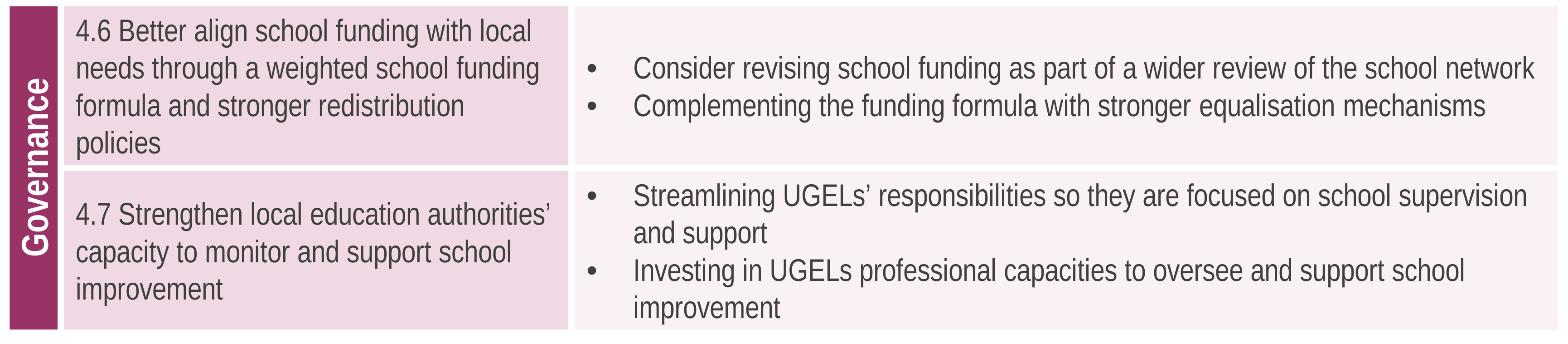
Recommendation 4.6 Better align school funding with local needs through a weighted school funding formula and stronger redistribution policies
Peru has significantly increased funding for school education, both in real and in nominal terms. Maintaining this level of investment, even amid fiscal constraints, reflects the sector’s growing priority on the national policy agenda. However, to enhance equity and quality across regions and schools, greater attention is needed to how funding is allocated, ensuring it better reflects needs while addressing inefficiencies. Currently, central transfers to schools are largely based on historical costs, rather than schools’ actual student intake and operating conditions. Meanwhile, additional funding from resource revenue-sharing transfers, which plays a key role in investments for school infrastructure, is disproportionately directed to the producing provinces, which are also among the richest. As a result, resources do not always align with local needs and demographic changes, with allocations serving to reinforce, rather than redress, inequities.
Consider revising school funding as part of a wider review of the school network
Internationally, well-designed funding formulas are increasingly recognised as effective tools for distributing current expenditure in an efficient, equitable, and transparent manner. Many countries use formula-based allocation mechanisms that comprise a base per student or per class allocation (varying by school year or stage) and additional funds for specific educational contexts or student needs (e.g. vocational education, bilingual education, rural settings). Careful weighting of these factors is critical, as they directly shape the provision of schooling. For example, strict per capita formulas can encourage greater efficiency by advantaging larger schools with higher student numbers, while formulas with stronger equity weightings (e.g. for rural schools or indigenous students) can promote vertical equity by allocating different amounts based on diverse educational needs. Given the need to strengthen both efficiency and equity in Peru’s school network, there may be value in designing a simple funding formula that combines a basic per student allocation with a small number of carefully selected equity indicators, such as geographic isolation or intake of low-income students and non-native Spanish speakers.
However, a new funding formula alone cannot improve equity and quality if inefficiencies in spending persist. While new schools and teaching positions have been created in response to population growth, there has been limited adjustment in areas where enrolment has declined. As a result, Peru maintains a large school network with many small schools, which often struggle to provide education of sufficient quality. Reviewing and reorganising the school network will be essential to make better use of limited resources and improve learning conditions for all students.
OECD experience shows that school network reforms may involve a range of approaches, including closures, mergers, shared facilities, or clustering schools under a common administration. Considering Peru’s geographical diversity and the access challenges faced by rural and remote communities, ensuring that any reorganisation maintains adequate territorial coverage will be critical. Portugal offers a relevant example of how consolidation can be carried out while safeguarding equity. Beginning in 2005, the country launched an ambitious reform to rationalise its school network and address regional disparities, reducing the number of public schools by over 47% within a decade. To mitigate the potentially disruptive effects of these reforms, Portugal implemented a series of complementary measures, including regular consultation with local authorities and communities, targeted investment to improve infrastructure in receiving schools, and guaranteed transport to accommodate longer travel distances (OECD, 2018[101]; Santiago et al., 2016[102]). Importantly, public schools were reorganised into clusters that shared resources and operated under joint leadership – an approach that helped pool expertise, expand curricular and extracurricular offerings, reduce isolation for rural teachers, and allow principals to focus more on pedagogical leadership by consolidating administrative functions across the cluster (OECD, 2022[103]).
Complementing the funding formula with stronger equalisation mechanisms
Ensuring that the main allocation mechanism in education reflects need is a crucial first step toward a more equitable distribution of funding across regions and schools. However, regional disparities in capital investment will persist unless additional funding sources, particularly revenue-sharing transfers, are better aligned with regions’ capacity to generate revenue and their unmet educational needs. This is especially important for canon transfers, which represent 72% of total capital investments in education on average and up to 100% in some regions, such as Puno and Callao (COMEXPERU, 2022[57]). Currently, these transfers go mainly to the producing provinces. This creates a regressive effect as municipalities with lower financial needs receive more resources.
Peru would benefit from reviewing the royalty transfer system to better account for subnational expenditure needs and fiscal capacity. As the OECD has recommended, this will need to be accompanied by broader fiscal policy reforms, such as gradually expanding regional governments' taxing powers and ensuring that the transfer system incentivises local tax collection, for example, by conditioning a share of transfers on increases in tax revenue (OECD, 2023[104]). The 2011 Colombian reform to modify royalty distribution offers valuable lessons for Peru. This reform expanded the distribution of royalties to include all municipalities, rather than limiting them to resource-producing regions. It also introduced new allocation criteria based on factors such as population size, poverty levels, unemployment rates, and investment needs, helping to channel more resources to low-income regions and municipalities (OECD, 2023[104]; Haddad, Bonet-Morón and Pérez-Valbuena, 2022[105]).
Recommendation 4.7 Strengthen local education authorities’ capacity to monitor and support school improvement
In Peru’s large school network and vast territory, local education authorities play a vital role as the closest link with schools. However, despite efforts by MINEDU and international partners to strengthen regional and local capacities, progress has been slow. Subnational bodies, particularly UGELs, face major challenges, including an overload of administrative duties, limited resources, and in some instances, limited professional independence, with decisions influenced by political considerations or clientelistic practices. Easing their administrative burden, while fostering connections with local actors that have strong professional capabilities and independence, will be essential if UGELS are to play an effective role in school improvement.
Streamlining UGELs’ responsibilities so they are focused on school supervision and support
While Peru has already taken steps to simplify the bureaucracy of the school system through initiatives like Escritorio Limpio – which aims to reduce administrative burden by eliminating unnecessary paperwork and freeing up school leaders' time for pedagogical leadership – additional efforts are needed to ease the administrative load on UGELs. Continued investments in digital systems will clearly be key, as currently less than 13% of primary and secondary schools have access to a portable or desktop computer and less than 5% have an internet connection (Ministry of Education of Peru, 2024[5]). By automating routine tasks, Peru can significantly reduce bureaucratic demands and allow UGELs to focus on their core instructional support and oversight responsibilities. Such investments in digitalisation have been central to similar simplification efforts in OECD countries like Chile and Estonia, where national initiatives such as Todos al Aula and “e-kool” have introduced digital tools to automate administrative processes, enhance communication with the Ministry of Education, and ultimately reduce the administrative workload of schools and education authorities.
Rethinking some of the responsibilities currently assigned to UGELs and redistributing them more strategically could further help free up their resources to concentrate on school oversight and support. One such area is network planning and school infrastructure management, which might be more effectively handled at the regional level. Regional authorities could play a stronger role in identifying opportunities for shared service provision or school clustering or consolidation, and in coordinating infrastructure planning across UGEL’s administrative boundaries. Strengthening this function at the regional level will be particularly important if Peru were to undertake a review of its school network, as recommended in this report (see Recommendation 4.6 above).
Investing in UGELs professional capacities to oversee and support school improvement
As administrative responsibilities are streamlined and staff time is freed up, a key challenge will be ensuring that UGEL teams have the right skills and resources to authorise schools and fulfil pedagogical support functions. There are two promising avenues Peru might consider to achieve this. The first is to foster greater collaboration between UGELs and other organisations with a local presence, strong technical expertise and professional independence to contribute to targeted school improvement efforts. A relevant example is the United Kingdom’s Opportunity Areas programme (2017–2022), which aimed to build capacity in local education systems across 12 regions facing persistent disadvantage. The initiative established local partnerships that brought together education authorities, schools, and external actors – such as NGOs and universities – to co-design and deliver tailored improvement strategies. It also provided targeted funding and technical support to strengthen local leadership, embed specialist expertise, and promote school-to-school collaboration (GOV.UK, 2022[106]).
However, relying on stronger partnerships may be less feasible in Peru’s most dispersed and disadvantaged areas, where it can be more difficult to establish collaborations due to limited local capacity and a smaller pool of potential partner organisations. In these contexts, MINEDU could play a more active role in reinforcing the pedagogical support function of UGELs by placing technical expertise within local teams. At present, centrally designed and funded pedagogical interventions sometimes rely on external experts to work directly with schools. While these initiatives provide valuable support for school improvement, they have at times been implemented with limited involvement from UGELs and have drawn skilled personnel away from UGEL teams by offering higher salaries. A way to strengthen UGELs’ capacity could be to more systematically embed these experts within local teams, prioritising UGELs operating in particularly challenging contexts, where staffing ratios are lower despite greater needs. Activities such as joint school visits, co-facilitated training sessions, and structured mentoring could be led in collaboration with these experts, enabling UGEL personnel to gradually build expertise and take on a more proactive role in supporting schools.
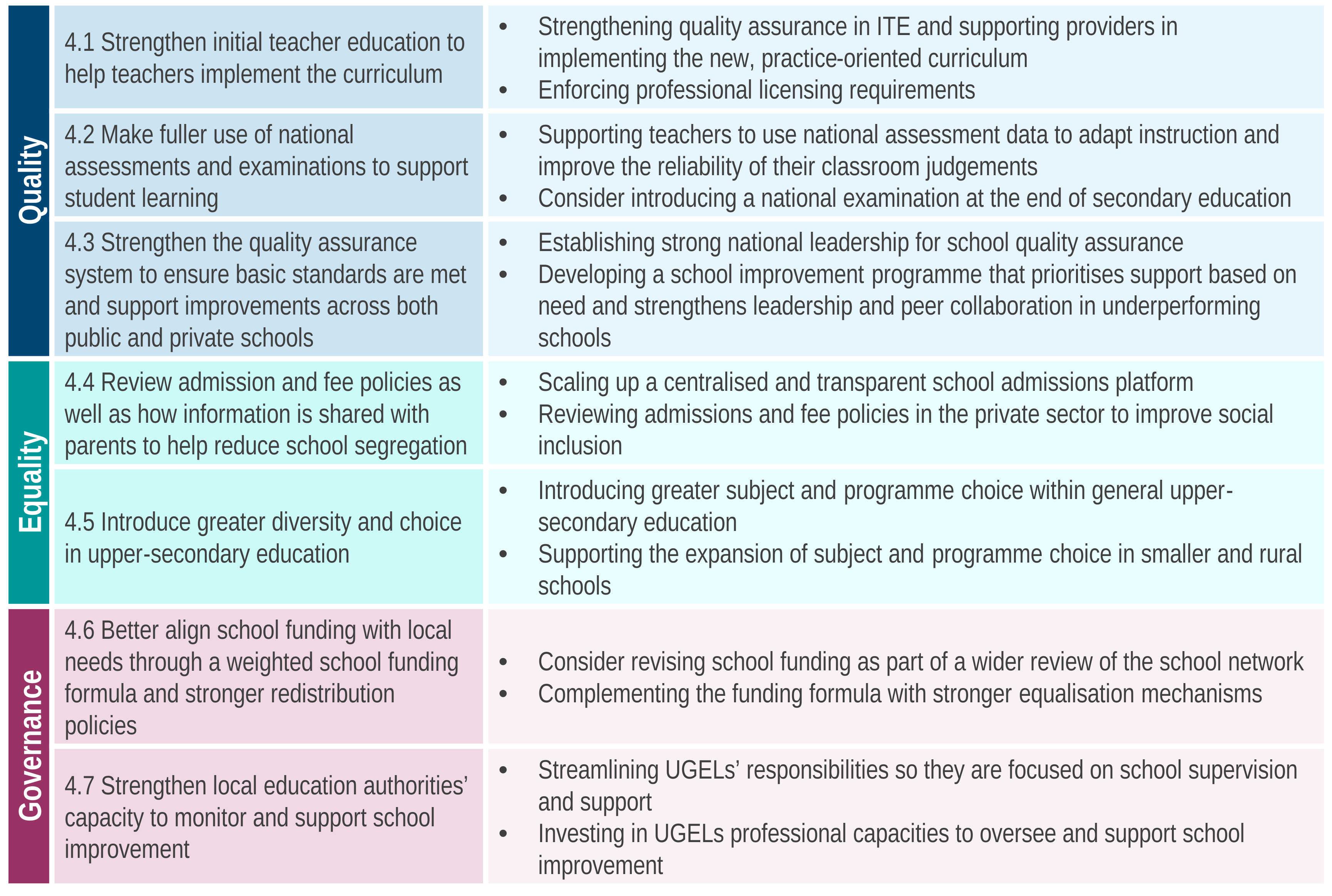
References
[40] Alcaíno, M. et al. (2022), Gestión local y mejora educativa: el caso del Sistema de Fortalecimiento de Capacidades en Perú, https://publications.iadb.org/es/gestion-local-y-mejora-educativa-el-caso-del-sistema-de-fortalecimiento-de-capacidades-en-peru.
[13] Balarin, M. (2016), “La privatización por defecto y el surgimiento de las escuelas privadas de bajo costo en el Perú ¿Cuáles son sus consecuencias?”, Revista de la Asociación de Sociología de la Educación, Vol. vol. 9, nº 2/ISSN 1988-7302, https://repositorio.minedu.gob.pe/handle/20.500.12799/6420.
[64] Balarin, M. and A. Escudero (2018), Evaluación del diseño e implementación de la intervención de soporte pedagógico intercultural del Ministerio de Educación del Perú [Evaluation of the design and implementation of the intercultural pedagogical support of the Ministry of Education in Peru], FORGE, https://www.grade.org.pe/forge/descargas/Soporte%20pedag%C3%B3gico%20ASPI.pdf.
[23] Balarin, M. and M. Rodríguez (2024), Shallow pedagogies as epistemic injustice: how uncritical forms of learning hinder education’s contribution to just and sustainable development, pp. 49–67, https://doi.org/10.1332/27523349Y2024D000000007.
[52] Barnechea, G. (2018), La Secundaria rural: una evaluación de sus formas de atención diversificada, https://grade.org.pe/wp-content/uploads/GG_TAREA_2018.pdf.
[95] BCN (2018), Subvención Escolar Preferencial [Preferential School Subsidy], https://www.bcn.cl/portal/leyfacil/recurso/subvencion-escolar-preferencial (accessed on April 24 2025).
[92] Boeskens, L. (2016), Regulating Publicly Funded Private Schools: A Review of the Literature on Equity and Effectiveness, https://www.oecd.org/content/dam/oecd/en/publications/reports/2016/11/regulating-publicly-funded-private-schools_g17a28af/5jln6jcg80r4-en.pdf.
[6] Bruns, B., B. Schneider and J. Saavedra (2023), The Politics of Transforming Education in Peru: 2007-2020, RISE, https://riseprogramme.org/sites/default/files/2023-03/The-Politics_of_Transforming_Education_in_Peru_2007-2020_1.pdf.
[26] Chinen, M. and J. Bonilla (2017), Evaluación de impacto del Programa de Soporte Pedagógico del Ministerio de Educación del Perú [Impact Assessment of the Pedagogical Support Programme of the Ministry of Education of Peru], https://repositorio.minedu.gob.pe/handle/20.500.12799/5520.
[30] Ciriaco Ruiz, M. (2025), “¿Cuántos profesores escolares aún no tienen título profesional? [How many school teachers still do not have a professional degree?]”, El Comercio Peru, https://elcomercio.pe/ecdata/minedu-cuantos-profesores-escolares-aun-no-tienen-titulo-profesional-ley-general-de-educacion-carrera-magisterial-docentes-retirados-regresan-al-colegio-noticia/ (accessed on 20 March 2025).
[57] COMEXPERU (2022), Gobiernos regionales ¿Cómo va el gasto en salud y educación? [Regional governments. How is spending in health and education?], https://www.comexperu.org.pe/upload/articles/reportes/reporte-gobiernos-001.pdf.
[10] Cueto, S., J. León and A. Miranda (2016), “Classroom composition and its association with students’ achievement and socioemotional characteristics in Peru”, Assessment in Education: Principles, Policy & Practice, Vol. 23/1, pp. 126-148, https://doi.org/10.1080/0969594x.2015.1105783.
[88] Darling-Hammond, L., M. Hyler and M. Gardener (2017), Effective Teacher Professional Development, https://eric.ed.gov/?id=ED606743.
[78] DEMRE (2023), DEMRE de la Universidad de Chile comienza proyecto de investigación para darle nuevos usos a los puntajes de las PAES [DEMRE of the University of Chile begins research project to give new uses to the PAES scores], https://demre.cl/noticias/2023-06-09-demre-comienza-proyecto-investigacion-nuevos-usos-puntajes-paes (accessed on 28 March 2025).
[77] DEMRE (2022), Leonor Varas explicó por qué la PAES aporta a un mejor Sistema de Acceso [Leonor Varas explained why the PAES contributes to a better Access System], https://demre.cl/noticias/2022-05-24-PAES-aporta-mejor-sistema-acceso (accessed on 28 March 2025).
[27] DIFODS (2025), Informe de cierre de monitoreo. Programe de Inducción Docente. Modalidad Virtual. [Final monitoring report. Teacher Induction Programme. Virtual modality.].
[80] Dutch Inspectorate of Education (2025), System level supervision, https://english.onderwijsinspectie.nl/inspection/inspection-of-schools-by-the-dutch-inspectorate-of-education/the-inspectorate%E2%80%99s-approach/system-level-supervision?u (accessed on 28 March 2025).
[97] ECNAIS (2018), Public funding of independent schools, https://www.ecnais.org/folder/pagina/ficheiro1/549_5_Funding%20independent%20schools_2018_11_07.pdf.
[91] Educagob (2025), Información general sobre la Educación Primaria. Requisitos de acceso y admisión. [General information on Primary Education. Admission and entry requirements.], https://educagob.educacionfpydeportes.gob.es/ensenanzas/primaria/informacion-general/acceso.html (accessed on 2025 March 28).
[90] Elacqua, G. et al. (2023), Exodus to Public School: Parent Preferences for Public Schools in Peru, Inter-American Development Bank, https://doi.org/10.18235/0005497.
[93] Elacqua, G. et al. (2021), Sistemas centralizados de asignación escolar: guía de implementación (Centralized school assignment systems: an implementation guide), BID, https://doi.org/10.18235/0003362.
[96] Eurydice (2025), “Funding in education”, Early childhood and school education funding, https://eurydice.eacea.ec.europa.eu/eurypedia/czechia/early-childhood-and-school-education-funding#3_1_6_Private_education (accessed on 25 April 2025).
[106] GOV.UK (2022), Opportunity areas, https://www.gov.uk/government/publications/social-mobility-and-opportunity-areas (accessed on 24 April 2025).
[83] Government of Dubai (2021), Dubai Schools Inspection Bureau (DSIB), https://web.khda.gov.ae/en/Resources/Private-education-quality-in-dubai/Dubai-Schools-Inspection-Bureau-(DSIB) (accessed on 24 March 2025).
[63] Government of Peru (n.d.), Gobierno de Peru, https://www.gob.pe/ugel02.
[47] GRADE (2022), El Peru Pendiente: Ensayos para un desarrollo con bienestar.
[46] Guadalupe, C. and A. Rivera (2020), Cómo crear Centros Educativos Integrados de Educación Básica Regular, https://doi.org/10.21678/978-9972-57-442-9.
[105] Haddad, E., J. Bonet-Morón and G. Pérez-Valbuena (2022), Impacto regional de las regalías en Colombia (Regional impact of royalties in Colombia), https://repositorio.banrep.gov.co/server/api/core/bitstreams/950003c1-9f10-4975-b843-de62905de5dc/content.
[16] INEI (2024), Perú Compendio Estadístico 2024 [Peru Statistical Compendium 2024], https://cdn.www.gob.pe/uploads/document/file/7366940/6284790-tomo-1-peru-compendio-estadistico-2024.pdf.
[18] INEI (2022), Pandemia y deserción educativa en la Educación Básica Regular: factores asociados y posibles efectos, 2017-2021, https://www.inei.gob.pe/media/MenuRecursivo/investigaciones/desercion-escolar.pdf.
[49] Llanos Fajardo, K. (2024), “La crisis de vacantes en colegios públicos: largas filas y noches a la intemperie para asegurar educación”, [The crisis of vacancies in public schools: long lines and nights outdoors to secure education.], https://peru21.pe/lima/padres-realizan-largas-filas-y-noches-la-intemperie-para-asegurar-vacantes/.
[38] MINEDU SIMON (n.d.), Ficha de Autorreporte de Condiciones Basicas 2024, https://app.powerbi.com/view?r=eyJrIjoiYTdmOTkyOGUtYjUyNy00MDkxLWJkYTYtMDM0Y2IyZWJmYjFjIiwidCI6IjE3OWJkZGE4LWQ5NjQtNDNmZi1hZDNiLTY3NDE4NmEyZmEyOCIsImMiOjR9.
[76] MINEDUC (2022), Mineduc presenta la nueva Prueba de Acceso a la Educación Superior (PAES) que reemplaza definitivamente a la PSU [Mineduc presents the new Higher Education Access Test (PAES) that definitively replaces the PSU], https://acceso.mineduc.cl/blog/2022/01/18/mineduc-presenta-la-nueva-prueba-de-acceso-a-la-educacion-superior-paes-que-reemplaza-definitivamente-a-la-psu/ (accessed on 28 March 2025).
[94] MINEDUC (n.d.), Sistema de Becas y su Financiamiento [Scholarship system and its funding], https://ayudamineduc.cl/ficha/sistema-de-becas-y-su-financiamiento-4 (accessed on 31 March 2025).
[87] Mineducación (2022), El liderazgo directivo: una apuesta por la calidad de la educación en Colombia [School leadership: a commitment to quality education in Colombia], https://www.mineducacion.gov.co/1780/articles-363488_recurso_3.pdf.
[53] Ministry of Development and Social Inclusion of Peru (2018), Evaluación de Impacto del programa JUNTOS - Resultados finales [Impact evaluation of JUNTOS programme - Final results], https://evidencia.midis.gob.pe/wp-content/uploads/2018/03/InformeFinal13.pdf.
[58] Ministry of Economy and Finance of Peru (2024), Anexo 3 - Distribución del Gasto del Presupuesto del Sector Público por nivel de Gobierno y Funciones [Annex 3 - Distribution of Public Sector Budget Expenditure by Level of Government and Functions], https://www.mef.gob.pe/es/?option=com_content&language=es-ES&Itemid=101158&lang=es-ES&view=article&id=8371.
[66] Ministry of Education of Peru (2025), Direccion de Formacion Inicial Docente: Institutiones de Formacion Inicial Docente [Directorate of Initial Teacher Training: Initial Teacher Training Institutions], https://www.minedu.gob.pe/superiorpedagogica/institutos/.
[50] Ministry of Education of Peru (2025), Matrícula Digital, https://www.gob.pe/54580-matricula-digital (accessed on 26 September 2025).
[42] Ministry of Education of Peru (2025), Orientaciones para los equipos de trabajo colegiado de II. EE. unidocentes y multigrados en el ámbito rural durante las semanas de gestión [Guidelines for the joint work teams of single-teacher and multi-grade schools in rural areas in management weeks], https://directivos.minedu.gob.pe/wp-content/uploads/2025/02/Orientaciones-equipos-de-trabajo-colegiado.pdf.
[5] Ministry of Education of Peru (2024), Accession candidate country’s self-assessment of policies and practices in the area of education and skills: Guidelines and questionnaire Peru.
[32] Ministry of Education of Peru (2024), Decreto Supremo N.° 014-2024-MINEDU [Supreme Decree No. 014-2024-MINEDU].
[11] Ministry of Education of Peru (2024), El Peru en PISA 2022 Informe nacional de resultados [Peru in PISA 2022: National Results Report], http://umc.minedu.gob.pe/el-peru-en-pisa-2022-informe-nacional-de-resultados/.
[2] Ministry of Education of Peru (2024), ENLA 2023 Resultados de aprendizaje.
[107] Ministry of Education of Peru (2024), Reporte de resultados Monitoreo de Prácticas Escolares 2023 [Results Report Monitoring of School Practices 2023], https://repositorio.minedu.gob.pe/handle/20.500.12799/10541.
[25] Ministry of Education of Peru (2024), Reporte de resultados: Monitoreo de Prácticas Escolares 2023 [Results Report Monitoring of School practices 2023], https://repositorio.minedu.gob.pe/handle/20.500.12799/10541.
[37] Ministry of Education of Peru (2024), Resolucion Ministerial N 271-2024-MINEDU [Ministerial Resolution No. 271-2024-MINEDU], https://www.gob.pe/institucion/minedu/normas-legales/5627491-271-2024-minedu.
[55] Ministry of Education of Peru (2022), Conociendo más sobre la interrupción de estudios [Knowing more about the interruption of studies], https://www.grade.org.pe/creer/archivos/1conociendo-sobre-interrupcion-estudios-1-1.pdf (accessed on 28 March 2025).
[24] Ministry of Education of Peru (2022), ENDO: Encuesta Nacional de Docentes de Instituciones EducativasPúblicas de Educación Básica Regular [ENDO: National Survey of Teachers in public educational institutions of regular basic education], http://www.minedu.gob.pe/politicas/docencia/encuesta-nacional-a-docentes-endo.php (accessed on 28 March 2025).
[36] Ministry of Education of Peru (2022), Resolucion Ministerial N. 109-2022 MINEDU [Ministerial Resolution No. 109-2022-MINEDU], https://cdn.www.gob.pe/uploads/document/file/2894006/RM_N%C2%B0_109-2022-MINEDU.pdf.pdf?v=1646754214.
[54] Ministry of Education of Peru (2021), Evaluación de impacto de la Jornada Escolar Completa : ampliación de la jornada escolar en escuelas públicas [Impact assessment of the Full School Day: extension of the school day in public schools], https://repositorio.minedu.gob.pe/handle/20.500.12799/8846.
[28] Ministry of Education of Peru (2021), Formación de directivos [Leadership training], https://directivos.minedu.gob.pe/wp-content/uploads/2021/05/Infografi%CC%81a_Formacio%CC%81n_FINAL.pdf.
[29] Ministry of Education of Peru (2021), Relación entre la dotación del personal administrativo y la percepción de sobrecarga administrativa del director o directora de II.EE de EBR públicas del sector educación, https://repositorio.minedu.gob.pe/bitstream/handle/20.500.12799/7728/Relaci%C3%B3n%20entre%20la%20dotaci%C3%B3n%20del%20personal%20administrativo%20y%20la%20percepci%C3%B3n%20de%20sobrecarga%20administrativa%20del%20director%20o%20directora%20de%20II.EE.%.
[35] Ministry of Education of Peru (2021), Resolucion Ministerial N. 263-2021 MINEDU [Ministerial Resolution No. 263-2021-MINEDU], https://cdn.www.gob.pe/uploads/document/file/2034360/RM%20N%C2%B0%20263-2021-MINEDU.pdf.pdf?v=1627073940.
[4] Ministry of Education of Peru (2018), Tipología y caracterización de las escuelas privadas en el Perú [Typology and characterisation of private schools in Peru], http://umc.minedu.gob.pe/wp-content/uploads/2019/01/EB03.pdf.
[41] Ministry of Education of Peru (2015), Resolución Ministerial N.º 596-2015 MINEDU del 29 de diciembre de 2015 [Ministerial Resolution No. 596-2015-MINEDU of 29 December 2015], http://www.minedu.gob.pe/biae2016/pdf/rm-596-2015-minedu-normaano-2016-para-dre-ugel.pdf (accessed on 28 March 2025).
[100] Musset, P. et al. (2013), A Skills beyond School Review of Austria, OECD Reviews of Vocational Education and Training, OECD Publishing, Paris, https://doi.org/10.1787/9789264200418-en.
[59] National Council of Education of Peru (2022), Perú: financiamiento público de la educación (2001-2021) [Peru: public funding of education (2001-2021)], https://repositorio.minedu.gob.pe/bitstream/handle/20.500.12799/8693/Per%c3%ba%20financiamiento%20p%c3%bablico%20de%20la%20educaci%c3%b3n%202001-2021.%20An%c3%a1lisis%20y%20conclusiones.pdf?sequence=1&isAllowed=y.
[75] OECD (2026), The Theory and Practice of Upper Secondary Certification, OECD Publishing, Paris, https://doi.org/10.1787/b3fea5ba-en.
[85] OECD (2025), Unlocking High-Quality Teaching, OECD Publishing, Paris, https://doi.org/10.1787/f5b82176-en.
[22] OECD (2024), Curriculum Flexibility and Autonomy: Promoting a Thriving Learning Environment, OECD Publishing, Paris, https://doi.org/10.1787/eccbbac2-en.
[44] OECD (2024), Education at a Glance 2024: OECD Indicators, OECD Publishing, Paris, https://doi.org/10.1787/c00cad36-en.
[99] OECD (2024), “Managing choice, coherence, and specialisation in upper secondary education”, OECD Education Spotlights, No. 10, OECD Publishing, Paris, https://doi.org/10.1787/4a278519-en.
[14] OECD (2024), PISA database 2022, https://www.oecd.org/pisa/data/ (accessed on 16 January 2024).
[9] OECD (2024), Social and Emotional Skills for Better Lives: Findings from the OECD Survey on Social and Emotional Skills 2023, OECD Publishing, Paris, https://doi.org/10.1787/35ca7b7c-en.
[7] OECD (2023), Distribution of enrolled students and graduates by type of institution, https://data-explorer.oecd.org/s/2wl (accessed on 23 September 2025).
[34] OECD (2023), Education at a Glance 2023: OECD Indicators, OECD Publishing, Paris, https://doi.org/10.1787/e13bef63-en.
[104] OECD (2023), OECD Economic Surveys: Peru 2023, OECD Publishing, Paris, https://doi.org/10.1787/081e0906-en.
[8] OECD (2023), PISA 2022 Results (Volume I): The State of Learning and Equity in Education, PISA, OECD Publishing, Paris, https://doi.org/10.1787/53f23881-en.
[12] OECD (2023), PISA 2022 Results (Volume II): Learning During – and From – Disruption, PISA, OECD Publishing, Paris, https://doi.org/10.1787/a97db61c-en.
[72] OECD (2023), “Untapping the potential of resource banks in the classroom”, OECD Education Policy Perspectives, No. 74, OECD Publishing, Paris, https://doi.org/10.1787/f1a19b94-en.
[65] OECD (2022), Education at a Glance 2022: OECD Indicators, OECD Publishing, Paris, https://doi.org/10.1787/3197152b-en.
[103] OECD (2022), Review of Inclusive Education in Portugal, Reviews of National Policies for Education, OECD Publishing, Paris, https://doi.org/10.1787/a9c95902-en.
[68] OECD (2021), A good start in uncertain times: Preparing teachers for a successful career, OECD Policy Perspectives.
[84] OECD (2021), “National assessment reform: Core considerations for Brazil”, OECD Education Policy Perspectives, No. 34, OECD Publishing, Paris, https://doi.org/10.1787/333a6e20-en.
[21] OECD (2020), Curriculum Reform: A Literature Review to Support Effective Implamentation, OECD Publishing, Paris, https://www.oecd.org/content/dam/oecd/en/publications/reports/2020/12/curriculum-reform_16f39dcc/efe8a48c-en.pdf.
[89] OECD (2020), Professional growth in times of change: Supporting teachers’ continuing professional learning and collaboration, OECD Publishing, Paris, https://doi.org/10.1787/753eaa89-en.
[20] OECD (2020), What Students Learn Matters: Towards a 21st Century Curriculum, OECD Publishing, Paris, https://doi.org/10.1787/d86d4d9a-en.
[43] OECD (2019), Balancing School Choice and Equity: An International Perspective Based on Pisa, PISA, OECD Publishing, Paris, https://doi.org/10.1787/2592c974-en.
[74] OECD (2018), How do admission systems affect enrolment in public tertiary education?, OECD Publishing, Paris, https://www.oecd.org/content/dam/oecd/en/publications/reports/2018/10/how-do-admission-systems-affect-enrolment-in-public-tertiary-education_904481ca/41bf120b-en.pdf.
[101] OECD (2018), Responsive School Systems: Connecting Facilities, Sectors and Programmes for Student Success, OECD Reviews of School Resources, OECD Publishing, Paris, https://doi.org/10.1787/9789264306707-en.
[45] OECD (2017), School choice and school vouchers: An OECD perspective.
[60] OECD (2017), The Funding of School Education: Connecting Resources and Learning, OECD Reviews of School Resources, OECD Publishing, Paris, https://doi.org/10.1787/9789264276147-en.
[61] OECD (2016), OECD Public Governance Reviews: Integrated Governance for Inclusive Growth, OECD Publishing, Paris, https://doi.org/10.1787/9789264265172-en.
[73] OECD (2013), Synergies for Better Learning: An International Perspective on Evaluation and Assessment, OECD Publishing, Paris, https://doi.org/10.1787/9789264190658-en.
[79] OECD (2013), Synergies for Better Learning: An International Perspective on Evaluation and Assessment, OECD Reviews of Evaluation and Assessment in Education, OECD Publishing, Paris, https://doi.org/10.1787/9789264190658-en.
[48] Office of the Ombudsman of Peru (2024), Defensoría del Pueblo reporta aumento significativo de quejas por cobros indebidos y condicionamiento de matrícula escolar entre 2022 y 2023, https://www.defensoria.gob.pe/defensoria-del-pueblo-reporta-aumento-significativo-de-quejas-por-cobros-indebidos-y-condicionamiento-de-matricula-escolar-entre-2022-y-2023/.
[39] Office of the Ombudsman of Peru (2019), Reporte Derecho a la Educacion, Educacion de calidad en colegios privados [Right to Education Report: Quality Education in Private Schools].
[82] Ofsted (2020), The Annual Report of Her Majesty’s Chief Inspect of Education, Children’s Services and Skills 2019/20, https://www.gov.uk/government/publications/ofsted-annual-report-201920-education-childrens-services-and-skills/the-annual-report-of-her-majestys-chief-inspector-of-education-childrens-services-and-skills-201920 (accessed on 24 March 2025).
[33] Perico E Santos, A. (2023), “Managing student transitions into upper secondary pathways”, OECD Education Working Papers, No. 289, OECD Publishing, Paris, https://doi.org/10.1787/663d6f7b-en.
[51] Presidency of the Republic of Peru (2020), Decreto Legislativo N.° 1476. Decreto Legislativo que establece medidas de transparencia en los centros educativos privados [Legislative Decree 1476. Legislative Decree establishing transparency measures in private educational institutions], https://www.gob.pe/institucion/presidencia/normas-legales/558778-1476.
[69] Radinger, T., A. Echazarra and G. Guerrero (2018), OECD Reviews of School Resources- Colombia, https://doi.org/10.1787/9789264303751-en.
[98] Rojas, V. et al. (2024), Interrupción escolar y vulnerabilidad educativa. Datos, estudios y recomendaciones para la educación básica en el Perú. [School Disruption and Educational Vulnerability. Data, Studies, and Recommendations for Basic Education in Peru.], https://www.grade.org.pe/wp-content/uploads/GRADEDI129.pdf.
[67] Sahlberg, P. (2019), The Structure of Teacher Education in Ireland: Review of Progress in Implementing Reform, https://hea.ie/assets/uploads/2019/05/HEA-Structure-of-Teacher-Education.pdf.
[81] Santiago, P. et al. (2017), OECD Reviews of School Resources: Chile 2017, OECD Publishing, Paris, https://doi.org/10.1787/9789264285637-en.
[102] Santiago, P. et al. (2016), OECD Reviews of School Resources: Estonia 2016, OECD Reviews of School Resources, OECD Publishing, Paris, https://doi.org/10.1787/9789264251731-en.
[62] Sierra, S. (2021), ANÁLISIS CLÚSTER PARA IDENTIFICAR LA TIPOLOGÍA DE LAS UNIDADES DE GESTIÓN EDUCATIVA LOCAL (UGEL) DEL PERÚ.
[31] SINEACE, MINEDU (2023), Balance del Estado de la Acreditación y Recomendaciones de Política. Reporte Nacional n 3 Sineace. [Assessment of the State of Accreditation and Policy Recommendations. National Report No. 3, Sineace.], https://repositorio.sineace.gob.pe/repositorio/bitstream/handle/20.500.12982/7227/Reporte%20Nacional%203.pdf?sequence=1&isAllowed=y.
[70] SITEAL (2024), Programa de tutorías para el aprendizaje y la formación integral (ex Todos a aprender) [Tutoring Program for Learning and Comprehensive Education (formerly Todos a Aprender)], https://siteal.iiep.unesco.org/pt/node/1271.
[56] Stronati, C. (2023), The design of upper secondary education across OECD countries: Managing choice, coherence and specialisation, OECD Publishing, https://doi.org/10.1787/158101f0-en.
[19] UIS (2025), Initial government funding per student, constant PPP$, https://databrowser.uis.unesco.org/ (accessed on 23 September 2025).
[3] UIS (2024), “Number of students and enrolment/attendance rates by level of education”, Sustainable Development Goals, https://data.uis.unesco.org/# (accessed on 27 January 2025).
[15] UIS (2023), Initial government funding per primary and secondary student, constant PPP$, https://databrowser.uis.unesco.org/ (accessed on 23 September 2025).
[1] UNESCO (2023), Fundamental learnings in Latin America and the Caribbean: Student learning achievement assessment:Regional Comparative and Explanatory study (ERCE 2019), UNESCO Office Santiago and Regional Bureau for Education in Latin America and the Caribbean, & Latin Ametican Laboratory for the Assessment of Quality in Education, https://unesdoc.unesco.org/ark:/48223/pf0000380257_eng.
[71] Victoria, S. (2013), Using NAPLAN data diagnostically: Introductory guide for classroom teachers, https://www.vcaa.vic.edu.au/Documents/naplan/teachersguide-usingnaplandata.pdf (accessed on 28 March 2025).
[86] World Bank (2020), The State of Ceará in Brazil is a Role Model for Reducing Learning Poverty, https://documents1.worldbank.org/curated/en/281071593675958517/pdf/The-State-of-Ceara-in-Brazil-is-a-Role-Model-for-Reducing-Learning-Poverty.pdf.
[17] World Bank (2018), Revisión del gasto público en educación: Mejores aprendizajes para todos [Public Education Expenditure Review: Better Learning for All], https://documents.worldbank.org/en/publication/documents-reports/documentdetail/561561542048277246/revisi%C3%B3n-del-gasto-p%C3%BAblico-en-educaci%C3%B3n-mejores-aprendizajes-para-todos.
← 1. Peruvian Soles (PEN) were converted to International Dollars using the implied Purchasing Power Parity (PPP) conversion rate for the respective year, as provided by the International Monetary Fund (IMF). IMF (2025), Implied PPP conversion rate, available at: https://www.imf.org/external/datamapper/PPPEX@WEO/PER?zoom=PER&highlight=PER