Online marketplaces are a type of online intermediation service, connecting independent sellers and consumers via their platforms. Online marketplaces sit within a broader e‑commerce ecosystem alongside other platforms with distinct business models, such as online classified ads platforms and online retail businesses. Essential to online marketplaces’ operations are logistics and delivery services, payment services, authentication and login services, and cloud infrastructure. This chapter defines online marketplaces and other important e‑commerce services, outlining their business models and key characteristics and explaining these distinctions within the broader e‑commerce ecosystem.
Competition Market Study of Online Marketplaces in Poland, Latvia and Lithuania

Abstract
Digitalisation has been a major driver of change across the economy and society, on a local and global scale. Digital markets have seen substantial innovation and the rise of highly dynamic business models, resulting in the evolution and emergence of new products and services.
E‑commerce is structured around a variety of digital platforms and different digital markets are directly involved, each playing a distinct role in facilitating and shaping the sector. While online marketplaces often sit at the core, enabling direct transactions between buyers and sellers, other platforms contribute to the broader e‑commerce ecosystem in different ways.
The significance of digital platforms has attracted scrutiny from competition authorities and policymakers, given concerns about market power, data advantages and influence on business strategies (OECD, 2024[1]).This has led to policy considerations that go beyond traditional competition law, touching on consumer protection, data privacy and broader platform governance. There has also been strong interest in these markets from academia and across policy areas within national governments, including more broadly in relation to issues such as customer protection, data privacy and online safety.
Digital markets exhibit various key characteristics, identified in the academic literature and by competition authorities, which distinctly shape competitive dynamics in the sector (OECD, 2022[2]). In light of their distinctive features, some governments have concluded that specific regulation of digital markets is warranted to supplement existing ex-post enforcement of competition law (OECD, 2024[1]; 2021[3]).
Against this backdrop, this chapter aims to provide a comprehensive overview of the various digital platforms and markets that shape the broader e‑commerce sector. By analysing the key distinctions in their business models, competitive dynamics, and market functions, the chapter seeks to delineate the specific roles each platform plays within the ecosystem, thereby offering a clearer understanding of their individual contributions to the overall landscape.
While Chapter 2 and Chapter 4 of this report will describe and examine the markets part of the e‑commerce ecosystem, this analysis is intended solely for the purpose of providing clarity and background to the study. It does not constitute a formal market definition exercise aimed at determining relevant product markets under competition law frameworks. The level of substitutability between these services and the competitive constraints exercised on one another, will be addressed in Chapter 6.
2.1.1. Market dynamics in e‑commerce
E‑commerce represents a key sector in the modern economy, driven by the increasing use of digital platforms for commercial transactions. The expansion of this market highlights significant changes in how goods and services are purchased and sold, influenced by technological advancements and evolving consumer behaviour. These changes also introduce new complexities and regulatory challenges that necessitate a deeper understanding of the dynamics at play.
According to the European Commission, e‑commerce can be defined generally as the sale or purchase of goods or services, whether between businesses, households, individuals or private organisations, through electronic transactions conducted via the internet or other computer-mediated (online communication) networks (European Union, 2026[4]). The term covers the ordering of goods and services which are sent over computer networks, but the payment and the ultimate delivery of the goods or service may be conducted either on or off-line.
E‑commerce markets generally exhibit the expected dynamics of retail competition, but with additional elements unique to their digital nature, such as expanded consumer choice and increased availability of information. For instance, consumers shopping online can purchase goods from any online retailer who can deliver to their location. Consumers may also be able to access enhanced information in the form of customer reviews, or use price comparison websites to compare across multiple retailers, thus increasing consumer choice and buying power (OECD, 2018[5]).1
Similar to other digital markets, consumer data is central to the e‑commerce sector. Data is used to provide businesses a granular picture of consumer shopping behaviour and enable enhanced personalisation of retail offerings. However, in contrast with other digital markets, e‑commerce services are heavily reliant on other supporting infrastructure, including electronic payment systems and physical delivery networks (OECD, 2018[5]).
The markets within the e‑commerce ecosystem, which will be analysed in detail in the following sections, are deeply interconnected, forming a complex web of relationships that influences the behaviour of the various players involved. These interdependencies are also evident in the ways in which businesses may rely on one another or complement each other’s offerings.
As businesses navigate this dynamic environment, they may seek to expand their operations into new services, extending their reach and influence across different segments of the ecosystem. Further, the evolving market conditions encourage a continuous process of adaptation, as companies balance opportunities for growth with the challenges presented by ongoing market developments.
The interplay between these interconnected markets often results in a mix of co‑operative and competitive dynamics, reflecting the multifaceted nature of the sector. Such market dynamics not only shape the strategic decisions of businesses but also contribute to the overall evolution of the e‑commerce landscape, where the lines between different services and business models may blur over time.
2.1.2. The role of markets in the e‑commerce ecosystem: Intersections and dynamics
The role of the various markets in the e‑commerce sector is pivotal in facilitating commercial transactions and shaping market interactions. Among these, online marketplaces represent a distinct form of intermediation service that enables independent businesses to reach consumers, providing a range of services, such as payment processing, logistics and advertising. Operating as multi-sided platforms, online marketplaces connect buyers and sellers, centring their business model and main sources of revenue, on the interactions they facilitate rather than from the direct sale of goods. While the focus of this report is on online marketplaces, it is worth recognising the numerous other digital markets that intersect and contribute to e‑commerce.
Indeed, in addition to online marketplaces, the e‑commerce sector also includes platforms that, while serving similar functions, operate under different business models. Online classified ads platforms (OCAS) provide a space for buyers and sellers to connect without directly facilitating transactions or logistics, and online retail businesses sell directly to consumers without functioning as intermediaries. These platforms are referred to as “neighbouring markets” in relation to online marketplaces because, while they operate in the same broader ecosystem, their business models and roles differ from those of online marketplaces.
Further, the e‑commerce ecosystem comprises markets that are integral to the operation of online marketplaces’ core service. These markets include logistics and delivery services, payment services, authentication and login services and cloud infrastructure. These services are essential for online marketplaces as they support key operational processes such as transaction management, goods distribution, user security and platform scalability. While these markets are not always fundamental to the basic function of an online marketplace, they are critical for enabling the platform to operate at scale and deliver a comprehensive service offering. These markets are referred to as “related markets” in relation to online marketplaces.
Finally, the e‑commerce ecosystem includes other markets that support the operation of online marketplaces. These markets include comparison shopping services (CSS) and advertising services. While not essential to the core transactional and logistical functions of an online marketplace, they contribute to the ecosystem by enhancing consumer choice, increasing price transparency and improving product discoverability. Advertising services, for example, help sellers reach potential buyers more effectively, while CSS platforms allow consumers to compare prices across different retailers, fostering competition and informed decision making. These supporting markets interact with online marketplaces in ways that shape user experience and market dynamics, but they do not form part of the essential infrastructure required for marketplace transactions. For the purposes of this report, these markets are referred to as “supporting markets” in relation to online marketplaces.
For ease of reference, this report may also refer collectively to the services offered in related and supporting markets as ancillary services, insofar as they encompass activities that support or complement the operation of online marketplaces without constituting their primary service.
These distinctions – neighbouring, related and supporting – serve to clarify the varying degrees of importance that these markets have in supporting or enhancing the operation of online marketplaces. While all contribute to the broader e‑commerce ecosystem, the services in each market play a different role, with some being essential to platform functionality and others providing added value without being foundational.
2.2.1. Definition of online intermediation services
Under the European Union (EU) Regulation on platform-to-business relations (P2B Regulation),2 “online intermediation services” are defined as information society services which allow business users to offer goods or services to consumers, with a view to facilitating the initiating of direct transactions between those business users and consumers, and that are provided based on contractual relationships between the service provider and the business users which offer goods or services to consumers.
The EU Digital Markets Act (DMA)3 does not directly define online intermediation services, instead referring to the P2B Regulation for this definition. Online intermediation services are subject to the DMA when they meet the P2B Regulation’s definition and they are provided by undertakings which have been designated as gatekeepers in relation to such services.
Online intermediation services enable business users to offer and sell goods to consumers. Therefore, they serve two distinct user groups: sellers (or “business users”) and consumers (or “end users”). These online intermediation services provide value to their users by bringing together a wide range of businesses and consumers via the platform.
On one side of the platform, sellers offer their goods to consumers for purchase. Sellers can range significantly in size, from small local businesses to major brands or retailers. They may sell goods across a range of categories or specialise in one particular product or retail segment. Further, some sellers’ primary revenue stream will be the supply of goods via digital platforms, while others will also supply goods via other channels (e.g. physical stores or their own online stores).
The main value that online intermediation services provide to sellers is access to a large number of consumers. For instance, if the seller wants to establish its own retail channel, they would need to invest significant resources in customer acquisition. By using an online intermediation service, the seller pays a fee in order to access the existing customers of the platform. The platform may also take care of other aspects, such as website hosting, payment processing and data management, which the seller would otherwise have to acquire independently.
On the other side of the platform, consumers use the platform to find and purchase goods from sellers. Here, consumers can refer to individual consumers, as well as businesses who make purchases via the marketplace. Consumers benefit from the platform’s provision of easy access to a large and diverse range of products and sellers, in one convenient location, with reduced search costs.
2.2.2. Defining online marketplaces: Distinguishing criteria and key characteristics
This section establishes a set of criteria for identifying online marketplaces, to serve as reference throughout the report. It should be noted that these definitions are developed specifically for the context of this market study and are intended solely as a framework to guide the analysis of platforms within the e‑commerce ecosystem. They do not constitute a market definition exercise and should not be interpreted as such.
Where distinguishing characteristics are needed to assess whether a platform functions as an online marketplace, this report provides a structured approach based on the role and functionalities of different platforms. These criteria serve to help the reader navigate the report by identifying and distinguishing the relevant platforms that operate within the e‑commerce ecosystem. Their purpose is to offer clarity in understanding how different types of digital platforms interact in this space, rather than to establish strict or exhaustive definitions.
In light of this context and within the scope of this report, a platform can be considered an online marketplace when it fulfils specific conditions relating to its role as an intermediary between third-party sellers and consumers.
First, an online marketplace must operate in two distinct sides of the market: (i) the market for providing marketplace services to third-party sellers and (ii) the market for providing marketplace services to consumers. This dual role defines the nature of intermediation, as the platform does not act as a direct retailer but rather facilitates transactions between independent sellers and buyers.
Second, the platform must offer a structured set of services to sellers, which typically includes listing products, processing payments, providing advertising and analytics services, managing complaints, and, in some cases, providing logistical support such as storage, packaging and delivery. These services are generally provided in exchange for a commission or service fee paid by third-party sellers.
Third, from the consumer’s perspective, an online marketplace enables users to browse, select and purchase products directly on the platform, usually without charging a fee for accessing third-party offerings.
Fourth, the marketplace does not take ownership of the products sold by third-party sellers, nor does it assume the commercial risks associated with retail operations. Instead, it provides the infrastructure that allows independent businesses to engage in e‑commerce.
Finally, the responsibility for the execution of transactions, including product delivery and handling of defective goods, rests with third-party sellers rather than the platform itself.
These criteria, which are consistent with the approach taken by the European Commission in Case AT.40 462 – Amazon Marketplace and Case AT.40 703 – Amazon Buy Box, will be applied throughout this report to assess whether a given platform qualifies as an online marketplace and to distinguish online marketplaces from other forms of digital intermediation.
However, while sharing common characteristics that define their intermediary role, online marketplaces operate under a variety of business models that shape the way they interact with sellers and consumers. These differences influence not only the range of products available but also the platform’s level of control over transactions, seller participation and competitive positioning. Understanding these distinctions is essential to assessing the competitive landscape and the broader dynamics of digital intermediation.
Marketplaces can be categorised based on the breadth of their product offerings, the degree of openness to third-party sellers and the extent to which they engage in direct retail activities. Some platforms function as broad, multi-category marketplaces, while others specialise in specific sectors. Additionally, certain marketplaces impose restrictions on seller participation, while others operate with an open-access model. A further distinction arises where platforms not only facilitate third-party sales but also sell their own products, effectively positioning themselves as both intermediaries and competitors within their ecosystem.
Thus, these differences in business models give rise to several distinct types of online marketplaces. A first distinction concerns the scope of products offered by online marketplaces. General online marketplaces provide a broad assortment of goods spanning multiple retail segments, ranging from books and electronics to household items, hardware and clothing. These platforms enable consumers to purchase a wide variety of products within a single transaction, although the breadth of available products may still vary substantially from one general online marketplace to the next. By contrast, specialised online marketplaces focus on a single or a limited number of product categories, such as clothing, beauty, or electronics.
Another key distinction relates to the degree of openness of the marketplace. Some platforms operate as open marketplaces, allowing any third-party seller or listing to participate, subject to legal constraints. Others function as closed marketplaces, where only pre‑approved or curated sellers and listings are permitted (OECD, 2018[5]).
Finally, online marketplaces can also differ in their business model. Certain platforms engage in a hybrid model by selling their own first-party products alongside third-party sellers’ offerings. These goods may be marketed under the marketplace’s own brand or under other retail brand names, which may not always be evident to consumers. As a result, the marketplace effectively competes with its third-party sellers in some downstream retail segments (OECD, 2018[5]).
In conclusion, establishing clear criteria for identifying online marketplaces is essential for the purposes of this report. These criteria provide a precise framework for classifying the platforms referenced and analysed in the following sections. They enable a clear distinction between different types of platforms within the broader e‑commerce ecosystem, ensuring a structured approach to understanding the various business models that coexist within it.
2.2.3. Online marketplaces’ service offering
As described above, online marketplaces enable sellers to offer their products to a large number of consumers and for consumers to access a wide range of products offered by sellers. To facilitate this, platforms design and operate the interface (i.e. the website and/or app) that is used by sellers and consumers. This is particularly important in light of the thousands of sellers and millions of products which may be offered via the platform.
In the first instance, platforms curate their online marketplaces to bring visibility to particular products (e.g. on the home page). Then, if a consumer searches for a particular product or category, platforms operate their own search and ranking algorithms to present products to consumers based on criteria such as relevance, price and delivery time. Platforms may also use the data they have accumulated from their users to offer personalised recommendations (e.g. by highlighting products which consumers are likely to be interested in purchasing). Finally, once a consumer is interested in a particular product, platforms present additional information about the seller’s product, which may include a detailed description, product specifications and customer reviews.
Along this consumer journey, online marketplaces have significant influence over how sellers can present information about their products to consumers via the platform. For example, platforms may influence the possibilities for pricing or delivery options for particular products or set requirements for how the product description should be provided (e.g. word limit, language, image requirements). Platforms may also use their enhanced data stores to offer sophisticated analytics to sellers to assist them in optimising and improving their performance via the platform (e.g. by adjusting their pricing or product descriptions).
Online marketplaces may also have other methods for drawing a consumer’s attention to particular products, such as providing custom “badges” which can be displayed alongside products, for example, to indicate fast delivery or trusted sellers. Many platforms also incorporate a “Buy Box”4 in the design of their product pages. For products which are offered by multiple sellers, the Buy Box is an element which appears on the product page and prominently displays the offer of one particular seller (the “featured offer”). This is generally selected via the platform’s ranking algorithm.
Once a consumer decides to purchase a product via the platform, online marketplaces are responsible for facilitating the transaction itself. To do this, the platform must operate payment infrastructure to accept and process payments from consumers, as well as collecting the relevant personal information required for the transaction (e.g. contact details, delivery and billing address). Following this, online marketplaces must also distribute the funds to the particular sellers. In this way, the platform acts as an intermediary between the seller and the consumer, meaning the two do not need to have a method of transacting directly. While the seller is generally responsible for delivering the product to the consumer, it may use logistics services provided by the platform to do so.
Online marketplaces generally also provide customer support, which might involve operating a help line to handle complaints or any issues that may arise, or using their payment infrastructure to provide refunds to consumers.
As already mentioned, sellers typically pay online marketplaces a fee for their services. This may include a combination of percentage‑based commissions, fixed transaction fees and/or ongoing monthly service charges. In contrast, online marketplace services are generally free to use for consumers. Although consumers will pay for the goods they purchase via the platform, they generally do not pay additional fees to the platform for the service itself.
2.3.1. Online classified ads (OCAS)
As previously outlined in this report, various platforms can be classified within the broader e‑commerce ecosystem. Among these, OCAS platforms can be identified as part of what is referred to as “neighbouring markets” in relation to online marketplaces.
This classification is justified for two primary reasons. First, both types of platforms serve as intermediaries, facilitating interactions between buyers and sellers rather than engaging in direct retail transactions. Second, OCAS platforms operate within overlapping user bases and transaction categories, often serving as an alternative channel for the exchange of goods and services that might otherwise take place on online marketplaces. While the transaction mechanisms and product selections differ, the underlying economic function of enabling commerce between independent parties establishes OCAS platforms as closely related to online marketplaces. Recognising these distinctions is essential for a structured analysis of digital commerce platforms and their respective market dynamics.
Online marketplaces function as highly integrated platforms where transactions occur directly within the platform’s ecosystem. In contrast, OCAS platforms operate with a more decentralised approach, primarily facilitating connections between buyers and sellers without directly overseeing the transaction process. Unlike online marketplaces, where payments and logistics are integrated, OCAS platforms leave these arrangements to the users. Buyers and sellers negotiate terms independently, often conducting transactions offline or through third-party services. This model grants users greater flexibility but also requires a higher degree of engagement in managing sales, deliveries and potential disputes.
Another key distinction lies in the target user base and product selection. While online marketplaces predominantly cater to business-to-consumer (B2C) transactions – featuring professional sellers who handle inventory and shipping – OCAS platforms have traditionally supported consumer-to-consumer (C2C) interactions, where individuals list second-hand or niche products for sale with minimal platform intervention. This results in a less structured environment compared to the curated nature of online marketplaces, where product listings, pricing strategies and customer service are standardised to enhance user confidence.5
With regard to potential subcategories within the broader classification of OCAS platforms, OCAS can be categorised into horizontal and vertical models. Horizontal OCAS accommodate a broad spectrum of product and service categories, functioning as all-encompassing digital classified spaces where users can list and search for goods across multiple sectors. These platforms attract a diverse audience and encourage varied transactions without specialising in any particular industry. Vertical OCAS, on the other hand, focus on specific market segments or product categories, offering a more tailored experience that aligns with the unique demands of particular industries. Whether dedicated to real estate, automotive sales, or job listings, vertical OCAS platforms enhance market efficiency by connecting niche buyers and sellers more effectively.
The fundamental difference between online marketplaces and OCAS lies in the degree of platform intermediation. Online marketplaces provide an integrated, structured transaction process, ensuring a streamlined, secure and user-friendly experience. In contrast, OCAS platforms act as facilitators rather than intermediaries, enabling connections but leaving transaction execution in the hands of users.
2.3.2. Online retail
Another neighbouring market to online marketplaces is online retail. While distinct in its operational model, online retail shares significant overlaps with online marketplaces in terms of user base and product categories, making it an integral part of the digital commerce landscape and ecosystem.
On one hand, online retailers are considered a neighbouring market to online marketplaces because they serve a similar purpose on the consumer side – enabling consumers to purchase goods online. Both platform types contribute to the growth of e‑commerce by offering digital storefronts where users can browse, compare and buy products.
On the other hand, online retailers differ significantly from marketplaces in their business structure and operational approach. Unlike online marketplaces, which facilitate transactions between independent sellers and buyers, online retailers operate as centralised entities that take ownership of the goods they sell. This ensures a controlled shopping experience, with consistent pricing, product availability and integrated logistics. Online retailers typically invest in warehouse infrastructure, supply chain management, and customer service to streamline operations and build brand loyalty. Consumers benefit from a standardised purchasing process, often with guarantees, return policies and dedicated customer support that reinforce reliability.
Another key distinction lies in the business model. While online marketplaces generate revenue primarily through commissions and service fees from third-party sellers, online retailers do not offer any services to third-party sellers, and as such, rely on product margins and direct sales. This structure influences strategic decisions, such as pricing, product selection and promotional activities. Both models also monetise on-site advertising space; however, while advertising has become an increasingly important revenue source and competitive lever for online marketplaces, for online retailers it remains a more ancillary activity aimed at capitalising on their consumer traffic.
Many online retailers specialise in specific categories – such as electronics, fashion, or home goods – offering curated selections that cater to targeted consumer segments. With regard to potential subcategories within the broader classification of online retailers, they can be divided into generalised and specialised models.
Generalised online retailers, such as large multi-category e‑commerce stores, offer a diverse product range comparable to that of online marketplaces, though without third-party sellers. These platforms attract a broad consumer base and emphasise convenience, often competing with marketplaces on factors like pricing, delivery speed and exclusive product offerings.
Specialised online retailers, on the other hand, focus on particular industries or product niches, providing a tailored shopping experience that aligns with the specific demands of their target markets. Whether dedicated to consumer electronics, fashion, or luxury goods, these platforms offer in-depth product expertise, specialised customer support and exclusive brand partnerships.
The fundamental difference between online retailers and online marketplaces lies in the degree of platform intermediation. Online retailers function as direct sellers, controlling every aspect of the sales process to ensure consistency and brand integrity. In contrast, marketplaces act as facilitators of third‑party transactions, offering a broader but less centralised shopping experience.
Despite these differences, the lines between online retailers and online marketplaces can sometimes blur, similar to the dynamic seen with OCAS platforms. Online retailers may expand their offerings to include products from third-party sellers, incorporating marketplace‑like features into their platforms. Likewise, marketplaces may adopt retailer-like services, offering more structured fulfilment options, guarantees and exclusive deals. From a consumer’s perspective, both types of platforms are adapting to meet demand for convenience, reliability and broader product selection. This convergence suggests that while the platforms serve distinct roles within the ecosystem, consumers may utilise both services depending on the specific needs of the moment, such as purchasing niche items, accessing exclusive offers, or seeking a more convenient shopping experience.
2.4.1. Logistics and delivery
Logistics and delivery services are the first market identified as related to online marketplaces, which are of fundamental importance to the functioning of the entire e‑commerce ecosystem. These services ensure that products purchased online are transported efficiently from sellers to consumers, enabling online marketplaces to operate at scale.
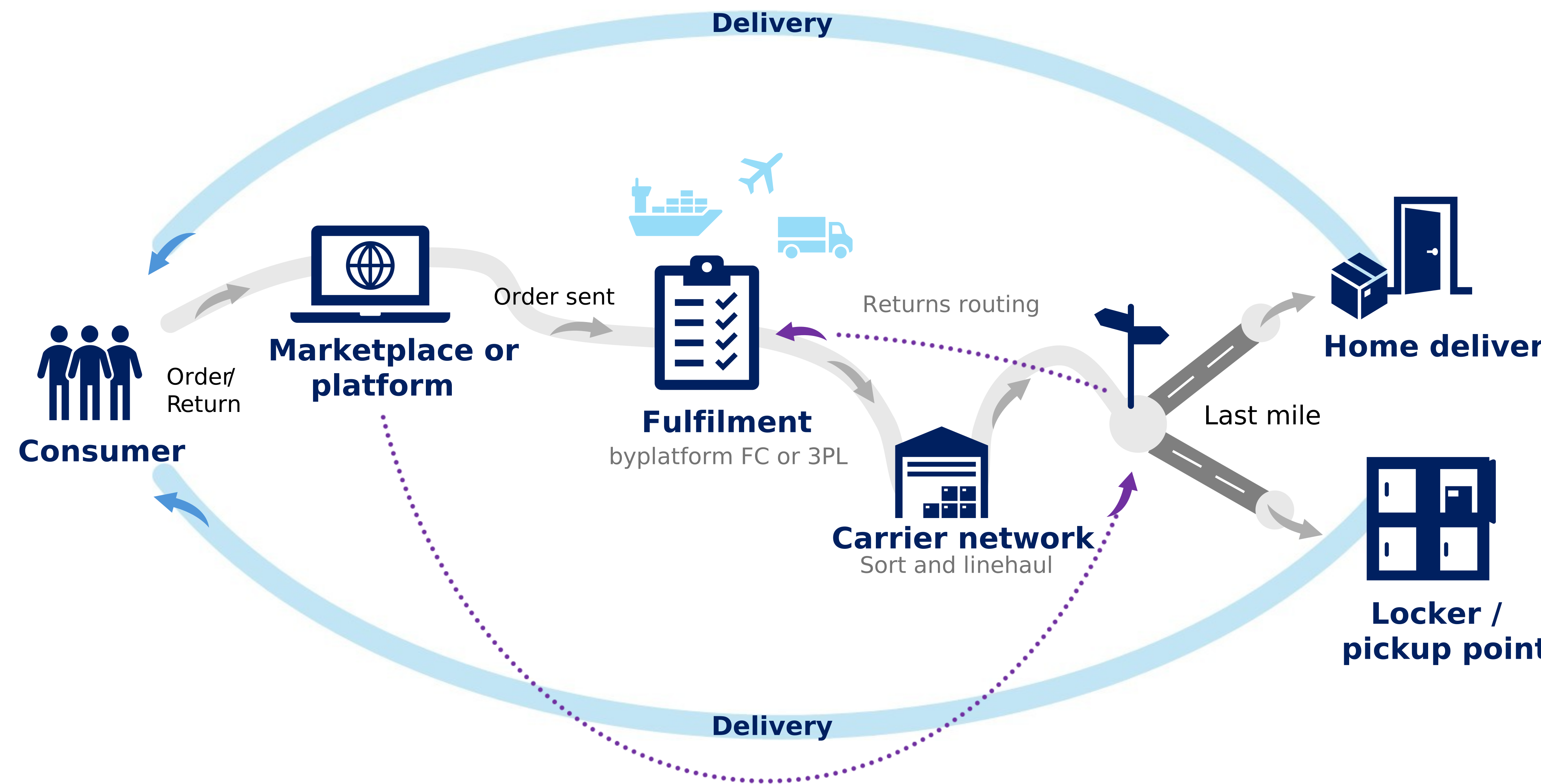
Note: This diagram represents a simplified and stylised version of logistics and delivery supply chain operations. It illustrates key concepts rather than all real-world complexities and variables. The short dotted purple arrow represent exception handling: when a delivery cannot be fulfilled, the package is automatically returned to the fulfilment centre for processing. The long purple arrow illustrates an alternative fulfilment model: in cases where the marketplace or platform lacks adequate storage or fulfilment infrastructure, the platform directs sellers to deliver directly to customers.
The ability to offer fast, reliable and cost-effective delivery has become a defining feature of online shopping, shaping consumer expectations and influencing marketplace competition. Companies active in the postal and parcel delivery sector, which maintain extensive transportation and distribution networks, play a central role in e‑commerce by offering a range of delivery solutions, including home delivery, parcel lockers and in-store pickup, as well as different shipping speeds, from standard to same‑day or next-day delivery. To optimise their operations, many online marketplaces establish agreements with major postal and courier services, securing discounted shipping rates and ensuring priority handling for their sellers. Such partnerships help improve delivery efficiency while reducing costs, benefiting both sellers and consumers.
Some online marketplaces go a step further by directly integrating logistics into their business models through fulfilment services. These services allow the platform to store inventory on behalf of sellers in dedicated warehouses, manage order processing, and oversee packing, shipping and returns. By consolidating shipments and leveraging economies of scale, marketplace‑operated fulfilment services may offer faster and more predictable delivery times compared to independent seller-managed logistics. Marketplaces may also incentivise sellers to use their logistics solutions by offering benefits such as free or discounted delivery options, streamlined returns and better visibility on the platform.
However, not all sellers rely on online marketplace logistics solutions. Some manage their own warehousing and shipping operations, or contract with third-party logistics providers to retain greater control over their distribution. This offers flexibility and may make it easier for sellers to operate across multiple online marketplaces or other sales channels. However, it can also introduce additional costs and operational complexities, particularly for smaller sellers who may lack infrastructure or bargaining power to secure competitive shipping rates.
Overall, logistics is more than just a supporting function – it is a core enabler of e‑commerce, facilitating the seamless movement of goods across the supply chain. Given that logistics and delivery services are essential for the functioning of online marketplaces, their integration and optimisation remain a key priority for marketplace operators.
The partnerships between online marketplaces and logistics providers reflect the interdependence of these sectors, as both work to enhance delivery speed, reliability and cost efficiency. The continued evolution of logistics services will remain critical in shaping the future of online marketplaces, influencing not only consumer expectations but also the strategies of sellers operating within these platforms.
2.4.2. Payments
The second related market discussed in this report is the payment sector. Payment services are classified as a related market to online marketplaces due to their essential role in enabling transactions between buyers and sellers. These services, which include payment processing, fraud prevention and transaction verification, are vital for the functioning of any online marketplace.
Without payment services, it would be impossible for online marketplaces to facilitate secure and efficient financial transactions. The relationship between payment services and online marketplaces is therefore deeply interconnected.
Payment services’ actors will not be fully mapped in Chapter 4 as it is not considered within scope of this report, however the report will examine how online marketplace platforms in Poland, Lithuania and Latvia may expand into the payment services market. Some key actors analysed in the mapping of Chapter 4 have already pursued such expansions, given the strict link between their operations, while others have partnered with external providers.
2.4.3. Authentication and login
The third related market relevant to e‑commerce is authentication and login services. These services are crucial for ensuring secure user access and interaction on online marketplace platforms.
These services include identity verification, multi-factor authentication and secure login mechanisms that protect user data and prevent fraud. Without these services, online marketplaces would struggle to maintain a secure and trustworthy environment, which is essential for their operations. The relationship between authentication services and online marketplaces is vital for ensuring both buyer and seller security.
For the purposes of this report, the main players in authentication and login services’ actors will not be fully mapped out. However, these services remain essential to underpinning the services provided by the online marketplaces described in Chapter 4.
2.4.4. Cloud Infrastructure
The last related market is the cloud sector. Cloud infrastructure is a related market to online marketplaces because it provides the technical foundation necessary for managing large volumes of data, processing transactions and hosting platform operations.
Cloud services are essential for online marketplaces to scale efficiently, ensuring reliability and high performance. Without robust cloud infrastructure, online marketplaces would face significant limitations in managing the growth of users, listings and transactions. The relationship between cloud infrastructure and online marketplaces is therefore fundamental to their continued operation and expansion.
For the purpose of this report, cloud infrastructure will not be fully mapped in Chapter 4. However, cloud services play a critical role in the success of online marketplace platforms and some of the key players explored in Chapter 4 have expanded into this sector.
2.5.1. Comparison shopping services (CSS)
Having examined the markets classified as neighbouring and related to online marketplaces, the focus now shifts to the supporting markets that form part of the broader e‑commerce ecosystem. The first of these is the market for comparison shopping services (CSS), a distinct segment that provides a supporting function to other e‑commerce platforms, including online marketplaces, online retailers and OCAS, rather than forming an essential component of marketplace operations.
CSS can be considered a supporting market to online marketplaces, as they enhance the purchasing journey by offering consumers a tool to compare prices and product attributes across multiple sellers and platforms. While CSS facilitate product discovery and may serve as an entry point for consumers before they transition to online marketplaces or other e‑commerce platforms, they are not intrinsic to the functioning of online marketplaces themselves.
However, online marketplaces may view the CSS market as a potential avenue for expansion, integrating price comparison functionalities into their own ecosystems to enable greater control over the entire purchasing journey. This trend has been observed in Poland, as further analysed in Chapter 4.
In its Google Shopping decision,6 the European Commission defines CSS as specialised search services that enable users to search for products and compare their prices and characteristics across offers from various online retailers and merchant platforms. These services also provide links directing users, either directly or through intermediary pages, to the websites of those retailers or platforms.
While there are functional and consumer usage overlaps among some e‑commerce segments, CSS generally maintain a clearly defined and separate role. These platforms are specifically designed to assist consumers in comparing prices, product attributes and availability across various e‑commerce websites without directly facilitating transactions.
CSS act as a bridge between consumers and online marketplaces, potentially creating advantages for both buyers and sellers. For consumers, these platforms enhance price transparency and facilitate more informed purchasing decisions by allowing them to assess multiple offers in one place. This function is particularly valuable in an increasingly crowded online environment, where price sensitivity and product differentiation can play a crucial role in consumer choices.
For sellers and retailers, CSS provide an additional channel to increase visibility and drive traffic to their online stores. By listing their products on these platforms, sellers can reach a broader audience beyond the confines of a single marketplace, thereby diversifying their customer acquisition strategies. This can be particularly advantageous for smaller retailers that may struggle to compete with more established marketplace operators. Additionally, by leveraging CSS, sellers can gain insights into pricing trends and competitor strategies, enabling them to adjust their offerings accordingly.
By empowering price‑sensitive consumers and providing sellers with enhanced exposure and market intelligence, these services play a crucial role in shaping purchasing behaviours within the broader digital e‑commerce ecosystem.
2.5.2. Advertising
The next supporting market relevant to examine for the purpose of this study is the advertising sector, a distinct and separate segment that serves to enhance the functionality of online marketplaces and other e‑commerce platforms.
Advertising markets are considered supporting to online marketplaces because, while they add significant value to the services offered by the platform, they are not essential for the basic functioning of online marketplaces. Advertising services, such as display ads, search ads and sponsored listings, serve to increase the visibility of products and services within the marketplace environment, but the platform itself can operate without these services. Advertising can enhance customer experience by helping users discover products they may not have found otherwise, but it is not a fundamental component of the core marketplace functionality. Instead, it provides an added layer of value by driving traffic to products and facilitating consumer decision making through targeted promotional content.
As already mentioned above, online marketplaces increasingly view advertising as a critical avenue for revenue generation and business growth. Through their advertising services, marketplaces enable sellers to promote their products to targeted audiences, aiming to increase the visibility of their offers beyond organic search results. In this way, advertising becomes a significant revenue stream for online marketplaces, with many platforms adopting ad services as an integral part of their business models. Sellers typically pay for these advertising services based on cost-per-click (CPC)7 or cost-per-mille (CPM)8 models, which may contribute substantially to the marketplace’s overall revenue.
The expansion of online marketplaces into the advertising sector has become particularly pronounced in recent years, with major players such as Amazon leveraging their large user base and vast consumer data to provide highly targeted advertising solutions. This shift reflects a broader trend where online marketplaces seek to capture a larger share of the marketing budget from both advertisers and sellers, thus creating a self-reinforcing loop where advertising contributes to marketplace growth, which in turn drives more advertising revenue.
Online marketplaces’ efforts to expand in the advertising space have led to the development of increasingly sophisticated ad platforms, which allow for refined targeting based on consumer behaviour, purchase history and demographic data. These capabilities make advertising on online marketplaces especially attractive to both large and small sellers looking to maximise their exposure. Additionally, these platforms are expanding their offerings to include a variety of ad formats, such as video ads, sponsored brands and display banners, to cater to different types of products and marketing strategies.
At the same time, it is fair to state that the growing importance of advertising introduces a potential tension between marketplaces’ intermediation function and their role as providers of paid visibility. As in search engines, the coexistence of organic results and sponsored placements may blur the line between neutral intermediation and promotional content.
Despite being non-essential to the core operations of online marketplaces, the advertising sector plays a pivotal role in the broader e‑commerce ecosystem. By helping sellers attract consumers and improve the visibility of their products, advertising services ultimately shape purchasing behaviours and contribute to the platform’s revenue growth. In this way, advertising not only supplements the functionality of online marketplaces but can also offer significant opportunities for expansion within the market.
References
[4] European Union (2026), Glossary:E-commerce, https://ec.europa.eu/eurostat/statistics-explained/index.php?title=Glossary:E-commerce (accessed on 1 April 2026).
[1] OECD (2024), Competition Policy in Digital Markets: The Combined Effect of Ex Ante and Ex Post Instruments in G7 Jurisdictions, OECD Publishing, Paris, https://doi.org/10.1787/80552a33-en.
[2] OECD (2022), OECD Handbook on Competition Policy in the Digital Age, https://doi.org/10.1787/c8c1841b-en.
[3] OECD (2021), “Ex Ante Regulation and Competition in Digital Markets”, OECD Roundtables on Competition Policy Papers, No. 272, OECD Publishing, Paris, https://doi.org/10.1787/c83e178d-en.
[5] OECD (2018), “Implications of E-commerce for Competition Policy”, OECD Roundtables on Competition Policy Papers, No. 274, OECD Publishing, Paris, https://doi.org/10.1787/b7978bd0-en.
← 1. Increased price transparency may have other consequences, including increased monitoring of retail pricing by competitors, with the possibility of greater collusion and/or the deployment of algorithmic pricing.
← 2. Regulation (EU) 2019/1 150 of the European Parliament and of the Council of 20 June 2019 on promoting fairness and transparency for business users of online intermediation services (EU P2B Regulation), OJ L 186, 11.7.2019, p. 57‑79.
← 3. Regulation (EU) 2022/1925 of the European Parliament and of the Council of 14 September 2022 on contestable and fair markets in the digital sector (EU Digital Markets Act), OJ L 265, 12.10.2022, p. 1‑66.
← 4. The Buy Box is a feature on online marketplaces that designates the default seller for a product when a consumer clicks “Add to Cart” or “Buy Now.” It is highly competitive, as multiple sellers may offer the same product, but only one can occupy the Buy Box at a time. The Buy Box algorithm selects a seller based on factors such as price, fulfilment method (e.g. use of the marketplace’s logistics services), shipping speed, customer reviews, and seller performance metrics. Winning the Buy Box significantly increases a seller’s chances of making a sale, as most consumers purchase from the featured seller rather than exploring other offers.
← 5. However, it is worth stating that in some cases, the boundaries between OCAS platforms and online marketplaces become blurred, as an increasing number of OCAS platforms allow listings from professional sellers. This shift introduces B2C mechanisms within platforms traditionally designed for C2C interactions.
← 6. Case AT. AT.39 740.
← 7. Cost-per-click (CPC) refers to an online advertising pricing model in which advertisers pay a fee each time a user clicks on their ad. This model is commonly used in search engine advertising and marketplace‑sponsored listings, allowing advertisers to bid for ad placements based on keyword relevance and competitive pricing.
← 8. Cost-per-mille (CPM) is an online advertising pricing model in which advertisers pay a fee for every 1 000 impressions (views) of their ad, regardless of whether users interact with it. This model is commonly used in display advertising, brand awareness campaigns, and marketplace‑sponsored placements, where visibility and reach are prioritised over direct engagement.