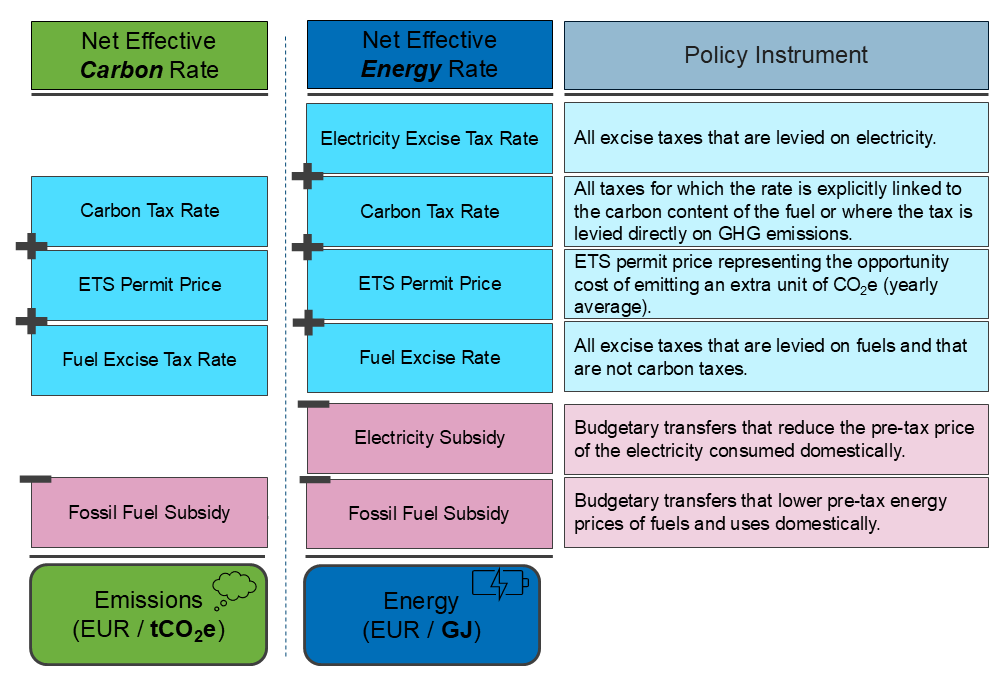
The Carbon Pricing and Energy Taxation database integrates data on price signals from fuel excise and electricity excise taxes, carbon taxes, emissions trading systems (ETSs) as well as electricity and fossil fuel subsidies. It brings together the former Taxing Energy Use and Effective Carbon Rates databases into a single, comprehensive resource.
All instruments considered are interpretable as either directly changing the cost of emitting greenhouse gases (GHG) or changing energy prices. Policy settings depend on a range of potential objectives including revenue raising, affordability, competitiveness and environmental and climate goals.
Going beyond a stocktake of tax rates and permit prices (and different from collecting aggregated revenues), the database maps policy instruments to the corresponding energy use and GHG emissions base in a way that is comparable across countries and over time. Additionally, it accounts for tax exemptions, rate reductions and refunds, which are pervasive in energy tax and carbon pricing systems, in order to compute effective rates – thus going beyond statutory rates.
The most recent data (up to 2023) covers 78 countries, which together account for approximately 70% of global GHG emissions and energy use.
Dataset schedule: Data has a two-year increment (2021, 2023 etc.) but is updated annually, alternating between:
- Preliminary data with updated energy taxes, carbon taxes and ETS permit prices as well as energy subsidies.
- Final data with updated ETS coverage as well as energy use and emissions base data.