This Annex describes the methodology used to map selected regulations and policy proposals that introduce carbon-intensity requirements enforced at the border. The purpose of the mapping is to identify whether these regulations contain information relevant for implementation and enforcement at the border, with particular attention to customs procedures, other border-related processes, data movement, and trade facilitation aspects.
The analysis is based on a qualitative review of primary legal texts (and draft texts where applicable), supplemented by available explanatory documents and official guidance. The mapping records whether specific border-relevant aspects are mentioned in the regulatory framework. It does not assess legal effectiveness, operational quality, or implementation outcomes, nor does it distinguish between binding and non-binding provisions.
Eight regulations across different jurisdictions were included (Table 1), covering initiatives at varying stages of development. Given the evolving nature of several instruments, the absence of a reference to a specific aspect should not be interpreted as evidence that it will not be addressed in future implementing measures and guidelines.
The mapping is structured around three analytical categories:
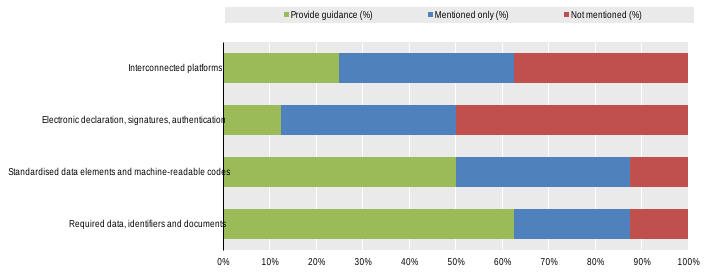
1. Required documents and data movement at the border, covering references to data, identifiers, or documents; standardised or machine-readable data elements; electronic declarations and authentication; and interconnected digital platforms (Figure 6).
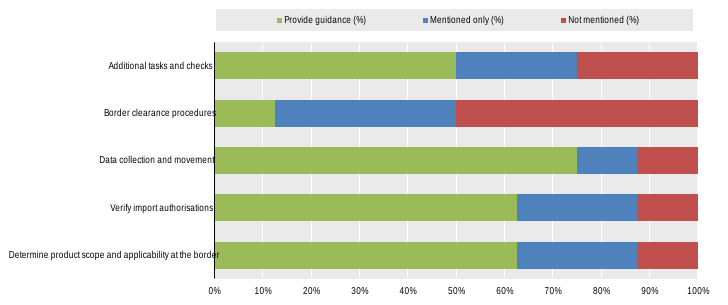
2. Role of customs and other border agencies, including references to determining product scope and applicability at importation, verifying authorisations, collecting and exchanging data, carrying out border clearance tasks, and performing additional controls (Figure 7).
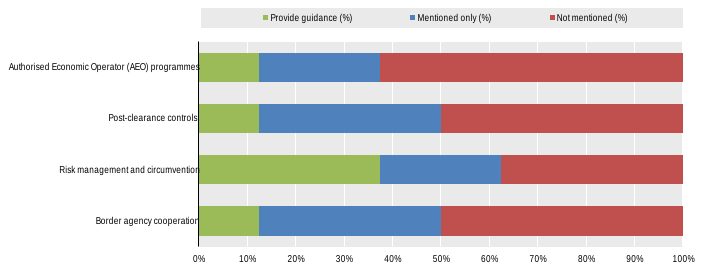
3. Relation to trade facilitation measures, capturing references to border agency co‑operation, risk management and circumvention, post-clearance controls, and AEO programmes (Figure 8).