Few countries provide data on how goods are transported when they enter or leave a territory. For the purposes of this analysis, the OECD has compiled data for major economies that report bilateral trade values by modes of transportation2: Australia, Brazil, Canada, Japan, European Union,3 Türkiye, and the United States (See Annex A for a description of sources and methodology). While the database covers only a fraction of total trade (29.5% of world export value and 33.4% of import value in 2023), some important insights can be gleaned from the data at the region and product level.
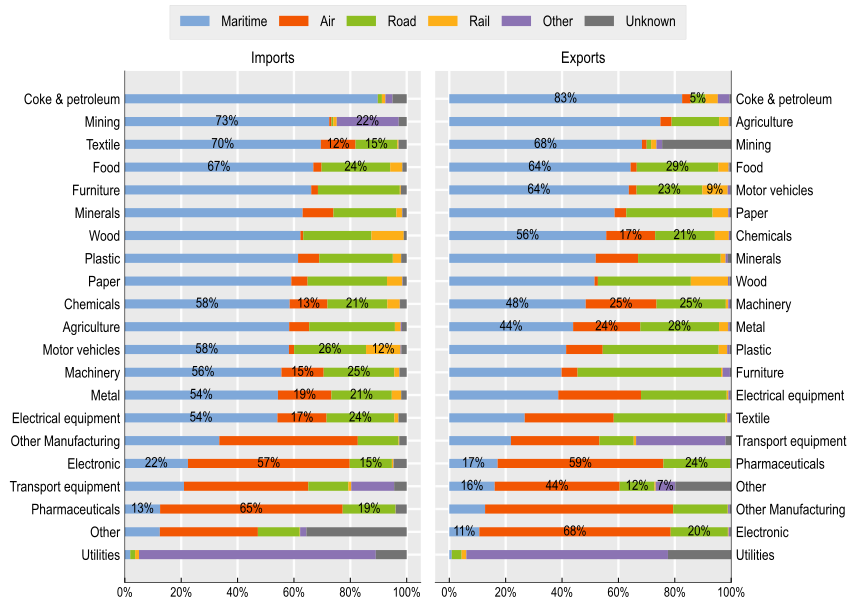
There are four major ways (modes) of moving goods over long distances: road, rail, air, and maritime.4 Deciding which mode to use depends on several factors related to each mode, such as cost, capacity, speed, and reliability, as well as the type of goods being shipped. Maritime or rail might be preferred for heavy or bulky items such as cars, machinery, or grains, while air transportation is better suited for high-value or time-sensitive items.
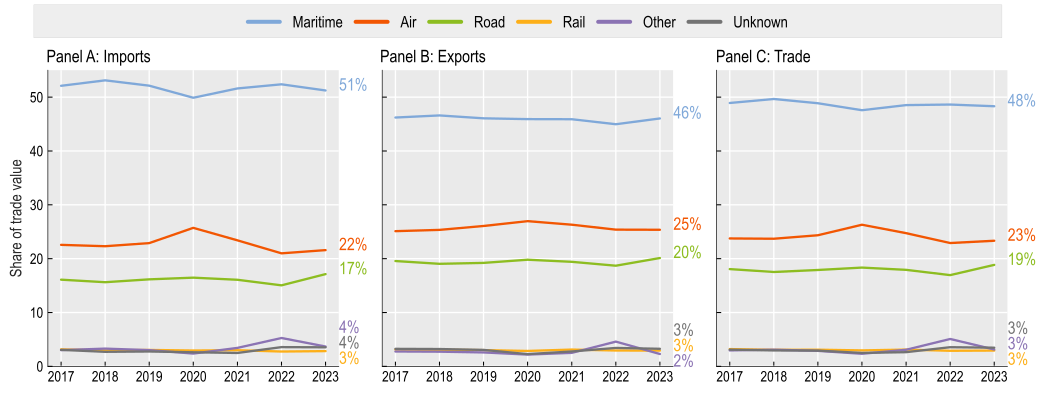
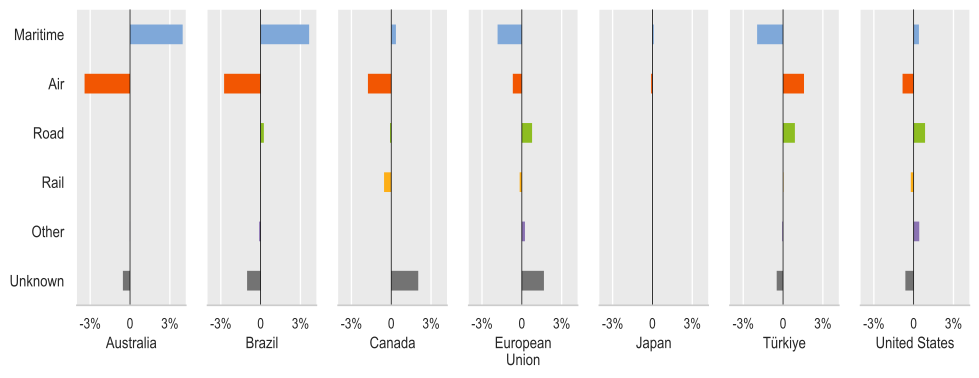
Among the main modes of transportation, maritime transport offers the largest carrying capacity in both volume and weight and, when compared to some other modes, is more affordable and practical when shipping on long distances.5 It is therefore by far the most used mode, accounting for almost half of internationally traded goods in 2023 (48.3%, Figure 3.1, Panel C), followed by air (23.3%) and road (18.8%). Rail and other modes of transportation such as post, pipelines, self-propulsion or fixed mechanism, accounted for 2.9% (Rail) and 3.1% (Other) of the value of goods being moved. Despite significant disruptions to different transport modes during the COVID-19 pandemic, in 2023 the structure of trade by mode of transportation was similar to that in 2019.
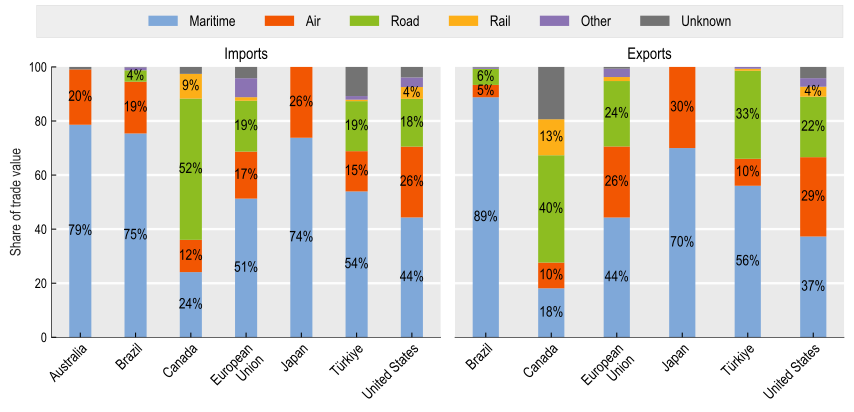
The shares vary across countries, as the mode of transportation is determined by the geographical location and transportation infrastructure of a country, its trading partners and goods shipped. With at least one third of goods being shipped by water, maritime transport is the main mode for all the covered economies, except Canada (Figure 3.2). In Canada, goods enter the country mostly by road (52% of imports and 40% of exports were being shipped by trucks in 2023), revealing the importance of the country’s land border with the main trading partner, the United States. Canada is also the only covered country where rail transportation accounts for a relatively large share among the different modes recorded when goods cross its borders (9% of imports and 13% of exports). Most countries with a significant land border use different modes of transportation as illustrated by the fact that at least 10% of goods enter or leave a country by sea, air and road. Brazil stands out with a lower value share of road and air transport for exports (respectively 6% and 4%), as its top exported commodities – grains and oilseed, oil, and mining products – are mainly transported by sea to China.