This chapter examines the funding, procurement and infrastructure that underpin digital school education in the Netherlands. It reviews the school system’s expenditure on education as well as the mechanisms through which digital resources are allocated to schools, from the central lump sum funding system to targeted grants supporting innovation and digitalisation. The chapter also covers central initiatives that invest in digital education, schools’ procurement of digital resources, as well as efforts to safeguard privacy and digital security in schools’ digital infrastructure. The chapter identifies strengths and challenges related to each of these policy areas and provides recommendations to address them.
OECD Review of Digital Education Policy in the Netherlands

Abstract
Expenditure on education and digital resources
Overall levels of education expenditure
Overall expenditure on school education in the Netherlands is above the OECD average, both in real terms and as a proportion of GPD. In 2022, the Netherlands spent 4.2% of its gross domestic product (GDP) on educational institutions from the primary to the tertiary level (including R&D) and 3.0% on primary to post-secondary non-tertiary education. This is around the respective OECD averages of 4.0% and 3.0% of GPD, but constituted a significant drop from 2021, when 3.6% of GDP were spent on primary to post-secondary non-tertiary education (OECD, 2024[1]). Nevertheless, the share of GDP dedicated to overall expenditure on educational institutions has increased by 12.7% between 2015 and 2022 (based on constant 2020 prices in equivalent USD converted using PPPs) (OECD, 2025, pp. 285, Tables C1.2 and C2.2[2]). Likewise, per student expenditure on primary to post-secondary non-tertiary education has steadily increased over the past 20 years (see Figure 3.1).
In US dollars per full-time equivalent student, PPP converted (constant 2015 prices)

Note: Includes total public and private expenditure on all (public and private) primary to post-secondary non-tertiary education institutions. Not inflation-adjusted.
Source: OECD/UIS/Eurostat (2024[3]), Education at a Glance Database, http://stats.oecd.org/.
In real terms, the Dutch government committed to a budget of EUR 13-15 billion for primary education and EUR 10-12 billion for secondary education between 2022 and 2028 (OCW, 2024[4]). In 2021, the overall expenditure on primary to post-secondary non-tertiary education institutions was USD 12 650 per full-time equivalent student (adjusted for PPP and using constant 2015 prices), significantly above the OECD and EU-25 averages of USD 11 703 and USD 10 461, respectively. Despite the unprecedented upheaval and challenges that the COVID-19 pandemic caused for education systems across the world, its impact on education spending was limited in the years after the pandemic. In the Netherlands, spending on education continued to grow in line with the trend of previous years through 2020 and 2021, even as GDP fell and other government expenditure increased sharply to address the consequences of the pandemic (OECD, 2023, p. 290[5]) (see Figure 3.1).
In 2023, about 23% of the overall education expenditure in the Netherlands was dedicated to primary education, 39% to secondary education and 30% to tertiary education, including R&D. While the relative distribution of investment across levels of education is similar to the OECD average, investment in early childhood education (ECE) in the Netherlands remains low, at 0.4% of GDP, compared to 0.9% across OECD countries (see Figure 3.2). Whereas many countries have increased their investment in ECE between 2015 and 2021 (leading to an average 9% increase in spending relative to GPD across OECD countries), the level of relative investment remained constant in the Netherlands (OECD, 2024, pp. 282, Table C2.2[1]).
Early childhood to tertiary education institutions, as a percentage of GDP

Note: 1. Includes payments by households outside educational institutions. 2. Primary includes pre-primary education.
Expenditure at tertiary level includes R&D. Countries are ranked in ascending order of total expenditure on primary to post-secondary non-tertiary institutions as a percentage of GPD.
Source: Adapted from OECD (2025[2]), Education at a Glance 2025: OECD Indicators, https://doi.org/10.1787/1c0d9c79-en, Figure C1.5.
While the Netherlands is in a solid fiscal position (see Chapter 1), the government’s latest fiscal plans, presented in September 2024 and adjusted in the 2025 Spring Memorandum, marked a significant shift in policy priorities with important implications for education and research funding. Increased spending on healthcare, housing and defence as well as reductions in personal, corporate and environmental taxes were planned to be offset by spending cuts concerning education, research and development, and climate policy (OECD, 2025, p. 33[6]) (see Chapter 1). The cabinet’s policy plans for 2025-28 implied a EUR 1.8 billion decrease in annual spending on education by 2028 as well as a EUR 5.5 billion cut by phasing out the National Growth Fund (OECD, 2025, p. 26 & 33[6])
Sources of funding
The Netherlands has a large private education sector, accounting for 70% of enrolment at the primary level, 74% at the lower secondary level and 92% at the upper secondary level in 2023 (OECD, 2025[7]). However, nearly all privately managed schools at the primary and lower secondary level and more than 80% of those at the upper secondary level are government-dependent, are funded on the same basis as public schools and are not charging tuition fees. As a result, the vast majority of investment in Dutch school education comes from public sources, as is the case across OECD countries. In 2022, public spending accounted for 88% of total expenditure on primary, secondary and post-secondary non-tertiary institutions in the Netherlands, just slightly below the OECD average of 90% (see Figure 3.3). Private sources of funding contributed 12% of expenditure at the primary, secondary and post-secondary non-tertiary levels (compared to 9% on average across OECD countries), with 4% coming from households and 8% from other private entities (2025, pp. 282, Table C1.5[2]). The regulation of parental contributions is discussed in more detail below.
Expenditure on primary, secondary and post-secondary non-tertiary education, after government transfers

Note: 1. Primary education includes pre-primary education. 2. Total expenditure on educational institutions includes payments of households outside educational institutions. 3. Year of reference 2021. 4. Household expenditure includes expenditure by other private entities. 5. Non-domestic expenditure is included in private expenditure. Countries are ranked in ascending order of the share of government expenditure.
Source: OECD (2025[2]), Education at a Glance 2025: OECD Indicators, https://doi.org/10.1787/1c0d9c79-en, Table C1.5.
Expenditure on digital and other types of resources
Schools in the Netherlands receive their regular funding via their school boards in the form of a lump sum, which they can allocate autonomously for different types of expenditure, including on digital resources. As in all OECD countries, by far the greatest share of expenditure in school education goes towards salaries (see Figure 3.4). In 2022, staff compensation accounted for 71% of expenditure in primary and lower secondary education and 74% of expenditure in upper secondary education (close to the OECD averages of 71% in primary and 72% in lower and upper secondary education). The remaining spending either went towards other current expenditure (18% across all levels of school education), or towards capital spending (11% in primary and lower secondary and 9% in upper secondary education) (OECD, 2025[7]).
Expenditure from public and private sources on primary, secondary and post-secondary non-tertiary education

Note: 1. Primary education includes pre-primary programmes. Staff compensation includes teachers and other staff. Countries are ranked in ascending order of the share of staff compensation.
Source: OECD (2025[7]), Education at a Glance Database, https://data-explorer.oecd.org/.
Schools’ spending on digital resources can count as either capital or current expenditure, depending on whether it goes towards longer-lasting assets (such as computers), or goods and services that have a shorter duration or require recurrent investment (such as software subscriptions, digital learning materials, tech support or teacher training). Beyond these broad categories, there is no internationally comparative data or widely-adopted accounting standard to measure expenditure on digital education resources (OECD, 2023, p. 113[8]; European Commission/EACEA/Eurydice, 2019[9]).
Schools’ expenditure on digital resources is not systematically monitored at the national level in the Netherlands either. The MYRA School Education Digitalisation Monitor1 asked school board members, school leaders and staff with responsibilities for ICT for a rough estimate of their schools’ ICT budget, but the item response rates were too low to provide reliable estimates (only 20 of 225 primary school leaders and 10 of 112 school secondary leaders who filled out the survey responded to this question) (Karssen et al., 2023, p. 28[10]; Karssen et al., 2023, p. 25[11]). Further insights into parents’ self-reported contributions towards schools’ ICT costs, but not their overall expenditure, are provided by the School Cost Monitor (see further below) (de Geus et al., 2023[12]).
This lack of systematic data on investment in schools’ digital infrastructure is not uncommon in international comparison. With few exceptions, including Korea and Lithuania, most education systems that participated in the OECD’s Policy Survey on School Education in the Digital Age reported that they do not separately monitor schools’ (or local authorities’) expenditure on digital resources. However, some countries are better placed to gauge expenditure on digital resources than others, since they provide schools with earmarked ICT grants (e.g. Ireland), operate central procurement services (e.g. Wales [UK]), or purchase most digital resources at the central level (e.g. Portugal) (Boeskens and Meyer, 2025, pp. 64, Annex Table 4.1[13]).
In the Netherlands, school boards submit annual reports including information on their income and expenses, capital reserves and staff. Based on these reports, the Dutch Education Executive Agency (Dienst Uitvoering Onderwijs, DUO) prepares and publishes financial accountability data for the sector, which also form the basis for the Inspectorate of Education’s annual reports. The inspectorate is responsible for the financial oversight of schools and regularly informs the public about financial data at school board level (see further below). The inspectorate’s reports provide insights into education expenditure at the school board level (incl. their budget surplus, solvency, liquidity, excess capital reserves and their share of temporary and non-salaried staff). However, the accounting of expenditure only distinguishes between staff costs, depreciation costs, housing expenses (incl. rent, insurance, maintenance, energy and cleaning, and depreciation of buildings and inventory) and other expenses, thus not allowing for the identification of schools’ expenditure on digital resources (Inspectorate of Education, 2024[14]).
Funding mechanisms in school education
Mechanisms for the distribution of school funding
The amount of school funding and the mechanism for its distribution are determined by the Ministry of Education, Culture and Science (OCW). Public schools (openbaar onderwijs) and recognised government-dependent private schools (bijzonder onderwijs) in the Netherlands are funded by the government and receive the same amount of resources, provided that they meet a set of statutory requirements. The independent private sector, which is funded by parents or other private sources, accounts for a smaller share of Dutch schools (less than 2% of enrolment in primary and lower secondary education and 15% in upper secondary education) (OECD, 2025[7]). As a result, school funding in the Netherlands is highly centralised. In 2022, primary to post-secondary non-tertiary institutions received 92% of their funding directly from the central government (the Rijksoverheid). Another 8% of funding was provided by the local level (5% from local sources and 3% after transfers from the central level). By contrast, on average across OECD countries, 57% of expenditure on primary to post-secondary non-tertiary education was distributed by regional or local authorities (15% of which after transfers from the central level) (OECD, 2025, pp. 287, Table C1.4[2]).
Schools receive the majority of their funding in the form of an annual lump sum from the government, which is intended to cover staff costs, operating costs and maintenance expenses (see Figure 3.5). The lump sum is paid to school boards, who are responsible for distributing it among their schools (if they have multiple schools under their authority) based on their own criteria, usually retaining a proportion of the funding to cover their own costs. Funding from the lump sum may be complemented by supplementary funding from a range of subsidies and targeted grants (see further below). Although publicly funded schools are not permitted to charge fees, schools can receive voluntary contributions from parents and businesses – a practice that is more common in private than in public schools (OCW, 2024[4]).
Municipalities are responsible for covering capital costs associated with the construction, renovation and extension of school buildings within their jurisdiction as well as outdoor maintenance. This includes infrastructural adaptations that may be needed to allow for more flexible forms of instruction involving the use of digital education resources. In a 2021 report, an interdepartmental policy research committee on primary school buildings concluded that many of the existing school buildings are insufficiently equipped for more modern forms of education, including differentiated instruction, hybrid learning, or the use of assistive technologies (IBO Onderwijshuisvesting Funderend Onderwijs, 2021, p. 25[15]).
Although municipalities have no further responsibility for the provision of school education or its funding, some municipal authorities – as part of their work related to child protection and poverty reduction – provide targeted funding to schools, for example to support students at risk of dropping out. Municipalities in the Netherlands are funded by a lump sum grant from the government’s Municipalities Fund as well as locally raised taxes, such as tourism taxes and taxes on certain types of property.

Note: VMBO stands for pre-vocational secondary education (voorbereidend middelbaar beroepsonderwijs), HAVO stands for senior general secondary education (hoger algemeen voortgezet onderwijs), VWO stands for pre-university education (voorbereidend wetenschappelijk onderwijs) (see Chapter 1). Dotted lines indicate lump sum transfers between public authorities. Dashed lines indicate resources transferred in kind from a public authority to the body that uses them. Solid lines indicate resources transferred in cash from a public authority to the body that uses them.
Source: Adapted from Eurydice (2014[16]), Financing Schools in Europe: Mechanisms, Methods and Criteria in Public Funding.
The amount of schools’ annual lump sum is calculated based on the number of its students on 1 February (primary education) or 1 October (secondary education), with additional funding for schools in remote areas, students with special education needs (SEN), new migrant students or refugees, and other specific student populations (OCW, 2024[4]) (see Box 3.1).
Since 2019/20, the lump sum for primary schools has been calculated based on a disadvantage score (achterstandsscore) developed by Statistics Netherlands (Centraal Bureau voor de Statistiek, CBS). The score is calculated at the student level and aggregated at both the school and municipality levels. Starting in 2024/25, equity funding at the secondary level will be distributed based on the new Educational Opportunities Scheme (Regeling Onderwijskansen Voortgezet Onderwijs), replacing the Learning Plus Arrangement (Leerplusarrangement). The new allocation method will be based on students’ CBS disadvantage scores (as in primary education), rather than the previously used area-based indicator of poverty accumulation (Armoedeprobleemaccumulatie, APC) (OCW, 2024[17]).
CBS uses five variables to calculate students’ disadvantage scores based on data provided by DUO: Mothers’ and fathers’ level of education, mothers’ length of stay in the Netherlands, Students’ country of origin, and whether or not their parents are undergoing debt restructuring. The variable values are associated with weights whose sum corresponds to each student’s disadvantage score (the lower the score, the greater the estimated risk of educational disadvantage). For secondary education (VMBO, HAVO, VWO), the values are as follows:
Mother's education level: Primary education (-0.33); VMBO-b/k, MBO 1 (-0.30); VMBO -g/t, AVO lower level (+0.14); MBO 2 and MBO 3 (+0.00); MBO 4 (+0.33); HAVO, VWO (+0.63); HBO/WO Bachelor's (+1.02); HBO/WO Master's or Doctorate (+1.28).
Mother’s length of stay in the Netherlands: 0-5 years (-0.06); More than 10 years (+0.00); 5-10 years (+0.29).
Father's education level of education: Primary education (-0.22); VMBO-b/k, MBO 1 (-0.15); VMBO-g/t, AVO lower level (+0.21); MBO 2 and MBO 3 (+0.00); MBO 4 (+0.40); HAVO, VWO (+0.64); HBO/WO Bachelor's (+0.83); HBO/WO Master's or Doctorate (+1.23).
Country of origin: Suriname, Antilles (-0.49); Türkiye (-0.49); North Africa (-0.16); New EU countries (-0.13); EU-15, Western countries (-0.12); Other countries (-0.02); Netherlands (+0.00); East Asia (+0.48).
Parents in debt restructuring: No (+0.00); Yes (-0.84).
For primary education, the variable weights were determined in 2019 and revised following a 2021 evaluation, based on their statistical association with students’ Cito scores in year 8, controlling for cognitive ability as measured by the NSCCT test (Walhout and Scholtus, 2021[18]). In addition to the five variables above, the disadvantage score at the primary level also takes into account the average length of education of all mothers in the school. For secondary education, the values were recalibrated to improve their association with students’ level of education and exam grades.
The students’ individual disadvantage scores are used to calculate each schools’ net education score using the formula A – B. If the net education score is positive, a school receives additional funding. The formula’s components are calculated as follows:
A (gross education score) is the difference of D – C for all students scoring in the bottom 15% of the national distribution of disadvantage scores (target group students), where C is their individual disadvantage score, and D is the national average for all primary or secondary students.
B (threshold) is the product of E x F x (C – G) where E is the number of students in the school, F is a percentage set by the ministry (12%) and G is the national average of the disadvantage score for all target group students.
Source: Walhout and Scholtus (2021[18]), Herijking Onderwijsachterstandenindicator Primair Onderwijs [Recalibration of the Educational Disadvantage Indicator in Primary Education]; OCW (2024[17]), De Nieuwe Regeling Onderwijskansen Voortgezet Onderwijs: VMBO, HAVO en VWO [The New Regulation on Educational Opportunities in Secondary Education: VMBO, HAVO and VWO].
School autonomy in the use of resources for digital education
Schools in the Netherlands enjoy a high degree of autonomy in the use of their resources and can freely decide how to allocate their lump sum funding across different categories of expenditure. Prior to a 2022/23 funding reform, the Education Executive Agency (DUO) provided schools with a block grant subdivided into two separate budgets for staff costs and a third budget for operational goods and services, each calculated based on distinct criteria (European Commission, EACEA and Eurydice, 2014[16]). The new lump sum mechanism has simplified the calculation of school funding with the aim to increase the stability and predictability of schools’ budgets, to enhance their ability to engage in longer-term planning, and to increase their autonomy to allocate funding across different categories of expenditure (Inspectorate of Education, 2023[19]; Onderwijsraad, 2018[20]).
Schools’ budgetary autonomy is reflected in principals’ responses to the PISA 2022 questionnaire, which assigned the Netherlands by far the highest values on the PISA index of school responsibility for resources among all participating countries (OECD, 2023, pp. 214, Figure II.6.4[21]). The index captures schools’ autonomy in matters such as budget formulation and allocation (which most Dutch principals report lies with themselves and the school board) as well as diverse issues such as the choice of learning materials (OECD, 2023, pp. 411, Table II.B1.6.1[21]). In contrast to nearly all OECD countries, this high level of autonomy does not only extend to private, but also to public schools in the Netherlands (OECD, 2023, pp. 411, Table II.B1.6.3[21]).
Schools’ and school boards’ ability to freely choose learning materials that are aligned within their pedagogical orientation is connected to the freedom of education principle, enshrined in Article 23 of the Dutch Constitution.2 Textbooks and other learning materials, including in digital formats, are not provided or sanctioned by central authorities or agencies, but largely developed and disseminated by private publishers and distributors, or – in the case of open educational resources (OER) – by teachers and other practitioners (see Chapter 3). Especially at the primary level, distributors play an important role for schools, effectively serving as a “one-stop-shop” providing them with learning materials and related services from a range – often dozens - of publishers (Kennisnet, 2023[22]). There is also a significant market of private education consultancies (adviesbureaus), many of which are small firms, offering schools a range of services, including professional development, advice on different types of digital resources and assistance in procurement processes (OCW, 2024[4]).
The increasing use of digital education materials as well as the advent of new licensing models have transformed the education materials market in recent years. The market for teaching materials in the Netherlands has been dominated by large, traditional publishing houses (with Malmberg, Noordhoff and ThiemeMeulenhoff accounting for more than 80% of the market (Kennisnet, 2023[22])) and large distributors, which ensure that their products are delivered to schools (at the primary level, the only active distributors are Heutink and Rolf Groep; at the secondary level, major distributors include TLN/VanDijk, Iddink or OsingadeJong (Kennisnet, 2023[22])). In recent years, publishers have increasingly developed digital teaching materials and – particularly in secondary education – sought new distribution strategies, notably the hybrid LiFo model (short for Licentie-Folio). Previously, most schools used to rent physical textbooks for multiple cohorts of students to use before returning them to the publisher (via distributors) after a given number of years. Under the LiFo model, schools purchase a license granting students full access to digital learning materials for all grade levels of a given teaching method, with the option (chosen by most schools) to pay a small additional fee for accompanying paper workbooks (the “folio”). The accompanying workbooks are intended for students’ one-time use (to write assignments etc.). Since the workbooks are kept by students rather than returned, publishers no longer rely on distributors to collect textbooks under the LiFo model, thus significantly diminishing their role at the secondary level (Bulder and van Aarsen, 2023, p. 6[23]).
For schools, the LiFo model responds to a demand for blended learning and the combination of digital and paper-based learning materials. Receiving full access to all levels of a given digital teaching method also provides students and teachers with greater freedom to modify students’ learning paths (e.g. by letting some students work ahead or review material from previous years). The model also allows publishers to update both digital and printed materials every year (in contrast to textbooks, which remained in circulation for multiple years) (Kennisnet, 2023[22]). At the same time, many schools report that the LiFo model is more costly than traditional teaching materials and some perceive it as inflexible since its package-design leaves little room to, for example, combine one publisher’s materials for one year with those of a different publisher for another year. This, in addition to the multi-year commitments that LiFo model demands, has been described by many stakeholders interviewed by the OECD review team as a “lock-in” effect (see Chapter 3).
Another important development is the increasing collaboration between school boards in the procurement of digital education resources. An increasing share of them, particularly at the secondary level, collaborate through SIVON, 3 a voluntary initiative that supports participating school boards in the joint procurement of digital resources and learning materials (see further below).
Monitoring, transparency and accountability
The Dutch school funding system is designed to provide schools with a high degree of autonomy over the use of resources, based on the premise that schools are best placed to make effective spending choices to address their students’ needs in line with their specific pedagogical approach (OECD, 2017[24]). This freedom is balanced by a set of accountability mechanisms and transparency requirements. School leaders draw up a four-year school plan (schoolplan) detailing the school’s policies, its pedagogical approach, quality assurance mechanisms and objectives. Schools also draw up a multi-annual budget (begroting) detailing how resources will be used to achieve these goals, as well as an annual progress report (jaarverslag). They may receive support or advice from their school board in the process. Schools then submit these documents for review to their school participation council, which is comprised of parents and teachers (Medezeggenschap), as well as the board-level participation council (Gemeenschappelijke Medezeggenschap, GMR).
The school boards are accountable for the acquisition and expenditure of government funding. Each year, school boards submit their annual reports to the Education Executive Agency (DUO) (Inspectorate of Education, 2021, p. 49[25]; Inspectorate of Education, 2021, p. 49[26]). These annual reports include information on the school board’s income, capital reserves, expenses, insights into their financial planning and control cycle and a continuity paragraph (continuïteitsparagraaf), which includes the school board’s multi-year budget, forecasts of staffing and student numbers, as well as an assessment of important risks and uncertainties (Inspectorate of Education, 2023, p. 43[19]). School boards also submit their annual reports to be assessed by an accountant appointed by their internal supervisory board (interne toezicht).
The Inspectorate of Education is responsible for assessing the quality of education in individual schools as well as the education system as a whole and exercises oversight over the finances of publicly funded education institutions. Its financial supervision is primarily aimed at the level of school boards and based on their annual reports, which it receives and reviews every year. The inspectorate focusses its financial supervision on three areas: Legitimacy (i.e. whether education institutions receive the resources to which they are entitled and whether they spend them on their intended purposes), efficiency (i.e. whether education institutions’ expenditure is sufficiently targeted and cost-conscious), and continuity (i.e. whether the financial position of education institutions is sufficient to continue to providing good education) (Inspectorate of Education, 2021, p. 8[27]). Should the inspectorate identify any risks to a school board’s financial continuity and the continuity of education, it carries out a board-level financial inspection. Institutions that are deemed to be at financial risk can be placed under special financial supervision by the inspectorate. Over the past several years, around 1% of school boards were under special financial supervision at any given time (corresponding to 8 school boards in the latest reporting period) (Inspectorate of Education, 2024, p. 28[28]).
In addition to its board- and school-level reports, the inspectorate publishes annual system-level reports on the State of Education as well as thematic reports on priority issues. Until 2019, the inspectorate produced a separate report on the Financial State of Education (reporting on matters such as school boards’ budgeting, capital reserves, internal accountability mechanisms and legal conformity) (Inspectorate of Education, 2021[27]). Since then, these analyses have been included in the general State of Education reports and technical appendices. In addition, the Ministry operates a data dashboard making DUO’s financial accountability data available in an accessible format (OCW, 2024[29]).
Targeted funding and other grants for (digital) education
In addition to the regular school funding provided in the form of a lump sum, schools can benefit from additional funding streams, both from the central government and from other sources. While the lump sum accounts for the largest share of schools’ funding (sometimes referred to as “structural” or “systematic funding”) and is designed to cover their operating needs, a number of targeted funding streams (referred to as “grants”, “subsidies” or “incidental funding”) have been introduced to address additional funding needs arising from unforeseen circumstances or government priorities.
In contrast to the lump sum, which schools can spend as they see fit and whose parameters are determined by law and require multiple years to adjust (see Chapter 2), subsidies or grants can be introduced ad hoc and earmarked for specific purposes. This gives the government both additional steering power and the ability to respond quickly to emerging needs. However, subsidies are intended to serve a specific goal and can only be in place for a limited duration. Most of the grants provided by the Ministry are administered by the Implementing Agency for Grants to Institutions (Dienst Uitvoering Subsidies aan Instellingen, DUS-I), a government agency awarding funding on behalf of multiple ministries (DUS-I, 2024[30]). The most important grants for digital education in schools include the following:
National Education Programme (Nationaal Programma Onderwijs, NPO): A non-structural investment programme launched by OCW in 2021 to address the consequences of the COVID-19 pandemic for students. Overall, EUR 5.8 billion were made available to be distributed to primary and secondary schools alongside the lump sum over multiple years, starting in 2021/22. Following an evaluation of the programme’s first year, funding was adjusted and further differentiated, with primary schools receiving approximately EUR 500 per student and secondary schools EUR 820 per student (OCW, 2022[31]). Schools could decide how to spend the additional funding, drawing on a “menu” (Menukaart) of effective interventions after performing a self-evaluation of their needs. The interventions listed in the were selected based on consultations with experts and stakeholders (National Education Programme, 2025[32]). As was the case in 2021, most of the funding that schools received in 2022 went towards the deployment of additional staff and support (42%) and 17% of schools invested in interventions to promote effective education. Although the NPO did not target digital education directly, some of the menu’s interventions explicitly mention the use of digital education technologies. Furthermore, under target area F (“facilities/preconditions”) schools could use NPO funding to invest in digital technology (IT hardware and software for specific interventions, distance learning, feedback, etc.) as a precondition for implementing interventions in other target areas (OCW, 2023[33]; OCW, 2024[34]).
Basic Skills Improvement Subsidy (Subsidie Verbetering Basisvaardigheden): A programme launched by OCW as part of the 2022-26 Basic Skills Master Plan to help schools in promoting students’ basic skills in numeracy/mathematics, literacy, citizenship and digital literacy. The funding is disbursed in three tranches: Tranche 1 from 2022/23 to 2023/24, Tranche 2 from 2023/2024 to the end of 2025, Tranche 3 from 2024/2025 to the end of 2026. Primary and secondary schools that successfully apply for the scheme receive grants to invest in a list of effective interventions (interventiekaart). The interventions include additional instruction time for specific activities, training for teaching staff, as well as investments in learning tools. While some of them are explicitly designed to improve students’ digital literacy, others draw on digital education resources to help students improve other basic skills (OCW, 2024[35]; Jepma et al., 2023[36]; Jepma et al., 2024[37]).
Digital School 2024 (Digitale school 2024): A grant scheme launched in 2024/25 to support primary and secondary schools in providing digital distance learning for children and young people who are temporarily unable to physically attend school for health reasons.
Other grant schemes include the School and Environment grants (School en omgeving), which is designed to support schools’ extracurricular offer, as well as funding for the education regions (Onderwijsregio’s) to address teacher shortages at the regional level and to develop regional approaches to teacher training. In addition to targeted funding from the central level, schools can benefit from funding from the local, regional or supra-national levels. According to the inspectorate, some municipalities provide schools with additional grants (sometimes multiple, in the case of larger municipalities), the regions provide some funding (e.g. for technical education), and some schools benefit from funding from the European level, for example from the European Social Fund (Inspectorate of Education, 2023, p. 41[19]; Inspectorate of Education, 2024, p. 30[28]).
The years after the COVID-19 pandemic saw an increase in the amount of supplementary funding, i.e. targeted funding and grants from the government or other sources that schools received outside the main funding mechanism. Between 2019 and 2021, the proportion of supplementary funding in primary education increased from 6.7% to 8.1% before dropping again to 7.0%. 5.1% of this additional funding came from government grants and 1.9% from other sources, primarily municipalities. The proportion of supplementary funding was higher in secondary schools, which reported that 12.4% of their funding was allocated in addition to the lump sum in 2023 (10.9% from the government and 1.4% from other sources). This is a marked increase in the share of supplementary compared to the pre-pandemic level of around 10% (see Figure 3.6).
As percentage of total funding (lump sum, government grants and other grants)

Note: Mainstream primary and secondary education only. Some schools have accounted the NPO grants as lump sum funding (rather than government grants), the proportion of government grants is therefore underestimated.
Source: Inspectorate of Education (2025[38]), Technisch Rapport Financiële Kwaliteit. De Staat van het Onderwijs 2025 [Technical Report on Financial Quality. State of Education 2025], https://www.onderwijsinspectie.nl/documenten/rapporten/2025/04/16/technisch-rapport-financiele-kwaliteit.
Not all school boards rely on supplementary funding to the same extent. Analyses carried out by the inspectorate suggest that, in 2022, 46% of primary school boards and 70% of secondary school boards received supplementary funding worth at least 10% of their government lump sum. In 5% of primary school boards and 7% of secondary school boards, the dependency was as high as 30% and above. At the same time, for a sizeable share of school boards (42% at the primary and 20% at the secondary level), supplementary funding amounted to 5% or less of the size of their lump sum (Inspectorate of Education, 2024[28]; Inspectorate of Education, 2024[39]). School boards with more disadvantaged student populations tend to receive a higher share of their funding through supplementary grants (due to the eligibility criteria attached to some grants). The same holds for school boards in larger municipalities (i.e. with more than 250 thousand inhabitants) and for the largest school boards with at least 50 institutions under their supervision (Inspectorate of Education, 2024, pp. 22, 26[39]).
Central-level investment in the digital education infrastructure
Investment in central agencies and initiatives supporting digital education
The Ministry subsidises the Kennisnet Foundation with around EUR 13.5 million per year to support primary and secondary schools in the professional use of ICT. Founded in 1998, Kennisnet provides the school sector with expertise and advice related to digital education by offering ICT services and by strengthening the education system’s wider ICT infrastructure through initiatives, such as Digital Safe Education (Digitaal Veilig Onderwijs, DVO) (OCW, 2024[4]). Until a budget cut announced in 2011 led to a reduction in Kennisnet’s remit, the foundation also used to provide support to individual schools (van Bijsterveldt-Vliegenthart and Zijlstra, 2011[40]). Since then, Kennisnet’s support has been directed at the sector as a whole, whereas the responsibility for providing school-specific advice has been handed over to the market of private education consultancies (see Chapter 5 for a detailed discussion of the support provided by Kennisnet). Besides Kennisnet, the Ministry also subsidises programmes designed to enhance specific aspects of the use of digital education technologies, such as the Digital Safe Education programme. With a budget of EUR 6 million per year (2023-27), Digital Safe Education is working to enhance the digital safety of primary and secondary schools by developing a Framework of Standards for Information Security and Privacy in education (see further below).
National Growth Fund projects related to digital education
In addition, schools in the Netherlands benefit – directly or indirectly – from a number of projects funded through the National Growth Fund (Nationaal Groeifonds, NGF). The NGF funds projects contributing to durable economic growth, with a focus on knowledge development as well as on research, development and innovation. The Ministry of Economic Affairs and Climate Policy (EZK) administers the NGF on behalf of the government. The government initially committed EUR 20 billion to fund projects selected in five successive application rounds, starting in 2021. Following the OECD review visit, the cabinet’s 2025-28 budget implemented significant spending cuts that involved phasing out the National Growth Fund (OECD, 2025, p. 26 & 33[6]). The NGF’s premature termination involved the suppression of its final two funding rounds, reducing its budget by EUR 6.8 billion, while leaving the funding of previously accepted projects intact (Government of the Netherlands, 2024[41]). In its first three rounds (2022-24), the NGF accepted 51 projects to be funded with a total of up to EUR 11.3 billion (Government of the Netherlands, 2024[42]; EZK, 2024[43]). Important NGF projects related to digital education include:
The National Education Lab AI (Nationaal Onderwijslab AI, NOLAI) was established in 2022 and brings together scientists, developers of education technology and stakeholders from primary, secondary and special education to develop effective applications of intelligent technologies that contribute to improving the quality of education. Together, the programme partners take a co-creation approach to all stages of the projects’ development and implementation, and reflect on their pedagogical, societal, and social implications. Teachers are involved through a residency programme and contribute to the development of research questions and project proposals (see Chapter 4). NOLAI is overseen by the Ministry of Education, Culture and Science (OCW) and the Ministry of Economic Affairs and Climate Policy (EZK). The project received EUR 80 million of funding from the NGF for the 2022-32 period and an additional EUR 63 million for the project’s next stage, which involves the development of selected prototypes into products to be brought to market.
The Impulse Open Learning Materials (Impuls Open Leermateriaal, IOL) programme invests in the development of high-quality open educational resources (OER) for primary, secondary and special education. Working with pilot projects that involve teachers and schools, the programme aims to support teachers in effectively using and developing OER while improving the public infrastructure for their dissemination and use (see Chapters 4 and 5). IOL also seeks to stimulate the use of Wikiwijs, a platform for sharing OER, which was developed by Kennisnet (OCW, 2024[4]). IOL has received EUR 40 million of funding from the NGF until 2024 and an additional EUR 38 million, conditionally, until 2030 (OCW, 2024[4]).
The Edu-V programme is a public-private partnership launched in 2022 with the goal to promote interoperability in the digital educational resources chain (Edu-V, 2024[44]). Edu-V is guided by a programme board and brings together Dutch schools and suppliers of digital learning resources to jointly develop a system of agreements (afsprakenstelsel) that will commit participating entities to facilitating the simple, secure and reliable exchange of data. The goal is to reduce the effort and risk associated with using digital applications for teaching purposes and to enable future-proof education in primary, secondary, vocational and special educational needs schools. The programme has received EUR 34.3 million of funding from the NGF for the period 2022-31 (Edu-V, 2021[45]; Edu-V, 2023[46]).
The National Action Plan for the Professionalisation of Teachers (Nationale Aanpak Professionalisering van Leraren, NAPL) is a 10-year programme launched in 2024, which was proposed and is administered by OCW. NAPL aims to strengthen the quality and infrastructure of teachers’ professional learning in primary and secondary education. It aims to do so by developing national development paths for teachers, a central training register and a quality assurance system, as well as by stimulating the co-creation of professional learning programmes through regional networks of teachers, schools and teacher training institutions (see Chapter 5 for a more detailed discussion). NAPL will receive EUR 160 million from the NGF, EUR 87 million of which conditionally (Government of the Netherlands, 2024[47]).
The Npuls programme is working on sector-wide agreements and standards aimed at raising the quality and accessibility of post-secondary education and strengthening the digital literacy and skills of students and educators to ensure they are aligned with developments in the labour market and society. The programme covers all Dutch universities of applied sciences and research universities as well as vocational and educational training schools (MBO, HBO and WO). Npuls provides experts from educational institutions (and beyond) an infrastructure to collaborate on experiments, pilots and scale-up projects concerning issues such as the safe and responsible use of AI, student data, extended reality (XR), digital learning materials and micro-credentials. Over an eight-year period from for 2023-30, Npuls will receive EUR 560 million from the NGF, EUR 420 million of which conditionally (EZK, 2024[43]).
Quality and accessibility of the digital infrastructure
Internet access and availability of digital resources at home
As discussed in Chapter 1, the Netherlands is a highly digitalised society. In 2022, 95% of 16–74-year-olds in the Netherlands reported using the internet, compared to 92% across OECD countries. Likewise 97% of 15-year-old Dutch students reported having a computer (laptop, desktop or tablet) at home that they could use for school work, compared to the OECD average of 93% (OECD, 2024, p. 118[48]). Although socio-economic gaps in the access to digital resources in the Netherlands persist, they are among the smallest across EU and OECD countries. In 2020, 99% of households in the top income quartile had access to broadband internet, compared to 93% among the bottom quartile (a 6 percentage point gap, significantly smaller than the average gap of 21 percentage points across EU-27 countries) (OECD, 2024, p. 118[48]; Eurostat, 2024[49]).
In PISA 2022, 99.2% of advantaged 15-year-old students reported having a computer at home that they could use for school work, compared to 93.0% of disadvantaged students. This difference is statistically significant but relatively small compared to the 98.4% vs. 84.7% gap across OECD countries.4 This is in line with the narrowing socio-economic gap in students’ access to digital resources, observed in many OECD countries over the past decade, while the gaps in access to more traditional types of cultural resources, e.g. books at home, have tended to widen (Ikeda and Rech, 2022[50]). Yet, differences in students’ access to explicitly educational digital resources at home remained more pronounced. In the Netherlands, 87.6% of advantaged 15-year-olds reported having educational software and apps at home, compared to just 70.9% of their disadvantaged peers (86.8% vs. 64.3% across OECD countries).
The Dutch Cabinet has made the promotion of digital inclusion and ensuring that “everyone must be able to participate in the digital age” one of the five strategic priorities of its Values-Driven Digitalisation Work Agenda (Werkagenda Waardengedreven Digitaliseren). The Work Agenda was launched in 2022, reviewed in 2023 and updated in 2024, and lays out policies to advance the digital transition across the government (see Chapter 2) (BZK, 2024[51]). The Work Agenda’s digital inclusion track includes policies related to three domains: 1. Improving digital skills and knowledge; 2. Accessible, high-quality and proactive service provision; and 3. Effectuate values-driven national and EU regulations.
The first of these domains includes, for example, policies related to the up-skilling of adults, the introduction of digital literacy in the school curriculum, as well as promoting “public/social/private collaboration to establish the prerequisites for digital skills, such as computers and internet access” (BZK, 2024[51]). The implementation of policies related to this goal is co-ordinated by the Ministry of the Interior and Kingdom Relations (BZK), but involves the Ministry of Education, Culture and Research (OCW), the Digital Society Alliance (Alliantie Digitaal Samenleven, ADS) (ADS, 2023[52]), NL Digital, and Stichting Allemaal Digitaal (All Digital Foundation).
Initiatives supported as part of the Work Agenda include the All Digital (Allemaal Digitaal) project, which supports recycling donated laptops and distributing them to people in need via civil society organisations (Allemaal Digitaal, 2024[53]). (In 2020, for example, Eindhoven Library distributed 450 laptops to children in need via the programme). With the ADS, BZK supports pilots in 16 lead municipalities (koplopergemeenten) that are developing local approaches to advancing digital inclusion (ADS, 2023[52]; ADS, 2024[54]). At least two of these municipalities have experimented with extending the universal provision of telephone service to include internet access as part of a “social internet package” (sociaal internet pakket) (BZK, 2024[51]). The programme’s results are currently being evaluated.
Quality, availability and distribution of digital resources for education
Although schools in the Netherlands decide whether and to what extent they make use of digital devices or software for learning, results from the MYRA survey suggests that the vast majority of both primary and secondary schools are equipped with digital resources (incl. laptops, digital whiteboards and tablets) and make use of different types of software and digital learning materials to support teaching and learning (Karssen et al., 2023[10]; Karssen et al., 2023[11]). PISA 2022 data suggest that the number of school computers (laptops and desktops) available to Dutch 15-year-old students has increased significantly since 2012, approaching one computer for every student (0.9) in 2022 (OECD, 2023, pp. 409, Table II.B1.5.25[21]).
To ensure that all students can fully participate in education regardless of their financial situation, schools that require students to use digital devices for learning – either at school or at home – are expected to provide students who cannot afford them with alternatives. How they do this is at the discretion of schools and there are different interpretations of what constitutes an adequate alternative. This could, for example, mean the provision of loan laptops or adjustments to teaching methods. At the primary level, where homework is less common and students are not usually expected to complete homework using digital devices, students tend to be provided with devices by their school, if needed. This can take the form of lending or leasing schemes or schools stocking a cart of laptops that students can use for certain lessons while at school.
In secondary education, many schools expect students to use personal electronic devices to access digital teaching materials, complete their homework or use learning software. Secondary schools typically operate a BYOD (bring your own device) policy or offer a leasing scheme for laptops (OCW, 2024[4]). Since electronic devices are not covered by the Free Textbooks Act (Wet Gratis Schoolboeken, WGS), which has mandated textbooks in secondary education to be free of charge for parents since 2009/10, schools may ask parents for a voluntary contribution to fund the purchase of a laptop or to purchase a laptop themselves. As discussed further below, 63% of parents in Dutch secondary schools report that they were asked to purchase a digital device for their children and 6% were asked to make a financial contribution for the school’s digital devices (the proportions were significantly smaller in primary education) (de Geus et al., 2023[12]).
Other than in many of the countries participating in PISA 2022, there are few systematic differences in schools’ access to digital devices in the Netherlands. The number of computers per student does not significantly differ between schools with high and low concentrations of immigrant students, between public and private schools, between towns and cities, nor between disadvantaged and advantaged schools (OECD, 2023, pp. 409, Table II.B1.5.24[21]). By contrast, in 20 countries and economies participating in PISA, socio-economically advantaged schools tend to have more computers per student than disadvantaged schools and in 20 countries and economies, the opposite is the case, possibly due to targeted support schemes. However, on average, public schools in the Netherlands have more tablets or e-book readers per student than private schools (0.5 vs. 0.2) and disadvantaged schools have more than advantaged schools (0.6 vs. 0.2) (OECD, 2023, pp. 409, Table II.B1.5.27[21]).
The widespread availability of digital devices in the Netherlands is also reflected in principals’ reports in PISA 2022. The survey asked principals of 15-year-old students about their schools’ access to digital resources as well as their satisfaction with their quality. Only 6.2% of students in socio‑economically average schools have a principal who reported a lack of digital resources, compared with 22.4% across OECD countries. While socio-economically disadvantaged schools are more likely to report a lack of digital resources on average across OECD countries, the difference is not statistically significant in the Netherlands (see Figure 3.7). Principals also reported comparatively high levels of satisfaction with the quality of their digital infrastructure, again with few socio-economic differences (see Figure 3.9).
Percentage of 15-year-old students attending schools whose principals reported a lack of digital resources (to some extent or a lot)

Note: *Caution is required when interpreting estimates because one or more PISA sampling standards were not met. For more information, see the Reader’s Guide, Annexes A2 and A4 in OECD (2023[21]). Schools' socio-economic profile is measured by the PISA index of economic, social and cultural status (ESCS). Statistically significant differences are shown in a darker tone.
Source: OECD (2023), PISA 2022 Results (Volume II): Learning During – and From – Disruption, https://doi.org/10.1787/a97db61c-en, Table II.B1.5.19.
In addition to digital devices, schools in the Netherlands employ a range of digital software to enhance teaching, learning and administration. All Dutch schools are obliged to use a digital learning administration system and many make use of an electronic learning environment and testing systems, as well as some digital learning applications (OCW, 2024[4]). Kennisnet, in co-operation with the PO-Raad and VO-raad, has developed FORA, a set of tools designed to help schools in systematically mapping the software they use for various processes and activities, ranging from financial and operational management to instruction (see Box 3.2) (Kennisnet, 2024[55]). The use of the platform by schools is voluntarily and not intended to collect information. The use of digital devices and software in schools is thus not systematically monitored at the central level and is difficult to ascertain, given the decentralised process for the selection and procurement of digital resources.
Launched in 2021, the Reference Architecture for Primary and Secondary Education (Funderend Onderwijs Referentie Architectuur, FORA) provides schools with resources to help them map and select digital applications to support their operations (Kennisnet, 2024[55]). FORA was developed by Kennisnet, in co-operation with the PO-Raad and VO-raad and a number of schools. At the heart of FORA stands a generic Business Function Model (bedrijfsfunctiemodel) for schools that provides a holistic, structural overview of the various processes and activities that education institutions need to perform, ranging from financial and operational management to leadership and instruction. It also includes information on the laws and regulations that schools need to comply with in the context of each process or activity.
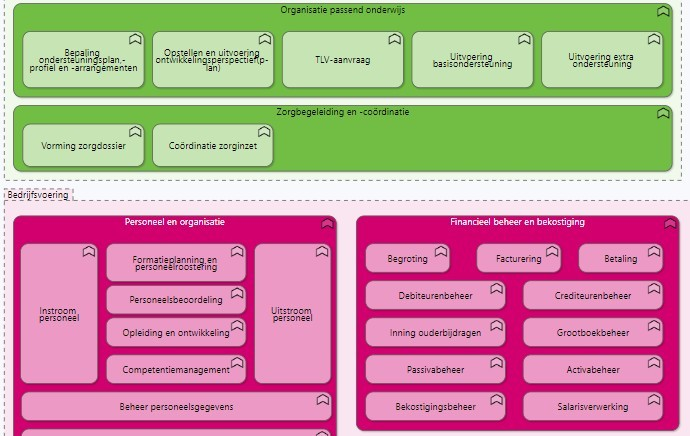
Source: Kennisnet (2024[55]), Funderend Onderwijs Referentie Architectuur (FORA) [Reference Architecture for Primary and Secondary Education], https://fora.wikixl.nl/index.php/Hoofdpagina (accessed on 21 October 2024).
The Business Function Model includes references to different types of software (referentiecomponenten) that can be used to support each of the processes. For example, under the category “purchasing and contract management”, the process “supplier management” includes a reference to purchasing systems, and “inventory management” includes references to media management systems and resource planning systems (Kennisnet, 2024[56]). An accompanying software catalogue (FORA Softwarecatalogus) contains an index of specific software applications fulfilling each of these functions (Kennisnet, 2024[57]). The catalogue is populated by schools themselves and designed to help them gain a structured overview of their own software landscape and how it maps onto their activities and processes. Entries on specific applications vary in their level of detail but may include information on their functionalities, as well as features such as security or privacy provisions.
Source: Kennisnet (2024[55]), Funderend Onderwijs Referentie Architectuur (FORA) [Reference Architecture for Primary and Secondary Education], https://fora.wikixl.nl/index.php/Hoofdpagina (accessed on 21 October 2024); Kennisnet (2024[56]), FORA Hoofdbedrijfsfunctiemodel [FORA Main Business Function Model], https://fora.wikixl.nl/images/fora/b/b1/FORA-modellen_A3.pdf (accessed on 21 October 2024); Kennisnet (2024[57]), FORA Softwarecatalogus [FORA Software Catalogue], https://fora.wikixl.nl/index.php/Overzicht_FORA_architectuurviews_softwarecatalogus (accessed on 21 October 2025).
Widespread connectivity and the availability of digital devices in schools provide a good basis for the effective use of digital education technology
As a highly digitalised society with widespread internet access, strong digital proficiency among the adult population and a broad availability of digital devices in schools (see Chapter 1), the Netherlands’ digital infrastructure provides a strong basis for the effective use of digital technology in schools (OECD, 2019, p. 80[58]; OECD, 2024, p. 118[48]). The sufficient access to high-quality digital resources is an important precondition for their effective use in the teaching and learning process. As discussed above, schools in the Netherlands have invested significantly in their digital infrastructure over the past few years, resulting in an expansion of the availability of digital devices, further aided by targeted central investment during the COVID-19 pandemic.
PISA 2022 data indicate that principals of 15-year-olds in the Netherlands are, on the whole, satisfied with the availability of digital resources in their schools. Only 6.2% of students in socio‑economically average schools have a principal who reported a lack of digital resources, compared with 22.4% across OECD countries and socio-economic disparities in principals’ assessments are limited (see Figure 3.7) (OECD, 2023[21]; Varsik, 2024[59]). Other international surveys, such as the 2nd European Survey of Schools: ICT in Education (ESSIE) administered in 2017/18, indicate that access to ICT resources in primary schools is similarly widespread with the share of digitally equipped and connected primary schools as well as the speed of their internet connections far exceeding the EU average (European Commission, 2019, pp. 25, 39[60]).
Principals are also satisfied with the quality of their schools’ digital resources. Only 7.5% of 15-year-olds in the Netherlands attend a school whose principal reported that their digital resources are inadequate or of poor quality (significantly below the OECD average of 24.6%) (see Figure 3.9). Again, in contrast to many OECD countries, there is no statistically significant difference between the quality of digital resources in socio-economically advantaged and disadvantaged schools in the Netherlands. However, schools with a high concentration of immigrant students were more likely to report that digital resources are inadequate or of poor quality than those with a low concentration of immigrant students (12.5 vs. 2.3%), whereas this gap is not observed on average across OECD countries (OECD, 2023, pp. 409, Tables II.B1.5.19 and II.B1.5.20[21]).
Percentage of 15-year-old students attending schools whose principals reported that digital resources are inadequate or of poor-quality (to some extent or a lot)

Note: *Caution is required when interpreting estimates because one or more PISA sampling standards were not met. For more information, see the Reader’s Guide, Annexes A2 and A4 in OECD (2023[21]). Schools' socio-economic profile is measured by the PISA index of economic, social and cultural status (ESCS). Statistically significant differences are shown in a darker tone.
Source: OECD (2023), PISA 2022 Results (Volume II): Learning During – and From – Disruption, https://doi.org/10.1787/a97db61c-en, Table II.B1.5.20.
Given the Netherlands’ widespread reliance on BYOD policies at the secondary level, it is important for all students to have access to digital devices whenever they are required for learning both at school and at home. Recognising that many students lacked sufficient access to devices at home at the beginning of the COVID-19 pandemic, the government invested approximately EUR 24 million in digital devices to permit students to fully participate in remote instruction. SIVON was tasked with purchasing over 76 000 digital devices in multiple tranches, which were then distributed among school boards that had indicated their students’ lack of devices at home (Government of the Netherlands, 2021, p. 23[61]; SIVON, 2023[62]; OCW, 2024[4]). Although challenges related to socio-economic disparities persist (as discussed further below), these measures have enabled the Netherlands to reduce barriers to students’ full participation in digital learning.
Important steps have been taken to ensure privacy and security in schools’ digital education infrastructure
Along with new opportunities for teaching and learning, the use of digital education technologies in schools brings new risks and the challenge to ensure digital security and the protection of sensitive data (OECD, 2023, p. 93[8]). In the MYRA survey, ICT staff in primary and secondary education reported that schools are regularly subject to phishing attacks. Although other forms of cyber-attacks (such as DDoS attacks, ransomware and hacking attempts) are relatively rare occurrences, protecting schools against these threats is of utmost importance, given the heightened sensitivity of students‘ data and schools’ duty to protect them (Karssen et al., 2023[10]; Karssen et al., 2023[11]). Furthermore, legitimate concerns about the security and data safety of digital education resources can stifle teachers’ willingness to explore working with new technologies (see Chapter 5) (OECD, 2023[8]).
There is a widespread recognition of this challenge both in government and among stakeholder organisations in the Netherlands. According to analyses of the Inspectorate of Education, school boards' awareness of digital security is increasing and three quarters of public schools' annual reports focussed on this issue in 2023 (up from two thirds in 2021 and 2022) (Inspectorate of Education, 2025[63]). Strengthening schools’ protection against digital threats was also featured prominently in the 2019 Digitalisation Agenda for Primary and Secondary Education, an initiative of the Ministry of Education, Culture and Science, the Ministry of Economic Affairs and Climate Policy, the PO-Raad, the VO-raad and Kennisnet. Noting that “the equipment available does not always meet teachers’ needs in terms of supporting their lessons digitally”, the Digitalisation Agenda announced the ambition for every school to have a “secure, reliable and future-proof infrastructure” (OCW, 2019[64]). The Minister reiterated this commitment in a 2023 letter to parliament, stressing the importance of schools’ digital infrastructure for teachers to make effective use of digital education technology (Dijkgraaf, 2023[65]).
Since 2019, the Netherlands has taken important steps to advance its digital agenda and made substantial progress towards this objective. In 2022, the ministry made available EUR 6 million in structural investments to increase digital security in education and research (Dijkgraaf and Wiersma, 2022[66]). A central component of this effort is the Digital Safe Education (DVO) programme. Based on a collaboration between OCW, the PO-Raad, VO-raad, Kennisnet and SIVON, DVO supports schools in ensuring a digitally secure learning environment (Digital Safe Education, 2023[67]). Since 2023, DVO has developed a Standards Framework for Information Security and Privacy for Education (Normenkader informatiebeveiliging en privacy [IBP] voor het onderwijs), which describes standards for a digitally secure school and provides examples of measures that schools can take to enhance their digital security (Kennisnet et al., 2024[68]; OCW, 2024[4]).
The IBP Standards Framework encompasses 69 standards (organised in 15 domains) related to information security and 25 standards (organised in 7 domains) related to privacy. As an example, information security Domain 6 (Incident and problem management) comprises four standards: IM.01 Incident management; IM.02 Incident escalation; IM.03 Response to (cyber) security incidents; and IM.04 Problem management. The Standards Framework lists the actors responsible for the execution of standards in each domain and those who need to be consulted in the process. For each standard, it describes five “maturity levels”: 1. Ad hoc; 2. Repeatable [Herhaalbaar]; 3. Certain [Bepaald]; 4. Controlled [Beheerst]; and 5. Continuously improving [Continu verbeteren], with Level 3 being the minimum target (Kennisnet et al., 2024[68]) (see Table 3.1 for an example). Ultimate responsibility for the implementation of the IBP Standards Framework lies with the school boards and schools will be expected to meet its targets by the end of 2027.
Example of maturity levels for Standard IM.03 “Response to (cyber) security incidents” (Domain 6: Incident and problem management)
Source: Kennisnet et al. (2024[68]), Normenkader Informatiebeveiliging en Privacy voor het Onderwijs [Standards Framework for Information Security and Privacy for Education], https://normenkaderibp.kennisnet.nl/.
Although DVO does not currently have the mandate or capacity to provide schools with one-to-one support in implementing the IBP Standards Framework, it has developed a Growth Path [groeipad] that includes detailed suggestions for schools and school boards to plan their implementation strategies (Kennisnet et al., 2024[68]). DVO is also trying to facilitate peer learning between school boards since the larger ones are typically more advanced in strengthening their schools’ digital security, given their more extensive central capacity and expertise. The Information Security and Privacy Network (Netwerk Informatiebeveiliging en Privacy, Netwerk IBP), facilitated by PO-Raad, VO-raad and Kennisnet, hosts regular meetings and provides a forum for school boards and all those involved in information security and privacy in schools to exchange experiences and best practices (Kennisnet, 2024[69]). Furthermore, the PO-Raad and VO-raad have developed professional development programmes for school board members, covering the DVO’s IBP Standards Framework.
The DVO standards for schools are complemented by a number of additional efforts to protect the privacy and security of sensitive data in the digital education ecosystem. Under the umbrella of the DVO, Kennisnet and SIVON, were – at the time of the OECD review visit – setting up a Computer Emergency Response Team (CERT) for primary and secondary education. The team comprises ICT professionals and aims to monitor and disseminate information about digital threats and risks to school boards and to advise them on resolving and quickly recovering from any incidents (SIVON, 2024[70]; Dijkgraaf and Wiersma, 2022[66]). The CERT will also co-ordinate with software suppliers and other relevant parties to take appropriate actions and, where possible, act preventively. Following a pilot phase (“CERT-light”) involving 30 school boards with responsibility for 500 schools, the programme was rolled out nation-wide in mid-October 2024 on a voluntary registration basis. This sector-wide approach to incident response management is an efficient solution, which SURF has already implemented successfully in the Dutch higher education sector (SURF, 2024[71]).
Another important element in strengthening schools’ digital security is SIVON’s Safe Internet (Veilig Internet) service. Since 2020, SIVON has enabled schools to obtain a fast internet connection, including a professionally managed Cloud firewall designed to protect them from DDoS and other cyber-attacks, via a collective procurement process (SIVON, 2024[72]). Furthermore, DVO’s standards for schools are complemented by the Edu-V system of agreements (afsprakenstelsel), which issues quality labels for providers of digital education resources that comply with standards concerning – among other things - the secure and standardised exchange of data (see Chapter 4).
Taken together, the elements described above mark significant steps to ensure that Dutch schools are well protected against privacy and information security risks. The goal for all schools to meet the IBP Standards Framework’s targets by 2027 is ambitious and achieving it will require the Dutch authorities to overcome a number of challenges. The DVO’s Growth Path stresses the importance of monitoring schools’ baseline security provisions and their current level of protection as well as their progress. SIVON has carried out baseline assessments of 14 schools’ standards frameworks in 2023 (SIVON, 2024, p. 14[73]). Central monitoring mechanisms are not yet in place but are in the process of being developed by DVO. While the inspectorate does not have a legal mandate to assess schools’ compliance with IBP standards in their regular inspections, their role in ensuring privacy and security in schools is part of an ongoing conversation with the Ministry (OCW, 2024[4]).
Nevertheless, some challenges remain. Although experts believe that few schools current meet the targets of the IBP Standards Framework, there is no clear sense of how advanced they are. The MYRA survey includes some questions on schools’ digital security and suggests that, while most schools have implemented some security measures, such as two-factor authentication for staff and patch management, others measures, such as two-factor authentication for students, remain relatively rare (Karssen et al., 2023[10]; Karssen et al., 2023[11]). At the same time, the MYRA survey is not aligned with the IBP Standards Framework, lacks the requisite granularity to monitor its implementation and relies on the voluntary participation and assessment of staff responsible for ICT in schools and school boards.
Although the IBP Standards will require schools to keep track of the digital devices and software they use, there is no central oversight over the digital resources deployed in schools, which makes it difficult to anticipate the impact of security breaches or other incidents. Furthermore, while the Edu-V system of agreements encourages the self-regulation of the digital education resource sector, there are currently no plans to make it mandatory for products used in schools to have obtained their quality label or meet other standards that would ensure their compliance with privacy and information security standards. The OECD’s Policy Survey on School Education in the Digital Age indicates that several countries have criteria in place to ensure that digital resources purchased for schools meet security standards. These criteria cover digital devices (in Austria, Denmark, Greece, Ireland, Italy, Japan, Korea, Lithuania, Poland, NSW [Australia], Wales [UK] and Romania) as well as software for teaching and learning (in Austria, Denmark, France, Lithuania, Norway, Poland, NSW [Australia] and Wales [UK]) (Boeskens and Meyer, 2025, pp. 67, Annex Table 4.2[13]).
A move from competition to co-operation has improved schools’ position in the market for digital education resources
Given the high degrees of autonomy and pedagogical diversity in the Dutch school system, many schools assume responsibility for selecting and purchasing their digital (and other) education resources. This gives schools a significant degree of liberty to tailor the digital devices, learning materials and software they use to fit their own pedagogical approach, drawing on a diversified network of private intermediaries and providers of products and services. At the same time, the decentralised approach to the selection and procurement of digital resources has raised concerns about inefficiencies due to diseconomies of scale and the about the limited market power of schools, vis-a-vis an increasingly consolidated set of suppliers.
Although school boards can aggregate demand among their schools and engage in collective procurement decisions, 38% of the school boards in primary and 35% of the school boards in secondary education oversaw a single school in 2022/23 (see Chapter 1). To address this challenge, the Ministry and stakeholder organisations have taken important steps to promote the voluntary co-operation between schools, notably through SIVON, a co-operative association of school boards in primary and secondary education, which supports them in the joint procurement of digital education resources. A growing number of school boards have since joined this initiative, creating significant economies of scale and strengthening their bargaining power (OCW, 2024[4]).
SIVON was founded in 2017 as a “sister-organisation” of Kennisnet, with start-up funding from OCW. In contrast to the Kennisnet foundation, SIVON is a membership organisation of school boards, governed by a Members’ Council (Ledenraad) of up to 34 members, a Board (Bestuur) consisting of one SIVON staff member and five elected school board members, and a Supervisory Council (Raad van commissarissen). All participating school boards pay membership fees based on a 4-tier-system dependent on the boards’ size (amounting to around EUR 0.5 million in total in 2021 and 2022), which fund SIVON’s operations. OCW supports the organisation with a subsidy (“Strengthening co-operation and external connectivity” [Versterking samenwerking en externe connectiviteit]), which amounted to around EUR 11.6 million for the 7-year period from 2019 to 2025 (SIVON, 2025, p. 19[74]). SIVON’s approach has been modelled on that of SURF, a Dutch co-operative for higher education and MBO institutions, which advises over 100 members and supports them in the procurement of their digital infrastructure (SURF, 2022[75]).
Since its inception, SIVON has established framework agreements for a range of product categories, including digital devices, student administration software and digital learning materials. School boards can also join SIVON’s year-round European tenders, about which it informs members in regular newsletters. SIVON also offers secure internet connections (Safe Internet) to schools. Based on the expressed needs of its members, SIVON has expanded its offer to include services, such as generic DPIAs (Data Protection Impact Analysis). School boards can adapt the DPIAs to their own context in order to comply with the legal requirement to carry out an assessment of privacy and information security risks, aligned with the IBP Standards Framework (SIVON, 2024, p. 22[76]).
Several of the schools interviewed during the OECD review visit benefited from SIVON’s service and, by its own estimation, SIVON is now the largest purchaser of digital learning materials at the secondary education level in the Netherlands, with an expanding presence in the market for digital devices and internet services. The ministry also drew on SIVON’s expertise to procure around 76 000 digital devices for disadvantaged students during the COVID-19 pandemic, granting a subsidy of EUR 2.5 million to enable this investment (SIVON, 2024, p. 13[77]). SIVON’s offer is determined by the demand of its members. For 2023, SIVON had aimed to strengthen its position in the procurement of digital education materials, student administration systems and digital learning environments (SIVON, 2024, p. 10[73]). SIVON’s portfolio remains limited in domains such as learning software and ICT maintenance.
By the time of the OECD review, SIVON’s membership had reached over 450 school boards, overseeing around 1.5 million students (SIVON, 2024[76]). This corresponds to around a third of school boards and two thirds of students in primary and secondary education.5 In a system as decentralised as the Netherlands, where schools – supported by their boards – are wholly responsible for procuring digital education resources, SIVON fulfils a critical role in strengthening schools’ capacity to navigate the market and obtain value for money. SIVON‘s ability to assert its members’ interest in the digital resource market was demonstrated in 2021, when it reached an agreement that committed Google to eliminate privacy risks related to its Google Workspace products, which were identified in a DPIA, in order to permit its continued use in education institutions (Bulder and van Aarsen, 2023, p. 24[23]).
With its combination of high population density, parental choice and per-student funding, the Dutch education system lends itself to competitive dynamics between schools. In PISA 2022, 79% of 15-year-olds attended a school that reported competing for students with two or more other schools in the area, compared to 64% on average across OECD countries (OECD, 2023, pp. 412, Table II.B1.6.9[21]). The significant heterogeneity among Dutch schools and a tendency to collaborate within networks of institutions that share a philosophical or pedagogical orientation have – historically – further limited the scope for sector-wide co-operation.
Against this backdrop, the increasing co-operation between schools and school boards therefore constitutes a significant achievement for the Dutch school system. Although the procurement of digital resources has played an important role in accelerating this trend, co-operation has extended beyond this domain. Notably, the Ministry has sought to promote a co-operative approach to the recruitment, assignment, supervision and professional learning of education staff at the regional level in order to address the significant teacher shortages experienced in many parts of the Netherlands. To this end, the government invited regional teacher training institutions and schools to come together, formulate action plans to alleviate teacher shortages and apply for funding to implement them. As of 2023, 27 such Education Regions (Onderwijsregio’s) had been recognised and provided with funding to start implementing their projects and share their experiences with other regions (OCW, 2024[78]).
The system has targeted additional resources to support digital literacy and the effective use of digital technologies in schools
Advancing the digital transformation of education in Dutch primary and secondary schools requires significant investment to ensure that teachers and students benefit from a secure and high-quality digital education infrastructure and are well-prepared to make effective use of digital technologies for teaching and learning. One of the most significant sources of central-level investment in the Dutch digital education ecosystem has been the National Growth Fund (Nationaal Groeifonds, NGF). Since 2022, the Ministry of Education has secured NGF funding for a number of high-profile projects. Of the 51 projects that had been accepted for NGF funding as of 31 May 2024, 10 projects are related to education, benefitting from EUR 2.3 billion of a total of EUR 11.3 billion. Many of these projects have a digital focus and stand to benefit individual schools as well as the sector as a whole (EZK, 2024[43]).
As discussed in more depth in Chapters 1 and 2, the NGF projects include the National Education Lab AI (NOLAI), Impulse Open Learning Materials (IOL), Edu-V and the National Action Plan for the Professionalisation of Teachers (NAPL). One of the eligibility criteria for NGF projects is that they could not have been implemented without the Fund’s support (Government of the Netherlands, 2024[42]). OCW’s ability to secure support for a substantial number of NGF projects has therefore meant a significant expansion of its capacity to advance digital education priorities. The projects’ ad hoc and time-bound nature makes it particularly important to ensure that their impact is sustained in the long term and co-ordinated with ongoing initiatives to create synergies across the digital education ecosystem.
The decentralised governance of education funding and the significant autonomy that Dutch schools enjoy in allocating their resources limits central authorities’ ability to steer spending choices at the institution level and the level of investment in digital education. Nevertheless, in recent years, the Ministry has responded flexibly, within its limits, to emerging needs by targeting additional resources to support emerging policy priorities related to digital education, largely through targeted subsidies and initiatives focussed on digital education. While this approach comes with challenges of its own (discussed further below), it has enabled the system to rapidly mobilise significant resources.
One of the Ministry’s central projects to advance digital education is the ongoing reform of students’ core objectives (kerndoelen) and the introduction of digital literacy as a basic skill, alongside mathematics/arithmetic, Dutch language and citizenship.6 This reform has wide-ranging implications and is likely to entail corresponding changes to student assessments, school inspections, teaching and learning materials etc. (see Chapter 6). Perhaps most importantly, the reform will have implications for the preparation of teachers, who will need to ensure that their students meet the revised learning goals for digital literacy by the end of primary and lower secondary education, and for schools who may need to adapt their digital education infrastructure and the organisation of instruction to enable teachers to do so (SLO, 2024[79]).
The Basic Skills Improvement Subsidy (Subsidie Verbetering Basisvaardigheden), launched in 2022 with the goal to improve students’ basic skills, constitutes an important source of funding for schools to prepare themselves for the upcoming curriculum reform. With an overall budget of more than EUR 1.5 billion, disbursed in three tranches between 2022/23 and 2025/26, the subsidy can make a significant contribution to schools’ promotion of digital literacy as well as the use of digital technologies to promote students’ basic skills in other domains.
490 primary schools and 153 secondary schools benefited from the subsidy’s first tranche. This corresponds to 12% and 11% of all schools at the respective levels of education. The number of recipients was significantly enlarged with the first disbursement of the subsidy’s second tranche, which benefited 1 738 primary schools and 549 secondary schools (26% of all schools at both levels of education) (Jepma et al., 2023, pp. 19, 25[36]; Jepma et al., 2024, pp. 20, 27[37]). All schools receiving the subsidy had to submit an activity plan detailing which interventions they intend to implement, the interventions’ objectives and target groups, and how they intend to monitor their impact. Most schools reported having developed these activity plans between the school leadership and teachers, involving the participation council and the school board (less frequently also involving parents, students, public or private external parties) (Jepma et al., 2023[36]; Jepma et al., 2024[37]). With the first tranche of the subsidy, schools committed to implementing around five interventions on average, drawing on the ministry’s list of effective interventions (interventiekaart).
Schools could focus interventions on one or more of the four basic skills (numeracy/mathematics, literacy, citizenship and digital literacy) and evaluations of their activity plans suggest that a significant share of schools used the subsidy to promote students’ digital literacy. Although literacy and numeracy were the areas most frequently targeted, 42% of primary schools and 76% of secondary schools who received the first tranche of the subsidy planned to implement activities targeting students’ digital literacy. This share dropped to 23% among primary schools for the first disbursement of the second tranche but remained high among secondary schools (see Figure 3.10).
Percentage of recipient schools addressing the four basic skills in their activity plans

Note: T1 refers to the first tranche of the subsidy, starting in 2022/23. T2 refers to the first disbursement of the second tranche, starting in 2023/24. Other/cross-curricular activities may include working on the schools’ vision, hiring additional staff, materials and equipment, student monitoring systems, staff professional learning or the development of in-school consultation structures.
Source: Jepma et al. (2023[36]), Implementatieonderzoek Subsidieregeling "Verbetering Basisvaardigheden" Tranche 1 [Implementation Study "Basic Skills Improvement" Tranche 1]; Jepma et al. (2024[37]), Implementatieonderzoek Subsidieregeling "Verbetering Basisvaardigheden" Tranche 2 [Implementation Study "Basic Skills Improvement" Tranche 2].
Most schools chose to invest the Basic Skills Improvement Subsidy in professional development, additional staff or teaching methods and materials. Primary schools that focussed on digital literacy frequently used the subsidy for interventions aimed at increasing parental involvement or to purchase new teaching methods and materials (which may include digital devices) as well as equipment or furnishing. (In secondary education, schools more commonly invested in teaching methods and materials and basic skills co-ordinators.) More detailed analyses of the second tranche also show that around 60% of schools that focussed on promoting digital literacy invested in ICT-materials. Yet, ICT-materials only accounted for a small share of the overall investment, with only 6% of primary schools and 11% of secondary schools listing it among their top-three investment categories (Jepma et al., 2024, p. 57[37]).
The subsidy also allowed schools to connect with external partners to implement their interventions and more than three quarters of schools did so for the first tranche. These external partners were twice as likely to be from the private than from the public sector (Jepma et al., 2023, p. 36[36]). The evaluation of the subsidy’s second tranche found that, in the area of digital literacy, schools mainly drew on the external support of ICT experts, guest lecturers and providers of digital learning materials. Some schools also brought in parents and, to a lesser extent, publishers or universities for support (Jepma et al., 2024, pp. 45, Table 4.14[37]).
Besides the Basic Skills Improvement Subsidy, the Dutch government has introduced several other targeted funding streams, on top of the regular lump sum, that schools can draw on to strengthen their use of digital education resources. This includes the National Education Programme (NPO), which was designed to address the consequences of the COVID-19 pandemic. Schools were provided with NPO funding to address needs that they identified through a self-evaluation (OCW, 2024[34]). Based on a “menu” (Menukaart) of effective interventions provided by the Ministry, the largest part of the NPO funding in 2021/22 and 2022/23 was used by schools to hire additional staff. Given the temporary nature of the funding, they were usually hired on fixed-term contracts (OCW, 2023[33]). Digital technology is not the NPO’s focus and it has not been monitored how much of its funding was invested in digital resources. Nevertheless, several of the menu’s interventions involved the use of digital resources and schools could use the funding to invest in the digital infrastructure, devices and software needed put them into practices. Furthermore, one of the schools interviewed by the OECD review team reported that NPO funding freed up time for one of their teachers to act as the school’s ICT co-ordinator and to spend one day a week advancing the schools’ approach to using digital technology and teaching digital literacy.
There is significant variation in schools’ capacity to strategically manage funding for digital resources
Based on principals’ reports, schools in the Netherlands have the highest level of responsibility for resources among all countries participating in PISA 2022 (OECD, 2023, pp. 214, Figure II.6.4[21]). Schools receive their regular funding (via their school boards) in the form of a lump sum and are fully responsible for allocating it for different types of expenditure. Whereas Dutch schools used to receive separate block grants for staff costs and operational goods and services, the introduction of a single lump sum, has given school leaders even greater autonomy in allocating resources (Inspectorate of Education, 2023[19]). This fiscal decentralisation, which many OECD education systems have pursued – especially since the 1980s – usually aims to provide schools with greater flexibility in deploying their resources and to allow for a more efficient use of funding in line with each school’s needs (OECD, 2017[24]). Yet, such budgetary decentralisation also creates challenges for the staff responsible for managing resources in schools and calls for expertise and capacity that not all schools or school boards possess (OECD, 2017, p. 82[24]).
The Dutch Inspectorate of Education has repeatedly raised concerns about the varying ability of school boards to effectively manage resources. In its 2023 State of Education, the inspectorate expressed general satisfaction with school boards’ financial reporting but expressed concerns about excess capital in some schools and noted more widespread deficits when it came to school boards’ ability to use a policy-oriented approach to multi-year budgeting that explicitly links resources to strategic goals (Inspectorate of Education, 2023, p. 44[19]). The inspectorate also found the majority of school boards lacking when it came to their internal supervisory boards’ (intern toezicht) ability to evaluate and hold boards to account for the effective use of resources in schools (and noted limited improvements in this regard between 2023 and 2024) (Inspectorate of Education, 2023, p. 88[80]; Inspectorate of Education, 2024, p. 29[28]).
The heterogeneity in school boards’ ability to steer educational improvements is not a new phenomenon for the Netherlands and the professionalism of school boards has generally increased alongside their responsibilities over the years (OECD, 2016[81]). Nevertheless, the digital transformation of education poses a particular set of challenges that render the deficits concerning financial planning in some schools particularly concerning (OECD, 2023[8]). The effective procurement of digital resources requires a forward-looking approach and a deep understanding of a highly complex EdTech market, often under conditions of limited or incomplete information on available products and their quality (OECD, 2023, p. 112[8]; Schouwenburg, 2022[82]). Acquiring digital infrastructure also requires schools and school boards to engage in complex decisions, for example whether to build ICT expertise in-house or get external support to ensure the adequate design, installation, maintenance and support for digital goods and services. While the former is often not a viable option for smaller education institutions, relying on external expertise can involve transaction costs, risks and potentially less room for personalisation (OECD, 2023, pp. 112, 119[8]). Smaller schools and school boards are therefore at risk of being placed at a disadvantage, unless they can draw on support and guidance to bolster their capacity.
In the Netherlands, the market for digital learning resources is transforming rapidly. Traditional publishers are increasingly developing digital teaching materials and new distribution strategies, notably the LiFo model in secondary education. Under this new distribution model, schools order materials directly from publishers, meaning that they need to arrange the distribution to students and the contract management themselves (tasks that had previously been taken care of by distributors) (Kennisnet, 2023[22]). The LiFo model advanced by major publishers has also reduced the possibility to mix-and-match methods across school years and has been accompanied by rising costs for schools. Despite concerns raised across the sector, the lack of competitive pressure and the high level of consolidation on the supply side, combined with a fragmented demand side has made it difficult for schools to defend their interests (Bulder and van Aarsen, 2023[23]).
At the same time, providers of new learning applications with no prior equivalent (such as Snappet or Gynzy) have entered the market, requiring schools to develop the capacity to select, test, evaluate and effectively integrate new types of products (Bulder and van Aarsen, 2023[23]). The market for digital hardware and software is also significantly more international than that of other resources. The growing market share of developers, such as Google, Microsoft and Apple, requires schools to contend with tech companies that target their products at a global market and may be less responsive to local needs (Bulder and van Aarsen, 2023[23]). Under these conditions, individual education institutions often lack the necessary expertise or bargaining power to make efficient investments and while SIVON has achieved significant successes, their status as a membership organisation and limited representation among primary school boards weakens their position to negotiate on behalf of the entire sector.
Kennisnet provides general guidance to schools on how to approach decisions related to the use of ICT resources for education, based on the “Four in Balance” model, but does not offer direct support to schools (Schouwenburg, 2022[82]). School boards therefore play an important role in lending support, including on matters related to funding and resource management (Terpstra, 2019[83]). However, school boards vary significantly in size and in their capacity to support schools in the strategic management of resources. Many school boards at the primary level oversee dozens of schools and 29 boards at the secondary level oversaw more than 10 schools in 2022/23. These larger school boards tend to have sizeable budgets and employ full-time staff (see Chapter 1) (PO-Raad, 2023[84]; VO-raad, 2023[85]). In contrast, 38% of the school boards in primary and 35% of the school boards in secondary education oversaw a single school. These smaller school boards frequently rely on the work of volunteers (PO-Raad, 2020[86]).
During interviews with stakeholders, the OECD review team formed the impression that well-resourced school boards with sufficient capacity can play an important role in supporting schools’ ability to obtain additional funding, to navigate the complex market for digital resources and advice, and to effectively deploy digital education technology. Some school boards employ dedicated staff to help schools apply for and administer subsidies, co-ordinate schools’ procurement of digital devices and software (often through SIVON) and organise centralised technical support (e.g. in the form of IT-help desks). They also provide a platform for school staff to engage in professional development and learn from each other’s experiences with digital education resources (see Chapter 5). To ensure that resources are used effectively to advance schools’ improvement plans, spending decisions need to be well-aligned with strategic priorities (Pont, Nusche and Moorman, 2008[87]). Some school boards have also assisted their schools proactively in developing a vision for digital education, complementing Kennisnet’s general guidance on the topic. Schools that do not have access to these forms of support from their school board are placed at a significant disadvantage and risk falling behind in the digital transformation.
In light of these challenges and the perception that some schools and (smaller) school boards are unable to address them on their own, the ministry has initiated a reflection on the appropriate division of responsibilities between schools, school boards and the central level, with respect to digital education and beyond (Dijkgraaf and Paul, 2024[88]). In some areas, including information security and privacy, OCW has already determined that greater responsibility should be assumed at the central level (with the development of the DVO’s IBP Standards Framework), without risking interference with schools’ freedom of education and pedagogical decisions. The procurement of digital resources, including the bundling of demand and enforcement of quality standards, is area where the role of central authorities remains to be clarified.
Some important steps have been taken to bolster school boards’ capacity. The PO-Raad and VO-raad, in collaboration with the association of education board members (Vereniging van Onderwijsbestuurders, VvOB), are developing an accreditation system for school board members based on a professional profile accepted in 2023 (VvOB, VO-Raad and PO-raad, 2023[89]). While the profile acknowledges the role of board members in ensuring the “effective organisation of various business management aspects related to e.g. IT, facilities and finances”, it remains to be seen what emphasis the accreditation process will place on effective resource management practices (see Chapter 5). Professional profiles for school leaders also highlight their responsibilities for resource management and – in the case of primary education – the stimulation of innovation in the realm of digitalisation (VO-raad, 2024[90]; PO-Raad, 2020[91]). However, these professional profiles are not clearly linked to school leaders’ initial preparation or continuing professional learning and there is no monitoring of school leaders’ progress towards meeting their standards (see Chapter 5).
Targeted financial support is time-bound, fragmented and not systematically aligned with education priorities, including the digital transformation
The Dutch government is increasingly providing schools with supplementary resources outside the main funding mechanism (see Figure 3.6). In a highly decentralised system with significant school autonomy, this approach has enabled the system to rapidly mobilise significant resources to target emerging priorities, such as the post-COVID-19 recovery (NPO), teacher training (NAPL) and the promotion of students’ basic skills, including digital literacy (Basic Skills Improvement Subsidy). However, despite its positive impact, several drawbacks to this approach raise concerns about its effectiveness and sustainability.
The “non-systematic” funding provided to schools outside the main lump sum is time-bound. This creates uncertainty and makes it difficult for schools to develop a sustained, strategic approach to important issues, such as the promotion of students’ digital literacy or strategic capacity building (e.g. by providing ICT-co-ordinators with time to develop a coherent approach to digital learning). The ministry has acknowledged that this challenge arises from the lack of a middle ground between time-bound subsidies and the permanent but non-targeted funding provided through the lump sum (Dijkgraaf and Paul, 2024[88]). In May 2024, the incoming government’s Framework Coalition Agreement 2024-2028 called for limiting the “proliferation of subsidies” (“wildgroei aan subsidies”) by converting them “into sound, structural funding” (“in solide structurele financiering”) (Government of the Netherlands, 2024, p. 17[41]).
During the OECD review visit, schools expressed concerns about the uncertainty arising from a reliance on time-bound subsidies. The OECD review team also gained the impression that schools struggled to use temporary subsidies to advance longer-term improvements and strategic goals, including those concerning their use of digital education resources. Acquainting teachers with new ways of using digital education technologies and developing systematic, school-wide approaches to the use of digital technology in line with the school’s education vision requires time and longer-term commitments. Schools that used subsidies to hire additional staff with a focus on ICT or to give teachers time to engage with these matters on behalf of the school community usually had to do so on a fixed-term basis not exceeding a few years (or the duration of the subsidy). The inspectorate underlined these concerns, highlighting the difficulty that schools face when trying to use non-recurring funding to budget strategically and to advance longer-term improvements (Inspectorate of Education, 2024, p. 13[28]; Inspectorate of Education, 2023, p. 42[19]). Schools also raised concerns about some subsidies being disbursed after the start of the school year, which makes it difficult to plan their use strategically.
Furthermore, a reliance on subsidies comes with the risk of inequities arising from uneven take-up, given that schools need to actively apply for them. In 2023, the inspectorate stated that some school boards found it difficult to get a comprehensive picture of the different sources of funding and their eligibility criteria or struggled with the administrative burden involved in requesting, monitoring and reporting on subsidies (Inspectorate of Education, 2023, p. 42[19]). Since then, the ministry has sought to provide schools with a better overview of available subsidies and to simplify their access. In 2024, the inspectorate noted that school boards found it easier to identify available subsidies and stakeholders interviewed by the OECD confirmed that the ease of access had improved (Inspectorate of Education, 2024, p. 31[28]). However, while larger school boards often employ dedicated staff to manage their schools’ subsidies (Inspectorate of Education, 2024[28]), smaller schools and school boards without this support still appear to face difficulties in accessing and administering targeted funding. For example, not all schools that are eligible for the NPO or the Basic Skills Improvement Subsidy have applied. Institutions with little capacity may also suffer more from the administrative burden entailed by subsidies’ accountability and reporting requirements, as well as the complexity of managing resources when a single teacher may be funded by multiple time-bound funding streams. During interviews, the OECD review team also formed the impression that the identification and strategic use of targeted funding often hinges on the initiative of resourceful principals or the support of school boards, which risks reinforcing inequities across schools.
Another challenge related to the reliance on subsidies is that they are not systematically aligned with education priorities. Funding streams, including the NPO and the Basic Skills Improvement Subsidy, have been introduced to address urgent challenges, but there is no systematic mechanism to ensure that all longer-term policy priorities are linked with dedicated resources or that the target areas of existing subsidies are coherent. This has led to funding streams with partially overlapping purposes and a risk of underinvestment in important areas. In the case of digital education, schools can use funding from different subsidies to advance their digital transformation, yet no single subsidy specifically focusses on the use of digital resources. This makes it difficult to identify how much of the government’s targeted funding is used to advance the effective use of digital education technologies and whether there are systematic discrepancies in schools’ investment to meet strategic goals, such as those laid out in the Digitalisation Agenda for Primary and Secondary Education (see Chapter 2) (OCW, 2019[64]).
The reliance on parental contributions for digital devices and inconsistent support for disadvantaged families could exacerbate digital divides
Compared to most OECD countries, the Netherlands has succeeded in providing widespread access to digital devices and broadband internet, while keeping the digital divide comparably small. Nevertheless, socio-economic gaps in the access to digital resources persist. In 2020, 7% of households in the bottom income quartile did not have broadband internet access (OECD, 2024, p. 118[48]; Eurostat, 2024[49]). Likewise, in PISA 2022, 7% of disadvantaged 15-year-olds reported not having a computer at home that they could use for school work. A lack of access to computers or the internet at home can constitute a significant impediment to students’ learning, particularly at the secondary level, where 15-year-olds in the Netherlands are expected to regularly complete school work at home (1.5 hours per day on average) (OECD, 2023, pp. 410, Table II.B1.5.56[21]).
Schools in the Netherlands are required to ensure that all students can fully participate in education regardless of their financial situation. Schools that require students to use digital devices for learning at school or at home are therefore expected to provide students who cannot afford them with a “good alternative” (OCW, 2023[92]). The 2008 Free Textbooks Act (WGS) has excluded school books and other necessary school supplies and learning materials from the resources that schools can use the voluntary contribution for (Bisschop, van der Wel and Lubberman, 2021[93]). However, laptops, digital devices and learning software are not covered by this rule, meaning that schools can ask (but not oblige) parents to purchase them or provide a voluntary contribution to pay for them. In practice, most secondary schools operate a BYOD policy, meaning they expect parents to purchase laptops directly or to make a voluntary contribution towards the school’s provision of digital devices.
BYOD policies are not uncommon in OECD countries’ schools, but they are rarely mandated or implemented across the board. The OECD’s Policy Survey on School Education in the Digital Age shows that, in 2025, only one of the 37 participating jurisdictions with available data, relied predominantly on BYOD policies to ensure students’ access to devices at the primary and lower secondary levels and five did so at the upper secondary level. In most countries, as in the Netherlands, the approach was at the discretion of sub-central authorities or schools (Boeskens and Meyer, 2025, pp. 69, Annex Table 5.1[13]). Apart from equity concerns, one of the reasons why schools may be reluctant to rely on a BYOD approach is the burden it places on teachers. Managing learning activities across multiple platforms and types of devices, some of which may be incompatible with certain software, can be a challenge. Students’ use of private devices can also pose privacy and security risks if they lack the required safeguards. This concern was echoed by stakeholders interviewed by the OECD review team (van der Vlies, 2020[94]; U.S. Department of Education, 2017[95]).
In light of these challenges, a significant number of countries have centrally implemented a 1:1 strategy, providing each student with a device to be used at school (or both at school and at home). In the OECD’s Policy Survey on School Education in the Digital Age, this was reported for 8 of 37 countries at the primary level and 13 of 37 countries at the lower secondary level (Boeskens and Meyer, 2025, pp. 69, Annex Table 5.1[13]). In systems where BYOD policies predominate, schools can take a range of approaches to address the challenges they pose, for example by retaining a number of computers to distribute to disadvantaged students (OECD, 2023, p. 142[8]; Burns and Gottschalk, 2019, p. 206[96]).
Long-standing concerns about the practice of parental contributions in the Netherlands have motivated a 2021 reform, which required schools to clearly communicate that the payment of voluntary contributions is not mandatory and that the failure to pay cannot result in students’ exclusion from core school activities.7 However, a 2023 follow-up investigation by the inspectorate concluded that many schools did not comply with the legislation’s requirement to clearly communicate the nature and use of voluntary contributions to parents. Notably, only a quarter of school guides clearly communicated that parents were not required to pay the voluntary contribution and half of school guides failed to inform parents of alternatives in case they could not afford to pay for a digital device (Inspectorate of Education, 2023[97]).
These findings resonate with the experience of parents and students, relayed by stakeholder groups, and reports that many parents feel pressured to purchase digital devices or pay voluntary contribution for digital learning equipment, whether they can afford it or not (Ouders & Onderwijs, 2024, p. 8[98]). Results from the School Cost Monitor 2022/23, a survey commissioned by OCW, corroborate these concerns. The vast majority of the parents surveyed – 94% in primary education and 89% in secondary education – reported paying the full amount of their schools’ voluntary contribution (only 4% in primary and 5% in secondary education did not) (de Geus et al., 2023, pp. 7, 10[12]). Strikingly, 84% of parents in secondary education reported being unaware that contributions for laptops, tables and other ICT resources were voluntary, even if demanded by the school (de Geus et al., 2023, p. 72[12]). The survey also raised concerns about the forthcomingness with which some schools advertise the possibility of exemptions or the possibility to facilitate financial assistance to parents in need (de Geus et al., 2023, p. 39[12]). This echoes concerns raised by stakeholder organisations and independent evaluations, which underline that many parents are hesitant to disclose financial difficulties or refuse to pay for digital devices, despite the voluntary nature of the investment (Bisschop, van der Wel and Lubberman, 2021[93]).
Given the substantial cost of digital devices, this means that parents of students at the secondary level may incur significant costs to ensure their access to education, depending on the school they attend. In 2023, parental costs for digital devices or learning software occurred primarily in secondary education and were most frequent and highest in the Bridge Year, when most parents purchase their children’s first digital device for school work (de Geus et al., 2023, pp. 46, 71[12]). While schools reported a long-term decrease in total school costs since 2006/07 and a slight reversal of the trend since 2018/19 in HAVO and VWO, parents have reported a significant increase in the costs they incurred across all secondary education tracks since 2012/13 (de Geus et al., 2023, pp. 53, 68[12]).
On average, schools reported asking parents for contributions of EUR 228 (with progressively higher expenses in VMBO, HAVO and VWO). A minority of schools (16%) reported asking for additional contributions to ICT (EUR 18 on average overall and EUR 114 for those concerned) (see Table 3.2).8 Many more schools asked parents to purchase ICT resources themselves. In total, 63% of parents reported having been asked by their school to purchase a laptop (costing EUR 582 on average) and 6% were asked to contribute to its purchase (EUR 157 on average). Only 5% of parents were asked to purchase learning software (EUR 119 on average for those concerned) and 7% were asked to contribute to its purchase (EUR 22 on average) (de Geus et al., 2023, p. 72[12]). According to an evaluation commissioned by OCW, many of the schools that ask parents to purchase devices have entered agreements with external providers that allow parents to purchase or rent devices on favourable terms (Bisschop, van der Wel and Lubberman, 2021, p. 7[93]).
Based on parents’ and schools’ reports
Note: Total costs include voluntary contributions, as well as costs for learning resources, ICT (devices and software) and personal materials. The figures for voluntary contributions and ICT costs are the average amounts paid by parents or charged by schools who reported that these costs exist (the proportion of which his reported in brackets). Participation in the survey was voluntary. The data are broadly representative, based on responses of 1 128 schools and 4 143 parents in primary education (response rates of 21% and 11.3%) and 446 schools and 3 032 parents in secondary education (response rates of 38% and 8.2%).
Source: de Geus et al. (2023[12]), Schoolkostenmonitor PO, VO, MBO 2022-23, Tables 4.3, 4.19, 4.20, 4.22, 5.2. 5.20, 5.21 and 5.23 and authors' calculations.
Parental costs for ICT were generally lower in primary schools. In 2023, few parents reported that their schools had asked them to purchase a digital device themselves (2%) or to contribute to the schools’ purchasing a device (5%). Schools reported average parental costs of EUR 50 in 2022/23, mostly limited to the voluntary contribution, while parents reported spending EUR 181 on average (incl. EUR 33 on ICT). Compared to 2018/19, these costs had increased from EUR 143 (inflation-adjusted), largely due to increased ICT costs among the minority of parents that reported costs related to devices (7%) or software (3%) (de Geus et al., 2023[12]).
It is at the discretion of schools how they support families who are not in a financial position to purchase a digital device and the obligation to provide a “good alternative” leaves some room for interpretation (OCW, 2023[92]). In practice, schools have multiple options to make up for funding shortfalls if parents do not pay voluntary contributions (besides reducing their use of digital technologies). These include drawing on support from their school board, the schools’ own reserves, from a school fund (that may be funded by donations or additional voluntary parental contributions), funding from the NPO, or other subsidies. In the case of extracurricular activities, a survey showed that primary schools avail themselves of these funding sources to roughly equal extent, whereas secondary schools more frequently relied on NPO funding to make up for funding shortfalls (de Geus et al., 2023, pp. 35, 59[12]). Schools may also use these resources to offer favourable conditions for laptop leasing or rental schemes, to provide some devices for disadvantaged students, or to offer vouchers.
Some municipalities have stepped in to provide struggling parents with support for digital devices and internet connectivity. A 2021 evaluation surveyed 355 municipalities on their approaches to poverty reduction. Of the 198 municipalities that responded, 83% reported that they provide in-kind support for school-related goods (a category that includes laptops as well as school trips), either themselves or through partnering institutions, such as the Stichting Leergeld (Beerepoot et al., 2021[99]). Through the Digital Society Alliance (ADS), the Ministry of the Interior and Kingdom Relations’ (BZK) also supports municipalities in local approaches to digital inclusion (ADS, 2023[52]; ADS, 2024[54]), some of which have experimented with a universal provision of internet access (BZK, 2024[51]). The Ministry of Education is in the process of conducting an in-depth analysis of the different municipal supports available, but it is certain that their coverage is incomplete (Dijkgraaf, 2023[65]). While municipalities have a formal mandate to engage in youth protection and poverty reduction, they are not formally responsible for education, leading to uncertainty over the division of responsibilities between schools and local authorities when it comes to providing disadvantaged students with laptops.
Stakeholder organisations (including the school sector councils PO-Raad and VO-raad, student associations, and parents’ associations) have criticised the current approach to providing digital devices for students. A sizeable share of parents report feeling pressured to purchase digital devices and surveys suggest that some are doing so despite financial difficulties (Ouders & Onderwijs, 2024[98]). Given that many parents are insufficiently informed about the voluntary nature of their parental contributions and alternative arrangements, the status quo risks placing a disproportionate burden on disadvantaged families. Stakeholders also warned that parents may be discouraged from applying to schools with high parental fees in the first place. These concerns are warranted. In PISA 2022, secondary schools that received a larger share of their resources from parents tended to be more socio-economically advantaged, on average across OECD countries (OECD, 2023, pp. 411, Table II.B1.6.22[21]).9 Observers have also pointed out that a reliance on students bringing their own devices creates inefficiencies for schools, limiting their ability to reliably use more innovative digital teaching materials and forcing them to spend their limited time solving problems related to poor quality or unsafe student devices (OCW, 2024[4]). Given that digital devices have become an indispensable feature of modern learning environments, stakeholder representatives have therefore advocated for digital devices to be recognised as essential learning materials and for them to be covered by the Free Textbooks Act (LAKS, 2024[100]).
Co-operation on the procurement of digital education resources is not universal and remains less developed at the primary level
SIVON’s growth since 2018 is testament to the value that school boards see in co-operation and joint procurement initiatives in the area of digital education technologies. Based on the co-operative’s own statistics, SIVON’s membership has grown from around 50 school boards at the end of 2018 to 100 at the end of 2019 before growing rapidly to 388 by the end of 2021 (SIVON, 2023, p. 6[62]). By the end of 2024, SIVON’s membership had reached around 450 school boards (corresponding to around 43% of all school boards and representing 66% of all students) (SIVON, 2024[73]; SIVON, 2025[74]). However, the growth of the co-operative’s membership has slowed since late 2021. Membership rates are also significantly lower among small school boards and those at the primary level, where SIVON covered only about a third of all school boards at the end of 2024 (compared to over 70% of secondary school boards). At both levels of education, the membership rates remain below the targets of 60% for primary school boards and 80% for secondary school boards, which had initially been envisaged for 2024 (SIVON, 2023, p. 7[62]).
In interviews conducted by the OECD review team, different explanations have been advanced for the relatively low rate of participation at the primary level and among small school boards. Although SIVON’s services are being advertised by the PO-Raad, the VO-raad and Kennisnet, some boards may be unaware of its offer or the benefits that it provides. Small school boards may also see less value in joint procurement efforts since they are less likely to be required to engage in complex European tender processes due to the smaller quantities of digital resources they order. Many school boards also have long-standing relationships with education consultancies that assist them in the selection and procurement of digital resources, which may discourage them from exploring alternative approaches or alleviate the pressure to do so. Furthermore, some school boards rely on all-in-one contracts that include the purchasing of digital devices alongside services such as maintenance and upkeep, since they are too small to have their own IT-departments. SIVON’s modest fees are adapted based on the size of school boards and have not been mentioned as a barrier to membership in the interviews conducted by the OECD review team. Nevertheless, they may discourage school boards that do not regularly purchase digital devices from engaging with their services.10
Many of the school boards that are not currently involved in SIVON would likely stand to benefit from its services. In international comparison, the level of responsibility borne by Dutch schools that procure digital devices and services without SIVON’s support is a relative exception. In the OECD’s Policy Survey on School Education in the Digital Age, 26 of 37 jurisdictions with available data reported that schools have some responsibility for procuring digital devices (as is the case in the Netherlands). In the majority of these countries, however, central authorities provided some form of direct support to schools, for example by pre-authorising a set of resources for schools (12) or by negotiating directly with suppliers on their behalf (17). This was also the case for 18 of the 27 jurisdictions in which schools had responsibilities for procuring software for teaching and learning (Boeskens and Meyer, 2025, pp. 64, Annex Table 4.1[13]). In the Netherlands, the support provided by SIVON therefore fills an important gap in the provision of central-level support. To the extent that small school boards and primary schools fail to join SIVON due to perceived barriers to entry or a limited awareness of its benefits, the lack of universal procurement support could be a source of both inefficiency and inequity.
SIVON’s work not only benefits those schools that actively join its tenders for digital devices, learning materials or other services. The co-operative also benefits the sector as a whole and can play an important role in the implementation of central initiatives, such as the Digital Safe Education (DVO) standards frameworks. As part of its active supplier management, for example, SIVON has carried out DPIAs on frequently used learning materials and school administration software, thereby generating information that benefits all schools. By virtue of its significant market share, SIVON is also in a strong position to incentivise suppliers to confirm to quality, security and privacy standards (SIVON, 2024, p. 13[73]). SIVON could perform these functions even more effectively if it represented the sector as a whole and if its role could be formally integrated in reform implementation processes. Despite initial plans for a progressive integration of SIVON and Kennisnet, the two organisations remained structurally independent at the time of the OECD review visit, with Kennisnet functioning as a sector-wide organisation and SIVON as a membership organisation (SIVON, 2024[73]). (Since then, the State Secretary has announced that SIVON would become an organisation with two identities, serving its members on the one hand and, with additional public funding, carrying out activities for the benefit of the entire sector on the other hand (Paul, 2024[101])).
Limited central monitoring of subsidies and the use of school funding makes it difficult to gauge the use, impact and effectiveness of digital resources in schools
As in many OECD countries, the limited monitoring of expenditure on digital education resources makes it difficult to observe trends and study the effectiveness of digital investment in the Netherlands. Schools receive most of their funding in the form of a lump sum with full discretion over its use (for education purposes) and limited reporting obligations. As a result, there is little central-level information on schools’ investment in digital resources. The 2023 MYRA Digitalisation Monitor asked school leaders and staff with responsibility for ICT about their schools’ ICT budget, its sufficiency for the current and upcoming school year as well as areas in which the ICT budget is not sufficient. However, the lack of quantitative data and low item response rates to the survey’s budget-related questions (under 10% of school leaders who completed the survey) limit their use for monitoring purposes (Karssen et al., 2023[10]; Karssen et al., 2023[11]).
Not all school plans and school boards’ annual reports (jaarverslagen) specify their goals or expenditure related to digital education. In fact, according to the Inspectorate of Education, the majority of school boards do not engage in goal-oriented budgeting in a way that relates expenditures to specific goals or desired effects for students. This makes it difficult for school boards to monitor and evaluate progress and for the inspectorate to evaluate the efficient use of resources. In the past, the inspectorate has used text mining techniques to investigate, for example, whether school boards mention the impact of the COVID-19 pandemic in their annual reports (Inspectorate of Education, 2021[27]). Similar analyses have been considered to get a system-level overview of whether schools are investing in cyber security, but they are necessarily imprecise. In practice, the inspection’s work thus focusses on risks to school boards’ financial continuity and metrics such as their financial reserves, rather than their efficient use of resources. The limited detail and policy-oriented nature of some boards’ financial planning and reporting also limit internal accountability by diminishing the ability of the internal supervisory boards and participation councils to fulfil their role in holding school boards to account (Inspectorate of Education, 2023[19]).
Accountability and reporting requirements tend to be stricter for targeted funding streams than for the lump sum, although each subsidy has its own accountability model (Inspectorate of Education, 2024, p. 33[28]). For both the National Education Programme and the Basic Skills Improvement Subsidy, for example, schools had to engage in a self-evaluation and clearly state which evidence-based measures they will take to address the problems they identified. As a result, the ministry could obtain a broad overview of how many schools used the Basic Skills Improvement Subsidy to improve students’ digital literacy. Nevertheless, even in the case of these targeted subsidies, investments in digital education resources (to improve students’ digital literacy or fulfil other goals) are not systematically monitored at the central level.
Further strengthen school leaders’ and school boards’ capacity to strategically manage investments in digital education resources
School leaders play a pivotal role in ensuring the successful digital transformation of Dutch schools. This is widely recognised among key stakeholders and the profession itself (VO-raad, 2024[90]; PO-Raad, 2020[91]; Onderwijsraad, 2018[102]). School leaders’ ability to make good use of their autonomy and employ resources effectively will make a critical difference in unlocking the potential of digital education technologies and enhance teachers’ ability to support students’ learning. Several developments are making this task particularly challenging, including the transformation of the learning materials market (driven in part by digitalisation), the need to take strategic short- and medium-term decisions amid an imperfect and rapidly evolving evidence base, and the need to develop new skills among the teaching workforce and the school management team alike. Not all school leaders and school boards are in a strong position to embrace and successfully meet these challenges in the context of digitalisation. To avert the risk of widening inequities between schools who do and those who fall behind, further emphasis needs to be placed on strengthening school leaders’ and school boards’ capacity to make strategic investments in digital education resources.
The professional profiles for school leaders in primary and secondary education provide a powerful framework to guide their professional development and acknowledge the centrality of resource management for their success. To fulfil their potential and to remain relevant for the years to come, future iterations of the professional profiles should more explicitly reflect the challenges that school leaders face in developing and pursuing an educational vision for digital education in their schools. The new demands placed on school leaders should be accompanied by a corresponding professional learning offer to help them fill knowledge and skills gaps where they emerge. The PO-Raad and VO-raad have developed relevant courses for school leaders, for example on the new DVO standards. Going forward, the links between school leaders’ professional profiles and their initial preparation and continuing professional learning should be reinforced (see Chapter 5). Wales provides an example of the provision and efficient resourcing of professional learning on digital education for school leaders (see Box 3.3). Further efforts should also be undertaken to monitor school leaders’ progress towards meeting these standards, for example by conducting thematic inspections focussed on digital education in a sample of schools.
As discussed in Chapter 5, there should be more opportunities for school leaders serving under different school boards to engage in peer learning and professional exchange, including on efficient investments in digital resources. In England (UK) a pilot is underway that allows school leaders to benchmark the technology used in their schools to identify areas for improvement and potentially exchange experiences with institutions using a similar suite of digital resources (see Box 3.3). The Netherlands should explore similar opportunities to match school leaders with peers that face similar challenges related to spending on digital technology or who may have successful experiences to share. With schools’ consent, data sources could include the financial data collected by DUO and the inspectorate, as well as the information on schools’ use of digital education software entered in FORA. Schools’ annual reports provide another valuable source of information, which the inspectorate is already exploring using automated text mining (e.g. to identify how many schools invest in their digital security).
School Resource Management Advisers (SRMAs) and technology benchmarking in England (UK)
England’s School Resource Management Advisers (SRMAs) are experienced school business leaders that are accredited to provide free peer-to-peer advice to schools, academy trusts and local authorities on their use of revenue and capital resources (Department for Education, 2022[103]). Since 2018, SRMAs have helped school leaders in identifying new opportunities to make better use of their funding and enabled them to target resources to improve their students’ educational outcomes. The updated 2022 School Resource Management strategy places particular emphasis on the efficient use of digital technology, building on established standards for data and digital technology. It is supported by webinars for school leaders on topics such as “getting the right technology in place” and aligned with the country’s procurement platform (see Box 3.7). Estimates suggest that the 313 cases of SRMA support carried out between 2018 and 2021 have generated GBP 16.9 million of savings for schools. Between 2022 and 2024, the service was funded to allow for at least 600 visits each year (Department for Education, 2022, pp. 12, 23[104]).
England also has an established system for financial benchmarking, which allows schools and academy trusts to compare their income and expenditure with similar institutions across the country and use this information to establish relationships with other institutions (Department for Education, 2024[105]). In 2023, the Department for Education started piloting a similar service allowing school leaders to benchmark their schools’ technology, identify areas for improvement and receive recommendations for implementation. The system was tested in Blackpool and Portsmouth and was expected to be rolled out more widely in the 2024/25 school year.
The Digital Professional Learning Journey in Wales (UK)
In 2022, Wales launched a Digital Professional Learning Journey (DPLJ) which supports schools in developing their own digital vision and provides a framework for increasing teachers’ and school leaders’ skills and knowledge around digital education. The platform refers to a wide range of resources and learning opportunities designed to help schools plan their own Professional Learning Journey (PLJ). Building on the PLJ, the DPLJ specifically supports school leaders in planning, developing and resourcing a digital vision for their schools. The DPLJ support to school leaders places particular emphasis on budgeting for the digital transformation, as well as strategic planning, procurement, hardware and software. The platform is supported by a “360 digi Cymru” self-evaluation toolkit, which enables schools to evaluate the role of digital resources in their workplace and which can be linked with the national EdTech Funding offer for schools (Welsh Government, 2022[106]).
Source: Countries’ responses to the OECD’s Policy Survey on School Education in the Digital Age (Questions B.9, D.3 and F.4); Department for Education (2022[104]), School Resource Management: Building a Stronger System, https://assets.publishing.service.gov.uk/media/62c43c708fa8f54e8fb7db8a/SRM_Building_a_stronger_system_strategy.pdf; Welsh Government, (2022[106]) Digital Professional Learning Journey (DPLJ), https://hwb.gov.wales/professional-learning/developing-as-a-professional/digital-professional-learning-journey (accessed on 21 October 2024).
School leaders and their teams are not expected to confront the challenges of the digital transformation on their own. They can draw on the resources of a network of support organisations that include Kennisnet, the PO-Raad and VO-raad, and the Association of School Leaders (Algemene Vereniging Schoolleiders, AVS) as well as their school boards (see Chapter 5). School boards very considerably in their ability to lend support in matters such as technical ICT assistance, procurement processes, the implementation of privacy and security standards, and the management of targeted funding. The accreditation process that the PO-Raad, VO-raad and VvOB are developing to strengthen the capacity for school board members is therefore an important initiative to ensure that all schools are adequately supervised and supported by their boards (VvOB, VO-Raad and PO-raad, 2023[89]). No two schools are the same and board members should be sensitive to the different types of needs arising from schools’ different levels of capacity and their pedagogical approaches to digital technology. The accreditation process should ensure that board members are equipped to oversee investments in digital learning in a way that is tailored to these different profiles of schools.11 Starting out with a few schools and on a voluntary basis, the longer-term ambition should be to ensure that all board members are accredited within a given period of serving in their roles. The professional profile and accreditation of board members should also be seen as an additional peer learning opportunity, to reflect on and share effective practices between school boards.
Create a targeted funding mechanism for school improvement priorities, including digital education, and associated accountability mechanisms
Subsidies have been an important means for the government to support schools in addressing key priorities, including the promotion of students’ digital literacy. This has led to a significant increase in the amount of funding allocated to schools outside the main funding formula since at least 2020. The reliance on time-bound subsidies has created a number of challenges. Notably, the limited duration of subsidies has made it difficult for schools to implement longer-term plans for sustainable school improvement. Furthermore, the need for schools to identify and apply for subsidies has led to uneven take-up and placed an additional administrative burden on schools due to the different application and accountability processes associated with various subsidies. Finally, the ad hoc introduction of subsidies and a lack of central co-ordination have resulted in overlapping purposes and an imperfect alignment with education priorities. (For example, no funding is explicitly dedicated to improving the use of digital education technologies in schools). There is agreement among key stakeholders that the current approach is not sustainable and political will has been mounting to reform it (Dijkgraaf and Paul, 2024[88]; Government of the Netherlands, 2024[41]).
The Ministry of Education should advance plans to establish a legal basis for earmarked funding that is at once systematic and provides scope for central steering and accountability. Plans to introduce such a funding stream have been under consideration for a while and should be pursued (Paul, 2024[107]). The funding should be recurrent, rather than limited to a given number of years (as is the case for the subsidies) in order to allow schools to implement longer-term strategic plans, including those that require hiring permanent staff. To avoid inequities arising from uneven take-up, the earmarked funding should be provided to all eligible schools automatically, rather than requiring schools to apply for it. The earmarked funding should be linked to central education priorities and clear accountability criteria while offering sufficient scope for schools to align its use with their priorities, their pedagogical concept and areas of greatest need. The Basic Skills Improvement Subsidy, approved for 2022-26, has many of the features that could render an earmarked funding stream successful and its ongoing evaluation should be considered carefully in the implementation process.
As for the Basic Skills Improvement Subsidy, schools receiving the earmarked funding should draw up an implementation plan detailing how they intend to use the resources for one or more improvement priorities. The improvement priorities should be developed based on a broad consultation process and aligned with central priorities (see Chapter 2). Measures to improve the effective use of digital education technologies in schools should be one of these priorities and could be included as a mandatory area of activity, given the need to strengthening students’ digital literacy, to implement the IBP Standards Framework and to prepare teachers to support students in an increasingly digital learning environment. Schools could be provided with suggestions of evidence-based practices, similar to the Basic Skills Improvement Subsidy’s list of effective interventions, but they should be given sufficient scope to decide how to pursue the improvement priorities in line with their pedagogical approach.
Schools’ implementation plans should build on their self-evaluations, detailing how they intend to use the targeted funding, how they will measure the effectiveness of their interventions and how they will adjust them in light of their evaluation. The development of the plans could be integrated into the development of the regular school plans and should involve both the schools’ participation councils (medezeggenschapsraad) and their school board. While some schools are well-advanced in their reflections on the effective use of digital education technologies, other schools will require additional support in planning and implementing their digital education strategies. The market of private education consultancies provides an important source of support for many schools. However, complementing it with public support could provide for more equitable access to expertise and greater value for money by creating economies of scale. This role could be fulfilled by additional education co-ordinators (onderwijscoördinator), drawing on the Digital Literacy Expertise Centre (Expertisepunt digitale geletterdheid) for matters related to digital education technology, and IT-specialists to advise on technical implementation challenges. In England (UK), accredited School Resource Management Advisers (SRMAs) have been providing this type of advice to schools since 2018, generating significant efficiency gains in the process (see Box 3.3). As for the Basic Skills Improvement Subsidy, the inspectorate could highlight schools that should be prioritised for this support.
Evidence on the effectiveness of digital education practices remains limited but is rapidly evolving (Forsström et al., 2025[108]; Forsström et al., 2025[109]). A menu of effective practices should therefore be regularly reviewed and updated, drawing on the expertise of relevant actors including Kennisnet, the Netherlands Initiative for Education Research (Nationaal Regieorgaan Onderwijsonderzoek, NRO) and Initial Teacher Education (ITE) institutions. Interventions related to digital education should be sufficiently broad not to commit schools to employing digital technologies in any way that could contradict or interfere with their pedagogical approach. At the same time, they should encourage schools to reflect on ways in which digital technologies can support them in pursuing both their own pedagogical project, as well as system-wide goals, ranging from administrative efficiency in support of teachers’ work to supporting students’ digital literacy.
Funding for existing subsidies, such as the free school meals subsidy and the Basic Skills Improvement Subsidy, should be subsumed under the earmarked funding stream upon their expiry, conditional on their positive evaluation and their alignment with the designated education priorities. The amount of funding provided through the earmarked funding stream should account for the additional needs faced by disadvantaged schools and could be adjusted using student-based weights, analogous to those of the lump sum. The award and disbursement of the funds should be aligned with schools’ planning cycle and with the start of the school year to allow for their strategic use.
Ensure that the rules on parental contributions are observed and support the equitable access to digital devices
Students’ access to digital devices – both at school and at home – has become indispensable for many Dutch schools, particularly at the secondary level. Most schools rely on parents to purchase devices for their children or contribute to funding the schools’ provision. While digital devices are not considered learning materials in the Netherlands, rules on parental contributions are intended to prevent parents from involuntarily incurring costs related to their children’s education and to prevent students’ access to education from being restricted by their parents’ ability or willingness to incur expenses. Despite attempts to clarify these rules, their observation remains incomplete and the majority of parents feel pressure to purchase digital devices and are insufficiently informed of the alternatives (Inspectorate of Education, 2023[97]). This is partly due to the lack of clarity on who is responsible for ensuring students’ access to digital devices. While schools are formally responsible for providing “good alternatives”, they do not receive additional funding to compensate for a shortfall of parental resources and, in practice, responsibility is often shifted to local authorities. This situation should be redressed since it places a burden on disadvantaged schools, which, in practice, is disproportionately borne by disadvantaged families.
The Netherlands is not alone with this challenge. Parents in Ireland, for example, have expressed similar concerns about digital devices driving up the amount of nominally voluntary contributions that they are expected to pay (OECD, 2024, p. 146[110]). There are multiple options that the Netherlands should consider to address this challenge. If the rules on learning materials and parental contributions were to be left unchanged, the inspectorate should reinforce efforts to ensure that they are observed, meaning that all schools adequately inform parents that their contributions to digital devices or their purchase of a digital device are voluntary and that the failure to pay will not affect their children’s ability to fully participate in school activities. Schools should be advised on how to minimise their reliance on parental contributions and manage them correctly. If needed, unlawful pressure exercised by schools should be sanctioned. It should be unambiguous that, in secondary education, the provision of a “good alternative” will almost certainly mean for the school to provide students with a laptop to use at school and at home. Schools should be provided with the resources needed to fulfil this responsibility. In Ireland, for example, schools receive an ICT Grant, adjusted for their level of disadvantage, to fund digital devices for students (see Box 3.4). Nevertheless, in Ireland concerns about schools passing on costs for digital devices to parents via voluntary contributions persist (OECD, 2024, p. 146[110]; Barnados, 2024, p. 14[111]). Reimbursing schools for their outlay retroactively, based on the number of parents who were unable or unwilling to purchase a device or make a voluntary contribution could remove incentives for schools to apply pressure on parents. Devices could be provided in kind, through SIVON, or at an equivalent rate for schools that do not participate in the joint procurement initiative.
Ireland has committed to providing all primary and post-primary schools with a total of EUR 200 million to purchase digital equipment between 2021 and 2027 via the ICT Grant Scheme. The funding can be used to purchase desktop PCs, laptops or other digital devices for students and teachers. The amount of the ICT Grant is based on a flat rate lump sum (EUR 2 000) and a per capita amount per student enrolled (EUR 40 in mainstream primary schools and EUR 48 in mainstream post-primary schools). Per capita rates are higher for students in special education needs schools and in the 1 200 schools that are part of the government’s DEIS (Delivering Equality of Opportunity in Schools) programme due to their high concentration of students at risk of educational disadvantage. Schools have discretion over how they implement the provision of digital devices for students. Some operate a BYOD policy; others implement a laptop loan system or one-to-one device scheme. Schools may supplement the ICT Grant with additional funding from their general operating funding (the capitation grant) and may ask parents to make voluntary contributions. Schools are encouraged to specify how they intend to utilise the ICT Grant in their Digital Learning Plan. The submission of the Plan may become mandatory in the future (OECD, 2023, p. 143[8]; Department of Education, 2024[112]).
Source: Countries’ responses to the OECD’s Policy Survey on School Education in the Digital Age (Questions E.1 and E.1a); OECD (2023[8]), Shaping Digital Education: Enabling Factors for Quality, Equity and Efficiency, https://doi.org/10.1787/bac4dc9f-en; Department of Education (2024[112]), Grant Scheme for ICT Infrastructure (Circular 0039/2024).
Other systems, while still expecting parents to contribute to the cost of digital devices for students, have taken a more centralised approach to their provision, which removes some of the ambiguity and inconsistent implementation associated with the Dutch and Irish approaches. Austria, for example, has made significant resources available to provide all students in Year 5 with a digital device. Parents are expected to contribute 25% of the cost but socio-economically disadvantaged families are eligible for waivers (see Box 3.5). Adopting a similar approach would allow the Free Textbook Act to be left unchanged and for parents to share some of the costs of their children’s devices (or to use existing devices, if they are safe) while ensuring that costs are not subjecting any families to financial strain.
In 2021/22, Austria’s Federal Ministry of Education launched an initiative to provide digital devices for students in lower secondary education (Geräteinitiative “Digitales Lernen”). The initiative is part of Austria’s 8-Point Plan for Digital Learning and is executed by the Austrian Agency for Education and Internationalisation (Österreichs Agentur für Bildung und Internationalisierung). The initiative provides students in Year 5 (at the start of lower secondary education) with laptops that they can use at school and at home. The Federal Ministry covers 75% of the devices’ cost. Parents pay the remaining 25% (up to EUR 135 in 2023/24, depending on the device) but are eligible for waivers if they fulfil certain socio-economic criteria (e.g. being recipients of social benefits). Around 4-5% of students’ parents were exempted from the contribution in 2021/22 and 2022/23 (Rechnungshof, 2024, p. 47[113]). Students who already have a device can use it, provided it passes an eligibility test (Eigengeräte-Online-Check) based on central criteria designed to ensure its fit and safety.
The devices are centrally procured and schools can select from a number of models (incl. different tablets, notebooks and refurbished devices) in line with their needs and pedagogical approaches. In order to participate in the initiative, schools need to submit a letter of intent, to confirm their commitment to using the digital devices for instruction and to creating the conditions for their effective pedagogical use (e.g. by providing training for teachers). During the initiative’s first three years, 330 000 students received a device and, as of 2023/24, 96% of eligible schools (1 561) participated in the initiative (OeAD, 2024[114]). The net expenditure for the procurement of digital devices and related activities in the programme’s first three years amounted to EUR 98 million (EUR 119.7 million minus EUR 21.7 million in parental contributions) (Rechnungshof, 2024, p. 25[113]).
At the primary level, federal states or municipalities are responsible for funding schools and organising the provision of digital devices, if needed. At the upper secondary level, there are no central initiatives concerning the provision of digital devices. Schools at this level can decide on their approach and surveys indicate that most still rely on BYOD strategies. However, in the future it is expected that students who received devices through the initiative in lower secondary education will continue to use them as they progress to upper secondary schools.
Source: Countries’ responses to the OECD’s Policy Survey on School Education in the Digital Age (Question E.1); OeAD (2024[114]), Digitales Lernen [Digital Learning], https://digitaleslernen.oead.at/de/ueber-die-initiative (accessed on 19 October 2024); Rechnungshof (2024[113]), 8–Punkte–Plan für eine Digitale Schule: Bericht des Rechnungshofes [8-Point Plan for a Digital School: Report of the Court of Audit].
At the same time, OCW should periodically review whether digital devices should be treated as essential learning materials. The 2008 Free Textbooks Act (WGS) serves to ensure that necessary school supplies and learning materials are provided to students free of charge and that schools’ core funding is sufficient to provide these materials without having to rely on parental contributions. The digital transformation has changed how students learn both at home and at school and digital devices have become a ubiquitous part of the learning process for the great majority of students. In 2022, only 9% of 15-year-olds in the Netherlands reported not using digital devices to learn at school, and only 12% reported not using them for learning activities before and after school (OECD, 2023, pp. 410, Table II.B1.5.62[21]). Experts should thus periodically reassess, for each level of education, whether digital devices constitute essential learning materials or are necessary to access them. Multiple OECD countries, including Finland and Sweden, already classify digital devices as essential learning materials (see Box 3.6). Enabling schools to provide all students with laptops would require a corresponding increase in school funding, as was the case when textbooks were included under the provision.
Sweden’s Education Act specifies that all learning materials that a student needs for their schooling, including digital devices, should be provided free of charge. School organisers also have a responsibility to support students with special needs. Although no particular approach is mandated to implement this requirement, schools and school providers commonly operate a 1:1 system, providing each student with a digital device.
In Finland, computers are considered learning materials in general upper secondary schools and need to be provided free of charge for students. The Matriculation Examination Board issues recommendations on the computer system requirements needed to ensure their compatibility with Abitti, the central digital system for exam administration.
Source: Countries’ responses to the OECD’s Policy Survey on School Education in the Digital Age (Question E.1).
Enable SIVON to provide procurement support to the entire sector and advance the implementation of sector-wide technical standards
Schools’ increasing collaboration in joint procurement through SIVON has helped participating schools to generate savings, reduce their administrative workload and strengthen their position in a market for digital resources that is dominated by an increasingly consolidated supply side. SIVON has worked closely with Kennisnet on a range of initiatives aimed at strengthening the quality and security of the Netherlands’ digital education infrastructure, including the Safe Internet offer, the DVO standards for information security and privacy, the development of a Computer Emergency Response Team (CERT), and in helping to develop the Edu-V system of agreements on data exchange. Nevertheless, SIVON remains a membership-based organisation, organisationally distinct from the sector-wide Kennisnet.
A further integration of SIVON with Kennisnet could bring a number of benefits by strengthening its position to provide procurement support to the entire school sector and by advancing the implementation of the DVO and Edu-V standards, which stand to make the Netherlands’ digital education landscape safer and more efficient. Kennisnet and SIVON already collaborate closely on initiatives, share premises and administrative services, jointly recruit temporary staff and have worked towards a further integration for a while (SIVON, 2023[62]). Over the course of 2023, SIVON engaged in a strategic reorientation, placing a focus on its contribution to the sector as a whole, in addition to activities that focus on its members (SIVON, 2024[73]). (The intention to provide SIVON with additional funding to carry out such sector-wide activities, announced after the OECD review visit (Paul, 2024[101]), is an important recognition of this potential).
Small school boards stand to benefit particularly from SIVON’s services, since they are in a weaker position to generate economies of scale on their own. Nevertheless, even though the PO-Raad has been encouraging members to join, SIVON’s membership remains skewed towards larger school boards, particularly at the primary level. The benefits that SIVON provides to the sector – including but not limited to the financial savings it generates – provide a strong justification to fund its services and make them universally available. SIVON estimates that participating schools save around 25 per cent of purchasing costs by engaging in the joint procurement of devices. To strengthen the case for a universal service and to evaluate its viability, OCW and SIVON should engage in a rigorous evaluation of the savings generated through its offer across relevant goods and services. Similar evaluations have been performed for the Get Help Buying in Schools service in England (UK), indicating substantial returns to investing in a free and universal service (see Box 3.7) (Department for Education, 2023[115]). The savings generated through collective and efficient procurement processes can be reinvested in high-quality education.
Repositioning SIVON as a sector-wide service by integrating it with Kennisnet could also create synergies by providing a role for SIVON in the implementation of key initiatives (see Chapter 2). A tighter integration with Kennisnet’s FORA platform of digital software, for example, could direct schools to matching framework agreements offered by SIVON. Likewise, integrating Edu-V’s quality labels into SIVON procurement decisions would provide companies with additional incentives to comply with its standards. The Edu-V system of agreements promises to enhance interoperability in the digital ecosystem and provide a more level playing field in the market for digital education resources (see Chapter 4).
The DVO’s IBP standards for information security and privacy should also be integrated into SIVON’s offer to help schools to comply with the standards and underline SIVON’s value to the entire sector. England (UK) provides a good example of linking central procurement services and digital standards in education. In 2022, England (UK) published digital and technology standards covering everything from broadband and cloud solutions to servers, data storage, cyber security and digital hardware (Department for Education, 2024[116]). To help schools comply with these standards, they were linked with the Department for Education’s Get Help Buying service, which provides access to approved framework contracts for various goods and services. This makes it easier for schools to purchase what they need in order to comply with the standards and, conversely, to be sure that the goods and services they purchase are conforming to the new standards (see Box 3.7). Linking SIVON’s offer more closely to the IBP standards would ensure similar synergies and place schools in a stronger position to conform to the standards once they become mandatory.
The UK Department for Education supports schools in their procurement of ICT-related goods and services through the Get Help Buying for Schools (GHBS) service. The central platform was launched in 2022 as a free and voluntary service. It provides schools with access to Department-approved framework agreements with different providers and helps schools to comply with relevant procurement regulations. Agreements exist, for example, for cloud and cyber-security services, broadband, information management systems and software, as well as IT hardware (alongside a range of other goods and services, such as energy, legal, financial or consultancy services, books, energy-saving lightning or air cleaning units) (Department for Education, 2024[117]). A team of procurement specialists is available to help schools in finding the right framework agreement and to support them in the purchasing process. The procurement support offer is linked to the DfE’s new IT service and digital equipment standards, making the Get Help Buying service the easiest route for schools in case they need to purchase new technology to meet the standards (Department for Education, 2024[116]). An evaluation estimated that, in the school year 2022/23, the 909 schools and multi-academy trust that participated in GHBS generated GBP 6.7 million in savings, against the service’s cost of GBP 3.5 million (Department for Education, 2023, p. 10[115]).
Source: Department for Education (2024[117]), Get Help Buying, https://find-dfe-approved-framework.service.gov.uk/ (accessed on 23 October 2024); Department for Education (2024[116]), Meeting digital and technology standards in schools and colleges, https://www.gov.uk/guidance/meeting-digital-and-technology-standards-in-schools-and-colleges (accessed on 23 October 2024).
Strengthen the provision of technical expertise to support the implementation of information security and privacy standards
OCW, in partnership with Kennisnet, SIVON, PO-Raad and VO-raad, has set itself the goal to bring all school boards into compliance with the DVO’s IBP Standards Framework on information security and privacy by the end of 2027. Doing so would mark an important milestone for the digital transformation of education in the Netherlands (Digital Safe Education, 2023[67]). Yet, although there is no clear data on schools’ progress towards meeting the standards, experts interviewed by the OECD review team estimate that few schools have achieved full compliance so far. (Strategies to improve the monitoring of schools’ compliance with technical standards are discussed in more detail in Chapter 6). Given the significant variation in schools’ and school boards’ technical capacity and the legal and technical expertise required to conform with data security and privacy requirements, many of them will rely on external support to meet the DVO’s goals.12
The scarcity of relevant expertise, the scale of the task and the fact that it affects all schools create a strong case for providing centralised support to ensure schools’ access to high-quality expertise as efficiently as possible. Neither Kennisnet nor DVO are currently in a position to operate a helpline or provide direct advice on the implementation of the IBP standards to schools. Retaining full-time digital security experts to provide this support would require additional resources but is likely to be more cost-effective than letting schools procure these services on the private market, not least since it may lower the risk and cost associated with serious digital security breaches. The DVO initiative’s plan for a centralised expertise centre (landelijke expertisefunctie) should therefore be further pursued, either at the national or regional level (Digital Safe Education, 2023[67]). The expertise centre could, for example, offer school boards to conduct an initial risk assessment and draw up priorities to address. Alternatively, it should be studied whether cyber security experts could be recruited on the basis of central framework agreements through SIVON. Expanding SIVON’s service portfolio to cover other identified gaps, for example in the provision of IT maintenance or security support, would also make its offer more attractive to small school boards that do not currently have the capacity to provide these services at scale.
References
[54] ADS (2024), Alliantie Digitaal Samenleven Koplopersproject [Digital Society Alliance Leader Project], https://digitaalsamenleven.nl/lokaleaanpak/ (accessed on 3 October 2024).
[52] ADS (2023), Handboek: Lokale Aanpak voor Digitale Inclusie [Handbook: Local Approach for Digital Inclusion], Alliantie Digitaal Samenleven, Hilversum, https://digitaalsamenleven.nl/handboek/ (accessed on 3 October 2024).
[53] Allemaal Digitaal (2024), About Allemaal Digitaal, https://www.allemaal-digitaal.nl/over-ons/ (accessed on 3 October 2024).
[111] Barnados (2024), The Real Cost of School in 2024: Back to School Survey - Full Report, https://www.barnardos.ie/wp-content/uploads/2024/07/Barnardos-Back-to-School-2024-Full-Report.pdf (accessed on 19 October 2024).
[99] Beerepoot, R. et al. (2021), Vervolgevaluatie Bestuurlijke Afspraken Kinderarmoede [Follow-up Evaluation of Administrative Agreements on Child Poverty], I&O Research for the Ministry of Social Affairs and Employment (SZW), Enschede, https://www.ioresearch.nl/wp-content/uploads/2021/07/io-research_vervolgevaluatie-bestuurlijke-afspraken-kinderarmoede.pdf (accessed on 19 September 2024).
[93] Bisschop, P., J. van der Wel and J. Lubberman (2021), Evaluatie Wet Gratis Schoolboeken: Syntheserapport [Free Textbooks Act Evaluation: Synthesis Report], Regioplan, commissioned by OCW.
[13] Boeskens, L. and K. Meyer (2025), “Policies for the digital transformation of school education: Evidence from the Policy Survey on School Education in the Digital Age”, OECD Education Working Papers, No. 328, OECD Publishing, Paris, https://doi.org/10.1787/464dab4d-en.
[23] Bulder, E. and E. van Aarsen (2023), De Gevolgen van Digitalisering op de Leermiddelenmarkt [The Consequences of Digitalisation for the Learning Materials Market], OCW, https://www.rijksoverheid.nl/documenten/rapporten/2023/01/11/de-gevolgen-van-digitalisering-op-de-leermiddelenmarkt (accessed on 11 September 2024).
[96] Burns, T. and F. Gottschalk (eds.) (2019), Educating 21st Century Children: Emotional Well-being in the Digital Age, Educational Research and Innovation, OECD Publishing, Paris, https://doi.org/10.1787/b7f33425-en.
[51] BZK (2024), Geactualiseerde Werkagenda Waardengedreven Digitaliseren 2024 [2024 Update to the Values-Driven Digitalisation Work Agenda], Ministry of the Interior and Kingdom Relations, The Hague, https://www.nldigitalgovernment.nl/wp-content/uploads/sites/11/2024/02/2024-Update-to-the-Values-Driven-Digitalisation-Work-Agenda_EN-TG.pdf (accessed on 2 October 2024).
[12] de Geus, W. et al. (2023), Schoolkostenmonitor PO, VO, MBO 2022-2023 [School Cost Monitor], Oberon, KBA & Kohnstamm Instituut, https://open.overheid.nl/documenten/ronl-d9aad06b88477fb2b397587f5ddeda8f4f4f89d7/pdf (accessed on 2 June 2024).
[117] Department for Education (2024), Get Help Buying - Find a DfE Approved Framework Agreement for your School, https://find-dfe-approved-framework.service.gov.uk/ (accessed on 21 October 2024).
[116] Department for Education (2024), Meeting digital and technology standards in schools and colleges, https://www.gov.uk/guidance/meeting-digital-and-technology-standards-in-schools-and-colleges (accessed on 23 October 2024).
[105] Department for Education (2024), Schools Financial Benchmarking, https://schools-financial-benchmarking.service.gov.uk/ (accessed on 22 October 2024).
[115] Department for Education (2023), “Schools Commercial: Performance of Initiatives”.
[104] Department for Education (2022), School Resource Management: Building a Stronger System, https://assets.publishing.service.gov.uk/media/62c43c708fa8f54e8fb7db8a/SRM_Building_a_stronger_system_strategy.pdf (accessed on 21 October 2024).
[103] Department for Education (2022), The School Resource Management Advisers (SRMA) Programme, https://www.gov.uk/government/publications/the-school-resource-management-advisers-srma-programme (accessed on 21 October 2024).
[112] Department of Education (2024), Grant Scheme for ICT Infrastructure (Circular 0039/2024), https://www.gov.ie/pdf/?file=https://assets.gov.ie/289703/4faef53c-e6fa-4d9b-b5f0-629298d20507.pdf (accessed on 19 October 2024).
[67] Digital Safe Education (2023), Digitaal Veilig Onderwijs (DVO) Programmaplan [Digital Safe Education Programme Plan], https://www.digitaalveiligonderwijs.nl/s/Programmaplan-Digitaal-Veilig-Onderwijs.pdf (accessed on 17 June 2024).
[65] Dijkgraaf, R. (2023), Kamerbrief over Digitalisering in Funderend Onderwijs [Letter to Parliament on Digitalisation in School Education], https://www.rijksoverheid.nl/documenten/kamerstukken/2023/07/06/visiebrief-digitalisering-in-het-funderend-onderwijs (accessed on 7 June 2024).
[88] Dijkgraaf, R. and M. Paul (2024), Beleidsreactie Staat van het Onderwijs 2024 [Policy Response - State of Education 2024], Ministry of Education, Culture and Science, https://open.overheid.nl/documenten/dpc-8bd39c4a418870afe2817b469fabc94b2efc8c8f/pdf (accessed on 16 June 2024).
[66] Dijkgraaf, R. and D. Wiersma (2022), Kamerbrief over Verhogen Digitale Veiligheid Onderwijs en Onderzoek [Letter to Parliament on Increasing Digital Security in Education and Research], Ministry of Education, Culture and Science, https://open.overheid.nl/documenten/ronl-309c973b8f6d9d55f6910986403934170c57e7c5/pdf (accessed on 17 June 2024).
[30] DUS-I (2024), Dienst Uitvoering Subsidies aan Instellingen: Alle subsidies, https://www.dus-i.nl/subsidies (accessed on 11 December 2024).
[44] Edu-V (2024), Edu-V, https://www.edu-v.org/ (accessed on 14 October 2024).
[46] Edu-V (2023), Implementatieplan 2024 [Implementation Plan 2024].
[45] Edu-V (2021), Digitaal Onderwijs Goed Geregeld! Samen Werken aan een Betrouwbare en Toekomstbestendige Infrastructuur [Digital Education Well Organized! Working Together on a Reliable and Future-Proof Infrastructure], https://www.eerstekamer.nl/overig/20250307/ngfaanvraag_digitaal_onderwijs/document (accessed on 14 October 2024).
[60] European Commission (2019), 2nd Survey of Schools : ICT in Education, EC Directorate-General for Communications Networks, Content and Technology, https://doi.org/10.2759/23401.
[9] European Commission/EACEA/Eurydice (2019), Digital Education at School in Europe, Publications Office of the European Union, Luxembourg, https://doi.org/10.2797/763.
[16] European Commission, EACEA and Eurydice (2014), Financing Schools in Europe: Mechanisms, Methods and Criteria in Public Funding.
[49] Eurostat (2024), Households - Type of Connection to the Internet (isoc_ci_it_h), https://doi.org/10.2908/isoc_ci_it_h.
[43] EZK (2024), Adviescommissie Nationaal Groeifonds Jaarverslag 2023 [Annual Report of the National Growth Fund Advisory Committee 2023], Ministry of Economic Affairs and Climate Policy, The Hague, https://www.nationaalgroeifonds.nl/monitoring-en-effectmeting/documenten/rapporten/2024/07/15/adviescommissie-nationaal-groeifonds-jaarverslag-2023 (accessed on 2 October 2024).
[108] Forsström, S. et al. (2025), “The impact of digital technologies on students’ learning: Results from a literature review”, OECD Education Working Papers, No. 335, OECD Publishing, Paris, https://doi.org/10.1787/9997e7b3-en.
[109] Forsström, S. et al. (2025), “Key findings and integration strategies on the impact of digital technologies on students’ learning: Results from a literature review”, OECD Education Working Papers, No. 336, OECD Publishing, Paris, https://doi.org/10.1787/ab309c32-en.
[41] Government of the Netherlands (2024), Hoofdlijnenakkoord 2024-2028 “Hoop, Lef en Trots” [Framework Coalition Agreement 2024-2028 “Hope, Courage and Pride”], https://www.rijksoverheid.nl/regering/hoofdlijnenakkoord-hoop-lef-en-trots (accessed on 4 September 2024).
[42] Government of the Netherlands (2024), Nationaal Groeifonds [National Growth Fund], https://www.nationaalgroeifonds.nl/english (accessed on 1 October 2024).
[47] Government of the Netherlands (2024), Nationale Aanpak Professionalisering van Leraren [National Action Plan for the Professionalisation of Teachers], https://www.nationaalgroeifonds.nl/overzicht-lopende-projecten/thema-onderwijs/nationale-aanpak-professionalisering-van-leraren (accessed on 1 October 2024).
[61] Government of the Netherlands (2021), The Dutch Digitalisation Strategy 2021, https://www.nederlanddigitaal.nl/english/the-dutch-digitalisation-strategy-2021 (accessed on 8 June 2024).
[15] IBO Onderwijshuisvesting Funderend Onderwijs (2021), Een Vak Apart: Een Toekomstbestendig, https://www.tweedekamer.nl/kamerstukken/brieven_regering/detail?id=2021Z05647&did=2021D12441 (accessed on 4 July 2024).
[50] Ikeda, M. and G. Rech (2022), “Does the digital world open up an increasing divide in access to print books?”, PISA in Focus, No. 118, OECD Publishing, Paris, https://doi.org/10.1787/54f9d8f7-en.
[63] Inspectorate of Education (2025), De Staat van het Onderwijs 2025 [The State of Education 2025], https://english.onderwijsinspectie.nl/documents/publications/2025/09/23/the-state-of-education-2025 (accessed on 9 October 2025).
[38] Inspectorate of Education (2025), Technisch Rapport Financiële Kwaliteit. De Staat van het Onderwijs 2025 [Technical Report on Financial Quality. State of Education 2025], https://www.onderwijsinspectie.nl/documenten/rapporten/2025/04/16/technisch-rapport-financiele-kwaliteit (accessed on 9 October 2025).
[28] Inspectorate of Education (2024), De Staat van het Onderwijs 2024 [The State of Education 2024], https://english.onderwijsinspectie.nl/documents/publications/2024/08/7/the-state-of-education (accessed on 10 July 2024).
[14] Inspectorate of Education (2024), Technisch Rapport Financiële Kwaliteit. De Staat van het Onderwijs 2024 [Technical Report on Financial Quality. State of Education 2024], https://www.onderwijsinspectie.nl/documenten/rapporten/2024/04/17/technisch-rapport-financiele-kwaliteit (accessed on 12 September 2024).
[39] Inspectorate of Education (2024), Technisch Rapport Incidenteel Geld in het Funderend Onderwijs. De Staat van het Onderwijs 2024 [Technical Report on Incidental Funding in Primary and Secondary Education. State of Education 2024], https://www.onderwijsinspectie.nl/documenten/rapporten/2024/04/17/technisch-rapport-incidenteel-geld-in-het-funderend-onderwijs (accessed on 12 September 2024).
[80] Inspectorate of Education (2023), Technisch Rapport Financiële Kwaliteit. De Staat van het Onderwijs 2023 [Technical Report on Financial Quality. State of Education 2023], https://www.onderwijsinspectie.nl/documenten/rapporten/2023/05/10/technisch-rapport-financiele-kwaliteit-svho-2023 (accessed on 10 October 2024).
[19] Inspectorate of Education (2023), The State of Education 2023, https://english.onderwijsinspectie.nl/inspection/documents/annual-reports/2023/5/31/state-of-education-2023 (accessed on 7 June 2024).
[97] Inspectorate of Education (2023), Voldoen Scholen aan de Wetgeving Omtrent Vrijwillige Ouderbijdrage? Feiten en Reflectie [Do Schools Comply with the Legislation on Voluntary Parental Contributions? Facts and Reflections], https://www.rijksoverheid.nl/documenten/rapporten/2023/03/15/bijlage-1-rapport-ivho-voldoen-scholen-aan-de-wetgeving-omtrent-vrijwillige-ouderbijdrage-feiten-en-reflectie (accessed on 4 October 2024).
[27] Inspectorate of Education (2021), Financiële Staat van het Onderwijs 2019 [The Financial State of Education 2019], https://www.onderwijsinspectie.nl/documenten/rapporten/2021/01/21/financiele-staat-van-het-onderwijs-2019 (accessed on 10 July 2024).
[25] Inspectorate of Education (2021), Inspection Framework 2021 for the Supervision of Preschool Education and Primary Education, https://english.onderwijsinspectie.nl/inspection/documents/publications/2023/11/10/inspection-framework-primary-education-2021 (accessed on 22 June 2024).
[26] Inspectorate of Education (2021), Inspection Framework 2021 for the Supervision of Secondary Education, https://english.onderwijsinspectie.nl/inspection/documents/publications/2023/11/10/inspection-framework-secondary-education-2021 (accessed on 22 June 2024).
[37] Jepma, I. et al. (2024), Implementatieonderzoek Subsidieregeling “Verbetering Basisvaardigheden” Tranche 2 [Implementation Study “Basic Skills Improvement” Tranche 2], Sardes for OCW, Utrecht, https://open.overheid.nl/documenten/dpc-d4e6acf25067d7bb425eb4ec638b11bb824f779a/pdf (accessed on 19 September 2024).
[36] Jepma, I. et al. (2023), Implementatieonderzoek Subsidieregeling “Verbetering Basisvaardigheden” Tranche 1 [Implementation Study “Basic Skills Improvement” Tranche 1], Sardes for OCW, Utrecht, https://sardes.nl/publicatie/implementatieonderzoek-subsidieregeling-verbetering-basisvaardigheden/ (accessed on 19 September 2024).
[10] Karssen, M. et al. (2023), Monitor Digitalisering Funderend Onderwijs - Onderzoeksrapport Primair Onderwijs MYRA 2023 [School Education Digitalisation Monitor - Primary Education Research Report MYRA 2023], Kohnstamm Instituut, Amsterdam, https://www.kennisnet.nl/app/uploads/MYRA-monitor-digitalisering-funderend-onderwijs-rapportage-primair-onderwijs-2023.pdf (accessed on 2 June 2024).
[11] Karssen, M. et al. (2023), Monitor Digitalisering Funderend Onderwijs - Onderzoeksrapport Voortgezet (Speciaal) Onderwijs MYRA 2023 [School Education Digitalisation Monitor - (Special) Secondary Education Research Report MYRA 2023], Kohnstamm, Amsterdam, https://kohnstamminstituut.nl/wp-content/uploads/2023/10/1112-MYRA-monitor-digitalisering-funderend-onderwijs-rapportage-voortgezet-onderwijs-2023.pdf (accessed on 2 June 2024).
[56] Kennisnet (2024), FORA Hoofdbedrijfsfunctiemodel [FORA Main Business Function Model], https://fora.wikixl.nl/images/fora/b/b1/FORA-modellen_A3.pdf (accessed on 21 October 2024).
[57] Kennisnet (2024), FORA Softwarecatalogus [FORA Software Catalogue], https://fora.wikixl.nl/index.php/Overzicht_FORA_architectuurviews_softwarecatalogus (accessed on 21 October 2024).
[55] Kennisnet (2024), Funderend Onderwijs Referentie Architectuur (FORA) [Reference Architecture for Primary and Secondary Education], https://fora.wikixl.nl/index.php/Hoofdpagina (accessed on 21 October 2024).
[69] Kennisnet (2024), Netwerk Informatiebeveiliging en Privacy (IBP) [Information Security and Privacy Network], https://aanpakibp.kennisnet.nl/netwerk-informatiebeveiliging-en-privacy/ (accessed on 27 September 2024).
[22] Kennisnet (2023), De leermiddelenmarkt in het vo verandert fundamenteel door LiFo [The teaching materials market in secondary education is changing fundamentally due to LiFo], https://www.kennisnet.nl/leermiddelen/de-leermiddelenmarkt-in-het-vo-verandert-fundamenteel-door-lifo/ (accessed on 10 October 2024).
[118] Kennisnet (2023), Gebruikershandleiding FORA Softwarecatalogus [User Guide FORA Software Catalogue], https://kennisnet.sw-catalogus.nl/sites/kennisnet/files/Gebruikershandleiding%20FORA%20Softwarecatalogus.pdf (accessed on 21 October 2024).
[68] Kennisnet et al. (2024), Normenkader Informatiebeveiliging en Privacy Voor het Onderwijs [Standards Framework for Information Security and Privacy for Education], http://normenkaderibp.kennisnet.nl/ (accessed on 10 June 2024).
[100] LAKS (2024), LAKS Monitor 2023, National Action Committee for School Students, Utrecht, https://www.laks.nl/wp-content/uploads/2023/07/LAKS-Monitor-2023.pdf (accessed on 18 June 2024).
[119] Montesquieu Instituut (2024), De Nederlandse Grondwet [The Dutch Constitution], https://www.denederlandsegrondwet.nl/ (accessed on 16 September 2024).
[32] National Education Programme (2025), Background of the menu of the NP Education, https://www.nponderwijs.nl/po-en-vo/aan-de-slag/menukaart/achtergrond-menukaart (accessed on 20 March 2025).
[29] OCW (2024), Dashboard Jaarrekeninggegevens [Financial Statement Data Dashboard], https://www.ocwincijfers.nl/onderwerpen/dashboard-jaarrekeninggegevens (accessed on 10 July 2024).
[17] OCW (2024), De Nieuwe Regeling Onderwijskansen Voortgezet Onderwijs: VMBO, HAVO en VWO [The New Regulation on Educational Opportunities in Secondary Education: VMBO, HAVO and VWO], https://www.rijksoverheid.nl/binaries/rijksoverheid/documenten/brochures/2023/10/13/regeling-onderwijskansen-voortgezet-onderwijs/de+nieuwe+Regeling+Onderwijskansen+voortgezet+onderwijs-vmbo-havo-vwo_hz_TG.pdf (accessed on 16 September 2024).
[35] OCW (2024), Interventiekaart Basisvaardigheden [Basic Skills Intervention Map], https://www.masterplanbasisvaardigheden.nl/aan-de-slag-met-de-basisvaardigheden/interventiekaart-basisvaardigheden (accessed on 13 September 2024).
[34] OCW (2024), Nationaal Programma Onderwijs - Menukaart [National Education Programme - Menu], https://www.nponderwijs.nl/po-en-vo/aan-de-slag/menukaart/ (accessed on 1 October 2024).
[4] OCW (2024), OECD Review of Digital Education in the Netherlands: Country Background Report, Ministry of Education, Culture and Science.
[78] OCW (2024), Onderwijsregio’s [Education Regions], https://www.onderwijsregio.nl/ (accessed on 30 September 2024).
[33] OCW (2023), Nationaal Programma Onderwijs: Vijfde Voortgangsrapportage [National Education Programme: Fifth Progress Report], https://www.nponderwijs.nl/documenten/publicaties/2023/11/28/vijfde-voortgangsrapportage (accessed on 7 June 2024).
[92] OCW (2023), Regels voor de Vrijwillige Ouderbijdrage 1 September 2023 [Rules for the Voluntary Parental Contribution], Ministry of Education, Culture and Science, http://www.rijksoverheid.nl/vrijwilligeouderbijdrage (accessed on 4 October 2024).
[31] OCW (2022), Nationaal Programma Onderwijs: Tweede Voortgangsrapportage [National Education Programme: Second Progress Report], https://www.nponderwijs.nl/over-het-nationaal-programma-onderwijs/documenten/publicaties/2022/04/14/voortgangsrapportage (accessed on 13 September 2024).
[64] OCW (2019), Digitaliseringsagenda Primair en Voortgezet Onderwijs [Digitalisation Agenda for Primary and Secondary Education], Ministry of Education, Culture and Science, https://www.nederlanddigitaal.nl/documenten/publicaties/2019/11/19/digitalisation-agenda-for-primary-and-secondary-education (accessed on 3 June 2024).
[114] OeAD (2024), Digitales Lernen [Digital Learning], https://digitaleslernen.oead.at/de/ueber-die-initiative (accessed on 19 October 2024).
[2] OECD (2025), Education at a Glance 2025: OECD Indicators, OECD Publishing, Paris, https://doi.org/10.1787/1c0d9c79-en.
[7] OECD (2025), Education at a Glance Database, https://data-explorer.oecd.org/ (accessed on 6 October 2025).
[6] OECD (2025), OECD Economic Surveys: Netherlands 2025, OECD Publishing, Paris, https://doi.org/10.1787/2dd1f4aa-en.
[1] OECD (2024), Education at a Glance 2024: OECD Indicators, OECD Publishing, Paris, https://doi.org/10.1787/c00cad36-en.
[3] OECD (2024), Education at a Glance 2024: OECD Indicators, OECD Publishing, Paris, https://doi.org/10.1787/c00cad36-en.
[110] OECD (2024), OECD Review of Resourcing Schools to Address Educational Disadvantage in Ireland, Reviews of National Policies for Education, OECD Publishing, Paris, https://doi.org/10.1787/3433784c-en.
[48] OECD (2024), Society at a Glance 2024: OECD Social Indicators, OECD Publishing, Paris, https://doi.org/10.1787/918d8db3-en.
[5] OECD (2023), Education at a Glance 2023: OECD Indicators, OECD Publishing, Paris, https://doi.org/10.1787/e13bef63-en.
[21] OECD (2023), PISA 2022 Results (Volume II): Learning During – and From – Disruption, PISA, OECD Publishing, Paris, https://doi.org/10.1787/a97db61c-en.
[8] OECD (2023), Shaping Digital Education: Enabling Factors for Quality, Equity and Efficiency, OECD Publishing, Paris, https://doi.org/10.1787/bac4dc9f-en.
[58] OECD (2019), Skills Matter: Additional Results from the Survey of Adult Skills, OECD Skills Studies, OECD Publishing, Paris, https://doi.org/10.1787/1f029d8f-en.
[24] OECD (2017), The Funding of School Education: Connecting Resources and Learning, OECD Reviews of School Resources, OECD Publishing, Paris, https://doi.org/10.1787/9789264276147-en.
[81] OECD (2016), Netherlands 2016: Foundations for the Future, Reviews of National Policies for Education, OECD Publishing, Paris, https://doi.org/10.1787/9789264257658-en.
[102] Onderwijsraad (2018), Een Krachtige Rol voor Schoolleiders [A Strong Role for School Leaders], https://www.onderwijsraad.nl/publicaties/adviezen/2018/04/19/een-krachtige-rol-voor-schoolleiders (accessed on 17 October 2024).
[20] Onderwijsraad (2018), Inzicht in en Verantwoording van Onderwijsgelden [Insight into and Accountability for Education Funding], https://www.onderwijsraad.nl/publicaties/adviezen/2018/07/04/inzicht-in-en-verantwoording-van-onderwijsgelden (accessed on 11 September 2024).
[98] Ouders & Onderwijs (2024), Ouders over Digitale Leermiddelen [Parents on Digital Learning Resources], https://oudersenonderwijs.nl/wp-content/uploads/2024/06/202406-Rapportage-digitale-leermiddelen-website.pdf (accessed on 18 June 2024).
[101] Paul, M. (2024), Digitalisering en leermiddelen in het funderend onderwijs [Digitalization and learning resources in primary and secondary education], https://www.tweedekamer.nl/kamerstukken/brieven_regering/detail?id=2024D45723&did=2024D45723 (accessed on 16 October 2025).
[107] Paul, M. (2024), Kamerbrief over Herijking Sturing Funderend Onderwijs [Letter to Parliament on the Reassessment of Guidance for School Education], https://www.rijksoverheid.nl/documenten/kamerstukken/2024/04/05/herijking-sturing-funderend-onderwijs (accessed on 1 July 2024).
[87] Pont, B., D. Nusche and H. Moorman (2008), Improving School Leadership, Volume 1: Policy and Practice, OECD Publishing, Paris, https://doi.org/10.1787/9789264044715-en.
[84] PO-Raad (2023), Het Verhaal Achter de Cijfers: PO Raad Sectorrapportage 2023 [The Story Behind the Numbers: Sector Report 2023], https://sectorrapportage.poraad.nl/wp-content/uploads/2023/11/PO-Raad-sectorrapportage-15nov2023.pdf (accessed on 30 July 2024).
[91] PO-Raad (2020), Beroepsstandaard Schoolleiders PO [Professional Standard for School Leaders in Primary Education], https://www.schoolleidersregisterpo.nl/kennisbasis/documenten/publicaties/2022/05/11/professional-standard (accessed on 11 October 2024).
[86] PO-Raad (2020), Regie op Onderwijskwaliteit: Een Handleiding voor Kleine Besturen [Governing Education Quality: A Manual for Small School Boards], https://www.poraad.nl/kind-onderwijs/onderwijskwaliteit/handleiding-voor-kleine-besturen-over-regie-op-onderwijskwaliteit (accessed on 17 October 2024).
[113] Rechnungshof (2024), 8–Punkte–Plan für eine Digitale Schule: Bericht des Rechnungshofes [8-Point Plan for a Digital School: Report of the Court of Audit], Austrian Court of Audit, Vienna, https://www.rechnungshof.gv.at/rh/home/home/2024_29_8_Punkte_Plan_digitale_Schule.pdf (accessed on 19 October 2024).
[82] Schouwenburg, F. (2022), Four in Balance: A Reliable Support Tool When Deciding on the Use of ICT Resources, Kennisnet, Zoetermeer, https://www.kennisnet.nl/app/uploads/Kennisnet-Four-in-balance-2023.pdf (accessed on 17 October 2024).
[74] SIVON (2025), SIVON Jaarstukken 2024 [SIVON Annual Financial Statement 2024], https://sivon.nl/wp-content/uploads/2025/09/Jaarrekening-SIVON-2024-definitief.pdf (accessed on 16 October 2025).
[70] SIVON (2024), Computer Emergency Response Team (CERT) voor het funderend onderwijs [CERT for primary and secondary education], https://sivon.nl/computer-emergency-response-team-cert-voor-het-funderend-onderwijs/ (accessed on 27 September 2024).
[76] SIVON (2024), SIVON, https://sivon.nl/ (accessed on 29 September 2024).
[73] SIVON (2024), SIVON Jaarstukken 2023 [SIVON Annual Financial Statement 2023], https://sivon.nl/wp-content/uploads/2024/10/Jaarrekening-SIVON-2023-definitieve-versie.pdf (accessed on 7 October 2024).
[77] SIVON (2024), SIVON Jaarstukken 2023 [SIVON Annual Financial Statement 2023], https://sivon.nl/wp-content/uploads/2024/10/Jaarrekening-SIVON-2023-definitieve-versie.pdf (accessed on 7 October 2024).
[72] SIVON (2024), Veilig Internet [Safe Internet], https://sivon.nl/diensten/internet/ (accessed on 27 September 2024).
[62] SIVON (2023), SIVON Jaarstukken 2022 [SIVON Annual Financial Statement 2022], https://sivon.nl/wp-content/uploads/2023/11/Jaarrekening-SIVON-2022.pdf (accessed on 29 September 2024).
[79] SLO (2024), Advies Implementatie Kerndoelen [Advice on the Implementation of Core Objectives], Netherlands Institute for Curriculum Development (SLO), Amersfoort, https://www.slo.nl/@23909/advies-implementatie-kerndoelen/ (accessed on 4 July 2024).
[120] SLO (2024), Conceptkerndoelen Burgerschap en Digitale Geletterdheid [Draft Core Objectives for Citizenship and Digital Literacy], SLO, Amersfoort, https://slo-kerndoelen.files.svdcdn.com/production/uploads/assets/updates/DEF_kerndoelenboekje_BU_DG.pdf?dm=1709640714 (accessed on 8 July 2024).
[71] SURF (2024), SURFcert, https://www.surf.nl/en/services/surfcert (accessed on 27 September 2024).
[75] SURF (2022), About SURF Cooperation, https://www.surf.nl/en/about-surf (accessed on 28 July 2022).
[83] Terpstra, S. (2019), Onderwijsbestuurder: Een Uitdagende Professie [School Board Member: A Challenging Profession], VO-raad, PO-Raad & VvOB, https://www.poraad.nl/system/files/themas/goed_bestuur/brochure_professionaliseringsthemas_funderend_onderwijs.pdf (accessed on 11 October 2024).
[95] U.S. Department of Education (2017), Reimagining the Role of Technology in Education: 2017 National Education Technology Plan Update, https://tech.ed.gov/files/2017/01/NETP17.pdf (accessed on 18 October 2024).
[40] van Bijsterveldt-Vliegenthart, J. and H. Zijlstra (2011), Vaststelling van de begrotingsstaten van het Ministerie van Onderwijs, Cultuur en Wetenschap (VIII) voor het jaar 2011 [Adoption of the budget of the Ministry of Education, Culture and Science (VIII) for the year 2011], https://www.tweedekamer.nl/kamerstukken/brieven_regering/detail?id=2011Z07486&did=2011D18634 (accessed on 9 October 2025).
[94] van der Vlies, R. (2020), “Digital strategies in education across OECD countries: Exploring education policies on digital technologies”, OECD Education Working Papers, No. 226, OECD Publishing, Paris, https://doi.org/10.1787/33dd4c26-en.
[59] Varsik, S. (2024), “OECD Education Equity Dashboard Brief for the Netherlands”, OECD Education Policy Perspectives, No. 111, OECD Publishing, Paris, https://doi.org/10.1787/d171f197-en.
[90] VO-raad (2024), Beroepsstandaard Schoolleiders VO [Professional Standard for School Leaders in Secondary Education], Schoolleiders VO (SRVO), The Hague, https://www.schoolleidersvo.nl/beroep-schoolleider (accessed on 11 October 2024).
[85] VO-raad (2023), Het Verhaal Achter de Cijfers: VO raad Sectorrapportage 2023 [The Story Behind the Numbers: Sector Report 2023], https://sectorrapportage.vo-raad.nl/wp-content/uploads/2023/11/Sectorrapportage_VO_raad_2023_29Nov_2023_schoolbesturen.pdf (accessed on 30 July 2024).
[89] VvOB, VO-Raad and PO-raad (2023), Beroepsprofiel voor Bestuurders in het Funderend Onderwijs [Professional Profile for School Board Members in Primary and Secondary Education], https://vvob.nl/media/1244/beroepsprofiel-onderwijsbestuurders-nov-2023.pdf (accessed on 11 October 2024).
[18] Walhout, J. and S. Scholtus (2021), Herijking Onderwijsachterstandenindicator Primair Onderwijs [Recalibration of the Educational Disadvantage Indicator in Primary Education], Statistics Netherlands, https://www.cbs.nl/nl-nl/longread/rapportages/2022/herijking-onderwijsachterstandenindicator-primair-onderwijs-2021 (accessed on 15 September 2024).
[106] Welsh Government (2022), Digital Professional Learning Journey (DPLJ), https://hwb.gov.wales/professional-learning/developing-as-a-professional/digital-professional-learning-journey (accessed on 21 October 2024).
← 1. The MYRA Monitor is a survey carried out for the first time in 2023 by the Kohnstamm Instituut on behalf of Kennisnet, the PO-Raad en the VO-raad. The survey is administered to school board members, school leaders, teachers and staff with responsibility for ICT (at the school and the school board levels) in primary, secondary and special education.
← 2. Article 23.6: “The requirements for primary education shall be such that the standards both of private schools fully financed from public funds and of public-authority schools are fully guaranteed. The relevant provisions shall respect in particular the freedom of private schools to choose their teaching aids (leermiddelen) and to appoint teachers as they see fit” (Montesquieu Instituut, 2024[119]).
← 3. SIVON stands for “Co-operative for joint innovation / purchasing / ICT for education in the Netherlands” (Coöperatie Samen Innoveren/Inkopen/ICT voor Onderwijs Nederland)
← 4. Advantaged (disadvantaged) students are defined as those in the top (bottom) quarter of the PISA index of socio-economic and cultural status (ESCS). Note that household possession items, including computers and books, were also considered in the construction of the PISA ESCS index.
← 5. Based on 1 194 school boards and 2.4 million students in 2022/23.
← 6. Digital literacy is defined in the 2024 Draft Core Objectives developed by the Netherlands Institute for Curriculum Development (Stichting Leerplan Ontwikkeling, SLO) as “the ability to use ICT, digital media and other technologies to access information and actively participate in communication in today's and future (knowledge) society, by understanding these resources, by using them purposefully and by critically assessing and processing online information” (SLO, 2024, p. 41[120]).
← 7. The legislation mandates schools to indicate the amount and purpose of the voluntary contribution in its school guide. It also specifies which activities and items schools are allowed to ask for voluntary contributions to cover (including computers and various extra-curricular activities), and which not (because they are related to the core objectives of education and access to school premises (e.g. the use of bike stands or lockers). If parents refuse to or cannot pay voluntary contributions, their children may not be excluded from the activities they were used to pay and/or in the case of laptops and computers, the school must provide a “good alternative” (OCW, 2023[92]).
← 8. Differences between the costs reported by schools and by parents can arise because schools did not include the cost of items that they asked parents to purchase without knowing their costs and because parents may have purchased digital devices for learning or educational software without being explicitly required to do so by the school.
← 9. In the Netherlands, this association was comparatively strong but not statistically significant (a 10-percentage point increase in the share of school funding from parental fees was associated with a 6-percentage point decrease in the share of disadvantaged students, compared to 4 percentage points across OECD countries). The question also covered less than 75% of the population.
← 10. In 2024, the annual membership fees were EUR 280 for small school boards (up to 499 students), EUR 840 for medium-small boards (500 to 999 students), EUR 1 680 for medium boards (1 000 to 1 999 students), and EUR 2 530 for large boards (2 000 students or more) (SIVON, 2025[74]).
← 11. The professional profile of school board members states that they should ensure the effectiveness of, among others, schools’ ICT and financial policies (“Zorgt voor een effectieve inrichting van de verschillende bedrijfsvoeringaspecten, zoals IT-beleid, facilitair beleid en financieel beleid”) (VvOB, VO-Raad and PO-raad, 2023, p. 3[89]).
← 12. Results from the MYRA surveys indicate gaps in the organisation of ICT support, particularly at the primary level, and suggest that few schools and school boards are taking a systematic approach to technical support (Karssen et al., 2023, p. 23[10]; Karssen et al., 2023, p. 20[11]).