This chapter examines the capacity of teachers and school leaders in the Netherlands to integrate digital technologies effectively into the teaching and learning process. It explores the readiness of educators to implement new learning goals for digital literacy and to foster students’ basic skills using digital technology. The chapter analyses the roles of teachers and school leaders, their pathways into their professions, their initial education and continuing professional learning. It also discusses teachers’ and school leaders’ main sources of professional support and central initiatives to strengthen their capacity for digital education. The chapter highlights strengths and key challenges related to each of these issues and concludes by offering recommendations aimed at ensuring that all teachers and school leaders are well prepared to teach and lead in increasingly digital learning environments.
OECD Review of Digital Education Policy in the Netherlands

Abstract
Teachers and school leaders in the Netherlands
The profile of the teaching profession
Compared to other OECD countries, the Netherlands has a relatively young teacher population and many Dutch teachers are still in the middle of their careers. In TALIS 2024, the average age of teachers was 41 in primary schools and 42 in lower secondary schools (compared to the OECD average age of 45 and the EU average age of 46). 19% of Dutch primary school teachers and 17% of lower secondary school teachers were below the age of 30 in 2024 – one of the highest shares across OECD countries (OECD, 2025, pp. 286, Table 1.3[1]). Even so, in the years since the average Dutch teacher completed their initial teacher education (ITE), the advances in education technology have been significant. This means that many teachers had to learn to incorporate continually evolving technologies into their practice through in-service training or by learning on the job.
The statutory teaching time for all levels of schooling in the Netherlands is negotiated as part of a collective agreement between the government and the teacher unions. The annual net teaching hours in the Netherlands are above the OECD average at all levels of school education and particularly at the primary level (see Table 5.1). Dutch primary school teachers have 167 more teaching hours per year than their peers in other OECD countries on average and spend a large share of their overall working time in the classroom. This heavy teaching load can make it difficult for Dutch teachers – especially those at the primary level – to acquaint themselves with new technologies and engage in professional learning to build new skills (OECD, 2024[2]).
Although part-time work among teachers has increased in many countries over the past decade, the percentage of part-time teachers in the Netherlands is significantly higher than the OECD average. In the OECD’s 2018 Teaching and Learning International Survey (TALIS), only 41% of lower secondary teachers in the Netherlands reported working full time (i.e. more than 90% of full-time hours) compared to 79% on average across OECD countries and economies (OECD, 2020[3]). In TALIS 2024, the proportion of teachers working full time had further decreased to 34%, with the greatest prevalence of part-time work among female teachers and those with fewer than 5 years of experience. This is by far the lowest proportion of full-time teachers among OECD countries and well below the OECD average of 81% (OECD, 2025, pp. 295, Table 7.47[1]). Part-time work can increase teachers’ flexibility and improve their work-life balance, but it can also increase the administrative burden for schools and can hinder teachers’ career and salary progression (OECD, 2020[3]).
Net annual teaching time (in hours) in public institutions in the Netherlands and selected OECD countries
Source: OECD (2024[2]), Education at a Glance 2024: OECD Indicators, https://doi.org/10.1787/c00cad36-en, Table D4.1.
The “freedom of education” principle enshrined in the Dutch Constitution provides schools with far reaching autonomy over the organisation of instruction, their pedagogical approach as well as the organisation of their teachers’ work (see Chapter 1 and further below). It also means that there is no national curriculum in the conventional sense. Instead, teaching in Dutch schools is guided by a national curriculum framework that provides a basis for the development of curricula at the school level. The framework includes core objectives (kerndoelen) that students are expected to attain by the end of primary and lower secondary education, allowing schools and teachers to determine how to achieve these objectives (see Chapter 6). While teachers in the Netherlands thus engage in many of the same tasks as their international peers (such as preparing lessons, assessing student work, managing the class, interacting with parents, etc.), they are also expected to develop school-based curricula with their colleagues. The workload for educators that is associated with this freedom varies from school to school. In the interviews conducted as part of the OECD review visit, some teachers and school leaders spoke about purchasing ready-made learning materials from publishers while others reported collaborating with peers to create an original curriculum as well as associated learning materials.
Teacher support organisations
There are many organisations supporting Dutch educators in their work. One of the ways that teachers receive support in the Netherlands is by joining a teacher union. The unions are primarily responsible for negotiating the collective labour agreements with the government that regulate teachers’ working hours and pay. However, they also support teachers on key issues such as the teacher shortage and their professional autonomy. In 2024, according to data from the Netherlands Working Conditions Survey (Nationale Enquête Arbeidsomstandigheden, NEA), the education sector in the Netherlands had a comparatively high level of unionisation, with 26% of workers reporting being members of a union (compared to the national average of 16%) (van Dam et al., 2025, p. 30[4]). During the OECD review visit, union representatives estimated membership rates among teachers to be higher, at just under 40%. Three main teacher unions cover all sectors of education, from primary to higher education:
The General Education Union (Algemene Onderwijsbond, AOb) has approximately 83 000 members, most of which are primary and secondary level teachers, and the AOb estimates that around 25-30% of all teachers are members.
The Christian National Trade Union Federation for Education (Christelijk Nationaal Vakverbond [CNV] Onderwijs) resulted from a merger between Catholic and Protestant teachers’ unions in 2000 and has over 50 000 members.
The Federation of Education Trade Unions (Federatie van Onderwijsvakorganisaties, FvOv) is a federation of 13 subject teacher unions. Its member unions have more than 34 000 members, predominantly in primary and secondary schools. Teachers can be members of FvOv as well as one of the other teacher unions (FvOv, 2024[5]).
Several other organisations and initiatives support teachers in their use of digital education resources:
Kennisnet is a central agency subsidised by the Ministry of Education, Culture and Science (OCW), which offers support on digital education to the school sector. It is a partner in many initiatives related to the promotion of digital literacy and works closely with many of the other organisations discussed in this chapter. Until Kennisnet’s remit was scaled back in 2015, it used to provide support to individual schools. Since then, Kennisnet’s support has been designed to benefit the sector as a whole and the provision of school-specific advice has been handed over to the market of private education consultancies (adviesbureaus). Kennisnet also facilitates networks of actors involved with technology at the school level, including i-coaches and ICT co-ordinators.
The Kennisrotonde (Knowledge Roundabout) has existed since 2016 and was developed and run by the Netherlands Initiative for Education Research (NRO). It is a platform where teachers and school leaders can share complicated questions related to education. The NRO takes several weeks to prepare a multi-page, research-based response to selected questions. During this time, NRO engages in conversations with the educator who posed the question to make sure it has been understood. Since its inception, the Knowledge Roundabout has published 750 answers, 55 of them related to digital transformation and literacy. Examples include: “Can automated feedback replace teacher instruction?”; “What’s the effect of phone use on students?”; “Is digital or paper testing better?”; “Which digital learning materials support second language acquisition?”
The Digital Literacy Expertise Centre (Expertisepunt digitale geletterdheid) is currently being piloted in collaboration with Kennisnet and the Netherlands Institute for Curriculum Development (Stichting Leerplan Ontwikkeling, SLO). Its objective is to inspire teachers in the teaching of digital literacy, to help build their skills, create a network and to provide good examples of teaching practices involving technology. The Expertise Centre publishes a newsletter and manages an email address where teachers can ask questions around digital literacy. The Expertise Centre’s current website acts as a repository for information about teaching with technology that already exists elsewhere, although the developers were in the process of transforming the website into a hub where teachers can share lessons with each other at the time of the OECD review visit.
The National Education Lab for AI (NOLAI) has been funded through the National Growth Fund to research and develop intelligent technologies to enhance the quality of primary and secondary education. Part of NOLAI’s aim is to help schools understand artificial intelligence (AI), its role and potential in education. It works with selected teachers, researchers and industry in co-creating applications based on the teaching and learning needs of schools. NOLAI uses the research generated during the development and implementation of these co-creation projects to understand the impact of the technologies on student learning and teacher practice. The organisation includes a teacher training team that examines the baseline knowledge and understanding of AI needed by teachers to implement these co-created solutions.
Teachers’ autonomy and involvement in decision-making
For a teacher, autonomy means having the freedom to choose the most appropriate teaching methods, educational strategies, learning objectives and materials based on his or her own beliefs, knowledge and values (Skaalvik, 2014[6]). Autonomy has been shown to be related to several motivational factors that could encourage teachers to remain in the teaching profession (Skaalvik, 2014[6]). Data from TALIS 2018 and 2024 confirm, for example, that teachers’ autonomy is a positive predictor of their job satisfaction (OECD, 2020[3]; OECD, 2025[1]). Another aspect related to teachers’ professionalism is the extent to which they are involved in making decisions that affect the functioning of their schools (Fullan, Rincón-Gallardo and Hargreaves, 2015[7]). Sharing leadership roles and responsibilities with teachers can increase their sense of agency, recognise their professional expertise and encourage them to contribute to shaping classroom practices and school culture (OECD, 2018[8]; OECD, 2025, p. 171[1]; Biesta, Priestley and Robinson, 2015[9]).
Based on principals’ reports in TALIS 2024, most teachers in the Netherlands are involved in their schools’ pedagogical decision-making (see Figure 5.1). For example, 84% of lower secondary teachers work in schools whose principals reported that they play an active role in deciding on the use of digital resources and tools for teaching (significantly exceeding the OECD average of 68%). Likewise, 98% of teachers work in schools where teachers play an active role in choosing which learning materials are used, according to their principals – again, significantly exceeding the OECD average of 72% (OECD, 2025, pp. 291, Table 5.1[1]).
Percentage of lower secondary teachers working in schools where they have a significant responsibility for the following areas (based on principals' responses)

Note: The OECD (and EU) average covers all 27 (and 22) countries with available data. *Caution is required when interpreting TALIS 2024 estimates for teachers and principals in the Netherlands because technical standards with respect to participation rates were not met, leading to a higher risk of non-response bias. All countries and economies for which this was the case are marked with an asterisk (*) in relevant figures. For more information, see Annex A in OECD (2025[1]).
Source: OECD (2025[1]), Results from TALIS 2024: The State of Teaching, https://doi.org/10.1787/90df6235-en, Table 5.1.
Another important characteristic of teachers’ professional roles – besides their involvement in school-level decision making – is their autonomy in making decisions concerning how they carry out their work. Autonomy in this respect is one of the hallmarks of many traditional professions, such as medicine and law (Etzioni, 1969[10]; Ingersoll and Collins, 2018[11]). The principle of pedagogical autonomy is integral to the Dutch education system. Although the government provides core objectives against which students are assessed and in relation to which schools are inspected, it is up to schools and teachers to decide how those core objectives are covered in the school’s curriculum and teachers’ lessons. In principle, Dutch teachers have the autonomy to use their knowledge and experience to make decisions about how to teach their students, including whether and how they use digital education technologies in the process. Data from TALIS provide an insight into teachers’ subjective experience of this autonomy.
In TALIS 2018, Dutch teachers reported feeling a strong sense of professional autonomy, exceeding the OECD average in their perceived ability to determine course contents and to assess students’ learning, for example (OECD, 2020, pp. 239, Table II.5.32[3]). In TALIS 2024, Dutch teachers’ reported sense of autonomy was more mixed. The great majority of Dutch teachers reported having "substantial" or "full" autonomy in designing and preparing lessons (91%, compared to the OECD average of 93%), and 77% reported that they could autonomously select learning objectives (compared to 71% on average across OECD countries). By contrast, only 60% of Dutch teachers felt autonomous in choosing assessment activities (compared to the OECD average of 78%) (Figure 5.2).
Likewise, only 73% of Dutch teachers reported having substantial autonomy in selecting teaching methods and strategies. This is significantly below the OECD average (92%) and the autonomy reported by teachers in several of the highest performing countries in the OECD’s 2022 Programme for International Student Assessment (PISA), such as Estonia (96%) or Singapore (92%). This corroborates previous findings from TALIS 2018, where 87% of Dutch teachers reported having control over the selection of their teaching methods – significantly below the OECD average of 96% (OECD, 2020, pp. 239, Table II.5.32[3]). Even though principals reported that they involve teachers in school-level decisions on the choice of learning materials and digital tools (see Figure 5.1), teachers’ subjective autonomy appears to be more constrained. It is not clear why this is the case, but one reason could be that the learning materials that school purchase from publishers also dictate the teaching methods used to teach a particular subject. If schools commit to long-term contracts with publishers and teachers are required to use these materials to teach, this could decrease their perceived pedagogical autonomy. Indeed, a recent report commissioned by OCW echoes the concern that teachers’ pedagogical autonomy would be threatened if they felt obligated to use resources or applications from a specific service provider (Bulder, 2023[12]).
Percentage of lower secondary teachers who report having "substantial" or "full" autonomy over the following

Note: The OECD (and EU) average covers all 27 (and 22) countries with available data. *Caution is required when interpreting TALIS 2024 estimates for teachers and principals in the Netherlands because technical standards with respect to participation rates were not met, leading to a higher risk of non-response bias. All countries and economies for which this was the case are marked with an asterisk (*) in relevant figures. For more information, see Annex A in OECD (2025).
Source: OECD (2025[1]), Results from TALIS 2024: The State of Teaching, https://doi.org/10.1787/90df6235-en, Table 5.31.
Teachers’ perceived autonomy has been shown to influence their reported job satisfaction, which is particularly relevant in countries, like the Netherlands, that are contending with significant teacher shortages (see the next section). Increased stress in the workplace has also been shown to be negatively associated with teachers’ job satisfaction, specifically in the Netherlands (OECD, 2020[3]). It is important to consider the conditions that could influence teachers’ job satisfaction and their willingness to stay in the profession in the Netherlands, as well as the role that teacher autonomy plays for their sense of professional agency. There are also concerns about how the use of digital tools might impact teachers’ sense of autonomy in how they organise and perform their practice, as well as how digitisation could negatively (or positively) influence teachers’ workload (OECD, 2024[13]; Onderwijsraad, 2022[14]).
Teacher shortages
While teacher shortages exist in many countries, the teacher shortage in the Netherlands and its impact across the education system featured prominently in many of the interviews conducted during the OECD review visit. According to the most recent Teacher Labor Market Trend Report from 2023, there is a shortage of 9 800 full-time teachers in primary education and 3 800 full-time teachers in secondary education, including those in regular positions and long-term replacements (OCW, 2023[15]). The report classifies some of these shortages as “hidden,” meaning that there might be a person teaching in the classroom, but they are not the ideal candidate (i.e. they might not be appropriately qualified or might be an overworked teacher covering an additional class). Nearly three quarters (74%) of the teacher shortage in primary schools and 59% in secondary schools are classified as hidden shortages (OCW, 2023[15]).
In PISA 2022, 72% of 15-year-old students in the Netherlands attended schools whose principal reported that its capacity to provide instruction is hindered to some extent or a lot by a lack of teaching staff. Close to half of Dutch students (46%) attend schools where principals reported that inadequate or poorly trained teaching staff negatively impact their school’s ability to provide instruction. These figures are significantly above the OECD averages of 47% and 25%, respectively (OECD, 2023[16]). This suggests that the staff shortages have a notable influence on schools’ ability to provide high-quality learning across the Netherlands and should be taken into account before adding any new initiatives to teacher and school leader workload. Notably, there are no significant differences in reported staff shortages among schools with higher concentrations of immigrant students or students from disadvantaged backgrounds (OECD, 2023[16]). There are also no significant reported shortages of educational materials, according to school principals in the years from PISA 2018 to PISA 2022.
The Ministry of Education is regularly monitoring labour market trends and is working with research institutes to obtain accurate, real-time data on staff shortages. Based on these data, a number of measures and policies have been put into place in recent years with the objective of increasing the number of teachers in the workforce. This includes a raft of national measures enacted as part of a new teacher strategy launched in 2022 (Wiersma and Dijkgraaf, 2022[17]). In addition, special agreements have been signed between the five largest cities in the country and the central government, which allocate financial support to train and attract new teachers in primary education (Eurydice, 2023, p. 7[18]). As of yet, none of these measures has had the desired effect of increasing the number of candidates entering the teaching profession (European Commission, 2023[19]). The shortage thus continues to have an impact on teachers’ and school leaders’ capacity to provide high-quality education.
The role of school leaders
Data on school leaders in the Netherlands and their involvement in the digital transformation of education are more limited than those on teachers. The sections in this chapter on school leaders will highlight what is known and unknown about this important group of educators. Unlike teachers, school leaders do not have an agreed upon number of annual working hours, other than the maximum of 1659 hours that is outlined in their collective labour agreements. In line with the freedom of education principle, school leaders enjoy wide-ranging autonomy over their work and their statutory tasks and responsibilities are not defined in official documents, as they are in some other countries (OECD, 2022[20]). As for teachers, there is also a shortage of school leaders in the Netherlands. The most recent Teacher Labor Market Trend Report from 2023 reports a shortage of 1 270 FTE school leaders at the primary level (55% of which are classified as a “hidden shortage”) and 125 FTE school leaders at the secondary level (63% of which are a “hidden shortage”) (OCW, 2023[15]).
Autonomy for schooling in the Netherlands extends to the school leader. School leaders determine the school curriculum and what subjects are the focus of the school. They are responsible for allocating the available yearly budget and for school resources and staff human. This is not as simple as receiving the lump sum funding from the school board and distributing and planning accordingly. There is an increasing number of opportunities for school leaders to apply for additional funding in the form of subsidies and targeted funding streams (as explained in Chapter 3), including the National Education Programme (Nationaal Programma Onderwijs, NPO) and the Basic Skills Improvement Subsidy (Subsidie Verbetering Basisvaardigheden). If a school leader determines that digital literacy is a priority for their curriculum, these extra budgetary allocations could be used to provide CPL for teachers, to purchase digital resources, or to hire extra staff to support the implementation of IT projects, among other activities. While the increase in subsidies has provided school leaders with opportunities to allocate additional resources in line with their schools’ priorities, it has also been associated with additional administrative work, including application, monitoring and reporting duties (Inspectorate of Education, 2023[21]; Inspectorate of Education, 2024[22]).
The Education Council (Onderwijsraad) has issued recommendations to increase the professionalisation of school leaders as a means to recognise the importance of their role, to support school improvement and to raise the quality of the education system as a whole. The recommendations encourage school boards to take over more administrative tasks in order to reduce school leaders’ workload and allow them to take a more active role in shaping the policies and pedagogical strategy of their schools (Onderwijsraad, 2018[23]).
School leader support organisations
School leaders in the Netherlands are represented by the Association of School Leaders (Algemene Vereniging Schoolleiders, AVS), which has 3 200 members, 85% of whom are primary school leaders. AVS supports school leaders and represents them in negotiations with the central government and other organisations. They also offer professional development for their members, including the initial preparation of school leaders, organise study trips abroad in conjunction with the European School Heads Association (ESHA), provide networking opportunities and run an annual conference for their members.
The Secondary Education Council (VO-raad) provides additional support to school leaders at the secondary level by actively supporting capacity building among school leaders and organising a peer visitation programme (Collegiale Visitatie). School leaders can also receive significant support from their school boards, including advice, guidance and even digital infrastructure support. However, the level of support that school boards can offer varies greatly and larger school boards tend to be in a better position to provide it. 40% of schools in the Netherlands are governed by single-school boards for whom intensive ongoing support tends to be more difficult.
Teachers’ and school leaders’ initial preparation and qualifications
Initial teacher education and routes into the teaching profession
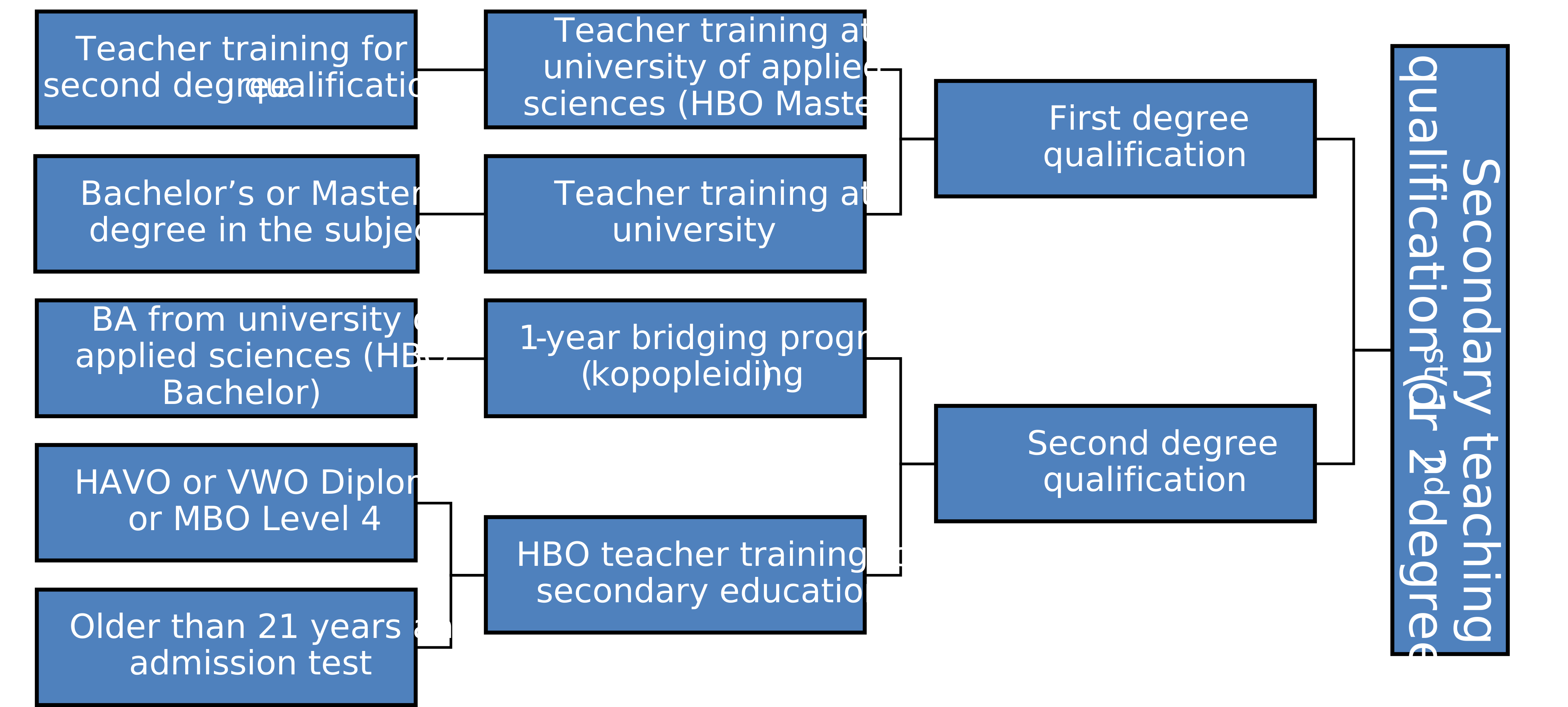
The minimum level of qualification to become a teacher in the Netherlands is a bachelor's degree. Access to initial teacher education (ITE) is possible through multiple pathways (OECD, 2022[20]; Rijksoverheid, 2024[24]) and the Netherlands (along with England and Wales in the United Kingdom) has long provided several different options for prospective teachers to enter the profession (Birch et al., 2021[25]). This flexibility can address the teacher shortage by making it easier for different groups of aspiring teachers to enter the profession. The different routes into the teaching profession at the secondary level are illustrated in Figure 5.3. Second degree qualifications permit qualified personnel to teach in pre-vocational education (voorbereidend middelbaar beroepsonderwijs, VMBO), lower senior general secondary education (hoger algemeen voortgezet onderwijs, HAVO), lower pre-university education (voorbereidend wetenschappelijk onderwijs, VWO) and practical education (PRO). First degree qualifications additionally permit staff to teach in upper HAVO and upper VWO.
Source: Rijksoverheid (2024[26]), Hoe word ik leraar in het voortgezet onderwijs? [How do I become a secondary school teacher?], https://www.rijksoverheid.nl/onderwerpen/werken-in-het-onderwijs/vraag-en-antwoord/leraar-voortgezet-onderwijs (accessed on 20 November 2024).
Prospective teachers can also enter the profession through alternative pathways. These include lateral entry, which is a shortened, 2-year training during which candidates are paid to teach at the same time as they are attending teacher education. A regular lateral entry programme requires a higher professional or university education, while a vocational lateral entry programme requires candidates to have a Diploma at MBO-4 level. Another pathway into the teaching profession is to study for a minor in education. If a student is in the middle of completing a bachelor’s degree, they can choose to complete an Education minor, which is a six month programme that will qualify them to teach. The government also provides ten additional pathways to becoming a teacher for candidates without proper training and there are opportunities to be a guest lecturer in schools (Rijksoverheid, 2024[24]). Teacher training candidates are also eligible for government subsidies to cover the cost of their initial teacher education.
Whether and to what extent Dutch ITE programmes include training on the use of digital resources is at the discretion of individual ITE institutions. The OECD’s Policy Survey on School Education in the Digital Age indicates that this is in line with just under half (17) of the 35 participating education systems with available data. 16 education systems reported that training on the use of digital resources is a mandatory component in all ITE programmes (see Figure 5.4).
For general subject teachers (ISCED 2)

Note: Number of jurisdictions with available data = 35.
Source: Reproduced from Boeskens, L. and K. Meyer (2025[27]), “Policies for the digital transformation of school education: Evidence from the Policy Survey on School Education in the Digital Age”, OECD Education Working Papers, No. 328, https://doi.org/10.1787/464dab4d-en, Figure 6.1.
Routes into school leadership
There are no central selection criteria for candidates who wish to be school leaders. Although the majority of school leaders in the Netherlands have a background in teaching, there is no requirement for candidates for school leadership posts to be qualified as teachers or have any classroom experience, unlike in most OECD countries (OECD, 2022, pp. 386, Table D6.4[28]). There are two courses that need to be completed for initial school leader preparation (stages 1 and 2), and candidates can access this training through the Association of School Leaders (Algemene Vereniging Schoolleiders, AVS) and other providers. There is no central information or monitoring of how prospective school leaders are prepared to promote digital literacy in their schools and whether the courses provided by AVS and other providers include modules on education technology or developing visions for digitisation in schools.
Continuing professional learning
Continuing professional learning for teachers
Along with initial teacher education, continuing professional learning (CPL) is one of the two main ways for teachers to develop the skills and knowledge needed to do their jobs. As new tools and methods are developed to improve student learning, or as new topics are introduced to the curriculum, in-service teachers must be properly prepared to teach using these new elements effectively. In many countries, members of traditional professions (such as law, medicine or engineering) are required to engage in CPL to renew their professional certification or otherwise continue to act in a professional capacity. This is one of the characteristics that distinguishes professions from occupations or semi-professions (Etzioni, 1969[10]; Ingersoll and Collins, 2018[11]). Indeed, many OECD countries require teachers to participate in CPL to renew their certification or accreditation. In some countries, teachers’ career ladders also require them to engage in CPL to build the skills they need at different points in their careers (see Figure 5.5).
For teachers of general subjects and school heads of general programmes in public institutions

Source: Reproduced from OECD (2022[20]), Education at a Glance 2022: OECD Indicators, https://doi.org/10.1787/3197152b-en, Figure D7.1., based on Tables D7.1 and D7.2 (https://stat.link/5wfiq3).
Based on collective agreements with teacher unions, every Dutch teacher has the right to 16 hours per year of CPL related to the curriculum (OECD, 2024[13]). However, there are no compulsory requirements for teachers to engage in CPL once they are certified.1 This lack of obligation for continuing learning is one of the reasons why teachers’ participation in CPL varies significantly and it can make it harder for teachers to exercise their right to engage in CPL. In interviews conducted during the OECD review visit, multiple stakeholders also reported that teachers find it difficult to take time off for CPL due to the teacher shortage, which is corroborated by TALIS data. Teachers in some schools are responsible for arranging their own substitutes to cover for any classroom time missed for professional development, and the teacher shortage makes it more difficult to find qualified replacements.
In the Netherlands, several bodies provide continuing professional learning (CPL) for teachers, including initial teacher education institutions and other higher education institutions, schools, private companies and teacher unions (OECD, 2022[20]). There is no central repository or catalogue of CPL opportunities available to teachers. Rather, teachers in the Netherlands tend learn about CPL from their school management or department heads, their school boards, sector organisations or directly from providers of CPL activities (OECD, 2022[20]). Historically, there has also been no monitoring or evaluation of the quality of CPL programmes for teachers in the Netherlands. The National Action Plan for the Professionalisation of Teachers (Nationale Aanpak Professionalisering van Leraren, NAPL) aims to address these issues by developing quality criteria for CPL programmes and by creating a training register. The NAPL initiative plans to provide funding through newly established education regions, aiming to align training with teachers' needs and to facilitate their participation.
Teachers’ CPL on the topic of digital literacy is a growing focus since schools will be expected to integrate digital literacy into their curricula once the new core objectives for students’ digital literacy will become statutory elements of the national curriculum framework in 2027. There is currently no uniform approach to the assessment or measurement of the new core objectives for digital literacy. Ensuring the quality and success of CPL programmes, especially in digital literacy, is a key concern of actors across the Dutch education system. The NAPL initiative is working on establishing quality criteria and monitoring systems for CPL programmes and intends to prioritise digital literacy, among other topics, to ensure that CPL programmes are relevant and up to date. (NAPL is discussed in more detail further below.)
Continuing professional learning for school leaders
As for teachers, CPL is not mandatory for school leaders. School leader receive an annual budget of EUR 3 000 for CPL. Secondary school leaders also have the opportunity to apply for a scholarship should they wish to take an academic route and complete a one- or two-year programme at the master’s level (OECD, 2024[13]). According to a 2024 report by the Dutch Inspectorate of Education, school leaders in the Netherlands reported that they had participated in 16 days of professionalisation activities on average in the 18 months prior to the survey. Activities included courses or training with their school team (94% of school leaders), educational conferences (74% of school leaders), and formal training (32% of school leaders) (Inspectorate of Education, 2024[29]).
The survey indicates that school leaders’ choice to engage in specific CPL opportunities was largely based on their personal interest or positive recommendations from colleagues. While a quarter of school leaders reported experiencing no barriers to engaging in professional development, a majority of school leaders reported a lack of time and a heavy workload as being the main obstacles to their engagement in CPL (Inspectorate of Education, 2024[22]). Providers of CPL for school leaders in the Netherlands include the Association of School Leaders (AVS) and its training academy, school boards, private companies, higher education institutions and the Secondary Education Council (VO-raad) (OECD, 2022[20]).·
Some school leaders are informed of CPL opportunities by their professional organisation and their school boards (OECD, 2022[20]). This includes professional learning courses on the digital transformation of schools at both primary and secondary level, but there were not many CPL opportunities on this topic at the time of the OECD review visit (OECD, 2024[13]). There is also peer-learning support for school leaders, including by AVS and some of the larger school boards. Again, the learning opportunities on offer vary greatly across providers of CPL and school boards and not all offer peer learning on the topic of digitalisation (OECD, 2024[13]).
Several government-funded agencies and organisations support school leaders with their needs around digitalisation. Kennisnet provides guidance and support in several areas of digital education, including digital safety, security risks, infrastructure and the development of a school vision for digital education. Together with the SLO, Kennisnet has also launched the Digital Literacy Expertise Centre, which supports school leaders and teachers in embedding digital literacy into their schools’ curricula.
Finally, there are private education consultancies that school leaders draw on to provide CPL and other advice or support and their staff members. There is no central repository providing an overview of these private services or their quality. However, at the time of the review, Education Development Netherlands (Onderwijsontwikkeling Nederland, OON), a new advocacy group representing the education consultancy sector, is working on the self-regulation and quality assurance of services provided by the sector (OON, 2024[30]).
Capacity for digital education
Teachers’ preparedness to use digital resources and teach digital literacy
Different surveys indicate that Dutch teachers feel comfortable with their basic ICT skills. The majority of teachers in the 97 primary schools surveyed as part of the inspectorate’s Peil.Digital Literacy survey reported feeling competent in covering topics related to basic ICT skills, informational skills and media literacy. More than half of these teachers also reported not needing further CPL in these areas (Inspectorate of Education, 2024, pp. 104, 108[31]). Likewise, both primary and secondary teachers who responded to the MYRA surveys rated their own level of ICT competency as “fairly high”. This is significant because the MYRA survey also suggests that teachers who report having strong digital skills were also more likely to use technology in instruction (Karssen et al., 2023[32]; Karssen et al., 2023[33]).
It is worth noting that these reports are subjective and that surveys also point to subjects at the core of teaching with technology in which Dutch teachers are decidedly less confident. For example, primary and secondary teachers surveyed for the MYRA studies reported having little knowledge of artificial intelligence (Karssen et al., 2023[32]; Karssen et al., 2023[33]). The Peil.Digital Literacy survey also shows that teachers in primary schools were least confident in their ability to teach students about computational thinking and expressed their highest need for CPL in this area (Inspectorate of Education, 2024[31]).
Nevertheless, in 2022, over 80% of Dutch 15-year-olds attended a school whose principal reported that their teachers have the necessary technical and pedagogical skills to integrate digital devices in instruction. On most dimensions, the share of Dutch 15-year-olds attending schools that appear to be well prepared to integrate technology was above the OECD average (see Figure 5.6).
Percentage of students in schools whose principal agrees or strongly agrees with the following statements

Source: OECD (2023[34]), PISA 2022 Results (Volume II): Learning During – and From – Disruption, https://doi.org/10.1787/a97db61c-en, Table II.B1.5.30.
At the same time, only 8% of 15-year-olds attended schools whose leaders strongly agreed that their teachers have the necessary skills to integrate digital devices in instruction (compared to 22% across OECD countries). This could mean that Dutch teachers are not as comfortable as their international colleagues with integrating technology in their practice or that their skills are less advanced. It could also indicate different expectations among school leaders. PISA data also suggest that there are few inequities in Dutch school leaders’ digital preparation, meaning that there are no statistically significant differences between socio-economically advantaged and disadvantaged schools (OECD, 2023[16]). It should be noted that the situation in primary and upper secondary schools could be different since they were not covered by PISA.
School leaders’ capacity to promote effective uses of digital technology
School leaders play a critical role in stimulating digitalisation in their schools. Their knowledge and attitudes around incorporating digital technologies and adopting the new curriculum will be critical to allow its implementation at the school level. The digital transformation of individual schools will thus largely rely on their school leaders. School leaders’ capacity to promote digital literacy as well as their confidence, skills and beliefs about the usefulness of technology can influence whether they push an agenda of digital transformation. Variations in school leaders’ capacity to engage with the digital transformation thus risks to create inequities across schools in terms of the opportunities that their students have to learn with and about digital technologies (OECD, 2023[35]).
In 2022, most primary schools surveyed in the inspectorate’s Peil.Digital Literacy survey reported being in the early stages of engaging with digital literacy. Teachers and school leaders in less than 20% of schools reported that they were past the planning stage and making first attempts to incorporate digital literacy in their instruction (Inspectorate of Education, 2024[31]). However, there is little information at the national level on school leaders’ ability to use technology in their own work, their capacity to create a vision for their schools’ approach to digitisation, their understanding of the interaction between technology, pedagogy and subject content, or their preparedness to lead the instruction on digital literacy.
Many teachers embrace the purposeful integration of digital education technology and are motivated to further refine its use
During interviews conducted with teachers, school leaders and other education stakeholders, the OECD review team formed the impression that Dutch teachers, on the whole, have a nuanced attitude towards the use of digital education technology, emphasising its purposeful integration. MYRA surveys of primary and secondary teachers have emphasised their belief that ICT use can positively impact students’ learning and performance (Karssen et al., 2023[32]; Karssen et al., 2023[33]). Likewise, the inspectorate’s Peil.Digital Literacy survey shows that 9 of 10 teachers in primary education believe that the use of technology allows education to be more tailored to the individual needs of students (Inspectorate of Education, 2024[31]).
On the other hand, results from TALIS 2024 point to divided opinions among Dutch teachers, with only 60% of lower secondary teachers agreeing that the use of digital resources and tools helps students to improve their academic performance (compared to 68% on average across OECD countries). 77% believe that digital resources can help students to develop greater interest in learning (OECD average: 85%) and only 56% think that it helps students to develop the skills to plan and monitor their own work (OECD average: 75%) (OECD, 2025, pp. 287, Table 1.47[1]). This assessment might reflect an adjustment of expectations among teachers in a system that was quick to embrace and experiment with the use of digital resources. It also points to a keen awareness of the difficulty of integrating digital technology effectively into the teaching process and the challenges associated with the use of digital tools in the classroom (70% of Dutch teachers, for example, agree that the use of digital tools distracts students from learning, compared to 53% on average across OECD countries) (OECD, 2025, pp. 287, Table 1.48[1]).
The technology acceptance model (TAM) suggests that pre-service and in-service teachers’ perception of the usefulness of technology – along with their general attitudes towards the use of computers and their own self-efficacy – influence whether they are likely to use technology in their practice (Teo, 2009[36]; Teo, 2011[37]). Dutch teachers’ positive attitudes towards the utility of digital education technologies can thereby make them more inclined to engage in their use, which is an important precondition to foster their effective integration in teaching processes. Teachers who are generally open to the use of technology are more likely to engage with EdTech and deepen their knowledge about its effective use. Encouraging positive attitudes and improving teachers’ self-efficacy around teaching with technology can thereby also improve the quality of teaching and learning with digital tools.
The available data suggest that Dutch teachers feel, on average, confident in using and teaching with ICT. Interviews conducted during the OECD review visit confirmed that Dutch teachers, on the whole, appeared to be well prepared to use some digital technologies in their teaching. Nevertheless, there remains significant variation in teachers’ preparedness both within and across schools, and their level of preparation in some areas is likely to be more limited, for example concerning the use of intelligent technologies, computational thinking and the integration of technology and pedagogy. At least some ITE institutions are working to prepare student teachers for the use of digital education technologies from the very start, which provides an important opportunity for beginning teachers to carry new practices and competencies into schools. Nevertheless, there is no central monitoring of the contents covered in ITE courses and the extent to which digital technologies are covered is likely to vary across ITE providers in the Netherlands. It is also unclear to what extent teachers are prepared to teach with technology in some of the shorter, alternative routes into the teaching profession.
While central authorities and agencies of the Dutch education system are committed to the principle of pedagogical neutrality and school autonomy, they provide a supportive environment for educators to incorporate digital tools and resources into teaching and learning. Resources and support for teachers and school leaders are provided by a broad and heterogeneous group of actors, including both government and non-governmental organisations (see Figure 5.7). This includes central agencies, such as Kennisnet, membership organisations (such as unions and subject associations), school boards and for-profit CPL providers, such as publishers and independent education consultancies. Not all of these resources are free of charge or available to all teachers and – in the absence of a central platform or catalogue of available resources – not all educators are aware of their existence. The resources are developed with different degrees of involvement from the profession (with some – such as NOLAI’s AI applications – drawing on a strong process of co-creation), but there is no standardised information on their quality or what they cover.

Source: Authors’ elaboration.
Some schools, school boards and ITE institutions already invest in building capacity for digital education
SLO’s decision to actively socialise the draft core objectives for digital literacy during their development and prior to their release means that many educators are already working with them in schools and ITE institutions (see Chapter 6). This includes stakeholders who were consulted by SLO during the development phases as well as schools the ITE institutions who opted to begin exploring how the core objectives fit into their own institutional curricula. The schools that have already started this work are likely to be better prepared for digital education in terms of planning, teacher training, and the development of lessons and learning activities. Likewise, the ITE institutions that are already using the draft digital literacy core objectives have started educating their student teachers to incorporate technology into their practice in ways that are aligned with the new curriculum framework. Not all institutions will have taken advantage of this opportunity, however, creating further variation in capacity between schools and skills gaps among new teachers entering the profession.
The interviews and school visits conducted during the OECD review visit indicated that some schools already have a strong foundation in digital education. Some teachers and school leaders have prioritised the effective use of technology and used funding from the National Education Programme (Nationaal Programma Onderwijs, NPO) (see Chapter 3) strategically to support the work of ICT co-ordinators or i‑coaches working on the integration of technology and pedagogy. Some schools also have an additional technical staff member who helps to fix technical issues, installs software and hardware, etc. This division of roles is positive, as ICT co‑ordinators have a strong foundation in classroom teaching and can empathise with teachers’ pedagogical challenges or reluctance to try new technology. The technical staff members can focus on troubleshooting, repairs and digital security, thus saving teachers time to focus on their pedagogical work. Some schools and teachers are also learning from other schools by engaging in networks, whether through their subject associations, school boards or otherwise.
There also exists a culture of innovation and experimentation in some schools, where teachers are given the freedom to try our new digital tools or pedagogical approaches to understand what works (and what does not) for their learners. However, there is no systematic approach to piloting technology in schools, and no widespread engagement in CPL for teachers or school leaders on how to collect data and measure outcomes associated with the use of digital tools. This is important since not all digital resources will work in all contexts, even if they are rigorously tested and recommended by a trusted source. It is necessary for schools to be able to try out technologies in their own environment, with all of its advantages and limitations, to observe their outcomes for their own students.
Some ITE institutions are already incorporating technology and the draft core objectives for digital literacy into the learning goals for their student teachers. During its visit, the OECD review team saw multiple examples of institutions who have already piloted the new digital literacy objectives during the first two years of ITE. This has allowed them to observe and better understand how working with digital tools influences the emerging practices of their student teachers as well as any concerns they may have about their professional future.
Finally, initiatives to help Dutch schools develop a vision for their use of technology have been in existence for at least a decade. Kennisnet draws on the “Four in Balance” model to help schools and school leaders develop a vision for digital education that aligns with their school’s overall vision (Schouwenburg, 2022[38]). The model describes four factors to consider: ICT infrastructure, digital learning materials, vision and expertise. There have also been efforts to strengthen the digital capacity of parents and their engagement with digital technologies, given the important role they can play in supporting their children’s digital learning (see Box 5.1).
Between 2021 and 2024, the Tel mee met Taal (Count on Skills) subsidy was made available to schools and other organisations to improve the digital skills of parents with low literacy levels. Schools could apply for the subsidy to create and run activities that strengthened parents’ digital literacy skills and encouraged them to create an intellectually stimulating home environment for their children.
Source: Rijksoverheid (2024[39]), Tel mee met Taal [Count on Skills], https://www.dus-i.nl/subsidies/tel-mee-met-taal (accessed on 1 October 2025).
There is an increased emphasis on collaboration and peer learning in the area of digital education
Teachers interviewed during the OECD review visit were comfortable collaborating with colleagues in their schools and professional networks to share resources and expertise or ask for advice. School leaders in the Netherlands also tend to encourage their teachers to collaborate. In PISA 2022, 72% of 15-year-old students attended a school whose principal took actions to support co-operation among teachers to develop new teaching practices at least once or twice a month (OECD, 2023[16]). This culture of collaboration is supported by a number of central agencies, stakeholder organisations and initiatives. In the area of digital education, the following are particularly active in supporting teachers and schools by offering opportunities for collaboration:
Kennisnet supports i-coaches through local meetings, bringing together digital education experts from different schools in a community of practice to help them learn from and share practices with each other.
The Primary Education Council (PO-Raad), the Secondary Education Council (VO-raad) and Kennisnet provide a network for ICT co‑ordinators in schools. Unlike the i-coaches, the ICT co‑ordinator tends to provide technical support and manage the technology at the school level.
The PO-Raad and VO-raad also organise conferences for school leaders. At the secondary level, the VO-raad also connects school boards to organise school board visits (Collegiale Visitatie) in groups of three or four for informal peer learning.
Some school boards with multiple schools under their authority facilitate the exchange of good practices and peer learning on digital technology between their members.
Some initial teacher education institutions have created follow-up professional learning communities for their recent graduates, sending staff from the ITE institution to schools to support their new teachers in an effort to decrease teacher attrition in the first five years of their careers.
Some teacher subject associations have communities or online platforms allowing their members to share resources and ask each other questions.
The Impulse Open Learning Materials (Impuls Open Leermateriaal, IOL) initiative, which is linked to Wikiwijs, promotes teachers’ use, sharing and creation of open educational resources (OER). Teachers can access materials on the platform and edit them or create and post their own materials. The programme has been funded until 2030 with the aim of providing high-quality, up-to-date learning materials that teachers can trust and that decrease their workload.
The Netherlands’ system of free school choice, per-student funding and decentralised hiring encourages competition for funding, staff and students between schools and school boards and does not structurally promote collaboration between schools. The increasing emergence of collaborative practices, for example in the procurement of digital resources, is therefore an important accomplishment (see Chapter 3). The resources listed above can be seen as a similarly encouraging sign of peer learning and collaboration. However, there is also significant variation in who has access to and uses each of these resources. Resources from unions tend to be restricted to members and collaborative practices are encouraged by some school boards more than by others. Some resources, such as the OER on Wikiwijs, are not effectively disseminated and widely known among teachers. The OECD review visit interviews revealed a limited awareness of the IOL platform among teachers and – among those who know about the platform – difficulties navigating its resources.
Significant investments in teachers’ professional learning present an opportunity to strengthen the capacity in key priority areas, including digital education
The National Action Plan for the Professionalisation of Teachers (Nationale Aanpak Professionalisering van Leraren, NAPL) will make up to EUR 160 million from the National Growth Fund available for teachers’ professional learning. The NAPL initiative has four pillars that include creating a training register and development paths for teachers, as well as regional co-creation labs and a digital knowledge-sharing platform. Plans also include the development of quality standards, which present an important step to strengthen the focus on quality and effectiveness in professional learning. The initiative aims to improve the overall quality of teaching by ensuring that 25% of all Dutch teachers will have participated in professional development by the end of the 10-year funding period (Government of the Netherlands, 2024[40]).
The work proposed by the NAPL initiative could make it easier for teachers to identify high-quality CPL opportunities that fit their needs, schedule and development as a professional. However, it is it not known how NAPL will address the barriers to teachers’ uptake of CPL that are associated with the teacher shortage. Teachers’ current entitlement to 16 hours of CPL equates to roughly two full days of training over the course of a school year in which Dutch teachers teach for 720 hours or more. If teachers already find it challenging to organise substitutes that would allow them to leave their classes for two days, the NAPL needs to consider how to support schools in order to encourage teachers to attend training.
Funding from the NAPL initiative will cover the cost of teacher trainers and the direct costs associated with teachers attending CPL programmes. However, it does not cover the indirect cost for schools associated with finding substitute teachers for those who are attending training. It is yet to be decided which substantive areas the programme will support training in, including what proportion of this work will relate to digital literacy or digital tools, and whether there will be accompanying standards in this area. Developing content priorities for CPL at the regional level could be an effective way to ensure that the training developed through NAPL addresses local and regional needs.
Significant variation persists in schools’ capacity to promote the effective use of digital resources
Most schools and teachers in the Netherlands appear to have at least foundational skills in the basic use of ICT for teaching and learning. PISA data indicate that school leaders are confident that most teachers are prepared for digital learning and national surveys seem to corroborate this. The biggest challenge in understanding Dutch teachers’ capacity for teaching with technology is the coverage of the data in the Netherlands. PISA provides data on school leaders’ impressions of the average competency of all teachers in their school and is limited to schools attended by 15-year-old students. Both MYRA surveys (for primary and secondary education) used a volunteer sample and participation rates were low enough that the Kohnstamm Instituut cautioned against drawing conclusions from either set of findings (Karssen et al., 2023[33]). TALIS 2018 – the most recent wave of the survey available at the time of the OECD review visit – was administered prior to the COVID-19 pandemic and provided limited data on teachers’ experiences with digital tools and resources. Likewise, the inspectorate’s Peil.Digital Literacy survey of primary school is based on a small sample of 97 primary schools (Inspectorate of Education, 2024[31]).
Furthermore, the measures of teachers’ digital skills described above do not have a high degree of specificity. While they tend to suggest that Dutch teachers are comfortable with basic ICT tasks, it is not clear to what extend their skills extend to more complex uses, assessing the risks and benefits of using AI, or integrating technology and pedagogy. The measures are also based on teachers’ and school leaders’ self-reported ability to use digital technology effectively. As such, they rely on educators’ understanding of what constitutes effective use and their ability to evaluate whether they meet this standard. In such a rapidly evolving field as education technology, self-assessments of skill levels might be less reliable (OECD, 2021[41]). The available measures of teachers’ digital skills and attitudes towards teaching with technology in the Netherlands are thus limited in their potential for guiding policy development and there is likely to be large and – to some extent – undetected variability across the system.
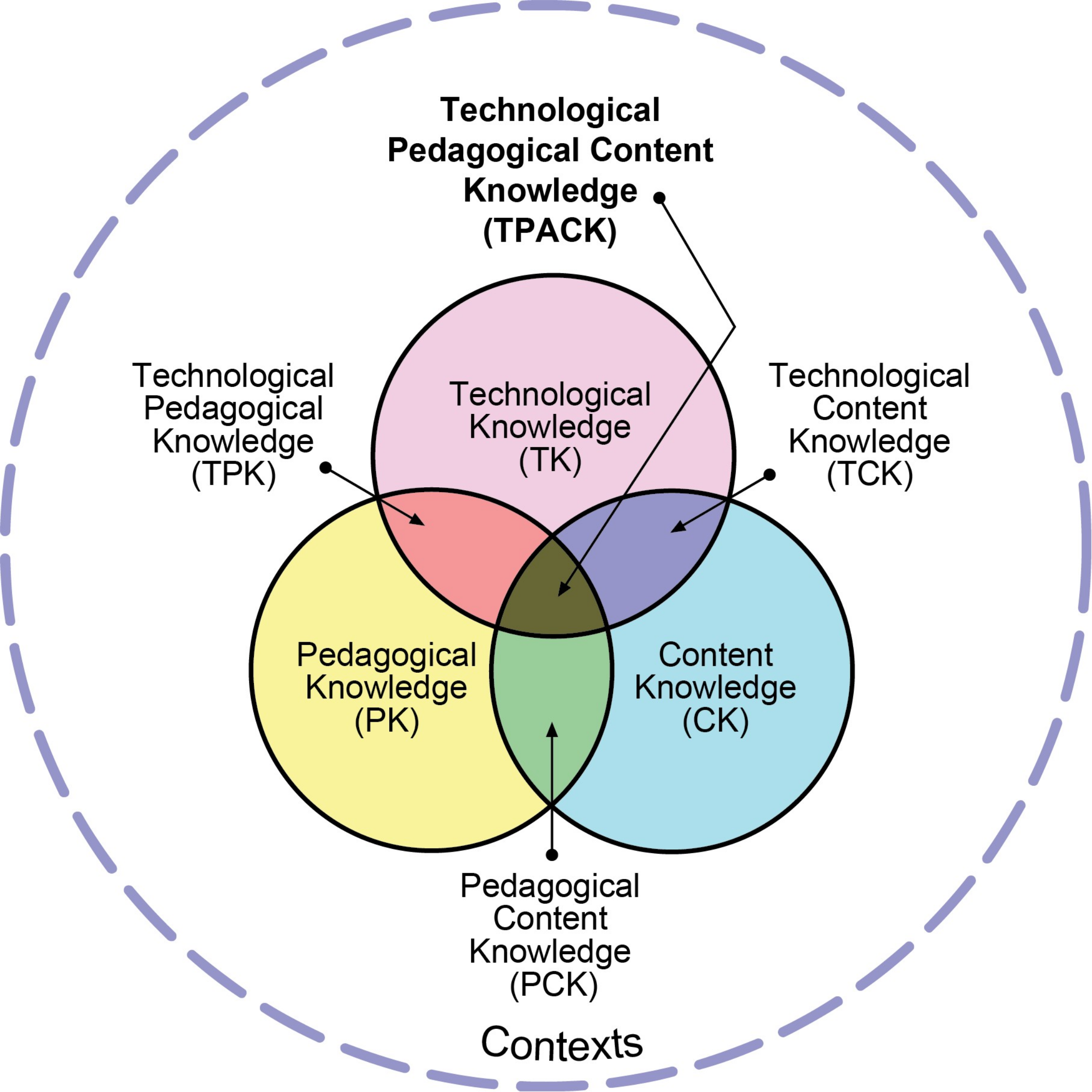
A long tradition of research demonstrates that effective instruction requires teachers to have a strong understanding of the content of their subject as well as the pedagogies suited to teaching that content (Shulman, 1986[42]). Where teaching involves the use of digital resources, evidence shows that teachers not only need ICT skills, but also an in-depth understanding of the interaction between technology, pedagogy and content, referred to as technological pedagogical content knowledge (TPACK) (see Figure 5.8) (Schmidt, 2009[43]).
Source: Reproduced with permission of the publisher, © 2012 by www.tpack.org.
The TPACK model demonstrates that teachers’ choice of technology should influence and be influenced by the content they are teaching and the pedagogy they are using to teach that content. In other words, successful technology integration is about more than using the textbook on hand with the digital resources provided by the school. These complex decisions require a high level of competency in each of the areas depicted in Figure 5.8, and should drive the support provided to teachers in their initial teacher education and continuing professional learning (Schmidt, 2009[43]).
While many teachers significantly improved their digital literacy and increased their use of digital tools when engaging in distance instruction during the COVID-19 pandemic, many remain far from exploiting the full potential of digital technologies. A systematic international literature review of teachers’ experiences using technology during and after the COVID-19 pandemic suggests that teachers’ confidence in their ICT skills had increased, but many still struggled to integrate technology and pedagogy in line with the TPACK model. The research points to several factors that many explain these persistent challenges, including a lack of training and time, which are likely to affect teachers in the Netherlands as well (Pathiranage, 2023[44]).
While many schools in the Netherlands appear to use digital education technologies cautiously and deliberately, this is driven by individual experimentation more than a systematic approach. To date, limited central guidance has been provided to educate schools on making technology decisions to support their pedagogical approach, either at a classroom or institutional level. In schools visited as part of the OECD review visit, individual teachers had the autonomy to propose new technologies to purchase and use, which school leaders might approve after minimal testing and with little evidence that they are having the desired impact on students or teachers.
Schools need further support in systematically collecting and using data, including that generated through their standardised testing to inform student learning, school self-assessment and decision-making. Every learner is different and technology enables education systems to better identify, understand and address individual learners’ needs (Brizard, 2023[45]). Schools need to have an in-depth understanding of how to make evidence-informed decisions concerning every aspect of their school and classroom strategies, including their strategies for making the best use of digital resources to improve teaching and learning.
Schools’ capacity to invest in qualified staff and equipment for digital education varies significantly and can depend on the priorities of their school leader or school board and the funding that they are willing or able to secure for this purpose. The size of a school board also influences the extent and types of support they are able to provide to schools, which can greatly influence a school’s capacity for effective teaching and learning with technology. For example, schools that are part of large school boards, such as Lucas Onderwijs, can receive support in many formats and domains, including with their digital infrastructure, security, procurement of school resources, professional development, peer learning visits, problem-solving, vision-setting, staffing, and more. This level of support is not available to most schools that are part of smaller or single-school boards.
Ensuring that digital technology is used effectively and in line with a school’s vision for teaching and learning can and should fall within the mandate of both the Ministry of Education and the inspectorate to ensure a high quality of education for all students. There should be mechanisms in place for central authorities to monitor the capacity of educational actors at the classroom, school and board level to ensure that digital resources are being used to promote high-quality teaching and learning and those mechanisms do not appear to be fully developed at present.
Limited steering on ITE and CPL risks misalignments between teachers’ training and the skills they need to use digital education technologies effectively
There are concerns around the alignment between initial teaching education programmes and training needs arising from reforms
The increased emphasis on teaching digital literacy in the context of the ongoing curriculum reform will need to be reflected in ITE curricula. There is limited central steering on ITE in the Netherlands and individual ITE institutions are responsible for developing their own curricula. For the most part, ITE institutions base their programmes on the topics that are included in the national curriculum framework for schools. However, because the draft core objectives for digital literacy are not yet legally binding, schools are not yet inspected on their ability to help students attain them, nor are teachers evaluated on their ability to effectively teach digital literacy yet. Even so, Dutch schools are already making use of digital technology in some form and teachers beginning their ITE today will need to be fluent in the technological pedagogical content knowledge required to effectively teach digital literacy once they enter the classroom.
In order to guarantee the quality of teacher training and ensure that all new teachers have obtained a shared foundation of knowledge and skills, ITE institutions have agreed with the Ministry of Education to establish national knowledge bases (kennisbases) governing the content of their ITE programmes. As part of the 10voordeleraar programme, led by the Netherlands Association of Universities of Applied Sciences (Vereniging Hogescholen, VH), these knowledge bases are currently undergoing a re-calibration process. The revised knowledge bases will comprise a generic component that will be shared by all ITE institutions alongside an institution-specific component (10voordeleraar, 2024[46]). The teams involved in this re-calibration process will include ITE trainers from the universities of applied sciences as well as researchers in each subject area, and a Teacher Training Council (Opleidingsberaad Leraren) including representatives from employers, unions and the Ministry of Education. Knowledge bases will be revised as the new curriculum guidelines are released for each subject area, so the delay in preparing teaching candidates to teach digital literacy could be significant.
Many stakeholders interviewed by the OECD review team expressed concerns about overcrowding the curriculum if digital literacy were to be taught as a standalone subject and preferred its horizontal integration as a cross-curricular topic. This would make it even more important for all teachers, regardless of their subject area, to receive training on teaching with technology, rather than focussing on teachers of computer science, media and design or similar subjects. It is not clear what approaches the various ITE providers will take to the integration of digital skills, but the heterogeneity in teachers’ initial education is likely to affect the further support they will require in their schools, the schools they are able to teach in, and the ease with which they will be able to adapt their teaching to the new core objectives for digital literacy.
There are no measures to ensure that teachers engage in professional learning related to digital education or competency frameworks to guide them
Engagement in CPL is not mandatory in the Netherlands and while teachers are entitled to 16 hours of CPL per year, many face barriers that prevent them from taking up this opportunity. In TALIS 2018, 44% of Dutch teachers reported that conflicts with their work schedule presented a barrier to their participation in professional learning (OECD, 2019, pp. 209, Table I.5.36[47]). This proportion has only increased in the intervening years, reaching 59% in TALIS 2024 (exceeding the OECD average of 53%) (OECD, 2025, pp. 291, Table 4.39[1]). It is likely that teacher shortages are contributing to this problem and teachers interviewed by the OECD review team confirmed that shortages are making it more difficult to step away from their classroom teaching duties to attend training or professional development. In some schools, a lack of substitute teachers prevented staff from taking any time off from teaching. Dutch teachers’ access to CPL also strongly depends on their school boards. While some school boards organise extensive training for their teachers, others have more limited capacity to do so and more than one quarter of Dutch teachers (27%) reported lacking employer support to engage in professional learning (see Figure 5.9).
Percentage of lower secondary teachers who “agree” or “strongly agree” that the following present barriers to their participation in professional learning

Note: *Caution is required when interpreting TALIS 2024 estimates for teachers and principals in the Netherlands because technical standards with respect to participation rates were not met, leading to a higher risk of non-response bias. For more information, see Annex A in OECD (2025[1]).
Source: OECD (2025[1]), Results from TALIS 2024: The State of Teaching, https://doi.org/10.1787/90df6235-en, Table 4.39.
Teachers’ engagement in CPL is not tied to the renewal of their qualifications or teaching licenses, nor are there other obligations for teachers to engage in CPL in the Netherlands. In fact, 46% of Dutch teachers reported that a lack of incentives presented a barrier to their engagement in processional learning in 2024 (see Figure 5.9) – a significant increase from 22% in TALIS 2018. This limits central authorities’ ability to ensure that teachers are adequately prepared to implement reforms such as the introduction of new learning areas in the curriculum framework. Since the new core objectives for digital literacy will not be passed into law until 2027, teachers and schools will not be inspected on their ability to provide high-quality teaching and learning in this area until then. This further aggravates the problem, since there are limited incentives for teachers to engage in CPL on digital education and limited means for OCW to ensure a baseline of proficiency in the pedagogical use of digital education technology by the time that the core objectives become mandatory.
While interviews conducted during the OECD review visit indicate significant heterogeneity in teachers’ preparation for digital learning, there is no agreed upon standard for the digital competencies that Dutch teachers ought to exhibit. A growing number of OECD countries are developing and disseminating standards for teachers’ digital skills to help them self-assess their skills, orient their professional learning and measure their progress. The OECD’s Policy Survey on School Education in the Digital Age indicates that, at the lower secondary level, nearly half of the 35 participating education systems had a competency framework that covers teachers’ digital skills or their use of digital resources in 2025 (see Figure 5.10). Some of these build on existing international competency frameworks, such as the European Framework for the Digital Competence of Educators (DigCompEdu) (Redecker, 2017[48]). A smaller share of education systems are going further by actively licensing or certifying teachers’ digital skills, including France with its PIX platform (Boeskens and Meyer, 2025, p. 30[27]). In the Netherlands, there is neither an official competency framework nor a certification process for teachers’ use of digital education resources. The lack of these steering instruments makes it more challenging to monitor and promote teachers’ ability to effectively incorporate technology in instruction and foster students’ digital literacy.
Number of jurisdictions that reported having the following in place at the central level (ISCED 2)

Note: Number of jurisdictions with available data = 35.
Source: Boeskens, L. and K. Meyer (2025[27]), “Policies for the digital transformation of school education: Evidence from the Policy Survey on School Education in the Digital Age”, OECD Education Working Papers, No. 328, https://doi.org/10.1787/464dab4d-en, Annex Table 6.1.
The lack of an established professional organisation limits teachers’ ability to shape the future of their profession in light of technological changes
The development and increased use of intelligent technologies2 in education will change the role of education professionals. For example, teachers may be increasingly able to use AI or other intelligent technologies to perform some of the routine tasks or processes associated with their practice, which could decrease their administrative burden (Onderwijsraad, 2022[14]). Intelligent technologies could also assist teachers in student assessment, lesson preparation and data collection and analysis. One of the most promising potential uses for intelligent technology in teaching is its ability to personalise learning for a variety of learner needs. This could include creating an individual learning trajectory for a student based on their performance on a pretest and continuously adapting that learning path based on students’ progress. Some intelligent technologies can provide personalised feedback to each learner to help them understand their errors or to enforce concepts they have learned. Teachers can also use intelligent technology to allow students of varying ability to work independently, freeing up their time to offer other students additional support (OECD, 2021[49]; OECD, 2023[35]).
Using intelligent technologies effectively for teaching requires that teachers understand how and when they are best employed from a pedagogical point of view. It also requires teachers to understand the data that these technologies produce and how they should be interpreted alongside other information that teachers gather through student work and more traditional assessments. Beyond this, however, teachers need an in-depth understanding of how these technologies perform to understand and mitigate any biases and errors that could be introduced by the technology. As the use of intelligent technologies becomes more common, the “human” role of the teacher becomes even more important. Their pedagogical expertise and experience is essential in technology decision-making, data analysis and the evaluation and development of new materials. Their role in building and nurturing relationships with their students and monitoring their well-being and health cannot be replace by technology (Onderwijsraad, 2022[14]).
As the digital transformation of teaching and learning increasingly affects teachers’ work, the exploration of what it means to be a teacher, and the new skills, competencies and profiles that it requires, should fall to teachers themselves as they shape the future of their profession. At present there is no professional body for and by teachers in the Netherlands to give teachers this voice. Teachers’ opinions are often consulted in the Dutch education system and teachers are included in advisory bodies at all levels of educational change. However, in the absence of a body focussed on the development of the profession, this involvement is often ad hoc and not systematic. The previous professional organisation for teachers, the Onderwijscooperatie, was closed in 2018. There are encouraging first steps towards rebuilding a professional organisation with support from major unions and OCW, including the development of a professional profile for the teaching profession (Beroepsbeeld Leraar) (AOb et al., 2024[50]). Any such profile will need to address the evolution of educational technologies and how they might affect teachers’ roles and responsibilities as professionals. Yet so far, there is no organisation that is focused on giving teachers the lead in shaping the future of their profession. The creation of such a professional body could also help to elevate the status of the teaching profession in the Netherlands and encourage more candidates to join the profession in turn.
The market for education consultancies responds to diverse needs arising from the digital transformation of schools but lacks quality assurance mechanisms
School improvement support in the Netherlands has been largely privatised. Prior to a 2006 reform, schools relied on a network of publicly subsidised, municipal educational counselling services (begeleidingsdiensten). Since then, this funding has been transferred directly to schools to spend on services of their choice, giving rise to a large market of private education consultancies. Meanwhile, the role of Kennisnet – founded in 1998 as a public organisation to promote and support the use of ICT in education – was transformed in 2015 when it ceased to provide direct support to individual schools and instead focussed its activities on supporting the school sector as a whole. The result is a highly dynamic private market of school support services, which responds flexibly to schools’ needs, and a diminished role of the public sector in providing, steering and monitoring the direct support available to schools. This has led to some challenges for the sector.
Some schools and school boards have long-standing relationships with education consultancies and pay them to provide targeted support. Many of them regularly use such services and benefit from the external consultants’ in-depth knowledge of their schools’ needs and their ability to tailor support in line with their pedagogical concept. This may include support ranging from teacher training and the selection of learning software to the implementation of new regulations. Not all schools have a habit of first looking for free offers, including those of Kennisnet and other publicly supported institutions. The fragmentation of the market also means that schools have limited oversight over the services on offer and the OECD review team formed the impression that most schools tend to stick to providers they know, rather than comparing competing offers. Many of these consultancies are staffed by former teachers but – despite first steps towards self-regulation via the Onderwijsontwikkeling Nederland (OON) – their market remains largely unregulated, raising concerns around the quality of the services that schools receive and whether all education consultancies provide the best value for public funding.
There is also a risk that the schools in greatest need of support to improve their use of digital education technology can or do not access the services they need. For example, schools that are not part of large school boards or whose school leaders are not organised in a professional association may have fewer opportunities to avail themselves of external advice. Although Kennisnet and other organisations offer some specific support, for example to i-coaches, there are not many places that individual schools can turn to for direct help beyond private education consultancies and private providers, who develop and deliver CPL. Despite the significant public resources spent on these providers, the ministry and inspectorate do not currently have a legal mandate or effective mechanism to regulate or evaluate the quality of the CPL they provide.
Develop, adopt and disseminate quality standards for continuing professional learning on digital education and embed them in a central training catalogue
The activities planned as part of the NAPL initiative constitute important steps to improve teachers’ participation in high-quality professional learning in the Netherlands. Over a 10-year period, NAPL seeks to develop structured CPL development pathways for teachers, including a training register, co-creation labs for teachers, a knowledge-sharing platform and a system of quality assurance. The initiative’s overall aim is to raise the attractiveness of the teaching profession by enabling and supporting high-quality professional learning. This ambition should be further pursued and built on, paying particular attention to the use of digital technology in education. The creation and adoption of widely accepted quality standards for CPL could, for example, support the inspectorate in evaluating how schools or school boards take quality into account when developing their plans for CPL and select training offers.
Many teachers lack the opportunity or motivation to engage in regular CPL and do not recognise it as an integral part of their profession. The national development paths created by NAPL could contribute to a cultural shift and help to raise expectations for both the provision of and teachers’ participation in CPL. To encourage teachers to build their capacity for the effective pedagogical use of digital technologies in line with the revised curriculum framework, NAPL should emphasise teachers’ understanding of the interaction between technology, pedagogy and subject content (TPACK) and their ability to promote students’ digital literacy.
Another way to build on the quality criteria for professional learning in the longer term would be to widen the scope of what the development paths developed by NAPL are used for. Creating a structured career path for teachers that includes professional development requirements or that is built on a competency flamework linked with corresponding professional learning opportunities, for example, would help to ensure that the teaching workforce in the Netherlands remains up to date on the latest tools, pedagogies and research. It would also align the teaching profession more closely with traditional professions that expect their members to continue learning throughout their careers. Even if the engagement in CPL is not made mandatory for teachers, there are many ways in which OCW could encourage participation by providing incentives for teachers and by making it easier for teachers to find and access professional learning opportunities that meet their specific needs. Two examples of efforts to align training offers with teachers’ personal needs in Czechia and Austria are described in Box 5.2.
Using self-assessment data to strengthen CPL for teachers in Czechia
As part of Czechia’s broader strategic plan for digitalisation, the country emphasises improving the population’s digital skills. This includes objectives to improve the digital competency of teachers and enable them to better prepare Czech students for life in a digital society. In 2019, the Digital Teacher Competence Framework was approved alongside an online self-assessment tool that teachers can use to evaluate their own digital skills. This work continues with an ongoing initiative, set for completion at the end of 2025, which expands the range of CPL for in-service teachers that focusses on the development of digital skills and the use of digital technologies. Data from the online self-assessment are used to target CPL offers to the specific needs of Czech teachers (Digitální Česko, 2023[51]).
Providing teachers with personalised digital literacy training programmes in Austria
Austrian teachers have a personalised learning path to strengthen their digital literacy. As in Czechia, Austria’s digi.folio initiative in Austria is based on a competency framework, first developed in 2016 and revised in 2019. This digi.kompP Competency Model (digi.kompP-Kompetenzmodell) can be used by teachers to guide their self-assessment, by CPL creators to develop professional learning materials, and by ITE institutions to categorise their training offer on digital technology (Virtuelle PH, 2025[52]). Educators can access a digital digi.folio, based on the competency model, to engage in a self-assessment, after which they receive a bespoke plan for a 50-unit training programme to meet their needs. There is a catalogue of relevant online training courses to build their skills, covering all courses offered by Austrian universities. Teachers can collect evidence related to the training they attended within the tool and can record their own reflections directly in the digi.folio’s digital practice portfolio.
Source: Digitální Česko (2023[51]),The Path to Europe's Digital Decade: The Strategic Plan for the Digitalization of Czechia by 2030, https://digitalnicesko.gov.cz (accessed on 1 October 2025); Virtuelle PH (2025[52]), Das digi.kompP-Kompetenzmodell [The digi.kompP Competency Model], https://www.virtuelle-ph.at/digikomp/ (accessed on 1 October 2025).
The standards and development pathways to be developed by NAPL are currently limited to the development of CPL offers in the context of the initiative. However, there are other ways in which the quality standards could be used in the future. Listing CPL quality criteria and a register of available learning opportunities could be a first step to steer CPL providers to respond to teacher’s needs in a more structured way. In addition, school level guidance could be included to promote CPL planning. This could be in relation to teachers’ career development, the organisation of substitutions during teachers’ absence, or encouraging teachers to collaborate in applying their professional learning in practice.
A public online register of training opportunities would help teachers and school leaders who have difficulty finding high-quality CPL opportunities. Ideally, this would contain all available professional development offers, including those from private companies, public entities and education consultancies. Each provider could be required to demonstrate how their CPL offer adheres to the NAPL quality standards. This would not only make CPL easier to find but also ensure greater equity across the system by making information on CPL opportunities available to all educators, independent of their support from large school boards or education consultancies, for example.
There are also ways in which teachers could be involved in the ongoing maintenance and development of the quality standards for CPL. For example, teachers could provide feedback on the professional development they have attended, including its format, content and usefulness for their practice, which could be made public in the central CPL register. In this way, other teachers could see what worked for colleagues with similar levels of experience, who teach the same subject area or level of education, or who teach students with similar needs. This would further stimulate quality and relevance in the CPL offer and would help teachers to find training opportunities that were effective for teachers like them. It would also help the NAPL initiative in understanding which of the quality standards are most meaningful for teachers’ practice, and which align with teachers’ own experiences of CPL.
Develop professional standards or leverage existing professional frameworks to strengthen teachers’ digital literacy
Due to the variety of pathways into the teaching profession, the heterogeneity of ITE programmes, the variation in both the extent and focus of teachers’ engagement in CPL on digital resources, and the diversity in schools’ pedagogical approaches to digital learning, teachers in the Netherlands vary significantly in their skills and knowledge related to the effective use of digital education technology. At the same time, precise information on what Dutch teachers know and are able to do with digital resources remains scarce.
Teacher professional standards and competency frameworks can provide a structure to help in identifying, rewarding and disseminate examples of high-quality teaching. Such competency frameworks can be aligned with students’ curriculum frameworks. For example, professional standards could provide guidance on what teachers should know and be able to do with technology in order to promote students’ digital literacy (OECD, 2019[53]). This kind of framework could shape ITE and CPL offers and could be tied to teachers’ career paths as well as their professional statutes. It could also help teachers feel less overwhelmed in the face of the ever-changing landscape of digital education technology, since teachers’ pedagogical and content knowledge for teaching with technology would remain relatively constant, even if the digital tools they use evolve. General teaching standards related to the use of digital technology could also support the cross-curricular integration of students’ core objectives for digital literacy. The development of any new teacher standards, including those around digital literacy, should be driven by the profession, in order to ensure its ownership. This could be an excellent task for a professional organisation of teachers (as recommended below). Many international examples of professional standards and competency frameworks for digital literacy have been tried and tested for decades and could be adapted to the Dutch context. Several examples are highlighted in Box 5.3.
New South Wales (Australia): Australian Professional Standards for Teachers
The Australian Professional Standards for Teachers from the New South Wales government outline elements of high-quality teaching practices that are needed to improve students' educational outcomes. These standards address the use of digital technologies in several sections as essential for teachers. Each standard is divided into four levels (Graduate, Proficient, Highly Accomplished and Lead), which specify the skills and competencies that teachers should possess at different stages of their careers (OECD, 2023[35]; AITSL, 2011[54]).
UNESCO: ICT Competency Framework for Teachers
UNESCO’s ICT Competency Framework for Teachers (CFT) is an adaptable framework to inform governments’ development of their own standards, curriculum objectives or other policies around teachers’ use of technology. The framework expands beyond teaching and learning to cover relevant aspects related to school administration and continuing professional learning. The CFT is organised around six aspects of a teacher’s professional practice: 1. Understanding ICT in Education Policy; 2. Curriculum and Assessment; 3. Pedagogy; 4. Application of Digital Skills; 5. Organization and Administration; and 6. Teacher Professional Learning. For each of these aspects, the CFT specifies competencies at three levels: Knowledge Acquisition, Knowledge Deepening and Knowledge Creation, yielding 18 competencies in total (UNESCO, 2018[55]).
United States: International Society for Technology in Education (ISTE)
The ISTE Standards have guided the effective use of technology in schools in the United States for more than 20 years. In addition to their standards for teachers, ISTE has developed ICT standards for students, school leaders and instructional technology coaches. The Educator Standards include competencies for teachers in each of the roles that they might play in their practice, including the Teacher as Learner, Leader, Citizen, Collaborator, Designer, Facilitator and Analyst. ISTE has also developed educator standards around computational thinking and how it can be used to improve problem-solving skills for learners across the curriculum (ISTE, 2024[56]).
Source: OECD (2023[35]), Shaping Digital Education: Enabling Factors for Quality, Equity and Efficiency, https://doi.org/10.1787/bac4dc9f-en; UNESCO (2018[55]), UNESCO ICT Competency Framework for Teachers, https://unesdoc.unesco.org/ark:/48223/pf0000265721; ISTE (2024[56]), ISTE Standards, https://iste.org/standards; AITSL (2011[54]), Australian Professional Standards for Teachers; https://www.nsw.gov.au/sites/default/files/2023-01/Australian-Professional-Standards-for-Teachers-teacher-accreditation.pdf.
Short of developing central professional standards on digital education, the Netherlands could ensure that existing, decentralised instruments contribute to teachers’ digital capacity. Since 2017/18, all primary and secondary schools have been encouraged to draw up a professional statute (professioneel statuut) for their teachers, which has become a legal requirement and enforced by the inspectorate since 2023/24. The statutes constitute an agreement between schools and their teachers on the working conditions, resources and CPL necessary for a teacher to work effectively. It specifies the teachers’ duties and provides them with an opportunity to reflect on and gain professional agency over their work (Rijksoverheid, 2024[57]). Guidance on the development and use of the statutes remains quite general and (in the case of the PO-Raad’s guidance), does not mention the resources, skills or professional learning that teachers need for the effective use of digital technology (PO-Raad, 2024[58]). Ensuring that the professional statutes are aligned with schools’ vision for digital education and that they cover teachers’ skills and knowledge on the use digital technologies could be an effective means to link schools’ approach to digital education with the development of their teaching staff. It would also allow the professional statutes to make an important contribution to implementing the new core objectives for digital literacy and help to turn them into “living documents” with a clear purpose for schools (Paul, 2024[59]).
Encourage teacher collaboration and knowledge sharing around the development of teaching materials for digital literacy and other subjects
It is encouraging that teachers in the Netherlands are already beginning to collaborate with their peers both inside and outside of their schools regarding the teaching of digital literacy. This collaboration should be encouraged and supported across the system both to support teachers in their daily work but also to reap some of the additional benefits of teacher collaboration. For example, TALIS 2018 data indicate that professional collaboration is associated with higher job satisfaction among Dutch teachers (OECD, 2020, pp. 238, Table II.4.13[3]). In TALIS 2024, this was particularly the case for teachers who reported sharing teaching materials with their peers at least once a month (OECD, 2025, p. 293. Table 6.13[1]).
There are already many places where teachers can get access to resources or expertise around digital literacy, but some of them are difficult to find, some provide overlapping content, few support resource sharing, and none that are widely used appear to allow teachers to have online conversations or ask each other questions.3 For example, while the Digital Literacy Expertise Centre allows teachers to access content repurposed from other sources, the website did not, at the time of the review visit, allow teachers to directly interact with each other (for example, by posing questions or engaging in discussions).
While some of the larger school boards actively facilitate peer learning on the use of digital technologies among their schools, those in smaller or single-school boards have fewer opportunities for the exchange of best practices. Likewise, some ITE programmes organise communities of practice that connect their recent graduates during their first early years of teaching, and some subject associations have platforms on which their members can interact and share resources. However, teachers who do not fall into any of these categories are at risk of professional isolation, which may limit their motivation and ability to improve their use of digital education technologies and excludes them from opportunities to ease their workload by sharing and reusing resources. The government should consider putting in place more systematic structures to facilitate knowledge exchange among all Dutch teachers.
Some of the government-funded resources, such as Wikiwijs, the Digital Literacy Expertise Centre and the Kennisrotonde, could be more tightly connected or integrated to make them more easily accessible to all teachers using technology. This could take the form of a platform for teachers to engage in discussions, raise question and answer (from experts or from other teachers), and for teachers to download lesson plans created by other teachers and upload ones they have created themselves. A link or widget for such a platform could be integrated into existing websites for schools and school boards, thus ensuring that more teachers can easily find it among the resources they already use.
As described in Chapter 3, many Dutch schools are using the Basic Skills Improvement Subsidy for interventions that promote digital literacy. This subsidy can be spent on an evolving list of evidence-based practices (the interventiekaart) (OCW, 2024[60]). If plans are pursued to create a permanent targeted funding stream, the ministry should consider including opportunities for teachers’ collaboration on the development of learning materials on its list of supported interventions. Many countries have already developed online platforms to support teachers in their implementation of digital teaching practices (see Box 5.4).
Australia: Digital Technologies in Focus
Australia’s Digital Technologies in Focus project connects schools with curriculum officers who support clusters of schools and lead workshops for school leaders and teachers to foster collaboration on the implementation of the digital technologies curriculum (OECD, 2020[61]). This is complemented by free online MOOCs and professional learning events developed by the Computer Science Education Research Group at the University of Adelaide. The Digital Technologies Hub developed for the Australian Department of Education, is another platform offering learning resources related to the implementation of the digital technologies curriculum to teachers, students, parents and school leaders (OECD, 2023[35]).
European Union: Digital Education Hub
In the European Union, the Digital Education Hub was set up as a cross-sectoral community of practice in June 2022. It brings together stakeholders interested in digital education and training across all sectors and levels (pre-primary, primary, secondary, vocational, higher and adult education and training). The aim of the Hub is to foster collaboration and exchanges, to promote peer learning and to scale up innovative practices in digital education (OECD, 2023[35]).
England (United Kingdom): Computing at School
To support teachers during the launch of England’s new computing curriculum in 2015, Computing at School (CAS) was launched as a grass-roots online community of practice. The community included thematic discussions where teachers could ask and respond to questions of their peers and computing experts. It also featured a searchable resource directory that allowed teachers and other stakeholders to post, tag, download and comment on resources. The CAS also offered a catalogue of CPL opportunities and organised regional in-person events, including a yearly national conference. At its height, CAS membership grew by up to 1 000 new members each month and it still supports computing teachers in England today (Weatherby, 2017[62]).
Source: OECD (2023[63]), Shaping Digital Education: Enabling Factors for Quality, Equity and Efficiency, https://doi.org/10.1787/bac4dc9f-en.
Support teachers in developing a professional organisation to strengthen their voice and ability to shape their professional role in the digital age
The proliferation of intelligent technologies in the classroom is likely to transform the traditional roles of teachers and profoundly affect the way they carry out their work in and outside the classroom (Onderwijsraad, 2022[14]). If teachers are to play an active role in shaping this transformation and defining their future roles, they need to be able to deliberate and speak in a common voice on issues pertaining to the development of the profession and to communicate their professional vision and development needs. The absence of a professional body for teachers has hindered this process to date and an April 2024 letter to the Dutch Parliament has highlighted the benefits that such an organisation could bring, particularly considering the increasing presence of technology in schools (Paul, 2024[59]). A professional organisation could give teachers a systematic role in developing professional standards as well as quality standards for professional learning on digital education (see above).
For such an organisation to be successful, it should be developed and led by teachers to ensure its independence from the demands of unions and school boards and its focus on the development of the profession. A professional organisation could also play a role in identifying and communicating teachers’ professional development needs, especially in light of the curriculum reform. It could allow teachers to have a say in important discussions around projects like NAPL or the list of interventions supported by the Basic Skills Improvement Subsidy. It would also allow teachers to be part of a community of peers that extends beyond their schools, school boards or subject areas. To be successful, a professional teacher organisation needs to be beneficial to teachers at all stages of their careers and across subjects. It needs to have concrete objectives that advance the profession and its members and should allow teachers’ interests to be represented in policy discussions at all levels. Professional bodies set up in Estonia and the United Kingdom offer successful examples of this practice (see Box 5.5).
Estonian Association of Teachers
In 2013, Estonia introduced a new career structure for teachers along with redeveloped teacher qualifications. Teachers’ competency development was divided into four career stages, corresponding to increasing levels of professional skills and expertise. The career stages are not linked to teachers’ salary but act as a reference for teachers’ competency development over the course of their careers. The Estonian Qualifications Authority developed professional standards aligned to each stage of the career structure. The Estonian Association of Teacher is the professional organisation that certifies teachers and determines their advancement across career stages (OECD, 2019[53]).
Chartered College of Teaching
The Chartered College of Teaching was formally established in the United Kingdom in 2016 and now supports more than 45 000 teachers around the world. Its main objective is to help teachers develop a more evidence-informed practice by providing them with the latest pedagogical research, training and opportunities to share good practices with colleagues. Members get access to publications, CPL, classroom teaching footage, and the opportunity to vote in or stand for Council elections to decide the strategic direction of the professional body. The Chartered College of Teaching also frequently consults with and surveys its members to ensure that their voices can be represented in discussions with the government and others (Chartered College of Teaching, 2024[64]).
Source: OECD (2019[53]), Working and Learning Together: Rethinking Human Resource Policies for Schools, https://doi.org/10.1787/b7aaf050-en.
Support school leaders in shaping the digital transformation of their schools and in promoting digital literacy
Empowering principals to engage in effective school leadership is critical for the Dutch education system, given its high level of decentralisation and school autonomy and the absence of prescriptive pedagogical guidance from the central level (OECD, 2016[65]). Yet, in interviews conducted during the OECD review visit, multiple stakeholders expressed concerns that school leaders were not given a sufficiently central role in the development and implementation of new education policies and that their formal authority was not aligned with their level of responsibility. The Minister of Education acknowledged this tension in a 2024 letter to parliament (Paul, 2024, p. 6[59]). Previously, the Dutch Association of School Leaders (AVS) (AVS, 2024[66]), independent analyses by the Education Council (Onderwijsraad, 2018[23]), and OECD analysis have made a similar case for providing more recognition to school leaders as the driving force behind changes at the school level (OECD, 2016[65]).
If adequately prepared and supported, school leaders can promote the effective use of digital resources in their schools by a wide range of means. They can stimulate and promote the use of digital resources among their staff, develop and shape a vision or strategy for how technology should be used in the school, and provide time, resources and opportunities for staff to engage in professional learning on the subject. School leaders can also allocate resources to purchase digital resources, create a culture of innovation that allows teachers to experiment and learn from their mistakes, and ensure that teachers continue to be in the driving seat and maintain their professional autonomy as the use of technology intensifies. Without sufficient skills, confidence or attention to digitalisation, school leaders may fail to successfully engage in these tasks. At best, this could result in students missing out on opportunities for digital technology to improve their learning. At worst, a lack of digital competency could result in harmful or unsafe uses of technology and a failure to prepare learners to live successfully in a digital world.
Given the strong role of school boards and their representation by the PO-Raad and VO-raad, school leaders have not always assumed a central role in the development of education policy in the Netherlands (OECD, 2016[65]). Stakeholders interviewed by the OECD review team have raised concerns that recent developments (such as the allocation of lump sum funding to school boards, rather than schools), could further marginalise school leaders’ voices and ability to shape their schools’ operations. The tension between school leaders’ level of responsibility and the lack of consistency with which they are included in key decision-making processes across school boards was underlined in the Minister’s 2024 letter to Parliament (Paul, 2024, p. 6[59]).
To ensure the successful digital transformation of schools and the implementation of education reforms aimed at strengthening digital literacy, it will be vital that school leaders’ perspectives are heard at the central level, that they are empowered to lead decision-making in their schools and that they are given the support needed to make informed decisions in the interests of their students and staff. More needs to be understood about the capacity of school leaders to make informed decisions about their schools’ digital transformation. If school leaders are expected to create a school-wide vision for digitalisation and manage financial and human resources accordingly, the skills needed to do so should be formalised as a core competency for the profession, monitored, and integrated into their initial preparation and CPL.
School boards can be an important source of support for school leaders, helping them to realise their schools’ digital education visions, for example by supporting them in the procurement of digital devices and services and the implementation of technical standards, such as the Digital Safe Education (Digitaal Veilig Onderwijs, DVO) privacy and information security standards. Yet, the capacity of school boards varies widely and school leaders serving under small boards are at greater risk of professional isolation. To address this challenge and ensure that all school leaders can benefit from these opportunities and the exchange of knowledge, further efforts should be made to create opportunities for collaboration among school leaders across school boards. Widening school leaders’ access to administrative support could be another means to provide them with more time to focus on pedagogical leadership in their schools, including on digital education.
At the same time, efforts should be reinforced to strengthen school boards’ capacity to support school leaders with guidance and expertise on digital education. The PO-Raad and VO-raad, in collaboration with the Association of School Board Members (Vereniging van Onderwijsbestuurders, VvOB), are working to promote the professionalisation of school boards by developing an accreditation system for school board members. The accreditation is based on a professional profile for school board members, which was approved in November 2023 and includes a reference to members’ ability to support schools’ development of effective ICT policies (VvOB, VO-Raad and PO-raad, 2023[67]). As the accreditation process is rolled out, it should be seized on as an opportunity to strengthen the support that school leaders receive in the digital transformation of their schools, but also to identify effective practices of school boards in this domain.
References
[46] 10voordeleraar (2024), Herijkingsproces pabo gaat van start [The recalibration process for teacher training colleges begins], https://www.10voordeleraar.nl/nieuws-overzicht/herijkingsproces-pabo-gaat-van-start (accessed on 12 October 2025).
[54] AITSL (2011), Australian Professional Standards for Teachers, Australian Institute for Teaching and School Leadership, Melbourne, https://www.aitsl.edu.au/teach/standards (accessed on 29 September 2021).
[50] AOb et al. (2024), Beroepsbeeld Leraar [Teacher Professional Profile], https://beroepsbeeldleraar.nl/wp-content/uploads/2024/05/Definitief_Beroepsbeeld-Leraar.pdf (accessed on 2 July 2024).
[66] AVS (2024), Manifest voor de schoolleider, https://avs.nl/over-avs/onze-doelen/.
[69] Barber, M. (2007), How the world’s best-performing school systems come out on top, McKinsey & Company, https://www.mckinsey.com/~/media/mckinsey/industries/public%20and%20social%20sector/our%20insights/how%20the%20worlds%20best%20performing%20school%20systems%20come%20out%20on%20top/how_the_world_s_best-performing_school_systems_come_out_on_top.pdf.
[9] Biesta, G., M. Priestley and S. Robinson (2015), “The role of beliefs in teacher agency”, Teachers and Teaching, Vol. 21/6, pp. 624-640, https://doi.org/10.1080/13540602.2015.1044325.
[25] Birch, P. et al. (2021), Teachers in Europe: Careers, Development and Well-being, Publications Office of the European Union, Luxembourg, https://doi.org/10.2797/997402.
[27] Boeskens, L. and K. Meyer (2025), “Policies for the digital transformation of school education: Evidence from the Policy Survey on School Education in the Digital Age”, OECD Education Working Papers, No. 328, OECD Publishing, Paris, https://doi.org/10.1787/464dab4d-en.
[45] Brizard, J. (2023), Breaking with the past: Embracing digital transformation in education., Digital Promise, https://doi.org/10.51388/20.500.12265/176.
[12] Bulder, E. (2023), De gevolgen van digitalisering op de leermiddelenmarkt, https://www.rijksoverheid.nl/documenten/rapporten/2023/01/11/de-gevolgen-van-digitalisering-op-de-leermiddelenmarkt.
[64] Chartered College of Teaching (2024), Home page, https://chartered.college/.
[51] Digitální Česko (2023), The Path to Europe’s Digital Decade: The Strategic Plan for the Digitalization of Czechia by 2030, Office of the Government of the Czech Republic, Prague, https://digitalnicesko.gov.cz/media/files/The_Path_to_Europes_Digital_Decade_The_Strategic_Plan_for_the_Digitalization_of_Czechia_by_2030_oOROu6I.pdf (accessed on 12 October 2025).
[10] Etzioni, A. (1969), The semi-professions and their organization, The Free Press.
[19] European Commission (2023), Education and Training Monitor 2023: The Netherlands, Publications Office of the European Union, https://data.europa.eu/doi/10.2766/531884.
[18] Eurydice (2023), Structural indicators for monitoring education and training systems in Europe 2023: The teaching profession, Publications Office of the European Union, https://doi.org/10.2797/849109.
[7] Fullan, M., S. Rincón-Gallardo and A. Hargreaves (2015), “Professional capital as accountability”, Education Policy Analysis Archives, Vol. 23/15, p. 15, https://doi.org/10.14507/epaa.v23.1998.
[5] FvOv (2024), Federatie van Onderwijsvakorganisaties (FvOv) [Federation of Education Trade Unions], https://www.fvov.nl/ (accessed on 12 December 2024).
[40] Government of the Netherlands (2024), Nationale Aanpak Professionalisering van Leraren [National Action Plan for the Professionalisation of Teachers], https://www.nationaalgroeifonds.nl/overzicht-lopende-projecten/thema-onderwijs/nationale-aanpak-professionalisering-van-leraren (accessed on 1 October 2024).
[11] Ingersoll, R. and G. Collins (2018), “The Status of Teaching as a Profession”, in Ballantine, J., J. Spade and J. Stuber (eds.), Schools and Society: A Sociological Approach to Education, Sage Publications, https://repository.upenn.edu/gse_pubs/221 (accessed on 12 July 2019).
[22] Inspectorate of Education (2024), De Staat van het Onderwijs 2024 [The State of Education 2024], https://english.onderwijsinspectie.nl/documents/publications/2024/08/7/the-state-of-education (accessed on 10 July 2024).
[31] Inspectorate of Education (2024), Peil.Digitale Geletterdheid Einde Basisonderwijs 2021-2022 [Peil.Digital Literacy End of Primary Education 2021-2022], https://www.onderwijsinspectie.nl/documenten/themarapporten/2024/03/15/peil.digitale-geletterdheid-einde-basisonderwijs-2021-2022 (accessed on 2 June 2024).
[29] Inspectorate of Education (2024), Technisch Rapport Inhoud van Professionaliseringsactiviteiten. De Staat van het Onderwijs [Technical Report on Content of Professionalisation Activities. State of Education 2024], https://www.onderwijsinspectie.nl/documenten/rapporten/2024/04/17/technisch-rapport-inhoud-van-professionaliseringsactiviteiten (accessed on 1 December 2025).
[21] Inspectorate of Education (2023), The State of Education 2023, https://english.onderwijsinspectie.nl/inspection/documents/annual-reports/2023/5/31/state-of-education-2023 (accessed on 7 June 2024).
[56] ISTE (2024), ISTE Standards, https://iste.org/standards.
[33] Karssen, M. et al. (2023), Monitor Digitalisering Funderend Onderwijs - Onderzoeksrapport Primair Onderwijs MYRA 2023 [School Education Digitalisation Monitor - Primary Education Research Report MYRA 2023], Kohnstamm Instituut, Amsterdam, https://www.kennisnet.nl/app/uploads/MYRA-monitor-digitalisering-funderend-onderwijs-rapportage-primair-onderwijs-2023.pdf (accessed on 2 June 2024).
[32] Karssen, M. et al. (2023), Monitor Digitalisering Funderend Onderwijs - Onderzoeksrapport Voortgezet (Speciaal) Onderwijs MYRA 2023 [School Education Digitalisation Monitor - (Special) Secondary Education Research Report MYRA 2023], Kohnstamm, Amsterdam, https://kohnstamminstituut.nl/wp-content/uploads/2023/10/1112-MYRA-monitor-digitalisering-funderend-onderwijs-rapportage-voortgezet-onderwijs-2023.pdf (accessed on 2 June 2024).
[68] Ministerie van Onderwijs, C. (2023), Trendrapportage Arbeidsmarkt Leraren po, vo en mbo 2023, https://www.ocwincijfers.nl/actueel/nieuws/2023/12/14/trendrapportage-arbeidsmarkt-leraren-po-vo-en-mbo-2023-actuele-gegevens-beschikbaar.
[60] OCW (2024), Interventiekaart basisvaardigheden, https://www.masterplanbasisvaardigheden.nl/aan-de-slag-met-de-basisvaardigheden/interventiekaart-basisvaardigheden.
[15] OCW (2023), Trendrapportage Arbeidsmarkt Leraren PO, VO en MBO 2023 [Labor Market Trend Report Primary, Secondary and MBO Teachers 2023], Ministry of Education, Culture and Science, https://www.rijksoverheid.nl/documenten/rapporten/2023/12/15/bijlage-3-1-trendrapportage-arbeidsmarkt-leraren-2023 (accessed on 14 June 2024).
[1] OECD (2025), Results from TALIS 2024: The State of Teaching, TALIS, OECD Publishing, Paris, https://doi.org/10.1787/90df6235-en.
[2] OECD (2024), Education at a Glance 2024: OECD Indicators, OECD Publishing, Paris, https://doi.org/10.1787/c00cad36-en.
[13] OECD (2024), OECD Country Review on the Digital Transformation of School Education in the Netherlands: Background Report.
[34] OECD (2023), PISA 2022 Results (Volume II): Learning During – and From – Disruption, PISA, OECD Publishing, Paris, https://doi.org/10.1787/a97db61c-en.
[16] OECD (2023), PISA 2022 Results (Volume II): Learning During – and From – Disruption, PISA, OECD Publishing, Paris, https://doi.org/10.1787/a97db61c-en.
[63] OECD (2023), Shaping Digital Education: Enabling Factors for Quality, Equity and Efficiency, OECD Publishing, Paris, https://doi.org/10.1787/bac4dc9f-en.
[35] OECD (2023), Shaping Digital Education: Enabling Factors for Quality, Equity and Efficiency, OECD Publishing, Paris, https://doi.org/10.1787/bac4dc9f-en.
[20] OECD (2022), Education at a Glance 2022: OECD Indicators, OECD Publishing, Paris, https://doi.org/10.1787/3197152b-en.
[28] OECD (2022), Education at a Glance 2022: OECD Indicators, OECD Publishing, Paris, https://doi.org/10.1787/3197152b-en.
[49] OECD (2021), OECD Digital Education Outlook 2021: Pushing the Frontiers with Artificial Intelligence, Blockchain and Robots, OECD Publishing, Paris, https://doi.org/10.1787/589b283f-en.
[41] OECD (2021), “Teachers’ technology-related knowledge for 21st century teaching”, in Teaching as a Knowledge Profession: Studying Pedagogical Knowledge across Education Systems, OECD Publishing, Paris, https://doi.org/10.1787/39f7744f-en.
[61] OECD (2020), Making the Most of Technology for Learning and Training in Latin America, OECD Skills Studies, OECD Publishing, Paris, https://doi.org/10.1787/ce2b1a62-en.
[3] OECD (2020), TALIS 2018 Results (Volume II): Teachers and School Leaders as Valued Professionals, TALIS, OECD Publishing, Paris, https://doi.org/10.1787/19cf08df-en.
[47] OECD (2019), TALIS 2018 Results (Volume I): Teachers and School Leaders as Lifelong Learners, TALIS, OECD Publishing, Paris, https://doi.org/10.1787/1d0bc92a-en.
[53] OECD (2019), Working and Learning Together: Rethinking Human Resource Policies for Schools, OECD Reviews of School Resources, OECD Publishing, Paris, https://doi.org/10.1787/b7aaf050-en.
[8] OECD (2018), Effective Teacher Policies: Insights from PISA, PISA, OECD Publishing, Paris, https://doi.org/10.1787/9789264301603-en.
[65] OECD (2016), Netherlands 2016: Foundations for the Future, Reviews of National Policies for Education, OECD Publishing, Paris, https://doi.org/10.1787/9789264257658-en.
[14] Onderwijsraad (2022), Inzet van intelligente technologie, https://www.onderwijsraad.nl/publicaties/adviezen/2022/09/28/inzet-van-intelligente-technologie.
[23] Onderwijsraad (2018), Een krachtige rol voor schoolleiders, Uitgave van de Onderwijsraad, Den Haag, https://www.onderwijsraad.nl/publicaties/adviezen/2018/04/19/een-krachtige-rol-voor-schoolleiders.
[30] OON (2024), Onderwijsontwikkeling Nederland [Education Development Netherlands], https://onderwijsontwikkeling.nl/ (accessed on 13 December 2024).
[44] Pathiranage, A. (2023), “Teachers’ Agency in Technology for Education in Pre- and Post-COVID-19 Periods: A Systematic Literature Review”, Education Sciences, Vol. 13/917, https://doi.org/10.3390/educsci13090917.
[59] Paul, M. (2024), Kamerbrief over Herijking Sturing Funderend Onderwijs, https://www.rijksoverheid.nl/documenten/kamerstukken/2024/04/05/herijking-sturing-funderend-onderwijs.
[58] PO-Raad (2024), Handreiking professioneel statuut, https://www.poraad.nl/system/files/2022-01/Handreiking_professioneel_statuut.pdf.
[48] Redecker, C. (2017), European Framework for the Digital Competence of Educators: DigCompEdu, European Commission, Joint Research Centre, https://doi.org/10.2760/159770.
[24] Rijksoverheid (2024), Hoe word ik leraar in het voortgezet onderwijs? [How do I become a secondary school teacher?], https://www.rijksoverheid.nl/onderwerpen/werken-in-het-onderwijs/vraag-en-antwoord/leraar-voortgezet-onderwijs (accessed on 12 December 2024).
[26] Rijksoverheid (2024), Hoe word ik leraar in het voortgezet onderwijs? [How do I become a secondary school teacher?], https://www.rijksoverheid.nl/onderwerpen/werken-in-het-onderwijs/vraag-en-antwoord/leraar-voortgezet-onderwijs (accessed on 12 December 2024).
[57] Rijksoverheid (2024), Meer zeggenschap leraren over invulling werk, https://www.rijksoverheid.nl/onderwerpen/werken-in-het-onderwijs/meer-zeggenschap-leraren-over-invulling-werk-door-professioneel-statuut.
[39] Rijksoverheid (2024), Tel mee met Taal [Count on Skills], https://www.dus-i.nl/subsidies/tel-mee-met-taal (accessed on 13 December 2024).
[43] Schmidt, D. (2009), “Technological pedagogical content knowledge (TPACK)”, Journal of Research on Technology in Education, Vol. 42/2, pp. 143-149, https://doi.org/10.1080/15391523.2009.10782544.
[38] Schouwenburg, F. (2022), Four in Balance: A Reliable Support Tool When Deciding on the Use of ICT Resources, Kennisnet, Zoetermeer, https://www.kennisnet.nl/app/uploads/Kennisnet-Four-in-balance-2023.pdf (accessed on 17 October 2024).
[42] Shulman, L. (1986), “Those who understand: Knowledge growth in teaching”, Educational Researcher, Vol. 15/2, pp. 4-14.
[6] Skaalvik, E. (2014), “Teacher self-efficacy and perceived autonomy: Relations with teacher engagement, job satisfaction and emotional exhaustion.”, Psychological reports: Employment psychology & marketing, Vol. 114/1, pp. 68-77, https://doi.org/10.2466/14.02.PR0.114k14w0.
[37] Teo, T. (2011), “Factors influencing teachers’ intention to use technology: Model development and test”, Computers & Education, Vol. 57/4, pp. 2432-2440, https://doi.org/10.1016/J.COMPEDU.2011.06.008.
[36] Teo, T. (2009), “Modelling technology acceptance in education: A study of pre-service teachers”, Computers & Education, Vol. 52/2, pp. 302-312, https://doi.org/10.1016/j.compedu.2008.08.006.
[55] UNESCO (2018), UNESCO ICT Competency Framework for Teachers, https://unesdoc.unesco.org/ark:/48223/pf0000265721.
[4] van Dam, L. et al. (2025), Nationale Enquête Arbeidsomstandigheden 2024: Resultaten in Vogelvlucht [National Working Conditions Survey 2024: Results at a Glance], TNO, CBS, https://monitorarbeid.tno.nl/wp-content/uploads/sites/16/2025/05/NEA-2024-Resultaten-in-Vogelvlucht.pdf (accessed on 12 October 2025).
[52] Virtuelle PH (2025), Das digi.kompP-Kompetenzmodell [The digi.kompP Competency Model], https://www.virtuelle-ph.at/digikomp/ (accessed on 12 October 2025).
[67] VvOB, VO-Raad and PO-raad (2023), Beroepsprofiel voor Bestuurders in het Funderend Onderwijs [Professional Profile for School Board Members in Primary and Secondary Education], https://vvob.nl/media/1244/beroepsprofiel-onderwijsbestuurders-nov-2023.pdf (accessed on 11 October 2024).
[62] Weatherby, K. (2017), Teacher participation in online communities of practice: A mixed-methods study of context, community and practice (Doctoral dissertation).
[17] Wiersma, A. and R. Dijkgraaf (2022), Werken in het onderwijs [Working in education], Ministry of Education, Culture and Science, https://www.tweedekamer.nl/kamerstukken/brieven_regering/detail?id=2022Z24930&did=2022D53606 (accessed on 30 November 2025).
← 1. A previous initiative to introduce a registration system for teachers and a requirement for CPL did not succeed (OECD, 2016[65]).
← 2. Intelligent technologies in education are defined by the Education Council to include adaptive teaching materials, automatic marking tools, data dashboards for teachers and simulations for students (Onderwijsraad, 2022[14]).
← 3. Some subject teacher associations provide online platforms that allow teachers of that subject area to communicate with each other.