This chapter analyses measures taken by governments to promote responsible business conduct (RBC), focussing on the 52 countries adhering to the MNE Guidelines. It considers how governments mainstream RBC in their activities: in policies and practices, in their role as market actors, and their duties with respect to access to remedy. Analysis finds that many countries set binding due diligence expectations in legislation. All countries adhering to the MNE Guidelines have taken measures to promote RBC through trade and investment agreements. Governments are increasingly embedding RBC through development co‑operation, public procurement and SOE policy as well as seeking to improve access to remedy for harms related to corporate misconduct abroad. Overall, a growth in RBC-related policies has enhanced the need for coherence and co‑operation and a better understanding of the effectiveness of various approaches.
OECD Responsible Business Outlook 2026

Abstract
Governments have a key role in promoting the uptake of RBC through a smart policy mix across various disciplines. The OECD Recommendation on the Role of Government in Promoting RBC sets out actions governments can take to develop an enabling environment for RBC (see Box 3.1).
The Recommendation on the Role of Government in Promoting Responsible Business Conduct sets out guiding principles for how governments can enable and incentivise responsible business conduct through action in six areas (see Figure 3.1):
Legal and regulatory frameworks to enable RBC: ensure new and existing laws and rules align with OECD standards on RBC, remove obstacles that make it hard for businesses to follow RBC and clearly communicate RBC expectations including through guidance.
Encouraging RBC across relevant policy areas: align economic benefits with RBC (e.g. provide information, tools and incentives on RBC), and promote RBC in trade and investment policies, in international agreements, and development co‑operation.
Leading by example – governments as economic and commercial actors: use public procurement as a strategic tool for RBC, set clear expectations for state‑owned enterprises to follow RBC standards, and integrate RBC considerations in government financial instruments (e.g. export credits, equity, debt, grants, loans, guarantees, insurance).
Ensuring stakeholder participation in RBC policies: engage with stakeholders on RBC and create the conditions for meaningful dialogues; encourage transparency and convene stakeholders.
Promoting access to remedy: guarantee that those affected by companies allegedly violating RBC standards have access to effective judicial or non-judicial remedy and ensure that NCPs gain the trust of social partners and other stakeholders, enabling them to effectively provide access to remedy.
Co‑ordinating policies and activities on RBC: promote RBC coherence across government agencies (e.g. co‑ordinate internally, identify and address barriers, monitor RBC dimensions of policies, and ensure government entities on RBC, such as the NCP, have sufficient budget, staff, and authority to conduct its activities).

The following sections take stock of how governments are promoting RBC, using available data and examples from government practice. While they follow the areas and principles highlighted in the RBC Recommendation, they do not cover all areas but instead focus on key insights. Findings have been informed by research and a survey among the 52 countries and the European Union that adhere to the RBC Recommendation1 about policy developments in 2025 (hereafter, 2025 survey). Forty-five responses were received.
Table 3.1 and Figure 3.2 present an overview of the responses to the survey about policy developments aggregated to the main areas explored in this report. Measures in the different areas include the following examples:
legal and regulatory frameworks to enable RBC: due diligence legislative measures, other non‑binding policies
encouraging RBC across key policy areas: measures related to RBC and trade and investment policy, incentives and development co‑operation
governments as economic and commercial actors: integration of RBC into policies related to SOEs, public procurement or export credits
promoting access to remedy: measures to enhance the access to remedy for affected persons
co‑ordinating on RBC: efforts to co‑ordinate RBC through government bodies, reviews or other approaches.
As illustrated in Figure 3.2 and Table 3.1, countries reported using a variety of measures to promote RBC across policy areas in the survey, and reported multiple measures for most areas. Countries reported most measures in the areas Encouraging RBC across key policy areas, Legal and regulatory frameworks to enable RBC and Leading by example: Governments as economic and commercial actors. Forty-three countries (81% of countries adhering to the MNE Guidelines as well as the European Union) reported measures to encourage RBC across policy areas; 41 countries (77%) reported having adopted at least one measure relating to legal and regulatory frameworks and to lead by example. Fewer countries reported measures to promote access to remedy: 37 countries (70%) reported at least one measure – and most reported multiple measures in place (33 countries, 62%). There is also variance in practice across countries adhering to the MNE Guidelines, with some having introduced multiple measures across categories and others reporting limited or no practices across categories (see Table 3.1).

Note: This figure shows the number of policy measures reported by countries adhering to the MNE Guidelines as well as the European Union across five areas of the Recommendation on the Role of Government in Promoting Responsible Business Conduct. Measures are counted on a presence/absence basis and reflect policy coverage rather than implementation, effectiveness, enforcement, or scope of individual measures. For further details on the underlying measures and aggregation approach, see Annex A and the relevant sections below.
Source: Compilation by the OECD based on a 2025 survey of 52 countries adhering to the MNE Guidelines and the European Union.
Note: This table shows the number of policy measures reported by countries adhering to the MNE Guidelines, as well as the European Union, across five areas of the Recommendation on the Role of Government in Promoting Responsible Business Conduct. Measures are counted on a presence/absence basis and reflect policy coverage rather than implementation, effectiveness, enforcement, or scope of individual measures. For further details on the underlying measures and aggregation approach, see Annex A.
 No response
 No measure reported
 One measure reported
 More than one measure reported
Source: Compilation by the OECD based on a 2025 survey of 52 countries adhering to the MNE Guidelines and the European Union.
Responsible business conduct (RBC) covers a range of topics, where governments may put in place specific policy or regulation related to business practice. This can include environmental protection, anti-corruption, labour standards, product regulation, permitting and licensing, corporate governance, disclosure, and other areas covered by the MNE Guidelines. Appropriate legal and regulatory frameworks across these topic areas are fundamental to promoting RBC.
The following analysis focusses specifically on a subset of such policies, namely, policies or laws that set direct or indirect expectations for companies to conduct and/or report on social and environmental due diligence.
Due diligence policy
Governments are increasingly introducing due diligence legislation
In 2025, 84% of the 38 OECD Members and 67% of the 52 countries adhering to the MNE Guidelines had some form of due diligence legislation in place (Table 3.2). Many of these measures reference, directly or indirectly, OECD RBC standards, including the MNE Guidelines and Due Diligence Guidance as well as sector‑specific guidance. Due diligence legislation has emerged in three areas: disclosures, due diligence conduct, and product and market-based measures.
Disclosure measures require regulated entities to publicly disclose information on their due diligence processes and outcomes. Such disclosure may be in relation to a specific risk area – such as forced labour (for example, Canadian Fighting Against Forced Labour and Child Labour in Supply Chains Act) or a range of areas (for example, the EU Corporate Sustainability Reporting Directive (CSRD), which covers a range of human rights, labour rights and environmental impacts).
Twenty-six legislative measures requiring disclosure on due diligence processes and outcomes have been introduced across nine countries adhering to the MNE Guidelines and the European Union. There are also developments beyond countries adhering to the MNE Guidelines – in China, for example, the three main stock exchanges have adopted mandatory reporting requirements, including disclosure of measures for identifying and mitigating adverse sustainability impacts. Governments also increasingly require companies to make broader sustainability disclosures, beyond their due diligence process and outcomes (see Box 3.2).
Communicating about due diligence, including its outcomes, is a central expectation in the Disclosure chapter of the OECD Guidelines for Multinational Enterprises on Responsible Business Conduct (MNE guidelines) (OECD, 2023[1]). The MNE Guidelines expect enterprises to publicly communicate relevant information on aspects such as a company’s due diligence policies and processes; the areas of significant risks and adverse impacts identified; prioritisation criteria; prevention, mitigation and remediation actions and outcomes; measures to track implementation and results, and provision of or co‑operation in any remediation.
Sustainability disclosure expectations are being introduced across jurisdictions and can include reporting expectations on a range of sustainability impacts (positive and negative), financial risks and/or opportunities, and how these are managed. Such expectations also commonly call for reporting entities to disclose information on governance, strategy, risk management processes, and key metrics and targets related to the risks and impacts in scope, in line with OECD due diligence reporting expectations.
The European Sustainability Reporting Standards (ESRS) for example, used under the EU Corporate Sustainability Reporting Directive (CSRD) require companies to disclose of information on their due diligence processes (GOV‑3) and to conduct impact materiality assessments in line with the risk-based approach set out in the OECD MNE Guidelines. Similarly, companies can disclose steps taken in relation to the due diligence process (e.g. engagement with stakeholders or training on material impacts).
Recent research from the OECD (2025[2]) found that sustainability-related disclosures are widely required, with 79% of the 52 analysed jurisdictions requiring sustainability-related disclosure in law or regulations, 11% through listing rules, and 8% through disclosure in codes or principles.
Governments are also frequently leveraging existing sustainability standards as baselines for policies and legislation to promote coherent and comparable reporting, including the International Sustainability Standards Board (ISSB) and Global Reporting Initiative (GRI). Standards such as these often integrate due diligence disclosure obligations as a smaller subset of disclosure expectations. The GRI, for example, has explicitly integrated due diligence reporting into the modular structure of the Universal Standards. GRI 2: General Disclosures, sets out disclosures on activities, governance, and policies related to due diligence and GRI 3: Material Topics, recommends that companies report identified material topics and impacts on people and planet (OECD, 2026[3]). ISSB standards focus on reporting of sustainability related material risks to the business rather than its material sustainability related impacts. While ISSB standards do not explicitly expect disclosure on due diligence measures and steps, they do expect disclosure on how reporting entities go about identifying, assessing, prioritising and ultimately managing those risks, including associated governance processes and related metrics and targets to demonstrate progress and performance. In June 2025, 36 jurisdictions had adopted or were in the process of adopting the ISSB standards in their policy or regulatory frameworks (IFRS, 2025[4]).
Note: OECD (2025[2]) research on sustainability disclosure covers the 52 jurisdictions that participate in the OECD Corporate Governance Committee, which is distinct from, but overlaps with the 52 adherent countries to the MNE Guidelines.
Source: OECD (2023[1]), OECD Guidelines for Multinational Enterprises on Responsible Business Conduct, https://doi.org/10.1787/81f92357-en; OECD (2018[5]), OECD Due Diligence Guidance for Responsible Business Conduct, https://doi.org/10.1787/15f5f4b3-en
Due diligence conduct measures require regulated entities to undertake due diligence on human rights, labour and/or environmental impacts in their operations, supply chains and business relationships, although scopes differ. Such measures include for example; the EU Corporate Sustainability Due Diligence Directive, the Norwegian Transparency Act, the French Duty of Vigilance Law, and Germany’s Act on Corporate Due Diligence Obligations in Supply Chains (Supply Chain Act).
Eleven due diligence conduct measures have been introduced across six countries adhering to the MNE Guidelines as well as the European Union. Furthermore, several countries including Chile, Indonesia, Thailand and Uzbekistan are also considering introducing due diligence legislation. These measures typically apply to businesses above a certain size threshold and reflect elements of the six‑step framework for due diligence set out in the OECD Due Diligence Guidance. They generally converge around requirements to put in place a due diligence policy, identify and assess significant labour, human rights and/or environmental risks and impacts, use adequate and/or proportionate prevention and mitigation measures and to carry out stakeholder engagement (OECD, 2026[6]). However, they differ in some key areas, such as supply chain coverage, approaches to prioritisation, disengagement and remediation.
Product and market-based measures prohibit the import, placing on the market, export and/or use of products or commodities associated with certain risks or impacts, such as forced labour or deforestation. Some of these measures directly require business entities to carry out a narrower set of due diligence actions to comply with the measure (e.g. the UK Environment Act and EU Deforestation Regulation) whilst others indirectly encourage due diligence as a means through which companies can identify and respond to the stated risk (e.g. forced labour – US Tariff Act, US Uyghur Forced Labour Prevention Act, EU Forced Labour Regulation) (OECD, 2026[6]). As these measures focus on ensuring covered goods or commodities are free from stated risks or impacts, or meet specific risk thresholds, they do not introduce conduct requirements and do not explicitly address issues such as disengagement or remediation in detail. Instead, due diligence is used as a tool for compliance.
Note: This table sets out due diligence legislation as currently adopted by countries adhering to the MNE Guidelines. It includes measures that require the conduct or disclosure of social and environmental due diligence, or measures that set indirect expectations for due diligence. It does not include broader sustainability disclosure frameworks or due diligence requirements in relation to other topics such as anti-money laundering. Certain measures may be in a phasing-in period or in the process of transposition. To avoid double‑counting, legislative measures are listed once under the most relevant column; however, certain conduct or product and market-based legislation include disclosure requirements. EU measures include the Corporate Sustainability Due Diligence Directive, Corporate Sustainability Reporting Directive, Sustainable Finance Disclosure Regulation, Conflict Minerals Regulation, Batteries Regulation, Deforestation Regulation, Forced Labour Regulation, Digital Services Act, and AI Act. These measures have EEA relevance and therefore are also included for Iceland and Norway.
 No measures
 EU measures
 National measures

Note: This figure shows the number of countries adhering to the MNE Guidelines with at least one due diligence measure in each category, and the share of GDP of these countries. “Any due diligence measure” refers to the presence of at least one measure across the three categories shown.
Source: OECD research; GDP data based on World Bank (2024), World Development Indicators, https://databank.worldbank.org/source/world-development-indicators.
Existing due diligence legislation varies in the issues it seeks to address, coverage of the supply chain, and which business entities are within scope of the measures. Across all categories of measures, most due diligence measures consider human rights – looking both broadly and focussed on a specific right (see Figure 3.4). Environmental issues are increasingly covered as well – nine due diligence measures address one or more environmental impacts.

Note: This figure shows the share of due diligence measures listed in Table 3.2 (with the exception of Colombia Law 2 250 where the topical coverage is not yet defined) covering human rights, labour rights, and environmental issues, disaggregated by due diligence conduct measures (n = 11), disclosure measures (n = 8), and product and market-based measures (n = 7). Bars represent the percentage of measures within each category that address a given topic.
Whilst legislative measures have expanded, some countries are using authoritative but non-binding policy instruments to set expectations for companies. Twenty-six countries adhering to the MNE Guidelines (58% of respondents) report having introduced voluntary measures and/or guidelines related to due diligence, drawing on OECD standards. In Japan, for example, the Guidelines on Respecting Human Rights in Responsible Supply Chains, set out Japan’s expectations for companies in relation to human rights and reflect the OECD six‑step due diligence framework (METI, 2022[7]).
In the minerals sector, a mix of policy measures and market requirements oblige supply chain actors to conduct due diligence in accordance with OECD RBC standards. Laws on due diligence for mineral supply chains now exist in Colombia, the Democratic Republic of the Congo (DRC), the European Union, Rwanda, Tanzania, the United Arab Emirates (UAE) and the United States.1
Binding domestic regulations began with the aim to address conflict finance and human rights abuses2 and have since evolved to fight financial crime3 and promote a resilient supply of critical raw materials.4 Minerals due diligence regulations have used different models spanning disclosure (the United States), recognition of audit programmes (the European Union) and oversight of supply chain traceability (the Democratic Republic of the Congo) to foster implementation. Whilst the existence of regulation does not automatically equate to effective implementation, it signals shared policy objectives across multiple jurisdictions.
The aim to combat conflict finance in due diligence regulations has been closely connected with peace and security objectives. For example, OECD RBC standards are embedded in multilateral agreements like the Lusaka Declaration whereby 12 Member states of the International Conference of the Great Lakes Region endorsed the OECD Due Diligence Guidance for Responsible Supply Chains of Minerals from Conflict-Affected and High-Risk Areas (OECD Minerals Guidance) and committed to a regional certification mechanism for its implementation (ICGLR, 2010[8]). More recently, the OECD Minerals Guidance was embedded in the US-negotiated Regional Economic Integration Framework between the DRC and Rwanda, setting out commitments on harmonised approaches to governance of due diligence audit programmes and disclosure of mineral export data (U.S. Department of State, 2025[9]).
The OECD Minerals Guidance is also used as a benchmark standard in the London Metal Exchange (LME, 2019[10]), London Bullion Market Association (LBMA, 2025[11]) and London Platinum and Palladium Market trading requirements (LPPM, 2022[12]), in addition to the Chinese Due Diligence Guidelines for Responsible Mineral Supply Chains which, while voluntary, help Chinese smelters comply with LME requirements. This has led to a mutually supportive set of regulatory and market measures in mineral supply chains. Emerging efforts by governments to enhance the resilience of critical mineral supply chains through the G7 Roadmap for Standards-based Markets (Government of Canada, 2025[13]) recognises the crucial link between the responsible sourcing and security of supply, with the management of RBC risks going hand in hand with attracting investment to the sometimes volatile extractives sector and heading off disruptions that such risks give rise to if not appropriately mitigated (OECD, 2023[14]).
Other resilience initiatives like the US Forum for Resource Geostrategic Engagement (FORGE), ReSourceEU and the Japan Organization for Metals and Energy Security (JOGMEC) aim to increase trade with trusted partners, channel blended finance to new projects, stockpile critical minerals and spur exploration of new resources. The range of existing measures for minerals due diligence provides a good basis for co‑operation with trade and investment partners to strengthen a level playing field for RBC in the sector, source responsibly and enhance security of supply in the process.
Notes:
1. DRC Circular Note No. 2 of 2011 on OECD Due Diligence Obligations; EU Batteries Regulation (2023) and EU Critical Raw Materials Act (2024); EU Conflict Minerals Regulation (2017); Rwanda Ministerial Regulation No. 1 of 2011 on Fighting Smuggling in Mineral Trading; Swiss Final Ordinance on Conflict Minerals and Child Labour (2021); UAE Due Diligence Regulations for Responsible Sourcing of Gold (2021); US SEC Final Rule on Section 1 502 of the Dodd-Frank Act (2012).
2. Rwanda Ministerial Regulation No. 1 of 2011 on Fighting Smuggling in Mineral Trading; DRC Circular Note No. 2 of 2011 on OECD Due Diligence Obligations; US SEC Final Rule on Section 1 502 of the Dodd-Frank Act (2012); EU Conflict Minerals Regulation (2017); Swiss Final Ordinance on Conflict Minerals and Child Labour (2021).
3. UAE Due Diligence Regulations for Responsible Sourcing of Gold (2021).
4. EU Batteries Regulation (2023) and EU Critical Raw Materials Act (2024).
Governments are moving to support businesses in complying with new due diligence legislation
Twenty-one countries adhering to the MNE Guidelines (47% of respondents) report having developed guidance to support companies in implementing RBC regulatory expectations. Such guidance can help businesses understand how to comply with expectations based on their own operating context. Most legislative measures mapped by the OECD are supplemented by official guidance, further clarifying expectations. Under the German Supply Chain Act, the enforcement authority, BAFA (Federal Office for Economic Affairs and Export Control), has used guidance to clarify key concepts and misconceptions as the Act went into implementation. Their 2025 guidance on the risk-based approach aimed to move companies away from indiscriminate information requests to suppliers, toward a process of risk-based due diligence. More guidance on due diligence requirements are envisaged under recently adopted EU legislation.2 In addition to guidance documents, many measures provide for helpdesks, information databases and risk indicators. Certain legislative measures also foresee a role for support to third countries potentially impacted by the laws.
Governments are exploring opportunities to promote co‑operation and coherence between different legislative measures. Many due diligence measures share similar policy objectives but differ in design, scope and terminology. Co‑operation between jurisdictions can underscore shared objectives, and provide opportunities to develop joint support and streamline compliance processes. For example, the United Kingdom, Australia, and Canada each have disclosure legislation in place addressing forced labour and modern slavery. In July 2025, the three countries launched a consolidated reporting template to help companies comply across the three measures (Government of the United Kingdom, 2025[15]). Several legislative measures encourage co‑operation and exchange of information between different supervisory authorities or agencies at the domestic level. For example, the Forced Labour Enforcement Task Force in relation to the US Uyghur Forced Labour Prevention Act, and, for EU legislative measures between national competent authorities and the European Commission – e.g. the networks of representatives of competent authorities across the Member States under the EU Forced Labour Regulation.
Governments are seeking to reduce implementation burdens for business and enforcement agencies in the evolving landscape of due diligence policy. For example, the United Kingdom is reviewing its approach to responsible business conduct as part of its trade strategy. This includes consideration for regulatory burden on business, including how international regulatory co‑operation can help foster a predictable regulatory environment (Government of the United Kingdom, 2025[16]). Within the European Union, the Commission has launched its Competitiveness Compass, citing regulatory simplification as one of the enablers to competitiveness (European Commission, 2025[17]). In pursuit of this, the Commission has published several simplification initiatives, known as Omnibus packages. Revisions to the Corporate Sustainability Due Diligence Directive (CSDDD) and the Corporate Sustainability Reporting Directive (CSRD) through the first Omnibus package, were finalised in February 2026.3 Both measures reduced entity scope, limited supply chain data requests (the so-called “value chain cap”), and removed the requirement to publish and put in to effect a climate transition plan and the harmonised EU-wide civil liability regime from the CSDDD. The risk-based approach to identifying and responding to risk has been strengthened in line with international standards (see Box 3.4). Revisions to the ESRS are also ongoing, with a draft indicating a 61% reduction in reporting datapoints.4
Recent trends toward regulatory simplification in relation to due diligence and sustainability measures have sought to reduce cost and administrative burdens on companies. Simplification can be valuable in achieving efficiencies – particularly for SMEs, however it is important that simplification initiatives preserve and do not undermine the core goals and substantive requirements of the legislation.
In several cases, policymakers have drawn on OECD RBC standards as a tool for simplification. For example, in Germany, the Federal Office for Economic Affairs and Export Control (BAFA) released supplementary guidance to the German Supply Chain Act, clarifying that the Act requires companies to take a risk-based approach to due diligence in line with the OECD RBC standards and the United Nations Guiding Principles on Business and Human Rights (UNGPs); and emphasising the flexibility that companies have in prioritising risks for attention. In parallel, whilst the EU’s Omnibus simplification process narrowed the scope of the legislation in important respects, it preserved the core risk-based approach to identifying and responding to risk and strengthened alignment with OECD RBC standards by clarifying the requirement to first carry out a scoping to identify general areas of risk before moving to in-depth assessment. Other legislative measures, whilst not requiring risk-based due diligence, have indirectly integrated expectations around due diligence, in line with OECD standards. The EU Forced Labour Regulation, for example, recognises that due diligence can help regulated entities identify, mitigate, prevent and bring to an end the risk of forced labour in supply chains and sets out requirements for enforcement authorities to consider due diligence efforts in their preliminary stages of investigations. OECD RBC standards can serve as a benchmark for governments to avoid diverging and burdensome requirements for companies complying across laws and jurisdictions.
In this dynamic regulatory environment, the OECD has convened the Inclusive Platform on Due Diligence Policy Co‑operation (2026[18]). This platform serves as a space for countries from around the world to exchange information and experiences on the design, implementation, and monitoring of due diligence policies, laws, and regulations.
Trends in recent years highlight greater integration of RBC across various policy areas including in trade, investment, development co‑operation, and through financial and non-financial incentives.
Trade and investment
All countries adhering to the MNE Guidelines have taken steps to promote RBC through trade and investment policies and agreements, using a variety of approaches.5 Nearly all have incorporated provisions related to areas covered by the MNE Guidelines as well as clauses encouraging companies to adopt responsible practices (RBC clauses) in trade and investment agreements signed since 2020. The integration of RBC considerations in trade and investment promotion and facilitation is also becoming increasingly common. However, stronger evidence on the implementation and actual impact of these measures remains needed.
Trade and investment agreements are being used to promote RBC
Since the inclusion of the first provisions on environmental issues in trade agreements in the mid‑1990s, the number of provisions reflecting the signatories’ commitments in key policy areas for RBC (human rights, labour rights, anti-corruption, etc.) has steadily grown. For instance, the average number of environmental provisions in trade agreements grew from eight per year in the 1990s to nearly 19 in the 2000s and reached around 50 by 2020 (OECD, 2023[19]).
The shift towards systematically integrating RBC considerations in trade and investment agreements has been accompanied by the gradual development of mechanisms to support their implementation. For example, allowing for public submissions on the implementation of RBC-related provisions and establishing committees to monitor compliance or consultations between the parties at various governmental levels, including ministerial consultations.6 An example is the United States‑Mexico‑Canada Agreement (USMCA), which prohibits the importation of goods produced using forced or compulsory labour. In the context of the USMCA, Mexico granted authority to its Ministry of Labour and Social Welfare to investigate such practices and ban goods resulting from them. The USMCA also introduced the Facility-Specific Rapid Response Labour Mechanism, allowing public submissions concerning violations of freedom of association and collective bargaining rights. Trade sanctions may be imposed on goods and services from non-compliant facilities and lifted only after remediation. Since its implementation in 2021, the mechanism has been activated over 40 times in relation to facilities located in Mexico (Office of the United States Trade Representative, 2020[20]; Government of Mexico, 2023[21]; U.S. DOL, 2026[22]).
The inclusion of RBC clauses has also increased since their first appearance in the early 2000s. Since 2020, almost all countries adhering to the MNE Guidelines have signed trade or investment agreements that include an RBC clause (see Figure 3.5). Of the 186 trade and investments agreements signed by countries adhering to the MNE Guidelines since 2020, 67 include an RBC clause.7 A recent example is the RBC clause in the Trade and Sustainable Development chapter of the Chile‑EU Interim Trade Agreement, which entered into force in February 2025.8 The signatories recognise the importance of responsible management of supply chains through RBC or CSR practices and the role of trade in this regard and commit to encourage responsible business practices and support the dissemination of RBC instruments, including the MNE Guidelines, the ILO MNE Declaration and the UNGPs, as well as the uptake of the OECD Due Diligence Guidance.
The inclusion of RBC clauses in trade and investment agreements follows a broader global trend. Of the 67 agreements signed by countries adhering to the MNE Guidelines that include an RBC clause, 73% were signed with non-adhering countries (see Figure 3.5). A notable example of a detailed RBC clause in an agreement signed between countries adhering to the MNE Guidelines and non-adhering countries is found in the Investment Protocol to the African Continental Free Trade Area (AfCFTA), signed in 2023 but not yet in force (African Union, 2023[23]). The Protocol sets out investor obligations to contribute to sustainable development, notably by striving to comply with CSR principles and standards. It also requires investors to respect human and labour rights, protect the environment and Indigenous peoples’ rights, and refrain from corruption. Breaches of investors’ obligations constitute grounds for the host state to withdraw investment protection.9 RBC clauses are also increasingly present in trade and investment agreements involving only non-adhering countries, particularly in Latin America,10 Asia11 and Africa.12

Note: This figure shows the number of international trade and investment agreements by country, with bars stacked to distinguish between agreements that include RBC clauses between countries adhering to the MNE Guidelines, agreements that include RBC clauses between countries adhering to the MNE Guidelines and non-adhering countries, and agreements without any RBC clause. Based on 186 trade and investment agreements concluded by countries adhering to the MNE Guidelines between January 2020 and March 2026, of which 67 include RBC clauses.
RBC clauses vary in scope, from general commitments to more detailed provisions with explicit references to specific RBC principles and standards that companies are expected to observe. Almost 50% of the RBC clauses included in trade and investment agreements signed by countries adhering to the MNE Guidelines since 2020 expressly refer to the OECD RBC instruments and 14 of these agreements include references to due diligence. Most of these clauses also refer to one or more areas of the MNE Guidelines, mostly environment, human and labour rights (see Figure 3.6).

Note: This figure shows the number of trade and investment agreements that include specific RBC clauses. Bars are stacked to distinguish between clauses found in trade agreements and those in investment agreements. Based on 186 trade and investment agreements concluded by countries adhering to the MNE Guidelines between January 2020 and March 2026, of which 67 include RBC clauses.
The growing inclusion of RBC clauses has contributed towards initiatives and exchanges of good practices among signatories to trade and investment agreements. For example, building on the RBC clause in Mercosur’s Co‑operation and Facilitation Investment Protocol, the signatories adopted a recommendation mandating co‑operation in areas covered by the MNE Guidelines (MERCOSUR, 2025[24]). One of the co‑operation activities involves developing guidelines on RBC based on international standards, which are currently in progress. Likewise, in the context of the Pacific Alliance, a Subgroup on Responsible Business Conduct (SGCER) was created to share experiences and promote best practices on RBC (Government of Chile, 2024[25]; 2025[26]).
Trade and investment promotion policies increasingly integrate sustainability and responsible business conduct considerations
Over 70% of countries adhering to the MNE Guidelines have mandated their trade promotion agencies (TPAs) to encourage sustainable business practices through their export promotion services and to support sustainable exports.13 For example, Chile’s TPA, ProChile, is tasked with making sustainable exports a strategic priority (Government of Chile, n.d.[27]). In 2025, ProChile adopted a general Sustainability Policy to 2030, structured around five strategic pillars: 1) responsible conduct, 2) conscious businesses, 3) sustainable trade, 4) sustainable governance, and 5) training and awareness (Government of Chile, 2025[28]). Other governments are linking the access to trade support services to the observance of RBC principles and standards by their exporters. For instance, in some countries, exporting companies seeking to participate in trade missions or access trade promotion services are required to demonstrate their commitment to the MNE Guidelines (see section on Incentives).
Governments are also embedding RBC considerations into their investment promotion policies. An increasing number of investment promotion agencies (IPAs) are mandated to attract, facilitate and retain sustainable investments and, more specifically, to promote RBC. Between 2017 and 2025, the share of OECD IPAs with an explicit mandate to promote RBC rose from 9% to 14% (OECD, 2025[29]). Over the same period, RBC advanced from the 23rd to the 12th place in the ranking of success factors identified by IPAs for attracting foreign direct investment. Some agencies require companies using their services to comply with internationally recognised RBC principles and standards, including the MNE Guidelines, as is the case of Business Sweden, the Swedish trade and investment promotion agency (Business Sweden, n.d.[30]). Sustainability is also becoming more firmly embedded in IPA strategies, reinforcing the role of investment promotion as a lever for advancing responsible and sustainable investment (see Box 3.5).
Governments are increasingly prioritising the quality rather than the quantity of foreign direct investment (FDI). The OECD FDI Qualities Initiative supports this transition by providing indicators, comparative benchmarking, and a policy toolkit to help governments promote sustainable investment and maximise FDI’s contribution to sustainable development.
FDI is a key driver of economic, social, and environmental outcomes, but its evolving composition is reshaping its labour market and development impacts. The growing orientation of FDI towards green and technology intensive activities has produced mixed results: digital and renewable energy industries accounted for about half of global greenfield FDI between 2019 and 2024. Renewable energy rose from 1% of global greenfield FDI in 2003 to 22% in 2024, and digital goods and services from 12% to 30%. Greenfield FDI created 2.4 million jobs worldwide in 2024, down from 2.8 million in 2023. At the firm level, foreign companies are 70% more productive than domestic firms on average and pay 34% higher wages. They also employ a 9% higher share of women, yet female employment remains largely concentrated in low skilled positions, highlighting the need for policies that better align the green and digital transitions with skills development, inclusion, and quality job creation.
The OECD FDI Qualities Council Recommendation and the 2022 FDI Qualities Policy Toolkit emphasise the importance of integrating development objectives into investment policy, notably through coherent and predictable policies. Investment promotion is one area where policy coherence with national development goals can support the positive contribution of FDI. Many investment promotion agencies (IPAs) are aligning their strategies with sustainable investment and development goals: 83% of OECD IPAs report contributing to economic growth and employment, while 40% report contributing to responsible consumption and production, and 35% to climate action. Around 70% of OECD IPAs also report having at least one KPI related to sustainability. Moreover, the share of firms classified as sustainable tripled between 2020 and 2022, while the share of projects doubled.1 Despite this increase, sustainable firms and projects still represent a modest 7% of all supported activities.
1. This trend should be interpreted with caution, as the classification relies on IPA self-reporting and may not be fully comparable across agencies.
Source: OECD (2022[31]), FDI Qualities Policy Toolkit, https://doi.org/10.1787/7ba74100-en; OECD (2024[32]), “Monitoring and evaluating sustainability in investment promotion: Evolving practices in OECD Member countries”, https://doi.org/10.1787/da22c153-en; OECD (2026[33]), Foreign Direct Investment Qualities Indicators | FDIQI, oecd-main.shinyapps.io/FDIqualities/.
Development co‑operation
Development co‑operation in support of RBC helps to maximise the private sector’s contribution to sustainable development and enables companies in developing countries to meet the expectations of their international business partners. Development co‑operation can help developing economies and their businesses meet RBC expectations in global supply chains and mitigate their cost implications. Support can take multiple forms: technical assistance programmes and helpdesks, direct financial assistance, including easier access to finance through sustainable supply chain finance programmes, loans and risk premiums, as well as enhanced evidence and dialogue between trade partners to ensure RBC standards have the intended outcomes (OECD, 2025[34]). In 2023, the OECD Development Assistance Committee (DAC) agreed to “strengthen promotion and application of OECD standards on Responsible Business Conduct in development co-operation”, and development of guidance is ongoing (OECD-DAC, 2023[35]).
Many countries integrate responsible business conduct in their development co‑operation but this is not keeping pace with the policy dynamic for responsible business conduct
Twenty-three countries adhering to the MNE Guidelines (51% of respondents) indicate that they have integrated RBC in development co‑operation strategies or policy dialogue with partner countries and 16 (36% of respondents) have financed development co‑operation programmes in support of RBC (see Figure 3.7).14

Note: This figure shows the number of countries adhering to the MNE Guidelines as well as the European Union that reported integrating RBC in development co‑operation across different channels. Based on 45 responses to the survey question: “Has your government’s development co‑operation integrated RBC in any of the following ways?” Bars represent the percentage of respondents answering “yes” for each category, while the denominator is the number of countries adhering to the MNE Guidelines.
Source: Compilation by the OECD based on a 2025 survey of 52 countries adhering to the MNE Guidelines and the European Union on RBC policy developments.
Some countries have set up programmes to support partner countries in meeting growing expectations for RBC in global value chains (OECD, 2025[34]). For example, RBC is a priority in development co‑operation policies of Germany, the Netherlands, Sweden, Switzerland, and the European Union. Development co‑operation can support businesses in developing countries to improve practice and invest in sustainability solutions, and can also involve working with governments and stakeholders to promote policies that enable RBC (OECD, 2025[34]; 2025[36]). At the 2025 Fourth Financing for Development Conference, international leaders committed to promoting technical and financial assistance so that least developed countries can meet sustainability standards in trade (United Nations, 2025[37]).
OECD statistics on official development assistance (ODA) show that reported RBC‑focussed ODA remains relatively limited. Countries adhering to the MNE Guidelines reported USD 121 million of ODA focussed on RBC in 2024.15 Additionally, USD 150 million were disbursed in projects with activities related to RBC.16 However, these amounts represent only 0.8% (USD 35 billion) of their ODA for economic infrastructure and services and productive sectors. Furthermore, spending is concentrated among few donors, with Germany, Sweden and the European Union providing 59% of the total (see Figure 3.8).

Note: This figure shows development co‑operation expenditure related to responsible business conduct (RBC) in 2024 by provider in current USD million. Values are disaggregated into three components: spending reported against an RBC-specific purpose code and reported project descriptions, projects related to RBC in other thematic areas, and development awareness activities related to RBC. Bars are stacked to reflect the total volume of RBC-related expenditure per country. No spending has been reported by: Bulgaria, Croatia, Greece, Kazakhstan, Romania and Türkiye. Among the countries adhering to the MNE Guidelines, the following countries do not report ODA data to the OECD: Argentina, Brazil, Chile, Colombia, Costa Rica, Egypt, Jordan, Morocco, Mauritius, Peru, Tunisia, Ukraine and Uruguay.
Source: Calculations based on OECD Data Explorer (2026[38]), Creditor Reporting System (flows), http://data‑explorer.oecd.org/s/52.
Development institutions are integrating responsible business conduct into risk management policies or processes
A growing number of development institutions adopt overarching strategies and frameworks to address adverse impacts of their operations. Twenty countries adhering to the MNE Guidelines (44% of respondents) indicated that their governments have aligned development institutional frameworks with RBC expectations.17 For example, the Korea International Co‑operation Agency (KOICA) has an ESG strategy and issues reports in alignment with the Global Reporting Initiative and France’s AFD focusses on the management of impacts on the sustainable development goals in its SDGs bond framework (OECD, 2024[39]; 2025[36]).
Twenty-four countries adhering to the MNE Guidelines (53% of respondents) indicate that they encourage adherence to RBC principles and standards in safeguards and contractual obligations in development finance (see Figure 3.7).18 Many reference the International Finance Corporation’s (IFC) Performance Standards. The ongoing update of IFC’s Sustainability Framework provides an opportunity for countries adhering to the MNE Guidelines to explore how IFC standards can best enable RBC (IFC, n.d.[40]).
Preliminary findings from the monitoring by the Global Partnership for Effective Development Co‑operation (GPEDC) show that numerous development co‑operation institutions conduct risk assessments in their private sector engagement and have put in place grievance mechanisms (GPEDC, 2025[41]). To strengthen the engagement on RBC with local private sector actors, updated guidance on the DAC Blended Finance Principles underlines the importance of a risk-based approach to managing adverse impacts and continuous improvement (OECD, 2025[42]).
Strong examples for domestic engagement on responsible business conduct exist but remain the exception
In few countries, development co‑operation engages with domestic efforts on RBC. At a policy level, some countries make RBC a priority for policy coherence for sustainable development (OECD, 2024[43]). Countries such as Australia, Germany, Japan, the Netherlands and Sweden promote linkages between development co‑operation and RBC policymaking in due diligence legislation, multilateral and national trade policies, procurement policies and National Action Plans on Business and Human Rights (OECD, 2026[44]; 2024[43]; 2025[36]). Development co‑operation engages with domestic stakeholders to promote the uptake of RBC in global value chains, for example, supporting multi-stakeholder platforms to enhance RBC in specific sectors or tackling issues such as child labour (OECD, 2024[43]; 2025[36]).
Development co‑operation can help to raise awareness of the relevance of RBC domestically, but is not a focus of current government spending. In 2024, countries adhering to the MNE Guidelines mobilised EUR 28 million to inform the public about the opportunities and challenges that the integration of RBC into global value chains could present for developing countries, and to raise awareness of avenues for change, such as through sustainable consumption and fair trade (OECD, 2026[44]). However, based on statistical reporting, DAC member financing for such activities constitutes only 7% of their spending for development awareness.19
Incentives
Incentives are an important tool for governments to encourage companies to adopt RBC. Advantages can take different forms and are often financial in nature. In a context where governments are increasingly focussing on industrial policies, there is an opportunity to consider what role RBC should play in enhancing the positive impact of such policies. Beyond targeted incentives designed to encourage and reward RBC uptake, related policy areas can also function as incentives in practice. For example, see sections on Public procurement and Responsible business conduct in the provision of export credits.
Incentives are emerging as a complementary measure by governments seeking to promote and reward responsible business conduct
Governments use a wide variety of incentives to encourage and reward uptake and implementation of RBC. Twenty-nine countries adhering to the MNE Guidelines (66% of respondents)20 incentivise the implementation of RBC standards by businesses through specific measures. Examples can include providing access to financial support for RBC-related activities; preferential terms for grants, loans or other financial support based on RBC‑related performance; tax credits or benefits; incentives linked to permitting, licensing, company registration or other administrative processes; trade and investment facilitation services.
Grants and funds targeted at green and social transitions often serve as entry points for RBC-aligned practices, particularly in areas such as decarbonisation, circular economy and sustainable supply chains. For instance, Enterprise Ireland’s Green Transition Fund provides grants to Irish companies for sustainability strategies and decarbonisation initiatives, including a targeted grant to support small businesses in purchasing energy-efficient technology and equipment (Citizens Information Board Ireland, 2023[45]).
Some governments and public financial institutions are rewarding RBC performance through trade and investment facilitation services. Canada has several measures to incentivise business uptake and compliance with RBC. To access services from the Canadian Trade Commissioner (TCS), companies are required to complete a “Digital RBC Attestation” acknowledging the importance of RBC, including adherence to Canadian laws and international instruments on human rights, labour rights and the environment, and where applicable, good faith participation in dispute resolution mechanisms (Government of Canada, 2021[46]; OECD, 2026[44]).
Some countries adhering to the MNE Guidelines report using tax credits and similar fiscal incentives to create rewards for RBC, in particular environmental and social goals. Canada offers investment tax credits for industrial decarbonisation, reducing the cost of deploying technologies such as renewable energy, energy efficiency or low-emissions hydrogen production (Canada, 2023[47]). Similarly, the United Kingdom’s First-Year Allowances let businesses deduct up to 100% of the cost of certain low-emission assets such as zero‑emission vehicles and charging infrastructure for electric vehicles from taxable profits in the year of purchase (Government of the United Kingdom, 2021[48]).
Government incentives can also take the form of expedited permitting and licensing. Many municipalities offer fast-track permitting for projects that meet social or environmental goals, such as affordable housing or green building standards. In the United States, the city of San Diego, California, promises faster processing timelines for affordable/infill housing and sustainable development projects. This is made possible through priority reviews of qualified applications, where project developers get early feedback from dedicated staff, and guaranteed timelines for permit decisions. These measures reduce costs and delays, and incentivise developers to integrate social and sustainable considerations into projects (City of San Diego, 2023[49]).
Access to publicly backed trademarks or labels are another way for governments to incentivise businesses and reward them for meeting defined RBC criteria. In France, the Plateforme RSE is entrusted with recognising fair trade guarantee systems and labels (Government of France, 2021[50]). Another example is the German Government-run Green Button (Grüner Knopf) certification label for sustainable textiles, which requires companies to demonstrate that they take responsibility for their supply chains and conduct due diligence. In addition, companies must demonstrate that their products are produced sustainably by using certification labels recognised by Green Button (Green Button, n.d.[51]; OECD, 2025[52]).
Governments integrate RBC when interacting with the market, for example, as buyers, state enterprises or when providing financing. When governments interact with the market, their decisions can create implicit or explicit incentives for RBC – for example, through public procurement contracts or requirements for export credits. Recent trends indicate public procurement being used more often as a strategic tool to support more responsible business and to increase expectations for state‑owned enterprises to lead by example on RBC. In addition, governments have been integrating RBC considerations in their financial instruments, notably in the provision of export credits.
Public procurement
In 2024, countries adhering to the MNE Guidelines spent over USD 10 trillion on public procurement, of which over 80% was spent by countries that have RBC due diligence regulation in place, including requirements for public procurement. Many countries also integrate aspects of RBC (human rights, environment, due diligence or similar) in legal frameworks specific to public procurement. Public procurement is a prominent area of economic activity where governments interact with supply chains as an economic actor and may be exposed to similar adverse risks and impacts as businesses.
Responsible business conduct considerations are commonly integrated into public procurement frameworks and processes
RBC considerations commonly feature in public procurement frameworks, with 32 countries adhering to the MNE Guidelines (73% of respondents)21 reporting that their frameworks consider RBC. These countries report that environmental protection, labour rights, and human rights are the topics most often covered in legal and regulatory frameworks related to procurement (see Figure 3.9). In Slovenia, for example, the Public Procurement Act requires subcontractors to respect environmental standards, human and labour rights, and anti-corruption criteria (OECD, 2020[53]). However, comprehensive frameworks addressing all substantive areas covered by the MNE Guidelines as well as RBC due diligence are less common (OECD, 2024[54]). See Figure 3.9 for an overview of which substantive areas of the MNE Guidelines countries are covering in their legal and policy frameworks on public procurement, and the share of procurement spending that is implicated.
Explicit integration of due diligence into public procurement is less common than integration of substantive objectives related to the chapters of the MNE Guidelines. In practice, due diligence (as a process to enhance RBC generally) happens by asking suppliers to carry out due diligence or as governments adopt due diligence practices themselves. One example is the Swedish regions’ initiatives around due diligence and public procurement. In 2024, the Swedish regions incorporated due diligence approaches through a special contract clause, their Supplier Code of Conduct, and in guidance for public buyers and suppliers (Swedish Regions, 2024[55]). The approach is based on the MNE Guidelines and OECD Due Diligence Guidance. The contract clause expects suppliers to have due diligence policies and processes in place, and public buyers are expected to map supply chains and assess adverse impacts of purchases (Swedish Regions, 2024[55]).

Note: This figure shows the number of countries adhering to the MNE Guidelines that incorporate specific RBC considerations into public procurement frameworks. Based on 44 responses to the survey question: “Do legal and policy frameworks on public procurement in your country consider RBC?”. If yes, countries adhering to the MNE Guidelines were asked to indicate which aspects of RBC are covered by any of the legal and policy frameworks. Respondents were able to select more than one option.
Source: Compilation by the OECD based on a 2025 survey of 52 countries adhering to the MNE Guidelines and the European Union on RBC policy developments.
In practice, governments often consider RBC topics across the whole public procurement cycle in line with OECD RBC standards. In the pre‑tender phase, governments consider RBC prior to the award of contracts. The city of Copenhagen, Denmark, for example, conducts mappings related to mobility needs for the city’s procured services to find ways to reduce CO2 emissions (Pagel Fray and Marott, 2018[56]). During the tender phase, governments set RBC qualification, award, or evaluation criteria. In Ireland, the government supports public buyers through a Green Public Procurement Strategy (2024‑2027), which includes guidance on criteria for public buyers to use in the tender process that support environmental goals (Department of Climate, Energy and the Environment, 2024[57]). In the Netherlands, suppliers that have a CO2 management system and measure and reduce their CO2 emissions in their operations can receive a discount on their tender price, which presents a concrete advantage in the tendering process (OECD, 2024[58]). As part of contract management and monitoring, governments are using different methods to verify and assess whether suppliers are meeting RBC-related expectations in the implementation of contracts. France’s central purchasing body, UGAP, has been using an audit and control plan since 2020 to verify that procurements comply with integrity expectations during contract performance (Bozzay et al., 2025[59]). The system also monitors compliance with ethical, social, and environmental commitments for suppliers and subcontractors.
Public procurement has been included in some environmental and social due diligence regulation
Requirements for public institutions, and more specifically on public procurement have been included in some recent regulation on due diligence. (See Due diligence policy). Due diligence laws with explicit requirements for public institutions state that public institutions fall under their scope and create specific requirements for them. Laws with implicit requirements do not specifically mention public institutions, but the general requirements and conditions defined in the law (such as turnover or threshold requirements) can also apply to public institutions. (OECD, 2024[54]). Therefore, public institutions may still be expected to comply with the legislation if they are within scope of these general conditions. Across countries adhering to the MNE Guidelines, there are six examples of due diligence regulation with explicit requirements for public institutions: Australia Modern Slavery Act, Canada Supply Chains Act, Germany Supply Chains Act, EU CSDDD, EU Deforestation Regulation, and the EU Batteries Regulation (OECD, 2024[54]). Three additional regulations present implicit requirements for public institutions: UK Modern Slavery Act, Norway Transparency Act, and US Uyghur Forced Labour Prevention Act (OECD, 2024[54]).
Some of these laws are supported by additional policies specific to public institutions and buyers. The Australian Government published a toolkit for procurement officers to ensure they are identifying, assessing, and managing modern slavery risks in operations and supply chains (OECD, 2024[54]). In the United Kingdom, the amended public procurement regulation makes certain modern slavery offences under the Modern Slavery Act grounds for mandatory exclusion of bidders from public procurements (OECD, 2024[54]). The UK Government also published a tool and guide to support public bodies in assessing risks and improving modern slavery identification processes.
The value of public procurement spending in countries with RBC due diligence regulation that applies to public procurement is significant. USD 8.2 trillion (more than 80%) of the roughly USD 10.2 trillion spent on public procurement by countries adhering to the MNE Guidelines in 2024 had due diligence regulations with some form of requirements for public institutions. While the requirements set by due diligence legislation do not necessarily apply to all public procurement spending in these jurisdictions, they may nevertheless reflect considerable influence on markets (see Figure 3.10).

Note: This figure shows the value of public procurement spending in countries where due diligence requirements either directly mandate or indirectly imply action on RBC by public institutions. Values are reported in billions of USD, adjusted for Purchasing Power Parity (PPP), current prices. Data correspond to the latest available year (2024 or 2023). Data were unavailable for Argentina, Brazil, Chile, Egypt, Jordan, Kazakhstan, Mauritius, Morocco, Peru, Tunisia, Türkiye, Ukraine, and Uruguay. For Australia, Costa Rica, Israel, Japan, Korea, Mexico, New Zealand, Switzerland, and the United States, 2024 data were unavailable and 2023 values were used instead. EU compilation of public procurement spending is missing data from Cyprus and Malta. Although EU due diligence requirements applying to public procurement have EEA relevance, Iceland is not included in the EU aggregate for the purpose of this figure.
Source: OECD (2025[60]), Government at a Glance Indicators 2025, https://www.oecd.org/en/data/dashboards/government-at-glance-2025.html.
State‑owned enterprises
SOEs are an important feature in the global economy with critical importance for the promotion of RBC. Of the 500 biggest companies worldwide, 126 were SOEs in 2024 – up from 34 at the turn of the century and 102 in 2017 (OECD, 2024, p. 12[61]). Given their concentration in sectors with large environmental and social footprints, such as extractives or infrastructure development, they can be associated with significant social and environmental impacts. As described in the previous chapter, in most regions, SOEs report higher uptake of due diligence than non-SOEs (see Box 2.4).
Countries adhering to the MNE Guidelines have begun to establish responsible business conduct expectations for SOEs through a range of different approaches
Most countries adhering to the MNE Guidelines have established and disclosed expectations for SOEs to observe RBC principles and standards. Thirty-six countries adhering to the MNE Guidelines (81% of respondents) declared that they establish RBC expectations for SOEs (see Figure 3.11).22
Eleven countries adhering to the MNE Guidelines (25% of respondents) reported establishing RBC expectations for their SOEs through more than one means.23 While countries use a range of different instruments, there is some convergence on the most used tools. The most popular means to establish expectations are policies and regulations applicable to SOEs (20 countries adhering to the MNE Guidelines, 45% of respondents), followed by state ownership policies (14 countries adhering to the MNE Guidelines, 32% of respondents, see Figure 3.11). The integration of RBC expectations in individual SOE mandates, on the other hand, remains an emerging practice, applied by only three countries adhering to the MNE Guidelines (7% of respondents). In some cases, governments use several methods to set expectations.

Note: This figure displays the number of countries adhering to the MNE Guidelines using different mechanisms to set RBC expectations for state‑owned enterprises (SOEs). Based on 44 responses to the survey question: “Has your government, in its role as owner, established and disclosed expectations for [SOEs] to observe RBC principles and standards (including disclosure of RBC information and/or the conduct of risk-based due diligence)?”. Respondents were able to select more than one means.
Source: Based on a 2025 survey of 52 countries adhering to the MNE Guidelines and the European Union on RBC policy developments.
Fourteen countries adhering to the MNE Guidelines (32% of respondents) establish RBC-related expectations or references to business responsibilities in their overarching state ownership policies.24 Ownership policies are high-level policy documents or legal instruments that outline, among other elements, the rationales and goals for state ownership of companies.25 Expectations were most frequently set in relation to the environment and climate and anti-corruption and integrity (11 out of 14 in both cases), followed by labour rights (10 out of 14). Human rights were the least-frequently mentioned area (7 out of 14, see Table 3.3).
In six cases, the state ownership policies referred to OECD RBC instruments. Four of these establish expectations that SOEs implement the recommendations contained in OECD RBC instruments, either through general references to the MNE Guidelines or to due diligence processes (Government of the Netherlands, 2022[62]; Government of Norway, 2022[63]; Government Offices of Sweden, 2025[64]; Government of Romania, 2025[65]). The remaining two policies refer to the role of OECD RBC instruments in informing company strategy on social responsibility issues, without explicitly requiring their incorporation, and as one of the objectives pursued by the state‑ownership policy (Government of Ukraine, 2024[66]; Government of Finland, 2024[67]).
Note: The table considers publicly available overarching state ownership policies of countries adhering to the MNE Guidelines that reported establishing expectations on RBC for their state‑owned enterprises (SOEs) through state ownership policies. Some of the countries included may establish additional expectations in areas not included in the table through additional means, such as individual mandates. For example, Costa Rica establishes expectations for individual SOEs through annual “notes of expectations”, which are designed and implemented in a transversal manner and contain expectations across a broader range of issues than the country’s overarching state ownership policy.
No explicit expectations
Explicit expectations
Source: Compilation by the OECD based on a 2025 survey of 52 countries adhering to the MNE Guidelines and the European Union on RBC policy developments.
Disclosure has been an important mechanism for countries adhering to the MNE Guidelines to advance implementation of responsible business conduct expectations in SOEs
Government reporting on SOE portfolio performance has emerged as a mechanism for accountability on non-financial aspects of SOE performance. Thirty-one countries adhering to the MNE Guidelines have an annual report covering all or some SOEs in their portfolio, and a further ten have mechanisms such as ad hoc reporting, reporting to national parliaments, or online inventories.26 In 29 countries adhering to the MNE Guidelines (56% of all countries adhering to the MNE Guidelines and 71% of those with a reporting mechanism), these reporting channels include information on the non-financial performance of the portfolio SOEs.27
State expectations and market dynamics are also driving SOEs to disclose sustainability information themselves. Out of 2 216 listed SOEs globally in 2024, 1 395 (representing 63% of listed SOEs and 95% of SOE market capitalisation) disclosed sustainability-related information (OECD, 2025, p. 22[68]).28
Responsible business conduct in the provision of export credits
State‑based export credit agencies (ECAs) can play an important role in promoting RBC as ECAs represent the largest public source of financing for foreign companies pursuing industrial projects in developing countries (Global NAPs, n/a[69]).
Most countries integrate responsible business conduct into the provision of officially supported export credits
The 38 OECD Members (78% of countries adhering to the MNE Guidelines) all adhere to the OECD Recommendation on Common Approaches for Officially Supported Export Credits and Environmental and Social Due Diligence (The Common Approaches).29 ECAs in other countries also follow the OECD Common Approaches, even where their country does not formally adhere to the Common Approaches, such as BNDES in Brazil (OECD, 2022[70]). The Common Approaches recommend that adhering countries consider the potential environmental and social risks relating to applications for officially supported export credits. They reference the MNE Guidelines and contain provisions for due diligence to be carried out for high-risk projects. The Common Approaches also recommend that countries promote the MNE Guidelines through their ECAs and consider the outcomes of NCP cases when undertaking project reviews.

Note: The figure shows the share and number of export credit agencies (ECAs) reporting existing mandates or policy commitments, as well as those expected to be introduced within one year. Results are based on 33 ECAs covered in the 2024 Survey of Climate‑related and Sustainability-related Policies and Practices. The countries represented by the survey cover most countries adhering to the MNE Guidelines with existing ECAs.
Source: OECD (2025[71]), Responses to the 2024 Survey of Climate‑related and Sustainability-related Policies and Practices¸ https://one.oecd.org/document/TAD/ECG(2025)1/FINAL/en/pdf.
In 2024, over 70% of ECAs of countries adhering to the Common Approaches reported having formal mandates or policy statements related to climate change and related issues. Human rights is less reflected as a focus in mandates and policy statements (just over half of ECAs have adopted such a policy or mandate). Biodiversity is less common; fewer than one‑third of ECAs have adopted a policy statement or mandate with this focus (OECD, 2025[71]) (see Figure 3.12).
Under the Common Approaches, all ECAs in OECD countries carry out due diligence to address potential environmental and social impacts of projects and to ensure compliance with relevant host country regulations and international standards. For example, Eksfin, Norway’s export credit agency, applies a risk-based due diligence approach to systematically identify and evaluate sustainability-related risks in their activities and value chains. Applicants to Eksfin are encouraged to implement the MNE Guidelines, the UNGPs, and the Common Approaches (Eksfin, n.d.[72]). Canada’s EDC uses a risk-based approach that assigns a level of due diligence depending on specific risk factors.
Climate‑related measures are particularly prominent in ECA risk assessments. In 2024, almost 60% of ECAs of countries adhering to the Common Approaches reported incorporating climate risk into their risk assessment processes or plans to do so within the next year (OECD, 2025[71]) (see Figure 3.13).
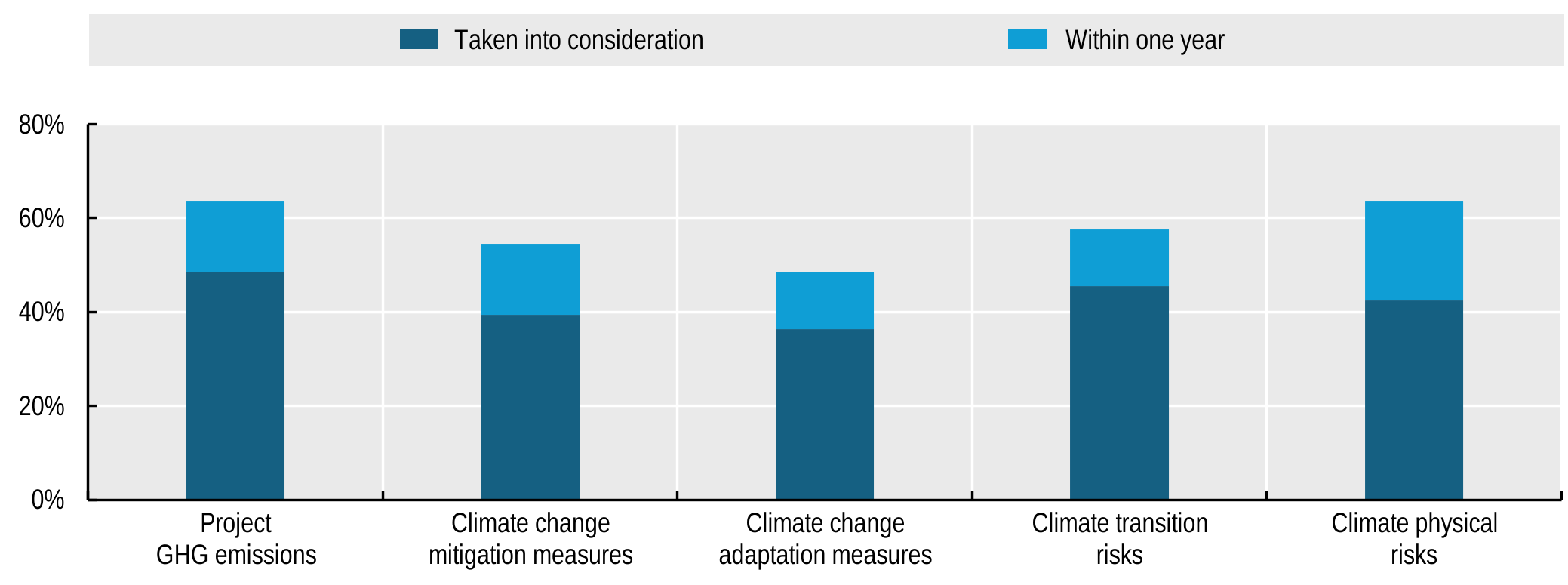
Note: The figure shows the share and number of export credit agencies (ECAs) that consider specific climate‑related risk factors in their risk assessment processes, as well as those planning to do so within one year. Results are based on 33 ECAs covered in the 2024 Survey of Climate‑related and Sustainability-related Policies and Practices. The countries represented by the survey cover most countries adhering to the MNE Guidelines with existing ECAs.
Source: OECD (2025[71]), Responses to the 2024 Survey of Climate‑related and Sustainability-related Policies and Practices, https://one.oecd.org/document/TAD/ECG(2025)1/FINAL/en/pdf/
Export credit agencies incentivise responsible business conduct through additional services
An increasing number of ECAs are incentivising higher performance on aspects of RBC. Incentives are mostly focussed on climate‑related performance or linked to the Sustainable Development Goals (SDGs). The latter has seen a particular growth. In 2024, around one‑third of the 33 countries that responded to the 2024 survey of climate‑related and sustainability-related policies and practices for countries adhering to the Common Approaches had introduced additional financing or guaranteed cover for projects that show higher climate‑ or sustainability-related standards. This was up from about one‑fifth of countries in 2022. As part of the incentives, ECAs may increase the maximum amount of support, reduce national content requirements or allow more flexible financing terms and conditions. (OECD, 2025[71]).
Remedy is a core aspect of RBC, whereby affected persons or groups can seek reparation for negative impacts they may have suffered. Remedies can take several forms, such as apologies, restitution, rehabilitation, compensation (financial or non-financial), sanctions or guarantees of non-repetition. Governments have a key role in making access to remedy effective.
Analysis shows that governments have been promoting access to remedy mainly through three main types of measures: 1) establishing state‑based grievance mechanisms with low barriers to access; 2) requiring companies to remediate their negative impacts; 3) supporting affected persons in getting access to remediation.
Governments provide a variety of state‑based grievance mechanisms and work to remove barriers to access
Governments can provide access to remedy through a combination of judicial grievance mechanisms, as well as through a wide array of non-judicial grievance mechanisms, including National Contact Points for Responsible Business Conduct (NCPs) (see Box 3.6).
All 52 countries adhering to the OECD Guidelines for Multinational Enterprises on Responsible Business Conduct (MNE Guidelines) (OECD, 2023[1]) are required to establish a National Contact Point (NCP) for Responsible Business Conduct. NCPs are the MNE Guidelines’ implementation mechanisms and have three key functions:
they raise awareness and promote the uptake of the MNE Guidelines
they act as a non-judicial grievance mechanism
they may support their government’s policy efforts to promote RBC.
In their role as a non-judicial grievance mechanism, NCPs may review reports of alleged non-observance of the MNE Guidelines by companies operating in or from their territory. NCP cases are called “specific instances”. If the NCP decides that the issues raised in a case warrant further examination, it will offer mediation to the parties to facilitate agreement. In all cases received, NCPs will issue a public statement, which can contain recommendations to the company. Where relevant, NCPs can also set out their views as to whether the company has acted in accordance with the MNE Guidelines. NCPs generally follow up on agreements and recommendations.
More information on how NCPs handle cases in practice is available online (OECD, 2026[73]). The OECD maintains a database of cases handled by NCPs (OECD, n.d.[74]).
Every year, the OECD issues an Annual Report on NCP activity, notably including analysis of data related to cases handled by NCPs (OECD, 2026[75]).
Source: OECD (2026[76]), National Contact Points for Responsible Business Conduct, https://www.oecd.org/en/networks/national-contact-points-for-responsible-business-conduct.html.
Governments are also working to reduce barriers to access to grievance mechanisms by persons harmed by corporate conduct, such as cost, length, or legal requirements (standing and/or jurisdiction) (European Union Fundamental Rights Agency, 2017[77]). In this regard, 37 countries adhering to the MNE Guidelines (82% of respondents)30 indicated having taken at least one measure to address barriers to state‑based grievance mechanisms, though only 16 countries (36% of respondents)31 had been developing a coherent policy strategy to enable access to remedy and remove barriers (see Table 3.4). As one example, as part of its 2024‑2027 National Action Plan on Business and Human Rights, Switzerland developed a three‑pronged strategy for the effective provision of access to remedy (Pillar III). These measures include: to map and analyse obstacles preventing access to grievance mechanisms, encourage the private sector to set up grievance mechanisms; and the handling of complaints from human rights defenders. Each measure is accompanied by a performance indicator, and assigned a government department that is responsible for overseeing its implementation. (Government of Switzerland, 2024[78]).
To improve access to remedy, governments are creating specialised mechanisms to receive RBC complaints. Some due diligence regulations also create supervisory authorities, which can receive complaints related to harm suffered because of non-compliance with due diligence requirements. Twenty-five countries adhering to the MNE Guidelines (56% of respondents) indicated creating special avenues to lodge complaints, such as specialised court chambers, while 20 countries adhering to the MNE Guidelines (44% of respondents) are mandating authorities such as ombudspeople to receive grievances related to RBC.32 For example, in 2024, the Paris Judicial Tribunal and Court of Appeal created chambers for handling cases related to the law on the corporate duty of vigilance and environmental responsibility. The chambers allow enforcement of the civil liability rules under the Duty of Vigilance Law. They provide access to courts in cases of non-compliance, allow claims for compensation, and can also handle disputes about corporate sustainability disclosure (Government of France, 2024[79]).
Judicial grievance mechanisms are commonly used as a state‑based remedy mechanism but come with important barriers that governments may not yet be fully addressing. Current evidence shows that litigation related to RBC issues is rising steadily (Business and Human Rights Resource Centre, 2025[80]). A 2025 survey of over 400 corporate counsels mainly from the United States and Canada shows that 27% of respondents expect their exposure to RBC-related claims to increase in 2026, particularly social (79%) and environmental (75%) issues (Norton Rose Fulbright, 2025[81]). However, there are specific barriers to judicial litigation of RBC issues, ranging from jurisdiction to procedure (European Law Institute, 2022[82]; Kilimcioğlu, 2024[83]). In cases with an extraterritorial element, barriers such cost and jurisdiction are particularly high. Only a handful of governments (five countries adhering to the MNE Guidelines, 11% of respondents)33 indicated having measures to address such barriers.
Note: The table shows the existence of measures of related to access to remedy across countries adhering to the MNE Guidelines as well as the European Union. It excludes countries that did not respond to this question (Argentina, Finland, Egypt, Hungary, Iceland, Latvia, the Slovak Republic and Tunisia).
No
Yes
Source: Compilation by the OECD based on a 2025 survey of 52 countries adhering to the MNE Guidelines and the European Union on RBC policy developments.
Governments place requirements on companies regarding access to remedy
Remedy is a key element of the OECD due diligence framework. However, as indicated in the previous chapter, global uptake is much weaker than for other due diligence steps, with only 17% of companies reporting having a formal grievance mechanism on human rights, and only 10% committing to provide remediation to affected persons for human rights impacts. To address this gap, some government regulations on due diligence place remediation requirements on companies. Such requirements can be of two types, which are not mutually exclusive: 1) providing remedy to persons or groups affected by the company conduct; and 2) setting up a grievance mechanism to provide access to remedy for affected persons or groups.
OECD analysis of measures on RBC due diligence (see Table 3.2) finds that the first type of requirement above is contained explicitly in 7 out of the 26 measures analysed, with various levels of detail. However, other types of measures can indirectly lead companies to provide remediation. For example, evidence of remediation may be taken into account in enforcement proceedings of product and market-based measures such as forced labour bans. When taking both the direct and indirect measures above into account, requirements on companies to remediate were present in around half of due diligence measures in the sample (see Figure 3.14).
The second requirement, setting up grievance systems, is contained explicitly in 7 out of the 26 measures analysed, again with uneven level of detail. When considering accompanying guidance, 10 measures can be considered as having a legal requirement for company grievance mechanisms (see Figure 3.14). Therefore, while most RBC due diligence legislative measures analysed include remediation requirements directly or indirectly, explicit provisions on remedy are less common than provisions related to other due diligence steps (see also (OECD, 2026[6]).

Note: Analysis of 26 RBC due diligence laws from countries adhering to the MNE Guidelines and one non-adherent, including disclosure measures, due diligence conduct measures, as well as product and market-based measures. The category “Reflected through any means” is derived from the aggregation of the other categories and is not a separate classification.
Source: OECD (2026[6]), Mapping social and environmental due diligence legislation, https://doi.org/10.1787/bac11241‑en.
Some governments are signalling their expectation that companies engage with non-judicial grievance mechanisms, and may implement consequences in case of failure to do so. For example, the Canadian NCP may recommend to the Canadian Trade Commissioner, Export Development Canada and the Canadian Commercial Corporation that they withdraw or withhold support to a company that did not engage in good faith with the NCP (Government of Canada, 2022[84]). The Dutch Ministry of Foreign Affairs requires that any enterprise wishing to apply for government support from the ministry, such as subsidies or participation in a trade mission, needs to report and collaborate with the NCP when involved in a specific instance (NCP case) (Rijksdienst voor Ondernemend Nederland, 2025[85]).
Governments can facilitate access to effective remedy
Governments have been providing information to the public on how to overcome barriers to access to remedy, and to help affected persons navigate the often‑confusing constellation of grievance mechanisms (OHCHR, 2024[86]). Twenty-nine countries adhering to the MNE Guidelines (64% of respondents) had taken measures to provide such information.34 For example, under Belgium’s National Action Plan on Business and Human Rights, the Belgian Federal Institute for Sustainable Development, a government agency supporting the federal government on sustainable development policy, developed a brochure on the available state‑based judicial and non-judicial mechanisms that provide access to remedy. The brochure provides information on the remedy landscape and the rights and duties of all relevant persons and entities in seeking and providing access to remedy (Belgian Federal Institute for Sustainable Development, 2018[87]).
Civil society and other organisations are also playing a significant role in promoting access to remedy, which governments can support. For example, 37% of all cases received by NCPs (specific instances, see Box 3.6) have been filed by NGOs, often on behalf or to the benefit of directly affected persons or communities (OECD, n.d.[74]). Many business and human rights lawsuits have also been filed by NGOs (Business and Human Rights Resource Centre, n.d.[88]). Government support of these organisations, through funding or otherwise, is thus an important means of improving access to remedy.
Governments may also provide direct support to individual users of grievance mechanisms. Such support can be of a financial or non-financial nature. In terms of financial support, many countries have a system of legal aid through which claimants who meet certain conditions may receive free or discounted legal assistance from a lawyer, or reduced court fees. This applies mostly to judicial mechanisms in certain countries, but due to stringent conditions and complex application procedures, may not always effectively offset barriers to accessing judicial grievance mechanisms (European Union Fundamental Rights Agency, 2017[77]). In several countries, state‑based non-judicial grievance mechanisms also provide non-financial support to potential claimants, e.g. through help in filing admissible claims. This is particularly the case of consumer authorities, but also of NCPs. OECD procedures, for example, encourage NCPs to consider the situation of all parties involved in a specific instance, and to provide equitable support to less well-resourced parties so that they can most effectively use the NCP grievance mechanism.
Governments are strengthening co‑ordination to ensure coherence across RBC policies. As RBC touches a broad range of policy issues, and mandatory and voluntary measures to promote RBC are increasing, co‑ordination within and between governments is gaining importance. Many governments are adopting whole‑of-government approaches, supported by dedicated co‑ordination structures, with NCPs playing an important role in fostering policy coherence. At regional and international levels, governments are convening and working together to advance RBC, strengthen implementation, align standards and address emerging challenges that require global and co‑ordinated solutions.
Governments are strengthening domestic co‑ordination to promote coherence across responsible business conduct policies and practices
Twenty-eight countries adhering to the MNE Guidelines (64% of respondents)35 have strategies or structures to promote coherence across domestic government to align RBC actions. Among these, 22 countries (50% of respondents)36 report having national or sub-national RBC strategies or policies, such as Japan’s Inter-Ministerial Committee for the Action Plan on Business and Human Rights (Cabinet Secretariat Japan, 2025[89]) and Germany’s subnational Joint Action for Sustainable Development (Government of Germany, 2022[90]).
Nineteen countries adhering to the MNE Guidelines (43% of respondents) report having specific co‑ordination mechanisms for RBC. In recent years, some governments created centralised units or inter-ministerial secretariats, reflecting an effort to institutionalise coherence across the policy cycle. Ensuring an adequate budget, composition and mandates are essential to embed RBC consistently across government policies and practices. In Croatia, the inter-ministerial Working Group for the Promotion of RBC brings together government representatives with competencies in areas covered by the MNE Guidelines and is tasked with encouraging and co‑ordinating the integration of initiatives and measures which promote RBC in national policies, draft normative acts and other documents.37 NCPs are also increasingly stepping in to play a role in supporting the development, implementation and coherence of government policy to promote RBC. In 2025, 75% of NCPs reported following, providing input, and/or being consulted on policy or regulatory developments to promote RBC. Similarly, 58% were involved in cross-government co‑ordination mechanisms regarding policy areas relevant for RBC.38
Governments are expanding efforts to identify and address barriers to policy coherence on RBC. Twenty‑two countries adhering to the MNE Guidelines (49% of respondents)39 have conducted assessments or reviews to promote domestic policy coherence and facilitate alignment between policies and practices relevant to RBC. Such reviews are often done when developing a new action plan, strategy, law, or when evaluating and updating existing policies and their impact. Recently, an evaluation of Switzerland’s second NAP on business-related human rights (BHR) identified co‑ordination challenges between different federal offices and low awareness of business and human rights efforts across government as factors hindering policy coherence. This resulted in several recommendations to inform the country’s subsequent NAP which identifies policy coherence as a priority area and includes measures to strengthen co‑ordination across government (Engageability, 2023[91]). Several governments also publish national reports on RBC implementation, providing transparency on progress across ministries and policy areas, such as the Norwegian NCP’s annual reports (NCP of Norway, n.d.[92]).
Governments are engaging with non-government stakeholders including with business, civil society and trade unions to shape responsible business conduct policy
Thirty countries adhering to the MNE Guidelines (67% of respondents) have processes for consultation on RBC policy development. Efforts include engagement as part of the creation, monitoring and enforcement of RBC laws and policies, and strengthening the enabling environment for inclusive and meaningful stakeholder participation. Some countries have consulted stakeholders on NAPs, with some recent examples including Chile, the Netherlands and the United States (U.S. Department of State, n.d.[93]).
Eighteen countries adhering to the MNE Guidelines (40% of respondents) report engaging with stakeholders on monitoring the implementation of RBC policies. For example, government engagement with stakeholders has been a critical part of the monitoring of due diligence laws. In 2025, the Norwegian Government published an evaluation report of the 2022 Transparency Act. As part of the process, the government sought inputs from businesses, trade unions, civil society organisations and the general public on how they perceived the law. This included their experience with conducting due diligence following its adoption and as part of the broader regulatory landscape. The evaluation also sought inputs on areas for improvement. (The Royal Norwegian Ministry of Children and Families, 2025[94]). Another example is Australia’s statutory review of the 2018 Modern Slavery Act, three years after its introduction. The government sought public input on whether additional measures were necessary to improve the Act’s operation and compliance through five consultation avenues: written submissions, online survey and questionnaire, targeted consultations and meetings with selected individuals and committees (Government of Australia, 2024[95]).
Increased efforts are being made at the international level to support coherence in policymaking and the implementation of responsible business conduct
With business activities more globalised and spanning multiple jurisdictions, governments are strengthening international co‑operation to align policy approaches, reduce fragmentation and support consistent expectations for businesses. This includes the integration of RBC in statements and declarations, such as the 2023 G7 Leaders Communique (G7, 2023[96]) and the 2025 G7 Critical Minerals Action Plan to build sustainable and secure critical mineral supply chains, under Canada’s G7 presidency (G7, 2025[97]). International co‑operation is further evidenced by APEC’s references to OECD standards in the MNE Guidelines on Inclusive and Responsible Business and Investment (APEC, 2024[98]), and its Investment Facilitation Action Plan (APEC, 2025[99]), as well as ASEAN’s Sustainable Investment Guidelines (ASEAN, 2026[100]). In 2025, the OECD launched the Inclusive Platform for Due Diligence Policy Co-Operation, which has gathered policymakers from nearly 70 countries to support evidence‑based, coherent and inclusive approaches to due diligence policy.
Governments also engage in a range of multilateral and regional fora, such as the OECD regional programmes on RBC,40 where they exchange on policy development and work together to advance RBC, strengthen implementation, align standards and address emerging challenges that require global and co‑ordinated solutions.
References
[23] African Union (2023), Protocol to the Agreement Establishing the African Continental Free Trade Area on Investment, https://au-afcfta.org/wp-content/uploads/2024/11/EN-AfCFTA-Protocol-on-Investment-clean-1.pdf.
[99] APEC (2025), Investment Facilitation Action Plan: Principles and Strategies (Endorsed), https://www.apec.org/docs/default-source/groups/ieg/2025/25_cti2_027.pdf?sfvrsn=30da62f8_1.
[98] APEC (2024), Guidelines on Inclusive and Responsible Business and Investment (IRBI), https://www.apec.org/publications/2024/10/apec-guidelines-on-inclusive-and-responsible-business-and-investment-(irbi).
[100] ASEAN (2026), ASEAN Sustainable Investment Guidelines, https://asean.org/wp-content/uploads/2026/04/ASEAN-Sustainable-Investment-Guidelines-ASIG.pdf.
[87] Belgian Federal Institute for Sustainable Development (2018), Access to Remedy in Belgium, https://sustainabledevelopment.be/sites/default/files/2025-07/EN_brochure-Access-remedy-Belgium_2018-06.pdf (accessed on 4 June 2026).
[59] Bozzay, E. et al. (2025), “Linking integrity, business conduct and public procurement: New approaches for sustainable supply chains”, OECD Working Papers on International Investment, No. 2025/01, OECD Publishing, Paris, https://doi.org/10.1787/cfb65ff8-en.
[80] Business and Human Rights Resource Centre (2025), Progress and Pushback: Corporate legal accountability in 2025 and what to expect in 2026, https://www.business-humanrights.org/en/blog/progress-and-pushback-corporate-legal-accountability-in-2025-and-what-to-expect-in-2026/ (accessed on 4 June 2026).
[88] Business and Human Rights Resource Centre (n.d.), Lawsuit Profiles Database, https://www.business-humanrights.org/en/from-us/lawsuits-database/ (accessed on 4 June 2026).
[30] Business Sweden (n.d.), General Conditions for Participation in Trade and Invest Activities, https://www.business-sweden.com/general-conditions-activities/ (accessed on 3 June 2026).
[89] Cabinet Secretariat Japan (2025), Promotion and Liaison Meeting on Measures by Related Ministries and Agencies for the Implementation of Action Plans on Business and Human Rights, https://www.cas.go.jp/jp/seisaku/business_jinken/index.html (accessed on 24 April 2026).
[47] Canada (2023), Clean Technology Investment Tax Credit (ITC), https://www.canada.ca/en/revenue-agency/services/tax/businesses/topics/corporations/business-tax-credits/clean-economy-itc/clean-technology-itc.html (accessed on 3 June 2026).
[45] Citizens Information Board Ireland (2023), Supports for businesses going green, https://www.citizensinformation.ie/en/employment/types-of-employment/self-employment/supports-for-businesses-going-green/ (accessed on 24 April 2026).
[49] City of San Diego (2023), Affordable, In-Fill Housing and Sustainable Buildings Expedite Program, https://www.sandiego.gov/development-services/forms-publications/information-bulletins/538 (accessed on 24 April 2026).
[57] Department of Climate, Energy and the Environment (2024), Green Public Procurement (GPP), Government of Ireland, https://assets.gov.ie/static/documents/buying-greener-green-public-procurement-strategy-and-action-plan-2024-2027.pdf.
[72] Eksfin (n.d.), Environmental and Social Due Diligence, Export Finance Norway, https://www.eksfin.no/en/about/sustainability/environment-and-social-risks/ (accessed on 27 August 2025).
[91] Engageability (2023), Evaluation of the National Action Plan on Business & Human Rights 2020–2023, https://engageability.ch/evaluation-of-the-national-action-plan-on-business-human-rights-2020-2023/ (accessed on 21 July 2025).
[17] European Commission (2025), Competitiveness compass, https://commission.europa.eu/topics/competitiveness/competitiveness-compass_en (accessed on 4 June 2026).
[82] European Law Institute (2022), Business and Human Rights: Access to Justice and Effective Remedies, https://www.europeanlawinstitute.eu/fileadmin/user_upload/p_eli/Publications/ELI_Report_on_Business_and_Human_Rights.pdf.
[77] European Union Fundamental Rights Agency (2017), Improving access to remedy in the area of business and human rights at EU level, https://fra.europa.eu/sites/default/files/fra_uploads/fra-2017-opinion-01-2017-business-human-rights_en.pdf.
[97] G7 (2025), Critical Minerals Action Plan, https://www.pm.gc.ca/en/news/statements/2025/06/17/g7-critical-minerals-action-plan.
[96] G7 (2023), G7 Hiroshima Leaders’ Communiqué, https://www.mofa.go.jp/files/100506878.pdf.
[69] Global NAPs (n/a), Export Credit, https://globalnaps.org/issue/export-credit/ (accessed on 3 June 2026).
[95] Government of Australia (2024), Review of Australia’s Modern Slavery Act 2018, Attorney-General’s Department, https://consultations.ag.gov.au/crime/modern-slavery-act-review/#:~:text=The%20Australian%20Government%20is%20undertaking,to%20be%20tabled%20in%20Parliament.
[13] Government of Canada (2025), Roadmap to Promote Standards-based Markets for Critical Minerals, https://www.canada.ca/en/natural-resources-canada/news/2025/10/roadmap-to-promote-standards-based-markets-for-critical-minerals.html.
[84] Government of Canada (2022), Canada’s National Contact Point - Specific Instance Procedures - 2022, https://www.international.gc.ca/transparency-transparence/national-contact-point-contact-national/procedures.aspx?lang=eng#a9 (accessed on 4 June 2026).
[46] Government of Canada (2021), Responsible Business Conduct Abroad: Canada’s Strategy for the Future, https://www.international.gc.ca/trade-commerce/assets/pdfs/rbc-cre/strategy-2021-strategie-1-eng.pdf.
[28] Government of Chile (2025), Política de Sostenibilidad 2030, https://www.prochile.gob.cl/docs/default-source/politica-sostenibilidad/politica-sotenibilidad-2025.pdf?sfvrsn=5e3ca353_1.
[26] Government of Chile (2025), SUBREI lidera encuentro internacional sobre fortalecimiento de Puntos Nacional de Contacto (PNC) de la Alianza del Pacífico, press release, https://www.subrei.gob.cl/sala-de-prensa/noticias/detalle-noticias/2025/02/28/subrei-lidera-encuentro-internacional-sobre-fortalecimiento-de-puntos-nacional-de-contacto-(pnc)-de-la-alianza-del-pac%C3%ADfico (accessed on 3 June 2026).
[25] Government of Chile (2024), Subgrupo de Conducta Empresarial Responsable inicia ciclo de conversaciones para difundir su trabajo con las otras instancias de la Alianza del Pacífico, press release, https://www.subrei.gob.cl/sala-de-prensa/noticias/detalle-noticias/2024/08/20/subgrupo-de-conducta-empresarial-responsable-inicia-ciclo-de-conversaciones-para-difundir-su-trabajo-con-las-otras-instancias-de-la-alianza-del-pac%C3%ADfico (accessed on 3 June 2026).
[27] Government of Chile (n.d.), Sostenibilidad, https://www.prochile.gob.cl/innovacion-y-competitividad/sostenibilidad/prochile-y-sostenibilidad (accessed on 3 June 2026).
[67] Government of Finland (2024), Sustainable growth through State Ownership - Government resolution on the State Ownership Policy 2024, https://julkaisut.valtioneuvosto.fi/bitstream/handle/10024/165680/VN_2024_30.pdf?sequence=1&isAllowed=y.
[79] Government of France (2024), Création d’une chambre des contentieux émergents – devoir de vigilance et responsabilité écologique à la CA de Paris, https://www.cours-appel.justice.fr/paris/creation-dune-chambre-des-contentieux-emergents-devoir-de-vigilance-et-responsabilite.
[50] Government of France (2021), Labels RSE : accompagner les entreprises et donner confiance à leurs parties prenantes, https://www.tresor.economie.gouv.fr/Articles/2021/02/18/rapport-sur-les-labels-rse-accompagner-les-entreprises-et-donner-confiance-a-leurs-parties-prenantes.
[90] Government of Germany (2022), Joint Action for Sustainable Development, https://www.nachhaltigkeitsrat.de/wp-content/uploads/2022/11/Joint-Action-for-Sustainable-Development_2-Pager.pdf (accessed on 3 June 2026).
[21] Government of Mexico (2023), Entra en vigor el Acuerdo para prohibir la importación de mercancías producidas con trabajo forzoso, press release, https://www.gob.mx/stps/prensa/entra-en-vigor-el-acuerdo-para-prohibir-la-importacion-de-mercancias-producidas-con-trabajo-forzoso?idiom=es.
[63] Government of Norway (2022), Greener and more active state ownership: The State’s direct ownership of companies, https://kudos.dfo.no/documents/32214/files/28645.pdf.
[65] Government of Romania (2025), Politica publică de proprietate privată a statului, https://amepip.gov.ro/en/politica-de-proprietate-a-statului/.
[78] Government of Switzerland (2024), Pillar III: Access to remedy, https://www.nap-bhr.admin.ch/napbhr/en/home/nap/wiedergutmachung.html (accessed on 9 September 2025).
[62] Government of the Netherlands (2022), Nota Deelnemingenbeleid Rijksoverheid 2022, https://open.overheid.nl/documenten/ronl-3b431afa41e0773c014a016ef77b2b51bea67bf0/file.
[15] Government of the United Kingdom (2025), International reporting template on modern slavery, forced labour and child labour (accessible), https://www.gov.uk/government/publications/transparency-in-supply-chains-a-practical-guide/international-reporting-template-on-modern-slavery-forced-labour-and-child-labour-accessible.
[16] Government of the United Kingdom (2025), The UK’s Trade Strategy, https://www.gov.uk/government/publications/uk-trade-strategy/the-uks-trade-strategy.
[48] Government of the United Kingdom (2021), 100% first-year allowances, https://www.gov.uk/capital-allowances/first-year-allowances (accessed on 3 June 2026).
[66] Government of Ukraine (2024), Деякі питання Політики державної власності [Some issues of state property policy], https://zakon.rada.gov.ua/laws/show/1369-2024-%D0%BF?lang=en#Text.
[64] Government Offices of Sweden (2025), State Ownership Policy 2025, https://www.government.se/contentassets/9c0ce65139ce4255b3a8f8bcd720113d/state-ownership_policy_2025_webb.pdf.
[41] GPEDC (2025), Global Partnership Monitoring 2023-2026: Insights from the First 11 Countries, https://www.effectivecooperation.org/sites/default/files/documents/GPEDC%20monitoring-insights%20from%2011%20countries_.pdf.
[51] Green Button (n.d.), What does the Green Button evaluate?, https://gruener-knopf.de/en/overview-criteria.
[8] ICGLR (2010), Lusaka declaration of the ICGLR Special Summit to Fight Illegal Exploitation of Natural Resources in the Great Lakes Region, https://ungreatlakes.unmissions.org/sites/default/files/icglr_lusaka_declaration_of_the_icglr_special_summit_to_fight_illegal_exploitation_of_natural_resources_in_the_glr.pdf (accessed on 4 June 2026).
[40] IFC (n.d.), Update of IFC’s Sustainability Framework, https://www.ifc.org/en/what-we-do/sector-expertise/sustainability/policies-and-standards/update-of-ifc-s-sustainability-framework#tabs-a1648b5292-item-13757db463-tab (accessed on 20 April 2026).
[4] IFRS (2025), IFRS Foundation publishes jurisdictional profiles providing transparency and evidencing progress towards adoption of ISSB Standards, https://www.ifrs.org/news-and-events/news/2025/06/ifrs-foundation-publishes-jurisdictional-profiles-issb-standards/ (accessed on 4 June 2026).
[83] Kilimcioğlu, B. (2024), The French Loi sur le devoir de Vigilance: The Main Procedural Issues Faced by Plaintiffs so far, Business and Human Rights Journal, https://bhrj.blog/2024/12/12/the-french-loi-sur-le-devoir-de-vigilance-the-main-procedural-issues-faced-by-plaintiffs-so-far/ (accessed on 4 June 2026).
[11] LBMA (2025), Responsible Sourcing, https://www.lbma.org.uk/responsible-sourcing.
[10] LME (2019), Responsible sourcing, https://www.lme.com/sustainability-and-physical-markets/sustainability/responsible-sourcing (accessed on 4 June 2026).
[12] LPPM (2022), LPPM responsible sourcing programme: Guidance version 5, https://www.lppm.com/files/lppm-responsible-sourcing-guidance-version-251006.pdf.
[24] MERCOSUR (2025), MERCOSUR/SGT Nº 12/ACTA N° 01/25, https://www.google.com/url?sa=t&rct=j&q=&esrc=s&source=web&cd=&ved=2ahUKEwif1NrjkaaPAxVPRqQEHaFPIAAQFnoECBcQAQ&url=https%3A%2F%2Fcalendario.mercosur.int%2Fsimfiles%2Fdocreuniones%2F106734_SGT12_2025_ACTA01_ES.docx&usg=AOvVaw0pP8G4hzdy-R1U8Qh1i1Fz&opi=8997.
[7] METI (2022), Guidelines on Respecting Human Rights in Responsible Supply Chains, https://www.meti.go.jp/policy/economy/business-jinken/guidelines/provisionalenglishtranslation.pdf.
[92] NCP of Norway (n.d.), Reports and plans, https://responsiblebusiness.no/en/about-us/reporting-and-plans/#ncp-norway-annual-reports (accessed on 3 June 2026).
[81] Norton Rose Fulbright (2025), Annual Litigation Trends Survey: Perspectives from Corporate Council, https://www.nortonrosefulbright.com/-/media/files/nrf/nrfweb/knowledge-pdfs/norton-rose-fulbright---2025-annual-litigation-trends-survey.pdf?revision=3de2d1a0-0f41-4c78-bbb5-fa0c5a12dc3c&revision=5250410752617387904.
[73] OECD (2026), FAQ on the NCP grievance mechanism, https://www.oecd.org/content/dam/oecd/en/networks/national-contact-points/FAQ-NCP-grievance-mechanism.pdf.
[33] OECD (2026), Foreign Direct Investment Qualities Indicators | FDIQI, https://oecd-main.shinyapps.io/FDIqualities/ (accessed on 3 June 2026).
[18] OECD (2026), Inclusive Platform on Due Diligence Policy Co-operation, https://www.oecd.org/en/topics/sub-issues/due-diligence-guidance-for-responsible-business-conduct/inclusive-platform-on-due-diligence-policy-co-operation.html.
[6] OECD (2026), Mapping social and environmental due diligence legislation, OECD Publishing, Paris, https://doi.org/10.1787/bac11241-en.
[75] OECD (2026), National Contact Points for Reponsible Business Conduct: Growing Impact, Rising Expectations - Annual Report on NCP Activity 2025.
[76] OECD (2026), National Contact Points for Responsible Business Conduct, https://www.oecd.org/en/networks/national-contact-points-for-responsible-business-conduct.html.
[3] OECD (2026), Reporting requirements in social and environmental due diligence legislation, OECD Publishing, Paris, https://doi.org/10.1787/52f15766-en.
[44] OECD (2026), The OECD Responsible Business Policy Navigator: Explore how governments promote responsible business conduct, https://www.oecd.org/en/data/dashboards/oecd-responsible-business-policy-navigator.html.
[52] OECD (2025), Alignment assessment of the Green Button with OECD due diligence standards, OECD Publishing, Paris, https://doi.org/10.1787/3eba9485-en.
[68] OECD (2025), Global Corporate Sustainability Report 2025, OECD Publishing, Paris, https://doi.org/10.1787/bc25ce1e-en.
[2] OECD (2025), OECD Corporate Governance Factbook 2025, OECD Publishing, Paris, https://doi.org/10.1787/f4f43735-en.
[42] OECD (2025), OECD DAC Blended Finance Guidance 2025, Best Practices in Development Co-operation, OECD Publishing, Paris, https://doi.org/10.1787/e4a13d2c-en.
[60] OECD (2025), OECD Government at a Glance Indicators 2025, https://www.oecd.org/en/data/dashboards/government-at-glance-2025.html.
[36] OECD (2025), “Promoting responsible business conduct in the development co-operation of Australia, Japan, Korea and New Zealand”, OECD Business and Finance Policy Papers, No. 95, OECD Publishing, Paris, https://doi.org/10.1787/7b7de4bc-en.
[71] OECD (2025), Responses to the 2024 Survey of climate-related and sustainability-related policies and practices, https://one.oecd.org/document/TAD/ECG(2025)1/FINAL/en/pdf.
[29] OECD (2025), Shifting gears in uncertain times: How Investment Promotion Agencies balance evolving mandates and limited resources, https://www.oecd.org/en/blogs/2025/10/shifting-gears-in-uncertain-times-investment-promotion-agencies.html.
[34] OECD (2025), “Supporting businesses in trade partner countries to meet social and environmental due diligence standards”, OECD Business and Finance Policy Papers, No. 88, OECD Publishing, Paris, https://doi.org/10.1787/63c6be24-en.
[58] OECD (2024), Harnessing Public Procurement for the Green Transition: Good Practices in OECD Countries, OECD Public Governance Reviews, OECD Publishing, Paris, https://doi.org/10.1787/e551f448-en.
[32] OECD (2024), “Monitoring and evaluating sustainability in investment promotion: Evolving practices in OECD member countries”, OECD Business and Finance Policy Papers, No. 74, OECD Publishing, Paris, https://doi.org/10.1787/da22c153-en.
[39] OECD (2024), OECD Development Co‑operation Peer Reviews: France 2024, OECD Development Co-operation Peer Reviews, OECD Publishing, Paris, https://doi.org/10.1787/102d5469-en.
[61] OECD (2024), Ownership and Governance of State-Owned Enterprises 2024, OECD Publishing, Paris, https://doi.org/10.1787/395c9956-en.
[43] OECD (2024), Report On The Implementation of the OECD Recommendation on Policy Coherence for Sustainable Development, https://one.oecd.org/official-document/C(2024)92/en.
[54] OECD (2024), “Responsible business due diligence and government procurement: Implications of new regulation”, OECD Business and Finance Policy Papers, No. 71, OECD Publishing, Paris, https://doi.org/10.1787/e30b4f38-en.
[14] OECD (2023), OECD Briefing Note: Responsible is Reliable, https://www.oecd.org/content/dam/oecd/en/topics/policy-sub-issues/due-diligence-guidance-for-responsible-business-conduct/Responsible_is_Reliable.pdf.
[1] OECD (2023), OECD Guidelines for Multinational Enterprises on Responsible Business Conduct, OECD Publishing, Paris, https://doi.org/10.1787/81f92357-en.
[19] OECD (2023), OECD work on Regional Trade Agreements and the environment: Policy Perspectives, https://www.oecd.org/content/dam/oecd/en/topics/policy-sub-issues/trade-and-environmental-sustainability/Policy-Perspectives-OECD-work-on-regional-trade-agreements-and-the-environment.pdf.
[31] OECD (2022), FDI Qualities Policy Toolkit, OECD Publishing, Paris, https://doi.org/10.1787/7ba74100-en.
[70] OECD (2022), OECD Responsible Business Conduct Policy Reviews: Brazil, OECD Publishing, Paris, https://doi.org/10.1787/19232c6a-en.
[101] OECD (2022), Recommendation of the Council on the Role of Government in Promoting Responsible Business Conduct, OECD-LEGAL-0486, https://legalinstruments.oecd.org/en/instruments/OECD-LEGAL-0486 (accessed on 4 June 2026).
[53] OECD (2020), Integrating Responsible Business Conduct in Public Procurement, OECD Publishing, Paris, https://doi.org/10.1787/02682b01-en.
[5] OECD (2018), OECD Due Diligence Guidance for Responsible Business Conduct, OECD Publishing, Paris, https://doi.org/10.1787/15f5f4b3-en.
[74] OECD (n.d.), National Contact Points for Responsible Business Conduct Database, https://www.oecd.org/en/networks/national-contact-points-for-responsible-business-conduct/database.html?orderBy=mostRelevant&page=0.
[38] OECD Data Explorer (2026), Creditor Reporting System (flows), https://data-explorer.oecd.org/s/465.
[35] OECD-DAC (2023), DAC High Level Meeting Communiqué 2023, https://www.oecd.org/en/events/2023/11/dac-high-level-meeting-2023.html.
[20] Office of the United States Trade Representative (2020), United States–Mexico–Canada Agreement, https://ustr.gov/trade-agreements/free-trade-agreements/united-states-mexico-canada-agreement (accessed on 3 June 2026).
[86] OHCHR (2024), Access to remedy in cases of business-related human rights abuse: An interpretive guide, https://www.ohchr.org/sites/default/files/2024-11/access-to-remedy-bhr-interpretive-guide-en.pdf.
[56] Pagel Fray, M. and C. Marott (2018), Market engagement: Zero Mission Transport - Craft and Facility Management Services, http://www.buyzet.eu/wp-content/uploads/2017/11/Copenhagen-BuyZET-Transportation-Mapping-.
[85] Rijksdienst voor Ondernemend Nederland (2025), Voorwaarden deelname handelsmissie met en zonder bewindspersoon, https://www.rvo.nl/onderwerpen/handelsmissie/uitgaande-handelsmissies/voorwaarden-deelname-met-en-zonder.
[55] Swedish Regions (2024), Guidance, https://husr.se/en/procurement-requirements/code-of-conduct/.
[94] The Royal Norwegian Ministry of Children and Families (2025), Review of the effects of the Norwegian Transparency Act, https://www.regjeringen.no/en/documents/review-of-the-norwegian-transparency-act/id3091232/.
[9] U.S. Department of State (2025), The Regional Economic Integration Framework Between the Democratic Republic of the Congo and the Republic of Rwanda, https://www.state.gov/releases/office-of-the-spokesperson/2025/12/the-regional-economic-integration-framework-between-the-democratic-republic-of-the-congo-and-the-republic-of-rwanda (accessed on 4 June 2026).
[93] U.S. Department of State (n.d.), Overview of the National Action Plan Process; Stakeholder Engagement During the NAP Process, https://www.state.gov/bureau-of-democracy-human-rights-and-labor/overview-of-the-national-action-plan-process (accessed on 24 April 2026).
[22] U.S. DOL (2026), USMCA Cases, Bureau of International Labor Affairs, https://www.dol.gov/agencies/ilab/our-work/trade/labor-rights-usmca-cases.
[37] United Nations (2025), Outcome document of the Fourth International Conference on Financing for Development, https://docs.un.org/A/RES/79/323.
← 1. Fifty-two countries plus the European Union adhere to the Recommendation on the Role of Government in Promoting RBC. Adherents are same as those adhering to the MNE Guidelines, including the OECD Members Australia, Austria, Belgium, Canada, Chile, Colombia, Costa Rica, Czechia, Denmark, Estonia, Finland, France, Germany, Greece, Hungary, Iceland, Ireland, Israel, Italy, Japan, Korea, Latvia, Lithuania, Luxembourg, Mexico, the Netherlands, New Zealand, Norway, Poland, Portugal, the Slovak Republic, Slovenia, Spain, Sweden, Switzerland, Türkiye, the United Kingdom, the United States, non-Members Argentina, Brazil, Bulgaria, Croatia, Egypt, Jordan, Kazakhstan, Mauritius, Morocco, Peru, Romania, Tunisia, Ukraine, Uruguay; and the European Union (EU). The European Union submitted a partial response to questions applicable to its status as a supranational regulator.
← 2. Under the EU CSDDD, guidance and best practice on how to conduct due diligence and guidance on the assessment of company-level, business operations, geographic and contextual, product and service, and sectoral risk factors are foreseen; under the EU Batteries Regulation, guidelines covering the application of the due diligence requirements are planned; and under the EU Forced Labour Regulation, guidance for economic operators on due diligence in relation to forced labour; and separate guidance on due diligence in relation to forced labour imposed by state authorities, as well as guidance for economic operators on best practices for bringing to an end and remediating different types of forced labour.
← 3. EU Directive 2026/470 amending Directives 2006/43/EC, 2013/34/EU, (EU) 2022/2 464 and (EU) 2024/1 760, https://eur-lex.europa.eu/eli/dir/2026/470/oj/eng.
← 4. See revised draft: https://www.efrag.org/en/draft-simplified-esrs.
← 5. Based on desk-based research by the OECD Secretariat on Adherents’ trade and investment policies and agreements, as well as responses to the survey question: “Do any trade and investment policies and agreements concluded by your government over the last five years set out expectations for responsible business practices (e.g. related to due diligence, human rights, labour rights, environmental protection, and/or anti-corruption, or expectations related to observing OECD RBC standards)?”.
← 6. See, for instance, CPTTP (2018), Chapters 19 (Labour) and 20 (Environment), https://www.international.gc.ca/trade-commerce/trade-agreements-accords-commerciaux/agr-acc/tpp-ptp/text-texte/toc-tdm.aspx?lang=eng.
← 7. Compiled by the OECD Secretariat based on an analysis of the content of the trade and investment agreements concluded by Adherents between 2020 and 2025.
← 8. Chile‑EU Interim Trade Agreement, Chapter 26 (Trade and Sustainable Development), Article 26.3, https://circabc.europa.eu/rest/download/0ce300c3-3791-4ef8-87f7-50b8e4243745.
← 9. 2023 AfCFTA Investment Protocol, Article 5, https://au-afcfta.org/wp-content/uploads/2024/11/EN-AfCFTA-Protocol-on-Investment-clean-1.pdf.
← 10. See, for instance, Ecuador-China FTA (2024), Article 9.4, https://www.produccion.gob.ec/wp-content/uploads/2024/07/FTA-EC-English.pdf.
← 11. See, for instance, India-UAE BIT (2024), Article 13, https://investmentpolicy.unctad.org/international-investment-agreements/treaty-files/8492/download.
← 12. See, for instance, Democratic Republic of Congo-Rwanda BIT (2021), Article 16, https://investmentpolicy.unctad.org/international-investment-agreements/treaty-files/7704/download.
← 13. Compiled by the OECD Secretariat based on an analysis of the mandate of trade promotion agencies in countries adhering to the MNE Guidelines.
← 14. 2025 survey of 52 countries adhering to the MNE Guidelines and the EU on RBC policy developments. Question asked: “Has your government’s development co-operation integrated RBC in any of the following ways?” Twenty-nine respondent countries are part of the 34 members and associates of the OECD Development Assistance Committee.
← 15. Reporting against the purpose code on RBC in the OECD Creditor Reporting System (CRS) is in USD current. The following countries do not report ODA data to the OECD: Argentina, Brazil, Chile, Colombia, Costa Rica, Egypt, Jordan, Morocco, Mauritius, Peru, Tunisia, Ukraine, Uruguay.
← 16. With project descriptions including one or multiple keywords directly related to responsible business conduct.
← 17. 2025 survey of 52 countries adhering to the MNE Guidelines and the EU on RBC policy developments. Question asked: “Has your government’s development co-operation integrated RBC in any of the following ways?”
← 18. 2025 survey of 52 countries adhering to the MNE Guidelines and the EU on RBC policy developments. Question asked: “Has your government’s development co-operation integrated RBC in any of the following ways?”
← 19. USD 28 million of USD 382 million in 2024, based on project long descriptions containing keywords relating to the private sector, trade, consumption and RBC.
← 20. 2025 survey of 52 countries adhering to the MNE Guidelines and the EU on RBC policy developments. Question asked: “Does your government incentivise the implementation of OECD RBC standards by businesses through any specific measures?”
← 21. 2025 survey of 52 countries adhering to the MNE Guidelines and the EU on RBC policy developments. Question asked: “Do legal and policy frameworks on public procurement in your country consider RBC?”
← 22. 2025 survey of 52 countries adhering to the MNE Guidelines and the EU on RBC policy developments. Question asked: “Has your government, in its role as owner, established and disclosed expectations for State-Owned Enterprises (SOEs) to observe RBC principles and standards (including disclosure of RBC information and/or the conduct of risk-based due diligence)?”
← 23. Ibid.
← 24. Ibid.
← 25. OECD (2024[61]), pp. 25‑28, notes that state goals can relate to aspects such as the creation of shared value or environmental and social performance, and that states should encourage and promote sustainable and responsible business practices of SOEs, including in their own ownership policies and practices.
← 26. Desk-based research complementing information from OECD (2024[61]), which focusses on a sample of jurisdictions partially overlapping with countries adhering to the MNE Guidelines.
← 27. Ibid.
← 28. A company is considered as disclosing sustainability-related information when it discloses a sustainability report, an integrated annual report with sustainability data, a corporate social responsibility report with substantial data or a full or partial report of GHG emissions scope 1 and 2 or scope 3.
← 29. However, not all of the 38 countries committing to the Common Approaches have an official ECA. The list of official export credit agencies is available at https://www.oecd.org/content/dam/oecd/en/topics/policy-issues/export-credits/official-ecas.pdf.
← 30. 2025 survey of 52 countries adhering to the MNE Guidelines and the EU on RBC policy developments. Question asked: “Beyond maintaining a fully functioning and adequately resourced NCP, which measures does your government take to enable access to remedy for those impacted by non-observance of RBC standards, including those impacted in third countries?”
← 31. Ibid.
← 32. Ibid.
← 33. Ibid.
← 34. 2025 survey of 52 countries adhering to the MNE Guidelines and the EU on RBC policy developments 2025. Question asked: “Beyond maintaining a fully functioning and adequately resourced NCP, which measures does your government take to enable access to remedy for those impacted by non-observance of RBC standards, including those impacted in third countries?”
← 35. 2025 survey of 52 countries adhering to the MNE Guidelines and the EU on RBC policy developments 2025. What structures and strategies does your government have in place to promote coherence across domestic government agencies and bodies to facilitate alignment and synergies between policies and practices relevant to RBC?
← 36. Ibid.
← 37. Ibid.
← 38. According to data reported as part of NCPs annual reporting to the OECD (2026[75]).
← 39. 2025 survey of 52 countries adhering to the MNE Guidelines and the EU on RBC policy developments 2025. Has your government conducted assessments or reviews to promote domestic policy coherence and facilitate alignment between policies and practices relevant to RBC as part of policymaking (e.g. when developing a new action plan, strategy, law, or when evaluating and updating existing policies and their impact)?
← 40. The OECD regional programmes on RBC in Latin America and the Caribbean, Middle East and Türkiye, and Asia aim to promote coherence on RBC and foster engagement with non-adherent countries by leveraging good practices on RBC and thus promoting a global level playing field.