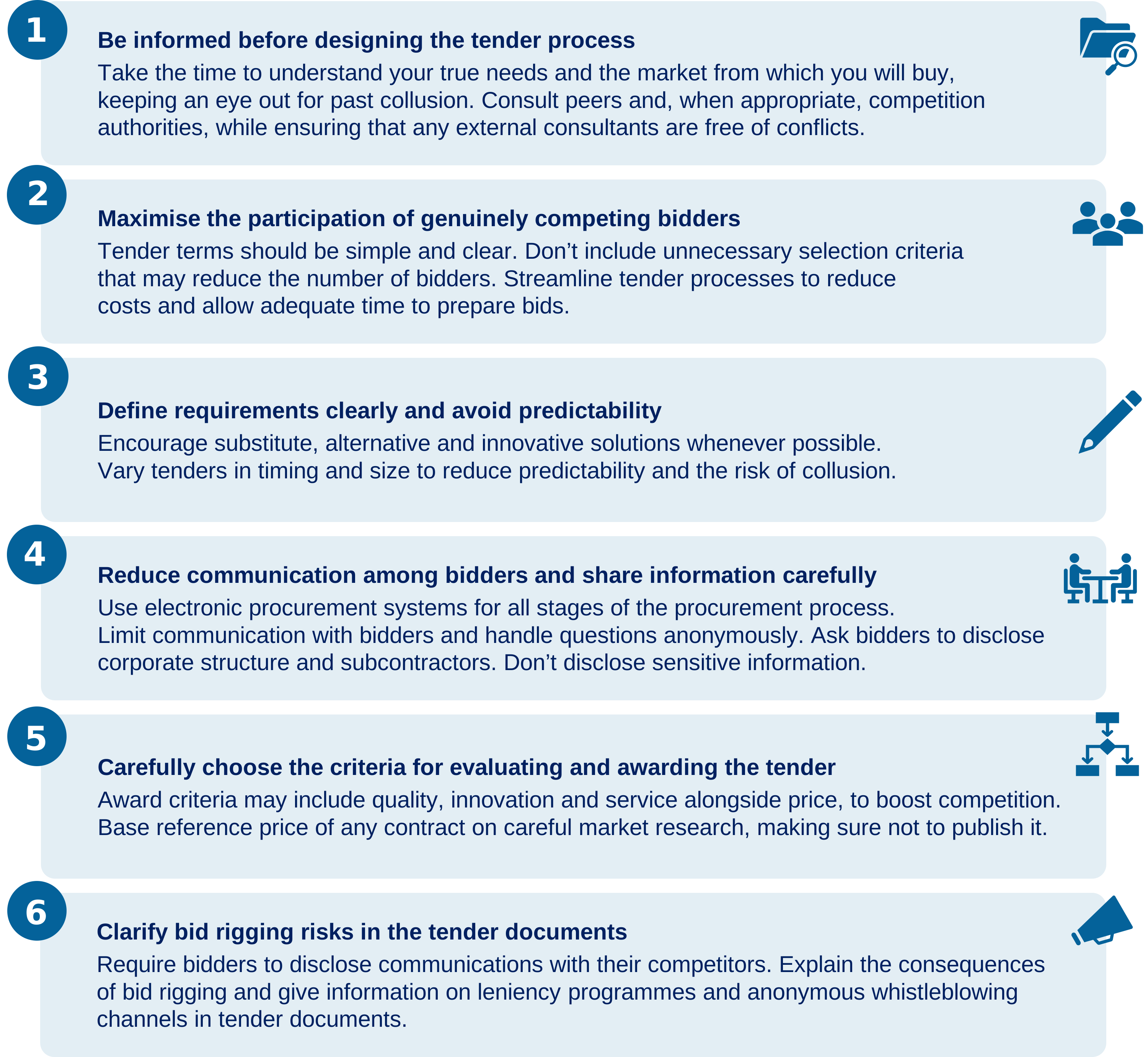
Smart tender design can significantly reduce the risk of collusion. This chapter contains a “Checklist for designing the procurement process to reduce risks of bid rigging” (Tender Design List). This list aims at informing procurement officials of measures that can help plan and carry out procurement in a way that limits bid-rigging risks. Such measures include understanding the market and potential suppliers; adopting pro-competitive bidder participation requirements and contract award criteria; not revealing the identity of bidders to each other; warning bidders of the existence and extent of sanctions for bid rigging.
OECD Guidelines for Fighting Bid Rigging in Public Procurement (2025 Update)

Abstract
There are many steps that procurement agencies can take to promote competition in public procurement and reduce the risk of bid rigging, including those described in sections 2.1 to 2.6 of the Tender Design List and summarised in Figure 2.1.
The OECD Recommendation on Fighting Bid Rigging in Public Procurement [OECD/LEGAL/0396] provides that relevant authorities should understand the features of the relevant market, conducting appropriate market research. Procuring authorities should, however, be mindful that collusion can affect and bias the results of market research.
Concretely, contracting authorities should consider taking the following steps:
Determine purchasing needs accurately, focusing on the desired end result. In cases where it is not possible to satisfy requirements with goods interoperable with existing technological solutions, the tender should cover the entire life cycle (including, for example, spare parts, maintenance, and all other ancillary services), especially in cases where the value of the aftermarket is significant.
Be aware of recent industry activities or trends that may affect competition for the tender.
Determine whether the market in which they will purchase or the potential bidders have a history of collusion (for example, if there have been relevant enforcement decisions of the competent competition authority or potential bidders have been debarred from public tenders for having engaged in bid rigging), or the market has characteristics that could make collusion more likely.
Collect information on actual and potential suppliers including in other regions or markets, the characteristics of their products, their prices, and, if possible, their cost factors. If possible, compare prices offered in procurement by other authorities or in the private sector.
Collect information about past tenders for the same or similar items, recent price changes and trends, prices in neighbouring geographic areas, including abroad, and prices of possible alternative goods, works or services, if applicable.
Contact other public sector procurers who have recently purchased similar items in the same region or country, or other regions or countries with similar characteristics, to improve understanding of the goods, works, or services offered in the market, and its participants.
If they use external consultants to define the tender strategy and tender terms, these should be checked for any conflicts of interest and relationships with bidders. Consultants should sign non-conflict of interest declarations and/or confidentiality agreements covering the confidential aspects of their work. They should be qualified for the work assigned to them, trained in integrity and competition do’s and don’ts, and required to report any suspicions of improper competitor behaviour or any potential conflict of interest.
In the long run, develop in-house expertise on markets to reduce reliance on external advice, potentially through networks of procurement professionals.
Ensure proper record-keeping of inputs received during market research and market consultation, to be able to analyse potential pre-tender collusion, or bias in the design of tender specifications.
Consider consulting with the competent competition authority before launching a large value or volume tender to check for competition-related concerns.
Do not publish the names of companies and prices found during market research, for example when advertising the tender.
The OECD Recommendation on Fighting Bid Rigging in Public Procurement [OECD/LEGAL/0396] provides that relevant authorities should promote competition by maximising participation of potential bidders by a series of initiatives, like transparent and non-discriminatory participation requirements and considering the aggregation or disaggregation of tenders. In a similar vein, the (2021[2]) OECD Recommendation on Competitive Neutrality [OECD/LEGAL/0462] recommends that Adherents “establish open, fair, non-discriminatory, and transparent conditions of competition in government procurement processes in order to ensure that no Enterprise, regardless of its ownership, nationality, or legal form is granted any undue advantage”. The Competitive Neutrality Toolkit (OECD, 2024[3]) supports the implementation of this provision of the Recommendation by providing detailed advice on how to ensure a level playing field among potential bidders.
Concretely, contracting authorities should consider taking the following steps:
Use simple, clear tender specifications.
Open tenders to all potential bidders whenever possible.
When issuing invitations to tender to specific companies, invite as many as possible and not always the same ones.
Avoid any unnecessary restrictions that may reduce the number of qualified bidders. Minimum requirements should be relevant and proportionate to the objective, the size and content of the procurement contract. For example:
Avoid excessive turnover and prior experience requirements. Whenever possible, consider other relevant experience.
Avoid preferential treatment for a certain class, or type, of supplier. Do not favour incumbents (i.e. the current supplier) or state-owned enterprises.
Do not require disproportionate bank or other guarantees from bidders as a condition for bidding.
Offer payment terms, such as phased payments or shorter payment cycles to make it more attractive for small and medium sized companies to participate.
Reduce constraints on international or non-local participation in procurement whenever possible.
Consider assessing the suitability of bidders to perform the contract (qualification of bidders) during the procurement process and not before, to avoid collusion among the pre-qualified group and increase the uncertainty among competitors as to the number and identity of bidders. Avoid a very long period of time between qualification and award, as this may facilitate collusion, and, if possible, do not disclose the names of qualified bidders.
If, however, there are lists of pre-approved suppliers, make sure that suppliers can be added to them easily anytime, including during a procurement procedure before the deadline for the submission of tenders.
Assess whether framework agreements (i.e. agreements on suppliers, prices and terms for making purchases in the future) risk creating or have created lock-in effects that may facilitate collusion, by limiting contracting authorities to buy exclusively from the approved suppliers under the framework agreement. When framework agreements are mandatory for contracting authorities, this can encourage suppliers to compete for a potentially large market, thus possibly reducing collusion risks at the initial bidding stage. In all events, consider not communicating the exact times and volumes of planned purchases under the framework agreement in advance, and focusing on quality versus price.
Reduce the preparation costs of the bid by:
Providing all information on the contract, process of selection, mechanisms for deciding winners, among others, in the announcement of the tender. However, consider a balanced approach regarding the level of detail provided on the mechanism for deciding the winner, to discourage bid-rigging strategies.
Streamlining tendering procedures across time and products (e.g. use the same application forms, ask for the same type of information, use standardised general contract terms, etc.). Seek continuous improvements of the procurement forms and templates, based on experience.
Aggregating tenders, including, if necessary, through joint procurements with other contracting authorities, for similar goods, services or works, when the contracting authority expects that larger procurements may attract more bidders and more competitive bids. Make sure that such aggregation or joint procurement makes commercial sense and does not risk concentration of supply in the medium and long term nor prevents small and medium size enterprises from participating. In general, be careful to maintain a competitive supply chain.
Allowing adequate time to prepare and submit a bid. Consider publishing general information on future projects in advance on public procurement portal(s) and trade and professional platforms. Annual procurement plans should, if published, not include the exact estimated value and time of each tender.
Whenever possible, allow bids on certain lots or objects within the contract, or on combinations thereof (package bidding), rather than bids on the whole contract only. For example, in larger contracts, consider tendering out contract lots (parts) that would be attractive and appropriate for small and medium sized enterprises, taking into account the OECD checklist for protecting competition when splitting contracts into lots (OECD, 2018[4]). In particular, in highly concentrated markets, where few bids are expected, avoid splitting tenders in a number of lots that match the number of potential bidders or are a multiple of the number of bidders. This can facilitate collusion by enabling the splitting of lots among bidders, especially if the value of those lots is similar.
Require that bidders disclose if they, or their economic groups, have been fined or debarred from public tenders for bid rigging, in the past five years and consult available databases of debarred suppliers.
Be flexible about the minimum number of bidders. Consider whether it is possible to obtain a competitive outcome from fewer bidders, rather than re-tendering, which is likely to make it clear that competition is scarce.
Drafting the tender specifications is a stage of the public procurement cycle which is vulnerable to bias, fraud and corruption. Specifications should be clear, comprehensive and not discriminatory to preclude any risk of favouritism or arbitrariness.
How tender specifications are written affects the number and type of suppliers that are attracted to the tender and, therefore, the success of the process. The clearer the specifications, the easier it will be for potential suppliers to understand them, and the more confidence they will have when preparing and submitting bids. Clarity should not be confused with predictability. Predictable procurement schedules and unchanging quantities sold or bought can facilitate collusion. Higher value and less frequent procurement opportunities, with irregular tender schedules and quantities, may increase the bidders’ incentives to compete, as such tenders are more difficult to share among competitors.
Concretely, contracting authorities should consider taking the following steps:
Define tender specifications as clearly as possible. Tender specifications should be independently checked before the tender is published, for example internally (within the contracting authority) and externally (with other public sector bodies), to ensure they can be clearly understood. They should not leave room for suppliers to interpret specifications after the tender is awarded.
Use functional and performance specifications and state what is actually required, rather than how it is to be done or providing a description or a reference to specific brands or patents. This will encourage innovative solutions and value for money.
Whenever possible, avoid setting national standards in tender specifications without recognising the possibility of equivalent international standards, thus encouraging foreign or non-local participation in the procurement procedure.
Distinguish, whenever possible, between mandatory and voluntary standards and, if possible, allow offers based on other types of certification.
Define specifications allowing for substitute goods, works or services, whenever possible. Alternative or innovative sources of supply make collusion more difficult.
Avoid starting the tender process while the contract is in the early stages of specification. A comprehensive definition of the procurement need is key to good procurement. When this is unavoidable, for example for innovative projects, use applicable procurement methods that allow developing the solution jointly with the chosen suppliers, duly justifying the use of such methods.
Avoid predictability in contract requirements: consider varying the size and timing of tenders. In general, avoid tendering out contracts with identical values at the same time or one after the other, as they can be more easily shared among competitors.
The efficiency of the procurement process will depend on the chosen tender procedures but also on how the tender is designed and carried out. Transparency is indispensable for a sound procurement procedure to aid in the fight against corruption. Transparency should be achieved in a balanced manner, in order to avoid facilitating collusion by disseminating information beyond legal requirements.
The OECD Recommendation on Fighting Bid Rigging in Public Procurement [OECD/LEGAL/0396] provides that relevant authorities should design the tender process so as to avoid revealing the identity of bidders to each other and use, to the extent possible, electronic procurement systems for all stages of the procurement process.
Concretely, contracting authorities should consider taking the following steps:
Resolve the interested suppliers’ queries on the tender process and specifications on-line and anonymously. Share significant information provided in response to a query promptly and anonymously with all potential bidders.
Limit as much as possible communications between bidders during the tender process. For example, if the bidders need to do a site inspection, avoid gathering the bidders in the same facility at the same time.
Electronic means should be used for all stages of the procurement process, if feasible. Bidders should not be able to identify each other.
Require bidders to disclose in their bid their corporate structure and ownership, including the beneficial ownership, the names of their joint contractors and/or subcontractors, if applicable. Bidders should also be required to disclose ties with other companies that are relevant to the particular tender (for example, whether the bidder would be purchasing products from another bidder).
Avoid, wherever possible, a public opening of bids and do not disclose the identity or number of bidders to other market participants during the tender process.
Carefully consider what information is disclosed to bidders at the time of the bid opening.
When publishing the results of a tender, carefully consider which information is published and avoid disclosing competitively sensitive information as this can facilitate the formation of bid-rigging schemes. Public procurement officials should be trained on the treatment of commercially sensitive and confidential information.
Even if external consultants are used to set the tender specifications, the procurement process should be conducted in-house.
Bid evaluation and contract award criteria affect the intensity and effectiveness of competition in the tender process.
The OECD Recommendation on Fighting Bid Rigging in Public Procurement [OECD/LEGAL/0396] provides that relevant authorities should design tender specifications, and selection and award criteria that improve the intensity and effectiveness of competition in the tender process.
Concretely, contracting authorities should consider taking the following steps:
Consider the possible impact that the choice of award criteria could have on future competition.
Consider whether contract award criteria other than price or in addition to price (quality, innovation, delivery times, length of warranties, after sales service, operational savings etc.) can yield a better outcome, make collusion more difficult and/or encourage the development of innovative supply solutions in the future. Price-based award criteria are more appropriate when the qualitative characteristics of the good, work, or service are easily defined.
Whenever possible, add criteria to resolve any tie between bidders. Investigate the reasons for any identical bids and, if necessary, consider re-issuing the invitation to tender.
When the tender is split into lots, avoid requiring that a bidder may win only one or only a specific number of lots. Such limitation can facilitate the splitting of contracts among bidders (especially if the value of the lots is similar), and/ or deter participation, as companies may not bid if they can win only few lots. However, limiting the number of lots that a single bidder may win can protect future competition, especially in markets where there is a risk that lots will be won by a single bidder, such as markets with few operators, high entry barriers, and switching costs.
Use a reference price only if it is based on thorough market research. Do not publish the reference price but keep it on file and make it available to other authorities that may need to know, like competition authorities or public sector auditors.
Reserve the right to cancel the procurement if the bidding outcome is not competitive.
The OECD Recommendation on Fighting Bid Rigging in Public Procurement [OECD/LEGAL/0396] provides that relevant authorities should require all bidders to sign an attestation, such as a certificate of independent bid determination, that the bid submitted is genuine, non-collusive, and made with the intention to accept the contract if awarded, and include in the invitation to tender a warning regarding the sanctions for bid rigging.
Concretely, relevant authorities should consider taking the following steps:
Request that bidders submit a signed certificate of independent bid determination and disclose any communications with competitors. Reserve the right to reject bids where such a certificate is missing, or if the bidder indicates that they communicated with competitors.
In addition to a warning regarding the sanctions for bid rigging (including fines, possible debarment, possible criminal sanctions and the right to claim damages for cartel harm), provide information on the applicable leniency programme in the tender documents.
Make use of anonymous reporting mechanisms for third parties (such as company employees, public procurement officials and/or citizens), such as a whistle-blower system kept by procurement or competition authorities. Provide information on such whistleblowing mechanisms in the tender documents. Explain where and how complaints may be submitted (and, if available, provide contact details) and ensure confidentiality.