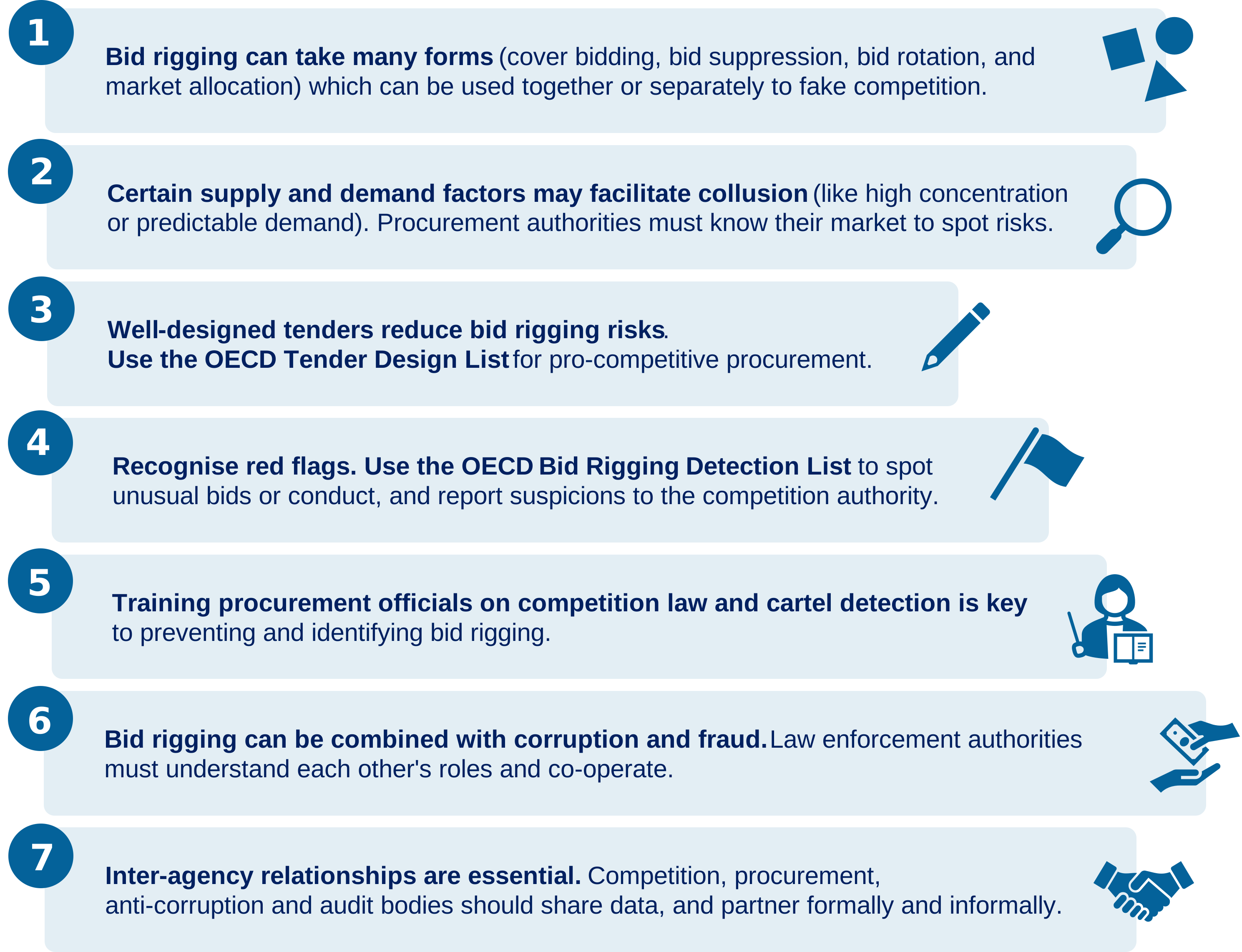
Bid rigging can take many forms. Bid rigging often consists in the following strategies: cover bidding (submitting bids that the procurer cannot accept, to give the appearance of genuine competition), bid suppression (refraining from bidding or withdrawing bids so that a specific bid company wins), bid rotation (companies taking turns being the winning bidder) or market allocation (carving up the market and agreeing not to compete for certain customers, regions, tenders or products). These strategies are not the only ones and are not mutually exclusive; they can be used together and in any combination.
Certain supply and demand factors may facilitate collusion. For example, high market concentration, symmetry of market participants, little or difficult market entry and low level of innovation are supply-side factors that can facilitate the formation of bid-rigging cartels. Demand-side facilitating factors include predicable demand and repetitive bidding. Procurement authorities should understand the features of the market in which they buy and be especially vigilant when facilitating factors are present.
The risks of bid rigging can be reduced if public tenders are carefully designed. The Guidelines include a Tender Design List, which details a series of measures to help plan and carry out procurement in a way that limits bid-rigging risks. Such measures include understanding the market and potential suppliers; adopting pro-competitive bidder participation requirements and contract award criteria; using electronic procurement; warning bidders of the existence and extent of sanctions for bid rigging.
The signs of bid rigging (red flags) should be understood so that they can be identified and reported to the competition authority. Bid-rigging agreements are difficult to detect as they are typically negotiated in secret. The Guidelines include a Bid-Rigging Detection List, which sets forth red flags to help identify and report bid-rigging schemes. The red flags include unusual bidding or pricing patterns, or suspicious bidder conduct or statements. It is recommended to check serious suspicions of bid-rigging with the relevant competition authority.
Procurement officials should be made aware of competition law requirements in public procurement. Training programmes for procurement officials on bid rigging and cartel detection and guidelines on fighting bid rigging in accordance with these Guidelines can help.
Bid rigging can go hand-in-hand with other offences, like corruption and fraud. This requires educating law enforcement authorities about each other’s mandates and fostering close co-operation among them.
Competition authorities should co-operate, formally or informally or both, with procurement and other public authorities, in implementation of the Recommendation’s encouragement to competition authorities to “partner with procurement and other relevant authorities such as anti-corruption and audit authorities, and public prosecutors (if applicable)”. Notably, the Guidelines contain a section on the importance of inter-institutional relationships, including exchanging data, information and experiences, setting up working groups and enabling staff exchanges, and implementing domestic and/or international co-operation instruments.