The principle of access within the OECD Recommendation on Public Procurement recommends that countries should have in place coherent and stable institutional, legal, and regulatory frameworks, which are essential to build trust in the public procurement system and to increase participation in public procurement. This Chapter reviews the institutional, legal and policy framework to identify bottlenecks and impediments to competition in Slovenia and continues the analysis of the determinants of single bidding presented in Chapter 2.
Maximising the Benefits of Effective Competition in Public Procurement in Slovenia

Abstract
Improving legal certainty by avoiding frequent changes in the law
The legal framework for public procurement in Slovenia primarily relies on the Public Procurement Act (hereinafter PPA) (Official Gazette of the Republic of Slovenia, No 91/15), adopted in 2015 and which entered into force in April 2016. The PPA transposes EU Directives (Directive 2014/24/EU on public procurement and Directive 2014/25/EU on procurement by entities operating in the water, energy, transport and postal services sectors). In addition to the PPA, several other laws are also regulating public procurement, including the Act on Concession Contracts, the Public Procurement in the Field of Defence and Security Act, and the Legal Protection in Public Procurement Procedures Act. The PPA is complemented by secondary legislation, including:
Decree on Financial Insurance in Public Procurement (Official Gazette of the Republic of Slovenia, No. 27/16)
Decree on Joint Public Procurement of the Government of the Republic of Slovenia (Official Gazette of the Republic of Slovenia, No. 27/16)
Decree on the Information list of Contracting Authorities and Mandatory Information in Notices for the Small Value Procurement Procedure (Official Gazette of the Republic of Slovenia, No. 37/16)
Rules on the Unified Information System in the Field of Public Procurement (Official Gazette of the Republic of Slovenia, No. 37/18)
Rules on the Types and Manner of Data Collection for the Annual Statistical Report on Awarded Public Contracts (Official Gazette of the Republic of Slovenia, No. 39/16)
Decree on Green Public Procurement (Official Gazette of the Republic of Slovenia, No. 51/17, 64/19 and 121/21)
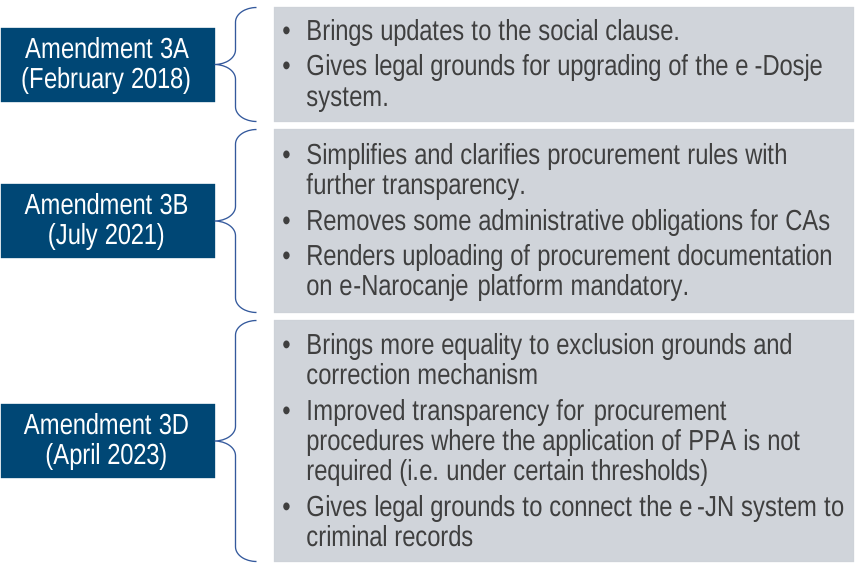
The PPA has been amended several times since its adoption, and these amendments aimed at bringing several improvements to the public procurement system (see Figure 3.1).
Source: (PWC, 2022[1]), (OECD, 2023[2])
In addition to these amendments, another one was originally adopted in January 2022, i.e. Amendment 3C. Among its objectives was the creation of flexible conditions for procurement of medical devices and equipment justified by the COVID-19 pandemic, establishing a Central Price Record Office for medical devices/equipment, and establishing termination of contract if the bidders does not want to lower the price. This amendment was however repealed by the adoption of another law later this year titled “Law on urgent measures to ensure the stability of the healthcare system.”
Several stakeholders have indicated that frequent changes in the legislation in Slovenia have impacted the capacity of both contracting authorities and economic operators. A survey conducted by OECD with a number of contracting authorities in Slovenia has revealed that 59% believe the frequent changes to the procurement law are a deterrent to competition in procurement. (OECD, 2023[3]) As such, the legislation is seen as overly complex, as key stakeholders already need time to build capacity regarding the original law. Frequent amendments are therefore difficult to follow when a baseline capacity is not achieved, especially for smaller contracting authorities. (OECD, 2023[2]) Frequent changes to the procurement framework may cause to legal uncertainty, and complex public procurement rules impede broad participation from potential competitors, especially new entrants and SMEs.
As such, the principle of participation in the OECD Recommendation on Public Procurement highlights the needs for transparent and effective stakeholder participation. Namely, the Recommendation suggests developing and following a standard process when formulating changes to the public procurement system, which should include public consultations, invite comments of the private sector and civil society, ensure the publication of the results of the consultation phase, and explain the options chosen, all in a transparent manner. Stakeholders from the private sector and civil society have indicated having been included in the public consultations for the various amendments to the PPA, however, strengthening the engagement with the private sector during reforms processes could help build capacity for future reforms and remove legal uncertainty. In Ireland, the Office for Government Procurement regularly engage with SMEs during procurement reforms (see Box 3.1)
The Office of Government Procurement, the central purchasing body of Ireland, established the SME Advisory Group and facilitates its quarterly meetings. It is a standing group chaired by a Minister of State at the Department of Finance and Public Expenditure and Reform to discuss procurement policy and initiative design to assist SMEs, so that the voice of Irish SMEs can be heard at the highest level. The Office of Government Procurement engages with industry representatives and civil societies, including the Irish Small and Medium Enterprises Association (ISME), Irish Business and Employers Confederation (IBEC), Small Firms Association (SFA), Construction Industry Federation (CIF) and Chambers Ireland through the SME Advisory Group to exchange views and identify policy initiatives. Other business-focused public bodies that attend these meeting would include the Competition and Consumer Protection Agency; Enterprise Ireland; Inter-trade Ireland; and the Department of Business, Enterprise and Innovation.
The Office of Government Procurement holds an annual conference that covers all of the latest policy developments relevant to suppliers. Furthermore, the Office of Government Procurement, Enterprise Ireland and Inter-trade Ireland regularly hold “meet the buyers” events designed to encourage SME participation and to increase knowledge of policy in the area.
Source: (OECD, 2018[4])
Addressing potential barriers to competition in the Public Procurement Act
Leveraging the use of the European Single Procurement Document and systematic digitalization of certificate
In the OECD survey geared toward contracting authorities, nearly 80% of respondents indicated that one of the main bottlenecks to competition in public procurement is the complexity of the public procurement system in Slovenia. (OECD, 2023[3]) In addition, in another OECD survey targeting economic operators, several respondents mentioned that the excessive bureaucracy of the procurement system deter them from participating in procurement processes. (OECD, 2024[5])
Impediments to competition in public procurement can come from the regulatory and policy framework itself, either because the framework provides legal uncertainty to bidders, which in turn are discouraged to bid due to a lack of trust in the system, or because of the administrative burden provided by the public procurement law or other legislative act. For example, in 2021, the European Commission ran a public consultation to identify the main barriers for SMEs to access public procurement, and proposes 10 policy interventions to simplify procurement practices for SMEs, including a better usability of TED, and better accessibility to procurement platforms in general. (European Commission, 2021[6])
One particular element that comes out from surveys is the use of the European Single Procurement Document (ESPD). The PPA mandates Contracting Authorities to accept the ESPD in lieu of certificates and entitles economic operators to reuse a previous ESPD, provided that they confirm that the information contained therein continues to be correct (Article 79). Nonetheless, one economic operator has stated that contracting authorities require the company's details for each procurement or each ESPD separately. To ease the administrative burden of economic operators, instead of having them fill the ESPD separately each time, the data required by each contracting authority could therefore be automatically populated in the e-Procurement system either from a standard form filled by economic operators through their profile, or from previous ESPDs. Economic operators would then be able to adjust or correct the information according to the current tender. (OECD, 2024[5])
In addition, PPA states that economic operators shall not be required to submit supporting documents or other documentary evidence where and insofar as the contracting authority has the possibility of obtaining the certificates or other relevant information directly by accessing a national database (Article 79). Economic operators have indicated that in some cases, while the contracting authority can obtain an extract from the criminal record, the contracting authority required a certificate to be notarized and sent by the economic operator, resulting in the contract being awarded to a competitor with a price six times bigger than the respondent’s price.
The MPA has already issued further instructions on how to use e-Procurement information system and its modules, especially regarding the use of ESPD form and the e-Dosje model which enables electronic verification of some exclusion grounds. However, the PPA could further promote these measures, for example through a newsletter to ensure contracting authorities rely on information that is fully digitalized, and to avoid putting undue burden on economic operators to provide information.
Clarifying the cases where negotiated procedure without prior publication can be used
One particular hurdle identified by contracting authorities is difficulties in understanding how and when to use the negotiated procedure without prior publication of notice. The procedure is regulated by Article 46 of the PPA, and largely transposes Article 32 of the EU 2014/24 directive on public procurement, with some additional cases as follows:
Where a contract in the infrastructure field is purely for the purpose of research, experiment, study or development, and not for the purpose of securing a profit or of recovering research and development costs, provided that the award of such a contract does not prejudice the competitive award of subsequent contracts which seek those ends.
If the value of the public contract does not exceed the threshold above which a contract notice must be published in the Official Journal of the European Union, provided that the contract may be executed by a previously identified and final number of qualified tenderers and provided that all tenderers are treated equally.
For bargain purchases, where it is possible to award a public supply contract in the infrastructure field by taking advantage of a particularly advantageous opportunity available for a very short time at a price considerably lower than normal market prices.
As this procedure is non-transparent by nature, the PPA put in place several safeguards to ensure integrity in these processes. This includes the obligation for contracting authorities to publish a voluntary ex-ante transparency notice on the public procurement portal or, if the value of the contract so requires, also in the Official Journal of the European Union when they award contracts using negotiated procedure without prior publication (Article 57 of the PPA). The PPA also requires that for every contract, contracting authorities shall draw up a written report which shall include the circumstances that justify the use of the negotiated procedure without prior publication (Article 105 of the PPA). Furthermore, the contracting authority must execute the procedure and negotiations using electronic tools for submission and communication as it is the case under other procedures. The chosen contractor must comply with all exclusion grounds as listed by the PPA and the procurement documentation. After choosing the contractor, the contracting authority must publish both its decision and the award e-notice on the public procurement portal, so that all interested economic operators can appeal if they suspect a breach of legislation. After the award of the contract, the contract and potential future annexes must be published on national procurement portal, as well as all monthly payments. The justification for negotiated procedures without prior publication used by contracting authorities in Slovenia are mostly linked with technical/artistic reasons or exclusive rights, and with unsuccessful previous open procedure where no bid or no valid bid has been received (see Table 3.1).
The OECD survey targeting contracting authorities revealed that 31% of them think that the legal framework is not clear enough regarding negotiated procedures without prior publication. One contracting authority states that the provisions allow for different interpretations, and the terminology within the legislation is too complex. For the specific case of extreme urgency, another contracting authority mentioned that it is unclear where the threshold stands between urgency and non-urgency. (OECD, 2023[3]) In addition, a 2022 study reveals that some of the interviewed contracting authorities agreed that using negotiated procedure without prior publication is sometimes unjustified and that the contracting authorities are providing vague explanations for its usage. Two interviewees justify their usage of negotiated procedures simply because of Article 46 of the PPA allows it, while one interviewee believes that provisions of this article should be more stringent. (PWC, 2022[1])
The table above also shows that unsuccessful previous open procedure where no bid or no valid bid has been received is the second most used reason for justifying the use of negotiated procedure without prior publication, which shows the close link between single-bidding and the use of non-transparent procedures. As such, increasing the competitiveness of the market in Slovenia would not only tackle the issue of single-bidding, but also decrease the potential use of negotiated procedures without prior publication. To do so, several measures can be put in place to make the procurement market more attractive to bidders (see Chapter 4).
As such, the MPA has put in place further mechanisms to tackle these issues through the amendment 3D to the PPA, adopted in April 2023. The voluntary ex-ante transparency notice is now sent to the entities that are safeguards of public interest before the start of the negotiated procedures without prior publication. These institutions are competent to monitor the procurement market and are also competent to submit a review claim, and include the Court of Audit, the Commission for the Prevention of Corruption and the Slovenian Competition Protection Agency. Contracting authorities do not need their approval for the execution of the procedure, but the absence of notification to entities safeguarding the public interest constitutes an offence under article 111 of PPA. This measure contributes to ensure that negotiated procedure without prior publication is used correctly, as the voluntary ex-ante transparency notice as per Article 57 in the previous version of the PPA was published only after the negotiations were completed. This new measure serves two purposes: 1) Better procurement planning and making contracting authorities more thoughtful when using negotiated procedures without prior publication; and 2) Giving more responsibilities to entities of safeguard of public interest by giving them structured information about these procedures and ease the identification of potential violation of the procurement law. In addition to this reform measure, the MPA recently issued sample forms to enable smoother reporting to safeguards of public interest, which also guide contracting authorities through the reasoning behind each justification and allow them to check whether all conditions for the use of negotiated procedures are met. (Ministry of Public Administration of Slovenia, 2024[8]) This last initiative has the potential to address the concerns contracting authorities expressed in their responses to surveys and interviews, and the usefulness of the forms should be further monitored by MPA.
Enhancing the use of e-Procurement system
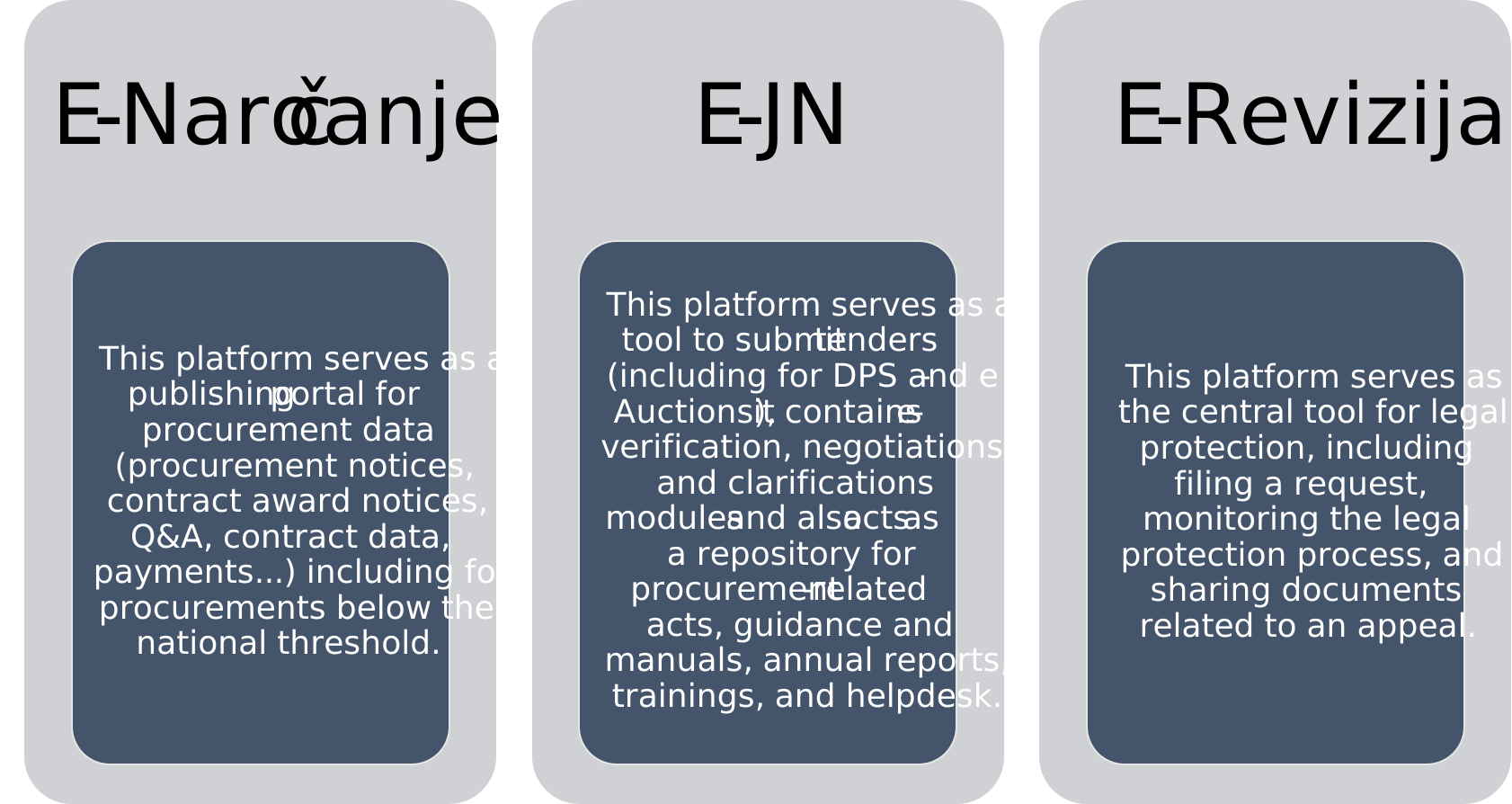
The Public Procurement Directorate (PPD) under the Ministry of Public Administration (MPA), and especially its Division for E-Procurement, Consultation and Analytics, is responsible for managing the electronic systems for public procurement. Three digital platforms are available in Slovenia regarding public procurement (see Figure 3.2).
Source: (OECD, 2023[2])
Harmonising e-Procurement systems into a single portal
Slovenia has made great efforts in digitalizing the procurement processes, and the electronic platforms are overall well perceived in Slovenia, with a majority of surveyed economic operators indicating that the lack of knowledge of the e-Procurement system is rarely an issue for participating in procurement processes. Nonetheless, some have also suggested that the platforms should be unified into a single portal, which should be more sophisticated and user-friendly than the existing ones. (OECD, 2024[5]) Indeed, the existence of three platforms seem complicated to the economic operators that are not experienced in the public procurement market and could represent a burden to new market entrants. Other economic operators have argued that the system could be further adjusted regarding the distribution of information to make it more accessible and open to a wider population with different levels of experience and knowledge about the system. (PWC, 2022[1])
As such, a single platform that would be used both for advertisement of procurement opportunities, for submitting tenders, and for filing requests for legal protection would likely ease the experience of both economic operators and contracting authority regarding procurement processes. In addition, having a single portal would also enhance the quality and reliability of procurement data, not only for enabling better access to information, but also for monitoring purposes and measuring the performance of the public procurement system (see Section on performance measurement framework below). The United Kingdom for example has faced the same issue, where basic information on which procurement route was used was missing for 6% of contracts recorded on Contracts Finder, one of two public contract databases, from 2018 to 2022. In addition, information on other aspects of contracts is collected inconsistently between the two databases, and most departments do not consistently publish all contracts within the required time. The Cabinet Office of the United Kingdom is therefore working on changes to the process and its standards, including consolidating to only using one database. (National Audit Office of the UK, 2023[9])
The creation of a single platform for all procurement data has shown to increase participation in public procurement in certain countries. Box 3.2 presents the example of Korea.
In 2002, the Public Procurement Service (PPS), the central procurement agency of Korea, introduced a fully integrated, end-to-end e-procurement system called KONEPS. This system covers the entire procurement cycle electronically (including a one-time registration, tendering, contracts, inspection and payment) and related documents are exchanged online. KONEPS links with about 140 external systems to share and retrieve any necessary information, and provide a one-stop service, including automatic collection of bidder's qualification data, delivery report, e-invoicing and e-payment. Furthermore, it provides related information on a real-time basis. All public organisations are mandated to publish tenders through KONEPS. In 2012, over 62.7% of Korea’s total public procurement (USD 106 billion) was conducted through KONEPS. In KONEPS 45,000 public entities interact with 244,000 registered suppliers.
According to PPS, the system has boosted efficiency in procurement, and significantly reduced transaction costs. In addition, the system has increased participation in public tenders and has considerably improved transparency, eliminating instances of corruption by preventing illegal practices and collusive acts. For example, the Korea Fair Trade Commission runs on KONEPS, the Korean BRIAS system which is the automated detection system for detecting suspicious bid strategies. According to the integrity assessment conducted by Korea Anti-Corruption and Civil Rights Commission, Integrity perception index of PPS has improved from 6.8 to 8.52 out of 10 as the highest score, since the launch of KONEPS.
Source: (OECD, 2016[10])
The MPA has already taken stock of these potential bottlenecks. As such, in order to further increase the efficiency of public procurement, a Digital Transformation Plan for Public Procurement is currently being developed, with the objective of improving e-procurement, increasing efficiency, simplifying processes and increasing competition in the public procurement system. The Plan is expected to be adopted in 2024, and spawns until 2030. Key areas of improvement are expected to include the following:
A single-entry point for all participants in public procurement procedures
Automation of the implementation of procedures
Elimination of administrative burdens
Improved control of the implementation of public procurement procedures
Ensuring the connectivity of the different systems
In addition, several enhancements were already brought to the e-JN information system, including a Notification feature that enables economic operators, participating as tenderers in public procurement procedures, to monitor published public procurement contracts in the e-JN information system and to prepare tenders more easily, an enhanced way for bidders to upload their supporting documents, and the renewal of the e-Dossier module, which allows contracting authorities to check the criminal record of tenderers electronically instead of physically, thanks to an interconnection with the system of the Ministry of Justice. These new features are expected to ease the administrative burden of both the contracting authorities and economic operators, and monitoring of their impact on competition would therefore be important. (OECD, 2023[2])
Encouraging the publication of procurement plans on the e-Procurement systems
Public entities have different mandates in terms of providing public services to citizens and businesses. To deliver on their mandate, those entities require the adequate human capital and the procurement of goods, services, and works. Therefore, the fulfilment of strategic goals for these entities is closely linked with procurement planning. One of the main goals of procurement planning is improving market engagement by providing economic operators with enhanced visibility on upcoming procurement opportunities, therefore increasing access to public tenders and ultimately promoting more competition. Procurement planning has two key benefits: i) ensuring a better management of time and resources for all stakeholders and ii) improving market engagement by providing economic operators with enhanced visibility on upcoming procurement opportunities (when the procurement plans are published), therefore increasing access to public tenders and ultimately promoting more competition. (OECD, 2023[11])
In Slovenia, the PPA does not mandate preparing and publishing of the procurement plans. Article 52 of the PPA, titled “types of notices and the form and manner of their publication” contains a list of notices to be published by contracting authorities but does not include procurement plans. Only the Public Finance Act defines the preparation of a draft procurement plan and its adoption (Article 25). In addition, the publication of those procurement plans is not obligatory and just a few contracting authorities are making it publicly available on their websites. (PWC, 2022[1])
Procurement plans are a key tool to provide visibility to the market on upcoming procurement opportunities and should contain key information to inform the bidders of future opportunities (see Box 3.3). In some OECD countries, such as Croatia and Latvia, the preparation and publication of procurement plans is mentioned in the regulatory framework or in procurement guidelines, such as Hungary, where not only the publication of plans is mandatory on the e-Procurement system, but the procurement law also mandates a minimum level of detail. (OECD, 2024[12]) In other OECD countries, a contracting authority may not launch a procurement process if the process was not included in the procurement plan. At the same time, flexibility needs to be given to contracting authorities as needs may change over time. It generally recommended that contracting authorities may launch a procurement process that was not foreseen in the original procurement plan, but only after having amended said procurement plan and published the amended version. (OECD, 2023[11])
Procurement planning is defined as a process carried out by contracting authorities to plan purchasing requirements for a defined period.
Procurement plans usually include:
Details on the stakeholders involved in the preparation of the plan, in terms of roles, department/s and any necessary sign-offs, including any other stakeholders consulted during the process.
Description of procurement requirements – divided by the respective category; goods, services, works.
Respective section/department requiring the procured goods (if relevant) and any areas affected by the procurement needs.
Estimated budget and project implementation deadlines.
Strategy including established timelines – for expected award, delivery or implementation.
Action Plan – delineating key tasks to be completed by each identified stakeholder, with timeframes for completion. This may also incorporate the approach the project team will adopt to select the product/s or service together with the procurement type/procedure and any respective selection criteria.
Source: (OECD, 2023[11])
In addition to the preparation of procurement plans, their publication is also key for transparency. The absence of publication of procurement plans significantly decreases the benefits of such practice: on the one hand contracting authorities are not providing visibility to the market on upcoming procurement opportunities, and on the other hand it impacts the quality of procurement plans as well the accountability of contracting authorities. (OECD, 2023[11]) As of 2018, 80% of respondents to the 2018 Survey on Public procurement launched by the OECD have stated that procurement plans are available to the general public (see Figure 3.3).
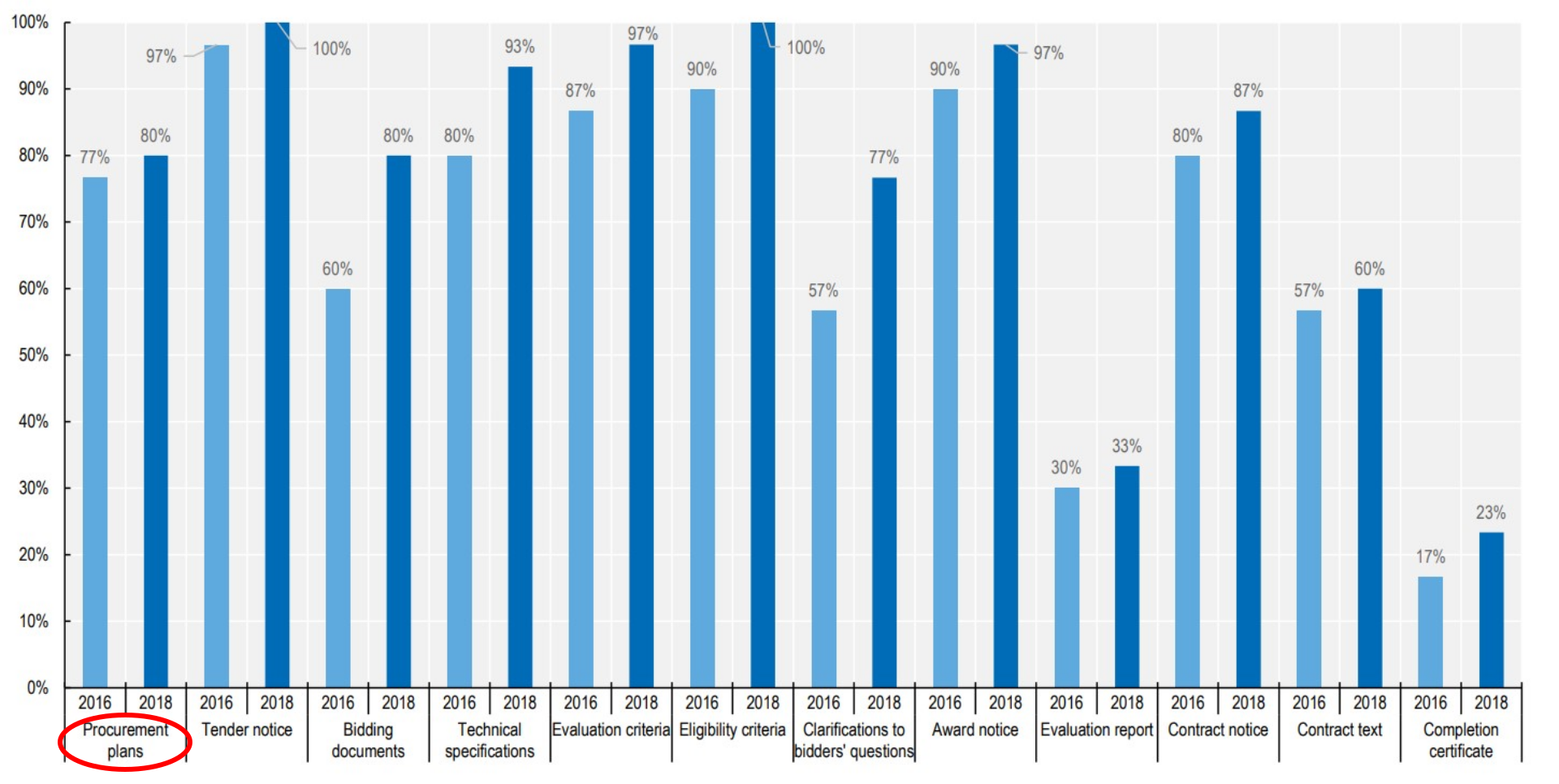
Note: Based on data from 30 respondents (OECD) that answered both the 2018 and the 2016 Surveys on Public procurement.
Source: (OECD, 2019[13])
As such, it is suggested that the PPA should include a provision for the systematic preparation and mandatory publication of procurement plans by all contracting authorities on an annual basis, also defining a list of key information that the procurement plans should contain. The publication of the procurement plans can happen either on E-JN or e-Narocanje. The draft proposal of amendment ZJN-3D originally included a provision on the obligation for contracting authorities to prepare procurement plans. However, during the public consultations, this provision was rejected by the majority of stakeholders, who considered this obligation as an additional burden on contracting authorities, and who were unsure regarding the necessary level of detail to be contained in the procurement plans. To streamline the process, the MPA should consider developing a procurement plan template to be used by all contracting authorities, indicating the level of detail for the procurement plans. Publication of the procurement plans on the portal (s) should be user-friendly, including an easy way to amend the plans. In Tunisia and Australia for example, the national procurement portals provide full access to procurement data, including procurement plans and any modification thereof (see Box 3.4). This enhanced transparency of procurement plans would help economic operators be aware of procurement opportunities in the upcoming year and potentially increase their participation in procurement processes.
Australia
The Australian e-procurement system, AusTender, provides centralised publication of Australian government business opportunities, annual procurement plans, multi-use lists and contracts awarded. The Commonwealth Procurement Rules state that in order to draw the market’s early attention to potential procurement opportunities, each relevant entity must maintain on AusTender a current procurement plan containing a short strategic procurement outlook. The annual procurement plan should include the subject matter of any significant planned procurement and the estimated publication date of the approach to market. The rules state that relevant entities should update their plans regularly throughout the year.
Tunisia
In Tunisia, Article 8 of Decree no. 2014-1039 of March 13, 2014, regulating public procurement (DMP) provides that the public buyer is required to draw up a provisional annual procurement plan in line with the draft budget, according to a standard model and a defined timetable. In addition, the public buyer must publish/update the procurement plan no later than 30 days before the start of the procurement procedure on national e-Procurement system Tuneps. Originally, the procurement plans were supposed to be published on another public procurement portal which served only as a publishing portal was distinct from the Tuneps system, which served for bid submission. Therefore, the implementation of this obligation on procurement plans originally knew some difficulties, as not all contracting authorities published their procurement plans on the portal. For this reason, on May 11, 2018, Tunisia published Decree No. 416 on the generalization of the Tuneps system, which came into force on September 1, 2018. As a consequence, from 2019, a contracting authority cannot publish a tender notice if the annual public procurement plan has not been published.
Taking full advantage of the implementation of eForms
eForms are an EU legislative open standard for publishing public procurement data, established under European Commission Implementing Regulation (EU) 2019/1780. They are digital standard forms used by public buyers to publish notices on Tenders Electronic Daily. The eForms regulation established six standard forms, covering forty notices. The standard forms (eForms) contain fields, some of which are mandatory and other optional. eForms are expected to significantly improve the quality and analysis of procurement data. The Commission highlighted that well-implemented eForms would increase the ability of businesses and other organisations to find procurement notices, reduce the administrative burden for contracting authorities, increase the ability of governments to make data-driven decisions about public spending, and make public procurement more transparent. (European Commission, 2023[16])
The European Commission also emphasized that eForms is not an 'off-the-shelf' solution that can be implemented 'as is', and policymakers in each member country must first define the national approach to the various aspects of eForms, such as also using them for contracts below thresholds, and defining the national governance structure for eForms. Therefore, eForms implementation in the EU member states should not consider as a low-level form-filling exercise, but rather as a key tool to build a procurement data architecture that facilitates the uptake of digital technologies for procurement governance and a way to collect information on many policy priorities, such as green, social and innovation procurement data (OECD, forthcoming[17])
Slovenia recently implemented eForms, and the new format has been in use since January 2024. An online training and training materials regarding the updates to system and the new forms were made available on e-JN. eForms are also used for procurements below the EU threshold and above the national threshold as per article 21 of PPA. Slovenia applied the once-only principle when implementing eForms, meaning that each information is inserted only once. To make the use of eForms easier for contracting authorities, the preparation of new notices was undertaken by MPA, so they resemble as closely as possible to the previous notices in terms of structure and naming. The eForms notices are connected with the Slovenian Business Register to obtain information on entities. As such, Slovenia took a step forward in simplifying and centralizing access to public procurement data. The introduction of eForms represents a significant opportunity to enhance data quality regarding public procurement. Slovenia should therefore monitor whether the implementation of eForms has had an impact on data quality, but also competition in public procurement and whether it removed some administrative burdens on both contracting authorities and economic operators.
Reinforcing the control over procurement processes
Enhancing the role of DKOM in legal protection
Effective remedies for challenging procurement decisions are essential to build bidders’ confidence in the integrity and fairness of the procurement system, thus encouraging their participation. Key aspects of an effective remedies system are timely access, independent review, efficient and timely resolution of complaints and adequate remedies.
In Slovenia, the remedy system is overall considered robust. Legal protection in public procurement is regulated by the Act on the Provision of Legal Protection in Public Procurement Procedures (ZPVPJN), and the authority in charge of reviewing public procurement procedures is the National Review Commission for Reviewing Public Procurement Award Procedures (DKOM). The appeals are filed through the e-Revizija portal, which was introduced in 2021, and has been deemed as user-friendly. The appeals process is twofold: 1) the economic operator files an appeal before the Contracting Authority; 2) the economic operator files an appeal before DKOM. DKOM has then 15 working days to issue a decision, and such timeframe is usually observed by DKOM unless the case is incomplete or complex and needs further expertise. DKOM’s decisions can be challenged before the Administrative Court of the Republic of Slovenia in certain cases. The fee structure for complaints has a variable range. Before award of the contract, the fee rate is linked to the contract's value, extending from a minimum of EUR 1000 to a maximum of EUR 25,000. After the award of the contract, the fee is calculated as a percentage of the lowest bid submitted. All decisions of DKOM are published on DKOM’s webpage, and the publication contains detailed information about the case, the decision, and its conclusion. (OECD, 2023[2]) The transparency of the process is also ensured on the portal e-Narocanje, where certain information regarding the procedure, together with the final decision of DKOM are published under the specific folder of each procurement procedure. An economic operator following a procurement process can therefore see whether an appeal has been launched and what was the decision. The information is fetched from the e-Revizija portal, which is interconnected with e-Narocanje.
Nonetheless, the remedies system could be further strengthened to address non-competitive procedures, as well as single-bid procedures. ZPVPJN explicitly states that legal protection shall be provided in the cases of negotiated procedure without prior publication for a tenderer that was not invited to participate in such a procedure but should have been invited to participate in accordance with the law governing public procurement (Article 25 paragraph 6). However, an analysis of the 2021 Work Report of DKOM indicates that in practice, few appeals are lodged against negotiated procedures without prior publication. In 2021, DKOM solved 171 cases, out of which only 2 concerned negotiated procedures without prior publication or 1.17%. It represents a decrease compared to the 10 appeals lodged in 2021, which can be explained by the overall decrease in the use of negotiated procedures without prior publication. None of these two appeals were upheld by DKOM. (DKOM, 2023[18]) In addition, a study found that single-bidding procedures are almost never appealed against, despite the possibility to appeals against the procedure regarding the tender documentation, prior to the bid submission deadline for submission of bids. (PWC, 2022[1])
The lack of appeals can be explained by several factors. For negotiated procedures without prior publication, the lack of transparency may explain the low number of appeals since potential bidders are not aware of the procurement process until it is already awarded, when the contracting authority publishes the voluntary ex-ante transparency notice. For single-bid procedures, potential collusive practices may play a role since the Slovenian market is quite small, with other bidders having potential agreements with the single bidder in the process.
One way to increase the role of DKOM in controlling these procedures would be to leverage the newly established ex-ante notification to the safeguards of public interest before the start of the negotiated procedures without prior publication. Through the initiation of review proceedings before DKOM by the safeguards of public interest DKOM could therefore detect violations to the procurement law before the launch of the process, even though the issue is not raised by a bidder. It is therefore recommended to thoroughly monitor the activity of DKOM, and other representatives of public interest, regarding this new function.
Ensuring a better coordination of controlling bodies and safeguards of public interest
The principle of access within the OECD Recommendation on Public Procurement does not only highlight the importance of using competitive procedures, but also suggests sound institutional and regulatory frameworks to increase participation to procurement processes. Furthermore, the accountability principle recommends establishing clear lines for oversight of the public procurement cycle to ensure that the chains of responsibility are clear, that oversight mechanisms are in place and that the delegated levels of authority for approval of spending and approval of key procurement milestones is well defined. As such, rules for justifying and approving exceptions to procurement procedures should be comprehensive and clear, such as in cases of limiting competition. (OECD, 2015[19])
Several institutions share monitoring functions in the public procurement system in Slovenia, and their role and responsibilities are well-established (see Figure 3.4).
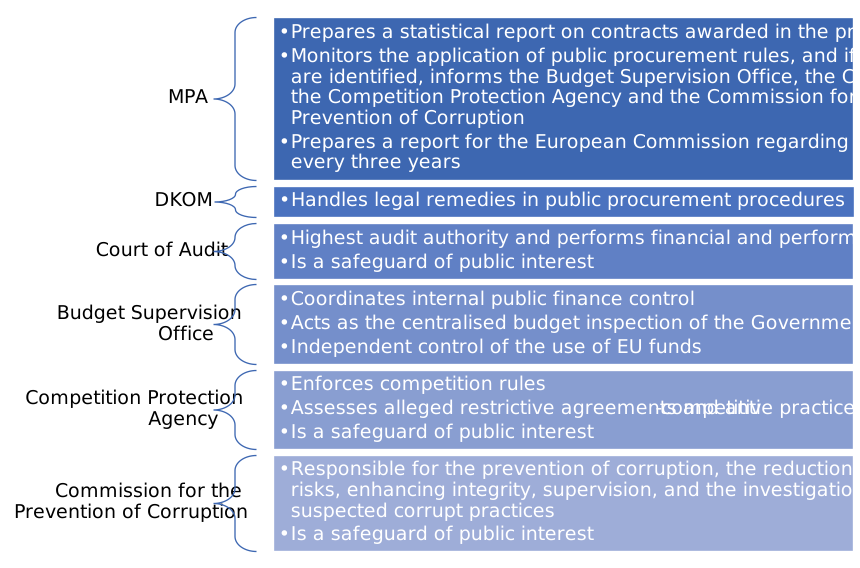
While the procurement oversight responsibilities are clearly established in Slovenia, a more structured coordination among the key actors could help better understand issues in competition and tackle them. An OECD report mentions a disconnect between procurement law and the interpretations of oversight institutions responsible for final rulings during disputes, with these rulings becoming a form of unwritten "law" driving behaviour across the system. (OECD, 2020[20])
As such, coordination among oversight institutions plays a crucial role in ensuring consistency in the application of procurement rules and standards across the whole public sector. One way to ensure this consistency is to leverage the competency of monitoring public procurement procedures by institutions that are safeguards of public interest. As stated previously, these three entities are competent to request explanations or documentation related to a public procurement procedure at any stage and can initiate a review proceeding before DKOM if they suspect a violation of the PPA. However, there is no formal sharing of information among these safeguard institutions, hence posing the risk of different interpretation as to what constitutes a violation of the PPA, especially regarding risks to competition. The multiplicity of databases (including three platforms for public procurement, and www.ERAR.si, which monitors all public spending, including all payments from public institutions) could also make the task of safeguard institutions more complicated.
To tackle this, discussions with stakeholders in Slovenia highlighted the need for the development of a shared portal among all representatives of public interest and contracting authorities to better coordinate data collection regarding certain cases. (OECD, 2023[2]) Several countries have taken the approach of a central database for procurement processes. In Brazil the Public Spending Observatory cross-checks the data with other government databases (see Box 3.5).
The Office of the Comptroller General of the Union launched the Public Spending Observatory (Observatório da Despesa Pública) in 2008 as the basis for continuous detection and sanctioning of misconduct and corruption. Through the Public Spending Observatory, procurement expenditure data are cross-checked with other government databases as a means of identifying atypical situations that, while not a priori evidence of irregularities, warrant further examination.
The Observatory is composed by experienced analysts and auditors who are performing their monitoring tasks using modern technology. Indeed, in 2014, the Office of the Comptroller General created the Bidding, Contracts, and Tenders Analyzer (Analisador de Licitações, Contratos e Editais – Alice) with the objective of acting in a preventive and timely manner in relation to potential malpractices in public procurement. The system automatically collects daily information about the processes underway in the Federal Government’s main public procurement information systems, evaluates a set of risks, and raises red flags to direct the attention of the auditors and managers about situations that deviate from the reference standard. It is, therefore, a Continuous Auditing tool, with robotic automation of processes, which raises red flags about possible problems in public procurements. In 2023, Alice analysed 190,923 acquisitions on the main public procurement portals. The analyses, timely identification of inconsistencies and alerts to auditors generated 203 audit jobs worth a total of BRL 27 billion (approximately EUR 4.5 billion)
In many cases, follow-up activities are conducted together with special Advisors on Internal Control and internal audit units within public organisations. Examples of these tracks related to procurement and administrative contracts include possible conflicts of interest, inappropriate use of exemptions and waivers and substantial contract amendments. A number of tracks also relate to suspicious patterns of bid-rotation and market division among competitors by sector, geographic area or time, which might indicate that bidders are acting in a collusive scheme.
Beyond the control mechanism of safeguard institutions of public interest, it is suggested that each key actor takes advantage of its procurement monitoring role and gear it toward enhancing competition. For instance, interviews with stakeholders indicated that an audit report on competitiveness was in consideration by the Court of Audit of Slovenia. Such a report could help better understand the root causes behind low competition in procurement. Similar analyses could be undertaken by the Commission for the Prevention of Corruption, which already does occasional studies on procurement practices in certain sectors, and by the Competition Protection Agency, which has extended knowledge on abuse of dominant market positions. (OECD, 2023[2])
Creating a strategy or action plan to tackle single-bidding and a systematic monitoring system of competition in procurement
Monitoring compliance with public procurement rules is necessary, but usually not sufficient in itself to ensure a sound public procurement system. The evaluation principle within OECD’s Recommendation on Public Procurement recommends driving performance improvements through evaluation of the effectiveness of the public procurement system from individual procurements to the system as a whole, at all levels of government where feasible and appropriate. (OECD, 2015[19]) As such, creating a strategy or action plan to tackle single bidding could be a first step to identify concrete actions to increase competition in procurement. Putting in place a performance measurement framework could help gain more insights on competition in the public procurement system.
Developing a strategy or action plan to tackle competition issues in procurement
The Recommendation on public procurement contains guiding principles to assist Adherents in achieving the right balance between the primary procurement objective and broader policy objectives, so that public procurement systems support the achievement of broader outcomes. To achieve these policy objectives, many OECD countries have put in place a public procurement strategy at the national level to guide policy decisions, reform efforts, and initiatives. A survey conducted in 2018 by the OECD shows that most countries have developed policies at some level regarding Green and innovative public procurement and access of SMEs to public procurement (OECD, 2019[13]).
In Slovenia, there is no dedicated strategy in the area of public procurement per se. Public procurement is enshrined in the National Public Administration Development Strategy 2015-2020. The section on public procurement contains six measures under two thematic areas (e-public procurement, and simplification greater flexibility, efficiency, and rationality of public procurement). None of these measures focused on the improvement of competition per se, or on the role of procurement in achieving broader policy objectives (sustainable procurement for example). The new Public Administration Sustainable Development Strategy 2030 is currently being prepared. The strategic priorities in public procurement include measures related to professionalisation, competitiveness, sustainability, digital transformation etc. Nonetheless, Slovenia could greatly benefit from adopting standalone procurement strategies to address some of these areas, including regarding competition in public procurement. For instance, the Government of Sweden has devised a procurement strategy that formulates six policy objectives, including one on competition (see Box 3.6).
Sweden developed a National Public Procurement Strategy in response to the challenges faced by its public sector – challenges that are common to most public sector organisations around the world. These included changes in the world such as climate, the environment, demographic trends and migration flows, and citizens’ expectations of service. The strategy is designed to be a catalyst for new ideas in the public sector, and contains 6 policy objectives:
1. Public procurement as a strategic tool for doing good business.
2. Effective public purchasing.
3. A multiplicity of suppliers and well-functioning competition.
4. Legally certain public procurement.
5. Public procurement that drives innovation and promotes alternative solutions.
6. Public procurement that is environmentally responsible.
7. Public procurement that contributes to a socially sustainable society.
Policy objective 3 states that well-functioning competition, with a multiplicity of actors, goods and services, is crucial in enabling public procurement to meet the society’s needs in the best way possible. Including more, and new, tenderers in public procurements contributes to prevent bid rigging. When more companies and other organisations are able and wish to tender in public procurements, competition is strengthened, and fresh ideas are stimulated. As such, under this objective, the Government of Sweden has identified the following measures to tackle low competition:
Improve trust in the public procurement markets and the conditions for competition: When trust towards the public procurement process becomes eroded, fewer suppliers decide to participate in tendering.
Taking the supplier’s perspective into account in public procurements: To ensure that suppliers do not feel excluded from participating in public procurements, account needs to be taken of the supplier’s perspective in the process. This includes drafting tender documentation to encourage companies and organisations to submit tenders and offer new, innovative solutions.
Enable better interaction and more dialogue: Effective dialogue before, during and after public procurements can create better understanding of the authority’s specific needs, and consequently how the procurement documents are formulated – but can also improve knowledge and understanding of the solutions that the market can offer.
Provide the right conditions for small and medium-sized enterprises: In many cases, small enterprises can offer flexible solutions that meet particular needs. The point is to design sufficiently attractive public procurements which both large and small enterprises want and are able to participate in.
Beyond general public procurement strategies, the MPA could devise a strategy or action plan directly aimed at increasing competition and decreasing single-bidding. Such a strategy was for example developed in Hungary, where, in March 2023, the government endorsed an action plan (Government Decision 1118/2023) to increase competition in public procurement, which contains 14 different measures for the time period of 2023 and 2026 and targets different stakeholders and areas of procurement such as improvements to the e-Procurement system and capacity-building of contracting authorities and SMEs (see Table 3.2). The Government of Hungary regularly monitors the implementation of the action plan and has also published a revised version of the Action Plan in March 2024.
Note: The above measures are contained in the first version of the action plan dated March 2023. The action plan is currently under revision.
Source: (OECD, forthcoming[25])
As such, taking the above as an example, Slovenia could create such an action plan with measures to improve e-Procurement, better coordination among key actors, enhance the capacities of contracting authorities and economic operators, raise awareness on corruption risks etc.
Putting in place a procurement performance measurement framework
Large amounts of information on public procurement procedures and contracts are published for transparency reasons, and this data offers many opportunities to provide insight into potential improvements and efficiencies in the public procurement system. This Report illustrates that competition cannot be assessed comprehensively through a single measure as, for example, the number of bidders does not fully correlate to the effectiveness of competition. However, further analysis of public procurement data helps gain insights and learn lessons on competition and competitiveness in the public procurement system and a structured, comprehensive performance measurement framework can facilitate the use of data for this purpose.
The OECD Recommendation on Public Procurement also highlights the need to drive performance improvements by evaluating the effectiveness of the public procurement system, from individual procurements to the system as a whole, at all levels of government, where feasible and appropriate. It suggests its adherents to i) assess periodically and consistently the results of the procurement process; and ii) develop indicators to measure performance, effectiveness, and savings of the public procurement system for benchmarking and to support strategic policy making on public procurement. (OECD, 2015[19]) To assist adherents in this regard, the OECD has developed a comprehensive performance measurement framework that countries can use to create their own framework. OECD’s framework is designed to be flexible, customisable, and scalable, depending on the needs of the country or organisation wishing to use it, with 259 indicators and 45 sub-indicators (see Box 3.7).
In 2023, the OECD published a framework for measuring efficiency, compliance and strategic objectives in public procurement. Given institutional and regulatory differences across countries, the proposed framework is designed to be flexible, customisable, and scalable, depending on the needs of the country or organisation wishing to use it. The measurement framework:
• Assesses the performance of public procurement at three levels, focusing on procurement procedure (tender level, contracting authority level and national level), depending on the existence of data and possibility to aggregate them.
• Identifies three categories of indicators, related to compliance, efficiency and achievement of strategic objectives.
• Covers the whole procurement cycle (from planning to contract management).
• Can be used by different stakeholders (contracting authorities, procurement authorities, central purchasing bodies, etc.).
In total, the OECD framework accounts for 259 indicators and 45 sub-indicators distributed as follows:
Slovenia does not have a procurement performance measurement framework or key performance indicators for public procurement. Articles 107 and 108 of the PPA only warrants for the MPA to prepare a statistical report on contracts awarded in the Republic of Slovenia in the previous year. However, the systematic measurement of procurement performance, especially in the area of competition could help identify the areas or sectors where competition is particularly low. The Hungarian government, as part of its RRP, committed to set up a comprehensive measurement framework to regularly assess the performance of the public procurement system and to analyse the reasons behind the limited competition in the sectors most affected by the low level of competition. The development and implementation of this framework that was inspired by the OECD comprehensive measurement framework was published in September 2022, and its results for 2019-2022 were published in February 2023. The measurement framework developed by the Hungarian government includes 77 indicators and 57 sub-indicators. The original framework contained several indicators for competition, however the depth of the analysis was deemed insufficient by the Government and has since then introduced additional indicators to measure competition as part of the updated performance measurement framework, which was published in early 2024.
Prior to the development of the performance measurement framework, the government of Hungary had also developed a single-bid reporting tool to monitor and report on public procurements awarded with single-bids, as part of another commitment under the RRP. As such, government Decree 63/2022 (28. II.) on measures to reduce the number of single-bid public procurements mandated the Minister in charge of public procurement policy to i) continuously monitor the data on the proportion of single-bid public procurements, and ii) to prepare and publish on the e-procurement platform (EKR) an annual report providing an analysis of single bidding. (OECD, forthcoming[25]) The single-bid monitoring tool measures several indicators (see Box 3.8)
The Single-bid reporting tool uses the following indicators to analyse the trends of single bidding:
Number and share of single-bid procurement processes compared to the total number of procurement processes.
Value and share of single-bid procurement processes compared to the total value of procurement processes.
Number, share and value of single-bid procurement processes by subject-matter (goods, services and public works).
Number, share and value of single-bid procurement processes by main groups of CPV code.
Number, share, and value of single-bid procurement processes by place of performance (i.e., by country).
Each of these indicators is further broken down into:
Above vs. below EU thresholds
Funded by EU funds vs. funded by national funds.
Nonetheless, the Hungarian government realized that the analysis of single-bid procedures is only a starting point to identify the areas where single bid procurements are the most prevalent, and such an analysis alone is not sufficient to understand the state of play of competition in general and to highlight the systemic issues that could cause these single-bid processes. Indeed, to assess the level of competition in public procurement, it is pivotal to consider specific competition indicators beyond single-bid procurement and to read them in the light of other indicators which may either have a direct or indirect impact on the level of competition including, but not limited to:
The number of negotiated procedures without prior publication
Bidding practices such as time allowed for bidding, or decision-making speed by contracting authorities
Cost of procurement processes for both contracting authorities and economic operators
Number of active framework agreements and dynamic purchasing systems and the number of bidders within them
Number of market consultations held
Number and share of contracts awarded to SMEs
The government of Hungary continues use the single-bid reporting tool as part of its commitments with the European Union, but also uses the indicators contained in the performance measurement framework to deepen the analysis on competition. Therefore, a public procurement performance measurement framework should contain several indicators which help understand the level of competition, in addition to those on single-bidding. Because of the sheer volume of spending it represents, well performing public procurement can and must play a major role in fostering public sector efficiency, establishing citizens’ trust and advancing the government’s agenda. Regular reporting on the performance of the procurement system also helps build trust in the system.
It is therefore recommended that Slovenia develop its own performance measurement framework. The public procurement measurement framework that OECD has developed could be a good starting point for Slovenia to develop its own framework. As for the body in charge of the performance measurement framework, it is suggested that the Public Procurement Directorate within the MPA, and particularly the Division for e-procurement, consultation and analytics be in charge of undertaking this annual analysis. This recommendation is also justified by the fact that MPA already undertakes the yearly statistical analysis of procurement.
References
[14] Australian Government (n.d.), AusTender, https://help.tenders.gov.au/ (accessed on 18 June 2024).
[18] DKOM (2023), Work Report for 2022, https://www.dkom.si/mma/Poro__ilo_o_delu_2022.pdf/2023062112023749/?m=1687341757 (accessed on 1 February 2024).
[16] European Commission (2023), eForms, https://single-market-economy.ec.europa.eu/single-market/public-procurement/digital-procurement/eforms_en (accessed on 31 August 2023).
[6] European Commission (2021), SME Needs Analysis in Public Procurement, https://ec.europa.eu/docsroom/documents/46111 (accessed on 24 May 2024).
[24] Government Offices of Sweden (2018), Public procurement - How it works in Sweden, https://www.government.se/government-policy/central-government-adminstration/public-procurement---how-it-works-in-sweden/ (accessed on 27 February 2024).
[8] Ministry of Public Administration of Slovenia (2024), Documents shared by the Ministry of Public Administration of Slovenia.
[7] Ministry of Public Administration of Slovenia (2022), Statistical Report on Public Procurement for year 2022, https://ejn.gov.si/direktorat/porocila-in-analize.html (accessed on 26 January 2024).
[9] National Audit Office of the UK (2023), Lessons learned: competition in public procurement, https://www.nao.org.uk/wp-content/uploads/2023/07/lessons-learned-competition-in-public-procurement.pdf.
[23] Observatory of Public Sector Innovation (2023), Robot Alice – Bid, Contract and Notice Analyser, https://oecd-opsi.org/innovations/robot-alice-bid-contract-and-notice-analyser/.
[12] OECD (2024), Enhancing the Public Procurement Measurement Framework in Hungary.
[5] OECD (2024), Survey to Economic Operators in Slovenia.
[2] OECD (2023), Interviews held with various stakeholders in Slovenia.
[11] OECD (2023), Public Procurement in Malta.
[26] OECD (2023), Public procurement performance A framework for measuring efficiency, compliance and strategic goals, https://doi.org/10.1787/0dde73f4-en.
[3] OECD (2023), Survey to Contracting Authorities in Slovenia.
[20] OECD (2020), System Change in Slovenia: Making Public Procurement More Effective, OECD Public Governance Reviews, OECD Publishing, Paris, https://doi.org/10.1787/b050ef2f-en.
[15] OECD (2019), Améliorer l’accès des PME aux marchés publics en Tunisie : la voie à suivre, https://www.oecd.org/countries/tunisia/ameliorer-acces-PME-aux-marches-publics-Tunisie.pdf (accessed on 18 June 2024).
[13] OECD (2019), Reforming Public Procurement: Progress in Implementing the 2015 OECD Recommendation, OECD Public Governance Reviews, OECD Publishing, Paris, https://doi.org/10.1787/1de41738-en.
[4] OECD (2018), SMEs in Public Procurement: Practices and Strategies for Shared Benefits, OECD Public Governance Reviews, OECD Publishing, Paris, https://doi.org/10.1787/9789264307476-en.
[10] OECD (2016), “Preventing Corruption in Public Procurement”, https://www.oecd.org/gov/ethics/Corruption-Public-Procurement-Brochure.pdf (accessed on 28 July 2023).
[19] OECD (2015), OECD RECOMMENDATION OF THE COUNCIL ON PUBLIC PROCUREMENT - Directorate for Public Governance and Territorial Development, https://www.oecd.org/gov/public-procurement/OECD-Recommendation-on-Public-Procurement.pdf (accessed on 1 February 2023).
[21] OECD (2014), Compendium of Good Practices for Integrity in Public Procurement: Meeting of the Leading Practitioners in Procurement.
[17] OECD (forthcoming), “The current state of play of the digital transformation of public procurement in Ireland”.
[25] OECD (forthcoming), The state of competition in public procurement in Hungary, with special focus on single-bids.
[22] Oliveira, T., A. Monteiro da Rocha and M. Scatolino de Rezende (2022), “Alice: Desafios, resultados e perspectivas da ferramenta de auditoria contínua de compras públicas governamentais com uso de inteligência artificial”, Revista da CGU, Vol. Vol. 14/26, https://doi.org/10.2760/39336.
[27] Prime Minister’s Office of Hungary (2023), “Analysis of the evolution of single-bid public procurement 2019-2022”.
[1] PWC (2022), Analysis report of the Slovenian public procurement system, focusing on competition, single-bids procedures, and negotiated procedures without prior publication.