The adequate capacity of both the public and private sectors is a key element to ensure a sound procurement system in order to deliver efficiency and value for money in the use of public funds. Administrative burdens, and low capacities of economic operators are often cited as major causes of low competition in Slovenia. This Chapter looks at measures to be undertaken specifically in Slovenia to improve both contracting authorities’ and economic operators’ capacities to increase competition.
Maximising the Benefits of Effective Competition in Public Procurement in Slovenia

Abstract
The procurement workforce at the contracting authorities is expected to have technical knowledge to ensure compliance with the regulatory framework, such as knowledge of the public procurement law and bylaws, knowledge on drafting tender documents and setting evaluation criteria, but in order to foster competition, they are also expected to enhance their knowledge of the market and observe good practices throughout the procurement cycle to ensure an optimal number of bids.
Economic operators are also expected to have a sound capacity and knowledge regarding the procurement system in order for them to be able to submit bids. If the contracting authorities do not foster attractiveness of procurement opportunities, or if economic operators have low capacity to answer to procurement opportunities, the impact on competition may be tremendous. There are several enablers of effective competition from both buyer and supplier perspective throughout the public procurement cycle, as for example the National Audit Office of the United Kingdom summarised it in a recent report (see Table 4.1)
Improving contracting authorities’ practices throughout the procurement cycle
Leveraging the use of market engagement tools
Engaging early with the market can increase the level of competition in procurement processes, as it allows the private sector to gain awareness on future procurement opportunities, but it also helps government officials benefit from suppliers’ knowledge of markets and trends and understand the capability and capacity of suppliers prior to formulation of a procurement plan and strategy. The level of detail of this analysis also impacts the overall efficiency and success of procurement operations and increases the potential to obtain best value for money.
Early engagement with the market can have long-term consequences on competition in public procurement. Studies have shown that high bid costs, lack of confidence in evaluation and lack of feedback can deter participation from bidders in future opportunities. As such, contracting authorities that improve engagement with the market have shown to get increased levels of competition in subsequent procurement processes. However, studies have also shown that contracting authorities often take too cautious approaches to engagement with the market and are not always clear on what they can and cannot do, hence why capacity-building in this area is key. (National Audit Office of the UK, 2023[1])
Market engagement can also increase trust in doing business with the public sector. Furthermore, such engagement can also be used for civic participation from a broader range of societal actors than simply potential bidders seeking to work with the public sector. This can support more deliberative and democratic approaches with civil society, helping to increase transparency and build trust in public sector decision making that affects communities. (OECD, 2022[2])
In a survey geared toward contracting authorities in Slovenia, several contracting authorities have highlighted market analysis and preliminary market consultations as tools they have used that had a positive impact on the intensity of competition over the past three years. (OECD, 2023[3]). As Box 4.1 shows, beyond preliminary market consultations, there are several tools and methods to engage with the market and potential bidders in the preparatory phase of the procurement procedure, such as issuing a request for information, publishing annual procurement plans, using surveys or organising market engagement events. (OECD, 2023[4])
Different methodologies can be used to engage the market.
Direct engagement mechanisms:
Publish procurement plan.
Organise public events to meet with suppliers.
Meet with key suppliers (taking into account integrity risks).
Request for quotation (RfQ)/questionnaires.
Publish Prior Information Notices (PINs).
Getting information from third parties
Commission a consultant (public and transparent selection).
Use market analysis or sector study reports published by specialised companies or trade unions.
Consult other contracting authorities with experience in similar procurement.
Source: (OECD, 2023[4])
However, the success of early market engagement with the economic operators depends on a proactive and constructive approach by contracting authorities and suppliers for its success. Contracting authorities also need to be prepared to receive constructive criticism from potential suppliers and take useful learning from it.
Prior to market engagement, contracting authorities should perform a needs analysis, and then check whether these needs can be met by the market. The definition of needs should follow a functional and performance-based approach by identifying the performance, functionalities, quality, and quantity of the solution required, but without being oriented towards specific products, services, and brands available in the market. Once these needs are defined, the contracting authority should try to understand whether the market can meet the identified needs. A sound market analysis is key to understand the characteristics, capacity and capability of the supply market and their capacity to respond to priorities and policy objectives of the procuring entity. (OECD, 2023[4]))
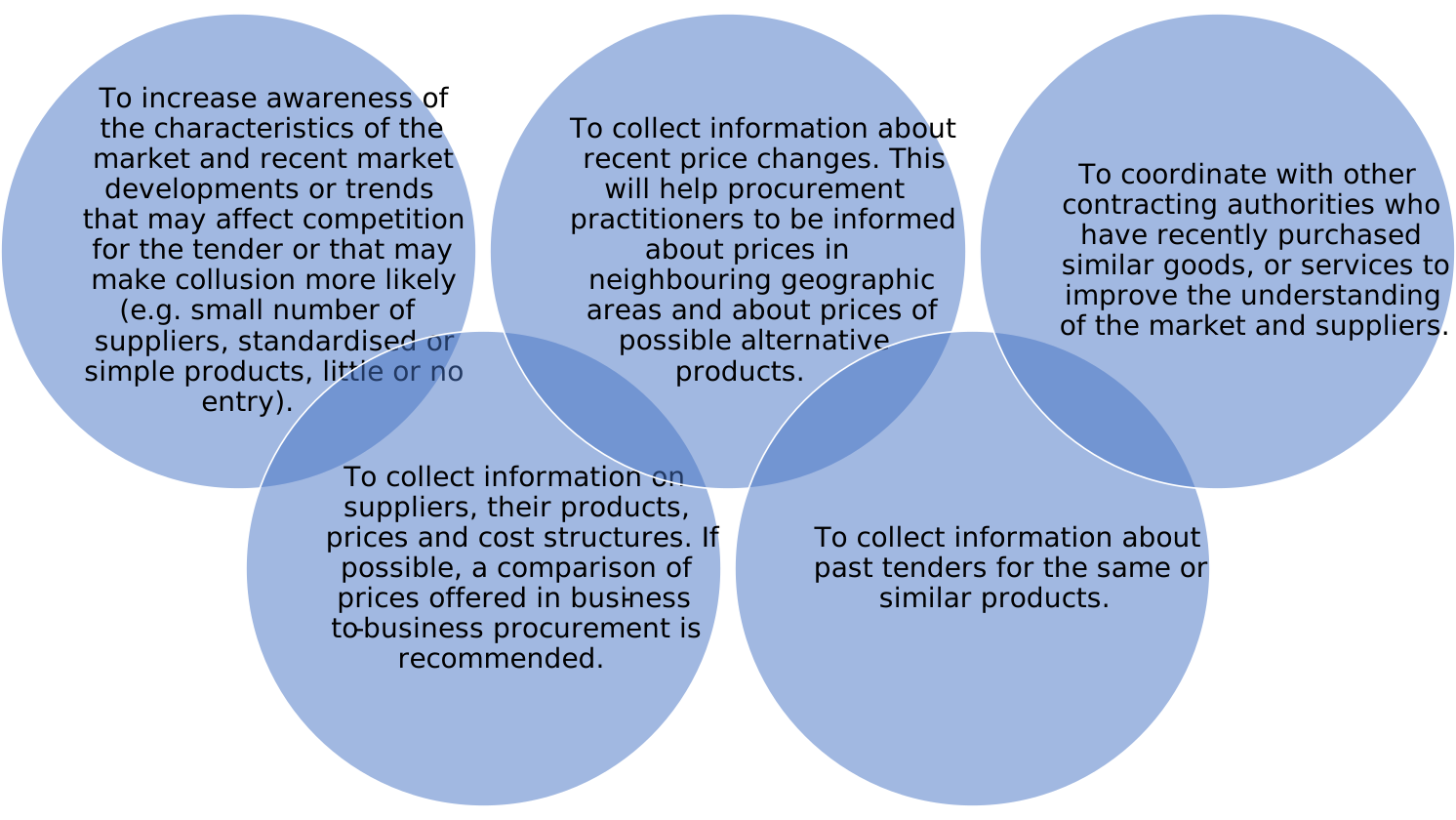
Before engaging with the market in a consultation process, the contracting authorities are advised to carry out market research/market study to gather information on the market structure, suppliers’ capabilities, market leaders, new entrants, price trends, alternatives as well as information on how other buyers operate in this market – both public and private sector buyers. The information can be used by procurement practitioners as input to define procurement requirements, select the appropriate tender method, analyse and evaluate submitted proposals from bidders. A market study may also be used to solicit ideas and opinions on the feasibility of requirements and the capability and capacity of the market to deliver. (OECD, forthcoming[5]) The results should lead to the identification of opportunities and risks which will inform strategic options to consider. Figure 4.1 summarises the advantages of carrying out a market study in the pre-tender phase.
Source: (OECD, forthcoming[5])
However, similarly, to running market consultations, carrying out market study requires that contracting authorities have the adequate capacity to do so. Further guidance could support entities in choosing the appropriate method for analysing the market. In this context, MPA should consider providing further guidance (including templates) and capacity building activities to contracting authorities on these tasks. For instance, the Scottish Government provides not only guidance but different tools and templates to contracting authorities in its Procurement Journey (a web-based guidance that guides contracting authority throughout the whole public procurement cycle, from planning to contract implementation) on how to carry out market research (Scottish Government, 2021[6]). Another example is the State Government of Queensland, Australia that provides guidance to contracting authorities regarding market analysis (see Box 4.2).
The state government of Queensland, Australia, provides procurement staff with detailed guidelines on conducting market analysis. The objective is to ensure that, once complete, the market analysis provides a strategic understanding of:
how a market works
the direction in which a market is heading
the competitiveness of a market
the capability and capacity of a market
key suppliers and the value that suppliers place on the contracting authority as a customer
how suppliers or markets can be developed to better meet contracting authority requirements
the sustainability performance and capability of the market
how to manage variances in pricing over time or between suppliers
The guidelines provide a step-by-step guide for conducting market analysis. Guidance is provided on how to conduct common market and economic analysis tools, such as PESTEL analysis and Porter’s Five Forces. It also includes recommended practices that have been implemented by contracting authorities, and a range of questions that the analysis should be able to answer.
Source: (OECD, 2019[7])
Understanding the dynamics of a market through market engagement tools could help contracting authorities identify the number of market players within each relevant market.
Chapter 2 also looked at additional indicators and found that more suppliers within each relevant market indicates decreased incidence of single bidding (see Figure 4.2). Using quantiles, the number of suppliers was split into 5 categories. Using the 6-386 suppliers category as a reference, categories starting from at least 387 suppliers exhibit a significant impact, leading to a reduced share of receiving a single bid. More strikingly, in the last quantile, representing markets with over 698 suppliers, a mere 6.3% of tenders are predicted to receive a single bid. The strategic encouragement of new entrants emerges as a key policy avenue to effectively mitigate instances of single bidding. Therefore, encouraging market entry of new potential suppliers should be a strategic policy to reduce instances of single bidding. The Slovenian Competition Protection Authority could also play a role in building contracting authorities’ capacity to undertake market analysis in those markets that were identified in Chapter 2.

Source: e-Narocanje and e-JN systems
Nonetheless, the use of market engagement tools should abide by the principle of proportionality, and it should depend on different elements such as the complexity of the procurement and the estimated value of the contract. (OECD, 2023[4]) It should also take into account the specificities of the different markets. As such, market engagements tools can be also tailored for certain sectors with highly technical products such as medical equipment, or products where price volatility is high such as foodstuff. These tools can be created in collaboration with the private sector, and especially business associations, so both parties can benefit from these dialogues. In some countries, the private sector itself has developed collaborative tools to help contracting authorities better plan and conduct their procurement processes (see Box 4.3).
In Slovenia, the Chamber of Commerce and Industry has taken a similar initiative by developing a web-based Food Catalogue application for public procurement, which allows public institutions to correctly label food products and create lots for procurement, to extract CPV codes, EAN codes, nutritional values, allergens, etc. The catalogue is informative and provides constant market analysis and product data. The public sector can create generic lists of the types of food products to be procured and send out notices for selected lots.
The Netherlands: The Dutch Public Procurement Expertise Center – PIANOo
The Dutch Public Procurement Expertise Center, which serves as an expertise centre for the government, can be found in the PIANOo webpage in two languages – Dutch and English.
It is part of the Netherlands Enterprise Agency, which is a part of the Ministry of Economic Affairs and Climate Policy. PIANOo brings experts in specific areas together, pools knowledge and experience and provides advice.
It also fosters dialogue between government contracting authorities and the private sector. Apart from serving contracting authorities, it also serves economic operators, therefore, both procurement and tendering professionals can benefit from it.
PIANOo organises meetings, produces publications and works with expert groups chaired by university professors specialising in the field. One of the key topics at the moment is market knowledge and the position of procurement within the organisation. Related to the topic of market knowledge, PIANOo prepared a publication "Know the Market - What do we need to know about markets to guarantee good procurement", which deals with relation between the knowledge about the market and formulation of needs as well as effectiveness of procurement. Moreover, it provides the market knowledge checklist, which is divided into three parts for use:
the Market Knowledge Checklist for assessing information at market level;
the Product Knowledge Checklist for products (read also services and works);
the Company Knowledge Checklist for specific suppliers.
Germany: Bitkom’s manuals on vendor-neutral tendering of various IT products
Bitkom, Germany’s digital association was founded in 1999 and currently represents more than 2 700 companies of the digital economy, which produce an annual turnover of €190 million, including €50 million in exports, and employ more than 2 million workers in Germany. Its members also include 1 000 SMEs and over 500 startups. Its members offer software, telecommunications and internet services, produce hardware and consumer electronics, operate in the digital media sector or are in other ways affiliated with the digital economy.
Bitkom has several working groups specialising different aspect of the digital economy. The Public Contracts Working Group is focusing on issues related the public procurement of digital solutions. As the public sector is the largest buyer of digital in Germany, it has enormous market power and therefore considerable influence on competition. The Working Group, in collaboration with relevant ministries and other stakeholders, developed several manuals and other materials that support public buyers’ in designing their tender requirements and contracts in a way that creates a fair and transparent competitive environment. For example, the Working Group worked closely with the Federal Ministry of Interior (BMI) on the development of contract terms for the purchase of IT services or with the Competence Center for Sustainable Procurement (KNB) of the BMI Procurement Office on the declaration on social sustainability for IT procurement.
Bitkom, through the Working Group, also developed several guidelines on vendor- and product-neutral tendering of different IT products and services, again in collaboration with representatives of the public sector (e.g. the BMI Procurement Office, the Federal Office of Bundeswehr Equipment, Information Technology and In-Service Support (BAAINBw), the Federal Employment Agency, Berlin Police, ITDZ Berlin). The guidelines for product-neutral procurement are sorted by product groups (such as notebooks, PC desktops, laptops, server, monitors, archive, home office) and are updated regularly to comply with regulatory developments and technological standards. They address the aspect of product-neutral tendering as well as legal requirements for the product to be procured and information on environmentally friendly procurement. Bitkom’s manuals on vendor-neutral tendering of different product categories encourage contracting authorities to formulate their tenders in a non-proprietary manner that avoids the use of brands or the reference to specific manufacturers, while leveraging current technical standards. This is consistent with legal requirements in Germany, which mandate equal treatment of suppliers and market products by using descriptions of the procurement objects based on factual and non-discriminatory criteria. Indeed, Bitkom considers vendor-neutral tendering as an opportunity to ensure fair and open competition, prevent early technical determination, and avoid lock-in effects. As the number of competing suppliers increases when the tender is based on factual and technical criteria, better options and savings are realised, minimising obstacles to change providers as deemed adequate.
In the case of public tenders, contracting authorities are advised to draft a list of criteria that allows comparison of different offers and sufficient differentiation. Such award criteria should be needs-based, vendor-neutral, and transparent. However, Bitkom also recognises that technical complexities may lead to difficulties in describing the desired performance of computing equipment. In consequence, it recommends the use of technical standards and benchmarks.
Source: (PIANOo, 2011[8]), (Bitkom, 2022[9]),
Considering seasonality in procurement
Recent studies have shown close association between the end of year spikes in spending and certain procedures receiving only a single bid. (McCue, Prier and Lofaro, 2021[10]). Building on this insight, an analysis of procurement patterns in Slovenia reveals an additional trend of increased single bidding during the summer months, particularly in June and July (see Figure 4.3). The data illustrates a substantial increase in the predicted share of tenders receiving only one bid in November and December, reaching 33.7% and 31%, respectively, compared to 25.1% in January. Similar spikes are noted in June (30.3%) and July (33.1%).
Inefficient planning of budget expenditures throughout the fiscal year may contribute to a surplus of funds remaining in the last few months of the year. Therefore, when the need arises to relocate these funds, contracting authorities can experience rushed procedures and shortened advertisement periods that lead to increased share of single bidding. Lack of competition can also arise because of the holiday season for potential suppliers or contracting authorities. The seasonality factors therefore call for a better planning of procurement processes throughout the year on the side of contracting authorities. International evidence points out that seasonality of spending not only leads to higher single bidding rates, but also considerably higher prices, especially close to the end of the financial year or holiday periods when economic operators are less responsive.

Sources: e-Narocanje and e-JN systems
Choosing the adequate procurement procedure
Slovenia’s public procurement system transposes EU directives, and therefore traditional EU procurement processes can be used under the PPA. As such, the hierarchy of procurement procedures represents a trade-off between the amount of competition versus a more targeted approach. The more open the process, the more the process enables new entrants such as start-ups and SMEs to engage, thus encouraging wide participation. Open procedures can include processes such as competitive dialogue and phases. However, they also require significant investment of time and resources on the part of procurement officials. As procurement becomes more targeted, more specific strategic exceptions can be made. This may also mean that specific partners for the procurement process can be selected that match the needs the procurement processes are trying to meet. (OECD, 2020[11])
The predictive analysis of the different types of procurement procedure shows diverging results (see Figure 4.4). Both the competitive dialogue and competitive procedure with negotiations types show the highest predicted share of single bidding, standing at 46.2% and 46%, respectively. These results suggest that procedures, which involve a more direct interaction between the buyer and potential suppliers, may lead to a higher share of single bidding. Similarly, the Small Value Order procedure, which is often favoured for tenders below the threshold, also shows a substantial predicted share of single bidding, reaching almost 40%. It underlines the need for attention even in smaller-scale procurements.
On the other hand, the open procedure type, which is more frequently employed for tenders above the threshold, exhibits a lower predicted share of single bidding, with approximately one in three tenders receiving a single bid. The results suggest that the openness and accessibility inherent in the open procedure can contribute to a more competitive environment that encourages diverse participation. It is also important to note that while the restricted procedure type demonstrates a remarkably low predicted share of single bidding at 12.7%, the limited number of observations (172) for this procedure type in the dataset should be taken into consideration, i.e., the relatively small sample size may affect the robustness of predictions for this specific procedure type, warranting a cautious interpretation. It is therefore recommended that open procedures be encouraged in Slovenia to maximize competition.

Source: e-Narocanje and e-JN systems
No call for tender
The analysis highlights that there is a significant and substantial association between the presence of a call for tender publication and the share of single bidding in the procurement process. In instances when the procurement lacks a call for tender publication, the model predicts a substantial 55.7% of tenders receiving a single bid. (see Figure 4.5)
Conversely, when a call for tender is published, the predicted share of receiving a single bid significantly decreases to 27.7%. The findings emphasise the importance of ensuring that bidders have access to comprehensive information on procurement opportunities. The act of publication not only promotes competition but also facilitates a more level playing field, encouraging diverse participation. This stark contrast highlights the crucial role of transparency and accessibility of information in promoting competition. Furthermore, the results indicate that a combined effort to promote transparency, robust information dissemination, and commitment to best practices in tender publication can serve as effective measures to lower the share of single bidding.

Source: e-Narocanje and e-JN systems
Developing better procurement processes and tender documents enabling optimal competition
Tender documents are central in the tendering process as they detail both what is being procured but also based on what economic operators will be selected, and what the contractual relationship will look like once the procurement is awarded. They usually contain three key elements that can influence whether or not economic operators will participate to the procurement process, including 1) technical specifications; 2) qualification and evaluation criteria; and 3) contract conditions.
As such, the first key element concerns technical specifications. In Slovenia, an issue highlighted by stakeholders concerns the drafting of technical specifications that are favouring a specific bidder. Indeed, audits performed by the Court of Audit reveals that entities sometimes tweak technical specifications to favor a specific bidder, and that contracting authorities select more expensive bidders, bidders with no professional standing, or select bids that do not satisfy technical specifications. (OECD, 2023[12]) These findings were already raised by a 2020 OECD study, where 80% of respondents to a survey believed that technical specifications are generally tailor-made, and 73% believe that some bidders are involved in the drafting of technical specifications. (OECD, 2020[11]) It is therefore recommended that Slovenia takes stock of the capacities of the technical experts or personnel involved in the drafting of technical specifications to ensure these specifications abide by the procurement principles of equal treatment and integrity.
The second key element, evaluation criteria, are crucial for a sound competition in procurement processes. A persistent finding is that price as a sole evaluation criterion is prevalent in Slovenia (see Figure 4.6). Most economic operators that responded to a 2023 survey also highlighted that the price criterion is a deterrent to their participation to procurement processes and that contracting authorities should take into account additional non-price criteria when evaluating bids. Similar findings were found in the abovementioned OECD report, which highlighted the perception among Slovenian businesses that the government is concerned more with pricing and less with value. Overall, the OECD observed that procurement seems to be treated less as a strategic asset to achieve better results, and more as a means to an end where speed, the absence of risk and low prices are the primary concerns. (OECD, 2020[11]) Some OECD countries have tried to tackle this issue by providing extensive trainings to contracting authorities regarding the most economically advantageous tender and the use of best price-quality ratio. Other countries, such as Croatia, have rendered the use of non-price criteria mandatory at a minimum weight of 10%. As the Slovenian procurement system is based heavily on the respect of law, an amendment to the PPA which makes the use of MEAT criteria as the default method, and the use of price-only criterion as an exception could help tackle this issue. Providing extensive training on developing evaluation criteria and raising awareness on the usefulness of non-price criteria in achieving strategic objectives could also help in this direction.

Source: e-Narocanje and e-JN systems
Another issue highlighted by stakeholders is the lack of balance of contract conditions. In a survey targeted economic operators in Slovenia, some of them have indicated that contracting authorities should consider better conditions for suppliers as parties to the contract, including the possibility to withdraw from the contract without cost or sanction in case of breaches by contracting authorities of contract conditions, or drastic changes to the contract. Indeed, economic operators may decline to submit a bid due to these unbalanced contract conditions, hence impacting competition overall. (OECD, 2024[13])
As such, the contract is usually part of tender documents and is considered the cornerstone of the process as it defines the relationship between the contracting authority and a supplier and reflects the requirements of the tender documents. A well-drafted contract is therefore critical to a successful engagement and delivery, especially since taxpayers’ money is at stake. The contract should cover various elements including prices and payments, personnel, governance, a detailed description of what will be delivered, and terms of delivery themselves. The risks must be fairly allocated and clearly described in the contract, along with safeguards for each party such as non-performance clauses, delays, force majeure etc.
As for the engagement with the market, contracting authorities may need support from policy-making authorities to build their capacity for developing sound public contract conditions, for different types of subject-matters or different values. One way of doing so is developing model contracts to be used by all authorities, at least for standard purchases, with clear risk management tools for usual contract risks, dispute resolution mechanisms and designated persons on either side (public and private) to manage the contracts and related disputes. New Zealand, for example, has developed model contracts (see Box 4.4). (OECD, 2016[14])
The New Zealand Ministry of Business, Innovation and Employment (MBIE) has developed a set of standard conditions of contract for routine government purchases. These conditions are called government model contracts (GMCs).
The 2nd Edition GMCs were launched by MBIE in October 2011 and the 3rd edition was launched in February 2020, replacing the 1st Edition GMCs that were launched in July 2010. The development and implementation of GMCs is part of the Government Procurement Reform Programme and has been mandated by a Cabinet Directive requiring MBIE to create a standard, simple, plain English set of conditions of contract for common goods and services to be used by all Public Service Departments and State Services.
The GMCs are aimed at low-value, low-risk common goods and services. They have been designed as the default government contract. It is up to each agency using the GMCs to determine what constitutes low-value, low-risk common goods and services. This definition is subjective and will depend on the size of the agency and the scale and complexity of its procurement function.
Through the use of GMCs across the Public Service and State Services, Government aims to:
provide simple, plain English contracts that are easy to use for both agencies and suppliers
provide a fairer balance of risk between buyer and supplier
standardise the treatment of legal risk in low-value, low-risk contracts
reduce the need for negotiations and legal advice in routine purchases
promote consistent practice across government
promote process efficiencies in high-volume, low-value transactional contracting
simplify doing business with government
support improved procurement practice and align with international best practice.
To advance with the simplification of procurement documents for contracting authorities, the Government launched automated templates in May 2024. Contracting authorities can now use a web-based editor, with several pre-filled templates already where they only have to populate information tailored to the procurement process. Contracting authorities can then export a Word version of the contract at the end. These automatic templates (which include procurement plans, advance notice, request for information, registration of interest, request for proposal, request for quotes, government model contract, and outcome agreement) are expected to facilitate the work of contracting authority as it makes the process of creating procurement documents quicker and easier, reduces the risk of error, and creates better consistency in procurement documents overall. In turn, this may ease the task for suppliers to do business with government. “Classic” GMCs template can still be used as well.
When it comes to the size of the contract, smaller contracts are associated with lower incidence of single bidding (see Figure 4.7). The analysis predicts that the top quintile is predicted to have around 26.4% of contracts with only one bid, while the first quintile is expected to have 28%. Quintiles 3 and 4 are anticipated to have the highest single bidding rates at 29.5% and 29.8%, respectively. It’s worth noting that these quintiles align with the small value order procedure type utilised for below threshold publication, which also has a higher predicted rate of single bidding.

Source: e-Narocanje and e-JN systems
Time allowed to potential bidders for preparing their bids, i.e., advertisement period length has noticeable impact on the incidence of single bidding as well (see Figure 4.7). A reasonable amount of time, starting from at least 17 days, substantially and significantly lowers the incidence of single bidding. Almost half of the contracts whose advertisement length period was less than 17 days are predicted to be single bids. In contrast, the next group, whose advertisement length period is between 17 and 27 days experiences a reduction of over 15% in the share of single bidding, with the model predicting 34.7% of awarded contracts as single bids. Similar trends persist for groups that allow for even longer advertisement periods. Providing more than 38 days for potential bidders further diminishes the predicted share of single bidding to a mere 12.5%. A similar pattern can be observed when looking at contracts procured through the small value order procedure, where the general linear trend remains the same (see Figure 4.8). It is essential to underline that each category in this analysis comprises roughly equal numbers of observations, underscoring the importance of affording sufficient time for bid preparation and submission. This highlights the significance of careful planning and consideration of advertisement periods to foster more competition.

Source: e-Narocanje and e-JN systems
The decision-making speed, i.e., the time taken by contracting authority to reach a decision regarding the award of the contract, is also crucial, as lengthy procedures are considered a risk since they are time and cost consuming and can cause uncertainty for both the public buyers and companies. (European Commission, 2021[4]) As such, the analysis of the procurement data shows a positive association between the average organisational decision-making speed and the likelihood of single bidding in Slovenia (see Figure 4.9). The variable has been analysed by calculating the average for each contracting authority within the year and standardising it based on the number of bids it received. The findings underline that entities demonstrating speedier processes in evaluating submitted bids and awarding contracts are associated with a lower share of single bidding.
Comparing entities with efficient decision-making processes (less than 2 weeks for bid evaluation and contract award) to those taking longer (at least 37 days, spanning the last two quantiles), the analysis predicts a stark contrast. The model predicts that a mere 1.7% of tenders received a single bid when the entities are more efficient. Similarly, those taking two to three weeks for evaluation show a lower likelihood of attracting only one bid, standing at 8.7%. However, a notable surge is already observed in the share of single bidding when the evaluation period extends beyond three weeks, reaching 27.2%. For contracting authorities whose decision-making duration surpasses 63 days (last quantile) there is a notably higher predicted share of single bidding, standing at 87.9%.
Entities that streamline their processes and expedite decision-making contribute to fostering a more competitive bidding environment, potentially attracting a higher number of bidders and enhancing overall procurement efficiency.

Source: e-Narocanje and e-JN systems
Leveraging centralized and joint purchasing and framework agreements
Centralised purchasing and collaborative procurement tools such as framework agreements or dynamic purchasing systems, DPS can be effective tools to drive value for money and competition. The principle of efficiency from the Recommendation of the OECD Council on Public Procurement recommends its Adherents to “[d]evelop and use tools to improve procurement procedures, reduce duplication and achieve greater value for money, including centralised purchasing, framework agreements, e-catalogues, dynamic purchasing, e-auctions, joint procurements and contracts with options. Application of such tools across sub-national levels of government, where appropriate and feasible, could further drive efficiency.” (OECD, 2015[16]) At the same time, the Recommendation of the OECD Council on Fighting Bid Rigging in Public Procurement recommends that adherents should, among others, encourage their relevant authorities to assess whether framework agreements, centralised purchasing, joint bids and subcontracts might pose collusion risks. (OECD, 2023[17])
Centralized purchasing bodies (CPBs), when designing adequate tenders, can therefore offer significant procurement opportunities to economic operators and bring many benefits such as economies of scale or reduction in transaction costs. To do so, most CPBs conclude framework agreements or DPS, and procure the goods or services on behalf of contracting authorities through call-off contracts or mini-competition following the initial competition, with a limited pool of suppliers. On the contrary, centralized purchasing, if used in an inefficient manner, is not devoid of risks and can have a negative impact on competition.
Analysis of the procurement data from 2017-2022 shows that Framework agreements are associated with lower incidence of single bidding (see Figure 4.10). Predictions from the model indicate that less than 25% of contracts are expected to receive only one bid when they are structured as framework agreements. In contrast, when no framework agreement is in place, the model predicts that over 30% of contracts will attract single bids. Notably, framework agreements constitute only 34% of the contracts in the dataset.
The results suggest the notable influence that the presence or absence of framework agreements can have on the competitive dynamics of procurement processes. Consequently, the use of framework agreements may serve as an effective strategy to promote increased competition and reduce the incidence of single bidding.

Source: e-Narocanje and e-JN systems
In Slovenia, centralised purchasing has been driven as a way to use economies of scale to drive down costs, but also to increase transparency and efficiency and alleviate bureaucratic burdens. The Public Procurement Directorate within the MPA plays the role of a centralized purchasing body as per the Decree on joint public procurement of the Government of the Republic of Slovenia (OG 27/16), and cover a variety of purchase categories such as computer hardware and software, IT services, telephone services, postal services, energy products etc. The use of centralized purchasing is compulsory for some central contracting authorities, listed by government decision. Other contracting authorities also have the option to use centralized purchasing if they want to. To perform centralized purchasing, the MPA collects the needs of authorities in Slovenia, and develop a proposal for the government for different purchase categories by end of January each year. (OECD, 2023[12])
Nonetheless, the structural characteristics of the procurement market in Slovenia is such that there is still a large number of contracting authorities implementing similar public procurement procedures individually. Centralized and joint procurement is therefore not sufficiently leveraged, with smaller contracting authorities expressing scepticism on the efficiency of centralised procurement, due in part because the centralised procurements do not always meet their context-specific needs. (PWC, 2022[18]) Slovenia would therefore benefit from leveraging centralized and joint procurement through the monitoring of competition in centralized procurement, promoting the use of DPSs, encouraging price-monitoring practices, and taking advantage of experience-sharing networks for CPBs.
First, measuring competition within CPBs procurement processes is crucial, as the duration and length of framework agreements may pose a risk, especially regarding SMEs participation. Indeed, the duration of framework agreements, in the case of centralisation can have a significant impact on competition for a fixed period, as the goods and services can only be procured from a limited pool of suppliers. Framework agreement may also not have enough suppliers for a call-off/mini-competition, or on the contrary, too many suppliers to effectively choose between. This is particularly the case for SMEs, since it is challenging for them to access framework agreements (especially large ones) due to their lack of capacity to offer small prices like larger companies or to satisfy selection criteria, and the fact that they may not be able to offer goods or services for a sustained period of time. As such, framework agreements typically significantly narrow the procurement market for a certain number of years and may cause distortive, competition-restricting effects on the market. (OECD, 2011[19])
As part of the performance measurement framework described in Chapter 2, Slovenia should also conduct an in-depth analysis of the performance of centralised purchasing and measure the impact of such practices on the levels of competition for framework agreements, DPSs, but also under call-off contracts or mini-competition. This analysis should include participation from SMEs, market concentration, length of framework agreements etc.
As an alternative to framework agreements, the use of DPS should also be encouraged in Slovenia. Indeed, the use of DPSs can bring many benefits such as the standardisation of processes, with automatic checks of the technical and financial offers and the simplification of administrative documents. They are proven to be effective in enlarging markets and increasing competition. Several instances of newly launched DPSs have shown to have been able to attract a significant and initially overwhelming level of interest in participation, including from new suppliers who had not previously bid for public sector contracts. They provide flexibility for suppliers to join or not compete the DPS at any time, and suppliers are not locked out of the market as they would in a framework agreement. DPSs are also associated with a reduced risk and costs of tendering traditionally associated with framework agreements. DPSs are also particularly SME-friendly, for instance, in Scotland, 75% of enterprises participating in the Scottish DPS arrangements are SMEs. (OECD, 2022[20])
For DPS to be accepted and become standard practice however, DPS owners reported that a significant amount of market and stakeholder engagement should be undertaken prior to the creation of the DPS to make buyers and potential suppliers are aware of the benefits, practicalities and challenges of operating and participating in a DPS. Slovenia already developed click-instructions on how to use DPS for contracting authorities, as well as instructions for economic operators on how to prepare a bid in a DPS. However other tools may be developed to provide further guidance. As such, several countries have already taken the initiative to create tools to encourage the use of DPSs (see Box 4.5).
An important aspect of launching a DPS is ensuring support to both contracting authorities and suppliers that will be using it. As such, several organisations have invested in guidance, templates and similar support tools:
For instance, BBG, the CPB in Austria supports contracting authorities as well as economic operators with training material, handbooks, click-instructions as well as with direct personal contact / consulting.
In Scotland, each of the DPS has a buyer guide which contains practical advice and guidance on the operation of the DPS. Template Terms and Conditions of Contract are also made available to buying organisations.
Similarly, SKI, the CPB in Denmark, has developed a digital platform to support the use of DPS. In addition, it provides guidance to suppliers on how to apply for the DPS.
In Italy, CONSIP also provides ready-made documentation for contracting authorities, such as model documents and templates for technical specifications for a specific contract.
Source: (OECD, 2022[20])
The use of framework agreements for an extended period of time may also have an impact on the competitiveness of prices. For instance, economic operators may set higher prices when being awarded the framework agreements, with said prices becoming unrealistic compared to the prices on the market over time. (National Audit Office of the UK, 2023[1]) In addition, in a centralized purchasing body, the cost per product will likely decrease over the short term due to the size of the procurement through a single provider. However, this situation could drive the other providers out of business, resulting in higher prices the next time the product is needed, due to lack of competition.
Given the small market structure in Slovenia, it would be therefore beneficial for the MPA to develop systematic price monitoring tools in order to evaluate whether the prices under the framework agreements are competitive compared to those in the market, and to allow more flexibility to contracting authorities to perform their procurements separately if standalone procurement would be proven more competitive. Early systematic engagement with the market (such as market consultations, prior information notices etc.) can also be undertaken to evaluate whether framework agreements are indeed the appropriate tool, that competition is maximized, and that integrity is ensured during the bidding process. For example, to prevent risks of collusion during market analysis, ChileCompra, the Chilean central purchasing body, before launching the process for a framework agreement for goods and services, conducts a supplier consultation process online (see Box 4.6).
Prior to issuing a tender, ChileCompra carries out an open consultation process with suppliers, which it announces online at www.mercadopublico.cl. The consultation aims to obtain information about prices, the characteristics of the required goods or services, the time that bidders need to prepare, and any other information that might contribute to a successful tendering process.
ChileCompra has, in addition, an on-line forum with questions and answers for each tender in advance of deadlines for submitting bids. The forum is particularly practical for providers who are geographically distant from the capital city, where ChileCompra’s offices are located, and need remote access to questions and answers. The forum ensures transparency and supports equitable treatment and fair competition.
Source: (OECD, 2016[21])
Raising awareness of the impact of the purchasing power of CPBs is also key to enhance competition. For instance, the MPA could exchange good practices with CPBs from other countries by actively participating to the Central Purchasing Bodies (CPB) Network. The CPB Network, established in 2012, comprises 21 CPBs from 20 countries across the EU member states and other countries in EEA. The objective of the network is to provide a platform to CPBs to discuss common issues encountered in public procurement and centralized purchasing and share experiences. In addition, the Network organizes meetings for its members twice a year, to discuss a wide array of topics, including competition, strategic procurement, management of framework agreements, energy procurement etc. These meetings facilitate information sharing and capacity building of the different member organizations. The Network has also created smaller working groups to facilitate collaboration among its members, and in the process of creating indicators on common activities to develop comparative studies. While the MPA – through the Public Procurement Directorate – is already a member of the Network, it would be beneficial to fully leverage the membership to the Network by participating actively in bi-yearly sessions.
Optimising contract management to sustain competition
Once the procurement process is completed and the contract is awarded, the contract management phase begins, where all formal and informal activities relating to the performance and monitoring of a contract are performed. As such, contracting authorities should strive to maintain a healthy business relationship with their suppliers in order to ensure participation in future procurement opportunities. Good oversight and governance arrangements, as well as clear responsibilities for contract implementation are key to ensure both parties benefit from the contract. In addition, a constant underlying factor across good practice is building consistent knowledge and understanding of the contract, requirements, supplier and costs and retaining this knowledge throughout the procurement cycle (that includes the contract management phase, too). (Cabinet Office of the United Kingdom, 2020[22])
A survey targeted at economic operators reveals that contract performance is sometimes challenging with some contracting authorities in Slovenia. One economic operator mentioned that the attractiveness of public procurement in Slovenia would be improved if contracts offered more flexibility and more favourable conditions for economic operator, citing the example of public buyers not sticking to the initial quantities foreseen in the contract, while committing the tenderer with daily penalties for delays, short deadlines for acceptance etc. Therefore, building capacities of contracting authorities in contract management could help secure the confidence of economic operators to submit bids.
In addition, one particular aspect of contract management that is crucial for suppliers is the timeliness of payments. For instance, one indicator under the Methodology for Assessing Procurement Systems (MAPS) is whether invoices are examined, time limits for payments comply with good international practices, and payments are processed as stipulated in the contract. Delays in payments may impact the perception of economic operators regarding the practices of contracting authorities, and in turn, economic operators may be hesitant to participate in future procurement processes of the same (or even other) contracting authority, hence lowering competition. Timely payments may therefore ensure that economic operators have the incentive to remain in the public procurement market. However, timeliness of payments is sometimes out of the control of the contracting authorities due to administrative burdens, internal controls, and approval chains. To mitigate this risk, Korea, for example, has developed an e-payment module on its e-procurement system. Launched in 2001, the module offers several functionalities as follows: (OECD, 2016[23])
Contract information review
Request for upfront payment
Request for inspection (for delivery of goods, completion of public works) and response
Checking inspection result
Submission of payment request
Receipt of payment request and payment approval
Slovenia has already set deadlines for the payment of suppliers. Article 32 of the Act on Execution of the Budgets of the Republic of Slovenia for 2024 and 2025 states that, for direct and indirect users of the State and municipal budgets, the payment deadline for payment of all commitments shall be no more than 30 days. Additional policy measures and tools can also be put in place, especially for SMEs, to ensure that payment is made in a timely fashion (see Box 4.7).
Korea: Allowing upfront payments for SMEs
The Public Procurement Service (PPS) is the central procurement agency of Korea. PPS has extensive mandates, ranging from procurement of goods and services, operation of the e-procurement system, operation of stockpiling business, and capacity building of the procurement workforce. Among its functions, PPS also provides special financial support to SMEs involved in public contracting. SMEs are entitled to an upfront payment of up to 70% of the value of a government contract. For some contracts for goods, including orders against unit-price contracts, lump sum contracts for goods valued up to USD 423 800, or at the request of the end user for other goods contracts, the business is entitled to instant payment upon presentation of the invoice. In these cases, payment is made from the PPS special account and then reimbursed by the end user. Though central government entities are entitled to a payment period of up to five days, instant payment allows SMEs to receive payment within as little as four working hours.
United Kingdom: Prompt Payment Policy
The government of the United Kingdom enacted the prompt payment policy in 2015 to ensure timely payment to government suppliers. Through this policy, the government aims to pay 90% of undisputed and valid invoices from small and medium-sized enterprises (SMEs) within 5 days. In addition, 100% of all undisputed and valid invoices should be paid within 30 days. This policy is required to be incorporated in all public sector contracts, and that the payment term is passed down their supply chain.
Another requirement from this policy is for government departments to report their payment performance annually on GOV.UK in line with these two targets.
Reinforcing contracting authorities’ capacities to better understand the market and risks to competition
Studies show that improving the capacities of public buyers has shown to be a critical marker in terms of lowering single-bid procedures. The administrative capacity in particular is important, as lack of experience and weaknesses in administrative capacity usually result in mistakes and inefficiencies in procurement processes. Administrative capacity can be measured through several factors, including use of best price-quality ratio as an awarding criterion, buyer’s average decision period length per bid, buyer’s average relative price, and buyer type. For example, increasing the average decision-making speed for contract award can send a positive signal to the market increasing bidder participation and lowering single bidding, as highlighted above.
The procurement workforce is the cornerstone of efficient and transparent procurement processes. The OECD Recommendation on Public Procurement states that adherents should ensure that procurement officials meet high professional standards for knowledge, practical implementation and integrity by providing a dedicated and regularly updated set of tools, for example, sufficient staff in terms of numbers and skills, recognition of public procurement as a specific profession, certification and regular trainings, integrity standards for public procurement officials and the existence of a unit or team analysing public procurement information and monitoring the performance of the public procurement system. (OECD, 2015[25]) Public procurement is increasingly recognised as a strategic function, a function that is becoming more and more complex and requires increased skills from procurement officials. As such, in addition to reinforcing the administrative capacity of public buyers, reinforcing their knowledge of topics such as market analysis, drafting sound evaluation criteria, project management, speeding up the evaluation process through training, showcasing good practices and experience sharing through collaborative approaches is key. (OECD, 2023[26])
As such, supporting a learning culture in the civil service will ensure that skills are reinforced and regularly updated. It allows public officers to keep up with the fast-changing nature of work. This implies making investments in learning opportunities for civil servants including the public procurement workforce. Slovenia has put in place a robust system to increase the capacities of the procurement workforce, and could implement additional initiatives such as the provision of practical trainings and methodological assistance. (OECD, 2023[26])
Leveraging training programmes for procurement officers
Reinforcing the capability of the public procurement workforce requires an adequate training system. Several OECD countries, including Slovenia, have introduced mandatory training for procurement officers. These trainings should not only focus on compliance with the public procurement law. As such, many countries including France, Germany, and Portugal are providing training opportunities for more advanced topics. These countries recognise that traditionally public procurement training has focused on legal and procedural aspects rather than emerging and advanced topics such as the Most Economically Advantageous Tender (MEAT) criteria and strategic (sustainable) procurement (including the knowledge on the SDG agenda), in particular public procurement for innovation. (OECD, 2023[26])
Slovenia introduced the Public Procurement Academy in 2022, with the support of the European Commission. The goal was to align efforts regarding the professionalisation of public procurement in Slovenia with the ProcurCompEU competences framework. In line with the latter, the MPA developed a Competence Assessment Guide for Public Procurement (the Competence Model Handbook), which focuses on the development of competences in individuals who carry out, participate in or make decisions in public procurement procedures with contracting authorities. The Academy directly fulfils milestone n. 179 of Slovenia’s Recovery and Resilience Plan. (Ministry of Public Administration of Slovenia, 2024[27])
The creation of the academy was based on this Competence Model Handbook, as the training programmes target different job profiles (see Figure 4.11).
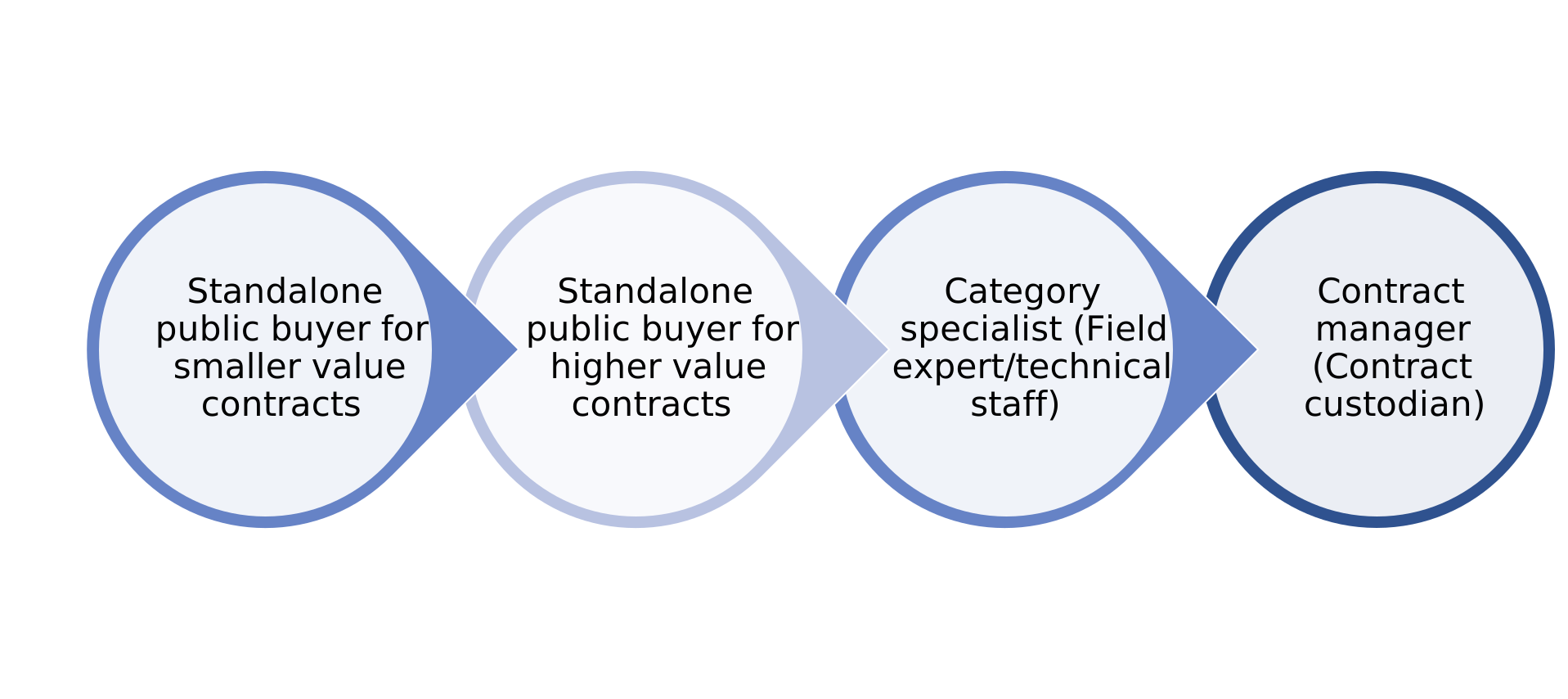
The difference between the first two categories of public buyers is explained by the different training needs of smaller contracting authorities which do not procure complex items and larger contracting authorities, which perform complex procurement processes and need a wider scale of knowledge and skillset. The programmes of trainings are conducted by specialists from different fields of knowledge, in the form of lectures, workshops and other relevant forms of training, including the use of interactive solutions or e-learning tools where appropriate. Category specialists represent field experts or technical staff and have a range of advanced knowledge of a particular category of supplies, services or works which usually result from specialisation and experience, working not in the field of public procurement, but in a technical field, connected with the subject-matter of the contract. A contract manager is the custodian of the contract and is the person who acts after the signature of the contract to ensure that it will be delivered as intended and that each step (including any wrong step) of delivery will be properly documented and addressed. Therefore, the Procurement Academy took a holistic view of the procurement function. (Ministry of Public Administration of Slovenia, 2024[27])
The Public Procurement Academy is available to all stakeholders, involved in public procurement procedures. The programme includes knowledge on public procurement procedures in all phases: preparation of the procurement documentation together with market research, execution of the procurement procedures and taking care of the contract after its signature. The training includes knowledge on different aspects of procurement, including green/sustainable public procurement, innovation and social procurement, achieving high level of competition, etc. in line with international good practices. The MPA, however, decided to follow a gradual approach, meaning that the training provided through the Public Procurement Academy is currently on a voluntary basis. It is therefore recommended to leverage the Public Procurement Academy to include a mandatory certification scheme, at least for the first two target categories (public buyers), in order to increase the recognition of the profession. (Ministry of Public Administration of Slovenia, 2024[27])
Australia’s national competition authority, the Australian Competition and Consumer Commission (ACCC), has developed an extensive education and advocacy programme for officials, at all levels of government, who are involved in public procurement.
Efforts to promote awareness of competition issues among procurement officials have included:
Development of education material for procurement officials, which was provided to public sector procurement agencies, as well as private companies involved in procurement. The educational material was interactive and allowed procurement officials to access a variety of different levels of information, including information on how to identify cartel activity; the process for reporting suspected cartel or bid-rigging behaviour; the statutory provisions; and what a person should do if a cartel operation is suspected. The material also included a checklist for procurement officials to determine whether or not there is any suspected cartel activity;
Presentations by ACCC staff, at all levels, to procurement officials from Commonwealth, state, and local governments; and
Advocacy efforts directed toward high level government officials, aimed at seeking support for the ACCC’s education and compliance programme at the top levels within central and regional governments, and also in order to request all governments to examine their procurement frameworks and introduce measures requiring officials to take into account competition laws when designing their procurement policies and guidelines.
Source: (OECD, 2011[28])
In addition to the Public Procurement Academy, Slovenia should leverage collaboration with other public institutions, especially representatives of public interest. The Competition Protection Agency could provide data regarding mergers and acquisition, to help contracting authorities with market analysis, and provide training around competition and practices. For example, in Australia, the Competition Authority plays an important role regarding capacity-building and advocacy for procurement officials (see Box 4.8). (OECD, 2011[28])
In addition to trainings on procurement processes themselves, procurement officials should be trained on the negative effects of collusion and corruption, as they are the frontline defenders of the integrity of public procurement processes. In order to avoid corruption, procurement officials should be made aware of the consequences for officials who themselves engage in corrupt practices. Equipping procurement with the skills and tools to identify, avoid and seek redress for collusion and corruption in public procurement is an indispensable element in the fight to protect the process from anticompetitive conduct. Professional training of public officials at all levels of government is important to strengthen procurement agencies’ awareness of competition issues in public procurement. From the perspective of corruption prevention, education also serves as a warning of the likely consequences for officials who might otherwise be tempted to themselves engage in corrupt practices. (OECD, 2011[28])
In Germany for instance, the Federal Procurement Agency has taken several measures to promote integrity among its personnel (see Box 4.9).
The Procurement Agency has taken several measures to promote integrity among its personnel, including support and advice by a corruption prevention officer (“Contact Person for the Prevention of Corruption”), the organisation of workshops and training on corruption and the rotation of its employees.
Since 2001, it is mandatory for new staff members to participate in a corruption prevention workshop. They learn about the risks of getting involved in bribery and the briber’s possible strategies. Another part of the training deals with how to behave when these situations occur; for example, by encouraging them to report it (“blow the whistle”). Workshops highlight the central role of employees whose ethical behaviour is an essential part of corruption prevention. About ten workshops took place with 190 persons who gave positive feedback concerning the content and the usefulness of this training. The involvement of the Agency’s “Contact Person for the Prevention of Corruption” and the Head of the Department for Central Services in the workshops demonstrated to participants that corruption prevention is one of the priorities for the agency. In 2005 the target group of the workshops was enlarged to include not only induction training but also on-going training for the entire personnel. Since then, 6-7 workshops are being held per year at regular intervals, training approximately 70 new and existing employees per year.
Source: (OECD, 2016[14])
Putting in place mechanisms for practical training
Beyond theoretical trainings, public procurement is also a practical task which requires not only technical expertise and knowledge but also practical experience. The knowledge and skills acquired through training courses could be further reinforced with practical training systems such as on-the-job training and job swapping. Studies show that having a supervisor or co-worker with strong public service values was associated with higher levels of public service motivation. Slovenia could therefore leverage different forms of practical training depending on the target and the purpose of the training especially for smaller contracting authorities (see Table 4.2) (OECD, 2023[26])
Note: * Newcomers refer to not only the newcomers that entered the organisation but also anyone who assume new tasks. In addition, these practical training mechanisms should be available to all the staff throughout their careers. ** It can be also called as temporary mobility/secondments
Source: (OECD, 2023[26])
These initiatives on practical training sessions could be taken at organisational and/or inter-organisational level. Some larger or experienced contracting authorities in Slovenia (such as ministries, large city municipalities, public companies), could therefore offer mentoring to procurement officers in smaller contracting authorities such as municipalities, schools etc. For example, New Zealand and Finland have implemented such mentoring programmes (see Box 4.10).
New Zealand
New Zealand Government Procurement officially launched a mentoring programme in 2015 after a pilot period in 2014. This programme aims at raising individual procurement capability across government, and providing a mechanism for procurement practitioners to enhance their work-related skills, procurement knowledge and professional networks.
Both mentors (public & private sectors) and learners (public sector) must be volunteers. The application form for the learner includes current experience, preference on the background of the mentor (specific agency, etc.), and goals of skill development. The mentor is required to describe his/her current experience, preference on the background of the learner, and strong competency area in which to assist the learner. New Zealand Government Procurement reviews applications to match learners with the best mentor who possesses the knowledge and skills matching the learner’s needs. The mentor needs to attend a mentoring workshop before being assigned a learner. The mentor and the learner sign the mentoring agreement which specifies how often they meet, how they contact each other, and focus topics for the initial meeting. The mentoring relationship lasts 12 months with the possibility of extension. They are contacted at the 3 month and 12 month point to gain feedback on how the relationship is going.
Finland
Finland launched its first Mentoring Programme for Public Procurement Professionals in October 2022 to promote skills and competence in public procurement. This idea was proposed by the thematic working group to develop procurement competence in Finland. It will be implemented for six months (October 2022 – April 2023). Each mentor will have two or three mentees at maximum. To match mentors and mentees, various elements were considered such as their background, professional experiences and objectives. A kick-off meeting was held in Helsinki in November 2022. It is recommended that the (face-to-face or virtual) individual meetings be held every month from December 2022 to April 2023. In addition, the mentoring process includes an interim online meeting of the entire group in January 2023. The final meeting was held in Helsinki in April 2023. This first mentoring programme in Finland organisations attracted participants from both public and private sectors.
Source: (OECD, 2023[26])
Ensuring the practicality of methodological assistance
Methodological assistance constitutes a key pillar to strengthen the capacity-building systems of the public procurement workforce. It is a useful tool to support public procurement officials to undertake their daily tasks effectively, and complements training courses. Many countries have developed tools such as manuals and guidelines, standardised templates, and help desks. Recently, more direct support and advice is also provided to help contracting authorities to carry out actual complex procurement procedures. (OECD, 2023[26])
Slovenia has already developed several tools to assist contracting authorities in their tasks. In 2023 the MPA updated several informational documents (Guidelines on construction services, new forms on when to execute negotiated procedures without prior publication, new sample clauses for procurement documentation and contracts, further instructions on how to use e-JN information system and its modules, especially ESPD form and renewed e-Dossier module for verification) and developed a list of frequents mistakes/dilemmas. Slovenia also developed standard tender documents in order to simplify the implementation of public procurement procedure
Another tool particularly helpful according to international good practices is the creation of help desks, which are contact point centres to assist contracting authorities and/or economic operators in clarifying their inquiries related to their daily tasks of public procurement. It is an efficient tool to provide quick and tailor-made information. The MPA in Slovenia is currently in the process of setting up a help-centre for comprehensive consultation assistance on public procurement to all stakeholders. (Ministry of Public Administration of Slovenia, 2024[27])
In addition, Slovenia started telephone consultations three times a week which proved to be user-friendly, and could leverage this role for direct support and advice on implementing the actual complex procurement procedure. For example, the Region of Puglia in Italy provides direct support to pre-commercial procurement procedure throughout the entire process, under an EC-financed pilot project with the support of the OECD (see Box 4.11).
Over 2015-2019, the Region of Puglia conducted two Pre-Commercial Procurement (PCP) procedures in the field of water management in its capacity as contracting authority. The two PCP cover the “Reduction of sludge in urban wastewater” and the “Detection of water leaks in water distribution networks”. The end user of PCPs is Acquedotto Pugliese S.p.A., i.e. the regional network operator.
While some experience with PCP was already available in the Region, it is not a routine operation. Acquedotto Pugliese, the end-user, was also new to this kind of procedure. As such, the Region requested the technical assistance to the in-house company InnovaPuglia, which has a double mandate as the innovation agency and the regional CPB.
InnovaPuglia provided its support to the PCP procedures throughout the entire process, from the preparation and market consultation stages, to the phases of feasibility study, technical design and prototype development. In particular during the early phases of the PCP, i.e. the market consultation phase, it provided critical input on the analysis of technological readiness of different technology options. It continued advising the Region and Acquedotto Pugliese until the conclusion of the procedure, including through supporting the analysis of the results achieved.
The experience of collaboration among the three institutions active in the PCP, i.e. the Region of Puglia, InnovaPuglia and Acquedotto Pugliese, allowed for institutional learning from the more experienced peers, with the long-term goal to have innovation procurement firmly established in the toolbox of several public entities.
Source: (OECD, 2023[26])
Encouraging capacity-building of economic operators
An increased capacity of contracting authorities should be accompanied by an increased capacity of economic operators. Indeed, the way the private sector acts on different markets and their will to submit a bid will vary depending on their knowledge of the procurement regulatory and institutional frameworks. As such, organizing training for the private sector is generally seen as a good practice. For example, in Hungary, the Government’s action plan to increase competition in public procurement from 2023-2026 already contains a measure for training of SMEs. The training system is foreseen to be free of charge and will include self-paced e-learning and online training, with occasional face-to-face training.
Representants from the private sector itself have highlighted the need for trainings during interviews conducted by the OECD. (OECD, 2023[12]) It is therefore recommended that that Slovenia devises a training program targeted at all economic operators, and that the training exercise is held regularly in order to help new entrants to the market. The trainings should also consider the regional factor, as single bidding is high in all regions in Slovenia, and particularly high in regions further away from Ljubljana. The procurement capacity is usually higher in capital regions since capital regions’ higher procurement spending tends to be accompanied by more mature supplier markets. (Fazekas, 2022[29])
This regional factor was taken into account in Italy, where about 200 Supplier Training Desks (STDs) were set up throughout the country in order to assist SMEs with the use of electronic tools in procurement (see Box 4.12)
Italy has strengthened its co-operation with suppliers by setting up Supplier Training Desks (STDs) (“Sportelli in Rete” in Italian) within the offices of suppliers’ associations. STDs provide training and assistance to local enterprises and in particular micro, small and medium enterprises (MSMEs) on the use of electronic procurement tools. The project consists of a network of dedicated training desks over the country where the central purchasing agency, Consip experts train workforce from the associations that will subsequently train local MSMEs on the use of electronic procurement tools. In Italy, MSMEs (Micro Enterprises) tend to participate to lower value public procurement tenders. Their participation to tenders from 100,000 to 300,000 euros corresponds to 65%, whereas to tenders from 1 to 5 million euros their participation decreases up to 51% and to 30% for tenders with a value higher than 5 million euros.
The project addresses point 5 of the European Small Business Act (SBA): “Adapt public policy tools to SME needs: facilitate SMEs’ participation in public procurement and better use State Aid possibilities for SMEs”, it has also been quoted as a good practice, at a European level, in the “European Code of Best practices facilitating access by SME’s to public procurement contracts” and has been winner of the European eGovernment Awards in the category “empowering business”. This project has been well received and attended by MSMEs. Since the beginning of the project, more than 2,250 MSMEs were supported by the Supplier Training Desks and obtained the qualification to the public e-marketplace implemented by Consip for low value purchases through e-catalogues (MePA).
Around 1000 of these enterprises were qualified in 2013, which corresponds to 44% of the total. 11 National Enterprises Associations are involved in the project. Their role is fundamental since they are recognized, by the enterprises, as the local reference institution. As a result, in 2013, more than 21,000 SMEs represented 98% of online enterprises (online at least once between 1st of January and 31st of December) and 14,000 SMEs represented 98% of active enterprises (active means having been awarded at least once between 1st of January and 31st of December).
Furthermore, in 2013 97% of the number of transactions (337,682) was handled by SMEs and 93% of the value (EUR 907 million) was gained by SMEs.
Today, more than 200 training desks are active and scattered around the country, providing continuous free training and assistance. The MePA has allowed thousands of SMEs to make business during the last five years making it a very suitable procurement tool for SMEs who are the highest percentage of enterprises using it. Consip’s active role in setting up an efficient e-procurement platform and commitment in establishing a very collaborative partnership with the Enterprises Associations has changed the perception of Consip: it is no longer seen as a threat, but as a business opportunity in a transparent and competitive environment.
Source: (OECD, 2014[30])
In addition to an adequate training system for economic operators, methodological assistance constitutes a key pillar to strengthen their capacity. As mentioned above, the MPA has published a number of guidance documents on different aspects of public procurement. Overall, a wide range of information and guidance is available to potential suppliers free of charge. However, interviews with the private sector in Slovenia indicated that further practical guidance is needed regarding specific areas as follows: (OECD, 2023[12])
Legislation as a whole in order to increase the predictability procurement processes, with clear definitions of deadlines for submission of tenders, for clarifications etc.
Changes in the contract as unsuspected changes can affect the increase of cost of the service. Increasing the understanding of economic operators regarding these potential changes is needed.
e-Procurement system, as market players require increased capacity for using it due to its complexity.
As such, the operationalization of the help-desk, in addition to the telephone consultations provided by MPA could further enhance the capacity of economic operators. In Lithuania for example, the Public Procurement Office (PPO) set up a help desk not only to contracting authorities, but also to economic operators. Currently, the help desk receives questions only through email to ensure consistency and accuracy on the quality of answers. Regardless of the high volume of questions received through e-mail (2 000 requests / month on average), PPO maintains the speed of answer: 33% of the requests are answered within 1 hour, 17% in 1-8 hours, 11% (8-24 hours), and the rest 39% in more than 24 hours. (OECD, 2023[4])
Encouraging pro-competitive joint bidding and sub-contracting
Fostering collaboration among economic operators themselves can help increase their capacities to respond to procurement opportunities. Indeed, as certain bidders do not have the financial or technical capacity to bid for procurement processes, giving the opportunity to bidders to find consortium members, or to offer to be a sub-contractor can mitigate this lack of capacity. Such an approach was undertaken for example in Sweden (see Box 4.13).
The Swedish Competition Authority (SCA) is responsible for the enforcement and surveillance of both competition and public procurement rules. In addition to this task, the SCA is also in charge of providing guidance and support to the public in procurement matters.
The combination of enforcement, policy, and support tasks within the fields of competition and public procurement produces valuable synergy effects and gives the SCA a unique position and advantage in the work for intensifying competition in public procurement.
The SCA has developed a web-based interactive guide for cooperation in procurements. The purpose is to offer guidance to companies on when and in what form they can cooperate and submit joint bids in procurements. Through its surveillance activities, the SCA has noticed that companies find it difficult to draw the line between competitive and anticompetitive/illegal cooperation. In this context, the SCA saw an opportunity to couple the enforcement work with more preventive outreaching measures and assist companies in this matter at an earlier stage.
The guide, which can be used by both procurers and companies, is built up around frequently asked questions. The questions range from more specific questions “Can we cooperate in this particular tender” to more general questions “What forms of cooperation are permitted” or “When am I allowed to use a competitor as subcontractor”. The user is also informed of what the consequences of illegal cooperation might be. Throughout the guide “pop-ups” appear where the user can get more detailed information about specific questions or examples based on real cases. Eventually, the user gets an indicative answer on whether the situation in question is likely to be permitted or not. The guide underlines, however, that in case of any uncertainty the user should seek legal advice.
Source: (OECD, 2014[30])
However, joint bidding may also pose a threat to competition if used with malicious intent. Among the practices at odds with a competitive market listed by the OECD Recommendation of the Council on Fighting Bid Rigging in Public Procurement, are cases when “two or more businesses submit a joint bid even though at least one of them could have bid on its own” and states that “joint bids can be a way to split profits among bid riggers”. As such, to detect a pro-competitive joint bidding arrangement among bidders, contracting authorities can use several criteria (see Table 4.3).
The Danish Competition and Consumer Authority (DCCA) also developed guidelines and criteria to detect competitive or anti-competitive joint bidding. Competitive joint bidding is when companies are not direct competitors for the contract and can carry out together the tendered contract for the contracting authority significantly better and/or cheaper than they could individually, provided that the companies do not exchange more information than necessary to fulfil it. On the contrary, anti-competitive joint bidding is when companies can each bid for the contract individually and are therefore direct competitors, when collaboration is not beneficial for the contracting authority, and when there are more parties in the consortium than necessary to carry out the contract. The DCCA can provide informal guidance to companies upon request regarding joint bidding. (OECD, 2021[31]) Similarly, the Slovenian Competition Protection Authority could also devise such criteria for competitive or anticompetitive joint bidding and provide guidance to both contracting authorities and companies in this regard.
In addition to joint bidding, another option to foster competition would be fostering pro-competitive subcontracting. Indeed, for large or complex contracts, some companies, and especially SMEs may not be in a position to even tender jointly with other economic operators because of its small size, specialisation or limited resources. Subcontracting may therefore provide good opportunities for SMEs to perform some of the services or works included in a project. In this way, subcontracting can facilitate the access of SMEs to the public procurement market. (OECD, 2018[32])
However, like in the case of joint-bidding, sub-contracting may also negatively impact competition in public procurement if used incorrectly, and economic operators should compete against each other if they have the capacity to fulfil the contract as a sole contractor. As such, the OECD Recommendation lists subcontracting as one of the practices that might indicate bid rigging, particularly in cases where a “winning bidder repeatedly subcontracts work to unsuccessful bidders” or “does not accept the contract and is later found to be a subcontractor”. (OECD, 2021[31])
Developing measures to increase the access of SMEs to procurement opportunities
Small and medium enterprises represent a significant share of the total number of enterprises in Slovenia (nearly 99%) and the highest share of contract award with 82% of contracts that were awarded to SMEs in 2021. (European Commission, 2021[33]) Increasing SMEs’ access to procurement opportunities should therefore be a cornerstone of the Government’s strategy to curb single-bidding.
Adopting measures to support SMEs is quite important in a procurement ecosystem. For an SME, participation in public procurement represents a consumption of resources that is proportionally higher than for larger businesses. In addition, the report Corruption Prevention to Foster Small and Medium Sized Enterprises Development from UNIDO & UNODC, 2007, states that SMEs are more susceptible to bureaucratic corruption than larger companies. This is due to: their structure (e.g. there is often a greater degree of informality and fewer accountability mechanisms); short-term vision and perspective (as opposed to larger companies, small and medium size enterprises may be less concerned about reputation and other long-term negative impacts of corruption); limited financial or technical resources; and their inability to wield influence over officials and institutions, as they lack bargaining power to oppose requests for illegal payments from public officials. (OECD, 2014[30])
Countries across the world have made use of a variety of measures to encourage SMEs’ participation in public procurement in countries. Measures in favour of SMEs include specific legislative provision or policy (e.g. set-aside) to encourage participation from SMEs in procurement; specific unit dedicated to SMEs is placed at the central government level; training and workshops for SMEs; documentation or guidance focused on SMEs available online; SMEs benefitting from preferential financial treatment, e.g. waiving fees etc. (OECD, 2013[34])
In Hungary, for example, the government created a grant scheme to incentivize SMEs in participating in procurement processes. In Denmark, the Competition and Consumer Authority has published a step-by-step guide including information on rules, procedures and key issues related to how to establish SMEs consortia. In New Zealand, although there is not a specific policy of preference for SMEs, support is given by way of measures to reduce compliance costs for suppliers (e.g., through procedural simplification, development of online guides and templates, and training and workshops for both suppliers and procurement practitioners). In the United Kingdom, there is a programme of work with departments to drive up spending with SMEs where they can provide best value to the taxpayer. In Korea, PPS, Korea’s Central Government Procurement Agency, provides special financial support to SMEs involved in public contracting, and SMEs are entitled to an upfront payment of up to 70% of the value of a government contract. In Canada, the Office of Small and Medium Enterprises works with the government to address SME’s constraints in Procurement (see Box 4.14Box 4.14). (OECD, 2013[34])
The Office of Small and Medium Enterprises (OSME) in Public Works and Government Services Canada assists the government in bridging the gap between supply and demand by bringing to light the concerns and challenges of SMEs in the federal procurement process. OSME works with SMEs to address their key challenges and constraints by:
understanding and reducing the barriers that prevent SMEs from participating in federal procurement
advising government buyers and policy makers on SME concerns
recommending improvements to procurement tools and processes to encourage SME participation in federal procurement. PSPC provides additional information available to SMEs on their webpage under “Help for SMEs”
a portal that provides access to federal procurement information and open data including bid opportunities (tenders), standing offers and supply arrangements, and contract history
free seminars, webinars and one-on-one sessions to assist suppliers in understanding federal procurement
telephone information line for suppliers who have questions about the procurement process and related tools. The Office of Small and Medium Enterprises also manages the Build in Canada Innovation Programme, which assists Canadian businesses in testing their innovative goods and services before they are commercialised.
Source: (OECD, 2018[32])
Removing administrative burdens is also a good way to encourage SME participation. For example, in Spain, the creation of a self-declaration regarding legal, social and fiscal status of the firm for smaller contracts has removed administrative barriers and has been beneficial for both contracting authorities and economic operators, and especially SMEs (see Box 4.15).
Spain, through the Act 14/2013, of support and internationalization of entrepreneurs which modified the Royal Legislative Decree 3/2011, of Contracts of the Public Sectors has introduced measures intended to support and facilitate participation of SME’s in public procurement.
In addition to several changes in the legal regime of classification in order to increase the thresholds requiring pre-classification, Act 14/2013 added a new paragraph to article 146 of Royal Legislative Decree 3/2011, of Contracts of the Public Sectors in which allows contracting entities to receive from potential suppliers a self-declaration instead of several documents certifying legal, social and fiscal situation of the SME willing to participate in public procurement procedures. This self-declaration will always be enough in contracts of works under 1.000.000 euro and in provision and services contracts under 90.000 euro.
The tenderer to which it has been decided to award the contract should, however, be required to provide the relevant evidence and contracting authorities should not conclude contracts with tenderers unable to do so. Contracting authorities should also be entitled to request all or part of the supporting documents at any moment where they consider this to be necessary in view of the proper conduct of the procedure.
Although these measures embody targets from National authorities in Spain and they comply with the recent new Directives on Public Procurement from the European Union: “Many economic operators, and not least SMEs, find that a major obstacle to their participation in public procurement consists in administrative burdens deriving from the need to produce a substantial number of certificates or other documents related to exclusion and selection criteria. Limiting such requirements, for example through use of a European Single Procurement Document (ESPD) consisting of an updated self-declaration, could result in considerable simplification for the benefit of both contracting authorities and economic operators.”
Source: (OECD, 2014[30])
Encouraging the division of procedures into lots to increase competition
In addition to measures directly targeted at building the capacity of economic operators, and by extension SMEs, dividing contracts into lots can also help foster access to procurement opportunities, and especially to SMEs. Indeed, as shown by data analysis in Slovenia, dividing the tender into lots seems to lower the incidence of single bidding (see Figure 4.12). One-lot tenders represent slightly more than one-quarter (27.7%) of the dataset, and such tenders are predicted to receive only a single bid for at least 32.5%. This share drops to 27% in cases when the tender is split into multiple lots. These results are both significant and substantial.

Source: e-Narocanje and e-JN systems
The OECD Recommendation on Fighting Bid Rigging in Public Procurement highlights that contracting authorities should, whenever possible, allow bids on certain lots or objects within the contract, or on combinations thereof, rather than bids on the whole contract only. However, when dividing the contract into lots, the principle of proportionality should be applied, taking into account the market analysis undertaken by the contracting authority (see Box 4.16).
Dividing public procurement contracts into lots can be used for pursuing several aims, such as promoting competition in the tender, promoting competition in the market, or for other strategic goals such as increasing SMEs’ participation in public procurement. However, this approach is not “one size fits all”, and the contracting authorities should take into account the following elements:
The trade-off between potential competition gains and efficiency losses: Efficiency losses can emerge if there are complementarities (e.g., economies of scale and scope) between different parts (lots) of the contract. If these complementarities are strong, firms will face uncertainty driven by the fact that they do not know which other lots they will win when placing their bid on a given lot.
The relevance of the number of firms in the market for choosing the number of lots: The ratio between the number of potential bidders and the number of lots has been shown to be another crucial consideration when deciding on the configuration of contract division, and having more lots than expected tender participants may deliver more competition for the lots and reduce the risk of collusive agreements.
The role of new entrants for the tender outcome: Promoting tender participation by new entrants (i.e., firms that have not participated in a procurement before) is one of the keys in procurement planning. New entrants to the tender can introduce competition for the lots and weaken the conditions for collusion.
The relative size of lots and the risk of collusion: Heterogeneity on the size of lots may play a role in reducing the scope for market sharing arrangements. For a discussion on the relevance for collusion of the relative size of lots as well as the auction format in the tender procedure, see Albano et al (2006).
Source: (OECD, 2015[35])
References
[9] Bitkom (2022), Product-neutral tendering of desktop PCs: Guideline for public IT procurement, https://www.bitkom.org/sites/main/files/2023-09/ICT-Procurement-Product-Neutral-Tendering-of-Desktop-PCs-2022.pdf (accessed on 20 February 2024).
[24] Cabinet Office of the United Kingdom (2024), Guidance on Prompt Payment Policy, https://www.gov.uk/guidance/prompt-payment-policy#full-publication-update-history (accessed on 21 February 2024).
[22] Cabinet Office of the United Kingdom (2020), Transforming public procurement.
[33] European Commission (2021), Access to public procurement, Single Market Scoreboard, https://single-market-scoreboard.ec.europa.eu/business-framework-conditions/public-procurement_en (accessed on 20 July 2023).
[29] Fazekas, M. (2022), Single bidding and non-competitive tendering procedures in EU co-funded projects, Publications Office of the European Union, https://doi.org/10.2776/751156.
[15] Government of New Zealand (2024), Templates, https://www.procurement.govt.nz/procurement/templates/ (accessed on 19 June 2024).
[10] McCue, C., E. Prier and R. Lofaro (2021), “Examining year-end spending spikes in the European Economic Area: a comparative study of procurement contracts”, Journal of Public Budgeting, Accounting & Financial Management, Vol. 33/5, pp. 513-532.
[27] Ministry of Public Administration of Slovenia (2024), Documents shared by the Ministry of Public Administration of Slovenia.
[1] National Audit Office of the UK (2023), Lessons learned: competition in public procurement, https://www.nao.org.uk/wp-content/uploads/2023/07/lessons-learned-competition-in-public-procurement.pdf.
[13] OECD (2024), Survey to Economic Operators in Slovenia.
[12] OECD (2023), Interviews held with various stakeholders in Slovenia.
[26] OECD (2023), “Professionalising the public procurement workforce: A review of current initiatives and challenges”, OECD Public Governance Policy Papers, No. 26, OECD Publishing, Paris, https://doi.org/10.1787/e2eda150-en.
[4] OECD (2023), Public Procurement in Malta, https://www.oecd-ilibrary.org/docserver/d64e5e05-en.pdf?expires=1707218596&id=id&accname=ocid84004878&checksum=2598F3EF08A172FDB630581C9AD0DAA8.
[17] OECD (2023), Recommendation of the Council on Fighting Bid Rigging in Public Procurement, https://legalinstruments.oecd.org/en/instruments/OECD-LEGAL-0396 (accessed on 30 August 2023).
[3] OECD (2023), Survey to Contracting Authorities in Slovenia.
[20] OECD (2022), Digital Transformation Projects in Greece’s Public Sector: Governance, Procurement and Implementation, OECD Public Governance Reviews, OECD Publishing, Paris, https://doi.org/10.1787/33792fae-en.
[2] OECD (2022), Towards Agile ICT Procurement in the Slovak Republic: Good Practices and Recommendations, OECD Public Governance Reviews, OECD Publishing, Paris, https://doi.org/10.1787/b0a5d50f-en.
[31] OECD (2021), Fighting bid rigging in the health sector in Peru: A review of public procurement at EsSalud, https://www.oecd.org/competition/fighting-bid-rigging-in-the-health-sector-in-peru-a-review-of-public-procurement-at-essalud.htm (accessed on 3 October 2023).
[11] OECD (2020), System Change in Slovenia: Making Public Procurement More Effective, OECD Public Governance Reviews, OECD Publishing, Paris, https://doi.org/10.1787/b050ef2f-en.
[7] OECD (2019), Enhancing the Use of Competitive Tendering in Costa Rica’s Public Procurement System.
[32] OECD (2018), SMEs in Public Procurement: Practices and Strategies for Shared Benefits, OECD Public Governance Reviews, OECD Publishing, Paris, https://doi.org/10.1787/9789264307476-en.
[21] OECD (2016), “Fighting Bid Rigging in Public Procurement: Report on Implementing the OECD Recommendation”, https://www.oecd.org/daf/competition/Fighting-bid-rigging-in-public-procurement-2016-implementation-report.pdf (accessed on 30 August 2023).
[23] OECD (2016), The Korean Public Procurement Service: Innovating for Effectiveness, OECD Public Governance Reviews, OECD Publishing, Paris, https://doi.org/10.1787/9789264249431-en.
[14] OECD (2016), Towards Efficient Public Procurement in Columbia: Making the Difference.
[25] OECD (2015), OECD RECOMMENDATION OF THE COUNCIL ON PUBLIC PROCUREMENT - Directorate for Public Governance and Territorial Development, https://www.oecd.org/gov/public-procurement/OECD-Recommendation-on-Public-Procurement.pdf (accessed on 1 February 2023).
[16] OECD (2015), Recommendation of the Council on Public Procurement.
[35] OECD (2015), “Working Party No. 2 on Competition and Regulation - Hearing on Auctions and Tenders: Further Issues”.
[30] OECD (2014), Compendium of Good Practices for Integrity in Public Procurement: Meeting of the Leading Practitioners in Procurement.
[34] OECD (2013), “Fair competition in public procurement and SMEs”, in Government at a Glance 2013, OECD Publishing, Paris, https://doi.org/10.1787/gov_glance-2013-47-en.
[19] OECD (2011), “Centralised Purchasing Systems in the European Union”, SIGMA Papers, Vol. 2011/47, https://doi.org/10.1787/5kgkgqv703xw-en.
[28] OECD (2011), “Competition and Procurement KEY FINDINGS 2011”, https://www.oecd.org/daf/competition/sectors/48315205.pdf (accessed on 27 July 2023).
[5] OECD (forthcoming), GUIDANCE: APPLYING AGILE APPROACHES TO THE PROCUREMENT OF ICT-DIGITAL IN THE SLOVAK REPUBLIC.
[8] PIANOo (2011), “Know the market”, https://www.pianoo.nl/sites/default/files/documents/gerelateerd/know_the_market.pdf (accessed on 2 August 2024).
[18] PWC (2022), Analysis report of the Slovenian public procurement system, focusing on competition, single-bids procedures, and negotiated procedures without prior publication.
[6] Scottish Government (2021), Procurement Journey, https://www.procurementjourney.scot/route-3/develop-strategy/profiling-commodityservice/supply-market-analysis.