This annex provides an overview of Thailand’s economic development, with a particular focus on the manufacturing sector’s role in the country’s growth and transformation. It examines key trends within the sector, including on investments, employment, trade or CO2 emissions. Additionally, the annex explores Thailand’s plans and strategies that can drive both industry development and decarbonisation.
Implementing the OECD Framework for Industry’s Net‑zero Transition in Thailand
Decarbonising the Petrochemical Sector and Plastics Value Chain

Macro-economic context
Thailand has made notable economic progress over the last four decades, having transitioned from a low-income into an upper- middle-income country. It has successfully shifted its economy from reliance on agriculture to export-oriented manufacturing, while simultaneously integrating into regional value chains, such as in the automobiles and electronics sectors (OECD, 2025[1]).
However, since 2000s productivity growth stagnated, with private investment declining significantly. The COVID-19 pandemic worsened economic conditions, leading to a 6.1% contraction of GDP in 2020 (OECD, 2025[1]). In 2023, the economy grew by 2% since previous year (slowed down from 2.6% in 2022), amounting to around THB 18 trillion (around USD 550 billion) (Office of the National Economic and Social Development Council, 2023[2]). Growth in the last quarter of 2024 was estimated at 3.6%, boosted by fiscal stimulus of consumption (World Bank, 2025[3]).
Contribution of the manufacturing sector to GDP and employment
Thailand’s manufacturing sector stands as a cornerstone of the nation's economy, accounting for around one quarter of total GDP (Figure A B.1). In 2024, the sector generated THB 4.5 trillion (USD 130 billion). Despite its key role, the manufacturing sector remains highly vulnerable to economic fluctuations. Over the years, the sector has faced increasing challenges, including a loss of global competitiveness and a declining share in international production. Financial constraints continue to hinder growth, with high household debt levels dampening domestic demand and limited access to finance of small and medium-sized enterprises (SMEs) (World Bank, 2020[4]).

Source: Authors based on (Bank of Thailand, 2025[5])
Employment in the manufacturing sector has stagnated over the past decade, while a significant portion of the workforce remains engaged in less productive and small-scale activities within the trade and services sectors. Since 2014, the share of the manufacturing sector in total employment has remained relatively stable, reaching its highest point at 28% in 2014-2015, with 5.1 million workers (see Figure A B.2 Panel A). Thailand's manufacturing industry is undergoing a shift towards greater capital intensity as the country loses its competitive edge in abundant low-cost labour.
At the sub-sectoral level, traditional labour-intensive sectors, such as food processing and textiles, have seen their shares stagnate, while capital-intensive industries, including automobiles and electronics, have expanded. This transition may have significant implications for the sector’s capacity to generate employment, as increased automation and mechanisation reduce the reliance on human labour. Yet, as of 2023, the food sector remained the largest employer within manufacturing, accounting for 24% of the workforce, followed by chemicals and petrochemicals (14%) and textiles (9%) (see Figure A B.2 Panel B).

Source: Authors based on (ILOSTAT, 2025[6])
Gender imbalances are present across Thailand’s manufacturing subsectors, with women and men often working in different types of jobs. Female employment is concentrated in traditionally labour-intensive industries, notably textiles and footwear (65%), other manufacturing (66%) and food and tobacco (51%). Conversely, women remain significantly underrepresented in capital and technology-intensive sectors such as basic metals (26%), non-metallic minerals (35%) and wood, pulp and paper (41%) (see Figure A B.3). These sectors, which tend to offer higher wages and more secure employment, are predominantly male dominated. As Thailand advances its green transition and mobilises sustainable finance to support low-carbon industrial development, it will be crucial to ensure that women have equal access to the benefits of this transformation (OECD, 2021[7]).

Source: Authors based on (ILOSTAT, 2025[6])
Trade flows and foreign direct investments
After having sustained a trade surplus in merchandise goods for several years, imports outpaced exports in 2022 (see Figure A B.4). The country indeed experienced a structural dependence on imported energy and capital goods, underscoring the importance of diversifying energy sources and enhancing domestic value-added capabilities. Nevertheless, the country faces the opportunity to deepen integration into global value chains given the increased export share of high-tech goods such as chemicals and machinery.
As indicated in Panel A (see Figure A B.4), the export basket remained concentrated in machinery and transport equipment (55%), followed by agricultural products (22%) and chemicals (10%). Fuels, iron and steel, textiles and clothing maintained a smaller share, accounting for less than 2%. As with exports, machinery and transport equipment dominated imports (44%), suggesting strong demand for intermediate and capital goods, followed by fuels and mining products (26%). Agricultural products, iron and steel, textiles and clothing remained minimal, with less than 10% of total imports ( Figure A B.4 Panel B).

In 2023, Thailand’s foreign direct investment (FDI) recorded a net outflow equivalent to 1% of GDP. FDI flows into Thailand have steadily declined over the past three years, as investors increasingly shift their focus toward neighbouring markets like Viet Nam, which are perceived to offer more competitive investment opportunities (see Figure A B.5 Panel A). Indeed, based on the OECD FDI Restrictiveness Index, Thailand’s policies may be more restrictive than in regional peers, including foreign equity restrictions and the FDI screening and approval process are more stringent than in OECD and ASEAN countries (OECD, 2023[9]). However, despite this decline in new inflows, Thailand retains one of the largest FDI stocks in the region, with foreign investments deeply embedded in the manufacturing (46%) and services (40%) sectors (see Figure A B.5 Panel B).

Note: Panel B includes investments in investment companies.
Source: Authors based on (Bank of Thailand, 2025[5]; UNCTAD, 2024[10])
Energy and GHG emissions profile
Thailand’s overall energy intensity has steadily declined by on average 1.9% per year between 2010 and 2021 - from 8.5 ktoe per billion Baht of GDP to 6.9 ktoe -, indicating a gradual decoupling of energy use from economic growth and reflecting improvements in energy efficiency (Department of Alternative Energy Development and Efficiency, 2023[11]).
Thailand is still heavily reliant on fossil fuels. In 2023, oil represented around half of the total primary energy supply, followed by natural gas (around one third) and coal (around 15%). Biofuels and waste, hydropower, solar and wind together represented less than 3% of the total primary supply (IEA, n.d.[12]).
Thailand's final energy consumption amounts to around 75 million tonnes of oil equivalent (Mtoe) in 2023 (IEA, 2024[13]). When accounting for non-energy use1, the final consumption reached 98 Mtoe (Figure A B.6). Among sectors, manufacturing was the largest consumers, accounting for around 48% of the total consumption. This was followed by transport (30%), residential (9%), other industry (6%), commercial and public services (5%) and agriculture and forestry (2%).
Within the manufacturing sector, the chemical and petrochemical sector rank first (55% of the final consumption). This is mainly due to the use of fossil fuels as raw material for petrochemicals and plastics production (i.e. contribution of non-energy use). Non-metallic minerals (such as cement production) represented 17% of the manufacturing sector’s final consumption, followed by food and tobacco industries (15%) and machinery (4%). The iron and steel, textile and paper sectors accounted each for 2%.
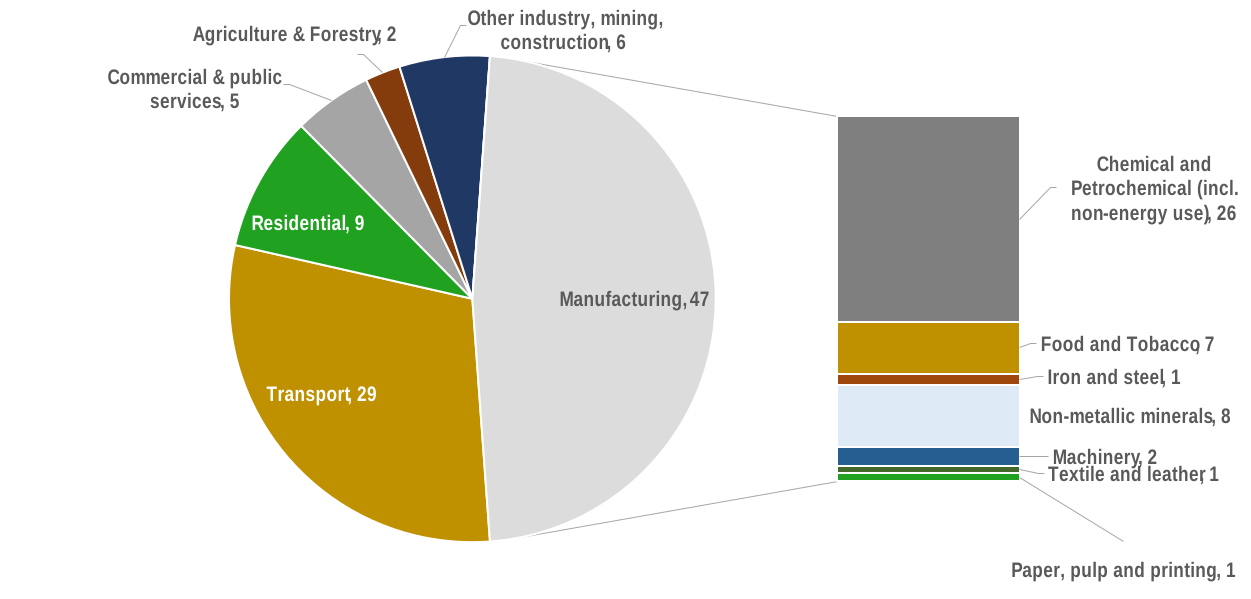
Note: Unit is million tonnes of oil equivalent (Mtoe) per year. The data include ‘non-energy use’ category, which covers fuels that “are used as raw materials in the different sectors and are not consumed as a fuel or transformed into another fuel” (IEA, 2025[14]).
Source: Authors based on (IEA, 2024[13])
The country’s high fossil fuel reliance is equally reflected in the manufacturing sector’s energy consumption. Energy consumption of Thailand’s manufacturing sector has doubled since 2000, reaching 242 Mtoe in 2023 (Figure A B.7). Meanwhile, the related energy mix showed limited diversification, with the main shift being a growing reliance on natural gas as a substitute for oil. In 2023, coal remained the dominant energy source, alongside electricity (predominantly generated from fossil fuels3), with each contributing approximately 30% of the sector’s total energy consumption. Natural gas and biofuels followed at 16% and oil accounted for 11%. When considering the consumption of fuels as raw materials in the manufacturing sector (i.e. non-energy use), the share of fossil-fuels in the final energy consumption reaches 75% in 2023 - with oil alone accounting for 50% - followed by electricity (15%) and renewables (9%) (Figure A B.8).

Note: The data do not include ‘non-energy use’ category, which covers fuels that “are used as raw materials in the different sectors and are not consumed as a fuel or transformed into another fuel” (IEA, 2025[14]).
Source: Authors based on (IEA, 2024[13])
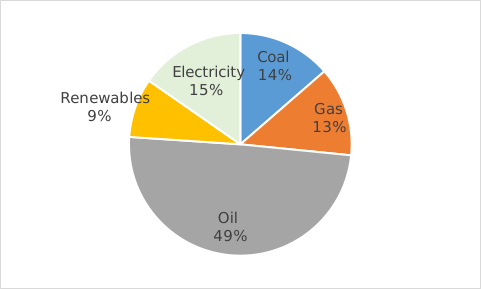
Note: The data include ‘non-energy use’ category, which covers fuels that “are used as raw materials in the different sectors and are not consumed as a fuel or transformed into another fuel” (IEA, 2025[14]).
Source: Authors based on (IEA, 2024[13])
Total GHG emissions (excluding those from land-use, land-use change and forestry, LULUCF) increased from 251 MtCO2eq in 2000 to 386 MtCO2eq in 2022 (Figure A B.9). Energy related emissions were by far the predominant source, accounting for 66% of the country’s total GHG emissions in 2022. Around 10% of the total GHG emissions were related to Industrial Processes and Product Use (IPPU), namely emissions that do not result from fuel combustion but from chemical or physical processes used in industry. Agriculture represented a share of 18%, while emissions from waste represented approximately 6% of total GHG emissions.

Note: Emissions from manufacturing industries and construction, electricity and heat, petroleum refining, buildings, transport, fugitive emissions from fuels, and other fuel combustion are grouped under energy-related emissions. “Industrial processes” refers to GHG emissions that do not result from fuel combustion but from chemical or physical processes used in industry, namely IPPU.
Looking specifically at energy-related CO2 emissions, electricity remained the largest source in 2024 (nearly 40%), followed by transport (33%) and industry4 (25%). Between 2000 and 2018, energy‑related CO2 emissions in Thailand increased by 75%, reaching approximately 250 Mt CO2, where they have since stabilised (Figure A B.10). Energy-related emissions from the industrial sector5 peaked in 2018 after more than doubling since 2000, followed by a decline despite stable final energy consumption – indicating an improved emission intensity. It is important to note that this does not account for the CO2 emissions from IPPU, which would significantly increase the total CO2 emissions attributed to the industry sector.

Source: (Ministry of Energy, 2025[16]).
A wide range of national plans and strategies can directly or indirectly impact the transformation of the industry sector, including on decarbonisation aspects. These include high-level economic or industry development strategies, GHG emissions reduction plans, energy or finance-related plans, as summarised below. The key features of each one of these plans are detailed in Annex D.
Broad economic and industry development strategies
Thailand’s key broad economic and industry development strategies aim to steer the country toward sustainable, inclusive and innovation driven development. The 20-Year National Strategy (2018–2037) sets the overarching vision of becoming a secure, prosperous and sustainable nation, with specific strategies promoting competitiveness and green growth. The 13th National Economic and Social Development Plan (2023–2027) operationalises this vision by focusing on economic restructuring, human capital and sustainability, guided by the BCG Economy Model. At the sectoral (industry) level, the National Industrial Development Master Plan (2012–2031) provides a long-term framework to enhance industrial competitiveness and foster green and innovative growth. Complementing this, the Thailand Industrial Development Strategy 4.0 (2017–2036) aligns with the Thailand 4.0 vision, aiming to transform the industrial sector into a value-based, innovation-led economy, with a strong emphasis on sustainability through green technologies and eco-industrial zones.
Thailand’s BCG Economy Model is a national strategy designed to promote sustainable, inclusive and innovation-driven growth by integrating three key economic approaches. The bioeconomy approach leverages Thailand’s rich biodiversity and agricultural base to create high-value products in sectors like food, medicine and bioenergy. The circular economy approach focuses on resource efficiency, waste reduction and recycling to minimise environmental impact and extend product life cycles. The green economy approach emphasises environmentally friendly technologies, renewable energy and conservation of natural resources. Together, these pillars aim to enhance Thailand’s global competitiveness, support local communities and align with the Sustainable Development Goals (SDGs). The BCG Economy Model is central to Thailand’s post-pandemic recovery and long-term development vision, particularly in transforming key sectors such as agriculture, health, energy and tourism into engines of sustainable growth. Thailand's BCG Action Plan 2021-2027 is designed to implement Thailand’s BCG Economy Model by supporting biofuels for industrial uses, sustainable agriculture and biobased high-value products such as biochemicals and biomaterials.
The EEC: Thailand’s Innovation Gateway to a Sustainable Future
The EEC is a strategic economic development initiative by the Government of Thailand to position the eastern provinces, including Chachoengsao, Chonburi and Rayong, as a leading regional hub for trade, innovation and advanced industries. The EEC has classified 26 promoted zones designed to attract investment in 12 targeted fields, such as next-generation automotive, digital technologies, healthcare and bioeconomy, in which eligible investors will receive both tax and non-tax benefits. It offers comprehensive support through regulatory reforms, infrastructure upgrades and investment incentives to foster long-term industrial growth. Given that industries located in the EEC account for 40% of Thailand’s total industrial emissions, the zone also represents a strategic priority for advancing national industrial decarbonisation efforts.
The BOI approved several measures, including a filing extension of the investment package and additional benefits for companies in the Promoted Zones for Targeted Industries and Promoted Zones for Specific Industries, aiming to encourage prospective investors around the world. The Thai cabinet approved the establishment of 7 Promoted Zones for Specific Industries, namely: 1) EECa, Eastern Airport City; 2); EECi, Innovation Platform; 3) EECd, Digital Park; 4) EECmd, Medical Hub; 5) EECg, Genomics Thailand; 6) EECh, High-Speed Rail Ribbon Sprawl; and 7) EECtp, Tech Park Ban Chang.
The EECi is located primarily in Wangchan Valley, Rayong Province and is developed by the NSTDA in collaboration with PTT Group. The area is developed to support innovation and advanced research in fields such as agriculture and food, biotechnology, renewable energy, biochemicals and advanced manufacturing. It aims to become a model area for integrating science, technology and innovation to improve the quality of life and drive the country toward a Bio-Circular-Green (BCG) Economy under the “Thailand 4.0” policy.
The EECi provides a full ecosystem that supports research and development through to commercialisation, helping innovators and businesses grow and thrive in a high-potential environment designed for future industries. Research outcomes developed at the laboratory scale can be scaled up to commercial production through EECi’s advanced infrastructure and supportive innovation ecosystem. Subsequent investments may then be established within the EEC, including Chonburi, Rayong and Chachoengsao, or elsewhere in Thailand. Similarly, investors introducing advanced technologies to the region can utilise EECi’s facilities to adapt their technologies to local conditions. Once optimised, they may proceed to establish their operations in the EEC or expand to other locations within Thailand and the broader ASEAN region (Thailand Board of Investment, 2022[17]; EEC, n.d.[18]).
GHG emissions reduction targets and climate mitigation plans
Thailand has set ambitious targets and enhanced national efforts, aiming to achieve net-zero GHG emissions by 2050. On November 4, 2025, the Cabinet approved Thailand’s second Nationally Determined Contribution (NDC 3.0) (Department of Climate Change and Environment, 2025[19]). ONEP has officially submitted NDC 3.0 to the UNFCCC. The implementation period for NDC 3.0 is set for 2031-2035, demonstrating Thailand’s strengthened commitment and ambition by reducing GHG emissions compared to the base year level of 2019. The target is to reduce net GHG emissions by 47% from the 2019 baseline by 2035 (representing a reduction of 135.2 million tonnes of CO2 equivalent (MtCO2eq)), covering all sectors of the economy. Under this target, Thailand’s net GHG emissions would not exceed 152 MtCO2eq by 2035, in line with the 1.5°C pathway, and supporting the country’s goal of achieving netzero GHG emissions by 2050 (B.E. 2593).
Thailand has adopted a series of plans and strategies to support the achievement of these emission reduction targets (Figure A B.11). At the core, the Climate Change Master Plan (2015–2050), anchored in Thailand’s international commitments under the UNFCCC and the SDGs, provides overarching guidance for climate action. The Master Plan is supported by a plan dedicated to adaptation (the National Adaptation Plan) and another dedicated to mitigation (the NDC Roadmap on Mitigation, renamed as the National Action Plan on GHG Mitigation (2021-2030)). At the second meeting of the Sub-Committee on Promoting Environmentally Friendly Quality of Life Growth under the National Economic and Social Development Board, held on the 13th of February 2020, a resolution was passed to revise this draft Plan to support the implementation of the national GHG reduction roadmap by sector. The revision aims to integrate these plans holistically and ensure coherence and linkage in the implementation approaches and support mechanisms of relevant agencies - both overall and sector-specific - so that they can be effectively implemented. The National Action Plan on GHG Mitigation (2021-2030) is operationalised by sectoral mitigation action plans, covering energy, transport, IPPU, waste and industrial wastewater, agriculture.
As of end 2025, the Climate Change Master Plan, the National Action Plan on GHG Mitigation (2021-2030) and the Long-Term Low Greenhouse Gas Emission Development Strategy (LT-LEDS) are undergoing review and are expected to be updated by 2026.
These climate mitigation related strategies are mainstreamed into broader national development planning frameworks – notably in the 20-Year National Strategy (2018–2037) – and into sectoral plans. This is then translated at the subnational and local levels, by Provincial, Provincial Cluster and Local Development Plans. This vertical integration is supported by continuous coordination and mainstreaming across levels of government, enabling a whole-of-government approach to climate mitigation and sustainable development (Ministry of Natural Resources and Environment, 2021[20]).

Thailand’s institutional framework for climate mitigation is anchored by the NCCC, which plays a central role in setting strategic direction and coordinating cross-sectoral climate action. Chaired by the Prime Minister, the NCCC comprises representatives from public institutions, private sector entities and technical experts, ensuring a whole-of-society approach to climate governance (Government of Thailand, 2022[21]). The Committee is mandated to formulate national climate policy, oversee alignment with international climate commitments and monitor the performance of domestic agencies against national climate objectives. To operationalise its mandate, the NCCC is supported by seven dedicated subcommittees that address key areas of implementation: policy and planning integration, data and knowledge management, international cooperation and negotiation, public awareness and empowerment, legal frameworks and the mobilisation of greenhouse gas mitigation in the LULUCF and CCUS domains (Government of Thailand, 2022[21]). This institutional structure aims to foster coordination across ministries and enhances Thailand’s capacity to mainstream climate mitigation into national development planning and strengthen sectoral engagement.
The forthcoming Climate Change Act will represent a major legislative step towards achieving the country’s climate goals. The Act will address several key areas that have the potential to accelerate industry decarbonisation, including mandatory GHG emissions reporting, the establishment of an ETS and carbon taxes, the introduction of a framework for CBAM, as well as a dedicated fund to support climate mitigation projects (the Climate Change Fund).
Energy sector related plans
Thailand has established a comprehensive set of energy-related policy frameworks to reach its GHG emission reduction targets. As of 2025, the national plans covering the period from 2024 to 2037 are currently in the final stage of development. The overarching pan is the National Energy Plan (NEP), which provides the strategic directions to ensure energy security, sustainability and affordability. It integrates five other strategic plans: the Power Development Plan (PDP), the AEDP, the Energy Efficiency Plan (EEP), the Gas Plan and the Oil Plan. Through their objectives and targets, the PDP, AEDP and EEP can support the decarbonisation of the manufacturing sectors, either directly, or indirectly (e.g. through the decarbonisation of the electricity generation).
The PDP is a strategic roadmap for transforming the country’s electricity sector in line with its climate goals and energy security needs. Key objective is to increase the share of renewable energy to 51% of total electricity generation by 2037, up from 20% in 2024, while also promoting energy efficiency and considering alternative energy sources. The AEDP guides the development and promotion of renewable and alternative energy sources. The strategies cover the electricity sector, heat sector and the biofuel sector. Under the draft published in June 2024 (Ministry of Energy, DEDE, 2024[22]), the country aims for an increased production and use of renewable energy to achieve carbon neutrality by 2050. Key targets include a share of renewable and alternative energy to 36% of the total final energy consumption by 2037, as well as a share of 61% renewable energy in the total electricity generation. The country’s focus on solar, wind and biomass reflects its commitment to reducing its reliance on fossil fuels and advancing toward its carbon neutrality goal. Finally, the EEP aims to reduce energy intensity by 36% by 2037, compared to 2010 levels. On industry, the measures will include mandatory energy management in designated factories, enforcement of energy codes and promotion of high-efficiency equipment.
Sustainable Finance
Thailand has developed frameworks aiming at directing and mobilising investments towards projects aligned with its climate goals. The ‘Thailand’s Climate Finance Strategy: Conceptual Framework 2030’ aims to increase both public and private sector investment in climate mitigation and adaptation. It provides strategic guidance and recommendations on integrating climate finance into national development planning, on supporting sectoral transitions, on enhancing transparency and accountability in climate related spending and investments (Department of Climate Change and Environment, 2024[23]).
More specifically, Thailand’s Sustainability-Linked Financing Framework, issued by the Ministry of Finance, outlines the country’s approach to issuing sustainability-linked finance instruments (including bonds and loans) (Public Debt Management Office, 2024[24]). The Framework supports Thailand’s climate goals, including carbon neutrality by 2050 and aligns with international and regional standards such as the International Capital Market Association (ICMA)’s Sustainability-Linked Bond (SLB) Principles or ASEAN SLB Standards. It features Key Performance Indicators (KPIs), Sustainability Performance Targets (SPTs), including relating to the energy and industry sectors. The framework ensures transparency through annual reporting and independent verification. It complements the broader Sustainable Financing Framework, aiming to mobilise public capital towards projects in line with Thailand’s climate goals and the UN Sustainable Development Goals (Public Debt Management Office, 2020[25]).
The ONEP, in collaboration with the Bureau of the Budget, is currently developing a national budget tracking and database system, which includes public climate-related expenditures. This centralised database will support monitoring, analysis, and informed decision-making on budget allocation. It also aims to enhance the Ministry of Finance’s capacity to effectively integrate climate change considerations into fiscal planning, while promoting transparency in the management of climate-related public spending. This initiative reflects Thailand’s commitment to leveraging fiscal and budgetary mechanisms to address climate change, in line with the Thailand Climate Finance Strategy: Conceptual Framework 2030.
Furthermore, the TTB launched in 2023 the ‘Thailand Taxonomy Phase I’ as a reference tool of standardised classification of low-emission activities in the energy and transport sectors (Bank of Thailand, n.d.[26]). The ‘Taxonomy Phase II’ was officially launched on May 27, 2025, through a collaboration between ONEP, the Bank of Thailand, the Securities and Exchange Commission of Thailand, and 32 other relevant public and private sector agencies. The initiative expands the scope of the Thailand Taxonomy to cover four key economic sectors: manufacturing, agriculture, construction and real estate, and waste management (see chapters 4 and 5 and Annex K). Currently designed as a voluntary reference tool, this taxonomy has the potential to foster sustainable investment growth and drive economic transformation in Thailand (Bank of Thailand, n.d.[26]).
References
[5] Bank of Thailand (2025), Statistics, https://www.bot.or.th/en/statistics.html.
[26] Bank of Thailand (n.d.), Thailand Taxonomy Driving the Thai Economy Towards Sustainability, https://www.bot.or.th/en/financial-innovation/sustainable-finance/green/Thailand-Taxonomy.html.
[11] Department of Alternative Energy Development and Efficiency (2023), Thailand’s Energy Efficiency, https://www.nedo.go.jp/content/100959493.pdf.
[19] Department of Climate Change and Environment (2025), Thailand’s Second Nationally Determined Contribution (NDC 3.0), https://unfccc.int/sites/default/files/2025-11/TH%20NDC%203.0.pdf.
[23] Department of Climate Change and Environment (2024), Thailand’s Climate Finance Strategy: Conceptual Framework 2030, https://www.dcce.go.th/media/4031/.
[18] EEC (n.d.), Thailand’s Eastern Economic Corridor (EEC), https://www.boi.go.th/upload/content/Aviation_BOI%20roadshow_Full%20version_5ab4f81a06c70.pdf.
[21] Government of Thailand (2022), Thailand’s Fourth Biennial Update Report, https://unfccc.int/sites/default/files/resource/Thailand_BUR4_final_28122022.pdf.
[14] IEA (2025), World Energy Balances, https://iea.blob.core.windows.net/assets/2144706e-a521-4353-a9c0-2ff3b170669f/WORLDBAL_Documentation_July2025.pdf.
[13] IEA (2024), World Energy Balances, https://www.iea.org/data-and-statistics/data-product/world-energy-balances.
[12] IEA (n.d.), Energy Statistics Data Browser, https://www.iea.org/data-and-statistics/data-tools/energy-statistics-data-browser?country=THAILAND&fuel=Energy%20supply&indicator=TESbySource (accessed on 25 October 2025).
[6] ILOSTAT (2025), Employment by sex and economic activity - ISIC Level 2, https://ilostat.ilo.org/topics/employment/.
[27] IRENA (2024), Energy Profile, https://www.irena.org/-/media/Files/IRENA/Agency/Statistics/Statistical_Profiles/Asia/Thailand_Asia_RE_SP.pdf.
[16] Ministry of Energy (2025), CO2 Emission.
[22] Ministry of Energy, DEDE (2024), AEDP 2024 - Public hearing draft, https://image.makewebeasy.net/makeweb/0/u3EjrB8bq/Document/AEDP_2024_%E0%B8%AA%E0%B8%B1%E0%B8%A1%E0%B8%A1%E0%B8%99%E0%B8%B2%E0%B8%A3%E0%B8%B1%E0%B8%9A%E0%B8%9F%E0%B8%B1%E0%B8%87%E0%B8%84%E0%B8%A7%E0%B8%B2%E0%B8%A1%E0%B8%84%E0%B8%B4%E0%B8%94%E0%B9%80%E0%B8.
[15] Ministry of Natural Resources and Environment (2024), Thailand’s First Biennial Transparency Report, https://www.dcce.go.th/wp-content/uploads/2024/12/Submitted-1st-BTR_compressed-1.pdf.
[20] Ministry of Natural Resources and Environment (2021), Thailand’s Experiences with the Preparation of Updated NDC, https://unosd.un.org/sites/unosd.un.org/files/2-2._country_experience_thailand_ms._chanutsakul_supirak.pdf.
[1] OECD (2025), OECD Review of the Corporate Governance of State-Owned Enterprises in Thailand, Corporate Governance, OECD Publishing, Paris, https://doi.org/10.1787/345f9e00-en.
[9] OECD (2023), OECD Economic Surveys: Thailand 2023, OECD Publishing, Paris, https://doi.org/10.1787/4815cb4b-en.
[7] OECD (2021), Gender and the Environment: Building Evidence and Policies to Achieve the SDGs, OECD Publishing, Paris, https://doi.org/10.1787/3d32ca39-en.
[2] Office of the National Economic and Social Development Council (2023), National Income of Thailand 2023 Chain Volume Measures, https://www.nesdc.go.th/wordpress/wp-content/uploads/2025/06/article_file_20250417091629.pdf.
[24] Public Debt Management Office (2024), Sustainability-Linked Financing Framework, https://www.pdmo.go.th/pdmomedia/documents/2024/Oct/PDMO%20SLB%20Framework_Final.pdf.
[25] Public Debt Management Office (2020), Sustainable Financing Framework, https://www.pdmo.go.th/pdmomedia/documents/2020/Jul/KOT%20Sustainable%20Financing%20Framework.pdf.
[17] Thailand Board of Investment (2022), Investment Promotion Measure in the Eastern Economic Corridor, https://www.boi.go.th/upload/content/BOI-EEC%202022%20brochure-EN-20220621.pdf.
[10] UNCTAD (2024), World Investment Report, https://unctad.org/publication/world-investment-report-2024.
[3] World Bank (2025), Thailand Economic Monitor: Unleashing growth: Innovation, SMEs and Startups, https://documents1.worldbank.org/curated/en/099021125051038392/pdf/P5080791f9e0bc03b1ab8019753dc6998d3.pdf.
[4] World Bank (2020), Thailand Manufacturing Firm Productivity Report, https://documents1.worldbank.org/curated/en/497151606302306312/pdf/Thailand-Manufacturing-Firm-Productivity-Report.pdf.
[8] World Trade Organisation (2024), International Trade Statistics, https://stats.wto.org/.
← 1. Non-energy use here refers to the consumption of energy products as raw materials in industrial processes. It represented 23 Mtoe in 2023.
← 2. Does not include non-energy uses, which represented 23 Mtoe.
← 3. By 2022, renewable electricity accounted for 13% of total electricity generation in the manufacturing sector (IRENA, 2024[27]).
← 4. Refers to direct emissions of the industry sector, thus not including emissions from electricity and heat generated for industrial uses.
← 5. Does not include emissions from IPPU.