September 2025
Building pathways to opportunity
How to ensure a more level playing field in OECD countries
Ensuring that everyone has a fair chance to succeed in life, independently of their background, is an important source of economic prosperity and social cohesion, as well as a fundamental principle of democracy. The OECD report, To Have and Have Not – How to Bridge the Gap in Opportunities (2025[1]), provides new empirical evidence that can inform public debates and help design effective policies for creating a more level playing field for all. This brief draws from the report.
The analysis extends previous OECD work in two key areas. First, it develops a robust and comparable measure of inequality of opportunity which is then applied to a large set of OECD countries (29 Member countries and 3 accession countries). Second, the report explores the links between opportunities and “place” through an analysis of geographic disparities in access to key drivers of economic opportunities including education, employment and essential services.
How fairly are opportunities distributed in OECD countries? Uneven opportunities explain a large share of inequality in outcomes. On average, over 25% at least of total inequality in market income can be attributed to inherited circumstances and factors beyond an individual’s control.
Which circumstances matter most and for whom? Parental background plays a key role in shaping life chances. In most countries, it contributes to over 60% of inequality of opportunity observed at household level and in some cases over 75%. However, it is not the only significant factor and even in countries where levels of inequality of opportunity are low, significant disparities can still be observed between groups – such as men and women or different cohorts.
What role does “place” have in determining opportunities? Geographic inequalities affect opportunities throughout life and via several key channels. This can notably be seen through the importance of place for the risk of income and financial-asset poverty, for educational and labour market opportunities, and for access to infrastructure and essential services.
How can policy ensure a more level playing field? Many policies can contribute to promote equal opportunity. The report argues that comprehensive responses which foster economic dynamism and strengthen individuals’ capacity to realise opportunities are likely to be effective.
Background: Why inequality of opportunity matters
Conventional indicators of inequality provide policymakers and the general public with a detailed picture of how resources are distributed across the population. However, these indicators offer only limited insight into another important dimension of inequality. People care about outcomes and the way in which they are distributed, but also about the process through which these outcomes are achieved. Existing measures of social mobility, which focus on the persistence and transmission of outcomes, do not say anything about the circumstances that individuals encountered, the opportunities they had (or didn’t have) and the decisions they made.
Policymakers need to take account of gaps in opportunities, on several grounds. First of all, equal opportunity is a core principle of democracy and reflects its fundamental promise that everyone shall have a fair chance to succeed in life, independently of their background. Secondly, it also contributes to strengthen economic growth and innovation, while fostering social cohesion and a shared sense of citizenship. Where inherited circumstances determine outcomes and create barriers to education, jobs or entrepreneurship that many cannot overcome, economies cannot thrive. Talent is wasted, resources are misallocated, and opportunities are left unrealised at great cost to individuals and to society as a whole.
Finally, opportunities play a key part in people’s evaluation of the fairness of socio-economic outcomes, of the extent to which inequalities in the distribution of these outcomes are justified or not, as well as of the need for and acceptability of policies designed to reduce these inequalities. Empirical evidence shows that, while people may differ in terms of their policy preferences, there is broad agreement across OECD countries and beyond that more needs to be done to promote equal opportunity. Understanding to what extent economic outcomes reflect personal agency, as opposed to inherited circumstances, and which circumstances shape these outcomes is of critical importance for designing policies that can ensure a more level playing field and meet public demands.
Public and policy debates can benefit from a richer “three-dimensional” picture of the state of inequality, covering outcomes, opportunities and social mobility. A broader approach of this kind can improve analysis by allowing it to better reflect the specificities of national contexts, institutions and histories. It can also pave the way for more effective and tailored policies to reduce inequality, promote social mobility, ensure more equal opportunities for all and help address potential trade-offs between the different dimensions.
The state of OECD research: How to measure inequality of opportunity
The latest OECD report, To Have and Have Not – How to Bridge the Gap in Opportunities, develops a robust and comparable measure of how opportunities are distributed across the population. This report is the seventh in a series of flagship OECD publications on inequality and the first in the series to be released under the new OECD Observatory on Social Mobility and Equal Opportunity: https://www.oecd.org/en/about/programmes/observatory-on-social-mobility-and-equal-opportunity.html.
It seeks to provide policymakers with:
Deeper insights into the role that inherited circumstances and other factors beyond an individual’s control play in shaping economic outcomes. This in turn can help improve policies for promoting social mobility through a better identification of the barriers that people encounter and the types of support they need to realise the opportunities available to them.
Data and evidence that align more closely with the way in which people evaluate the fairness of socio-economic outcomes. This in turn can shed light on the extent to which disparities in outcomes are perceived to be justified or not in different national contexts, as well as the need for policies to address these disparities and ensure a more level playing field.
This report extends previous OECD work in two areas that are of high relevance to policy. First, it established a measure of inequality of opportunity based on an innovative methodology. In doing so, it explains why and how this measure should be designed. The measure is then applied to a large subset of OECD countries for which comparable data are available. The analysis explores the levels and trends in inequality of opportunity across countries, as well as the relative importance of different circumstances in shaping economic outcomes and their impact on different population groups, with a focus on generational and gender differences. Second, the report examines the nature of the links between opportunities and “place”. Drawing on recent OECD research, it documents and analyses geographic disparities in access to key drivers of social mobility including education, employment and essential services.
The approach taken in measuring inequality of opportunity is solidly grounded both in conceptual and methodological terms (see Box 1). It draws on recent advances in machine-learning techniques and on the theory of “luck egalitarianism” which has been used by the economic literature to operationalise the concept of equal opportunity. On this basis, the measure categorises outcome determinants into (i) structural factors that are beyond an individual’s control (referred to as “circumstances”); and (ii) controllable factors that can reasonably be taken to fall under the scope of personal agency (and are referred to, with proper caveats, as “effort”). Broadly put, luck egalitarianism argues that inequalities stemming from the former kind of factor should be corrected or compensated for as they affect people’s starting point, create gaps in opportunities throughout life and confer an unfair advantage or disadvantage. Conversely, under this approach, inequalities resulting from individual choices can be considered fair.
The new measure applies the fundamental insights from luck egalitarianism in the following way. It uses machine-learning techniques to group together individuals from a given population who share the same circumstances and background factors, while recognising that these circumstances vary across the population. This approach does not require assumptions about the level of individual effort. It examines the extent to which individuals with similar circumstances experience different economic outcomes. To quantify the “unfair” part of inequality, a counterfactual distribution of the outcome of interest (e.g., market income) is derived, reflecting only inequalities that are due to the measured circumstances. Inequality of opportunity can be defined in absolute terms – as the Gini index of this counterfactual distribution – or in relative terms – by comparing it to the Gini index of the observed distribution. A higher relative measure indicates a greater share of total inequality attributable to circumstances beyond an individual’s control.
Despite the inherent challenges involved in distinguishing between factors that are within and beyond the control of individuals, meaningful insights can be derived from an analysis along these lines. By carefully selecting variables that represent the key aspects of an individual’s background and are clearly independent of people’s choices – such as area of birth and parental characteristics, the measure can avoid conflating circumstances with personal agency. In order to do so, a conservative approach is taken when selecting the set of circumstances used to estimate inequality of opportunity. Nonetheless, the analysis covers a broader set of circumstances than most studies and measures their effects on economic outcomes jointly. It includes standard individual factors (like sex and country of birth), parents’ migrant status and socio-economic background (parents’ educational level and occupation when the respondent was aged 14), as well as childhood environment variables (such as parental presence, housing tenure, and the degree of urbanisation of the area of residence at age 14).
It is important to bear in mind that this measure of inequality of opportunity, while broader in scope than existing alternatives, can only ever account for the role played by a subset of the circumstances influencing economic outcomes. For this reason, it is best understood as providing a lower-bound estimate of actual levels of inequality of opportunity in a given society, as the influence of other relevant circumstances may not be accounted for. Similarly, the remaining share of inequality that is not explained by the measure constitutes a residual variable and does not provide a direct proxy for or outcome of individual effort. While it is loosely referred to by the literature as “effort” in contrast to “circumstances”, this unexplained share of inequality is best understood as a broad category that captures the effect of different factors, including individual effort but also non-measured circumstances.
Levels and trends in inequality of opportunity
On average, across the OECD, over a quarter at least of today’s inequality in household market income can be attributed to circumstances beyond people’s control, such as their sex and country of birth or their parents’ socio-economic background. This suggests that a significant share of income disparity is shaped by factors that individuals inherit rather than by factors that reflect their own efforts or merit. However, there is substantial cross-country variation in relative inequality of opportunity. Switzerland and several Nordic countries report the lowest levels, while Southern and Eastern European countries as well as some non-EU countries report the highest. In countries such as Belgium, Chile, Ireland, Luxembourg, Poland, Portugal, Spain and the United States, over 35% of total income inequality is due to inequality of opportunity (bars in Figure 1). Country rankings remain largely consistent when comparing absolute (diamonds in Figure 1) rather than relative inequality of opportunity – that is, the level of inequality that would prevail in a given country if outcomes were determined only by the set of circumstances measured.
Relative and absolute inequality of opportunity, individuals aged 25-59, by country, 2019 or latest available year
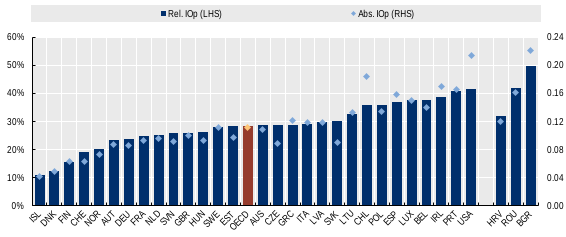
Note: LHS: left-hand side axis. RHS: right-hand side axis. Estimates refer to 2019 except for the United Kingdom (2023), Australia and the United States (2021), Iceland (2011) and Chile (2009). Bars refer to the share of inequality of opportunity in total inequality (%, LHS), while diamonds refer to absolute inequality of opportunity (measured as the Gini index of the counterfactual distribution on a 0-1 scale, RHS). Countries are ranked in ascending order of relative inequality of opportunity. For further detail, see the note to Figure 2.1 in OECD (2025[1]).
Source: OECD (2025[1]), To Have and Have Not – How to Bridge the Gap in Opportunities, OECD Publishing, Paris, https://doi.org/10.1787/dec143ad-en.
Differences in policy frameworks can help explain some of the variation in inequality of opportunity across OECD countries. Prior research has shown that investment in early childhood education not only has long-term benefits but also helps reduce the impact of family background on academic performance. Countries that spend more on early childhood education and care (ECEC) tend to have lower inequality of opportunity in household market income. This pattern holds both for current spending and for investment in ECEC since the early 1980s, suggesting long-term benefits for labour market outcomes. Further analysis is needed to fully explain this correlation, but it may reflect both the lasting impact of early education and continuity in levels of investment by countries.
Trends in inequality of opportunity vary considerably across OECD countries. While the available data do not allow for cross-country comparison over the long run, recent patterns show a slight increase on average. A degree of convergence is also observed, with levels tending to rise in countries where initial levels of inequality of opportunity were low (such as Austria, the Netherlands, Portugal, Spain and some of the Nordic countries) and to fall in countries where they were high (Poland, the United Kingdom and the United States). Interestingly, the increase in average inequality of opportunity across the OECD has come at a time when inequality of outcomes has tended to fall. As can be seen in Figure 2, income inequality and relative inequality of opportunity both rose markedly in the immediate aftermath of the Global Financial Crisis. However, whereas income inequality returned to pre-crisis levels over the course of the following decade and has declined further from there, relative inequality of opportunity continued to increase for a longer period and has stabilised at a higher level. This suggests that, despite the observed fall in inequality of outcomes, the role of inherited circumstances in determining these outcomes has grown.
Relative inequality of opportunity (% of total inequality) and Gini at household market income, individuals aged 25-59, OECD average

Note: LHS: left-hand side axis. RHS: right-hand side axis. Estimates of inequality of opportunity in household equivalised market income are computed on a restricted set of circumstances, including the respondent's sex and country of birth, the educational level of the respondent’s parents, and their presence in the household when the respondent was 14. Relative Inequality of Opportunity is computed for a subset of 23 OECD countries: Austria, Belgium, Czechia, Denmark, Estonia, Finland, France, Greece, Hungary, Ireland, Italy, Lithuania, Luxembourg, Latvia, the Netherlands, Norway, Poland, Portugal, the Slovak Republic, Slovenia, Spain, Sweden and the United Kingdom. For further detail, see note to Figure 2.5 in OECD (2025[1]).
Source: Adapted from OECD (2025[1]), To Have and Have Not – How to Bridge the Gap in Opportunities, OECD Publishing, Paris, https://doi.org/10.1787/dec143ad-en.
Further research is needed to understand the causes and implications of these divergent dynamics between inequality of outcomes and inequality of opportunities. Different possible factors could be at play and form part of the explanation. For instance, the post-crisis job recovery may have been successful in reducing income inequality, but without addressing long-term structural barriers to opportunity. Similarly, stabilisation policies may have prioritised income support over investment in opportunity-enhancing measures. Alternatively, rising inequality of opportunity may reflect broader structural shifts – such as digitalisation and changing labour market patterns – that are independent of the crisis recovery itself.
Decomposing inequality of opportunity
Figure 3 shows the relative importance of different circumstances in explaining inequality of opportunity, as measured for household market income, across the countries studied. In three-quarters of countries, over 60% of the observed inequality of opportunity can be attributed to parental socio-economic background – i.e., the total combined effect of father and mother’s educational level and occupation. In a quarter of countries, that total exceeds 75%. While the relative importance of factors varies significantly across countries, paternal educational background tends to play a slightly larger role overall, with a median importance of 19%, while maternal occupational background has a slightly lower influence, with a median impact of 13%. However, this difference may simply reflect the weaker labour market ties for women in previous generations.
Distribution of the Shapley-Shorrocks decomposition (percentages) of the relative (predictive) importance of different circumstances for inequality of opportunity in household market income, OECD 24, 2019
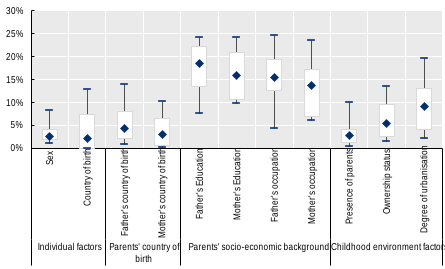
Note: Diamonds refer to the OECD median share (24 countries). Box boundaries indicate the first and third quartiles of the country distribution. Whiskers indicate the 10th and 90th percentiles of the country distribution. For further detail, see note to Figure 2.10 in OECD (2025[1]).
Source: OECD (2025[1]), To Have and Have Not – How to Bridge the Gap in Opportunities, OECD Publishing, Paris, https://doi.org/10.1787/dec143ad-en.
By contrast, the impact of individual factors and parents’ country of birth on inequality of opportunity is less pronounced overall. For example, the measured effect of gender on inequality of opportunity is minimal in most OECD countries. While this result may seem counterintuitive, it reflects the fact that resource pooling and sharing within the household partly offset individual disparities in outcomes. The effects of gender become much stronger when inequality of opportunity is measured in terms of individual earnings rather than household market income (25% instead of 3%). Similarly for differences between cohorts, younger generations have tended to experience higher levels of inequality of opportunity than previous generations at the same age in most countries. Overall, the results for childhood environment factors are mixed. The presence of parents and homeownership status have a limited impact in most countries. In some cases, the degree of urbanisation plays a significant role, contributing to over 20% of inequality of opportunity.
Interestingly, the relative importance of factors also varies in line with the measured level of inequality of opportunity. In general, in countries with lower levels of inequality of opportunity, gender and parental presence tend to play a larger role, while the relative contribution of parental background increases as levels of inequality of opportunity rise. This may reflect the fact that the effects of certain factors are harder to address through policy alone. In this respect, countries with lower inequality of opportunity may have been more successful in addressing systemic issues such as access to education, skills development and territorial development. The remaining disparities are more likely to stem from deep-seated structural factors, such as the effects of social norms and gender roles, that are less tractable for policy intervention.
Place matters for income and financial fragility
Geography matters for inequality of opportunity because people have no control over where they are born and raised and because they face significant barriers to relocate later in life. These barriers include the financial costs associated with moving and switching homes, job-search costs, a desire to remain close to established social networks, and caregiving responsibilities. As a result, inter-regional migration rates across the OECD are low and many people stay close to their birthplace during their adult life, even if the economic opportunities are limited. The characteristics of the places where people grow up have a strong influence therefore on their later-life outcomes, notably educational attainment, occupation and lifetime earnings.
Where a person grows up has a lasting influence on their life chances. First, the geographic “sorting” of people by income and wealth reinforces existing inequalities. Higher-income people are more likely to live in wealthier regions and neighbourhoods, which often offer better schools, healthcare and job prospects, as well as greater access to quality public services. Similarly at the bottom of the distribution, people’s risk of facing income poverty differs greatly depending on where they are born and live. On average, in 2022, 15% of people in OECD regions lived in households with an equivalised income below 50% of the national median, but regional poverty rates vary significantly across large (TL2) regions (see Figure 4). In some countries, poverty rates can be six-to-ten times higher in deprived regions than in more advantaged ones. Child poverty rates and gender gaps in poverty also show significant regional variation.
Prospects for people’s income mobility are influenced by where they live. Evidence from tax records in Belgium, Estonia and Spain shows that people living in lower-income regions find it harder to move up the income distribution over time than those living in higher-income regions. This remains true even after accounting for differences in personal characteristics, such as age, gender and education. Beyond income, financial fragility also varies significantly across countries and regions. These differences affect opportunities, as lack of financial assets can significantly reduce people’s capacity to overcome economic shocks, invest in their own education and that of their children, secure better housing or start a business. On average across 11 OECD countries with available data, the share of financially fragile households – defined as those with financial wealth equal to less than 25% of the relative income poverty line – varies by 24 percentage points between the regions with the highest- and lowest-rate. Differences are particularly pronounced in Australia, Germany and Italy.
Relative income poverty rates in TL2 regions (median region = 100), in 2022 or latest available year

Note: The figure shows relative income poverty rates for TL2 regions in 26 countries, based on the most recent data available between 2016 and 2022. Poverty rates are normalised so that each country’s median regional rate equals 100. Values above 100 indicate regions with higher-than-median poverty rates, while values below 100 indicate lower-than-median poverty rates. Countries are sorted by the size of the interregional gap in poverty rates in descending order. A person is considered poor if they live in a household with an equivalised disposable income below 50% of the national median. Equivalised disposable income refers to household income net of taxes and social security contributions, adjusted by dividing by the square root of household size. Data refer to 2022 for Mexico; 2021 for Belgium, Czechia, Finland, Greece, Hungary, Israel, Poland, Portugal, Spain, Sweden, the United Kingdom and the United States; 2020 for Austria, Colombia, Italy and Lithuania; 2019 for Canada, Germany, Ireland and Switzerland; 2018 for Australia, France, the Slovak Republic; 2017 for Chile; and 2016 for Estonia.
Source: OECD (2025[1]), To Have and Have Not – How to Bridge the Gap in Opportunities, OECD Publishing, Paris, https://doi.org/10.1787/dec143ad-en.
Place matters for educational and labour market opportunities
Education and training are essential for helping people from lower socio-economic backgrounds improve their economic standing. Yet, people face unequal access to good-quality education at different stages in life depending on where they are born and live. Parents make their residential choices based on their occupation, income and other factors. These choices shape the environment in which their children grow up and the quality of childcare and schooling they receive, in particular as families’ choices will usually be limited to options in their surrounding areas. Place also affects children’s attitudes towards education, their social networks and other circumstances that determine the opportunities available to them.
Students in smaller settlements achieve lower test scores, yet this largely reflects family background. OECD PISA results show considerable geographic disparities in test scores. In the mathematics assessment from PISA 2022, for example, students in settlements with fewer than 3 000 residents (“rural settlements”) performed less well than those in settlements with more than 100 000 residents (“urban areas”) in 28 out of 31 OECD countries with available data. However, in many countries a significant part of this gap is explained by differences in parental socio-economic background across types of places.
The employment opportunities available to young people when leaving education have a strong impact on their later careers. Early-career joblessness has long-term scarring effects, including a higher probability of later unemployment and lower future earnings. Throughout adulthood, factors such as local availability of jobs, the quality of those jobs, training opportunities and access to employment support all have an impact on labour market outcomes, such as participation and earnings, as well as on overall well-being.
Early school leavers and young people not in employment, education or training (NEET), TL2 regions, 2023 or latest available year

Note: Early school leavers are defined as young people aged 18-24 who have completed at most a lower secondary education and were not in further education or training. NEETs are young people aged 18-24 not in employment, education or training. Each dot in the graph represents a region. Regions coloured in red are in the quartile with the highest share of early leavers within each country. Regions coloured in blue are in the quartile with the lowest share of early leavers within each country. The diamonds represent the average across regions of each group. Countries with less than four regions and those where data are missing for a substantial number of regions are excluded. Data refer to 2023, except for Australia, Israel, Switzerland and the United States (2022), Portugal (2019); and Denmark, Hungary, Italy, the Netherlands, Spain and Sweden (2018). The regions of Aos Valley (ITA), Zeeland (NLD) and Autonomous Region of Madeira (PRT) are not included in the analysis due to lacking data.
Source: OECD (2025[1]), To Have and Have Not – How to Bridge the Gap in Opportunities, OECD Publishing, Paris, https://doi.org/10.1787/dec143ad-en.
Young people face unequal prospects for a successful school-to-work transition depending on where they live. Across countries with available data, the share of young people aged 18 to 24 not in employment, education, or training (NEET) differs by an average of 13 percentage points between the best- and worst-performing regions. The gap is substantially wider in some Southern European countries and in Mexico. These differences in school-to-work transitions mirror geographic inequalities in educational outcomes: young people are more likely to be NEET in regions with a higher share of early school leavers – i.e., the share of 18-to-24 year-olds who have completed no more than lower secondary education (see Figure 5).
These geographic disparities in employment outcomes tend to persist throughout adulthood. Regions that have been in the bottom 20% of GDP per capita over the last 20 years exhibit systematically lower employment rates, with differences in employment between lower- and higher-GDP-per-capita regions that are often larger within countries than differences across countries. People also face different prospects for access to jobs in high value-added sectors. In most OECD countries, these jobs and sectors tend to be concentrated in a few high-income regions, often those hosting capital cities.
People living in lower-GDP-per-capita regions have less access to employment services and training. Results from a recent OECD project, which used geolocation data on public employment service (PES) centres, show that the accessibility of these centres – measured in terms of travel times – is lower for people in regions with lower GDP per capita than for those in regions with higher GDP per capita. Adults in regions with lower GDP per capita are also significantly less likely to participate in training, which limits their chances to acquire new skills, progress in their careers and build resilience against economic shocks.
Moreover, geographic inequalities in labour market opportunities persist over time. Regions with low employment rates two decades ago – i.e., in the mid-2000s – continue to have low employment rates today. NEET rates and the share of jobs in high value-added sectors show similar persistence over time. This suggests that people who stay in regions with weaker labour markets encounter fewer job opportunities and experience reduced potential for career progression throughout their lives, unless they migrate to higher-income regions or countries.
Place matters for access to infrastructure and essential services
Stark regional disparities in access to essential infrastructure and services exacerbate economic and social divides. Some OECD countries exhibit substantial inequalities in access to health services and health outcomes across places. While, in most countries, regional disparities in the accessibility of general hospitals are relatively narrow, substantial accessibility gaps exist in some, such as in Finland, Greece and Portugal. Regional variation also exists in the number of physicians per 1 000 inhabitants, with lower GDP-per-capita regions typically having lower physician-to-population ratios, particularly in Colombia and Türkiye (see Figure 6). People in regions with higher GDP per capita tend to live longer compared to those in less affluent parts of the country. Across OECD countries, regions that have been in the top 20% of GDP per capita within their countries over the past 20 years typically have two years longer average life expectancy and lower mortality rates compared to regions in the bottom 20%. Within countries, the largest disparities are observed in Colombia, Mexico and the United States.
Large geographic differences can also be seen in the accessibility of other types of infrastructure that are essential for education, employment and broader economic opportunities. Many countries still show significant divides between poorer and wealthier regions in the extent and quality of internet access. In OECD regions that have been in the top 20% in terms of GDP per capita in their country over the past 20 years, access to broadband internet and download speeds are higher than in other regions. In some countries, there are big differences in the accessibility of public transport for people living in different urban agglomerations. While in Australia, Czechia, Germany and Switzerland almost 90% of people living in mid-sized and large Functional Urban Areas can reach a public transport stop within a 10-minute walk, less than half of their counterparts in Mexico and the United States have similar access.

Note: The figure presents regional disparities in healthcare infrastructure across OECD countries in two key indicators. Panel A shows relative access to hospitals, measured by the share of the population within a 30-minute drive of the nearest hospital. Panel B presents the number of active physicians per 1 000 inhabitants. Countries are sorted by the national average on each panel. See Annex for further details on indicator definitions and data sources.
Source: OECD (2025[1]), To Have and Have Not – How to Bridge the Gap in Opportunities, OECD Publishing, Paris, https://doi.org/10.1787/dec143ad-en.
Policy can contribute to a more level playing field by fostering economic dynamism and strengthening individuals’ capacity to realise opportunities. When designing effective policies for promoting equal opportunity, a key challenge consists in ensuring that responses are adapted to the barriers that individuals and their families encounter and that they provide them with the right support. The report reviews a range of measures designed to ensure a more level playing field for all by (i) enhancing human capital, such as early childhood education, vocational training and lifelong learning; (ii) facilitating the accumulation of wealth by individuals from disadvantaged backgrounds and a fair distribution of economic capital, for instance through the implementation of child development accounts, capital and inheritance taxation, and support for entrepreneurship; and (iii) expanding social infrastructure, through social housing programmes, improved access to quality services, and investment in digital connectivity in underserved areas. These policies help address sources of disadvantage throughout the life cycle and expand access to opportunities regardless of individual circumstances. While not exhaustive, they can form part of comprehensive and effective strategies for promoting equal opportunity.
Besides policies specifically aimed at increasing opportunities, the review underlines the important contribution that tax-benefit systems make towards levelling the playing field in many OECD countries. On average across the OECD, taxes and transfers are associated with a reduction in inequality of opportunity of around a quarter, with significant variation between countries (see Figure 7). These results suggest that, beyond their immediate redistributive role, tax-benefit systems may also act as powerful instruments for social investment. As such, they can contribute to build broader pathways to economic opportunity and increase prosperity over the long run. By relieving individuals and families of excessive financial pressures and supporting their access to education, healthcare and housing, tax-benefit systems help people seize life chances, improve their own prospects and pass on better opportunities to the next generation. Moreover, by protecting people against the negative effects of economic shocks and adverse life events – whether due to unemployment, illness, or old age – they prevent temporary difficulties from turning into lasting disadvantage.
Absolute inequality of opportunity in household disposable and in market income and mitigating effect of transfers in reducing inequality of opportunity, by country, individuals aged 25-59, 2019

Note: LHS: left-hand side axis. RHS: right-hand side axis. Absolute inequality of opportunity (IOp) is measured as the Gini index of the counterfactual distribution of income where differences in outcomes result entirely from a large set of circumstances. “Mitigating effect” refers to the percentage difference between IOp in household equivalised disposable income and IOp in household equivalised market income. Countries are ranked in ascending order of absolute inequality of opportunity in household equivalised disposable income. ‘OECD’ is the simple average of the OECD European countries displayed in the chart. For further detail, see Figure 4.6 in OECD (2025[1]).
Source: OECD (2025[1]), To Have and Have Not – How to Bridge the Gap in Opportunities, OECD Publishing, Paris, https://doi.org/10.1787/dec143ad-en.
References
[1] OECD (2025), To Have and Have Not – How to Bridge the Gap in Opportunities, OECD Publishing, Paris, https://doi.org/10.1787/dec143ad-en.
Contacts
For more information contact us: wellbeing@oecd.org
OECD Centre on Well-being, Inclusion, Sustainability and Equal Opportunity (WISE)