This chapter comprehensively reviews Estonia’s enabling environment for strategic public procurement. The elements of the enabling framework include the regulatory and institutional framework, strategy, market readiness, buy-in from stakeholders, capability-building activities, monitoring and risk management system. Surveys were conducted with contracting authorities, institutional leaders and suppliers regarding their perceptions and experiences with strategic public procurement. Each of the elements of the enabling environment is analysed in turn with a gap analysis methodology, and supporting data is presented from the surveys.
Strategic Public Procurement and Professionalisation Initiatives in Estonia
Diagnostic Report

Abstract
The implementation of strategic public procurement requires a comprehensive enabling environment. While certain aspects are necessary preconditions (i.e. the legal framework needs to allow certain provision for strategic public procurement to happen), other elements need to be in place, too. This includes whether a strategy supporting strategic public procurement is in place, whether institutions are supportive of strategic procurement practices, to what extent the market is ready to deliver goods that are green, socially sustainable or innovative, among others. The capacity of procurement practitioners is another critical factor for the success of strategic public procurement, since public buyers need a broad range of skills to deal with the increased demands that strategic public procurement may pose.
To gather an in-depth understanding of Estonia’s enabling environment for strategic public procurement, this report uses the following analytical framework to gather a full picture of relevant dimensions. With an enabling environment in place, governments can take advantage of the potential of public procurement as a strategic governance tool. In contrast, gaps in the enabling framework may make it difficult to implement strategic public procurement effectively. (See Annex A for more details on the analytical framework)

Source: Author’s elaboration
Specifically, the analytical framework covers the following dimensions that are critical to the uptake of strategic public procurement:
Regulatory Framework: Examines the legal rules and regulations governing public procurement, creating an overview of how national rules are supportive of strategic public procurement.
Institutional Framework: Assesses the organisational structures involved in Estonian public procurement, including responsibilities with respect to strategic public procurement.
Strategy: Evaluates the overarching goals and objectives guiding public procurement activities, aligning them with broader policy objectives.
Buy-in from stakeholders: Measures the level of support and commitment from stakeholders, including government agencies, suppliers, and the citizens.
Market Readiness: Analyses the readiness of suppliers to meet the demands of strategic procurement objectives, including their capacity and willingness to participate.
Capacity-building System: Reviews the mechanisms in place to enhance the skills and capabilities of procurement professionals and stakeholders.
Monitoring System and Risk Management:
Assesses the effectiveness of systems for tracking and evaluating procurement performance, ensuring accountability and transparency; and
Identifies and mitigates potential risks associated with strategic procurement activities, safeguarding against adverse outcomes.
In the following section, each dimension is analysed. A gap analysis is provided for each dimension to recommend steps to take to improve the strategic use of public procurement. These dimensions are analysed to provide a comprehensive understanding of the strengths, weaknesses, opportunities, and threats in the strategic use of public procurement, informing policy decisions and driving improvements in the procurement process.
The analysis relies on publicly available documentation, in-person consultations with stakeholders (policymakers, contracting authorities, economic operators, audit authorities) as well as survey data. Specifically, three surveys were conducted to substantiate the analysis:
Survey of contracting authorities: 143 procurement officials replied to a survey about their attitudes towards strategic public procurement. The survey was conducted as part of the ProcurCompEU self-assessment.
Survey of business representatives: 330 businesses responded to a survey about attitudes and practices around strategic public procurement from the supplier perspective.
Survey of institutional leaders: 46 top managers with Estonia’s public sector responded to a brief survey about their awareness of strategic public procurement.
2.1.1. Regulatory framework
General public procurement legal framework
The field of public procurement in Estonia is regulated by the Public Procurement Act and supplemented by regulations of the Government of Estonia. The Ministry of Finance is the responsible institution for public procurement policy, drafting the law, and providing supervision and consulting. Estonia, as a member of the European Union, is obliged to follow the EU’s policy and legal framework relevant to public procurement.
The Public Procurement Act of Estonia, passed in June 2017, provides the rules of public procurement, the rights and obligations of persons involved in public procurement, the rules of exercising state supervision and administrative supervision, review procedure, and the liability for violation of this Act. The Act was amended several times until 2024.
To create a level playing field for businesses across Europe, EU Directives1 set out minimum harmonised public procurement rules. These rules govern the way public authorities and certain public utility operators purchase goods, works and services. They are transposed into national legislation and apply to tenders whose monetary value exceeds a certain amount.
Rules of public procurement in Estonia are broadly divided into three degrees of complexity that depend on the value of the procurement. For tenders of lower value, only national rules apply. Nevertheless, these national rules also have to respect the general principles of EU law.
Overall, the legal framework appears sufficiently clear to stakeholders considering the relatively low numbers of procurement challenges (remedies). Specifically, in 2022, there were a low number of public procurement disputes. While it is common for 1.8% to 2% of public procurement in Estonia to be challenged, only 1.79% of public procurement was challenged in 2023, i.e. 161 of the 8,975 public procurement procedures launched. The low number of disputes may indicate that the legal framework is clear and understandable. However, it is the large public procurement contracts that are more contested. The share of contested public procurement has been the highest in 2020, when 2.7% of public procurement was contested (Ministry of Finance, 2024[1]).
Provisions supporting strategic public procurement
Given that Estonia complies with the respective EU Directives, it has introduced the main provisions that enable strategic public procurement as part of its legal framework. Table 2.1 provides an overview of these provisions.
In addition to provisions above that are necessary legal preconditions for implementing strategic public procurement, Estonia has introduced additional rules that promote strategic public procurement.
Green Public Procurement has been mandatory at the national level for some products groups. Indeed, the Regulation no. 35 of the Minister of the Environment, in force from 1st January 2022, specifies four product groups where contracting authorities must include environmental criteria. The product groups for which national GPP criteria have been developed are furniture, computers and monitors, coping and graphic paper and cleaning products and services. Regulation no. 6 adopted on 16th February 2023 sets out environmental public procurement criteria for road vehicles. For other product groups, such as road lighting and traffic signals, toilets and urinals, sanitary tapware, imaging equipment, consumables, and print services, GPP criteria are currently under development. However, when supplying all other product types, environmental criteria remain voluntary. While it is possible to integrate environmental considerations into a tender, it is not compulsory to do so, hence the choice is made by each public entity.
The Ministry of Climate has also drafted a new Climate-resilience economy law, which touches upon public procurement (see Box 2.1)
The Ministry of Climate is currently developing a Climate Resilient Economy Act, which entails specific provisions related to public procurement and the public sector at large:
§ 33. Objectives of the Public Sector
(4) By 2030, environmentally friendly public procurement shall constitute at least 25% of the total number of procurements and 40% of the total procurement volume, including the assessment of the greenhouse gas footprint of new major infrastructure projects.
§ 38. Promotion of Greenhouse Gas Emission-Reducing Technologies
(1) Public sector procurements must, to the greatest extent possible, promote the development of green technologies and circular economy, including giving preference to products with low carbon footprint and high energy efficiency, and contribute to the achievement of the objectives of this Act.
Note: This law is still at the draft stage
Source: Ministry of Climate
No specific legal provisions have been introduced for innovation procurement, although a dedicated programme by the Government Office has been set up to support this policy initiative and innovation procurement is mentioned in Action 3.5 of the Research and Development, Innovation and Entrepreneurship Strategy 2021 – 2035. In addition, Estonia has set a national target of 2% for innovation procurement until 2027.
With respect to socially responsible public procurement, some specific provisions have been introduced aiming at reducing unlawful labour practices in vulnerable sectors such as the construction industry. A specific provision introduces additional mandatory exclusion grounds, which apply also for subcontractors (Box 2.2).
Estonia’s Public Procurement Act (PPA) provides for mandatory and optional grounds for exclusion from tenders. These grounds are in line with the provisions of the EU's Public Procurement Directive. Estonia's PPA also sets a mandatory exclusion criterion that goes beyond the EU Public Procurement Directive's exclusion grounds. This mandatory exclusion ground is that the contracting authority cannot award a public contract to a tenderer who has been convicted of enabling a migrant worker who is unlawfully staying in Estonia or of enabling a breach of the conditions for a migrant worker's employment in Estonia, including of payment of a salary below the statutory rate.
When compared to the EU's Public Procurement Directive, the Estonian PPA applies more stringent exclusion grounds, as the EU Directive does not name the enabling of illegal migrant workers and their below statutory rate payments as grounds for exclusion from a tender.
Furthermore, these exclusion grounds also apply to subcontractors in Estonia. In the EU's Public Procurement Directive, the verification of subcontractors against the exclusion grounds is not mandatory, hence the Estonian rules are stricter in this regard.
Source: (Parliament of Estonia, 2017[2])
Additional provisions are aimed at avoiding low salaries and tax avoidance in works contracts and concessions. Box 2.3 details the specific measures introduced.
Estonia’s Public Procurement Act (PPA) requires economic operators bidding for a works contract or works concession above EU thresholds to provide information about the average salaries paid out during a specified reference period. If average salaries paid out to employees are below 70% of the average salary paid out in the industry, the contracting authority may reject the bid as abnormally low. This measure is meant to ensure that the construction industry pays fair wages to employees and subcontractors and reduces tax avoidance.
To operationalise this provision, the Estonian Tax and Customs Board designed a dedicated certificate that economic operators must submit with their bid. The certificate can be easily obtained through a self-service environment in Estonia’s e-government space. The certificate specifies the average salary paid by the tenderer and the average salary of each subcontractor named in the tender during the reference period (6 months prior to contract award). Foreign suppliers are allowed to present equivalent information issued by competent authorities.
Estonia's Public Procurement Act specifies that any subcontractors mentioned in the tender are required to undergo these procedures. This is more stringent than the EU's Public Procurement Directive, which leaves the transparency measures optional for subcontractors.
Presenting the certificate, as an administrative measure, in all works contracts and works concessions above the procurement threshold has proved beneficial as the Tax and Customs Board has witnessed an increase in payment of taxes as a result. The relevant clauses entered into force on 01. 01. 2018.
Source: (Parliament of Estonia, 2017[2])
Gap analysis
As outlined above, the main provisions in support of strategic public procurement are in place, following the EU Directives. In this sense, Estonia’s public procurement legal framework is fully aligned with available approaches and tools for the strategic use of public procurement, and it is allowing contracting authorities to set appropriate tender criteria and technical specifications, choose proper procedures, as well as engage with the market (e.g. through prior market consultations). In addition, Estonia has made the use of certain GPP criteria mandatory and introduced a scheme to support innovation procurement.
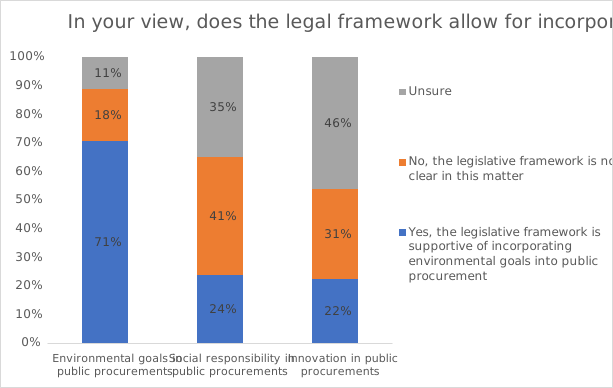
Despite these developments, lack of legal clarity is considered a barrier to strategic public procurement for contracting authorities surveyed under this project. Limited legal clarity is considered the greatest challenge for socially responsible public procurement and innovation procurement, with 57% and 26%, respectively. The lack of legal clarity does not appear to affect GPP as strongly (11% of respondents mentioned it as biggest challenge). Stakeholders are also not fully confident in their ability to engage with the market as part of the preparatory phase of the procurement. This is a critical step in any kind of public procurement, but especially for tenders with strategic criteria as contracting authorities need to understand which criteria can be realistically met by the market. It is important for contracting authorities to have full confidence in what the law does or does not allow them to do in this matter (beyond having awareness of the importance of the role of the preparatory stages of public procurement).
Source: OECD (2024) Survey of contracting authorities
Whilst legal clarity is less of an issue with GPP, lack of compliance with mandatory criteria still presents a challenge in Estonia. During the OECD fact-finding mission, stakeholders reported that only half of procurers use the GPP mandatory criteria. A potential explanation may be that contracting authorities do not have a clear overview of which criteria are mandatory and which are voluntary. Furthermore, applying environmental criteria introduces additional complexity for the procurement official, especially when the procurement value is low, and since knowledge and experience is limited ( (Kaidi Kaaret, Evelin Piirsalu and Magdalena Machlowska, 2022[3]). The biggest compliance gaps might occur in small municipalities, partly due to lack of awareness of the new regulation, but also partly due to limited manpower. In fact, these contracting authorities have faced the greatest challenges and may benefit from collaboration formats to implement GPP rules. Municipalities typically also prefer to conduct procurement on their own, rather than going through a CPB, which typically has more capacity/know-how. As such, providing practical guidance to contracting authorities on provisions that enable strategic public procurement (e.g. prior market consultations, implementation of selection and award criteria, etc.) could help alleviate some legal uncertainties.
At the same time, there do not seem to be any consequences for failing to introduce mandatory GPP criteria, which may provide an incentive to contracting authorities to keep the status quo. Investigating lack of compliance with GPP criteria could help change the practices of some contracting authorities, including transparency about failure to comply (benchmarking, identifying frontrunners). This should be implemented in conjunction with other, more positive actions such as introducing incentives to do more than what is mandatory with the goal of a long-term improved monitoring of compliance.
Additional difficulties related to the regulatory framework affect strategic procurement, although the difficulties pertain more to the budget cycle rather than the procurement framework itself. Namely, strict budget rules pose a barrier to risk-taking and innovation in public procurement in Estonia. If only price-based tenders are prioritised, there is little space for innovation. Similar concerns apply for GPP and the use of life-cycle costing. The lack of long-term budget visibility does pose a hurdle to decision-makers for committing bigger budgets to procurement with a strategic impact (see section on Buy-in from stakeholders). Dedicated funds for innovation procurement are meant to offer a solution to this challenge, but still prove difficult to gain traction. Furthermore, controls performed on procurement funded by EU funds may increase the risk-aversion of procurement officers when it comes to strategic procurement. Providing increased budget visibility for certain types of public procurements if strategic public procurement is envisaged could be beneficial.
2.1.2. Institutional framework
Description
The Estonian institutional framework in support of strategic public procurement is composed of several policy‑making bodies, implementing agencies (CPBs), and oversight authorities. In fact, the overall mandate for procurement policymaking belongs to the Ministry of Finance of Estonia (MoF) with the State Ownership Policy and Public Procurement Department. The Ministry of Finance is responsible for state supervision (supervision of compliance with the public procurement act), drafting procurement related regulations, providing guidance and advice, as well as taking care of procurement professionalisation. It also promotes the overall public procurement strategy of the country in cooperation with relevant line ministries and other actors. Not least, it has responsibilities for organising public procurement trainings.
Line ministries have the lead on respective green, socially responsible and innovation-related procurement policies. Specifically, the Ministry of Climate is responsible for developing the green public procurement (GPP) of Estonia. The Ministry of Climate hosts a GPP informational website with contact information for those with questions. It also provides a handbook for Green Public Procurement. Trainings on the use of environmental criteria are held sporadically, providing advice for procurers where needed and developing and integrating green criteria into the online procurements’ platform.
Responsibilities for innovation procurement are shared among the Ministry of Economic Affairs and Communications and the Government Office. Innovation procurement is part of its demand-driven innovation policy toolkit of the Ministry, which has the overall mandate to increase the competitiveness of Estonian companies. The Government Office is responsible for coordinating the preparation, implementation and amendment of the strategy “Estonia 2035” in cooperation with the Ministry of Finance. With respect to innovation procurement, the Government Office manages a budget of EUR 60 million available to contracting authorities that wish to undertake innovation procurement projects.
Socially-responsible public procurement falls under the remit of the Ministry of Economic Affairs and Communications since 2023, which has the overall mandate for addressing the state's social issues and ensuring equal chances to live in dignity, including compliance of labour law and standards, gender equality and equal opportunities. Previously the responsibility around socially responsible public procurement lied with the Ministry of Social Affairs.
The Estonian institutional framework for public procurement is also composed of central purchasing bodies (CPB). The State Shared Service Centre (RTK)2 is a government agency under the administration of the Ministry of Finance with over 400 employees. In addition to offering centralised procurement, the agency offers support services utilised by most of Estonian central government units, such as state accounting and payroll, as well financial services. Furthermore, it plays a role in administrating and grant disbursements and performs the function of Managing Authority for EU structural funds and cross-border programs. The RTK has practical experience of implementing strategic public procurement, notably it has included social criteria in approximately 10% of its tenders. These criteria were mostly related to accessibility. Procuring via the SSSC is mandatory for some governing areas and voluntary for other government entities, which can choose to outsource their procurement function to RTK (any purchases except IT). Since January 2024, the RTK is responsible for the administration of the e-procurement platform including maintaining the procurement reporting system.
The Estonian IT Centre (RIT) is the only mandatory central purchasing body (CPB) for the IT sector. There are additional voluntary public CPBs for other specialised areas.
Other important stakeholders in strategic public procurement include oversight bodies. In fact, limited awareness or knowledge of strategic public procurement among auditors could be a deterrent for its uptake, as contracting authorities may fear that the use of various strategic criteria may not be considered compliant with procurement regulations. In the Estonian context, Riigikontroll is the national audit office, and as such verifies whether public funds have been used efficiently and lawfully. Furthermore, the Auditing Activities Oversight Council (AAOC) is the audit authority for funds from the European Union.
Review bodies are also part of the institutional framework for public procurement and hence may play a role in reviewing cases related to strategic aspects of the procurement. In Estonia, the Public Procurement Review Committee is an extrajudicial body for settling disputes that carries out the review procedure set out in the Procurement Act. The main duty of the Review Committee is carrying out reviews, including requests for reviews and requests for compensation of damage according to the procedure set out in the law. A tenderer, candidate or economic operator interested in participating in public procurement may contest the actions of the contracting authority or entity by filing a respective request for review with the Review Committee if it finds that an infringement of the Public Procurement Act by the contracting authority or entity infringes its rights or adversely affects its interests.
To ensure policy alignment around strategic public procurement, a dedicated inter-ministerial group was set up in 2022. This entity brings together the Ministry of Finance, along with respective line ministries (Ministry of Climate, Ministry of Economic Affairs, State Office). Having a dedicated policy group allows for a coherent implementation of strategic public procurement.
Gap analysis
Policy-making responsibilities are clearly divided among relevant actors, without duplications or overlaps in responsibilities. Coordination among the Ministry of Finance and line ministries appears to run smoothly.
From interactions with stakeholders, it can be observed that some areas of strategic public procurement are more advanced than others. In particular, RTK is considered the least “mature” area with respect to policy-making, in particular regarding the opportunities that public procurement offers to advance Estonia’s social or gender agenda. Awareness about responsible business conduct practices throughout international supply chains also appears limited both from a policy and practical perspective. On the other hand, Estonia is quite advanced with respect to monitoring the local supply chain (second or third tier sub-contractors) when it comes to violations of labour laws.
2.1.3. Strategy
Description
In November 2023, the Public Procurement Strategic Principles were adopted by the Government of Estonia, which put forward the following strategic public procurement principles for public procurement in line with ‘Estonia 2035’ strategy and the Public Procurement Act: reliable, environmentally friendly, supporting innovation, socially responsible, reducing security risks, and reasonable. An action plan was designed to promote each principle and to achieve the set goals and it was adopted in November 2024. This comprehensive plan contains 63 measures covering different areas of action such as guides, trainings, IT developments, updates to legislations etc. The measures also target different audiences such as contracting authorities, suppliers, policymakers etc. The action plan was updated to the new webpage launched by the Ministry of Finance in December 2024 to promote the use of strategic public procurement. In addition to the action plan, the webpage explains each strategic principle in detail and contains useful links for the public buyer. (Ministry of Finance of Estonia, 2024[4])
The strategic goals of public procurement are multifaceted, aiming to ensure the transparent, practical, and economic use of funds while promoting equal treatment of all stakeholders and effective competition. Additionally, social considerations, innovation, and eco-friendly solutions are integral components in the planning and execution of public procurement. Strategic management of public procurement is also geared towards achieving economic, social, and environmental objectives, aligning with the principles of sustainable development. Furthermore, public procurement serves as a tool to support both the organisation itself and wider societal objectives, contributing to the eradication of poverty, ensuring good health and well-being, promoting gender equality, and addressing environmental concerns among other goals.
In pursuit of these goals, targets have been set to measure the performance and impact of public procurement. One such target involves the procurement of innovative solutions, with a goal of 2% of all public procurements being innovation procurements by 2025. This ambitious target reflects the focus on fostering innovation and accepting the risks that come with it. In terms of GPP targets foresee 20% uptake by number and 50% by volume by 2035. The targets set for GPP are based on expectation of implementation of currently existing GPP criteria (see Section 2.1.1). Similarly, targets for SRPP uptake by 2035 are set at 10% by number and 20% by volume.
Additionally, targets include reducing the administrative burden of public procurements on contracting authorities, measured through indicators such as time spent on open and simple procedures, and the average proportion of public procurements evaluated against quality criteria. These targets align with the broader objectives of public procurement, emphasising efficiency, innovation, and the attainment of societal and environmental benefits.
Another important aspect of Estonia’s Strategic Principles lies in the fact that it links public procurement to national security objectives. Estonia’s National Security Concept identifies the confrontation in economics, industry, and the use of technology with countries that do not share democratic values and that use economic operators aligned with their interest as their weapons.
The main responsible entity for the fulfilment of the strategy is the Ministry of Finance. Other listed responsible entities are the Ministry of the Climate, the Government Office, and the Ministry of Economic Affairs and Communications. The goal of improving public procurement is under the overall aim of development of state administration. The aim is for Estonia to be an ambitious and democratic digital state with high-quality, predictable and accessible public services in every region, guaranteeing people’s fundamental rights. The indicator for the aim is satisfaction with public services and local government services.
Contracting authorities are well aware of the Strategic Principles of Public Procurement, as shown by the survey results (See Figure 2.3).

Source: OECD (2024) Survey of contracting authorities
Strategic public procurement is underpinned by additional government strategies across government, namely:
Estonian Energy and Climate Plan for 2030
Estonian Research and Development, Innovation and Entrepreneurship Strategy 2021 – 20353
Estonia’s National Artificial Intelligence Strategy or Kratt Strategy for 2022–20234
The Estonian Energy and Climate Plan for 2030 includes Green Public Procurement (GPP) based on the requirements of the EU Energy Efficiency Directive. Specifically, it introduced the obligation for central government to renovate 3% of floor government buildings per year and to procure energy efficient products, services and buildings. Furthermore, the Estonian programme for environmental protection and uses of environmental resources for 2021–2024 includes a section dedicated to GPP. The Estonian Circular economy action plan 20235 also includes green public procurement.
The Research and Development, Innovation and Entrepreneurship Strategy 2021—2035 sets actions to achieve its priorities. Among those actions, the first focuses on the promotion of knowledge transfer, with the goal of ‘Strengthening the societal and economic impact of R&D and innovation’. As part of this objective, a specific action point is dedicated to increasing the competence and role of the state, including local authorities, in commissioning R&D and driving innovation, including through innovative public procurement (Action 3.5).
The National Artificial Intelligence Strategy provides an overview of the activities planned to increase the use of AI in Estonia and thereby increase the user-friendliness and accessibility of e-services and the efficiency of the state. It takes into account public procurement as part of its implementation, notably with respect to:
The establishment of practical training courses and guides will aim to raise awareness of sustainable implementation, procurement, and project management of projects with an AI component, and thereby support the implementation, deployment, management, awareness of cybersecurity requirements, awareness of implementation, dissemination of results, and benefits. (Activity 1.4)
Provision of advice and support for project planning and procurement preparation in the context of ‘Provision ongoing support for the launch, implementation, and management of AI projects’ (Activity 1.11)
Gap analysis
Estonia’s long-term vision for the strategic use of public procurement is a relatively recent development, given that no overarching strategy such as the ‘Strategic Principles’ was in place prior to 2023. Furthermore, several EU countries have in place targeted actions plans, such as for instance a National Action Plan for GPP. Nevertheless, Estonia had already strategic activities ongoing before the introduction of the Strategic Principles. For instance, Estonia had already a national target of 2% innovation procurement for 2023-2027. The Strategic Principles give overall coherence to public procurement and lay out clearly the government objectives and set targets for public procurement, as well as the links with other government policies. To this end, an action plan for strategic public procurement has also been adopted in November 2024, and close monitoring of this action plan should be undertaken to ensure that strategic targets are met.
Furthermore, Estonia could have further raised the strategic profile of GPP by including it in their Recovery and Resilience plans (RRP) as a means to green economy, as other EU countries had the opportunity to do so (Kaidi Kaaret, Evelin Piirsalu and Magdalena Machlowska, 2022[3]).
Regarding SRPP, stakeholders consider that the Strategic Principles do not currently sufficiently prioritise specific actions in the field of social policy. It is not clear to procurement practitioners which policy priorities the Ministry of Economic Affairs and Communications would like to advance through the use of socially responsible public procurement, given the wide array of goals that can be supported (e.g. long-term unemployment, vulnerable groups, gender, accessibility, etc.) In part, this may be linked with the fact that the Ministry only recently has taken over the responsibility for SRPP. To this end, the Ministry has recently decided on the prioritisation of specific SRPP objectives, and as such, clear communication on these priorities to the buyers would therefore be beneficial to increase their awareness on these policies.
A further weakness of the Strategic Principles includes limited details about the governance and implementation framework as the strategy is currently conceived. Finally, there is room for improvement on the dissemination front, in particular with the business sector. In fact, based on the OECD’s survey of 330 business sector representatives, there is relatively low awareness about the strategy, as 54% of survey respondents are not aware of it, 30% are somewhat aware, and only 8% consider themselves familiar with Estonia’s Strategic Principles in Public Procurement. Involvement of suppliers in the development of the strategy appears minimal according to survey respondents (0.6%). Contracting authorities, on the other hand, are broadly aware of the Strategic Principles, hence dissemination efforts could focus on the business sector.
2.1.4. Buy-in from stakeholders
Description
Buy-in for strategic public procurement is an essential element to ensure that policies are turned into reality on the ground. At every level, buy-in is necessary, i.e. it involves policy-makers ensuring a favourable policy framework, leaders within organisations supporting new practices, procurement officials with capacity and willingness to implement strategic public procurement, as well as buy-in from the market to deliver greener, socially responsible or innovative goods and services, and oversight bodies that also take ownership of these policies.
This section focuses on the views collected from institutional leaders as a key stakeholder group that are able to promote strategic public procurement within their purview. It also discusses buy-in and perception of strategic public procurement from the perspective of public procurement officials. The section “market readiness” will focus on supplier views.
Institutional leaders within the public sector play a key role in shaping how contracting authorities conduct their public procurement. They are able to decide whether or not to focus on certain strategic goals, or to invest in strategic public procurement for the organisation (e.g. additional training for staff or paying a premium for e.g. greener or innovative goods). They also bear responsibility for any additional risks (and the opportunity) that may be incurred with adopting new practices. Without support from the leadership, it is difficult to conceive of procurement officials advancing this agenda on their own. As such, it is critical that institutional leaders are convinced of the benefits of strategic public procurement for their organisation and as a government priority.
The OECD surveyed 46 institutional leaders across key government entities. In addition to the survey, it conducted one-on-one interviews with several leaders to get an in-depth understanding of their perspectives and decision-making.
Overall, Estonian institutional leaders appear familiar with the concept of strategic public procurement but have no practical experience with it (37%). In contrast, only 11% of respondents are fully familiar with the concept and have already collected experience within their organisation. Some awareness with limited practical experience was reported by 30% of respondents. No awareness was reported by 22% of respondents.
Public procurement’s main function is understood to be primarily to deliver value for money for the public sector (54%) or as a necessary administrative function (28%), while only a small share of respondents views public procurement as a strategic management tool that enables the achievement of important political goals (11%). Prevention of corruption and transparency are also mentioned as important goals of public procurement.
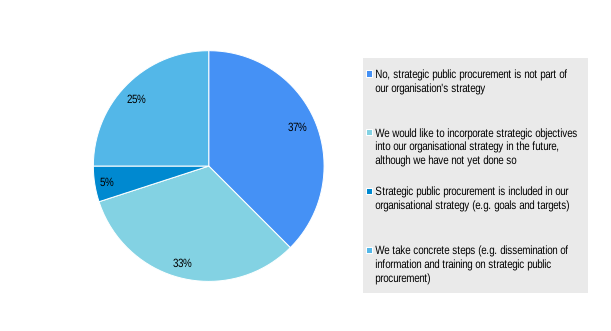
Nevertheless, strategic public procurement appears to be gaining traction among organisations and their strategies. In fact, according to 25% of survey respondents, concrete steps are already being taken to implement strategic procurement in their organisations. In addition, while 5% of respondents have already included goals in their organisational strategies, 33% expressed interest in incorporating such objectives in their organisational strategies. On the other hand, a significant share of respondents report that strategic procurement is not part of their organisational strategy (37%).
Source: Survey of institutional leaders, OECD (2024)
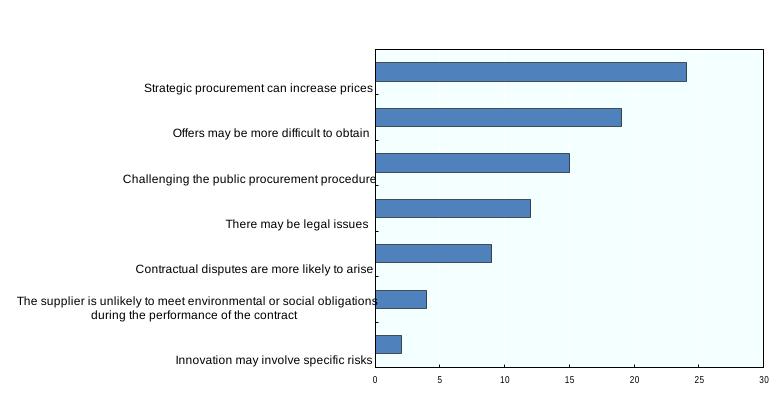
Importantly, higher risks are associated with strategic public procurement for more than half of respondents (59%). On the other hand, 41% do not view strategic public procurement as inherently riskier. In terms of which risks seem more relevant for strategic public procurement, institutional leaders consider potential price increases as the main factor of risk, followed by difficulty to obtain offers, and an increased risk of appeal of the procedure (Figure 2.5). In contrast, the risk of suppliers not being able to deliver environmental or social obligations during the contract is considered relatively minor.
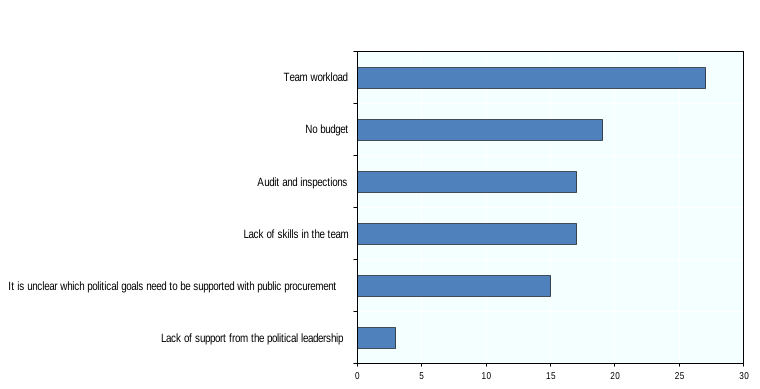
In terms of challenges for implementation of strategic public procurement, the overwhelming response is related to the workload of the team as the main factor that would impede such practice. Other significant challenges include lack of budget, fear of audits and inspections, lack of skills, as well as lack of clarity regarding which goals should be supported through public procurement (Figure 2.6).
Source: Survey of institutional leaders, OECD (2024)
Source: Survey of institutional leaders, OECD (2024)
When asked whether citizens or civil society would be supportive of strategic public procurement practices, it appeared that only few institutional leaders had clear insights, whether negative or positive. The vast majority (61%) of respondents was unsure about the answer, whereas 22% of respondents considered that external parties would support such practices, and 17% of respondents believe external parties are not supportive of strategic public procurement.
The survey of procurement officials, on the other hand, shows a mixed picture when asked whether they believe their supervisors are supportive of public procurement practices. Namely, 43% respond that they are encouraged to carry out strategic public procurement, while only 7% state that strategic public procurement is not a priority. At the same time, 50% remain unsure, indicating a lack of clear prioritization of strategic public procurement (Figure 2.7).

Source: Survey of contracting authorities, OECD (2024)
Similarly, procurement officials do not have full clarity on whether oversight bodies are supportive of strategic public procurement or not. In fact, 36% of surveyed practitioners are unsure of the answer. 20% of respondents notice different legal opinions coming from auditors versus other procurement officials, and 14% consider compliance more challenging in the case of strategic public procurement. Conversely, 30% of respondents clearly state that audits are not a concern for strategic public procurement (Figure 2.8).

Source: Survey of contracting authorities, OECD (2024)
Gap analysis
It appears that the overall picture for buy-in of strategic public procurement amongst senior leaders within the Estonian public sector is highly mixed. Certain indicators point towards support of this policy direction, while other data and observations point towards skepticism. Without the support of senior leaders, it is difficult to mainstream strategic public procurement.
The main arguments brought against strategic public procurement rest on the fact that acquisition prices may be higher with such practices. Traditional approaches, in particular using the lowest price criterion, are considered the tried-and-tested method, which is also well-known to Estonian suppliers. Several procurement practitioners also share this view. Instead, introducing strategic criteria would mean increasing the complexity of the procurement process, which is already perceived as burdensome by some. Furthermore, the benefits of strategic public procurement in support of an existing government agenda do not appear shared by all institutional leaders.
Being faced with higher prices is particularly challenging for leaders, as they are confronted with a tight fiscal environment, in which long-term budget security is not guaranteed. Furthermore, the geostrategic context, in which Estonia finds itself at present, is an additional major challenge for institutional leaders. Leaders are concerned with ensuring visibility over their supply chain in order to protect national security interests. Security concerns are often prioritised compared to sustainability-related challenges.
Some leaders view positively the impact that public procurement could have on the market for sustainable goods and services, i.e. bringing down prices and mainstreaming certain environmentally-friendly goods and services. They understand the need to be a pioneer in certain markets to make sure that over time competition increases as demand increases, and prices come down. However, the pioneering role still brings operational risks, which may not be considered acceptable to organisations in their current fiscal environment.
Specific concerns about capability are also part of the considerations of leaders when faced with the choice of embarking in new approaches vs. using the traditional ones. This includes the capacity to use more complex procurement procedures, e.g. those involving negotiation.
Therefore, it would be beneficial to increase awareness among leaders and practitioners about the benefits of strategic public procurement, notably highlighting how this tool can be used in support of existing government policies (including national security). Demonstrating the impacts of strategic public procurement is also considered important to justify potentially higher investment costs for a strategic procedure. Initiatives such as rolling out success stories based on good practices, or organising awareness campaigns for both leaders and contracting authorities can help change the risk-aversion culture regarding strategic procurement. In the Philippines, for example, conscious of the potential reluctance of certain stakeholders to consider environmental issues in public procurement, the government has developed an environmental public procurement roadmap with a list of distribution channels that can be used to raise awareness among stakeholders (see Box 2.4).
The Philippines GPP Roadmap recognises that “the first-time introduction of GPP is usually confronted with scepticism and various concerns. A well-designed approach that is sensitive to these sentiments and is carefully aware that issues have to be solved, is necessary.” The Roadmap outlines arguments that respond to stakeholders’ concerns: GPP is a measure of prudence; VfM is the guiding principle; suppliers’ readiness is a largely fulfilled condition; more capacity and better awareness has to be created; and verification of green supplies is no different than verification of conventional supplies.
The Roadmap sets out a list of outreach channels that can be leveraged to raise the wider public’s awareness and buy-in of GPP, including:
Print media through press articles and media kits that convey stories and testimonials on the advantages and benefits of green purchasing for the wider public, and broadcast media through occasional broadcast plugs or press releases;
Meetings with particular audiences or media briefings on specific themes;
Internet promotion on relevant websites as an interactive medium to disseminate information and gather data and feedback;
Informational materials (e.g. posters, newsletters, brochures), audio-visuals, and e-mails to reach as many stakeholders as possible.
Source: (OECD, 2024[5])
2.1.5. Market readiness
Description
Strategic public procurement relies on the market to deliver goods, works and services with higher green, social or innovation-related performance. As such, it is essential to understand the market’s capacity when engaging in strategic public procurement. This can help tailor criteria that can be met by the market or allow the market sufficient lead time to respond to public sector demand.
The overall health and competitiveness of procurement markets is a positive indicator also for strategic procurement practices. The EU Single Market Scoreboard provides 12 KPIs on public procurement performance. Overall, Estonia, performed to satisfactory level in 8 out 12 indicators in 20226. However, some important dimensions related to competition are not as strong. Namely, 32% of contracts awarded in Estonia had a single bidder. 11% of procurement procedures were negotiated with a company without any call for bids. In contrast, the mean decision-making period, i.e. the time between the deadline for receiving offers and the date the contract is awarded, amounted to 52 days, which is well below the 120 days considered satisfactory across the EU (European Commission, 2023[6]).
Several techniques can be helpful to contracting authorities for understanding market readiness during the tender preparation stage, in particular related to green, socially-responsible, or innovative procurement. Contracting authorities may engage in strategic discussions with potential suppliers to enhance market dialogue and facilitate tender implementation preparation. Formalised market dialogue procedures between contractor and supplier remains less common. Tenderers occasionally communicate within their sector through roundtables, a practice observed in the ICT field.
Specifically, surveyed contracting authorities appear to frequently make use of market research and market analysis to prepare tenders (76% of respondents). Dedicated event with suppliers and written market consultations, while less frequently, are still used by a number of contracting authorities (51% and 45%, respectively). In contrast, regular market dialogue with suppliers is only considered as a tool to prepare tenders by 22% of respondents (Figure 2.9).

Source: Survey of contracting authorities, OECD (2024)
From the perspective of contracting authorities, lack of market readiness is considered a bigger challenge for the implementation of SRPP and GPP, compared to innovation procurement.
The supplier survey shows a healthy participation rate in public procurement, although the sample may present a strong self-selecting bias. Indeed, the survey sample may include mostly companies that already have contracted with the public sector or are interested in doing so. Nonetheless, participation trends for the past three years are fairly stable according to the surveyed 330 suppliers. Namely, on average between 2021 and 2023, 82% of respondents declare having been awarded a public procurement contract, while 12% have not participated in public procurement. 7% of companies did participate but were not able to secure a contract. The largest share of surveyed companies are micro-enterprises (44.2%), i.e. companies with an annual turnover ≤ 2 million euros, followed by small enterprises (29.2%) (annual turnover ≤ 10 million euros), medium-sized companies (14.5%) (annual turnover ≤ 50 million euros), large international companies (6.4%) (annual turnover > 50 million euros), and finally large domestic companies (5.5%). In addition, the survey reveals that small and medium-sized enterprises are relying most heavily on the public sector for their business, with more than 40% of these companies reporting that the share of public procurement out of their turnover lies between 30% to above 50%.
In terms of participation to public procurement procedures with strategic criteria, the majority of companies report not having participated in such tenders (61.2%). Nevertheless, a sizeable group of companies have participated to tenders with strategic criteria (38.8% or 128 companies). This result shows a fairly widespread use of such criteria, and some exposure by suppliers to strategic public procurement practices. It is interesting to note that participation to strategic public procurement practices appears to favour large companies (domestic and international), whereas smaller companies and especially microenterprises are less responsive to procurements with strategic criteria (Table 2.2). When asked whether they would participate in procurement procedures with environmental, social or innovation requirements, suppliers responded overwhelmingly positively (63%). On the other hand, a third of suppliers was not sure about the answer. Overall, these results seem to suggest a cautious, but positive attitude towards strategic public procurement.
Source: Supplier survey (2024)
The public sector is also broadly perceived as an attractive client for businesses. In fact, 40% of respondents consider the public sector as a very attractive client, and 32% rate it as somewhat attractive. Only 8% have negative views about the attractiveness of the public sector as a client and 13% have neutral views. The bidding process is viewed as largely clear by 72% of respondents, which also implies that there is room for improvement since a third of companies believes that bidding processes lack clarity. In particular, for suppliers, the greatest lack of clarity includes technical specifications (32%), strategic criteria (18%) and evaluation of tender documents (16%). These results suggest a need for improved communication with the market.
Overall, the business sector perceives the Estonian market to have slight comparative advantage with respect to innovative goods and services compared to other strategic procurement areas, i.e. green and socially responsible products (Figure 2.10). On the other hand, many suppliers do not have views on this question, or consider that Estonia does not have any comparative advantage in these three areas.
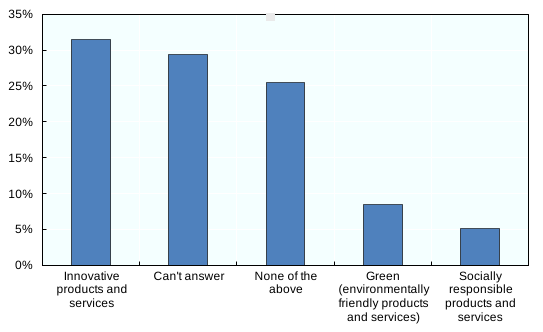
Source: Supplier survey, OECD (2024)
Similarly, suppliers view the market as more ready to deliver innovative goods and services, compared to environmentally-friendly or socially responsible products and services. Specifically, 37% considered the market somewhat advanced to deliver innovation in public procurement, while for green public procurement and socially responsible procurement this figure amounts to 27% and 24%, respectively.
Overwhelmingly, public procurement procedures are dominated by the use of the lowest price criterion, as shown by the survey results (Figure 2.11). This finding is consistent with consultations with stakeholders, both from the private sector side but also from the public sector. On the other hand, stakeholder consultations and survey responses suggest that suppliers are actually more inclined to compete on the basis of quality, while price-only criterion is seen as a deterrent for participating in public procurement.
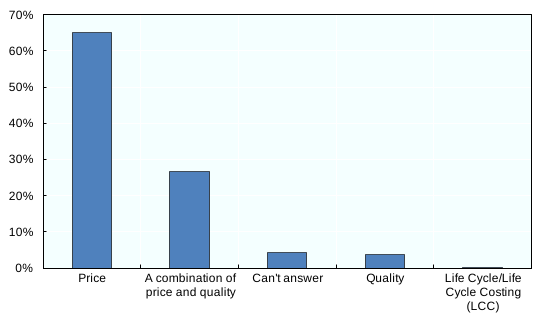
Source: Supplier survey, OECD (2024)
To this end, when asked what prevents suppliers to participate in public procurement, the supplier survey responses shows that price-only competition is a clear deterrent factor, as highlighted by 52% of respondents (Figure 2.12). Survey participants also listed many additional factors that prevent them from participating, including the perception that criteria favour certain suppliers, that selection criteria or requirements are too stringent for small companies, that time for bid preparation is short, while the time for the evaluation is lengthy. A recurring theme is also about contract conditions being overly restrictive and not aligned with the reality of the market, which in turn may lead to penalties.
For some suppliers, there was no clear answer (13%). Other important aspects preventing participation, although less prominent than other factors listed above, include contractual requirements for social public procurement (including measures addressed at the supply chain), low payments, as well as an overall lack of capacity to submit an offer that satisfies strategic criteria. A strong focus on quality may also discourage some suppliers, but it is a very minor share compared to the majority of respondents (4%).
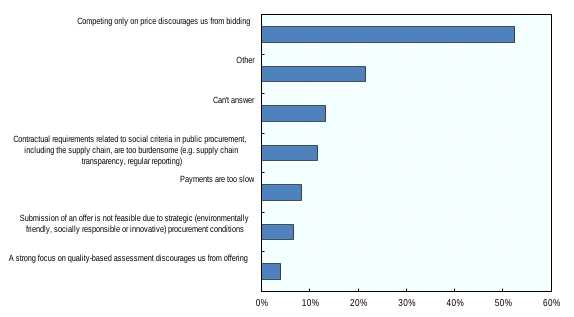
Source: Supplier survey, OECD (2024)
Suppliers were asked what measures are taken by public buyers to ensure that strategic criteria are adequately explained to the market. The overwhelming response was that any such measures are rarely carried out at all. Nevertheless, some respondents considered that written consultations (24%), sectoral procurement strategies (20%) and events in preparation of a tender (17%) as well as regular market dialogues (12%) were part of the measures introduced by contracting authorities (Figure 2.13).
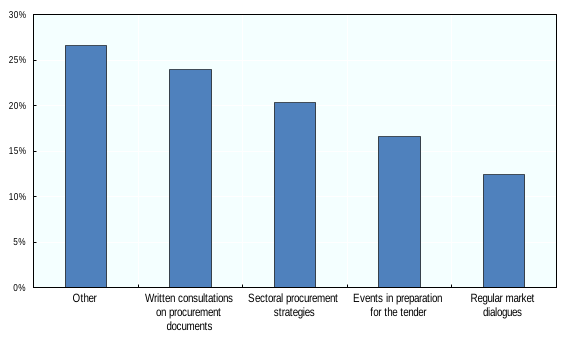
Source: Supplier survey, OECD (2024)
Gap analysis
As outlined above, Estonian businesses appear generally willing to participate in strategic public procurement procedures and have an overall positive view of the attractiveness of public procurement markets. There is a perception that Estonia has a competitive advantage for innovative goods and services, in line with the country’s reputation as a digital leader. Despite these positive factors, several challenges hamper access to procurement markets, in particular if strategic criteria are considered.
Survey respondents highlight that transparency and accessibility of the rules around strategic public procurement is an area for improvement, with 27% of respondents considering the rules not transparent or accessible.
Most importantly, businesses listed many elements that they considered as barrier to participation in public procurement, which point to a greater need for engagement between the public sector and the private sector, in particular in preparation of a tender. This included the perception of criteria being too restrictive or directed at specific suppliers, but also the notion that certain contract conditions are not feasible for market players and do not reflect market realities. In line with other findings of this assessment, this could point to limited market knowledge and business training of public buyers, which appeared to be trained more heavily in legal aspects of public procurement. Practices like market consultations (in written or as events), or regular market dialogues do not seem to be practiced on a routine basis. As discussed in other parts of this report, some contracting authorities may lack clarity about the fact that such practices are permitted under procurement law as long as transparency and equal treatment are upheld.
To tackle this, the capacity of public buyers to design tenders that strike the right balance between what the market can offer and what contracting authorities are looking for in terms of strategic objectives needs to be strengthened. This includes improving contracting authorities’ practices regarding the use of quality criteria, the time for bidding, and the time taken to evaluate bids. Capacity-building should also entail better market engagement, as it provides a unique opportunity to gather information on how strategic considerations are taken into account. More specifically, it can help identify potential suppliers and solutions that have a positive impact on strategic goals, encourage the market to respond to strategic requirements through dialogue, and inform the design of the procurement strategy, tender documentation, and contract so that the integration of strategic goals is relevant, linked to the contract objective and measurable. (OECD, 2021[7]) Additionally, the Ministry of Finance could also consider introducing sector dialogues, taking inspirations from evolutions that occurred in the ICT industry, and the focus on quality in tender development. In several OECD countries, such as Germany, market engagement tools were created in collaboration with the private sector, and especially business associations, so both parties can benefit from these dialogues (see Box 2.5).
Bitkom, Germany’s digital association was founded in 1999 and currently represents more than 2 700 companies of the digital economy, which produce an annual turnover of €190 million, including €50 million in exports, and employ more than 2 million workers in Germany. Its members also include 1 000 SMEs and over 500 startups. Its members offer software, telecommunications and internet services, produce hardware and consumer electronics, operate in the digital media sector or are in other ways affiliated with the digital economy.
Bitkom has several working groups specialising different aspect of the digital economy. The Public Contracts Working Group is focusing on issues related the public procurement of digital solutions. As the public sector is the largest buyer of digital in Germany, it has enormous market power and therefore considerable influence on competition. The Working Group, in collaboration with relevant ministries and other stakeholders, developed several manuals and other materials that support public buyers’ in designing their tender requirements and contracts in a way that creates a fair and transparent competitive environment. For example, the Working Group worked closely with the Federal Ministry of Interior (BMI) on the development of contract terms for the purchase of IT services or with the Competence Center for Sustainable Procurement (KNB) of the BMI Procurement Office on the declaration on social sustainability for IT procurement.
Bitkom, through the Working Group, also developed several guidelines on vendor- and product-neutral tendering of different IT products and services, again in collaboration with representatives of the public sector (e.g. the BMI Procurement Office, the Federal Office of Bundeswehr Equipment, Information Technology and In-Service Support (BAAINBw), the Federal Employment Agency, Berlin Police, ITDZ Berlin). The guidelines for product-neutral procurement are sorted by product groups (such as notebooks, PC desktops, laptops, server, monitors, archive, home office) and are updated regularly to comply with regulatory developments and technological standards. They address the aspect of product-neutral tendering as well as legal requirements for the product to be procured and information on environmentally friendly procurement. Bitkom’s manuals on vendor-neutral tendering of different product categories encourage contracting authorities to formulate their tenders in a non-proprietary manner that avoids the use of brands or the reference to specific manufacturers, while leveraging current technical standards. This is consistent with legal requirements in Germany, which mandate equal treatment of suppliers and market products by using descriptions of the procurement objects based on factual and non-discriminatory criteria. Indeed, Bitkom considers vendor-neutral tendering as an opportunity to ensure fair and open competition, prevent early technical determination, and avoid lock-in effects. As the number of competing suppliers increases when the tender is based on factual and technical criteria, better options and savings are realised, minimising obstacles to change providers as deemed adequate.
In the case of public tenders, contracting authorities are advised to draft a list of criteria that allows comparison of different offers and sufficient differentiation. Such award criteria should be needs-based, vendor-neutral, and transparent. However, Bitkom also recognises that technical complexities may lead to difficulties in describing the desired performance of computing equipment. In consequence, it recommends the use of technical standards and benchmarks.
Source: (OECD, 2024[8])
Furthermore, suppliers were also asked what measures would increase their willingness to participate in strategic procurement (Figure 2.14). User-friendly guidelines and templates appear to be a clear need (45%), but also more frequent use of preliminary market consultations and meet the buyer events are considered favourably (37% and 35%, respectively). Suppliers are interested in receiving support to increase their own knowledge about public procurement, having more time to bid as well as receiving training on how to bid. Suppliers also mentioned clarity and measurability of criteria as important elements for submitting bids related to strategic procurement. They cautioned against introducing overly strict criteria as this would entail the risk of reducing competition significantly.
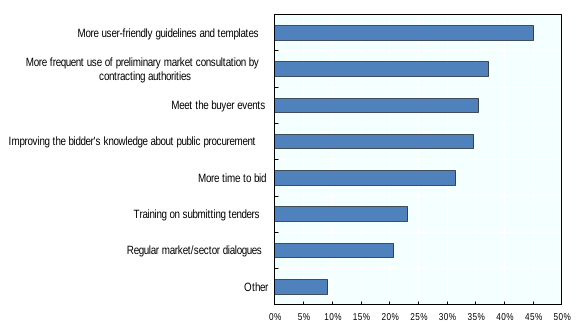
Source: Supplier survey, OECD (2024)
As such, Estonia would benefit from putting in place measures to increase the business perspective in public procurement. This would include initiatives to increase the capacity of the private sector to respond to tenders, by developing guidelines or training modules targeted to suppliers, especially when it comes to strategic public procurement. These capacity-building initiatives would particularly benefit SMEs, which constitute a large share of participants to public procurement procedures. In Canada for example, the Office of Small and Medium Enterprises works with the Government to address SME’s constraints in Procurement (see Box 2.6.).
The Office of Small and Medium Enterprises (OSME) in Public Works and Government Services Canada assists the Government in bridging the gap between supply and demand by bringing to light the concerns and challenges of SMEs in the federal procurement process. OSME works with SMEs to address their key challenges and constraints by undertaking the following:
understanding and reducing the barriers that prevent SMEs from participating in federal procurement
advising government buyers and policy makers on SME concerns
recommending improvements to procurement tools and processes to encourage SME participation in federal procurement. PSPC provides additional information available to SMEs on their webpage under “Help for SMEs”
a portal that provides access to federal procurement information and open data including bid opportunities (tenders), standing offers and supply arrangements, and contract history
free seminars, webinars and one-on-one sessions to assist suppliers in understanding federal procurement
telephone information line for suppliers who have questions about the procurement process and related tools. The Office of Small and Medium Enterprises also manages the Build in Canada Innovation Programme, which assists Canadian businesses in testing their innovative goods and services before they are commercialised.
Source: (OECD, 2024[8])
2.1.6. Capacity-building system
Description
The capacity building system for public procurement in Estonia relies on the Ministry of Finance for general public procurement training, as well as the Ministry of Climate for GPP-related training. Capacity building and support for innovation procurement is provided by Enterprise Estonia and the Government’s Office. There is no dedicated authority responsible for public procurement training. Similarly, public procurement professionals do not have mandatory training nor certification programmes.
GPP trainings by the Ministry of Climate include trainings on the use of environmental criteria, providing advice for procurers where needed and developing and integrating green criteria into the online procurement platform. Trainings on GPP are so far mostly organised on project basis. The Ministry of Climate hosts a website with videos of previous trainings on GPP. The Ministry of Climate hosts a GPP informational website and helpdesk with contact information for those with questions and a GPP newsletter one can subscribe to. There is also a handbook for Green Public Procurement.
With respect to innovation procurement, the Estonian Business and Innovation Agency (EIS) conducts capacity-building activities including for the private sector. The Agency also spearheaded the development of a web-based innovation procurement handbook, which provides tips and step-by-step instructions on how to undertake innovation procurement. The Government Office also provides support, in particular by running a programme that encourages risk-taking in innovation procurement. However, there is no regular training dedicated to innovation procurement, and is considered a main training need based on the survey of contracting authorities.
Some larger organisations have introduced a sustainability coordinator that also helps include sustainability aspects into procurement procedures. This is for instance the case of North Estonia Medical Centre, one of Estonia’s largest hospitals. Smaller organisations do not have the capacity for such a practice but could benefit from joining larger ones.
In March 2024, the Ministry of Finance has also published a guidance for the implementation of quality-based award criteria, which cover both environmental and socially responsible aspects. The guidance includes ‘universal’ sample criteria (i.e. applicable to any sector) as well as criteria for specific types of procurements (Ministry of Finance, 2024[9]).
Gap analysis
There are few regular trainings on the strategic use of public procurement. As it is often the case, most training needs are concentrated at the local level with small contracting authorities having the biggest knowledge gaps. Furthermore, high turnover of officials in contracting authorities might have previously impacted the quality and amounts of capacity-building measures.
Stakeholders also report lack of capacity on how to describe needs effectively, and specifically how to add strategic criteria. It is often challenging for procurement officials to find criteria that are not too difficult to implement, or that do not require a disproportionate number of resources to control at contract implementation stage. There is limited good practice around procedures that involve negotiations in Estonia. The use of innovative procurement methods is also quite limited.
Estonian procurement officials are often highly trained from a legal point of view, but less so from an economics and business perspective. As such, efforts may be concentrated in drafting terms of contracts that are very strict and allocate most risks to the private sector, even though this may not be an appropriate business practice, as it may cause appeals or litigation further down the line. As such, a number of stakeholders blame the length of procurement processes on litigation, despite the fact that overall numbers of public procurement appeals are quite low.
To tackle these shortcomings, capacity-building efforts already in place should be strengthened through regular trainings for procurers and tenderers on how to implement strategic public procurement. These trainings should not solely focus on legal/compliance aspects of strategic procurement, but also include business practices that match the reality of the markets. Another initiative for capacity-building could include the creation of a network to encourage peer support and sharing good practices inter-institutionally, but also with the private sector. For example, Japan’s Green Purchasing Network brings together stakeholders from the private sector, central and local governments, and civil society organisations (see Box 2.7.)
The Green Purchasing Network (GPN) is a network organisation where different entities, such as private companies, governmental bodies and consumer groups, work together to promote green procurement. In 1996, the GPN has defined the Green Purchasing Principles. These principles encompass the following four major points:
1. Consider whether a product is needed before purchasing it;
2. Consider environmental impacts across the whole life cycle of a product, including those incurred through any services provided from extraction of raw materials to disposal;
3. Select products and services offered by suppliers who take a conscious effort reduce the impact on the environment;
4. Gather information on products, services, and suppliers to inform decision-making and management of contractual relationships.
Building upon these principles, the Green Purchasing Guidelines were developed to provide guiding principles for purchasing by category of products and services. Different GPN members, including manufacturers of eco-friendly products, companies willing to purchase green products, consumer groups, non-governmental environmental associations and local governments, co-designed the Guidelines based on a consensus-building approach. The Guidelines cover a wide range of products and services – i.e. from office supplies and home appliances to vehicles.
Moreover, based on the Principles of Green Purchasing, the GPN created a Supplier Evaluation Check List to assess the efforts undertaken by suppliers to improve the environmental performance of products and services. In the Eco-products Database, suppliers then disclose information about the environmental measures adopted for each product and service registered, in accordance with the Check List. The Eco-products Database gives environmental information in list form on products provided by each manufacturer so that users can compare products from an environmental standpoint in accordance with the Green Purchasing Guidelines. As of May 23, 2016, the database listed approximately 15,000 products from 63 fields, including environmentally friendly products in product fields for which the Green Purchasing Guidelines have yet to be formulated.
Source: (OECD, 2024[10])
2.1.7. Monitoring system and risk management
Description
Monitoring of the strategic use of public procurement is organised via self-reporting through the e-procurement system, i.e. the Public Procurement Register7. The information on the use of green, social, and innovative aspects in procurements is collected via the Public Procurement Register since 2018. In this respect, the Estonian system of gathering statistics on strategic implementation of public procurement in the tendering phase was a precursor to the EU-wide eForms. Since May 2023, the information is collected in a structured manner via the EU-wide eForms and available in machine-readable open data.
The Public Procurement Register provides an excellent data base for buyers to take an example and for all stakeholders, including policy makers, to search information or collect statistics. Anyone can search published procurement data and documents, contract information and review decisions.
The Public Procurement Register is designed to accompany the user when labelling contracts as either “green”, “socially responsible” or “innovative”. The Register also integrated links to relevant guidance. Specifically, when preparing a procurement in the Public Procurement Register, the use of environmental aspects, social aspects and innovative criteria must be marked. The option “Read more” directs the user to the Ministry of Climate’s website on green public procurement, the Ministry of Finance’s website on social aspects, and EIS’ handbook on innovation procurement.
When the use of green aspects is marked “yes”, a green leaf is added to the title of the procurement in the register. Predefined green criteria are integrated for user-friendly tendering. If “no” is selected, the register displays a notification reminding the tenderer of the mandatory green criteria set on furniture, cleaning products and services, copying and graphic paper, office IT equipment and vehicles. Similar coding for social aspects and innovation procurement is planned to be integrated in the future.
In general, for green, social, and innovative aspects, the codes provided by EU e-forms have been used since Summer 2024.
Statistics on public procurement and the use of strategic goals are reported yearly. In addition to yearly statistics, procurement data analytics through PowerBI is updated once a quarter8. The reports are produced by the Ministry of Finance, State Ownership and Public Procurement Department. Here, the total amount of contracts made is announced, as well as the share of smaller contracts and those of greater size, as well as overall value is listed. In addition to the statistical information, an overview of the most important legislative and public procurement register-related activities and changes is provided. The numbers are reported from data in the Public Procurement Register (Ministry of Finance, 2023[11]).
The survey conducted by the OECD on the competency model answered by nearly 150 participants revealed that 84% of respondents claim to have previously conducted a green public procurement procedure, 50% a procurement procedure incorporating SRPP criteria and 54% had conducted an innovation procurement procedure. There is however arguably a discrepancy between these numbers and the reported numbers of procurement procedures conducted that included strategic goals. In 2022, only 7% of the total procurement processes was considered as green public procurement, 0.1% as socially responsible procurement, and 0.2% as innovation procurement. (Ministry of Finance, 2023[11])
Gap analysis
The status of GPP in Estonia remains unclear due to challenges in capturing the full extent of it through the monitoring system. With the use of e-forms launched in the summer of 2024, the public buyer now has to mark the sustainable aspect of the public procurement process manually in the system.
With respect to strategic procurement, there may be some undercounting of the uptake because procurement procedures are not labelled as such (i.e. green, social or innovative) by the buyer in the system. According to some research, GPP is likely higher in practice than compared to the results from the monitoring. (Kaidi Kaaret, Evelin Piirsalu and Magdalena Machlowska, 2022[3]) Stakeholders may not be certain about what is considered socially responsible or innovation procurement, which may be even harder to define compared to GPP.
Despite potential undercounting, the Public Procurement Register is a powerful tool to monitor public procurement in real time, including strategic procurement. Estonia is well advanced in the first layer of monitoring of strategic public procurement, namely how frequently it occurs. As such, to enhance the monitoring of the uptake of strategic procurement, the understanding of ‘definitions’ in particular of SRPP and innovation procurement should be improved in order to ensure accurate measurement of strategic public procurement. In order to overcome these challenges, the development of tools or standard templates to help procurers monitor the implementation of GPP could be beneficial. In Ireland, for example, the Irish Environmental Protection Agency (EPA) has developed a model report on green public procurement. The next frontier is to measure the impacts related to the implementation of strategic public procurement, to demonstrate its value to both leaders and contracting authorities, for example through regular surveys to assess the performance of strategic procurement. In Canada, a national survey on GPP in the public and private sectors has been carried out over several years. The annual GPP surveys have also been used to feed into the four-yearly Sustainable Procurement Barometer, which allows public and private organisations to self-evaluate and compare their performance with their peers over time (see Box 2.8).
The Sustainable Procurement Barometer was first launched in 2012 by the Network of Sustainable Procurement Organizations. It is partially funded by the Canadian government, and enables Canadian contracting authorities to self-assess their sustainable procurement performance. The barometer was also implemented in 2016 and 2020.
The 2020 edition assesses the contribution of sustainable procurement to the Sustainable Development Goals (SDGs) defined by the United Nations Environment Programme, and also includes the participation of businesses. The Barometer reports on organisational practices according to five levels of maturity (low concern, commitment, progress, maturity and exemplarity) for each of the five aspects of sustainable procurement (vision, policy and governance, stakeholder engagement, operationalisation and evaluation).
A total of 142 organisations took part in the study:
26% companies;
26% agencies and government departments (Quebec and Canada);
26% municipalities and 11% educational institutions;
20% of the organisations are members of ECPAR.
Source: (OECD, 2024[10])
References
[6] European Commission (2023), “Single Market Scoreboard 2022”.
[3] Kaidi Kaaret, Evelin Piirsalu and Magdalena Machlowska (2022), Decarbonizing the EU’s road and construction sectors through green public procurement, https://www.sei.org/wp-content/uploads/2022/09/green-public-procurement-estonia-poland.pdf.
[1] Ministry of Finance (2024), “2023. aasta riigihangete valdkonna statistika ja kokkuvõte (2023 - Public procurement statistics and summary)”.
[9] Ministry of Finance (2024), Kvalitatiivsed Hindamise Kriteeriumid. Juhend Hankijale (Qualitative Evaluation Criteria. Guide for the Contracting Authority).
[4] Ministry of Finance of Estonia (2024), Action plan for strategic public procurement, https://www.fin.ee/sites/default/files/documents/2024-12/Tegevuskava.StrateegilisedRiigihanked.2024.pdf (accessed on 20 January 2025).
[11] Ministry of Finance, P. (2023), “Riigihangete valdkonna 2022. aasta kokkuvõtlik ülevaade (2022 - Public procurement statistics and summary)”.
[5] OECD (2024), Harnessing Public Procurement for the Green Transition: Good Practices in OECD Countries, OECD Public Governance Reviews, OECD Publishing, Paris, https://doi.org/10.1787/e551f448-en.
[8] OECD (2024), Improving Competitive Practices in Hungary’s Public Procurement.
[10] OECD (2024), Making the green transition happen: a compendium of good practices on Green Public Procurement.
[7] OECD (2021), “Promoting gender equality through public procurement: Challenges and good practices”, OECD Public Governance Policy Papers, No. 09, OECD Publishing, Paris, https://doi.org/10.1787/5d8f6f76-en.
[2] Parliament of Estonia (2017), Public Procurement Act, https://www.riigiteataja.ee/en/eli/505092017003/consolide (accessed on 23 July 2024).
← 1. Directive 2014/24/EU on public procurement, and Directive 2014/25/EU on procurement by entities operating in the water, energy, transport and postal services sectors
← 2. The Estonian name is Riigi Tugiteenuste Keskuse (RTK)
← 5. https://ringmajandus.envir.ee/sites/default/files/202212/Eesti%20ringmajanduse%20tegevuskava%202023.pdf
← 6. The indicators of the EU Single Market Scoreboard related to public procurement cover procedures above EU thresholds only, and include: [1] Single bidder; [2] Direct awards; [3] Publication value by GDPl; [4] Joint procurement; [5] Award criteria based on price alone; [6] Decision speed; [7] Contracts with SME participation; [8] SME bids; [9] Procedures divided into lots; [10] Missing previous publication number; [11] Missing supplier registration number; [12] Missing buyer registration number