This chapter explores the relationship between skills and productivity in Canada, offering insights into why the country’s productivity growth lags behind that of its peers. It begins by examining Canadians’ educational attainment and proficiency in information-processing skills. It then considers whether Canadians are allocated to jobs in a way that takes full advantage of their skills and qualifications. This includes an analysis of skill use at work, how well formal qualifications in Canada align with labour-market demands, whether the most skilled workers are efficiently matched with high-productivity firms, and the economic returns to skills. The chapter then reviews the role of career guidance and adult learning in helping workers adapt to technological change and move into more productive roles and sectors. It concludes by investigating whether certain socio‑economic groups are falling behind in Canada, thereby hindering overall productivity growth.
Reviving Productivity Growth in Canada

Abstract
Canada needs to improve the allocation of its highly skilled workers and the opportunities they face
Sustained productivity growth depends on improving how capital and labour are combined, which is driven by technological progress and human capital development. Skilled workers are better equipped to adopt new technologies, enhance processes, and drive innovation. Yet even though Canada’s workforce is highly educated, this has not delivered productivity gains commensurate with those seen in peer countries. Prior OECD research suggests that about 25% of the productivity gap between Canada and the top countries for adult skills could be explained by lower skill proficiency as measured in the Survey of Adult Skills, and about 15% of the productivity gap between Canada and countries with the lowest degree of mismatch could be explained by labour market mismatch (qualification and field of study). In this context, this chapter examines Canada’s standing in terms of human capital and its use.
The key findings from the chapter are as follows:
Educational attainment is high in Canada, leading to relatively strong information-processing skills, but the efficiency of skill acquisition could be improved. While Canada has the highest share of tertiary-educated individuals in the OECD, its average skill proficiency in literacy, numeracy, and problem-solving is only moderately above the OECD average and falls below that of top performers. Moreover, the efficiency with which years of schooling translate into skill acquisition is relatively low: Canadians spend more time in education than their peers in Japan, Sweden or the Netherlands, but often emerge with lower levels of core competencies. This undermines the return on investment in formal education, both for individuals and the economy as a whole. Measures that can help increase the efficiency of education include investing in teaching quality, restricting the use of digital devices for personal use in schools, as well as enhancing the school-to-work transition by promoting participation in apprenticeships and internships.
Despite high levels of human capital, Canada faces challenges in using it effectively to drive productivity. This is reflected in high rates of overqualification, a lower share of the most skilled workers employed in the biggest, most productive firms, and smaller wage premiums for top talent compared to peer countries.
Even when Canadians possess strong skills, they are not always matched to roles that make use of them. Canada has one of the highest rates of over-qualification in the OECD, with many workers employed in jobs that do not require their level of education. These mismatches are not distributed randomly: they are concentrated among humanities graduates and foreign-born individuals. This is driven by both insufficient demand for highly educated workers relative to supply and the inefficient allocation of talent across the labour market. Canada should support its youth in making informed decisions about the educational pathways they choose, especially when it comes to selecting a field of study. Moreover, while the employment of foreign-born individuals in jobs below their formal qualifications may be partly due to quality differences in degrees obtained abroad compared to those in Canada, there may nevertheless be scope to improve the recognition of foreign credentials to reduce the mismatch between qualifications and employment among foreign-born individuals. More could also be done to promote well-paid, highly productive educational and career paths for women, particularly in math-intensive STEM fields, where women are significantly underrepresented.
Too few adults in Canada are employed in large, productive firms that offer high returns on human capital and are more likely to invest in the skills of their workers by providing training. Compared to the United States, a smaller share of adults in Canada is employed in large firms. Large firms tend to be more productive – better able to exploit economies of scale and adopt new technologies, for instance – and pay higher wages to employees with the same level of skills and education than smaller firms. Furthermore, employees in the largest firms (1000 or more employees) are 20 percentage points (p.p.) more likely to participate in adult learning than those in small firms (1‑10 employees). Policies that provide career guidance to employees and remove skill barriers to mobility – both between firms and geographically – can help workers find firms where their talents can be put to best use. At the same time, small- and medium-sized firms should be supported in adopting policies that help them make the best use of their skilled workers, for instance, via investments in frontier technologies or in the adoption of managerial best practices. Support for SMEs could also include financial incentives to invest in the skills of their employees such as subsidies or tax credits to lower cost barriers, as well as initiatives to foster partnerships between SMEs, larger firms and training providers.
Economic returns for top talent in Canada are lower than those for similarly skilled individuals in highly productive countries like the United States and Denmark, suggesting that Canada must enhance opportunities for these workers to fully leverage their potential. When skills are utilised effectively, workers see substantial returns reflected in their wages. Indeed, higher-skilled workers do earn more in Canada, suggesting that skills contribute effectively to a worker’s productivity. However, when comparing earners toward the top of the wage distribution, Canada’s most skilled workers earn significantly less than similarly skilled workers in the United States – especially in the largest firms. The lower returns to skill likely contribute to “brain drain,” with highly skilled Canadians moving to the United States in search of better-paid opportunities. To retain and fully utilise Canadian talent, it is important to improve the opportunities available to high-skilled workers in Canada, for instance, by encouraging firms to make skill-complementing investments in advanced technologies, intangible capital, and organisational practices.
Participation in career guidance for adults is low in Canada, and while adult learning is prevalent in Canada, courses tend to be short and often do not focus on the skills needed to adopt new technologies. Career guidance and adult learning can play a role in helping workers to adapt to (and adopt) technological changes, switch to occupations and firms that offer greater opportunity and maintain their productivity throughout life. However, in 2020/21, only one in five adults in Canada spoke to a career guidance advisor in the previous five years, the lowest share among the surveyed countries. Though Canada performs relatively well in terms of participation rates in adult learning, the intensity and relevance of training can be more limited. Courses tend to be short, often focussing on soft skills or compliance, and are less likely to support transitions into technology-rich fields or high-productivity roles. In 2023, only 19% of businesses in Canada reported providing ICT training to their employees, significantly below the top-performing countries, where the share was above 35%. Training access is also uneven – for example, older adults and employees in small firms are much less likely to participate in training, even when facing significant changes in the workplace.
Addressing skill deficiencies among certain socio‑economic groups in Canada – particularly older workers – can help these individuals reach their full potential, thereby contributing to higher overall productivity. Older workers in Canada have significantly lower proficiency in information-processing skills – such as literacy, numeracy, and problem-solving – compared to younger individuals, with the age‑related gap exceeding that observed by gender or migration background. Moreover, older workers are less likely to use their literacy, numeracy, and ICT skills at work, even when they have similar proficiency levels and qualifications as their younger counterparts. They are also considerably less likely to use career guidance or participate in adult learning. While lower training participation among older workers is to some extent expected, given that older individuals have fewer years left in the labour market to harness the benefits of training, the age‑related gap in training participation is larger in Canada than in many peer countries, underscoring a potential area for policy attention through career counselling and financial support to participate in training targeting older workers.
Over the long run, economic growth arises from improvements in how efficiently an economy turns resources – such as workers and machinery – into goods and services. This depends on achieving advances in technology and investing in a more skilled workforce. Skilled workers are better at using new technologies, which directly boosts how much each worker can produce. They are also more likely to improve how businesses operate and generate new ideas, which leads to advances in technology and further supports growth. At the national level, this is reflected in higher productivity in countries with higher human capital (Figure 3.1, Panel A), while at the individual level, higher skills raise productivity and are rewarded with higher wages (Figure 3.1, Panel B).

Note: Each data point in Panel A refers to a (de‑meaned) country-year. Human capital estimates are based on PISA and Survey of Adult Skills using Égert, de la Maisonneuve and Turner (2022[1]) methodology. Results for Panel B are very similar when other skill proficiency domains (literacy, adaptive problem solving) are used instead of numeracy. These results are presented in Annex Figure 3.A.1. Wages are gross hourly earnings for employed and self-employed individuals, including bonuses, in PPP-adjusted 2022 USD.
Source: Panel A in Égert, de la Maisonneuve and Turner (2022[1]), “A new macroeconomic measure of human capital exploiting PISA and PIAAC: Linking education policies to productivity” and OECD Productivity Database; Panel B: proficiency and wage estimates are from the 2023 Survey of Adult Skills.
For Canada, prior OECD research suggests that improvements in skills and the effectiveness of their use could have a large positive impact on productivity. Taking the correlation between skill proficiency – as measured in the Survey of Adult Skills – and industry level productivity at face value, about 25% of the productivity gap between Canada and the top countries for adult skills could be explained by lower skill proficiency. Moreover, about 15% of the productivity gap between Canada and countries with the least qualification and field of study mismatch could be explained by (mis)allocation of workers (OECD, 2024[2]).
This chapter evaluates Canada’s standing in terms of human capital and its use. It begins by analysing the levels of educational attainment in Canada and proficiency in essential skills, such as literacy, numeracy, and problem-solving.
It then explores how effectively skills are used within firms and how well human capital is allocated across the economy. In particular, it assesses how often skills are utilised in the workplace, how well formal qualifications align with and are allocated to labour market needs, whether top talent is allocated to the most productive firms, and what the returns on top talent are.
The chapter then examines participation in career guidance – which supports worker reallocation to more productive jobs and firms – and adult learning – which facilitates transitions into higher-productivity roles and enables adoption of new technologies.
The chapter concludes by examining whether certain socio‑economic groups in Canada are falling behind in terms of skills and skill use, thereby hindering overall productivity growth.
Canada is among the top OECD countries for educational attainment. In 2023, 63% of Canadians aged 25‑64 completed tertiary education, the highest share among OECD countries and significantly above the OECD average of 41% (Figure 3.2, Panel A). This high attainment rate is partly attributable to the high participation in short-cycle tertiary programmes, with 26% of Canadians holding such qualifications as their highest level of education. However, Canada scores well even after accounting for the prevalence of short-cycle degrees. In 2023, 37% of Canadians held at least a bachelor’s degree, above the OECD’s average of 35%. The country also ranked seventh among OECD Members in terms of average years of schooling.

Source: OECD (2023) Adults’ educational attainment distribution, by age group and gender, https://data‑explorer.oecd.org/s/2dz.
Today’s high educational attainment rate in Canada is a result of a dramatic increase in schooling over the last three decades. The share of individuals with tertiary education in Canada more than doubled between 1990 and 2023, while the share of those with less than upper secondary education decreased from 31% to 7% over the same period (Figure 3.2, Panel B). This is consistent with the trends observed in the OECD, where the share of individuals with less than upper secondary education halved between 1998 and 2023, partly due to increases in the upper age limit for compulsory education, while the share of those with tertiary education doubled over the same period.
Educational attainment is a strong predictor of skill levels, but it is not the only factor, and while information-processing skills in Canada are above the OECD average, Canada ranks lower in information-processing skills than in average years spent in education. In 2023, Canada, with a score of 271, ranked 12th in the OECD for numeracy skills of adults (age 16‑65), 8 points above the OECD average but significantly below the top-performing countries such as Finland (with a 23 points higher score than Canada), Japan (20 points above) and Sweden (14 points above) (Figure 3.3, Panel A). For literacy and adaptive problem-solving skills, Canada ranked 10th, also above the OECD average but below the top-performing countries (Annex Figure 3.A.2).
Numeracy scores by country
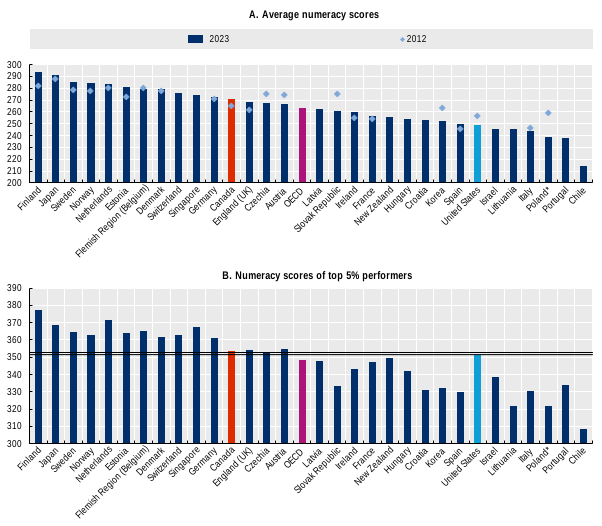
Note: Empty squares indicate countries where the change in numeracy skills between 2012 and 2023 was not statistically significant. *Caution is required in interpreting results due to the high share of respondents with unusual response patterns. See the Note for Poland in OECD (2024[3]), Do Adults Have the Skills They Need to Thrive in a Changing World?: Survey of Adult Skills 2023, https://doi.org/10.1787/b263dc5d-en.
Source: 2023 Survey of Adult Skills.
Inequality in information-processing skills in Canada is relatively low, below the OECD average and significantly lower than in the United States. In 2023, the difference in numeracy scores between the bottom and top 5% performers in Canada was 181 points, compared to an OECD average of 190 points. In contrast, in the United States – the country with the highest inequality in numeracy skills – the gap between the top and bottom 5% performers was 231 points. As a result, even though the average numeracy score in Canada was significantly higher than in the United States, the numeracy skills of the top 5% performers were similar in both countries (Figure 3.3, Panel B).
Despite the increase in educational attainment, over the last decade, numeracy skills in Canada increased by only 2% and there was no statistically significant improvement in literacy skills in Canada. This should be viewed in the context of overall poor developments in information-processing skills among the countries participating in the survey, with only two countries (Finland and Denmark) improving their literacy scores, and seven seeing an increase in numeracy proficiency since 2012 (OECD, 2024[4]).
Moreover, while Canada boasts higher-than-average educational attainment and adult skill levels, there is room to improve the efficiency with which years spent in education translate into skill outcomes. For example, the populations of Japan, Sweden and the Netherlands spend, on average, fewer years in education but have higher literacy, numeracy and problem-solving skills than Canadians. Similarly, at every level of educational attainment, several OECD countries outperform Canada in literacy scores (Figure 3.4).
Numeracy scores by the level of educational attainment and country
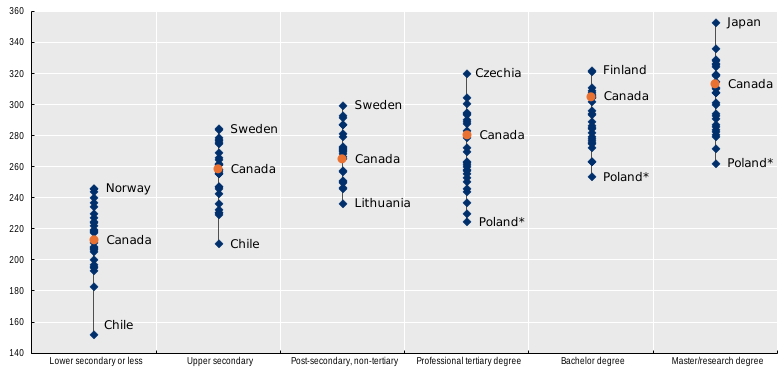
Note: Markers correspond to countries and economies that participated in 2023 Survey of Adult Skills. Individuals who obtained their education abroad have been excluded. *Caution is required in interpreting results due to the high share of respondents with unusual response patterns. See the Note for Poland in OECD (2024[4]), Do Adults Have the Skills They Need to Thrive in a Changing World?: Survey of Adult Skills 2023, https://doi.org/10.1787/b263dc5d-en.
Source: 2023 Survey of Adult Skills.
This discrepancy cannot be explained by funding alone – Canada spends more per student (adjusting for purchasing power) at both the primary and tertiary levels than Finland and Japan, the two countries that achieve the highest literacy proficiency at each educational attainment level (OECD, 2024[5]). However, it should be noted that spending per student differed significantly across Canadian provinces and territories (OECD, 2025[6])
Prior research at the OECD suggests that restricting digital device use in school and promoting school policy for responsible internet use could help improve school outcomes in Canada (Andrews, Égert and de la Maisonneuve, 2024[7]). In 2022, 43% of Canadian students reported being distracted during mathematics classes because of digital devices, and 33% by other students using digital devices; these figures were above the OECD averages of 30% and 25%, respectively (OECD, 2023[8]).
A smaller, but non-negligible effect would be achieved by improving teacher quality (Andrews, Égert and de la Maisonneuve, 2024[7]). In 2022, 44% of students in Canada were in schools whose principal reported that the school’s capacity to provide instruction was hindered by a lack of teaching staff, and 24% were in schools with inadequate or poorly qualified teaching staff. This constituted an increase in comparison to the previous measurement in 2018, when the corresponding numbers were 19% and 7%, respectively (OECD, 2023[8]). Ensuring high-quality teaching requires adequate teacher salaries. Between 2015 and 2023, nominal statutory salaries for lower secondary teachers with 15 years of experience rose by 14% in Canada, but real salaries fell by 3% due to rising living costs. In contrast, average real salaries across OECD countries rose by 4% (OECD, 2024[5]). Finally, high-performing school systems tend to entrust principals and teachers with these responsibilities, but in Canada, 67% of students were enrolled in a school where teachers had the main responsibility for choosing which learning materials are used, below the OECD average of 76% (OECD, 2023[8]).
It is also important to develop stronger links between the world of education and the world of work to ensure that skills developed in education are subsequently used at work, for example, through work-based learning such as apprenticeships, which to a large extent adjusts automatically to the needs of the labour market (OECD, 2018[9]) (see Box 3.1). Getting work experience during studies is also matters for the employment outcomes of university graduates. Prior research shows that, compared to men who did not hold a student job, median earnings two years after graduating from a bachelor’s degree were 58% higher for those men who had a student job that was retained two years after graduation and 42% higher for those who had a student job that was not retained. For women, the effect was even larger (Frenette, Handler and Chan, 2021[10]).1 Moreover, a randomised control trial during which fictitious resumes were sent to real job openings found that applicants with internship experience had, on average, a 13‑14% higher probability of being invited to a job interview (Baert et al., 2021[11]; Nunley et al., 2016[12]) and other work found a positive impact of internship participation on graduates’ income (Bolli, Caves and Oswald-Egg, 2021[13]).
Gender patterns in educational attainment may also contribute to how well years spent in education translate into skills. Canadian women significantly outperform men in participation in tertiary education (by 14 p.p.) and the gap is wider than the OECD average (8 p.p.). However, despite having higher levels of educational attainment, women in Canada did not outperform men in literacy and scored lower than men in numeracy, which may be related to the fields of study women choose and jobs they subsequently hold – see section 3.5.
Incentivising employer participation in apprenticeship schemes
Many countries face challenges in getting employers on board to secure enough apprenticeship placements. This is partly because companies that offer apprenticeships bear the associated costs but face the risk that they will not capture the benefits if, upon completion of training, the apprentice is poached by other firms. One way to address that is by establishing an apprenticeship levy scheme, as is the case in England and Denmark. In England, the universal levy is set at 0.5% of payroll, applying to the proportion of payroll above GBP 3 million. The funds are used to pay for grants to firms that offer apprenticeships. The aim of the levy scheme is to reward employers that offer apprenticeships and make those who benefit indirectly – by poaching trained apprentices – contribute to the cost of training. Establishing such schemes at a sectoral level and involving employers in managing the fund can lead to a higher sense of ownership and buy-in from employers. Moreover, to steer apprenticeship demand towards high-productivity sectors, the government could offer top-up funding in those priority sectors.
Supporting employer training capacity
Workplaces provide a powerful learning environment where skills needed in the labour market can be learnt under the supervision of practitioners. However, workplaces are typically designed for production, not teaching, and the risk is that without support, firms may treat apprenticeships as cheap labour rather than offer learning opportunities. To address this, countries with strong apprenticeship systems not only regulate the skills apprentices are required to develop but also provide support to enhance employers’ training capacity. For example, in Germany, mandatory training for apprentice supervisors helps ensure that mentors are qualified. Evidence suggests that this matters – when this requirement was temporarily suspended, dropout rates and employer complaints rose, and when mandatory supervisor training was reinstated, quality improved.
Establishing rigorous and comprehensive assessment procedures
Strengthening and standardising assessment processes for apprenticeship credentials could improve their credibility. In Germany, the competent chambers administer both interim and final examinations in accordance with common national criteria. Moreover, in many well-developed VET systems, final examinations cover a broad range of occupational competencies, not just theory, helping ensure that apprentices are genuinely ready for work. For example, in Switzerland, real estate agents aiming to pass the professional examination for property managers must take an oral examination that includes a role‑playing scenario, with examiners playing the role of clients.
Promoting take‑up and completion of apprenticeships
Many young people lack information about apprenticeships, which can be addressed through youth counselling. In France, a pilot scheme that offered youth intensive counselling support before the start of an apprenticeship increased the likelihood of signing up for a pre‑apprenticeship programme by 54%. However, it did not improve the take‑up of the subsequent apprenticeship programmes. While the reasons why higher pre‑apprenticeship take‑up did not translate into higher apprenticeship participation are unknown, high drop-out rates are a common challenge in apprenticeship schemes. To address that, a programme offering study support, guidance, and tutoring was launched in Germany. The initial evaluation showed that participants felt more secure in their apprenticeships, and female participants were less likely to consider quitting than the control group.
The impact of human capital on productivity depends not just on the supply of skills and educational attainment, but also on how effectively human capital is used within firms and allocated across the economy. Even with a highly educated population, productivity gains can be limited if workers’ skills are underused or not matched to the right roles and firms. For example, individuals with the highest level of skills (Level 4 and above)2 earn USD 12, USD 8 and USD 3 more per hour in Switzerland, Denmark and the United States, respectively, compared to workers in Canada (Figure 3.5). While wages are an imperfect proxy for productivity, wage gaps among workers with similar skill levels may indicate that the skills of Canadian workers are being put to less productive use, either because they are not being fully utilised or because they are used in firms or sectors with less advanced technology or lower capital intensity.
To understand why Canadians earn less for the same level of human capital, this section first examines how basic information-processing skills are utilised in Canadian firms. It then investigates whether Canadians are employed in jobs that make full use of their qualifications, and whether Canada’s top talent is effectively allocated to the most productive firms. It concludes by comparing returns to skills in Canada with those in benchmark countries.

Note: Employed adults aged 25‑65 not currently in formal education. Wages are gross hourly earnings for employed and self-employed individuals, including bonuses, in PPP-adjusted 2022 USD. *Caution is required in interpreting results due to the high share of respondents with unusual response patterns. See the Note for Poland in OECD (2024[4]), Do Adults Have the Skills They Need to Thrive in a Changing World?: Survey of Adult Skills 2023, https://doi.org/10.1787/b263dc5d-en.
Source: 2023 Survey of Adult Skills.
3.3.1. Canada leads in the use of information-processing skills at work, but many Canadians do not make full use of their qualifications
Canada demonstrates a high level of information processing skill use across multiple domains. It ranks sixth among OECD countries in the use of literacy skills at work, fourth in numeracy, third in ICT skills, and fourth in problem-solving (Figure 3.6). Notably, these high rankings are not just due to high proficiency in skills in Canada, as they persist even after controlling for differences in skill proficiency and educational attainment across countries. This suggests that Canadian workplaces make effective use of the basic skills of their workers.
Index of literacy, numeracy, ICT and problem-solving use at work, scale from 1 to 5, selected countries

Note: The methodology used to calculate the skill use indices is discussed in the Annex.
Source: 2023 Survey of Adult Skills.
While the high use of skills like literacy and numeracy is a positive sign, indicating that Canadian workplaces take advantage of these basic skills in the population, it does not necessarily mean that human capital – especially that of the top talent – is optimally allocated.
For example, while the overall skill requirements in jobs in Canada are higher than in the United States, for most skill areas, university graduates in Canada tend to be employed in jobs that require less management, negotiation and critical thinking skills than graduates in the United States. In contrast, Canadians holding a university diploma tend to use more technical skills, such as installation, equipment maintenance, equipment selection, and repairing (Frenette and Frank, 2018[19]).
Moreover, in Canada, 40% of employed individuals hold a qualification that exceeds the requirements of their job (Figure 3.7, Panel A). This represents the eighth-highest over-qualification rate – the share of workers employed in jobs whose qualification requirements are inferior to the qualification held – among OECD countries and is above the OECD average of 34%. Canadians who are overqualified earn 7.4 USD less compared to others with the same educational attainment, even after accounting for differences in individual characteristics,3 which suggests that the misallocation of workers into jobs below their qualifications has negative implications for their productivity. While rising levels of educational attainment can naturally contribute to a higher over-qualification rate, this alone does not explain Canada’s position. Several countries with similar average years of education have managed to maintain lower rates of over-qualification. For instance, the populations of Finland, Switzerland and the Slovak Republic spend, on average, 14 years in education, which is similar to Canada, yet their over-qualification rates are notably lower, at 26%, 22% and 21%, respectively (Figure 3.7, Panel B).

Note: *Caution is required in interpreting results due to the high share of respondents with unusual response patterns. See the Note for Poland in OECD (2024[3]), Do Adults Have the Skills They Need to Thrive in a Changing World?: Survey of Adult Skills 2023, https://doi.org/10.1787/b263dc5d-en. The methodology used to calculate the overqualification rate is discussed in the Annex.
Source: 2023 Survey of Adult Skills.
Overqualification in Canada may be partly due to higher levels of educational attainment than the economy appears to demand. While 60% of employed Canadians hold a tertiary degree,4 only 47% of employees report that their job requires one.5 Conversely, 41% of filled jobs require only an upper secondary qualification, yet this is the highest level of education for only 34% of workers. Similarly, 11% of filled jobs do not require an upper secondary qualification, but only 6% of employed Canadians have less than this level of education. Countries with lower overqualification rates and the same average years of education exhibit a closer alignment between educational attainment and the qualifications required in the labour market. For example, in Switzerland, the share of jobs that required a tertiary degree and the share of employed people holding one were very similar (45% vs. 46%). While these statistics only cover the world of filled jobs and employed individuals, data on vacancies and unemployed individuals in Canada show a similar pattern. In the last quarter of 2024, there were 2.4 unemployed individuals holding at most a high school diploma for every vacancy requiring that level of qualification, while there were 4.8 unemployed persons holding at least a bachelor’s degree for every corresponding vacancy (Statistics Canada, 2025[20]).
As a result of the supply of highly qualified individuals exceeding demand in Canada, those with higher qualifications often compete for jobs that require lower levels of education, thereby crowding out less-qualified workers. For example, 24% of filled jobs in Canada require a bachelor’s degree, and while 28% of the employed Canadians hold one, only 15% of Canadians both hold a bachelor’s degree and are employed in a job that requires it and 12% of bachelor’s degree holders are working in positions that do not require that level of qualification (Figure 3.8). This is primarily because holders of graduate degrees, which are in excess supply, compete for jobs against bachelor’s degree holders – 6% of workers in Canada hold a graduate degree but are employed in jobs that only require a bachelor’s degree.
However, there may also be scope to improve how individuals are matched to roles that better align with their qualifications. For example, 7% of workers with a qualification at upper-secondary level but without a tertiary degree are employed in jobs above their qualifications, and at the same time, there are workers with tertiary degrees employed in jobs that only require upper-secondary education (Figure 3.8).6
Share of filled jobs that require a certain qualification (“need”) versus share of workers that hold this qualification as their highest level of education, broken down by whether workers are well-matched, employed below or above their qualifications

Note: “Need” is the share of employed Canadians who report that a certain qualification is required for their job. “Actual” is the share of employed Canadians with a certain highest qualification attainment, broken down by whether workers are well-matched, employed below or above their qualifications.
Source: 2023 Survey of Adult Skills.
While a high overqualification rate suggests that talent may be underutilised in Canada, and points to the need for firms to make skill-complementing investments that allow workers’ capabilities to be more fully leveraged, it does not necessarily mean that Canada would be better off with fewer individuals holding top qualifications. Highly educated workers often bring valuable skills – such as critical thinking and problem-solving – that enhance productivity and foster innovation, even in roles that do not explicitly require advanced credentials. Indeed, conditional on being in jobs that require the same level of qualifications, overqualified workers earn, on average, 3.6 USD more than those who are not overqualified, after controlling for a set of individual characteristics.7 A well-educated population also makes it easier for Canada to adapt to future changes in the job market, avoid skills shortages, and become a more attractive destination for investment and innovation.
However, Canada should support its youth in making informed decisions about the educational pathways they choose, especially when it comes to selecting a field of study. Beyond the level of education, which is mechanically correlated with the likelihood of overqualification, the largest differences in overqualification rate are observed by field of study. Almost 70% of those who studied humanities, languages and arts have a qualification level exceeding that required by their job, while this statistic stands at 34% and 38% of those who studied welfare and health, subjects with the lowest overqualification rates. This is consistent with evidence on median wages five years after completing a bachelor’s degree by field of study, which shows that eight out of the bottom ten fields were in arts and humanities (Frenette and Handler, 2020[21]). Arts and humanities ranked similarly low among master’s degree holders (Frenette and Handler, 2020[22]).
While some individuals may be well-informed about how employment prospects differ between fields of study and still choose to pursue a degree in lower demand due to personal interests, for others, career guidance – grounded in robust labour market intelligence and collaboration with employers (OECD, 2018[9]) – could help align educational choices with labour market needs, thereby reducing overqualification.
Yet, at the moment, relatively few 15‑year‑old Canadians benefit from career guidance services compared to the leading countries. In 2022, around half had spoken with a career advisor, which is similar to the OECD average, but lags behind countries like Finland, Denmark, and Sweden, where nearly 90% of students had such conversations. Fewer than 30% of Canadian students had attended a job fair, and only about 15% had completed an internship. Finally, only 30% of students in Canada had participated in job shadowing or a worksite visit by age 15 – one of the lowest rates among OECD countries, ranking fourth from the bottom. This is well below the OECD average of 45% and far behind leading countries such as Switzerland (80%) and Denmark (70%) (OECD, 2025[23]).
Finally, part of the explanation for the high overqualification rate in Canada may be that some degrees obtained abroad by foreign-born individuals differ in quality from the same level qualifications obtained in Canada (see section 3.5). In such cases, individuals being employed in jobs that require lower-level credentials may be an efficient outcome.
3.3.2. Canadians too often work in small, less productive firms
Misallocation of human capital may also occur across firm types. For a given level of skills and qualifications, workers in larger firms typically earn more than those in smaller firms (Berlingieri, Calligaris and Criscuolo, 2018[24]). In Canada, workers with the same human capital (educational attainment and information-processing skills) earn 7 USD less per hour if they are employed in small firms (1‑10 employees) compared to those employed in firms with 1 000 or more employees, even after taking into account several individual and job characteristics (Figure 3.9, Panel A). This suggests that smaller firms may be less effective at putting the human capital of their workers into productive use, which may be because small firms are generally less well positioned to benefit from economies of scale, engage in international trade, adopt and develop frontier technologies, and implement more efficient organisational structures, such as optimal task specialisation.
Smaller firms are also less likely to invest in their workers’ skill development. Adult learning participation is 20 p.p. lower in small firms (1‑10 employees) compared to those with 1 000 or more employees (Figure 3.9, Panel B). This remains statistically significant even after controlling for a set of individual and job characteristics.
These relationships between firm size, human capital utilisation and productivity imply that a misallocation of skilled workers into small, low-productivity firms may act as a drag on output, as workers are unable to use their talents to their full potential.

Note: Panel A presents gross hourly wages controlling for gender, educational attainment, skill proficiency, age, migration background, region, occupation (1‑digit) and sector (1‑digit). Wages are gross hourly earnings for employed and self-employed individuals, including bonuses, in PPP-adjusted 2022 USD.
Source: 2023 Survey of Adult Skills.
In Canada, 11% of employees work in firms with 1 000 or more employees, compared to 16% in the United States – a relative increase of 45%. Moreover, research has concluded that a substantial share of the aggregate productivity gap between Canada and the United States can be explained by the large concentration of workers in smaller, lower-productivity firms (OECD, 2025[25]).
However, job allocation by firm size alone is insufficient to explain Canada’s lagging productivity. Denmark, for instance, has a similar allocation of workers by firm size to Canada, but overall productivity levels similar to those of the United States. Therefore, it would not seem that the concentration of employment in smaller firms can explain the differences in productivity and wage levels observed between Denmark and Canada. In part, this may reflect higher average skill levels across the firm size distribution. However, it may also reflect differences in the use and development of talent, as well as structural differences between the two economies, such as differences in management quality, capital intensity and adoption of new technologies, the extent of competitive pressure, or the ease with which talent reallocates between firms.
Policies that provide career guidance to employees and that remove skill barriers to mobility – both between firms and geographically – can help workers find firms where their talents can be put to best use (see sub-section 3.4.1 and Chapter 4 for a general discussion of the role of policies to support job mobility). At the same time, small- and medium-sized firms should be supported in adopting strategies that help them make the best use of their skilled workers, for instance, via investments in frontier technology or in the adoption of managerial best practices. Support for SMEs could also include financial incentives to invest in the skills of their employees, such as subsidies or tax credits to lower cost barriers, as well as initiatives to foster partnerships between SMEs, larger firms and training providers.
3.3.3. The returns to top talent in Canada are lower than in the peer countries
Even when workers possess similar skills, differences can persist in how effectively their skills are rewarded. This may reflect variations in how well firms are able to translate talent into productivity gains, or Canada’s relatively low share of large firms. (Larger firms tend to hire more highly skilled workers and pay higher wages overall.) Moreover, as highly skilled workers are more mobile than low-skilled workers, top talent is more likely to relocate to other jurisdictions in search of better-paying opportunities when significant financial differences exist (Lkhagvasuren, 2014[26]) (see Box 5.1 in Chapter 5).
This sub-section examines how wages in Canada compare to those in the United States and Denmark, across skill levels, wage distribution, and firm size. Denmark and the United States are useful benchmark countries because both have seen productivity growth superior to that of Canada over the past years, but present different patterns of allocating and rewarding skills. Evidence suggests that Canadian workers are not rewarded as well as their counterparts in these countries. However, the groups that earn more relative to Canada differ between the United States and Denmark.
Figure 3.10 takes adults at each of four numeracy proficiency levels and plots the gross hourly wages for each decile of the wage distribution within that proficiency level. It does this for Canada, Denmark, and the United States. This allows one to compare differences and inequalities in adults’ wages – both throughout the earnings distribution and across proficiency levels – between these three countries.
In Denmark, wages are higher than in Canada at each decile of the wage distribution and for all skill levels (Panel A-D). In contrast, in the United States, wage levels are very close to those in Canada at lower skill levels (Level 1 and below and Level 2) (Figure 3.10, Panel A-B); it is only for high-earning adults at the 8th and 9th wage deciles that a gap begins to emerge between Canada and the United States. Looking at higher-skilled adults, on the other hand, the divergence between Canada and the United States begins much lower in the wage distribution: among adults with numeracy proficiency at Level 3 or Level 4 and above, the median worker in the United States is already earning more than the median Canadian worker (Figure 3.10, Panel C-D). This means that, for the highest-skilled workers, the rewards in the United States are substantially greater than those in Canada.
While Denmark represents what Canada could achieve if productivity were increased in such a way that wage increases were reflected throughout the wage distribution, the United States shows a different model of rewarding skills, where – compared to Canada or Denmark – raw returns to skills are greater the more highly-skilled an adult is, with the gap increasing at higher points in the wage distribution within each skill level. Though wages are not a perfect proxy for productivity – and this pattern between Canada, Denmark, and the United States may also be a reflection of how wages are negotiated and of the relative demand and supply for skills, rather than pure differences in productivity – the differences in the wage distribution nevertheless indicate that economic opportunities for top talent in Canada are more limited than in the United States. Adults at the top of the wage distribution account for a substantial share of the productivity gap between these two countries, supporting the idea that under-utilisation of Canada’s top talent may contribute to commensurately lower productivity.8
Reported hourly wages by wage decile for each numeracy proficiency level

Note: Figure plots the wage distribution for deciles 1 through 9 for workers at each skill level in numeracy, for Canada, Denmark, and the United States. Wages are gross hourly earnings for employed and self-employed individuals, including bonuses, in PPP-adjusted 2022 USD.
Source: 2023 Survey of Adult Skills.
Figure 3.11 shows differences in how the rewards for different types of workers vary across firm sizes between Canada, Denmark and the United States. It plots the gap in hourly wage between wage earners at the first and ninth decile of the wage distribution for adults with low numeracy skill levels (Level 1 and below) and high numeracy levels (Level 4 and above), by firm size. Panel A shows the gap between Canada and the United States, while Panel B shows the gap with Denmark.
Compared to the United States, it is clear that the wage differences are most pronounced for the largest firms (this has also been found in, for example, (MacGee and Rodrigue, 2024[27]; OECD, 2022[28]). Among firms with over 250 employees, irrespective of skill level, workers near the top of the wage distribution in the United States earn between 20 and 25 USD more per hour than in Canada (Figure 3.11, Panel A). In contrast, differences in wages between Canada and the United States for workers employed in smaller firms only emerge for the high-skilled (Level 4 and above) and highest-paid workers in those firms (9th decile).
Thus, the differences in how workers are rewarded in the United States versus Canada are predominantly driven by wage gaps at the upper end of the wage distribution. These wage gaps are present across firm sizes for highly skilled workers but only within larger firms for low-skilled workers. Denmark presents a contrast: here, the gaps do not vary dramatically across different proficiency levels or firm sizes (Figure 3.11, Panel B). The differences in how workers are rewarded in Denmark versus Canada are more consistent and are spread more uniformly across the distributions of wages, skills, and firm size.
Gap in hourly wages within firm size and worker skill level categories, by wage decile

Note: Figure plots the difference (Canada minus the United States/Denmark) in wages by firm size and skill level at 1st and 9th decile in the wage distribution. Wages are gross hourly earnings for employed and self-employed individuals, including bonuses, in PPP-adjusted 2022 USD.
Source: 2023 Survey of Adult Skills.
Overall, examining the returns to skills across different types of firms reveals two related insights. First, employment in Canada is concentrated among smaller firms, which tend to be less productive and pay lower wages; furthermore, the most skilled adults are also more likely to find themselves in these smaller, less productive firms than is the case in peer countries. Second, even for those highly skilled adults who are employed in the largest firms of Canada, the economic returns to their skills are lower than for similarly skilled adults in most productive countries, such as the United States and Denmark.
While Canada has succeeded in producing a large supply of highly skilled and qualified workers, the challenge is to improve the opportunities available for these workers. Greater demand from firms for top-tier talent will provide some of these opportunities while generating concomitant benefits for the firms themselves in the form of increased output and improved competitiveness. The decline in productivity growth among frontier firms is likely to have reinforced the lack of demand for top talent – see also Chapter 2. Therefore, encouraging firms to make skill-complementing investments – for instance, in frontier-level automation or software technologies, in R&D, and in boosting organisational and managerial performance – could help boost opportunities for the most highly skilled workers to make the best of their potential.9
While some of Canada’s productivity challenges may arise from limited opportunities for top talent that require solutions beyond skills policies, tackling the misallocation of workers – both in terms of their qualifications and the types of firms they work for – could go some way toward improving productivity. Achieving this will require robust career guidance to help individuals identify roles that better match their skills and potential, alongside access to adult learning opportunities to bridge any gaps that hinder mobility into more productive jobs.
Beyond improving job alignment, adult learning and career guidance are also essential tools for helping workers adjust to ongoing changes in the labour market. They help people continuously adapt to new technologies, shifting job requirements, and evolving workplace demands, ensuring that they remain productive throughout their careers. This is particularly true in a context where people may need to transition between jobs and sectors more frequently than in the past. For instance, 11% of Canadian workers were at high risk (probability of 70% or higher) of automation-related job transformation in 2016 (Frenette and Frank, 2020[29]). Similarly, 13% of Canadian workers are employed in “brown jobs”,10 some of which may disappear as a result of the green transition (OECD, 2023[30]). In 2021, 31% of employed Canadians were in jobs that may be highly exposed to AI and relatively less complementary with it and 29% were in jobs that may be highly exposed to and highly complementary with AI (Tahsin and Frenette, 2024[31]) – see also Chapter 2. These workers will likely need to adapt to labour market changes by developing new skills. Indeed, Canada recorded one of the highest shares of workers reporting changes in their work environment (Box 3.2).
This section examines participation in career guidance and adult learning in Canada. It also evaluates whether current training opportunities are sufficiently targeted and intensive to support transitions into higher-productivity roles and adapt to technological change. Supporting workers in accessing training to reskill and upskill is especially important for those regions where the economic base remains concentrated in a narrow set of industries, and which are therefore more vulnerable to disruption (see Burnett and Brunelle (2019[32]) for a recent analysis of trends in industrial concentration in small- and medium-sized Canadian cities).
In 2023, 65% of employed Canadians aged 25‑65 experienced changes in their work environment in the three years preceding the survey, one of the highest shares among OECD countries and seven p.p. above the OECD average (Figure 3.12).
The most commonly reported shift, experienced by 44%1 of employed Canadians, was in the use of information and communication technologies, where Canada ranked third among OECD countries. The same share of employed Canadians reported changes in working methods and practices at the workplace, a third of employed Canadians experienced changes in the products and services and a fifth reported changes in machinery used at work. While this can be seen as good news, indicating that Canadian enterprises are adapting to a changing environment, it also highlights the need for training to ensure workers can keep up and thrive amidst these transitions.
Share of the employed who reported that they experienced a significant change in their work environment in terms of machinery, ICT, working methods and practices, or products or services, %
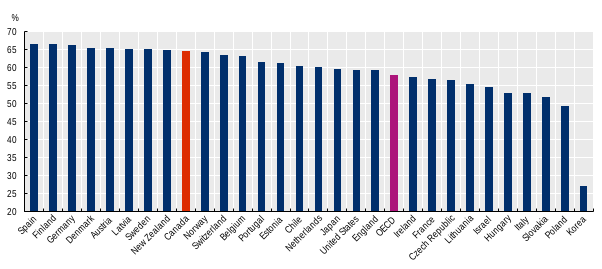
Notes: 1. Respondents could indicate multiple changes in their work environment.
Respondents with at least three years of experience with the current employer were asked to report any changes in the three years preceding the survey, while others were asked to report changes since starting their current job.
Source: 2023 Survey of Adult Skills
3.4.1. Few Canadians use career guidance services
Effective career guidance starts with well-designed assessments of occupational and skills demand, and with career mapping that helps identify transition pathways between occupations. This information can then be shared with jobseekers, employers, training providers, and other stakeholders, ideally via a centralised website (Box 3.3). For many adults, however, online resources alone may not suffice, and speaking with a career guidance advisor can be beneficial.
In 2020/21, only 19% of Canadian adults reported speaking with a career guidance advisor in the previous five years, which was significantly lower than the average of the surveyed countries11 (39%). While part of this difference may stem from methodological variations,12 it may also reflect deeper issues related to demand for and availability of career guidance in Canada (OECD, 2022[33]).
The most common reason why individuals did not participate in career guidance services in Canada was that they did not feel the need to use these services (49%) (OECD, 2022[33]). While for many individuals, this may reflect rational preferences or personal circumstances, for others, these outcomes may stem from an underestimation of the benefits of career guidance in identifying more productive and better-aligned job opportunities. Moreover, a fifth of those who did not use career guidance stated that it was because they were unaware that such services existed – making it the second most common reason for non-use. This points to either an insufficient supply of such services or inadequate outreach and communication efforts.
New data sources and methods can be used to collect more accurate and up-to-date information on skills and to help identify career progression pathways between occupations. For example, Jobs and Skills Australia uses Lightcast job postings data to analyse real-time skills demand over the past five years. The identified skills are then mapped to over 1 000 occupational profiles in the Australian Skills Classification, which is used to inform education and training policy and career guidance (OECD, 2023[34]). Such information on skills can then be used to develop career progression pathways. In the United Kingdom, Mapping Career Causeways is a project that uses machine learning to map over 1 600 occupations based on the skills and work activities that they entail. Based on a worker’s current occupation, the tool identifies roles that require similar skills, education, and level of experience and even transitions that would lead to jobs with comparable or higher pay (Nesta, 2022[35]). This can be used to guide workers toward completing training activities that would unlock new opportunities.
Equally important is the user-friendly provision of labour market information online, together with tools that facilitate matching between individuals, employers and training providers. For example, in New Zealand, information about occupational profiles, which includes common tasks, pay range, required qualifications, as well as vacancies in the occupation, is presented in a user-friendly way (Tertiary Education Commission, n.d.[36]). Artificial intelligence is opening new opportunities to make such websites more helpful, for example, by matching job seekers and employees with training courses that help them progress in their careers. Oxford Data Technologies has developed a prototype AI-powered platform – Skills Concierge – that matches job seekers and employers with training courses they need, displays information on whether the course is eligible for government support, allows users to book courses directly through the platform, tracks progress towards a qualification through participation in stackable modular courses and suggests the next course that could benefit the user.1
1. Information based on discussions and materials shared by Oxford Data Technologies.
Finally, career guidance in Canada was often oriented toward immediate job placement, with less emphasis on supporting individuals’ long-term career advancement and personal growth. Finding a job was the most common reason why adults participated in career guidance in Canada (64% of those who used career services), significantly more common than the international average (43%). In contrast, Canadians were less likely than their international counterparts to seek guidance when they wanted to advance in their current job (27% versus 40%) or when choosing a study or training programme (19% versus 31%). This partly reflects the higher participation of unemployed individuals in career guidance compared to the employed population in Canada, which is in contrast to the similar participation levels of these two groups in other countries surveyed. Lower use of career guidance among employed individuals in Canada is, in turn, a result of the focus of government-run employment services on job-matching for unemployed adults (OECD, 2022[33]).
Improving access to career guidance for adults – based on high-quality labour market intelligence – could help recent graduates in Canada enter the workforce and other workers transition into roles where their skills are better utilised, thereby boosting productivity. For recent graduates, career guidance can take the form of services offered by universities to their alumni. Universities are well placed to contact alumni, as they typically retain contact details, and the career guidance they provide is often well-tailored to the type of careers they may pursue. For example, in the United Kingdom, graduates can often continue to access their university’s careers service for up to three years after graduation, and some universities offer lifelong access (Cedefop, 2020[37]). For other workers, support to access career guidance may need to be combined with targeted outreach campaigns. Examples of such policies in Belgium and Austria are presented in Box 3.4. To reduce the cost of the intervention, the option of using statistical profiling – commonly used in Public Employment Services – to identify individuals who could benefit the most from a career transition could be explored.
Career vouchers in Flanders and Brussels, Belgium
In Flanders and Brussels, workers with at least seven years of work experience can use career vouchers to participate in subsidised career guidance sessions. Individuals can benefit from two vouchers every six years. The first voucher allows them to participate in 4 hours of guidance, and the second one in 3 hours of guidance provided at a recognised career centre. The co-payment from the individual to use the voucher is EUR 45, while the estimated cost of career guidance is EUR 182 per hour (i.e. EUR 1 274 for seven hours).
Outreach to promote career guidance and employability services in Vienna, Austria
The City of Vienna’s labour market organisation, Waff, undertakes a wide range of outreach activities to raise awareness of its career guidance and employability services. To engage potential clients, Waff makes extensive use of social media – for example, by partnering with influencers to promote its services, producing a soap opera-style series that follows an individual successfully changing careers, and launching testimonial campaigns in which clients share their personal experiences with Waff. Beyond digital engagement, Waff also organises pop-up counselling sessions in accessible community locations such as public housing complexes, community centres, and public childcare facilities. Additionally, it collaborates with labour unions to deliver information sessions directly in the workplace. These diverse outreach efforts have proven effective: 77% of Viennese residents are familiar with Waff’s services.
Source: Scheme in Belgium: VDAB (n.d.), Alles over loopbaancheques, www.vdab.be/orienteren/loopbaanbegeleiding/alles-over-loopbaancheques; information about the outreach efforts in Vienna is based on a presentation delivered by Waff on 22 May 2025 during a Mutual Learning Programme event
3.4.2. Many Canadians participate in adult learning, but the courses they take tend to be short, and their content does not necessarily help in the adoption of new technologies
In contrast to career guidance, participation in adult learning – defined as structured and intentional learning through formal and non-formal job-related courses – is high in Canada compared to other OECD countries. In 2023, 51% of 25‑65 year‑olds in Canada participated in adult learning in the 12 months preceding the survey (Figure 3.13). This places Canada as the eight best-performing country in the OECD for adult learning participation, significantly above the OECD average (40%). Canada falls seven p.p. short of the top scores recorded in Finland and Norway, and four p.p. below the participation rate in the United States.
Similarly, a large share of employees in Canada report informal learning at work – defined as not structured and not intentional learning that results from daily activities – compared to other OECD countries. In 2023, jobs of 63% of employed Canadians involved learning-by-doing at least weekly, the fourth highest score in the OECD and 12 p.p. above the OECD average (Annex Figure 3.A.3).
Share of adults 25‑65 who participated in adult learning (formal and non-formal job-related) in the 12 months preceding the survey, by type, percentage
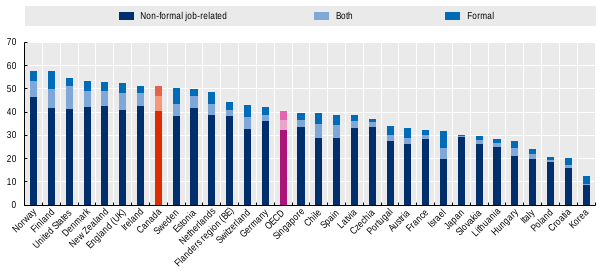
Note: OECD is a weighted average of the listed countries; BE: Belgium, UK: United Kingdom.
Source: 2023 Survey of Adult Skills.
However, it is not only participation in training that matters, but also the extent to which it facilitates meaningful skill development – an outcome that is closely influenced by the course’s duration and content.
Formal courses – those that typically lead to a recognised qualification – are likely to lead to significant changes in the skillset, and Canada is the eighth country with the highest participation in formal learning among 25‑65 year‑olds. In 2023, 11% of Canadians in this age group participated in formal learning (Figure 3.13). This is particularly high when taking into account that educational attainment is already high in Canada (see section 3.2). Still, formal courses are primarily undertaken by younger adults – 22% of 25‑34 year‑olds, 13% of 35‑44 year‑olds, 6% of 45‑54 year‑olds and 1% of 55‑65 year‑olds – and most adults who participated in adult learning took non-formal courses (Figure 3.13).
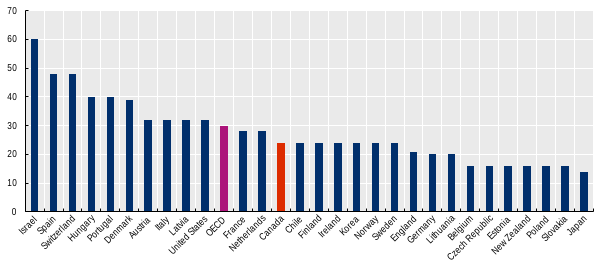
Non-formal job-related courses – those that typically occur outside of the formal education system and do not lead to a recognised qualification – were the main type of training that individuals participated in across the OECD, but were short in many OECD countries, which raises questions about the extent of skills transformation they can effectively achieve. This is particularly the case in Canada, where training intensity of non-formal courses was below the OECD average. In 2023, 50% of training in Canada lasted one day or less, 69% lasted 2 days or less and almost 90% lasted a week or less. The median training duration was 8 hours, below the OECD average (10 hours). While Canadians who participated in training took as many courses (three, on average) as the OECD average, the overall training intensity, measured as median course length multiplied by the average number of courses taken, was relatively low. Training intensity in Canada was 24 hours, below the OECD average (30 hours) and half or less the number of hours spent in non-formal training in Israel, Spain and Switzerland (Figure 3.14).
Training intensity, defined as the median course length multiplied by the median number of non-formal job-related courses taken in the last 12 months
Source: 2023 Survey of Adult Skills.
Moreover, as in other OECD countries, a relatively limited share of training in Canada focussed on the adoption of new technologies. In Canada, the most common purpose of training was to develop soft skills, such as project management, teamwork, customer service and communication and presentation skills. These topics accounted for 32% of training in Canada, similar to the OECD average of 34% (Figure 3.15). While soft skills are important for productivity,9 it is unclear whether the short soft skills training programmes are effective in developing these skills or merely serve as checkbox exercises demonstrating compliance or ethical awareness. The second most common topic of training in Canada was work safety and first aid, which, while important, has limited impact on labour productivity. In Canada, work safety and first aid accounted for 17% of courses, close to the OECD average (16%). A relatively low share of training in Canada and elsewhere in the OECD focussed on the adoption of new technologies through the development of computer or software skills (17% in Canada and 15% in the OECD) or learning how to operate machinery and equipment (8% in Canada and 7% in the OECD). Moreover, in 2023, only 19% of businesses in Canada reported providing ICT training to their employees, below the OECD average (24%) and significantly below the top-performing countries such as Finland (38%), Belgium (37%) and Denmark (35%) (OECD, 2023[38]).13
Finally, despite the high overall training participation, 38% of Canadians who experienced a change in the workplace reported that they did not receive any training financed by their employer in relation to that change, and only 29% received training for all the changes they experienced (Annex Figure 3.A.4). This may mean that the content of the training offered by employers does not correspond to the employees’ needs or that a significant share of the training needed to adapt to workplace changes is paid for by actors other than employers. Indeed, even though most training in Canada was paid for by employers (31% of 25‑65 year‑olds participated in training paid for by employers), Canada ranks 10th in terms of training participation primarily funded by employers and 3rd in terms of the share of individuals who took courses paid by themselves, public institutions or other sources (18% of 25‑65 year‑olds).
Topic of the last non-formal job-related training that individuals participated in, percentage
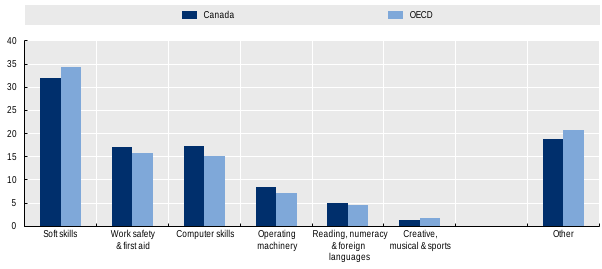
Note: Soft skills training includes project management or organisational skills, team-work or leadership skills, handling customers, clients, patients or students and communication and presentation skills.
Source: 2023 Survey of Adult Skills.
To support broader technology adoption, Canada could consider introducing Individual Learning Accounts (ILAs) focussed on new technologies and emerging skills. ILAs are virtual accounts in which training rights accumulate over time, with a defining emphasis on the individual rather than the employer. These rights are owned by the individual, can be used without employer approval, and remain portable as individuals change jobs or employment status, which facilitates job mobility. In contrast to individual saving accounts, such as Learn$Ave previously implemented in Canada, ILA generally require only a small or no co-payment from participants, which can lead to higher take‑up among cash-constrained low-income individuals. ILAs are also more likely to benefit low-skilled and low-income individuals than tax deduction schemes such as Canada Training Benefit, limiting deadweight loss, as demonstrated by the experience in the Netherlands where the tax deduction scheme was replaced by a voucher scheme similar to an ILA (Buiskool et al., 2024[39]). Examples of ILA schemes in France, Lithuania, Czechia and Korea are discussed in Box 3.5.
Scheme with a broad selection of courses in France
In France, all individuals active in the labour market have an Individual Learning Account. Those who are employed receive an annual credit of EUR 500, which can be accumulated up to EUR 5 000 and used to develop and validate a wide range of skills. Low-skilled individuals and persons with a disability are offered a more generous credit of EUR 800 per year, accumulating to a maximum of EUR 8 000.
The scheme can be accessed through Mon Compte Formation, a personal online account that allows users to track their training balance and enrol in eligible programmes without further validation from a counsellor. The scheme is managed by the Caisse des Dépôts et Consignations (CDC), which is responsible for the technical and financial management and payment of training courses.
The approximate cost of the scheme was EUR 2.3 billion in 2023. The scheme is funded through mandatory contributions by businesses to vocational training and apprenticeships, at the level of 1% of the gross annual payroll for companies with 11+ employees and 0.55% for employers with fewer than 11 employees. Individuals, employers and public employment services are able to top up the funding available in the account to finance more expensive training.
Schemes focussed on selected skills in Lithuania and Czechia
The Czech ILA pilot, launched in 2023, supports the development of digital skills in information technology and Industry 4.0. Individuals aged 15 and above can receive up to CZK 50 000 (EUR 2 000) in training support, with a required co-financing contribution of 18% from participants. Eligible programmes are listed on the Jsem v kurzu portal, where individuals can request funding and apply for training.
Lithuania’s ILA pilot, which was launched in 2024, provides employed individuals aged 15‑65 who have completed at least vocational education with EUR 500 for training during the pilot phase. Half of the overall budget is allocated to digital skills development, while the other half supports the acquisition of eight key competencies, including personal and social development. Individuals can access funding through the digital platform KURSUOK, which also serves as an aggregator of quality-assured courses.
Scheme focussed on in-demand occupations in Korea
The Korean National Tomorrow Learning Card is a voucher that eligible individuals can use to undertake approved training courses. The co-payment required from the individual depends on the employment rate in the corresponding occupation and trainee characteristics, such as employment status and income. No co-payment is required for courses to develop digital skills and those targeting strategic occupations identified in collaboration with industrial and regional skills councils. This design aims to steer training toward occupations with better job prospects, aligning public spending with labour-market needs.
The training provider who wishes to register their course needs to submit detailed information about the course – including training objectives, assessment methods, and target occupations – to Human Resources Development Service of Korea (HRD Korea), a government agency under the Ministry of Employment and Labor. HRD Korea reviews whether the course content genuinely develops the competencies required for those occupations and whether graduates typically find jobs in those occupational areas. The list of training courses on that portal can be filtered by the target occupation.
Source: OECD (2025[40]), Advancing Adult Skills through Individual Learning Accounts: A Step-by-Step Guide for Policymakers, https://doi.org/10.1787/08e1bdaf-en; Regulations on the Operation of the National Tomorrow Learning Card (2025) Appendix 4: Average Employment Rate by Occupation and Training Fee Support Rate by Target; National Tomorrow Learning Card Training Courses; Application for Recognition of National Tomorrow Learning Card Training Cours (2023)
Recently, one of the most significant changes affecting the labour market has been the rapid advancement of artificial intelligence (AI). A growing body of evidence points to a positive association between AI adoption and firms’ productivity (OECD, 2025[41]) – see Chapter 2. However, for the positive impacts of AI to materialise across the economy, investment in workers’ skills is required for firms to adopt AI and fully realise its potential benefits. In a recent survey,14 49% of Canadian SMEs that do not use AI reported that employers lacking the right skills was a barrier to AI adoption. AI-related training can therefore play a critical role in helping workers harness the benefits of AI while supporting its safe use. This can be achieved by adapting existing adult learning systems to better address AI-related skills needs, as done in Korea (Box 3.6).
In recognition of both the need to cultivate top talent to drive innovation using AI and the need to spread the ability to use AI broadly across the workforce, the Korean Ministry of Employment and Labor prepared a strategy to foster AI talent that is being implemented from 2026. The plan builds on the existing adult learning system and adapts it to foster AI adoption. It proposes tailored support to three target groups:
Labour market entrants (job seekers and graduates): The National Tomorrow Learning Card (see Box 3.5) will provide enhanced support for AI courses. Until now, the card covered the full cost of courses on digital skills (whereas other courses required a co-payment from the individual). Starting in 2026, in addition to that, training providers offering AI courses will receive a bonus equivalent to 10% of the course fee. More generous support will also be offered to individuals enrolling in AI courses at polytechnics. The monthly allowance will increase from the current KRW 316 000 (EUR 188) to between KRW 400 000 and 800 000 (EUR 238‑476), depending on the course location. The higher end of the allowance will be offered for courses outside metropolitan areas and in regions experiencing population decline.
Employees: ten AI Training Dissemination centres will be established to assess corporate AI adoption and training needs. In addition, the existing financial incentives to employers that offer training to their employees will be increased for AI courses.
Those changing careers (especially middle‑aged and older workers): Public Employment Services and career guidance centres for middle‑aged and older workers will be tasked with identifying the demand for AI skills among their clients. Polytechnics that offer courses targeted at these groups will include AI competency modules in the curricula.
In addition, the strategy envisions improvements to the AI ecosystem through the installation of AI training facilities at Korean polytechnics, the promotion of collaboration between large corporations with AI infrastructure and SMEs through financial incentives, and the investment in training trainers who will deliver AI courses.
Source: Ministry of Employment and Labor (2025), Promoting the "AI+ Competency Up Project" for everyone in the labor market, https://www.moel.go.kr/news/enews/report/enewsView.do?news_seq=18752.
While for many workers, developing new skills within their current occupations may be enough to adapt to changes in the labour market, some workers, particularly those affected by shifts related to the green transition, may face the need for an occupational transition or geographic relocation. Supporting such transitions typically requires a more comprehensive policy approach, including career guidance, job search assistance, reskilling, income support during periods of transition (see Chapter 4), and measures to facilitate relocation, such as housing subsidies or transport assistance. For example, in Belgium, a comprehensive support programme was developed in response to the large‑scale redundancies triggered by the closure of seven out of 12 sites of ArcelorMittal in Liège. The scheme included counselling offered by trade unions, different vocational training pathways ranging from 40 hours of training for skill updates in existing occupations to 960 hours of retraining for career shifts into new sectors, as well as training support and grants to start a business (OECD, 2025[42]). In Calgary, the EDGE UP 2.0 programme was implemented to support mid-career oil and gas professionals in their transition into the tech sector (Box 3.7). While the evaluation of the programme shows some encouraging results, additional causal evidence would be valuable to inform decisions on whether the programme should be replicated in other regions of Canada experiencing economic transformations.
The Energy to Digital Growth Education and Upskilling Project (EDGE UP) 2.0 programme aims to provide short-duration training to displaced mid-career oil and gas professionals to support a transition into high-demand jobs in Calgary’s tech sector. The programme, which builds upon an earlier pilot programme from 2019, is spearheaded by Calgary Economic Development (CED), in partnership with the Information and Communication Technology Council (ICTC), local post-secondary educational institutions, and a learning platform Riipen, and its scale‑up was supported by funding from the government of Canada’s Future Skills Centre.
EDGE UP 2.0 combines technical and “workplace‑ready” preparation with tools and partnerships intended to improve matching into in-demand roles. The programme uses ICTC’s Transition to Tech training with a “flipped classroom” format (online content followed by interactive in-person sessions) and explicitly emphasises soft skills such as self-awareness and adaptability as part of a broader career-transition approach. It also builds on skills intelligence developed with CED, including a skills mapping tool that provides jobseekers (and employers) with information on the skills required for high-demand digital roles and identifies relevant upskilling resources, supporting clearer pathways from energy-sector experience into tech employment.
The evaluation programme showed that satisfaction with the programme was high (78% of survey participants were satisfied) and 60% of participants were employed nine months after the training, but only about half of the employed found a job in IT.
Source: (Information and Communication Technology Council, 2025[43]);. Our Work: EGE UP 2.0 – Upskilling Energy Workforce to Digital Economy; (Future Skills Centre and Blueprint, 2024[44]), Energy to Digital Growth Education and Upskilling Project (EDGE UP 2.0): Final Report.
Beyond overall skill levels and the allocation of human capital across firms and occupations, structural inequalities can hinder certain population groups from fully realising their potential. These barriers – whether related to age, gender, migration background, or geography – not only constrain individual career advancement but also dampen overall economic productivity. This section examines disparities in skills development and human capital allocation across different socio‑economic groups (Figure 3.16).

Note: Empty shapes indicate differences that are not statistically significant. The methodology used to calculate the overqualification rate is discussed in the Annex. Adult learning participation is the share of the population that participated in formal or non-formal training in the 12 months preceding the survey.
Source: Panel A: OECD (2023[45]), Adults' educational attainment distribution, by age group and gender; Panel B-D:2023 Survey of Adult Skills.
3.5.1. Older workers
Older workers in Canada tend to have lower educational attainment than their younger counterparts. Among those aged 55‑64, only 54% hold a tertiary degree, compared to 67% of 25‑34 year‑olds. Additionally, 10% of older adults have not completed upper secondary education – double the rate observed among younger adults (OECD, 2023[45]).
These educational disparities are mirrored in information-processing skills. Significant gaps in literacy and numeracy exist between older and younger age groups – second only to those observed between individuals with different levels of educational attainment. Adults aged 55‑65 score, on average, 33 points lower in literacy and 35 points lower in numeracy than those aged 25‑35. While this age‑related pattern is common across the OECD, the gaps are more pronounced in Canada than, for example, in Sweden.
Moreover, even though older workers are not more likely to work in jobs below their qualifications than younger individuals, they utilise their literacy, numeracy, and ICT skills less than younger individuals, even when they possess similar skills and qualifications and are employed in comparable roles.
Older workers are also less likely to take actions that would help address the gaps in skills proficiency and use, such as participating in career guidance and adult learning. Only 10% of older adults (54 or more) used career guidance services in the five years preceding the survey, compared to 24% of prime‑age individuals (25‑54) (OECD, 2022[33]). Participation in adult education also reveals a stark contrast: while 64% of 25‑34 year‑olds engaged in adult learning activities, only 27% of those aged 55‑65 did so. Importantly, this age gap in training participation persists even after controlling for other factors,15 such as education level, and it is the widest in Canada among OECD countries.
To some extent, lower training participation among older workers is expected, as the returns to training tend to decline with age, given that older individuals have fewer years left in the labour market to harness the benefits of training. However, there is evidence suggesting that this pattern may reflect an underinvestment in training (especially for mid-career workers) rather than a rational response to lower returns (Humlum, Munch and Plato, 2023[46]). Notably, there is no statistically significant difference in the extent to which workers of different ages report changes in their workplace experience, indicating that older workers are just as likely to face evolving job demands. This raises concerns about potential skill mismatches if older workers are not receiving adequate training. Moreover, the age‑related gap in training participation is larger in Canada than in many peer countries (OECD, 2025[47]), underscoring a potential area for policy attention through career counselling and financial support to participate in training targeting older workers. Examples of such policies in Switzerland and Singapore are presented in Box 3.8.
Career Counselling for those aged 40 and over, Switzerland
In Switzerland, individuals aged 40 and over are offered a free professional assessment, which begins with a self-assessment questionnaire that focusses on individuals’ skills and motivation and is followed by a one‑on-one interview with a counsellor to analyse their personal and professional situation in light of current labour market trends and demands. If one session is not sufficient, additional interviews are arranged. The process concludes with the participants, supported by the counsellor, defining concrete actions to maintain or improve their employability.
Viamia is a joint initiative of the Swiss federal government and the cantons. Between 2021 and 2024, a lump sum of CHF 1 200 (approx. 1 300 EUR) was allocated per participants, which was estimated to cover six hours of counselling. In the period 2022-2023, 13 169 individuals benefited from the scheme. Participant feedback has been overwhelmingly positive, with an average satisfaction rating of 5.5 out of 6, and 98% of participants indicating they would recommend the programme to others.
Support to participate in adult learning for mid-career individuals in Singapore
The Mid-Career Enhanced Subsidy, available to Singaporean citizens aged 40 and above, covers up to 90% of the tuition fees for approved courses that range from technical and vocational education programmes to postgraduate level. In addition, Singapore offers SkillsFuture Credit, which operates like an individual learning account. All citizens aged 25 and above receive SGD 500 (approx. EUR 330), which can be used to participate in approved training. The funding can be used at a time convenient for the individual and does not expire. In 2024, those aged 40 and above received a top-up of SGD 4 000 (approx. EUR 2 600) to upgrade their skills.
The support measures can be used jointly. For example, a course worth SGD 17 200 (approx. EUR 11 300), costs only SGD 1 720 (approx. EUR 1 130) after the Mid-Career Enhanced Subsidy and the remaining costs can be covered through the SkillsFuture Credit, meaning that there are no out-of-pocket expenses for individuals aged 40+.
Finally, Singapore is planning to introduce a new SkillsFuture Mid-Career Training Allowance in 2025, which will offer income replacement to those participating in selected full-time, long-form programmes. The allowance will be 50% of the average income of the individual over the last 12‑month period, capped at SGD 3 000 (approx. EUR 2 000) a month. The individuals will be able to use the allowance for up to 24 months over their lifetime.
Source: Scheme in Switzerland: The Federal Department of Economic Affairs, Education and Research (n.d.[48]), Viamia, https://viamia.ch/fr/#kontakt; Ecoplan (2024[49]), Évaluation de viamia: Mise en œuvre et effets de l’offre, https://formationprofessionnelle2030.ch/images/projekte/viamia/Rapport_final_Evaluation_de_viamia_2023_Ecoplan.pdf; schemes in Singapore: Skills Future Singapore (2025[50]), SkillsFuture Mid-Career Enhanced Subsidy, www.skillsfuture.gov.sg/initiatives/individuals/enhancedsubsidy; SkillsFuture Singapore (2025[51]), SkillsFuture Level-Up Programme, www.myskillsfuture.gov.sg/content/portal/en/career-resources/career-resources/education-career-personaldevelopment/SkillsFuture_Level-Up_Programme.html?_gl=1*ptwrgi*_gcl_au*MzY4Nzc4OTI3LjE3MzY3ODA1MT.
3.5.2. Women
Canadian women significantly outperform men in participation in tertiary education. In 2023, 70% of women held tertiary education degrees, compared to 56% of men, a significantly wider gap than the OECD average (45% versus 37%). The gap is even wider for younger groups, with 76% of young (25‑to‑34‑year‑old) women having completed tertiary education, compared to 58% young men (OECD, 2023[45]).
Despite having higher levels of educational attainment, women in Canada did not outperform men in literacy – the literacy scores between genders were not statistically different. Moreover, women scored 15 points lower than men in numeracy – a gender gap that ranks as the third largest among OECD countries. Even when holding similar qualifications, skill levels, and working in comparable jobs, Canadian women reported using their literacy and numeracy skills less frequently than men.
However, in terms of engagement with mechanisms that support skill development and productivity, such as career guidance and adult learning, gender differences were relatively modest. Women were 5 p.p. less likely than men to access career guidance services (OECD, 2022[33]), and no statistically significant gender gap was observed in participation in adult training.
Overall, more can be done to ensure that women’s investment in education translates into skill development and effective utilisation of these skills in the workplace. This includes encouraging greater participation in well-paid math-intensive STEM fields among women.16 In 2023, only 23% of postsecondary graduates in architecture, engineering and related services and 31% of graduates in mathematics, computer and information sciences in Canada were women (Statistics Canada, 2023[52]). In the same year, Canada had the fifth-highest gender gap in the OECD in programming skills among 16‑24 year‑olds (OECD, 2023[53]).
Only 11% of the large gender gap in math-intensive enrolment can be explained by gender differences in academic performance and preparation, neighbourhood and high school characteristics, and cohort and age at graduation (Ching Winnie Chan, Handler and Frenette, 2021[54]). This suggests that other factors – such as the presence of role models, interests and societal norms – could shape differences in course selection between genders. Evidence from randomised evaluations in France, Norway, South Korea and the United States shows that exposure to female role models can positively impact the likelihood of women entering STEM fields (J-PAL Policy Insight, 2023[55]). Equally important is challenging norms around the division of work and caregiving responsibilities, which ultimately shape the roles and tasks women take on in the labour market and impact their skill use.
3.5.3. Migrants
Foreign-born individuals in Canada had higher educational attainment than native‑born people. While the share of individuals without upper secondary education was similar for both foreign-born individuals (6%) and native‑born people (7%), foreign-born residents of Canada were 14 p.p. more likely to hold a tertiary degree (73%) than native‑born Canadians (59%) (OECD, 2024[56]).
Despite the higher educational attainment, foreign-born individuals scored 25 points lower on literacy skills and 10 points lower on numeracy than native‑born individuals born to native‑born parents. However, it should be noted that the gap in information-processing skills between the native‑born and foreign-born was smaller in Canada than in other OECD countries (OECD, 2024[4]).
Foreign-born individuals were 11 p.p. more likely to be working in jobs below their qualifications (47% of foreign-born versus 36% of native‑born), and the gap remained statistically significant even after controlling for other individual characteristics.17 Prior research suggests that a mismatch between the obtained education and the occupation held is observed mainly for migrants with a foreign qualification. For example, among immigrant women with nursing education, those who obtained their education from a Canadian school typically held a health occupation, while one‑half of Chinese, Korean and Japanese women with a foreign qualification were employed in occupations that made no use of their nursing education (Schimmele and Hou, 2025[57]). This may be partially related to the quality of degrees obtained abroad. Foreign-born individuals who obtained their highest degree abroad tend to have lower numeracy skills than native‑born Canadians who studied in Canada at each level of educational attainment (Annex Figure 3.A.5).
Access to mechanisms that support skill development was at least as good for foreign-born individuals as for native‑born people in Canada. Those with a migration background were significantly more likely to use career services than the native‑born population (27% versus 17%) (OECD, 2022[33]), and there were no statistically significant differences in training participation based on migration background.
Improving the recognition of foreign credentials could reduce the mismatch between qualifications and employment among foreign-born individuals, to the extent that it is not driven by differences in degree quality, supporting better labour market integration and fuller utilisation of their skills – see also Chapter 5.
3.5.4. Place of residence
There are significant regional differences in both educational attainment and skill levels in Canada. Moreover, in some regions, years spent in education appear to translate more effectively into proficiency in information-processing skills than in others. For example, in Newfoundland and Labrador and New Brunswick, both educational attainment and numeracy skills are relatively low (numeracy skills were 256 points and 261 points, respectively), while in British Columbia, both educational attainment and numeracy skills, at 280 points, are high. In contrast, Ontario has high educational attainment but average numeracy skills (269) significantly lower than in British Columbia and at par with scores recorded in Saskatchewan, a province with relatively low educational attainment.
Furthermore, regional patterns in adult learning participation partly reinforce regional disparities in educational attainment. The lowest participation in adult learning was recorded in New Brunswick (43%) and Newfoundland and Labrador (45%), which was significantly below the training rates observed in the best-performing region, Alberta (59%).18
Addressing regional disparities in education across the life course – from initial to adult learning – would not only ensure more equitable opportunities for Canadians nationwide, but also help increase labour productivity.
While educational attainment and skill levels are relatively high in Canada, these assets are not always used to their full potential. Many Canadians are overqualified for the jobs they hold, which may partly reflect insufficient demand for tertiary-educated individuals in the labour market relative to supply. Highly skilled Canadians are also more likely to be employed in small firms, which tend to utilise advanced skills less effectively and are generally less productive. Moreover, top-skilled Canadians earn lower returns on their skills than equally skilled workers in the United States – particularly in large firms – suggesting that the labour market in the United States may offer a more enabling environment for leveraging top talent.
While these productivity challenges cannot be addressed through skills policies alone, career guidance and adult learning can play a key role in improving labour market matches. These policies can help workers identify and transition into more productive jobs by addressing skill gaps and facilitating smoother job changes. They are also essential for helping individuals adapt to ongoing changes in the labour market, such as technological and green transitions. Although Canada already has high levels of adult learning participation, more can be done to expand access to career guidance and to ensure that training opportunities lead to meaningful skill development and real labour market gains. This is particularly true for older workers, who tend to have lower skill levels, underutilise their skills at work and are less likely to use mechanisms that could help them be productive in the labour market, such as career guidance and adult learning.
References
[7] Andrews, D., B. Égert and C. de la Maisonneuve (2024), From decline to revival: Policies to unlock human capital and productivity, https://doi.org/10.1787/8d0d232c-en.
[11] Baert, S. et al. (2021), “Student internships and employment opportunities after graduation: A field experiment”, Economics of Education Review, Vol. 83, https://doi.org/10.1016/j.econedurev.2021.102141.
[24] Berlingieri, G., S. Calligaris and C. Criscuolo (2018), The productivity-wage premium: Does size still matter in a service economy?, https://doi.org/10.1787/04e36c29-en.
[58] Bloom, N., R. Sadun and J. van Reenen (2012), “Americans Do IT Better: US Multinationals and the Productivity Miracle”, American Economic Review, Vol. 102/1, pp. 167-201, https://doi.org/10.1257/aer.102.1.167.
[13] Bolli, T., K. Caves and M. Oswald-Egg (2021), “Valuable Experience: How University Internships Affect Graduates’ Income”, Vol. 62, https://doi.org/10.1007/s11162-021-09637-9.
[39] Buiskool, B. et al. (2024), Evaluate en monitoring STAP-regeling: Doeltreffendheid en doelmatigheid STAP-regeling, https://open.overheid.nl/documenten/023f6e9f-400c-4baf-9d46-17a4105fa49a/file (accessed on 15 May 2025).
[32] Burnett, J. and C. Brunelle (2019), “The Uneven Economic Diversification of Small and Mid-Sized Canadian Cities, 1971-2016”, Canadian Journal of Regional Science, Vol. 42/2, pp. 113-122, https://doi.org/10.7202/1083620ar.
[37] Cedefop (2020), Inventory of lifelong guidance systems and practices - UK / England., https://www.cedefop.europa.eu/en/publications-and-resources/country-reports/inventory-lifelong-guidance-systems-and-practices-uk-england.
[54] Ching Winnie Chan, P., T. Handler and M. Frenette (2021), Gender differences in STEM enrolment and graduation: What are the roles of academic performance and preparation?, https://doi.org/10.25318/36280001202101100004-eng (accessed on 10 December 2025).
[49] Ecoplan (2024), Évaluation de viamia : Mise en œuvre et effets de l’offre, https://formationprofessionnelle2030.ch/images/projekte/viamia/Rapport_final_Evaluation_de_viamia_2023_Ecoplan.pdf.
[1] Égert, B., C. de la Maisonneuve and D. Turner (2022), “A new macroeconomic measure of human capital exploiting PISA and PIAAC: Linking education policies to productivity”, OECD Economics Department Working Papers, No. 1709, OECD Publishing, Paris, https://doi.org/10.1787/a1046e2e-en.
[29] Frenette, M. and K. Frank (2020), Automation and Job Transformation in Canada: Who’s at Risk?, https://www150.statcan.gc.ca/n1/pub/11f0019m/11f0019m2020011-eng.htm (accessed on 21 June 2025).
[19] Frenette, M. and K. Frank (2018), Are Canadian Jobs More or Less Skilled than American Jobs?, https://www150.statcan.gc.ca/n1/pub/11f0019m/11f0019m2018406-eng.htm (accessed on 9 December 2025).
[21] Frenette, M. and T. Handler (2020), Which Bachelor’s Degree Programs Were Associated with the Highest Pay Prior to the COVID-19 Pandemic? A Focus on Very Detailed Fields of Study, https://www150.statcan.gc.ca/n1/pub/11-626-x/11-626-x2020018-eng.htm#moreinfo (accessed on 10 December 2025).
[59] Frenette, M. and T. Handler (2020), Which Doctoral Degree Programs Were Associated with the Highest Pay Prior to the COVID-19 Pandemic? A Focus on Very Detailed Fields of Study, https://www150.statcan.gc.ca/n1/pub/11-626-x/11-626-x2020020-eng.htm (accessed on 23 February 2026).
[22] Frenette, M. and T. Handler (2020), Which Master’s Degree Programs Were Associated with the Highest Pay Prior to the COVID-19 Pandemic? A Focus on Very Detailed Fields of Study, https://www150.statcan.gc.ca/n1/pub/11-626-x/11-626-x2020019-eng.htm (accessed on 10 December 2025).
[10] Frenette, M., T. Handler and P. Chan (2021), Leveraging postsecondary student employment into a career: The importance of remaining in the firm after graduation, https://doi.org/10.25318/36280001202100600005-eng (accessed on 12 December 2025).
[44] Future Skills Centre and Blueprint (2024), Energy to Digital Growth Education and Upskilling Project (EDGE UP 2.0): Final Report, https://fsc-ccf.ca/wp-content/uploads/2025/02/FSC-Blueprint-EDGEUP-FinalReport.pdf.
[17] Hofer, A. (2025), Evaluation of an apprenticeship support programme for young people in Germany: JOBLINGE’s basecamp programme, https://doi.org/10.1787/287a8cdb-en.
[46] Humlum, A., J. Munch and P. Plato (2023), “Changing Tracks: Human Capital Investment after Loss of Ability”, https://docs.iza.org/dp15992.pdf.
[43] Information and Communication Technology Council (2025), Our Work: EGE UP 2.0 – Upskilling Energy Workforce to Digital Economy, https://ictc-ctic.ca/our-impact/case-studies/edge-up-20 (accessed on 15 December 2025).
[55] J-PAL Policy Insight (2023), Advancing Women’s Representation and Opportunities in STEM Fields through Exposure to Role Models.
[18] Kuczera, M. (2017), Incentives for apprenticeship, https://doi.org/10.1787/55bb556d-en.
[16] Le Barbanchon, T. et al. (n.d.), Facilitating Youth’s Access to Apprenticeships in Tulle (France), and Encouraging Youth to Complete Them, https://www.povertyactionlab.org/evaluation/facilitating-youths-access-apprenticeships-tulle-france-and-encouraging-youth-complete (accessed on 17 December 2025).
[26] Lkhagvasuren, D. (2014), “Education, mobility and the college wage premium”, European Economic Review, Vol. 67, pp. 159-173, https://doi.org/10.1016/j.euroecorev.2014.01.011.
[27] MacGee, J. and J. Rodrigue (2024), The Distributional Origins of the Canada-US GDP and Labour Productivity Gaps, https://doi.org/10.34989/swp-2024-49.
[35] Nesta (2022), A map for navigating the labour market, https://data-viz.nesta.org.uk/career-causeways/index.html.
[12] Nunley, J. et al. (2016), “College major, internship experience, and employment opportunities: Estimates from a résumé audit”, Labour Economics, Vol. 38, https://doi.org/10.1016/j.labeco.2015.11.002.
[40] OECD (2025), Advancing Adult Skills through Individual Learning Accounts: A Step-by-Step Guide for Policymakers, Getting Skills Right, OECD Publishing, Paris, https://doi.org/10.1787/08e1bdaf-en.
[41] OECD (2025), AI adoption by small and medium-sized enterprises: OECD discussion paper for the G7, OECD Publishing, Paris, https://doi.org/10.1787/426399c1-en.
[6] OECD (2025), Education at a Glance 2025: OECD Indicators, OECD Publishing, Paris, https://doi.org/10.1787/1c0d9c79-en.
[25] OECD (2025), OECD Economic Surveys: Canada 2025, OECD Publishing, Paris, https://doi.org/10.1787/28f9e02c-en.
[47] OECD (2025), OECD Employment Outlook 2025: Can We Get Through the Demographic Crunch?, OECD Publishing, Paris, https://doi.org/10.1787/194a947b-en.
[42] OECD (2025), “Place-based policies for displaced workers: Lessons from past economic disruptions”, OECD Local Economic and Employment Development (LEED) Papers, No. 2025/04, OECD Publishing, Paris, https://doi.org/10.1787/69b86784-en.
[23] OECD (2025), The State of Global Teenage Career Preparation, OECD Publishing, Paris, https://doi.org/10.1787/d5f8e3f2-en.
[15] OECD (2025), Vocational Education and Training Systems in Nine Countries, OECD Reviews of Vocational Education and Training, OECD Publishing, Paris, https://doi.org/10.1787/1a86eb6c-en.
[2] OECD (2024), Adult skills and productivity: New evidence from PIAAC 2023, https://doi.org/10.1787/8bc2c556-en.
[56] OECD (2024), Adults’ educational attainment distribution, by country of birth, age group and gender, http://data-explorer.oecd.org/s/2gz (accessed on 11 July 2025).
[4] OECD (2024), Do Adults Have the Skills They Need to Thrive in a Changing World?: Survey of Adult Skills 2023, OECD Publishing, Paris, https://doi.org/10.1787/b263dc5d-en.
[3] OECD (2024), Do Adults Have the Skills They Need to Thrive in a Changing World?: Survey of Adult Skills 2023, OECD Skills Studies, OECD Publishing, Paris, https://doi.org/10.1787/b263dc5d-en.
[5] OECD (2024), Education at a Glance 2024: OECD Indicators, OECD Publishing, Paris, https://doi.org/10.1787/c00cad36-en.
[45] OECD (2023), Adults’ educational attainment distribution, by age group and gender, http://data-explorer.oecd.org/s/2dz (accessed on 3 July 2025).
[34] OECD (2023), Assessing and Anticipating Skills for the Green Transition: Unlocking Talent for a Sustainable Future, OECD Publishing, Paris, https://doi.org/10.1787/28fa0bb5-en.
[38] OECD (2023), ICT Access and Usage by Businesses, https://data-explorer.oecd.org/s/3mf (accessed on 10 December 2025).
[30] OECD (2023), Job Creation and Local Economic Development 2023: Bridging the Great Green Divide, OECD Publishing, Paris, https://doi.org/10.1787/21db61c1-en.
[8] OECD (2023), PISA 2022 Results (Volume I and II) - Country Notes: Canada, https://www.oecd.org/en/publications/pisa-2022-results-volume-i-and-ii-country-notes_ed6fbcc5-en/canada_901942bb-en.html (accessed on 25 February 2026).
[53] OECD (2023), Women as a share of all 16-24 year-olds who can program, https://goingdigital.oecd.org/indicator/54 (accessed on 10 December 2025).
[33] OECD (2022), Career Guidance for Adults in Canada, OECD Publishing, Paris, https://doi.org/10.1787/0e596882-en.
[28] OECD (2022), OECD Employment Outlook 2022: Building Back More Inclusive Labour Markets, OECD Publishing, Paris, https://doi.org/10.1787/1bb305a6-en.
[9] OECD (2018), Good Jobs for All in a Changing World of Work: The OECD Jobs Strategy, OECD Publishing, Paris, https://doi.org/10.1787/9789264308817-en.
[14] OECD (2018), Seven Questions about Apprenticeships: Answers from International Experience, OECD Reviews of Vocational Education and Training, OECD Publishing, Paris, https://doi.org/10.1787/9789264306486-en.
[57] Schimmele, C. and F. Hou (2025), Skill Underutilization Among Immigrant Women with a Nursing Education, https://doi.org/10.25318/36280001202501000001-eng (accessed on 12 December 2025).
[50] Skills Future Singapore (2025), SkillsFuture Mid-Career Enhanced Subsidy, http://www.skillsfuture.gov.sg/initiatives/individuals/enhancedsubsidy.
[51] SkillsFuture Singapore (2025), SkillsFuture Level-Up Programme, http://www.myskillsfuture.gov.sg/content/portal/en/career-resources/career-resources/education-career-personaldevelopment/SkillsFuture_Level-Up_Programme.html?_gl=1*ptwrgi*_gcl_au*MzY4Nzc4OTI3LjE3MzY3ODA1MT.
[20] Statistics Canada (2025), Job vacancies, fourth quarter 2024, https://www150.statcan.gc.ca/n1/daily-quotidien/250318/dq250318b-eng.htm (accessed on 4 July 2025).
[52] Statistics Canada (2023), Table 37-10-0135-02 Proportion of male and female postsecondary graduates, by field of study and International Standard Classification of Education, https://doi.org/10.25318/3710013501-eng (accessed on 10 December 2025).
[60] Statistics Canada (2023), Table 37-10-0278-02 College graduates by detailed field of study, institution, and program and student characteristics, https://doi.org/10.25318/3710027801-eng (accessed on 10 December 2025).
[31] Tahsin, M. and M. Frenette (2024), Exposure to artificial intelligence in Canadian jobs: Experimental estimates., https://doi.org/10.25318/36280001202400900004-eng (accessed on 12 December 2025).
[36] Tertiary Education Commission (n.d.), Tahatu Career Navigator, https://tahatu.govt.nz/work/explore-career-ideas (accessed on 17 December 2025).
[48] The Federal Department of Economic Affairs, Education and Research (n.d.), Viamia, https://viamia.ch/fr/#kontakt.

Note: Wages are gross hourly earnings for employed and self-employed individuals, including bonuses, in PPP-adjusted 2022 USD.
Source: 2023 Survey of Adult Skills.
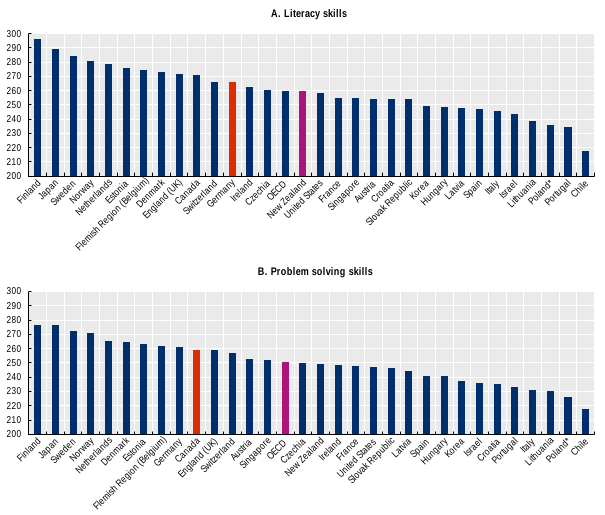
Note: *Caution is required in interpreting results due to the high share of respondents with unusual response patterns. See the Note for Poland in OECD (2024[4]), Do Adults Have the Skills They Need to Thrive in a Changing World?: Survey of Adult Skills 2023, https://doi.org/10.1787/b263dc5d-en.
Source: 2023 Survey of Adult Skills.
Share of adults reporting that their job involves learning-by-doing at least every week, %
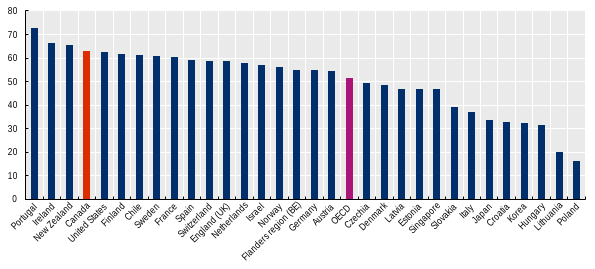
Note: OECD is a weighted average of the listed countries; BE: Belgium, UK: United Kingdom.
Source: 2023 Survey of Adult Skills.
Share of individuals who experienced changes in the workplace who received training paid for by their employer in relation to the change, %
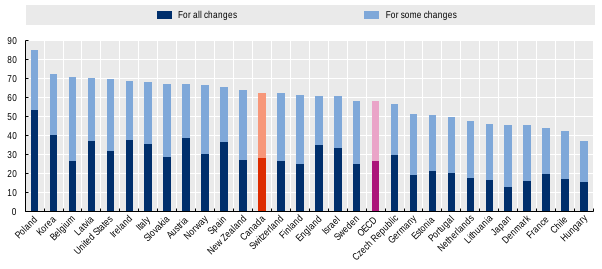
Note: Change in the workplace refers to machinery, ICT, working methods and practices, or products or services. Respondents with at least three years of experience with the current employer were asked to report any changes in the three years preceding the survey, while others were asked to report changes since starting their current job.
Source: 2023 Survey of Adult Skills.
Numeracy skills, native‑born individuals with a degree from Canada and foreign-born individuals with a degree from abroad, 25‑65 year‑olds
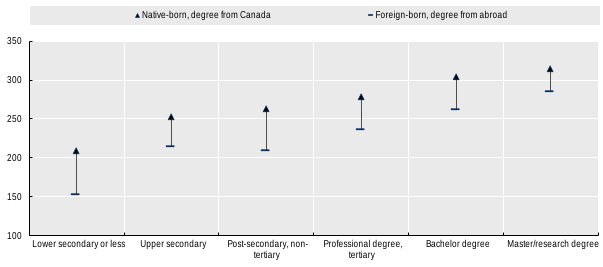
Source: 2023 Survey of Adult Skills.
Literacy, numeracy and ICT skill use indices have been derived based on more than one question from the background questionnaire. Cronbach’s Alpha, a statistical technique, is used to test that the items used to derive each skills use variable are grouped appropriately.
The resulting scale for these variables is a continuous but ranges from 1 to 5 as it is the case for the underlying items: a value close to 1 indicates that the person does not use that particular skill at work while a value close to 5 suggests that the person uses the skill every day.
The following variables are used to create each index:
Literacy index includes: reading directions or instructions; reading letters, memos or e‑mails; reading articles in newspapers, magazines or newsletters; reading books, scholarly publications, or articles in professional journals; reading manuals or reference materials; reading bills, invoices, bank statements or other financial statements; writing letters, memos or emails; writing reports or articles; filling in forms.
Numeracy index includes: undertaking calculations; using maps, plans or GPS; undertaking measurement; reading/preparing charts; using advances mathematics or statistics.
ICT index includes using a computer or digital device to communicate with others; access information; create electronic documents; use specialised software; use a programming language.
Problem solving corresponds to how often an individual faces problems that require at least 30 minutes of thinking to find a solution.
In the 2023 Survey of Adult Skills, the response to the question “If applying today, what would be the usual qualification, if any, that someone would need to get this type of job?” provides an estimate of the required qualification for a person’s job. Respondents are classified as overqualified if the level of their highest qualification is above the required qualification and under-qualified if it is below it. Qualification levels are based on the International Standard Classification of Education (ISCED) 2011 levels. These were grouped into six categories.
← 1. It should be kept in mind that these results, may to some extent reflect self-selection.
← 2. Level 4 and above corresponds to the top 13.9% of adults in terms of numeracy skills in the OECD. See OECD (2024[4]), Do Adults Have the Skills They Need to Thrive in a Changing World?: Survey of Adult Skills 2023, https://doi.org/10.1787/b263dc5d-en for a description of what adults can do at this skill level.
← 3. Regression of hourly wages on a dummy indicating overqualification, controlling for educational attainment, gender, age, migration background, living in rural vs. urban areas and dummies for region of residence.
← 4. These statistics are based on the 2023 Survey of Adult Skills, which may lead to small discrepancies when compared to official statistics.
← 5. Qualifications needed in jobs held by employed individuals were calculated based on the responses to the question “If applying today, what would be the usual qualification, if any, that someone would need to get this type of job?”
← 6. Some workers who are currently underqualified may have been hired when qualification requirements were less stringent. Therefore, their lack of formal qualifications does not necessarily indicate an inability to perform their jobs. The reasons for under-qualification cannot be identified in the available data.
← 7. Regression of hourly wages on a dummy indicating overqualification, controlling for qualification required in the job, gender, age, migration background, living in rural vs. urban areas and dummies for region of residence.
← 8. A large share of the productivity gap is driven by the highest earners in each country, who are disproportionately likely to be highly skilled. MacGee and Rodrigue (2024[27]) find that the top 10% of the income distribution accounts for three‑quarters of the gap in GDP per capita between Canada and the United States, and up to two‑thirds of the labour productivity gap.
← 9. Combining different skill-complementing investments may be required over a single type of investment. Bloom, Sadun and van Reenen (2012[58]) find that it is the combination of IT investment with managerial best practices that drives the IT-related productivity advantage enjoyed by US firms over European peers.
← 10. Brown jobs are those that have a large share of their employment in highly polluting industries.
← 11. Argentina, Canada, Chile, Brazil, France, Germany, Italy, Mexico, New Zealand and the United States.
← 12. In the Canadian survey, some questions and answer options were phrased differently, and additional questions and answer options were added. This was done at the request of the Canadian partners in order to tailor the survey better to the Canadian context. For instance, the Canadian survey asked adults, “In the past 5 years, have you used a career service?” In the other countries in the survey, adults were asked instead, “In the past 5 years, have you spoken to a career guidance advisor?”. Moreover, the Canadian survey was carried out by a different survey provider, who applied a slightly different methodology from the one used in the other countries.
← 13. Statistics for businesses with at least 10 employees.
← 14. OECD survey on how SMEs use generative AI to address skill and labour needs, 2024.
← 15. Controlling for gender, educational attainment, migration background, rural/urban dummy, region, occupation (1‑digit), sector (1 digit), firm size, tenure, having a permanent contract, wage quartile.
← 16. Care should be taken when interpreting enrolment in STEM by gender. Biology graduates – commonly included under STEM – among whom women are over-represented (Statistics Canada, 2023[60]) tend to earn relatively little in Canada. Biology and related disciplines rank among the bottom fields of study in terms of earnings for both bachelor’s and master’s graduates (Frenette and Handler, 2020[21]; Frenette and Handler, 2020[22]) and rank particularly low for doctoral graduates (Frenette and Handler, 2020[59]) These results hold for both men and women.
← 17. Controlling for gender, age, rural/urban dummy, region of residence and educational attainment.
← 18. These differences remain statistically significant even after controlling for a set of characteristics: gender, age, educational attainment, migration background, rural/urban dummy, occupation (1‑digit), sector (1 digit), firm size, tenure, having a permanent contract, wage quartile.