Canada’s longstanding productivity challenges have become increasingly urgent amid significant structural shifts related to population ageing, the net-zero transition, digitalisation and artificial intelligence, and global trade realignment. The Review aims to provide concrete policy recommendations to revive productivity growth in Canada by taking a labour market perspective with an emphasis on worker-oriented policies in relation to skills, job mobility and structural change. This chapter provides an overview of the main messages and recommendations.
Reviving Productivity Growth in Canada
The Role of Worker-Oriented Policies

Abstract
Productivity growth is crucial for sustaining rising standards of living and well-being. Yet, productivity growth has tended to slow in Canada since the early -2000. While many other OECD countries also experienced a slowdown in productivity growth, in Canada it was particularly pronounced, falling to one of the lowest levels observed in the OECD in recent years. This raises important questions about the ability of firms and workers in Canada to adapt to structural transformation related to technological change (e.g. AI, digitalisation, automation), the transition to a net-zero economy and demographic change (e.g. ageing, migration) in a context of growing geopolitical tensions. While developments in artificial intelligence, renewable energy and energy-efficient technologies create new opportunities, seizing them may be a challenge unless the causes of weak productivity growth are effectively addressed.
The objective of this Review is to support policymakers with reviving productivity growth in Canada by taking a labour market perspective with a focus on measures that can enhance the adaptability of workers to structural transformation. As discussed in the OECD Economic Survey of Canada and the Budget for 2025 (Government of Canada, 2025[1]; OECD, 2025[2]), reviving productivity growth in Canada requires a range of policies related to product, financial, housing and labour markets. It crucially requires policies that allow firms to adapt to and make the most of new challenges and opportunities based on a competitive environment that rewards good performance and supports and encourages innovation, technology adoption and investment. However, to reap their full benefits, there is also a need for policies that support the adaptability of workers to structural transformation. This includes employment and skills policies that enable workers to adapt to changes in their jobs through reskilling and upskilling and seize on new job opportunities in high productivity firms by moving relatively freely between firms, industries and provinces.
This chapter synthesizes the Review’s key messages and recommendations. It begins by outlining Canada’s productivity challenge and the role of structural transformation (Chapter 2). It then examines how policies can strengthen adult skill development and ensure workers’ skills are effectively used (Chapter 3), and how to support smooth job transitions across firms, industries and regions (Chapter 4). Finally, it highlights ways to better harness the skills and support the mobility of migrants (Chapter 5).
1.2.1. Reviving economic growth requires restoring productivity growth
Economic growth in Canada has fallen behind, both relative to its historical trend and its peers. GDP per capita growth has declined from over 2.5% in the late nineties to close to zero in the most recent period from 2019-2023. While other advanced economies, including the United States, also experienced a slowdown in economic growth, it was particularly pronounced in Canada. The slowdown in economic growth in Canada has already had important consequences for economic welfare. GDP per capita is estimated to be up to 35% lower today than what it would have been had economic growth continue at its rate during the period 1995-2001, compared with 22% and 25% for the United States and the OECD as a whole (Figure 1.1).
Reviving economic growth requires boosting labour productivity growth. The slowdown in economic growth mainly reflects a decline in labour productivity growth, while progress in raising employment rates has also slowed. During the early 2000s, economic growth was supported by increasing employment rates, thanks to rising labour force participation of older workers and women as well as net immigration, although the contribution of employment growth remained modest compared to that of productivity growth. Since the 2010s, employment rates have stabilised. Consequently, employment no longer significantly contributed to economic growth. More limited progress in lifting employment rates may suggest that further gains through this channel have become more difficult to achieve. Even if employment rates could be raised substantially among underrepresented groups such as women and older workers in the medium term, OECD simulations suggest that this would still be insufficient to offset the adverse effect of demographic change due to rising longevity and declining fertility on effective labour force participation and economic growth (OECD, 2025[3]).1
Restoring labour productivity growth requires policy action across a range of policies. The main reason for the decline in labour productivity growth is that it has become more difficult to achieve efficiency gains as growth in multi-factor productivity has slowed. Efficiency gains can come from amongst others innovation through R&D, the adoption of new technologies including artificial intelligence, economies of scale by promoting growth among SMEs, and the reallocation of resources from less to more productive firms and sectors. Issues related to skills development and skills use are typically also captured by multi-factor productivity in the absence of any differentiation between different skill groups in growth accounting frameworks. However, a reduction in the pace of capital deepening, in part due to a decline in investment since the collapse in commodity prices in 2014, also contributed to the slowdown in productivity growth. This is compounded by concerns about the composition of investment oriented towards real estate rather than machinery, intellectual property and other assets that are key for raising the productivity of workers (OECD, 2025[2]). Indeed, in recent years, weak investment has been the main driver of declining productivity growth.
Log GDP per capita

Note: Data are measured in constant prices, USD 2020 purchasing power parities. The dotted line is a linear trend through the data points in 1995 and 2001. The trend is normalised to 100 in 2023. The simulations show that seemingly small changes in economic growth can have large consequences in the long run. The estimated shortfall in economic growth can vary significantly depending on the reference period chosen. It will generally be smaller when earlier or later periods are chosen since growth was particularly strong in the late 1990s.
1.2.2. A more efficient use of resources is needed within and between firms
Slower aggregate productivity growth reflects slower growth within and between firms. To gain a better understanding of the sources of weak aggregate productivity growth in Canada, the Review leverages comprehensive linked worker-firm data with information on labour productivity. Its main insight is that the slowdown in aggregate productivity reflects both slower growth within firms and slower growth between firms due to lower efficiency enhancing job reallocation (Figure 1.2).
Slower growth within firms is mainly driven by high productivity firms and firms in manufacturing. Its concentration among high productivity firms within sectors coincides with the decline in aggregate investment and is likely to have depressed opportunities for job mobility towards more productive firms. The slowdown in productivity growth was broad-based across sectors, but stronger in manufacturing than in services.
Slower growth between firms is mainly driven by a declining contribution of job-to-job mobility to efficiency-enhancing job reallocation. Job-to-job mobility has historically played a key role in reallocating labour toward more productive firms and sectors but its contribution to between-firm productivity growth has weakened over time. This reflects in part declining opportunities for job mobility to more productive firms due to weak investment and declining productivity growth in high productivity firms. Once investment picks up barriers to job-to-job mobility due to e.g. the use of non-compete agreements and strict professional licensing regulations are likely to become more visible.
The decline in the pace of efficiency-enhancing job reallocation is partly driven by workforce ageing. Older workers are less likely to change jobs and transition to more productive firms. As a result, a growing share of older workers in the workforce tends to depress the pace of efficiency-enhancing job reallocation and hence aggregate productivity growth. OECD estimates suggest that this channel could account for about 10% of the decline in aggregate productivity growth between 2002-2007 and 2014-2019 in Canada. This highlights the importance of maintaining a flexible workforce at all ages and policies that support job mobility among older workers.
Average annual growth rates in real value added per worker, percentages

Notes: The figure provides a worker-level decomposition of average annual productivity growth based on Hahn, Hyatt and Janicki (2021[4]) into its components associated with within and between-firm growth. Total: average annual productivity growth. Within firms: average annual productivity growth among workers staying in the same firm. Between firms: average annual between-firm productivity growth due to the effect of net job mobility on the employment-weighted productivity distribution of firms. For more details, see the annex to Chapter 2.
1.2.3. Trade tensions, structural change and demographic developments are generating new challenges and opportunities for productivity growth
Increased tariffs on US imports from Canada are weighing on productivity and employment. In 2024, about three‑quarters of Canada’s goods exports went to the United States and bilateral trade amounted to roughly 16% of GDP (OECD, 2025[2]). While international trade typically boosts productivity by expanding market size, increasing competitive pressures and enabling technology diffusion, trade disruptions can erode these benefits. Higher tariffs, disputes and supply-chain instability raise uncertainty, curb investment and limit firms’ capacity to innovate and grow. To limit these effects, it is important to strive for stable and predictable trade relations with the United States, advance trade diversification through agreements such as CETA and CPTPP, and reduce interprovincial barriers that fragment the home markets and impede labour mobility (OECD, 2025[2]).
The transition to a net-zero economy raises important challenges for Canada’s energy-extraction industry but also presents new opportunities. Canada’s economy relies more strongly on energy-extraction activities than any other OECD country except Norway. Energy extraction accounts for 8% of value‑added, twice the OECD average, contributes significantly to national emissions and is characterised by high levels of labour productivity, given its capital intensive nature. The transition to net zero therefore poses a dual challenge: reducing the reliance on emissions-intensive sectors while sustaining productivity growth. Meeting this challenge will require, amongst others, strengthening innovation in clean technologies and supporting the creation of high-productivity green jobs.
Artificial intelligence (AI) offers considerable potential to boost productivity, particularly in knowledge‑intensive industries. While estimates of its aggregate impact on Canada’s productivity vary widely and are highly uncertain, OECD simulations suggest that AI could raise labour productivity by 3% to 9% over the next decade. Realising the potential of AI depends on broad adoption, yet uptake remains uneven across sectors and firms. To fully harness its benefits, greater efforts are needed to enhance the digital infrastructure, support firms, and equip workers with the skills required for the digital economy.
A re‑balancing of labour and productivity objectives in migration policies is under way. Migration has traditionally been a key driver of employment and productivity growth in Canada but has come under pressure in recent years. In 2022, more than one in five people in Canada were foreign-born, one of the highest shares in the OECD, while migration inflows in Canada continued to exceed those of comparable OECD countries. The strong increase in temporary migration reflects a response to acute labour shortages (ESDC, 2021[5]). However, it also raises concerns that it has reinforced employment in lower value‑added activities at the expense of higher value‑added ones, thereby exerting downward pressure on aggregate productivity. Since 2024, Canada has started to recalibrate its migration policies by scaling back its Foreign Temporary Worker Program to promote opportunities for domestic workers, including recent graduates (ESDC, 2024[6]).
The effects of population ageing on productivity growth in Canada have largely materialised. Between 1980 and 2020, the share of individuals aged 55‑64 within the working-age population increased from 18% to 29%, and this proportion is projected to remain broadly stable going forward, reaching 30% by 2060. While the full range of channels through which ageing influences productivity has not been comprehensively assessed, new OECD evidence indicates that population ageing has likely dampened the pace of efficiency-enhancing job reallocation.
1.2.4. To support structural transformation there is a need to enhance the adaptability of firms, workers and the labour market
Reviving productivity growth requires enhancing the adaptability of firms to structural transformation. A key challenge for Canada is that its wide spatial dispersion and low population density creates a relatively thin market, while regulatory and linguistic differences across provinces and territories add further fragmentation. This may weaken incentives for firm growth, investment, and technology adoption, contributing to low market dynamism and the prevalence of small firms. It may also help explain why firms report in surveys that costs are a major barrier to adopting new artificial intelligence technologies (Lane, Williams and Broecke, 2023[7]). Because technology adoption typically involves a fixed cost, economies of scale become important and market size plays a critical role. The Budget for 2025 announces a broad range of measures to promote productivity growth in firms (Government of Canada, 2025[1]).
However, reviving productivity growth also requires a more adaptable workforce. Indeed, to fully reap the benefits of the measures announced in the 2025 Budget, it will be crucial to ensure that workers can respond effectively to the expected increase in demand and possess the skills required by employers. While this will no doubt increase the need for reskilling and upskilling, participation in adult learning remains rather low in some socio‑economic groups, particularly among low skilled and older workers. There will also be a need to ensure that managers and senior staff have the necessary skills for the adoption and effective implementation of new technologies. Moreover, the anticipated rise in labour demand is also likely to bring barriers to job mobility to the fore. To avoid growing labour shortages and support efficiency-enhancing job reallocation, it will be important to tackle policy-related barriers to job mobility between firms, industries as well as provinces and territories.
A crucial aspect is to have an adaptable labour market where workers can access/find jobs that meet their skills and employers can find workers with the right skills for the job. This is important for all workers, but particularly for new entrants to the labour market such as youth and immigrants as well as re‑entrants in employment such as displaced workers or new parents after parental leave. This Review shows that displaced workers in high productivity sectors such as energy extraction and sectors reliant on US imports face particular challenges in finding another job that matches their skills. Skill mismatches tend to be important for all groups of workers but are particularly pronounced for immigrants with foreign qualifications due to issues with the recognition of prior experience and qualifications.
1.3.1. Policies to promote the efficiency of formal education
Educational attainment is high in Canada, but the efficiency of skill acquisition could be improved. Canada has the highest share of tertiary-educated individuals in the OECD. Although this high attainment rate is partly attributable to short-cycle tertiary programmes, Canada scores well even after accounting for course duration. Yet, average skill proficiency in literacy, numeracy, and problem-solving is only moderately above the OECD average and falls below that of top performers. Indeed, the efficiency with which years of schooling translate into skill acquisition is relatively low. Canadians spend more time in education than their peers in Japan, Sweden or the Netherlands, but often emerge with lower levels of core competencies. This undermines the return on investment in formal education, both for individuals and the economy as a whole.
More attention should be given to improving the efficiency of the education system. Restricting digital devices for personal use in schools and promoting school policies for responsible internet use could help improve educational outcomes in Canada, as could improving teacher quality (Andrews, Égert and de la Maisonneuve, 2024[8]). However, ensuring high-quality teaching requires adequate teacher salaries. Between 2015 and 2023, real salaries fell by 3% in Canada due to rising living costs, while they increased 4% in the OECD (OECD, 2024[9]). It is also important to develop stronger links between the world of education and the world of work. This can be done by promoting work-based learning such as apprenticeships and internships among university students.
1.3.2. Policies to promote the use of skills in the workplace
Despite high levels of human capital, Canada faces challenges in using it effectively to drive productivity. One key concern in this respect is widespread overqualification. Canada has one of the highest rates of overqualification in the OECD, with many workers employed in jobs that do not require their level of education. New evidence based on the Survey for Adult Skills presented in Chapter 3 of this report shows that in Canada, 40% of employed individuals are overqualified for the requirements of their job, compared with 34% for the OECD (Figure 1.3). These mismatches are not distributed randomly: they are concentrated among humanities graduates and foreign-born individuals. This is driven primarily by the weak demand for highly educated workers relative to their supply in Canada, but also by the inefficient allocation of talent across jobs. Another issue is the large share of employment in small firms compared with the United States. Small firms not only tend to be less productive and offer lower wages but are also less likely to invest in the skills of their workers and adopt new technologies or high-performance management practices. The concentration of employment in small firms, therefore, holds back aggregate productivity and may also hamper the demand for highly skilled workers and top talent.
Share of employed individuals with the highest qualification above the required qualification for their job, 2023
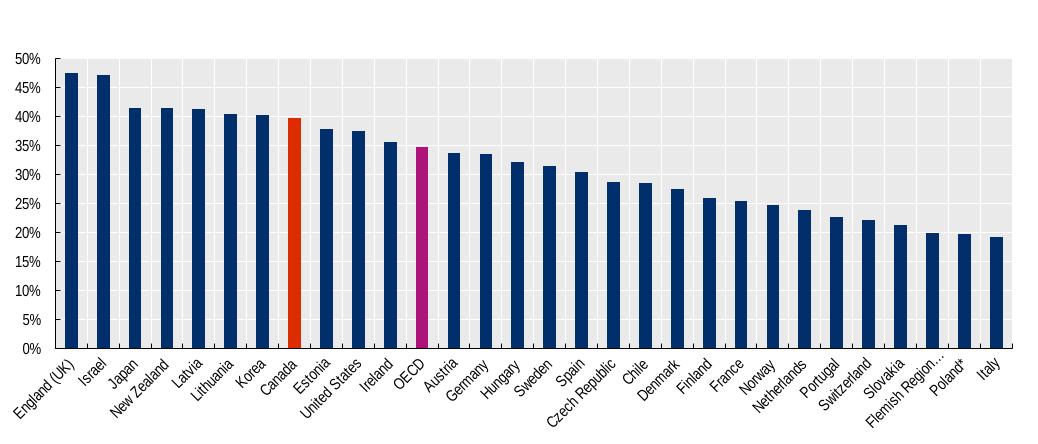
Note: *Caution is required in interpreting results due to the high share of respondents with unusual response patterns. See the Note for Poland in OECD (2024[10]), Do Adults Have the Skills They Need to Thrive in a Changing World?: Survey of Adult Skills 2023, https://doi.org/10.1787/b263dc5d-en. The methodology used to calculate the overqualification rate is discussed in the Annex of Chapter 3.
Source: Based on 2023 Survey of Adult Skills.
Career guidance can support youth and adults in making informed decisions about educational and professional pathways. However, participation in career guidance remains relatively low in Canada. For youth, it is similar to the OECD average, but less than in top countries, while for adults it is about half that in other countries with comparable information. Career guidance, however, can play an important role in making educational choices, accompanying transitions from education to work and supporting career progression and job mobility. Low participation among adults may be due to either an insufficient supply of such services or inadequate outreach and communication efforts. To the extent that adults use career guidance, it tends to be oriented toward immediate job placement, with less emphasis on supporting individuals’ long-term career advancement and personal growth in their current job. Canada could promote the use of career guidance services among adults by offering career guidance vouchers modelled on the Belgian example. The use of such vouchers could be promoted by leveraging existing touchpoints with the population (government offices, childcare facilities, public housing, unions).
1.3.3. Policies to promote the adaptability of the workforce through reskilling and upskilling
Adult learning is needed to help workers continuously adapt to structural transformation throughout their careers. Adult learning can play a role in helping workers to adapt to (and adopt) technological changes, switch to occupations and firms that offer greater opportunity and maintain their productivity over the life course. Though Canada performs relatively well in terms of participation in adult learning, the intensity and relevance of training can be more limited. Courses tend to be short, often focussing on soft skills or compliance, and are less likely to support transitions into technology-rich fields or high-productivity roles. A relatively low share of courses facilitates the development of ICT skills – particularly important for the adoption of AI – or prepares workers for transitions into technology-intensive sectors or high-productivity roles. In 2023, only 19% of businesses in Canada reported providing ICT training to their employees, significantly below the top-performing countries, where the share was above 35% (OECD, 2023[11]). Training access is also uneven: workers with lower education, older adults, and employees in small firms are much less likely to receive employer-sponsored training, even when facing significant changes in the workplace.
To increase the relevance and inclusiveness of adult learning, Canada could consider the introduction of individual learning accounts (ILAs) and provide further targeted support for skill development in SMEs and among older workers. ILAs could fund training in areas such as new technologies and emerging skills, enabling individuals to pursue longer, more comprehensive programmes. Such training, undertaken independently of current employers, would facilitate labour mobility into more productive firms and support technology adoption. ILAs are also more likely to benefit low-skilled and low-income individuals than tax deduction schemes such as Canada Training Benefit, limiting deadweight loss. Employers and provincial governments could be given the option to top up the account for training in specific priority areas. Additional targeted funding could also be directed toward older workers to ensure inclusive access to upskilling opportunities, especially in the context of demographic change, which means that workers are increasingly asked to stay in the labour market for longer. Support for SMEs could include financial incentives such as subsidies or tax credits to lower cost barriers, as well as initiatives to foster partnerships between SMEs, larger firms and training providers. Existing schemes could be adjusted to promote AI adoption, for example, by offering more generous support for AI-related training.
1.4.1. Policies to promote the creation of jobs in high productivity firms
The declining contribution of job reallocation to aggregate productivity growth mainly reflects a reduction in opportunities for job mobility, driven by weak investment and slower productivity growth among high-productivity firms. While barriers to job mobility could, in principle, also play a role, there is no clear evidence that their impact has increased significantly over time. In fact, progress has been made in several areas to ease mobility constraints, such as reforms to occupational licensing. Overall, this suggests that the decline in the contribution of job reallocation to aggregate productivity growth mainly reflects others factors, such as fewer opportunities for workers to move between firms and, to a lesser extent, the consequences of an ageing population.
Promoting job opportunities in high productivity firms should be a key policy priority. As discussed in the OECD Economic Survey and the 2025 Budget for Canada: Building Canada Strong, this requires addressing structural impediments to competition and increasing investment in innovation, machinery and equipment and infrastructure (Government of Canada, 2025[1]; OECD, 2025[2]). Most of these measures fall outside the realm of employment and skills policies. However, by promoting job opportunities in high productivity activities, they may make structural barriers to job mobility more visible. Indeed, it is possible that the potential benefits of increased competition and investment are not fully realised if barriers to job mobility are not effectively addressed. It is important therefore that the current momentum for policy action is seized to address them.
1.4.2. Policies that support voluntary mobility to more productive firms
Non-compete agreements are often used to limit competition and suppress worker mobility, with adverse consequences for productivity growth. Such agreements, which are supposed to protect legitimate business interests – such as trade secrets, client relationships, or investments in employee development – are often used to limit competition and suppress worker mobility, with adverse consequences for productivity. These clauses are prevalent in many sectors – affecting up to a quarter of workers and half of firms in some countries – often including low-wage, low-skill roles such as fast-food jobs. Evidence is currently lacking on the economic effects of non-compete agreements in Canada.
The inappropriate use of non-compete agreements in employment contracts needs to be restricted. Currently, non-compete agreements are allowed in Canada (except in Ontario) but difficult to enforce unless narrowly justified. Case law suggests that non-competes need to be justified and proportional. This means that there must be harm, i.e. the activity of a firm must suffer from an increase in competition, and the remedy must be proportional, i.e. barring the person from taking up a position in another firm must be limited to a certain time, place or activity. Yet, non-competes may still be used even in cases where they are not enforceable, with potentially detrimental effects for job mobility and efficiency-enhancing job reallocation. The 2025 Budget announced the intention of the government to amend the labour code to restrict the use of non-compete agreements for federally regulated businesses. The hope is that this will provide a model that provincial and territorial governments can take over. This is more likely when provincial and territorial governments are actively involved in the reform process at the federal level.
Restricting the use of non-compete agreements requires addressing several open issues. It could be done by following Ontario’s approach which introduced a broad ban on non-compete clauses in 2021, which only very limited exceptions. However, variations of the Ontario model could also be considered that differ in their scope, e.g. whether intellectual property should be a sufficient basis for their use and may include the use of sanctions in the case of unenforceable non-compete agreements continue to be included in employment contracts. To decide on the need for a ban and its specific design and to contribute to the evidence base more generally, a rigorous evaluation of the Ontario model will need to be conducted.
Professional licensing regulations are under increased scrutiny amid growing concerns about their consequences for efficiency-enhancing job reallocation. Licensed or regulated professions must follow rules on entry and conduct in their field. The share of professions subject to licensing regulations is significant and has expanded over time, covering up 25% of workers in the United States, 22% in Europe and 20% in Canada (Bambalaite, Nicoletti and von Rueden, 2020[12]). While their use was traditionally limited to liberal professions such as lawyers and engineers, it has tended to expand to occupations such as dockers, driving school instructors, transporters, and hairdressers. As credence goods, the quality of services is often difficult to assess for consumers. Professional licensing aims to correct market failures caused by information asymmetries between consumers and service providers. However, by creating entry barriers, licensing regulations can curtail competition, restrict business dynamism and slow growth-enhancing job reallocation.
There are several options for limiting the unintended consequences of professional licensing regulations. Compared with other OECD countries, occupational entry regulations are relatively strict in Canada, (Figure 1.5). Several complementary measures could be considered. First, it could involve making use of less restrictive regulations (e.g. practice under supervision). This may be particularly relevant for personal services. Second, when registration with a professional body is required, it should make sure that its regulatory and representative functions are strictly separated. Third, shifting the focus from input quality (qualifications) to output quality (service standards) can further reduce the negative impacts of professional licensing regulations on competition and job mobility. For example, it may be possible to replace mandatory licensing with voluntary certification, while using customer platforms to provide information on service quality across providers (OECD, 2022[13]).
Stringency of occupational entry regulations by provinces, index 0‑6

Note: Countries are ranked by descending order of the average the two regulations.
Source: Based on Figure 4.2 in Chapter 4.
1.4.3. Policies that support the mobility of workers between provinces and territories
Professional licensing requirements differ widely across Canadian provinces and territories with potentially important consequences for geographical mobility. Differences in the stringency of occupational entry requirements across provinces and territories are particularly large for personal services (e.g. hairdressers, electricians, taxi drivers) (Figure 1.5). Differences for professional services (accountants, engineers, lawyers, real-estate agents) are much more limited. In part, this is because the licensing bodies of all professional occupations (as well as nurses) have inter-provincial mutual-recognition clauses since 2019. Differences in licensing requirements across provinces, notably in relation to personal services, could present potentially important barriers to geographical labour mobility. In particular, the time needed for out-of-province certification or licensing is often mentioned as an important barrier to inter-provincial mobility (Statistics Canada, 2025[14]).
Stringency of occupational entry regulations by provinces, index 0‑6

Note: Provinces are ranked by descending order of the average the two regulations.
Source: Based on Figure 4.2 in Chapter 4.
Despite some progress, further steps need to be taken to reduce the role of licensing regulations as a barrier, real or perceived, to geographical mobility. The Red Seal programme and the Canadian Free Trade Agreement helped to reduce the role of differences in occupational licensing for inter-provincial labour mobility. Nevertheless, public perception continues to consider differences in occupational licensing as a major barrier. In part, this may reflect the lack of clear and accessible information in a single place on what is possible and what needs to be done to practice in a regulated profession in another province. However, there is also a need to push the principle of mutual recognition further. The current government has made easing labour mobility across provinces and territories a key priority. On 6 June 2025, it introduced the One Canadian Economy Act which, amongst other things, seeks to establish a new framework to recognise provincial and territorial licenses and certification for workers. This means that a worker authorised in provincial or territorial jurisdiction can more quickly and easily work in the same occupation in another jurisdiction.
Expanding affordable rental options in high-productivity areas could help reduce housing-related barriers to geographical mobility. High housing costs, particularly in large urban centres that offer better access to high-productivity jobs, continue to constrain geographical labour mobility by raising the effective cost of job switching. This constraint is especially stark for new renters, as rental costs relative to income are high in Canada compared to other OECD countries. The new Canada Housing Plan aims to address this by boosting investments in affordable housing to support housing supply and stabilise housing costs. Its impact would be strengthened by long-term planning for affordable housing. Multi-year strategic frameworks that link housing supply, finance, and support for vulnerable households can reduce the risk that market price fluctuations undermine affordability goals and support a predictable supply of affordable housing. Integrating housing initiatives with labour-market and workforce relocation strategies would further enhance access to higher productivity jobs and support efficient labour allocation across regions and sectors.
Several other factors may hold back geographical mobility including high childcare costs and the limited portability of benefits and pensions. Canada’s decentralised social protection system means that differing eligibility rules and limited transferability of certain provincially administered benefits between provinces, – notably social assistance, housing subsidies and some family-related supports – can deter low-income individuals from relocating for work (Causa, Abendschein and Cavalleri, 2021[15]). In addition, differences in insurance‑based schemes across provinces, such as occupational pensions, can create frictions in the accrual or transfer of entitlements when workers move across jurisdictions. Childcare access and affordability also vary significantly across provinces and regions, with high fees and long waitlists in major cities and limited availability in rural areas, reducing families’ willingness to move even when job opportunities exist.
1.4.4. Policies to support worker transitions in a context of rapid structural change
The transition towards a net-zero economy and the increase in US tariffs on Canadian imports could increase the risk of job displacement. New evidence shows that displaced workers from high wage industries such as energy extraction and industries reliant on US imports face particular challenges. Six years after displacement, the earnings losses of workers displaced in such industries tend to be considerably higher than those from other industries. This mainly reflects wage losses upon re‑employment as displaced workers tend to move to less capital-intensive and less productive firms. Polices that reduce the risk of job displacement or limit their consequences are primarily motivated by social policy objectives but also can help sustain broad-based public support for a policy agenda focussed on reviving productivity growth and decarbonisation
Work-sharing measures can help prevent costly job losses while support company restructuring. Job retention schemes are effective in preserving employment when firms face temporary, externally driven declines in activity, such as during the global financial crisis or the COVID‑19 pandemic. However, they can be counterproductive when used to sustain jobs in firms with structural difficulties, as they may impede efficiency-enhancing job reallocation and broader structural transformation. In response to the increase in US tariffs on Canadian goods, Canada introduced Work-Sharing special measures that extended support duration and broadened eligibility. While these measures help preserve firm-specific human capital and avoid the scarring effects of job loss, they may also slow necessary adjustment. Building on the experience of several European countries that operate specific job retention schemes for company restructuring, Canada could adapt its special measures to place greater emphasis on training, job transitions and restructuring. This would help ensure that support does not hinder necessary adjustments if tariffs persist longer than expected.
Wage support could complement unemployment insurance to support displaced workers. In Canada, Employment Insurance (EI) offers reasonable income support for most displaced workers, though eligibility and benefit duration vary by region based on unemployment levels. To further help displaced workers facing wage losses upon reemployment, a wage support (or “wage insurance”) scheme, that provides a temporary wage top up based on the gap between old and new wages, could be introduced. This policy, used in the US Trade Adjustment Assistance program, has shown promise in speeding up re‑employment and reducing public costs, without inducing workers to move into lower quality employment or less productive firms. In a first step, Canada could introduce a targeted wage support scheme for older workers in energy-extraction industries or provinces with a high share of energy-extraction industries to signal strong government support to displaced workers while assessing its effectiveness. If formal evaluations support it, the scheme could be extended to all sectors or regions at a later stage.
Early interventions before dismissal occurs can play a crucial role in reducing the cost of job displacement but providing this in the case of individual dismissals remains a challenge. Canada has a robust system to support workers affected by mass layoffs, based on the combination of provincial employment protection laws, local employment services, and federal initiatives such as the Canada Retraining and Opportunities Initiative, which allocates funding for workforce planning in heavily impacted communities. It also relies on mandatory advance notice, which enables providing timely support. However, providing early support for individual dismissals remains difficult. A key challenge is that Canadian employers may opt to offer severance pay instead of advance notice, delaying the point at which displaced workers engage with the public employment services. A possible solution could be to require employers to always immediately notify the labour authorities upon dismissal or alternatively require employers to provide advance notice instead of severance pay.
Statistical profiling could help increase the effectiveness of active labour market policies. While Canada has a well-developed system of active labour market policies, resources are scarce and there is a need for a better identification of eligible participants (ESDC, 2022[16]). Statistical profiling tools can help enhance the targeting of costly interventions at jobseekers most at risk of becoming long-term unemployed and tailor interventions more closely to the needs of individual job seekers (Desiere, Langenbucher and Struyven, 2019[17]).
Immigrants often face specific challenges related to skills and mobility due to the interplay between migrant selection and integration policies on the one hand and skills and employment policies on the other.
Immigrants can contribute to higher productivity growth, but the gains from immigration do not materialise automatically. Many immigrants enter the labour market in low value‑added activities and face persistent barriers to upward mobility. Estimates in the OECD International Migration Outlook 2025 suggest that in Canada, immigrants earn almost 40% less than their native counterparts of the same age and gender when entering the labour market (OECD, 2025[18]). About half of this reflects the concentration of new immigrants in low-pay firms and industries. As immigrants gain experience in the Canadian labour market, they move up the value chain, but the gap in earnings remains sizeable. Immigrants with foreign degrees, moreover, experience much higher rates of overqualification than their Canadian-educated counterparts and the Canadian-born population (54%, 40% and 36% respectively). While this reflects in part international differences in programme quality and training content, it also points to a need to reduce overqualification and enhance the contribution of migrants to productivity by better aligning immigration, employment and licensing systems and reducing barriers to credential recognition.
Strengthen the alignment of immigration selection tools with employment and licensing requirements. Canada’s foreign credential recognition system is relatively complex, given the involvement of federal, provincial and professional bodies, resulting in varying procedures across provinces, territories and occupations. The Educational Credential Assessments (ECAs), which verify academic equivalence as part of the Express Entry programme for permanent residence, are limited in scope (they do not consider work experience or micro credentials obtained abroad) and are not necessarily recognised by licensing bodies. Indeed, licensing bodies often impose additional requirements for immigrants related to formal qualifications and relevant work experience in Canada. Consequently, there is a need to further enhance co‑ordination between immigration selection systems and labour market needs by integrating, to the extent possible, assessments that reflect occupational readiness and professional licensing requirements.
Reduce barriers to professional licences for immigrants with foreign qualifications. Barriers to entering regulated professions like medicine, nursing, engineering, and law remain a major hurdle for foreign-educated immigrants, as provincial and territorial licensing bodies often impose complex, varying additional requirements such as exams, supervised practice, or local work experience, which can be especially difficult to meet. Mutual recognition agreements, like Québec’s with France and Switzerland and the Canada – EU CETA provisions, could help accelerate access to these professions, but need to be expanded. In addition, enhanced settlement services, bridging programmes, occupation-specific language training, micro-credentials, mentorship, and clearer labour market information would help immigrants gain Canadian-relevant skills and navigate licensing pathways more easily, ensuring their skills are fully used.
Promoting the alignment of the education system with labour market needs and facilitating the school-to-work transition
Ensuring that years spent in education translate efficiently into skills demanded by the labour market is crucial for making optimal use of both human and financial resources. In Canada, key obstacles relate to the type of qualifications pursued by youth and the school-to-work transition.
Encourage more women to pursue high-earning, practical qualifications – such as math-intensive STEM fields – by offering early career guidance and exposure to role models at the high-school level or earlier.
Strengthen the vocational track in education by increasing incentives for employers to provide apprenticeships; enhancing the quality of apprenticeships through better mentor training; further aligning provincial apprenticeship standards across Canada; and promoting apprenticeships in high schools by providing information about employment opportunities in skilled trades and improving matching services with employers.
Promote work experience during studies, for example, by promoting internships as part of university degrees.
Expand career-guidance services for graduates, for example, by making career guidance at universities accessible after graduation and leveraging alumni contact information and networks to promote use of these services.
Supporting the adaptability of the workforce to structural change and reallocation to more productive employment
Worker reallocation to jobs and firms that make the best use of their skills is essential to ensure that talent is used most productively. Equally important is that workers have the skills needed to adopt new technologies. In Canada, this could be facilitated through greater access to career guidance for adults and more investment in technology-related and inclusive training.
Provide top-quality Canada-wide online tools for career guidance, including tools that enable individuals to identify the skills gap between their current occupation and higher-paid opportunities, and that match them with relevant training options to close those gaps. This requires high-quality, granular, and systematic skills assessment and anticipation exercises.
Promote the use of career guidance services for adults, for example, by offering career guidance vouchers as in Belgium and promoting their use by leveraging existing contact points with the population (e.g. government offices, childcare facilities, public housing, unions). Explore the possibility of conducting statistical profiling exercises to identify and target individuals who would benefit most from a career transition.
Consider introducing an individual learning account funded by a baseline government contribution, with the option for employers and provincial governments to top up the account for specific training priorities. Within the same platform, allow individuals to consult a comprehensive catalogue of training programmes and purchase training directly. Funding through individual learning accounts could be targeted toward selected priority areas, for example AI.
Increase the inclusiveness of adult learning through targeted initiatives – for example, by providing more generous re‑skilling and up-skilling support for mid-career workers to prevent skills obsolescence.
Promoting opportunities for job mobility and tackling barriers to job mobility
Voluntary job mobility between firms is crucial for the career progression of workers as well as efficiency-enhancing job reallocation and hence aggregate productivity growth. However, opportunities for job mobility to better firms may be limited – and likely to account for much of the declining contribution of efficiency-enhancing job reallocation to productivity growth – and opportunities that do exist may be hindered by policy-related barriers.
Promote opportunities for job mobility to high productivity firms. Remove structural impediments to competition and increase investment in innovation, machinery and equipment and infrastructure.
Evaluate the Ontario ban on non-compete agreements. There is a significant lack of evidence on the use and effects of non-compete agreements in Canada. This stands in the way of evidence‑based policy interventions to restrict their use.
Take measures to reduce the inappropriate use of non-compete agreements. The Ontario model provides a good starting point, but depending on the outcomes of its evaluation, may require fine‑tuning in relation to its scope and the legal consequences of misuse.
Limit the adverse effects of professional licensing on productivity. This could involve making regulations less restrictive (e.g. practice under supervision), separating the regulatory and representative functions of professional bodies, and privileging output rather than input quality.
Facilitating geographical mobility
Barriers to geographical mobility hamper the economy’s ability to respond to structural change, slow the spread of innovation and hold back efficiency-enhancing reallocation. In Canada, key obstacles include differences in licensing regulations across provinces and territories, lack of affordable housing, limited portability of pensions and benefits, and costly or inaccessible childcare.
Reduce interprovincial differences in licensing requirements. Improving the mutual recognition of professional licenses across provinces – particularly in personal services – would help lower barriers to labour mobility. This is one of the aims of the recently proposed One Canadian Economy Act.
Reduce housing-related barriers to mobility by expanding affordable rental options in high-productivity areas. Current plans to improve housing affordability through Build Canada Homes could be strengthened through long-term strategic planning to increase access to affordable housing in high growth cities and regions.
Address additional barriers to worker mobility across provinces and territories. This includes access to affordable childcare and improving the portability of pensions and benefits to reduce financial disincentives to moving.
Policies to support worker transitions in a context of rapid structural change
Displaced workers from high wage industries such as energy extraction and industries reliant on US imports face particular challenges. Six years after displacement, the earnings losses of workers displaced in such industries tend to be considerably higher than those from other industries. Polices that reduce the risk of job displacement or limit their consequences are typically motivated by social policy objectives but can also help sustain broad-based public support for a policy agenda focussed on reviving productivity growth and decarbonisation.
Adapt the work-sharing special measures to foster company restructuring. While these measures provide timely help to firms and workers affected by tariffs, periods of reduced activity should also be used to promote training, job transitions, and company restructuring. This would help ensure that support does not hinder necessary adjustments if tariffs persist.
Consider complementing unemployment insurance with temporary and targeted wage support (wage insurance). Such a scheme would insure displaced workers against wage losses upon re‑employment by topping up their earnings, while strengthening incentives for returning to work.
Promote the use of early interventions in the case of individual dismissal. This could be done by requiring employers to immediately notify the labour authorities upon dismissal or even in advance of dismissal when severance pay is replaced by advance notice.
Explore innovative ways to enhance the cost-effectiveness of active labour market policies. The Federal Government could collaborate with provincial and territorial governments to promote the development of statistical profiling tools that enhance the targeting of costly interventions and allow tailoring them more closely to individual needs.
Policies to support migrants
Immigrants can contribute to higher productivity growth, but the gains from immigration do not materialise automatically. Many immigrants enter the labour market in low value‑added activities and face persistent barriers to upward mobility. Immigrants with foreign degrees, in particular, experience much higher rates of overqualification than their Canadian-educated counterparts. While this partly reflects international differences in programme quality and training content, barriers to credential recognition and limited pathways into regulated professions are also likely to play a role.
Strengthen the alignment of immigration selection tools with employment and licensing requirements. Improve co‑ordination between immigration selection systems and labour market needs by integrating assessments that reflect occupational readiness and professional licensing requirements.
Reduce barriers to professional licences for immigrants with foreign qualifications. Expanding mutual recognition agreements and strengthening complementary measures, such as bridging programmes, occupation-specific language training or mentorship, can further support faster and more effective labour market integration.
References
[8] Andrews, D., B. Égert and C. de la Maisonneuve (2024), From decline to revival: Policies to unlock human capital and productivity, https://doi.org/10.1787/8d0d232c-en.
[12] Bambalaite, I., G. Nicoletti and C. von Rueden (2020), “Occupational entry regulations and their effects on productivity in services: Firm-level evidence”, OECD Economics Department Working Papers, No. 1605, OECD Publishing, Paris, https://doi.org/10.1787/c8b88d8b-en.
[15] Causa, O., M. Abendschein and M. Cavalleri (2021), “The laws of attraction: Economic drivers of inter-regional migration, housing costs and the role of policies”, OECD Economics Department Working Papers, No. 1679, OECD Publishing, Paris, https://doi.org/10.1787/da8e368a-en.
[17] Desiere, S., K. Langenbucher and L. Struyven (2019), “Statistical profiling in public employment services: An international comparison”, OECD Social, Employment and Migration Working Papers, No. 224, OECD Publishing, Paris, https://doi.org/10.1787/b5e5f16e-en.
[6] ESDC (2024), “Minister Boissonnault announces further Temporary Foreign Worker Program reforms to better protect the Canadian labour market and workers”, News Release, https://www.canada.ca/en/employment-social-development/news/2024/10/minister-boissonnault-announces-further-temporary-foreign-worker-program-reforms-to-better-protect-the-canadian-labour-market-and-workers.html.
[16] ESDC (2022), Evaluation of the Workforce Development Agreements - Final Report.
[5] ESDC (2021), Evaluation of the Temporary Foreign Worker Program: Report.
[1] Government of Canada (2025), Implementation of Bill C-5: One Canadian economy.
[4] Hahn, J., H. Hyatt and H. Janicki (2021), “Job ladders and growth in earnings, hours, and wages”, European Economic Review, Vol. 133, p. 103654, https://doi.org/10.1016/j.euroecorev.2021.103654.
[7] Lane, M., M. Williams and S. Broecke (2023), “The impact of AI on the workplace: Main findings from the OECD AI surveys of employers and workers”, OECD Social, Employment and Migration Working Papers, No. 288, OECD Publishing, Paris, https://doi.org/10.1787/ea0a0fe1-en.
[18] OECD (2025), International Migration Outlook 2025, OECD Publishing, Paris, https://doi.org/10.1787/ae26c893-en.
[2] OECD (2025), OECD Economic Surveys: Canada 2025, OECD Publishing, Paris, https://doi.org/10.1787/28f9e02c-en.
[3] OECD (2025), OECD Employment Outlook 2025: Can We Get Through the Demographic Crunch?, OECD Publishing, Paris, https://doi.org/10.1787/194a947b-en.
[10] OECD (2024), Do Adults Have the Skills They Need to Thrive in a Changing World?: Survey of Adult Skills 2023, OECD Skills Studies, OECD Publishing, Paris, https://doi.org/10.1787/b263dc5d-en.
[9] OECD (2024), Education at a Glance 2024: OECD Indicators, OECD Publishing, Paris, https://doi.org/10.1787/c00cad36-en.
[11] OECD (2023), ICT Access and Usage by Businesses, https://data-explorer.oecd.org/s/3mf (accessed on 10 December 2025).
[13] OECD (2022), OECD Employment Outlook 2022: Building Back More Inclusive Labour Markets, OECD Publishing, Paris, https://doi.org/10.1787/1bb305a6-en.
[14] Statistics Canada (2025), Labour mobility within regulated occupations in Canada.
← 1. While rising employment can help to temporarily raise economic growth (GDP per capita), in the very long-term improvements have to come from high productivity growth (GDP per worker).