Croatia’s innovation system has evolved significantly over the past two decades. National strategies and initiatives to foster innovation and entrepreneurship were strengthened by accession to the European Union in 2013, which facilitated access to EU funding programmes and partnerships, further contributing to the development and internationalisation of the country's innovation ecosystem in the agro-food sector. This chapter examines the Croatian agricultural innovation system, beginning with an overview of its main characteristics and sector-specific features. It then explores the agricultural knowledge and innovation system (AKIS), focussing on key actors, institutions, governance, and funding sources for innovation. The chapter reviews policies promoting innovation and knowledge transfer, and analyses research and development (R&D) outcomes and selected innovation examples.
Policies for the Future of Farming and Food in Croatia

Abstract
Croatia’s agricultural innovation performance, while relatively low and subject to important regional disparities, is improving steadily. Structural challenges include: low levels of public and private investments in agricultural research and development (R&D); a fragmented research landscape with weak co-operation among stakeholders; skill gaps and low level of education of farmers; and the limited development of digitalisation.
The Agricultural Knowledge and Innovation System (AKIS) involves diverse stakeholders but requires more co-ordination. Its members often collaborate in an ad hoc manner and a systematic co-ordination effort to strengthen knowledge flows is missing.
Enhancing research, development and innovation (R&D&I) capacities and encouraging agricultural innovation are among the country’s strategic objectives. The government has undertaken important efforts to improve the connection among AKIS actors and the flow of knowledge to farmers, taking advantage of EU funding.
Croatia has a strong public advisory service that is well-accepted by farmers. Yet this service has capacity constraints. The supply of training and advisory services is gradually becoming more diverse and flexible through the inclusion of private agents and the provision of training for trainers.
Low levels of uptake of CAP measures that support innovation suggests a limited capacity of the sector to absorb innovation funding. Government efforts to establish a network of innovation brokers and engage with farmers are promising.
Farmers have low levels of education and inadequate skills, which prevent them from embracing the opportunities provided by innovation. Relevant reforms are underway to reduce the gap between labour market skill needs and the provision of education and training.
Croatia has narrowed the gap between rural and urban areas in terms of broadband access, but not in access to high-speed Internet. The government is working to improve digital infrastructure and skills in rural areas and to enhance the use of digital data and technology in agriculture.
Croatia is considered an “emerging innovator”1 according to the European Innovation Scoreboard. In 2023, it performed at 69.6% of the European Union (EU) average, leading the group of emerging innovators, which averages 54.0% (European Commission, 2023[1]). Croatia’s performance is increasing at a higher rate than that of the European Union, narrowing the innovation gap. This score places Croatia 22nd in the EU ranking, above its regional peers Slovakia, Poland, Latvia, Bulgaria, and Romania, and at a similar level to Hungary. In terms of innovation capacities measured by the Global Innovation Index (GII), Croatia ranked 42nd of the 132 economies featured in 2022, and 27th among the 39 European economies (World Intellectual Property Organization, 2022[2]).
Significant disparities remain, however, in the level of innovation of Croatia’s regions. The city of Zagreb performs two to four times better than the other regions. According to the Regional Innovation Scoreboard 2023, it is a moderate innovator with a high rate of increase in innovation performance (22.2%), while the other regions are emerging innovators with rates of increase in innovation performance ranging from 5.5% to 12.3% (European Commission, 2023[3]).
4.1.1. Policy approach and framework: National strategies
Encouraging innovation in the agro-food sector has become a strategical objective
Croatia does not have a specific strategy for agro-food innovation. The general framework, called the Smart Specialisation Strategy (S3), is a cross-sectoral strategic plan aimed at encouraging investment in research, development and innovation (R&D&I), mainly with public funds that are often matched with private funds. Following the previous S3 for the period 2016-20, the new S3 until 2029 was adopted in December 2023, establishing seven thematic priority areas for investment (Government of the Republic of Croatia, n.d.[4]). One of these focus areas is sustainable and circular food, encompassing food production, food processing, and services to food producers. Digitalisation is an important part of this strategy, not only through priority area “digital products and platforms”, but through a horizontal guiding principle of “digital transformation” that permeates all priority areas. Strategic actions across the S3 encompass regulatory reforms, grant calls, vouchers, financial instruments and other tools, funded by four sources of funding: the National Recovery and Resilience Plan 2021-2026 (RRP), the Competitiveness and Cohesion Programme 2021-27 from the European Structural and Investment Funds, the European Regional Development Fund (ERDF) and the project “Digital, innovative and green technologies” (DIGIT), a loan agreement between the government of Croatia and the World Bank.
Encouraging innovation in the agro-food sector is one of four goals of the Agricultural Strategy until 2030, which recognises as priorities increased public and private investment in research and development and enhanced technology transfer. Agro-food innovation has also been incorporated into the Croatian Rural Development Programme of the CAP 2014-22. More recently, the strengthening and exchange of knowledge, innovation and digitalisation has been set as a horizontal goal2 of the 2023-27 CAP Strategic Plan for all EU Member States, including Croatia, mainly in the form of support for knowledge transfer and innovation development. Croatia has identified four needs within this strategic goal, assigning the highest priority to improving the skills of the workforce (Section 2.3.2).
Although the Croatian agro-food sector has made efforts to be innovative, the exchange and dissemination of knowledge and information continue to be fragmented and insufficiently functional. The adoption of new technologies is relatively slow, and the co-operation, co-ordination and information flows between the various stakeholders involved in knowledge generation and transfer remain weak (World Bank, 2019[5]). Additional weaknesses include a lack of public support to research and innovation, a lack of visibility and access to agricultural data and research results, and a lack of diversification of funding for advisory services (i2Connect, 2021[6]).
The successful development of a country's agro-food sector relies on a well-organised and functional Agricultural Knowledge and Innovation System (AKIS). The government has recognised that AKIS needs to function efficiently if it is to be effective. As planned in its 2023-27 CAP Strategic Plan (CSP), the Ministry of Agriculture is in the process of establishing the AKIS Co-ordination Body, composed of key stakeholders, which will monitor and co-ordinate stakeholder activities, strengthen the links and co-operation between researchers, advisors, the CAP National Network and farmers, and exchange experiences and information with the AKIS community of practitioners. Likewise, the ministry is working on the development of digital platforms that will gather and help disseminate information and knowledge, as well as on the strengthening of its advisory services, both in quality and quantity. These efforts are detailed in the following sections.
4.2.1. Main actors of the AKIS and their role in agricultural innovation
The Croatian AKIS is fragmented, moderately diverse, deeply influenced by state-funded bodies, and places a strong emphasis on public advisory services
The Croatian AKIS3 is a network of actors that generate, disseminate and apply research, development and innovation (R&D&I). At its centre is the public advisory service, which is part of the Ministry of Agriculture. Scientific-educational and research institutions operating in the agricultural sector are mostly state-owned. The private sector contributes to the agricultural innovation system, mainly in the form of applied research and targeted advisory services. The least developed elements of the AKIS are non-governmental organisations (NGOs) and farmers’ organisations (see also Section 5.1.3).
The interactions between the different actors contribute to the generation and dissemination of knowledge both for and from the farmers, who should be at the core of the AKIS. At the centre of agricultural production and management of land and natural resources, farmers take decisions based on the knowledge they generate and receive, and are thus among the principal actors generating and applying innovations to enhance their productivity, sustainability and resilience.
Public institutions contribute to the different stages of the generation and dissemination of innovation and knowledge. Ministries define strategies and national objectives, plan expenditures and activities, and co-finance initiatives. Within the Ministry of Agriculture, the Directorate for Professional Support to the Development of Agriculture (DPSDA) is the main provider of agricultural advisory services. Public institutions include research institutes (Osijek Agricultural Institute, Institute for Agriculture and Tourism in Poreč, and Institute for Adriatic Crops and Karst Reclamation in Split), and agencies related to food safety (Croatian Agency for Agriculture and Food), agricultural meteorology (Croatian Hydrometeorological Institute), veterinary and phytosanitary issues (Croatian Veterinary Institute), and natural resource management. The Ministry of Science and Education provides competitive R&D funding across all sectors and topics.
A wide range of scientific and academic institutions are important players in generating knowledge that can lead to innovation for agro-food productivity and sustainability. The education and training sector is made up of universities and colleges, agricultural and veterinary secondary schools, and regional centres of competences for vocational education.
Relevant associations contribute to enhancing knowledge flows. Farmer associations, in particular the Croatian Chamber of Agriculture, co-operate with educational, scientific, professional and research institutions to develop agricultural production and markets. Professional associations, such as the Croatian Chamber of Agronomists and the Croatian Society of Food Technologists, Biotechnologists and Nutritionists, are active in promoting events at which advisors and consultants build knowledge and skills. The Croatian CAP Network helps foster innovation in agriculture and rural development and supports peer-to-peer learning, as well as the inclusion and interaction of all stakeholders in the process of building and exchanging knowledge. For historical reasons, there are few co-operatives in Croatia.
The private sector is made up of numerous heterogenous actors such as farmers, agricultural advisors, traders in agricultural products, food processors and input suppliers, among others. They can perform their own R&D&I activities, encourage the training of their workers, and provide farmers with know-how and technical assistance.
The Croatian AKIS is currently fragmented4 and needs more co-ordination. Individual co-operation between AKIS stakeholders occurs in an ad hoc manner in implementing national and international projects, but co-ordinated co-operation efforts focused on farmers’ needs are so far absent. To set up a functional AKIS, scientific research must be conducted and applied, innovations introduced, digital solutions developed, advisory services available and effective, partnerships and operational groups5 established and functional, and, above all, farmers must be involved in the advisory, training and knowledge exchange systems and in the work of innovative operational groups (World Bank, 2019[5]) (European Commission, 2020[7]) (i2Connect, 2021[6]) (Ministry of Agriculture, 2022[8]).
Aware of the gaps that affect the efficiency of the system, the Croatian Government is leading the process of strengthening its AKIS through multiple actions developed by the Ministry of Agriculture. Areas of work include strengthening links with scientific institutions, enhancing advisors' expertise and co-operation, supporting partnerships for innovation, and promoting the effective use of ICTs.
Figure 4.1 shows a representation of the AKIS that the government aims to implement. At the heart of this reinforcement process, the AKIS co-ordinating body – established in early 2024 and comprised of 24 representatives from a broad spectrum of AKIS stakeholders – should strengthen the connection and integration amongst actors and ensure more efficient information and knowledge flows.
The future AKIS as envisioned by the Ministry of Agriculture
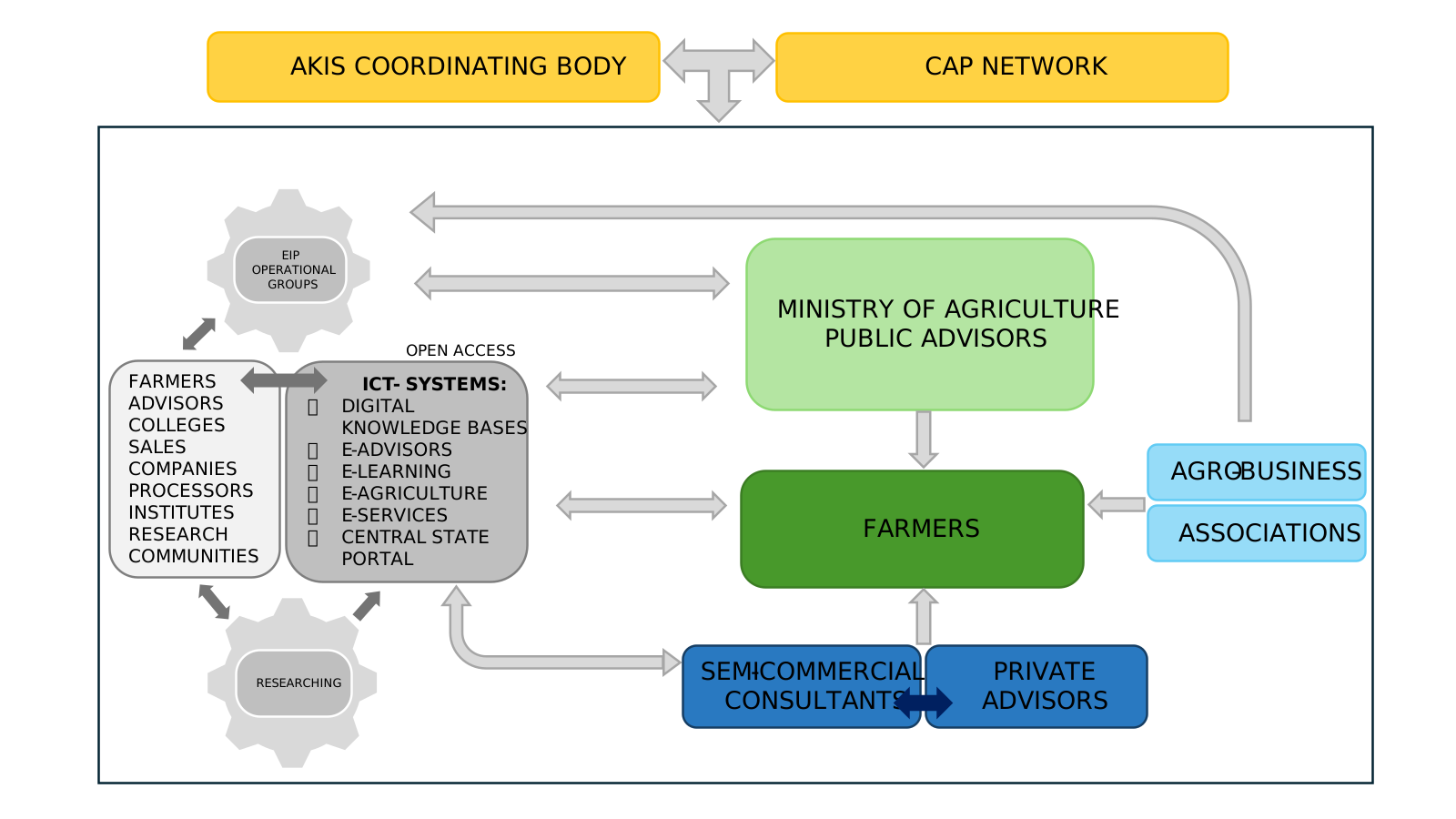
Note: Authors’ adaptation of the AKIS diagram included in the Strategic Plan for the Common Agricultural Policy of the Republic of Croatia 2023 – 2027 (English translation provided by the Croatian Ministry of Agriculture). Although not represented here, the Ministry of Science and Education plays an important role in the AKIS system and should be added to an updated version of the diagram.
Source: Ministry of Agriculture (2022), Strategic Plan of the Common Agricultural Policy of the Republic of Croatia 2023 - 2027 (automatic translation), https://ruralnirazvoj.hr/files/Strateski-plan-Zajednicke-poljoprivredne-politike-Republike-Hrvatske-2023.-2027..pdf.
4.2.2. Funding, funding bodies, and main authorities within the AKIS
Croatia has a centralised national governance system operating within the EU framework
The central government is responsible for the overall promotion and co-ordination of scientific and technical research. The Ministry of Agriculture and the Ministry of Science and Education (MZO) lead in defining general strategic research priorities and implementing most R&D&I policies for the agro-food sector. They delegate some of these tasks to implementing agencies, which co-ordinate the various programmes and allocate the corresponding funds. Public funding is provided by the European Union and the national government. The main users of the funds are the private sector (industry), research centres, and educational institutions.
Figure 4.2 provides an overview of the Croatian AKIS funding ecosystem, depicting the main authorities and implementing agencies, the most important funds, funding streams, and relevant performing public and private actors.
European Union funding
The European Union contributes to the Croatian AKIS through different programmes. Some are directly linked to agriculture and to agricultural R&D&I, but most are not sector-specific. The main EU innovation programmes are Horizon 2020 (2014-20) and its successor Horizon Europe (2021-27).
During the operation of Horizon 2020, Croatian entities received EUR 138.5 million, or 0.20% of the programme’s total funding. Forty-four Croatian organisations received grants for EUR 11.3 million under Societal Challenge 2 “Food security, sustainable agriculture and forestry, marine and maritime and inland water research and the bioeconomy”, which covers the agro-food sector (European Commission, 2023[9]). More than half of the funding of public-public partnership projects in which Croatia participated was dedicated to this thematic priority (European Commission, 2022[10]).
In the new Framework Programme for Research and Innovation 2021-27 (Horizon Europe), most funding for the agro-food sector is provided under Cluster 6 “Food, Bioeconomy, Natural Resources, Agriculture and Environment’’. This cluster is designed to foster knowledge, build capacity and develop novel solutions to promote sustainable land use and a more sustainable, resilient and inclusive agricultural sector. To date, Croatia has received an overall Horizon Europe EU contribution of EUR 76.2 million, of which EUR 14.6 million have been earmarked for 60 initiatives under the agro-food-related Cluster 6.
The Common Agricultural Policy (CAP) of the European Union is another key tool for funding agro-food R&D&I activities. The CAP’s Pillar 2 fund that finances each Member State’s Rural Development Programme (RDP) – through the European Agricultural Fund for Rural Development (EAFRD) and national co-financing– is partly devoted to R&D&I activities. Three specific measures include knowledge transfer, advice and innovation through co-operation. This co-operation builds on the European Innovation Partnership for Agricultural Productivity and Sustainability (EIP-AGRI), in particular the EIP-AGRI Operational Groups (see Section 4.3.2). The three R&D&I measures under the Croatian RDP for 2014-22 (Measures 1, 2 and 16) represent a budget of EUR 25.3 million, while the same instruments under the 2023-27 CSP (Interventions 78.01, 78.02 and 77.03) have a planned budget of EUR 40.4 million (see Section 4.3.1).
The European Regional Development Fund (ERDF) contributes to financing the Croatian Smart Specialisation Strategy (S3), which identifies research and innovation priorities in strategic sectors, including the agro-food sector (Section 4.1.1). The Cohesion Funds and other European programmes, such as LIFE, Digital Europe, have also been a source of funding for Croatian AKIS entities.
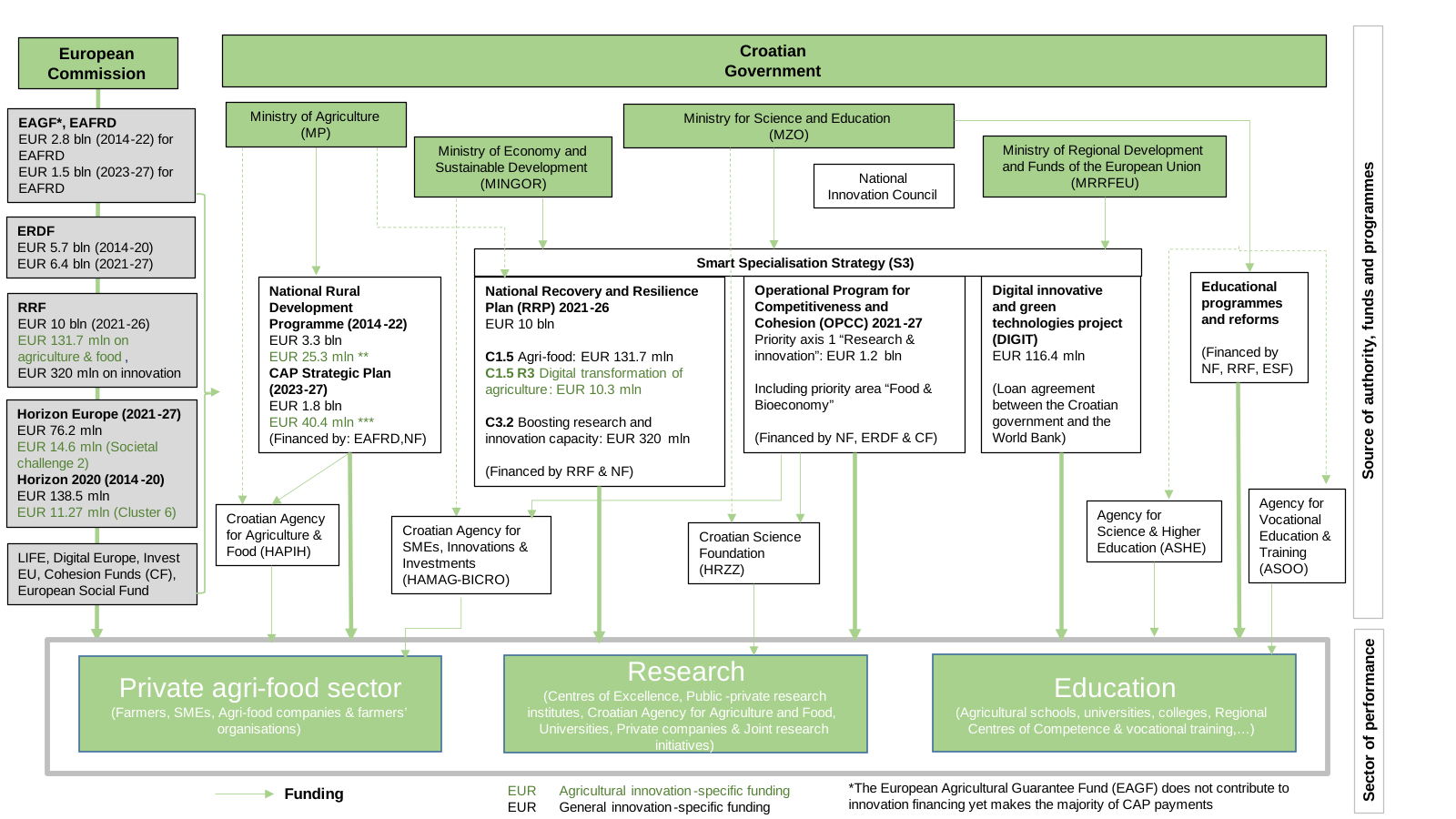
Note: This is a stylised and not a fully comprehensive diagram that aims to illustrate the flows of funds and institutional arrangements. The figures on funding might correspond to different periods and are thus indicative only. They aim to provide an idea of the magnitude of the different funds. Bolded arrows indicate funding for the three sectors of performance, i.e. the private sector, research and education. NF means National Funds. Except for EAFRD, the amounts of EU funds displayed on the left side of the diagram (in grey cells) also include the corresponding national contribution.
Top of Form.
** Total updated planned budget for measures related to knowledge transfer (M1), advisory services (M2) and co-operation (M16) in Croatia’s RDP under the CAP 2014-20, as of 2023.
*** Total planned budget for interventions related to knowledge transfer (78.01), advisory services (78.02) and support for EIP-Agri Operational Groups (77.03) in Croatia’s CSP 2023-27, when approved.
Source: Authors, based on official sources and informal information from meetings and exchanges.
The Recovery and Resilience Facility (RRF) is the European Union’s recovery instrument in response to the COVID-19 crisis (see also Section 2.4.1). Three of its six pillars (green transition, digital transformation, and social and territorial cohesion) encompass relevant measures that help foster a sustainable agricultural sector. More concretely, one component of the Croatian Recovery and Resilience Plan 2021-26 (C1.5) is dedicated to the agro-food sector and supports the digital transformation of agriculture. Other components support reforms and investments in the development of digital skills more broadly (C1.1), in boosting research and innovation capacity (C3.2), and in modernising the higher education system (C3.1), all relevant improvements for the development of the Croatian AKIS.
National bodies, funding and programmes
Since its accession to the European Union in July 2013, Croatia has undertaken a series of reforms of its innovation system to improve the country’s research and innovation performance (Račić and Švarc, 2020[11]).
The Ministry of Science and Education (MZO) is primarily responsible for research, development and innovation policies across all sectors and was traditionally the main funding body for R&D&I. Following EU accession and Croatia’s access to EU funds, other ministries, including the Ministry of Economy and Sustainable Development and the Ministry of Regional Development and EU Funds now have a more prominent role in this area. Together, these three ministries implement the Smart Specialisation Strategy (S3), as well as operational programmes related to Priority Axis 1 of the Operational Programmes for Competitiveness and Cohesion (2014-2020 and 2021-27). The main sources of funding are national, in addition to the Recovery and Resilience Facility (RRF) and the European Regional Development Fund (ERDF).
The Ministry of Science and Education collaborated with the Ministry of Agriculture in the preparation of the CAP Strategic Plan, jointly designing some of the interventions. It is also in charge of Horizon programmes.
The National Innovation Council, created in 2018, is an umbrella body at the government level. It has five thematic innovation councils (TICs) – including the TIC on Food and Bioeconomy –, which act as the main co-ordinating bodies and provide an opportunity for networking among the representatives of the business (70%), research (20%) and public (10%) sectors who conform them (Innovation Platform, n.d.[12]).
The Croatian Science Foundation (HRZZ) – attached to the MZO –is the single national funding body for competitive projects in basic research. Between 2013 and 2022, it financed 107 projects in the fields of Agriculture, Forestry and Food technology, with a total of EUR 15 million for the entire period (Croatian Science Foundation, n.d.[13]). The Croatian Agency for Small Business, Innovation and Investments (HAMAG-BICRO) – attached to the Ministry of Economy and Sustainable Development – is responsible for the implementation of EU-funded measures related to R&I of businesses, provides guarantees to small and medium enterprises (SMEs), and implements other innovation programmes, including Proof of Concept.
The Ministry of Agriculture is responsible for designing and implementing the innovation-related measures included in the CAP. Within this Ministry, the Directorate for Professional Support to the Development of Agriculture is in charge of training, advice and knowledge transfer systems in the agro-food sector. To this end, it co-ordinates the national AKIS and participates in various multi-actor projects under Horizon related with the European AKIS (such as FairShare and i2connect under Horizon 2020, and ModernAKIS under Horizon Europe).
In the area of education, the Ministry of Science and Education (MZO) defines and co-ordinates policies that are important for the innovation capacities of the agro-food sector, including higher education and vocational training. The public and independent Agency for Science and Higher Education (ASHE) encourages the development of quality assurance in higher education and science, aiming to improve the quality of higher education institutions and scientific organisations. The Agency for Vocational Education and Training (ASOO) works in planning, implementation, monitoring and improvement of the vocational and adult education system, advocating its co-operation with the industry. The Agency for Mobility and EU Programmes (AMEUP) is responsible for the implementation of various educational initiatives in Croatia, including the Erasmus+ programme.
4.2.3. Public national and regional R&D&I organisations
Strong and experienced R&D&I organisations…
Attached to the Ministry of Agriculture, the Croatian Agency for Agriculture and Food (HAPIH) conducts development and research activities, finding innovative solutions, and disseminating knowledge. It leads and collaborates on research projects in co-operation with other AKIS stakeholders6 and manages several EIP-AGRI operational groups implemented under Measure 16 of the 2014-22 RDP. HAPIH possesses scientific capacities, including laboratories and researchers, and is in the process of accreditation to become a scientific institution, which will allow it to build up its scientific capacity and participate in calls for funding.
Croatia has a long tradition of agricultural science and education. It hosts the oldest agricultural and forestry college in Southeast Europe, the Royal College of Economics and Forestry at Križevci University of Economics, established in 1860. Today, this university is renowned for its practical teaching methods and facilities, including opportunities for applied research and practical experience in cattle breeding and plant production (World Bank, 2019[5]). The first Croatian agricultural scientific institute, the Seed Research Station, was founded in 1893 (Ministry of Agriculture, 2022[8]).
Several other universities and colleges engage in agro-food-related R&D&I activities. The Faculty of Agriculture of the University of Zagreb, established in 1919, leads higher education in biotechnical sciences, with 2 500 students and 240 faculty members conducting research in 13 fields covering over 37 research infrastructures. It focuses on agricultural production, livestock breeding, and viticulture, and participates in EU-funded applied research and innovation projects.7 The Veterinary Faculty of the University of Zagreb, a longstanding institution in Croatia's veterinary profession, offers academic studies, scientific research, and lifelong education programmes. The Faculty of Agrobiotechnical Sciences at Josip Juraj Strossmayer University specialises in biotechnical sciences, particularly soil and crop research (World Bank, 2019[5]).
Three major public research institutes, strategically situated across Croatia, conduct R&D&I activities tailored to the distinctive agricultural production of their respective regions: the Institute for Agriculture and Tourism in Poreč, focuses on wine and olive oil production in Istria; the Agricultural Institute in Osijek, specialises in plant production and genetic improvement of cereals and fruits; and the Institute for Adriatic Crops and Karst Reclamation in Split, addresses the challenges of biotechnical sciences in Dalmatian agriculture, especially with regard to grapevines and olive varieties. The three institutes participate in national and international research projects.
… in a fragmented and insufficiently coordinated landscape
The Croatian research landscape comprises 15 000 researchers across 25 public research institutes, with three focused on the agro-food sector, alongside universities and independent faculties. The research system is fragmented, and developing human capital is a challenge. Efforts are underway through legal reforms carried out under component C3.2 of the RRP to strengthen research and innovation capacity across all sectors. The Act on Higher Education and Scientific Activity (effective October 2022) and the Regulation on Programme Funding for Public Higher Education Institutions and Public Scientific Institutes (effective July 2023) aim to refine institutional funding, fostering strategic priorities, collaboration, and performance-based funding. Through anticipated programme agreements between the government and publicly funded educational and scientific institutions, funding will be linked to performance, allowing for enhanced research quality and relevance.
Applied research in agriculture is conducted across multiple institutions, yet there is at present no established mechanism for translating this knowledge into practical guidance for farmers and other stakeholders. The Agricultural Research Council (Vijeće za istraživanja u poljoprivredi - VIP) operated from the late 1990s until 2018, initially funded by a World Bank loan and later sustained by national funds, with the aim of bridging the gap between knowledge generation and transfer. While the Council managed funds for applied research and disseminated findings through various means, including brochures and workshops, plans to develop a system for transferring research results in the form of technical packages directly to agricultural advisors were never realised (World Bank, 2019[5]) (i2Connect, 2021[6]).
Co-operation between universities, research institutes and public advisory services has not yet started or there is no information on whether their research findings have been shared with other stakeholders or have been disseminated in a systematic way. There is also little information about networking activities organised at the national level or the existence of tools such as knowledge platforms to connect research actors with farmers, advisors, and rural businesses, and facilitate the implementation of up-to-date research findings and innovations (European Commission, 2020[7]). The Ministry of Agriculture is working to strengthen this co-operation and establish such platforms (Section 4.3.3).
4.2.4. Farm advisory services
Well-established public farm advisory services are well accepted by farmers, but since 2013 focus on CAP procedures
The history of structured advisory activities in Croatia spans over 80 years. Following the country’s independence, the government established the public agricultural advisory service in 1991. The service has experienced changes in its purpose, autonomy levels, and funding sources over the years (Box 4.1).
Since 2019, the public advisory service is part of the Directorate for Professional Support to the Development of Agriculture within the Ministry of Agriculture. It is responsible for planning, managing and implementing advisory activities, and for providing expert advice on new technologies, innovations, knowledge and skills needed to develop and preserve the value of rural areas and the sustainable development of agriculture. It operates with 230 advisors spread across 117 offices grouped in 20 regional services. Regional offices include advisors from different specialisations – agriculture, horticulture, animal husbandry, plant protection, agroeconomics, etc. –according to each region’s agricultural profile. Public advisory services are free of charge (Ministry of Agriculture, 2022[8]).
Professional training and exchange of knowledge and information are provided through courses, workshops, webinars and demonstration activities. Courses are organised with an average of 20 participants. Demonstration activities, where new technological advances, examples of good agricultural practices and animal welfare, are organised in co-operation with other stakeholders. The beneficiaries are generally agricultural producers who must follow professional training on agri-environment and climate change, organic production and animal welfare to benefit from CAP payments. Emphasis is placed on professional training for young farmers.
The public advisory service is considered an asset of the Croatian AKIS, well developed and experienced, and well accepted by farmers. The service covers all areas of agriculture, primarily economic, technical and technological aspects of agricultural production, as well as topics related to diversification, current tax regulations, and the interpretation of EU regulations. Since EU accession − and particularly since the establishment of the new CAP 2023-27 − the service faces additional demands associated with the requirements and rules of the EU and the CAP policy instruments. Advisors spend most of their time explaining to farmers how to apply for subsidies and how to implement the multitude of measures available, and administrative tasks take up an important share of the service’s capacity.
A recent assessment by the European Commission considers there are too few advisors – on average one for 585 farms –, which raises doubts about the capacity to provide effective services and cope with the increased responsibilities linked to the new CAP and to environmental and climate challenges, while at the same time increasing the sector’s competitiveness and productivity (European Commission, 2020[7]).
In the decades before Croatia’s independence, specialised agricultural knowledge remained largely within Yugoslavia’s large socialised agro-industrial enterprises (agro-kombinats), with limited impact on family farms. The establishment of a state-funded public advisory service in 1991 was one of the first agricultural policy measures implemented in independent Croatia. From 1991 to 1997, an independent public institution, the Croatian Centre for Agriculture, introduced a two-tier state-funded advisory service, with an emphasis on regional co-ordination and local expertise.
In 1997 the Croatian Agriculture Extension Institute (CAEI) was created as a specialised institution with a higher degree of independence. CAEI further developed the agricultural knowledge system with funding from the World Bank, establishing the Agriculture Research Council (VIP). This body managed funds for applied research aimed at directly addressing farmers' challenges and started efforts to put in place a structured knowledge transfer system. The Council's pivotal role declined over time due to lack of funding and reduced farmer engagement, as the provision of specialised advice by the Advisory Service became increasingly occupied with administrative tasks.
In 2010 the Advisory Service was transferred to the newly established Croatian Chamber of Agriculture, but in 2012 it was reinstated as an independent entity, the Advisory Service Croatia (ASC). This phase, which coincides with entry into the European Union, was one of the most active of the Croatian advisory service. It joined international advisory associations, securing funding from rural development programme measures (M1 and M2) and project initiatives (Horizon) to enhance financial stability and service quality for farmers, aligning with the ongoing AKIS development at the EU level. In 2018, ASC was abolished and absorbed by the Ministry of Agriculture, while applied research projects overseen by VIP were replaced by European Innovation Partnership (EIP) projects.
Since 2019, the Directorate for Professional Support to the Development of Agriculture at the Ministry of Agriculture is responsible for managing agricultural advisory activities, with the mission of providing expert guidance on new technologies, innovations, and skills necessary for the sustainable development of rural areas and agriculture.
Source: i2Connect (2021[6]), Žimberk, Grgić, and Franić (1993[14]).
The government is making efforts to improve the quantity and quality of services
Recognising the need to strengthen advisory services, the Ministry of Agriculture is in the process of establishing an advisory back office, staffed by advisors with specific areas of expertise who provide expert support to AKIS stakeholders and train other advisors. Drawing on existing expert working groups within the Ministry, this back office is expected to apply a bottom-up approach, collecting farmers' needs in the field through a “one-stop shop for innovation” and engaging advisors (or innovation brokers) in searching for solutions on the ground.
The government is also striving to improve the supply of advisory services, both in quality and quantity. A call for tender published in July 2023 aims to create a network of certified private advisors who will have to pass a test by the Chamber of Agriculture. The idea is to create a public website where farmers can search for and select advisors. The private advisors hired would take over administrative tasks that currently overwhelm the public service. EU public funds to support training activities and advisory services for farmers – called M1 and M2 under CAP 2014-22 and 78.1 and 78.2 under CAP 2023‑27 – have recently been opened to private advisors. This development allows for an increase in the range of advisors and for greater competition.
The Directorate for Professional Support to the Development of Agriculture participates in relevant EU initiatives8 that have contributed to building knowledge within the team of advisors, developing connections amongst participants, and sharing experiences.
Other public and private organisations provide advisory, educational, and information services. They include professional and scientific institutions, research institutes, educational establishments, private consultants, independent experts, civil society and professional organisations, different chambers and associations, as well as input suppliers and food processors, which are part of a broader advisory system. Sectoral events organised by professional associations are also important in terms of knowledge transfer and innovation.
4.2.5. The role of the private sector in knowledge generation and transfer
Private actors play a role in generating and transferring knowledge, but their capacities are not always fully exploited
Although there are numerous public and private entities with extensive experience in educational, research and consulting activities, their co-operation is very limited or non-existent, as the Croatian AKIS is concentrated in the public sector (World Bank, 2019[5]).
As noted above, several private actors are involved in the provision of agricultural advisory services. Among the most relevant, the Chamber of Agriculture – the main umbrella organization for associations, co-operatives, family farms and businesses – plays an important role. The Chamber hosted the newly privatised agricultural advisory service in 2010-12 (Box 4.1), with a model similar to that of Austria and France, where advisory services are provided by the Chambers of Agriculture. Today, the Chamber still co-operates with educational, scientific, professional and research institutions in Croatia and abroad. It participates in innovation projects and EU partnerships, and carries out vocational training, seminars, courses and workshops. The Chamber is also developing an online platform to better reach farmers.
Experts from food processing companies and input suppliers constitute an active and effective part of the Croatian AKIS. Larger processors traditionally co-operate throughout their production process with farmers ˗ usually contract growers, primarily family farms and small businesses. Most dairy companies (e.g. Dukat and Vindija) buy their milk from local farmers and arrange for milk collection. Despite significant imports, meat processors, such as Belje, also purchase raw materials from local farmer suppliers, as do processors of fruits and vegetables (e.g. PIK Vinkovci, Podravka, PP Orahovica), grapes (e.g. Agrolaguna) and arable crops (eg. Zito). In most cases, these processing companies support farmers by providing teams of experts who give them advice on production (World Bank, 2019[5]).
Several domestic and foreign companies involved in the supply of animal feed, seeds, plant protection products, machinery and equipment also have experts who provide advisory services to farmers on the area of expertise of the company concerned. As is the case for food processors, the advisory services of these companies are often high-level and focused on improving production and productivity, while offering the latest technologies and innovations directly from the best research institutions in the world (World Bank, 2019[5]).
Other private consultants mainly carry out tasks related to project development and preparation of tender documents to help farmers benefit from CAP subsidies.
Private institutes and companies are also involved in the R&D&I landscape. Among the most relevant, the Bc Institute for breeding and seed production of field crops Zagreb – Bc Institut Zagreb9 – develops, produces and sells its own hybrids and new varieties of seeds to local and foreign markets, and is today the largest institution in the field of farm crop breeding in Croatia (Bc Institut Zagreb, 2023[15]). In the process of developing new varieties, the institute interacts with farmers to gather their needs and improve their production. The Bc institute also co-operates with universities, participates in funded research projects, and is part of working groups organised by the Ministry of Agriculture.
Many food processors and input suppliers are involved in trials and research projects in Croatia, primarily addressing their production or marketing needs. However, there is no systematised data on their activities (World Bank, 2019[5]).
The government is working to increase the private sector’s involvement
Croatia has developed several policies aimed at promoting private R&D&I activities, but none are specific to the agro-food sector.
The government is taking the first steps to strengthen co-operation with the private agro-food sector. One action carried out by the Ministry of Agriculture seeks to improve the visibility of public and private advisors on the public web platform presently under construction. This website will contain information on the advisors’ experience, knowledge, education and relevant business activities, which should help farmers select advisors that meet their needs. It is also expected to help AKIS stakeholders, including private actors, to find partners and join EIP operational groups and Horizon Europe multi-actor projects.
The private sector is increasingly involved in decision-making regarding R&D&I. The AKIS Co-ordination Body will include representatives from all stakeholder groups, including farmers and agro-food companies, and is called to become a hub linking the private and public sectors with farmers.
Representatives of the Croatian Chamber of Agriculture and the Croatian Chamber of Economy participate in all committees and working groups that create strategic documents or design measures and financing options offered by the Ministry of Agriculture. Where necessary, other associations are included, such as the Croatian Employers' Association.
4.3.1. Public and private investments in R&D&I
Overall R&D is mostly financed and performed by the business sector, while agricultural R&D is driven by governmental expenditures.
Considering the Croatian economy as a whole, the business sector is the main actor undertaking R&D activities. In 2022, it performed 54% of the R&D activities, followed by the higher education sector (28%) and the government (18%) (Figure 4.3, Panel A). It is a significant source of funding for R&D, accounting for 40% of the funds in 2022, followed by the government (31%). Funding from abroad represented a quarter of total funds in 2022, and is taking an increasingly significant role in R&D.
Figure 4.3 Panel B shows the specific situation of agro-food R&D expenditures. In this case, the source of funds and sector of performance is seen to be quite irregular, with no clear trends over time. The government has remained the main source of funds in recent years, accounting for 38% to 60% of the funds spent between 2016 and 2022, followed by the private sector (18% to 41%). Funding from abroad is increasing in agricultural R&D, and in 2022 represented a fifth of the funds. No specific sector clearly leads the performance of agricultural R&D activities. While the higher education sector had the highest share of agricultural R&D initiatives in 2016, 2018, 2019 and 2021, the government led in 2020 and the private sector in 2017 and 2022.
Gross domestic expenditure on total and agricultural R&D in Croatia

Note: Agriculture includes agriculture (agronomy), forestry, wood technology, and veterinary medicine as defined in the 'Rulebook on scientific and artistic fields, fields and branches published in Official Gazette No. 118 of 2009'.
Source: Croatian Bureau of Statistics (2023).
Government funds for agricultural R&D significantly increased following EU accession, but remain low compared to other sectors
Total R&D investment in Croatia is among the lowest in Europe, although higher than in several peer countries such as in Bulgaria, Romania and Slovenia, and at a similar level to Slovakia. The Croatian government has significantly increased its support to agricultural R&D activities since 2014, coinciding with EU accession (Figure 4.4). However, the agro-food sector receives a relatively low share of support compared to other economic sectors: in 2022, it represented only 2.4% of the entire R&D budget, slightly below the EU average (3.0%).
Government budget allocation for R&D in Croatian agriculture (in value and as a share of total GBARD)

Note: Government budget allocation for research and development (GBARD) is a funder-based approach for reporting R&D, which involves identifying all the budget items that may support R&D activities and measuring or estimating their R&D content. It allows linking these budget lines to policy considerations through classification by socioeconomic objective. However, it only provides a partial picture of investment in public agricultural research, since it refers to research funding instruments dedicated specifically to agriculture.
Source: Eurostat (2023). GBARD by socioeconomic objectives (NABS 2007) [GBA_NABSFIN07]. Consulted November 2023.
Agricultural R&D expenditure intensities show a mixed picture, with private expenditure low and declining
Croatia’s overall gross domestic expenditure on R&D (GERD, which covers public and private R&D expenditures by all residents in a country) more than doubled in nominal terms during the last decade. In 2021, it reached 1.24% of GDP, compared to 0.88% in 2011, below the averages of 2.16% for the European Union and 2.72% for OECD countries. Croatia’s level of investment is comparable with those of Italy, Lithuania and Hungary, but higher than in Romania and Bulgaria (Table 4.1).
Agriculture shows a similar growth trend: the intensity of agricultural R&D from all sources in Croatia is relatively high and has increased over time. In 2021, the public gross domestic expenditure on R&D (public GERD) in agricultural innovation represented 2.05% of the sector’s value added, the second highest among peer countries for which data was available.
An examination of the government budget allocation for R&D (GBARD) as a percentage of GDP shows that the 2022 rate in Croatia (0.65%) is close to the EU average (0.74%), and higher than in most peer countries. However, the specific allocation for agricultural R&D (GBARD) as a percentage of the sector’s value added (0.50% in 2022) is well below that of most EU peers and the EU median, even if it has significantly increased over time (from 0.17% in 2008).
Investment for private R&D (BERD) as a percentage of GDP increased from 0.39% in 2008 to 0.58% in 2021. However, private investment in agricultural R&D is extremely low. Available data show that in 2021, it accounted for just 0.02% of the sector’s value added, among the lowest levels of EU Member States and other OECD Member countries. In contrast, private investment in R&D in the food and beverages sector reached 0.34% of the sector’s value added in 2021, which positions Croatia above the EU median of 0.18%, even if this indicator has decreased by more than half since 2008.
R&D expenditure intensities
Notes: 2007 and 2008, 2020 and 2021, or the nearest available year.
1. Gross domestic expenditure on R&D (GERD) is defined as the total expenditure (current and capital) on R&D carried out by all resident companies, research institutes, university and government laboratories, etc., in a country. It includes R&D funded from abroad but excludes domestic funds for R&D performed outside the domestic economy.
2. Gross domestic expenditure on R&D (GERD) for agricultural and veterinary.
3. Government budget allocation for R&D (GBARD) is a funder-based approach for reporting R&D, which involves identifying all the budget items that may support R&D activities and measuring or estimating their R&D content. It enables linking these budget lines to policy considerations through classification by socioeconomic objectives.
4. Government budget allocation for R&D (GBARD) on Agriculture covers all R&D aimed at the promotion of agriculture, forestry, fisheries and foodstuff production, or furthering knowledge on chemical fertilisers, biocides, biological pest control and the mechanisation of agriculture, as well as concerning the impact of agricultural and forestry activities on the environment. This also covers R&D aimed at improving food productivity and technology. It does not include R&D on the reduction of pollution; on the development of rural areas; on the construction and planning of buildings; on the improvement of rural rest and recreation amenities and agricultural water supply; or on energy measures.
5. Business Expenditure on R&D (BERD) is the measure of intramural R&D expenditures within the business enterprise sector (regardless the sources of R&D funds).
6. Business Expenditure on R&D (BERD) on Agriculture, forestry and fishing.
7. Business Expenditure on R&D (BERD) on Manufacture of food products, beverages and tobacco products.
8. The European Union (27 countries) aggregate was estimated for the BERD, sectors Agriculture, and Food and beverage.
Source: Authors’ calculation based on OECD (2023), Research and Development Statistics (database), [Gross domestic expenditure on R&D by sector of performance and field of R&D (FORD); Government budget allocations for R&D; Business enterprise R-D expenditure by industry (ISIC 4)]; STI Main Science and Technology Indicators (database), [BERD as a percentage of GDP]; and National Accounts (database), [Gross domestic product (GDP) - Gross value added at basic prices by activity, ISIC rev4; Value added and its components by activity, ISIC rev4], https://stats.oecd.org/ (accessed August 2022); Eurostat (2023), BERD by NACE Rev. 2 activity (database), [RD_E_BERDINDR2], GBARD by socioeconomic objectives (NABS 2007) (database), [GBA_NABSFIN07], GDP and main components (database) [NAMA_10_GDP], National accounts aggregates by industry (up to NACE A*64) (database) [NAMA_10_A64], http://ec.europa.eu/eurostat/data/database (accessed August 2023).
Research, development and innovation in agro-food projects from public funding total EUR 15 million over the last decade
Most R&D&I projects are funded by the Ministry of Science and Education. The Croatian Science Foundation, responsible for the selection process of scientific projects, manages the database of projects and the calls for funding from different national and international sources. Over a hundred projects were financed in the fields of agriculture, forestry and food technology between 2013 and 2022, an investment representing more than EUR 15 million (Croatian Science Foundation, n.d.[13]) (Box 4.2).
Between 2013 and 2022, the Croatian Science Foundation financed 107 projects in the fields of agriculture, forestry and food technology. The total amount of funds invested equals EUR 15 million for the entire period, an average of EUR 140 000 per project. The projects’ average duration was four years. The yearly budget saw an increase over time. For example, in both 2014 and 2019, 13 projects were financed. However, the budget for 2019 was more than double that of 2014. In 2022, only one project was financed for the Institute of Agriculture and Tourism in Poreč with a budget of EUR 199 077 (Ruđer Bošković Institute in Zagreb, 2015[16]) (Research Information System of the Republic of Croatia, 2023[17]) (Croatian Science Foundation, 2020[18]) (Croatian Science Foundation, n.d.[13]).
The institutions which obtained the funds are mainly Croatian universities and research institutes, such as the University of Zagreb (which received 50% of the funds), the Josip Juraj Strossmayer University of Osijek (17%), the Croatian Forest Research Institute (8%), the Institute of Agriculture and Tourism in Poreč, and the Institute for Adriatic Crops and Karst Reclamation in Split (Croatian Science Foundation, n.d.[13]).
Projects are mainly connected to innovation, climate change, sustainability and specific species of plants, crops, and animals. The topics are at once diverse and specific: some examples include green infrastructure, forest dynamic, olive leaf, wine, soil conservation and degradation, genetic diversity, intercropping, water erosion, and water pollution (Croatian Science Foundation, n.d.[13]). For instance, between 2017 and 2019, the Faculty of Agriculture of the University of Zagreb received EUR 261 066 to examine the genetic adaptability of new varieties of maize and soybean in terms of their drought tolerance, as drought is the most common cause of unprofitable yields of agricultural crops in Croatia (Križevci University of Applied Sciences, 2021[19]).
Note: Analysis based on data published in the Croatian Science Foundation website, selecting projects using specific agricultural terms.
Source: Authors’ elaboration based on the cited references.
CAP measures that foster knowledge transfer and innovation have failed to reach farmers
Under the CAP 2014-22, there were three measures aiming to foster knowledge transfer and innovation: knowledge transfer (M1), advice (M2) and co-operation (M16). The final budgets as of 2023 were EUR 6 million, EUR 14 million and EUR 5 million, respectively, after various amendments that reduced them by more than a third of the initial proposal. The sum of these three knowledge and innovation measures represents a very small portion of the overall planned RDP budget (0.77%), below most EU countries and the EU average (2.63%).
When it comes to actual expenditures, this share falls to 0.47% compared to 1.94% for the EU27. This is shown by the size of the bubbles in Figure 4.5, which represents the spending rates on knowledge and innovation measures versus the overall spending on RDP measures for all EU Member States. These rates represent the portion of the planned funding that had actually been spent as of end-2023. All countries (except Denmark) show lower spending rates in knowledge and innovation measures than in all RDP measures. This points to either less interest of stakeholders to apply for these measures, or the existence of barriers that hamper their availability or accessibility. Croatia is roughly in line with the EU average in terms of overall spending rates for RDP measures, including knowledge and innovation measures. At the end of 2023, Croatia had spent 83% of overall RDP budget, but only 44% of the knowledge and innovation budget (see also Section 2.2.3).
Spending rates on knowledge and innovation measures under the rural development funding of the CAP 2014-22, as of 2023

Notes: Knowledge and innovation-related measures encompass knowledge transfer (M1), advice (M2) and co-operation (M16). The funding shown for M16 also includes sub-measures that do not target innovation or knowledge exchange. The total values include both EU and national components. The size of the bubble indicates the share of innovation and knowledge related measures in the rural development programme (RDP) eligible spending. The position of each bubble corresponds to the relation between the spending rates on innovation-related measures (y-axis) and on overall rural development measures (x-axis). Higher values in the y-axis indicate a greater focus on innovation.
Source: Authors’ calculations based on (European Commission, 2024[20]).
Analysing individual measures, Figure 4.6 Panel A shows that Croatia spent 64% and 55% of its planned budget for M1 and M2 respectively, which represent levels of performance relatively aligned with the EU average (66% and 60%). This could show that knowledge transfer and advice measures are relatively accessible and of interest to end users (advisors and farmers). In the case of M16, however, only 20% of its funds were spent by the end of 2023, which is significantly lower than the average spending rate for this measure in the EU27 (57%).
Figure 4.6 Panel B shows the evolution of spending over time for the three knowledge and innovation measures. Croatia’s spending for M1and M2 started relatively early (2016), while expenditures on measure M16 started extremely late, in 2021. This low and slow spending could reflect a lack of interest of Croatian AKIS stakeholders in projects under this measure, probably tied to the difficulties in applying for and accessing its benefits and low capacity to absorb funding for co‑operation activities.
Resources planned, decided, and spent on knowledge and innovation measures under the rural development funding of the CAP 2014-22 in Croatia

Notes: The funding shown for measure 16 also includes sub-measures that do not target innovation or knowledge exchange. The total values include both EU and national funding. National and regional programmes report financial data to the European Commission on their progress as follows. Planned: Total budget of the programme. Decided: Financial resources allocated to selected projects (project pipeline). Spent: Expenditure reported by the selected projects.
Source: Authors’ calculations based on European Commission (2024[20]).
Several barriers may explain the late start and low uptake of measure M16. This measure mainly finances co-operation by groups of different entities – such as EIP Operational Groups – that propose and implement innovative projects. In Croatia, implementation of M16 started in 2018, much later than in other EU Member States. Experts have identified several reasons for its low uptake:
The design of the first calls, linked to the de minimis rule10 and without the possibility of advance payments for operational groups, may have excluded potential stakeholders.
The reporting process was considered burdensome for applicants.
A possible lack of familiarity with the bottom-up approach of the measure. Traditionally, advisors (both private and public) and universities write research projects for the benefit of farmers without necessarily taking their needs into account.
Taking into account this experience from the 2014-22 RDP, Croatia has taken actions to overcome the difficulties and improve the uptake of this type of measure over the 2023-27 period. Thirty advisors have received specific training to become innovation brokers and should have a better understanding of what the co-creation of innovative projects means. The public advisory service has undertaken efforts to better advertise and explain the measure to farmers. The advance payments and reporting process may be revised under the new CAP framework (Intervention 77.03). The authorities also expect that the visibility of successful pioneering projects and the spreading of good practices will encourage more applicants year after year.
Under the new CAP framework, these measures were included in the 2023-27 CSP under new intervention codes. The resources available for knowledge transfer and agricultural advisory services amount to EUR 17.6 million for each of the two interventions (78.01 and 78.02), a respective increase of 180% and 30% compared to the CAP 2014-22. The amount allocated to the intervention that promotes co-operation through EIP operational groups (77.03) is equal to the last planned budget for M16 (EUR 5.1 million).
4.3.2. International co-operation in agricultural R&D and partnerships for agricultural innovation
As an EU Member State, Croatia benefits from established international networks and partnerships
The European Union governance provides a wide range of cross-country networks and partnerships to promote the exchange of knowledge, experience and best practices among AKIS stakeholders of Member States and beyond. Partnership programmes bring together a wide range of actors and are designed to tackle pressing global challenges in agriculture, aligning with the Sustainable Development Goals (SDGs) and European policy objectives (OECD, 2023[21]). This network is an important asset for Croatia’s AKIS, particularly given its relatively small critical mass.
Croatian AKIS stakeholders participate in international multi-actor projects from the Horizon 2020 and Horizon Europe calls. These projects facilitate interactive innovation by involving multiple actors from different countries to collaborate on issues such as sustainable farming practices, climate change mitigation, and efficient use of resources.
In Croatia, the Ministry of Agriculture is the contact point for two Horizon 2020 projects directly related to the development and implementation of innovation in the agricultural sector: i2connect (2019‑24), which provides training of advisors for supporting innovation development, and FAIRshare (2018-23), which enables the digitalisation of advisory service through the implementation of digital tools. The knowledge gained through i2connect is further disseminated through training courses for advisors, with the goal of creating innovation brokers in the advisory service and fostering their participation in operational groups. The Ministry of Agriculture also participates in other EU initiatives.11
The Ministry of Agriculture also co-operates with relevant stakeholders in the field of agricultural advisory services through other networks. Through the Southeast European Network of Advisory Services (SEASN) Croatia works with neighbouring countries from the Southeast Europe (e.g. Montenegro, Serbia, North Macedonia, Kosovo). The Croatian Public Advisory Service also participates in conferences and training organised by the International Academy of Agricultural and Home Economics Consultants (IALB) and is a full member of the European Forum for Agricultural and Rural Advisory Services (EUFRAS).
Croatian AKIS stakeholders have made very little use of available EU funds to partner and implement innovative projects
The set-up of EIP-AGRI operational groups through measure M16 under the CAP 2014-22 is at an early stage in Croatia. The first groups were established in 2019/20. To date, four operational groups have developed and implemented co-operative projects in the field of applied science and practical application of innovative solutions and five are still in the implementation process (operation type 16.1.1).12
Most of the projects focus on farming practices, agricultural production systems and soil management, all with objectives of environmental sustainability, which align with the priorities of the funding body (the European Union). Very few of them tackle the challenge of increasing productivity and adding value to production, which are priorities of the implementing body (the government). This mismatch is also observed in the 2023-27 period. Under the new CAP (measure 77.03), the priority themes for funding are also mainly related to environmental sustainability of the sector (bioeconomy, climate change adaptation and mitigation, conservation agriculture, among others), even though many of Croatia’s high-priority needs are of an economic nature (see also Section 2.3.2).
The low level of uptake of available EU funds (as explained in Section 4.3.1) shows that financial support for the establishment and operation of EIP operational groups by itself is not a key and sufficient factor for the development of innovation in agriculture. More efforts are needed to boost collaborative innovative processes.
4.3.3. Digitisation, connectivity, deployment and use of digital technologies
The digital transformation of the Croatian economy and society is advancing significantly, especially in the fields of human capital, fibre coverage and the digitalisation of businesses. In 2022, Croatia ranked 21st in the EU Digital Economy and Society Index (DESI). This index positions Croatia above peer countries such as Bulgaria, Romania and Hungary, but below Austria, Lithuania and Italy. Croatia performs better than the EU average in the area of human capital: in 2021, 63% of individuals had basic digital skills and 31% had above basic digital skills (against EU averages of 54% and 26% respectively). The weakest performance areas were connectivity and digital public services (European Commission, 2022[22]) (European Commission, 2023[23]).
The government has launched various initiatives, such as the Digital Croatia Strategy towards 2032, the National Development Strategy until 2030 and the National Recovery and Resilience Plan, aimed at steering the country’s digital transformation over the next decade.
Croatia managed to narrow the rural-urban gap in broadband access but not in access to high-speed Internet
Croatia made significant progress in reducing the broadband access gap in rural areas, both compared to urban areas and to peer countries. In 2021, 82% of rural households had access to broadband Internet at home, compared to 86% for all Croatian households (Figure 4.7, panel a). This brings Croatia closer to the EU27 and the OECD averages (respectively 86% and 89%) and represents a significant increase from 2008, when only 17% of rural household had broadband access (OECD, 2023[24]). Another positive development in connectivity is the allocation of harmonised spectrum for 5G in August 2021.
Nevertheless, a significant gap remains between urban and rural areas regarding the availability of technologies that support high-speed internet, namely the Next Generation Agenda (NGA) coverage, which includes fixed-line broadband access technologies capable of achieving download speeds meeting the Digital Agenda for Europe objective of at least 30 Mbps coverage. While almost 88% of all Croatian households have NGA coverage, only 47% of rural households do, well below the EU average of 67.5% (Figure 4.7, panel b). Coverage by a very high-capacity fixed network is growing, but it is lower than in the rest of the European Union, and in 2021 it amounted to 52%. This situation can be improved, especially in rural areas, where 14% of households have access to a very high-capacity fixed network and 7% to a fibre to the premises network (FTTP), compared to the 37% and 34% EU averages, respectively (European Commission, 2022[25]).
Households with broadband Internet access and NGA coverage (%)

Note: Next Generation Access (NGA) coverage includes fixed-line broadband access technologies capable of achieving download speeds meeting the Digital Agenda objective of at least 30 Mbps coverage, such as combination of VDSL, DOCSIS 3.0, and FTTP.
Source: Panel a: OECD (2023), Information and Communication Technology database (ICT Access and Usage by Households and Individuals table), http://stats.oecd.org/ (accessed July 2023); Panel B: Broadband Coverage in Europe 2021, mapping progress towards the coverage objectives of the digital agenda.
The European Commission (2020[7]) highlights that the digitalisation of the Croatian agricultural sector is limited, hindering opportunities for improving Croatian agriculture’s economic sustainability and resilience while preserving its environmental sustainability. Improving access to fast broadband and to digital platforms can contribute to making rural areas more attractive to live in and to bridge the rural-urban divide. If the gap in rural areas is not mitigated, it may lead to digital and social exclusion and present an obstacle to developing agricultural businesses.
Actions to support the digital transition are included in most components of the RRP, reflecting the cross-cutting nature of the envisaged digitisation efforts. In terms of connectivity, the plan includes investments to increase national broadband coverage with very high-capacity networks (VHCN) in areas where there is insufficient commercial interest. These investments (for around EUR 126 million) are expected to help reduce, but not close, the digital divide between urban and rural areas in Croatia (European Commission, 2021[26]).
Croatia is making efforts to improve the provision of digital public services
Croatia faces many challenges regarding the digitalisation of public services. According to the DESI index, in 2022 the country ranked 23rd in the European Union in this area. While performance is relatively good in terms of open data (3 percentage points more than the EU average in 2021), performance is poor in the rest of the indicators measuring progress in this area: in 2022, only 69% of internet users uptake online public services compared with the EU average of 74%. The use of prefilled forms reached a score of only 38 points, compared to 68 in the European Union. The availability of digital public services for citizens scores 71 versus an EU average of 77, while for businesses it scores 67 versus 84 for the EU. These figures evidence that Croatia must still make efforts to reach the EU 2030 Digital Decade target of all key public services offered fully online (European Commission, 2022[22]) (European Commission, 2023[23]).
The RRP includes several projects related to digitalisation, such as the Action Plan for the Digital Transformation of Agricultural Public Services, which aims to digitalise at least 30 public services by Q3-2025 (with a budget of EUR 1.9 million) along with the establishment of a Smart Agriculture Platform by Q4-2025 (budget EUR 6.6 million) and a traceability system by Q3-2023 (budget EUR 1.7 million).
Policies promoting digital agriculture are in place, although more efforts are needed
Several CAP interventions seek to support the digital transition of the agricultural sector. They include initiatives for the development of digital skills, the transfer of digital knowledge and for raising awareness about the benefits of digitalisation for the productivity and sustainability of farms. In addition, measures to support investments in primary production aimed at using innovative and digital technologies are directed to applicants who have completed relevant education and training. Interventions for local infrastructure that contribute to digitisation and invest in digital technologies are also promoted through specific selection criteria. These measures seek to complement and create synergies with the above-mentioned investments on digital infrastructure and on the digitisation of public services.
While data on the uptake of precision farming and digital technologies is not available, the implementation of the 2014-22 RDP in Croatia indicates a low level of investment in digital technologies: only 1.25% of the budget of all investment projects went to digital tools (European Commission, 2020[7]).
The government is considering the establishment of digital innovation centres related to agriculture (European Digital Innovation Hubs) within the Digital Europe Programme. This programme would be implemented by the Ministry of Regional Development and EU Funds.
Croatia benefits from reliable governance over data use provided by the European Union
Croatia has established an overarching data governance framework, including specific policies for agriculture data, primarily based on the EU General Data Protection Regulation (GDPR) integrated into Croatian law since 2018.
The Ministry of Agriculture provides accessible data through its website, covering a wide range of subjects.13 Collaboration with the private sector facilitates the collection of specific data, such as agro-food product prices, in compliance with EU regulations.14 The Farm Accountancy Data Network (FADN) survey gathers detailed farm-level information from a sample of agricultural holdings, ensuring the confidentiality of individual data while publishing aggregated statistics.
Other publicly available databases include those managed by the Croatian Bureau of Statistics, the Croatian Plant Genetic Resources Database, and the Farm Animal Gene Bank. In addition, the website of the Paying Agency in Agriculture, Fisheries and Rural Development publishes statistics and performance indicators on the RDP, along with an online land parcel viewer (ARKOD).
The government is increasingly using digital data and technology to implement and monitor its policies
Digitalisation is an opportunity for better policy design and implementation (OECD, 2019[27]). Several innovative digital initiatives have recently been developed and will be further enhanced as part of the process of reinforcing the AKIS, supported by the CAP funds and the investments outlined in the RRP.
Some initiatives aim to enhance the government’s use of data for more effective policy implementation, such as the Area Monitoring System (AMS), a new system for monitoring agricultural areas eligible for CAP payments that was introduced in 2023, as required by the European Union. Using Copernicus Sentinel Satellite or similar data, this system facilitates monitoring the eligibility conditions of area-based schemes and allows for early warnings to farmers regarding their compliance with eligibility criteria and obligations so that they can amend these in a timely manner. This complements the AGRONET system for processing subsidy applications, where farmers have completed applications exclusively electronically since 2015.15
Other initiatives promote the use of digital tools to ease the transfer of information and knowledge to farmers. The Directorate for Professional Support to the Development of Agriculture has introduced applications such as e-Advisor, Phyto View, Questions and Answers (Q&A), as well as the development of an online training system for farmers and officials (e-Learning). These tools complement other educational activities offered by the advisory service. They also improve the collection of relevant knowledge and provide timely information to agricultural advisors and farmers to inform their decision making (Section 4.4.2).
There is no evidence on the use of these digital tools by farmers that allows to conclude on their effectiveness in meeting the objective of transferring knowledge and information. It is evident that barriers may still exist for some farmers in accessing these modern means of receiving information, but this should not prevent the government from continuing to develop innovative tools, enhancing their content and promoting their use. The involvement of the public advisory service in the Horizon 2020 project FAIRshare16 should contribute to this achievement. This collaborative project created a repository of digital tools used in agriculture, focussing on the exchange of knowledge and experiences in the development, implementation, and use of such tools among peer countries (Austria, Croatia, Lithuania, Portugal, Serbia and Slovenia).
Other digital tools developed during the COVID-19 pandemic period have proven their efficacy and are still in place, such as the National Internet Market Platform launched by the Ministry of Agriculture to provide a digital marketplace for Croatian agro-food products. In view of the spontaneous development of other digital platforms specialised in the sale of agricultural products and equipment, the government has opted to let the market further develop this segment and to support the development of this type of direct sales to promote short and local value chains, including through EIP-AGRI projects (Section 5.1.3).
4.3.4. Protection of intellectual property rights
Croatia offers a low level of IPR protection compared to European and OECD countries...
Although the European Union has a common framework and supranational institutions governing the protection of intellectual property rights (IPRs), each Member has its own national system of intellectual property protection. Croatia has been a member of the European Patent Organisation (EPO) since 2008. According to the index of patent protection of the World Economic Forum, Croatia offers a low level of IPRs protection compared to other EU Member States and OECD Members. This has not improved significantly over the past decade (Figure 4.8). In 2019, Croatia's index was 3.8, below the EU and OECD averages (5.0 and 5.2 respectively) and below peer countries such as Romania, Lithuania, and Hungary.
Evolution of the intellectual property protection index in Croatia and selected peers

Note: Values for the OECD and EU27 show the simple averages of member-country indices. The measure of intellectual property protection derives from the Executive Opinion Survey of the World Economic Forum in response to the question “In your country, to what extent is intellectual property protected?” [1 = not at all; 7 = to a great extent]. The survey is used to calculate the Global Competitiveness Index (GCI), which captures the microeconomic and macroeconomic foundations of national competitiveness.
Source: Authors’ elaboration based on World Economic Forum (2019[28]).
...but is at the top of the EU ranking in terms of plant IP protection levels
EU Member States have national IPR systems protecting their plant varieties and agricultural-related innovations. National systems are based on certain common standards defined by international conventions, such as the International Union for the Protection of New Varieties of Plants (UPOV) and the WTO Agreement on Trade-Related Aspects of Intellectual Property Rights (TRIPS). Croatia first adopted a domestic Plant Variety Protection Act in 1997 and adhered to the 1991 UPOV convention in 2001. Subsequent amendments to the domestic legislation and additional regulations have increased the level of protection, including by extending the years of protection, limiting the farmers’ exception and broadening the patent scope to other domains related to plant breeding and agriculture. These developments have resulted in a significant increase in Croatia’s level of IP protection for plant varieties: between 1995 and 2018, the index of legal protection for plant varieties increased from 2.1 to 4.7, exceeding the level of protection of the other EU Members17 (Figure 4.9).
Evolution of the index of legal IPR protection for plant varieties in Croatia and selected peers

Notes: CPVO: Community Plant Variety Office. EU27 is the simple average of Member countries’ indices, which are built using national legislation. The index scores from lowest (0) to highest protection (5).
Source: Campi and Nuvolari (2020[29]). Data available at: www.openicpsr.org/openicpsr/project/121001/version/V1/view.
4.3.5. Education and training
A relatively large supply of agricultural education programmes contrasts with the low level of formal education among Croatian farmers
Professional agricultural education in Croatia starts at the high school level. There are 47 secondary schools across the country offering specialisations in agriculture . However, data provided by the Ministry of Agriculture shows a negative trend in the number of students enrolled in agriculture and agro-food programmes, which fell by 18% between the 2017/18 and 2022/23 academic years – more than twice the average drop across all study programmes. Croatia also offers 70 higher education programmes at different levels – undergraduate, graduate, and postgraduate – delivered by 11 institutions. Formal agricultural education does not attract the desired number of students, however, with the number of applicants falling short of enrollment quotas (Ministry of Agriculture, 2022[8]). These developments can be partly explained by negative demographic trends and the low interest among young people in farming activities.
Despite the relatively large supply of agricultural education programmes, the education level of Croatian farm managers remains low. In 2020, most (92%) had only practical agricultural experience without any type of formal training. This is a high proportion compared to the EU average of 72%, and there has been little improvement since 2010 (Table 4.2). Only 6% of farm managers had basic training and barely 2% received a formal agricultural education. Young farmers (under 35), however, were more likely to have received formal agricultural education, with almost 24% of them having received basic or full training, although this is still below the EU average of 41% (Eurostat, 2023[30]). Nevertheless, as seen in Section 1.4.1, many young and highly educated people are entering the sector.
This situation is not exclusive to the agro-food sector. There is a general decline in higher education enrolment in Croatia with high dropout rates. This has led to low tertiary education attainment rates, especially in rural areas, with the gap with urban areas widening over time. At the same time, the country's higher education system is not adequately meeting labour market demands and learning needs, reflected in high unemployment rates for graduates and low participation in lifelong learning compared to other EU countries. This highlights a mismatch between education and employment needs (OECD, 2023[31]).
Training level of Croatian farm managers, 2010 to 2020
Notes: Basic agricultural training is any training course completed at a general agricultural college and/or an institution specialising in certain subjects (including horticulture, viticulture, silviculture, pisciculture, veterinary science, agricultural technology and associated subjects); a completed agricultural apprenticeship is regarded as basic training.
Full agricultural training refers to any training course continuing for the equivalent of at least two years’ full-time training after the end of compulsory education and completed at an agricultural college, university or other institute of higher education in agriculture, horticulture, viticulture, silviculture, pisciculture, veterinary science, agricultural technology and associated subjects.
Source: Eurostat (2023), Agricultural holdings and utilised agricultural area by training, age and sex of farm managers [EF_MP_TRAINING].
Various initiatives seek to better align the education system with labour market needs
Croatia has taken steps to align its education system with labour market demands through initiatives such as the Croatian Qualifications Framework (CROFQ) launched in 2012, which includes 20 secondary educational programmes tailored to agricultural and food technician training needs. Deficiencies in digital technology and environmental sustainability training persist within these programmes, and efforts to bridge these gaps are underway. Initiatives like the Modernisation of the Vocational Education System, conducted by the Agency for Vocational and Adult Education and funded by the European Social Fund (ESF), are introducing new curricula such as the agro-ecological technician programme to address the unmet needs of the sector.
The 25 Regional Centres of Competence spread across the country play a significant role. They implement innovative learning models and work in close collaboration with economic entities and employers. They focus on specific subsectors, including agriculture, with an emphasis on work-based learning, innovation, the application of new digital technologies and a comprehensive approach to economic and environmental sustainability. In 2022, Croatia introduced a promising voucher-based adult training system that could benefit farmers, with emphasis on green and digital skills (Eurydice, 2023[32]) (OECD, 2025[33]).
Croatia’s higher education system is experiencing significant transformation, driven by a comprehensive modernisation agenda aimed at enhancing its attractiveness and relevance. Key initiatives include the Act on the Quality Assurance in Higher Education and Science (effective January 2023), which introduced a centralised accreditation process for new study programmes with inputs from the Croatian Employment Service to ensure alignment with labour market needs and qualification standards (OECD, 2023[31]).
As seen in Section 4.3.1, CAP measures fund training and extension services to farmers. The government also encourages education and training by incentivising farmers to participate in courses as a requirement for benefitting from certain Pillar 2 measures related to environment, climate change, organic farming, and animal welfare, and from some of the eco-schemes. Self-employed farmers can deduct state support for education and training, or research and development incentives from their tax base. Education and experience criteria are considered in the evaluation process of certain public calls providing additional points to applicants, such as in bids for state-owned agricultural land.
4.4.1. Outputs of R&D investment in agro-food science
Table 4.3 shows patents and publications in agro-food as outcomes of the agriculture and food science R&D. Croatia has a relatively high specialisation in publications on agro-food science, which represented 7% of total publications at the national level. This level of specialisation is higher than the EU and the OECD averages (both close to 5%). Despite this relatively high level of specialisation, only 4.5% of Croatian publications on agro-food sciences are among the top 10% most cited (an indicator of excellence), well below the EU and OECD averages (12%). Croatia’s contribution to global agro-food-related publications is also low (0.3%), although relatively similar to the contribution of peer countries. Almost 28% of Croatian agro-food-related publications are the result of collaborations with foreign partners, which is below the EU27 (39%) and OECD (34%) averages. Collaborations with foreign partners provide avenues for knowledge sharing that can potentially derive in knowledge inflows.
Agriculture and food science R&D outcomes, 2011-20
1. Patents field under the Patent Co-operation Treaty (PCT) by earliest filing date and location of inventors using fractional counts for Specialisation and Contribution, and using whole counts for Collaboration. Agro-food includes patents from IPC classes: A01, A21, A22, A23, A24, B21H 7/00, B21K 19/00, B62C, B65B 25/02, B66C 23/44, C08b, C11, C12, C13, C09K 101/00, E02B 11/00, E04H 5/08, E04H 7/22 and G06Q 50/02.
2. Publications in the field of agricultural and biological science refer to the SCOPUS 2-digit All Science Journals Classification (ASJC) and include the following categories: agronomy and crop science, animal science and zoology, aquatic science, ecology/evolution/behaviour and systematics, food science, forestry, horticulture, insect science, plant science, soil science, and miscellaneous agriculture/biological sciences. Data are based on the fractional counts.
3. Top 10% of the world’s most cited publications in the field of the agricultural and biological science.
Source: Authors’ calculation based on OECD (2023), STI Micro-data Lab: Intellectual Property Database, http://oe.cd/ipstats (accessed August 2023); and OECD (2023), OECD STI calculations based on Scopus Custom Data, Elsevier, Version 1.2018; and 2018 Scimago Journal Rank from the Scopus journal title list (accessed August 2023).
With only 3.7% of patents in the field, Croatia has a relatively low level of specialisation in agro-food sciences, below the average of the European Union (5%) and the OECD (4%). Croatia’s contribution to the world’s agro-food patents, at just 0.01%, is one of the lowest among peer countries. However, collaboration with foreign partners in this area is relatively high: over 36% of Croatian patents in the agro-food sector are the result of such collaborations, a share exceeded only by Costa Rica and Hungary among peer countries.
4.4.2. Successful cases of innovation for environmental sustainability
This section presents examples of cases where innovation contributes or has the potential to contribute to the environmental sustainability, productivity, and resilience of the agro-food sector in Croatia.
Innovative methods to produce local organic seeds
Organic farming has experienced significant growth over the past decade (Section 1.3.3) and its expansion is a policy objective of Croatia and the European Union (see also Section 3.2.3). The effects of climate change are increasingly being felt on the Croatian agricultural landscape. Farmers must adapt to the changing climatic conditions; for this, they need resilient plant varieties. In Croatia, most organically produced seeds are imported. Traditional varieties developed under local conditions tend to develop traits of resilience, particularly in the face of extreme weather conditions, and while they generally have lower yields than hybrids, they represent a potentially important source of genes for subsequent plant breeding, including for organic production.
The Eco-seeds project,18 carried out by the Croatian Association of Organic Producers and funded by EIP-AGRI, seeks to develop seed varieties that are better adapted to local conditions and to organic production, and preserve plant genetic resources in situ, ex situ and on farm. Developing applied research and testing different varieties in farm production to be able to select the most suitable and economically viable ones require the collaboration of farmers and scientific institutions. Three organic growers are directly involved in this project and the scientific part is covered by the Institute for Agriculture and Tourism in Poreč.
Farmers are encouraged to engage in organic seed production through different activities. They receive training and benefit from knowledge transfers from the scientific institution. By developing farmers’ skills in saving seeds on the farm and registering their seed production, local resilient organic seeds will be available for others and organic production will progress, contributing to the environmental sustainability of the sector.
Grass Ceiling: Living labs to empower rural female innovators
Rural women face multiple barriers in leading innovation, such as limited access to land, property and financial resources, lack of access to information, lack of training, mentoring and professional networks. In Croatia, only 30% of family farms are owned by women. Women in rural areas are often in less favourable economic and social positions, and their work is often undervalued due to traditional gender roles and attitudes (see also Section 1.4.2). Leveraging women's knowledge and experience could unveil missed opportunities in identifying local challenges and offering innovative solutions (OECD, 2021[34]). Grass Ceiling, a three-year (2023-25) multi-actor project funded by Horizon Europe, aims to empower rural women and increase the number of socio-ecological innovations led by women in agriculture, the rural economy, and rural communities. The Croatian Chamber of Agriculture and the Faculty of Agriculture of the University of Zagreb are jointly participating in this EUR 2.8 million project (Croatian Chamber of Agriculture, 2023[35]).
Living labs have been established in nine countries working together on training 72 female innovators in rural areas. Each living lab brings together and trains between six and eight women. They support female innovators, strengthen and measure their innovative ideas, and seek to transform gender norms and stereotypes by sharing and gathering insights into policies towards rural women innovators and practical experience. Participating women are encouraged to develop skills and define the key problems they face in their work and life in the countryside.
In Croatia, Grass Ceiling activities engage rural women innovators and agricultural organisations (family farms, crafts, associations, co-operatives, local action groups, etc.) through living labs, fostering discussions on business, innovation, and measures to enhance the status of rural women. These initiatives involve local stakeholders and highlight challenges such as administrative barriers, land management, and knowledge transfer (Croatian Chamber of Agriculture, 2023[36]). In addition to the efforts to train and empower women, a first focus group for men on the position of women in rural areas was held in September 2023 to understand and address obstacles and opportunities for women in agricultural innovation.19
Digital platforms to support decision making and promote smart agriculture
Digitalisation offers the potential to help address the productivity, sustainability and resilience challenges facing agriculture. National governments have an important role in addressing bottlenecks to adoption, including by ensuring appropriate incentives for innovation as well as serving as knowledge brokers and facilitators of data-sharing to spur inclusive, secure and representative data ecosystems (McFadden et al., 2022[37]).
The digital platform e-Advisor, in place since 2018, is the result of public efforts to efficiently transfer relevant knowledge and information to farmers and support their decision-making. The system includes a module for collecting existing advisory knowledge and information, a central application module for analytics based on web technologies, and a mobile application on the Android platform, which serves to distribute information to farmers and advisors, in accordance with regional and business specificities. In addition, the Phyto View application − created to monitor pest and diseases − enables the systematic collection of data and information on the presence of harmful organisms that serves as a basis for early warning system, decision making and reporting.
Ongoing efforts funded through the RRP seek to develop a central agriculture information system (e‑Agriculture) that will serve as a comprehensive knowledge reservoir disseminated through e-Advisor. Other innovative services are being developed, including the acquisition of modern equipment for monitoring the stages of growth and development of plants and the appearance of harmful organisms (e‑Monitoring). Information collected through IoT technology will be consolidated on the e-Advisor platform and made available to users in real time. Improving the quality of the plant protection advice will allow for reduced and timely application of pesticides and contribute to environmental sustainability (Ministry of Agriculture, 2022[8]).
The performance of Croatia’s innovation system is still relatively low, but it is improving, steadily narrowing the country’s gap with other European countries. The main challenges are: strengthening investments and co-operation among stakeholders in AKIS, particularly farmers and the private sector, improving the education and skills, and encouraging digitalisation.
Encouraging innovation in the agro-food sector is a strategic objective of the Croatian government. Meeting this objective requires overcoming structural challenges such as low levels of public and private investment in agricultural R&D, the fragmentation of the research landscape, and the low critical mass. Croatia’s global engagement in international partnerships and EU networks has great potential for Croatia and could be more effective.
The Croatian AKIS is highly fragmented, moderately diverse, deeply influenced by state-funded bodies, and with a strong emphasis on public advisory services. While co-operation between AKIS stakeholders occurs in an ad hoc manner, a more structured co-ordination effort focused on the needs of farmers is so far absent. The country has a rich and experienced research community, with strong scientific and academic institutions operating in a fragmented environment. Despite its potential, the private sector has only a limited role in generating and transferring knowledge. Recent and ongoing policy efforts seek to strengthen the connection and integration among public and private actors, and ensure more efficient information and knowledge flows.
Public farm advisory services are well-established and accepted by farmers but face challenges to its capacity to respond to farmers’ needs. The existing system, with too few advisors increasingly occupied with EU administrative requirements, is currently shifting towards a more diverse and agile model that includes private agents.
Available measures that foster knowledge transfer and innovation fail to reach farmers satisfactorily. AKIS stakeholders have made very little use of the available EU funds to partner and co-operatively implement innovative projects. Financial support by itself has not been sufficient to foster innovation in agriculture, although the government’s effort to establish a network of innovation brokers is promising.
Despite the availability of agricultural educational programmes, farmers have a low level of training. This prevents them from embracing the benefits of innovation opportunities and may slow the uptake of innovative solutions. Various initiatives are underway to better align the educational system with the needs of the labour market.
Croatia managed to narrow the rural-urban gap in terms of broadband access, but a gap persists in access to high-speed internet. While still lagging, the provision of digital public services is improving. Policies promoting digital agriculture are in place, although more efforts are needed to improve digital infrastructure and skills in rural areas, and to increase the use of digital data and technology as important means to modernise agriculture and improve its productivity and sustainability.
References
[15] Bc Institut Zagreb (2023), About us, https://bc-institut.hr/en/about-us/ (accessed on December 2023).
[29] Campi, M. and A. Nuvolari (2020), “Intellectual Property Rights and Agricultural Development: Evidence from a Worldwide Index of IPRs in Agriculture (1961-2018)”, The Journal of Development Studies, Vol. 57/4, pp. 650-668, https://doi.org/10.1080/00220388.2020.1817395.
[35] Croatian Chamber of Agriculture (2023), Hrvatske poljoprivrednice u EU projektu koji će osnažiti položaj žena na selu kroz inovacije i edukaciju (Croatian female farmers in an EU project that will strengthen the position of rural women through innovation and education), https://komora.hr/hrvatske-poljoprivrednice-u-eu-projektu-koji-ce-osnaziti-polozaj-zena-na-selu-kroz-inovacije-i-edukaciju/ (accessed on 9 November 2023).
[36] Croatian Chamber of Agriculture (2023), Ruralne žene traže da se u okviru Strateškog plana otvori posebne mjere i za žene poljoprivrednice (Rural women are asking for special measures to be opened for women farmers as part of the Strategic Plan), https://komora.hr/ruralne-zene-traze-da-se-u-okviru-strateskog-plana-otvori-posebne-mjere-i-za-zene-poljoprivrednice/ (accessed on 9 November 2023).
[18] Croatian Science Foundation (2020), Results of the Call Research Projects – Slovenian-Croatian Bilateral Projects, https://hrzz.hr/en/results-of-the-call-ips-2020-01/ (accessed on 11 December 2023).
[13] Croatian Science Foundation (n.d.), Database of projects funded by the Croatian Science Foundation, https://hrzz.hr/en/funding/project-database/ (accessed on 11 December 2023).
[20] European Commission (2024), ESIF 2014-2020 Finance Implementation Details (database), https://cohesiondata.ec.europa.eu/2014-2020-Finances/ESIF-2014-2020-Finance-Implementation-Details/99js-gm52 (accessed on 8 February 2024).
[23] European Commission (2023), Digital Decade Country Report 2023 Croatia, https://ec.europa.eu/newsroom/dae/redirection/document/98626.
[1] European Commission (2023), European Innovation Scoreboard 2023: Country profile Croatia, https://ec.europa.eu/assets/rtd/eis/2023/ec_rtd_eis-country-profile-hr.pdf.
[9] European Commission (2023), Horizon 2020 - country profile: Croatia, https://dashboard.tech.ec.europa.eu/qs_digit_dashboard_mt/public/extensions/RTD_BI_public_Country_Profile/RTD_BI_public_Country_Profile.html?Country=HR (accessed on 11 December 2023).
[3] European Commission (2023), Regional Innovation Scoreboard 2023 - Regional profiles Croatia, https://ec.europa.eu/assets/rtd/ris/2023/ec_rtd_ris-regional-profiles-croatia.pdf (accessed on 11 July 2023).
[25] European Commission (2022), Broadband Coverage in Europe 2021 - Mapping progress towards the coverage objectives of the Digital Decade, https://ec.europa.eu/newsroom/dae/redirection/document/88314.
[22] European Commission (2022), Digital Economy and Society Index (DESI) 2022 Croatia, https://ec.europa.eu/newsroom/dae/redirection/document/88697.
[10] European Commission (2022), Performance of European partnerships. Biennial Monitoring Report (BMR) 2022 on partnerships in Horizon Europe, https://op.europa.eu/en/publication-detail/-/publication/a6cbe152-d19e-11ec-a95f-01aa75ed71a1 (accessed on 11 December 2023).
[26] European Commission (2021), Analysis of the recovery and resilience plan of Croatia, Accompanying the document Proposal for a COUNCIL IMPLEMENTING DECISION on the approval of the assessment of the recovery and resilience plan for Croatia, https://op.europa.eu/en/publication-detail/-/publication/344c1f4a-dfe9-11eb-895a-01aa75ed71a1/language-en/format-PDF.
[7] European Commission (2020), Commission recommendations for Croatia’s CAP strategic plan, https://eur-lex.europa.eu/legal-content/EN/TXT/PDF/?uri=CELEX:52020SC0384.
[30] Eurostat (2023), Agricultural holdings and utilised agricultural area by training, age and sex of farm managers [EF_MP_TRAINING__custom_7289470], https://ec.europa.eu/eurostat/databrowser/view/EF_MP_TRAINING__custom_7289521/default/table?lang=en&page=time:2020 (accessed on 25 October 2023).
[32] Eurydice (2023), Croatia - National reforms in vocational education and training and adult learning, https://eurydice.eacea.ec.europa.eu/national-education-systems/croatia/national-reforms-vocational-education-and-training-and-adult (accessed on November 2023).
[4] Government of the Republic of Croatia (n.d.), Strategija pametne specijalizacije do 2029 (Smart Specialisation Strategy until 2029), https://mzo.gov.hr/UserDocsImages//dokumenti/EUfondovi/PKK-2021-2027//S3-do-2029-Tekst-VRH-2023-12-13.pdf.
[6] i2Connect (2021), AKIS and advisory services in Croatia, https://i2connect-h2020.eu/resources/akis-country-reports/.
[12] Innovation Platform (n.d.), About Innovation System, https://inovacijskaplatforma.hr/en/about-innovation-system (accessed on 11 December 2023).
[39] Knierim, A. (2015), Agricultural knowledge and information systems in Europe: Weak or strong, fragmented or integrated. PRO AKIS, EC 7th FP project., https://430a.uni-hohenheim.de/fileadmin/einrichtungen/430a/PRO_AKIS/About/OVERVIEW.OF.AKIS.IN.EUROPE.AKIS_characterisation_briefing_final.pdf.
[19] Križevci University of Applied Sciences (2021), Znanstveni projekt: Procjena konzervacijske (Scientific project: Conservation assessment), https://www.vguk.hr/hr/1526/Znanstveni+projekt%3A+Procjena+konzervacijske+obrade+tla+ka.
[37] McFadden, J. et al. (2022), “The digitalisation of agriculture: A literature review and emerging policy issues”, OECD Food, Agriculture and Fisheries Papers, No. 176, OECD Publishing, Paris, https://doi.org/10.1787/285cc27d-en.
[8] Ministry of Agriculture (2022), Strategic Plan of the Common Agricultural Policy of the Republic of Croatia 2023 - 2027, https://ruralnirazvoj.hr/files/Strateski-plan-Zajednicke-poljoprivredne-politike-Republike-Hrvatske-2023.-2027..pdf (accessed on 25 October 2023).
[40] modernAKIS (2023), Deliverable 1.10 Report on comparative analysis of AKIS in Europe, https://modernakis.eu/wp-content/uploads/modernAKIS_D1.10_Report_on_comparative_analysis_AKIS_EU_MS.pdf.
[33] OECD (2025), OECD Reviews of Labour Market and Social Policies: Croatia 2025.
[31] OECD (2023), Advancing Digital Maturity in Croatia’s Higher Education System, Higher Education, OECD Publishing, Paris, https://doi.org/10.1787/c3c8d452-en.
[24] OECD (2023), Information and Communication Technology database (ICT Access and Usage by Households and Individuals table), http://stats.oecd.org/.
[21] OECD (2023), Policies for the Future of Farming and Food in the European Union, OECD Agriculture and Food Policy Reviews, OECD Publishing, Paris, https://doi.org/10.1787/32810cf6-en.
[34] OECD (2021), Gender and the Environment: Building Evidence and Policies to Achieve the SDGs, OECD Publishing, Paris, https://doi.org/10.1787/3d32ca39-en.
[38] OECD (2020), OECD Agro-Food Productivity-Sustainability-Resilience Policy Framework, https://one.oecd.org/document/TAD/CA/APM/WP(2019)25/FINAL/en/pdf.
[27] OECD (2019), Digital Opportunities for Better Agricultural Policies, OECD Publishing, Paris, https://doi.org/10.1787/571a0812-en.
[11] Račić, D. and J. Švarc (2020), Innovation Country Report 2019: High growth enterprises, innovation and productivity challenges. Croatia, https://bib.irb.hr/datoteka/1048101.RIO_2019_final_version.pdf.
[17] Research Information System of the Republic of Croatia (2023), Plants as a source of bioactive sulphur compounds and their ability to hyperaccumulate metals, https://www.croris.hr/projekti/projekt/3417?lang=en (accessed on 11 December 2023).
[16] Ruđer Bošković Institute in Zagreb (2015), Platforma: Znanstveni centar izvrsnosti za bioprospecting mora BIOPROCRO (Platform: Scientific center of excellence for marine bioprospecting BIOPROCRO), http://bioproadriatic.hr/ (accessed on 11 December 2023).
[5] World Bank (2019), Agriculture and Rural Development Strategy (STARS RAS), Accompanying document, Knowledge and Innovation System in Agriculture (AKIS) in Croatia.
[28] World Economic Forum (2019), The Global Competitiveness Report 2019. Full Data Edition, https://www3.weforum.org/docs/WEF_TheGlobalCompetitivenessReport2019.pdf (accessed on 20 July 2023).
[2] World Intellectual Property Organization (2022), Global Innovation Index 2022 : What is the Future of Innovation-driven Growth?, https://doi.org/10.34667/tind.46596.
[14] Žimberk, T., I. Grgić and R. Franić (1993), “Poljoprivredna savjetodavna služba Republike Hrvatske - Stanje i moguće promjene (Agricultural Advisory Service of the Republic of Croatia - Status and possible changes)”, Agronomski glasnik, Vol. 55 (3), pp. 205-220, https://hrcak.srce.hr/en/147565.
← 1. Innovation Leaders have a relative performance above 125% of the EU average; Strong Innovators have a relative performance between 100% and 125% of the EU average; Moderate Innovators have a relative performance between 70% and 100% of the EU average, and Emerging Innovators have a relative performance below 70% of the EU average.
← 2. This corresponds to the XCO intersectoral goal of the modernisation of the sector by encouraging and exchanging knowledge, innovation and digitization in agriculture and rural areas, and promoting their application.
← 3. The term Agricultural Knowledge and Innovation Systems (AKIS), normally used in the European context, roughly corresponds to the Agricultural Innovation System (AIS), which is the term usually used by the OECD in its Productivity, Sustainability and Resilience Framework (OECD, 2020[38]).
← 4. The degree of interconnectedness among AKIS actors within a country varies from integrated to fragmented. Knierim (2015[39]) characterises fragmented AKIS in a context where diverse actors operate in parallel with limited coordination, hindering the effective sharing of knowledge, resources, and experiences both horizontally and vertically. In contrast, an integrated AKIS features well organised co-ordination structures that facilitate interaction and collaboration among actors, characterised by a shared vision, clear roles, and effective mechanisms for co-operation and joint action, thereby enhancing knowledge sharing and interactive innovation processes (modernAKIS, 2023[40]).
← 5. The European Innovation Partnership for Agricultural Productivity and Sustainability (EIP-AGRI) is the European Commission’s main policy tool for promoting bottom-up multi-actor public-private agricultural innovation partnerships, as well as for giving methodological support and providing a networking platform to local operational groups (OGs). An operational group is a group of people with complementary knowledge, who co-create practical solutions for agriculture, forestry, and rural communities in an innovation project. They are composed of farmers, advisers, researchers, business, non-governmental organisations, etc. (OECD, 2023[21]).
← 6. An example is the project Optimization of Soil management and Adaptation of Agroecosystems and Agrotechnical Measures to Climate Change (AGROEKOTEH), co-financed by the European Union and in which HAPIH collaborates with the Faculty of Agrobiotechnical Sciences.
← 7. As of 2023, the Faculty of Agriculture of the University of Zagreb was participating in 46 international projects funded by Horizon 2020, Horizon Europe, Cost, Life, Prima and Erasmus+.
← 8. The Directorate for Professional Support to the Development of Agriculture has been participating in the Horizon 2020 projects DESIRA, NEFERTITI, FAIRshare, i2connect and PLAID as well as in modernAKIS Horizon Europe, Climate Farm Demo and ClimateSmart Advisor.
← 10. Under the most recent regulation applicable to agriculture (Commission Regulation (EU) 2019/316), a single beneficiary may receive up to EUR 20 000 of de minimis aid during any period of three fiscal years. This maximum amount may be increased to EUR 25 000, provided that the country has in place a central register of de minimis aid and that it does not spend more than 50% of its total de minimis aid envelope on one particular agricultural sector.
← 11. For example, in NEFERTITI - Networking European Farms to Enhance Cross Fertilisation and Innovation Uptake through Demonstration (2018-22), DESIRA - Digitisation: Economic and Social Impacts in Rural Areas (2019-23), modernAKIS - Modernisation of Agriculture through more efficient and effective Agricultural Knowledge and Innovation Systems (2022-29), Climate Farm Demo - A European wide network of pilot farmers implementing and demonstrating climate smart solutions for a carbon neutral Europe (2022-29), ClimateSmartAdvisors - Connecting and mobilising the EU agricultural advisory community to support the transition to Climate Smart Farming (2023-30).
← 12. Another nine operational groups benefited from operation type 16.4.2 to promote short supply chains and local markets.
← 14. Data on prices of selected agro-food products are collected in accordance with the Ordinance on data Collection and Reporting of Agricultural Products (OG. N0. 145/13).
← 16. FAIRshare stands for Farm Advisory Digital Innovation Tools Realized and Shared.
← 17. Croatia and Denmark are both at the top of the list of EU Member States with the same index of legal protection for plant varieties.
← 18. The full name of the project is: Innovative methods of development and production of ecological seeds and seeds of preserved varieties in order to preserve biodiversity and develop the knowledge base in rural areas (https://eu-cap-network.ec.europa.eu/projects/eco-seeds-innovative-methods-development-and-production-organic-seeds-and-seeds_en).
← 19. This section is based on the cited references and additional information published by the Croatian Chamber of Agriculture (https://komora.hr/).