This chapter delineates the structural framework of the Korean shipbuilding industry, specifically the increasing concentration of domestic ownership and the shifting export volumes. It details the composition of the sector, analysing the consolidation trends among major shipbuilders and their transition toward alternative-fuel technologies. Additionally, the chapter evaluates the institutional support provided by MOTIR, KEXIM, and K-Sure, focusing on export financing mechanisms and the implementation of the ‘K-Shipbuilding Super Gap Vision 2040’. Key emphasis is placed on the government's role in co-ordinating R&D to ensure domestic self-sufficiency and technological autonomy.
Peer Review of the Korean Shipbuilding Industry 2026

Abstract
The shipbuilding industry remains a cornerstone of the Korean economy, accounting for approximately 3% of total exports and manufacturing employment. It has strong linkages with upstream and downstream industries, including equipment manufacturing, the steel industry, and ship finance, and plays a crucial role in regional development, particularly in Busan, Ulsan, and Gyeongnam. In 2022, Korean shipbuilders delivered about 90% of newly built vessels ordered by domestic shipping companies. Despite declining sales revenues, shipbuilders remain optimistic amid the recovery in global demand, continuing to focus on high-value segments such as LNG carriers and eco-friendly vessels to support sustainable growth.
The Korean shipbuilding industry has traditionally been highly export-oriented, with domestic demand historically limited. However, the share of vessels built in Korea and purchased by Korean owners has risen from less than 5% in the early 2000s to 15–25% in recent years. At the same time, Korea faces increasing challenges, including declining orders from major shipowning countries such as Greece and intensifying competition from rapidly expanding Chinese shipyards, which poses risks to maintaining an export-driven industrial model.
2.1.1. Economic impact
The shipbuilding industry plays a central role in the Korean economy, not only as a key national industry but also as a significant driver of regional development. Accounting for approximately 3% of the country’s total exports and manufacturing employment, the sector generates wide-ranging economic ripple effects through strong linkages with both upstream and downstream industries. On the demand side, domestic shipbuilders supply around 90% of orders placed by Korea’s shipping industry (as of 2022), while on the supply side, they absorb roughly 50% of the thick plate output from the national steel industry. Moreover, Korea’s shipbuilding activities are concentrated in several major regional hubs — including Busan, Ulsan, Gyeongnam, Jeonnam, and Jeonbuk — where shipbuilding serves as a core component of local industrial ecosystems. These regions demonstrate high levels of dependence on shipbuilding, with the industry accounting for up to 41% of Gyeongnam’s economic activity, followed by Ulsan (33.4%), Jeonnam (19.7%), and Busan (4%) (MOTIE, 2024).
Given the shipbuilding industry’s central role in Korea’s economy, the financial performance of the country’s major shipbuilding firms offers insight into broader industry dynamics. As shown in Figure 2.2, the sales revenues of the 11 leading shipbuilding companies generally mirror the overall fluctuations of the Korean shipbuilding sector. From 2010 to 2021, sales revenues have declined steadily, reflecting a prolonged downturn in global newbuilding demand. This trend was shaped by multiple factors, including the lingering effects of the global financial crisis, a collapse in freight rates, and a sharp drop in oil prices. In particular, Korea’s strong focus on offshore oil and gas plant construction — a segment more vulnerable to oil price volatility — contributed to heightened exposure. This vulnerability is reflected in the significant deterioration of operating income, which entered a deficit in 2013 and reached a record low in 2015. These dynamics are reflected in the sector’s operating income, which turned negative in 2013 and reached a record low in 2015. While operating results have remained in deficit through 2023, the scale of losses has significantly decreased in recent years, with the industry approaching breakeven, gradual stabilisation in financial performance, and the industry swung to profit in 2024.
Looking ahead, the financial outlook for the Korean shipbuilding industry is expected to improve, supported by the ongoing recovery in global shipbuilding demand. In recent years, several major Korean shipbuilders have undergone restructuring and mergers aimed at enhancing financial stability and operational efficiency. The current orderbook provides further optimism, indicating a robust pipeline of deliveries over the next three to four years. In addition, Korean shipyards are increasingly focusing on high-value-added segments — such as LNG carriers and eco-friendly vessels — and are selectively securing contracts to prioritise profitability over volume, reflecting a strategic shift toward sustainable growth (KOSHIPA, 2024). Furthermore, the recent depreciation of the Korean won has improved export competitiveness, providing additional support to earnings in the near term.

Note: Share indicates the share of value added from shipbuilding industry to total value added from manufacturing industry of Korea.

Source: Data compiled by MOTIR (former MOTIE) from disclosures from individual companies.
2.1.2. Export/Import
Compared to some peer economies, Korea’s shipbuilding industry has historically been more export-oriented, with relatively limited domestic demand for newbuild vessels. While Korea is home to several prominent shipping companies, including HMM, the scale and global footprint of its domestic fleet owners are more modest than those in countries like Japan. As a result, the proportion of Korean-built ships ordered by domestic owners has remained relatively low. In the early 2000s, domestic ownership accounted for around 5% or less of total completions (in CGT terms). However, this share has shown a gradual upward trend in recent years, fluctuating between 15% and 25%, indicating some strengthening of domestic demand — though the sector remains predominantly export-driven.
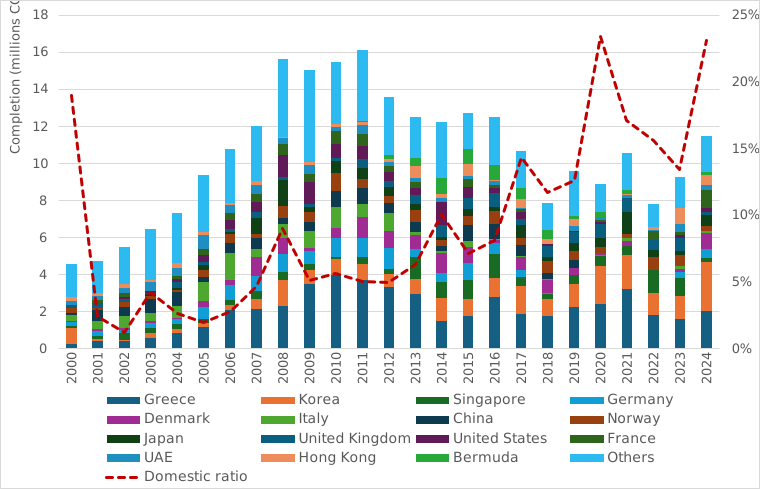
Source: (Clarksons WFR, 2025[2]).

Source: (Clarksons WFR, 2025[2])
The export value of ships and boats (classified under MTI code 746), as well as their share in Korea’s total exports, has shown a declining trend in recent years. This development can be attributed to a combination of structural and demand-side factors. Traditional markets such as Greece — once major buyers of bulk carriers and tankers — have significantly reduced their order volumes, not due to a shift to alternative suppliers, but as a result of overall contraction in investment. Similarly, Italy, previously an important customer for Korea shipbuilders, has decreased its demand without increasing procurement from lower-cost producers such as China, indicating a broader reduction in market appetite. Germany, meanwhile, has redirected a portion of its orders to Chinese shipyards, particularly during the 2017–2023 period. Overall, these trends reflect both the global downcycle in ship demand and a more cautious, risk-averse approach by major buyers toward new vessel investments, presenting continued challenges for Korea’s export-oriented shipbuilding sector.
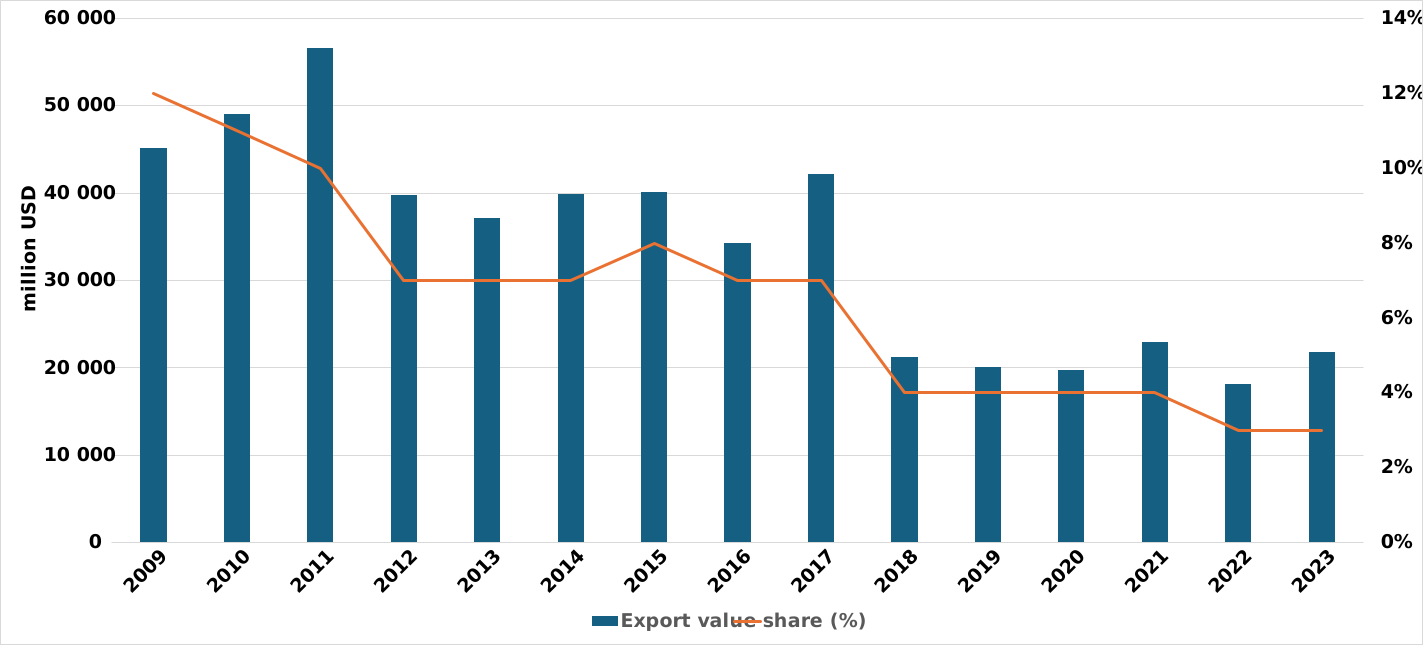
Source: KITA (Korea International Trade Association(Code : MTI 746)).
Korea’s shipbuilding industry continues to operate a significant number of globally competitive yards, despite a gradual long-term decline in market share. Structural adjustments in commercial shipbuilding have consolidated the sector under three major groups: HD Hyundai, Samsung Heavy Industries (SHI), and Hanwha Ocean (part of the Hanwha Group). These firms continue to focus strategically on high-value segments, including LNG carriers, ultra-large container ships (ULCS), Floating Production Storage and Offloading units (FPSOs), and naval vessels. In addition, Hanwha Group and SHI are actively pursuing overseas expansion strategies.
In 2024, Korea ranked second globally in shipbuilding completions. HD Hyundai, SHI, Hanwha Ocean, and Daehan Shipbuilding (formerly KHI–Hantsu SG PE) were all among the top 20 shipbuilders worldwide by CGT. The three largest groups—HD Hyundai, Hanwha Group, and SHI—accounted for more than 90% of national completions, with over half of their total investment directed toward the eco-friendly ship segment.
Based on three-year interval capacity estimates, the top ten Korean shipbuilders controlled 99.7% of national capacity in 2024, with HD Hyundai alone representing 44.1%. HD Hyundai has led national capacity rankings since 2000. On a 15-year interval basis, the top ten firms accounted for 90.3% of total capacity, with HD Hyundai contributing 30.5%. This high concentration reflects the consolidation of the industry into large corporate groups during the downturn of the 2000s.
The Korean public sector plays a central role in supporting the maritime industry through regulatory oversight, technological co-ordination, and export finance. The Shipbuilding and Offshore Plant Industry Division of MOTIR (formerly MOTIE) oversees policies for shipbuilding and marine equipment, including standards for safety, recycling, and innovation, while the MOF supports eco-friendly technology development. Export financing is provided by KEXIM, offering buyer’s credits and bank-to-bank loans, and K-Sure, which insures ship exports against political and commercial risks. These institutions aim to maintain the global competitiveness of Korean shipbuilders, including SMEs integrated within regional production networks.
Industrial transformation is further supported through strategic initiatives such as the “K-Shipbuilding Strategy” and the “K-Shipbuilding Super Gap Vision 2040”. The government is promoting zero-emission vessel development, digital design processes, and smart shipbuilding technologies. Under the K-Shipbuilding Strategy, in 2025 MOTIR (formerly MOTIE) will allocate KRW 260 billion to R&D in hydrogen and ammonia fuel systems, autonomous ship technologies, and smart shipbuilding systems—a 40% increase from 2024 levels—to strengthen the sector’s long-term competitiveness.
2.2.1. Private sector
Shipbuilders
The domestic shipbuilding industry has invested KRW 1.2 trillion 2019-2023 over the past five years. The growth rate of R&D investment by the three major shipbuilding companies over the past five years is 11.0%, and the trend is expected to increase starting in 2022 when the market conditions begin to improve in earnest. The largest investment area for the three domestic shipbuilding companies is the eco-friendly ship sector, accounting for more than 50% of the total investment amount.

Source: (Clarksons WFR, 2025[2])
South Korea’s shipbuilding industry is led by a consolidated “Big Three” structure consisting of HD Hyundai, Hanwha Ocean, and Samsung Heavy Industries (SHI)—each with distinctive strategic strengths and technological capabilities.
According to Clarksons Research (Q4 2024), three Korean shipbuilders—HD Hyundai, Samsung Heavy Industries, and Hanwha Ocean—ranked within the global top 10 based on CGT completions. HD Hyundai Heavy Industries recorded approximately 5.82 million CGT, leading among Korean builders and specialising in LNG carriers, large container ships, and ammonia/methanol-fuelled vessels. Samsung Heavy Industries followed with around 3.21 million CGT, maintaining its strength in FLNG, FPSO, and high-value offshore units. Hanwha Ocean, formerly DSME, joined the top 10 following its acquisition by Hanwha Group in 2022, with a focus on LNG carriers and naval vessels. While Chinese shipyards such as CSSC, Yangzijiang, and COSCO ranked higher in total volume, Korean shipbuilders continued to hold strong positions. in high-technology segments. Their comparative advantage lies in engineering capacity, fuel-flexible propulsion systems, and compliance with IMO decarbonisation standards.
HD Hyundai stands as the largest shipbuilder in Korea, benefitting from economies of scale across its three major shipyards: Hyundai Heavy Industries (Ulsan), Hyundai Samho, and Hyundai Mipo. This vertically integrated structure enables the group to deliver a broad range of vessels, including ultra-large container ships, LNG and LPG carriers, and ammonia-fuelled ships. Hyundai Mipo specialises in medium-sized product tankers, while Samho focuses on large-scale LNG carriers and tankers. HD Hyundai’s dominance is not only in volume but also in its capacity to adapt quickly to green fuel transitions and high-spec requirements. Furthermore, HD Hyundai signed a strategic collaboration with Tampa Ship, a United States shipyard, in June 2025, in order to further expand its business, in view of building medium-sized LNG dual-fuel container ships in the United States, with first deliveries targeted for 2028 (HD HYUNDAI, 2025[3]). In addition, in August 2025, HD Hyundai Heavy Industries announced that it will absorb its affiliate HD Hyundai Mipo through a merger in December, in order to not only maximize synergies through both quantitative and qualitative growth, strengthen competitiveness, and secure an advantage in the global market, but also enhance its defence capabilities and expand defence business further, as well as the integrated company will establish an overseas investment corporation in Singapore in December 2025, which will supervise overseas production base, including HD Hyundai Viet Nam Shipbuilding, HD Hyundai Heavy Industries Philippines and a new subsidiary in Viet Nam (Reuters, 2025[4]) (Yonhap News Agency, 2025[5]). In September 2025, HD Korea Shipbuilding & Offshore Engineering (HD KSOE), a HD Hyundai subsidiary, signed the MoU with Cochin Shipyard Limited (CSL), India, for long-term shipbuilding collaboration (Ministry of Ports, Shipping and Waterways, India, 2025[6]). Furthermore, HD Hyundai are working to complete the construction of the biggest shipyard in the Middle East in Saudi Arabia with Saudi’s Aramco by the end of 2025 (The Korea Times, 2025[7]).
Hanwha Ocean, formerly Daewoo Shipbuilding & Marine Engineering (DSME), has solidified its position through technical legacy and recent investments. With a track record of building the world’s first large-scale LNG and Arctic-class LNG carriers, Hanwha Ocean possesses proprietary technologies such as shaft generator motor systems, LNG reliquefication, and onboard CCS (carbon capture and storage). The company is actively investing in future-oriented capabilities, including the development of CO₂, ammonia, and hydrogen carriers through research facilities like the Sloshing Research Centre and Energy Systems Testing Lab. Furthermore, Hanwha Ocean acquired Philly Shipyard in the United States for USD 100 million in 2024, in order to further expand its business and enter the United States naval business.
Samsung Heavy Industries has carved out a strong niche in offshore platforms and high-spec LNG carriers. The company continues to secure major contracts for floating LNG (FLNG) units and is renowned for delivering vessels with advanced automation and propulsion systems. SHI’s business model emphasises high unit-value over volume, reflecting a focus on complex engineering solutions rather than standard mass production. On overseas activity, in July 2025, SHI is extending its shipbuilding capacity into Viet Nam to build tankers up to suezmax size at Vietnamese yards through a collaboration with PetroViet Nam (TradeWinds, 2025[8]).
Together, these three companies represent the technological and commercial foundation of Korea’s global leadership in high-value shipbuilding, particularly in the eco-friendly and digital segments that are gaining prominence under global decarbonisation trends.

Note: Daewoo Shipbuilding & Marine Engineering (DSME) was acquired by Hanwha group in 2022.
Source: (Clarksons WFR, 2025[2]).
Figure 2.8 presents the cumulative completions (in million CGT) of Korea’s top shipbuilding groups from 2015 to 2024. It highlights the scale-driven hierarchy of the industry: HD Hyundai leads decisively with approximately 49.7 million CGT, reflecting the combined output of its Ulsan, Samho, and Mipo shipyards. Hanwha Group and Samsung HI follow with 20.7 million CGT and 18.8 million CGT, respectively.
Mid-sized players such as STX SB(Jinhae), renamed K-shipbuilding in 2021, Sungdong, and Daehan Shipbuilding trail significantly, each below 3 million CGT. At the bottom tier, HHIC (Hanjin Heavy Industries and Construction), renamed HJSC (HJ Shipbuilding & Construction, SPP Shipbuilding) in 2021, and Dae Sun Shipbuilding each recorded around 1 million CGT, reflecting the lingering effects of past restructuring or limited market exposure. This group-level perspective emphasizes the industry's strong concentration at the top, with Korea’s competitive capacity largely held within its top three shipbuilders.

Note: SPP Sacheon went bankrupt in 2019. STX SB (Jinhae) changed its name to K-Shipbuilding in 2021.
Source: (Clarksons WFR, 2025[2])
Figure 2.8 disaggregates production data by individual yards rather than corporate groups, providing a clearer picture of operational distribution: Hyundai Heavy Industries (Ulsan) ranks first with over 20 million CGT, showcasing its unmatched production scale. Hanwha Ocean and Samsung HI follow closely. Hyundai Samho and Hyundai Mipo, both part of HD Hyundai, also appear in the top five, illustrating HD Hyundai’s intra-group production diversity.
Yards such as STX SB (Jinhae), Sungdong, Daehan, Hyundai HI Gunsan, and SPP Sacheon comprise the second tier, each contributing under 5 million CGT. The financial crisis severely impacted small and mid-sized companies, causing significant financial difficulties that led SPP Sacheon to bankruptcy in 2019, and STX SB, following an overly aggressive expansion strategy and the subsequent downturn in the shipbuilding market, underwent restructuring procedures, to subsequently underwent transitions to K-Shipbuilding in 2021. These shipbuilders have historically focused on standard vessel types like bulk carriers and tankers, but are now transitioning toward smart yard upgrades and eco-friendly retrofitting in response to evolving regulatory and market pressures.

Source: Answer to the Questionnaire Peer Review (2024).
Recession
After the 2008 financial crisis, relatively large shipyards entered workout programs, consignment management, or creditor management, while vulnerable small- and medium-sized shipyards were sold off or exited the market. Following this, only a few medium-sized shipyards, such as Daesun Shipbuilding, K Shipbuilding, HJ Shipbuilding & Construction, and Daehan Shipbuilding, survived restructuring, with most completing creditor management or being sold by 2021–2022. As for large shipyards, they conducted self-led restructuring after 2015, including workforce reductions and asset sales.
Against the background of a recession and restructuring measures, on 6 November 2018, Korea was requested consultation to the WTO by Japan concerning the following measures allegedly affecting trade in commercial vessels: (1) corporate restructuring measures to allegedly support Korean shipbuilders; (2) guarantees and other insurance for financing related to commercial vessel orders placed with Korean shipbuilders; (3) pre-shipment loans, measures part of the new shipbuilding program, and other financing for commercial vessel orders placed with Korean shipbuilders; (4) alleged eco-ship replacement subsidies; (5) other measures imposed by Korea to allegedly support commercial vessel purchases; and (6) amendments and other measures (WTO, 2018[9]).
In addition, on 20 November 2018, the European Union also requested to join the consultations. On 21 November 2018, Chinese Taipei requested to join the consultations. Subsequently, Korea informed the DSB that it had accepted the European Union's request to join the consultations (WTO, 2020[10]).
Capacity (main yards)
The capacity of the main Korea shipbuilding groups from 2000 to 2024 is depicted using the 3-year interval calculation in Figure 2.10. On average, the ten largest groups accounted for 97.4% of total national capacity over this period. In 2000, they held 98.3%, with HD Hyundai at the top of the list at 35.1%. This share remained relatively the same until 2006, when it started to decline, reaching 92.9% in 2011. HD Hyundai maintained 35.9% in 2006, as the largest group. Since then, the share has steadily increased, with the top ten holding 99.7%, the largest share ever held by the top ten groups, and HD Hyundai contributing 44.1%. HD Hyundai has remained the largest shipbuilding group between 2000 and 2024, where on average, it represented 41.5% of total Korean shipbuilding capacity.

Source OECD estimation based on Clarkson Research Services Limited (February 2025), World Fleet Register, https://www.clarksons.net/wfr; S&P Global (February 2025), Maritime IHS database, https://maritime.ihs.com/.
The estimations of capacity using the 15-year interval for the top ten Korean shipbuilder groups are found in Figure 2.11. On average, between 2000 and 2024, the top ten shipbuilder groups made up 90.3% share of the total shipbuilding capacity. In 2000, the top ten groups by capacity had 94.3% share of total capacity, where HD Hyundai had the largest capacity, with 33.3% of the total share. The highest share during this period was in 2005, with 95.1% share of total capacity, where Hyundai HD had 42.4% of the total, the highest share. In 2024, the top ten yards had 90.3% of the total share of capacity, with HD Hyundai, with 30.5% share. HD Hyundai has remained the largest shipbuilding group between 2000 and 2024, where on average, it represented 35.3% of total Korean shipbuilding capacity. Overall, the shares of capacity by the top ten shipbuilding groups by capacity are lower using the 15-year interval.
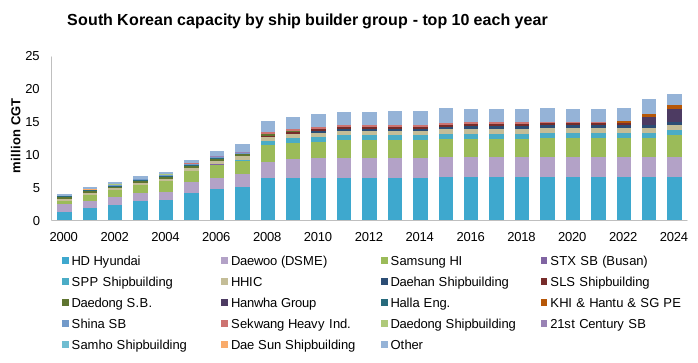
Source: OECD estimation based on Clarkson Research Services Limited (February 2025), World Fleet Register, https://www.clarksons.net/wfr; S&P Global (February 2025), Maritime IHS database, https://maritime.ihs.com/.
Korea government views
According to the government’s views at the time of the 2024 interview, regarding shipbuilding capacity, after a period of restructuring, small and medium-sized shipbuilders were forced out after 2008, and DSME was also converted to a private company, Hanwha. The government assessed that it has reached an appropriate level of capacity. In addition, regarding the recent increase in orders, it stated that it is responding in the direction of increasing efficiency rather than increasing capacity.
Investment (R&D)
The domestic shipbuilding industry has invested KRW 1.8 trillion (2019-2023) over the past five years. The growth rate of R&D investment by the three major shipbuilding companies over the past five years is 11.0%, and the trend is expected to increase starting in 2022 when the market conditions begin to improve in earnest. The largest investment area for the three domestic shipbuilding companies is the eco-friendly ship sector, accounting for more than 50% of the total investment amount.
Industry associations
KOSHIPA (Korea Offshore & Shipbuilding Association): The association counts 8 members, including large & Medium shipbuilders (HD Hyundai Heavy Industries, Samsung Heavy Industries, Hanwha Ocean, HD Hyundai Samho, HD Hyundai Mipo, K-Shipbuilding, Daesun Shipbuilding, HJ Heavy Industries). KOSHIPA’s mandate is to promote mutual friendship among members and to strengthen the market information system and promote mutual benefits through co-operation in the shipbuilding industry. It initiates various international co-operation. JECK (Japan, Europe, China, Korea) Top Executive Meeting is an annual meeting of top executives from major shipbuilders in Japan, EU, China, and Korea. During the meeting, participants discuss global economic trend, regional shipbuilding markets, and various ship types in the market. ASEF (Active Shipbuilding Experts' Federation) is an international organisation comprising shipbuilding experts from leading shipbuilding nations. ASEF's mission is to foster co-operation among its members to address technical, regulatory, and environmental challenges in the shipbuilding industry. The organisation provides a platform for sharing expertise, discussing industry trends, and promoting best practices to enhance the global competitiveness and sustainability of shipbuilding. ISFEM (International Shipbuilding Forecasting Experts Meeting) is annual meetings involving working-level from major shipbuilding countries (Korea, China, Japan, and Europe) focus on long term of shipbuilding market forecasts and related topics.
KOMEA (Korea Marine Equipment Association): KOMEA is compromised with 318 members, including small and medium enterprises (SMEs) related to marine equipment. KOMEA is dedicated to promoting and develop the Rights and Interests of Small and Medium Enterprises Related to Marine Equipment. KOMEA also participates to JSMEA.
KOMERI (Korean Marine Equipment Research Institute)
2.2.2. Public sector
Government
MOTIR (the Ministry of Trade, Industry and Resources) (Former name: MOTIE (Ministry of Trade, Industry and Energy) Shipbuilding and Offshore plant Industry Division) The Ministry name changed in accordance with the amendment of the Government Organisation Act, effective 1 October 2025. The MOTIR is responsible for strengthening the security of national critical technologies, enhancing industrial competitiveness and preventing safety accidents at industrial sites. The MOTIR is formulating and implementing policies to foster business growth and export, while addressing regulatory issues and alleviating difficulties faced by enterprises.
MOF (Ministry of Oceans and Fisheries) The MOF bears the responsibility to ensure the safety of aquatic products, to prevent maritime accidents, to safeguard the marine environment, and to strengthen the nation’s competitiveness in eco-friendly technologies in response to the climate crisis. The MOF undertakes monitoring activities to protect aquatic resources and the marine ecosystem, while also leading efforts in research and development to establish environmentally sustainable and cutting-edge port logistics systems, as well as in the construction of port and logistics infrastructure.
MOJ (Ministry of Justice) The MOJ supports visa-related procedures to facilitate the recruitment of foreign workers.
MOEL (Ministry of Employment and Labor) The MOEL implements a range of policies aimed at regulating working hours and ensuring safe and equitable working conditions.
State Owned Enterprise (SOE)
The Export Credit Agency (ECA) is run as a state-owned enterprise.
K-SURE (Korea Trade Insurance Corporation) K-SURE carries the responsibility of supporting the enhancement of national competitiveness by facilitating international trade and foreign investment through comprehensive schemes, including trade insurance, overseas investment insurance, and credit guarantee programs. K-SURE contributes to the stability of international trade and foreign investment by administering a diversified portfolio of trade insurance instruments and managing dedicated trade insurance funds.
KEXIM (The Export-Import Bank of Korea) The KEXIM is mandated to provide uninterrupted credit support to ensure that enterprises encounter no financial constraints in executing their export operations. The KEXIM offers comprehensive policy financing to facilitate overseas investment and resource development, support official development assistance (ODA) initiatives in developing countries, and enhance the resilience and competitiveness of supply chains in key industries.
2.2.3. Support measures
Based on the questionnaire to Korea and web research by the Secretariat, this section provides the recent measures for shipbuilding sector in Korea (Annex A). This section introduces the overview of some measures.
Strategies/plans/roadmap
In 2024, Korea published the K-shipbuilding strategy and based on that developed the K-Shipbuilding Super Gap Vision 2040. This vision consists of the following important parts:
a. Eco-friendly: With the goal of completing a zero-carbon ship technology portfolio by 2040, they will develop eco-friendly fuel propulsion technologies such as hydrogen and ammonia, eco-friendly innovative equipment, and future fuel production plant technologies such as hydrogen and ammonia beyond crude oil and gas. In addition, to put focus on capabilities on securing core technologies such as liquefied hydrogen carrier cargo holds and large electric propulsion ships.
b. Digital: With the goal of achieving a 50% unmanned rate in the process by 2040, they will secure automation technologies for all processes, including design, production, and yard operation. Prioritise the development of welding and painting automation technologies and collaborative robot technologies that can replace high-risk and high-difficulty tasks. In the mid- to long-term, they plan to secure technologies based on an automated ship block factory that can operate 24 hours a day and promote the construction of a test bed.
c. Smart: With the goal of commercialising fully autonomous ships by 2040, Korea will secure technologies such as sensors, equipment, and integrated operation systems necessary for unmanned navigation. In addition, technologies that allow human-robots to assist crew members in their work and technologies to ensure safety in case of emergency situations are being developed in parallel.
Decarbonisation
In response to the growing demand for a decarbonised shipbuilding sector, the Korean government is taking a variety of actions to promote this shift. The Act on Promotion of Development Distribution of Environmentally Friendly Ships, enacted in December 2018 by the Korean government, mandates the public sector to build environment-friendly ships and provides the private sector with incentives like tax reductions and subsidies for converting to such ships (Ministry of Oceans and Fisheries, 2025[11]). More recently, the Ministry of Oceans and Fisheries (MOF) announced the 2025 Implementation Plan for Environment-Friendly Ship Distribution in accordance with the 1st Master Plan for Environment-Friendly Ship Development and Distribution (2021-2030). This plan includes the building of 54 new environment friendly ships and the remodelling of an additional 27 ships for an investment of around KRW 222.3 billion this year (Ministry of Oceans and Fisheries, 2025[11]).
R&D
The Annual Research and Development (R&D) budget for shipbuilding and marine equipment has been increasing since 2013, as can be seen in Figure 2.12 While a dip can be observed in 2023, R&D has surpassed KRW 80 000 million in 2024. Over the five years from 2019 to 2023, the Korean government invested a total of KRW 904.8 billion in shipbuilding and marine technology development—representing an increase of 6.8% of R&D in the shipbuilding and maritime sector and an increase of 11% for government R&D during that same time period (Korea, 2024[12]).
Comparatively, Korea’s order competitiveness for most ship types (excluding LNG carriers) are low and require the expansion of R&D investment. This will support the future product market such as the development of hydrogen and ammonia. While China’s State-owned Company Group (CSSC) R&D budget was approximatively of KRW 585 billion in 2022, Korea’s represented around half of this number when including 250 billion in shipbuilding R&D as well as 100 billion in government R&D for that same year (Korea, 2024[12]).

Source: (Korea, 2024[12]).
To enhance productivity and manage energy more efficiently, several R&D initiatives focus on establishing smart yards and strengthening digital-based production capabilities. Efforts are also being made to digitalise processes within shipyards, such as production and logistics, while supporting the development of key technologies like robotic welding and digital twin technology for block assembly (Korea, 2024[12]).
Moreover, increasing global co-operation in the sphere of R&D is inciting Korea to develop its partnerships with other countries. To bolster domestic companies' competitiveness, the government is enhancing support through R&D development with research funding, tax breaks, and export assistance. In response to China’s rapid expansion in market share in shipbuilding, Korea is adopting a collaborative approach, bringing together its top shipbuilders such as HD Hyundai Heavy Industries, Samsung Heavy Industries, and Hanwha Ocean (Marine public, 2025[13]). The aim is to combine efforts in key sectors such as sustainable technology, automated maritime transport, and skill development. Although Korea continues to lead in sophisticated shipbuilding—particularly in LNG carriers and environmentally friendly vessels—the push for innovation is accelerating (Marine public, 2025[13]). This collaboration would concern the entire construction ecosystem, from design to construction and equipment development and would require the creation of a one-team co-operation system (Korea, 2024[12]). As of 2019, part of R&D coming from the Ministry of Trade, Industry and Energy started to focus on supporting the development of eco-friendly ship equipment, energy efficiency improvements and investments in automated processes (Korea, 2024[12]).
Labour
In the Korean shipbuilding industry, the supply and demand of production manpower has been disrupted due to the decrease in the young population, aging, and 3D avoidance. Accordingly, in order to facilitate the introduction of foreign workers at the government level such as the MOTIR (the Ministry of Trade, Industry and Resources) (formerly MOTIE (Ministry of Trade, Industry and Energy)), shipyards such as simplifying visa issuance procedures and expanding quotas are making efforts to improve the welfare and working environment of foreign workers through system improvement. In addition, local governments such as Geoje/Ulsan/Busan are holding job fairs to recruit production workers.
Shipyard subcontractors/partners, shipbuilding associations, experts, and central/local governments participated in the launch of the Shipbuilding Industry Win-Win Consultative Body to discuss practical measures to resolve the gap between the original contractor and subcontractors, expand the escrow payment system to prevent overdue wages, employment events to secure (youth and women) manpower, and expand vocational training.
The Korean government and private companies are making efforts to improve the work environment and work-life balance, while the improvements of gender ratio have been seen in some companies, the improvement of the gender ratio in the whole industry has not increased significantly, with 8% of women employed.
The Ministry of Justice is operating the Korea Immigration and Integration Program (KIIP) to provide opportunities for foreign workers to systematically cultivate basic skills essential for adaptation to the domestic market and independence. KIIP is divided into the fields of ‘Korean language and culture’ and ‘Understanding on Korean society.
The ‘Shipbuilding Maritime Future Innovation Training Center’ has been opened and operates since 2024. It operates as two centres in the metropolitan area and the southeast area, and provides eco-friendly/smartisation education for university students and workers in shipbuilding industry including shipbuilding equipment industry.
Others
According to the Congress, the Korea government is currently discussing further co-operation with the U.S. shipbuilding industry under the billion USD range package, bearing in mind the Make America Shipbuilding Great Again’’ (CONGRESS, 2025[14]) (KOREA.net, 2025[15]) (koreaherald, 2025[16]).
References
[2] Clarksons WFR (2025), World Fleet Register, https://www.clarksons.net/WFR/.
[14] CONGRESS (2025), U.S. Tariff Actions and U.S.-South Korea Trade, https://www.congress.gov/crs-product/IN12569.
[3] HD HYUNDAI (2025), HD Hyundai Joins Forces with U.S. Shipbuilder for Vessel Construction, https://www.hd.com/en/newsroom/media-hub/press/view?&&detailsKey=3577.
[12] Korea (2024), Shipbuilding Committee Peer Review Questionnaire.
[15] KOREA.net (2025), Korea agrees to 15% reciprocal tariffs, USD 350B investment with US, https://www.korea.net/NewsFocus/Business/view?articleId=276234.
[16] koreaherald (2025), Korea, US strike last-minute tariff deal, but tough talks lie ahead, https://www.koreaherald.com/article/10547390.
[1] KOSIS-KOrean Statistical Information Service (2025), Korea Statistics Portal, https://kosis.kr/statHtml/statHtml.do?orgId=101&tblId=DT_1FS1104&conn_path=I2.
[13] Marine public (2025), China vs. South Korea: The Battle for Global Shipbuilding, https://www.marinepublic.com/blogs/analytics/150827-china-vs-south-korea-the-battle-for-global-shipbuilding.
[11] Ministry of Oceans and Fisheries (2025), What’s New: Distributing Environment-Friendly Ships to Capture Greenhouse Gases Properly, https://www.mof.go.kr/doc/en/selectDoc.do?docSeq=60424&bbsSeq=90&menuSeq=485#:~:text=The%20government%20enacted%20the%20Act%20on%20the%20Promotion,and%20provide%20subsidies%20when%20converting%20into%20environment-friendly%20ships.
[6] Ministry of Ports, Shipping and Waterways, India (2025), Cochin Shipyard moves Towards Atmanirbhar Bharat ; Signs MoU with HD Korea for Long-Term Shipbuilding Collaboration, https://www.pib.gov.in/PressReleasePage.aspx?PRID=2170036.
[4] Reuters (2025), South Korea’s top shipbuilder to acquire affiliate to tap US demand under Trump, https://www.reuters.com/markets/emerging/south-koreas-top-shipbuilder-acquire-affiliate-tap-us-demand-under-trump-2025-08-27/.
[7] The Korea Times (2025), Korea, Saudi Arabia to expand cooperation in shipbuilding, automotive, AI industries, https://www.koreatimes.co.kr/foreignaffairs/20250926/korea-saudi-arabia-to-expand-cooperation-in-shipbuilding-automotive-ai-industries.
[8] TradeWinds (2025), Samsung expands shipbuilding capacity into Vietnam through PetroVietnam pact, https://www.tradewindsnews.com/tankers/samsung-expands-shipbuilding-capacity-into-vietnam-through-petrovietnam-pact/2-1-1841985?utm_campaign=2025-07-07T10%3A02%3A52.052Z&utm_content=shipyards&utm_medium=email&utm_source=alert&utm_term=TOPIC.
[10] WTO (2020), DS594: Korea — Measures Affecting Trade in Commercial Vessels (second complaint) (Japan), https://www.wto.org/english/tratop_e/dispu_e/cases_e/ds594_e.htm.
[9] WTO (2018), DS571: Korea — Measures Affecting Trade in Commercial Vessels (Japan), https://www.wto.org/english/tratop_e/dispu_e/cases_e/ds571_e.htm.
[5] Yonhap News Agency (2025), HD현대중공업·HD현대미포 합병…조선·방산역량 키운다, https://www.yna.co.kr/view/AKR20250827124600003?input=1195m.