This chapter examines the status and strategic direction of Korea’s maritime sector, focusing on three primary dimensions: market performance in shipbuilding, the resilience of the marine equipment industry, and emerging market trends driven by decarbonisation and digital transformation. It analyses Korea's standing as the world’s second-largest shipbuilding nation and how it maintains competitiveness in high-value-added segments despite structural cost challenges. Furthermore, the chapter evaluates the impact of government-led decarbonisation, alongside the critical challenges of labour shortages and shifting innovation leadership in the global landscape.
Peer Review of the Korean Shipbuilding Industry 2026

Abstract
Global shipbuilding completions and orders rebounded moderately in the early 2020s after the mid-2010s downturn but remained well below the 2008–2011 peak. The recovery was supported by post-COVID demand, improved logistics conditions, and environmental regulations accelerating fleet renewal.
Korea’s share of global ship completions and orders has consistently remained within the 20–30% range, even during market downturns. Notably, Korea’s share increased counter-cyclically in the mid-2010s, highlighting its resilience. The country retains a strong position in advanced vessel segments, particularly those requiring stringent regulatory compliance and specialised technical expertise.
Measured in compensated gross tonnage (CGT), Korea accounted for approximately 27% of global completions in 2024, maintaining its position as the world’s second-largest shipbuilding nation after China. Despite challenges from the global financial crisis and the oil-price collapse, Korea has preserved substantial industrial capacity, reinforcing its status as one of the leading shipbuilding powers.
Korean shipbuilders have shifted production towards high-value segments such as LNG carriers and ultra-large container ships (ULCS), reflecting evolving global demand patterns and tightening environmental standards since the mid-2010s, in line with changes in Korea’s industrial policy.
The Korean shipbuilding workforce has continued to decline, shrinking by about 44% between 2014 and 2024. The share of skilled workers fell to 28% of total employment in 2023. To mitigate labour shortages and sustain output, major shipyards have increasingly hired foreign workers, who now represent roughly 15% of the workforce.
Korea remains highly competitive in high-value vessel construction, underpinned by strong engineering capabilities, rigorous quality control, and reliable delivery performance. Korean shipyards are trusted partners for complex, compliance-driven orders where lifecycle performance and technical reliability outweigh cost considerations.
1.1.1. Orderbook
Korea remains one of the world’s three leading shipbuilding nations, alongside China and Japan. Its shipyards maintain a stable orderbook supported by sustained demand for technologically advanced and environmentally compliant vessels.
Figure 1.1 shows the evolution of the global shipbuilding orderbook, with reference to Korea’s relative market share and strategic positioning. In the mid-2000s, the global orderbook reached an all-time high, driven by sustained global economic expansion, China's accelerated industrialisation, and increased seaborne trade. During this period, Korea held a considerable share of the orderbook, supported by international demand for its containerships,
The decrease in Korea’s shipbuilding production from its peak in 2009 can be attributed to the impact of the 2008 Global Financial Crisis, reduced orders and increased competition from China led to small and medium sized shipbuilders going out of business. Since 2010, the number of shipyards producing ships has declined. The Korean shipbuilding sector was also impacted by the decline in oil prices in 2014, which led to a reduction in orders for offshore vessels and LNG carriers from international oil companies, impacting liquidity in firms including Daewoo Shipbuilding and Samsung Heavy Industries.
In addition, after the COVID-19 pandemic, in response to the increasing demand for container ships and the disruption of logistics caused by the Red Sea conflict, Korea’s orderbook has been gradually rising.

Source: Shipping Intelligence Network.
1.1.2. Completions
Figure 1.2 shows the global distribution of ship completions from 2000 to 2024, with a specific emphasis on Korea’s CGT-based output and market share. During the early 2000s, Korea held a leading position in global ship completions, reaching a peak in 2011. Despite the subsequent decline in offshore-related demand following the global financial crisis and the collapse in oil prices, Korea consistently maintained a global market share of around 30% throughout the downturn.
Korea’s strong completion performance is rooted in its strategic focus on high-value-added segments such as LNG carriers and ultra-large container ships (ULCS). This achievement is enabled by Korea’s technological edge, including early investment in digitalisation and production automation.
Figure 1.2 also reveals a sharp decline in completions between 2016 and 2018, largely attributable to overinvestment in offshore facilities and a collapse in crude oil prices, as well as a downturn in the global economy and an oversupply of ships in the shipping market. These developments led to massive losses in companies like DSME and Samsung Heavy Industries—DSME alone reported losses of over KRW 5 trillion in 2015. This prompted large-scale restructuring, mergers, and workforce reductions across the industry.

Source: Clarksons World Fleet Register.
Figure 1.3 illustrates the change in Korea’s ship type composition between 2000 and 2024. In the early years, crude oil tankers and bulk carriers represented a major share of completions. However, from the mid-2010s onward, the focus shifted toward LNG carriers and container ships—especially ULCS—reflecting broader changes in global shipping demand and environmental requirements. This transition is a direct reflection of Korea’s industrial policy shift toward high-value, technology-intensive ship types.
As China continues to dominate cost-competitive segments like bulk carriers, Korea is shifting its strategy toward technological leadership. Under this approach, Korean yards are focusing on fuel cell propulsion, autonomous navigation, and zero-carbon vessel designs. In line with tightening IMO regulations, Korea invested KRW 1 828.7 billion in R&D between 2019 and 2023 in three major shipbuilders, enabling shipbuilders to secure orders for ammonia-fuelled and methanol-ready vessels, and thereby strengthening their position in the premium green ship market.

Source: Clarksons World Fleet Register.
1.1.3. Capacity
To calculate Korean shipbuilding capacity, the Shipbuilding Committee Secretariat’s “maximum production” approach is used to calculate shipyard capacity (Daniel, Adachi and Lee, 2022[1]). This approach uses data on observed deliveries of yards to calculate capacity, looking at the maximum production over the past 3 or 15 years. The 3-year interval follows closely latest developments in ship deliveries, while the 15-year approach assumed a slower adjustment of yard capacity. For this study, all vessel types are considered.
Figure 1.4 and Figure 1.5 illustrate Korean shipbuilding capacity from 2000 using a 3-year interval and a 15-year interval. For 2024, capacity was estimated at 13.2 million CGT with the 3-year interval and 21.5 million with the 15-year interval.

Source: OECD estimation based on Clarkson Research Services Limited (September 2025), World Fleet Register, https://www.clarksons.net/wfr.

Source: OECD estimation based on Clarkson Research Services Limited (September 2025), World Fleet Register, https://www.clarksons.net/wfr.
Korea has maintained high levels of capacity since 2000, strengthening its position as one of the major shipbuilding countries, alongside Japan and China. In 2000, capacity was 3.9 million CGT (3-year interval) and 4.2 million CGT (15-year interval), while it rose to 17.5 million CGT (+351%) and 18.4 million CGT (+336%) respectively by 2010.
Shipyard capacity was at its peak in 2011 at 17.6 million CGT using the 3-year interval, while it reached a peak in 2024 at 21.5 million CGT for estimates using the 15-year interval. Since then, using the 3-year interval, capacity decreased steadily until 2022 at 11.3 million CGT, the lowest point, then beginning to increase from 2023 onwards. The 15-year interval capacity estimates observed that the shipyard capacity had remained relatively stable, though it has risen again since 2023.
Korea’s shipyard capacity has been relatively consistent since 2000, compared to the development of the total shipyard capacity, as demonstrated in Figure 1.6. In 2000, its share was 19% (3-year interval) and 14% (15-year interval), the lowest share between 2000 and 2024. Korea’s share of global shipyard capacity peaked at 32% in 2017 using the 3-year interval and in 2008 at 25% using the 15-year interval. In 2024, its share was 26% (3-year interval) and 23% (15-year interval).
In fact, since 2016, HD Hyundai Group shut down three docks, Samsung Heavy Industries shut down one floating dock and one 3 000-ton floating crane, and Hanwha Ocean sold two floating docks (Korea, 2024[2]).

Source: OECD estimation based on Clarkson Research Services Limited (September 2025), World Fleet Register, https://www.clarksons.net/wfr.

Source: OECD estimation based on Clarkson Research Services Limited (September 2025), World Fleet Register, https://www.clarksons.net/wfr.
KOSHIPA’s data on the sector’s workforce
The workforce in the sector peaked in 2014-2015 and decreased until 2021. Since 2021, it started to increase again since new orders on the eco-friendly ships were increasing. But most of the increase came from the sub-contractors, not from the engineers & skilled workers or management. Regarding the foreign workers, the share in the entire shipbuilding industry is 20%, most of whom are construction workers.
The number of people moving from the shipbuilding industry to other industries continues to increase. In order to improve the image of the shipbuilding industry, marketing efforts such as TV commercials are continuing, and the focus is on enhancing the image as a digital, green industry.

Source: KOSHIPA.
1.1.4. Labour
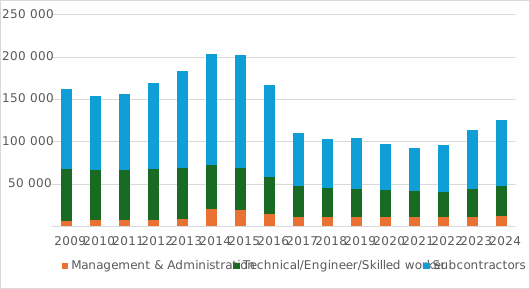
Shipbuilding employment has changed from 162 747 employees in 2009 to a peak of 203 441 in 2014, to 125 636 in 2024, as shown in Table 1.1.
As shown in Figure 1.9, the majority of workers are subcontractors, consisting of 55-66% of total shipyard employees over 2009 and 2024. The use of subcontractors peaked in 2015, reaching 66%, and has declined to 62.2% in 2024, although with fluctuations. The next largest segment of workers is skilled workers, ranging from 28-39%, peaking at 38.7% in 2010. Skilled workers were 27.7% of total shipyard employees in 2024. Lastly, management and administration have remained relatively consistent, consisting of 4-12% of total shipyard employees in 2009-2024. During this period, management and administration have increased their share from 5% in 2013 and 10% in 2014, to 10% of total shipyard employees in 2024.
Source: Answers to the Peer Review Questionnaire from KOSHIPA.
Source: Answer to the Peer Review Questionnaire from KOSHIPA.
The gender ratio in shipbuilding has remained relatively stable between 2017 and 2023. The percentage share of women employed in the sector increased from 7% in 2017-18 to 8% in 2019-23.
Moreover, Korea has launched the disclosure system on employment types and the proportion of women in managerial positions since 2014. The Korean government has made efforts to foster a work-life balance work environment through initiatives such as flexible work conditions and support for childbirth and childcare, and has taken various measures in collaboration with the shipbuilding industry, including recruitment support, awareness campaigns, and the publication of career guidance materials.
HD Hyundai Heavy Industries, which has maintained its certification as a family-friendly company certification by the Ministry of Gender Equality and Family, announced its commitment to increasing the proportion of female hires to 30% by 2030 in 2023. As a result, the number of female employees at HD Hyundai Heavy Industries increased by approximately 26%, from 865 in 2021 to 1,094 in 2023.
Note: Shipbuilding and Boat building Industry.
Source: Questionnaire: Commissioner of Statistics Korea.
In 2023, the largest age segment for skilled workers was workers aged 40-49 years, consisting of 33.8% of the total skilled workforce employed, followed by 30-39 years, at 28.9%, as shown in Table 1.3. This was then followed by 50-59 years, at 22.9%, then 20-29 years, at 13.3% and lastly 1.0% for 60 years and older. The share of workers aged 20-29 peaked in 2013, at 22.9%, reaching a low point in 2019, at 10.8%, and since then has increased. Skilled workers aged 30-39 have been relatively consistent, peaking in 2013, at 36.7%, then declining, only to peak again in 2019, at 37.9%, then declining in 2021 to its lowest point, with 27.2%. This is likely due to the ageing out of the workforce to the next age segment (40-49 years), which saw an increase of 7% in 2021. The age segment 40-49 has been growing most consistently, increasing from 29.3% of the total share in 2011 to 41.4% in 2018, then declining until reaching a peak in 2021, with 42.2% of workers. Those aged 50-59 maintained a consistent share throughout, where it was 19.5% of the total workforce in 2011, peaking in 2016, with 21.3% then reaching a low of 15.3% in 2018. Figure 1.10 visually depicts the changing age structure of the workforce.
Note: Industry skills workforce numbers, not total workers. The methodology for 2012 industrial workforce survey differed from other years.
Source: Questionnaire KIAT (Korea Institute for Advancement of Technology).

Note: Industry skills workforce numbers, not total workers.
Source: Questionnaire: KIAT (Korea Institute for Advancement of Technology).
1.1.5. Foreign workforce
In the Korean shipbuilding sector, the foreign workforce primarily consists of individuals from Viet Nam, the Philippines, Indonesia, and Sri Lanka. The foreign workers are granted E-7 or E-9 visas, which permit legal residence and employment in Korea for an initial period of three years, with the possibility of extension contingent upon compliance with the relevant regulatory requirements.
As of 2023, foreign workers account for approximately 15% of the workforce at the major shipyards in Korea. Korea expects the share of foreign workforce to remain relatively stable in the next few years, unless labour market conditions or policy change significantly.
1.1.6. Shipbuilding cost
According to Figure 1.11 in all economies, steel prices began to rise in Spring 2020 and soared in 2021-2022. Since then, the peak has passed, and steel prices have been declining in many economies. The steel prices kept falling though most of 2024, but they seem to bottom out. However, the price is still at a higher level compared to the one before the COVID-19 pandemic.
Comparing different economies (USD) both in 2015 (average) and December 2024, adjusted by exchange rate, steel prices have risen in every economy since 2015, but the steel price in Korea is 20% higher than in China and 48% lower than in Japan. Although overall price differences between regions remain elevated, over the last year the same price dynamics seem to have affected all regional prices.

Note: a) Local currency basis; b) US dollars basis.
Source: OECD calculations based on Kallanish, Sangyo Press Co., Ltd, and Korean Steel Daily.
Figure 1.12 shows the average annual wages converted to PPP and the average annual wages, US dollar basis, per employee in full-time equivalent unit in the total economy, compared to 2015. The average annual wages converted PPP, in all countries increased gradually by 2-4% and there were no significant differences in wage increase rates between countries in terms of the PPP.
The annual average wages of Japan in 2024 decreased compared to 2015, due to the yen depreciating by 25% during this period. The labour costs in Korea in 2024 were 5% higher than in Japan, 2.3 times higher than China.

Note: a) US dollar basis and PPP converted; b) Average annual wages, US dollar basis, per employee in full-time equivalent unit in the total economy. China’s data is shown only for manufacturing.
Source: OECD calculation based on (OECD, 2026[3]); (National Bureau of Statistics of China, 2026[4]); (Trading Economics, 2026[5]); (World Bank Group, 2026[6]).
Figure 1.13 shows the domestic producer price index (PPI) for industrial activities in various economies until December 2024. The Secretariat presents this index as a proxy for the price index for marine equipment due to the absence of more detailed cost information.
The PPI has followed an upward trend since 2016 and has risen sharply since 2020 due to the pandemic and global inflation. Following these trends, the price rise has stabilised at a high level. Norway (174) is the largest, and China (112) is the lowest. Although Korea (123) ranks third lowest, the PPI has been increasing.

Note: The average for 2015 is set at 100.
Source: Publications from the governments; (Louis and China, 2022 (FRED) / 2023 (NBS)[7]), (Eurostat, 2025[8]), (Japan, 2025[9]), (Korea and Louis, 2022 (FRED) / 2023 (BOK)[10]), (Statistics, 2025[11]).
As of 2019, the Korean marine equipment industry counted around 2 700 companies employing 73 000 people. It is a key domestic supplier, producing roughly 90% of the marine equipment used by Korean shipyards, although shipbuilders continue to rely heavily on imports for eco-technology components.
The industry’s exports are mainly directed to Asia and North America, with China (57.7%) and the United States (29.2%) as the leading destinations. Total direct exports reached approximately USD 1.2 billion in 2022.
Ship repair activities in Korea are largely dominated by domestic firms, accounting for about 70% of the market in 2024. Environmental retrofit operations—such as the installation of ballast water management systems and exhaust gas scrubbers—are primarily carried out in Korean shipyards, although the track record for energy-saving retrofits remains relatively limited.
1.2.1. Global supply chain (Marine equipment)
Korean shipbuilders rely significantly on imports for eco-technology related equipment, but source about 90 per cent of their marine equipment domestically. However, many of these suppliers are licensees of foreign companies.
According to the 2020 Report by the Ministry of Trade, Industry and Energy (MOTIE) (present: MOTIR), which includes a Statistical Survey of the Shipbuilding Equipment Industry, there are about 2 700 companies in the Korean marine equipment industry and about 73 000 employees as of 2019. As of 2022, there were 286 marine equipment manufacturers affiliated with the Korean Marine Equipment Association (KOMEA), concentrated in Busan and Gyeongnam province, which are adjacent to Korea’s three big shipyards.
The total sales revenue of KOMEA’s member companies was KRW 26 trillion in 2022, increased from KRW 18 trillion in 2020. Most of the increase came from the engine, electrical and electronic sectors. The employment increased from 30 886 people in 2020 to 33 135 people in 2022, with most of the increase coming from the electrical and electronic product category. Their total exports amounted to USD 1.1 billion in 2022, decreased slightly from USD 1.2 billion in 2020.
The largest export markets for Korean marine equipment manufacturers are Asia and North America; as of 2022, China (57.7%) and the U.S. (29.2%) accounted for 87% of Korea’s total exports of marine equipment.
Note: These figures are based on the survey of member companies of the KOMEA.
Source: Korean Marine Equipment Association (KOMEA).
Note: These figures are based on the survey of member companies of the KOMEA.
Source: Questionnaire (KOMEA).

Note: These figures are based on the survey of member companies of the KOMEA.
Source: Korean Marine Equipment Association (KOMEA).
1.2.2. Conversion/Repair
Korean yards experienced an increase in overall ship repair activity, measured in the number of repair events, from 2018 to 2020. This trend was interrupted by a decrease in 2021, before reaching a peak in 2022. From 2022 until 2024, there has been a decrease of 41.3% in the number of repairs. This drop could be due to increased repair activity during the COVID-19 period when operational demand was significantly disrupted. There could also be an element of front-loading of future maintenance during these years, which could contribute to explaining the low repair activity in 2024. Figure 1.15 illustrates the development in repair activities in Korea compared to the world trend.

Source: (Clarksons WFR, 2025[12]).

Source: (Clarksons WFR, 2025[12]).
In the period from 2018 until 2024, 68.7% of the repair activity in Korean yards was commissioned by domestic companies. Japanese companies were the second largest contributor with 9.5% of the activity, followed by Russia (5%). In 2024, 72.7% of repair activities originated from domestic companies, 7.9% from Japanese companies, followed by China with 3.6%, and Russia fourth at 3%.
Upgrades represent an important component of the work carried out by repair yards, including retrofitting of Energy Saving Technologies (ESTs) and environmental upgrades. These upgrades are becoming increasingly relevant as environmental ambitions and regulations become more stringent. Fuel conversions are another related segment in this regard, though activity is still limited globally, with only 11 conversions registered in 2024 (Clarksons WFR, 2025[12]). There have not been performed any fuel conversions by South Korean shipyards. EST retrofit activities are examined in greater detail in the Market trend Section.
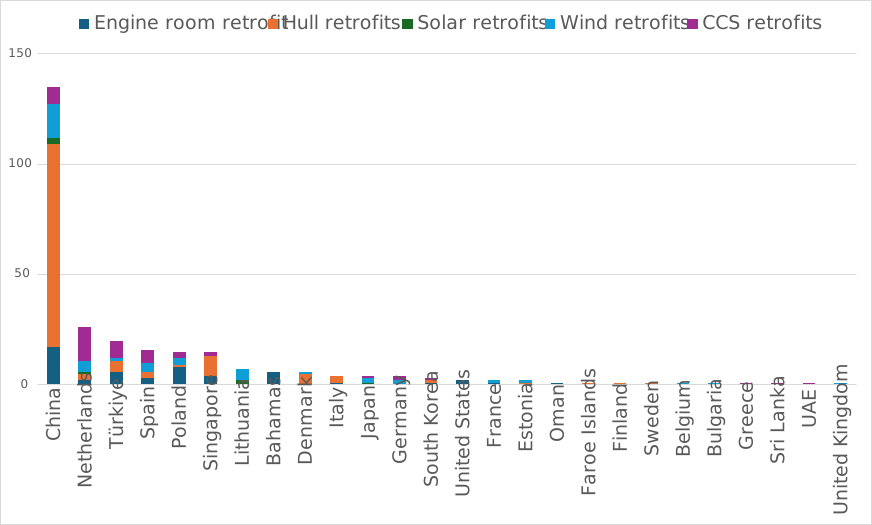
Figure 1.17 illustrates the repair activities broken down by activity types, showing the extent of upgrade activities as a share of total activities. Table 1.6 illustrates the range and volume of EST and environmental upgrades performed by Korean shipyards. Korean yards have extensive experience with retrofitting ballast water management systems and scrubbers.
Note: Propeller retrofits are excluded. Data from 1.1.2018-21.08.2025.
Source: (Clarksons WFR, 2025[12]).
Korea’s substantial government-backed investment programmes are positioning ship decarbonisation as a central pillar of industrial policy, driving R&D, technology adoption, and the rollout of green vessels. Korea has placed ship decarbonisation at the core of its industrial strategy, supported by a KRW 9 trillion investment package, of which KRW 258.6 billion is earmarked for green ship initiatives. Complementary MOTIR (formerly MOTIE) and MOF programmes provide support for private-sector R&D, the adoption of fuel-saving technologies, and the construction or conversion of environmentally friendly vessels in line with IMO regulations.
Enhanced transparency in ESG reporting. Both major Korean shipbuilders and several shipping companies now publish ESG reports, while greenhouse gas emissions and energy consumption are monitored through the National Greenhouse Gas Management System, under the supervision of the Korean government.
R&D focused on advanced and low-carbon technologies. Korea continues to prioritise innovation in areas such as autonomous vessels and alternative fuel technologies. While the overall volume of patents has been maintained, the number of low-carbon maritime patents has fluctuated, and the maritime sector’s share of total patents has gradually declined.
Concentration in alternative-fuel vessel orders. Orders and completions for alternative-fuel-capable ships are highly concentrated, representing about 62% of Korea’s orderbook. Korea is a global leader in LNG-fuelled vessels, second only to China, and also holds a strong position in LPG-fuelled and other alternative-fuel ships, thereby supporting the decarbonisation of the global shipping fleet.
Labour shortages and skills gaps. Korea’s three major shipbuilders are advancing the integration of smart technologies—such as artificial intelligence (AI), robotics, and augmented reality (AR)—to enhance shipbuilding processes, boost productivity, and mitigate labour and skills shortages.
1.3.1. Innovation activity
Decarbonisation
Korea has been at the forefront of maritime decarbonisation, consistently leading innovation in eco-friendly vessel technologies. The nation marked significant milestones in sustainable shipbuilding with the launch of the world’s first LNG-fuelled containership in September 2020, followed by the introduction of the first methanol-fuelled containership in September 2023 (KOSHIPA, 2024[13]). More recently, in October 2023, Korea unveiled the world’s first ammonia-fuelled ship, an LPG carrier, further solidifying its commitment to clean energy in the maritime sector (KOSHIPA, 2024[13]). To stay ahead in the ever-increasing competition with China, Korean shipbuilders are striving to establish a strong position in emerging markets beyond LNG, such as ammonia and hydrogen. With no established global players in these segments yet, Korean companies are making substantial investments to position themselves as industry pioneers, securing an advantageous foothold in the evolving green shipping landscape.
At the company level, several shipbuilding and shipping companies have set net-zero emission targets by 2050. HMM aims to achieve carbon neutrality by early 2045, while other companies are in the process of reviewing their carbon neutrality goals in response to new IMO environmental regulations. Environmental, Social, Governance (ESG) reporting is currently at the discretion of shipping and shipbuilding companies. While a total of nine companies (including HMM, Pan Ocea, and Hyundai Glovis) are currently known to annually publish their ESG reports, this number is expected to increase in the near term (Korea, 2024[2]).
To further encourage shipyards to monitor their environmental impact and reduce carbon emissions to reach net-zero goals, Korea implements an Emissions Trading Scheme (ETS) program. These entities can emit GHGs up to the limit set by their allocated allowances and get benefits by selling any excess emission reductions on the market—which encourages them to meet their set goals while increasing profits. In the converse scenario, entities struggling to reach the set limit, can cut costs by purchasing emission permits at prices lower than the cost of direct reduction (Korea, 2024[2]). According to the National Greenhouse Gas Management System (NGMS), which is a framework for monitoring and reporting GHG emissions and energy consumption under the comprehensive oversight of the Ministry of Environment, the greenhouse gas emissions and energy consumption of nine ship and boat manufacturing companies, which are subject to allocation, amount to 2 013 476 tCO2-eq and 35 620 TJ, respectively (Korea, 2024[2]).
Other shipbuilding/yard-level workplace impact assessments are being carried out through internal and external environmental monitoring—including through in-house greenhouse gas management system or ICT-based remote control and monitoring systems to reduce emissions (Korea, 2024[2]) Increased visibility of greenhouse gas emission on vessels is already in place for some of the major Korean shipbuilders. In 2023, HD Hyundai Global Service had already unveiled the “Ocean Wise” solution at KORMARINE to monitor carbon dioxide emissions based on AI and data analysis (Mare in Korea News, 2023[14]). In fact, HD Hyundai Global Service has implemented the Ocean Wise platform, an AI-powered system designed to perform real-time analysis of CO₂ emissions generated during vessel operations (Korea, 2025[15]). Similarly, SYARD—a data-based company integrated and controllable monitoring system—is used by Samsung Heavy Industries to utilise big data using the Internet of Things (IoT) to enable efficient management of resources, including the optimisation of fuel consumption and reduction emissions (Jae-Fu, 2023[16]). Moreover, steel reduction systems are being implemented to predict steel plate usage, to reduce unnecessary steel plate consumption, and increase recycling rates, and Hyundai Samho Heavy Industries has adopted a predictive optimisation system aimed at minimising steel plate consumption and maximising material recyclability. To promote waste resource recovery, the range of recyclable waste items is expanded, and recycled materials are produced, notably including: (1) replacement of outdated chiller and heater units, (2) replacement of LED lights, or (3) replacement of old crane control system with inverter type control system (Korea, 2024[2]).
Among the top 10 shipbuilding companies by volume, five have established greenhouse gas (GHG) emissions reduction targets. In 2023, Hyundai Heavy Industries, together with HD Korea Shipbuilding & Offshore Engineering (HDKSOE), HD Hyundai Samho Heavy Industries, and HD Hyundai Mipo, released a joint “2050 Carbon Neutrality Implementation Roadmap” covering Scope 1 and 2 emissions (HD Hyundai Heavy Industries, 2023[17]). This roadmap sets out a phased approach to decarbonisation: a 28% reduction in GHG emissions by 2030, 60% by 2040, and full carbon neutrality by 2050, relative to 2018 levels. Key measures include improving energy efficiency through the replacement of ageing equipment, adoption of high-efficiency machinery, increased use of low- and zero-carbon fuels, integration of renewable energy, and deployment of carbon offset mechanisms.
Hanwha Ocean has also published its ESG targets for 2030, aiming for a 40% reduction in GHG emissions compared to 2018 levels, alongside a goal of achieving a 100% eco-friendly ship order backlog (Hanwha Ocean, 2023[18]). Similarly, Samsung Heavy Industries has developed a “2050 Net Zero Roadmap” for Scope 1 and 2 emissions, which includes plans to transition the Geoje Shipyard to renewable energy and promote the development of hydrogen-fueled vessels and hydrogen carriers (Samsung Heavy Industries, 2024[19]).
Significant variation in energy-related CO₂ emissions exists across shipyards, largely driven by differences in production scale, as shown in Figure 1.18. Among the top 10 shipbuilders by volume, total CO₂ emissions range from 24,100 to 640,000 tonnes. HD Hyundai records the highest emissions at 639 878 tCO₂, reflecting its position as Korea’s largest shipbuilder, followed by Hanwha Ocean and Samsung Heavy Industries.

Note: Data shared by Korea in the Shipbuilding Committee Peer Review Questionnaire (2024).
Note: List of projects based on Korea’s answers to the Shipbuilding Peer Review Questionnaire (2024).
Source: (KECO, 2025[20]); (KOFCA, n.d.[21]); (KECO, n.d.[22]).
Note: List of projects based on Korea’s answers to the Shipbuilding Peer Review Questionnaire (2024).
Source: (KEA, n.d.[23]), (Minjo Chun, 2023[24]).
Patenting Activity
Meeting international emissions targets and, ultimately, curbing climate change demands that the maritime sector moves decisively toward zero‑ and low-carbon propulsion. Continuous innovation will be crucial to drive down costs, solve outstanding technical challenges and scale new technologies fast enough to align global shipping and shipbuilding with a net‑zero pathway (OECD, 2025[25]). This transition also creates major openings for shipyards and marine‑technology suppliers to design and deliver the next generation of low‑/zero‑carbon vessels. The following section examines how Korea is responding, tracing key low-carbon innovation trends through its recent maritime patent activity.
Patents can offer a reliable “signal” of technological innovation. Each patent application discloses a novel technical solution, that is timestamped and assigned to an internationally harmonised classification code. Hence, counting patents can allow us to know where and how quickly innovation is advancing in a certain sector. Unlike R&D spending, which focuses more on inputs, patents capture the output of inventive efforts. Figure 1.19 provides an overview of global patenting activity in the shipbuilding sector by counting inventions belonging to the international patenting category (IPC) B63 “ships and other waterborne vessels and related equipment” (European Patent Office, 2024[26]). The countries selected represent the top ten most active in terms of patenting activity in this category and for this period. Figure 1.21 shows that Korea was the clear frontrunner, accounting for almost half of B63 patents in 2015 when compared to the other top 10 players of this time. The country successfully maintained a stable position with a slight drop in 2017 and a stronger dip after 2022. This decreasing share of patenting activity can notably indicate a shift from a higher volume towards fewer but more targeted filings towards the end of the decade.

Source: (European Patent Office, 2024[26]).
The Korean Intellectual Property Office (KIPO) provides data on registered patents related to ships and floating marine structures, as illustrated in Figure 1.20. Unlike the European Patent Office (EPO) data, which reports the share of global patent filings, KIPO focuses on the absolute number of patent registrations within Korea. While EPO data shows a sharp decline in Korea’s share of global ship-related patents in 2023 and 2024, KIPO data suggests only a modest decrease in domestic filings. The decline in its share of patent activity can be attributed to two key factors: the prolonged stagnation of the global shipbuilding market and a strategic national pivot toward qualitative innovation. In particular, Korea has increasingly prioritised high-value, eco-friendly, and technologically advanced solutions over broad-based patenting activity. Despite the downward trend in volume, KIPO data confirms that innovation in the sector remains active, with continued domestic patent filings aligned with national innovation goals.

Source: Korean Intellectual Property Office (KIPO), https://www.kipo.go.kr/en/MainApp (2024).

Note: Timeframe 2005–2021 Y02 low-carbon patents including Y02T70/10 (hulls), Y02T70/50 (propulsion), Y02T70/5218 (fuels), and Y02T70/5236 (renewable/hybrid systems).
Source: EU patent office.
Low-carbon patents are identified via the Y02-tag, which the European Patent Offices defines as “Technologies or applications for mitigation or adaptation to climate change (European Patent Office, 2024[27]). Specific Y02 patent codes (Y02T70/00) pertaining to “Climate change mitigation technologies related to transportation: maritime or waterways transport” are used to extract relevant patents (European Patent Office, 2024[27]).
In Korea, innovation activity in low-carbon technologies is decreasing over time - as seen in Figure 1.21. In the early 2000s, Figure 1.21 shows that patenting activity remained modest in Korea until the 2010s, where the country’s segment grew significantly and varied over time until contracting again in 2018. The EU and Japan on the other hand have consistently shown the most patent filings in this field over the studied period, but China shows a rapid increase in its patenting activity since 2019, surpassing other key innovating countries.
To provide a granular view of innovations in maritime technology, the patent codes can be further classified into subcategories that group them based on their focus, thereby permitting a more detailed study of trends and patterns within the low-carbon maritime technology landscape. Table 1.9 explains their breakdown by sub-category.
Given this breakdown and as can be seen in Figure 1.22, following a handful of exploratory filings in 2004-2009, Korean low-carbon patenting activity surged in 2010 with roughly 19 patents spread across all five Y02T sub-classes; the bulk came from alternative fuels (70/5218) and energy-efficient hull design and construction (70/10), marking the country’s first broad push into maritime decarbonisation. A brief dip in 2011 was followed by a second, and highest, peak of about 20 patents in 2013. This record year was driven mainly by hull-form optimisation (8 filings) and GHG-reducing propulsion systems (7 filings under 70/50), while smaller but visible contributions came from renewable or hybrid-power solutions (70/5236) and the generic 70/00 category. Subsequent waves appear shorter and more focused: in 2015, another spike is recorded (17 patents) led almost equally by propulsion, design and construction of watercraft hulls and alternative-fuel inventions, whereas 2017-2018 witness a temporary contraction to fewer than six filings per year. The portfolio rebounds in 2020 (16 patents) with a notably balanced mix of hull, propulsion, fuel and renewable/hybrid technologies. This can suggest a shift toward integrated, system-wide approaches. Overall, Korea’s patenting alternates between hull design, propulsion upgrades and fuel substitution, with no single domain maintaining dominance for long, implying an adaptive strategy that follows successive technological opportunities rather than focusing on one niche.

Source: (European Patent Office, 2024[27]).
Alternative Fuel Trends
Establishing robust supply chains for carbon-neutral fuels—from production to storage and bunkering at ports—is essential for decarbonising shipping (OECD, 2025[25]). LNG and biofuels are the most widely used alternative fuels in shipping, with vessels capable of running on these fuels having experienced a significant uptake in the global fleet (OECD, 2025[25]). The chart underscores a decade of hyper‑growth in LNG‑capable shipbuilding, led overwhelmingly by Korean yards, with China emerging as a challenger and followed by Japan with a smaller share. For Japan, ship completions for LNG-capable ships remain limited, from zero in 2014 to almost 100 in 2023, as shown in Figure 1.23. Contrastingly, Korea dominates in terms of completions for these vessels, reaching approximately 500 in 2023, followed by China, which has produced around 200 vessels. The number of Korean vessels has significantly increased over time. In 2023, the country’s share is around 60%, with about 500 vessels out of a total 850, while China’s share is about 28%. From 2014 to 2023, Korea’s share starts around 55-60%, with a slight decline as China’s share grows. The main drivers for Korea’s strong position can be attributed to its specialised yards and the rising demand for new-generation LNG carriers and dual-fuel container ships.
This strong share of completions for LNG-capable ships is the result of the Korean government and industry’s strong support for LNG as a low-carbon option (Korea, 2024[2]). Methanol is also seen as a viable fuel to achieve a carbon-free sector, as are ammonia and hydrogen (Korea, 2024[2]). As part of its strategy to respond to the IMO’s decarbonisation targets and to strengthen the competitiveness of its shipbuilding ecosystem, Korea is pursuing large-scale national initiatives such as the “Green Ship Technology Development Project for Carbon Neutrality (2023)” to commercialise ammonia and hydrogen as alternative marine fuels.
At port level, eco-friendly ship fuel supply is actively being carried out in certain domestic ports—notably at Busan Port, where LNG and methanol bunkering are in progress. As of 2024, Busan Port was the first port in the country capable of simultaneous bunkering and unloading operations for LNG-powered containerships (Ministry og Oceans and Fisheries, 2024[28]). Other ports such as Ulsan Port remain at the planning stage for ammonia bunkering (Korea, 2024[2]).
Against that background, Korea is also developing hydrogen fuel cell propulsion vessels, with the aim of commercialising dual-fuel engines capable of ammonia, hydrogen, and LNG by 2025.
In the field of liquefied hydrogen carriers, HD Korea Shipbuilding and Offshore Engineering (HD KSOE) has acquired Approval in Principle (AiP) from American Bureau of Shipping (ABS) for the design of a large-capacity liquefied hydrogen storage tank in 2025.
Regarding ammonia, a gas carrier vessel capable of ammonia transportation, 45,000 cubic meter class, and LPG carrier equipped with ammonia dual fueled engine is under construction at Hyundai Mipo Dockyard. HD KSOE has acquired AiP from Lloyd’s Register (LR) and the Liberian International Ship & Corporate Registry (LISCR) for the design of an ammonia cargo handling and fuel supply system in 2024. HD KOSE is collaborating with Amogy Inc. to conduct an integrated demonstration of a ship propulsion system that converts ammonia into electric power via hydrogen fuel cells.

Source: (Clarksons WFR, 2025[12])
As shown in Figure 1.24, the current alternative fuel orderbook for Korean shipyards as of 25 July 2025 contains 421 vessels, corresponding to a proportion of 62.6% of the total orderbook for Korea (Clarksons WFR, 2025[12]), compared to 28.8% in the global orderbook (May 2025). The figure includes all vessels on order that are using alternative fuels as a basis fuel, excluding alternative fuel-ready vessels. A significant proportion of the conventionally fuelled vessels on order in Korea is alternative fuel ready (e.g. LNG, Ammonia, Methanol). LNG capable vessels represent the largest segment within the alternative fuel orderbook, significantly contributing to the size of the alternative fuel orderbook.

Note: Includes vessel larger than 1000 GT. As of 25 July 2025.
Source: (Clarksons WFR, 2025[12]).
As shown in Table 1.10, the current orderbook for methanol vessels is dominated by China, with 233 vessels, followed by Korea and Japan (36 and 32 vessels). For LPG capable vessels, Korea is leading the way in terms of orderbook, followed by China (55 vessels). The overall alternative fuel proportion of the current global orderbook is 27,65%, meaning 72,35% of the current orderbook is still conventional fuel. However, Korea stands out positively due to the large proportion of LNG vessels on order. A significant proportion of the conventional fuel vessels are alternative fuel-ready vessels.
Note: Orderbook in number of ships as of 25 July 2025. Analysis with Vessels 1000 GT and above. Alternative fuel-ready vessels are part of the conventional fuel category. Hydrogen also includes hydrogen fuel cells.
Source: (Clarksons WFR, 2025[12]).
Energy Saving Technologies
In accordance with their target to reach net-zero emissions of greenhouse gas by 2050, shipbuilding companies also rely on energy-saving technologies (ESTs), including new digital solutions, to offer a cost-effective pathway to reducing emissions. These technologies provide a solution to current challenges while minimising demand for scarce carbon neutral fuels while improving performance at sea. This section of the report gives an overview of their uptake in Korea newbuilding and retrofits.
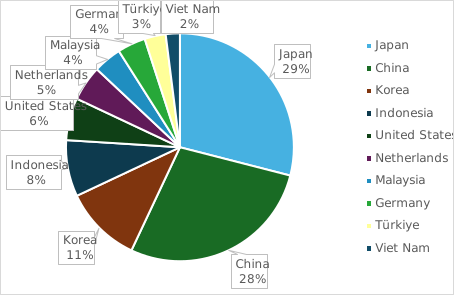
Looking at the global fleet by builder countries in Table 1.11 Figure 1.25, Japan and China emerge as the main suppliers of ESTs to the whole global fleet, making up 29% and 28% respectively, according to OECD calculations (OECD, 2025[25]). Korea and Indonesia are also notable suppliers and represent 11% and 8% respectively. The market for equipment suppliers is diverse, with numerous countries from different regions of the world (Asia, Europe and North America) providing around or below 5% of ESTs within the whole global fleet.
Note: All vessels, including small ships.
Source: (OECD, 2025[25]).
As seen in Table 1.11 China accounts for the highest number of EST across nearly all technology types, with 1 519 (40.5%). Japan shows a notable uptake in rudder bulbs (18,5%) and propeller ducts (13,8%), and Korea leads in air lubrication systems (21,3%). CCS uptake is limited, with Korea and China being the only countries currently set to install these systems in new vessels. Solar and Wind ESTs are almost exclusively performed by China, and are generally still at low adoption levels based on the current orderbook.
While conventional ESTs like rudder bulbs and propeller fins are well equipped, the adoption of next-generation technologies remains in its early stages. Wind, solar and CCS are systems that are complex, space-demanding and capital-intensive, while propeller and rudder modifications tend to be lower-cost upgrades that do not impact the flexibility or use of the vessel.
However, as shown in Figure 1.26, Korea leads in the share of EST upgrades on current orderbook, with 47% of its ship orderbook including fitment of an EST, driven by a high number of ALS (143 installations) and rudder bulbs (129 installations). Following are China (40,5%) and Japan (35,5%), in terms of EST share in the orderbook.
Note: Orderbook as of 28 July 2025. Analysis with Vessels 1 000 GT and above.
Source: (Clarksons WFR, 2025[12]).

Note: Analysis with 1 000 GT and above vessels. As of 25 July 2025.
Source: (Clarksons WFR, 2025[12])
Digital technologies
Similarly to decarbonisation, Korea has been a global leader in maritime digitalisation, pioneering innovations that redefine modern shipping. In 2011, the country unveiled the world’s first smart ship, developed by Hyundai Heavy Industries (HHI), marking a significant leap in ship automation and efficiency (KOSHIPA, 2024[13]). This was followed in June 2022 by the world’s first fully automated ocean-crossing voyage, showcasing Korea’s commitment to autonomous maritime technology. More recently, in August 2023, the industry introduced the world’s first AI-based, machinery-automated bulk carrier powered by LNG, further advancing intelligent vessel operations (KOSHIPA, 2024[13]).
At the international level, the Korean government is building-up international partnerships to enhance its digital capabilities in the sector. In the context of ongoing trade negotiations between Korea and the United States, discussions surrounding the “July Package” have placed these talks at the forefront of Korea’s international collaboration (Korea JoonAng Daily, 2025[29]) Following public-private consultations held by the Ministry of Economy and Finance’s Office for New Growth Strategy in Ulsan, Korea—discussing the potential for increased collaboration on the development of autonomous ships this past February—further negotiations took place in April (Ministry of Economy and Finance, 2025[30]). This trade meeting allowed Korea to express its commitment to supporting the US in the revitalisation of its shipbuilding sector, which is set to strengthen Korea’s position in the ongoing tariff negotiations.
At ship level, the Ministry of Trade, Industry and Energy has focused on developing automated processes, which have included the development of large projects to advance the country’s shipbuilding industry, notably the development of autonomous ship technology and the development of eco-friendly ship full-cycle innovation technology. More recently, as of November 2024, the Ministry of Trade, Industry and Energy of Korea announced the launch of the SHIFT-Auto, an autonomous navigation demonstration vessel by Samsung Heavy Industries aimed to support the country’s strategy in becoming a leading player on the global autonomous navigation market (Ministry of Trade, Industry and Energy, 2024[31]).
This initiative is part of Korea's regulatory sandbox and the upcoming Act on Promoting the Development and Commercialisation of Autonomous Ships. SHIFT-Auto will showcase technologies like collision-avoidance and remote control via low earth orbit satellite communications. Additionally, HD Hyundai Heavy Industries and Hanwha Ocean are also conducting autonomous vessel demonstrations. Similarly, the K-Shipbuilding Super Gap Vision 2040 project, announced by Korea's Ministry of Trade, Industry and Energy, aims to advance the country's shipbuilding industry digital capabilities through a comprehensive roadmap developed by experts from major shipyards, academia, and research institutions (Ministry of Trade, Industry and Energy, 2024[32]). This project involves a public-private investment of around USD 1.4 billion in 10 years and covers the three key aspects presented in Table 1.12.
In the shipyard facilities and systems, Hyundai Heavy Industries, Samsung Heavy Industries, and others are actively building smart yards based on digital twin technology, artificial intelligence (AI), and the Internet of Things (IoT). These companies are developing integrated process management systems that encompass all stages of shipbuilding, from design and production to inspection. Hanwha Ocean is promoting the application of augmented reality (AR)–based design simulation, alongside the development of a digital twin–enabled system for real-time production monitoring. Samsung Heavy Industries is deploying the SYARD platform featuring real-time tracking of materials and personnel via IoT technologies.
Furthermore, in pursuit of achieving a 50% automation rate in production processes by 2040, robotics is being deployed in high-risk tasks such as welding and painting, and fully automated 24-hour block assembly systems are currently under development.
In the field of Smart Ship Technology, patent applications related to autonomous ship technology, AI-based route optimisation, and fuel efficiency monitoring systems have been steadily increasing. Notable systems in this field include Hyundai Heavy Industries’ HiNAS (Hyundai Intelligent Navigation Assistant System) and Samsung Heavy Industries’ SYARD platform of AI-based systems for fuel consumption prediction.
In the Carbon Neutral Technologies, Korea is underway to develop zero-carbon ship technologies through the integrated application of digital solutions to ammonia- and hydrogen-based propulsion systems, eco-friendly fuel supply infrastructure, and green offshore plant design, monitoring, and safety technologies.
In addition, Korea is going on developing the collaborative robot (cobot) systems aimed at enabling safe human-robot interaction and preventing collisions, in tandem with real-time, sensor-driven hazard detection technologies.
1.3.2. Challenges (labour, overcapacity etc.)
The analysis above has shed light some of the challenges faced by the Korean shipbuilding industry. Firstly, on a global scale, the ramping competition with China in terms of orderbooks is increasing. Related challenges identified by the government of Korea include the narrowing gap between the two countries’ main ship types, high value-added and low-carbon ships, and intensifying pursuit by competitors such as securing technology from the EU and Japan. Korea’s comparative global competitiveness is impacted due to higher labour costs and steel prices then its top competitor China. Digital transformation hurdles include manpower shortages and competitiveness of small and medium-sized shipbuilders and equipment industries.
Increased supply chain costs are associated to licensing agreements on major marine equipment items and the overall competitiveness of the sector. Items such as ship engines and LNG cargo containment systems can hence be produced based on licensing agreements, meaning that the company holding the technology is different from the company producing it (OECD, 2024[33]). Licensing can encourage shipbuilders to try to reduce royalties, for example by investing more in developing their own equipment rather than sourcing from other marine equipment companies, but it can also lead to legal disputes. For instance, the Korea Fair Trade Commission (KFTC) issued a corrective order and imposed an administrative fine on GTT for requiring Korean shipbuilders constructing LNG carriers to purchase additional engineering services as part of the licensing process for its LNG membrane containment technologies (Mayer, 2018[34]). Furthermore, the KFTC acted against GTT for including unfair contract terms that permitted it to cancel licensing agreements if a shipbuilder challenged the validity of its patent rights.
Additionally, Korea—like many other shipbuilding industries around the globe—is facing challenges in maintaining a stable workforce due to a declining young population, an ageing labour force, and reluctance toward physically demanding and dangerous (3D) jobs. In response, government entities like the Ministry of Trade, Industry, and Energy (MOTIE) (present: the Ministry of Trade, Industry and Resources (MOTIR) are working to ease the process of hiring foreign workers by simplifying visa issuance procedures and increasing quotas (Korea, 2024[2]).
At the international level, these challenges are driving collaboration. In March 2024, a Memorandum of Understanding (MoU) was signed between Thailand and Korea to tackle labour shortages in shipbuilding (Jeong-Gu and Su-hyeon, 2024[35]). The MoU was signed between representatives from HD Korea Shipbuilding & Offshore Engineering, Hanwha Ocean, and Samsung Heavy Industries and Thailand’s labour minister Phipat Ratchakitprakarn. The MoU notably includes sending an additional 3 000 Thai workers to Korea to contribute to filling the gap in the Korean labour force. Shipyards are also striving to enhance the welfare and working conditions of foreign employees through system improvements in the hopes of increasing the attractiveness of the industry. Locally, governments in regions such as Geoje, Ulsan, and Busan are organising job fairs to attract production workers. Building on these efforts, shipyard subcontractors and partners, along with shipbuilding associations, industry experts, and both central and local governments, have come together to establish the Shipbuilding Industry Win-Win Consultative Body (Korea, 2024[2]). This initiative aims to address disparities between original contractors and subcontractors, promote the expansion of the escrow payment system to prevent wage delays, and organise employment events to attract a diverse workforce for the sector, which includes youth and women (Ministry of Employment and Labor, 2022[36]). Moreover, efforts are being made to enhance vocational training opportunities, ensuring a more sustainable and skilled workforce for the industry.
During discussions on digitalisation progress, shipbuilding workers expressed concerns about potential job losses linked to the digital transformation of the sector. In response, government and industry implemented measures such as upskilling programmes and support for occupational transitions to mitigate these impacts.
Decarbonisation is further proving to be a challenge for the country’s shipbuilding industry in relation to the IMO’s regulation to reach net-zero targets by 2050. Although the various promotions of alternative-fuelled vessels are being conducted, the order book share for the conventional fuel ship in Korea accounts for approximately 40%. Moreover, other key bottlenecks for the industry are being pointed out by shipping companies, such as high ship prices, fuel costs and other cost issues, as well as the lack of an eco-friendly ship fuel supply chain, as difficulties in introducing eco-friendly ships (Korea, 2024[2]). To successfully digitalise and decarbonise the shipbuilding industry, reskilling and upskilling of the workforce will be necessary. The Shipbuilding Maritime Future Innovation Training Centre, established in 2024, has been actively operating across two locations, one in the metropolitan area and another in the southeast region. It offers specialised education focused on eco-friendly and smart technologies, catering to university students and professionals in the shipbuilding industry, including those involved in shipbuilding equipment manufacturing (Korea, 2024[2]).
References
[12] Clarksons WFR (2025), World Fleet Register, https://www.clarksons.net/WFR/.
[1] Daniel, L., T. Adachi and S. Lee (2022), “Shipbuilding market developments First semester 2022 Monitoring developments in ship supply, demand, prices and costs”, OECD Science, Technology and Industry Policy Papers, Vol. No. 132, https://doi.org/10.1787/e511558d-en.
[27] European Patent Office (2024), Classification search: Climate change mitigation technologies related to transportation, https://worldwide.espacenet.com/patent/cpc-browser#!/CPC=Y02T.
[26] European Patent Office (2024), PATSTAT 2024 Autum data.
[8] Eurostat (2025), Producer prices in industry: Manufacturing Germany, France, Italy, Finland, and Norway.
[18] Hanwha Ocean (2023), Hanwha Ocean Sustainability Report 2023.
[17] HD Hyundai Heavy Industries (2023), 2023 HD Hyundai Heavy Industries Environmental Management Report, http://www.hhi.co.kr/uploadFiles/upload/newsdata/EngEsgreport/UPD2AC31ADB6544.pdf.
[16] Jae-Fu, K. (2023), Samsung Heavy Industries adopts integrated monitoring system, https://www.kedglobal.com/shipping-shipbuilding/newsView/ked202302030002.
[9] Japan, B. (2025), BOJ Time-Series Data Search (Producer Price Index).
[35] Jeong-Gu, L. and P. Su-hyeon (2024), The Chosun Daily, https://www.chosun.com/english/industry-en/2024/03/18/KZQ6EGARFNE5FMFS3IJ7GWFLZI/.
[23] KEA (n.d.), Energy Efficiency in Industry Sector, https://www.energy.or.kr/en/conts/104001000000000.do.
[20] KECO (2025), Smart Ecological Factory Construction Project, https://www.keco.or.kr/web/lay1/S1T264C265/contents.do.
[22] KECO (n.d.), Operation of the GHG target management system, https://www.keco.or.kr/en/lay1/S295T321C328/contents.do.
[21] KOFCA (n.d.), Promoting Sustainable Growth through Cooperation between Large Companies, SMEs and Rural Communities, https://win-win.or.kr/?plang=en.
[15] Korea (2025), Additional questionnaire in peer review.
[2] Korea (2024), Shipbuilding Committee Peer Review Questionnaire.
[29] Korea JoonAng Daily (2025), Korea JoonAng Daily, https://koreajoongangdaily.joins.com/news/2025-04-28/business/industry/KoreaUS-shipbuilding-cooperation-gains-spotlight-in-trade-talks/2295032.
[10] Korea, B. and F. Louis (2022 (FRED) / 2023 (BOK)), Producer Prices Index: Economic Activities: Manufacturing (Domestic).
[13] KOSHIPA (2024), Presentation.
[7] Louis, F. and N. China (2022 (FRED) / 2023 (NBS)), Producer Price Index: Industrial Activities (Total) and Industrial Products (MoM).
[14] Mare in Korea News (2023), HD Hyundai Global Service unveils ‘Ocean Wise’ solution at KORMARINE, https://madeinkoreanews.com/25661/.
[34] Mayer, J. (2018), Digitalization and indutrializaiton: friends or foes?, https://unctad.org/system/files/official-document/ser-rp-2018d7_en.pdf.
[30] Ministry of Economy and Finance (2025), Discussing Strategies to Secure a Leading Position in the Future Market of the Shipbuilding and Shipping Industries through Autonomous Ships, https://english.moef.go.kr/pc/selectTbPressCenterDtl.do?boardCd=N0001&seq=6096.
[36] Ministry of Employment and Labor (2022), MOEL News, https://www.moel.go.kr/english/news/moelNewsDetail.do?idx=3127.
[31] Ministry of Trade, Industry and Energy (2024), Korea sets sail to lead global autonomous navigation market via public-private joint efforts, https://english.motie.go.kr/eng/article/EATCLdfa319ada/2132/view.
[32] Ministry of Trade, Industry and Energy (2024), MOTIE announces K-Shipbuilding Super Gap Vision 2040, https://english.motie.go.kr/eng/article/EATCLdfa319ada/1935/view.
[28] Ministry og Oceans and Fisheries (2024), Busan Port Enhances Competitiveness with Eco-Friendly Fuel Supply, https://www.mof.go.kr/doc/en/selectDoc.do?docSeq=58324&bbsSeq=90&menuSeq=485.
[24] Minjo Chun, R. (2023), Public-Private Partnership in the Financial Sector for Green Transformation of SMEs in Full Swing, https://www.mss.go.kr/site/eng/ex/bbs/View.do?cbIdx=244&bcIdx=1046583.
[4] National Bureau of Statistics of China (2026), “China Average Yearly Wages in Manufacturing (Price base: Chinese yuan)”, https://tradingeconomics.com/china/wages-in-manufacturing (accessed on 15 February 2026).
[3] OECD (2026), “OECD Data Explorer: Average annual wages (Price base: Constant prices)”, https://data-explorer.oecd.org/vis?tm=average%20annual%20wage&pg=0&snb=26 (accessed on 15 February 2026).
[25] OECD (2025), The Role of Shipbuilding in Maritime Decarbonisation.
[33] OECD (2024), Interim report: Analysis of the marine equipment industry and its challenges, https://one.oecd.org/document/DSTI/SBC(2024)3/en/pdf.
[19] Samsung Heavy Industries (2024), Samsung Heavy Industries Sustainability Report 2024.
[11] Statistics, O. (2025), PPI INDEX INPUT - C301 Inputs into production of Ships and boats.
[5] Trading Economics (2026), “China Average Yearly Wages in Manufacturing (Price base: Chinese yuan)”, https://tradingeconomics.com/china/wages-in-manufacturing (accessed on 15 February 2026).
[6] World Bank Group (2026), “PPP conversion factor, private consumption (LCU per international $)”, https://data.worldbank.org/indicator/PA.NUS.PRVT.PP.