This chapter sets out why promoting and enabling responsible business conduct (RBC) is essential to ASEAN’s trade and investment agenda. RBC policies and frameworks encourage the positive contributions enterprises can make to the societies they operate in while minimising adverse impacts that may be associated with their operations, products and services. Building on ASEAN’s regional and national efforts to promote RBC, this chapter highlights the benefits and opportunities in further aligning these efforts with international standards on RBC.
OECD Review of Investment Policies in ASEAN
Mobilising Investment for the Green and Digital Transitions

Abstract
Measures to promote and enable responsible business conduct (RBC) help governments attract and retain quality investment. They bring clarity about the expectations for businesses and investors, incentivise and promote a level-playing field for companies, as well as meaningful engagement with impacted stakeholders. RBC principles and standards encourage a positive contribution of business to economic, environmental and social progress while avoiding and addressing any adverse impacts of business operations on people, society and the environment. Increasing the uptake of RBC in ASEAN can help the region further mobilise investment in areas key to the green and digital transitions, such as critical raw materials, the development and use of advanced digital technologies, sustainable infrastructure and advanced manufacturing. Aligning existing ASEAN efforts with international standards on RBC can go a long way in ensuring maximum benefits for the region.
ASEAN’s overarching frameworks and long-term plans, such as ASEAN 2045: Our Shared Future and the ASEAN Economic Community Strategic Plan 2026-2030 reaffirm and underline several RBC-related considerations. For example, ASEAN 2045 reaffirms a commitment to an inclusive, equitable and sustainable future and includes commitments on human rights, anti-corruption, sustainable finance and digital transformation. More targeted initiatives support the implementation of relevant objectives in these high-level documents, including the recently adopted ASEAN Sustainable Investment Guidelines (ASIG), the ASEAN Taxonomy for Sustainable Finance, frameworks for digitalisation and responsible artificial intelligence (AI), the ASEAN Principles for Sustainable Mining, as well as specific guidelines on Corporate Social Responsibility on Labour and on Responsible Investment in Food, Agriculture and Forestry.
Promoting RBC involves work under all three ASEAN pillars – political-security, socio-cultural and economic. Efforts led by ASEAN organs and sectoral bodies such as the ASEAN Intergovernmental Commission on Human Rights (AICHR), ASEAN Committee on the Implementation of the ASEAN Declaration on the Protection and Promotion of the Rights of Migrant Workers (ACMW) and Senior Labour Officials Meeting (SLOM) have included addressing business-related harms and calling on the private sector to respect human rights. These are evidenced through the ASEAN Declaration on Promoting the Right to Development and the Right to Peace Towards Realising Inclusive and Sustainable Development and ASEAN Declaration on the Right to a Safe, Clean, Healthy and Sustainable Environment; the ongoing regional co-operation to address the vulnerabilities faced by the estimated 9 million migrant workers; the business and human rights and inclusive business agendas; and private sector initiatives such as the ASEAN Responsible and Inclusive Business Alliance. Each of these contributes to encouraging businesses and investors to meet RBC expectations that are in line with international standards.
Recently introduced sustainability reporting requirements both within and beyond the region are prompting companies operating in ASEAN to prioritise RBC issues in comparison to previous practice, contributing to greater transparency and awareness of environment, social and governance (ESG) risks and impacts. Several ASEAN Member States (AMS) have introduced binding ESG reporting requirements through securities regulations or stock-exchange listing rules, while others promote sustainability reporting through guidance or corporate governance frameworks.
Meanwhile, a growing number of trade and investment agreements involving ASEAN and its member states incorporate RBC considerations, including for example provisions encouraging companies to adopt responsible practices (RBC clauses). Some AMS have also started to explicitly integrate RBC or ESG considerations into investment promotion and facilitation initiatives to encourage more sustainable and responsible investment outcomes.
National-level measures to support RBC in ASEAN have included National Action Plans on Business and Human Rights (NAPs), proposed mandatory due diligence legislation, the inclusion of RBC in government economic activities, such as through public procurement and public-private partnerships (PPPs), and support for thematic and sectoral policy initiatives. Translating these commitments into effective implementation remains an ongoing challenge.
Strengthen co-ordination and coherence between various initiatives designed to promote better business practices at the regional level. Greater collaboration between the different policy communities that interface with businesses can help ensure regional initiatives encouraging responsible business practices explicitly build on the ASEAN Economic Community Strategic Plan 2026-2030 and refer to international standards. This includes collaboration on responsible business between ASEAN pillars (political-security, socio-cultural and economic). Implementation of the ASEAN Sustainable Investment Guidelines presents an opportunity for ASEAN to improve co-ordination across initiatives and raise visibility of the region’s commitment to sustainable development among potential and current investors and businesses. ASEAN Member States (AMS) are also encouraged to participate in international efforts to promote coherence and alignment on responsible business conduct measures, including through the OECD Inclusive Platform on Due Diligence Policy Co-operation.
Foster policy coherence at the national level across different measures designed to promote and enable RBC and improve implementation and enforcement in policy areas related to RBC. This includes, for example, implementation of sector- and issue-specific policies as well as any overarching policies such as National Action Plans on Business and Human Rights and corporate governance rules. It also includes leading by example in modelling responsible business practices in governments’ economic activities, e.g. embedding RBC in expectations for state-owned enterprises and investing in training and capacity-building for government officials in this respect.
Communicate and provide support for domestic and international companies to use the risk-based approach to conduct due diligence in their operations and supply chains that is aligned with international standards. This will bring clarity to companies in the region and foster alignment of practices in ASEAN with those embedded in international standards on responsible business. Particular attention should be given to communication and support for micro, small, and medium-sized enterprises (MSMEs).
Take appropriate steps to ensure effective access to remedy in cases where there may be business-related adverse impacts. Effective access to remedy for business-related adverse impacts can be delivered through judicial or non-judicial mechanisms that are either state-based or non-state based. AMS could build on efforts already being undertaken through National Human Rights Institutions and existing national measures to protect environmental and human rights defenders through legislation to outlaw Strategic Lawsuits Against Public Participation (SLAPPs), as well as by enhancing the effectiveness of labour inspectorates. Encouraging businesses to undertake meaningful engagement with stakeholders that is in line with the expectations set out in the OECD Due Diligence Guidance for Responsible Business Conduct [OECD/LEGAL/0443] is also important.
The concept of RBC, which is often used alongside or interchangeably with Corporate Social Responsibility (CSR) and Business and Human Rights (BHR) (see Box 6.1), sets out an expectation that all businesses – regardless of their legal status, size, ownership structure or sector – avoid and address adverse impacts of their operations on people, society and the environment, while contributing to sustainable development.
RBC, CSR, BHR, ESG, and IB are concepts used in varying degrees across different geographies, policies, and initiatives to describe business interactions with society and the environment.
RBC reflects the expectation that all businesses avoid and address adverse impacts linked to their operations and supply chains, while contributing positively to sustainable development in the countries where they operate. BHR reflects the expectations to avoid and address adverse business-related human rights impact across three pillars: 1) the state duty to protect; 2) responsibility of businesses; and 3) effective access to remedy. Many businesses, governments and stakeholders are also familiar with the term CSR, which has historically been used to describe business interactions with society, although from a more philanthropic angle. CSR has also been used alongside RBC and BHR.
ESG criteria are primarily used by financial institutions, ratings agencies and investors to assess a company’s sustainability performance. While ESG and RBC cover similar environmental, social, and governance issues, ESG is often focused on financial risk and value, whereas RBC is centred on impacts on people and the environment.
IB is generally understood as a private-sector approach to deliver goods, services, and livelihoods in a commercially viable way that also integrates people at the base of the economic pyramid into the company’s core value chain as suppliers, distributors, retailers, or customers. As a business model, it can support responsible and sustainable development outcomes.
One characteristic that is common across these concepts is that they support and call for a positive contribution of business to the societies they operate in while managing risks and impacts that may result from business activities – as a core business consideration and not as an add on. Businesses that operate in line with these standards make important contributions to social and environmental sustainability and are better equipped to understand vulnerabilities in supply chains and foster long-term resilience.
Sources: OECD (2019[1]), Due Diligence for Responsible Corporate Lending and Securities Underwriting, https://doi.org/10.1787/71fd2895-en; ASEAN (2018[2]), The Voice of Business in ASEAN, https://www.asean-csr-network.org/c/images/Resources/Reports/ASEAN-Voice-of-Business.pdf; ASEAN (2020[3]), Guidelines for the promotion of Inclusive Business in ASEAN, https://asean.org/wp-content/uploads/2021/09/6.-ASEAN-IB-Promotion-Guidelines-Endorsed-at-the-52nd-AEM.pdf.
RBC expectations are anchored in three main international instruments on responsible business: the United Nations Guiding Principles on Business and Human Rights (UNGPs), the OECD Guidelines for Multinational Enterprises on Responsible Business Conduct (MNE Guidelines), and the ILO Tripartite Declaration of Principles concerning Multinational Enterprises and Social Policy (ILO MNE Declaration). The three instruments are aligned with, and complement, each other.
The OECD Guidelines for Multinational Enterprises on Responsible Business Conduct (the MNE Guidelines) are the most comprehensive international instrument on responsible business conduct (RBC). They provide recommendations addressed by governments to business on all areas of business responsibility, including on human rights, employment and industrial relations, protection of the environment and climate, respect for the interests of consumers, the fight against corruption, disclosure of information, taxation, competition or science, technology and innovation.
The MNE Guidelines are operationalised through risk-based due diligence, a six-step framework that provides companies with a process to embed RBC practices within the core of company operations, identifying, preventing and mitigating adverse impacts, engaging in monitoring and tracking progress, communicating results, and remediating adverse impacts. The six-step framework is laid out in the OECD Due Diligence Guidance for Responsible Business Conduct (OECD Due Diligence Guidance) (see Figure 6.1). In addition to this cross-sectoral instrument, the OECD has developed specific guidance to provide tailored recommendations across sectors, including agriculture, minerals, extractives, garment and footwear, and finance.
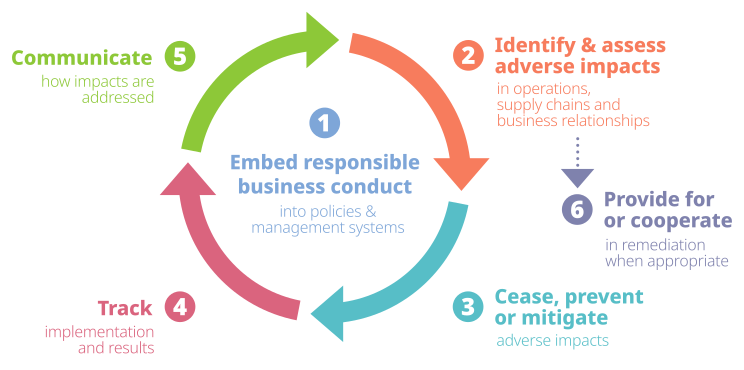
Source: OECD (2018[4]), OECD Due Diligence Guidance for Responsible Business Conduct, https://doi.org/10.1787/15f5f4b3-en.
The MNE Guidelines are supported by a unique implementation mechanism: the National Contact Points for Responsible Business Conduct (NCPs). The NCPs are agencies established by governments to promote the implementation of the MNE Guidelines and resolve grievances in specific cases (called “specific instances”) of alleged non-observance of the MNE Guidelines.
Sources: OECD (2023[5]), OECD Guidelines for Multinational Enterprises on Responsible Business Conduct, https://doi.org/10.1787/81f92357-en; OECD (2018[4]), OECD Due Diligence Guidance for Responsible Business Conduct, https://doi.org/10.1787/15f5f4b3-en.
RBC is increasingly expected from customers, investors and regulators throughout global value chains. Therefore, RBC expectations are reflected in a growing number of international trade and investment agreements, as well as in national development strategies, laws and regulations around the world, including in ASEAN. The OECD Recommendation on the Role of Government in Promoting Responsible Business Conduct [OECD/LEGAL/0486], adopted in 2022, lays out a single comprehensive set of principles and policy recommendations to assist governments, other public authorities, and relevant stakeholders in their efforts to design and implement policies that enable and promote RBC, bringing together guidance on government policies and policy coherence for RBC from existing OECD standards on RBC or RBC-related areas.
The OECD Recommendation on the Role of Government in Promoting Responsible Business Conduct (RBC) [OECD/LEGAL/0486] builds on the MNE Guidelines and other instruments and tools that include policy guidance on RBC in related areas (such as trade and investment, but also public procurement and state-owned enterprises). It brings together guidelines on government policies and policy coherence, derived from existing OECD standards related to RBC or relevant policy areas. The Recommendation gathers 21 guiding principles structured around six areas (see Figure 6.2).

Source: Based on OECD (2022[6]), Recommendation of the Council on the Role of Government in Promoting Responsible Business Conduct [OECD/LEGAL/0486], https://legalinstruments.oecd.org/en/instruments/OECD-LEGAL-0486.
The ASEAN region has experienced rapid economic growth over recent decades, driven by industrialisation, urbanisation, large-scale investment projects, and deeper integration into global value chains (OECD, 2025[7]). While this growth has generated significant development gains, it has also intensified exposure to a range of risks to people and the environment. Several of the region’s most important economic sectors, such as agriculture, fisheries, manufacturing and the extractives industries, continue to be associated with significant RBC-related risks and adverse impacts.
Labour and human rights remain pressing concerns across the region. While the nature and extent of risks vary across AMS and sectors, workers in several labour-intensive industries continue to face heightened risks of forced labour, child labour as well as unsafe working conditions (ILO/IOM, 2017[8]; ILO, 2026[9]). The protection of their rights is also an ongoing concern. As of 2023, there were approximately 9 million migrant workers in AMS, including almost 7 million intra-ASEAN migrant workers (ASEAN, 2023[10]). Business activities have also been associated with adverse impacts on Indigenous Peoples’ and local communities’ land rights.
Environmental pressures are severe and, in many cases, tied to business activity. Deforestation, pollution of air, water, and soil, rising greenhouse gas (GHG) emissions, biodiversity loss, land degradation, as well as inadequate waste management systems are reported to be linked to business activity and land-use change, fossil-fuel dependence and peatland exploitation (Le, T. T. H.; Thi Hang Phan, N., 2024[11]; IEA, 2024[12]). ASEAN is also among the world’s most climate-vulnerable regions, facing rising temperatures, sea-level rise, floods, droughts, heatwaves and increasingly extreme weather events, with significant expected economic and social costs (ASEAN, 2025[13]; OECD, 2025[7]). Five AMS – Cambodia, Myanmar, the Philippines, Thailand and Viet Nam – are among the 20 most climate-vulnerable countries globally, with a high concentration of populations, economic assets and livelihoods in coastal areas. Key sectors such as agriculture, fisheries, infrastructure and their supply chains are particularly exposed (ASEAN, 2025[13]).
Southeast Asia holds significant reserves of nickel, cobalt, tin, copper, rare earths and other critical minerals essential to the green and digital transitions. However, surging demand and investment have in some cases outpaced governance and enforcement capacity, increasing exposure to illegal mining, corruption, illicit trade and trade-based financial crime (UNICRI, 2025[14]). Illegal mining is associated with both artisanal mining and industrial-scale operations, with multiple stages of the supply chain, from extraction to refining and export, involved in associated risks (UNICRI, 2025[14]). These challenges carry significant environmental and social risks and highlight the importance of strengthening RBC-related frameworks in mineral value chains to support responsible and sustainable extraction and trade.
At the same time, there is significant momentum in the region’s efforts to promote RBC, with sustainable finance and disclosure frameworks gaining ground (see Section 6.6.2) complemented by strengthened incentives for businesses to integrate RBC considerations into their operations and value chains. In addition, digitalisation offers new tools for transparency, traceability and accountability in supply chains, while supporting innovation and productivity growth (see Section 6.6.3).
ASEAN is home to an estimated 70 million MSMEs, accounting for more than 97% of all enterprises in the region. MSMEs contribute to approximately 85% of employment and 45% of regional GDP, thus playing a critical role in local economic development and regional value chains (ASEAN, 2025[15]; ACCMSME, 2022[16]; UNDP, 2024[17]). As RBC expectations increasingly shape international trade, investment and access to finance, MSMEs may face challenges to meet evolving expectations related to risk-based due diligence and sustainability reporting. This underscores the importance of practical and proportionate support measures to help MSMEs integrate RBC into their operations.
Trade and investment relationships are also driving greater attention to RBC in the region. A growing number of investment agreements (IIAs) and free trade agreements (FTAs) involving ASEAN and its member states incorporate RBC considerations. Sustainable development considerations are increasingly being recognised in IIAs signed by AMS (see Section 4.5 of Chapter 4), including provisions encouraging companies to adopt responsible practices (RBC clauses). Recent examples include the investment chapters in the Mercosur-Singapore FTA and the Pacific Alliance-Singapore FTA of 2022, the latter expressly referring to the MNE Guidelines1 (UNCTAD, 2023[18]; Pacific Alliance, 2022[19]). In 2025, Indonesia finalised negotiations with the European Union (EU) on a Comprehensive Economic Partnership Agreement (CEPA) and Investment Protection Agreement. The proposed CEPA has a trade and sustainable growth and development chapter (TSD chapter), featuring an RBC clause (European Union - Indonesia, 2025[20]). Its article on “trade and responsible business conduct” recognises the importance of RBC, CSR and responsible supply chain management. It also commits the signatories to promote policy coherence on RBC by encouraging businesses to adopt relevant practices and by supporting the implementation of international instruments on RBC, including the MNE Guidelines, as well as to co-operate on RBC and trade, notably through the exchange of information and best practices. Other examples include the ASEAN-Australia-New Zealand FTA (AANZFTA) and the EU-Viet Nam FTA. The AANZFTA was updated in 2025 with various RBC-related provisions, such as the recognition of the signatories’ right to regulate in the area of trade and sustainable development (Government of Australia, 2025[21]).2 The EU-Viet Nam FTA, signed in 2019, includes a TSD chapter with several sustainability provisions focused on labour and environmental issues. It also incorporates an RBC clause through which the signatories agree to promote CSR, taking into account relevant internationally agreed instruments in this regard, notably the MNE Guidelines and the ILO Tripartite Declaration of Principles concerning Multinational Enterprises and Social Policy (European Union, 2020[22]). Negotiations are also underway for FTAs between the EU and Thailand and the Philippines, both including proposed TSD chapters (European Commission, 2025[23]).
Other forms of international economic co-operation also incorporate RBC-related considerations (see Section 4.5.2 of Chapter 4). For example, the Indo-Pacific Economic Framework (IPEF) Clean Economy Agreement (2024) includes commitments to share best practices on due diligence and supply chain management, and to encourage supply chains with verified responsible labour practices (Government of Australia, 2024[24]). Likewise, the Singapore-New Zealand-Chile Digital Economy Partnership Agreement (2020) recognises the importance of CSR, environmental protection, indigenous rights, labour rights, inclusive trade, and sustainable development in its preamble (Ministry of Trade and Industry of Singapore, 2020[25]).
The following subsections examine the legal, policy and regulatory developments emerging across ASEAN in response to opportunities and challenges, and their relevance for promoting and enabling RBC. These efforts seek to support more sustainable, resilient and inclusive growth and ASEAN’s deeper integration into global markets.
ASEAN has developed a range of regional frameworks and initiatives relevant to promoting and enabling RBC. These include overarching strategies and regional plans as well as sector-specific guidelines. At the national level, ASEAN Member States are also increasingly adopting policy measures that support RBC.
6.4.1. General frameworks and guidelines promoting responsible business conduct in ASEAN
ASEAN has advanced the RBC agenda through various strategic frameworks, guidelines and initiatives linked to development objectives, including the green and digital transformation. In 2020, the ASEAN Comprehensive Recovery Framework and its implementation plan, adopted in response to the COVID-19 crisis, identified RBC as a driver of recovery and explicitly referenced international standards, notably the MNE Guidelines and the OECD Policy Framework for Investment (ASEAN, 2020, p. 40[26]; OECD, 2023, pp. 29-30[27]). ASEAN’s current long-term strategic plan, ASEAN 2045: Our Shared Future, adopted in 2025, integrates various priorities relevant to RBC (ASEAN, 2025[28]). The framework responds to major global trends, such as the green transition, digitalisation and AI, while reaffirming ASEAN’s commitment to an inclusive, equitable and sustainable future, notably through enhanced institutional capacity and regional co-operation. It is structured around six core documents, including the ASEAN Community Vision, and strategic plans such as the ASEAN Political-Security Community Strategic Plan (APSC Strategic Plan), the ASEAN Economic Community Strategic Plan 2026-2030 (AEC Strategic Plan) and the ASEAN Socio-Cultural Community Strategic Plan (ASCC Strategic Plan) (ASEAN, 2025[29]). Several objectives and measures under these plans are relevant to improving the business environment and enabling RBC.
The APSC Strategic Plan includes commitments to promote and protect human rights and fundamental freedoms, including by mainstreaming human rights across ASEAN institutions and relevant stakeholders with a focus on women, children, migrant workers and vulnerable groups (ASEAN, 2025, p. 45[28]). It also includes measures to strengthen and enforce national anti-corruption legal and regulatory frameworks in both the public and private sectors, including through capacity-building, exchange of best practices and information and regional co-operation. The ASCC Strategic Plan further commits ASEAN to strengthening the protection of migrant workers through inclusive and gender-responsive approaches (ASEAN, 2025[28]). The AEC Strategic Plan explicitly refers to the strong global commitment towards advancing RBC and sets out five specific measures to achieve the objective of “leveraging sustainable finance and investment” (ASEAN, 2025, p. 71[28]). These include strengthening sustainable finance instruments, supporting financing for a just transition, pursuing regional collaboration on ESG standards, and increasing support for decarbonisation and climate resilience (ASEAN, 2025, pp. 71-72[28]). In support of these objectives, the Plan outlines measures for awareness raising, capacity-building and incentives for ASEAN businesses, financial institutions and regulators. It also aims to accelerate digital and technology transformation by promoting a “sustainable, open, interoperable, secure, and trusted digital space”. The plan commits ASEAN to promoting corporate accountability instruments, transparency, good governance and good regulatory practices, while strengthening the alignment of regional standards and regulations with international benchmarks to support interoperability, trade and a sustainable and resilient economy (ASEAN, 2025[28]).
ASEAN has also adopted more explicit commitments related to responsible business practices. In October 2025, ASEAN adopted the Declaration on Promoting the Right to Development and the Right to Peace Towards Realising Inclusive and Sustainable Development, which calls for “greater involvement and meaningful contribution of the private sector in advancing inclusive growth and sustainable development through responsible business conduct, good corporate governance, and mitigating the potential adverse impacts of their business operations” (ASEAN, 2025, p. 4[30]). The ASEAN Sustainable Investment Guidelines (ASIG), adopted in March 2026, set out practical steps AMS can take to foster responsible and inclusive investment practices that contribute to sustainable and long-term wellbeing of ASEAN’s economy, environment and society (the ASIG Sustainability Objectives) (see Box 6.4) (ASEAN, 2026[31]).
The ASEAN Sustainable Investment Guidelines (ASIG), adopted in March 2026, recognise the role of investment in advancing prosperity and resilience in ASEAN, while preserving the environment and maintaining social cohesion.
The ASIG provide a non-legally binding framework to help ASEAN Member States (AMS) foster responsible and inclusive investment practices that contribute to “Sustainability Objectives”, defined as the sustainable and long-term well-being of ASEAN’s economy, environment and society.
The ASIG are underpinned by seven principles, including upholding commitments under international agreements, supporting open trade and investment, evidence-based policymaking, regional regulatory convergence and interoperability, knowledge-sharing on the transition to net zero emissions, and environmentally responsible co-operation.
To support the achievement of Sustainability Objectives, the ASIG provide guidance for AMS across six areas: (i) investment policy, (ii) investment administration, (iii) investment promotion, (iv) investment facilitation, (v) corporate practice, and (vi) collaborative efforts.
Under “Investment Policy”, the ASIG encourage AMS to incorporate sustainability considerations in investment strategies and international investment agreements, while adopting measures to mitigate the adverse impacts of investment projects.
Under “Corporate Practice”, the ASIG call on AMS to promote and facilitate corporate responsibility and corporate governance practices among businesses and investors, based on internationally recognised instruments, including the MNE Guidelines. They also encourage the development of national and regional standards and action plans, awareness-raising and the sharing of best practices, as well as sustainability reporting, monitoring and recognition mechanisms to strengthen corporate accountability and support contributions to Sustainability Objectives.
Finally, under “Collaborative Efforts”, the ASIG call on AMS to encourage collaboration between investors and domestic stakeholders, as well as international co-operation and joint initiatives at the ASEAN-level that promote sustainable investment practices. They also emphasise the need for business-matching initiatives to facilitate partnerships that support technologies, goods, services and investments contributing to the green transition.
Source: ASEAN (2026[31]), ASEAN Sustainable Investment Guidelines, https://asean.org/wp-content/uploads/2026/04/ASEAN-Sustainable-Investment-Guidelines-ASIG.pdf.
ASEAN has also developed initiatives focused on inclusive and sustainable business models. The ASEAN Inclusive Business Framework, adopted in 2017, aims to strengthen the enabling environment for inclusive business, foster regional collaboration and align ASEAN’s economic and socio-economic community objectives (ASEAN, 2017[32]). Annual ASEAN Inclusive Business Forums support the implementation of this framework. The eighth edition, organised in 2025 under Malaysia’s Chairship, brought together policymakers, businesses and investors, civil society, development partners and international organisations, including the OECD, to discuss progress and future pathways for inclusive business models in the region (ASEAN, 2025[33]).
Beyond strategic frameworks, ASEAN has developed sector-specific guidance to help businesses avoid adverse impacts on people, planet and society, while promoting quality investment. The ASEAN Guidelines on Promoting Responsible Investment in Food, Agriculture, and Forestry (RAI), adopted in 2018, aim to maximise development benefits while minimising adverse impacts in the sector, promoting sustainable production practices, advancing gender equality and inclusion of minorities and marginalised groups, strengthening climate resilience and enhancing transparency (ASEAN, 2018[34]). Their implementation is supported by a 10-year Action Plan (2020-2030), which aims to increase uptake by private investors, integrate the RAI Guidelines into national policy frameworks, and build capacity of civil society organisations and farmers through training and outreach activities (ASEAN, 2020[35]; 2022[36]).
More recently, the ASEAN Principles for Sustainable Development of Minerals, adopted in 2023, signals a commitment to promote good governance and ESG standards in the mining sector (ASEAN Mining Ministers, 2025[37]). Addressed to AMS, communities and investors, the principles aim to promote sustainable mineral exploitation, extraction and processing, while aligning national mineral strategies with AMS’ implementation of the Sustainable Development Goals (SDGs) and the Paris Agreement (ASEAN, 2025[38]). They also call for transparency and stakeholder engagement in sustainable minerals development policymaking by ensuring that “key stakeholders, including communities, are engaged to inform decision-making and to build understanding and trust” (ASEAN, 2025, p. 3[38]). Other principles relate to stronger environmental performance and risk management, as well as responsible mineral production and supply chains of mineral products required for the global energy transition (ASEAN, 2025[38]).
Complementing ASEAN-led frameworks and guidelines, private sector initiatives are also contributing to the promotion of responsible practices. The ASEAN Responsible and Inclusive Business Alliance (ARAIBA), established in 2024 as the successor to the ASEAN CSR Network, promotes responsible and inclusive business through advocacy, best-practice sharing, capacity-building and networking. Supported by the ASEAN Business Advisory Council (ABAC), ARAIBA advances the ASEAN Code for Responsible and Inclusive Business (ARAIBA Code), developed in 2019, which draws guidance from key international standards on RBC, including the UNGPs, the MNE Guidelines, and the ILO MNE Declaration. It sets out expectations for businesses operating in the region to contribute to sustainable development, including through commitments on governance; managing environmental impacts; guaranteeing labour rights; anti-corruption; conducting human rights due diligence across value chains; access to remedy; consumer protection; and community engagement and development (ARAIBA, 2019[39]).
6.4.2. Recent policy developments in ASEAN Member States supporting RBC
Over the past decade, a growing number of AMS have developed or are in the process of developing National Action Plans on Responsible Business Conduct or Business and Human Rights (NAPs), to support the national implementation of the UNGPs. To date, four AMS have adopted NAPs or national strategies on BHR, while two others are currently developing a NAP. These efforts have often fostered dialogue across governments, businesses, civil society and other stakeholders on key national challenges related to business impacts on people, the environment and society.
Thailand was the first AMS to adopt a NAP in 2019, developed by a NAP National Committee led by the Ministry of Justice and comprising representatives from other ministries and the National Human Rights Commission of Thailand. The NAP was informed by a CSO National Baseline Assessment and focused on four critical areas: labour; communities, land, environment and natural resources; human rights defenders; and cross-border investment and multinational enterprises (Government of Thailand, 2019[40]). The development of the second NAP, adopted in 2023, focused on strengthening the same critical areas identified in the first NAP and gathered inputs from stakeholders. The responsibility to implement the NAP sits with all relevant agencies and is overseen by a Sub-Committee led by the Ministry of Justice. (Government of Thailand, 2023[41]).
Viet Nam’s Ministry of Justice developed the country’s NAP, which was adopted in 2023. The NAP was informed by a National Baseline Assessment, and is structured around investment, labour, vulnerable group protection, environmental protection and consumer protection (Government of Viet Nam, 2023[42]). The Ministry of Justice is responsible for the follow-up, monitoring, reporting and review of the NAP, in co-ordination with relevant government entities.
Indonesia adopted its National Strategy on Business and Human Rights in 2023. The Strategy was developed by the National Focal Point on Business and Human Rights and supported by a national and a regional taskforce comprised of representatives from government and regional authorities, civil society organisations, business associations, who are also tasked with the implementation, evaluation and monitoring of the Strategy (Government of Indonesia, 2023[43]). It was the culmination of work beginning in 2016 that was initiated by the Ministry of Law and Human Rights and the Ministry of Foreign Affairs and involved the National Commission on Human Rights (Komnas HAM) and the Institute for Policy Research and Advocacy (ELSAM). The Strategy focuses on enhancing the understanding of ministries, institutions and communities, including businesses; encouraging prevention, mitigation and remedy; and enhancing policy coherence and co-ordination across government. The Strategy identifies the promotion of human rights due diligence among business actors as a core priority and builds on an unofficial NAP developed in 2017. In February 2026, Indonesia’s Coordinating Minister for Economic Affairs and the Minister of Manpower signed a joint declaration with business leaders, supported by the ILO, reaffirming the commitment to RBC and human rights. The declaration encourages businesses across sectors to align with international instruments on RBC, including the MNE Guidelines, and commits to support the development of policies and action plans to accelerate the uptake of RBC, including through social dialogue and the promotion of human rights due diligence at the workplace level (ILO, 2026[44]).
Malaysia adopted its NAP in 2025. The NAP was developed through a multi-stakeholder process led by the Legal Affairs Division of the Prime Minister’s Department and builds on a National Baseline Assessment that identified key governance, labour, environmental and access to remedy gaps across sectors. It sets out expectations for businesses to adopt commitments to human rights, RBC and implementing human rights due diligence. The MNE Guidelines are expressly referenced as an important tool to support implementation of the corporate responsibility pillar, particularly in reinforcing risk-based due diligence (Government of Malaysia, 2025[45]). A BHR Working Group was established to oversee the implementation of the NAP, as well as to promote and incentivise “business success aligned with responsible business conduct” (Government of Malaysia, 2025[45]).
Other AMS have indicated intentions to develop NAPs or similar overarching frameworks. In Lao PDR, a Preliminary Assessment of the Regulatory Framework and Policy Coherence on Responsible Business Practice informed a multi-stakeholder workshop held in 2024 and initiated a consultation process toward the development of a NAP (UNDP, 2024[46]). In the Philippines, the Presidential Human Rights Committee Secretariat announced in 2025 that it had launched the development of a NAP, with a strong focus on protecting Indigenous Peoples’ rights (Government of the Philippines, 2025[47]).
There have also been recent efforts and considerations related to introducing mandatory due diligence laws. Thailand is considering the feasibility of a mandatory human rights and environmental due diligence law, and undertaking public consultation on a draft bill (Government of Thailand, 2025[48]). Indonesia is also consulting stakeholders on a draft Presidential Regulation on the Implementation of Compliance Assessment of Business Actors with respect to Business and Human Rights, which includes mandatory expectations for companies (Government of Indonesia, 2026[49]; BHRC, n.d.[50]). Malaysia’s NAP includes a commitment to study the need for a Supply Chain Act in the country as a specific action to be taken forward by relevant ministries across government (Government of Malaysia, 2025, p. 33[45]). The NAP also signalled the possibility of further legal developments such as a Corporate Manslaughter Act to address gross negligence or systemic safety failures and supply chain due diligence laws (Government of Malaysia, 2025[45]). If enacted, these laws would be important components of the legal and other regulatory frameworks to enable RBC in these countries.
The extent to which these policy developments translate into concrete changes in business practices will ultimately depend on effective implementation, monitoring, follow-up mechanisms and continued stakeholder engagement.
ASEAN has progressively developed and advanced regional and national policy frameworks in policy areas relevant to RBC, including human and labour rights, environmental protection, and anti-corruption. AMS have also made important efforts to create an enabling environment for RBC by establishing legal and policy frameworks in various areas covered by the MNE Guidelines. They have adhered to international conventions related to some of these areas, including core human rights instruments and ILO Fundamental Conventions, though levels of adherence to human and labour rights frameworks remain mixed (see Table 6.1). All AMS have also ratified key climate-related agreements and the UN Convention against Corruption (UNCAC).
1. Brunei, Cambodia, Lao PDR, Myanmar, Singapore and Viet Nam do not have institutions accredited by the Global Alliance of National Human Rights Institutions (GANHRI); therefore, they are reported as not available (N/A).
Sources: Office of the UN High Commissioner on Human Rights (n.d.[51]), Status of ratification of 18 international human rights treaties, https://indicators.ohchr.org/; ILO (n.d.[52]), https://normlex.ilo.org/dyn/nrmlx_en/f?p=NORMLEXPUB:10011:0::NO::P10011_DISPLAY_BY%2CP10011_CONVENTION_TYPE_CODE:1%2CF; UN (n.d.[53]), UN treaty Collection, https://treaties.un.org/pages/Home.aspx?clang=_en.
Beyond international commitments, efforts have also been made to ensure access to remedy in case of business-related adverse impacts. Five AMS have established National Human Rights Institutions (NHRIs) accredited with “A status” under the Paris Principles (Table 6.1) (GANHRI, 2025[54]). These institutions, alongside project-level mechanisms play an increasingly important role in addressing business-related impacts, although with varying roles across the region (OECD, 2024[55]; 2024[56]; 2024[57]). In Thailand, the National Human Rights Commission of Thailand (NHRCT) has a broad mandate to examine human rights violations, recommend remedial measures, and promote awareness across society (Government of Thailand, 2017[58]). In recent years, the NHRCT has expanded outreach activities and support to communities and civil society organisations, and contributed to increased visibility of business-related complaints (UNDP, 2023[59]). Project-level mechanisms have also been established for certain large-scale projects, although civil society organisations have reported gaps in effectiveness and accessibility (OECD, 2024[55]). Thailand’s Second NAP calls for both public and private actors to establish grievance mechanisms that are effective, accessible, transparent, and aligned with international human rights standards (Government of Thailand, 2023[41]). In Indonesia, Komnas HAM, the country’s NHRI, addresses business-related land and agrarian disputes, including those affecting Indigenous Peoples, often through mediation between companies, communities, and government authorities. In its 2023 Annual Report, Komnas HAM reported it had received 373 complaints against corporations (Komnas HAM, 2024[60]). Similarly, in the Philippines, the Commission on Human Rights (CHR) is mandated to investigate violations and provide remediation, including through legal aid, human rights education, and monitoring of legal developments relevant to affected communities (CHR of the Philippines, 2026[61]). Malaysia’s NAP includes actions to strengthen access to remedy, notably the establishment of a Human Rights Tribunal (Government of Malaysia, 2025[45]).
Business-related adverse impacts on people, society and the environment remain significant across ASEAN and are often associated with economically significant sectors. Around 10% of specific instances received by NCPs since 2000 are related to business activities in AMS (OECD, 2026[62]). While governments across the region are making progress in strengthening legal and policy frameworks on human and labour rights, environmental protection and anti-corruption, implementation and enforcement gaps persist. The following sections focus on some of the key challenges related to RBC in the region and outline illustrative ASEAN and national responses. International RBC standards such as the MNE Guidelines offer complementary tools and guidance that can support and strengthen these frameworks and implementation of ASEAN’s priorities.
6.5.1. Human and labour rights
Rapid economic growth and integration into global value chains have generated significant development gains across ASEAN but have also heightened risks to human and labour rights, particularly in sectors such as extractives, infrastructure, manufacturing and agriculture. AMS have put in place measures aimed at strengthening human rights and labour protections to address business-related risks, although progress remains uneven across countries and sectors.
At the regional level, ASEAN has established institutions and frameworks to promote and protect human and labour rights. The ASEAN Intergovernmental Commission on Human Rights (AICHR), established in 2009, serves as a regional platform for dialogue and co-operation on human rights issues. In 2012, AMS adopted the ASEAN Human Rights Declaration, reaffirming commitments to civil, political, economic, social and cultural rights, as well as equitable and sustainable development (ASEAN, 2012[63]). AICHR continuously engages on the role of the private sector in the protection and promotion of human rights, including through the development of the ASEAN Declaration on Promoting the Right to Development and the Right to Peace Towards Realising Inclusive and Sustainable Development in 2025. (ASEAN, 2025[30]). More directly addressing business conduct issues, the 2017 ASEAN Guidelines for Corporate Social Responsibility on Labour encourage governments and businesses to promote human and labour rights, transparency, accountability and ethical conduct (ASEAN, 2017[64]). They are intended for governments, enterprises and establishments, employers’ organisations and workers’ organisations and aim to raise awareness on RBC-related issues, while promoting compliance of core labour standards and social dialogue. However, a 2021 white paper by the ASEAN CSR Network highlighted gaps between the objectives of the Guidelines and their implementation in practice, including on co-ordination, awareness, capacity and leverage among business relationships in the supply chain, and social dialogue (ASEAN CSR Network, 2021[65]).
Several targeted frameworks reinforce ASEAN’s labour rights commitments. The ASEAN Declaration on Prevention of Child Labour Including Elimination of the Worst Forms of Child Labour aims to reinforce legislation and engagement with the private sector to strengthen compliance and due diligence to identify, prevent, mitigate and account for adverse human rights and children rights impacts in business operations and value chains (ASEAN, 2024[66]). The ASEAN Roadmap for the Prevention of Child Labour, Including the Elimination of the Worst Forms of Child Labour by 2035, adopted in 2025, supports implementation through measures focused on prevention, enforcement, social protection and stakeholder engagement (ASEAN, 2025[67]). The ASEAN Guidelines on Gender Mainstreaming into Labour and Employment Policies towards Decent Work for All promote gender equality and decent work, through the integration of gender considerations in policy design, implementation, monitoring and evaluation. They also feature good practice examples from AMS, such as the tripartite process for voluntary gender guidelines for the private sector in Indonesia (ASEAN, 2020[68]). The Guidelines are also relevant in the context of women migrant workers, including those employed in domestic work, care work, manufacturing and informal employment, who may face heightened risks in relation to occupational segregation, gender-based violence and harassment, limited access to information and remedy, and unequal care responsibilities.
Some of the challenges that remain in the context of business-related human and labour rights risks across ASEAN include the protection of human rights defenders (HRDs). Between 2015 and 2022, Southeast Asia accounted for 22% of all recorded global attacks on business-related HRDs (BHRC, 2022[69]). Approximately 70% of these attacks reported targeting land, environmental, and climate defenders, with Indigenous Peoples disproportionately affected due to conflicts over land, forced evictions, and resource use. Incidents have been most frequently documented in the mining, agribusiness, logging, renewable energy, and large-scale infrastructure sectors (BHRC, 2022[69]). Strategic lawsuits against public participation (SLAPPs) have emerged as a tool to intimidate defenders (UNEP, 2023[70]). Certain AMS have adopted anti-SLAPP provisions to protect environmental defenders, such as Indonesia3 and the Philippines.4 In line with Thailand’s Fifth National Human Rights Plan, an anti-SLAPP legislation is reported to be currently underway (Government of Thailand, 2025[71]). Malaysia’s NAP also foresees the enactment of anti-SLAPP legislation (Government of Malaysia, 2025, p. 50[45]). More efforts are however needed across AMS for more robust protection for human rights and environmental defenders in the context of business activities and social conflicts linked to the development of large-scale projects (International Commission of Jurists, 2025[72]).
Another challenge relates to migrant workers’ rights and working conditions. The estimated 9 million migrant workers across ASEAN are essential to sectors such as manufacturing, construction, agriculture, and fisheries (ILO, 2022[73]; ASEAN, 2023[10]). Many are reported to be exposed to heightened risks of labour exploitation, recruitment abuses, harmful working conditions, restrictions on collective labour rights and limited access to remedy (HRW, 2021[74]; US Department of State, 2022[75]). In response, ASEAN has taken measures such as the ASEAN Declaration on the Protection and Promotion of the Rights of Migrant Workers (2007) and the ASEAN Consensus on the Protection and Promotion of the Rights of Migrant Workers (2017), through which AMS commit to ensuring migrant workers’ access to healthcare, legal rights, fair pay and decent living conditions, as well preventing and acting against unlawful and exploitative employment practices, and capacity-building for employers and workers (ASEAN, 2017[76]). Implementation is supported through the regional labour migration architecture under the ASEAN Committee on the Implementation of the ASEAN Declaration on the Protection and Promotion of the Rights of Migrant Workers (ACMW), including through the next Action Plan to Implement the ASEAN Consensus for 2026-2030 (ASEAN, 2026[77]). Additional instruments include the Checklist for ASEAN Member State Governments, Labour Recruiters and Employers on Fair Recruitment and Decent Employment Practices (ASEAN, 2025[78]), the Vientiane Declaration on Skills Mobility, Recognition and Development for Migrant Workers (ASEAN, 2024[79]), and the ASEAN Declaration on Portability of Social Security Benefits for Migrant Workers in ASEAN (ASEAN, 2022[80]), alongside other initiatives covering different stages of the labour migration cycle. ASEAN has also developed specific guidelines for AMS and relevant stakeholders including the private sector such as the ASEAN Declaration on the Placement and Protection of Migrant Fishers (ASEAN, 2024[81]) and its implementing ASEAN Guidelines on the Placement and Protection of Migrant Fishers (ASEAN, 2024[82]), as migrant fishers are considered to be particularly prone to labour exploitation. The ASEAN Guidelines on Effective Return and Reintegration of Migrant Workers and the subsequent Checklist supporting their implementation also provide practical guidance to AMS and relevant stakeholders (ASEAN, 2020[83]; Government of the Philippines, 2026[84]). AICHR’s 2026-2030 Work Plan also includes activities designed to improve conditions of migrant workers (AICHR, 2025[85]).
These regional commitments are increasingly reflected in national policies and collaborative programmes. Thailand’s Second NAP explicitly calls for large enterprises and listed companies relying on migrant workers to conduct human rights due diligence to prevent the exploitation of these workers and to report publicly on measures taken (Government of Thailand, 2023[41]). The Ship to Shore Rights South East Asia programme, implemented by ILO, IOM and UNDP since 2021, in partnership with governments, private sector, trade unions and civil society, supports safer labour migration and decent work in fisheries through legal reforms, capacity-building, promotion of responsible business practices and due diligence, and social dialogue (ILO, 2025[86]). The programme has contributed to reforms in AMS, including the Magna Carta for Filipino Seafarers in the Philippines, Indonesia’s regulation on the protection of migrant crews in 2022 and supporting legislation to protect overseas workers in Viet Nam (ILO, 2025[86]).
ASEAN has also made efforts to advance labour and social dimensions of the green transition through initiatives such as the ASEAN Declaration on Promoting Green Jobs for Equity and Inclusive Growth the Joint Statement on an Actionable Plan for Green Jobs Towards a Sustainable and Inclusive ASEAN Workforce, and the ASEAN Framework and Action Plan for a Just and Inclusive Transition to Green Jobs 2025-2030, which support workforce resilience, skills development and social inclusion in the transition to greener economies (ASEAN, 2018[87]; 2025[88]; 2025[89]). AMS are also integrating labour and social considerations in policies linked to the green transition. The Philippines, Cambodia and Indonesia have joined the Global Accelerator on Jobs and Social Protection for Just Transitions, which supports policy alignment, mobilisation of investment, and social protection in affected sectors (UN Global Accelerator, 2025[90]). The Philippines has embedded just transition objectives in its 2016 Green Jobs Act, the 2023-2028 Philippines Development Plan and associated development planning to support the 9.3 million workers in emission-intensive sectors (OECD, 2024[56]). The Philippines also participates in a pilot programme implementing the ILO Guidelines for Just Transition, which includes consultations with government agencies and stakeholders such as the private sector, employers’ and workers’ organisations, and development partners.
Looking ahead, AICHR’s Five-Year Work Plan (2026-2030) includes activities focused on regional consultations on transnational human rights challenges, stronger engagement with the private sector actors on corporate-related human rights violations, and regional dialogues on responsible business and human rights (AICHR, 2025[85]). The expected outcomes include “recommendations toward the development of regional guidelines for responses to transnational human rights challenges in ASEAN” (AICHR, 2025[85]). Given the role of the private sector, these recommendations could meaningfully promote coherence and clarity for both governments and businesses operating in ASEAN to identify and address risks of impacts on human rights.
6.5.2. Environment
AMS have increasingly recognised the role of businesses in addressing environmental pressures linked to economic growth. At the regional level, the ASEAN Socio-Cultural Community Blueprint 2025, adopted in 2015, envisioned an inclusive, sustainable and resilient ASEAN Community and noted the important role of the private sector in reducing GHG emissions (ASEAN, 2015[91]; OECD, 2023[27]). More recent regional frameworks continue to reinforce expectations for businesses to contribute to the protection of the environment. The Sixth ASEAN State of the Environment Report (ASOER) provides policymakers, stakeholders and partners with strategic guidance on environmental management and planning in the region. The ASOER suggests ways through which regional co-operation and harmonisation of standards could incentivise the private sector to embrace circular economy principles (ASEAN, 2023[92]). In addition, the ASEAN State of Climate Change Report (ASCCR), the region’s first comprehensive climate assessment, notes the role of businesses in mitigation and adaption efforts and recommends among other things that AMS facilitate innovative finance and provide targeted funds to accelerate decarbonisation through business transformation (ASEAN, 2021[93]).
ASEAN has also strengthened the link between environmental protection and business responsibility through regional human rights frameworks. In 2025, ASEAN adopted the Declaration on the Right to a Safe, Clean, Healthy and Sustainable Environment, encouraging non-State actors, including businesses to respect and promote this right, while calling for States to provide support and resources where available. (ASEAN, 2025[94]). The Regional Implementation Plan for the Declaration, which will be developed by AICHR, may further define how businesses address adverse environmental impacts associated with their operations.
Despite these advances, significant environmental pressures linked to economic activities persist. Deforestation remains a major environmental concern, compounded in some countries by the expansion of critical mineral extraction (UNICRI, 2025[14]). Between 1990 and 2020, the region lost substantial forest area, contributing to loss in biodiversity, GHG emissions and recurring transboundary haze events with associated public health, economic and environmental costs. AMS have taken some actions to address these risks. In addition to ratifying the main multilateral environmental agreements (see Table 6.1), AMS are reinforcing their environmental and climate-related legal frameworks. Under the Paris Agreement, Indonesia has committed to limiting annual deforestation to 325 000 hectares between 2020 and 2030 (EUREDD, n.d.[95]). The government has strengthened enforcement against illegal land clearing and forest fires, expanded peatland restoration efforts, and made permanent a moratorium on the clearing of primary forests and peatlands. Indonesia is also the first country to implement a nationwide system for verifying the legality of timber products and, since 2016, the country has been exporting verified legal timber under its voluntary partnership agreement with the European Union on forest law enforcement, governance and trade (EUREDD, n.d.[95]). Cambodia’s National Forest Programme (2010-2029) provides a long-term strategic framework to guide forest sector reform with an emphasis on governance, sustainable forest management, monitoring, and multi-stakeholder engagement, reflecting national commitments to socio-economic and environmental sustainability. Several AMS have also joined the UN’s ‘Reducing Emissions from Deforestation and Degradation’ (REDD+) Programme to support efforts to cut emissions from deforestation and forest degradation (UN, 2026[96]). However, concerns remain regarding the implementation and monitoring of these initiatives. Research on Indonesia’s moratorium on forest concessions found that between 2011 and 2018 it reduced emissions by 87 million tons (estimated to account for 4% of Indonesia’s NDC pledge), indicating that its contribution to national climate targets was relatively modest and that a larger impact may have been possible with improved monitoring and enforcement. Analysts also caution that commitments to halt deforestation by a fixed date could potentially create incentives to bring forward plans to clear forests before new regulations take effect (LSE, 2022[97]).
AMS have also established mechanisms to prevent and mitigate business-related environmental impacts, notably through environmental impact assessments (EIAs) for large-scale projects in high-risk sectors such as infrastructure, extractives and energy. However, EIAs and broader regulatory oversight have struggled to keep pace with rising investment and production, with reported implementation gaps particularly in relation to public consultation (Danish Institute of Human Rights, 2025[98]). Participation of affected stakeholders, including Indigenous Peoples and local communities, often occurs at a late stage, once key project parameters have already been defined. Stakeholders have highlighted that this limits the ability of impacted groups to meaningfully influence project design, assess alternatives, or prevent adverse impacts, and can undermine the effectiveness of mitigation measures (Danish Institute of Human Rights, 2025[98]). Civil society organisations in some AMS have called for stronger enforcement of rules regarding EIAs (Manushya Foundation, 2023[99]).
AMS are also integrating climate objectives into national strategies. Several AMS have adopted mitigation and adaptation measures through Nationally Determined Contributions (NDCs), energy transition plans, and policies on land use, transport, and industrial development, with a growing focus on renewable energy, climate resilience, and emissions reduction. Some have set carbon neutrality targets for 2060 or earlier, such as Cambodia’s Long-Term Strategy for Carbon Neutrality by 2050, which recognises the role played by the private sector in achieving carbon neutrality (Government of Cambodia, 2021[100]). The country’s Climate Change Strategic Plan 2024-2033 creates a national framework to reduce emissions, enhance resilience, and improve climate governance, and also calls for greater engagement of private sector, trade unions and local communities (Government of Cambodia, 2024[101]). In the Philippines, the Climate Change Act of 2009 requires the State to engage with other stakeholders, including businesses, to prevent and reduce adverse impacts of climate change (Government of the Philippines, 2009[102]). Its Climate Change Commission engages with the private sector on capacity building programmes, and organises annual Business Summits to raise awareness of the private sector’s role in addressing climate change since 2013 (CCC, 2025[103]). Likewise, Viet Nam’s National Green Growth Strategy (2021-2030) promotes sustainable development through measures supporting green industries and sectors such as agriculture, energy, and infrastructure, as well as green transformation in labour and employment (Government of Viet Nam, 2021[104]). Singapore is in the process of developing its first National Adaptation Plan on climate change (Government of Singapore, 2026[105]).
6.5.3. Anti-corruption
The perception of corruption across ASEAN varies significantly. Transparency International’s Corruption Perceptions Index indicates a wide divergence among AMS, with some ranking among the least corrupt globally, while others ranking consistently high (Transparency International, 2025[106]). The UN Office of the High Commissioner for Human Rights found that corruption risks in ASEAN are particularly prevalent in public procurement, land acquisition and Indigenous Peoples’ rights, labour exploitation and trafficking, extractives, as well as in Special Economic Zones (SEZ) (OHCHR, 2025[107]). While all AMS are parties to the UNCAC (see Table 6.1), enforcement of anti-corruption legal and regulatory frameworks remains uneven and with weaknesses in implementation which can limit effectiveness in practice (UN Treaty Office, n.d.[108]; OHCHR, 2025[107]). Most AMS have received recommendations under the UNCAC Implementation Review Mechanism to more effectively criminalise and prevent private sector corruption. These recommendations include criminalising private sector bribery; strengthening liability regimes for legal persons; developing corporate governance codes, regulating post-employment transitions for public officials, preventing conflicts of interest and enhancing internal auditing (OHCHR, 2025[107]). Despite the presence of specialised anti-corruption institutions, persistent enforcement gaps, regulatory complexity and supply-chain opacity, particularly in high-risk sectors such as critical minerals, undermine accountability (UNICRI, 2025, pp. 48-49[14]).
Among AMS, Timor Leste, a new AMS as of 2025, has a Law on Measures to Prevent and Fight Corruption as of 2020, introducing sanctions for private sector offenses and measures to address conflicts of interests in public procurement (Government of Timor Leste, 2025[109]). The government also promotes the adoption of codes of conduct in the private sector and is currently developing a National Anti-Corruption Strategy (Government of Timor Leste, 2025[109]). Thailand has also developed a robust anti-corruption legal framework (OECD, 2024[55]). The Anti-Corruption Act of 2018 criminalised corruption and established corporate criminal liability for corruption-related acts, irrespective of whether their directors or legal representatives were aware of such actions, but only if the act was perpetrated in the company’s interest by a related entity or an employee (Government of Thailand, 2018[110]). In response to increased risks of corruption in public procurement, Thailand established an Anti-Corruption Co-operation Committee with representatives of the Government bodies and civil society organisations. The Committee may require integrity agreements between procuring agencies and bidding companies as part of the procurement process (Government of Thailand, 2017[58]). In 2024, Singapore amended its Corruption, Drug Trafficking and Other Serious Crimes Act to classify serious foreign environmental crimes, such as illegal mining and deforestation, as predicate offences for money laundering (UNICRI, 2025, p. 27[14]). This allows Singaporean authorities to pursue proceeds linked to environmental crimes committed abroad.
AMS have also made efforts to encourage reporting of corruption, including through dedicated institutions and whistle-blower protection mechanisms. Singapore’s Corrupt Practices Investigation Bureau (CPIB) operates a confidential reporting channel that provides legal protection to informers under the Prevention of Corruption Act (CPIB, n.d.[111]). Indonesia has established reporting mechanisms through the Corruption Eradication Commission (KPK), including public complaint channels, while Malaysia provides whistle-blower protections under its Whistleblower Protection Act (Government of Indonesia, n.d.[112]; UNCAC Coalition, 2025[113]). Thailand also has established reporting mechanisms through the National Anti-Corruption Commission and Timor Leste has identified stronger whistle-blower protection as a priority (Government of Timor Leste, 2025[109]).
ASEAN has recently recognised corruption as a transnational challenge and stressed the importance of regional co-operation in preventing and combatting corruption. The ASEAN Political Security Blueprint 2025 commits to stronger co-operation, capacity-building, and exchanging best practices and information (ASEAN, 2025[28]). ASEAN 2045 further commits AMS to “strengthen the implementation of domestic laws and regulations against corruption and of anti-corruption practices in both the public and private sectors, including through capacity-building programmes” (ASEAN, 2025[28]). Regional co-operation is primarily carried out through ASEAN Parties Against Corruption (ASEAN-PAC), which gathers the heads of national anti-corruption agencies or commissions (ASEAN-PAC, n.d.[114]). The ASEAN-PAC’s 2026-2028 Action Plan includes measures to enhance regional efforts by governments to prevent, detect and combat corruption in ASEAN through capacity-building guidance; increased engagement on anti-corruption with other fora, such as the Conference of State Parties to UNCAC, greater public awareness of ASEAN-PAC’s activities, and enhanced information sharing to address transnational corruption (ASEAN-PAC, 2025[115]).
ASEAN and its Member States have also made progress in integrating considerations relevant to RBC in different policy areas that have a bearing on the conduct of businesses and are key to build an enabling environment for RBC.
6.6.1. Investment promotion and facilitation
Investment promotion is one of the policy areas through which governments can shape business conduct and encourage the adoption of responsible business practices by foreign investors. This ranges from the overarching legal and policy frameworks governing investment promotion to the large array of tools deployed to attract and retain investments, such as investment incentives or the support services provided by investment promotion agencies (IPAs).
At the regional level, one of the areas of the recently adopted ASIG (see Box 6.4) is dedicated to investment promotion, calling on AMS to “promote investment into sectors, activities and/or regions that contribute to achievement of Sustainability Objectives” (ASEAN, 2026, p. 4[31]). The ASIG encourage AMS to align investment promotion measures and resources for sectors, activities and regions in accordance with their contribution to Sustainability Objectives defined in the ASIG (ASEAN, 2026, p. 5[31]). AMS should endeavour to “attract and facilitate investors and investments that contribute to achievement of Sustainability Objectives” by (i) identifying potential investors with strong sustainability track record and (ii) supporting investment projects that “contribute to the achievement of Sustainability Objectives, including through development of supporting infrastructures, facilities and network of suppliers for those investment projects” (ASEAN, 2026, pp. 4-5[31]).
At the national policy level, AMS have established legal and strategic frameworks linking investment with broader development objectives. Most AMS’ investment laws identify sustainable development as a key objective and, in some cases, include investor obligations to support environmental protection and broader development goals (see Chapter 4). Investment promotion strategies also increasingly recognise the role of investment to support sustainable development, economic diversification and structural transformation (see Chapter 2). For example, the Lao PDR’s Law on Investment Promotion frames investment attraction as a tool to support sustainable development (ESCAP, 2022[116]). Thailand’s Investment Promotion Strategy for 2023–2027 is anchored in objectives related to innovation, competitiveness and inclusiveness, with environmental and social sustainability identified as core values (Government of Thailand, 2022[117]). More generally, AMS investment promotion strategies usually derive from national development or industrial strategies to align investment attraction with objectives such as economic diversification and the green and digital transitions (see Chapter 2). While references to sustainability are increasingly common, explicit RBC-related expectations, such as due diligence, stakeholder engagement or impact mitigation are not yet systematically embedded in overarching investment promotion policies.
Across ASEAN, IPAs offer a wide range of services, including investor targeting and outreach, information provision, matchmaking, aftercare and problem-solving (see Chapter 2). Through these services, IPAs are well placed to communicate expectations related to environmental, social and governance performance. In practice, however, IPA services continue to focus primarily on facilitating investment entry and expansion, rather than explicitly promoting responsible practices. Official investment promotion materials and investor guides rarely reference RBC principles and standards. While some IPAs provide information on regulatory requirements related to labour or environmental protection, these are typically framed as compliance obligations. In other cases, Thailand’s Investment Promotion Guide integrates environmental protection into the criteria for approving investment projects, alongside compliance with environmental impact assessment requirements (Government of Thailand, 2025[118]). Cambodia’s Handbook on Investing outlines investment incentives linked to environmental management and protection, biodiversity conservation, and the circular economy, while encouraging investors to conduct due diligence and integrate social, environmental, ethical and human rights considerations into their strategies and operations (Government of Cambodia, 2023[119]).
Most AMS’ IPAs have adopted multi-year investment promotion strategies or sectoral plans that define priority types of investment, and targeted sectors and regions. These priorities reflect a shared regional ambition to attract investment that supports long-term development goals. For instance, eight AMS explicitly prioritise renewable energy. In 2022, 56% of AMS IPAs had both the SDGs and digital transformation ranked among the top factors influencing investment promotion priorities (OECD, 2023[27]).
AMS also deploy a wide array of incentives to attract investment and support diverse policy objectives, yet the focus of these incentives does not always match the priorities outlined in national investment promotion strategies. While most investment promotion strategies emphasise the digital transition and climate-related objectives, IPAs report that the top three policy objectives of their incentives mainly pursue core economic goals (see Chapter 2). Nonetheless, environmental objectives are supported in eight AMS through eligibility conditions tied to green assets or targeting of green sectors. For example, Cambodia’s Law on Investment identifies environmental management, biodiversity conservation, circular economy activities and climate mitigation and adaptation technologies as eligible for incentives (Government of Cambodia, 2021[120]).
Investment facilitation represents another channel through which governments can influence business conduct. At the regional level, investment facilitation is also one of the areas covered by the ASIG, calling on AMS to “assist and facilitate investors and businesses, taking into consideration the Sustainability Objectives” (ASEAN, 2026, p. 6[31]). The ASIG encourages AMS to (i) continuously review and improve facilitation measures in line with the ASEAN Investment Facilitation Framework, (ii) identify investors with strong sustainability track record, and (iii) provide investors with information and assistance to help their operations meet the Sustainability Objectives (ASEAN, 2026, p. 6[31]). At the national level, facilitation services, such as one-stop service centres and streamlined administrative processes, play a critical role in shaping investor experiences. While these mechanisms improve regulatory compliance and ease of doing business, they rarely incorporate guidance or support related to RBC. Some emerging practices nonetheless illustrate how facilitation tools can support responsible investment. In Cambodia, for example, a suppliers database provides general supplier information and indicators related to quality standards and certifications, gender inclusion, responsible supply chains, environmental sustainability, employee capacity-building, and employee care (Government of Cambodia, n.d.[121]; n.d.[122]).
Strengthening coherence between promotion strategies, incentive design and RBC expectations represents an important opportunity for ASEAN and its Member States to further enhance the contribution of FDI to inclusive and sustainable development.
6.6.2. Sustainable finance and non-financial disclosure
AMS have made substantial progress in developing regional and national frameworks to promote sustainable finance and non-financial disclosure. The ASEAN Taxonomy for Sustainable Finance provides a common regional reference for classifying economic activities in relation to sustainability objectives with the purpose of guiding capital towards activities that support the region’s transition (ASEAN, 2025[123]). First introduced in 2021 and updated four times since, the Taxonomy reinforces ASEAN’s commitment under the AEC 2045 Vision and reflects a shared regional approach to a sustainable finance agenda, supports a just transition through capacity-building and stakeholder collaboration, and complements AMS’ national sustainable finance initiatives (Sustainable Finance Institute Asia, n.d.[124]). The sectors covered by the ASEAN Taxonomy account for more than 85% of the region’s GHG emissions (ATB, 2021[125]). In order for an activity to be classified as sustainable, it must demonstrate contribution to at least one of the four environmental objectives: climate change mitigation, climate change adaption, protection of healthy ecosystems and biodiversity, or resource resilience and the transition to a circular economy. The taxonomy offers two assessment tracks: the Foundation Framework, a principles-based approach intended as entry-level tools and the Plus Standard, which incorporates more technical screening criteria. Both tracks use a “Green”, “Amber”, and “Red” system to indicate the degree of sustainability alignment. Three essential criteria provide environmental and social safeguards: “Do No Significant Harm” (DNSH), Remedial Measures to Transition (RMT), and Social Aspects (SA). With ASEAN projected to become the world’s fourth largest economy by 2030, its regional taxonomy is expected to play an important role in shaping global sustainable finance standards (ASEAN, 2025[126]).
At the national level, Indonesia, Malaysia, Philippines, Singapore and Thailand have either developed and/or implemented sustainable investment taxonomies tailored to their national contexts. Other AMS are either considering adopting the ASEAN Taxonomy or exploring their own frameworks (UNEP Finance Initiative, 2025[127]). The existing national taxonomies are voluntary, providing financial institutions and companies with a common reference to identify, assess, and classify environmentally sustainable activities aligned with national policies. A comparative analysis by UNEP Finance Initiative highlights that the five national taxonomies share climate change mitigation and adaption as core objectives, consistent with the ASEAN Taxonomy. Some also incorporate additional national priorities, such as biodiversity protection (Indonesia, Malaysia, Singapore, Thailand), circular economy (Indonesia, Malaysia, Singapore, Thailand), and marine resource management. Despite some differences in scope and progress in implementation, sector coverage overlaps across the region and national frameworks are showing growing alignment with the ASEAN Taxonomy (UNEP Finance Initiative, 2025[127]).
Brunei Darussalam’s Sustainable Finance Roadmap (2025-2030) focuses on sustainability risk management, sustainable financial products and services, international co-operation and capacity building (Government of Brunei Darussalam, 2025[128]). The Philippines launched a Sustainable Finance Roadmap in 2021 promoting a whole-of government approach, complemented by a Sustainable Finance Framework (BSP Circular No. 1085) requiring banks to integrate sustainability principles into their corporate governance and risk management frameworks and strategic operations (OECD, 2024[56]; BSP, 2020[129]). The framework includes the expectation for boards of directors to promote a culture that fosters environmentally and socially responsible business decisions (BIS, 2020[130]). In Lao PDR, the Climate and Sustainable Finance Hub, launched in 2025, serves as a technical platform to co-ordinate financing reforms and build capacity on sustainable and climate finance (UNDP, 2025[131]).
Expectations around disclosure have also increased across ASEAN. The ASEAN Capital Markets Forum (ACMF) Action Plan 2026-2030 under the Roadmap for ASEAN Sustainable Capital Markets identifies promoting sustainability disclosure as a priority recommendation. ACMF also supports the implementation of the International Sustainability Standards Board (ISSB) standards by awareness-raising, stakeholder engagements and capacity-building (ACMF, 2023[132]). Several AMS are also consulting on the adoption and implementation of International Financial Reporting Standards (IFRS) on sustainability and climate-related disclosure, signalling growing regional consensus around international reporting frameworks (ACCA, 2025[133]).
At the national level, AMS have also made significant progress in developing sustainability disclosure. Cambodia, Indonesia, Malaysia, Philippines, Singapore, Thailand and Viet Nam have introduced binding ESG reporting requirements, primarily through securities regulations or stock-exchange listing rules. Lao PDR uses guidance and corporate governance frameworks to support companies to prepare sustainability reporting (OECD, 2023[134]; Government of Cambodia, 2024[135]). Several stock exchanges in the region have joined the Sustainable Stock Exchange Initiative, integrating ESG disclosure in listing rules and supporting implementation through capacity building and sustainability-linked financial indexes (SSEI, n.d.[136]).5 Thailand, for example, requires listed companies to submit an annual Form 56-1 One Report, consolidating financial and non-financial disclosure and covering ESG performance, climate-related issues, environmental protection, and respect for human and labour rights. Disclosure is conducted on a comply-or-explain basis, obliging companies to justify omissions, such as non-disclosure of GHG emissions (OECD, 2024[55]). Given the profile of listed companies in sectors such as infrastructure, energy, minerals, utilities, and finance, this reporting framework plays a significant role in shaping corporate practices. In addition, across ASEAN, disclosure frameworks increasingly reference or align with international standards, such as the Global Reporting Initiative (GRI) Standards6 and the recommendations of the Task Force on Climate-related Financial Disclosures (TCFD), while allowing flexibility to reflect national contexts. For instance, the reporting framework developed by the Philippines’s Security and Exchange Commission aligns with globally recognised standards and frameworks, including the GRI Sustainability Reporting Standards and the TCFD recommendations on climate-related risks (OECD, 2024[56]). The Commission has also signalled plans to introduce voluntary and, eventually, mandatory reporting beyond listed companies.
ASEAN-based companies are also increasingly exposed to sustainability disclosure and due diligence requirements outside the region. EU-ASEAN trade in goods has grown by almost 67% over the past decade, with EU imports from ASEAN increasing by more than 90%, deepening interdependencies across value chains (European Union, 2024[137]). EU sustainability disclosure and sustainable finance frameworks – such as the Corporate Sustainability Reporting Directive (2024), EU Deforestation Regulation (2023) or the Corporate Sustainability Due Diligence Directive (2024) – are driving information requests from companies to their suppliers. While they are not always directly subject to sustainability disclosure or due diligence requirements, MSMEs increasingly encounter expectations through supply-chain relationships, financing conditions, public procurement frameworks and market-access requirements. In this context, the ASEAN Simplified ESG Disclosure Guide for SMEs in Supply Chains, issued in 2025, aims to help SMEs of all sizes operating in supply chains navigate sustainability reporting expectations and better align disclosures with international expectations (ASEAN, 2025[138]). The Guide illustrates how simplified, practical reporting tools can support smaller enterprises in responding to evolving sustainability expectations in a proportionate manner. More broadly, practical and proportionate support measures, including simplified disclosure templates, training programmes, sector-specific guidance, digital tools and business advisory services, can help MSMEs progressively strengthen RBC practices while enhancing their competitiveness and access to finance and markets.
6.6.3. Digitalisation and artificial intelligence
AI is recognised by ASEAN as a key driver of regional and digital economy transformation, and it is estimated that it could contribute between 10-18% of ASEAN’s GDP by 2030 (ASEAN, 2025[139]). Against this backdrop, ASEAN and its Member States increasingly view effective AI governance as central to sustaining growth while managing risks to people and society. At the regional level, AMS have committed to establishing a harmonised and forward-looking AI governance framework (see Box 6.5).
The ASEAN Guide on AI Governance and Ethics (ASEAN AI Guide) and the Expanded ASEAN Guide on AI Governance and Ethics – Generative AI
The ASEAN AI Guide, adopted in 2024 and the Expanded ASEAN Guide published in 2025 provide practical guidance for organisations in the region aiming to design, develop and deploy AI technologies in commercial settings. The ASEAN AI Guide encourages alignment across ASEAN and supports interoperability among AI national frameworks. Various sections of the ASEAN Guide relate to all six steps of the OECD risk-based due diligence framework. Used together, the Guide and the OECD Due Diligence Guidance can help companies meet expectations across multiple AI risk management frameworks, including national and international frameworks globally. The ASEAN Guide also includes recommendations for governments on policy initiatives at national and regional levels to encourage the responsible design, development and deployment of AI systems, including by promoting the adoption and implementation by businesses of AI governance tools in their operations.
The ASEAN Responsible AI Roadmap (2025-2030)
The AI Roadmap provides guidance for ASEAN governments by providing tailored information to implement responsible AI, focusing on two areas: (i) foundational policy and regulatory conditions to enable responsible AI in ASEAN; and (ii) targeted actions, initiatives, and outcomes tailored to AMS’s specific needs, priorities, and capabilities for a constructive and sustainable AI operationalisation. One of the key priorities of the roadmap is to leverage regional bodies, such as the ASEAN Working Group on AI Governance, to promote inclusive discussions, involving governments, private sector, and civil society, to shape balanced AI governance frameworks and policies. The roadmap also proposes public-private capacity building on responsible AI and to establish continuous monitoring and evaluation systems in both public and private sectors, to monitor the performance of AI systems, detect and address emerging issues and evaluate the impact of AI technologies, including those used by businesses, on individuals and society.
Sources: ASEAN (2024[140]), ASEAN Guide on AI Governance and Ethics, https://asean.org/wp-content/uploads/2024/02/ASEAN-Guide-on-AI-Governance-and-Ethics_beautified_201223_v2.pdf; ASEAN (2025[141]), Expanded ASEAN Guide on AI Governance and Ethics, https://asean.org/wp-content/uploads/2025/01/Expanded-ASEAN-Guide-on-AI-Governance-and-Ethics-Generative-AI.pdf; ASEAN (2025[142]), ASEAN Responsible AI Roadmap, https://asean.org/wp-content/uploads/2025/02/ASEAN-Responsible-AI-Roadmap-Final.docx.pdf.
Regional efforts on responsible digitalisation are also advancing. The AEC Strategic Plan aims to accelerate digital technology transformation by promoting a “sustainable, open, interoperable, secure and trusted digital space” (ASEAN, 2025, p. 76[28]). The Strategic Plan also promotes the importance of enhanced automation and digitalisation as strategic measures to strengthen supply chains and accelerate recovery from supply chain disruptions. The ASEAN Digital Economy Framework Agreement (DEFA), concluded in May 2026, establishes ASEAN’s first region-wide digital economy agreement. DEFA aims to serve as a strategic common roadmap for the region to address both opportunities and risks associated with digitalisation across ASEAN (Kao, 2025[143]). The Framework for Negotiating DEFA (the Negotiating Framework) identifies a range of focus areas, several of which are relevant to RBC and where RBC instruments and tools could assist with their implementation. These include strengthening online safety and cybersecurity, improving data protection and privacy, promoting and enforcing a transparent environment for business competition and consumer choice, enhancing regulatory co-operation in response to emerging technologies such as AI, and facilitating digital talent mobility and skills development in the region (Tan Hsien-Li, 2025[144]).
AMS are at varied stages of digital readiness and AI adoption (Isono, 2023[145]). While countries such as Singapore, Malaysia and Indonesia have positioned themselves as early movers in the regional transformation, having invested heavily in digital infrastructure and national AI strategies, other AMS face capacity gaps in connectivity, skills development, and institutional frameworks (ASEAN, 2025[146]). Certain AMS have made efforts to promote responsible AI. Singapore’s AI Verify Testing Framework helps businesses assess both traditional and generative AI systems against 11 internationally recognised AI governance principles, including those developed by the OECD, the EU and the G7 (AI Verify Framework, 2025[147]). It encourages businesses to regularly review AI policies to ensure their sustainability, adequacy, and effectiveness, in proportion to the identified risks and requires risk assessments focused on safety and potential harms caused by AI systems (AI Verify Foundation, 2025[148]). Indonesia is also embedding RBC-related criteria in its long-term AI strategy. Under the National AI Strategy for 2020-2045, the government is preparing its first National AI Roadmap to guide AI deployment in priority sectors such as food security, health, education, and bureaucracy reform. The Roadmap will be accompanied by an ethics framework to support responsible and transparent use of AI across sectors. The government of Lao PDR recently announced that its National AI Strategy will draw on findings from UNESCO’s AI Ethics Readiness Assessment Methodology to guide responsible and inclusive development of AI (UNESCO, 2026[149]). Moreover, in 2025, Malaysia hosted the region’s first summit on AI policy and innovation, focusing on driving sustainable and inclusive AI development in ASEAN through harmonising regulations, open new markets and co-ordinated responses to shared challenges (Government of Malaysia, 2025[150]). The country is also advancing on green AI initiatives through its SOEs, including the development of solar-powered data centres, aiming to support both sustainability and AI growth.
Digitalisation is also increasingly used by AMS to support RBC-related objectives, including by improving traceability, reducing oversight gaps and automating compliance processes. Indonesia’s government-led mineral traceability system (“SIMBARA”) is one example. The platform monitors mineral flows and non-tax revenues, while automating compliance checks related to mining licenses, operations and exports, thereby strengthening oversight and co-ordination across government agencies (OECD[151]; IEA, 2026[152]).
As economic actors, governments in AMS are making efforts to lead by example by practising RBC in their own economic activities, such as through public procurement, the delivery of public-private partnerships (PPPs) and the operations of state-owned enterprises (SOEs).
Leveraging public procurement as a strategic tool to enable responsible business conduct is particularly effective due to the relative size of the contribution public procurement makes to the region’s economy. Public procurement is estimated to account for up to 20% of the region’s GDP (UNDP, n.d.[153]). In Timor Leste, the Public Procurement Law of 2024 establishes environmental, social and economic sustainability as key national priority, to be integrated into procurement processes through a Sustainable Procurement Policy, that promotes economic prosperity, environmental protection and social equity (Switch-Asia, 2025[154]). In Viet Nam, the 2023 Bidding Law integrates green procurement criteria, encouraging sustainability and environmental protection in the bidding process for public procurements (Government of Viet Nam, 2023[155]). In 2024, the Philippines also revised its public procurement act to align procurement practices with sustainability goals. Under the New Government Public Procurement Act, government entities are mandated to establish sustainable public procurement programmes to achieve value for money on a whole life cycle basis – not only to meet their specific organisational needs, but also to benefit society and the economy, while reducing environmental impact (Government of the Philippines, 2024[156]). In Lao PDR, environmental considerations are embedded in public procurement, notably through the Green Public Procurement Action Plan (2022-2025) (One Planet Network, 2023[157]). The Law on Public Procurement also states that the government promotes public procurement in a way that protects the rights and interests of public and private actors while preserving the environment and support sustainability (Government of Lao PDR, 2017[158]). While several AMS have made good progress in adopting green public procurement policies and frameworks, there is scope to expand these practices across the region and to strengthen institutional co-ordination, raise awareness, and invest in training and capacity-building for government officials.
Likewise, regarding PPPs, the Philippines’ legal and policy frameworks integrate several relevant RBC objectives. A 2018 resolution integrates environmental and social safeguards into PPP projects, covering adverse environmental impacts, displacement, and resettlement, as well as social and gender considerations, and respect for Indigenous Peoples’ rights (OECD, 2024[56]). The 2023 PPP Code mandates the implementing agency to consider climate resilience and sustainability of projects, including implementing social and environmental safeguards. Furthermore, it allows for a PPP project to be undertaken only after a stakeholder consultation (Government of the Philippines, 2023[159]).
Governments in AMS are also leading by example by establishing expectations for SOEs to implement RBC standards (OECD, 2026[160]; OECD, 2022[161]). SOEs are significant economic players in many AMS, often holding dominant positions in sectors such as energy, transport, finance, extractives and manufacturing. Expectations that SOEs align with international and national RBC standards, policies and good practices are increasing across the region. Since 2023, the Philippines has introduced a corporate governance scorecard for government-owned or government-controlled corporations, which uses a methodology benchmarked against the OECD Principles of Corporate Governance and ASEAN Corporate Governance Scorecard (Government of the Philippines, 2023[162]). In Thailand, RBC-related expectations are embedded in the Principles and Guidelines on Corporate Governance for State-owned Enterprises B.E. 2562 (2019), such as requirements for SOE boards to develop policies and operational plans that prioritise sustainable operations (OECD, 2025[163]). Thailand’s five-year Development Plan also sets requirements for SOEs to support the circular economy, reduce GHG emissions by 20-25% by 2030, and develop a Business Continuity Management Plan to strengthen climate resilience (OECD, 2025[163]). Indonesia’s legal and policy framework applicable to SOEs contains expectations related to RBC. Law No. 19 of 2003 introduces provisions requiring transparency and alignment with economic, environmental and social objectives, requiring SOEs to operate on sustainability principles and implement corporate social and environmental responsibility programmes, which must include structured planning, implementation and reporting mechanisms (OECD, 2026[164]). Regulations adopted in 2023 further strengthened these programmes by introducing micro and small business financing, as well as the provision of assistance for businesses operating in sectors contributing to social and environmentally objectives (OECD, 2024[57]). Law No. 19 was amended twice in 2025 notably to clarify the strategic mandates of SOEs and improve transparency and accountability in board appointments and reporting (OECD, 2026, p. 12[164]).
References
[133] ACCA (2025), Sustainability Reporting in ASEAN: an overview of current developments, Association of Chartered Certified Accountants, https://www.accaglobal.com/content/dam/ACCA_Global/professional-insights/sustainability-asean/PI-ASEAN-Sustainability-Reporting%20FINAL.pdf.
[16] ACCMSME (2022), Enhancing the Resilience of MSMEs to Crises and Disasters: Regional Guidelines for ASEAN Governments, https://asean.org/wp-content/uploads/2022/07/Enhancing-the-resilience-of-MSMEs_final_13June2022.pdf.
[132] ACMF (2023), ASEAN securities regulators team up with ISSB to mark global launch of sustainability disclosure standards, ASEAN Capital Markets Forum, https://www.theacmf.org/media/news-release/asean-securities-regulators-team-up-with-issb-to-mark-global-launch-of-sustainability-disclosure-standards.
[148] AI Verify Foundation (2025), Singapore AI Verify Testing Framework, https://file.go.gov.sg/aivtf-pdf.pdf.
[147] AI Verify Framework (2025), What is AI Verify testing framework?, https://aiverifyfoundation.sg/what-is-ai-verify/ (accessed on 16 June 2026).
[85] AICHR (2025), Five-year Workplan 2026-2030, ASEAN Intergovernmental Commission on Human Rights, https://aichr.org/wp-content/uploads/2025/10/20251030_AIHCR-Work-Plan_rev_fin.pdf.
[39] ARAIBA (2019), Code on Responsible and Inclusive Business, https://www.asean-csr-network.org/c/images/ARAIBA/ARAIBA_-Code-for-Responsible-and-Inclusive-Business-14-Aug-2020.pdf.
[77] ASEAN (2026), ASEAN High-Level Roundtable Highlights Safe and Regular Migration Pathways for a Resilient and People-Centered Region, https://asean2026.gov.ph/post/view?title=asean-high-level-roundtable-highlights-safe-and-regular-migration-pathways-for-a-resilient-and-people-centered-region.
[31] ASEAN (2026), ASEAN Sustainable Investment Guidelines, https://asean.org/wp-content/uploads/2026/04/ASEAN-Sustainable-Investment-Guidelines-ASIG.pdf.
[139] ASEAN (2025), Artificial Intelligence (AI) and Digital Transformation in the ASEAN Region, https://asean-bac.org/news-and-press-releases/artificial-intelligence-(ai)-and-digital-transformation-in-the-asean-region.
[28] ASEAN (2025), ASEAN 2045: Our Shared Future, https://asean.org/wp-content/uploads/2025/05/ASEAN-2045-Our-Shared-Future.pdf.
[29] ASEAN (2025), ASEAN 2045: Our Shared Future. Frequently Asked Questions, https://asean.org/wp-content/uploads/2025/05/FAQs-on-ASEAN-2045.pdf.
[78] ASEAN (2025), ASEAN Checklist for ASEAN Member State Governments, Labour Recruiters and Employers on Fair Recruitment and Decent Employment Practices, https://asean.org/wp-content/uploads/2025/05/17.-Checklist-for-AMS-Governments-Labour-Recruiter-and-Employers-on-Fair-Recruitment-and-Decent-Employment-Practices_adopted-ALMM.pdf.
[30] ASEAN (2025), ASEAN Declaration on Promoting the Right to Development and the Right to Peace Towards Realising Inclusive and Sustainable Development, https://asean.org/wp-content/uploads/2025/10/6.-ASEAN-DECLARATION-ON-PROMOTING-THE-RIGHT.pdf.
[94] ASEAN (2025), ASEAN Declaration on the Right to a Safe, Clean, Healthy and Sustainable Environment, https://asean.org/wp-content/uploads/2025/10/5.-ASEAN-Declaration-on-the-Right-to-a-Clean-Safe-Healthy-and-Suitable-Environment.pdf.
[33] ASEAN (2025), ASEAN Inclusive Business Forum 2025 celebrates excellence, launches new framework to boost regional talent, https://asean.org/asean-inclusive-business-forum-2025-celebrates-excellence-launches-new-framework-to-boost-regional-talent/.
[88] ASEAN (2025), ASEAN Joint Statement on Actionable Plan for Green Jobs Towards a Sustainable and Inclusive ASEAN Workforce, https://asean.org/wp-content/uploads/2025/11/ALMM-ad-ref-adopted-Joint-Statement-on-Actionable-Plan-for-Green-Jobs.pdf.
[67] ASEAN (2025), ASEAN launches new regional roadmap to prevent child labour, https://asean.org/asean-launches-new-regional-roadmap-to-prevent-child-labour/ (accessed on 9 August 2026).
[38] ASEAN (2025), ASEAN Principles for Sustainable Mining, https://asean.org/wp-content/uploads/2025/10/ASEAN-Principles-for-Sustainable-Minerals-Development-APSMD-Brochure-1.pdf.
[142] ASEAN (2025), ASEAN Responsible AI Roadmap, https://asean.org/wp-content/uploads/2025/02/ASEAN-Responsible-AI-Roadmap-Final.docx.pdf.
[138] ASEAN (2025), ASEAN Simplified ESG Disclosure Guide (ASEDG) for SMEs in Supply Chains, https://www.theacmf.org/sustainable-finance/publications/asean-simplified-esg-disclosure-guide-asedg-for-smes-in-supply-chains.
[126] ASEAN (2025), ASEAN Taxonomy for Sustainable Finance Version 4, https://www.sfinstitute.asia/wp-content/uploads/2025/11/ASEAN-Taxonomy-Sustainable-Finance-V4_06Nov25.pdf.
[146] ASEAN (2025), Can ASEAN govern the risk of AI? Artificial Intelligence (AI) and Digital Transformation in the ASEAN Region, https://asean-bac.org/news-and-press-releases/artificial-intelligence-(ai)-and-digital-transformation-in-the-asean-region.
[13] ASEAN (2025), Changing Disaster Risk Landscape due to Climate Change in ASEAN, https://asean.org/wp-content/uploads/2025/04/20240324_Trend-Report_DM-10-2025.pdf.
[15] ASEAN (2025), Development of MSMEs in ASEAN, https://asean.org/our-communities/economic-community/resilient-and-inclusive-asean/development-of-micro-small-and-medium-enterprises-in-asean-msme/ (accessed on 31 July 2026).
[141] ASEAN (2025), Expanded ASEAN Guide on AI Governance and Ethics, https://asean.org/wp-content/uploads/2025/01/Expanded-ASEAN-Guide-on-AI-Governance-and-Ethics-Generative-AI.pdf.
[123] ASEAN (2025), Media statement: ASEAN Taxonomy Board releases complete version of ASEAN taxonomy for sustainable finance, https://asean.org/asean-taxonomy-board-releases-complete-version-of-asean-taxonomy-for-sustainable-finance/.
[89] ASEAN (2025), Pre-recorded Opening Remarks for the the 2025 ASEAN Plus Three (ASEAN+3) HRD Forum, https://asean.org/wp-content/uploads/2026/05/SG-Dr.-Kao-Pre-recorded-Remarks-for-the-the-2025-ASEAN-Plus-Three-ASEAN3-HRD-Forum_As-Delivered.pdf.
[66] ASEAN (2024), ASEAN Declaration on Prevention of Child Labour Including Elimination of the Worst Forms of Child Labour, https://asean.org/wp-content/uploads/2024/10/21-Final_ASEAN-Declaration-on-the-Prevention-of-Child-Labour.pdf.
[81] ASEAN (2024), ASEAN Declaration on the Placement and Protection of Migrant Fishers, https://asean.org/wp-content/uploads/2025/02/ASEAN-Declaration-on-the-Protection-and-Placement-of-Migrant-Fishers-and-its-Guidelines.pdf.
[140] ASEAN (2024), ASEAN Guide on AI Governance and Ethics, https://asean.org/wp-content/uploads/2024/02/ASEAN-Guide-on-AI-Governance-and-Ethics_beautified_201223_v2.pdf.
[82] ASEAN (2024), ASEAN Guidelines on the Placement and Protection of Migrant Fishers, https://asean.org/wp-content/uploads/2024/10/ASEAN-Guidelines-on-the-Placement-and-Protection-of-Migrant-Fishers.pdf.
[79] ASEAN (2024), ASEAN Vientiane Declaration on Skills Mobility, Recognition and Development for Migrant Workers, https://asean.org/wp-content/uploads/2024/10/22a-Final_Vientiane-Declaration-on-Skills-Mobility-Recognition-and-Development.pdf.
[92] ASEAN (2023), Sixth ASEAN State of the Environment Report, https://asean.org/wp-content/uploads/2023/09/Sixth-ASEAN-State-of-the-Environment-Report-SOER6_20240517_COMPRESSED.pdf.
[10] ASEAN (2023), The ASEAN – Safe Journey: protecting migrant workers in times of crisis, https://asean.org/serial/safe-journey-protecting-migrant-workers-in-times-of-crisis/.
[80] ASEAN (2022), ASEAN Declaration on Portability of Social Security Benefits for Migrant Workers in ASEAN, https://asean.org/wp-content/uploads/2022/11/30-ASEAN-Declaration-on-Portability-of-Social-Security-Benefits-for-Migrant-Workers-in-ASEAN.pdf.
[36] ASEAN (2022), Virtual Event: Advancing Responsible Investments to Achieve Sustainable Development Goals, https://www.aseanraiguidelines.org/past-events.
[93] ASEAN (2021), State of Climate Change Report, https://asean.org/wp-content/uploads/2021/10/ASCCR-e-publication-Correction_8-June.pdf.
[35] ASEAN (2020), Action Plan (2020-2030) of the ASEAN Guidelines on Promoting Responsible Investment in Food, Agriculture, and Forestry, https://www.aseanraiguidelines.org/action-plan.
[26] ASEAN (2020), ASEAN Comprehensive Recovery Framework, https://asean.org/wp-content/uploads/2021/09/ASEAN-Comprehensive-Recovery-Framework_Pub_2020_1.pdf.
[83] ASEAN (2020), ASEAN Guidelines on Effective Return and Reintegration of Migrant Workers, https://asean.org/wp-content/uploads/2021/08/07-ASEAN-Guidelines-on-Effective-Return-and-Reintegration10.pdf.
[68] ASEAN (2020), ASEAN Guidelines on Gender Mainstreaming into Labour and Employment Policies towards Decent Work for All, https://asean.org/wp-content/uploads/2021/01/21-Adopted-by-the-26th-ALMM_ASEAN-Gender-Mainstreaming-Guideline.pdf.
[3] ASEAN (2020), Guidelines for the promotion of inclusive business in ASEAN, ASEAN Secretariat, https://asean.org/wp-content/uploads/2021/09/6.-ASEAN-IB-Promotion-Guidelines-Endorsed-at-the-52nd-AEM.pdf.
[87] ASEAN (2018), ASEAN Declaration on Promoting Green Jobs for Equity and Inclusive Growth of ASEAN Community, https://asean.org/wp-content/uploads/2018/11/Final-Draft-Kuala-Lumpur-Declaration-on-Promoting-Green-Jobs_FIN.pdf.
[34] ASEAN (2018), Guidelines on Promoting Responsible Investment in Food, Agriculture and Forestry, https://www.aseanraiguidelines.org/_files/ugd/782512_75e5ddcf417c45908fd9c0c48cb47f92.pdf.
[64] ASEAN (2017), Guidelines for Corporate Social Responsibility on Labour, https://asean.org/wp-content/uploads/2012/05/ASEAN-Guidelines-for-CSR-on-Labour.pdf.
[76] ASEAN (2017), ASEAN Consensus on the Protection and Promotion of the Rights of Migrant Workers, https://asean.org/wp-content/uploads/2021/01/3.-March-2018-ASEAN-Consensus-on-the-Protection-and-Promotion-of-the-Rights-of-Migrant-Workers.pdf.
[32] ASEAN (2017), ASEAN Inclusive Business Framework, ASEAN, https://asean.org/wp-content/uploads/2012/05/ASEAN-Inclusive-Business-Framework.pdf.
[91] ASEAN (2015), Socio-Cultural Community Blueprint 2025, https://www.asean.org/wp-content/uploads/2012/05/8.-March-2016-ASCC-Blueprint-2025.pdf.
[63] ASEAN (2012), ASEAN Human Rights Declaration, https://asean.org/asean-human-rights-declaration/.
[65] ASEAN CSR Network (2021), Corporate Social Responsibility and Labour: Good Practices in ASEAN, https://www.aceba.co/site/assets/files/1415/white_paper_on_csr_and_labour_in_asean_final_rev_final.pdf.
[37] ASEAN Mining Ministers (2025), Joint Media Statement - 10th ASEAN Ministerial Meeting on Minerals, https://asean.org/wp-content/uploads/2025/10/JMS-of-the-10th-AMMin-FINAL3-Oct-10-AM-002.pdf.
[2] ASEAN/OECD (2018), The Voice of Business in ASEAN, https://www.asean-csr-network.org/c/images/Resources/Reports/ASEAN-Voice-of-Business.pdf.
[115] ASEAN-PAC (2025), ASEAN Parties Against Corruption Action Plan 2026-2028, https://track.unodc.org/uploads/documents/UNCAC/COSP/session11/CAC-COSP-2025-CRP.6.pdf.
[114] ASEAN-PAC (n.d.), ASEAN Parties Against Corruption, https://www.asean-pac.org/.
[125] ATB (2021), ASEAN Taxonomy for Sustainable Finance Version 1, https://asean.org/wp-content/uploads/2022/06/ASEAN_Taxonomy_V1_final_310522.pdf.
[69] BHRC (2022), Business and human rights defenders in Southeast Asia, Business and Human Rights Centre, https://www.business-humanrights.org/en/from-us/briefings/business-and-human-rights-defenders-in-southeast-asia/.
[50] BHRC (n.d.), Indonesia: Initiative to draft presidential regulation on enforcement of corporate compliance with business and human rights approved by President, minister confirms, Business and Human Rights Centre, https://www.business-humanrights.org/en/latest-news/indonesia-president-approves-initiatives-for-presidential-regulation-on-business-and-human-rights-compliance-assessment/.
[130] BIS (2020), Benjamin E Diokno: Integrating sustainability in corporate strategy - BSP sustainable finance framework, Bank for International Settlements, https://www.bis.org/review/r201210e.htm.
[129] BSP (2020), Sustainable Finance Framework, Bangko Sentral ng Pilipinas, https://www.bsp.gov.ph/Regulations/Issuances/2020/c1085.pdf.
[103] CCC (2025), Private Sector, Climate Change Commission, https://niccdies.climate.gov.ph/ghg-inventory/private-sector (accessed on 22 July 2026).
[61] CHR of the Philippines (2026), About Us - Commission on Human Rights of the Philippines (CHR), The Commission on Human Rights of the Philippines (CHR), https://chr.gov.ph/about-us/.
[111] CPIB (n.d.), Website: Lodging a corruption complaint, Corrupt Practices Investigation Bureau, https://www.cpib.gov.sg/e-services/e-complaint-for-corrupt-conduct/.
[98] Danish Institute of Human Rights (2025), The Right to Participate in Decision-making Concerning the Environment in the ASEAN, https://www.humanrights.dk/files/media/document/ASEAN%20Briefing%20Note_The%20Right%20to%20Participate%20in%20Decision-making%20Concerning%20the%20Environment%20in%20the%20ASEAN.pdf.
[116] ESCAP (2022), Investment facilitation for sustainable development within the context of the Regional Comprehensive Economic Partnership, the ASEAN Investment Facilitation Framework and the WTO Draft Investment Facilitation Framework for Development, United Nations Economic and Social Commission for Asia and the Pacific, https://repository.unescap.org/items/4ac6bdaa-ad85-40b7-a5a4-a4573033a391.
[95] EUREDD (n.d.), Website: Indonesia, https://euredd.efi.int/countries/indonesia/.
[23] European Commission (2025), Sustainable development in EU trade agreements, https://policy.trade.ec.europa.eu/development-and-sustainability/sustainable-development/sustainable-development-eu-trade-agreements_en.
[137] European Union (2024), EU-ASEAN trade, https://www.consilium.europa.eu/en/infographics/eu-asean-trade/#:~:text=In%20the%20last%20decade%2C%20EU,have%20grown%20by%20almost%2037%25.&text=Five%20out%20of%2011%20ASEAN,total%20trade%20with%20the%20EU.
[22] European Union (2020), “On the conclusion of the Free Trade Agreement between the European Union and the Socialist Republic of Viet Nam”, Official Journal of the European Union, Vol. 62, https://eur-lex.europa.eu/legal-content/EN/TXT/PDF/?uri=OJ:L:2020:186:FULL&from=EN#page=132 (accessed on 26 May 2025).
[20] European Union - Indonesia (2025), CEPA, Chapter 15 on Trade and sustainable growth and development, https://circabc.europa.eu/ui/group/09242a36-a438-40fd-a7af-fe32e36cbd0e/library/6d8def5d-c8bf-4d03-b124-0c6fac996727/details?download=true.
[54] GANHRI (2025), Website: Our members, https://ganhri.org/membership/.
[21] Government of Australia (2025), Free Trade Agreement, Chapter 13 - Trade and Sustainable Development, Department of Foreign Affairs and Trade, https://www.dfat.gov.au/trade/agreements/in-force/aanzfta/official-documents/agreement-establishing-asean-australia-new-zealand-free-trade-area-aanzfta/chapter-13-trade-and-sustainable-development.
[24] Government of Australia (2024), Indo-Pacific Economic Framework for Prosperity Agreement relating to Clean Economy, Department of Foreign Affairs and Trade, https://www.dfat.gov.au/sites/default/files/ipef-piii-clean-economy-agreement.pdf.
[128] Government of Brunei Darussalam (2025), Sustainable Finance Roadmap 2025-2030: A Sustainable and Climate-Resilient Financial Sector, https://heyzine.com/flip-book/459b181816.html#page/1.
[101] Government of Cambodia (2024), Cambodia Climate Change Strategic Plan 2024-2033, https://ncsd.moe.gov.kh/resources/document/cambodia-climate-change-strategic-plan-2024-2033.
[135] Government of Cambodia (2024), Prakas on Environmental, Social and Governance Disclosure, https://data.sbfnetwork.org/sites/default/files/survey-attachments/2025-06/Draft%20ESG%20Disclosure.pdf.
[119] Government of Cambodia (2023), Handbook on Investing in Cambodia, https://cib-cdc.gov.kh/media/2025/04/July-2023-Handbook-on-Investing-in-Cambodia.pdf.
[120] Government of Cambodia (2021), Law on Investment, https://cdc.gov.kh/wp-content/uploads/2022/04/20220114-Law-on-Investment-English-Version-443pm.pdf.
[100] Government of Cambodia (2021), Long-Term Strategy for Carbon Neutrality by 2050, https://ncsd.moe.gov.kh/resources/document/cambodia-LTS4CN-En.
[121] Government of Cambodia (n.d.), The Council for the Development of Cambodia (CDC), https://cdc.gov.kh/.
[122] Government of Cambodia (n.d.), The Suppliers Database with Sustainability Dimensions (SD2), https://sd2.cdc.gov.kh/?_gl=1%2A9xygfv%2A_ga%2AMTEyMzg5NDg4My4xNzQyNDQzMTUx%2A_ga_YEHXH2J7LF%2AczE3NDc5OTUxOTMkbzU4JGcwJHQxNzQ3OTk1MTkzJGowJGwwJGgw.
[49] Government of Indonesia (2026), KemenHAM Bahas RPerpres Penilaian Kepatuhan Pelaku Usaha pada Bisnis dan HAM, https://kemenham.go.id/publikasi/kemenham-bahas-rperpres-penilaian-kepatuhan-pelaku-usaha-pada-bisnis-dan-ham.
[43] Government of Indonesia (2023), National Strategy on Business and Human Rights, https://globalnaps.org/wp-content/uploads/2026/01/Indonesia.pdf.
[166] Government of Indonesia (2009), Law No. 32 on Environmental Protection and Management, https://lawphil.net/courts/supreme/am/am_09-6-8-sc_2010.html.
[112] Government of Indonesia (n.d.), KPK Whistleblowing System, https://kws.kpk.go.id/ (accessed on 22 July 2026).
[158] Government of Lao PDR (2017), Law on Public Procurement, http://ppmd.mof.gov.la/storage/1632981237.Laos%20PDR%20Public%20Procurement%20Law_English%5b23%5d.pdf.
[150] Government of Malaysia (2025), Malaysia 2025 Summit on AI: Driving Sustainable & Inclusive AI Development in ASEAN, https://aimalaysiasummit.gov.my/.
[45] Government of Malaysia (2025), National Action Plan on Business and Human Rights 2025-2030, https://strapi.bheuu.gov.my/uploads/Malaysia_s_National_Action_Plan_on_Business_and_Human_Rights_2025_2030_a37b95279e.pdf.
[105] Government of Singapore (2026), The Year of Climate Adaptation, https://www.mse.gov.sg/yoca/.
[48] Government of Thailand (2025), Anti-Slavery Group Praises Thailand’s Draft Law on Supply Chains, https://washingtondc.thaiembassy.org/en/content/anti-slavery-group-praises-thailand-s-draft-law-on?cate=64c93aa8fd9aa70789629292.
[71] Government of Thailand (2025), Draft of the Strategic Litigation Prevention Act, https://law.go.th/listeningDetail?survey_id=NTA4MERHQV9MQVdfRlJPTlRFTkQ=.
[118] Government of Thailand (2025), Investment Promotion Guide, https://www.boi.go.th/upload/content/BOI_A_Guide_EN.pdf.
[41] Government of Thailand (2023), National Action Plan on Business and Human Rights (2023-2027), https://globalnaps.org/wp-content/uploads/2025/10/Thailand-NAP-2023-27-English-unofficial-translation.pdf.
[117] Government of Thailand (2022), Press release: Thailand BOI Approves New 5-Year Investment Promotion Strategy Focused on Innovative, Competitive and Inclusive Approach to New Economy, https://www.boi.go.th/index.php?page=boi_event_detail&module=news&topic_id=133090&language=en.
[40] Government of Thailand (2019), National Action Plan on Business and Human Rights (2019-2022), https://globalnaps.org/wp-content/uploads/2024/01/NAP-Thailand-2019-2022-English.pdf.
[110] Government of Thailand (2018), Organic Act on Anti-Corruption B.E. 2561, https://www.nacc.go.th/tacc/upload/files/download_202102021507292.pdf.
[58] Government of Thailand (2017), Public Procurement and Supplies Administration Act, B.E. 2560, https://corporate.airportthai.co.th/storage/2021/03/Public-Procurement-and-Supplies-Administration-Act-B.E.-2560-2017.pdf.
[84] Government of the Philippines (2026), Press release: Migrant Workers’ Effective Return and Reintegration Checklist Gains Support from the ASEAN Member States, https://dmw.gov.ph/news-releases/news-release-494682.
[47] Government of the Philippines (2025), Press release: Gov’t advances plan to protect indigenous peoples and ancestral domains, https://pco.gov.ph/news_releases/govt-advances-plan-to-protect-indigenous-peoples-and-ancestral-domains/.
[156] Government of the Philippines (2024), Procurement Act, https://ngpa.gppb.gov.ph/New-Government-Procurement-Act-RA-12009.pdf.
[159] Government of the Philippines (2023), An Act Providing for the Public-Private Partnership (PPP) Code of the Philippines, https://lawphil.net/statutes/repacts/ra2023/ra_11966_2023.html.
[162] Government of the Philippines (2023), Corporate Governance Scorecard for GOCCS, https://gcg.gov.ph/files/UsSqQRuxPwkma1MR1ZLulDZYZsWIhlnwvK5llXV25OSBlx8Bzo.pdf.
[165] Government of the Philippines (2010), Rules of Procedure for Environmental Cases, https://lawphil.net/courts/supreme/am/am_09-6-8-sc_2010.html.
[102] Government of the Philippines (2009), Republic Act No. 9728, https://climate.gov.ph/public/ckfinder/userfiles/files/Knowledge/RA%209729.pdf.
[109] Government of Timor Leste (2025), Statement of the Ministry of Foreign Affairs during the 11th Session of the UNCAC, https://track.unodc.org/uploads/documents/UNCAC/COSP/session11/statements/states-parties/Timor_Leste_E.pdf.
[155] Government of Viet Nam (2023), Law on Bidding No.: 22/2023/QH15, https://thuviennhadat.vn/vbpl/law-22-2023-qh15-bidding-576364.html?ref=lawnet (accessed on 21 May 2025).
[42] Government of Viet Nam (2023), National Action Plan on Business and Human Rights (2023-2027), https://globalnaps.org/wp-content/uploads/2024/01/NAP-Vietnam-2023-2027-English.pdf.
[104] Government of Viet Nam (2021), National Green Growth Strategy for 2021 - 2030 Period, with a Vision by 2050, https://sustainabledevelopment.gov.mt/wp-content/uploads/2024/10/National-Green-Growth-Strategy-for-2021-2030-Vision-Towards-2050.pdf (accessed on 21 May 2025).
[167] GRI (2025), The State of Sustainability Reporting: Global Trends in the GRI Standards 2025, Global Reporting Initiative, https://www.globalreporting.org/media/dmqbst33/gri-state-of-sustainability-reporting.pdf.
[74] HRW (2021), World Report 2021, Human Rights Watch, https://www.hrw.org/sites/default/files/media_2021/01/2021_hrw_world_report.pdf.
[152] IEA (2026), SIMBARA Inter-Ministry/Institutional Mineral and Coal Information System, International Energy Agency, https://www.iea.org/policies/25388-simbara-inter-ministryinstitutional-mineral-and-coalinformation-system.
[12] IEA (2024), Southeast Asia Energy Outlook, International Energy Agency, https://www.iea.org/reports/southeast-asia-energy-outlook-2024.
[44] ILO (2026), Press release: Indonesia’s government and business leaders reaffirm commitment to responsible business conduct and human rights, International Labour Organization, https://www.ilo.org/resource/news/indonesia%E2%80%99s-government-and-business-leaders-reaffirm-commitment-responsible.
[9] ILO (2026), Survey highlights challenging conditions faced by migrant workers in Asia’s fishing and seafood processing industries, International Labour Organization, https://www.ilo.org/resource/news/survey-highlights-challenging-conditions-faced-migrant-workers-asia%E2%80%99s.
[86] ILO (2025), Ship to Shore Rights South-East Asia: Safe migration for decent work in the blue economy, International Labour Organization, https://www.ilo.org/shiptoshorerights.
[73] ILO (2022), Measuring labour migration in ASEAN: Analysis from ILO’s International Labour Migration Statistics Database, International Labour Organization, https://www.ilo.org/sites/default/files/wcmsp5/groups/public/@asia/@ro-bangkok/documents/publication/wcms_839321.pdf.
[52] ILO (n.d.), Ratifications of fundamental instruments by country, International Labour Organization, https://normlex.ilo.org/dyn/nrmlx_en/f?p=NORMLEXPUB:10011:0::NO::P10011_DISPLAY_BY%2CP10011_CONVENTION_TYPE_CODE:1%2CF.
[8] ILO/IOM (2017), Risks and rewards: Outcomes of Labour Migration in South-East Asia, International Labour Organization/International Organization for Migration, https://eca.iom.int/sites/g/files/tmzbdl666/files/documents/Risks%20and%20Rewards%20-%20Outcomes%20of%20Labour%20Migration%20in%20South-East%20Asia.pdf.
[72] International Commission of Jurists (2025), Thailand: New law protecting SLAPPs marks progress but much more is needed, https://www.icj.org/thailand-new-law-protecting-slapps-marks-progress-but-much-more-is-needed/ (accessed on 16 June 2026).
[145] Isono, P. (2023), Accelerating Artificial Intelligence Discussions, Economic Research Institute for ASEAN and East Asia, https://www.eria.org/uploads/Accelerating-AI-Discussions-in-ASEAN.pdf.
[143] Kao, K. (2025), Why ASEAN’s new Digital Economy Framework Agreement is a game-changer, World Economic Forum, https://www.weforum.org/stories/2025/05/asean-digital-economy-framework-agreement-a-gamechanger/.
[60] Komnas HAM (2024), Laporan Tahunan Komnas HAM RI 2023: Menjawab Tantangan Baru Penghormatan, Pelindungan, dan Pemenuhan Hak Asasi Manusia di Tahun 2023, https://www.ppotoda.org/wp-content/uploads/2024/06/LAPTAH-KH-080424.pdf.
[11] Le, T. T. H.; Thi Hang Phan, N. (2024), “Material footprint, economic growth, and climate change in emerging Southeast Asian markets”, Cogent Economics & Finance, Vol. 12/1, https://doi.org/10.1080/23322039.2024.2386110.
[97] LSE (2022), Halting deforestation by 2030 – lessons from Indonesia?, London School of Economics and Political Science, https://www.lse.ac.uk/granthaminstitute/news/halting-deforestation-by-2030-lessons-from-indonesia/.
[99] Manushya Foundation (2023), Submission to the United Nations Special Rapporteur on the promotion and protection of human rights in the context of climate change regarding corporate accountability in the context of human rights and climate change in Thailand, https://www.manushyafoundation.org/_files/ugd/a0db76_6716e74734624663ac9b4aa346819d96.pdf.
[25] Ministry of Trade and Industry of Singapore (2020), Digital Economy Partnership Agreement, https://isomer-user-content.by.gov.sg/166/9f2ab40f-0ad1-4925-b8d5-03bdb2dda5eb/Digital%20Economy%20Partnership%20Agreement.pdf.
[62] OECD (2026), National Contact Points for Responsible Business Conduct Database, OECD, Paris, https://www.oecd.org/en/networks/national-contact-points-for-responsible-business-conduct/database.html?orderBy=mostRelevant&page=0.
[160] OECD (2026), State Ownership and Sustainability in Asia: A Review of National Practices, OECD Publishing, Paris, https://doi.org/10.1787/7639805e-en.
[164] OECD (2026), “State Ownership and Sustainability in Indonesia”, OECD Business and Finance Policy Papers, No. 98, OECD Publishing, Paris, https://doi.org/10.1787/130a7188-en.
[7] OECD (2025), Economic Outlook for Southeast Asia, China and India 2025: Enhancing Disaster Risk Financing, OECD Publishing, Paris, https://doi.org/10.1787/6fc95782-en.
[163] OECD (2025), State-Owned Enterprises and Sustainability: Leading by Example, OECD Publishing, Paris, https://doi.org/10.1787/c99c7ef0-en.
[57] OECD (2024), “Responsible business conduct for sustainable infrastructure in Indonesia”, OECD Business and Finance Policy Papers, No. 67, OECD Publishing, Paris, https://doi.org/10.1787/979472ba-en.
[55] OECD (2024), “Responsible business conduct for sustainable infrastructure in Thailand”, OECD Business and Finance Policy Papers, No. 65, OECD Publishing, Paris, https://doi.org/10.1787/f22e8b78-en.
[56] OECD (2024), “Responsible business conduct for sustainable infrastructure in the Philippines”, OECD Business and Finance Policy Papers, No. 66, OECD Publishing, Paris, https://doi.org/10.1787/2d648d86-en.
[27] OECD (2023), “Enabling sustainable investment in ASEAN”, OECD Business and Finance Policy Papers, No. 23, OECD Publishing, Paris, https://doi.org/10.1787/eb34f287-en.
[5] OECD (2023), OECD Guidelines for Multinational Enterprises on Responsible Business Conduct, OECD Publishing, Paris, https://doi.org/10.1787/81f92357-en.
[134] OECD (2023), Sustainability Policies and Practices for Corporate Governance in Asia, Corporate Governance, OECD Publishing, Paris, https://doi.org/10.1787/c937a2d9-en.
[6] OECD (2022), “Recommendation of the Council on the Role of Government in Promoting Responsible Business Conduct”, OECD Legal Instruments, OECD/LEGAL/0486, OECD, Paris, https://legalinstruments.oecd.org/en/instruments/OECD-LEGAL-0486.
[161] OECD (2022), Responsible Business Conduct in the State-Owned Enterprise Sector in Asia: Stocktaking of National Practices, OECD Publishing, Paris, https://doi.org/10.1787/a68d9977-en.
[1] OECD (2019), Due Diligence for Responsible Corporate Lending and Securities Underwriting, OECD Publishing, Paris, https://doi.org/10.1787/71fd2895-en.
[4] OECD (2018), OECD Due Diligence Guidance for Responsible Business Conduct, OECD Publishing, Paris, https://doi.org/10.1787/15f5f4b3-en.
[151] OECD (forthcoming), Enhancing Traceability and Resilience in Lithium and Nickel Supply Chains across Latin America and Southeast Asia, OECD Publishing, Paris.
[107] OHCHR (2025), Anti-Corruption and Human Rights in ASEAN, Office of the United Nations High Commissioner for Human Rights, https://bangkok.ohchr.org/sites/default/files/documents/2025-12/corruption_and_human_rights_-_overlapping_recomendations_in_asean.pdf.
[51] OHCHR (n.d.), Status of ratification of 18 international human rights treaties, Office of the United Nations High Commissioner for Human Rights, https://indicators.ohchr.org/.
[157] One Planet Network (2023), Green Public Procurement Action Plan of Lao PDR 2022-2025, vision 2030, https://www.oneplanetnetwork.org/knowledge-centre/policies/green-public-procurement-action-plan-lao-pdr-2022-2025-vsion-2030.
[19] Pacific Alliance (2022), Pacific Alliance-Singapore Free Trade Agreement, Pacific Alliance – Singapore, https://alianzapacifico.net/en/pacific-alliance-singapore/.
[136] SSEI (n.d.), Stock Exchange Database, Sustainable Stock Exchanges initiative, https://sseinitiative.org/exchanges-filter-search.
[124] Sustainable Finance Institute Asia (n.d.), ASEAN Taxonomy for Sustainable Finance, https://www.sfinstitute.asia/asean-taxonomy/#version.
[154] Switch-Asia (2025), Detailed Assessment of Sustainable Public Procurement in Timor-Leste, https://www.eeas.europa.eu/sites/default/files/documents/2025/gpp_assessment_timor-leste-1.pdf.
[144] Tan Hsien-Li, C. (2025), Unveiling the ASEAN Digital Economy Framework Agreement (DEFA): An Overview of its Origins, Substance, and Legal Structure, https://techforgoodinstitute.org/blog/perspectives/unveiling-the-asean-digital-economy-framework-agreement-defa/.
[106] Transparency International (2025), Corruption Perceptions Index, https://www.transparency.org/en/cpi/2025.
[96] UN (2026), Redd+ Web Platform, United Nations, https://redd.unfccc.int/.
[90] UN Global Accelerator (2025), Website: Pathfinder countries, https://www.unglobalaccelerator.org/pathfinder-countries.
[108] UN Treaty Office (n.d.), United Nations Convention against Corruption, https://treaties.un.org/Pages/ViewDetails.aspx?src=IND&mtdsg_no=XVIII-14&chapter=18&clang=_en.
[53] UN Treaty Office (n.d.), United Nations Treaty Collection, https://treaties.un.org/pages/Home.aspx?clang=_en.
[113] UNCAC Coalition (2025), UNCAC Coalition Member TI Malaysia Advocates for Stronger Whistleblowing Protection Measures, https://uncaccoalition.org/uncac-coalition-member-ti-malaysia-advocates-for-stronger-whistleblowing-protection-measures/.
[18] UNCTAD (2023), MERCOSUR-Singapore Free Trade Agreement, Chapter on Investment, United Nations Conference on Trade and Development, https://investmentpolicy.unctad.org/international-investment-agreements/treaties/tips/5098/mercosur---singapore-fta-2023-.
[131] UNDP (2025), Government and UNDP Launch Climate and Sustainable Finance Hub to Advance Future of Development Financing in Lao PDR, United Nations Development Programme, https://www.undp.org/laopdr/press-releases/government-and-undp-launch-climate-and-sustainable-finance-hub-advance-future-development-financing-lao-pdr#:~:text=September%209%2C%202025&text=To%20address%20these%20gaps%2C%20the,Climate%20and%20Sustainable%20.
[17] UNDP (2024), Building MSME Resilience in Southeast Asia, United Nations Development Programme, https://irff.undp.org/sites/default/files/2024/Nov/building-msme-resilience-in-southeast-asia_0.pdf.
[46] UNDP (2024), Lao PDR Strengthens Commitment to Responsible Business Practices, United Nations Development Programme, https://www.undp.org/asia-pacific/bizhumanrights/news/lao-pdr-strengthens-commitment-responsible-business-practices (accessed on 16 June 2026).
[59] UNDP (2023), A Key Milestone in Enhancing Responsible Business Practices in Viet Nam, United Nations Development Programme, https://www.undp.org/vietnam/news/key-milestone-enhancing-responsible-business-practices-viet-nam.
[153] UNDP (n.d.), Improving Procurement Transparency, United Nations Development Programme, https://www.undp.org/asia-pacific/fairbiz/improving-procurement-transparency (accessed on 22 July 2026).
[70] UNEP (2023), Environmental rule of law and human rights in Asia Pacific: Strategic litigation against public participation (SLAPPs) - Summary for decision-makers, United Nations Environment Programme, https://wedocs.unep.org/items/5624f8de-d97d-4ec4-a6bc-f24ed1ba8ce5.
[127] UNEP Finance Initiative (2025), Sustainable Finance Taxonomies in ASEAN. Towards regional harmonization, https://www.unepfi.org/wordpress/wp-content/uploads/2025/03/Policy_ASEAN-Taxonomies-Comparison.pdf.
[149] UNESCO (2026), Lao PDR sets course for National AI Strategy guided by UNESCO ethics framework, United Nations Educational, Scientific and Cultural Organization, https://www.unesco.org/en/articles/lao-pdr-sets-course-national-ai-strategy-guided-unesco-ethics-framework#:~:text=Vientiane%2C%2027%20January%202026%20%E2%80%94%20The,inclusive%20development%20of%20artificial%20intelligence.
[14] UNICRI (2025), Crimes Associated with Critical Minerals in Southeast Asia: Trends, Challenges and Solutions, United Nations Interregional Crime and Justice Research Institute, https://unicri.org/sites/default/files/2025-04/Crimes-Associated-with-Critical-Minerals-Southeast-Asia-Apr-2025.pdf.
[75] US Department of State (2022), 2021 Country Reports on Human Rights Practices, US Department of State, https://www.state.gov/reports/2021-country-reports-on-human-rights-practices/.
← 1. See Pacific Alliance-Singapore FTA (2022[19]), Article 8.17 (Corporate Social Responsibility).
← 2. See AANZFTA (2025[21]), Chapter 13 on Trade and Sustainable Development, Article 1 (Basic Principles).
← 3. See Government of Indonesia (2009[166]), Environmental Protection Law, Article 66, https://www.env.go.jp/en/recycle/asian_net/Country_Information/Law_N_Regulation/Indonesia/law32-2009.pdf.
← 4. See Government of the Philippines (2010[165]), Rules of Procedure for Environmental Cases, Rule 6 (Strategic Lawsuit Against Public Participation).
← 5. These include the Stock Exchange of Thailand, Indonesia Stock Exchange, Bursa Malaysia, Philippine Stock Exchange, Singapore Stock Exchange, Ha Noi Stock Exchange, Ho Chi Minh Stock Exchange.
← 6. Indonesia, Malaysia, Singapore and Thailand are among the 20 top-performing jurisdictions globally for number of companies using GRI standards in their public disclosures (GRI, 2025[167]).