This chapter defines bid rigging in public procurement, outlining its forms, the market conditions that enable it, and the compensation mechanisms that cartel members may use to distribute the illegal profits among them. It highlights the links to other unlawful conduct such as corruption. Finally, the chapter stresses that competition authorities should co-operate with procurement bodies as well as with other public entities as needed, such as audit and anti-corruption authorities and police officers who investigate economic and financial crimes, in line with the OECD Recommendation on Fighting Bid rigging in Public Procurement.
OECD Guidelines for Fighting Bid Rigging in Public Procurement (2025 Update)

Abstract
Bid rigging (or collusive tendering) occurs when companies, that would otherwise be expected to compete, conspire (typically in secret) to raise prices or lower the quality of goods, services or works acquired through a bidding process1. Bid rigging is an illegal practice in all Adherents and can be investigated and sanctioned under the competition law and rules. In many Adherents, bid rigging is also a criminal offence. The OECD Recommendation on Fighting Bid rigging in Public Procurement [OECD/LEGAL/0396] recognises that “collusion in public tenders, or bid rigging, is among the most egregious violations of competition law that injures the public purchaser by raising prices, reducing quality, establishing output restrictions or quotas, or sharing or dividing markets, thus making goods and services unavailable or unnecessarily expensive for public purchasers, to the detriment of final users of public goods and services, and taxpayers”.
Public and private organisations often rely upon a competitive bidding process to achieve lower prices and/or better quality and innovation, which occur when companies2 genuinely compete (i.e. set their terms and conditions honestly and independently). Βid rigging can be particularly harmful in public procurement, as it affects the State and taxpayers, diminishes public confidence in the competitive process, and undermines the benefits of a competitive marketplace. The risks of bid rigging and, therefore, the benefits of following these Guidelines, are relevant for both public and private procurement3 entities when issuing tenders. The Guidelines contain general principles that need to be adapted to each procurement process and are not exhaustive.
Bid-rigging conspiracies can take many forms, all of which impede the efforts of purchasers, such as national and local governments and state-owned enterprises, to obtain goods, services and works at the best value for money ratio. A common approach to a bid-rigging conspiracy is increasing the price or lowering the quality or innovation of the winning bid with the objective of increasing the profit that the winning bidders will gain.
For companies to succeed in colluding, they must agree on a common course of action for implementing the collusive agreement. Furthermore, they commonly monitor whether other companies are abiding by the agreement and establish a way to punish those that deviate. Although companies may agree to implement bid-rigging schemes in a variety of ways, they typically use one or more of the strategies detailed below.
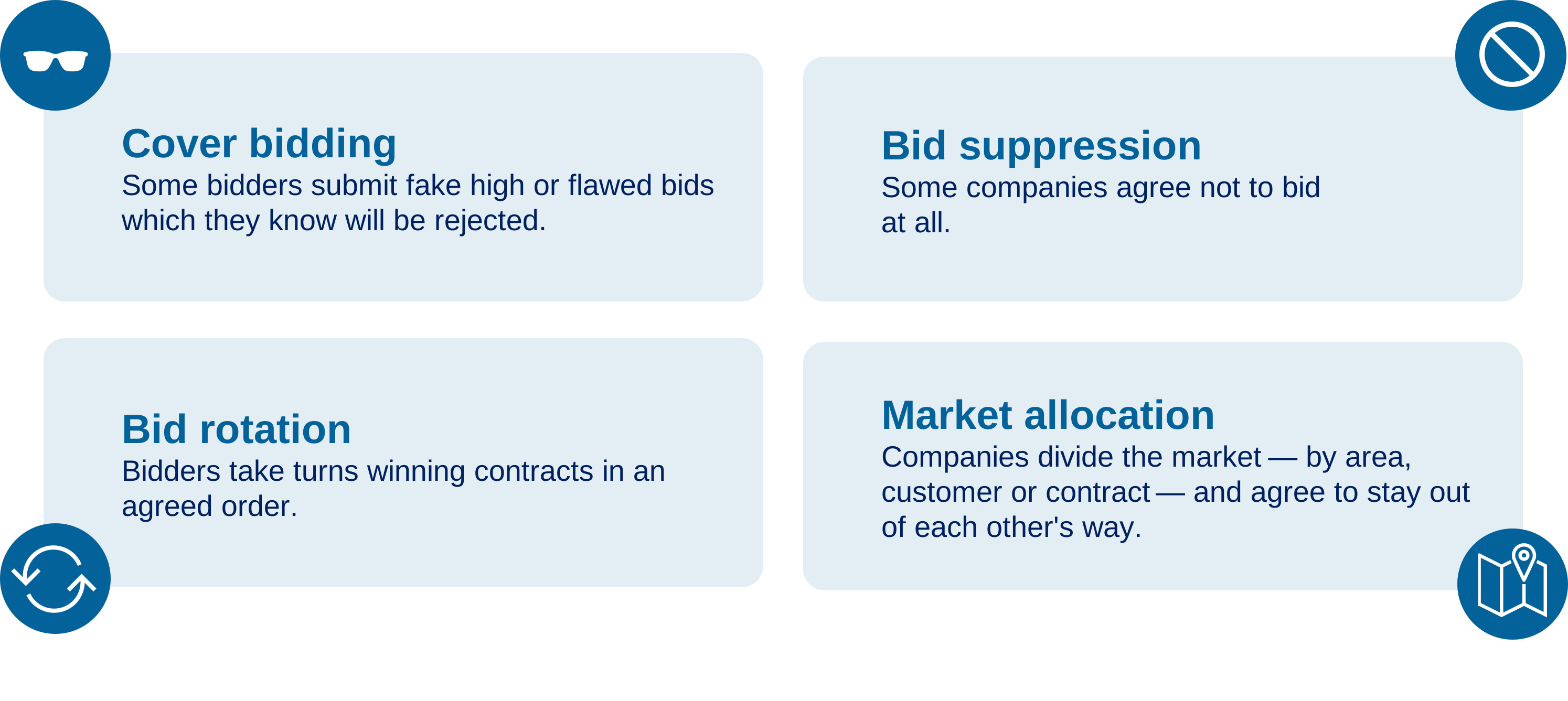
Cover bidding. Cover (also called complementary, courtesy, token, or symbolic) bidding is a frequent way in which bid-rigging schemes are implemented. It occurs when companies agree to submit bids that involve at least one of the following: (1) a competitor submits a bid that is higher than the bid of the designated winner, (2) a competitor submits a bid that is known to be too high to be accepted, or (3) a competitor submits a bid that contains special terms that are known to be unacceptable to the purchaser. Cover bidding is designed to give the appearance of genuine competition.
Bid suppression. Bid-suppression schemes involve agreements among competitors in which one or more companies agree to refrain from bidding or to withdraw a previously submitted bid so that the designated winner’s bid will be accepted. In essence, bid suppression means that a company does not submit a bid for final consideration. A scenario is a collective boycott, where potential bidders agree that no bids are submitted, with the aim of inducing the contracting authority to modify the tender specifications or to award the contract to one company without a tender.
Bid rotation. In bid-rotation schemes, conspiring companies continue to bid, but they agree to take turns being the winning bidder. The way in which bid-rotation agreements are implemented can vary. For example, conspirators might choose to allocate approximately equal monetary values from a certain group of contracts to each company or to allocate volumes that correspond to the size or market share of each company.
Market allocation. In market allocation schemes, competitors carve up the market and agree not to compete for certain customers, certain geographic areas, certain bids, or certain goods, services or works. Competitors may, for example, agree that they will not bid (or will submit only a cover bid) on contracts, or contract lots (parts), offered by potential customers, which are allocated to a specific bidder. In return, that competitor will not competitively bid for a designated group of customers allocated to others in the agreement.
These techniques are not mutually exclusive. For instance, cover bidding may be used in conjunction with a bid-rotation scheme. These strategies may result in patterns that procurement officials can look for, using traditional and novel techniques (such as digital tools) to uncover bid-rigging schemes.
Bid-rigging schemes often include mechanisms to apportion and distribute the cartel profits among the conspirators. Compensation mechanisms may play an important role to discourage cheating or deviations from cartel agreements. For example, competitors who agree not to bid or to submit a losing bid may receive subcontracts or supply contracts from the designated winning bidder. Long-standing bid-rigging arrangements may employ more elaborate methods of assigning contract winners and monitoring and apportioning bid-rigging gains over a period of months or years.
Bid rigging may also include monetary payments by the designated winning bidder to one or more of the conspirators. These payments might take various forms, ranging from direct cash transfers to more covert methods facilitated by fraudulent invoices for goods, works or services that were never provided.
Bid rigging can be combined with other conduct, including when there is a corrupt “insider” in the contracting authority, who can facilitate the operation and stability of a bid-rigging cartel. In return, they might receive financial or other rewards. Therefore, bid rigging can go hand-in-hand with other offences, like corruption and fraud. Such cross-overs between bid rigging and other unlawful activities requires educating law enforcement authorities about each other’s mandates, fostering close co-operation among them and securing incentives to self-report the offences (for example, through a leniency application in the case of bid rigging).
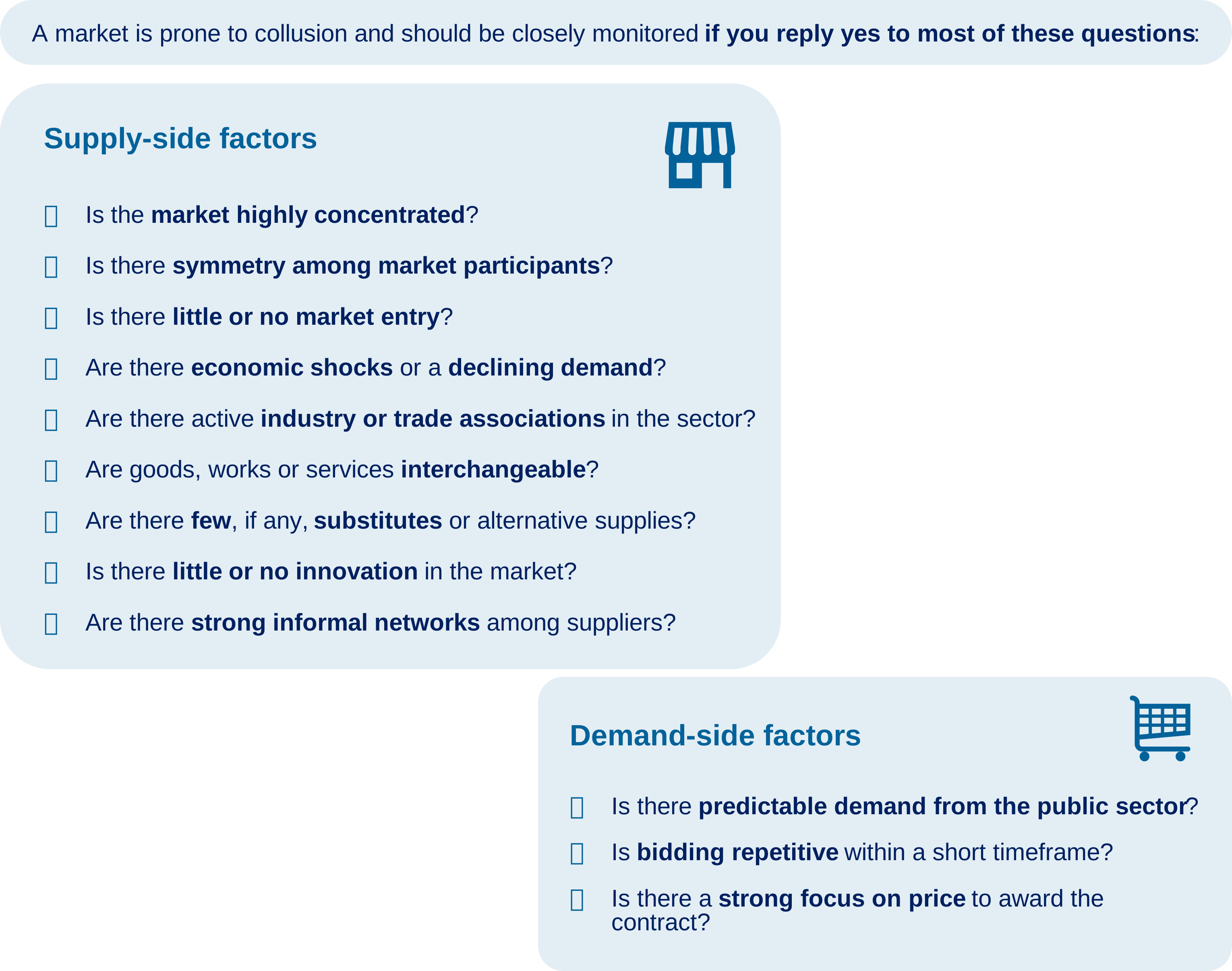
Although bid rigging can occur in any economic sector, certain supply and demand factors have been found to facilitate collusion. If some of these factors are present, contracting and competition authorities should be especially vigilant. Market characteristics are not always given: tender and contract design can shape the market.
1.4.1. Supply-side characteristics
High market concentration. Bid rigging is more likely to occur when there is a small number of relevant suppliers. The fewer the number of sellers, the easier it is for them to reach an agreement on how to rig bids.
Symmetry of market participants. When companies have similar cost structures, capacities, research and development investments, market shares, and so forth, it may be easier to agree on a common course of action for implementing and sustaining bid-rigging schemes. Long-term symmetric market shares of competitors may be a sign of a market where collusion is in place and preserves market share stability.
Little or no entry. When few companies have recently entered or are likely to enter a market because it is costly, hard or slow to enter, companies in that market are protected from the competitive pressure of potential new entrants. The barrier to entry may support bid-rigging efforts.
Economic shocks and declining markets may also create incentives for suppliers to rig bids to replace lost revenue or earnings with collusive gains. However, declining demand may make collusion more challenging to sustain, as the incentive to defect and capture short-term gains increases in a shrinking market.
Industry or trade associations. Industry or trade associations consist of members of an economic sector with common interests, usually joining together to further their legitimate commercial or professional goals, such as, to promote standards and innovation. However, they may also be used by company officials to meet and collude.
Identical or simple goods, works or services. When the goods, works or services are identical, very similar or simple, they are likely to become interchangeable, and it is easier to reach an agreement to collude on a common price structure.
Few if any substitutes. When there are few, if any, substitutes for the good, work or service that is being purchased (or when the contracting authority defines the object of the tender too narrowly), companies wishing to rig bids are more secure knowing that the purchaser has few, if any, good alternatives and thus their efforts to raise prices are more likely to be successful.
Little or no innovation. Little or no innovation results in similar goods, works or services which helps companies reach an agreement and maintain it over time. Innovation increases a company’s likelihood to gain an advantage over its rivals, which, in turn, makes it harder to sustain collusion.
Social homogeneity and shared attributes. Homogeneity of social characteristics among professionals belonging to the same sector may facilitate cartel formation and preservation, e.g. through an increased sense of trust and familiarity in decision making. The presence of strong informal networks, notably through alumni associations, local business groups, sports and cultural associations etc., may serve as forums for collusion.
1.4.2. Demand-side characteristics
Predictable demand. A constant, predictable flow of demand from the public sector tends to increase the risk of collusion (e.g. there is a chance for everyone to have their turn winning a bid). Significant changes in demand may destabilise ongoing bid-rigging agreements.
Repetitive bidding. Repetitive purchases, and in particular parallel or similar tenders within a short timeframe, increase the chances of collusion. The bidding frequency and similarity helps members of a bid-rigging agreement allocate contracts among themselves. In addition, the members of the cartel can punish a cheater by targeting the bids originally allocated to them.
Strong focus on price. When procurers favour standardised offers in terms of quality, technology or commercial process, and focus essentially on price, agreements between companies are made easier, since price is usually a simple and straightforward criterion on which to collude.
The OECD Recommendation on Fighting Bid Rigging in Public Procurement [OECD/LEGAL/0396] sets forth that competition authorities should “provide or offer support to set up training” on bid rigging and “establish a continuing relationship” with procurement and other public authorities through formal and informal co-operation mechanisms. In addition, the legal framework should enable procurement data standardisation, and allow competition authorities to request and receive public procurement data. Concretely, competition authorities should consider taking the following steps to implement these provisions of the Recommendation:
If relevant, engage with appropriate policy makers and, if necessary, propose changes to the legal framework to enable procurement data standardisation and allow competition authorities to request and receive public procurement data.
Co-operate with procurement authorities to implement a regular training programme for public procurement officials on bid rigging and cartel detection, covering competition law concepts and requirements, the standardisation and collection of procurement information, the use of tools to identify bid-rigging patterns, bid-rigging sanctions, the applicable leniency policy and anonymous whistleblowers policies, the competences of the competition authority and how to contact them. If and when needed, external experts, academics and staff of other competition agencies may support the training.
Issue guidelines on fighting bid rigging and best practices to promote competition in public procurement, in accordance with these Guidelines and the lists that follow.
Establish co-operative inter-institutional relationships with other authorities as needed, such as procurement, audit and anti-corruption authorities, police officers who investigate economic and financial crimes, and criminal prosecutors. Set up working groups or other mechanisms for communication, to facilitate the detection of bid rigging, exchange experiences, specify which information may be exchanged and which assistance may be required in competition investigations, and/or enable exchanges of staff if desired.
Sign and implement domestic and/or international co-operation instruments with any relevant authority or institution, such as agreements or other mechanisms to facilitate data sharing between competition and procurement authorities, while protecting confidential procurement data.
← 1. In these Guidelines, the terms bidding process, procurement process and tender process are used interchangeably.
← 2. In these Guidelines, the term “company” includes individuals who participate in a procurement process.
← 3. In these Guidelines, the terms procurer/ procurement/ procuring/ purchaser/ purchasing/ contracting authority are used interchangeably.