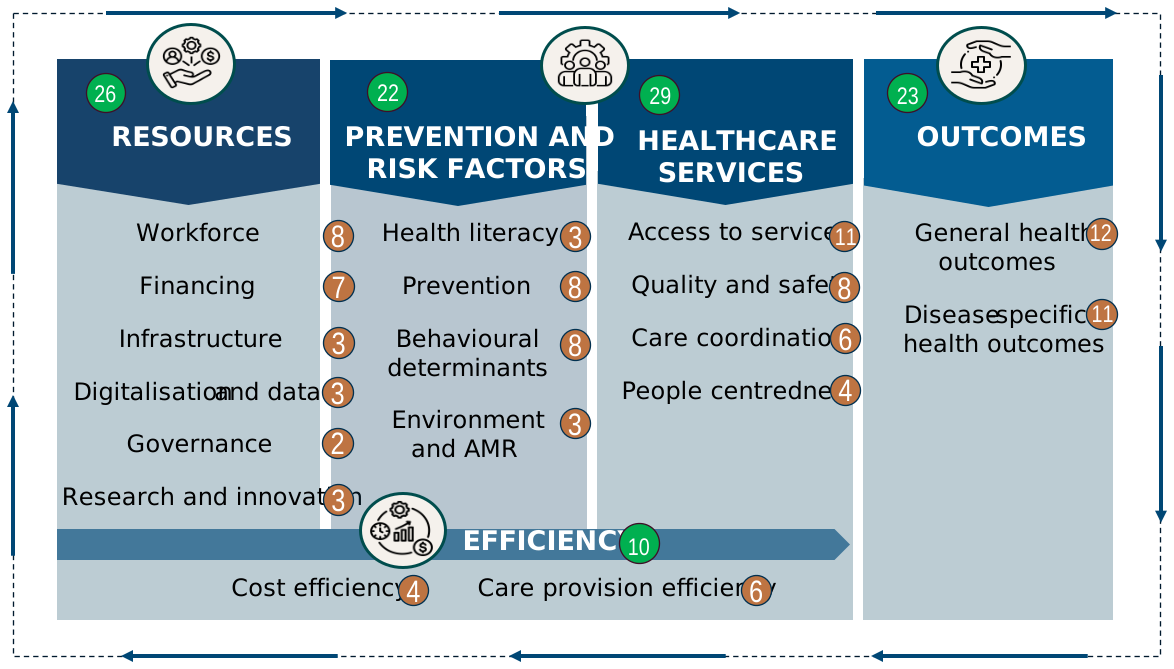
Regarding cancer outcomes, the indicators include estimated Cancer incidence, measured as age‑standardised new cases per 100 000 population, sourced from the European Cancer Information System (ECIS) with national data maintained by NCZI through the National Oncology Register. It can be disaggregated by age groups, gender and type of cancer. Cancer mortality, measured per 100 000 population, is sourced also from Eurostat, with national breakdowns available by region, district, sex and age group. National data cover more than ten years, although the National Oncology Register data currently extend up to 2016 with new data expected. A planned indicator on Five‑year survival for colon cancer is noted as under development, with data sourced from the CONCORD global cancer survival programme. The most recent data from CONCORD are from 2008 and 2014, with an update currently in process (CONCORD‑4). The indicator can also be calculated at national level from NCZI data, one‑, three‑ and five‑year survival rates. Five‑year survival for other cancer sites (breast, cervical, lung, pancreas, etc.) from the same source can be used to provide additional contextual information and hence was selected as a contextualising indicator for this domain.
Prevalence of cardiovascular diseases is represented through major cardiovascular conditions and risk factors (including myocardial infarction, angina, high blood pressure, stroke and high cholesterol), which enables discussion of both outcomes and underlying risk burden. It is sourced from the EHIS and collected every five years by ŠÚ SR (data available for 2014, 2019 and 2025), with breakdowns by condition, sex and economic activity status. Cardiovascular diseases mortality rate is measured per 100 000 population and sourced from Eurostat’s causes of death statistics, with national data maintained by ŠÚ SR. The indicator has gender and regional breakdowns and is linked to the Slovak national strategy Strategic Framework for Healthcare for the years 2014-2030, where a specific target has been defined. International comparisons are available for both indicators.
Effective communicable disease control is represented through Trends in selected vaccine‑preventable diseases, disaggregated by region and type of disease. It is sourced from ÚVZ through its annual report, with national data maintained by NCZI, enabling regional analysis. Additionally, Respiratory diseases mortality (asthma, COPD, pneumonia, influenza) links prevention and care performance to disease‑specific outcomes. It is sourced from Eurostat’s causes of death statistics with underlying data from ŠÚ SR, with gender and regional breakdowns. Both indicators are collected annually and available for international comparisons.
Further disease prevalence measures include Musculoskeletal disorders prevalence (arthrosis, lower back disorders and neck disorders), sourced from the EHIS survey collected every five years, with breakdowns by disease type, sex and economic activity status. A planned indicator on Prevalence of dementia remains a placeholder, with methodology aligned with the OECD Dementia Pilot 2025; primary data is not yet available in the Slovak Republic.
Regarding mental health, the indicator Evolution of suicide attempts tracks changes over time in suicide attempts per 100 000 inhabitants, sourced from NCZI’s thematic outputs on suicides and suicide attempts. It is disaggregated by area of residence, sex and age, with more than ten years of national and regional data available. The outcome‑relevant measure of Alcohol-related hospital admissions (where alcohol is the main cause for hospitalisation) captures the direct health burden of harmful alcohol use, sourced from the NCZI Yearbook with breakdowns by gender, age and region, and more than ten years of national and regional data availability. Both indicators support national and regional analysis, although international comparisons are not directly available through these specific data sources.