This chapter provides an overview of Korea’s long-term trajectory in public sector digital transformation, from early computerisation efforts in 1967 to comprehensive digital government initiatives in the 2020s. It highlights how sustained policy commitment, strategic investments, and continuous innovation enable Korea to adapt to emerging digital technologies and meet growing demand for modernised public services. It also presents how Korea has promoted international co-operation in digital government to share its experience and practices.
Digital Government Review of Korea
Harnessing Digital and Data to Transform Government

Abstract
Digital technologies evolve and transform all aspects of society, with enormous impacts on the ways governments interact with citizens and businesses. These evolutions drive demand for governments to transform and deliver more relevant, effective, and personalised services to citizens and businesses. To meet this demand, governments reform their policy and regulatory frameworks to innovate government services. This transformation reshapes the public governance landscape while technological advancements trigger further evolution of public administrations.
Korea’s digital government transformation exemplifies a proactive and ambitious journey, with early experiments in computerising government tasks dating back more than half a century (Ministry of the Interior and Safety, 2017[1]). Since then, the country has built strong foundations for digital transformation of the public sector by maintaining its policy dedication, strategic investment and government innovation. This chapter provides an overview of Korea’s trajectory from 1967 to 2020, categorised into four thematic stages. The first stage encompassed initial policy and institutional development. The second stage focused on the establishment of national information and communication technology (ICT) infrastructure. The third stage addressed Korea’s transition to a whole-of-government digital governance structures and leadership. The final stage focused on the shift from e-Government to digital government through government innovation, a data-driven public sector, and user-centred services. The chapter also presents Korea’s international co-operation efforts to share its experience and practices.
The Korean government started building a strategic informatisation policy by the late 1970s. The initial Five-Year Basic Plan for Administrative Computerisation (1978-1982) was developed in 1978 to systematically digitise pivotal public administration processes. Spearheaded by the Ministry of Government Administration at the time, the plan aimed to automate 99 priority administrative tasks across 32 agencies and build shared data-processing networks for public sector institutions. To provide the enabling legal foundation, the government established an Administrative Computerisation Promotion Committee and enacted a Prime Minister’s decree on promoting administrative computerisation in 1979 (Ministry of the Interior and Safety, 2017[2]). This early central co-ordination mechanism, in which the Ministry of Government Administration was entrusted to formulate five-year plans, provided a critical institutional foundation. These efforts ensured a high level of commitment and a comprehensive, government-wide perspective – characteristics that would subsequently define Korea’s digital government development.
Even during this nascent period, the government demonstrated a commitment to investing in ICT despite economic constraints. This decision reflected a conviction that the computerisation of administration was imperative for governance and economic development. By the early 1980s, the seeds of e-Government had been planted in Korea with basic computing capacity in government institutions, an institutional mandate for ICT planning, and awareness of the transformative potential of ICT across the government (Cheong, 2024[3]).
During the 1980s and 1990s, Korea prioritised the development of a national digital infrastructure, which laid the cornerstone for its expansion of e-Government and then digital government initiatives. This effort started with the decision to construct the National Backbone Computer Network to connect government institutions and facilitate large-scale electronic information sharing. The decision was reinforced by the new Act on Establishment and Utilization of Network (1986), complemented by other legislation, including the Software Development Promotion Act (1987), contributing to the cultivation of an ICT-enabling environment in the country (Karippacheril et al., 2016[4]).
Building on this strategic and legal basis, Korea implemented five primary national information networks (public administration, finance, education and research, defence, and public security) in 1987. Each network was overseen by the respective ministry, supplemented by a central co-ordination mechanism. In parallel, Korea allocated substantial resources to developing telecommunications and internet infrastructure for its society. The Korea Information Infrastructure project started in 1995 to expand high-speed networks across the country (Ministry of the Interior and Safety, 2017[2]).
This strategic approach to building government-only networks for critical administrative data complemented by a nationwide internet infrastructure positioned Korea to implement a wide range of digital public services in subsequent years.
As Korea transitioned from informatisation to e-Government, the government built robust governance mechanisms to drive this transformation at the whole-of-government level. The transition thus benefited from several factors. First, it enjoyed significant presidential support, which provided considerable political capital. Furthermore, the Administrative Computerisation Promotion Committee engaged a wide range of stakeholders, fostering collaboration and ensuring the implementation of planned initiatives. Most importantly, Korea emphasised administrative innovation over mere technological upgrades, demonstrating a commitment to addressing systemic issues.
Following the unprecedented economic crisis of 1997, the newly elected government initiated a series of comprehensive government reforms in 1998 to enhance efficiency and integrate market principles into public administration. A fundamental element of this reform was the formation of the Ministry of Government Administration and Home Affairs (MOGAHA), now known as the Ministry of the Interior and Safety (MOIS), integrating the Ministry of Home Affairs and the Ministry of Government Administration. MOGAHA was entrusted with spearheading the Korean government’s digital transformation and facilitating the dissemination of digital services across central public institutions and local governments (Ministry of the Interior and Safety, 2017[2]).
MOGAHA prioritised leveraging digital technologies and data to reform administrative processes, enhance service delivery for citizens and businesses, and improve government productivity. With its Vision and Strategy for e-Government developed in March 1998, the government implemented initiatives to achieve three strategic objectives: (1) provision of seamless, accessible, online government services; (2) establishment of a paperless, highly efficient administrative environment; and (3) implementation of transparent communication channels between citizens and public officials (Ministry of the Interior and Safety, 2017[2]).
Additionally, the government established the Special Committee on e-Government to facilitate inter-ministerial co-ordination, comprising senior officials from relevant ministries, local government representatives, and private-sector experts. The committee identified eleven priority initiatives to achieve comprehensive digital transformation by 2002. These projects were grouped into four categories, covering citizen-centric services (G4C), government-to-business services (G2B), internal governmental processes (G2G), and information infrastructure (Ministry of the Interior and Safety, 2017[2]).
In contrast to previous, single-ministry initiatives, the government focused on ministerial co-operation, legislative updates (Box 2.1) and technological advancements, establishing a solid foundation for Korea’s subsequent digital transformation efforts.
Context
In the late 1990s, as e-Government gained prominence on policy agendas, academics and policymakers in Korea noted the need for comprehensive legal frameworks. The existing framework governing the promotion of informatisation had proven inadequate to support specific e-Government policies and initiatives. Acknowledging this gap, Korea enacted the world’s first comprehensive Electronic Government Act in July 2001, placing a emphasising digital transformation as a pivotal component of its national agenda.
Purpose, structure, and provisions
The Act established principles for digital government implementation, digital administrative management, digital public services, and promotion of digital government initiatives across the Korean public sector. As of June 2025, the Act comprises seven chapters – (I) General provisions; (II) Provision and utilization of electronic government services; (III) Electronic administrative management; (IV) Administrative data matching; (V) Strengthening operational basis for electronic government; (VI) Promotion of policies, etc. for realization of electronic government; and (VII) Penalty provisions – containing 78 articles.
Legislative evolution and key amendments
The Act has undergone several amendments since its enactment, to enhance policy effectiveness and administrative efficiency in line with digital advancements. Notable amendments include the introduction of electronic administrative signatures and inter-agency data-sharing system (2003), the introduction of project management oversight for key government initiatives (2013), and reinforced infrastructure for citizen services and data use (2014).
Most-recent amendments
Amendments made in 2023 enhance administrative efficiency and address issues related to redundant or underused digital government services. These reinforce the efficacy of recommendations issued by central ministries, mandating a greater degree of compliance from local governments in implementing recommended improvements. This adjustment enhances the efficiency of digital services, mitigates redundancy, and allows citizens to enjoy more coherent and cost-effective digital government services.
Amendments enforced from July 2025 fortify incident prevention, monitoring, and recovery mechanisms for government information systems. The amendments cover a mandatory triannual incident management plan, the introduction of tiered system classification, mandatory annual audit and inspection of systems, and the implementation of centralised monitoring and post-incident oversight.
Policy implications and impact
The Act’s continuous evolution reflects the public’s needs and technological advancements. It helps establish a robust, coherent framework for digital government, reducing bureaucratic requirements, improving service efficiency and addressing regulatory barriers through legislative improvements.
As Korea’s e-Government matured, the 2010s witnessed a strategic shift towards digital government: a more comprehensive digital transformation of the public sector, embracing data as a strategic asset, adopting emerging technologies and ensuring government innovations to keep pace with industrial and societal change.
In 2013, the government announced the Government 3.0 Strategy, prioritising transparency, data sharing, collaboration, and tailored government services. The strategy promoted inter-agency data sharing to facilitate “life-cycle services”, defined as service packages tailored to address specific life events such as birth, death, education, employment, and retirement. Furthermore, the strategy led to the Act on Promotion of the Provision and Use of Public Data, which obliges public institutions to open datasets to the public and the private sector. With the establishment of a national open data portal, the government started to proactively disseminate high-value datasets, including those on transportation, health, and finance. This development fostered the growth of an open data ecosystem (Ministry of the Interior and Safety, 2017[2]).
In 2016, Korea initiated the integration of government service platforms to streamline access to services and reduce the complexity of interacting with public sector institutions, consolidating government services under the GOV24 platform. This facilitated access to, requests for, and tracking of government services through a unified portal, streamlining processes for citizens. In 2017, the effort expanded to integrating sector-specific services through new government portals such as Bokjiro, a social security services portal, and Work24, an employment services portal (Ministry of the Interior and Safety, 2017[2]).
Complementing the integrated service platforms, the government introduced proactive services to anticipate and pre-emptively fulfil citizens’ needs. For example, the National Tax Service’s enhanced year-end tax settlement service was inaugurated in 2015 through collaboration with the Government 3.0 Committee. This service incorporated features such as pre-notification, which enabled taxpayers to anticipate their potential tax outcomes, identify deduction limits, and access visual aids for tax optimisation strategies. Furthermore, this pre-fulfilled service facilitated automated generation of tax documents through simplified year-end settlement data, significantly reducing paperwork and enhancing accuracy. It demonstrated a shift from reactive to proactive administration, resulting in substantially improved citizen satisfaction and administrative efficiency (Ministry of the Interior and Safety, 2017[2]).
During this period, the government continued harnessing emerging technologies to innovate public administration. Beginning in 2014, various pilot programmes were initiated under the Government 3.0 Strategy to use cloud computing and big data analytics to improve the government’s operational efficiency. The Ministry of the Interior (formerly MOGAHA, currently MOIS) led a cloud initiative to enhance interoperability and reduce public spending. By 2017, numerous public sector institutions migrated their core systems to the cloud and an integrated government data centre was established to facilitate the transition. Furthermore, the government implemented big-data analytics in policymaking, leveraging population and transportation data to determine facility locations and proactively address social concerns.
In 2018, the Korean government officially adopted the term “digital government” in place of “e-Government” to ensure that digital government contributes directly to citizens’ quality of life and fosters their trust in government, and anticipating the need for other paradigm changes in the next eras (Cheong, 2024[3]). The government outlined a vision to use next-generation technologies, such as artificial intelligence (AI) and the Internet of Things (IoT), to provide more anticipatory and tailored services. In 2019, MOIS announced a Digital Government Master Plan, followed by a Digital Government Innovation Initiative, focused on data-driven public administration, user-centred services and smart government infrastructure.
As digital transformation becomes increasingly transnational in nature – shaped by common opportunities and challenges such as AI governance, cybersecurity, and cross-border services and data flows – Korea has taken a multi-faceted approach to its international co-operation. Under the co-ordination of the Ministry of Foreign Affairs, it has institutionalised knowledge sharing mechanisms, invested in regional development partnerships, and assumed active roles in major multi-lateral forums. These efforts reflect Korea’s recognition that a mature digital government not only serves its citizens and businesses but also contributes to building a more inclusive and interoperable global digital ecosystem. This section presents how Korea has facilitated bilateral and regional co-operation and contributed to multi-lateral co-operation through international organisations.
Bilateral co-operation: sharing experience and technical expertise
Korea has pursued numerous bilateral partnerships, with the aim of sharing its digital government know-how and systems to other countries. A cornerstone of this effort is the establishment of Digital Government Cooperation Centres in partner countries. At the centres, Korean experts are dispatched to work within the hosting country’s leading digital institution, providing consulting on its digital government strategy, implementing pilot projects, and training government officials (Ministry of the Interior and Safety, 2025[6]). Such bilateral engagements have resulted in tangible outcomes, for instance, the Cambodian Ministry of Labour adopted a Korean-developed employment information system, which Korean experts later inspected and discussed expanding to meet new needs of Cambodia (Ministry of the Interior and Safety, 2022[7]). These endeavours demonstrate Korea’s commitment to sharing its expertise and technology with its partner countries, tailoring support to meet each partner’s specific need with disseminating Korean expertise.
Furthermore, Korea’s official development assistance (ODA) programmes also priorities the digital transformation of the public sector as a key priority area. The Korean International Cooperation Agency (KOICA) offers a Digital Transition Programme, allocating a significant share of bilateral aid to digital transformation initiatives. An internal assessment of 29 KOICA digital projects found 52% were “successful” and 38% “very successful” in achieving their objectives. For instance, a project funded by KOICA to modernise the traffic management system in Asunción, Paraguay, resulted in a significant improvement in efficiency and road safety (OECD, 2021[8]).
Regional co-operation: driving regional digital integration
Korea complements bilateral efforts with regional engagement, particularly with the Association of Southeast Asian Nations (ASEAN), the Asia-Pacific Economic Cooperation (APEC) and the Inter-American Network on Digital Government (Red GEALC) to establish an interoperable and inclusive digital community, and to raise shared standards in the regions.
In 2025, the Korea-ASEAN Digital Innovation Flagship (KADIF) initiative was launched, with the backing of a five-year, USD 30 million investment from the Korea-ASEAN Cooperation Fund. The initiative supports five major projects – from developing joint data ecosystem to AI solutions – aimed at enhancing regional digital capacity and shared prosperity (Ministry of Science and ICT, 2025[9]).
Korea is also committed to the digital integration of the region through policy co-ordination and knowledge exchange at ministerial level. The invitation to Korea as co-chair to the 2025 ASEAN Digital Ministers’ Meeting is a reflection of its role as a key partner in the ASEAN digital agenda. On these occasions, Korean government officials work with ASEAN counterparts to review current co-operation activities and plan future initiatives in areas including digital government, data governance and emerging technologies (Ministry of Science and ICT, 2025[9]).
Furthermore, Korea is assuming leadership roles in forums such as APEC to influence digital policies beyond its immediate neighbours. In 2023, Korea secured key positions in APEC’s Telecommunications and Information Working Group (TELWG), including a co-chair role. This enabled Korea to steer discussions on digital connectivity and standards for the 21 APEC member economies, advocating for a “new digital order in the Asia-Pacific region” (Ministry of Science and ICT, 2024[10]). Korea also plans to use its 2025 presidency to advance regional discussions on cross-border data flows, AI ethics, and inclusive digital economies (Preparatory Office for APEC 2025, 2025[11]).
Multilateral engagement: shaping international standards and practices
Korea also has assumed an active role in shaping global standards and contributing to cross-border knowledge sharing, acknowledging the importance of adherence to international standards and shared principles for the country’s effective digital transformation.
Within the OECD, Korea has been a leading contributor the development and dissemination of digital government principles and practices. Its high performance in the OECD Digital Government Index (DGI) and the OURdata Index, has firmly established Korea as a leading example for member and partner countries to benchmark (OECD, 2024[12]) (OECD, 2023[13]). The country also plays a visible role as a bureau member of the OECD Working Party of Senior Digital Government Officials (E-Leaders). Korea hosted the 2018 Meeting of the E-Leaders and has supported peer learning on evolving digital government challenges including data-driven public sector and the use of AI in government.
Additionally, Korea has contributed to knowledge transfer with broader group of countries through the United Nations and the World Bank. Since 2016, Korea has hosted the UN Project Office on Governance (UNPOG), a regional hub for innovation in digital government through peer-to-peer learning and knowledge transfer (UNDESA, 2016[14]). In addition, in 2024, the government and the WB announced the plan for a joint Digital Knowledge Centre, a new platform designed to share Korea’s digital government expertise on infrastructure, interoperability, and service design and delivery with low- and middle-income countries (World Bank, 2024[15]).
By 2020, the impact of Korea’s half-century journey towards digital government was clear. Most government transactions could be conducted digitally and public administration had become significantly more data-driven, transparent, and responsive. The 2020 e-Government Service Usage Survey showed that 98.1% of respondents were satisfied with the quality of government services (Ministry of the Interior and Safety, 2020[16]). Korea’s efforts were also recognised at the international level. In the United Nations (UN) e-Government Survey, Korea ranked in the top three countries from 2010 to 2020 (United Nations, 2025[17]). The OECD Digital Government Index (DGI): Pilot and 2023 editions ranked Korea first among OECD countries (Figure 2.1.) The digital government infrastructure of Korea also demonstrated its efficacy during the onset of the COVID-19 pandemic in early 2020. The government expeditiously employed digital systems for pandemic response, including emergency alerts, online mask distribution maps, and rapid dissemination of crucial information.
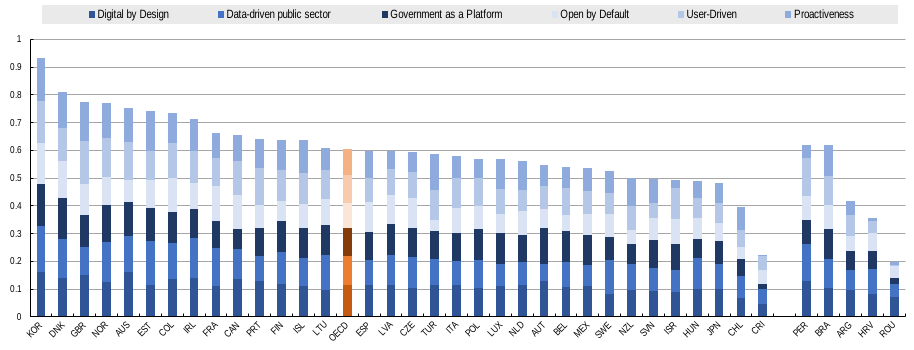
Source: (OECD, 2024[12])
By solidifying achievements made since 1967 and laying the groundwork for the future, Korea strategically positioned itself to navigate the ever-changing landscape of digital transformation. Given rapid technological advancements and emerging global challenges, it is imperative that Korea maintain its commitment to innovation in public governance and its capacity for transformative change. Progress now needs to aim at strengthening sustainable and inclusive digital government that equitably distributes the benefits of technology across all geographic regions and demographic groups, safeguards privacy and security, and is resilient to novel, digital-era risks.
References
[3] Cheong, I. (2024), “Digital Government in the Republic of Korea: Evaluation and Challenges”, Empowering Online Public Service in Asia: The Digital Frontie, pp. pp.177-197., https://www.eria.org/uploads/07-Chapter-6-Digital-Government-in-the-Republic-of-Korea.pdf.
[5] Government of Korea (2022), Electronic Government Act, https://www.law.go.kr/LSW/eng/engLsSc.do?menuId=2§ion=lawNm&query=ELECTRONIC+GOVERNMENT+ACT&x=28&y=23#liBgcolor0.
[4] Karippacheril, T. et al. (2016), Bringing Government into the 21st Century: The Korean Digital Governance Experience, Washington, DC: World Bank, https://doi.org/10.1596/978-1-4648-0881-4.
[9] Ministry of Science and ICT (2025), Korea-ASEAN Digital Flagship (KADIF) Initiative to Be Launched, https://www.msit.go.kr/eng/bbs/view.do?sCode=eng&mId=4&mPid=2&pageIndex=&bbsSeqNo=42&nttSeqNo=1084&searchOpt=ALL&searchTxt=#:~:text=The%20KADIF%20initiative%20comprises%20five,diplomatic%20relations%20into%20tangible%20actions (accessed on 4 July 2025).
[10] Ministry of Science and ICT (2024), Korea Joins the Leadership of the APEC TEL Working Group, https://www.msit.go.kr/eng/bbs/view.do?sCode=eng&nttSeqNo=1042&pageIndex=&searchTxt=&searchOpt=ALL&bbsSeqNo=42&mId=4&mPid=2#:~:text=secretary%20of%20the%20Conformity%20Assessment,Digital%20Ministers%E2%80%99%20Meeting%20in%202025 (accessed on 4 July 2025).
[6] Ministry of the Interior and Safety (2025), Current Status of International Cooperation in Digital Government, https://www.mois.go.kr/eng/sub/a03/internationalCooperationinDigitalGovernment/screen.do#:~:text= (accessed on 4 July 2025).
[7] Ministry of the Interior and Safety (2022), [Press Release] Expanding cooperation in Digital Government in ASEAN, https://www.innovation.go.kr/en/bbs/newsNotice/newsDetail.do?bbsId=B0000063&nttId=9793&pageIndex=1#:~:text=%E2%96%A1%20In%20Laos%2C%20Vice%20Minister,Technology%20and%20Communications%20of%20Laos (accessed on 4 July 2025).
[16] Ministry of the Interior and Safety (2020), Statistics, https://www.mois.go.kr/cmm/fms/FileDown.do?atchFileId=FILE_00100043kQBncrp&fileSn=1.
[2] Ministry of the Interior and Safety (2017), 50 Years of Korea’s digital government (전자정부 50년), Ministry of the Interior and Safety, https://www.mois.go.kr/frt/bbs/type001/commonSelectBoardArticle.do?bbsId=BBSMSTR_000000000012&nttId=73253.
[1] Ministry of the Interior and Safety (2017), 50 years of Korea’s e-Government, Ministry of the Interior and Safety, https://www.mois.go.kr/cmm/fms/FileDown.do?atchFileId=FILE_00088850_tF_XYr&fileSn=0.
[12] OECD (2024), “2023 OECD Digital Government Index: Results and key findings”, OECD Public Governance Policy Papers, No. 44, OECD Publishing, Paris, https://doi.org/10.1787/1a89ed5e-en.
[13] OECD (2023), 2023 OECD Open, Useful and Re-usable data (OURdata) Index: Results and key findings, OECD Publishing, Paris, https://doi.org/10.1787/a37f51c3-en.
[8] OECD (2021), KOICA’S DUAL APPROACH TO DIGITALISATION, https://www.oecd.org/content/dam/oecd/en/publications/reports/2021/03/development-co-operation-tips-tools-insights-practices_d307b396/koica-s-dual-approach-to-digitalisation_6335ea16/8dd0f018-en.pdf.
[11] Preparatory Office for APEC 2025 (2025), APEC 2025 Korea, https://apec2025.kr/?menuno=1#:~:text=We%20will%20continue%20our%20cooperation,We%20are%20committed%20to (accessed on 4 July 2025).
[14] UNDESA (2016), Remarks United Nations Project Office on Governance (UNPOG) Signing Ceremony for Phase II, https://www.un.org/en/desa/remarks-united-nations-project-office-governance-unpog-signing-ceremony-phase-ii#:~:text=Through%20peer,government.%20I%20thank%20the (accessed on 4 July 2025).
[17] United Nations (2025), United Nations E-Government Survey, https://www.un-ilibrary.org/content/periodicals/2411829x (accessed on 7 July 2025).
[15] World Bank (2024), Sharing the Republic of Korea’s digital transformation with the world, https://www.worldbank.org/en/country/korea/brief/sharing-the-republic-of-korea-s-digital-transformation-with-the-world#:~:text=Through%20this%20partnership%2C%20the%20World,digital%20divide%20is%20most%20pronounced (accessed on 4 July 2025).