Indonesia’s infrastructure landscape is characterised by complexity and opportunity. The government has taken a number of measures to integrate private financing, but the regulatory landscape and land planning processes create headwinds for investors that require increased transparency in line with environmental, social, and governance considerations. Grounding reforms in the QII framework can create a more transparent, efficient, and resilient investment environment capable of mobilising private capital at scale.
Addressing Legal and Regulatory Barriers to Quality Infrastructure Investment in India, Indonesia and the Philippines

Abstract
Good Practices in Indonesia
Indonesia introduced an Integrated Licensing System as part of the Omnibus Law, reducing permit requirements for developers and investors. The Online Single Submission (OSS) system, an existing centralised platform for business licensing application and reception available at all administrative levels, clarified procedures and reduced perceived risks for infrastructure investors in Indonesia by more efficiently categorising and licensing business activities.
The country's attractiveness to private investors stems from its large IPO market, US dollar-indexed capital markets, and domestic investment-grade sovereign credit rating. International investors and banks increasingly value Indonesia's financing opportunities, especially in the energy sector, providing senior debt instruments for project finance.
The 2020-2024 National Medium-Term Plan requires the government to formulate policies that attract sustainable and ESG-focused investments and business partnerships.
The liberalisation of SOE regulations and removal of foreign ownership restrictions in Indonesia has significantly boosted private investment in infrastructure projects. This change reduces SOE privileges compared to private domestic companies.
Recommendations for Indonesia
Local coordination should be improved to strengthen the government's ability to allocate capital for infrastructure and attract investment through schemes like PPPs. This would be in line with QII Principle 6 on strengthening infrastructure governance.
Better streamlined and coherent licensing procedures and transaction processes across sectors and jurisdictions could take place through strengthened disclosure. This could include more in-depth knowledge of processes such as annual budgeting, project design, government feasibility studies, and project approval processes. This change would both strengthen infrastructure governance (Principle 6) and raise the economic efficiency of projects over the course of their life-cycle (Principle 2).
Improve regulatory interpretations across sectors and transactions, as sector-specific regulations could conflict with overarching guidelines. This would also be in line with QII Principle 6 on strengthening infrastructure governance.
Consider how financially capable local companies can be partnered with foreign investors. These actions are aligned with QII Principle 1 on maximizing the positive impact of infrastructure to achieve sustainable growth and development.
Wider tender processes and more open ownership rules could make Indonesian infrastructure projects more attractive, efficient, and cost-effective. The complex ownership rules governed by multiple regulations deter private equity investors, who prefer majority stakes for operational influence. These initiatives would complement QII Principle 2 on raising the economic efficiency for projects.
Indonesia's renewable energy transition requires significant grid upgrades to address geographical challenges, including scattered energy sources and inter-island connectivity issues. Supply-demand imbalances across islands and isolated grids necessitate future interconnections This would support the QII principle 4 which affirms the importance of designing infrastructure that is resilient to natural disasters.
Following the example of INA, more projects should spend time structuring to meet both national objectives and investor requirements for long-term equity investments through enhanced transparency, governance, and reporting standards. These actions would closely support the QII Principle 6 on strengthening infrastructure governance.
The Ministry of Finance should further pursue the approach that would improve compliance with ESG considerations, including a contractual approach while ensuring the validation can be recognised internationally, supporting Principle 3 of the QII which expects environmental impact of infrastructure investment to be made transparent to all stakeholders.
3.1.1. Infrastructure institutional landscape
The development of infrastructure in Indonesia depends on a network of institutions and government agencies, as shown in Figure 1. Central to this network is the Indonesian Ministry of Planning (Bappenas), which oversees national development planning, budgeting, and coordinates the PPP programme with local governments (Duffield, Duffield and Wilson, 2019[1]). While Bappenas standardises private financing regulations, individual ministries have specific regulations for project implementation that govern various stages of the tender, procurement, and project preparation processes (Bappenas, 2023[2]). The Ministry of Finance (MoF) provides support to contracting agencies to help develop and deliver projects.

Source: Stakeholder Consultations
Every five years, Bappenas’ Directorate of Funding Development, in a central planning role, calculates the Indonesian infrastructure stock, investment needs and related total cost of developing new infrastructure. From 2015 to 2019, government financing capability decreased from 41% to 32% of total project costs, requiring greater private (42%) and SOE (21%) participation (Duffield, Duffield and Wilson, 2019[1]). Conversely, infrastructure needs are projected to increase from 43% to 50% publicly financed by 2024, as outlined in the Indonesia's National Medium-Term Development Plan (Republic of Indonesia, 2020[3]).
The Committee for Acceleration of Priority Infrastructure Delivery (KPPIP), established under the Ministry of Economic Affairs, focused on accelerating PPP implementation in Indonesia. Its Board consists of six members with specific mandates: the Coordinating Minister for Economic Affairs (as chairperson), the Minister of Finance, the Minister of National Development Planning, the Minister of Agrarian Affairs and Spatial Planning, the Coordinating Minister for Maritime Affairs, and the Minister of Environment and Forestry. They meet on a quarterly basis, and report directly to the Coordinating Minister of Economic Affairs every six months (KPPIP, 2024[4]). Effectively, the KPPIP has supervised 218 projects as of 2024, strengthening and streamlining PPP identification, planning and delivery through line ministries and government agencies.
State Asset Management Agency (LMAN) – which operates under the Ministry of Finance –. was established to provide financial support for land acquisition, thereby mitigating risks for private investors. LMAN's support is specifically allocated to national priority projects as designated by KPPIP. This also affects the development process of PPPs, as these depend on the President’s decree and on the LMAN’s determination that the project is fit to be prioritised and accelerated (Nugroho, 2020[5]).
In addition, the Ministry of Finance’s PPP Unit stands as a one-stop shop for PPP facilitation and coordination. In 2018, they monitored some 45 projects, which represented around 10% of Indonesia’s GDP (Curristine et al., 2018[6]). Since then, PPPs projects have been expanded to modalities such as user-pay PPPs, availability-based PPPs, and hybrid PPPs, and increasingly include projects in the social infrastructure subsector.
The Indonesia Investment Authority (INA), established in 2020 under the Omnibus Law, is a sui generis sovereign wealth fund designed to attract global equity investors by designing financially viable projects (Nejime, 2023[7]). INA’s mandate is to attract FDI, through collaborative projects, working with international partners to act as a conduit for foreign co-investment, facilitating access to strategic investment ecosystem (IFSWF, 2022[8]).
PT Sarana Multi Infrastruktur (PT SMI), formed through Regulation No. 100/PMK.010/2009, specialises in infrastructure financing in key sectors (roads and bridges, transportation, oil and gas, telecommunications, waste management, and electricity). It functions as a lender, implementation unit, and a platform of Indonesia’s SDG One strategy, supporting government agencies in project preparation.
PT Indonesia Infrastructure Finance (PT IIF) was established by the Ministry of Finance, the IFC and other MDBs as a special purpose vehicle to address infrastructure financing gaps. Investment decisions to mobilises funds for infrastructure projects and PPPs are made collaboratively by shareholders at the Board level, filling a market gap that banks were unable to address (Nugroho, 2020[5]).
The Indonesia Infrastructure Guarantee Fund (IIGF) or Penjaminan & Infrastruktur (PT PII) is a special mission vehicle under the Ministry of Finance functioning as a fiscal tool to manage risk and support private investment in sustainable infrastructure in a form of government guarantee. IIGF helps alleviate partners’ concerns about Indonesia’s credit worthiness and PPP quality, thereby mitigating financial obligations of the General Contracting Agency (GCA) within agreed limits (Nugroho, 2020[5])..
Despite the number of agencies involved in the infrastructure project planning, preparation, development, and implementation processes (as shown in Table 3.1), there appears to be little overlap between the role that each entity plays in promoting and facilitating infrastructure development.
Specific projects have historically been put forward by Bappenas and Local Governments, yet as Indonesia has sought to address the pressures of rapid development, projects may emerge from KPPIP, Bappenas, Local Government or via the numerous mechanism available to attract international finance and/or funds. The Public Private Partnership unit may prioritise projects likely to attract international finance, the World Bank (and/or the Asian Development Bank) may provide funds for priority initiatives, the Indonesia Infrastructure Guarantee Fund (IIGF) seeks to identify projects worthy of underwriting, while PT Sarana Multi Infrastruktur (SMI) — a governmental infrastructure financing company — seeks to raise finance for projects. Once financed, projects gather pace as priorities. (Duffield, Duffield and Wilson, 2019[1])
The Ministry of the Investment’s Investment Coordinating Board (BKPM) facilitates business-government relations and coordinates investment policies. Separately, the State Finance and Development Surveillance Committee (BPKP) may review public-private partnerships to ensure financial transparency and compliance with government regulations, independent of BKPM.
Similarly, strategic plans with different impact and economic focus distribute Indonesia’s infrastructure and economic development priorities among project lists managed by different planning and implementation agencies according to geography, sector of activity, or level of administration. (See Table 3.1).
Source: Adapted from (Duffield, Duffield and Wilson, 2019[1]); (Republic of Indonesia, 2020[3]); (INFF, 2023[9]); (PwC, 2024[10])
3.1.2. Laws and regulations impacting infrastructure development
A major barrier to quality infrastructure investment in Indonesia is the complex and fragmented regulatory environment across national (and local regulation (Curristine et al., 2018[6]). While ministry-level regulations are uniform, local inconsistencies hinder the government's ability to allocate capital for infrastructure and attract investment through schemes like PPPs.
Investors and developers highlight discrepancies in licensing procedures and transaction processes across sectors and jurisdictions. They emphasise the need for coherent administrative requirements to prevent deterring domestic and foreign companies. Effective coordination among government agencies is essential to overcome jurisdictional differences and mitigate the negative effects of regulatory complexity.
Recommendation: Local coordination should be improved to strengthen the government's ability to allocate capital for infrastructure and attract investment through schemes like PPPs. This would be in line with QII Principle 6 on strengthening infrastructure governance (G20, 2022[11]).
The Indonesian Omnibus Law
The enactment of the Omnibus Law (Indonesia) aims to enhance Indonesia's investment climate by updating regulations to facilitate domestic and foreign infrastructure investment. It provides legal certainty, simplifies business licensing, and streamlines processes in research, innovation, land acquisition, and interactions with the public sector and economic zones (Baker MacKenzie, 2021[12]). The Omnibus Law streamlines infrastructure financing by introducing an Integrated Licensing System, reducing permit requirements for developers and investors. It shortens the asset ownership waiting period to ten years and extends private sector ownership contracts to 95 years. The Omnibus Law also enhances the Online Single Submission (OSS) system, an existing centralised platform for business licensing application and reception available at all administrative levels. This one-stop-shop approach has clarified procedures and reduced perceived risks for infrastructure investors in Indonesia by more efficiently categorising and licensing business activities. The enhanced OSS electronic process is mandated by various regulations and applies to both domestic and foreign investors. After registering in the OSS, investors are subject to different requirements and decrees depending on project type and coordinating ministry. For example, a subsidiary can be set up in the Indonesian market and allowed to invest and start operating commercially. While OSS registration is mandatory under Regulations 5/2021 and 6/2021 seen in Annex A.
The Omnibus Law also harmonises land regulations, reducing legal complexities and simplifying administrative procedures for land acquisition, registration, and transfer. It incentivises infrastructure investments by ensuring land availability, minimising regulatory hurdles, and promoting public-private partnerships by resolving land-related issues.
The Indonesian PPP Law
Regulatory interpretations across sectors and transactions remain inconsistent, potentially hindering investment agreements. Sector-specific regulations from different ministries often conflict with overarching guidelines. Government Contracting Agencies (GCAs) frequently lack legal expertise to resolve these interpretative discrepancies. This instability causes poor internal coordination across administrative levels, diluted responsibilities between central and local authorities and presenting challenges for private investors (Asian Development Bank, 2021[13]).
Recommendation: Improve regulatory interpretations across sectors and transactions, as sector-specific regulations could conflict with overarching guidelines This recommendation is also in line with QII Principle 6, on strengthening infrastructure governance (G20, 2022[11]).
Nevertheless, the enactment of the Omnibus Law has positively affected parts of the PPP implementation process, covering requirements like location permits, construction materials imports, and tax holiday provision.
Presidential Regulation 49/202 also called the “Positive Investment List” Indonesia – has helped to open up over 200 sectors of activity to foreign investment, including healthcare, transportation or energy, allowing 100% ownership in most cases and providing tax holidays benefits. The “Positive Investment List” was established to avoid previous sector specific restrictions.
3.1.3. Compliance and reporting procedures, guarantees, and credit risk mitigation
Investors report that infrastructure development and financing regulations are adequately transparent. Investors seek clear, concise investment procedures on agency contacts, required documentation, and licensing processes, as well as consistent implementation of these across central and local government institutions. Key compliance requirements include partnering with local investors who meet minimum equity thresholds. The main challenge lies in finding financially capable local partners who share the same vision and goals.
Indonesia is streamlining administrative requirements and developing equivalent documents to meet foreign investors' compliance needs. To address varying disclosure and reporting standards, the country uses activity reports, such as investment progress reports in manufacturing. Reports generally follow home country formats, while financial audits use formats acceptable to both the home country and Indonesia.
While the BKPM has implemented regulation for local enterprises to provide periodical Investment Reports, developers and investors agree on the need for further disclosure from the government side. More in-depth knowledge of processes such as annual budgeting, project design, government feasibility studies, and project approval processes would not only incentivise more investment but also facilitate investors’ due diligence processes.
The IIGF operates through two mandated workstreams to provide guarantees to foreign investors:
PPP schemes (infrastructure guarantee): PT IIGF operates a single window policy to evaluate and provide guarantees for PPP projects, regardless of investor origin. IIGF conducts eligibility screening at any stage from planning to transaction, engaging early in project preparation. The agency also assists Government Contracting Agencies with capacity building for feasibility and bankability studies. This approach aims to accelerate infrastructure development in Indonesia (Abubakar and Handayani, 2022[14]).
Credit guarantee for SOEs: The Ministry of Finance (MoF) and PT IIGF are mandated to jointly guarantee foreign credit to Indonesian SOEs. This mechanism ensures regulatory compliance and protects state financial interests. The Ministry of Finance typically involves IIGF to reduce state budget burden. Guarantee issuance requires specific conditions, including government project approval and full SOE control. Both infrastructure guarantees and credit guarantees can be provided through a co-guarantee arrangement with the Ministry of Finance. The PPP agreement must specify the GCA's risk coverage and guarantee obligations before IIGF's involvement. This joint approach distributes risk, with IIGF typically taking the "first loss" position and Ministry of Finance providing additional coverage. Future collaborations with international entities like MIGA may offer co-guarantees or risk-sharing arrangements to further mitigate government financial exposure (Abubakar and Handayani, 2022[14]).
The IIGF manages contingent liabilities related to risks in infrastructure projects, encouraging private sector involvement. As a state-owned entity with independent assets, it serves as a central hub for evaluating and structuring guarantees for PPPs. This targeted approach replaces broad guarantees with specific risk guarantees, enhancing risk management. IIGF guides contracting agencies, sets rules for guarantee use, and standardises procedures, improving risk assessment. By channelling guarantees through IIGF, the government reduces contingent liabilities. The fund also includes a recourse mechanism to recover payments from agencies when guarantees are invoked, managing fiscal impact. These measures protect the government budget from sudden shocks and improve project creditworthiness, reducing the likelihood of contingent liabilities being realised.
Similarly, PT IIF's advisory teams assist the government with risk mitigation solutions, conducting feasibility studies and gauging investor appetite before project tenders. They offer guarantees for assets or project insurance to bondholders. Aligned with IFC guarantee programme, one of PT IIF's guarantees serve as credit enhancements for Indonesian infrastructure projects. Some domestically oriented projects lack the capacity or interest to meet international standards, making it challenging for foreign investors to engage with projects governed by local rules incompatible with their standards. PT IIF does not participate directly in land acquisition activities, as its role is limited to ensuring that land acquisition associated with financed projects complies with established Environmental and Social (E&S) Standards, particularly regarding involuntary resettlement. If a potential project involves land acquisition processes that would cause significant displacement or have severe negative impacts on local communities or Indigenous Peoples, IIF may choose to withhold or withdraw financing.
PT SMI’s credit enhancements improve infrastructure projects’ attractiveness to investors. PT SMI can enhance credit quality of bond issuers through credit enhancement of loan facilities that maintain project cash flows. Their instruments are designed as a prevention of default scheme. This enhancement is based on credit risk and cash flow assessments, tailored to client needs. By upgrading bond ratings, clients can access more favourable financing terms. PT SMI's approach demonstrates its strategic role in Indonesia's infrastructure financing, offering innovative solutions to improve project bankability and attract investment, ultimately contributing to the development of the bond market.
3.2.1. Land acquisition, asset ownership, right of way, and project implementation
Challenges for investors in Indonesia primarily involve land ownership and procurement, especially at the local level. The land acquisition approval process is complex and can affect financing. Historically, Indonesian law required compulsory land acquisition for new infrastructure (Guild, 2019[15]). Law No. 2 of 2012 (Indonesia) and its revisions centralised government authority over land acquisition for economic development, allowing businesses to purchase land on behalf of the government and be reimbursed later (Curristine et al., 2018[6]). This has helped reduce delays in infrastructure projects and achieve more equitable outcomes in compulsory land acquisition processes.
Investors trust the infrastructure project tender process for its transparency and accountability. BPK and BPKP agencies, along with independent audit teams, monitor projects during construction and operation to prevent corruption and ensure compliance with regulatory and governance standards. However, extended tender, award, and execution processes deter private investment in long-term infrastructure projects. Negotiations with government entities over extended periods pose challenges due to changing financial terms. Economic infrastructure sectors fare better than social infrastructure projects, which lack development precedents and institutional capacity.
Land acquisition process.
Laws No. 2 of 2012 and No. 19 of 2021 (Annex A Indonesia) govern land acquisition in Indonesia. The government must execute land acquisition, but private sector entities can participate through MoUs with ministries or government bodies. These agreements allow private partners to purchase land on behalf of the government with reimbursement later. Project planning is the responsibility of the project owner, with line ministries collaborating with local authorities on documentation.
The land acquisition process in Indonesia involves multiple entities, including the National Asset Management Agency (LMAN), the National Land Agency or the Ministry of Agrarian Affairs and Spatial Planning, the Ministry of Public Works and Housing, and local governments, (provincial or regency/city government). If the infrastructure project is located within forest area (Kawasan hutan), permits from the Ministry of Forestry are also required. Meanwhile in a direct land acquisition process not through PPP or government—funded schemes, the private entity is fully responsible for land acquisition payments. These organisations collaborate to identify suitable land for infrastructure projects and manage the acquisition budget.
The LMAN is responsible for funding land acquisition for infrastructure projects within the National Strategic Planning (NSP). Governor's decrees are crucial for LMAN to proceed with land acquisition for NSP projects, regardless of their scale. Additionally in the area of asset optimisation, LMAN collaborates with SOEs and the Ministry of Planning (Bappenas), providing advisory support, particularly at the local level.
For land acquisition projects spanning multiple cities or municipalities, funding usually comes from the budgets of the project owners—whether at the central or sub-national level. The land acquisition process is carried out in coordination with the involved municipalities to ensure effective implementation. Local government authorities are responsible for project preparation and coordinate the process to ensure proper fund allocation and management. Instead of directing funds to local governments, newly established institutions handle the resources, efficiently managing land acquisition funding across jurisdictions for a smooth process.
In this structure, the government typically operates as the off-taker, especially through large SOEs like PLN for electricity projects. As a result, private equity funds seeking majority stakes and off-taker roles face challenges to model attractive returns during the operational phase. Even after revised regulations reduced land acquisition time to about 450 days, these remain lengthy for investors seeking timely returns (Curristine et al., 2018[6]).
Land acquisition is realised through The Land Agency of Indonesia’s operation, which is tasked with acquiring, managing, and distributing land for public purposes, and facilitating more efficient land acquisition for infrastructure projects (Republic of Indonesia, 2021[16]). By centralising land management, the Land Agency coordinates acquisitions effectively, streamlining processes across government institutions and jurisdictions to reduce delays.
The Land Agency ensures land use aligns with national development priorities, promoting balanced regional development and reducing disparities. The Omnibus Law and the Land Agency’s efforts make land acquisition more predictable and transparent, accelerating project advancement and boosting investor confidence.
Public consultation is a pivotal stage in project preparation. If the consultation outcome is favourable, the project is presented to the governor, who issues the location decree, allowing the implementation stage to begin. Despite government agencies’ efforts to consider all opportunity costs for affected landowners, insufficient compensation often sparks opposition during public consultations. This issue arises from a timing mismatch between compensation determination and land appraisal. The consultation only informs the community about the project, without specifying compensation or affected areas.
Despite regulatory improvements, social issues like socioeconomic gaps, demographic complexities, and illegal settlers on government land present significant challenges. Regulation 78/2023 allows severance payments to long-term illegal settlers, complicating land transfer to private entities. The government must balance attracting investors by facilitating land acquisition with addressing these social challenges.
Exact compensation and development areas are announced at the implementation stage. The National Land Agency assesses the land and existing assets to determine optimal construction locations as well as compensation for land acquisition and expropriation. If compensation is challenged, the government engages in dialogue with the landowner to seek a resolution. This process involves discussing the relevance and long-term benefits of the infrastructure project for the landowner and community. Consignment is the government's last resort if landowners reject the compensation. The government deposits the compensation in a court, allowing the project to proceed. A judicial process may reassess the asset's value, potentially reducing the final compensation. Once consignment is initiated, the compensation amount cannot increase, and construction can legally begin.
As a national lender, PT SMI is not directly limited by land ownership restrictions, but right-of-way access can be complicated by local regulations. Land acquisition restrictions primarily affect foreign entities, limiting them to usage or building rights rather than full ownership. To mitigate risks, companies may opt to rent land and seek MDB guarantees aligned with the project. PT SMI includes land status in its due diligence but obtaining right-of-way permits can be challenging due to ownership disputes, unclear certifications, and indigenous land claims.
PT IIF has experienced the effects of regulatory changes in land acquisition brought by the Omnibus Law. The law has improved the process for private and state entities, facilitating PT IIF's lending role and enhancing PPP preparation and financing. The expansion of public interest areas from 6 to 24 types, including Special Economic Zones, Industrial Estates, Tourism Estates, Food Security Zones, and Technology Development Zones has streamlined the process, improving efficiency and time management, benefitting both private and state entities involving infrastructure projects.
Recommendation: Better streamlined and coherent licensing procedures and transaction processes across sectors and jurisdictions could take place through strengthened disclosure. This could include more in-depth knowledge of processes such as annual budgeting, project design, government feasibility studies, and project approval processes. This change would both strengthen infrastructure governance (Principle 6) and raise the economic efficiency of projects over the course of their life-cycle (Principle 2) (G20, 2022[11]).
The operational phase and its impact on costs remain as relevant challenges for private sector partners, who must transfer projects to local off-takers. Conflicts arise when private entities seek to use protected areas for infrastructure, clashing with efforts to protect indigenous communities' rights. The consultative often inadequately involves affected populations, limiting their ability to raise complaints.
Additionally, the complex land classification system creates confusion and conflict of interest throughout overlapping jurisdictions among ministries. However, land classification also aids in prioritising land use and facilitating stakeholder discussions, especially for specific purposes like geothermal development. The system is adaptable, allowing revisions to clarify land status and resolve conflicts.
Ownership rules
The Omnibus Law in Indonesia has liberalised foreign ownership regulations, allowing up to 100% foreign ownership in most sectors, except transport. This change aims to maximise returns for foreign investors by providing greater control. However, navigating local regulations remains challenging, and partnering with local entities is often advisable. Some local regulations still limit foreign ownership to 41% to prioritise Indonesian job creation. Joint ventures between foreign and local partners attract private investment and provide access to local resources and expertise, which is beneficial for addressing social and environmental concerns (PwC, 2023[17]).
Infrastructure development in Indonesia is subject to complex ownership rules governed by multiple regulations. The Ministry of Investment sets ownership ceilings through presidential regulations 10/2021 and 49/2021, applicable across all sectors. For infrastructure specifically:
1. Regulation 5/2021 limits foreign construction services agencies (BUJKA) ownership (PwC, 2023[17]):
a. ASEAN countries: up to 70%
b. Non-ASEAN countries: up to 60%
2. Regulation 49/2021 offers tax incentives for certain infrastructure sectors, but foreign companies must choose between these incentives.
3. The Omnibus Law of 2021 led to regulations 6/2023 and 2/2023, mandating compliance with ownership rules set by 10/2021 and 41/2021 for all business sectors, including state-owned enterprises.
These ownership restrictions deter private equity investors, who prefer majority stakes for operational influence. Wider tender processes and more open ownership rules could make Indonesian infrastructure projects more attractive, efficient, and cost-effective.
Recommendation: Wider tender processes and more open ownership rules could make Indonesian infrastructure projects more attractive, efficient, and cost-effective. The complex ownership rules governed by multiple regulations deter private equity investors, who prefer majority stakes for operational influence. These initiatives would complement QII Principle 2 on raising the economic efficiency for projects (G20, 2022[11]).
Promotion and liberalisation of State-Owned Enterprises (SOEs)
In Indonesia, SOEs are primarily governed by the State-Owned Enterprises Law (Law No. 19 of 2003) and Regulation No. 72 of 2005. The law provides the legal foundation for establishing and managing SOEs, while the regulation outlines their corporate governance frameworks. The Ministry for SOEs centralises public management and harmonises new regulations impacting SOEs' activities, operations, and performance. SOEs in Indonesia are classified in two types:
Persero: equivalent to limited liability company and present an ownership structure where 51% is owned by the state. They are subject to laws and regulations that may also apply to private LLCs.
Perum: equivalent to a public-sector company, therefore fully state-owned (Asian Development Bank, 2020[18]). At the operational level, the distinction between commercial or public interest SOEs is less clear.
Indonesian regulations historically require partial national ownership in certain sectors. State-Owned Enterprises (SOEs), experienced in navigating government bureaucracy and social issues, can be valuable partners for foreign investors. Established foreign companies in Indonesia have an advantage over newcomers in leveraging local network for this purpose. This fosters synergies between SOEs and private companies, and a competitive and transparent process that benefits both state-owned and private developers.
Recommendation: Consider how financially capable local companies can be partnered with foreign investors. These actions are aligned with QII Principle 1 on maximizing the positive impact of infrastructure to achieve sustainable growth and development (G20, 2022[11]).
SOEs have been crucial to Indonesia's economy for over 30 years, with assets representing 56.2% of GDP in 2019 (Asian Development Bank, 2020[18]) and listed SOEs representing 25% of Indonesian market capitalisation (OECD, 2020[19]) Despite changes in their roles and ownership structures, major SOEs continue to dominate key sectors like energy, banking, and telecommunications, mining, agriculture and pension funds.
However, SOEs’ dominance in key economic sectors, prioritisation of national resources, excessive bureaucracy, and lack of transparency have historically hindered foreign and local private investment. Despite government efforts to improve transparency, strengthen rule of law, and enhance institutional quality, these measures have not sufficiently boosted investor confidence in the Indonesian business and investment environment neither significantly consolidated responsible business conduct practices (OECD, 2020[19]).
The liberalisation of SOE regulations and removal of foreign ownership restrictions in Indonesia has significantly boosted private investment in infrastructure projects. This change reduces SOE privileges compared to private domestic companies. For example, Presidential Decree No. 49 of 2021 now allows 100% foreign ownership in the satellite telecommunications industry, enabling private companies to attract foreign investment for expansion.
Indonesian SOEs and Special Mission Vehicles: PT SMI and PT IIF
Some infrastructure projects are directly assigned to SOEs, while others involve SOEs in a consultancy role. PT SMI and PT IGF– acting as a project development agent and a provider of government guarantees, respectively – are designated as special vehicles to establish better ownership frameworks and improve access to finance. These agencies offer greater flexibility to engage with both the public and private sectors, including through the ability to finance PPPs and subnational infrastructure projects. In doing so, they reflect the government’s strategy to leverage state-owned financial institutions with development capabilities towards increasingly commercial ends.
These entities differ from typical SOEs, as they aim to catalyse government financing and offer more flexibility in both the private and public sectors. Beyond consulting for the Ministry of Finance, they can finance PPPs and regional infrastructure projects. This approach demonstrates the government's intent to prioritise national resources and empower SOEs as commercial entities, development agents, and revenue sources.
Guarantees for State-Owned Enterprises (SOEs)
SOEs seek guarantees to align financing tenors with sovereign debt and reduce costs. While few SOEs have received such guarantees (mainly PLN for geothermal projects), the process is closely monitored. Strict conditions, including sustainable indicators, are imposed on SOE recipients. These guarantees support risk management during planning stages. If an SOE fails to meet KPIs, the Ministry of SOEs is notified, but the guarantee remains irrevocable. SOEs typically address issues promptly, recognising the importance of compliance for future guarantee approvals.
The Directorate General of Budget Financing and Risk Management in the Ministry of Finance manages risk guarantees and financial support for SOEs. It primarily arranges and manages guarantees for non-PPP projects or programs implemented by SOEs ensuring financial security for large-scale projects. One example is the guarantee provided for the Sumatra toll road project.
For foreign banks, guarantees often involve securities issued by SOEs in US dollars, while domestic loans are typically IDR-based. Not all projects require guarantees, but they are crucial for priority projects identified by the government, especially in fast-tracked development phases which guarantees would support. The Ministry of Finance assesses the financial feasibility and eligibility of projects before providing these guarantees, ensuring that the projects are viable and can progress over their 30-40-year lifespan.
PT Perushaan Listrik Negara (PT PLN) and sector monopolies in Indonesia
Public electricity provider PT Perushaan Listrik Negara (PT PLN), a persero type of SOE, delivers subsidised public services to make electricity more affordable. In the energy sector, foreign ownership is capped at IDR 100 billion, with varied ownership schemes: 100% foreign ownership (PwC, 2023[17]), partnership with PLN through a subsidiary, or IPPs schemes where PLN will have majority or minority shareholdings (PLN, 2024[20]).
PLN's quasi-monopoly in Indonesia's energy sector gives it significant influence over power infrastructure planning, pricing, implementation, and management. However, this position presents challenges when dealing with MDBs, whose stricter financial criteria may require project restructuring, potentially limiting PLN's domestic investment flexibility. Despite its size, PLN still faces lengthy land acquisition processes (1-2 years) and must obtain permits from BKPM and local authorities, which can restrict its operations (PwC, 2023[17]). Efforts to unbundle powerful SOEs have been largely unsuccessful, and altering PT PLN's informal monopoly is politically sensitive.
A lack of support from PLN can hinder energy projects and deter private investors without guarantees. Although a national grid is commercially appealing and technically efficient, the grid infrastructure across the archipelago is not suited for renewable energy transformation. Unbundling the energy sector could reduce monopoly, increase competition and transparency, and promote local development through smaller entities that understand local needs. However, it might negatively impact electricity provision in less developed and rural areas.
In 2023, PLN released its ESG framework, showcasing its sustainability commitment. The company is developing Environmental and Social Management System (EMSM) measurements with the World Bank, initially for World Bank-funded projects but intended for all renewable energy initiatives. PLN is also preparing a sustainable finance framework. Environmental assessment levels vary; offshore-funded projects require impact assessments, while local projects follow Indonesian regulations. This approach balances local compliance with international standards, particularly for internationally funded projects.
Indonesia targets net zero emissions by 2060, as per Presidential Decree No. 12/2020, which includes plans to retire coal-fired plants and establish pricing for alternative energy sources. The focus is on developing solar, biofuels, and geothermal power. PLN will lead the energy transition by emphasising solar power development and collaborating with the private sector on renewable energy initiatives nationwide. More recently, the Minister of Energy and Mineral Resources (MEMR) issued a regulation on the Roadmap for the Energy Transition in the Electricity Sector. The regulation out presents a roadmap for its electricity sector’s transition by phasing out coal-fired power plants, expanding renewables, projecting a shift to 41.5 % variable and 58.5 % dispatchable renewable energy by 2060, with CO₂ emissions peaking in 2037 and nearing zero by 2058 (ABNR, 2025[21]).
Investors recognise Indonesia's sectors, particularly renewable energy, as capable of developing sustainable infrastructure to address future economic and environmental challenges. The country's attractiveness to private investors stems from its large IPO market, US dollar-indexed capital markets, and investment-grade sovereign credit rating. International investors and banks increasingly value Indonesia's financing opportunities, especially in the energy sector, providing senior debt instruments for project finance.
Indonesia's energy capacity is approximately 67 GW, with 87% reliant on coal, gas, or diesel. This heavy dependence on fossil fuels may deter private energy investors. The current Electricity Supply Business Plan projects to add 34.5 GW by 2028, while retiring 8.6 GW of coal-fired power and reaching 34% of renewable energy mix by 2030 (PwC, 2023[17]). Despite efforts to diversify with renewable energy like solar, wind, and geothermal, a direct 1-for-1 replacement of fossil fuels is not feasible. While existing coal plants continue to operate, Indonesia is not promoting new ones and plans to tender a 1 GW wind turbine project (PwC, 2023[17]).
Guarantees are increasingly focused on renewable energies, but with energy prices still favouring fossil fuels (coal 6-7 cents, hydro 9 cents, geothermal 10 cents), the green project runway remains insufficient and cost-ineffective to amortise the brown energy infrastructure. More recently, in November 2024, President Prabowo Subianto announced that Indonesia will phase out coal-fired power plants and install over 75 GW of renewable energy capacity by 2040. He also advanced the country’s net-zero emissions target to 2050, ten years earlier than the previous target (The Financial Times, 2025[22]).
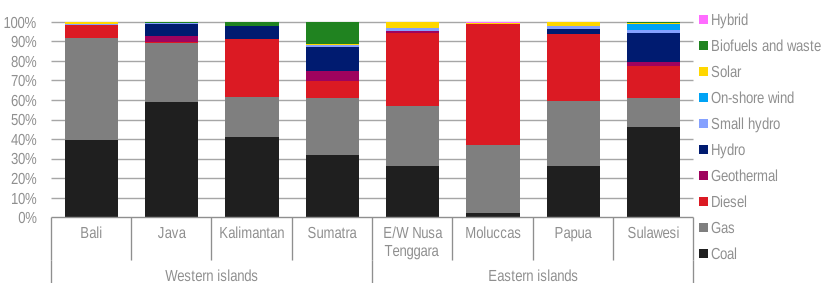
Note: E/W=East & West. Java and Bali have an integrated grid network, thus data for Bali do not necessarily refer to power capacity physically located in Bali (e.g., Bali has no coal or gas plants but uses the installed power capacity of coal and gas plants on Java Island).
Source: OECD based on MEMR and PLN statistics.; (OECD, 2021[23])
Yet, Indonesia has significant potential to diversify its energy mix with renewables like solar, wind, geothermal, and hydropower. The country uses Power Purchase Agreements (PPAs) to support local industries and employment, providing predictability for project developers. Despite favourable PPA tariffs from 2018 to 2021, investment costs for renewable energy remain high compared to leading Asian markets (OECD, 2021[23]). Investors note that slow policy implementation may result from misalignment between market liberalisation and project bankability, suggesting a need for more comprehensive regulatory frameworks to support sector growth.
Investors are interested in Indonesia's renewable energy sectors, but regulatory bottlenecks limit their competitiveness against fossil fuels. Indonesia utilises only 2% (8 GW) of its 418 GW renewable energy potential (OECD, 2021[23]). The IFC and ADB have been instrumental in developing these sectors, improving cost-effectiveness and recognising their potential for sustainable economic growth.
PLN and its subsidiaries are key partners for foreign companies seeking power purchase agreements (PPAs) in Indonesia. Foreign companies typically hold the majority stake, while PLN subsidiaries maintain a 20-25% share to facilitate the PPA process. Obtaining PPAs is generally challenging and time-consuming, partnering with PLN can streamline and simplify these procedures (PwC, 2023[17]).
Indonesia's renewable energy transition requires significant grid upgrades to address geographical challenges, including scattered energy sources and inter-island connectivity issues. Supply-demand imbalances across islands and isolated grids necessitate future interconnections. Past focus on increasing supply through PPAs has led to lagging transmission development, leaving many islands off-grid. PLN faces challenges from regulatory changes, energy oversupply, insufficient consumption, and PPA issuance delays. Grid optimisation is crucial to harness renewable potential and facilitate coal plant retirement.
Recommendation: Indonesia's renewable energy transition requires significant grid upgrades to address geographical challenges, including scattered energy sources and inter-island connectivity issues. Supply-demand imbalances across islands and isolated grids necessitate future interconnections This would support the QII principle 4 which affirms the importance of designing infrastructure that is resilient to natural disasters (G20, 2022[11]).
Upgrading Indonesia's power grid to align with its energy development and production potential faces several challenges. Additionally, geographic constraints hinder connectivity, as the national grid does not effectively link islands across the archipelago, resulting in uneven local grid development.
3.2.2. Innovative vehicles, strategies, and mechanisms to enhance infrastructure investment.
Indonesia has implemented innovative financing schemes and established institutions to monitor and guarantee infrastructure delivery (Table 3.2. ). These schemes are primarily structured as SOEs and PPPs and are supervised by the Indonesia Investment Authority (INA) and the Committee for Acceleration of Priority Infrastructure Delivery (KPPIP) respectively (Nejime, 2023[7]). In addition, the Ministry of Finance has promoted various blended finance instruments to attract private investment, leverage public funds and mitigate risk, such as green sukuk (or green Islamic bonds), Climate Investment Funds (CIF), and Viability Gap Funding (VGF) facility grants. The Ministry of Finance also advocates the use of blended finance as a means to improve infrastructure delivery.
The following are sectors where INA is focusing its investments:
Transport & Logistics: partnering with Dutch pension fund APG and the Abu Dhabi Investment Authority (ADIA) to invest USD 2.75 billion in the Trans-Java toll road, as well as in the Trans-Sumatra toll road and other transport assets, including smaller roads and airports.
Green energy & Transformation: partnering with PT SMI and ADB to facilitate early coal plant retirement. Building on Indonesia's geothermal strategy, INA is also collaborating with UAE's Masdar Clean Energy on geothermal projects, bringing in advanced technology, expertise, and significant investment.
Healthcare: attracting strategic investments in the pharmaceutical sector to enhance healthcare infrastructure, boost domestic manufacturing, reduce import dependency, promote local R&D, improve access to essential pharmaceuticals, and strengthen the supply chain for critical medicines.
Digitalisation & Digital infrastructure: attracting investment from global tech companies, institutional investors, and major asset managers like BlackRock. Other sovereign wealth funds, such as Singapore's GIC and ADIA, have invested in telecom infrastructure. Digital projects focus on enhancing internet connectivity, data processing, and digital services across Indonesia.
INA is directly accountable to the President and employs a two-tier board system: an Advisory Board (including the Finance Minister, the SOE Minister, and diverse professionals) and a professional Board of Directors. Investment decisions are made independently by the Board of Directors based on project or asset viability assessments. The INA partners with long-term financial investors and strategic partners to enhance asset capabilities and operations. Foreign investors see INA's financing solutions as balancing their risk, while INA's mandate, as outlined in Law No. 6/2023 and Government Regulation No. 74/2020, is to increase and optimize the value of managed investments over the long term to support sustainable development. INA functions to manage investments, including planning, executing, supervising, and controlling investment activities, and collaborates with both private and state-owned entities.
INA's collaboration with foreign investors boosts transparency and trust in the regulatory and incentive environment. By participating equally from the assessment stage, INA builds trust and clarifies local implementation challenges. Through equity investments and joint due diligence, INA ensures informed decision-making and equitable distribution of benefits and liabilities. This approach allows INA to influence company operations, focusing on operational expenditure and board appointments to address stability and compliance.
INA's approach prioritizes enhancing transparency, governance, and reporting standards across its investment activities. By implementing international best practices in asset management, INA aims to structure projects that align with national development objectives while meeting investor expectations for long-term investments. This strategy not only increases the attractiveness of assets and projects to foreign investors but also fosters a more competitive and well-governed investment landscape across both private and state-owned sectors.
Recommendation: Following the example of INA, more projects should spend time structuring to meet both national objectives and investor requirements for long-term equity investments through enhanced transparency, governance, and reporting standards. These actions would closely support the QII Principle 6 on strengthening infrastructure governance (G20, 2022[11]).
Despite its ambitions, INA operates on a relatively small scale with USD 10 billion in assets under management (AUM), including partner contributions, government funds, and cash reserves. Its annual deployment of USD 350 million, while commendable given the difficulty in identifying suitable projects, is insufficient to cover all private infrastructure investment needs or make projects more scalable. With only 83 employees, INA's capacity to deploy funds is limited. While not a complete solution to Indonesia's infrastructure investment gap, INA emphasises long-term commitment, rigorous due diligence, and effective asset governance. It aims to build a strong track record in both closing transactions and managing assets effectively for co-investors, despite its current limitations in scale and impact.
PT Indonesia Infrastructure Finance (PT IIF) is a private host of Special Mission Vehicles (SMV) and non-bank private financial institution, established by the government of Indonesia to provide financing for infrastructure, as well as advisory and capacity building services to asset management companies in the infrastructure sector. It is partially owned by the Indonesian government through PT Sarana Multi Infrastruktur (PT SMI) (44.99%), ADB (15,71%), IFC (15,71%), KfW (11,88%), and the Sumitomo Mitsui Banking Corporation (11,71%) (PT IIF, 2024[24]). PT IIF seeks to catalyse projects aligned with IFC Performance Standards and SDGs, with biannual IFC audits. IIF directly finances small projects and leads syndicated or club deals for larger ones. Projects can have foreign owners, but all limited liability entities must be Indonesia-based. Collaborations with knowledgeable commercial banks possessing appropriate risk appetites are encouraged.
PT IIF functions similarly to banks or MDBs, offering various financing products to promote infrastructure investment, especially through PPPs. It engages during the tender process, approaching interested parties with financing offers. Senior loans are the most common product provided to tender winners, with IIF involved until project turnover. However, unlike banks, IIF has a higher risk tolerance, accepting longer maturity timelines for some products like mezzanine loans. This allows IIF to reduce project risk and attract commercial banks. By acting as a lead investor for about 50% of the loan size, IIF reassures banks unfamiliar with PPP structuring and takes on risks they cannot bear.
PT Sarana Multi Infrastruktur (PT SMI) serves as a financier and catalyst for infrastructure financing in Indonesia. PT SMI also has a subsidiary company named PT IIF together with international MDBs as the shareholders. With USD 7.4 billion in assets, PT SMI's project portfolio is split between business entities (39%) municipal government funding (25%), sharia financing (7%), the company as one of the Special Mission Vehicles under the Ministry of Finance exemplified by the PT IIF (5%), and equity investments and shareholder loans (2%) (PT SMI, 2023[25]). This distribution aligns with Law 46/2020, which defines PT SMI's financing scope within mandated infrastructure subsectors.
To achieve development goals, Indonesia's infrastructure ecosystem aims to expand its project pipeline, not just secure more financing. Before PT SMI's establishment, long-term funders were hesitant to finance infrastructure projects heavily dependent on government budgets. Besides financing, PT SMI now collaborates with private consultants through a project development facility (PDF) to help the government prepare business and project cases. It can also establish companies to facilitate multilateral participation. Dedicated units within PT SMI provide upstream support to clients, enhancing project financial viability (PT SMI, 2022[26]).
PT SMI, as a lender, rigorously evaluates financial, legal, and environmental aspects of potential borrowers. Eligible entities must be legally established (e.g., limited companies) with a minimum three-year track record of strong financial performance. While this ensures financial stability and effective fund utilisation for sustainable development, PT SMI maintains a commercial approach, operating passively in deal flow and mitigating excessive risk (PT SMI, 2023[25]).
PT SMI has successfully catalysed commercial finance and secured longer-term financing for infrastructure projects. This has increased commercial banks' appetite for lending, making it easier to find loan facilities for marginal projects with significant internal rate of return (IRR). Banks' recent commitments to sustainability and ESG, reflected in their sustainable finance products, have also contributed to this increased interest.
PT SMI operates as a specialised infrastructure financing institution now governed under POJK 16/2024, which replaced POJK 46/2020 following reforms under the Financial Sector Development and Strengthening Law (UU P2SK). The company is now slated to evolve into a National Development Bank (NDB) through a partnership with other Development Finance Institutions (DFIs), potentially expanding its capabilities. While currently regulated as a state-owned enterprise, NDB status would allow PT SMI to operate under its own rules, potentially enhancing its infrastructure development support. Although PT SMI uses market instruments like bonds, these are not publicly traded, maintaining its focus on targeted infrastructure financing.
Environmental challenges in Indonesia pose significant risks to sustainable development and may deter international investors. Deforestation is a critical issue, with forest cover projected to decline from 50% in 2017 to 38% by 2045. This loss exacerbates water scarcity, increasing the risk of water shortages from 6% in 2000 to 9.6% by 2045 (Republic of Indonesia, 2020[3]), particularly in low-forest-cover islands. Additionally, biodiversity loss and resource depletion, including diminishing oil and gas reserves with a reserve replacement ratio averaging only 70.4% over the last five years, further highlight the urgency for enhanced energy efficiency and the exploration of renewable energy sources to ensure sustainable development (Republic of Indonesia, 2020[3]).
To achieve the SDGs for infrastructure development in the 2020-2024 National Medium-Term Plan, the Indonesian government must formulate policies that attract sustainable and ESG-focused investments and business partnerships, given limited government funding (Republic of Indonesia, 2020[3]). Indonesia can leverage sustainable industry practices and technology for resource management in sectors such as agribusiness, water, maritime transport, fisheries, conservation, manufacturing, and tourism (Republic of Indonesia, 2020[3]).
Since 2020, new roadmaps and legislation issued by the Indonesian Financial Services Authority (OJK) – namely the Sustainable Finance Roadmap Phase II (2021-2025) and Indonesia’s Green Taxonomy – aims at improving due diligence frameworks to guarantee transparency in ESG considerations, improve risk management, prevent green washing, and enable private investors to stay aligned with ESG the requirements and commitments to the Principles of Responsible Investing (PRI) (Mulyana and Shawndefar, 2022[27]). It also considers the preferences of lenders as well as the company’s commitment to addressing climate change and the environment.
…it is necessary to transition the management of climate change from only focusing on efforts to reduce GHG emissions to a more holistic approach that maintains sustainability and harmony between aspects of economic development, sociocultural factors, and improvement to the environment based on low-carbon development (Republic of Indonesia, 2020[3]).
Indonesia’s Green Taxonomy draws of the Indonesian Standard for Industrial Classification Level 5 (KBLI 5) to categorise sectors of activity and divide them into three categories: green (positive impact), yellow (does no significant harm), and red (harmful). The Taxonomy has allowed to classify 919 out of 2,733 identified sectors and sub-sectors in Indonesia (Mulyana and Shawndefar, 2022[27]).
3.3.1. ESG Considerations at the Ministry of Finance
The Ministry of Finance prioritises long-term engagement with SOEs, using both financial and non-financial KPIs to emphasise ESG beyond sustainability. It is working to streamline ESG standards and indicators in project preparation, aligning them with SOE roadmaps, Ministry guidelines and MDB frameworks. The Financial Risk Management and Public-Private Partnership (PPP) departments lead sustainability implementation. The PPP framework, in collaboration with line ministries, has developed sustainability standards and raised awareness. Projects proposed for Ministry support undergo a piloting process, including assessment and monitoring from early operation through guarantee provision.
The Ministry of Finance is considering a contractual approach for ESG compliance, aiming for flexibility and alignment with international standards to attract foreign investment. This approach could create a level playing field for investors while keeping pace with global ESG trends. However, some regulation may still be necessary to formalise ESG compliance for projects seeking Ministry support. Questions remain about validation processes and the potential need for third-party verification during project construction and operation.
The implementation of ESG standards faces challenges due to concerns about extended project timelines and increased costs. Although the Ministry of Finance has committed to covering additional expenses, these factors still deter some companies and project owners. The ministry recognises that ESG standards may be more suitable for larger projects where benefits outweigh the extra time and resource investments.
3.3.2. ESG Considerations at PT SMI
PT SMI has integrated ESG considerations into its operations, guided by OJK Regulation 51/2017. This regulation promotes sustainable finance in banking through compliance with Indonesia's Green Taxonomy, capacity building, roadmap development, and sustainability reporting (Darsa and Shawndefar, 2021[28]). In response, PT SMI implemented ten Environmental and Social Safeguards principles, covering areas such as regulatory ESG, manpower, waste management, safety, land acquisition, biodiversity, cultural heritage, indigenous rights, and energy efficiency, ensuring compliance with multilateral lender requirements (Indonesia Ministry of Finance, 2022[29]).
PT SMI is a leader in promoting sustainability in Indonesia's financial sector, going beyond regulatory compliance. The company pioneered green bond issuance and collaborated with OJK on relevant regulations (Asian Development Bank, 2022[30]). ESG compliance is integrated into financing operations, requiring environmental documents before contract disbursement. This ensures sustainability is embedded in asset governance. PT SMI plays an important role in Indonesia's energy transition, supporting renewable energy and phasing out brownfields. It partners with international entities, the UK government, and other donors, leveraging trust funds to drive sustainable infrastructure development.
3.3.3. ESG Considerations at PT IIF
Since its establishment in 2010, PT IIF has integrated ESG consideration by adopting the IFC Performance Standards, World Bank Environmental and Social Frameworks, and ADB Safeguard Policy as benchmarks to manage the social and environmental risks associated with the infrastructure projects it finances. IIF has also established the Social and Environmental Management System (SEMS), which contains Social & Environmental Principles (SEP) providing guidance for the Social and Environmental Division (SED) in assessing S&E risks and monitoring the performance of projects and clients receiving financial support from IIF.
IIF has applied these principles to multiple greenfield and brownfield projects, addressing challenges related to ESG risks and compliance for infrastructure development. Through these efforts, IIF is positioning itself as a leader in sustainable infrastructure financing in Indonesia, aligning its operations with global ESG standards while addressing local challenges and stakeholder expectations (PT IIF, 2023[31]).
3.3.4. ESG Considerations at PT IIGF
PT Indonesia Infrastructure Guarantee Fund (IIGF) has developed a comprehensive ESG framework based on MoF principles to manage environmental and social risks in infrastructure projects. The framework aligns with related key IFC performance standards and national regulations, incorporating environmental management, and environmental and social impact assessments. IIGF is integrating these standards into its business processes, including requirements for Government Contracting Agencies. While environmental and social aspects are being systematically addressed, governance implementation faces challenges due to fragmented local regulations and varying ministerial frameworks, requiring IIGF to navigate a complex regulatory landscape (Indonesia Ministry of Finance, 2022[29]).
Recommendation: The Ministry of Finance should further pursue the approach that would improve compliance with ESG considerations, including a contractual approach while ensuring the validation can be recognised internationally, supporting Principle 3 of the QII which expects environmental impact of infrastructure investment to be made transparent to all stakeholders (G20, 2022[11]).
References
[21] ABNR (2025), MEMR 10 2025: A Bold Roadmap for Sustainable Electricity, ABNR, https://www.abnrlaw.com/news/memr-10-2025-a-bold-roadmap-for-sustainable-electricity.
[14] Abubakar, L. and T. Handayani (2022), “The Role of Infrastructure Guarantee Institution in Infrastructure Project Provision Through Public-Private Partnership Scheme”, Journal of Private and Commercial Law, Vol. 6/1, https://journal.unnes.ac.id/nju/index.php/jpcl/index.
[30] Asian Development Bank (2022), Green Bond Market Survey for Indonesia: Insights on the Perspective of Institutional Investors and Underwriters, https://doi.org/10.22617/TCS220536-2 (accessed on 3 September 2024).
[13] Asian Development Bank (2021), Public–Private Partnership Monitor: Indonesia, Asian Development Bank, Manila, Philippines, https://doi.org/10.22617/SGP210069-2.
[18] Asian Development Bank (2020), Unlocking the Economic and Social Value of Indonesia’s State-Owned Enterprises, Asian Development Bank, https://doi.org/10.22617/SPR220442-2.
[12] Baker MacKenzie (2021), Indonesia: Licensing under the Omnibus Law Regime, https://insightplus.bakermckenzie.com/bm/mergers-acquisitions_5/indonesia-licensing-under-the-omnibus-law-regime (accessed on 15 December 2023).
[2] Bappenas (2023), Bappenas Discusses Regional Policy and Infrastructure Directions during Development of 2025-2029 RPJMN, https://www.bappenas.go.id/index.php/en/berita/susun-rpjmn-2025-2029-bappenas-bahas-arah-kebijakan-kewilayahan-dan-sarpras-b7wIO (accessed on 2 September 2024).
[6] Curristine, T. et al. (2018), “Developing Infrastructure”, in Realizing Indonesia’s Economic Potential, International Monetary Fund, https://doi.org/10.5089/9781484337141.071.
[1] Duffield, C., R. Duffield and S. Wilson (2019), “2. Infrastructure Planning, Challenges and Risks”, in Infrastructure Investment in Indonesia: A Focus on Ports, Open Book Publishers, Cambridge, https://doi.org/10.11647/OBP.0189 (accessed on 19 December 2023).
[11] G20 (2022), Compendium of Quality Infrastructure Investment Indicators, G20 Infrastructure Working Group, https://cdn.gihub.org/umbraco/media/4761/compendium-of-qii-indicators.pdf (accessed on 19 December 2023).
[15] Guild, J. (2019), “Land Acquisition in Indonesia and Law No. 2 of 2012”, ADBI Working Paper Series 1036, https://www.adb.org/publications/land-acquisition-indonesia-and-law-no-2-2012.
[8] IFSWF (2022), INA - Santiago Principles Self Assessment, https://www.ifswf.org/assessment/ina-2022 (accessed on 2 September 2024).
[29] Indonesia Ministry of Finance (2022), Environmental, Social, and Governance (ESG) Framework in Government Support and Facility for Infrastructure Financing, https://kpbu.kemenkeu.go.id/backend/Upload/guideline/GUIDELINE22111200170842.pdf.
[9] INFF (2023), Development Plan Costing Repository, https://inff.org/fr/resource/development-plan-costings-repository (accessed on 15 December 2023).
[4] KPPIP (2024), Composition and Organisational Structure of KPPIP, https://kppip.go.id/en/about-kppip/composition-and-organizational-structure-of-kppip/ (accessed on 2 September 2024).
[32] KPPIP (2023), KPPIP Priority Projects, https://kppip.go.id/en/ (accessed on 15 December 2023).
[33] KPPIP (2020), Batang Power Plant / Central Java Power Plant, https://kppip.go.id/en/priority-projects/electricity/batang-power-plant-central-java-power-plant/ (accessed on 15 December 2023).
[27] Mulyana, F. and M. Shawndefar (2022), Indonesia’s Green Taxonomy prompts focus on ESG value creation, https://www.pwc.com/id/en/pwc-publications/services-publications/legal-publications/indonesia-s-green-taxonomy-prompts-focus-on-esg-value-creation.html (accessed on 3 September 2024).
[7] Nejime, S. (2023), How Indonesia is Boosting Infrastructure Development with Innovative Financing, https://amro-asia.org/how-indonesia-is-boosting-infrastructure-development-with-innovative-financing/ (accessed on 14 December 2023).
[5] Nugroho, H. (2020), National Strategic Projects as Regional Public Goods in Indonesia, https://www.djkn.kemenkeu.go.id/artikel/baca/13173/National-Strategic-Project-as-Regional-Public-Goods-in-Indonesia.html (accessed on 2 September 2024).
[23] OECD (2021), Clean Energy Finance and Investment Policy Review of Indonesia, Green Finance and Investment, OECD Publishing, Paris, https://doi.org/10.1787/0007dd9d-en.
[19] OECD (2020), OECD Investment Policy Reviews: Indonesia 2020, OECD Investment Policy Reviews, OECD Publishing, Paris, https://doi.org/10.1787/b56512da-en.
[20] PLN (2024), PLN Company Profile, https://web.pln.co.id/en/about-us/company-profile (accessed on 3 September 2024).
[35] PSN (2024), PSN - Archive, https://www.psn.co.id/?lang=en%2F (accessed on 3 September 2024).
[24] PT IIF (2024), About Us - Shareholders, https://iif.co.id/en/about-us/shareholders/ (accessed on 3 September 2024).
[31] PT IIF (2023), IIF Provides Expertise en ESG Financing, https://iif.co.id/en/press-release/iif-provides-expertise-in-esg-financing/ (accessed on 3 September 2024).
[34] PT PII (2021), SATRIA Multifunctional Satellite PPP Project that Guaranteed IIGF Achieved Ground Breaking for 2023 Operation, https://ptpii.co.id/index.php/satria-multifunctional-satellite-ppp-project-that-guaranteed-iigf-achieve-ground-breaking-for-2023-operation (accessed on 15 December 2023).
[25] PT SMI (2023), Annual Report 2023, https://ptsmi.co.id/cfind/source/files/annual-report/annual-report-pt-smi-2023-1.pdf.
[26] PT SMI (2022), Trusted Infrastructure Financing Company in Indonesia, https://ptsmi.co.id/trusted-infrastructure-financing-company-in-indonesia (accessed on 3 September 2024).
[10] PwC (2024), 14 national strategic projects ready to be developed by private parties, https://www.pwc.com/id/en/media-centre/infrastructure-news/march-2024/14-national-strategic-projects-ready-to-be-developed-by-private-.html (accessed on 28 August 2024).
[17] PwC (2023), Power in Indonesia - Investment and Taxation Guide, https://www.pwc.com/id/en/energy-utilities-mining/assets/power/power-guide-2023.pdf (accessed on 3 September 2024).
[28] PwC (ed.) (2021), Indonesia can consider strengthening ESG policies amid calls for standardised global framework, https://www.pwc.com/id/en/pwc-publications/services-publications/legal-publications/strengthening-esg-policies-amid-calls-for-a-standardised-global-framework.html (accessed on 3 September 2024).
[16] Republic of Indonesia (2021), Regulation of the Government of the Republic of Indonesia Number 64 of 2021 on Land Bank Authority, https://www.peraturan.go.id/files2/pp-no-64-tahun-2021_terjemah.pdf (accessed on 15 December 2023).
[3] Republic of Indonesia (2020), The National Medium-Term Development Plan for 2020-2024, Republic of Indonesia, Jakarta, https://perpustakaan.bappenas.go.id/e-library/file_upload/koleksi/migrasi-data-publikasi/file/RP_RKP/Narasi-RPJMN-2020-2024-versi-Bahasa-Inggris.pdf (accessed on 18 December 2023).
[22] The Financial Times (2025), Indonesia’s ambition to quit coal hinges on policy reforms, The Financial Times, https://www.ft.com/content/58e46243-7f2f-42f2-be92-5ba3b660c108.
Source: Adapted from Indonesia KPPIP (Committee for Acceleration of Priority Infrastructure Delivery) list of priority projects (KPPIP, 2023[32])
Project PLTU Batang or Central Java Power Plant (CJPP) is an ultra-critical coal-fired power plant with 2x1,000 MW capacity. Operating since 2022, it supplies electricity to Java and Sumatra, while eastern Indonesia remains underserved. The USD 3 billion project was financed by a syndicate of 10 regional commercial lenders, led by JBIC with a 60% stake. Funding went to PT Bhimasena Power Indonesia, owned by J-Power (34%), Adaro (34%), and Itochu (32%), making CJPP Indonesia's largest PPP project (KPPIP, 2020[33]). The 2016 agreement involved presidential support and PLN guarantees. IFC facilitated financing by providing guarantees, including PPA obligation coverage and PT PLN obligation coverage to the project's SPV. The Indonesia Infrastructure Guarantee Fund and Central Government provided additional guarantees for political and force majeure risks.
The West Semarang Drinking Water Project aims to supply drinking water to 31 sub-districts in West Semarang, Tugu, and Ngaliyan, serving around 70,000 households that previously lacked access to the Drinking Water Supply System (SPAM) network. The project includes a distribution network and raw water supply system, sourcing water from Jatibarang Dam to. The project reduces groundwater use and addresses clean water shortages in Semarang. Implemented as a PPP, the project is operated by PT Air Semarang Barat. the President Director of Tirta Moedal Regional-Owned Water Company serves as the government contracting agency. PT IIF was involved as the transaction financial advisor during the project preparation and transaction phases. The project stands out as one of the successful pilots for PPP initiatives, using an availability payment scheme from the regional budget.
The Pasifik Satelit Nusantara (PSN), an Indonesian private telecommunications company, launched the SATRIA-1 Nusantara Tiga High Throughput Satellite project in June 2023. This 150 Gbps capacity satellite aims to improve connectivity in remote areas and accelerate digital infrastructure development in Indonesia. The project includes 11 ground stations to connect nearly 150,000 government, educational, and health facilities (PT PII, 2021[34]).
The Nusantara Tiga Satellite is owned by the Satelit Nusantara Tiga (SNT) Consortium, comprising PSN and three other companies. Through a 15-year Build, Operate, Transfer (BOT) contract, Thales Alenia Space will construct, operate, and transfer the satellite infrastructure to the Indonesian government, which will provide availability payments for the capacity (PSN, 2024[35]).
The project requires a total investment of USD 550 million, financed through a mix of debt and equity. A USD 425 million syndicated loan, comprising 77.27% of the total, is provided by HSBC, Santander, the AIIB, and the Korean Development Bank, attracted by the project's sovereign risk profile. The AIIB, participating in a satellite PPP for the first time, contributes a USD 150 million non-sovereign loan within this package. Guarantees from Bpifrance Assurance Export and the AIIB help mitigate risks. The remaining USD 125 million, or 22.73%, is funded by PSN Consortium capital.
One of the main challenges in financing the Satellite PPP was balancing the requirements of financial institutions with government interests. The IIGF provides guarantees for availability payments by SNT and PSN to attract investors and secure financing, while also coordinating delivery and performance among stakeholders. A bank syndicate conducts due diligence to ensure compliance with legal, financial, and ESG requirements. If standards are not met, disputes over ownership and responsibility may arise. Lengthy negotiations between financing institutions and the Indonesian government were necessary to finalise agreements that address the requirements, responsibilities, and expectations of both parties.
Inconsistencies between national and local PPP regulations hinder procurement and project implementation, damaging Indonesia's reputation for quality PPPs. Regional attempts at PPP implementation are hampered by excessive bureaucracy and lack of capacity in local financing institutions and public development agencies. Consequently, regulations remain outdated, as Indonesian regulators tend to copy structures from previous regulations rather than updating them to address current trends and development needs.
The National Public Procurement Agency (LKPP) has introduced reforms through regulations No. 19 of 2015 and No. 29 of 2018 to guide the procurement of business entities in PPPs for infrastructure. These reforms aim to enhance PPP implementation by breaking administrative silos and ensuring fair tendering and transaction probity (Asian Development Bank, 2021[13]). They also encourage innovation in planning, preparation, and financing phases of projects. However, stakeholders believe LKPP could further innovate by establishing a more centralised system to provide legal certainty and streamline infrastructure development processes.
Current economic and geopolitical conditions are rendering PPP auction calculations inaccurate, necessitating government adjustments to design and prices. While capital markets are evolving to accommodate new financial instruments like green bonds, which are gaining importance in infrastructure financing, their relatively small size allows them to maintain USD indexation in contracts. This approach helps mitigate currency risk in the financing process.
The Makassar-Pare-Pare Railway Project, part of the Trans-Sulawesi network, spans 144 km in western South Sulawesi. Developed by Celebes Railway Indonesia (CRI), it connects ports and serves passenger and cargo needs. As Indonesia's first railway PPP, it aims to boost South Sulawesi's economy with support from the Ministries of Transport and Finance. CRI's goal is to pioneer modern, efficient, and eco-friendly railway networks nationwide.
Thirty percent (30%) of the project's financing comes from company shareholders, while the remaining 70% is provided through a syndicated loan equally distributed among Indonesia’s IIF, PT SMI, and Bank Syariah Indonesia (BSI). This loan specifically finances railway tracks, station construction, the Garongkong logistics yard, and other tangible assets within the project. The IIGF provides essential government-backed guarantees for infrastructure projects. It offers an estimated 22.98% Economic Internal Rate of Return (EIRR) to the local economy and is expected to increase employment by 80%. Additionally, IIGF provides insurance coverage for major natural disaster risks, such as flooding and landslides, for railway projects across all phases.
The railway project spans three districts, with land provided by local governments or institutions and acquired by the central government (LMAN). A committee of central and local government stakeholders negotiates with landowners for construction clearance. The IIGF integrates guarantees, analysing legal, technical, and commercial aspects, for guarantee as well as project feasibility.

Source: Adapted from content and discussions from fact finding missions.

Source: Adapted from content and discussions from fact finding missions.
In October 2022, the first operational phase began with the initial availability payment disbursed. CRI, using CAPEX investment and government lending, developed a 50 km railway connecting seaports to inland regions. The second operational phase occurred in 2023. Costs are covered by CAPEX during construction and continue annually during operations. The 142 km railway between Makassar and Pare-Pare halves travel times for the growing population, facilitates the transport of goods like cement, clinker, and food materials, and strengthens the regional SME network.