This chapter maps the evolution and current architecture of contracted-out employment services across Italy. It traces the shift from early reforms and regional experimentation to the current system with its largest and most ambitious programme to date, Garanzia di Occupabilità dei Lavoratori (GOL). The chapter then discusses some of the key features of the GOL programme, both at the national level and the individual regional implementation. It also contrasts approaches across regions to show where the models share similarities or exhibit differences. The discussion in this chapter thus provides the foundation for the assessments and model proposed in the subsequent chapters.
A New Model for Strengthening Public‑Private Partnerships in Employment Services in Italy

Abstract
In the past, publicly-funded employment services have historically not played as important a role in Italy as in other OECD countries and faced challenges in performance and regional consistency (OECD, 2019[1]). Additional challenges have included historically limited investment in active labour market policies (ALMPs), high unemployment (especially among youth), and a fragmented allocation of responsibilities across national, regional and local levels. These factors have made it difficult to provide consistent levels of services, contributing to fragmented support for jobseekers.
Contracted-out employment services offer the potential to address several of the structural weaknesses that have characterised Italy’s labour market governance. By widening the range of actors involved in service delivery, they can expand capacity, introduce specialised expertise, and foster innovation in counselling, employer engagement and training provision. In particular, collaboration with accredited private and third-sector providers can help mitigate capacity constraints within public employment centres (Centri per l’Impiego, CPI), reduce waiting times, and offer more tailored and intensive support to jobseekers with differing needs. Where accompanied by clear accreditation rules, transparent funding arrangements and outcome‑oriented incentives, contracting models can also strengthen accountability for results and create constructive competitive pressure among providers. Italy’s experience over the past two decades – culminating in the large‑scale implementation of GOL – suggests that such partnerships have contributed to scaling up services, increasing participation in ALMPs and embedding more structured profiling and pathway-based support across regions.
This chapter examines the evolution, design and operation of contracted-out employment services in Italy in greater detail. It traces the development of regional and national models, analyses their governance, financing and payment mechanisms, and assesses how participants are profiled, allocated and supported across different pathways. Particular attention is paid to the interaction between national frameworks and regional implementation choices, as well as to the role of performance incentives and market structures in shaping provider behaviour. This analysis provides the empirical and institutional foundation for the subsequent chapter, which draws on these findings – alongside international evidence – to assess strengths and weaknesses in the current system and to inform proposals for a refined and more sustainable model of contracted-out provision.
In the past, Italy’s public employment services have faced persistent challenges related to their effectiveness, credibility and regional disparities in take‑up and performance. Only about 20% of unemployed individuals in 2020 contacted Italian Public Employment Services (PES) to search for a new job, one of the lowest shares in EU countries (Figure 1.1, Panel A). Jobseekers often perceive services as low quality or ineffective, particularly when compared to informal channels of employment search, which are much more prevalent. This underutilisation of PES reflects broader challenges in Italy’s labour market governance, such as historically modest investment in ALMPs alongside unemployment rates above the EU average, particularly for youth (Figure 1.1, Panels B and C), and a fragmented system of responsibilities across national, regional, and local levels (OECD, 2019[1]).
The provision of employment services in Italy has undergone substantial change since the late 1990s. A series of legislative reforms progressively opened the market of employment services to the participation of private providers, with the aim of improving service quality, efficiency, and access. The Treu reform (Law 469/1997) formally ended the public monopoly over employment services, introducing a mixed system in which selected private providers could operate along CPIs. The Biagi reform (Law 30/2003 and Legislative Decree 276/2003) further liberalised this model, extending delivery of employment services to a wider range of private actors, including private employment agencies (Agenzie per il Lavoro, APL), operating under newly established systems of national authorisation and regional accreditation (Trivellato et al., 2016[2]).
These changes coincided with a broader shift towards decentralisation. The 2001 constitutional reform (Title V, Article 117) clarified the division of competences between different administrative levels of the government. Labour market policies were placed under concurrent legislation, meaning that the national government established fundamental principles, the regions exercised legislative powers, and the provinces were responsible for designing and delivering services through local PES offices. In contrast, responsibility for vocational training was devolved entirely to the regions. To mitigate the risk of excessive divergence, national legislation introduced, and later refined, the concept of Essential Levels of Performance (Livelli Essenziali delle Prestazioni, LEP), which defined a common set of minimum services that all regions are required to guarantee nationwide. This redesign of institutional roles was intended to bring services closer to users, increase flexibility, and foster experimentation. In practice, however, it contributed to significant fragmentation and led to pronounced differences in the quantity and quality of services available across regions (Trivellato and Martini, 2015[3]; European Commission, 2023[4]; OECD, 2019[1]).
Recognising these shortcomings, the 2015 Jobs Act attempted to strengthen central co‑ordination through the creation of the National Agency for Active Labour Market Policies (Agenzia Nazionale Politiche Attive del Lavoro, ANPAL). The reform sought to shift responsibilities from the provincial to the central level and to introduce minimum service standards across the country. Its impact, however, was limited by institutional constraints. A failed constitutional referendum curtailed ANPAL’s mandate, allowing only the consolidation of the powers from (sub-regional) provinces to the regional level. The operational structure of PES has remained decentralised with 19 regions and two autonomous provinces retaining primary responsibility for the design and delivery of services through local offices, each guided by their own legislation and planning frameworks (OECD, 2019[1]).
In 2024, the governance of employment services was further restructured with the establishment of Sviluppo Lavoro Italia S.p.A., a new national agency operating under the Ministry of Labour and Social Policies, whereas ANPAL ceased its operations.1 The reform aimed to simplify the governance of ALMPs, strengthen co‑ordination between the national government and the regions, enhance the quality of public and private services and develop stronger partnerships with the education and training system and businesses. The role of Sviluppo Lavoro Italia is to facilitate and accelerate these processes and to support central and regional authorities in developing and implementing ALMPs.
The collaboration between public and private employment services has expanded over the recent decades though the progress has been uneven. Regions have introduced mechanisms to outsource specific tasks to accredited providers, yet the approaches vary considerably and, in some areas, outsourcing is still limited or ineffective. This is partly explained by the lack of a consistently implemented national system for contracting private providers, as well as by variation in accreditation and quality control mechanisms. Moreover, contracting is typically tied to specific initiatives, such as the Youth Guarantee or the Reintegration voucher (Section 1.3), rather than embedded in a systemic approach, leaving the models unstable and highly dependent on continuation of existing measures and funding streams. Addressing these challenges has become a policy priority, with growing emphasis on the development of a more coherent national framework for contracted-out services. Within this context, reviewing the most recent and ambitious EU-funded GOL programme is of particular interest and is therefore the focus of much of this report (Section 1.4).

Note: OECD and EU27 are weighted averages. Data refers to 2019 (Germany) in Panel A and to 2021 (Greece, Israel) and 2022 (Ireland, the United States) in Panel B.
Source: A: OECD calculations based on the European Labour Force Survey, EULFS. B: OECD (2025), Labour Market Programmes (dataset), https://data-explorer.oecd.org/s/3c5. C: OECD (2025), Employment and unemployment by five‑year age group and sex (dataset), https://data-explorer.oecd.org/s/3c6 (accessed 19 December 2025).
Over the past decades, Italy has experimented with a range of models for outsourcing the delivery of ALMPs. The devolution of powers to the regions and the introduction of accredited private providers permitted variation and innovation in service delivery. Several regions, including Lombardy, the Autonomous Province of Trento, Campania, Emilia-Romagna, Lazio, Marche, Sardinia, Tuscany and Veneto, developed their own programmes with different governance approaches, ranging from quasi-market systems with outcome‑based incentives to more traditional public-oriented contracting schemes (OECD, 2019[1]). These diverse regional experiences generated important lessons and informed the design of subsequent national initiatives.
Lombardy was the first Italian region to introduce a quasi-market model for delivery of employment services. While most other regions entrusted the allocation of employment service resources to public authorities, typically at the provincial level through tenders and contracts, Lombardy’s system was designed to allow participants to select from accredited public and private providers. This model was codified in Regional Law No. 22/2006 and operationalised through the Dote Unica Lavoro (DUL) programme, which became an early and influential example of voucher-based employment services in Italy (Scarano, 2023[5]).
Although the DUL programme introduced an innovative model with strong potential to enhance overall effectiveness, evaluations of its implementation have also revealed some limitations. The outcome‑based funding structure was intended to promote competition, efficiency and equity, incentivising providers to serve harder-to-place individuals. However, in practice, the contracting model was constrained by uneven market dynamics. Larger, for-profit providers were more successful in attracting participants as they had greater marketing capacity and were more able to reach the minimum number of applicants required to activate a training course, which increased their perceived reliability (Trivellato et al., 2016[2]). Moreover, Trivellato and Martini’s (2015[3]) research suggests that private providers frequently engaged in opportunistic behaviour, such as steering participants toward services based on payments rather than participant needs and engaging in cream-skimming to prioritise easier-to-place individuals.
Another empirical evaluation highlights both the advantages and the challenges of the DUL system. Scarano (2023[5]) compares Lombardy’s outcome‑based approach and Emilia-Romagna’s fixed-payment model using propensity score matching and logistic regression on administrative data. The findings show that DUL had a substantially higher impact on employment outcomes than the Emilia-Romagna model, particularly in reducing the risk of participant “parking.” The performance‑linked incentives in Lombardy appeared to push providers toward greater accountability for employment results. However, these effects were predominantly short-term. While DUL participants had a higher probability of obtaining six‑month employment contracts, the probability dropped sharply when the outcomes were measured at 12 months. This suggests that providers were incentivised to promote a “quick-job-entry” approach, matching participants to vacancies that were sufficient to trigger payments but not necessarily suited for long-term retention. It should be noted that in the first phase of DUL analysed by Scarano (2023[5]), employment placements were required to last at least six months, with no additional payments for contracts exceeding this duration. In the later phases, this was addressed by introducing higher outcome‑based payments for placements lasting 12 months or longer and open-ended contracts.
The Veneto region provides another example of a regional voucher scheme that combined participant choice with outcome‑based incentives (Langenbucher and Vodopivec, 2022[6]). In 2017, Veneto implemented Jobseeker’s Allowance voucher (Assegno per il Lavoro) via the European Social Fund (ESF). The scheme targeted all unemployed individuals over 30, as well as low-income workers. The voucher entitled participants to up to six months of support such as job search assistance, counselling, and training, delivered by accredited private and non-profit providers. Jobseekers chose their provider, supported by publicly available performance rankings. The payment model was primarily outcome‑based (around 60% in practice), with higher rewards tied to sustained employment (6‑9 months) depending on the participant’s employability band, which was assigned via regional profiling tools using administrative data. Providers received this variable component only if participants remained with the initial employer for the required duration, which created potential disincentives in cases where participants changed jobs post-placement. Although more than 100 providers were accredited, the market was concentrated, with the top ten serving about two‑thirds of participants. This suggests similar dynamics to those seen in Lombardy, where larger providers gained market share. Given that the largest providers were also the most effective (see Box 1.1 for details), this suggests that the market was efficient at steering participants towards the most effective providers.
The launch of the Reintegration Voucher (Assegno di Ricollocazione, AdR) marked Italy’s first attempt to scale regional voucher programmes into a national scheme. It was introduced in 2015 under the broader Jobs Act labour market reform (Pastore, 2020[7]) and implemented nationally in 2018. Its design drew directly on experiences from regional models, including Lombardy’s DUL system, mirroring its key elements, such as differentiated voucher values based on objective profiling criteria and participant choice among accredited public and private providers. Unlike the regional models, however, the national AdR scheme aimed to reinforce central oversight by assigning responsibilities for standardised profiling procedure to the PES, thereby limiting potential conflicts of interest that could arise if private providers conducted assessments themselves (Pastore, 2020[7]). Eligibility to the vouchers extended to all unemployment benefit recipients who have been unemployed for at least four months. To ensure flexibility in serving such a wide pool of potential participants and to address the inefficiencies present in the public system, jobseekers could turn to accredited private providers for profiling if a PES did not respond to their request for assistance within two months.
Evidence on the effectiveness of the AdR scheme shows mixed results. According to statistics from 2018, 9.9% of eligible jobseekers applied for vouchers within a year of the programme’s inception (ANPAL, 2018[8]). This low take‑up rate can be attributed to the voucher’s design, which incorporated activation conditionality that may have increased the likelihood of sanctions for individuals not complying with the active job search requirements (OECD, 2019[1]). An impact evaluation of the programme’s short-term effects found a slightly positive, but statistically insignificant effect on employment (ANPAL, 2018[8]). However, the study had a small sample size, which limited its statistical power,2 and did not take into account the effect of regional programmes. A more recent study by Zanella and Salomone (2025[9]) found that the vouchers had a long-term effect on reducing men’s probability of remaining unemployed, but no comparable effect for women. According to the authors, this gender difference may reflect women’s greater reluctance to accept a job offer given greater constraints related to family care and commuting costs. This could incentivise profit-maximising providers to engage in statistical gender discrimination. These findings highlight the need for closer monitoring of providers’ activities. The study also showed that the programme did not worsen job-match quality, measured by earnings and job duration, and was cost effective compared to other measures due to the conditional nature of providers’ compensation based on employment outcomes.
Another major national programme, the Youth Guarantee (Garanzia Giovani), was introduced in 2014 and for several regions became their first experience with public-private partnerships. The Youth Guarantee was an EU-funded programme aimed at reducing youth unemployment among NEETs (“not in education, employment, or training”) aged 15‑29. A key innovation was the introduction of profiling tools to assess individuals’ distance from the labour market and to provide tailored services accordingly. As with the AdR, the payment levels were linked to the profiling of the person and the type of employment outcome.
Lessons learnt during the implementation of the Youth Guarantee guided the design of future ALMPs, including the GOL programme. For example, some analysis highlighted the need to establish well-defined service standards and monitoring mechanisms to ensure that internships offered under the Youth Guarantee provide effective training, fair working conditions, and real opportunities for skill development. This need arose because, in some cases, internships were misused as a form of cheap labour rather than genuine learning experiences, undermining the programme’s effectiveness (Eleveld et al., 2022[10]). Overall, the Youth Guarantee programme fostered stronger co‑ordination between national and regional systems and laid the foundation for participant-tailored services, which later became a key element of Italy’s GOL programme, examined in detail in the following section.
Launched in November 2021 under the PNRR (Piano Nazionale di Ripresa e Resilienza, the National Recovery and Resilience Plan of Italy), the GOL programme represents the most recent and ambitious EU-funded initiative in the field of employment services in Italy. It has provided significant stimulus for strengthening public-private co‑operation in the delivery of employment services. While there are other programmes of contracted provision of services for jobseekers throughout Italy, GOL arguably represents the most important one in recent years. Therefore, this section examines the current approach to contracting-out through the lens of this programme, as a major application of the broader structural framework currently in place in Italy. For more detailed description of the GOL programme, including its regional implementations, as well as selected past or ongoing programmes, see online Annex (https://www.oecd.org/en/publications/a-new-model-for-strengthening-public-private-partnerships-in-employment-services-in-italy_35b815ef-en/support-materials.html).
The GOL programme is designed to improve employability, with particular attention to vulnerable groups. It places a strong focus on individuals at higher risk of labour market exclusion, including women, the long-term unemployed, persons with disabilities, and those under the age of 30 or over 55. The programme offers a package of personalised services, including job search assistance, skills development and work-based experience, tailored to participant profiles and labour market needs. While the programme is co‑ordinated at the national level, its implementation is entrusted to the regions, which are responsible for adapting the programme to local labour market conditions through Regional Implementation Plans (Piani Attuativi Regionali, PAR).
Representing a major reform of Italy’s ALMPs, the programme seeks to provide personalised support to at least 3 million individuals between 2022 and 2026, of whom at least 800 000 are to be involved in training activities. Meeting this ambitious target – representing roughly 12% of Italy’s labour force of 24.8 million (OECD, 2025[11]) – within such a compressed timeline has required on average over 100 000 new intakes monthly (Figure 1.2), placing considerable pressure on both public employment services and private providers to scale up rapidly. As of January 2025, a total of 3.58 million intakes had been registered since the programme’s inception (Linfante et al., 2025[12]).
Number of new participants enrolled in GOL by month

GOL: Garanzia Occupabilità dei Lavoratori, (Workers’ Employability Guarantee Programme).
Note: The data covers GOL participants from the launch of the programme and until the end of October 2025.
Source: Linfante et al. (2025[12]), Attuazione del programma gol garanzia di occupabilità dei lavoratori Nota di monitoraggio (dati al 31 January 2025).
GOL uses a tailored approach to activation, based on a multidimensional qualitative assessment of participant profiles (see Section 1.4.2 for details on the profiling mechanism). This assessment allocates beneficiaries to one of five distinct pathways; each designed to address different barriers to employment and support varying levels of labour market readiness.
The five GOL pathways are:
1. Work reintegration (Reinserimento lavorativo): This pathway targets individuals who are closest to the labour market and assessed as readily employable. These are typically individuals with a relatively low risk of long-term unemployment and marketable skills. Beneficiaries receive guidance and intermediation services to support job search activities, matched to local labour market opportunities. Initially, no specific training was foreseen for this group, but in 2023 the GOL programme was updated to allow all beneficiaries to access training courses.
2. Upskilling (Aggiornamento): This pathway supports individuals who are somewhat more distant from the labour market, but who already possess relevant and marketable skills. The core intervention involves short-term training, typically lasting up to 150 hours, focussed on updating existing competencies to better match labour market demands. These courses are primarily professionalising in nature and are designed to facilitate re‑entry into employment.
3. Reskilling (Riqualificazione): This pathway is designed for individuals whose current skills are not aligned with the needs of the labour market. Beneficiaries are offered longer-term vocational training and retraining opportunities, ranging from 150 to 600 hours, often leading to higher qualifications in terms of European Qualifications Framework levels. Interventions may also include support to strengthen basic and transversal skills, to bring participants closer to in-demand job profiles.
4. Work and inclusion (Lavoro e inclusione): This pathway serves individuals facing complex and multi-dimensional barriers to employment, for whom ALMPs alone are insufficient. The pathway involves close co‑ordination with a network of territorial services, including social, educational, health and reconciliation services, to support their employability through integrated and personalised plans.
5. Collective outplacement (Ricollocazione collettiva): This pathway applies to employees affected by company crises. Unlike the other pathways, eligibility is not based on individual assessments but rather on the collective context of the company. Interventions are typically activated while workers are still formally employed and are developed in consultation with company and workers’ representatives. The focus is on designing solutions that enable the collective re‑employment of affected workers, rather than on general labour market reintegration.
Participant numbers differ across each pathway. As illustrated in Figure 1.3, from the start of the programme to January 2025, half of all participants (50.5%) were directed to Pathway 1 (Work Reintegration), followed by 24.8% in Pathway 2 (Upskilling) and 20.7% in Pathway 3 (Reskilling) (Linfante et al., 2025[12]). A smaller share (3.8%) required more comprehensive support under Pathway 4 (Work and Inclusion), while just 0.1% were involved in Pathway 5 (Collective Outplacement). The small share of referrals into Pathway 5 reflects the fact that many of the regions did not activate this pathway.
Distribution of participants across pathways from the start of the programme to the end of January 2025

GOL: Garanzia Occupabilità dei Lavoratori, (Workers’ Employability Guarantee Programme).
Note: The smallest share of the participants (0.1%) is placed in Pathway 5.
Source: OECD calculations based on Linfante et al. (2025[12]), Attuazione del programma gol garanzia di occupabilità dei lavoratori Nota di monitoraggio (dati al 31 January 2025).
1.4.1. Financing
The GOL programme is primarily financed through the PNRR funds, with a budget of EUR 5.454 billion allocated for the period 2021-2025 (Ministero del Lavoro e delle Politiche Sociali, 2025[13]). The PNRR funds are conditional upon the achievement of the following milestones and targets (Ministero del Lavoro e delle Politiche Sociali, 2021[14]):
Milestone 1: Entry into force of the Inter-Ministerial Decree establishing the GOL programme (as well as the National Plan for New Skills) by the end of 2021 (achieved).
Milestone 2: Entry into force of all Regional Implementation Plans (PARs) and reaching at least 10% of the total beneficiaries of the programme by the end of 2022 (achieved).
Target 1: At least 3 million people have benefited from the GOL programme by the end of 2025. Of these, at least 75% must be women, long-term unemployed, people with disabilities, people under 30 or over 55.
Target 2: At least 800 000 of GOL beneficiaries have participated in training activities by the end of 2025. Of these, at least 300 000 should have participated in trainings on digital skills.
Target 3: At least 80% of CPIs in each region have met the criteria of the LEP defined within the GOL framework by the end of 2025.
The funds were allocated to regions and autonomous provinces according to predefined percentage shares, calculated based on the weighted average of the several regional indicators. These are, in order of importance, as follows: the regional share of unemployment benefit recipients relative to the national total, the similarly calculated regional share for jobseekers, the share of beneficiaries of social assistance referred to CPIs, the share of workers receiving redundancy benefits and the share of employed persons (Ministero del Lavoro e delle Politiche Sociali, 2021[14]). Subsequent annual allocations are identified based on the number of GOL beneficiaries in each region and the related expenditure on measures and services to activate them.
The financial coverage provided by the PNRR has made it possible to adequately finance the GOL pathways for the five‑year duration of the programme. However, these funds are due to expire at the end of 2026. In implementing the GOL programme, many regions have complemented funds received from the PNRR with financing from the ESF+ and regional funds. The share of financing from PNRR funds differs by region. For example, in 2022, the share of funding allocated from PNRR funds was 69% in Emilia-Romagna, compared to 94% in Umbria.
Given the similarities in the target groups for both the PNRR and ESF+ funds, regions have taken different approaches to ensure the use of funds is not duplicated. Several regions (e.g. Lombardy, Piedmont, Umbria, Valle d’Aosta) decided to use the PNRR funds first, given the earlier deadline for these funds, and from 2026 onwards to use the ESF+ funds to either continue the GOL services or to finance future initiatives. These regions also ensured that, during the overlapping period of the PNRR and ESF+ funds, ESF+ initiatives do not address the same recipients as the GOL programme. Other areas (e.g. the Autonomous Province of Bolzano/Bozen – South Tyrol (hereinafter “Bolzano”), the Autonomous Province of Trento (hereinafter “Trento”), Calabria, Campania, Lazio, Liguria,) have specified that the ESF+ funds primarily support structural employment initiatives, such as long-term training and employment incentives, while the PNRR funds are directed towards short-term interventions. In Lazio, the ESF+ funds will contribute to the continuity of active labour and training policies even after the end of the GOL programme. To manage the overlap between the ESF+ and PNRR funding, Bolzano has established a permanent roundtable between the Labour Department and ESF+ Offices.
Certain regions decided to use the ESF+ funds for additional measures beyond those covered by the PNRR (e.g. Abruzzo, Sardinia). Puglia reserved all PNRR funds for the four primary pathways (P1‑P4), while Pathway 5 (Collective Outplacement) is exclusively financed through ESF+. Additionally, the Just Transition Fund from the EU Cohesion Policy 2021-2027 is used to support employment services and training in industrial transition areas, such as Taranto and Brindisi in the region of Puglia.
1.4.2. Target groups and process of assigning participants into service streams
Participation in the GOL programme is open to a wide range of jobseekers and vulnerable workers, with precise eligibility criteria varying across regions. In particular, the programme targets young people, disadvantaged women, people with disabilities, older workers, unemployed beneficiaries of social security benefits and income support, as well as workers with reduced working hours or very low incomes. While participation is not compulsory for all, it is mandatory for recipients of income support measures subject to conditionality, such as the Inclusion Allowance (Assegno di Inclusione, ADI), the Support for Training and Labour (Supporto Formazione e Lavoro, SFL), or unemployment benefits (Nuova assicurazione sociale per l’impiego, NASPI or Indennità di Disoccupazione per i Collaboratori, DIS-COLL).
These benefits aim to support individuals facing unemployment or social and economic vulnerabilities and are generally conditional on active job search and participation in active labour market programmes. For those who lost their jobs involuntarily, unemployment insurance benefits such as NASPI (for private sector employees) and DIS-COLL (for certain other categories of temporary and atypical workers, including some students) provide income replacement, with duration and amounts linked to previous contributions. The ADI is a non-contributory means-tested benefit for households in poverty or social exclusion, requiring all working age household members (with some exceptions) to engage in activation measures. Jobseekers not eligible for unemployment benefits or income support can access the SFL, which provides a fixed monthly allowance while they participate in training, professional requalification, guidance, accompaniment to work and other active measures to improve employability. As of January 2025, 46% of all GOL participants with active service pact received NASPI or DIS-COLL, 5% received ADI and 4% received SFL, while the remaining 45% were unemployed without conditional income support (Linfante et al., 2025[12]).3
Apart from the target groups identified at the national level, some regions adapt the focus to other groups of individuals with identified need of support. For example, Valle d’Aosta targets workers employed in the tourism sector due to the precariousness of their seasonal work. Sicily considers workers engaged in socially useful activities, mostly employed by local authorities, as a specific target group as they have historically faced difficulties in transitioning into stable employment. In Umbria (before 2024) and Veneto, unemployed individuals can only be GOL beneficiaries if they have been unemployed for more than 6 months. Following the 2024 update to their PARs, Emilia-Romagna, Liguria, Lombardy and Umbria broadened the scope of the programme to include all unemployed people regardless of age, gender and unemployment duration.
The participant journey under the GOL programme follows a sequence of steps from initial registration to programme completion (Figure 1.4). Different regions use different tools and strategies to reach out to potential participants. However, typically the journey begins with the jobseeker’s registration at a local CPI (Step 1) and the signing of digital Declaration of Immediate Availability (Dichiarazione di Immediata Disponibilità, DID), signifying immediate availability to work. For some types of jobseekers, e.g. for benefit recipients, registration on the Information System for Social and Work Inclusion (Sistema Informativo per l’Inclusione Sociale e Lavorativa, SIISL) is also mandatory. In this case the platform alerts the CPI to reach to the jobseeker. This is followed by an initial reception meeting, during which the CPI counsellor introduces the GOL programme to the participant, verifies the documents and conducts the quantitative (Step 2) and qualitative (Step 3) assessments of the participant’s profile to suggest the most suitable GOL pathway.
Assessments are usually carried out by the CPIs. Lombardy and Lazio are the only two regions where accredited private providers may also carry out the profiling assessment, provided a formal partnership agreement with the region or labour agency is in place. Lombardy’s model has allowed for private providers to carry out profiling assessments since 2006, whereas Lazio only recently, since 2023, redefined its employment services governance model to allow accredited organisations to deliver intake and profiling services. Umbria initially planned to allow accredited private providers to deliver the initial intake and assessment, following Lombardy’s model. However, during the programme’s initial rollout, accredited private providers were only engaged after the assessment phase and the region has since decided to keep the initial assessment activities under the exclusive competence of the CPIs, in line with national legislation.

Source: Based on (Agneni, Linfante and Micheletta, 2022[15]) and (Ceccarelli, Rombolà and Guadalupi, 2022[16]).
Quantitative and qualitative profiling tools are used for the assessment of potential GOL beneficiaries (Agneni, Linfante and Micheletta, 2022[15]). Accredited providers are required to use the same assessment tools as the CPI counsellors. First, quantitative profiling is conducted using information from the DID and the participant’s professional data sheet (Scheda Anagrafica Professionale, SAP), which includes personal characteristics (e.g. gender, age, municipality of residence), household composition, citizenship (Italian, EU, non-EU), educational qualification, employment status, and availability of income support measures. Subsequently, qualitative profiling is conducted through a “Basic Orientation” interview, during which the CPI counsellor evaluates the jobseeker’s experience and employability using a structured assessment questionnaire. The questionnaire is divided into three sections covering employment status, competencies and personal conditions. If the initial interview reveals significant personal or socio‑economic fragilities, a more in-depth qualitative assessment is conducted, which is a mandatory step for all participants with disabilities or complex needs. Each question in the questionnaire is assessed with scoring on a 0‑3 scale, with a maximum attainable score of 15 points per section. The scores obtained in each section determine the pathway that the participant is allocated to (Figure 1.5).
Rules for translating “Basic Orientation” and in-depth assessment scores into the five GOL pathways
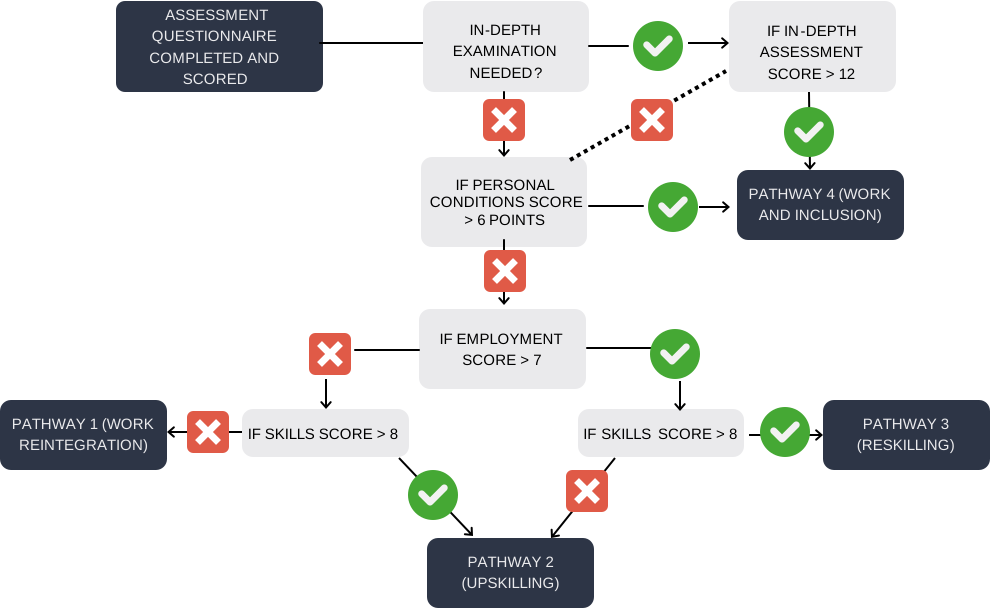
Source: Based on (Agneni, Linfante and Micheletta, 2022[15]).
In addition to the structured questionnaire, counsellors use a Professional Assessment Checklist to refine the participant’s profile. The checklist helps to explore additional factors such as labour market compatibility, mobility, prior experience, and entrepreneurship interest. Counsellors can use the insights from their Professional Assessment to increase or subtract 3 points from the qualitative profiling score, but only from one of the sections and if the total score is near threshold cut-offs. In practice, the extent to which this discretion is applied varies by region. In some areas, it is used regularly by experienced counsellors; in others, discretion is applied rarely, with only 10% of profiles modified from their automatically generated result (generally, these modifications are made to assign individuals to more intensive support). Counsellors are supported by a methodological manual and can adapt their interview approach based on participant comfort and responsiveness (Ceccarelli, Rombolà and Guadalupi, 2022[16]). Regions also have flexibility to adjust the profiling tools to their local needs. For example, in Bolzano, the tool is offered bilingually, and proficiency of both Italian and German is explicitly included in the evaluation.
Skills gap analyses and skills intelligence tools are used by counsellors in several regions to determine the type of training suited for the participant’s profile and needs. Lombardy has developed a skills gap analysis framework that synthesises data from administrative databases, statistical surveys, and web-based labour market insights. This integrated system helps counsellors assess participants’ skills and align their pathways with current labour market trends. In Lazio, skills gap analysis is a mandatory component of the specialised guidance phase for all participants requiring training. Umbria makes use of Sviluppo Lavoro Italia’s Labour Market Intelligence dashboard during the specialised orientation phase to help CPI counsellors assess participants’ employability and distance from the labour market. Tuscany leverages AI‑based tools, particularly the Skills Scanner developed through the Intuition AI platform. This tool matches participants to vacancies by analysing compatibility between participants’ CVs and job offers. The Intuition database draws from a wide range of sources, including CVs from non-enrolled and out-of-region individuals, thus expanding the scope of matching.
Following the assessment, the participant signs a Personalised Service Pact (Patto di Servizio Personalizzato, PSP), which is a formal agreement between the participant and the CPI regarding the actions to be undertaken for the participant’s job search (Step 4 in Figure 1.4). The pact specifies the jobseeker’s rights and responsibilities and records the choice of service provider, public or private. Once the pact is signed, the first appointment with the selected provider is scheduled (Step 5).
If a person fails to adhere to the pact without justification, the CPI case worker contacts the participant to clarify the reasons for their absence, and where applicable, initiates sanctions. Sanctions may include progressive reductions in benefit payments. However, this sanctioning mechanism primarily applies to recipients of income support and is less stringently enforced for those not receiving such benefits. While private providers and other actors may report irregularities, only the CPI has the authority to impose formal penalties.
Under the GOL framework, each participant is assigned a counsellor from the CPI, who is responsible for overseeing the participant’s progression along the agreed activation pathway. This includes co‑ordination with training providers, follow-up on attendance, and updates to the participant’s SAP (between Steps 6 and 7). However, consultations with stakeholders indicate that follow-up during service provision has often been limited in practice, particularly in regions with high caseloads or operational constraints.
1.4.3. Market structure
The market for employment services in Italy is comprised of a diverse array of providers that varies across regions. As previously discussed, GOL is designed within a national framework but implemented at the regional level. Regional employment service agencies oversee the network of employment service providers, co‑ordinating both public and private actors. Within this network, the CPIs play a central role as the public entities directly responsible for delivering employment services to jobseekers and as the contracting authority to oversee the operations of the contracted services when these are contracted out.
In addition to the CPIs, the following are the main categories of actors who provide services in GOL:
For-profit employment and related services providers (APLs), including temporary work agencies and private recruitment firms. These for-profit providers include temporary work agencies (the staffing segment of APL) as well as private recruitment and outplacement firms that primarily serve employers to help fill their staffing needs. Larger providers may have operations in a number of countries and may be able to leverage their expertise from other countries. However, the private providers need not be large, and the size of companies may vary depending on the market structure. These providers deliver a broad array of services, including activities such as assessment, personalised counselling, vacancy brokerage, employer outreach and placement. As part of their portfolio, they may also provide training (if so accredited), as in fact they do provide training through a dedicated training fund for individuals employed at temporary work agencies (Forma.Temp, 2025[17]). The temporary work industry is represented by two key associations, Assolavoro (the National Trade Association of Employment Agencies) and Assosomm (the Italian Association for Employment Agencies).
Not-for-profit service providers (referred to as the “third sector” in Italy). These social-economy actors include non-governmental organisations, foundations and social co‑operatives who often specialise in helping people who are furthest from the labour market. These actors otherwise provide services to vulnerable groups through regional and municipal social-service contracts and may also receive funding from ESF+ and PNRR grants, philanthropic donations, and trading income generated by social-enterprise activities. They commonly work alongside municipal social services within GOL’s Pathway 4 (Work and inclusion). They deliver outreach, activation, tailored accompaniment and, where accredited, job-matching or training components.
Training providers. Accredited education and training organisations primarily deliver the upskilling and reskilling offer within GOL, including short vocational courses, digital-skills modules and, where relevant, work-based learning components. They also include educational institutions that may specialise in particular types of professional qualifications such as the ITS Academies (Istituti Tecnologici Superiori – higher technical institutes). In addition to offering training, these providers may also offer employment services if they are accredited to do so.
Labour consultants (Consulenti del Lavoro). Italy has a distinctive professional network of so-called labour consultants, whose primary work focus entails professional services to firms – for example, providing payroll, labour-law compliance and human resources administration – but may also include other private sector work such as employer-paid recruitment services. Labour consultants are represented by an umbrella organisation, the Foundation of Labour Consultants (Fondazione Consulenti per il Lavoro), which operates an employment-intermediation arm that can participate in regional catalogues where accredited. This network connects thousands of local professionals who can support both employers and jobseekers with vacancy brokerage and related services under GOL.
In total, according to the data reported in PARs, there are around one thousand accredited employment services providers and over 2 000 accredited training providers in Italy, in addition to the roughly 550 CPIs who also offer in-house services as well as manage the network of outside providers. This diverse network offers the possibility of specialised services that to have the potential to help overcome barriers and match the career aspirations of a diverse array of individuals. However, as will be discussed in Section 1.4.5, it can also make choosing a suitable provider difficult in practice.
Most regions rely on a mixed public-private set-up to deliver employment services, with CPIs usually responsible for co‑ordinating provision. Regions retain discretion over which services may be contracted out. For instance, Lazio and Puglia initially did not permit the outsourcing of specialised guidance, but later revised provisions to allow private providers to carry out these services to address bottlenecks. Abruzzo still assigns exclusive responsibility for specialist orientation services to CPIs. In Campania, the specialised guidance is delivered by private providers, except for Pathway 4 participants. Several regions (e.g. Abruzzo, Campania, Puglia, Sicily, Umbria and Valle d’Aosta) prohibit providers accredited for both the provision of employment services and training measures from delivering both employment and training services to the same participant in order to avoid a conflict of interest. Bolzano is the only region that uses an exclusively public model for delivering employment services, although even here training provision is outsourced to private providers.
Some regions adopt a co‑operative model by dividing service delivery roles between public and private providers. This is the case in Friuli Venezia Giulia, where only a few services are outsourced to private providers (notably, this excludes the most readily-employable jobseekers). Since 2019, it has used a dual-tutor model for workers affected by crises, assigning both a public and private advisor to jointly accompany the participant throughout their path.
Social economy actors also play an important role in the provision of services for vulnerable groups, particularly Pathway 4 participants. In Tuscany, third sector organisations play a formalised and integral role in the GOL programme, participating directly as accredited service providers. These organisations deliver key active labour market services in co‑ordination with CPIs, which remain the mandatory entry point. Tuscany’s approach leverages the local presence and expertise of third sector organisations, fostering a more inclusive and cohesive governance structure.
The distribution of participants between public and private providers varies across regions, GOL pathways and types of services offered. In Lazio, for example, private employment service providers deliver 80% of specialised active labour market policies, such as specialised guidance, job accompaniment, supply and demand matching, and self-employment support, while CPIs manage 99% of intake activities. In Emilia-Romagna and Umbria, 86% and 71% of all GOL beneficiaries respectively chose an accredited private entity for the provision of employment services. However, the distribution across pathways differs: in Emilia-Romagna private providers are prevalent across all pathways, whereas in Umbria they primarily serve participants in Pathway 1, who are closer to the labour market (Figure 1.6). In contrast, in Tuscany, 88% of participants choose CPIs, while only 12% opt for accredited private providers.
As of 31 March 2025

Note: Pathway 1 (Work Reintegration), Pathway 2 (Upskilling), Pathway 3 (Reskilling), Pathway 4 (Work and Inclusion), Pathway 5 (Collective Outplacement). Pathway 5 is not activated in Emilia-Romagna.
Source: OECD calculations based on the data provided in the regional questionnaires by Umbria and Emilia-Romagna.
Regions may also influence the level of engagement of private providers within GOL, by setting rules on which groups of participants can be referred to them. For example, Friuli-Venezia Giulia limits the type of participants that can be referred to accredited private providers. There are two categories of participants that can be placed with APLs: participants of Pathway 4 (Work and Inclusion) and those who have been unemployed for more than 12 months, regardless of the pathway they belong to. This approach is taken to mitigate potential “cherry picking” behaviour of private providers. The 2024 update to the PAR, broadened the participant groups that could be referred to APLs to also include participants belonging to other pathways if, during the profiling assessment, it emerges that they have been unemployed for more than six months and require accompaniment to work.
According to the data provided in regional questionnaires, the variation in the role of public and private providers also applies to the provision of training. In Umbria only 10.9% of participants engaged in training carried out by private training providers, whereas in both Calabria and Lazio all training interventions are delivered exclusively by accredited private training providers.
Several regions have established collaborative organisational structures, namely, Temporary Business Associations (Associazioni Temporanea di Impresa, ATI) and Temporary Associations of Purpose (Associazioni Temporanea di Scopo, ATS), to co‑ordinate service delivery and enhance the integration of employment, training, and social support services. While ATIs are formal partnerships between commercial enterprises registered with the Chamber of Commerce, ATSs enable broader collaboration among non-profit, third-sector, or mixed entities to implement time‑limited projects, particularly those with a social inclusion dimension. The use of these associations facilitates the pooling of specialised legal, administrative, and employment-related expertise to support implementation. A number of regions have adopted this approach in different ways:
In Tuscany, the use of ATS structures is tailored to the needs of Pathway 4 participants. Participation is determined through a Call for Projects, and ATSs must include a combination of social co‑operatives, employment agencies, and entities experienced in social and work integration. These partnerships, overseen by the Tuscany Regional Employment Agency (ARTI), enable a more holistic and co‑ordinated approach to supporting disadvantaged groups.
Friuli Venezia Giulia also adopts ATI structures to implement GOL pathways. Notably, Pathway 5 builds on an outplacement measure managed by an ATI since 2019. The current ATI, composed of seven accredited entities, co‑ordinates closely with CPIs to deliver support to workers affected by corporate restructuring. In addition, training for all pathways is delivered by three ATIs selected via a regional notice, ensuring structured and quality-assured provision.
Liguria takes a further step in integrating service delivery through the mandatory formation of ATSs in its GOL implementation notices. Given the region’s small size and limited number of providers, this approach ensures that each participant is referred to a single ATS capable of delivering the full suite of GOL services. This not only simplifies the user journey but also improves co‑ordination and reduces fragmentation. From a financial management perspective, the lead entity within each ATS is responsible for data consolidation and reporting, acting as the intermediary for regional fund disbursement via the Regional Agency for Employment, Training, and Accreditation (ALFA), the regional delegated body.
In Marche, Sardinia and Valle d’Aosta, accredited providers may also operate collaboratively through ATI and ATS structures.
1.4.4. Criteria for providers to participate in the market for employment services
Private entities seeking to deliver employment services must obtain accreditation (Ministry of Labour and Social Policies, 2018[18]), including when providing services under the GOL programme. Italy operates a two‑tier accreditation system for employment services. While the national level requirements establish minimum standards, including legal, financial and structural requirements (Ministry of Labour and Social Policies, 2018[18]), each region and autonomous province has the autonomy to define additional requirements, with most regions doing so in practice thought their regional accreditation systems. As an additional third layer, for specific programmes as GOL, regions may issue public notices that set out additional programme‑specific requirements and conditions for providers. For training providers, there is a separate accreditation process and this is only on the regional level.
The national accreditation requirements, as stipulated in the Ministerial Decree of 11 January 2018, include financial soundness (e.g. minimum share capital or bank statements) and compliance with tax, social security, and disability employment laws. Accredited entities must have at least one operational office in the region for which accreditation is sought and declare employment services among their statutory purposes. Accredited entities must also have a code of ethics, an operational website and a certified email for communication.
Accredited providers must also comply with structural and operational requirements. These include complying with building and health and safety regulations, as well as being accessible for people with disabilities. Each office must include a reception and information area, private interview rooms and internet-connected stations for job search. Providers must guarantee at least 20 hours per week of public opening times, and staff each location with at least two qualified counsellors and a manager. They must visibly display a sign with their accreditation details. Additionally, they are encouraged to hold ISO certification or similar quality assurance credentials and are obligated to share data with national and regional authorities for monitoring and co‑ordination through the national Unified Labour Information System (Sistema Informativo Unitario Lavoro, SIUL). Accredited providers must reconfirm eligibility every three years and inform the authorities of any changes in circumstances affecting these requirements in the meantime.
Regional accreditation rules often add an additional layer of requirements to the national requirement for territorial presence. For example, in Umbria providers are required to have operational offices in the area of at least three local PES in the region. The Tuscan regional model of accreditation for employment services is organised on a regional and provincial level to facilitate the participation of locally rooted counsellors whose structure is not large enough to be accredited at the regional level. Entities that carry out activities in only one province, even in only one location, can register with the corresponding provincial section. For registration in the regional section, it is necessary to have locations and carry out activities in at least two provinces. Tuscany also guarantees accessibility for vulnerable groups by mandating the adoption of inclusive operating modes and remote access as part of its accreditation requirements.
Regions also use their discretion to vary requirements on staffing expertise of counsellors. For example, Sardinia and Lazio requires specific qualification and experience requirements for key professional roles, including defined levels of education and professional experience. Lazio also requires a minimum of one year’s experience in all general compulsory service areas, and for each specialised service for which accreditation is sought. Liguria requires that employment service counsellors are certified for the Identification, Validation and Certification of Skills (Individuazione, Validazione e Certificazione delle Competenze, IVC), which is a structured system aimed at formally recognising the skills developed by workers through formal, non-formal, and informal learning paths.
Alongside variation across regions, staffing requirements can differ within regions for counsellors serving different groups or for different areas within regions. For example, in Sicily, for Pathway 4, counsellors must have at least two years of experience in the management of social and/or work integration interventions of vulnerable persons at risk of social exclusion. Requirements can also differ based on the type of services provider. For example, in Emilia-Romagna, the accreditation system is distinguished into two areas: “Accreditation Area 1” for most services, and “Accreditation Area 2” for work integration and social inclusion of fragile and vulnerable people. For “Area 2”, accreditation is granted on a territorial basis with reference to the 38 socio-health districts and mandates the presence of a work service delivery centre in the socio-sanitary district for which accreditation is requested. Entities that are accredited for the implementation of services under “Area 1” must have at least five operating sites in Emilia-Romagna and each location must be located in a different district, whereas entities who are accredited for services under “Area 2” must have at least 1 operational location for each district area of Emilia-Romagna in which they intend to be accredited. While ostensibly designed to ensure proximity to the participant, these requirements increase the operational complexity of providing services in different areas.
A few regions do not have separate regional accreditation requirements for employment services. For example, Calabria has decided not to provide additional accreditation requirements, other than those of the national legislation. However, accredited providers participating in GOL are selected through public notices which specify certain programme‑specific requirements and conditions. These include provisions intended to prevent conflicts of interest between vocational training and employment services within the same legal entity and the obligation of accredited providers to accept all referred jobseekers, including those facing significant labour market barriers.
Regions can update their accreditation requirements to respond to changes in local conditions and regional priorities. For example, Lombardy has increased the flexibility in service locations as agencies may now operate from public or private spaces, in the presence of formal agreements that ensure operational standards. Moreover, new entities, for example local authorities, third-sector organisations and professional associations, will be able to provide basic labour market information services without requiring accreditation, under the co‑ordination of the Provinces and the Metropolitan City of Milan.
Regional auditors conduct periodic checks to verify that accredited providers continue to meet the accreditation requirements. Failure to meet or report changes affecting these requirements may result in suspension. Importantly, during a suspension period, providers may continue delivering government-funded services. However, accreditation may be revoked in cases of serious irregularities or non-compliance. In practice, the withdrawal of accreditation is rare, with no providers having had their accreditation revoked in several regions.
1.4.5. Participant-provider matching
The match between participants and service providers is usually managed by the CPIs, as they represent the participants’ first point of contact. In practice, the choice of provider tends to depend mainly on geographical proximity or provider specialisation rather than on an assessment of a provider’s ability to deliver a high-quality service matched to participant needs. In some regions, for example in Puglia, participants often choose larger providers that are more renowned. Usually, regions publish the list of available service providers online at the regional employment portal or website (e.g. Calabria, Emilia-Romagna, Lombardy, etc.). In Abruzzo, once providers are selected, a geo-referenced map of accredited providers is published, ensuring that services are distributed evenly across the region, particularly in underserved areas. In Lazio, participants can select their provider either independently through the Lazio Region’s Employment Information System (Portale Lazio Lavoro) or with the support of their counsellor. Although there are currently no regions with a provider rating system, Veneto is an interesting example as region which had a rating system for providers in the past (see Box 1.1).
Regions take different approaches to matching participants with providers using available data. To support more informed decision making, many regions are planning to implement provider rating systems. These would allow participants to compare provider performance and make more strategic choices when selecting services. Veneto already employed an experimental public ranking system for the Assegno per il Lavoro initiative, which allocated regional funding based on provider performance. Calabria is developing a performance rating model for accredited providers, which will assess effectiveness in job placements and training programme outcomes. Abruzzo and Puglia also plan to establish a rating system in the future to aid participants in making an informed choice. Representatives from Puglia noted that their system could potentially include participant feedback, similar to online reviews of customer satisfaction on other consumer ratings platforms. Tuscany collects participants’ feedback about the services obtained using customer satisfaction assessment tools and may use this data for structuring a national rating system.
Despite the implementation of mechanisms that are designed to allow participants to exercise choice in their provider selection, status quo bias seems to limit the extent of this in practice. Participants can request a re‑profiling and a change of providers if they report a reasonable request to their CPI. However, in practice participants rarely change GOL service provider. For example, in Valle d’Aosta this only occurs if it becomes necessary to reprofile the person because personal or professional conditions have changed. In Liguria, participants can make a maximum of one change of provider, but the number of participants that switch providers is very low. Similarly, in Tuscany participants can only request to switch their provider once throughout the GOL programme. In practice, participants are likely to switch providers in the rare cases where a provider no longer offers services through the GOL programme, due to e.g. going out of business or having their accreditation revoked. Nevertheless, the right to switch providers is in principle possible in all regions with the notable exception of Emilia-Romagna where, as a rule, participants are not allowed to switch providers once they have started a programme in a specific GOL pathway.
For its previous regional programme of contracted-out employment services, Assegno per il Lavoro, the region of Veneto had in place a system to benchmark the performance of accredited service providers. The model grouped providers by size (large/medium/small) and scored them on three criteria with nine indicators:
(i) employment outcomes (e.g. placements >6 months, including a separate indicator for the outcomes amongst the most disadvantaged);
(ii) efficiency and quality (e.g. vouchers activated, hours of one‑to‑one services, use training voucher); and
(iii) reliability (resource use and drop-outs).
On the region’s website, providers were shown in four qualitative bands, each displayed with a colour badge: green, blue, orange and red. Results were updated periodically and published, with providers with less than 10 customers excluded from the ratings. The region used the ratings both to steer funding and to guide jobseekers’ informed choice among providers.
Interestingly, according to the last published ratings, the larger providers generally had better ratings. For example, of the 15 largest providers, one‑third had the highest rating. By contrast, amongst the medium and small providers, the share with the highest ratings were 18% and 14%, respectively.
Source: Veneto Lavoro (2022[19]), Rating Enti Assegno per il lavoro [Rating of organisations providing work allowance], https://www.regione.veneto.it/web/lavoro/rating-enti-assegno-per-il-lavoro.
1.4.6. Payment model
As in similar contracting schemes in other OECD countries, GOL’s payment model contains a combination of fee‑for-service and outcome‑based payments to providers. The fee‑for-service payments compensate providers for actual services provided, while the outcome‑based fees are contingent on realised employment outcomes. The outcome‑based payments compensate providers for employment outcomes and vary across different types of jobseekers and employment contracts on which they are hired. The purpose of these outcome‑based fees is to provide a financial incentive for providers to place participants into sustained employment outcomes.
The payment model for service provision under the GOL programme is based on national Standard Cost Units (Unità di Costo Standard, UCS) (ANPAL, 2022[20]) that are standardised across all of Italy. These UCSs are tied to specific services as defined by LEP. Each UCS corresponds to a fixed financial value for a defined service or intervention and is intended to reflect the cost of delivering that service based on historical benchmarks from previous programmes, such as the Youth Guarantee.
While the UCS remains constant across GOL’s pathways, the total hours of services delivered, and therefore overall payment levels, vary depending on the intensity of support required by each pathway. Most services are compensated based on hourly process costs: specialist orientation, accompaniment to work, and activation of internships are valued at EUR 39.94 per hour. The payment for group-based sessions is set at EUR 82.27 per service hour. For internships, providers receive process-based payments for tutoring and accompaniment activities, as well as a results-based payment adjusted for the participant’s level of disadvantage, ranging from EUR 215 for Pathway 1 to EUR 537.50 for Pathway 4. For business creation and self-employment support, the hourly rate is EUR 45 per participant.
The supply-demand matching service is the only service that is solely outcome‑based and conditional upon the achievement of results, most commonly job placement. When it comes to employment outcomes, the UCS system rewards providers according to both the type of employment contract secured and the participant’s profile category. Three contract type categories are defined: open-ended or high-level apprenticeship contract, mid-level apprenticeship or fixed-term contract lasting more than 12 months, and fixed-term contract with a duration of 6‑12 months. Payments range from EUR 645 to EUR 3 225 depending on the contract type and the GOL pathway. For example, securing an open-ended or high-level apprenticeship contract yields a payment of EUR 1 213 for Pathway 1 and up to EUR 2 426 for Pathway 4, whereas a fixed term contract of less than 12 months yields EUR 245 for Pathway 1 and EUR 491 for Pathway 4. These amounts are calculated net of the hours already compensated under the process-based “Accompaniment to Work” (LEP F1) service.
While GOL’s payment model offers providers the potential to receive a high share of outcome‑based payments in theory, in practice the share of outcome‑based payments is generally likely to be relatively small. Figure 1.7 plots the share of outcome‑based payments in GOL taking into account two sets of scenarios. The first set of scenarios, depicted in Panel A, shows the theoretical upper bound for the share of outcome‑based payments as a share of the total per-participant payment (assuming that all participants were placed into employment), with separate values plotted based on the GOL pathway and type of employment contract. The second set of scenarios, depicted in Panel B, shows the likely shares of outcome‑based payments, taking into account historical outcomes on the share of participants placed. Both sets of scenarios are rough approximations that make assumptions regarding the LEP services – paid based on a fee‑for-service model – provided to participants.
Outcome‑based payments in GOL provide only weak financial incentives to reward providers for placing participants into employment. The upper bound on the share of outcome‑based payments received by providers ranges from 16‑65% in theory, but the actual outcome‑based shares are likely, on average, to account for only 25% of all payments made to providers in practice. This discrepancy can be explained by two main factors. First, only a slim minority of GOL participants become employed during the programme – roughly 36% on average. Second, the largest share of those who do become employed are employed on fixed-term contracts.
In addition to varying across target groups, outcome‑based payments in practice also vary considerably across Italy’s regions. This is because, as will be discussed in Section 1.4.9, employment outcomes of GOL participants vary considerably across regions. According to the scenarios modelled in Figure 1.7, the share of outcome‑based payments is as high as 46% of total per-participant payments (for Pathway 2 in Bolzano) and as low as 6% (for Pathway 4 in Campania). This variation in baseline outcomes can lead to important differences in the incentives for providers. For example, representatives from Tuscany, which recorded an employment placement rate of GOL providers that exceeds the national average, have noted that due to the outcome‑based element of the payment model, even when providers use up the maximum number of process-based service hours, they will sometimes provide additional hours without remuneration in order to achieve the outcome.
Although the UCS is defined nationally, there are regional exceptions to the payment model. For example, in Campania the accompaniment to work service has an outcome‑based payment; services are eligible for payment if they lead to the completion of an employment relationship in the contractual forms envisaged by the public notice. In Sardinia, the payment model for the accompaniment to work was initially intended to also be outcome‑based, but the 2023 update changed this to be process based.
Share of outcome‑based payments across GOL pathways using different assumptions on employment outcomes

GOL: Garanzia Occupabilità dei Lavoratori, (Workers’ Employability Guarantee Programme).
Note: Panel A depicts the theoretical maximum outcome‑based payment by, respectively, the three main types of contracts for which outcome‑based payments differ, under the assumption that all participants would become employed. Panel B depicts the average shares of outcome‑based payment taking into account historical outcomes across different pathways and regions, making a number of simplifying assumptions. These include assuming that the proportions of individuals becoming employed across different types of contracts, as well as the shares of participants, are uniform across Italy. All scenarios assume that GOL participants engage in the following services: Basic orientation/Signing the Service Pact and Accompaniment to work. It is also assumed that Pathway 3 and 4 participants undergo Specialised orientation. In all cases, participants are assumed to receive the maximum number of hours foreseen for the service in the given pathway.
Source: OECD calculations based on GOL pricing model and historical outcomes in Figure 1.10 and Figure 1.11.
In contrast to the employment services, the payment model for training does not contain any outcome‑based payments in most regions. For training, the national UCS payment levels depend on the number of years of teaching experience the training counsellor holds. The payment levels are distinguished by three bands (A, B and C), which are applied depending on relevant experience and qualification of training providers (Table 1.1). Training courses generally require a minimum number of participants in order for the training to be carried out; in addition, payment is often conditional on a minimum level of participation from the participants (commonly, at least 70% participation).
Regions can define their compensation levels for training courses based either on the national UCS, the UCS approved at the European level, or a UCS adopted at the regional level. Within a region, as a rule, all types of training interventions are subject to the same UCS structure, the only element that differs is the maximum number of hours allowed for each course.
Regional implementations of the payment model for training can vary in other aspects apart from the UCS amounts. For example, Lombardy’s PAR indicates intentions to financially incentivise training providers to offer dual-mode courses that include work experience in addition to training. Providers would receive additional funding if they successfully deliver practical work placements, even if these are not officially part of the qualification. In Lazio, providers are usually paid in full after completing training activities. However, for courses over 100 hours, they can request an advance payment of 70%. The advance is based on course length, participant numbers, and the applicable standard cost. Final payment is made after the course ends.
ESF: European Social Fund; PNRR: Piano Nazionale di Ripresa e Resilienza, (National Recovery and Resilience Plan); UCS: Unità di Costo Standard (Standard Cost Units).
Note: UCS are predetermined standard cost rates applied per unit of activity (e.g. per training hour, participant, or service delivered) mainly in ESF and PNRR-funded programmes to finance and reimburse projects based on outputs rather than actual incurred costs.
Source: ANPAL (2022[20]).
1.4.7. Service provision and requirements
The services within the GOL programme have nationally standardised requirements, which are determined by the LEP. The LEP define the minimum set of services and standards that all regions must guarantee to ensure equal access to active labour market policies across the country. These services span the full lifecycle of labour market support, from skills assessment and orientation to job placement, internship facilitation, and self-employment assistance. While the Standard Cost Units (UCS) are standardised across all services, the maximum number of hours for each service differs by the pathway, with participants in Pathways 3 (Reskilling) and 4 (Work and inclusion) requiring more support (Figure 1.8).
GOL allows for mixed delivery modes and has built upon previous programmes to leverage more recent technological advances to streamline delivery. Delivery may be in-person or remote, and most services can be provided either individually or in groups, depending on the nature of the activity. A greater number of services are delivered remotely/digitally under the GOL programme than under the previous Youth Guarantee programme. For example, in Umbria up to 50% of the total number of service hours can be delivered remotely for guidance and job-search support services, and up to 100% for self-employment training. In Liguria, all services, including training, can be carried out remotely. To address the digital divide, the Tuscany Region has appointed 40 digital facilitators, available via phone or in-person, to assist participants with accessing the Toscana Lavoro portal, scheduling appointments with the CPI, participating in online interviews and digitally signing the Service Pact.

Note: Pathway 1 (Work reintegration), Pathway 2 (Upskilling), Pathway 3 (Reskilling), Pathway 4 (Work and inclusion).
Source: ANPAL (2022[20]), Deliberazione del Commissario straordinario n. 6 del 16 maggio 2022.
Although the required number of service hours for each pathway is defined at the national level, the intensity of delivery may differ across regions, meaning that the length of time that participants are placed with service providers can vary. In Emilia-Romagna, pathway duration has been standardised to 12 months, which begins from the initial signing of the Service Pact. However, the 12‑month duration may be extended in the event of a course or traineeship being completed past the expiry date. In Liguria and Umbria, participants in Pathways 1 and 2 are placed with GOL service providers for a maximum of 6 months,4 and participants in Pathways 3 and 4 for a maximum of 12 months. In Lazio, participants in Pathways 3, 4 and 5 can stay with a service provider for up to 18 months. In both Emilia-Romagna and Liguria, participants can repeat the GOL pathway if they remain unemployed.
To ensure comprehensive and holistic support for participants, particularly those with complex needs, many regions supplement support for GOL with additional resources, often working in partnership with third sector organisations. This is particularly true for service provision for participants in Pathway 4 (Work and inclusion). This pathway is designed for individuals with complex needs and regions often supplement standard labour market services with interventions involving third sector organisations and municipal social services. To better reflect the varying degrees of vulnerability among Pathway 4 participants, Valle d’Aosta has split Pathway 4 into two sub-pathways of “Work” and “Inclusion”, allowing for more tailored interventions. The overwhelming majority (87%) of participants fall into the “Inclusion” Pathway and benefit from additional counselling hours funded by regional resources. Valle d’Aosta also offers an additional activation measure for young NEETs with multiple vulnerabilities, with the aim of preventing young people from remaining in long phases of inactivity. Emilia-Romagna builds on pre‑existing employment inclusion plans and the Regional Law 14/2015 for participants in Pathway 4, ensuring integration between employment, social, and health services. Customised active inclusion pathways are supported by the Regional Fund for the Employment of People with Disabilities.
Traineeships are a common form of an additional support offered to the vulnerable groups who constitute participants in Pathway 4. Sicily adopts a comprehensive model for Pathway 4 participants, combining social inclusion traineeships, personalised tutoring, and structured collaboration with the third sector. Social inclusion traineeships provide a structured pathway for orientation, training, and job insertion/reintegration to enhance social inclusion, autonomy, and rehabilitation. They have a performance‑based cost structure of EU 500 per placement, alongside a EUR 500 monthly allowance for a maximum of 6 months. Personalised tutors, trained in social and work inclusion, provide between 4 and 20 hours per month of one‑to‑one support. Social co‑operatives offer work experience placements through extracurricular traineeships and preparatory work experience initiatives. Piedmont also offers social inclusion traineeships and has established a planning booth that brings together employment and social service professionals to jointly design integrated support plans. Calabria introduced similar extracurricular traineeships in April 2024. Abruzzo permits the continuation of extracurricular traineeships into employment under specific conditions and offers support for business creation through ESF+ and national funds. Veneto provides targeted self-employment support within Pathway 4.
Several regions introduced specific training measures to better align services with participants’ needs and labour market demand. Tuscany focusses on reducing drop-out rates by minimising the number of classroom hours, expanding online training and incorporating internships. Since 2025, the initiation of training or apprenticeship pathways is mandatory for all participants. To facilitate participation, Tuscany also provides mobility vouchers for those that need to commute and vouchers for carers to help them combine participation in training with care responsibilities. In addition, just-in-time vouchers are available for Pathways 2 and 3 participants to receive tailored training that responds directly to employers’ immediate needs, with the maximum amount of EUR 6 000 per voucher. Umbria also promotes demand-led training and internships, with performance‑based incentives for providers. For unemployed participants, this includes extracurricular internships to support labour market entry. For employed workers, short-term contracts enable the acquisition of sector-specific skills, with co-financing options via interprofessional training funds. Some regions, like Bolzano and Campania, have introduced training in high-demand sectors, such as tourism, IT, construction and healthcare.
1.4.8. Managing the public-private co‑operation
One of the key objectives of the GOL programme is to strengthen the collaboration between public and private providers. Effective collaboration is essential to expand services, ensure greater choice for participants, and improve the quality of support. This can be facilitated through the development of an integrated system that promotes common standards, reduces fragmentation across providers, and supports regular monitoring.
In this context, the development of the SIISL platform has been particularly important in facilitating co‑operation among CPIs, accredited private providers, and social services. The platform functions as a central digital hub, integrating services from employment and welfare systems. Benefit recipients registered with the National Institute for Social Security (Istituto Nazionale della Previdenza Sociale, INPS) are automatically included in SIISL and allocated a CPI that follows up with them. Since December 2024, the platform has been open to all Italians and foreign citizens with an Italian Social Security Number or other valid digital credentials. As of late 2024, more than 2.28 million users were registered, with numbers expected to rise as wider target groups are automatically enrolled.5 SIISL supports participants with building their CVs and provides personalised career guidance through AI-driven tools, while also making available information on vacancies and training opportunities.
The development of real-time performance dashboards with data on the number of beneficiaries, their geographical distribution and occupational profiles allow providers much better oversight on expected demand to manage their day-to-day resourcing requirements. Data from SIISL reveals geographical mismatches that exist between where training is delivered and where job offers are concentrated, particularly between the south and north of Italy. Occupational mismatches are also evident in the supply of jobseekers versus employer demand, with sectors like logistics reporting persistent labour shortages. Once integrated with SIISL, regions will be able to access data on available vacancies and training opportunities within and beyond their region.
Regions are also making progress in utilising digital systems to validate provider credentials, streamlining administration and increasing efficiency. As part of the Youth Guarantee programme in Lombardy, employment services provided by accredited private providers were validated digitally using AppFirmaLOM, an application that operates through Italy’s public digital identity system (Sistema Pubblico di Identità Digitale, SPID). This has eliminated paperwork by making processes fully digital, streamlined reporting and oversight procedures and reduced administrative burdens, improving efficiency and accelerating payments to service providers. Moreover, Lombardy is seeking to transition to the self-profiling of participants, where they can register on the portal with the support of chatbots.
GOL is also monitored at a macro-strategic level, alongside the lower-level operational monitoring completed by regions and their delivery partners managing participants in programmes. At a national level, the monitoring of GOL is primarily managed at the central level by the Ministry of Labour and Social Policies. Administrative data are sourced from the participant’s SAP – a digital file that tracks their employment history, benefit status, training attendance, and activation pathway. While SAP records are stored and managed regionally, selected data are transmitted to the central level for reporting and analysis. Providers are required to enter physical, procedural and financial progress data into the national IT system (ReGiS) for supporting management, monitoring, reporting and data exchange of PNRR interventions. Although service outcomes are technically recorded in real time, in practice, the Ministry only receives information about course results at the end of the intervention, causing delays in monitoring.
Alongside routine performance monitoring, both the Ministry of Labour and Social Policies and individual regions contract expert partners for more complex evaluations or methodological advice. At a national level, projects are often outsourced to the Italian National Institute for Public Policy Analysis (Istituto Nazionale per l’Analisi delle Politiche Pubbliche, INAPP), which also supports counterfactual impact evaluations (CIEs). Regions also carry out monitoring and evaluation activities within their institutional capacity. In Lombardy and Valle d’Aosta, committees have been established to review monitoring outcomes, ensuring interventions align with regional policy goals, and altering the programme’s design accordingly. For example, following consultations with private partners and receiving their feedback, the committee in Valle d’Aosta decided to allow for the contracting out of Pathway 1, which was previously kept in-house by the CPIs. Additionally, an external evaluation team, led by a university professor, conducts annual qualitative reviews to assess effectiveness and inform future improvements. In Emilia-Romagna and Liguria, monthly monitoring reports on service implementation are published on the regional website.
Despite the advances in the use of data and the ability of providers to utilise dashboards to manage performance, there remain significant opportunities to better develop information sharing to improve operational knowledge and service delivery. In most regions, private providers have access to only a subset of the relevant information held by the CPIs, which means that they must independently gather basic information on their participants. A notable exception is Emilia-Romagna, where accredited providers can access the relevant data of their participants through the regional labour information system (Sistema Informativo Lavoro dell’Emilia-Romagna, SILER) once they have been selected. Previously, some key data, such as training start dates or the number of hours attended, was only available in a separate platform, the regional training information system (Sistema Informativo Formazione dell’Emilia-Romagna, SIFER). This inefficiency has prompted the region to combine its two IT systems into an integrated system to streamline employment services and training provision.
Monitoring of private provider performance remains limited, with no comprehensive evaluation framework currently in place. As a result, very few regions use their monitoring system to steer employment models or to allocate funds. There is a recognised need for CIEs to assess the effectiveness of private service delivery and to compare outcomes across providers and pathways.
1.4.9. Participation and outcomes
The roll-out of GOL has reached more than 3 million individuals since its introduction in 2021 and early 2025 (Linfante et al., 2025[12]), which is a considerable success compared to the previous employment services initiative promoted by the central government, the AdR. The individuals reached by GOL had completed the DID for work and active policy measures, visited the Employment Services, undergone quantitative and qualitative assessment and signed the PSP, which assigned them to one of the five GOL pathways. However, only 61.8% of these GOL participants had started or completed at least one employment service, including the specialised guidance, accompaniment to work, activation of internship, and the self-employment service. This uptake may reflect the initially limited capacity of employment services to involve participants in planned activities, resulting in long waiting times between the intake and the actual start of the planned pathways. Another explanation could be that some participants secure employment relatively quickly on their own before taking part in activation services.
Participation in the GOL programme was initially hampered by long lead times in implementing the programmes across regions. This was attributable to a number of factors related to the complexities involved in setting up the details of the programme, with the Ministry of Labour and Social Policies issuing guidelines, regions adopting their own specific procedures for which their own staff needed time to adopt, and providers requiring additional time to set up their operations and acquire accreditation.
Over the course of the GOL programme, these initial challenges have been progressively overcome. One important metric of this relates to service efficiency – the average time between a jobseeker’s intake and policy initiation. This has dropped significantly from 126 days in Q3 2022 to just 8 days in Q4 2024. This progress is also reflected in the growing share of participants who had started at least one policy – rising from 48.2% to 71.8% over the same period. Despite the overall increase in efficiency and reduction in waiting times, regional disparities remain significant. Participant uptake exceeds 90% in regions like Bolzano, Friuli-Venezia Giulia, Trento and Veneto, while remaining below 30% in Basilicata, Molise and Sicily (Figure 1.9).
Share of enrolled GOL participants with at least one activated service

GOL: Garanzia Occupabilità dei Lavoratori, (Workers’ Employability Guarantee Programme).
Note: The data covers GOL participants from the launch of the programme in November 2021 until the end of January 2025.
Source: OECD calculations based on Linfante et al. (2025[12]), Attuazione del programma gol garanzia di occupabilità dei lavoratori Nota di monitoraggio (dati al 31 January 2025).
As of 31 January 2025, a total of 1 175 463 GOL participants were employed, representing 35.8% of the individuals enrolled in the programme. Among those employed, the majority had entered employment after joining the GOL programme, accounting for 31.8% of all participants. These individuals can be considered as having found new job placements directly following participation in GOL services. The remaining 4.1% were already employed prior to their enrolment in the programme, suggesting that they may have engaged in GOL for other support needs, such as upskilling, training, or reorientation.6
The figures above provide only a snapshot of the proportion of GOL participants employed at a given point in time. They do not account for the fact that later cohorts of participants may not yet have had sufficient time to secure employment or that earlier cohorts may have experienced multiple entries into and exits from work following their participation in GOL. A more granular analysis, for example, examining employment outcomes three, six or 12 months after participation, would offer deeper insights into the programme’s effectiveness in supporting sustainable employment.
Regional disparities in employment outcomes among participants (Figure 1.10) reflect not only the overall effectiveness of GOL in facilitating job placements, but also differences in local labour market conditions, the characteristics of target groups reached, and the timing of programme implementation across regions. The lowest shares of participants finding employment after GOL are observed in the southern regions of Campania (24%), Basilicata (24.4%), and Sicily (25.6%). Conversely, many regions in Central and Northern Italy report stronger post-programme employment outcomes, with 35% or more of participants entering employment. The highest share was recorded in Bolzano at 45.5%.
Share of participants who found employment after participation in GOL versus regional employment rates

GOL: Garanzia Occupabilità dei Lavoratori, (Workers’ Employability Guarantee Programme).
Note: Employment of GOL participants: The data covers GOL participants from the launch of the programme and until the end of January 2025. The share of participants who found employment is calculated by dividing the number of participants who were employed at the end of January 2025 by the total number of participants reached by GOL. The definition of “employed” excludes individuals who were employed prior to entering the GOL programme, participants of Pathway 5 (Collective Outplacement) and self-employed. Regional employment: The employment rates are defined as the number of working-age employed persons out of the working-age population (15‑64).
Source: (Linfante et al., 2025[12]), Employment of GOL participants; (OECD, 2024[21]), “Job Creation and Local Economic Development 2024 – Country Notes: Italy”, Figure 1.
Employment outcomes also vary by the pathway assigned to participants, in line with their assessed distance from the labour market (Figure 1.11). As expected, participants in Pathway 1, those considered closest to employment, report the highest rate of new job placements, at 39.9%. Meanwhile, participants in Pathways 3 and 4, who typically face more substantial barriers to employment, exhibit significantly lower job placement rates at 15.7% and 14.4%, respectively.
In terms of contract type, slightly less than half of employed participants hold fixed-term contracts (44.2%), while a similar proportion (45.5%) are employed under more stable arrangements: 37.9% with permanent contracts and 7.6% through apprenticeships. The remaining 10.2% of employed individuals were engaged in domestic work and other contractual forms. The share of fixed-term and open-ended contracts among all employed participants is relatively consistent across pathways, suggesting equal opportunities for all target groups to access quality jobs. Apprenticeships are slightly more common among participants in Pathways 2 and 3 undergoing upskilling and reskilling, while domestic work is particularly prevalent in Pathway 4, which targets individuals facing greater labour market barriers.
Share of participants who found employment after participation in GOL by pathway and contract type

GOL: Garanzia Occupabilità dei Lavoratori, (Workers’ Employability Guarantee Programme).
Note: The data covers GOL participants from the launch of the programme and until the end of January 2025. The share of participants who found employment is calculated by dividing the number of participants who were employed at the end of January 2025 by the total number of participants reached by GOL. The definition of “employed” excludes individuals who were employed prior to entering the GOL programme, participants of Pathway 5 (Collective Outplacement) and self-employed. The distribution by contract type is calculated by multiplying the share of all employed participants (including those who were employed prior to entering GOL) with a given contract type by the share of participants who found employment after participation in GOL.
Source: OECD calculations based on Linfante et al. (2025[12]), Attuazione del programma gol garanzia di occupabilità dei lavoratori Nota di monitoraggio (dati al 31 January 2025).
CIEs of the GOL programme have not yet been published, although several are currently being conducted. These evaluations are being commissioned by both the Ministry of Labour and Social Policies, the Ministry of Economy and Finance and by the regional authorities. They are being conducted both by the central government (in the case of the Ministry of Economy and Finance and INAPP) as well as by external researchers. The data used in these evaluations varies; some analyses use data available at the central level, through dedicated secure data access infrastructure hosted by INPS, while other data are region-specific.
References
[15] Agneni, L., G. Linfante and C. Micheletta (2022), L’Assessment dei beneficiari GOL: Indicazioni operative per la profilazione qualitativa, ANPAL.
[20] ANPAL (2022), Deliberazione del Commissario straordinario n. 6 del 16 maggio 2022, https://storicoanpal.politicheattive.lavoro.gov.it/programma-gol.html.
[8] ANPAL (2018), Rapporto di valutazione della sperimentazione dell’Assegno di Ricollocazione, ANPAL, https://oa.inapp.gov.it/items/b9214763-efaa-42ee-84ba-7b5ac0d16f3c/full (accessed on 29 July 2025).
[16] Ceccarelli, S., D. Rombolà and M. Guadalupi (2022), La Gestione del Colloquio di Orientamento di Base Proposta Metodologica per l’utilizzo della Traccia di Profilazione Qualitativa nell’Assessment di GOL, ANPAL Servizi.
[10] Eleveld, A. et al. (2022), “Implementation of the European Youth Guarantee and the Right to Work: A Comparative Analysis of Traineeship Programmes Under the EU Active Labour Market Policy”, International Journal of Comparative Labour Law and Industrial Relations, Vol. 38/Issue 3, pp. 269-298, https://doi.org/10.54648/ijcl2022013.
[4] European Commission (2023), Benchlearning Initiative External Assessment Summary Report 3rd cycle – Italy, Publications Office of the European Union, Luxembourg, https://www.anpal.gov.it/documents/552016/586504/3rd+cycle+Assessment_Italy_Report_final_rev.pdf/24994ea0-e471-99ad-4c9f-35bf167328a4?t=1683793965326 (accessed on 20 August 2025).
[17] Forma.Temp (2025), Forma.temp - Il soggetto attuatore [Forma.temp - the implementing entity], https://www.formatemp.it/soggetto-attuatore/ (accessed on 27 August 2025).
[2] Hansen and Andrej Christian Lindholst, M. (ed.) (2016), “A case of employment services in Italy”, International Journal of Public Sector Management, Vol. 29/5, pp. 409-425, https://doi.org/10.1108/ijpsm-02-2016-0031.
[6] Langenbucher, K. and M. Vodopivec (2022), “Paying for results: Contracting out employment services through outcome-based payment schemes in OECD countries”, OECD Social, Employment and Migration Working Papers, No. 267, OECD Publishing, Paris, https://doi.org/10.1787/c6392a59-en.
[12] Linfante, G. et al. (2025), Attuazione del programma gol garanzia di occupabilità dei lavoratori Nota di monitoraggio (dati al 31/01/2025), INAPP, https://oa.inapp.gov.it/server/api/core/bitstreams/db306308-5db0-4f01-a94f-608418f20ffc/content.
[13] Ministero del Lavoro e delle Politiche Sociali (2025), Manuale operativo per i soggetti attuatori M5C1 Riforma 1.1 “ALMPs e formazione professionale”.
[14] Ministero del Lavoro e delle Politiche Sociali (2021), Interministerial Decree No.9 of 11/11/2021, https://www.lavoro.gov.it/documenti-e-norme/normative/Documents/2021/DI-n-9-del-11-11-2021-adozione-Programma-Naz-GOL.
[18] Ministry of Labour and Social Policies (2018), Ministerial Decree of 2018 ‘Criteria for the definition of accreditation systems for employment services’ as well as regional regulations’, https://www.lavoro.gov.it/documenti-e-norme/normative/Documents/2018/DM-11-gennaio-2018.pdf.
[11] OECD (2025), Labour force (indicator), https://www.oecd.org/en/data/indicators/labour-force.html (accessed on 29 August 2025).
[21] OECD (2024), Job Creation and Local Economic Development 2024 - Country Notes: Italy, OECD Publishing, Paris, https://www.oecd.org/en/publications/job-creation-and-local-economic-development-2024-country-notes_ad2806c1-en/italy_9a583862-en.html#section-d1e33.
[1] OECD (2019), Strengthening Active Labour Market Policies in Italy, Connecting People with Jobs, OECD Publishing, Paris, https://doi.org/10.1787/160a3c28-en.
[7] Pastore, F. (2020), “The quasi-market of employment services in Italy”, Journal of Policy Modeling, Vol. 42/6, pp. 1248-1269, https://doi.org/10.1016/j.jpolmod.2019.06.008.
[5] Scarano, G. (2023), “Outcome-based contracting and gaming practices in marketised public employment services. Dilemmas from the Italian case”, Journal of Social Policy, Vol. 54/1, pp. 160-178, https://doi.org/10.1017/s0047279422001003.
[3] Trivellato, B. and M. Martini (2015), “Functional Reforms in Italian Employment Policies: Institutional Impact at the Macro and Micro Level”, International Journal of Public Administration, Vol. 38/6, pp. 422-432, https://doi.org/10.1080/01900692.2014.944985.
[19] Veneto Lavoro (2022), Rating Enti Assegno per il lavoro [Rating Work Allowance], https://www.regione.veneto.it/web/lavoro/rating-enti-assegno-per-il-lavoro.
[9] Zanella, G. and R. Salomone (2025), “Incentive-based active labor market programs: Insights from policy experimentation in Italy”, Labour Economics, Vol. 93, p. 102687, https://doi.org/10.1016/j.labeco.2025.102687.
← 1. https://www.lavoro.gov.it/stampa-e-media/comunicati/pagine/politiche-attive-nasce-sviluppo-lavoro-italia-spa.
← 2. Statistical power refers to the ability of the analysis to detect a difference when one exists. With a smaller sample it becomes more difficult to identify changes in outcomes even where they do exist in reality.
← 3. The ADI and SFL were introduced on 1 September 2023 and 1 January 2024, respectively, to replace the previous Citizenship Income (Reddito di Cittadinanza), which may partly explain the limited number of recipients among GOL participants.
← 4. In Umbria, the updated guidelines for implementing the GOL Pathways allow participants in Pathways 1 and 2 to receive additional “accompaniment to work” hours or training measures after the end of the initial six months period, if they still remain unemployed.
← 6. These estimates exclude participants of Pathway 5 (Collective Outplacement) and self-employed.