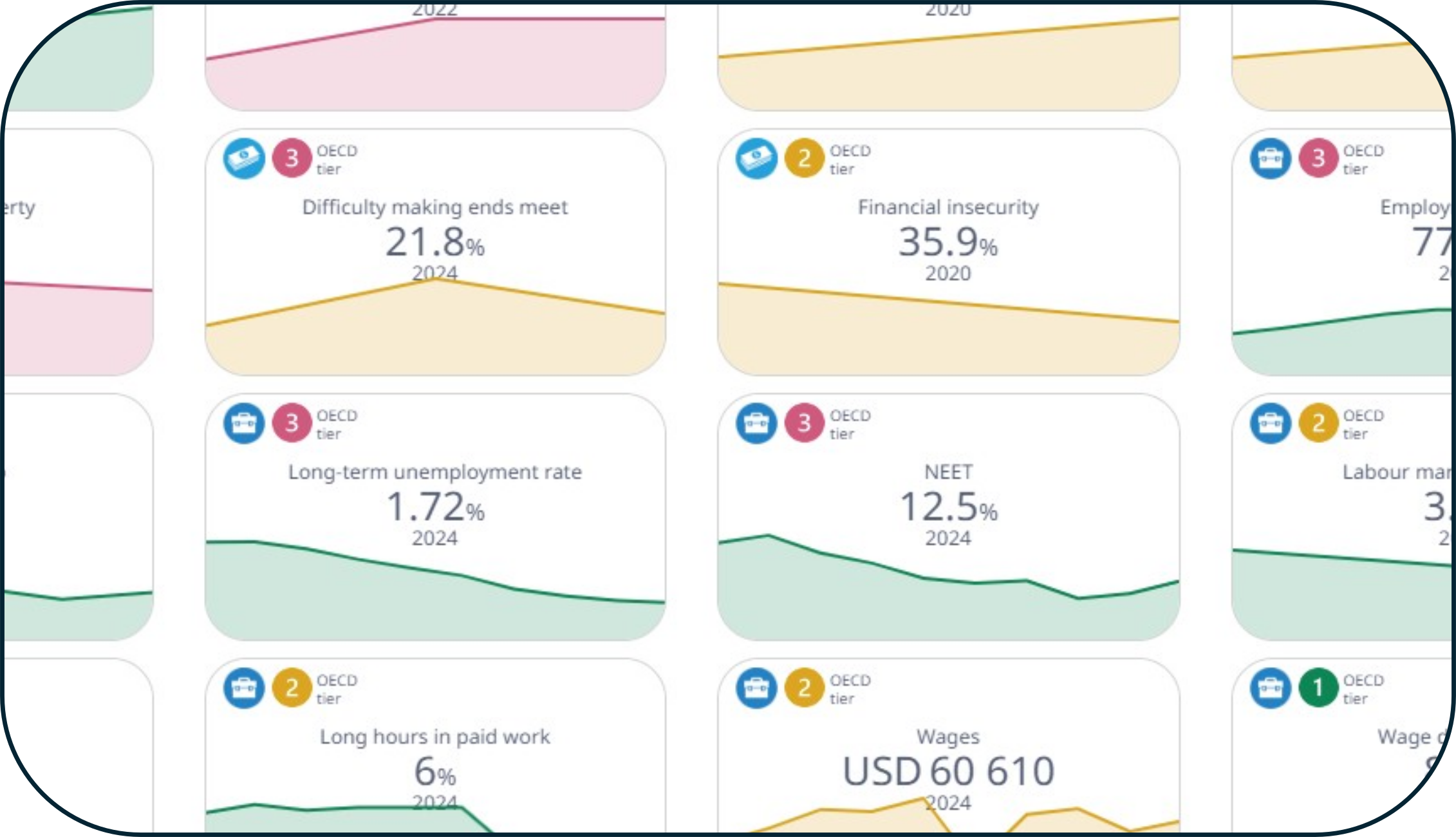
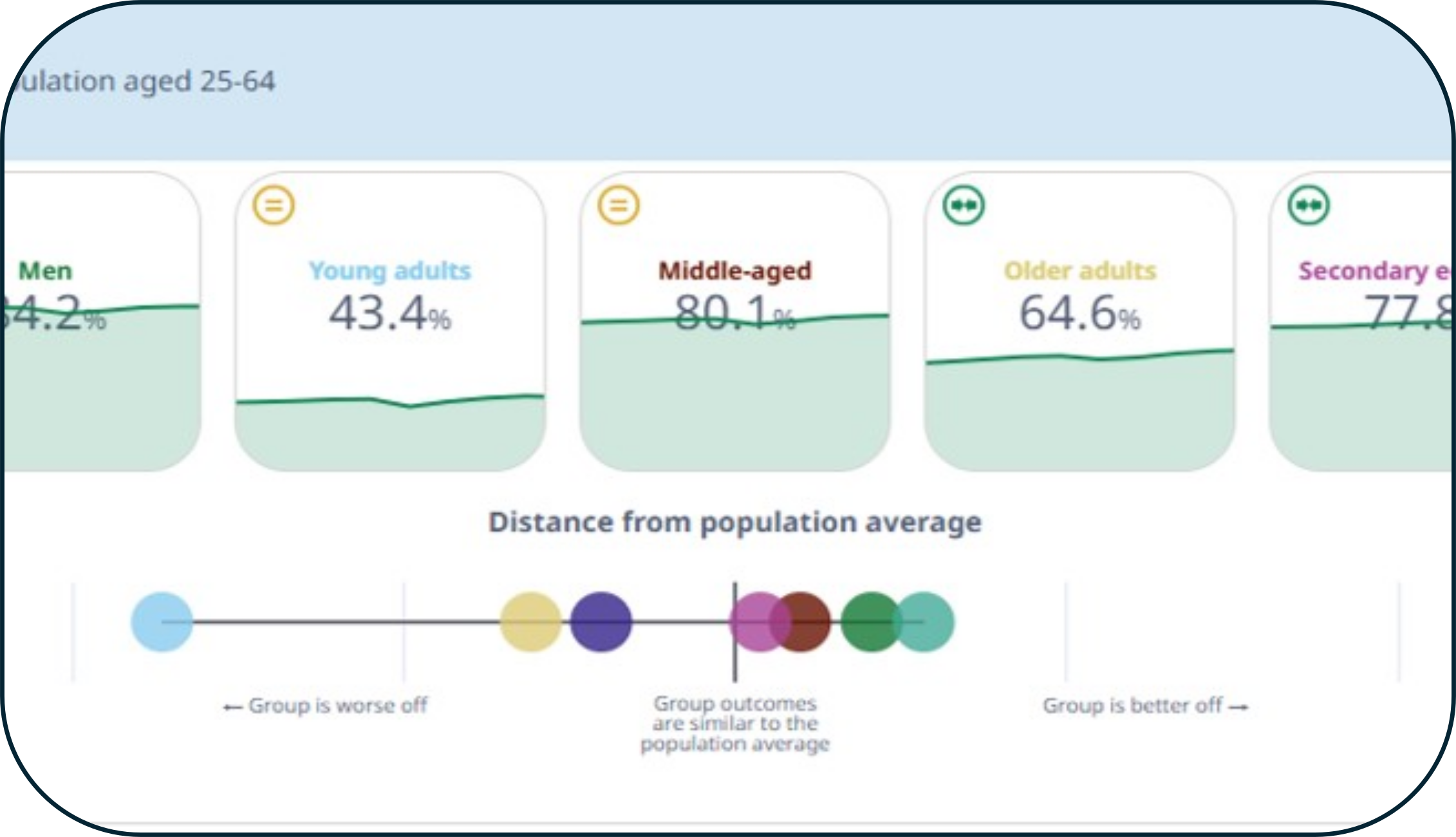
The Better Life Index (BLI) was first released in 2011 alongside the OECD’s Well-being Framework. The Framework has since been refined as our understanding of well-being has changed and expanded. The Better Life Index has been updated in 2025 to reflect these changes and align with other tools and frameworks used by WISE.
The BLI allows users to select which dimensions of current well-being matter most to them. Using the headline indicators (see the question above), a summary score of how each OECD country performs relative to others is then calculated. To do this, several assumptions are made:
Assigning weights
The BLI begins with default weights which are set equal to 5 (the midpoint of possible weight values) for all current well-being dimensions.
Weights are then assigned by the users as they build and customise their own BLI. Each dimension is rated from 0 (“not important”) to 10 (“very important”). The score given to each dimension is converted into a weight by dividing the score by the sum of the score given to all topics.
For example, if a user assigns of a score of 10 to Knowledge and Skills and 5 to the ten other dimensions, their BLI will weigh Knowledge and Skills by a factor of 10/60 (i.e. around 16.7%) and all the other topics by a factor of 5/60 (i.e. around 8.3%). The sum of all weights is 100%.
Normalising indicators
The BLI includes the 24 headline indicators of current well-being of the OECD Well-being Database. These indicators are expressed with different units (dollars, years, etc). To compare and aggregate them, these values must be normalised.
This normalisation is done according to a standard formula which converts the original values of the indicators into numbers varying in a range between 0 (for the worst possible outcome) and 1 (for the best possible outcome).
The formula is:
(value to convert – minimum value) / (maximum value – minimum value)
When an indicator measures a negative component of well-being (e.g. homicide) the formula used is:
1 – ((value to convert – minimum value) / (maximum value – minimum value))
Indicator aggregation
Each topic of well-being is measured by one to three indicators. After normalisation, indicators are averaged with equal weights. For instance, Work and Job Quality is measured with the three headline indicators for the well-being dimension: Employment rate, Gender wage gap and Long paid working hours. The Work and Job Quality score will thus be given by:
(Employment rate + Gender wage gap + Long paid working hours) / 3
Imputed values
Imputed values make up a very small number of observations (about 8% of the data) used to build the BLI. They refer to estimates of missing data points that are carried out through specific statistical techniques to fill in values for countries where there are none. Although these imputations do not significantly affect the results of the BLI, estimated values must be interpreted with caution.
The Current Well-being page of the Data Monitor will generally show where there are missing values that have been imputed, but since there is no minimum year for the BLI they are not always consistent. Visit the Current Well-being dataset in the OECD Well-being Database to see where all missing values are for your country.
Please note: Different versions of the Better Life Index are not comparable due the assumptions needed to calculate the BLI and indicator updates between releases.