This chapter provides an overview of the state of the art of circular economy policies at the subnational level, including existing regulations, economic incentives and funding programmes. The analysis builds on the results of the OECD Survey across 64 cities and regions across the EU Member States, the United Kingdom and Norway. The chapter clusters surveyed cities and regions in three groups (strategy, innovation and partnership-driven) to highlight common features and provide relevant examples of circular economy practices in place.
The Circular Economy in Cities and Regions of the European Union

Abstract
Most cities and regions responding to the OECD survey (2024[1]) perceive themselves as making progress on their transition to a circular economy. Only 11% of the surveyed cities and regions defined themselves as “advanced”, while 50% described themselves as “in progress” (compared to 32% in 20201), and 39% as “emerging” (Figure 1.1, Table 1.5). While the transition to circular economy can have multiple goals, the OECD survey (2024[1]) reveals that cities and regions prioritise environmental quality and resource efficiency (70%), followed by improving citizen and business acceptance and awareness on the circular economy (64%), and improving market conditions for circular economy businesses (52%) (Figure 1.2).

Note: Results based on a sample of 64 (2024) and 38 (2020, excluding non-EU and non-UK respondents) respondents that responded “Advanced”, “In progress” and “Emerging” to the question “What is the level of advancement of the transition from linear to circular in your city or region?” (respondents who answered “Newcomers” and “Not in place” in 2020 survey are categorised under “Emerging” in this figure); “Advanced” are those cities and regions that have developed strategies or roadmaps and engaged a variety of stakeholders. Cities and regions “In progress” are those taking action towards the circular economy, following ad hoc initiatives. Cities or regions in this cluster have recently set specific programmes on the circular economy and/or are starting their implementation. Cities and regions “Emerging” are those recognising the relevance and potential of the circular economy and exploring options for implementation.

Note: Results based on a sample of 64 respondents that responded “top priority” to the question “Which of the following goals represent a priority for a more effective, efficient and inclusive circular economy in your city / region in the future?”.
Source: OECD (2024[1]), OECD Survey: The Circular Economy in Cities and Regions in the European Union (EU).
Responsibilities to achieve these goals are shared across levels of government. At the national level, ministries of the environment or other equivalent bodies have a central role in the circular economy in more than half of the surveyed cities and regions (OECD, 2024[1]). For example, in Bulgaria, Czechia, Finland and Greece, the Ministry of the Environment is the main entity responsible for the circular economy, such as the Ministry for Ecological Transition and Demographic Challenge in Spain. In other cases, ministries responsible for adjacent environmental or energy issues play major roles in the circular economy, such as the Ministry of Climate (Estonia), the Ministry of Energy Affairs (Hungary), and the Ministry of Natural Resources and Spatial Planning (Slovenia). Given the interdisciplinary nature of the circular economy, some countries have developed co-ordination bodies across ministries. For example, an inter-ministerial commission was created in Spain to develop a circular economy strategy towards 2030. In 2019, a National Delegation for the Circular Economy was created in Sweden as a government advisory body that brings together representatives from the public sector, business, and academia (OECD, 2020[3]).
At the regional level, the circular economy is driven by public environmental organisations, waste management agencies, and economic development organisations (OECD, 2024[1]). Surveyed regional governments have mainly allocated the responsibility of guiding the circular transition to regional councils (Turku, Finland, through the Regional Council of Southwest Finland); publicly funded, non-profit environmental organisations (Scotland, United Kingdom, through Zero Waste Scotland); and public waste agencies (Flanders, Belgium, through the Public Flemish Waste Agency). In surveyed cities, the circular economy is often led by environmental departments. Beyond these departments, responsibilities are shared across economic development, urban planning, sustainability, and waste management agencies. The city council or central municipal administration also holds responsibilities. Dedicated circular economy offices and managers have been set in large cities (e.g., Amsterdam, the Netherlands; London, United Kingdom; Munich, Germany). Circular economy managers are responsible for promoting and implementing circular initiatives and building relationships with external actors (OECD, 2020[3]).

Note: Results based on a sample of 64 respondents that responded “Yes” and “No” to the question “Are there co-ordination mechanisms for the circular economy?”.
Source: OECD (2024[1]), OECD Survey: The Circular Economy in Cities and Regions in the European Union (EU).
Co-ordination is critical to the circular transition, as the cross-cutting nature of the circular economy requires working across silos (OECD, 2020[3]). Among surveyed cities and regions, co-ordination across municipal departments is the most common mechanism (81%), followed by those across cities and regions (73%), between cities or regions and their national government (69%), and with other relevant stakeholders including SMEs, utilities, and start-ups (69%) (Figure 2.3). Some cities have created dedicated horizontal working groups (e.g., Castile and León region, Spain; Oulu, Finland). In Gothenburg, Sweden, co-ordination officers are responsible for driving their respective strategies while co-ordinating key stakeholders (City of Gothenburg, 2021[4]).
Regulation
Some countries and regions have legislative frameworks promoting the circular economy (e.g., circular economy acts, bills, laws, etc.), which are often influenced by EU legislation such as the Circular Economy Action Plan 2020 and the Waste Framework Directive (Box 1.1; Figure 1.4). For instance, regulatory framework for the circular economy in the Western Region, Ireland, also aligns with national (e.g., the Circular Economy and Miscellaneous Provisions Act 2022) and EU directives (See Chapter 4). These frameworks aim to guide policy and practice towards waste reduction and more circular practices in the region. In 2019, Castilla-La Mancha, the region home to Guadalajara, introduced a Circular Economy Law, the first legislation of its kind in Spain. This law aims to promote a more innovative, competitive, and sustainable development model in the region. Luxembourg’s Waste Management Law provides a basis for the country’s circular economy transition and aims to promote prevention, reuse, recycling, and other forms of waste recovery.
Source: European Commission (2025[5]), Circular economy, https://environment.ec.europa.eu/topics/circular-economy_en.
The transition to a circular economy is also promoted by sectoral regulation. For example, Helsinki’s building regulations, which came into force in 2023, incorporate carbon neutrality and biodiversity goals and promote the circular economy through measures such as material selection and a rule allowing the building control authority to require a demolition plan before any demolition work begins. The types of instruments commonly observed across sectors include setting circular purchasing criteria, implementing “product as a service” models, requiring separate collection of waste, banning advertisements for products that hinder the transition to a circular economy, mandating reporting requirements, and prescribing the inclusion of circular economy considerations in environmental and territorial plans as well as impact assessments (Table 1.1).
Source: Municipality of Amsterdam (2020[6]), CircuLaw: Regulations for a circular economy, https://www.circulaw.nl/
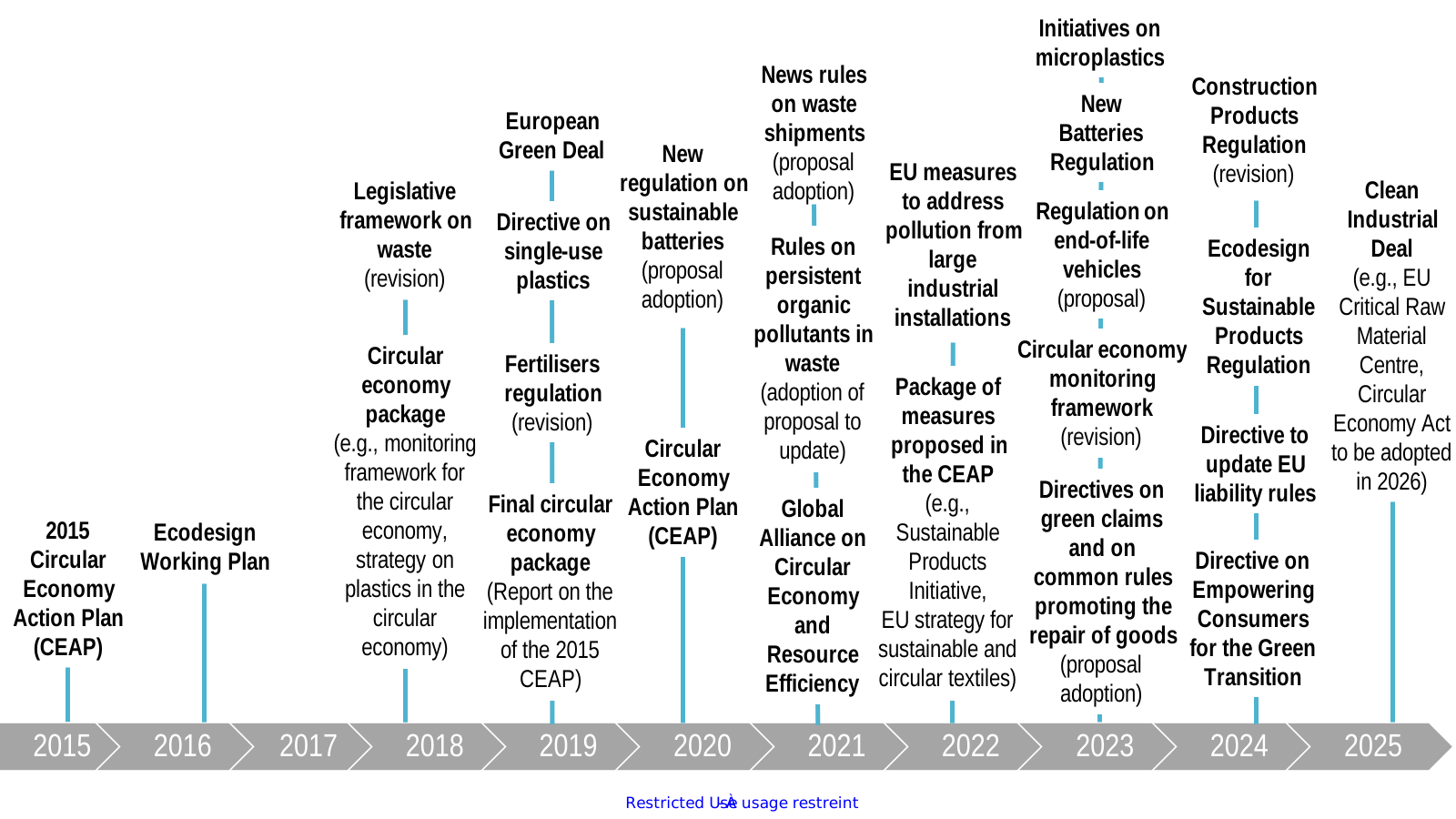
Since 2015 the EC set up several Directives and strategies to help in the move from a linear to a circular economy, as described in the table below.
Source: European Commission (2025[5]), Circular economy, https://environment.ec.europa.eu/topics/circular-economy_en.
Economy and finance
Economic instruments can help achieve environmental policy goals more cost-effectively. These instruments can support the transition to circular practices by generating price signals that promote eco-design, reuse, recycling, and material recovery, minimising resource use and waste (Box 1.2). Economic instruments seek to address the market failure of environmental externalities by incorporating the external costs of production and consumption through taxes or by creating property rights and proxy markets for environmental services. The use of these instruments to pursue circular economy objectives has grown steadily in OECD countries over the past 50 years (Figure 1.5). Taxes were used by 31% of surveyed cities and regions as a financial resource for the transition towards the circular economy, while tariffs and other user charges were employed by 25% of respondents (Figure 1.6). Examples of taxes include municipal taxes on waste disposal, such as those in the Canary Islands, Spain. Tariffs and other user charges include waste management fees collected by local waste authorities, such as in Jyväskylä, Finland. Since 2013, the Eurométropole of Strasbourg, France, implemented a special fee on non-household waste produced by local businesses relative to the quantity of waste they generate, derived from the Household Waste Removal Tax (TEOM), a tax ancillary to French property tax.

Source: OECD (2025[7]), Policy Instruments for the Environment (PINE) Database, OECD, Paris
With respect to financial resources for the circular economy, 64% of surveyed cities and regions report using national, regional, and local transfers (Figure 1.6). These include special recovery programmes such as France Relance, which allocates funds for circular economy projects like biowaste collection in the Eurométropole of Strasbourg, France. EU funds (see Chapter 4) are used by more than half (55%) of the sample. Although the private sector is considered a driving force for the circular transition, only 47% of surveyed cities and regions regarded the private sector as a potential financial resource. Examples of such investments include those through public-private partnerships (e.g., Podravje, Slovenia), agreements for co-financing to promote new management infrastructures (e.g., Basque Country, Spain), and direct support from circular economy-driven companies, like Polygreen Limited's initiatives in Tilos, Greece. In the EU, private investment in the recycling, repair, reuse and rental and leasing sectors increased by 21% between 2012 and 2021, reaching EUR 122 million in 2021 (Eurostat, 2025[8]). Around USD 334 billion had been invested in circular economy solutions globally by 2023 (EMF, 2024[9]).

Note: Results based on a sample of 64 respondents that responded “Yes” to the question “How does your city/region gather or expect to gather the financial resources needed to foster the transition towards the circular economy?”.
Source: OECD (2024[1]), OECD Survey: The Circular Economy in Cities and Regions in the European Union (EU).
Economic instruments can be classified into two major categories: price-based and performance-based (Table 1.2). Price-based economic instruments directly alter the relative price of products and services (e.g., through taxes and charges). They can also set a price for a behaviour without an established market price (e.g., through deposit refund systems and advance disposal fees). Conversely, performance-based economic instruments involve the government assigning businesses the responsibility of meeting circular economy performance targets or goals, which translates into prices to incentivise behavioural change. An example of performance-based economic instruments are tradeable permit systems, which create an industry-wide environmental objective and allow firms to co-ordinate via a tradeable permit market. This mechanism enables polluters with low emission levels to mitigate impacts cost-effectively and sell permits to polluters with higher emission levels.
Source: OECD (2024[10]), Economic Instruments for the Circular Economy in Italy: Opportunities for Reform, OECD Publishing, Paris; Svatikova, K., A. Brown and P. Börkey (2025[11]), Economic instruments for a resource efficient and circular economy, OECD Publishing, Paris.
Public procurement
Public procurement is one of the most powerful tools for advancing the circular economy. A total of 63% of surveyed cities and regions include circular criteria in procurement (Figure 1.7), up from 53% in the 2020 survey, highlighting progress in incorporating circular criteria in procurement processes in European cities and regions (OECD, 2020[3]). More than eight out of ten (81%) survey respondents indicated having set requirements to foster efficient material use and reuse, quality and maintenance in tenders, while more than two-thirds reported stimulating a dialogue between the main actors, procurement officials, and potential contractors (67%) (OECD, 2024[1]). Less than 40% of respondents (39.1%) identified "applying life cycle analysis to consider the long-term impacts of each purchase" and "creating a monitoring and evaluation framework to analyse procurement policy results" as key public procurement objectives to support the transition towards a circular economy.

Note: Results based on a sample of 64 (2024) and 38 (2020, excluding non-European respondents) respondents that responded “Yes”, “Not yet, but planned” and “No” to including circular criteria into procurement.
Construction is the main sector (61%) used by cities and regions to integrate circular economy criteria in public procurement (Figure 2.7). Measures undertaken include acknowledging the potential of this sector for public procurement in local strategies (City of Vitoria-Gasteiz, 2024[12]), forming working groups to promote reuse (Eurométropole of Strasbourg, France), and mandating circular criteria through subnational regulation such as the use of recycled building materials in public works (Castile and León, Spain). Innovative pilots have also been implemented, including using recycling materials from existing buildings in new constructions (Gothenburg, Sweden). However, cost often remains the predominant consideration in procurement decisions, highlighting a gap between policy aspirations and practical implementation.
Half of the surveyed cities and regions apply circular economy criteria to food, water, and nutrients (52%) and electronics and ICT (48%) (Figure 2.7). In the food sector, actions include reducing waste and single use packaging, introducing deposit-return systems, opting for non-bottled water, and implementing compulsory criteria for drinking water conservation. Some cities, such as London, have introduced measures to monitor carbon emissions per plate and established criteria related to food provenance and waste reduction.
In the electronics and ICT sector, procurement criteria often include the reparability (e.g. technical assistance, availability of spare parts and consumables) and recyclability of products (e.g. take-back options for the collection and recycling of electronics). Energy efficiency is also a key consideration, alongside measures for the repurposing and reuse of ICT equipment or the extraction of minerals and materials from redundant devices. Procurement contracts for recycled IT equipment are also common, often requiring bidders to present a strategy to extend the equipment's useful life, promote responsible reuse, and reduce harmful substances in both the equipment and production chains.
Approximately one-third of survey respondents reported applying circular economy criteria to other product categories, including textiles (36%), plastics (35%), and batteries and vehicles (33%) (Figure 2.7). In the textiles sector, measures include conducting pre-studies to promote longevity and quality in products (Gothenburg, Sweden) and collaborating with social and non-profit organisations for textile collection and purchasing professional clothing made with organic cotton (Eurométropole of Strasbourg, France). Other actions include using recycled materials in towels and requiring providers to minimise waste and recycle end-of-use products efficiently (Jyväskylä, Finland), as well as renting rather than acquiring uniforms (Torres Vedras, Portugal).
For plastics, initiatives range from banning single-use plastics in public administrations and procurement (North Holland, Netherlands; Roubaix, France) to establishing criteria for recyclability (Glasgow, United Kingdom), sourcing plastics from recycled materials (Castile and León, Spain), and replacing plastics with renewable or recyclable alternatives (Wiltz, Luxembourg). In the batteries and vehicles category, cities and regions have introduced both binding and voluntary criteria promoting shared vehicles and have explored leasing or hire-purchase models to ensure vehicles are reusable.
Lastly, some respondents highlighted the inclusion of circular economy criteria in the furniture sector. Notable actions include framework agreements for reused furniture, furniture repair, and circular services (Glasgow, United Kingdom; Jyväskylä, Finland), as well as the procurement of recycled office furniture.
By analysing the results of the OECD Survey (OECD, 2024[1]) across 64 cities and regions in the EU, three types of cities and regions with similar characteristics in their approach to transitioning to a circular economy emerge: strategy-driven, innovation-driven, and partnership-driven.
Strategy-driven (cluster 1): cities and regions that have adopted circular economy initiatives (e.g., strategy, action plan, road map, programme) and monitor progress and impacts.
Innovation-driven (cluster 2): cities and regions that promote pilots and experimentations with the idea of scaling them up, include circular economy criteria into the purchasing process, and building new capacities and skills.
Partnership-driven (cluster 3): cities and regions that foster partnership across business, civil society, academia and strengthen and collaborate with other cities or regions.
These clusters serve to identify common practices across cities and regions in the EU and identify relevant examples. They are not mutually exclusive, but they can complement each other (i.e. in some cases, a city or region can be in multiple clusters) (Table 1.3).
Note: ✓ = categorised in the cluster, ✗ = Not categorised in the cluster; Cities and regions with “Yes” in the Strategy-driven have circular economy initiatives (e.g., strategy, action plan, road map, programme), and monitoring progress made and impacts of its circular economy strategy; Cities and regions with “Yes” in the Innovation-driven are where pilots and experimentations on the circular economy take place, circular economy criteria is included into the purchasing process, and promoting capacity building; Cities and regions with “Yes” in the Partnership-driven are promoting partnership (e.g., agreed-upon collaboration among organisations or citizen fora), with mechanisms of co-ordination across cities and regions; This clustering is based on perception-based survey (i.e. survey responses are respondents’ subjective answers) and fact checked where possible.
Source: OECD (2024[1]), OECD Survey: The Circular Economy in Cities and Regions in the European Union (EU).
Nearly half of surveyed cities and regions are categorised as strategy-driven (Table 1.4). As of 2023, 24 EU Member States had adopted circular economy strategies, roadmaps and action plans (European Environment Agency, 2024[13]). A total of 75% of the surveyed cities and regions reported having circular economy initiatives in place, including dedicated strategies (Figure 1.8, Table 1.5). This marks significant progress since 2020, when only one-third had adopted circular economy measures (OECD, 2020[3]). Furthermore, 47% of cities and regions have allocated a dedicated budget for the circular economy (Figure 1.9). Among those that self-evaluate as being at an advanced stage of the circular transition, over 70% have such funding in place. In contrast, in 2020, only around one-third (32%) of surveyed European cities and regions had a dedicated budget for the circular economy (OECD, 2020[3]). This suggests a growing trend towards financial commitment to the circular economy at the subnational level in Europe.
Note: Results based on a sample of 64 respondents that responded “Yes” to the question on the existence of a circular economy initiative (e.g. a strategy, plan, programme, road map, etc.), and “Yes” to monitoring progress made and impacts of their circular economy strategy.
Source: OECD (2024[1]), OECD Survey: The Circular Economy in Cities and Regions in the European Union (EU).

Note: Results based on a sample of 64 (2024) and 38 (2020, excluding non-European respondents) respondents that responded “Yes”, “Not yet, but under development” and “No, and not planned” to the question on the existence of a circular economy initiative (e.g. a strategy, plan, programme, road map, etc.).

Note: Results based on a sample of 64 (2024) and 38 (2020, excluding non-European respondents) respondents that responded “Yes”, “Not yet, but planned” and “No” to existence of a dedicated budget for circular economy activities.
Goal setting
Circular economy strategies can be developed and further updated through stakeholder consultation processes, although “co-production” is currently the least used form of stakeholder engagement (Figure 1.10). Stakeholder groups can help define goals and priorities. In the case of the Eurométropole of Strasbourg, France, the Zero Waste and Circular Economy Partnership Committee meets once a year, providing an opportunity for stakeholder consultation on the circular economy roadmap. Turku, Finland, adopted a bottom-up approach to the Circular Turku roadmap. The process involved consultations with over 200 stakeholders, ranging from local businesses to research institutions, public companies, and national and regional actors. ICLEI (Local Governments for Sustainability) and the Finnish Innovation Fund Sitra also supported the creation of the roadmap. A baseline assessment study was conducted in preparation for this roadmap, identifying more than 700 circular economy stakeholders, 270 of which were businesses engaged in the circular economy.

Note: Results based on a sample of 64 respondents that responded “Yes, delivered”, “Yes, ongoing” to the question regarding promotion of engagement related to circular economy by type of stakeholder. These numbers show a slight increase from the 2020 survey for European cities and regions2 (28% for communication, 17% for partnership, 14% for participation, 14% for co-decision and co-production initiatives, 11% for representation), which may indicate a growing trend of stakeholder engagement through these types of stakeholder engagement mechanisms in European cities and region, while the share of those who conducted consultations slightly decreased (31% in 2020) (OECD, 2020[3]).
Source: OECD (2024[1]), OECD Survey: The Circular Economy in Cities and Regions in the European Union (EU).
Circular economy strategies may have multiple goals and targets, for example:
More efficient resource use and “sufficiency”: In the Basque Country, Spain, the Euskadi 2030 Circular Economy Strategy set three targets: increase material productivity by 30%, increase the circular material use rate by 30%, and reduce the waste generation rate per unit of GDP by 30%. The city of Jyväskylä, Finland, has embraced a resource-wisdom approach to safeguarding the environment and enhancing well-being. The Resource-Wise Jyväskylä 2040 Programme envisions a city that achieves zero emissions, zero waste, and sustainable resource use, while fostering conditions for long-term well-being (City of Jyvaskyla, 2024[14]). Considering sufficiency (“sobrieté” in French) as one of the key dimensions of the Strategy for a Circular Economy in Normandy3 (Stratégie pour une économie circulaire en Normandie), France implies (i) integrating eco-efficiency and “sobrieté” into investments and the organisation of industrial sectors; (ii) recognising companies that have achieved a good level of performance and commitments in terms of “sobriété”; (iii) promoting innovation and the development of logistical services to provide eco-efficient solutions based on the “sobriété” approach (Region of Normandy, 2020[15]).
Improved waste management: Waste reduction is the most frequently mentioned objective among surveyed cities and regions (e.g., Amsterdam, Netherlands; Basque Country, Spain; Eurométropole of Strasbourg, France; Jyväskylä, Finland; Prague, Czechia). In Prague, Czechia, waste is a key focus area, with the strategic objective to reduce the production of mixed municipal waste by 50% before 2030 (City of Prague, 2022[16]). This strategic objective is supported by specific sub-objectives such as increasing the sorting rate of municipal waste to 60% in 2025 and 65% by 2030.
Carbon neutrality: In Oulu, Finland, the Climate Roadmap and Circular Economy Roadmap under the Environmental Programme 2026 defined achieving carbon neutrality by 2035 as the main objective, with four focus areas: developing sustainability, acting resource-wisely, drawing strength from nature, and promoting environmental responsibility (City of Oulu, 2023[17]). The Circular Economy Strategy (2021/2030) for the Castile and León Region, Spain, has set a quantitative objective to reduce GHG emissions from production sectors (industrial processes, agriculture and livestock, waste treatment and disposal) by 25% by 2030 (Castile and León Region, 2021[18]).
Social inclusion: The Circular Economy Route Map, approved in 2020 in Glasgow4, United Kingdom, prioritises ensuring that the transition to a circular economy benefits local communities by localising the economy. This approach aims to ensure social inclusion, justice, and wellbeing, while opening up opportunities for employment and wealth creation within those communities (City of Glasgow, 2020[19]). The Eurométropole of Strasbourg, France, promotes innovative projects serving the circular economy in collaboration with local stakeholders and workers in its roadmap (Eurométropole of Strasbourg, 2024[20]).
Note: Local / regional circular economy initiatives is according to the survey results based on a sample of 64 respondents that responded “Yes”, “Not yet, but under development” and “No, and not planned” to the question on the existence of a circular economy initiative as well as their descriptions; Level of advancement is according to the survey results based on a sample of 64 respondents that responded “Advanced”, “In progress”, and “Emerging” to the question: “What is the level of advancement of the transition from linear to circular in your city or region?”; Dedicated circular economy budget is according to the survey results based on a sample of 64 respondents that responded “Yes”, “Not yet, but planned” and “No” to the existence of a dedicated budget for the circular economy; ✓ = dedicated budget for the circular economy exists, ✗ = dedicated budget for the circular economy does not exist.
Source: OECD (2024[1]), OECD Survey: The Circular Economy in Cities and Regions in the European Union (EU); European Environment Agency (2024[13]), Country profiles on Circular Economy in Europe (2024), https://www.eionet.europa.eu/etcs/etc-ce/products/country-profiles-on-circular-economy-in-europe; other literature review on respective circular economy initiatives.
Among the sectors, waste is the top priority for a long-term circular economy vision in the surveyed cities and regions (84%), followed closely by the built environment (83%) (Figure 1.11). These two sectors were also most frequently included in the circular economy initiatives among the surveyed cities and regions in 2020 (OECD, 2020[3]).

Note: Results based on a sample of 64 respondents that selected sectors responding to the question: “Which sectors are prioritised for a circular economy long term vision in your city/region?”.
Source: OECD (2024[1]), OECD Survey: The Circular Economy in Cities and Regions in the European Union (EU).
For some surveyed cities and regions, waste management initiatives (e.g., strategy, plan) act as a substitute for or as a flagship of the circular economy strategy (e.g., Bratislava, Slovak Republic; Valencia, Spain), highlighting the importance of the waste sector in the transition to a circular economy. For example, Bratislava has set goals to build effective waste management infrastructure, including recycling and reuse centres, and to shift to a pay-as-you-throw system. Within the waste sector, plastics management is included in circular economy strategies and initiatives in several surveyed cities and regions. Many cities are implementing measures to promote circularity by supporting product design, reuse, and recycling. The Euskadi 2030 Circular Economy Strategy by the Basque Country, Spain, not only sets the aforementioned quantitative targets but also includes complementary objectives related to two of the value chains prioritised by the European Commission: reducing food waste generation by half and ensuring that 100% of plastic packaging is recyclable. The strategy is specified in the Strategic Plan for the Circular Economy and Bioeconomy of Euskadi 2024, which outlines 53 specific actions. This plan includes eleven lines of action, one of which focuses on plastic consumption. London’s Circular Economy Route Map, a key strategic document in its transition to becoming a circular city, also identifies plastics as one of the priority focus areas, alongside the built environment, food, textiles, and electricals (ReLondon, 2019[21]). In Helsinki, Finland, the Action Plan for the Circular and Sharing Economy, approved in 2023, defines three focus areas: construction, procurement and environmental awareness and sustainable consumption. For each focus area, circular economy goals towards 2035 are established. To achieve these goals, 23 measures are defined in the programme (e.g., piloting solutions to reduce the use of plastic, using recycled plastic or other materials in construction, and mapping plastic flows) (City of Helsinki, 2023[22]).
The built environment is also often observed as a priority area for circular economy strategies. For example, in 2020, Amsterdam became the first city to commit to becoming a 100% circular economy by 2050, aiming to halve its use of new raw materials by 2030. Its five-year circular economy strategy to achieve this goal is based on the Doughnut Economics model (2017[23]), which seeks to achieve economic development while staying within planetary boundaries5. The city’s nine strategic circular economy ambitions focus on three key value chains: consumer goods, the built environment, and food and organic waste streams (City of Amsterdam, 2020[24]). The Implementation Agenda 2023-2026 contains more than 70 activities that the municipality will develop together with various stakeholders, such as entrepreneurs, social initiatives and residents (City of Amsterdam, 2023[25]). In the case of Leuven, Belgium, the built environment is the main focus of the Circular Economy Action Plan due to the sector’s high impact on carbon dioxide (CO2) emissions in the city. Leuven also identifies plastics as one of the breakthrough projects in its climate city portfolio. In the case of Turku, Finland, the Circular Turku roadmap focuses on construction, along with food, mobility, energy, and water.
Another area often seen as a priority for circular economy initiatives is energy. The Green Transition Programme of Päijät-Häme, Finland, replaces previous similar roadmaps, such as the Climate Roadmap and the Circular Economy Roadmap, combining their goals and approaches. The goals of the programme are (i) making Päijät-Häme carbon neutral by 2030, (ii) achieving a circular economy, and (iii) preserving natural biodiversity. These goals are pursued by promoting measures in energy, transport, material cycles, forests and land use, and a sustainable food system.
In addition to sectoral priorities, common cross-cutting priority areas are observed across surveyed cities and regions. For example, improving product design to extend the useful life of products was mentioned by multiple respondents, such as Basque Country, Spain; and Gothenburg, Sweden. Other common priority areas identified include sharing (e.g., Amsterdam, Netherlands), eco-packaging (e.g., Niederanven, Luxembourg), sustainable supply (e.g., London, United Kingdom), and responsible consumption (e.g., Eurométropole of Strasbourg, France). While these cross-cutting priorities include initiatives to improve circularity by targeting upstream and midstream phases (See Chapter 1), strategies tend to focus on the downstream phase in cities and regions where the waste management initiatives (e.g., strategy, plan) act as a substitute for or a flagship of the circular economy strategy.
Building capacities
Circular strategies or initiatives highlight the skillsets and policies required for future circular economy-related jobs. A total of 53% of surveyed cities and regions are implementing capacity-building initiatives as a necessary condition to advance in the circular economy transition (Figure 1.12). In Ljubljana, Slovenia, the circular strategy recognises the importance of craftsmanship skills, such as roles in repair shops and maintenance, which extend the life cycle of products. Their initiatives to promote green jobs related to the circular economy include education and the exchange of good practices to foster these skills across generations (City of Ljubljana, 2022[26]). The Flanders region, Belgium, has identified STEM skills (science, technology, engineering, and mathematics), including digital skills, as crucial for accelerating the transition to a circular economy. In addition to STEM competencies, multidisciplinary and cross-functional skills are essential for exploiting information and thinking critically and creatively to solve problems. To address the labour market mismatch between the supply and demand for such profiles, aSTEM centre was established. This one-stop-shop for knowledge assurance across all domains has accelerated the outflow of STEM profiles in Flanders, supporting the regional circular transition (Flanders Circular, 2021[27]).

Note: Results based on a sample of 64 respondents that responded “Yes”, “Not yet, but planned” and “No” to promotion of capacity building and/or training programmes for circular economy.
Source: OECD (2024[1]), OECD Survey: The Circular Economy in Cities and Regions in the European Union (EU).
Various circular economy strategies at national, regional, and local levels recognise the role of SMEs in the transition to a circular economy. SMEs have been implementing resource efficiency measures, such as minimising waste, saving energy, water, and materials, recycling and reusing materials or waste, and offering green products and services. ReLondon hosts and supports a community of over 700 circular SMEs and startups. In Amsterdam, the Netherlands, the city supports the Circular Workspace, where students, teachers, and researchers work to make SMEs more circular. Educational institutions benefit from working on concrete cases from the business world, while SMEs are encouraged to embrace circularity (City of Amsterdam, 2023[25]).
Monitoring progress
According to the survey, over half of respondents (51%) are monitoring the progress and impacts of their circular economy strategies, while 41% are planning to do so (Figure 1.13).

Note: Results based on a sample of 64 respondents that responded ““Yes”, “Not yet, but planned” and “No” to monitoring progress made and impacts of their circular economy strategy.
Source: OECD (2024[1]), OECD Survey: The Circular Economy in Cities and Regions in the European Union (EU).
In the case of the Flanders region in Belgium, the Circular Economy Monitor Flanders (CE Monitor) was created as an extensive, multi-layered circular economy monitoring framework. It provides indicators at both the macro and intermediate levels, as well as figures for specific product groups, to show progress towards a circular economy in the region. The macro-level indicators offer insights into regional consumption of materials, water, soil, and space, as well as emissions. At the intermediate level, the CE Monitor measures four systems of need: housing, food and water, consumer goods, and mobility. The CE Monitor also includes several socio-economic indicators, such as employment in the circular economy, employment in reuse shops, and employment in the repair sector (Circular Flanders, 2021[28]) (European Environment Agency, 2024[29]).
In 2022, Amsterdam published its Amsterdam Circular Monitor, a live database and dashboard tracking material flows through the city. The monitor provides an overview of the city's transition to a circular economy and identifies areas needing more effort to achieve the goals of halving primary raw material use by 2030 and becoming 100% circular by 2050. It features statistics on material mass and ecological impacts, enabling policymakers to make evidence-based decisions. For example, the monitor revealed that material use accounts for up to 80% of Amsterdam’s CO2 emissions and highlighted the significant impacts in the city's circular strategy themes: food, consumer goods, and the built environment (City of Amsterdam, 2020[30]). In Helsinki, Finland, the Circular Economy Watch website shares information on the progresses of measures in construction, procurement, and environmental awareness and sustainable consumption (City of Helsinki, 2023[31]).
More than two-fifths (42%) of surveyed cities and regions are categorised as innovation-driven and aim to promote pilots and experimentations with the idea of scaling them up, including circular economy criteria into the purchasing process, and building new capacities and skills (Table 1.6). Most of the survey respondents (90%) use pilots and experimentation as a way to foster the circular economy (Figure 1.14). Circular economy projects often begin as pilots and experiments to test ideas and quickly learn from successes and failures, which can then inform better practices. This presents an opportunity to create new knowledge and information, but also poses a challenge in terms of the capacity required to design and implement sustainable, efficient, and effective circular economy policies (OECD, 2020[3]). Circular economy innovation in surveyed cities and regions can primarily be categorised as technological innovation, material innovation, product innovation, or social innovation.
Note: Results based on a sample of 64 respondents that responded “Yes” to the existence of pilots and experimentations for the circular economy, “Yes” to including circular criteria into procurement, and “Yes” to promotion of capacity building and/or training programmes for circular economy.
Source: OECD (2024[1]), OECD Survey: The Circular Economy in Cities and Regions in the European Union (EU).

Note: Results based on a sample of 64 and 37 (2020, excluding non-European respondents) respondents that responded “Yes”, “Not yet, but planned” and “No” to the existence of pilots and experimentations for the circular economy.
Technological innovation in the circular economy involves the development and implementation of advanced technologies to enhance circularity. For example, the Urban Mining Hub in Berlin, Germany, focuses on recovering valuable materials from urban waste through advanced sorting and processing technologies to extract metals, plastics, and other materials for reuse in various industries. Another example of such innovation is the breakthrough project focused on roadside grass in Zuid-Holland, Netherlands. Instead of viewing roadside grass as waste, this project explores its potential as a valuable resource to transform roadside grass into products such as paper and furniture, demonstrating a radical shift in thinking and resource utilisation (OECD, 2024[1]).
Material innovation in the circular economy focuses on designing more durable materials and innovative use of secondary material. The Urban Infra Revolution in The Zero Waste Housing initiative in Berlin, Germany integrates zero-waste principles into residential construction, ensuring new housing developments are designed with sustainability in mind (City of Berlin, 2022[32]). France’s Eurométropole of Strasbourg has initiated experiments in circular construction. In 2022, materials from the deconstruction of a former military hospital were repurposed for outdoor spaces, while collaboration with Toulouse Metropolis is testing new methodologies for local material reuse (OECD, 2024[33]). One notable project on material innovation in Valencia, Spain, is the LIFE CERAM initiative, which focuses on achieving zero waste in ceramic tile manufacturing. This project has successfully produced ceramic pieces using 100% recycled ceramic waste, significantly reducing the environmental impact of the tile industry (OECD, 2024[1]).
Social innovation encompasses community-based initiatives towards greater circularity. In London, United Kingdom, "Circular Neighbourhood" projects were conducted as a place-based initiative to engage local residents and businesses in changing their behaviours and business practices. Examples include Heston in the Loop (covering all materials and circular behaviours), the Bexley project on food waste in partnership with two food waste-saving applications and convening a network of local authorities and non-profit organisations running various forms of circular neighbourhoods across London. Møre and Romsdal, Norway, has implemented a food rescue initiative through the “Food Joy” pilot, which focuses on reducing food waste in health institutions and central kitchens. Notably, Hatlane Care Centre achieved a remarkable reduction in food waste of over 50%, showcasing the project's success and potential for broader application (OECD, 2024[1]).
Almost three-quarters (77%) of surveyed respondents are promoting partnerships across cities and regions (Figure 2.10). For clustering, nearly half of surveyed cities and regions are categorised as partnership-driven, which foster partnership across business, civil society, and academia and strengthen and collaborate with other cities or regions (Table 1.7). Co-operation and sharing of best practices among cities and regions serve as a source of inspiration for developing circular economy initiatives and fostering skills. For example, Zero Waste Scotland collaborated with Circular Amsterdam to develop a Circular Economy Jobs & Skills research project, which provides vital learning and guidance opportunities for Glasgow, United Kingdom. The project defined seven key circular elements for “directly circular jobs”, categorised into “core circular jobs” and “enabling circular jobs”. “Indirectly circular jobs” were also identified, referring to all other sectors that offer services to circular job activities and create supporting circular activities (e.g., education, government, and professional services) (Glasgow City Council, 2020[34]). The Portuguese government launched the National Circular Cities Initiative (Iniciativa Nacional Cidades Circulares - InC2) in 2018, with the aim of promoting collaboration across cities, strengthen multi-level governance, improve access to finance and promote innovative circular economy practices in urban areas. In particular, InC2 supported four circular city networks comprising eight municipalities each and structured around key thematic areas, with a EUR 1.5 million budget from the Environment Fund (2019-2023), (DG Territorio, 2024[35]). Compared to an innovation-driven cluster, a partnership-driven cluster has a slightly higher proportion of respondents from rural areas6, indicating that local circular transitions in non-urban areas rely more on and leverage partnerships with other cities and regions beyond their own capacity.
Note: Results based on a sample of 64 respondents that responded “Yes” to promoting partnership in relation to the circular economy and “Yes” to the co-ordination mechanisms for the circular economy across cities/regions exist.
Source: OECD (2024[1]), OECD Survey: The Circular Economy in Cities and Regions in the European Union (EU).
Nearly half of respondents among surveyed cities and regions reported having participated in EU stakeholder engagement initiatives, promoting partnerships and various forms of collaboration across cities and regions (OECD, 2024[1]). For instance, the Valencia region in Spain participates in the Circular Cities and Regions Initiative (CCRI) (Box 1.3), which aims to enhance synergies among projects, share knowledge, and highlight best practices. This involvement has enabled various stakeholders, particularly technological institutes and universities, to attend events, engage with other stakeholders and potential partners, and participate in EU-funded innovation projects related to the circular economy. European cities and regions are also involved in the Circular Cities Declaration, which aims to provide a shared vision of what a “circular city” is and establish a community of committed organisations to share their experiences, challenges and successes (European Union, 2020[36]). The founding signatories include several surveyed cities and regions, such as Helsinki, Lappeenranta, Oulu, Tampere and Turku, Finland; Wiltz Luxembourg; Guimarães, Portugal; and Malmö, Sweden.
Officially launched in 2021 and funded by the EU’s Directorate-General for Research and Innovation, the Circular Cities and Regions Initiative (CCRI) focuses on implementing a circular economy across cities and regions in the EU. It contributes to the policy objectives of the European Green Deal (2019). The CCRI is largely supported by the EU's research and innovation funding programme (Horizon 2020 and Horizon Europe) to achieve two objectives: showcase circular systemic solutions; and test circular business and governance models at the territorial level. Combining knowledge sharing with technical and financial support, the initiative supports stakeholders across Europe’s cities and regions, including regional and local authorities, industry representatives, research and technology organisations and civil society over the whole life cycle of local circular economy initiatives.
The CCRI selected 12 pilots and 25 fellows from different EU Member States (Figure 1.15) to benefit from tailored technical support and participation in four thematic working groups (i) resource management; (ii) bioeconomy; (iii) circular buildings; (iv) industrial symbiosis and circular economy in industries). The CCRI also collaborates with Associated Partners to further spread good practices and support the CCRI Pilots and Fellows (e.g. OECD, European Investment Bank, Ellen MacArthur Foundation, European Institute of Technology and Innovation Circular Economy Community, the European CCD, the Flemish Institute for Technological Research) to deepen collaboration and advance on the circular economy while ensuring good co-ordination.

Note: A total of 12 cities and regions are participating as Pilots, and 25 as Fellows.
Pilots include Asker (City, Norway), Capannori (City, Italy), Castile and Leon (Region, Spain), Flanders (Region, Belgium), Gothenburg (City, Sweden), Guimarães (City, Portugal), Helsinki-Uusimaa (Region, Finland), Munich (City, Germany), Podravje-Maribor (Region, Slovenia), Roubaix (City, France), Tampere Region (Region, Finland) and Uppsala (City, Sweden).
Fellows include: Bergen (City, Norway), Berlin (City, Germany), Central Denmark (Region, Denmark), Central Macedonia (Region, Greece), Communitat Valenciana (Region, Spain), Comunidade Intermunicipal Viseu Dão Lafões (Region, Portugal), Ea éco-entreprises (Territorial Cluster, France), Eurométropole of Strasbourg (City, France), Grosuplje (City, Slovenia), Ireland-West (Region, Ireland), Jyväskylä (City, Finland), Lääne-Harju (Region, Estonia), Leuven (City, Belgium), Lucca (City, Italy), Matosinhos (City, Portugal), Metropolitan Region of Amsterdam (Territorial Cluster, Netherlands), Møre and Romsdal (Region, Norway), Päijät-Häme (Region, Finland), Regrada Trinec (Territorial Cluster, Czechia), Sofia (City, Bulgaria), Southeast Lower Saxony (Territorial Cluster, Germany), Southern Region Waste Planning Authority (Region, Ireland), Technological corporation of Andalusia (Territorial Cluster, Spain), Zero Waste Scotland (Territorial Cluster, United Kingdom), Zuid-Holland (Region, Netherlands).
Source: European Commission (2023[37]), The Circular Cities and Regions Initiative, https://circular-cities-and-regions.ec.europa.eu/about
Many local and regional governments also created partnerships and fostered collaboration as part of the European Circular Economy Stakeholder Platform (ECESP), launched in 2017 as a joint initiative by the European Commission and the European Economic and Social Committee. As a “network of networks”, it highlights cross-sectoral opportunities and provides a space for sharing solutions, identifying challenges, and giving feedback to policymakers. For instance, the leadership group on textiles has organised discussions on key issues such as extended producer responsibility and circular design (European Union, 2019[38]), (European Environment Agency, 2024[39]). Among survey respondents, some regions such as Flanders, Belgium mentioned their participation in the ECESP by joining its leadership group on governance and the built environment (OECD, 2024[1]).
References
[18] Castile and León Region (2021), “Circular Economy Strategy 2021/2030”, https://medioambiente.jcyl.es/web/es/planificacion-indicadores-cartografia/estrategia-economia-circular-2021.html (accessed on 6 January 2025).
[28] Circular Flanders (2021), Circular Economy Monitor Flanders, https://cemonitor.be/en/home-english/ (accessed on 13 January 2025).
[25] City of Amsterdam (2023), “Implementation Agenda for a Circular Amsterdam 2023-2026”, https://assets.amsterdam.nl/publish/pages/1043702/implementation-agenda-circular.pdf (accessed on 6 January 2025).
[30] City of Amsterdam (2020), Amsterdam Circular Monitor, https://assets.amsterdam.nl/publish/pages/1043702/amsterdam_circular_monitor.pdf (accessed on 13 January 2025).
[24] City of Amsterdam (2020), Amsterdam Circular Strategy 2020-2025, https://assets.amsterdam.nl/publish/pages/1043702/amsterdam-circular-2020-2025_strategy.pdf (accessed on 17 January 2025).
[32] City of Berlin (2022), Zero Waste Housing: Lighthouse project for climate protection and resource conservation in municipal housing, https://www.berlin.de/sen/uvk/umwelt/kreislaufwirtschaft/projekte/zero-waste-wohnungsbau/ (accessed on 6 February 2025).
[19] City of Glasgow (2020), Circular Economy Route Map for Glasgow 2020, https://www.glasgow.gov.uk/media/4033/Circular-Economy-Route-Map/pdf/Circular_Economy_Route_Map_For_Glasgow_2020_04.12.20_002.pdf?m=1680104396007 (accessed on 6 January 2025).
[4] City of Gothenburg (2021), The City of Gothenburg’s environmental and climate program 2021-2030, https://goteborg.se/wps/portal/start/kommun-och-politik/styrande-dokument-i-goteborgs-stad/sok-styrande-dokument-i-goteborgs-stad?dominoURL=https%3A%2F%2Fwww4.goteborg.se%2Fprod%2FStadsledningskontoret%2FLIS%2FVerksamhetshandbok%2FForfattn.nsf%2F0%2F6B3CA866EF066429C12586B200449D53%3FOpenDocument&uri=gbglnk%3A20130416-162050 (accessed on 7 January 2025).
[22] City of Helsinki (2023), Action Plan for the Circular and Sharing Economy, https://circulareconomy.europa.eu/platform/sites/default/files/2024-09/Helsingin_kierto_ja_jakamistalouden_toimenpideohjelma.pdf (accessed on 5 February 2025).
[31] City of Helsinki (2023), Circular Economy Watchdog, https://kiertotalousvahti.hel.fi/ (accessed on 13 January 2025).
[14] City of Jyvaskyla (2024), The Environmental Watch of Jyväskylä, https://www.jyvaskyla.fi/en/living-and-environment/environment-and-nature/resource-wisdom/environmental-watch-jyvaskyla.
[26] City of Ljubljana (2022), Circular Potentials of Ljubljana 2021-2027, with a view to Ljubljana , Circular City 2045, https://www.ljubljana.si/assets/Uploads/CE-STRATEGY-LJUBLJANA.pdf (accessed on 8 January 2025).
[17] City of Oulu (2023), City of Oulu’s Environmental Programme 2026, https://www.ouka.fi/en/media/10040/download (accessed on 6 January 2025).
[16] City of Prague (2022), Circular Prague 2030, https://klima.praha.eu/data/Dokumenty/circular-prague-2030-eng.pdf (accessed on 6 January 2025).
[12] City of Vitoria-Gasteiz (2024), Circular Economy - Estrategy and Action Plan in Vitoria-Gasteiz, https://www.vitoria-gasteiz.org/wb021/was/contenidoAction.do?idioma=es&uid=u1bcb325c_1904ceeca82__4cb8.
[35] DG Territorio (2024), Cidades Circulares 2024-2028, https://cidadescirculares2024-2028-dgterritorio.hub.arcgis.com/.
[9] EMF (2024), Building Prosperity, https://emf.thirdlight.com/file/24/917VBvU91D3WukP91sVU9N-l3x/EMF_Building%20Prosperity_July_2024.pdf.
[20] Eurométropole of Strasbourg (2024), Roadmap: Circular economy of the Eurométropole of Strasbourg.
[5] European Commission (2025), Circular economy, https://environment.ec.europa.eu/topics/circular-economy_en (accessed on 13 February 2025).
[37] European Commission (2023), About - The Circular Cities and Regions Initiative, https://circular-cities-and-regions.ec.europa.eu/about.
[39] European Environment Agency (2024), Accelerating the circular economy in Europe State and outlook 2024, https://www.eea.europa.eu/en/analysis/publications/accelerating-the-circular-economy/accelerating-the-circular-economy (accessed on 15 January 2025).
[29] European Environment Agency (2024), Circular economy country profile 2024 - Belgium, https://www.eionet.europa.eu/etcs/etc-ce/belgium_2024-ce-country-profile_final.pdf (accessed on 13 January 2025).
[13] European Environment Agency (2024), Country profiles on Circular Economy in Europe (2024), https://www.eionet.europa.eu/etcs/etc-ce/products/country-profiles-on-circular-economy-in-europe (accessed on 4 February 2025).
[36] European Union (2020), The European Circular Cities Declaration, https://circularcitiesdeclaration.eu/about/about-the-declaration (accessed on 16 January 2025).
[38] European Union (2019), European Circular Economy Stakeholder Platform.
[8] Eurostat (2025), Monitoring framework, https://ec.europa.eu/eurostat/web/circular-economy/monitoring-framework.
[27] Flanders Circular (2021), “Flanders circular in 2050”, https://vlaanderen-circulair.be/src/Frontend/Files/userfiles/files/Toekomstbeelden%20VC%202050.pdf (accessed on 8 January 2025).
[34] Glasgow City Council (2020), Circular Economy Route Map fro Glasgow, https://www.glasgow.gov.uk/media/4033/Circular-Economy-Route-Map/pdf/Circular_Economy_Route_Map_For_Glasgow_2020_04.12.20_002.pdf?m=1680104396007 (accessed on 13 January 2025).
[6] Municipality of Amsterdam (2020), CircuLaw: Regulations for a circular economy, https://www.circulaw.nl/.
[7] OECD (2025), Policy Instruments for the Environment (PINE) Database, OECD Publishing, Paris, https://www.oecd.org/en/data/datasets/policy-instruments-for-the-environment-pine-database.html (accessed on 7 February 2025).
[10] OECD (2024), Economic Instruments for the Circular Economy in Italy: Opportunities for Reform, OECD Publishing, Paris, https://doi.org/10.1787/33e11c28-en.
[1] OECD (2024), OECD Survey: The Circular Economy in Cities and Regions in the European Union (EU).
[33] OECD (2024), “The Circular Economy in the Eurométropole of Strasbourg, France”, OECD Regional Development Papers, No. 71, OECD Publishing, Paris, https://doi.org/10.1787/34437543-en.
[40] OECD (2021), The Circular Economy in Glasgow, United Kingdom, OECD Urban Studies, OECD Publishing, Paris, https://doi.org/10.1787/7717a310-en.
[2] OECD (2020), OECD Survey on the Circular Economy in Cities and Regions, OECD, Paris.
[3] OECD (2020), The Circular Economy in Cities and Regions: Synthesis Report, OECD Urban Studies, OECD Publishing, Paris, https://doi.org/10.1787/10ac6ae4-en.
[23] Raworth, K. (2017), Doughnut Economics : Seven Ways to Think Like a 21st-Century Economist, https://www.kateraworth.com/ (accessed on 25 February 2025).
[15] Region of Normandy (2020), Stratégie pour une économie circulaire en Normandie, https://www.normandie.fr/sites/default/files/2020-06/strategie-economie-circulaire-normandie.pdf.
[21] ReLondon (2019), ReLondon, https://relondon.gov.uk/ (accessed on 4 January 2025).
[11] Svatikova, K., A. Brown and B. P (2025), Economic instruments for a resource efficient and circular economy, OECD Publishing, Paris, https://doi.org/10.1787/35a7051a-en.
← 1. Although the 2020 survey results were recalculated exclusively for cities and regions in the EU and the United Kingdom, the samples of EU cities and regions in the 2020 survey differ from those in the 2024 survey.
← 2. Although the 2020 survey results were recalculated exclusively for cities and regions in the EU and the United Kingdom, the samples of EU cities and regions in the 2020 survey differ from those in the 2024 survey.
← 3. Normandy is not included in the cluster, but it is a relevant example in this field.
← 4. As highlight in the OECD (2021[40]) report of The Circular Economy in Glasgow, United Kingdom, Glasgow is experiencing poverty and significant inequality within the city with almost half of its residents live in the 20% of most deprived areas in Scotland. This makes social component is critical for city of Glasgow.
← 5. The environmental ceiling consists of nine planetary boundaries, beyond which lie unacceptable environmental degradation and potential tipping points in Earth systems. Moreover, the Doughnut Economics model sets twelve dimensions of the social foundation, derived from internationally agreed minimum social standards. Between social and planetary boundaries lies an environmentally safe and socially just space in which humanity can thrive (Raworth, 2017[23]).
← 6. The proportion of respondents from rural areas was calculated based on the proportion of respondents with a population density smaller than 1 500 people per square kilometre. Additionally, in order to check the result is not dependent on the threshold of such population density, the average population density was calculated for each cluster, revealing that the innovation-driven cluster has a higher average population density than the partnership-driven cluster.